R E S E A R C H A R T I C L E
Open Access
Handover patterns: an observational study of
critical care physicians
Roy Ilan
1*, Curtis D LeBaron
2, Marlys K Christianson
3, Daren K Heyland
1, Andrew Day
4and Michael D Cohen
5Abstract
Background:Handover (or‘handoff’) is the exchange of information between health professionals that
accompanies the transfer of patient care. This process can result in adverse events. Handover‘best practices’, with emphasis on standardization, have been widely promoted. However, these recommendations are based mostly on expert opinion and research on medical trainees. By examining handover communication of experienced
physicians, we aim to inform future research, education and quality improvement. Thus, our objective is to describe handover communication patterns used by attending critical care physicians in an academic centre and to
compare them with currently popular, standardized schemes for handover communication.
Methods:Prospective, observational study using video recording in an academic intensive care unit in Ontario, Canada. Forty individual patient handovers were randomly selected out of 10 end-of-week handover sessions of attending physicians. Two coders independently reviewed handover transcripts documenting elements of three communication schemes: SBAR (Situation, Background, Assessment, Recommendations); SOAP (Subjective,
Objective, Assessment, Plan); and a standard medical admission note. Frequency and extent of questions asked by incoming physicians were measured as well. Analysis consisted of descriptive statistics.
Results:Mean (± standard deviation) duration of patient-specific handovers was 2 min 58 sec (± 57 sec). The majority of handovers’content consisted of recent and current patient status. The remainder included physicians’interpretations and advice. Questions posed by the incoming physicians accounted for 5.8% (± 3.9%) of the handovers’content. Elements of all three standardized communication schemes appeared repeatedly throughout the handover dialogs with no
consistent pattern. For example, blocks of SOAP’sAssessmentappeared 5.2 (± 3.0) times in patient handovers; they followedObjectiveblocks in only 45.9% of the opportunities and precededPlanin just 21.8%. Certain communication elements were occasionally absent. For example, SBAR’sRecommendationand admission note information about the patient’sPast Medical Historywere absent from 22 (55.0%) and 20 (50.0%), respectively, of patient handovers.
Conclusions:Clinical handover practice of faculty-level critical care physicians did not conform to any of the three predefined structuring schemes. Further research is needed to examine whether alternative approaches to
handover communication can be identified and to identify features of high-quality handover communication.
Keywords:Adverse effects, Communication, Safety, Standardization, Video Recording
Background
Handover, or an equivalent term ‘handoff’, is the
exchange between health professionals of information about a patient accompanying either a transfer of con-trol over, or of responsibility for, the patient [1]. Mis-communication during transfer of care for hospitalized
patients is common and can result in adverse events [2-7].
Guidelines and recommendations for handover prac-tices have been proposed by patient safety organizations around the world [8-13]. In particular, the use of stan-dardized approaches during handovers, including mne-monics that establish topics and their sequence, has been promoted and adopted by accreditation commit-tees [14,15].
* Correspondence: [email protected]
1Department of Medicine and Critical Care Program, Queen’s University,
Kingston General Hospital, Etherington Hall, Room 1005, 94 Stuart Street, Kingston, ON, Canada, K7L 3N6
Full list of author information is available at the end of the article
However, most suggested recommendations are based on expert opinions and have not been shown to improve communication effectiveness or patient safety. Further-more, the available knowledge on physicians’handovers is based predominantly on studies of medical trainees [11,16,17]. In a recent literature review, Reisenberg and colleagues identified only one study that did not involve residents [17]. Our study seeks to uncover the existing practices of experienced physicians (attending physicians rather than residents) with an aim to compare their communication approaches to proposed standards. Our research acknowledges the inherent wisdom of everyday practice– that is, we recognize that people and profes-sionals have an abundant capacity to figure out what works for them in a particular situation [18-20]. The intensive care unit (ICU), replete with potent and com-plex interventions, is a good place to study naturally occurring handovers. Accordingly, we conducted an observational study to characterize and assess handover patterns among attending critical care physicians. In the present study we consider a specific issue of direct pol-icy significance: Since many calls have been issued for standardization of handovers, we examine the extent to which handover practices of our recorded attending physicians do in fact conform to currently popular structuring schemes that might serve as handover stan-dards. Thus, our research objective is to describe hand-over communication patterns used by the participating physicians and to compare them to widely promoted, standardized handover communication patterns. Our findings should inform future research, educational and quality improvement activities in the area of handover.
Methods
Study Design, Setting and Participants
We conducted a prospective observational study of handover sessions between critical care attending physi-cians at Kingston General Hospital, a 456-bed tertiary centre in Ontario, Canada, during November 2008 to July 2009. The ICU is an academic 21-bed unit provid-ing care for medical, surgical, trauma and cardiovascular surgery patients. In addition to attending physicians, medical teams include residents at different training levels and critical care fellows. Two attending physicians are assigned to the ICU for one-week periods, which start on Fridays. They split patient care and on-call responsibilities during weekdays, while a single physician is in charge during weekends. Attending physician hand-overs usually take place on Thursdays, typically in the form of oral communication, either in person or, less frequently, over the phone.
We created a data bank by videotaping naturally-occurring handovers between critical care attending physicians, which usually took place in a conference
room within the ICU. In this study, we analyzed a con-venience sample of these data consisting of 21 handover sessions. Our study is based on transcriptions of ran-domly sampled portions of those sessions. Throughout our data collection, we were careful not to alter the behaviour and setting that we were observing. Two of the investigators (RI, DH) participated as subjects in the study by continuing in their role as attending physicians and by conducting handovers as usual. However, all par-ticipants were unaware of the research question, as well as the specific nature of the analyses that would be con-ducted. For each participating physician, one handover session (as an outgoing physician) was randomly selected. From each sampled session, the handovers of four patients were randomly selected using a random number generator. Selected handovers were transcribed; identifiers (e.g., names) were removed from the record-ings and transcripts.
This study was approved by the Research Ethics Board
of the Queen’s University School of Medicine. Signed
informed consent was obtained from all participating physicians.
Measures
Handover activity is conducted in a complex organiza-tional context and can be analyzed at many different levels. Since the commonly promoted handover stan-dards are defined at the patient handover level, our ana-lysis is based on a sampling of patients from within a sample of sessions.
The content of handovers was examined according to three well known standardized communication schemes,
including SBAR (Situation, Background, Assessment,
Recommendations), SOAP (Subjective, Objective, Assess-ment, Plan), and the medical admission note (MAN). The proportion, absence and recurrence of various ele-ments of the selected standardized schemes were observed and documented.
SBAR is a mnemonic reminding users to present the patient’sSituationand Background, followed by the
clin-ician’s Assessment and Recommendations. Although
SBAR was designed for nurse briefings of physicians in an obstetrics unit that were not handovers [21], the tool has been presumed to be generally useful for the over situation; it has been widely promoted as a hand-over standardized procedure [22-26]. In a literature review of 46 papers presenting handover mnemonics, Riesenberg et al found that 69.6% mentioned SBAR [16]. SOAP is another mnemonic widely espoused by physi-cians in accordance with the problem-oriented medical record. It reminds physicians to consider and record the patient’s Subjectivesymptoms and complaints, and the Objective physical findings and test results, as well as
SOAP has been suggested as a handover standard [28]. The medical admission note (MAN) regularly used in our hospital (and ICU) includes the following headings: patient identification; chief complaint or reason for ICU admission; history of present illness; past medical his-tory, review of systems and family history; regular medi-cations, habits and allergies; social history; findings on physical examination and test results; and problem for-mulation and management plan. The MAN, although not specifically designed for handover communication, is likely the most detailed type of medical record and therefore allows for good discrimination between differ-ent communication contdiffer-ents.
Questions are generally assumed to have significant potential for improving the quality of handover conver-sations. For example, questions during handovers may lead to new clinical insights or to error detection and correction [29,30]. Some have tried to extend and
improve the SBAR scheme by adding a “Q” (for“
ques-tions”) to the mnemonic [31]. Thus, we coded for the
frequency and extent of questions asked by the incom-ing physicians, treatincom-ing questions as a distinct element, not overlapping with any of the other standard elements.
There have been many other proposed handover stan-dards, but those we examine here are by far the most common and most likely to match the actual behaviour of our expert participants [1].
The elements composing the various mnemonics were predefined by the research team in accordance with pre-vious publications [24,27] (Figure 1). Transcripts of the selected handovers were then independently color-coded for each of the three communication schemes (Figure 2) by two out of three coders, including a 3rd
year medical student, a social worker and a critical care fellow. The coders were trained by the primary investigator (RI) prior to coding the transcripts. The training included in-person instruction regarding the various mnemonics and the definitions of the specific elements, and a
supervised coding of one handover transcript. Through-out the coding process, coders’questions and uncertain-ties were brought to the primary investigator for a final adjudication. There was no attempt to resolve disagree-ment among the coders. Total duration of handover ses-sions was measured from the video recording. The quantity of each communication element was measured by word count from the coded transcripts. For the pur-pose of determining the total word count, all non-alpha-numeric content (e.g. punctuation marks) was excluded. Proportions of different elements of the communication schemes were calculated using the number of words or blocks (i.e. consecutive words coded as the same ele-ment) relevant to each section over the total number of words or blocks, respectively, in the transcript. Recur-rence of specific elements of the various patterns in each patient’s handover was defined by counting discon-tinuous blocks of each element. Demographic data of participating physicians and the setting of each handover were recorded.
Analysis
Statistical analysis was generated by SAS 9.1.2 (SAS Institute, Cary, North Carolina). Descriptive statistics were used to characterize participant demographic and clinical data, handover characteristics, and proportion and recurrence rates of various elements of the commu-nication schemes. The internal consistency among coders was assessed using the kappa statistic [32]. To
Mnemonic Element Definition
SBAR
Situation The clinical state of patient at time of handover
Background Patient’s identification, demographics, medical and social history, medications
(including those given in ICU), interventions in hospital
Assessment Evaluation of patient’s condition, medical problems, needs and prognosis;
Current management plan
Recommendations Advice given or discussion about future plans
SOAP
Subjective Patient complaints, symptoms and other data compiled from the history Objective Data from physical examination, monitoring and any investigation Assessment Evaluation of patient’s condition, medical problems, needs and prognosis
[image:3.595.307.540.86.298.2]Plan Current and future plans for investigations, treatment, education or any future actions
[image:3.595.58.292.577.711.2]Figure 1Definitions of SBAR and SOAP.
Figure 2Example of a coded transcript according to SBAR and Questions. SBAR, Situation, Background, Assessment,
check for potential differences in approach among phy-sicians, one-way ANOVA was used to examine the var-iance in handover durations among physicians.
Results Study Sample
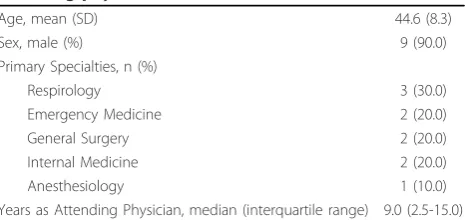
During the study’s 34 weeks, a total of 21 handover ses-sions were recorded, including 15 sesses-sions with a single outgoing and a single incoming physician; 2 sessions with two outgoing and a single incoming; and 4 sessions with two outgoing and two incoming physicians. Ten out of 11 critical care attending physicians agreed to participate in the study and be videotaped. They con-ducted a mean (± standard deviation) of 2.3 (± 1.3) ses-sions in the outgoing role and were in the incoming role in 2.1 (± 1.4) sessions each. Participating physicians’ age, sex, primary specialty and years of experience as an attending physician are shown in Table 1.
General Characteristics
Nine of the 10 randomly selected handover sessions were performed face to face in a conference room at the ICU; 1 session was performed over the phone. Handover ses-sions included a mean of 9.5 (± 2.2) patients. Mean dura-tions of the full sessions and of patient-specific handovers were 30 min 3 sec (± 11 min 7 sec) and 2 min 58 sec (± 57 sec), respectively. Handover durations (range, 9 sec-7 min 19 sec) varied among physicians and 29% of the variance is explained by the physicians (p< 0.001). There was no significant correlation between phy-sicians’years of experience and these handover durations. Neither the hospital nor the ICU has a policy about how handovers should be conducted. According to their individual preference or practice, outgoing physicians used printed materials, including patient lists and perso-nal notes, while incoming physicians often took notes.
Handover Content
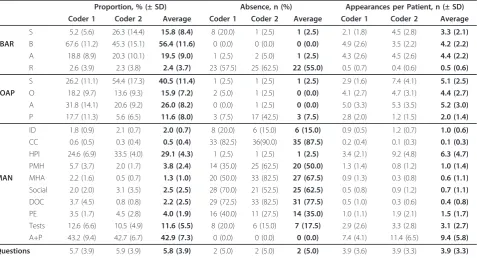
Table 2 shows the proportion, absence and recurrence rates for SBAR, SOAP and MAN elements, as well as
questions in the handovers. Rates according to two coders and averages of both are presented. Overall level of agreement between the two coders was good for SBAR (Kappa, 0.57), poor for SOAP (Kappa, 0.38) and good for elements of MAN (Kappa, 0.69). In the follow-ing lines average rates are reported.
For SBAR, the major part of handover content, 56.4%
(± 11.6%), includedBackgroundelements. Much of the
discordance among coders resulted from disagreement onSituationand Background(Kappa, 0.28). The Recom-mendation element was completely absent from 22 (55.0%) of the patient handovers.
For SOAP, Subjective elements comprised 40.5% (±
11.4%) andAssessment26.0% (± 8.2%) of handover
con-tent. The Planelement was absent from 3 (7.5%) of the
handovers.
For MAN, expressions ofAssessment and descriptions
of History of Present Illness comprised 42.9% (± 7.3%) and 29.1% (± 4.3%), respectively, of handover content.
With the exception of Assessment, all MAN elements
were occasionally absent from handovers (Table 2). Questions were asked by the incoming physicians 3.9 (± 3.3) times during an average handover and accounted for 5.8% (± 3.9%) of the total handover content. Ques-tions were not asked at all in handovers of just 2 (5.0%) patients.
The proportions, as well as rates of absence and repe-titions of all SBAR, SOAP and MAN elements, were similar when excluding data of the two participating investigators (RI, DH) from the analysis.
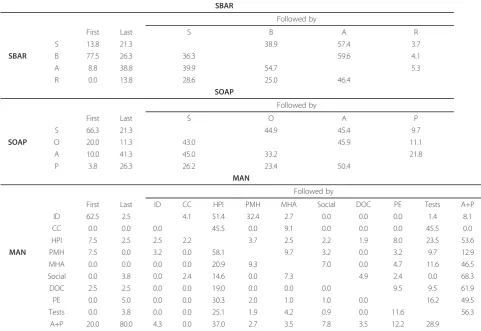
Table 3 shows the proportions of elements opening ("First”) and closing ("Last”) the handovers, as well as the arrangement of SBAR, SOAP and MAN elements throughout the handovers, averaged over the two coders.
Opening and Closing
For SBAR, 77.5% of the handovers were started with Backgroundand only 13.8% with Situationinformation.
Only 13.8% of handovers were concluded with a
Recom-mendation. For SOAP, 66.3% of the handovers were
started with Subjective information and only 26.3%
ended with a Plan. For MAN, the majority (62.5%) of
handovers were started with identifying information,
although 20.0% were started with Assessment and Plan,
which also closed most (80.0%) handovers.
Ordering of Elements
For SBAR and SOAP, arrangements of the various com-munication elements were similar: The first 3 elements
(SBAR’s Situation, Background and Assessment and
SOAP’sSubjective, Objectiveand Assessment) followed each other almost randomly. For example, SBAR’s
[image:4.595.58.291.609.719.2]Situa-tion was followed byBackground information in 38.9%
Table 1 Characteristics of participating critical care attending physicians; n = 10
Age, mean (SD) 44.6 (8.3)
Sex, male (%) 9 (90.0)
Primary Specialties, n (%)
Respirology 3 (30.0)
Emergency Medicine 2 (20.0)
General Surgery 2 (20.0)
Internal Medicine 2 (20.0)
Anesthesiology 1 (10.0)
Years as Attending Physician, median (interquartile range) 9.0 (2.5-15.0)
and byAssessmentin 57.4% of the handovers. The last
elements (SBAR’sRecommendationand SOAP’s Plan)
followed any of the other elements to a lesser extent.
For MAN, most elements were followed by Assessment
and Plan. Exceptions includeIdentification, which was usually followed byHistory of Present Illness(51.4%) or Past Medical History(32.4%); Chief Complaint, which
was absent in 87.5% of the handovers; andPast Medical
History, which was usually followed byHistory of Present Illness (58.1%). Only a single element, Tests, was fol-lowed by the“appropriate”element (in this case Assess-ment and Plan, which, in fact, followed most other elements) in most handovers (56.3%).
Figure 3 and Figure 4 show the occurrence of SBAR and SOAP elements, respectively, in the 40 handovers that we analyzed. In addition to the dominance of Back-ground andSubjective elements (for SBAR and SOAP, respectively), these figures illustrate the mixed arrange-ment and multiple occurrences of all the mnemonic elements.
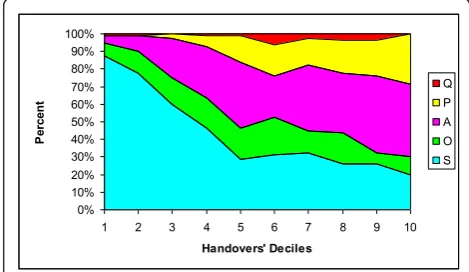
Figure 5 and Figure 6 represent the proportion of SBAR, SOAP and Question elements in each ten per-cent block of handover length averaged over 40
hand-overs and 2 coders. Figure 5 shows that Background
information comprises about 90% of the content in the first 20-30 percent of an average handover, and then
gradually decreases throughout the handover. Situation
content is present in a fairly constant level whereas expressions ofAssessmentgradually increase throughout the handovers.Recommendationsfirst appear at the sec-ond half of an average handover and then gradually increase. Figure 6 shows that Subjectiveaspects of the patient are the vast majority of material in the first 10 percent of an average handover, but fall to about 30 per-cent of the content by the middle of the handover and, on average, remain at about that level for the rest of the discussion. Objectiveelements, in contrast, are present at a moderate but constant level throughout the 40 handovers.
Discussion
During end-of-week handovers in the ICU, the observed attending physicians spent about 3 minutes discussing each patient. Elements of the three communication schemes (SBAR, SOAP, MAN), often completely absent, were distributed throughout the handovers.
[image:5.595.61.539.100.358.2]Although SBAR, originally developed to achieve effec-tive briefing during critical situations [21,24], is rela-tively new to the medical community, SOAP and MAN have been commonly promoted and could potentially be the physicians’default for the purpose of handover munication. Clearly, these physicians were taking a com-munication approach that is not standardized around a simple ordered list of topics. Apparently, these widely
Table 2 Proportion, absence and appearance rates of SBAR, SOAP and MAN elements in patients’handovers
Proportion, % (± SD) Absence, n (%) Appearances per Patient, n (± SD)
Coder 1 Coder 2 Average Coder 1 Coder 2 Average Coder 1 Coder 2 Average
S 5.2 (5.6) 26.3 (14.4) 15.8 (8.4) 8 (20.0) 1 (2.5) 1 (2.5) 2.1 (1.8) 4.5 (2.8) 3.3 (2.1) SBAR B 67.6 (11.2) 45.3 (15.1) 56.4 (11.6) 0 (0.0) 0 (0.0) 0 (0.0) 4.9 (2.6) 3.5 (2.2) 4.2 (2.2)
A 18.8 (8.9) 20.3 (10.1) 19.5 (9.0) 1 (2.5) 2 (5.0) 1 (2.5) 4.3 (2.6) 4.5 (2.6) 4.4 (2.2)
R 2.6 (3.9) 2.3 (3.8) 2.4 (3.7) 23 (57.5) 25 (62.5) 22 (55.0) 0.5 (0.7) 0.4 (0.6) 0.5 (0.6)
S 26.2 (11.1) 54.4 (17.3) 40.5 (11.4) 1 (2.5) 1 (2.5) 1 (2.5) 2.9 (1.6) 7.4 (4.1) 5.1 (2.5) SOAP O 18.2 (9.7) 13.6 (9.3) 15.9 (7.2) 2 (5.0) 1 (2.5) 0 (0.0) 4.1 (2.7) 4.7 (3.1) 4.4 (2.7)
A 31.8 (14.1) 20.6 (9.2) 26.0 (8.2) 0 (0.0) 1 (2.5) 0 (0.0) 5.0 (3.3) 5.3 (3.5) 5.2 (3.0)
P 17.7 (11.3) 5.6 (6.5) 11.6 (8.0) 3 (7.5) 17 (42.5) 3 (7.5) 2.8 (2.0) 1.2 (1.5) 2.0 (1.4)
ID 1.8 (0.9) 2.1 (0.7) 2.0 (0.7) 8 (20.0) 6 (15.0) 6 (15.0) 0.9 (0.5) 1.2 (0.7) 1.0 (0.6)
CC 0.6 (0.5) 0.3 (0.4) 0.5 (0.4) 33 (82.5) 36(90.0) 35 (87.5) 0.2 (0.4) 0.1 (0.3) 0.1 (0.3)
HPI 24.6 (6.9) 33.5 (4.0) 29.1 (4.3) 1 (2.5) 1 (2.5) 1 (2.5) 3.4 (2.1) 9.2 (4.8) 6.3 (4.7)
PMH 5.7 (3.7) 2.0 (1.7) 3.8 (2.4) 14 (35.0) 25 (62.5) 20 (50.0) 1.3 (1.4) 0.8 (1.2) 1.0 (1.4) MAN MHA 2.2 (1.6) 0.5 (0.7) 1.3 (1.0) 20 (50.0) 33 (82.5) 27 (67.5) 0.9 (1.3) 0.3 (0.8) 0.6 (1.1)
Social 2.0 (2.0) 3.1 (3.5) 2.5 (2.5) 28 (70.0) 21 (52.5) 25 (62.5) 0.5 (0.8) 0.9 (1.2) 0.7 (1.1)
DOC 3.7 (4.5) 0.8 (0.8) 2.2 (2.5) 29 (72.5) 33 (82.5) 31 (77.5) 0.5 (1.0) 0.3 (0.6) 0.4 (0.8)
PE 3.5 (1.7) 4.5 (2.8) 4.0 (1.9) 16 (40.0) 11 (27.5) 14 (35.0) 1.0 (1.1) 1.9 (2.1) 1.5 (1.7)
Tests 12.6 (6.6) 10.5 (4.9) 11.6 (5.5) 8 (20.0) 6 (15.0) 7 (17.5) 2.9 (2.6) 3.3 (2.8) 3.1 (2.7)
A+P 43.2 (9.4) 42.7 (6.7) 42.9 (7.3) 0 (0.0) 0 (0.0) 0 (0.0) 7.4 (4.1) 11.4 (6.5) 9.4 (5.8)
Questions 5.7 (3.9) 5.9 (3.9) 5.8 (3.9) 2 (5.0) 2 (5.0) 2 (5.0) 3.9 (3.6) 3.9 (3.3) 3.9 (3.3)
promoted schemes do not fit the clinical work required during handover.
Information about the patient’s condition and history (SituationandBackgroundelements in SBAR;Subjective and Objective in SOAP; and History of Present Illness, Test Results andPast Medical History elements in the
MAN) comprised about half of the handovers’contents.
Considering a usual week-long trajectory of critically ill
patients in the ICU, the high proportion of “
back-ground”information in the handovers is not surprising. Interpretation of the patient’s condition (Assessment in SBAR, SOAP and MAN) comprised about one third of the discussion.
Questions were asked commonly by incoming physi-cians: about 4 questions during each handover; ques-tions not asked at all in only 2 out of the 40 handovers. Although the value of questions is often assumed to lie in verifying or completing the transmission of facts
[image:6.595.56.538.112.443.2]about the patient, questions may play a considerably lar-ger role in the process of two physicians jointly con-structing their picture of the patient. Questions can invite or solicit more information; initiate repair or cor-rection of mistakes; seek confirmation of hearing and/or understanding; slow the conversation down for the pur-pose of note-taking; propur-pose an alternative organization of information; display expertise or assert competence (someone knows enough to ask the question); provide a polite way of suggesting an alternative diagnosis or treatment possibility; and so forth. Through questions and other responses, incoming physicians become the co-authors of reports by outgoing physicians. Handovers are an interactive accomplishment, not a monologic and unilateral transfer of information. Furthermore, what constitutes a question is not always clear: human speech does not come with explicit question marks, so the occurrence of a question may be ambiguous, and that
Table 3 Proportion of elements opening ("First”) and closing ("Last”) the handovers and succession of SBAR, SOAP and MAN elements*,@
SBAR
Followed by
First Last S B A R
S 13.8 21.3 38.9 57.4 3.7
SBAR B 77.5 26.3 36.3 59.6 4.1
A 8.8 38.8 39.9 54.7 5.3
R 0.0 13.8 28.6 25.0 46.4
SOAP
Followed by
First Last S O A P
S 66.3 21.3 44.9 45.4 9.7
SOAP O 20.0 11.3 43.0 45.9 11.1
A 10.0 41.3 45.0 33.2 21.8
P 3.8 26.3 26.2 23.4 50.4
MAN
Followed by
First Last ID CC HPI PMH MHA Social DOC PE Tests A+P
ID 62.5 2.5 4.1 51.4 32.4 2.7 0.0 0.0 0.0 1.4 8.1
CC 0.0 0.0 0.0 45.5 0.0 9.1 0.0 0.0 0.0 45.5 0.0
HPI 7.5 2.5 2.5 2.2 3.7 2.5 2.2 1.9 8.0 23.5 53.6
MAN PMH 7.5 0.0 3.2 0.0 58.1 9.7 3.2 0.0 3.2 9.7 12.9
MHA 0.0 0.0 0.0 0.0 20.9 9.3 7.0 0.0 4.7 11.6 46.5
Social 0.0 3.8 0.0 2.4 14.6 0.0 7.3 4.9 2.4 0.0 68.3
DOC 2.5 2.5 0.0 0.0 19.0 0.0 0.0 0.0 9.5 9.5 61.9
PE 0.0 5.0 0.0 0.0 30.3 2.0 1.0 1.0 0.0 16.2 49.5
Tests 0.0 3.8 0.0 0.0 25.1 1.9 4.2 0.9 0.0 11.6 56.3
A+P 20.0 80.0 4.3 0.0 37.0 2.7 3.5 7.8 3.5 12.2 28.9
* Averaged over the two coders; all numbers are in percentages. SBAR, Situation, Background, Assessment, Plan; SOAP, Subjective, Objective, Assessment, Plan; MAN, medical admission note; ID, identification; CC, chief complaint; HPI, history of present illness; PMH, past medical history; MHA, medications, habits and allergies; Social, social history; DOC, directives of care; PE, physical examination; A+P, assessment and plan.
@
ambiguity may serve the micro-political ends of the par-ticipants, allowing for such things as diplomatic correc-tions or soft direccorrec-tions. Further research is needed to refine and analyze the types and functions of questions in handovers.
In our recorded handovers, different elements of the various communication schemes were continuously interwoven throughout the exchanges. This may suggest that the physicians chose to deliver their message by portraying a sensemaking, relevant story rather than
spelling out the entirety of the available information about their patients [29,33]. An account of events lead-ing to the patient’s current condition is likely to include multiple segments of various types of information, as
suited to the individual patient’s medical problems.
Utterances of medical history, test results and their interpretation, social history, directives of care, etc. may need to be carefully deployed-placed in narrative con-text, omitted in some cases, repeated in others-to achieve the supposed goal of a handover: an understand-ing of the patient’s condition and needs, by the incom-ing physician, in a way that is memorable and can usefully inform the subsequent actions [3,34]. Attempt-ing to rigidly apply any of the studied standardized approaches for delivering a handover might have failed to achieve this goal.
One of the most striking findings in our study relates to elements that were absent in handovers. In particular, Recommendation content was absent in about 60% of patient handovers, in the judgement of both coders. Words
Ph
ysi
ci
an
1 2 3 4 5 6 7 8 9 10
[image:7.595.57.294.88.260.2]0 100 200 300 400 500 600 700 800 900 1000 S B A R
Figure 3Occurrence of SBAR elements. Two coders shown for four sampled patient handovers for each of 10 handing-over physicians.* S, Situation; B, Background; A, Assessment; R, Recommendation. * Data are for the conversation in which physician (i) was handing over, but the data include what was said in the conversation by the incoming physician as well.
Words
P
hysi
ci
an
1 2 3 4 5 6 7 8 9 10
0 100 200 300 400 500 600 700 800 900 1000
S O A P
Figure 4Occurrence of SOAP elements. Two coders shown for four sampled patient handovers for each of 10 physicians.* S, Subjective; O, Objective; A, Assessment; P, Plan. * Data are for the conversation in which physician (i) was handing over, but the data include what was said in the conversation by the incoming physician as well.
0% 20% 40% 60% 80% 100%
1 2 3 4 5 6 7 8 9 10
Handovers' Deciles
P
er
cen
t
[image:7.595.305.539.88.229.2]Q R A B S
Figure 5Proportion of SBAR+Q elements in each ten percent block of standardized handover length, averaged over 40 handovers and 2 coders. S, Situation; B, Background; A, Assessment; R, Recommendation; Q, Question.
0% 10% 20% 30% 40% 50% 60% 70% 80% 90% 100%
1 2 3 4 5 6 7 8 9 10
Handovers' Deciles
P
er
cen
t
Q P A O S
[image:7.595.56.292.486.663.2] [image:7.595.303.538.546.682.2]Lack of recommendation has also been observed in nurses practicing SBAR [35]. There are several possible explanations for this finding. First, it could be that the outgoing physicians have inadvertently omitted recom-mendations (i.e. error of omission) [36,37]. Second, because advice-giving and correcting may undermine the recipient’s status [38], it may be that outgoing physi-cians did not offer recommendations out of respect for
the incoming physicians’ professional status [39,40].
Third, it may be that the outgoing physicians focused on conveying their sense of the patient’s trajectory of care and what should be done next (recommendations) in narrative or story form, rather than a detailed list of what is wrong with the patient and what to do next [33,41,42]. Fourth, it may be that outgoing physicians sought to draw attention to potential problems of the patient even if they didn’t have a clear sense of how to resolve those problems. Regardless of the reasons, a complete lack of recommendations or mention of man-agement plans might lead to misperception by the incoming physician, and possibly to undesirable out-comes for patients and the organization. Further research is warranted into the reasons for and conse-quences of lack of peer-to-peer dialogue on treatment recommendations and into strategies that might improve physicians’discussion of such content.
For various reasons the quality of these recorded handovers cannot be evaluated at present. First, due to the complexity of the communication, and to the absence of the appropriate research, a “gold standard” for handover communication does not exist. Second, our small sample does not allow for a meaningful eva-luation of clinical outcomes such as physician satisfac-tion, errors, indicators of inefficiency and adverse events. Further research is required to identify quality indicators for handovers. However, we believe that the observed communication of the studied physicians does indicate important features of expertise. It is unlikely that content elements were interspersed throughout the handovers simply because these attending physicians-with an average of 9 years of experience-lacked the abil-ity to organize their thoughts and put together a coher-ent description of their paticoher-ents. In fact, within about 3 minutes they summarized several days in the history of a critically ill patient. We cautiously suggest that the apparent “disorganization” could be reflecting a more sophisticated approach to handovers: a logical, efficient communication of complex information. Further research is required to examine whether alternative approaches to handover communication can be identi-fied among the studied physicians and to identify fea-tures associated with good handovers. If such approaches and features can be identified, the
implications for medical schools, training programs and practicing physicians would be substantial.
This study has several important strengths. First, to our knowledge, this is the only systematic description of medical handovers as performed by full-time faculty attending physicians. Experience is expected to engender wisdom and expertise, which, in turn, would contribute to the quality of handovers. Better understanding of high quality handovers will inform educational and qual-ity improvement efforts in the area. Second, our descrip-tion is one of very few (e.g. [7,43]) based on video or audio recordings of naturally occurring handovers (i.e., handovers that would have occurred whether or not the recorder was present).
are some noticeable discrepancies among the coding according to the different communication standards. For
example, whereas SBAR’sRecommendation was absent
in 55% of the handovers, SOAP’s Plan, a seemingly
equivalent construct, was absent in only 7.5%. Similarly,
the combined proportion of SBAR’s Assessment and
Recommendation(21.9%) is much smaller, according to both coders, than the apparently similar content
repre-sented by SOAP’sAssessment andPlan (37.6%). These
can be explained by differences in the definitions of similar elements of the different standards (Figure 1). Finally, the quality of the recorded handovers was not assessed and consequently a relationship between hand-over quality and clinical outcomes could not be exam-ined. Since a validated measurement tool for handover quality does not exist, further research is required to identify quality indicators for handover communication.
Conclusion
Faculty-level critical care physicians did not follow com-monly recommended medical communication schemes (SBAR, SOAP, MAN) during naturally occurring, video-taped handovers. Statements corresponding to the var-ious mnemonic elements were scattered throughout the handovers without block structure or fixed order of arrangement and were sometimes entirely absent. Evi-dently, these widely promoted schemes do not fit the clinical work of handover within the present setting. Further research is required to examine whether a typi-cal communication approach can be identified in the recorded handovers; to explore the role of questions and active involvement of incoming physicians; to evaluate the handovers’quality and relevance to meaningful clini-cal outcomes; and to identify features of high-quality handover communication.
List of abbreviations
A+P: assessment and plan; CC: chief complaint; DOC: directives of care; ICU: intensive care unit; ID: identification; HPI: history of present illness; MAN: medical admission note; MHA: medications: habits and allergies; PE: physical examination; PMH: past medical history; SBAR: situation: background: assessment: recommendations; SD: standard deviation; SOAP: subjective, objective, assessment, plan.
Acknowledgements
This project received funding from the Physicians’Services Incorporated Foundation
Author details 1
Department of Medicine and Critical Care Program, Queen’s University, Kingston General Hospital, Etherington Hall, Room 1005, 94 Stuart Street, Kingston, ON, Canada, K7L 3N6.2Department of Organizational Leadership &
Strategy, Marriott School of Management, Tanner Building 790, Brigham Young University, Provo, Utah 84602, USA.3Rotman School of Management,
105 St. George Street, Toronto, ON, Canada, M5S 3E6.4Clinical Research Centre, Kingston General Hospital, Kingston, ON, Canada, K7L 3N6.5School
of Information, 312 West Hall, School of Public Policy, 407 Lorch Hall, University of Michigan, Ann Arbor, Michigan 48109-1092, USA.
Authors’contributions
RI, CLB, MC, DH and MC conceived the study, participated in data analysis and interpretation and drafted the manuscript. RI also supervised data collection. AD helped with statistical analysis and interpretation. All authors read and approved the final manuscript.
Competing interests
The authors declare that they have no competing interests.
Received: 11 May 2011 Accepted: 10 January 2012 Published: 10 January 2012
References
1. Cohen MD, Hilligoss PB:Handoffs in hospitals: A review of the literature on information exchange while transferring patient responsibility or control.2009 [http://hdl.handle.net/2027.42/61522].
2. Sutcliffe KM, Lewton E, Rosenthal MM:Communication failures: An insidious contributor to medical mishaps.Acad Med2004,79(2):186-94. 3. Arora V, Johnson J, Lovinger D, Humphrey HJ, Meltzer DO:Communication
failures in patient sign-out and suggestions for improvement: A critical incident analysis.Qual Saf Health Care2005,14(6):401-7.
4. Gandhi TK:Fumbled handoffs: One dropped ball after another.Annals of Internal Medicine2005,142(5):352-8.
5. Shojania KG, Fletcher KE, Saint S:Graduate medical education and patient safety: A Busy–and occasionally Hazardous–Intersection.Annals of Internal Medicine2006,145(8):592-8.
6. Singh H, Thomas EJ, Petersen LA, Studdert DM:Medical errors involving trainees: A study of closed malpractice claims from 5 insurers.Arch Intern Med2007,167(19):2030-6.
7. Horwitz LI, Moin T, Krumholz H, Wang L, Bradley EH:Consequences of inadequate sign-out for patient care.Arch Intern Med2008, 168(16):1755-60.
8. Safe handover: Safe patients. London: British Medical Association; 2004 [http://www.bma.org.uk/images/safehandover_tcm41-20983.pdf]. 9. Solet DJ, Norvell JM, Rutan GH, Frankel RM:Lost in translation: Challenges
and opportunities in physician-to-physician communication during patient handoffs.Acad Med2005,80(12):1094-9.
10. Vidyarthi AR, Arora V, Schnipper JL, Wall SD, Wachter RM:Managing discontinuity in academic medical centers: Strategies for a safe and effective resident sign-out.J Hosp Med2006,1(4):257-66.
11. Horwitz LI, Moin T, Green ML:Development and implementation of an oral sign-out skills curriculum.J Gen Intern Med2007,22(10):1470-4. 12. Arora V, Manjarrez E, Dressler D, Basaviah P, Halasyamani L, Kripalani S:
Developing hand off standards for hospitalists.Society of Hospital Medicine2007.
13. Arora VM, Farnan JM:Care transitions for hospitalized patients.Med Clin North Am2008,92(2):315-24.
14. 2008 national patient safety goals hospital program. 2008 [http://www. jointcommission.org/standards_information/npsgs.aspx].
15. Action on patient safety: High 5s. World Health Organization;[http://www. who.int/patientsafety/solutions/high5s/High5_overview.pdf].
16. Riesenberg LA, Leitzsch J, Little BW:Systematic review of handoff mnemonics literature.Am J Med Qual2009,24(3):196-204.
17. Riesenberg LA, Leitzsch J, Massucci JL, Jaeger J, Rosenfeld JC, Patow C,
et al:Residents’and attending physicians’handoffs: A systematic review of the literature.Acad Med2009,84(12):1775-87.
18. de Certeau M:The Practice of Everyday Life.Berkeley, CA: University of California Press; 1984.
19. Orbuch TL:People’s accounts count: The sociology of accounts.Annu Rev Sociol1997, ,23:455-78.
20. Orlikowski WJ:Knowing in practice: Enacting a collective capability in distributed organizing.Organization Science2002,13(3):249-73.
21. Profiles in improvement: Doug bonacum of kaiser permanente. Institute for Healthcare Improvement; 2008 [http://www.ihi.org/knowledge/Pages/ AudioandVideo/ProfilesinImprovementDougBonacumofKaiserPermanente. aspx].
23. Feldman JA:Medical errors and emergency medicine: Will the difficult questions be asked, and answered?Acad Emerg Med2003,10(8):910-1. 24. SBAR technique for communication: A situational briefing model. 2006
[http://www.ihi.org/IHI/Topics/PatientSafety/SafetyGeneral/Tools/ SBARTechniqueforCommunicationASituationalBriefingModel.htm]. 25. Dunn W, Murphy JG:The patient handoff: Medicine’s formula one
moment.Chest2008,134(1):9-12.
26. White RS, Hall DM:The Bermuda triangle healthcare. An Illinois healthcare system closes the gaps in patient handoff communication.
Health Manag Technol2008,29(7):30-1.
27. Weed LL:Medical records, medical education, and patient care: The problem-oriented medical record as a basic tool.Cleveland, OH: Case Western Reserve University; 1970.
28. Kilpack V, Dobson-Brassard S:Intershift report: Oral communication using the nursing process.J Neurosci Nurs1987,19(5):266-70.
29. Christianson MK:Updating as part of everyday work: An interactional perspective.2009 [http://hdl.handle.net/2027.42/64680].
30. Wears RL, Perry SJ, Shapiro M, Beach C, Behara R:Shift changes among emergency physicians: Best of times, worst of times.Human Factors and Ergonomics Society, 47th Annual MeetingDenver, CO.; 2003.
31. Runy LA:Patient handoffs.Hosp Health Netw2008,82(5):40-7. 32. Fleiss JL, Levin B, Paik MC:Statistical methods for rates and proportions
(3rd ed.).New York: John Wiley & Sons; 2003.
33. Weick KE, Sutcliffe KM, Obstfeld D:Organizing and the process of sensemaking.Organization Science2005,16(4):409-21.
34. Borowitz SM, Waggoner-Fountain LA, Bass EJ, Sledd RM:Adequacy of information transferred at resident sign-out (in-hospital handover of care): A prospective survey.Qual Saf Health Care2008,17(1):6-10. 35. Landro A:Hospitals combat errors at the‘hand-off’.WSJ2010 [http://
online.wsj.com/article/SB115145533775992541.html], 2006:September 8. 36. Horwitz LI, Moin T, Krumholz HM, Wang L, Bradley EH:What are covering
doctors told about their patients? Analysis of sign-out among internal medicine house staff.Qual Saf Health Care2009,18(4):248-55. 37. Miller A, Scheinkestel C, Limpus A, Joseph M, Karnik A, Venkatesh B:
Uni-and interdisciplinary effects on round Uni-and hUni-andover content in intensive care units.Hum Factors2009,51(3):339-53.
38. Ende J, Pomerantz A, Erickson F:Preceptors’strategies for correcting residents in an ambulatory care medicine setting: A qualitative analysis.
Acad Med1995,70(3):224-9.
39. Cicourel AV:Cognitive and organizational aspects of medical diagnostic reasoning.Discourse Processes1987,10(4):347-67.
40. Abbott A:The order of professionalization.Work Occup1991,18(4):355-84. 41. Browning LD:Lists and stories as organizationaI communication.
Communication Theory1992,2(4):281-302.
42. Weick KE:Sensemaking in organizations.Thousand Oaks, CA: Sage Publications; 1995.
43. Kerosuo H:Boundaries in action: An activity-theoretical study of development, learning, and change in health care organization for patients with multiple and chronic illnesses.Helsinki: University of Helsinki, Faculty of Behavioural Sciences, Department of Education, Center for Activity Theory and Developmental Work Research; 2006 [https://www. doria.fi/handle/10024/3666].
Pre-publication history
The pre-publication history for this paper can be accessed here: http://www.biomedcentral.com/1472-6963/12/11/prepub
doi:10.1186/1472-6963-12-11
Cite this article as:Ilanet al.:Handover patterns: an observational study
of critical care physicians.BMC Health Services Research201212:11. Submit your next manuscript to BioMed Central
and take full advantage of:
• Convenient online submission
• Thorough peer review
• No space constraints or color figure charges
• Immediate publication on acceptance
• Inclusion in PubMed, CAS, Scopus and Google Scholar
• Research which is freely available for redistribution