Proposed 3Ps Solution to the Implications of
Population Ageing
by
Lisa Denny, BCom, GradDipEd, BArts(Hons)
School of Social Sciences
Submitted in fulfilment of the requirements for the Doctor of Philosophy, Arts
This has been a labour of love. While it had been an aspiration of mine for some years, the actual PhD journey started six and a half years ago, following the birth of my son. Studying for a PhD allowed me to balance caring for my son with maintaining a connection with the world of work in a flexible way (whilst also appreciating and enjoying adult interaction). The journey included many life events and turning points, including separation and divorce, periods of self-employment and
employment, and re-partnering, and all the while being a mother. So far, over my life course, my research has always kept me grounded and has enabled me to stay connected with my identity and my interests. As my life continues on its path, I hope I can always continue to choose the adventure that will let me use my ‘accumulated human capital’ effectively as well as balance it with my family commitments to maximise the chances of a ‘successful life outcome’ for us all.
Like the work-life course, the journey of this PhD has not been a solo one. There are many people who have been with me and whom I must acknowledge and thank. First and foremost is Professor Natalie Jackson. While Natalie’s reputation preceded her, we met at a speed networking event for women in the early 2000s. It was then that my life as a workforce demographer began. Next are my parents, Hugh and Kaye, for their unwavering support in everything I do. Their mantra as I was growing up still echoes in my mind today: “The best gift we can give you as parents is an education.” To my son, Rory, my greatest teacher, who always keeps me grounded and is a reminder of what is important in life.
iii
Declaration of originality ... i
Preface and acknowledgements ... ii
Tables ... vi
Figures ... vii
List of acronyms ... ix
Abstract ... x
Chapter one Introduction ... 1
Research problem ... 2
Background ... 2
Population ageing ... 2
3Ps policy framework ... 4
Productivity ... 6
Skill utilisation ... 8
Purpose ... 8
Thesis structure ... 9
Conclusion ... 11
Chapter two A theoretical and conceptual framework for analysing skill utilisation: Human capital theory and the principles of the life course ... 12
Introduction ... 12
Human capital theory ... 12
Principles of the life course ... 18
Conflating Human Capital Theory and the life course ... 24
Summary ... 26
Research questions ... 28
Conclusion ... 29
Chapter three Literature review ... 30
Introduction ... 30
Productivity ... 31
Skill utilisation ... 33
Introduction ... 33
Defining skill ... 34
Defining skill utilisation ... 39
Skill under-utilisation ... 40
Skill utilisation and productivity ... 43
Chapter four Method and analytical approach ... 46
Introduction ... 46
Background ... 46
Measurement of skill utilisation ... 48
Job analysis method ... 49
Realised matches method ... 51
Worker self-assessment method ... 51
Population level method ... 53
Summary ... 54
Operationalising skill utilisation ... 55
Dataset ... 59
Data for the indicator of skill utilisation ... 60
Data for the analytical approach ... 62
Assumptions and limitations of the data ... 63
Method ... 68
Indicator of skill utilisation ... 68
Analytical framework ... 69
Summary ... 70
Chapter five Skill utilisation in Australia ... 71
Introduction ... 71
Skill utilisation overview ... 71
Skill utilisation by labour force status ... 73
Skill utilisation by occupation ... 75
Skill utilisation by educational attainment ... 81
Skill utilisation by occupation and educational attainment ... 83
Skill utilisation by field of study ... 86
Skill utilisation by sex ... 88
Skill utilisation by labour force status and sex ... 89
Skill utilisation by occupation and sex ... 91
Skill utilisation by educational attainment and sex ... 96
Skill utilisation by field of study and sex ... 98
Summary ... 100
Chapter six Skill utilisation over the life course ... 104
Introduction ... 104
Skill utilisation over the lifespan ... 104
Skill utilisation by labour force status over the lifespan ... 108
Skill utilisation and linked lives ... 115
v
Skill utilisation and linked lives: by partner and child status ... 128
Skill utilisation by partner and child status over the lifespan ... 131
Summary ... 136
Chapter seven Discussion ... 138
Introduction ... 138
Mismatch in supply of, and demand for, skills ... 138
Part time employment and gender disparity ... 145
Disparity in skill utilisation for Australian youth ... 153
The high level of under-qualification in ‘skill level one’ occupations ... 162
Summary ... 166
Chapter eight Conclusion ... 168
Introduction ... 168
Contribution to the literature ... 169
Policy implications ... 171
Three-pronged approach ... 171
Skill utilisation over the life course ... 174
Concluding remarks ... 178
Appendices ... 179
Appendix A ANZSCO: Occupation at Minor Group (three-digit) level ... 179
Appendix B ASCED Narrow Field of Study at the Highest Non-School Qualification ... 185
Appendix C ASCED - Broad Level of Highest Non-School Qualification ... 188
Appendix D Matched Occupation and Field of Study codes ... 191
Appendix E Skill utilisation formulas ... 197
Table 4.1. Australia New Zealand Standard Classification of Occupations (ANZSCO) hierarchical levels ....57
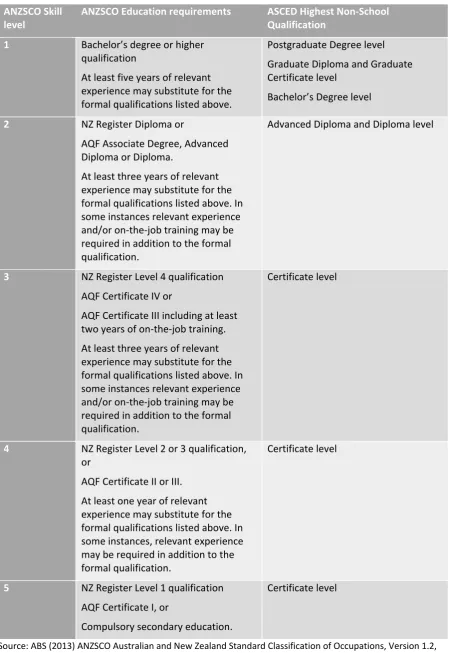
Table 4.2. ANZSCO skill level and educational requirements ...66
Table 6.1. Skill utilisation by presence, or not, of a partner, for men and women ... 116
Table 6.2. Skill utilisation by labour force status and presence of partner for men and women ... 117
Table 6.3. Skill utilisation by the presence, or not, of a dependent child or non-dependent child, men and women ... 122
Table 6.4. Skill utilisation by the presence, or not, of a child and labour force status for men and women ... 124
Table 6.5. Skill utilisation by the presence, or not, of a partner, and presence, or not, of a child, men and women ... 128
Table 6.6. Skill utilisation by the presence, or not, of a partner, and presence, or not, of a child, and labour force status for men and women ... 130
Table 7.1. Occupational structure of the Australian workforce, 2006 and 2016, number and proportion ... 142
Table 7.2. Highest level of educational attainment, 2006 and 2016, number and proportion ... 142
Table 7.3. Projected employment growth by occupation, five years to 2022, Australia ... 144
Table 7.4. Projected employment growth by skill level, five years to 2022, Australia ... 145
vii
Figure 4.1. Operationalisation diagram for the indicator of skill utilisation ...59
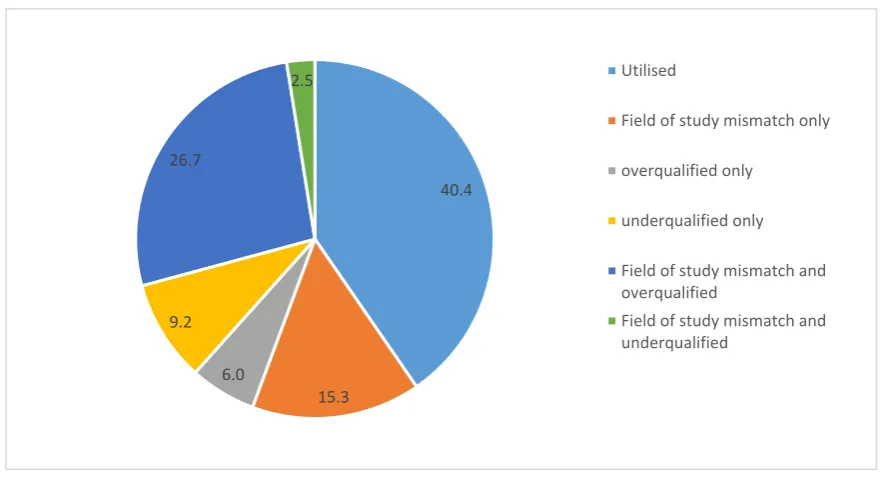
Figure 5.1. Skill utilisation in Australia ...72
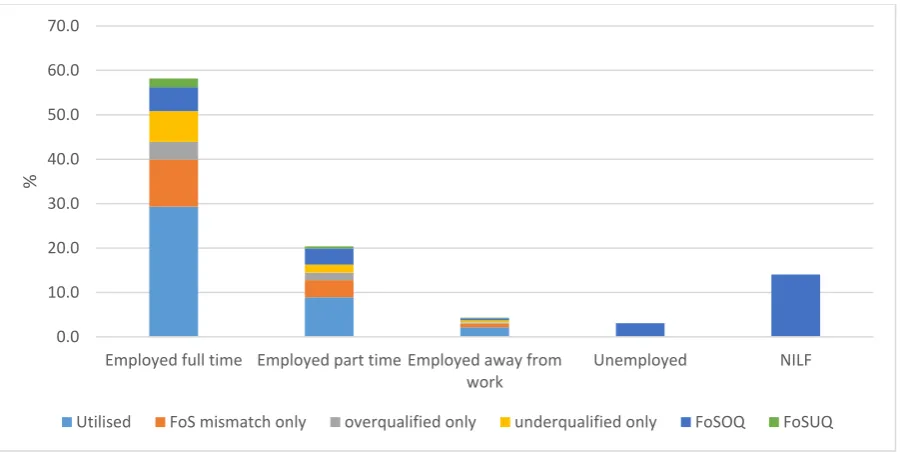
Figure 5.2. Skill utilisation and type of utilisation, proportion of the population by labour force status ....74
Figure 5.3. Skill utilisation and type, employed full time and part time ...75
Figure 5.4. Skill utilisation, proportion of the population by occupation ...76
Figure 5.5. Type of utilisation by occupation ...78
Figure 5.6. Skill utilisation, proportion of the population by occupation and labour force status ...79
Figure 5.7. Type of utilisation by occupation and labour force status ...80
Figure 5.8. Skill utilisation, proportion of population by highest level of post school educational attainment ...81
Figure 5.9. Type of utilisation by educational attainment ...82
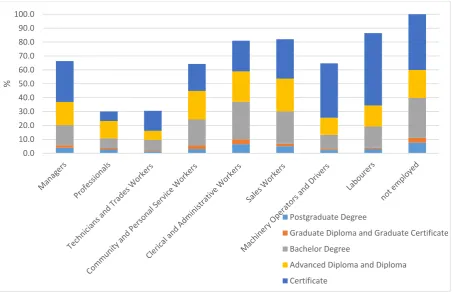
Figure 5.10. Skill utilisation, proportion of the population by occupation, utilised and not utilised by educational attainment ...84
Figure 5.11. Under-utilisation for occupation group, proportion not utilised by educational attainment ..85
Figure 5.12. Skill utilisation, proportion of the population by field of study ...86
Figure 5.13. Type of utilisation by field of study ...87
Figure 5.14. Skill utilisation and type of under-utilisation, men and women ...89
Figure 5.15. Skill utilisation, proportion of the population for men and women by labour force status ...90
Figure 5.16. Type of utilisation for men and women by labour force status ...91
Figure 5.17. Skill utilisation, proportion of the population by occupation by sex ...92
Figure 5.18. Type of utilisation by occupation by sex ...93
Figure 5.19. Skill utilisation for men and women by occupation and labour force status ...95
Figure 5.20. Skill utilisation, proportion of the population by educational attainment by sex ...96
Figure 5.21. Type of skill utilisation, by educational attainment and sex ...97
Figure 5.22. Those not employed, by educational attainment and sex ...98
Figure 5.23. Skill utilisation, proportion of the population by field of study and sex ...99
Figure 5.24. Type of utilisation by field of study and sex ... 100
Figure 6.1. Skill utilisation by age and sex ... 105
Figure 6.2a. Type of skill utilisation by age, men ... 106
Figure 6.2b. Type of skill utilisation by age, women ... 106
Figure 6.3. Skill utilisation, employed persons, by age and sex ... 108
Figure 6.4. Skill utilisation by labour force status by age ... 110
Figure 6.5. Skill utilisation by labour force status by sex and age ... 111
Figure 6.6a. Type of utilisation for men employed full time, by age ... 112
Figure 6.6b. Type of utilisation for women employed full time, by age ... 112
Figure 6.7a. Type of utilisation for men employed part time, by age ... 114
Figure 6.7b. Type of utilisation for women employed part time, by age ... 114
... 119
Figure 6.11. Skill utilisation by labour force status and presence of a partner or not, and sex and age ... 121
Figure 6.12. Skill utilisation, proportion of the male and female population by labour force status and presence, or not, of a dependent child or non-dependent child ... 123
Figure 6.13. Skill utilisation by presence, or not, of a child, by sex and age ... 125
Figure 6.14. Skill utilisation of the employed population, by presence, or not, of a child, by sex and age 126 Figure 6.15. Skill utilisation by labour force status and presence, or not, of a child, by sex and age ... 127
Figure 6.16. Skill utilisation, proportion of the male and female population by labour force status and presence, or not, or a partner and presence, or not, of a child ... 129
Figure 6.17. Skill utilisation by presence, or not, of a partner, and presence, or not, of a child, by sex and age ... 131
Figure 6.18. Skill utilisation of the employed population, by presence, or not, of a partner and presence, or not, of a child, by sex and age ... 132
Figure 6.19. Skill utilisation by labour force status and presence, or not, of a partner, and presence or not, of a child, by sex and age ... 135
Figure 7.1. Skill utilisation of the workforce in Australia ... 139
Figure 7.2. Change in composition of the workforce by occupation, actual and proportion, 2006 to 2016 ... 141
Figure 7.3. Change in level of educational attainment of the population aged 25 to 64 years, actual and proportion, 2006 to 2016 ... 143
Figure 7.4. Level of labour force attachment in descending order by demographic profile ... 147
Figure 7.5. Skill utilisation and type of under-utilisation for the 25 to 29 year age group for men and women ... 154
Figure 7.6. Proportion of those not in the labour force by presence or not of a partner and/or child, men and women aged 25 to 29 years ... 155
Figure 7.7. Skill utilisation by the proportion of the employed 25 to 29 years age group by presence of a partner and/or child by labour force status ... 156
Figure 7.8. Skill utilisation and type of under-utilisation for 25 to 29 year old men and women by labour force status ... 157
Figure 7.9. Proportion of under-qualified workforce by occupation ... 162
Figure 7.10. Skill utilisation and type of utilisation by occupation ... 165
ix
3Ps Three Ps - productivity, participation and population
ABS Australian Bureau of Statistics
ACLD Australian census longitudinal dataset
ACMID Australian Census and Migrants Integrated Dataset
ANZSCO Australia New Zealand Standard Classification of Occupations
AQF Australian qualifications framework
ASCED Australian Standard Classification of Education
AWPA Australian Workplace and Productivity Agency
DC Dependent children
DoE Department of Employment
EAW Employed, away from work
EFT Employed, full time
EPT Employed, part time
FoSOQ Combination of field of study mismatch and over-qualification
FoSUQ Combination of field of study mismatch and under-qualification
GDP Gross domestic product
HCT Human capital theory
IGRs Intergenerational reports
ISCO International Standard Classification of Occupations
NC No children
NDC Non-dependent children
NILF Not in the labour force
OECD Organisation for Economic Co-operation and Development
PC Productivity Commission
The solution proposed by successive Australian governments to the challenges of an ageing demographic is to foster economic growth through a policy framework designed to increase the Three Ps (3Ps) – productivity, participation and population. Raising the skill level of a population has become the primary objective of national economic policies to increase productivity, yet current understandings of the optimal use of skills are limited and based on a relatively weak knowledge base.
This thesis explores whether the existing complement of education and skills held by Australians is being effectively utilised in the Australian labour market to determine the existence of any foregone productivity growth. The return on human capital investment in the form of skill utilisation is an indicator of potential successful life outcomes for an individual over their life course, and is also as an indicator for macro-level productivity performance and for economic and social well-being.
Using a conceptual framework based on human capital theory and principles of the life course, this thesis develops an indicator of skill utilisation which enables analysis of the Australian population aged 25 to 64 years of age with post-school qualifications. The indicator also enables the type of skill mis-utilisation to be identified; either field of study mismatch (skill mismatch), over-qualification or under-qualification (education mismatch) or a combination of skill mismatch and education
mismatch. Skill utilisation is examined by occupation, labour force status, educational attainment, field of study and sex.
Using demographic and life course variables, the thesis explains how factors such as ageing, the presence of a partner, and/or the presence of a child affect skill utilisation over the lifespan, how the experience differs for men and women, and how they engage with work.
1
Introduction
The solution of successive Australian governments to the challenges of an ageing population has been to foster economic growth through a policy framework that increases the three Ps (3Ps): productivity, (labour force) participation and population. Raising the educational attainment and skill level of a population has become a primary objective of national economic policies to increase productivity, yet current understandings of the optimal use of skills is limited, and is based on a relatively weak knowledge base.
The purpose of this thesis is to explore whether the existing education and skills of Australians are being effectively utilised in the Australian labour market. This will enable the identification of any foregone productivity growth and provide input to future policy development for improved
productivity. This is particularly important given that investing in human capital accumulation over a lifespan is theorised to improve both social and economic outcomes at both individual and macro levels (Deloitte Access Economics 2005; Becker 1964; Heinz 2001; Pallas 2003; Smith 1991 [1776]). This thesis will expand the identification of the following types of skill under-utilisation: field of study mismatch (skill mismatch); over- qualification (education mismatch); or a combination of skill and education mismatch. It also identified instances of under-qualification. For simplicity throughout the thesis, under-qualification is included in the population considered to be under-utilised. This
inclusion is justified on the basis that under-qualified persons’ productivity potential may not be maximised requiring a policy intervention. The thesis will also provide a socio-demographic profile of those population groups not effectively utilising their complement of skills in the workforce over their lifespan.
This research is underpinned by Human Capital Theory (Becker 1964) and the principles of the life course (Elder, Johnson & Crosnoe 2003), more specifically, the theory of rational choice. Individuals have an interest in ongoing investment in a successful life, and this investment benefits from previous life course decisions and from valid expectations of future opportunities (Heinz 2001). Ultimately, it is an individual’s choice to invest in human capital accumulation and their life decisions which affect their engagement with the labour market and the subsequent deployment of their skills.
This chapter sets out the research problem to be addressed in this thesis. It provides an overview of the perceived challenges of population ageing before outlining the Australian Government’s
relationship with productivity, as well as with the development of an indicator of skill utilisation. Next, the contribution of this research and its potential for wider application will be addressed, and the structure for the remainder of the thesis set out.
The contribution of this thesis to the literature is a quantitative measure of skill utilisation which can be replicated and used to compare skill utilisation across jurisdictions, as well as to inform the development of a tool for benchmarking and evaluating policy implementation. More specifically, the research provides evidence of the under-utilisation of Australians’ education and skills in the labour market over the lifespan, which can be used to inform an alternative, complementary way to increase productivity growth, namely by improving skill utilisation.
Research problem
Background
In a survey of 970 demographers, Van Dalen and Henkens (2011) identified that the most important issue confronting demographers today is population ageing. Understandably, much debate therefore surrounds the causes and implications of, the opportunities presented by, and solutions to
population ageing. Population ageing is the final iteration of a global, four phase process known as the demographic transition, underpinned by a theoretical framework initially formulated by Frank Notestein (1945). However, while this demographic transition is a worldwide phenomenon, there is vast disparity in how it is experienced, resulting in the world’s regions becoming increasingly demographically diverse (United Nations 2013a, 2015).
Given the projected change in the age structure of the Australian population and the associated decline in labour force participation rates, it is assumed that productivity growth will be the greatest contributor to economic growth in the future (Commonwealth of Australia 2015; Productivity Commission 2013), despite prolonged slowing of the productivity growth rate (Eslake & Walsh 2011; Parham 2012; Productivity Commission 2017).
Population ageing
3 is older, and is primarily caused by a decline in fertility rates, which decreases the proportion of the population that is young (Henry 2004; Jackson 2001, 2007). However, it is the decline in fertility rates that is currently having the largest effect on population ageing (McDonald 2016).
Compared with other OECD countries, Australia is well positioned to manage the challenges of population ageing. This is primarily due to the fertility rate being relatively higher than other
countries (around 1.8 compared with the very low fertility rate of 1.5 births per woman in Japan and some European countries), a demand-driven migration programme, and a relatively stronger
economy (Gong & Kendig 2016; McDonald 2012a, 2016; Piggott 2016). Even so, policy makers have responded slowly to population ageing, which may have restricted Australia’s capacity to respond constructively (Gong & Kendig 2016).
The literature varies widely with respect to the implications of population ageing. Generally there is consensus regarding the economic implications of population ageing in terms of the ability to fund increasing demand for health- and aged care-related services and retirement support from a diminishing supply of labour while maintaining infrastructure and the government’s fiscal position (Productivity Commission 2013). It is in the extent of the implications and the degree of policy change required to mitigate them where debate arises. That said, social, political, cultural and economic circumstances within countries differ considerably, and therefore emulating policies from another country may not be successful, particularly with respect to the uniqueness of each country’s health, retirement and welfare systems. In fact, the fiscal implications of population ageing are likely to result from the institutional framework supporting these systems (Mitchell & Mosler 2003, 2006). Therefore, this debate is grounded on the extent to which the implications of population ageing, and the solutions to it, challenge the very foundations of the social system (Piggott 2016).
Early intervention in policy frameworks such as retirement age, pensions, health care, labour market and workplace arrangements, business practices, social support, innovation and technology, capital efficiency and investment all potentially provide ways to mitigate the risks associated with
population ageing (United Nations 2013b). However, failure to adequately account for a changing composition of dependency could result in ineffective policy responses (Herrmann 2012; Piggott 2016). Some even go so far as to suggest that population ageing poses a greater political risk than any economic challenge, implying that any policy adjustments could be more costly than allowing the implications themselves to go unchecked (Lee 2011). This is particularly so given that public services are generally funded on a ‘pay-as-you-go’ basis, a system of intergenerational transfers described as a redistribution of wealth in which current benefits are paid by current taxation (Creedy 2000). Given the larger proportion of older voters in an ageing population, policy adjustments such as increasing taxes and health care contributions could lead to the disenfranchisement of youth, and potentially to political and economic upheaval (Herrmann 2012; Lee 2011; Lee, Mason & Cotlear 2010; Piggott 2016). As such, the general consensus is to focus on policy adjustments aimed at fostering increased economic growth, which may or may not include labour market policies.
3Ps policy framework
The productivity, (labour force) participation and population policy directions under the 3Ps policy framework, designed to increase economic growth in Australia, are derived from fiscal and
demographic projections set out in four periodic Intergenerational Reports (IGRs) (Commonwealth of Australia 2002, 2007, 2010, 2015), a requirement under the Australian Government’s Charter of
Budget Honesty Act 1998. These IGRs are intended to both inform and justify future policy
development. Since the first IGR, released by the Howard government in 2002 (which formed the 5th
budget paper within the annual budget process), the reports have evolved. These changes reflect not only changes in projected demographic and economic circumstances, but also in government ideology, from the Liberal/National Coalition in 2002 and 2007, to Labor in 2010, then back to the Coalition in 2015. Over time, the IGRs have become increasingly political, being used as tools to drive successive governments’ political and fiscal priorities, and treating the ageing population as a
scapegoat (Kendig 2010, 2017; Kendig & Woods 2015). While a significant contribution of the IGRs has been introducing demographic change and its implications into the public discourse (Gruen & Spender 2012), this also has the potential to fuel intergenerational conflict (Piggott 2016).
5 structure, productivity growth, economic growth, and the cost of government services, particularly those services most sensitive to population change: health, education and welfare support. Each successive report has suggested an improved fiscal position, subject to policy intervention, but also increasing challenges as a result of demographic change, even though each report has
simultaneously projected a population relatively younger than the previous one (McDonald 2016). As such, governments have asserted that by increasing the 3Ps both the economy and society will benefit, as not only will economic growth be stimulated, but standards of living will also increase.
The latest IGR (Commonwealth of Australia 2015) projects that the number of people aged 65 to 84 by 2054/55 will be more than double 2015 figures, and that the number of people aged over 85 will more than quadruple, to 4.9 per cent of the population. Thus, the ratio of people of working age to people of old age will fall from 4.5 in 2015 to 2.7 by 2054/55 (compared with 7.5 in 1970). Given these structural changes, the 2015 IGR projects that the labour force participation rate will fall to 62.4 per cent, compared with 64.6 per cent in 2015. Further, population growth will slow to 1.3 per cent per annum (compared with a 40 year average of 1.4 per cent per annum), and labour
productivity growth will be maintained at 1.5 per cent per annum, considerably slower than the 2.2 per cent average during the 1980s and 1990s.
Since the first IGR in 2002, the reports have projected vastly differing outcomes, both fiscally and in terms of population, highlighting how quickly scenarios can change. The most recent report (2015) suggests a much improved position (upon implementation of proposed policies) compared with earlier reports. The gap between revenue and expenditure has been projected to close from 5.5 per cent of gross domestic product (GDP) in 2002 to a ‘sustained surplus from 2019/20’ in the 2015 report, and the economic growth rate has been projected to be from between 2.0 per cent per annum in the 2002 report to 2.8 per cent per annum in the 2015 report. Whether these differences have occurred as a result of policy positions, changes in methodology, or changes in demographic inputs is another matter. While the IGR model treats demographic inputs as exogenous and not influenced by the economic or social outcomes of the model, the demographic assumptions
between the four reports are vastly different. This indicates that demographic inputs can change in a relatively short timeframe (McDonald 2016). Further, some theorists suggest the IGR projections are a product of the reports’ assumptions, rather than on realistic scenarios, meaning that little
participation rates, and demographic inputs such as immigration and fertility. As such, there is much debate in the literature as to the validity of the IGRs, from both a fiscal and demographic
perspective.1
Throughout the four IGRs, the Australian Government refers to increasing economic growth being achieved from growth in GDP per capita, thus increasing the living standards of all people. Growth in GDP per capita is expressed in the IGRs as the product of growth in hours worked per person (labour utilisation), and growth in GDP per hour worked (productivity). This is based on the premise that the level of an individual's educational attainment and skills is a key determinant of their participation in the labour force, and that improving educational attainment and skills also contributes to increased productivity. This interpretation of growth in GDP assumes that a person is maximising the use of their human capital (skills) for every hour worked. There is evidence, however, that this is not the case.
Productivity
While few specific policy initiatives are suggested in the IGRs, the 2015 report maintains that the ongoing improvement of Australian living standards will remain primarily contingent upon
continuous improvement in productivity and will also require every effort to increase labour force participation rates (Commonwealth of Australia 2015).
The identification of productivity as the key driver for economic growth appears to be more a process of elimination than of strategic foresight, given that as the population ages, the other ‘Ps’ – participation and population – are projected to reduce GDP growth. Specific policies to achieve increased productivity are scant, or take the form of sweeping statements of intent: ‘better use of technology’, efficient provision of infrastructure’ and ‘regulatory reform’, as well as ‘improving human capital investment’ (Commonwealth of Australia 2015); though admittedly this is a positive shift from the ‘improving the skills base of the workforce’ statement in the 2010 report
(Commonwealth of Australia 2010).
In addition to the IGRs, the Australian Government has a range of vehicles it can use to facilitate policy development in order to enhance productivity, and the Productivity Commission (PC) is perhaps the most powerful of these. Given that the primary objective of the PC is to enhance the
7 quality of life of Australians, it makes its recommendations on the basis of two criteria: 1) that they ensure net benefits for Australians, and 2) that the recommendations are superior to any alternative policy option.
As David Gruen of the Department of the Treasury put it in a 2012 speech, the broad role of government in improving productivity is to get the underlying policy settings right. This sentiment was echoed by the treasurer, Scott Morrison, at the release of the Productivity Commission’s (Productivity Commission 2017, p. 3) first five-yearly productivity review:
Governments have an important influence on productivity growth, including through
policies and regulations that affect investment in human and physical capital and the
functioning of markets, including with respect to trade, competition and other
regulatory constraints and incentives.
These five-yearly reviews are designed to “shift the dial” on the underlying causes of Australia’s mediocre productivity, and will be a microeconomic complement to the periodic IGRs (Productivity Commission 2017, p. 32).
The challenge of increasing labour productivity is dependent upon the relationship between the education and training system and the labour market. Banks (2012) suggests that improvements in labour productivity begin in the workplace and can only really be achieved through change within individual enterprises and organisations. The role of all levels of government is to create an
environment, and set the framework, in which institutions and enterprises operate to enable sound decision-making through policy development, regulation and legislation to provide macroeconomic stability, microeconomic frameworks and investment in infrastructure (Australian Treasury 2009; Commonwealth of Australia 2010; Productivity Commission 2017). The government is also able to influence productivity-enhancing measures by providing incentives and flexibility to institutions and enterprises which motivate change, enabling them to change. The implication here is that change must occur from the employer’s perspective, but there is little employers can do without regulatory reform. This suggests that the development of policy to improve productivity must be undertaken concurrently with regulatory reform, as well as with the development of education and training policy. Moreover, Parkinson (2011) argues that reform needs to be a continuous process, not a one-off event, given the lag between reform and measurable productivity improvements, which
Skill utilisation
‘Skill utilisation’ under that name is a relatively new concept in scholarship and practice. As yet, there is no consensus on a conceptual framework for skill utilisation, despite considerable effort (see, for example, Buchanan et al. (2010); Payne (2010); (Payne 2017); Scottish Government Social Research (2008); Skills Australia (2011, 2012)). Even so, there has been a significant shift in policy discourse to link the supply of skills to their effective deployment in the workplace on the basis that skills must be effectively utilised if those skills are to be used to achieve the overall policy objectives of increasing economic and social well-being in an interdependent economic environment
(Buchanan et al. 2017; Payne 2012; Scottish Government Social Research 2008). That said, efforts to improve skill utilisation through appropriate policy development is in “relatively uncharted
territory”; policy makers being unfamiliar with the concept, and there being a lack of explicit research into how to measure and evaluate it (Keep 2016, p. 7). Livingstone (2009, 2017) suggests that the most powerful and useful framework for analysing skill utilisation is that of skill under-utilisation. The under-utilisation of skills represents a loss to the individual, the employer, the economy and society (Skills Australia 2012) and is a growing policy concern (Buchanan et al. 2017; Skills Australia 2010).
This thesis makes a considerable contribution to the scholarship on the nexus between skill utilisation and productivity, and does so while incorporating a life course perspective.
Purpose
In order to determine the completeness of the Australian Government’s 3Ps policy framework to address the implications of population ageing, this thesis explores whether the existing level of education and complement of skills held by Australians is being effectively utilised in the Australian labour market. This will enable the identification of any foregone productivity growth and provide input to future policy development for improved productivity.
9 requiring a policy intervention. The thesis will also provide a socio-demographic profile of those population groups not effectively utilising their skills in the workforce over their lifespan.
As such, the intention of this research is to clearly conceptualise and operationalise skill utilisation to provide empirical evidence of the level of skill utilisation in Australia.
The research will be significant for three primary reasons. It will:
1. Develop a population-level indicator of skill utilisation that will be replicable, susceptible to multivariate analysis, and comparable with other jurisdictions;
2. Have the potential to inform future policy development by providing empirical evidence of the socio-demographic factors which contribute to the under-utilisation of skills over the lifespan; and
3. Enable the development of a quantifiable framework to both benchmark and evaluate skill utilisation, as well as of a tool to evaluate policy interventions over time.
Thesis structure
This thesis comprises eight chapters. Following this introductory chapter, which sets out the
research problem to be explored, Chapter Two provides the theoretical context. Chapter Three then contains a literature critique. Chapter Four details the method used to develop the indicator of skill utilisation and provides the analytical framework. Chapters Five and Six present the results. Chapter Seven discusses the four key findings, and Chapter Eight concludes the thesis, linking the research problem to the findings and potential policy solutions and identifying areas for further investigation.
Chapter Two lays the foundations for the theoretical framework used to conceptualise and analyse skill utilisation for the purpose of achieving economic growth and improved productivity over the longer term. The chapter draws upon previous studies to progress the evolution of the key
theoretical approaches to economic growth – predominantly Human Capital Theory and the role of education – with the purpose of extending the theoretical and conceptual framework to include skill utilisation. Integrated within this theoretical framework is the life course perspective, because the prime determinant of the trajectory of the life course is the social organisation of labour. The chapter concludes by outlining the research questions to be explored, analysed and discussed throughout the thesis.
performance, followed by a discussion of skill utilisation, including conceptual clarity of the
associated terminology, its evolution and current challenges as well as the factors which constitute the under-utilisation of skills.
Chapter Four outlines how the theoretical framework elaborated in Chapter Two will be
operationalised to develop an indicator of skill utilisation, as well as the analytical approach used to identify and profile the utilisation of skills in Australia. The chapter begins with an overview of the various methods of skill measurement used in previous empirical research, before detailing the measurement approach to be undertaken in this thesis, as well as the selected data source. It then explains the multiple variables to be used to develop an indicator of skill utilisation in Australia. The second section of the chapter explains the analytical approach that will be used in the subsequent empirical chapters. Specifically, it details the socio-demographic variables to be used to describe the level of skill utilisation in Australia over the lifespan.
Chapter Five presents the results regarding the degree of skill utilisation in Australia – that is, the extent to which the existing complement of education and skills held by Australians is being utilised in the Australian labour market – in order to determine the existence of any foregone productivity growth. Using the indicator of skill utilisation developed in Chapter Four, this chapter addresses the research questions set out in Chapter Two – to what extent are Australians’ skills utilised in the labour market? The chapter details how skill utilisation differs by occupation, educational attainment and field of study for men and women, and discusses the connection between skill utilisation and Human Capital Theory.
11 Chapter Seven discusses four key findings from this research:
1. The high level of under-utilisation of Australians’ complement of skills being best explained by a mismatch between the supply of and demand for skills;
2. The difference in skill utilisation between those employed full time and part time, variation over the lifespan, and the clear gender disparity explained by ‘linked lives’;
3. The disparity in skill utilisation among young Australians, including their delayed and protracted entry into full time work; and
4. The high level of under-qualification in ‘skill level one’ occupations, and the impact on productivity of under-utilisation.
Chapter Eight concludes the thesis’ exploration of how effectively the existing level of education and complement of skills held by Australians are being utilised in the Australian labour market. The chapter links the findings to the research problem set out in the introductory chapter, and makes specific suggestions for policy to improve productivity in Australia. Finally, Chapter Eight addresses areas for further research given the considerable presence of under-utilisation of skills over the lifespan.
Conclusion
Chapter two
A theoretical and conceptual framework for analysing skill utilisation:
Human capital theory and the principles of the life course
Introduction
This chapter sets the foundations for the theoretical framework this thesis uses to conceptualise and analyse skill utilisation for the purpose of achieving economic growth and improved productivity over the longer term. Despite ‘skill’ being a dominant construct in very early theory as far back as the 18th Century (for example in Smith (1991 [1776]), most sociological and economic accounts
acknowledge that skill utilisation is relatively under-theorised (Desjardins & Rubenson 2011; Goldthorpe 2014). As such, this chapter draws upon previous studies to progress the evolution of the key theoretical approaches to economic growth, predominantly Human Capital Theory and the role of education, with the purpose of extending the theoretical and conceptual framework to include skill utilisation. Integrated within this theoretical framework is the life course perspective: the multidimensional concept of interdependent factors and trajectories shaping individuals, society and the economy across time (Elder 1985, 1995; Elder, Johnson & Crosnoe 2003). The prime
determinant of the trajectory of the life course is the social organisation of labour (Heinz 2001; Kohli 2007; Moen 2016). Both theories of human capital and of the life course are underpinned by the theory of rational choice, and the concept that individuals have an interest in ongoing investment in a successful life which benefits from previous life course decisions and valid expectations of future opportunities (Heinz 2001). Ultimately, it is individuals’ choice to invest in accumulating human capital and to make life decisions which affect their engagement with the labour market and their subsequent deployment of skills. As such, this chapter sets the theoretical framework for the discussion on skill utilisation (or lack of it) in Australia, as well as the parameters for an extensive review of the theoretical and empirical literature on the nexus between skill utilisation and productivity in Chapter Three. This chapter concludes by outlining the research questions to be explored, analysed and discussed throughout the thesis.
Human capital theory
The foundations for the theoretical framework linking education to economic growth and
13 1976; Sweetland 1996). Even so, references to the value of human input in generating economic wealth extend back to Adam Smith (1991 [1776], p. 9) and his explanation of the effects of the division of labour on the wealth of nations: “The greatest improvement in the productive powers of labour, and the greater part of the skill, dexterity, and judgement with which it is any where
directed, or applied, seem to have been the effects of the division of labour.” However, Becker is considered to have provided the leading theoretical work in his 1964 monograph, Human Capital.
The overarching premise of HCT is that both individuals and the broader society and economy derive benefit from investment in people, such as in education and health. The benefit attached to
individuals is evident in improved lifetime earnings, and to the economy in the form of economic growth. As such, the theory focuses on the productivity enhancing attributes of investment in human capital, and on their centrality to long term, broader economic development – where human capital can be defined as productive wealth embodied in labour, skills and knowledge (Rosen 1989). As such, HCT is embedded within the general framework of neoclassical economics, in which labour is integrated as a factor of production. However, as Bowles and Gintis (1975) explain, HCT extends these foundations by acknowledging that labour is a constructed means of production, thereby rejecting the previous assumption of labour’s homogeneity (i.e., that all labour inputs are the same) to focus on the differentiation of labour characteristics in the labour force while also attempting to incorporate social institutions such as family and education into the realm of economic analysis.
An individual’s human capital is considered to be their personal stock of knowledge, skills and characteristics which contributes to their economic productivity and earnings capacity. As such, HCT postulates that individuals will invest, based on rational choice assumptions, in their own acquisition of human capital. This involves incurring direct costs and foregoing short term earnings to maximise lifetime earnings (the rate of return on the investment), including, but not limited to, investment in education and training (Rosen 1989).
Returning to the inability to attribute a cause to a significant proportion of economic growth, efforts to identify the residual growth differential in the mid-20th Century were influenced by accounting for
intangible capital inputs, predominantly human capital, and, more specifically, education and advances in knowledge. This was recognised in 1962, when Denison modified the aggregate
production function1 to include education. As a result, education consistently emerged as the prime
human capital component for empirical analysis (Sweetland 1996), despite the founders of HCT acknowledging that human capital is a function of numerous attributes, including “schooling, on-the-job training, medical care, vitamin consumption and acquiring information on the economic system” (Becker 1962, p. 9), as well as health facilities and services, formal (i.e. apprenticeships) and informal schooling, including primary, secondary and tertiary, adult education and study programmes, years of work experience, and the propensity for mobility to follow work opportunities (Shultz 1971).
The HCT empirical framework takes the form of regressing earnings of individuals by a range of variables, most notably schooling and education. Blaug (1976, p. 839) refers to this as a “reduced form” equation, because it ignores the nature of demand in the labour market. Early empirical efforts attempted to incorporate variables such as specialised field of study, occupational choice, life cycle, on-the-job training, as well as social variables, such as family background, native ability and place of residence, but these attempts were limited by inability to access data to quantify and measure such variables. Data availability now enables the use of qualifications as a key variable in contemporary methods of empirical analysis.
In addition to the above challenges within the theoretical framework of human capital, HCT also assumes a scenario in which productivity is maximised by the achievement of equilibrium between supply and demand of human capital (Becker 1962). That is, the labour market distributes jobs and pay on the basis of an individual’s accumulated human capital, that organisations will respond to changes in the supply of labour by adjusting their internal processes to ensure that full utilisation of the skills of their workforce is achieved, and that organisational level productivity is maximised. More specifically, HCT asserts that an individual’s wages will always equate to that worker’s marginal product as determined by their accumulated level of human capital. However, as Blaug (1976) points out, the empirical evidence does not support the claim that yields are equalised at the margin.
15 While the age structure of earnings provides evidence of the evolution of earnings over the lifespan (in line with human capital accumulation associated with work experience and effective utilisation), and that human capital investment choices could be made throughout the lifespan, the lack of data, either cross-sectional or, more importantly, longitudinal, restricts causal empirical analysis. As such, resorting to using educational attainment as a proxy for human capital, combined with the inability to clearly define the problem, led Blaug (1976, p. 845) to conclude that, in terms of empirical analysis of HCT, “everyone has been wrong and everyone has been right because the problem proved to be more complicated than was originally envisaged.”
More recent empirical research has used alternative methods to the traditional earnings functions to investigate the link between human capital and productivity (Australian Workforce and
Productivity Agency 2013; Nyberg & Wright 2015; OECD 2015; Taylor 2012); demographic effects, such as cohort size, on the supply of labour (Chomik, Piggott & McDonald 2017; Day & Dowrick 2004; Lee & Mason 2010; McDonald & Temple 2008), the changing nature of the division of labour in the home (Baird, Williamson & Heron 2012; Cunningham 2008; Guest & Parr 2012; Johnston,
Schurer & Shields 2014; Laat & Sanz 2007), as well as skill utilisation and its various forms (Adalet McGowan & Andrews 2015; Aznar et al. 2015; House of Commons 2015; Keep, Mayhew & Payne 2006).
In terms of skill utilisation, or any potential under-utilisation, some human capital theorists argue that in the long run, market forces correct any mismatch between the supply of and demand for human capital to ensure that skills are fully utilised so that productivity at an individual,
organisational or aggregate state level is maximised. That is, any mismatch is considered short term and temporary, and will instigate an adjustment process in which an organisation responds to disequilibrium and changes in the supply of labour to fully utilise the human capital available. Alternatively, an under-utilised worker will actively seek employment which matches their accumulated human capital.
There are many criticisms of Human Capital Theory (for concise summaries see Blaug (1976); Dalziel (2017); Tan (2014)), largely influenced by its emphasis on the supply side of labour and the
over-qualification, skill under-utilisation, skill shortages and skill mismatches (Adalet McGowan & Andrews 2015; Bryson 2017; Desjardins & Rubenson 2011; Green & McIntosh 2002; Holmes & Mayhew 2015; Mavromaras et al. 2010; Montt 2015; Quintini 2011a, 2011b). Furthermore, a slowing in national productivity rates despite increased participation in higher education (Commonwealth of Australia 2015; Eslake & Walsh 2011),as well as a weakening relationship between education and destination in the social mobility OED (origin, education, destination) framework (Bukodi et al. 2014; Goldthorpe 2014) suggest that a mismatch in qualification or skill level is actually a “substantive and durable” problem (Tan 2014, p. 430). This is opposed to the conceptualisation of this as a temporary or transitional phenomenon, as suggested by Human Capital Theory, which therefore threatens individual, organisational and national productivity. The relationship between education, skill utilisation and productivity is explored in the next chapter.
Given both theorists and critics recognise there are limitations in Human Capital Theory and the associated empirical methodology, alternative approaches should be pursued to increase confidence in the results of analysis (Shultz 1971). Sweetland (1996, p. 355) suggests that rather than an optimal methodological approach being established, the conceptual framework has extended laterally through the development of a multitude of alternative, or complementary, theories and methods, such as screening, signalling, job competition and assignment theory, concluding that HCT is “highly theoretical in an empirical sense… [and] does not provide bottom line answers or solutions.” Schultz and Sweetland each attempt to find solutions to the weaknesses identified in HCT.
Screening and signalling theory (Arrow 1973; Spence 1973) are attempts to incorporate labour demand into the theoretical framework. Under the screening premise, employers focus on identifying how productive workers use educational attainment and qualifications as probabilistic indicators of intangible assets, such as ability, motivation and personal attributes, rather than just cognitive skills (Desjardins & Rubenson 2011). Advocates of screening theory suggest, therefore, that correlations between education and earnings, as per HCT, may actually disguise correlations
between earnings and personal attributes (Blaug 1976; Goldthorpe 2014).
17 From a prospective employee perspective, education can also be used as a signalling device to potential employers. Signalling enables prospective workers to communicate their individual attributes and characteristics, because education is considered to provide a process of classification and grading of individuals’ abilities, enabling potential productivity to be predicted (Goldthorpe 2014). However, given that screening and signalling theories focus on educational attainment and not advances in knowledge and/or skill through work experience, these theories are restricted to analysing entry to the labour market only.
Job competition theory (Thurow 1976) further extends the demand side of signalling and screening theories to suggest that earnings are not the function of the individual’s education or productivity, but of the job itself, and that the job’s characteristics determine wages and earnings. Therefore, individuals compete for jobs in the labour market by signalling their credentials and committing to investment in their human capital so that they can continue to compete for better paying jobs (Desjardins & Rubenson 2011; Goldthorpe 2014; Montt 2015; Quintini 2011a).
Assignment theory (Sattinger 1979, 1993) provides a model to match supply and demand in the labour market. It argues that productivity and wages will be determined by market forces, that is by the quality of the match between the job and the worker and the respective supply and demand of each. Assignment theory acknowledges the heterogeneity of workers and jobs through the matching process, which HCT effectively suggests would occur through an adjustment process over the longer term. The difference is that assignment theory acknowledges that adjustment may not occur, and that therefore mismatch and under-utilisation may result. Even so, this theory has not been tested using a direct measure of skill (Desjardins & Rubenson 2011).
Despite the range of approaches developed to counter or complement HCT, Blaug (1976, p. 850) predicted that:
…the human capital research program will never die, but it will gradually fade away to
be swallowed up by the new theory of signalling, the theory of how teachers and
students, employers and employees, and indeed all buyers and sellers select each other
when their attributes matter but when information about these attributes is subject to
uncertainty. In time, the screening hypothesis will be seen to have marked a turning
point in the “human investment revolution in economic thought,” a turning point to a
richer, still more comprehensive view of the sequential lifestyle choices of individuals.
redefined (Heinz 2001, 2003; Moen 2016; Moen & Sweet 2004). Pressures from globalisation, population ageing and neoliberalism are forcing employers to reorganise their workforces in response to demand, including the rise of nonstandard employment arrangements, such as part time, contract and temporary work (O'Rand & Bostic 2016). The changing nature of work and skill requirements and increasing participation in higher education are affecting the recruitment process, transforming it into one focused on immediate need, demanding a filtering system such as that provided by screening and by signalling from the available supply of labour. This results in a model similar to that hypothesised by assignment theory.
While an alternative, unified theory has not yet been developed to counteract HCT, it continues to be considered a strong, insightful theory (Quintini 2011a). Recalling that the human capital concept was formalised by the inability to account for increases in economic growth, the eventual
explanation lay essentially in the heterogeneity of an individual’s complement of skills, skills that are accumulated over a lifetime through participation in schooling, further formal education, work experience, on-the-job training, and other intangible variables such as health and ability. What is evident, however, from the decades of theoretical and empirical evaluation of HCT, is that the original conceptualisation of human capital in the form of labour has been lost, likely due to a fixation on the need to measure and quantify human capital through earnings. Given that most empirical testing so far has relied on the homogenous variable of level of educational attainment, it is worth attempting to encapsulate an empirical framework that can incorporate the original concept of human capital: ‘skill’. This will be the focus of the fourth chapter.
Principles of the life course
The life course perspective was formally introduced into sociology in the 1960s, pioneered by Glen Elder. The life course approach provides an integrated framework for studying what is now a
dynamic and heterogeneous process of ageing and human development over time (Alwin 2012). This framework has become indispensable in the study of social structure across many disciplines (Kohli 2007), as is evident from the emerging proliferation of cross-disciplinary studies applying a life course perspective, particularly in education (Crosnoe & Benner 2016). Applying a life course approach provides a valuable means to cohere disparate areas of research within a discipline. The life course theoretical orientation is considered a cumulative and multidimensional concept,
19 circumstances (Heinz 2001; Kohli 2007; O'Rand 2012). At an individual level, ‘life course’ refers to a person’s passage through a sequence of events and life phases as they age and develop. These individual life trajectories can be aggregated up to a macro (or population) level to identify trends or expected (normative) ways that groups of like people may experience these life events and passages (Crosnoe & Benner 2016).
The life course framework enables both theoretical and empirical investigation of the
interrelationship between individuals and society across time (Elder, Johnson & Crosnoe 2003; Heinz 2001). While theorists argue that the complexity of life patterns prevents the development of a unified theory of the life course and associated methodologies, the conceptual framework provides a set of heuristics, tools and guiding principles to enable empirical analysis at the macro, meso and micro levels (Crosnoe & Benner 2016; Heinz 2001; Mayer 2009). The complexity of the theoretical framework is able to be disaggregated into three distinct areas of interdependence: 1) time (past, present and future), 2) life domains, and 3) institutional or structural conditions (Heinz 2001).
The original conceptualisation of the life course assumed an orderly sequence of social status, allocated on the basis of age and time (life period). The life course was tripartite, highly structured, chronological and predictable, shaped by three rigid periods: 1) schooling and education, 2) work, and 3) retirement (Settersten Jr 2003), corresponding to an industrialised capital market (Heinz 2003). This orderly process was further reinforced by cultural and social norms; creating, reinforcing and perpetuating different life courses for men and women (Moen 2016). Life decisions were made by individuals based on normative patterns and in relation to institutionalised, standardised
pathways (Elder, Johnson & Crosnoe 2003). The tri-phasic model reflects the typical 20th Century
male biography, a “lock step life course” centred on the world of work, whereas the model of women’s biography focusses on family in a normative sequence: education, employment, family, employment (Heinz 2001, 2003; Moen 2016, p. 265).
Glen Elder’s (Elder, Johnson & Crosnoe 2003) seminal work articulates five principles that underpin life course research: (1) the principle of lifespan development; (2) the principle of agency; (3) the principle of time and place; (4) the principle of timing; and (5) the principle of linked lives. These principles overlap with the theoretical literature on human capital and thus demonstrate their import for a broader framework to conceptualise skill utilisation over the life course.
throughout their lives as a result of variation in sequences of social status and life conditions (Elder, Johnson & Crosnoe 2003; O'Rand 2012). This evolutionary process is meaningful and is referred to as ‘life biographies’ (Elder, Johnson & Crosnoe 2003).
The capacity of individuals to influence their own lives is a fundamental tenet of life course research, and this capacity is founded on a subjective sense of control (Hitlin & Kwon 2016). Based on the premise that individuals are not passive participants in the social world and that their behaviour is not determined by social circumstances (Elder, Johnson & Crosnoe 2003), the principle of agency asserts that individuals make choices; they act intentionally, planfully and reflectively in a temporal mode (Heinz 2016). Heinz (2016) goes further, putting agency at the forefront of life course research by connecting agency and biography using a two-stage approach. First, individuals recognise
opportunities and challenges concerning transitions, pathways and life phases, and then, second, they make choices, act, and appraise the consequences of their actions in terms of their self and in relation to social contexts which are embedded in institutions and markets. This capacity of individuals to make rational choices and compromises based on multiple and often competing options has important consequences for future decision making and subsequent life trajectories (Elder, Johnson & Crosnoe 2003; Heinz 2016; O'Rand & Bostic 2016).
21 The temporal, age-graded perspective can be extended to the principle of social timing. Social timing is the socially constructed and institutionalised process associated with life transitions into, and out of, roles (Moen 2016); the incidence, duration and sequence of life events, combined with societal expectations about when these aspects of social life should occur – ‘timing norms’ (Elder 1994; Moen 2016). The consequences of these experiences vary for individuals depending on when they occur over the life course (Elder, Johnson & Crosnoe 2003). It is not only timing, but also sequencing – the patterned order – of transitions and events that affects individuals and future moments over their life courses (Marshall & Mueller 2003).Timing also allows for “strategic adaption”, whereby individuals respond to events in a purposeful way to meet life goals (Elder & Giele 2009, p. 14), for example having a child may instigate a move to part time employment.
According to Elder (1994, p. 6) no principle of “life course study is more central than the notion of interdependent lives.” Individuals do not exist in isolation from each other (Settersten Jr 2015); the embedding of human lives in social relationships both horizontally (within cohorts or generations) and vertically (across generations) intimately links life decisions, actions and meanings over the lifespan so that these life experiences and transitions are reciprocally related (Crosnoe & Benner 2016; Elder 1994; Laub 2016; Settersten Jr 2015).That is, the interdependence of individuals in micro-level settings shapes not only their own life events and transitions but also the events, transitions and life course of others (Elder, Johnson & Crosnoe 2003).
These five principles provide a conceptual map to move from cohort or age-specific studies to understanding life course dynamics. It enables the study of the life course to build upon interdisciplinary research within the framework of trajectories and pathways comprising life
and individuals may move back and forth between states (Elder & Giele 2009; Elder, Johnson & Crosnoe 2003). Further, as Elder (1985)observes, trajectories do not prejudge the direction, degree, or rate of change of their course. The redirection of life course trajectories is marked by life course transitions (Crosnoe & Benner 2016). These are discrete and bounded changes from one state to another (Elder & Giele 2009), such as the transition from employed to unemployed or from
employed to retired. Transitions are often highly correlated with age, and come about as the result of life events, which are significant occurrences involving abrupt change that may produce serious and long-lasting effects, for example partnering and/or having a child. Transitions “are embedded in trajectories that give them distinctive meaning and form” (Elder 1995, p. 105). Transitions are often anticipated or planned, and may be considered a normal part of the life course, such as the
transition from full-time schooling to the labour market, but they may also be unplanned,
particularly in cases in which individuals become suddenly and unexpectedly unemployed (Elder & Giele 2009).Transitions may be small, such as a change in jobs, or large, such as becoming a parent. The significance of a life transition to an individuals’ life depends on the nature of the life event. The impact and effect of life course transitions upon individuals needs to be understood within the wider context of individuals’ lives. Transitions during adolescence or young adulthood may have lasting effects on an individual and their future social trajectories (Elder, Johnson & Crosnoe 2003) or transitions. For example, the loss of a job may have different meanings for different groups of people – for breadwinners whose families are dependent on them, or for expectant parents who will be leaving the labour market (Elder & Giele 2009).Transitions may also mark more than just changes in states or status, but also changes in identity. They may also be catalysts for greater change in individuals’ behaviour (Elder, Johnson & Crosnoe 2003). Some transitions may in fact be turning points which involve a significant shift in an individuals’ life and represent a substantial change or discontinuity in the direction of an individuals’ life course trajectory (Elder & Giele 2009; Elder, Johnson & Crosnoe 2003). Moreover, transitions in one life domain can influence transitions in other life domains (O'Rand 2012). Historically, transitions were highly correlated with age, but changing demographic and economic conditions are weakening the correlation of some life transitions so that they now occur across ages, associated with the interdependence of life transitions across domains (O'Rand 2012).
More recently, the global economic restructuring of the 21st Century and associated process of
23 employment, rather than by age markers (Heinz 2016; O'Rand 2012). The diminishing association of age with life transitions, cultural modernisation, flexibilisation of careers, different family
trajectories and the weakening of institutional timetables has influenced this de-standardisation and accelerated the heterogeneity and individualisation of the modern life course (George 2003; Heinz 2016; O'Rand 2012). As such, O'Rand and Bostic (2016) believe that the tri-phasic construction of the life course is no longer an appropriate framework to study the growing variations in life transitions and the pace of change in human development and ageing. Kohli (2007) disagrees. While his review of empirical research concluded that the increasing variability in individual’s engagement with employment has a greater impact on the destandardisation of the life course than do demographic change and family formation decisions, he strongly believes that the tri-phasic model is still an appropriate research framework. He goes so far as to suggest that female life courses are converging with the male, tri-phasic norm, apart from differences in labour force participation and in the work-family nexus, contradicting most theoretical assumptions (Kohli 2007). Moen and Sweet (2004) suggest it is these differences in labour force participation and the work-family nexus which is creating a ‘neo-traditional’ arrangement in the home, giving priority to the male partner’s work-life course when family time requirements increase, reinforcing and exacerbating the existence of gendered work-life course models.
Successful life course outcomes are dependent on social and material resources which can only be provided by participating in the labour market (Heinz 2003). An individual’s life chances and achievement of quality of life over the lifespan is therefore dependent upon the individuals’
occupation or career trajectory (Moen & Sweet 2004). As such, employment provides the framework for organising and integrating all aspects of social existence across the life course (Moen 2016; O'Rand 2012). Life course transitions and sequences in the 21st Century are increasingly defined by
changing opportunities associated with supply and demand in the labour market, as well as the associated level of participation in the institutionalised fields of education and employment (Crosnoe & Benner 2016; Heinz 2003, 2016; Moen 2016; Pallas 2003). O'Rand and Bostic (2016, p. 718)
suggest that the tri-phasic model of the life course should be replaced by an “extended work-education sequences” model across the life course. Regardless of model, understanding the
Conflating Human Capital Theory and the life course
Although the life course approach was conceptualised in the same era as Human Capital Theory, each evolved in parallel with the other, with little integration. Further, while life course scholars acknowledge Human Capital Theory and market forces in their framework, some scholars suggest that economists do not utilise the life course perspective to guide their work, instead explaining demographic behaviour as a result of rational choices made to optimise life time economic rewards (Hogan & Goldscheider 2003). Even so, the social organisation of labour remains the prime
determinant of the structure of life courses in modern society (Kohli 2007). People’s employment trajectories and ultimate life outcomes are explained by factors such as social origin, educational attainment, occupation and gender, as well as, increasingly, by the principles of linked lives, agency and lifespan (Heinz 2003, 2016).
Initial orientations of the life course framework were highly correlated with economic capitalist markets, given that the life course trajectory was highly standardised, regulated and predictable throughout the mid-20th Century (Heinz 2003). Both Human Capital Theory and the life course
framework assert that individuals make life decisions to maximise life outcomes; rational choices based on the economic theory of investment and return (Heinz 2003; Kohli 1986). Mayer (2009) argues, however, that attempts to incorporate rational choice into the life course framework are limited to a single event transaction. O'Rand and Bostic (2016) disagree, and suggest that these choices are cumulative and manifest in life sequences, creating transitions and turning points at each juncture, contributing to heterogeneity over time. The principle of agency, rational choice, plays a significant role in how the relationship between education and employment ultimately transpires over the life course.
As life course research matures, its conceptual framework is extending to explore the trajectories of individual life domains; more specifically, the interdependence within and between domains, such as education and employment. From a skill utilisation perspective, the nexus between work and the life course needs to take into account the fact that an individual’s career trajectory is not only
dependent upon opportunities in the labour market, but also that the structure of the work-life course is an outcome of institutional pathways, individual decision making, social networks and linked lives – so much so that occupation, education and family trajectories often occur
simultaneously (Heinz 2003; Moen & Sweet 2004).