FACTORS AFFECTING INFORMATION SHARING BETWEEN
SUPPLY CHAIN PARTNERS AND THE EFFECT OF
INFORMATION SHARING ON SUPPLY CHAIN PERFORMANCE
- A CONTEXT OF NEPAL
REENU MASKEY
BEng (Electronics & Communications), MSC (Engineering Management, Distinction)
Submitted in fulfilment of the requirements for the degree of
DOCTOR OF PHILOSOPHY
Australian Maritime College
University of Tasmania
This thesis contains no material which has been accepted for a degree or diploma by the University of any other institution, except by way of background information and duly acknowledged in the thesis, and to the best of candidate's knowledge and belief no material previously published or written by another person except where due acknowledgement is made in the text of the thesis, nor does the thesis contain any material that infringes copyright.
Reenu Maskey
25/07/2017
Date
The research associated with this thesis abides by the Australian Code for the Responsible
Conduct in Research (2007) and the National Statement on Ethical Conduct in Human Research (2007).
Reenu Maskey
25/07/2017
Date
This thesis may be made available for loan and limited copying and communication in accordance with the Copyright Act 1968.
iv
Reenu Maskey
25/07/2017
v
As a kid, I always refused to go to school. I used to say that I want to do PhD and stay at home like my uncle. While not knowing what PhD means, I was referring to staying home like my uncle who stayed home while writing his PhD thesis. Today, I feel like my childhood dream is going to come true and there are many people to thank for their contributions towards the completion of this research.
I still remember the initial days of my PhD journey. I was very anxious which, I think, made my supervisors a little dubious about me. I was not sure how I was going to spend the next three years of my life. The first six months were challenging as it was difficult to figure out a path for my PhD. My confidence built up after my candidature was confirmed. Now, when I look back, I think of all those twists and turns that taught me many lessons and helped me to become a wiser person that I am today. I have grown as a person and have learnt to look at things in a different way.
vi
process. With your guidance, I was able to secure a full scholarship for completing my PhD Degree.
To AMC and UTAS, thank you for giving me this wonderful opportunity to pursue my degree. My three years in this university will have a long-lasting effect in my life as I have learnt a lot from this place.
I would also like to thank Dr Hilary Pateman for your invaluable feedback and suggestion and introducing me to a useful topic that became an important section of my thesis. Dr Jagan Jeevan, Dr Livingstone Divine Caesar and Dr Cecile L'Hermitte, I thank you all from the bottom of my heart for sharing your experience and knowledge with me. I would also like to thank all the administrative, academic and technical staff and all my friends and colleagues at the Department of Maritime and Logistics Management (MLM), Australian Maritime College, University of Tasmania.
I am indebted to all the survey respondents and interviewees for your participation and warm hospitality during my visit. Thank you for your participation even when the country and the businesses were going through a hard time.
vii
Last but not the least, to my husband Saras Shrestha, I cannot thank you enough for sacrificing your career and spending an entire year just to support and encourage me till my candidature was confirmed. I will never forget your motivational talks when I needed them the most. Your support has made me a stronger person for which I will forever be grateful.
viii
In today’s competitive business environment, no company can survive without coordinating, cooperating and collaborating with their supply chain partners. Information sharing is an integral aspect of supply chain management. To accomplish the three important Cs of supply chain management, cooperation, coordination and collaboration, information sharing plays a key role. However, supply chain partners are hesitant to share information with each other due to various reasons. It is important to identify the factors that influence information sharing in supply chains.
A systematic review of the literature reveals that the research in this field has extended from the study of information characteristics, organisational characteristics and relationship characteristics to environmental characteristics and economic characteristics as the factors affecting information sharing in supply chains. However, previous studies are limited in terms of the number of factors being examined and the categories of the factors. Although in a segmented manner, a large number of factors appeared in the literature, many of them were repeated using different terminologies or overlapped with other factors and others were completely missing. Furthermore, many factors have not been adequately studied because some factors have only been proposed through theoretical discussions and others have only been studied in a particular context. Moreover, most of the studies have been done in countries where supply chains have been well developed. Finally, there is a dearth of work that identifies the antecedents of information sharing and further explores the role of information sharing on supply chain performance.
ix
the context of Nepal? To answer the second research question, this study examined i) the effect of operational information sharing on supply chain performance of individual firms in Nepal; and ii) the effect of strategic information sharing on supply chain performance of individual firms in Nepal.
To answer the two primary research questions, this study used a convergent parallel mixed method research design comprising of a questionnaire survey and semi-structured interviews with supply chain participants in Nepal. The invitation to participate in the survey was dropped-off to the associate/general members of the Federation of Nepalese Chamber of Commerce & Industries (FNCCI) and Nepal Freight Forwarders Association (NEFFA). Random sampling technique was used to generate a list of 215 companies from the population of 558. Emails were also sent to potential participants including the link to the online version of the questionnaire as well as its electronic copy to provide them with different options to complete the survey. In total, 135 responses were received out of which four were invalid due to incomplete information, representing an effective response rate of 60.9 percent. For the semi-structured face-to-face interviews, nine from a sample size of 15 supply chain members participated, representing a response rate of 60 percent.
x
factors affecting information sharing in supply chains and empirically examined their effects on information sharing and the effect of information sharing on supply chain performance. The results of this study exhibits how supply chain members in Nepal perceive information sharing and what factors affect them to share information with their partners. The results also show that not all factors postulated to affect information sharing in developed countries were applicable in the context of Nepal. It provides support to the fact that not all supply chains are same and hence, context-specific research is imperative. Hence, it fulfils the need to conduct such studies in less-developed countries that are different in many aspects such as economic, political, legal, social and cultural settings.
On the performance side, significant variations exist in the studies conducted previously. Some authors considered information sharing and supply chain performance as one-dimensional constructs while some considered information sharing as one-one-dimensional and supply chain performance as dimensional. Few studies have considered both as dimensional constructs. While all the authors who considered information sharing as multi-dimensional construct separated it into operational and strategic levels, the components of supply chain performance varied. By considering information sharing at operational and strategic levels and supply chain performance as cost, quality, delivery and flexibility performance, this study confirmed the need to consider information sharing and supply chain performance as multi-dimensional constructs.
xi
partners for firms to achieve their individual as well as supply chain goals.
xii
2017 (Revision Submitted)
§ Maskey, R., Fei, J. and Nguyen, H. O. 2017. Critical factors affecting information sharing in supply chains. International Journal of Operations & Production Management.
§ Maskey, R., Fei, J. and Nguyen, H. O. 2017. Use of exploratory factor analysis in maritime research. The Asian Journal of Shipping and Logistics.
2017
§ Maskey, R., Fei, J. and Nguyen, H. O. 2017. Exploratory factor analysis – Antecedents of information sharing in supply chains. Maritime Transport Quality in the Evolving World Trade: IAME 2017 Conference, 27-30 June, Kyoto, Japan, pp. 1-25 (2017).
2015
xiii
DECLARATION OF ORIGINALITY ... ii
STATEMENT OF ETHICAL CONDUCT ... iii
STATEMENT OF AUTHORITY OF ACCESS ... iv
ACKNOWLEDGEMENTS ... v
ABSTRACT ... viii
PUBLICATIONS ... xii
TABLE OF CONTENTS ... xiii
LIST OF TABLES ... xx
LIST OF FIGURES ... xxii
LIST OF ABBREVIATIONS ... xxiii
Chapter 1 INTRODUCTION ... 1
1.1 Background to the Study ... 1
1.2 Research Context ... 3
1.3 Research Questions and Research Objectives ... 5
xiv
Chapter 2 SUPPLY CHAIN MANAGEMENT, INFORMATION SHARING
AND SUPPLY CHAIN PERFORMANCE ... 12
2.1 Introduction ... 12
2.2 Supply Chain, Supply Chain Management and Collaboration ... 13
2.3 Theoretical Foundation of Information Sharing in Supply Chain ... 15
2.3.1 Transaction Cost Theory (TCT) ... 15
2.3.2 Resource Based View (RBV) ... 16
2.4 Information Sharing ... 18
2.4.1 Why Should Information Be Shared? ... 20
2.4.2 What Information Should Be Shared? ... 23
2.4.3 With Whom Should Information Be Shared? ... 26
2.4.4 Information Sharing – A Cross-functional Driver of Connectivity ... 27
2.5 Supply Chain Performance ... 31
2.5.1 Supply Chain Performance Measurement ... 31
2.5.2 Effect of information sharing on Supply Chain performance ... 37
2.5.2.1 Cost ... 38
2.5.2.2 Quality ... 39
2.5.2.3 Delivery ... 40
2.5.2.4 Flexibility ... 41
2.6 Summary ... 42
Chapter 3 FACTORS AFFECTING INFORMATION SHARING IN SUPPLY
CHAINS ... 44
xv
3.3.1 Relationship Factors ... 54
3.3.1.1 Trust ... 55
3.3.1.2 Commitment (Inter-organisational) ... 57
3.3.1.3 Power ... 58
3.3.1.4 Personal Connection ... 59
3.3.1.5 Organisational Compatibility ... 60
3.3.2 Intra-organisational Factors ... 61
3.3.2.1 Top Management Commitment ... 61
3.3.2.2 Reputation ... 63
3.3.2.3 Market Orientation ... 64
3.3.2.4 Project Payoffs ... 65
3.3.2.5 Monitoring ... 65
3.3.2.6 Incentives ... 66
3.3.3 Inter-organisational Factors ... 67
3.3.3.1 Information Technology ... 67
3.3.3.2 Information Quality ... 69
3.3.3.3 Interaction Routines ... 70
3.3.3.4 Partnership Extent ... 71
3.3.3.5 Legal Contracts ... 71
3.3.3.6 Supply Network Configuration ... 73
3.3.3.7 Supply Chain Integration ... 74
3.3.4 Environmental Factors ... 75
3.3.4.1 Environmental Uncertainties ... 77
3.3.4.2 Government Support ... 78
3.3.4.3 National Culture ... 78
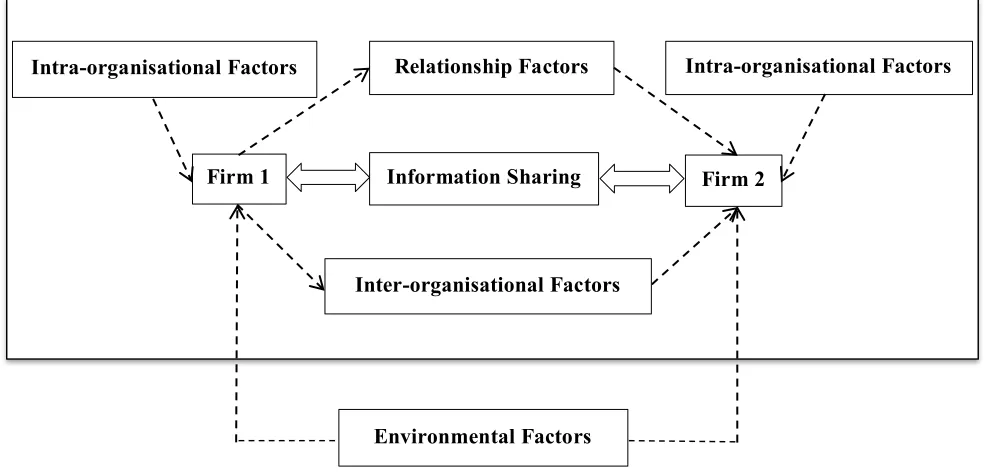
3.4 Research Framework ... 79
3.5 Summary ... 80
xvi
4.3 Conceptual Framework ... 83
4.3.1 Factors Influential to Information Sharing in Supply Chains ... 84
4.3.2 Effect on Supply Chain Performance ... 86
4.4 Research Philosophy ... 87
4.5 Research Approach, Methods and Design ... 89
4.5.1 Quantitative Research Approach, Research Methods and Research Designs ... 91
4.5.2 Qualitative Research Approach, Research Methods and Research Designs ... 91
4.5.3 Mixed Methods Research Approach, Research Methods and Research Designs .. 92
4.6 Convergent Parallel or Concurrent Mixed Methods – Mixed Methods
Design Chosen for this Study ... 93
4.6.1 Unit of Analysis ... 94
4.6.2 Target Population and Sampling Frame ... 95
4.6.3 Data Collection ... 96
4.6.3.1 Sampling ... 97
4.6.3.2 Sample Size for the Survey ... 101
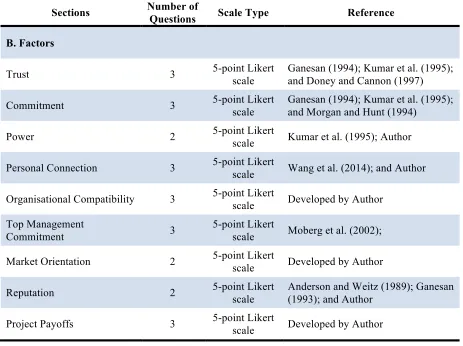
4.6.3.3 Survey Questionnaire Design ... 103
4.6.3.4 Interview Questionnaire Design ... 107
4.6.3.5 Pretesting ... 108
4.6.3.6 Administering Data Collection ... 109
4.6.3.7 Response Rate ... 111
4.6.3.8 Control of Biases ... 112
4.6.3.9 Data Analysis ... 114
4.7 Data Triangulation ... 114
4.8 Summary ... 115
Chapter 5 DATA ANALYSIS AND RESULTS ... 117
xvii
5.2.2 Data Entry, Screening and Cleaning ... 118
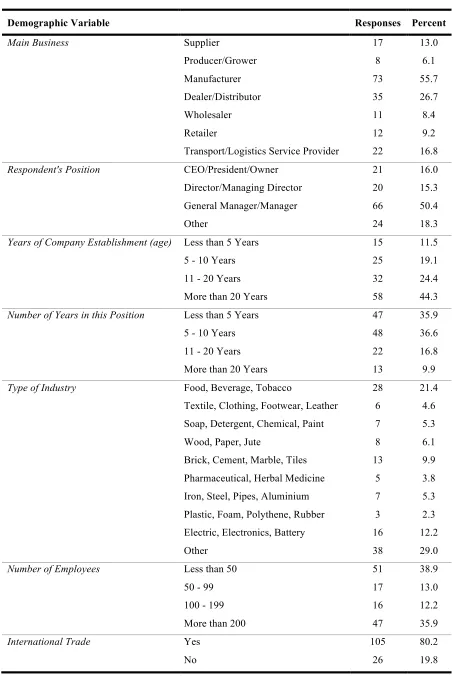
5.2.3 Respondent’s Demographics ... 119
5.2.4 Measurement Instrument Validation ... 125
5.2.4.1 Unidimensionality, Convergent Validity and Discriminant Validity ... 126
5.2.4.2 Reliability ... 135
5.2.5 Multiple Regression Analysis ... 137
5.2.5.1 Testing the Effect on Information Sharing (Regression Models 1 and 2) ... 141
5.2.5.2 Testing the Effect on Supply Chain Performance (Regression Models 3, 4, 5 and 6) . 145 5.2.5.3 Overall Result ... 146
5.3 Qualitative Data Analysis ... 148
5.3.1 Response Rate and Demographics ... 148
5.3.2 Data Immersion, Reduction (Coding) and Representation ... 150
5.3.3 Qualitative Results ... 151
5.3.3.1 Supply Chain Information Sharing and Its Status in Nepal ... 152
5.3.3.2 Maintaining a Good Relationship in Supply Chain ... 157
5.3.3.3 Factors Affecting Information Sharing in Supply Chains ... 158
5.3.3.4 Status of Information Technology in Nepal ... 162
5.3.3.5 Information Sharing and Supply Chain Performance ... 163
5.4 Summary ... 164
Chapter 6 DISCUSSIONS OF FINDINGS ... 167
6.1 Introduction ... 167
6.2 Research Question 1 ... 167
6.2.1 Factors Affecting Information Sharing in Supply Chains in Nepal ... 168
6.2.1.1 Factors Acknowledged by Quantitative and Qualitative Results ... 171
6.2.1.2 Factors Not Predicted by Quantitative Result ... 181
xviii
6.4 Summary ... 193
Chapter 7 CONCLUSION AND LIMITATIONS ... 195
7.1 Introduction ... 195
7.2 Summary of the Findings ... 195
7.3 Contributions of the Research ... 198
7.4 Limitations ... 203
7.5 Future Research ... 204
REFERENCES ... 207
APPENDICES ... 240
APPENDIX I: COVERING LETTER (SURVEY) ... 240
APPENDIX II: EMAIL INVITATION TO PARTICIPATE IN THE SURVEY ... 242
APPENDIX III: SURVEY INSTRUMENT ... 244
APPENDIX IV: REMINDER EMAIL ... 249
APPENDIX V: INVITATION TO PARTICIPATE IN AN INTERVIEW ... 250
APPENDIX VI: PARTICIPANT CONSENT FORM ... 252
APPENDIX VII: INTERVIEW INSTRUMENT ... 254
APPENDIX VIII: SAMPLE LIST ... 257
APPENDIX IX: ETHICS APPROVAL LETTER ... 263
APPENDIX X: EFA OUTPUT (EFA 9 - FINAL) ... 265
APPENDIX XI: EFA 1 ... 266
APPENDIX XII: EFA 2 ... 267
APPENDIX XIII: EFA 3 ... 268
xix
APPENDIX XVII: EFA 7 ... 272
APPENDIX XVIII: EFA 8 ... 273
APPENDIX XIX: INFORMATION SHARING – EFA 1 ... 274
APPENDIX XX: INFORMATION SHARING (FINAL) – EFA 2 ... 275
APPENDIX XXI: SUPPLY CHAIN PERFORMANCE – EFA 1 ... 276
APPENDIX XXII: SUPPLY CHAIN PERFORMANCE – EFA 2 ... 277
APPENDIX XXIII: SUPPLY CHAIN PERFORMANCE (FINAL) – EFA 3 ... 278
APPENDIX XXIV: MODEL SUMMARY – REGRESSION MODELS 3, 4, 5 AND 6 ... 279
xx
Table 2.1: Difference between Operational and Strategic Information Sharing
... 25
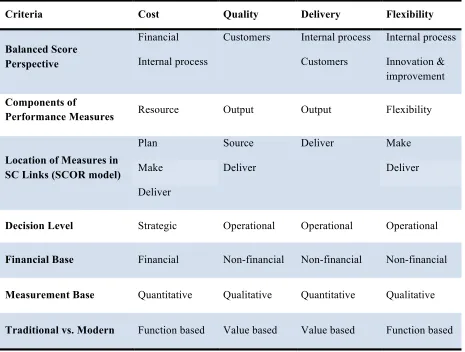
Table 2.2: Classification of Cost, Quality, Delivery and Flexibility on the Basis of
Different Criteria ... 36
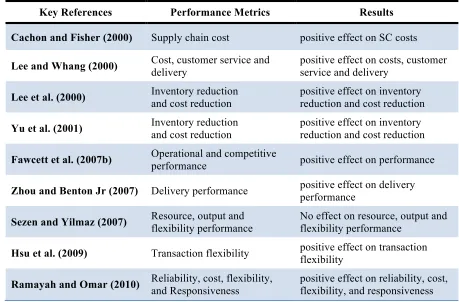
Table 2.3: Information Sharing and Performance ... 37
Table 3.1: Categorisation of Factors Affecting Information Sharing ... 47
Table 3.2: The Categories of Factors Affecting Information Sharing in Supply
Chain as Identified in the Literature ... 53
Table 3.3: Impact of Relational Factors on Supply Chain Information Sharing (IS)
... 56
Table 3.4: Impact of Intra-organisational Factors on Supply Chain Information
Sharing (IS) ... 62
Table 3.5: Impact of Inter-organisational Factors on Supply Chain Information
Sharing (IS) ... 68
Table 3.6: Impact of Environmental Factors on Supply Chain Information
Sharing (IS) ... 76
Table 4.1: Quantitative, Qualitative and Mixed Methods Research ... 90
Table 4.2: Sample Sizes for Different Sizes of Population at a 95% Confidence
Level ... 103
Table 4.3: Items in the Questionnaire ... 105
Table 5.1: Respondent's Profile ... 120
Table 5.2: Company Profile ... 124
Table 5.3: KMO and Bartlett's Test (Factors) ... 130
Table 5.4: EFA – Factors Influential to Information Sharing in Supply Chains . 130
Table 5.5: KMO and Bartlett's Test (Information Sharing) ... 132
Table 5.6: EFA – Information Sharing ... 133
Table 5.7: KMO and Bartlett's Test (Supply Chain Performance) ... 133
Table 5.8: EFA – Supply Chain Performance ... 134
Table 5.9: Reliability Output ... 136
xxi
Table 5.13: Coefficients – Regression Model 1 ... 143
Table 5.14: Coefficients – Regression Model 2 ... 144
Table 5.15: Model Summary – Regression Models 3 and 4 ... 145
Table 5.16: ANOVA – Regression Models 3 and 4 ... 146
Table 5.17: Coefficients – Regression Models 3 and 4 ... 146
Table 5.18: Summary of Test Results ... 147
Table 5.19: Profile of Interview Participants ... 149
Table 5.20: Second Stage – Generation of Five Themes ... 151
Table 5.21: Types of Information Shared and Uncomfortable to Share ... 154
Table 5.22: How can Information Sharing be Improved in Nepal? ... 155
Table 5.23: How to Maintain a Good Relationship ... 157
Table 5.24: Communication Tools Used in Nepal ... 163
Table 6.1: Results for Research Question 1 ... 168
Table 6.2: Summary of Hypotheses Testing (Influential factors of information
sharing) ... 169
Table 6.3: Results for Research Question 2 ... 187
xxii
Figure 1.1: Thesis Framework ... 11
Figure 2.1: Force-field Diagram Summarising Pressures for and against
xxiii AMC Australian Maritime College AMOS Analysis of a Moment Structures ANOVA Analysis of Variance
BSC Balanced Scorecard CCTV Closed Circuit Television CEO Chief Executive Officer
CHA Custom House Agent
CME Census of Manufacturing Establishments
CPFR Collaborative Planning, Forecasting and Replenishment CRP Continuous Replenishment Program
DC Degree of Confidence
DF Degrees of Freedom
DP Desired Precision
DV Dependent Variable
ECR Efficient Consumer Response EDI Electronic Data Interchange EFA Exploratory Factor Analysis
EM Expectation Maximisation
ERP Enterprise Resource Planning
ESCAP Economic and Social Commission for Asia and the Pacific
EU Environmental Uncertainties
FA Factor Analysis
FMCG Fast-Moving Consumer Goods
xxiv IBM International Business Machines
IS Information Sharing
ISCC International Supply Chain Connectivity ICT Information and Communication Technologies
IT Information Technology
IV Independent Variable
KMO Kaiser-Meyer-Olkin
LPI Logistics Performance Index LSP Logistics Service Provider
MAR Missing at Random
MCAR Missing Completely at Random
MNAR Missing Not At Random
MD Managing Director
NCME National Census of Manufacturing Establishments NCPS National Centre for Ports and Shipping
NEFFA Nepal Freight Forwarders Association PCA Principal Component Analysis
POS Point-of-sale
P-P Probability Plot
PRQ Primary Research Question
QR Quick Response
RBV Resource-based View
RFID Radio Frequency Identification
xxv SEM Structural Equation Modelling SLR Systematic Literature Review SMS Short Message Service
SPSS Statistical Package for Social Science SRQ Subsidiary Research Question
SS Sample Size
TCT Transaction Cost Theory
TMC Top Management Commitment
US United States
USD United States Dollar USP Unique Selling Point
UK United Kingdom
UTAS University of Tasmania
V Variability
1
Chapter 1 INTRODUCTION
1.1 Background to the Study
Supply chains (SC), whether managed or not, have existed since the first day of trading among partners (Mentzer et al., 2001, Shaw, 2001) and the management of supply chains is very important to achieve a sustainable competitive advantage for all parties involved (Cheng et al., 2008). However, supply chain management (SCM) recently reached to its prominence, fuelled by the need to improve customer services through providing them the right product, in the right quantity, at the right time, and at the right cost. With the increasing level of integration among supply chain partners, the competition has shifted from amongst organisations to between supply chains (Cooper et al., 1997b, Lambert et al., 1998, Li et al., 2006b).
Supply chain management is a set of approaches utilised to successfully coordinate and integrate all the activities and the interdependent chain members associated with the flow of goods and services from the point of production to the point of consumption (Cooper et al., 1997b, Levi et al., 2008). SCM assists in establishing inter-organisational relationships between firms to achieve common business goals because individual firms cannot generate all the critical resources internally (Patnayakuni et al., 2006). It has emerged as an important management approach to reduce costs, improve quality and enhance the long-term performance of the individual firms and the supply chain as a whole by integrating both information and material flows across the supply chain (Li et al., 2006b, Crook and Combs, 2007).
2
sharing (IS) has been identified as one of the key relationship connectors that improves the level of trust among chain members and strengthen their relationships (Moberg, 2000, Baihaqi and Sohal, 2013). It is one of the most frequently cited factors in the supply chain management literature as it facilitates both internal and external linkages that enhance coordination between supply chain partners. According to Ramdas and Spekman (2000), supply chain performance of a firm can be distinguished as either outstanding or mediocre depending on their ability to use information. An adequate flow of information in terms of scope, frequency and intensity is a crucial requirement of supply chain management because it helps firms to make wise decisions during rapidly changing and unexpected situations (Stank et al., 1996, Fawcett et al., 2007b, Youn et al., 2008, Ramayah and Omar, 2010). Information sharing is one of the most important drivers of supply chain management which facilitates supply chain coordination (Li and Lin, 2006) and expedites the decision making process to better meet customer demands, improves the quality of products and services and reduces supply chain costs (Ramayah and Omar, 2010). Information about events (such as order receipt and production), stocks (such as work-in-process and finished goods inventory), flows (such as shipment and delivery) and outcomes (such as operational performance, profit margins, revenues, and sales) can be shared between supply chain partners to make better decisions (Patnayakuni et al., 2006). Information sharing helps different functions within the supply chain to plan, react and take preventive measures to fulfil customers’ demands (Mitchell and Kovach, 2016).
3
entire chain (Cooper et al., 1997a). It is suggested that supply chain members should focus on strengthening relationships with their trading partners, increasing information exchange and investing in advanced communication technologies (Moberg, 2000). This will help firms to overcome the obstacles for the successful implementation of supply chain management strategies.
While the advancement in information technology has augmented information sharing amongst supply chain partners, there exists a substantial gap between available technology and supply chain collaboration (Fawcett et al., 2007b). Technology alone cannot improve the level of information sharing in supply chains. Willingness to share information is crucial to fill the gap and make the most out of IT. However, firms are reluctant to share information with others due to various reasons such as perceived complexities, risks and costs (Huong Tran et al., 2016). Consequently, the performance of supply chain members is compromised. To improve the overall efficiency and performance of supply chains, it is important to identify the factors that affect information sharing among chain partners. Literature has examined different factors in different contexts using different methods (Moberg et al., 2002, Li and Lin, 2006, Madlberger, 2009, Müller and Gaudig, 2011, Nguyen and Nguyen, 2014). However, there has been a dearth of empirical research examining all factors affecting information sharing and the relationship between information sharing and firm performance in the supply chain context.
1.2 Research Context
4
a result of this increase in the manufacturing establishments, the number of people employed in this sector has increased by 14.8 percent (Government of Nepal, 2014).
While the increase in the manufacturing establishments has improved product supplies in the country, it still has not been able to fulfil the market demands due to various reasons such as lack of raw materials, logistical challenges and frequent strikes (Government of Nepal, 2014). This has increased the inability of Nepalese firms to compete in the international market. To develop its economy, Nepal relies very much on the exports of manufactured products. The improvement in the competitiveness of Nepalese products requires the establishment of supply chains where firms work with each other to achieve their common goals. Supply chain management and information sharing enhances collaboration among chain members and improves the level of coordination among the various supply chain processes. This will help supply chain firms to reduce problems such as mismatch between supply and demand, stock-outs and overstocks, effects of uncertainties, and unreliable delivery schedules which will eventually improve the overall efficiency and effectiveness of their business operations nationally and internationally.
Information sharing can help to minimise the impact of logistics problems faced by Nepalese industries. Being a landlocked country, it faces several logistical challenges. Considering the logistical challenges that are difficult to solve, timely information sharing between partners might help them to plan in advance or make alternate arrangements. Thus, information sharing can act as a cross-functional or soft infrastructure of connectivity. Unlike physical infrastructure, the main requirement for information sharing is the willingness of supply chain participants. Identifying the influential factors of information sharing will help Nepalese firms to improve information sharing and hence connectivity with their supply chain partners.
5
1.3 Research Questions and Research Objectives
Prior research on supply chain management has considered information sharing among trading partners as a key factor for successful supply chain management implementation (Moberg et al., 2002). Despite the increased benefits of information sharing as discussed in the literature, very few companies have understood the real ability of information sharing in improving supply chain performance (Fawcett et al., 2007b). Arzu Akyuz and Erman Erkan (2010) suggest that information sharing or productivity is one of future research area that can contribute to a better understanding of supply chain performance metrics.
According to Childerhouse et al. (2003), in real-world supply chains, information is withheld, masked, distorted or just plainly missing. Hence, the amount of information that needs to flow through supply chains is below the ideal amount of information that needs to be shared. Firms are hesitant to share information with their partners as they believe that information is a source of competitive advantage and sharing it will affect their competitive position in the market. It is important that managers understand the various conditions under which information sharing occurs besides understanding the importance of information sharing (Patnayakuni et al., 2006). Even though there have been a vast number of studies carried out in the field of supply chain management, information sharing, and the antecedents of information sharing are less explored areas (Kembro and Näslund, 2014).
As information sharing is an important attribute of supply chain collaboration, it is essential to identify a comprehensive list of factors (Madlberger, 2009) and understand how different factors affect information sharing in supply chains. It is necessary to conduct a study including a range of factors to facilitate understanding of why supply chain partners share information with each other. A systematic approach is lacking that investigates the full range of factors related to information sharing.
6
the cause and effect of information sharing, limited studies have included both aspects in one study. This proves that the supply chain management literature is scant with studies carried out to identify the antecedents and consequences of supply chain information sharing. Hence, it is important to undertake studies that will concurrently investigate the cause and effect of information sharing in supply chains.
With different metrics and measures used to capture supply chain performance (Neely et al., 1995, Kaplan and Norton, 1996, Beamon, 1999), there has been no unanimity regarding the best measures for supply chain performance measurement (Gunasekaran and Kobu, 2007). The main objective of supply chain is to improve customer satisfaction and achieve maximum profits. Bearing this in mind, this study has considered cost, quality, delivery and flexibility as the components of performance measurement to examine how these measures can be improved through sharing information with trading partners.
According to Hausman (2004), “One shoe size does not fit all,” which means that companies and supply chains are different from each other and require different strategies to run their businesses. It is necessary to design context-specific SCM practices. In addition, very limited research has been done in the context of small under-developed countries like Nepal. Most studies have been carried out in developed countries with advanced economies.
Another reason that motivates researchers to carry out supply chain related research in developing countries is the business potential that these countries possess due to the availability of cheap labour and raw materials. However, these countries are overwhelmed with high degree of uncertainty and lack of information, which significantly affects the development and maintenance of efficient supply chains (Babbar et al., 2008). Given the global and interconnected nature of today’s supply chains, it is important to take measures to properly implement SCM at every stage of the product or service flows, in particular where the stages fall within the jurisdiction of developing countries.
7
practical recommendations to the Nepalese businesses in their effort to implement SCM and to facilitate information sharing among chain members. Based on detailed review of the literature, two primary research questions (PRQ) and four subsidiary research questions (SRQ) were formulated as follows:
PRQ1: How is information sharing affected in supply chains in the context of Nepal?
SRQ1.1: What are the critical factors affecting information sharing in the supply chains in Nepal?
SRQ1.2: How do these factors affect information sharing at strategic and operational levels?
PRQ2: How does information sharing affect the supply chain performance of individual firms in the context of Nepal?
SRQ2.1: How does operational information sharing affect the supply chain performance of individual firms in Nepal?
SRQ2.2: How does strategic information sharing affect the supply chain performance of individual firms in Nepal?
The research objectives of this research are to:
1. Investigate what, when, how and with whom do the supply chain members in Nepal share information;
2. Evaluate the critical factors that facilitate or impede information sharing in supply chains in Nepal;
3. Evaluate the effect of information sharing in enhancing the supply chain performance of individual firms in terms of cost, quality, delivery and flexibility; and
8
1.4 Methodologies
To answer the research questions and to achieve the research objectives, the data will be collected from Nepal. Different supply chains in agriculture and manufacturing will be considered as the target population and the sample will be selected from a list of supply chain members of these supply chains in Nepal. The rationale behind choosing the above two supply chains are: 1) agriculture dominates the economy of Nepal with more than 70% of the total population engaged in this sector; and 2) manufacturing is one of the major driving forces of economic development which needs further development in Nepal.
This research will use a combination of qualitative and quantitative methods for data collection. The membership roster for the Federation of Nepalese Chambers of Commerce and Industry (FNCCI) and Nepal Freight Forwarders Association (NEFFA) will be used as the sampling frame for this study. For the first part of the data collection, a survey questionnaire will be distributed to the identified list of supply chain participants in Nepal. Considering the context of Nepal, this study will conduct the survey by direct visitation to supply chain participants from the selected sample list. The survey response will be analysed using the statistical package for social science (SPSS), a software package used for statistical analysis in social science.
As part of the qualitative method, face-to-face interviews with managers and other senior executives of supply chain participants will be conducted. The interviews will be conducted simultaneously with the questionnaire survey. It is expected that the number of participants for the interviews will be much less than that of questionnaire survey as the main objective of conducting the interviews is to provide better understanding of, and support to, the quantitative data. Fifteen medium/large size firms from the sampling frame will be chosen as the respondents for the interview. The size of the firms will be determined based on their total number of employees. Content analysis will be used to analyse the qualitative data collected from interviews.
9
Singh, 2011). The data collected from small firms which, in the context of Nepal are most likely to have little knowledge about the importance of SCM, organisational relationships and information technology, might not provide useful insights towards the field of study.
The rationale behind using mixed methods is to obtain more information about the field of study by collecting qualitative data in addition to quantitative data which is the preliminary source of data. While survey is an economical way of collecting large amount of data which can be generalised from a sample to the population of interest, it has its own limitations including the length of the survey. With the restriction to ask a limited number of questions through surveys, interviews can provide better understandings about supply chain participants attitudes and behaviours towards information sharing and inter-organisational relationships.
1.5 Research Contributions
The contributions of this research can be explained from two aspects. The first one is its contribution to the literature. This research, unlike others, identifies a comprehensive list of factors that enhance or impede information sharing in supply chains through a systematic review of the literature. It answers the question of how supply chain partners can facilitate information sharing to achieve desired performance outcomes. It contributes to the literature by providing a full range of factors related to information sharing, and the applicability of the identified factors in one of the least developed countries through an empirical test. Furthermore, this research will provide empirical evidence on how information sharing will affect the supply chain performance of individual firms in terms of their cost, quality, delivery and flexibility.
10
1.6 Structure of the Thesis
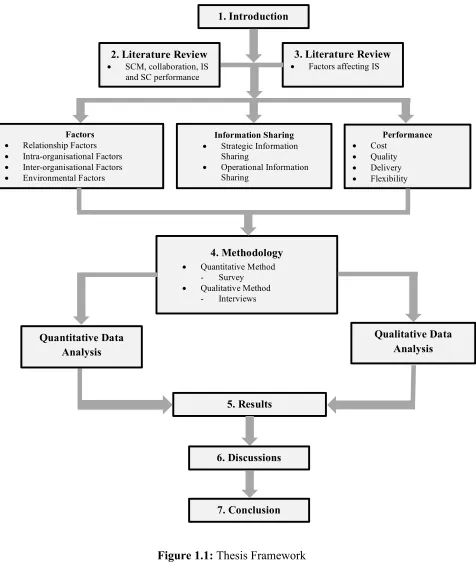
This thesis is organised into seven chapters as shown in Figure 1.1. Chapter 1 introduces the background of the research and explains the need to carry out this research giving rise to the research questions and objectives. Chapters 2 and 3 review the relevant literature from a wide range of disciplinary areas such as supply chain management, transport and logistics management, operations management, production and distribution, information and management, industrial marketing and social and behavioural science. Based on the literature review, a conceptual research framework is developed in Chapter 4. The conceptual framework consists of a series of hypotheses to test the effect of the identified 21 factors affecting information sharing between supply chain participants and the effect of information sharing on supply chain performance.
11
Figure 1.1: Thesis Framework 1. Introduction
2. Literature Review • SCM, collaboration, IS
and SC performance
Factors • Relationship Factors • Intra-organisational Factors • Inter-organisational Factors • Environmental Factors
Information Sharing • Strategic Information
Sharing
• Operational Information Sharing
Performance • Cost
• Quality • Delivery • Flexibility
4. Methodology • Quantitative Method
- Survey • Qualitative Method
- Interviews
Quantitative Data Analysis
Qualitative Data Analysis
5. Results
6. Discussions
7. Conclusion
12
Chapter 2 SUPPLY CHAIN MANAGEMENT, INFORMATION
SHARING AND SUPPLY CHAIN PERFORMANCE
2.1 Introduction
The main objective of this chapter is to review the literature concerning information sharing in supply chains and supply chain performance. Before discussing the factors that affect information sharing in supply chains and the effect of information sharing on supply chain performance, it is imperative to understand some important concepts in supply chain management. The chapter begins with brief definitions and discussion of supply chain, supply chain management and the role of collaboration in supply chains. The second objective of this chapter is to outline the theoretical foundations that explain the need of information sharing in supply chains. Transaction cost theory (TCT) and resource-based view (RBV) explain how information sharing will help supply chain partners to acquire skills that will help them to reduce costs and improve performance. The theoretical foundations justify the necessity to identify the factors that will affect information sharing in supply chains so that supply chain participants can enhance their performance.
13
2.2 Supply Chain, Supply Chain Management and Collaboration
Whether a company sells directly to end customers, provides a service or manufactures a product, it will always be a part of one or more supply chains as no single organisation is self-sufficient to satisfy all the required resources, skills and expertise (Handfield and Nichols, 1999). An organisation can leverage its core competencies and outsource the skills and resources that they lack. This motivates firms to look beyond their company walls to acquire what they lack and concentrate on what they can do best (Fawcett et al., 2007a). This gives rise to a network of suppliers and buyers that satisfies the needs and requirements of each other creating value throughout.
The management of these networks comprising of a number of supply chain participants along with the flow of materials, finance and information is known as supply chain management (SCM) (Lee and Whang, 2000). Supply chain management improves the performance of the entire chain through improved competitiveness of the individual players of the chain (Cooper et al., 1997a) along with the improved relationships among the chain members. Efficiency and cost effectiveness are the two main objectives of SCM, hence, reducing system-wide costs which includes transportation, distribution, inventories of raw materials, work-in-process, and finished goods should be the approach of SCM (Levi et al., 2008).
Supply chains are difficult to manage because it involves a large number of supply chain players with different, sometimes conflicting goals and objectives (Levi et al., 2008). They are likely to try and make effort to achieve their goals which sometimes could be against the goals of the entire chain. Such behaviour of individual participants tend to have an adverse effect on the overall performance of the chain as the decisions made by each player directly or indirectly affect other partners along the chain (Cooper et al., 1997a). However, in this networked world no individual firm can be self-sufficient which is why firms tend to work together with other firms sharing each other’s resources, skills and expertise (Lehoux et al., 2013). Hence, this makes supply chain collaboration an essential requirement.
14
supply chain activities such as purchasing, manufacturing, logistics and distribution through collaboration to improve the performance of the entire chain (Barratt, 2004). Collaborative firms generally cooperate, share information and work together to plan and achieve their mutual goals (Ralston et al., 2017). Collaborative approaches such as vendor managed inventory (VMI), quick response (QR) and collaborative planning, forecasting and replenishment (CPFR) have been proposed and widely used by firms to facilitate information sharing (Simatupang and Sridharan, 2005, Lehoux et al., 2013). Collaboration initiates information exchange based relationships not only at operational levels but also at tactical and strategic levels that leads firms towards a long-term relationship (Barratt, 2004).
As an important coordination mechanism, information sharing is considered as one of the main foundations of collaboration between supply chain firms along with the mutuality of benefits, rewards and risks (Barratt, 2004, Wiengarten et al., 2010, Ralston et al., 2017). The role of information sharing as a critical competitive resource was recognised only after 1980s when firms started focussing on SCM initiatives (Handfield and Nichols, 1999). It is the glue that holds all the supply chain participants together (Fawcett et al., 2007a) with an objective to maintain a long-term, collaborative relationship and drive the effectiveness of that relationship (Hsu et al., 2008). According to Constant et al. (1994) information sharing has the capability to improve organisational efficiency, learning, innovation, flexibility and understanding of organisational goals.
15
(VMI) and continuous replenishment programs (CRP) are all based on the idea of sharing information with the members of the supply chain network (Lee and Whang, 2000).
In order to receive valuable information that helps to make wise decisions, firms need to establish and maintain a good and trustworthy relationship with its trading partners. Collaboration with supply chain members is the best available solution to motivate firms to share information most needed to coordinate supply chain activities to reduce costs and improve customer satisfaction (Barratt, 2004, Wiengarten et al., 2010).
2.3 Theoretical Foundation of Information Sharing in Supply Chain
Despite knowing the benefits of information sharing among the trading partners, firms are still reluctant to share the information that they possess due to various reasons such as fear of losing power, confidentiality, and perceived costs of information sharing (Li and Lin, 2006, Li and Zhang, 2008, Madlberger, 2009). However, information sharing has the potential to strengthen collaborative relationship between supply chain partners which helps to reduce transaction costs and acquire skills and resources needed to perform efficiently in their supply chain. Two theories, transaction cost theory (TCT) (Williamson, 1975) and resource-based view (RBV) (Wernerfelt, 1984), are considered relevant to, and form the theoretical foundation of, this research.
2.3.1 Transaction Cost Theory (TCT)
16
relationship as an approach to reduce transaction costs involved in turning to an alternate partner (Williamson, 1981). At the same time, the investing party becomes prone to the risk of opportunism as the specific investment made towards the relationship will have very little value outside that relationship (Stump and Heide, 1996). However, when supply chain partners establish a trust-based relationship (Ganesan, 1994), the long-term gains from maintaining the relationship surpass the short-term payoffs from opportunism (Stump and Heide, 1996). This clarifies why supply chain partners with relationship specific investments involve in long term collaborative relationship where partners collaborate and exchange necessary information with each other to achieve their common goals.
The main rationale behind TCT is that there are potential costs associated with safeguarding, adaptation and evaluation processes and one of the options to reduce such costs is by establishing inter-organisational trading relationships (Heide, 1994). Accordingly, organisations aim to avoid uncertainty through collaboration facilitated by information sharing which may eventually lower transaction costs (Yigitbasioglu, 2010). As organisations have the capability to mitigate the effect of uncertainty, research based on TCT focuses on the role of the organisation as a mechanism to reduce exchange uncertainty (Tan et al., 2010). With different business goals and priorities, it is crucial for supply chain organisations to develop and maintain a collaborative partner relationship to achieve supply chain information alignment which helps to reduce uncertainty, opportunistic behaviour and transaction costs (Tan et al., 2010). Social relationships offer reciprocal benefits to one another over time which has a direct impact on transaction costs. It emphasises on the fact that collaborative inter-organisational relationships allow firms to make relationship-specific investments, share important information and engage in activities that improve the performance of both partners which will eventually lower transaction costs (Hoyt and Huq, 2000, Sheu et al., 2006). Hence, TCT, from an economic standpoint, provides a basis on which supply chain relationships are developed, where firms share information, and risks and benefits for the achievement of their common goals to improve the overall supply chain performance.
2.3.2 Resource Based View (RBV)
17
2007a). According to the RBV, resources could be defined as tangible (e.g., machineries and equipment) or intangible (process knowledge) assets possessed by a firm that act as its strength (Wernerfelt, 1984). Firm resources include assets, capabilities, organisational processes, firm attributes, skills of employees, patents, information and knowledge that are strictly controlled by the firm and enable it to use them in a way that improves its efficiency and effectiveness (Grant, 1991, Varadarajan and Cunningham, 1995). Barney (1991) suggests four major characteristics for resources to hold the potential of sustained competitive advantages which are: valuable, rare, inimitable and non-substitutable.
18
concept, the sharing process itself creates intangible resources that are inimitable, creating much value to the partners.
Although firms try to keep information to themselves as a valuable resource, the collaborative relationship built through the sharing of important information amongst the supply chain partners will be a more valuable resource which will generate relational rents and have a significant impact on supply chain performance enhancement (Patnayakuni et al., 2006). In addition to the development of collaborative relationships, knowledge development through critical thinking processes, analysis, evaluation, review and reflection of the information received is another important resource generated through the sharing of useful business information (Jarvenpaa and Staples, 2000, Hult et al., 2004, Cheng, 2011, Sanders et al., 2011, Rashed et al., 2013).
Managers tend to focus more on tangible assets such as infrastructure and technology, which can be easily copied or acquired by competitors (Fawcett et al., 2007a). The competition between firms can develop unique resources and skills that are much more difficult to imitate such as knowledge and relationships. It can be argued that, collaborative partner relationship and knowledge development are valuable resources which are unique, inimitable and non-substitutable (Patnayakuni et al., 2006, Fawcett et al., 2007a) and will play a crucial role in reducing the transaction costs. Thus, on the one hand firms give up their power by sharing information (tangible) with their partners; on the other hand, through information sharing, partners reap the benefits of intangible resources and the relationship developed from the process.
Hence, the resource based perspective supports the need of information sharing between supply chain partners in the development of sustainable competitive advantage (Hoyt and Huq, 2000, Patnayakuni et al., 2006) and provides a clear theoretical foundation, based on which investigation can be made to identify the factors that influence information sharing amongst supply chain partners (Kembro et al., 2014).
2.4 Information Sharing
19
knowledge. While information is an important resource that every firm tries to keep it to themselves, the value generated through sharing information is much more as it is through shared information, firms develop new knowledge which is more valuable and actionable (Jarvenpaa and Staples, 2000, Rashed et al., 2013). Firms need to understand the importance of information and realise that its real benefit can be gained once it is shared throughout the supply chain (Mason-Jones and Towill, 1997).
Milliken and Company, a textile and chemical company was one of the pioneering companies to share information with its trading partners in the form of point-of-sale data (POS) which helped reducing the order lead time from 18 weeks to three weeks (Levi et al., 2008). Besides Milliken and Company, Dell and Wal-Mart can be considered as the best examples of companies that have demonstrated the benefits of information sharing to help supply chain actors to work collaboratively towards a common goal (Fawcett et al., 2007b).
Information sharing is the process of exchanging information among supply chain members or partners which is critical and proprietary in nature (Li et al., 2006b, Ramayah and Omar, 2010). Information content and information quality are the two major aspects of information sharing (Li and Lin, 2006, Zhou and Benton Jr, 2007). According to the RBV, organisations are hesitant to give away more than minimal information as they consider information as a valuable resource and a source of power and sharing information means giving up their competitive advantage (Mason-Jones and Towill, 1997, Li and Lin, 2006, Fawcett et al., 2007b). Thus, potentially useful information required for decision making remains unavailable for the managers (Fawcett et al., 2007b) as they consider the risks of sharing information higher than the benefits they can gain from information sharing (Kähkönen and Tenkanen, 2010).
up-to-20
date information is the key to achieve supply chain efficiency and effectiveness (Mason-Jones and Towill, 1997, Li and Lin, 2006, Hsu et al., 2009).
Information asymmetry has been addressed as a key problem in every supply chain (Madlberger, 2009). For example, the upstream partners who maintain stock levels in the chain always have less information regarding customer demand whereas the trading partners closer to final customers have full information about market demand (Mason-Jones and Towill, 1997, Chu and Lee, 2006, Madlberger, 2009). As a result, it is likely that upstream players with limited demand information will end up misinterpreting market demand with catastrophic effects on cost and inventory level (Mason-Jones and Towill, 1997, Madlberger, 2009).
Information sharing in a supply chain takes place in two different ways: 1) internally for the effective planning of purchases and company growth and 2) externally for sharing information with supply chain partners to enhance demand planning, physical flows, and financial work processes (Du et al., 2012, Huo et al., 2016). It is crucial for supply chain members to share important information across various functions and boundaries (Eng, 2006). In order to be able to share information with supply chain partners, information needs to be shared first internally amongst various departments or functions (Fawcett et al., 2007a). While internal information sharing is critical, it is not within the scope of the current study. The focus is on information sharing with external partners which will help supply chain members to coordinate their processes for improved supply chain performance in terms of costs and customer service (Moberg et al., 2002).
For a firm to reap the benefits of information sharing on supply chain performance, it should first address the issues such as what information is shared, when and how it is shared, and with whom it is shared (Holmberg, 2000). If these issues are properly addressed, it would minimise sharing costs, information deficiency or overload and improve customer responsiveness by fulfilling their demands at a faster speed (Ramayah and Omar, 2010).
2.4.1 Why Should Information Be Shared?
21
2013). Supply chain members may not realise the need to share information with partners if they have excess capacity (Hall and Saygin, 2012). However, maintaining excess capacity means more cost on inventory, machinery and labour. It is important for firms to maintain a balance between their capacity and their costs for which they need to share information with their trading partners. For example, if they receive timely and accurate information from their downward partners about customer demand and upward partners about the status of supply, they will know how much to acquire and how much to keep as buffer stock. In this way they will not have to maintain an excess capacity and their money will not be tied up.
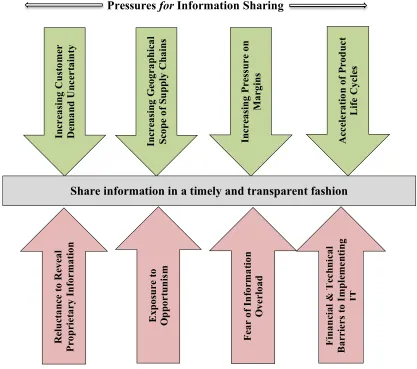
Supply chain members feel the pressure to share information with their trading partners due to increased demand uncertainty, globalised supply chains, pressure to reduce costs and the need to bring products to the market faster. Conversely, firms are hesitant towards information sharing due to their fear of being exposed to opportunism, misuse of their proprietary information, fear of information overload and financial and technical barriers to IT implementation. Figure 2.1 summarises the pressures for and against information sharing in supply chains. In the figure, the upper side represents the pressures ‘for’ and the lower side represents pressures ‘against’ information sharing.
22
[image:47.595.97.514.141.510.2]incentives should be agreed in advance (Yigitbasioglu, 2010) so that there are no disputes later.
Figure 2.1: Force-field Diagram Summarising Pressures for and against Information Sharing in Supply Chains
Source: Childerhouse et al. (2003)
Sharing important information between supply chain partners to have a long-term perspective on the relationship helps to reduce opportunistic behaviour (Kwon and Suh, 2004). However, Hall and Saygin (2012) state that the nature of the relationship between supply chain partners plays a significant role on determining the performance improvement through information sharing. Thus, supply chain partners can initiate information sharing by exchanging a small amount of information at operational level (such as orders) in the initial stages and can later
In cr ea si n g C u st om er De m an d U n ce rt ai n ty In cr ea si n g G eo gr ap h ic al Sc ope o f Su ppl y C ha ins In cr ea si n g P re ss u re o n Ma rg in s Ac ce le ra ti on o f P ro d u ct Li fe C yc le s
Share information in a timely and transparent fashion
Re lu ct an ce t o R ev ea l Pr op ri et ar y In fo rm at io n Ex p os u re t o Op p or tu n is m Fe ar o f In fo rm at io n Ov er lo ad Fi n an ci al & T ec h n ic al Ba rr ie rs t o Im p le m en ti n g IT
Pressures for Information Sharing
23
share more confidential and sensitive information once the relationship grows and the partners have confidence in each other (Cooper et al., 1997a).
2.4.2 What Information Should Be Shared?
According to Du et al. (2012) firms need to be very careful when determining what and with whom information is shared because information sharing involves the sharing of important operational, strategic and financial information with those partners who might be future competitors. Information exchange in supply chains mainly incorporate product and product development information, customer information, supplier information, manufacturing procedure information, transaction information, transportation information, inventory information, supply chain alliance information, competition information, sales and market information, supply chain process and performance information (Hsu et al., 2009). Fawcett et al. (2007a) suggest that at a minimum, firms should be sharing the following types of information: sales data and sales forecasts, inventory levels, order status for tracking/tracing, performance metrics, and capacity and capability information. A frequent, bidirectional, informal and non-coercive information sharing is preferred (Cai et al., 2010) even though the nature of information shared varies from strategic to tactical depending upon the orientation (strategic or operational partnership orientation) of the partners (Mentzer et al., 2000).
Because of the variety of information and the availability of various sharing options, it is difficult to determine the nature or level of information sharing between firms (Feldmann and Müller, 2003). Therefore, Seidmann and Sundararajan (1998) suggest that firms should share information up to the level where it is beneficial for them to do so. It was proposed that the information sharing must be reciprocal, selective and justified - but not necessarily symmetrical (Rashed et al., 2013).
24
four categories (Moberg, 2000). In order to perform short-term activities to achieve operational efficiencies, firms need operational information sharing whereas, firms need to acquire strategic information to perform long-term activities for achieving strategic goals that deliver value to customers and profitability to partners (Lee et al., 2010). To capture the possible differences between firm’s incentives to share different levels of information, this study differentiates information sharing as operational and strategic information sharing. Operational information sharing refers to the sharing of order status, shipment notice, production and delivery, sales, logistics or inventory level information on a daily or weekly basis with an aim to reduce order cycle time and inventory levels and to improve asset utilisation and customer services (Moberg et al., 2002, Patnayakuni et al., 2006, Ramayah and Omar, 2010). Operational information plays an efficient role to leverage operational economies of scale and expertise of an organisation (Patnayakuni et al., 2006). As operational information determines the everyday activity of a firm, the speed of information exchange plays a significant role in lowering inventory costs and enhancing customer services (Moberg, 2000). Unlike strategic information, most of the operational information is quantitative in nature such as order, sales and inventory information which can be obtained in tables and spread-sheets through information technologies such as internet and EDI (Moberg, 2000). A good example of sharing operational information is vendor managed inventory where a supplier manages its own products’ inventory at the buyer’s site. This results in cost savings for both parties as both parties experience reduction in inventory costs and lead times. This also reduces the supply-side uncertainty that a buyer normally faces. The supplier on the other hand gains superior knowledge on how well its product is doing which gives it the advantage to bargain for price schedules that are more in its favour (Seidmann and Sundararajan, 1998).
25
recipient of the information (Moberg, 2000). The exchange of sensitive, long-term strategic information was not common in the past whereas the exchange of operational information such as ordering information started even before the development of information technologies and SCM initiatives (Moberg, 2000).
Sharing point-of-sales (POS) information is a good example of strategic information sharing. POS information can be categorised as operational information as it helps a retailer to derive the inventory positions. However, it can provide strategic benefits to a supplier who can make superior demand forecasts by analysing the POS data (Seidmann and Sundararajan, 1998). The availability of POS information will help suppliers to make superior demand forecast including segment-specific (geographical or seasonal) forecast, which can be of great value to its sales and product development groups improving their internal operating efficiency (Seidmann and Sundararajan, 1998). On the other hand, sharing POS information gives the retailer the power to negotiate on price, payment terms, lead time reduction and sharing IT implementation costs (Lee et al., 2000, Chu and Lee, 2006).
The differences between operational and strategic information sharing is summarised in Table 2.1 (Moberg, 2000).
Table 2.1: Difference between Operational and Strategic Information Sharing
Types of Information Sharing
S.N. Operational Strategic
1 Short-term daily information Long-term information
2 Quantitative in nature Qualitative in nature
3 Shared through advanced IT Shared through face-to-face meeting or phone call
4 Less complex More complex
26
2.4.3 With Whom Should Information Be Shared?
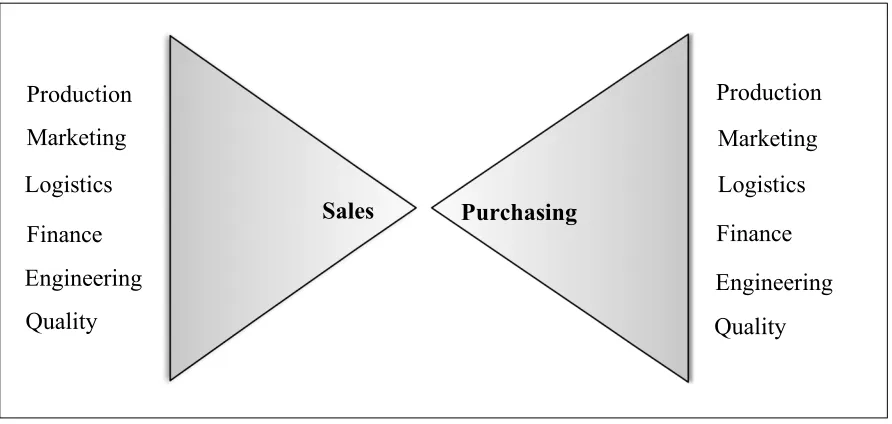
According to Fawcett et al. (2007a), the functions within an organisation such as purchasing, sales and marketing primarily deal with external organisations and hence, should be the first point of contact between a firm and its external organisations. This is a traditional way where all the information is shared between the buyer of one firm and the seller of the other and the rest of the two firms’ functions remain isolated from each other in terms of communication and interaction (Cooper et al., 1997a). The “bow-tie” approach in Figure 2.2 demonstrates the information sharing relationship between the sales unit/department of a company and the purchasing unit/department of the other.
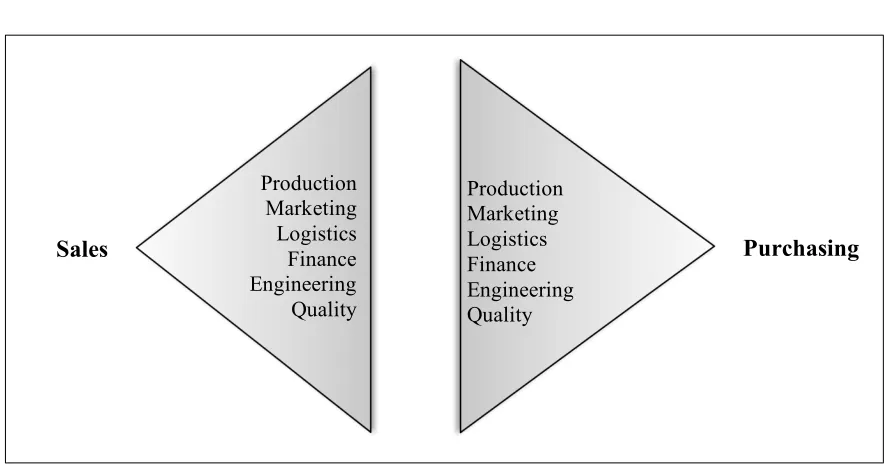
However, it is not necessary that an organisation should communicate with the other organisations through either sales or purchasing personnel. The supply chain information sharing process would be more efficient if different functions within an organisation can directly share information with the corresponding functions of their partner organisations, an approach referred to as “diamond approach” shown in Figure 2.3 (Cooper et al., 1997a). Such an approach will create more close relationships between personnel of the two firms which will further enhance integration and collaboration between firms (Fawcett et al., 2007a).
[image:51.595.83.529.461.673.2]
Figure 2.2: Bow-Tie Approach to Information Sharing Source: Cooper et al. (1997a)
Sales
Purchasing
Production Marketing Logistics Finance Engineering Quality Production