“
EFFECTIVENESS OF FORWARD VERSUS BACKWARD STEPPING
STRATEGY IN BODY WEIGHT SUPPORT TREADMILL TRAINING ON
FUNCTIONAL MOBILITY AND BALANCE AMONG SPASTIC
DIPLEGIC CEREBRAL PALSY
”
- A SIMPLE RANDOMIZED EXPERIMENTAL STUDY
A project submitted in partial fulfillment
of the requirement for the degree of
MASTER OF PHYSIOTHERAPY
Submitted by
Reg.No:271720206
Under the guidance of
Prof. Dr.M.PRADEEPA, MPT (Neurology), MIAP
Submitted to
THE TAMILNADU DR.M.G.R.MEDICAL UNIVERSITY
CHENNAI -32
PPG COLLEGE OF PHYSIOTHERAPY
COIMBATORE- 35.
i
“
EFFECTIVENESS OF FORWARD VERSUS BACKWARD
STEPPING STRATEGY IN BODY WEIGHT SUPPORT
TREADMILL TRAINING ON FUNCTIONAL MOBILITY AND
BALANCE AMONG SPASTIC DIPLEGIC CEREBRAL PALSY
”
- A SIMPLE RANDOMIZED EXPERIMENTAL STUDY
A project submitted in partial fulfillment
of the requirement for the degree of
MASTER OF PHYSIOTHERAPY
Submitted by
Reg.No:271720206
Under the guidance of
Prof. Dr.M.PRADEEPA,MPT (Neurology), MIAP
Submitted to
THE TAMILNADU DR.M.G.R.MEDICAL UNIVERSITY
CHENNAI -32
PPG COLLEGE OF PHYSIOTHERAPY
COIMBATORE- 35.
ii
“
EFFECTIVENESS OF FORWARD VERSUS BACKWARD
STEPPING STRATEGY IN BODY WEIGHT SUPPORT
TREADMILL TRAINING ON FUNCTIONAL MOBILITY AND
BALANCE AMONG SPASTIC DIPLEGIC CEREBRAL PALSY
”
- A SIMPLE RANDOMIZED EXPERIMENTAL STUDY
Submitted by
Register Number: 271720206
Under the guidance of
Prof.Dr.M.PRADEEPA,MPT (Neurology), MIAP
Submitted to
THE TAMIL NADU DR.M.G.R. MEDICAL UNIVERSITY
CHENNAI -32
Dissertation Evaluated on ………
iii
CERTIFICATE
–
I
This
is
to
certify
that
the
dissertation
work
entitled
“
EFFECTIVENESS
OF
FORWARD
VERSUS
BACKWARD
STEPPING
STRATEGY
IN
BODY
WEIGHT
SUPPORT
TREADMILL TRAINING ON FUNCTIONAL MOBILITY AND
BALANCE AMONG SPASTIC DIPLEGIC CEREBRAL PALSY -A
SIMPLE RANDOMIZED EXPERIMENTAL STUDY
was carried
out
by
Register
number:271720206
,
PPG
College
of
Physiotherapy,Coimbatore-35, affiliated to The Tamil Nadu Dr. M.G.R.
Medical
University,
Chennai-32,
under
the
guidance
of
Prof.Dr.M.PRADEEPA,MPT(Neurology), MIAP
PRINCIPAL
iv
CERTIFICATE
–
II
This
is
to
certify
that
the
dissertation
work
entitled
“
EFFECTIVENESS
OF
FORWARD
VERSUS
BACKWARD
STEPPING
STRATEGY
IN
BODY
WEIGHT
SUPPORT
TREADMILL TRAINING ON FUNCTIONAL MOBILITY AND
BALANCE AMONG SPASTIC DIPLEGIC CEREBRAL PALSY
–
A SIMPLE RANDOMIZED EXPERIMENTAL STUDY
”
w
as
carried out by
Register number: 271720206
, P.P.G College of
Physiotherapy,Coimbatore-35, affiliated to The Tamil NaduDr.M.G.R.
Medical University, Chennai-32, under my guidance and supervision,
GUIDE
v
ACKNOWLEDGEMENT
First and foremost, I thank GOD AND ALMIGHTY for providing me the
wisdom and knowledge to complete this study successfully.
I thank my parents, who had given me the opportunity, guidance, encouragement
and support throughout the course of my study.
I express my sincere gratefulness to our chairman Dr. L.P. THANGAVELU, M.S., F.R.C.S and our correspondent Mrs. SHANTHI THANGAVELU, M.A., P.P.G
group of institutions, Coimbatore, for their encouragement and providing the source for
the successful of the study.
I express my heartfelt thanks to My Principal Prof. Dr. C. SIVAKUMAR,
MPT(ORTHOPAEDICS)., Ph.D., MIAP., for his guidance, support and constant
encouragement through out of this project.
I extend my special thanks to my Guide Prof.Dr. M. PRADEEPA, MPT
(NEUROLOGY), MIAP, for assisting me with valuable inputs and guiding me through
the course of my study. Without her guidance, support and constant encouragement, this
project would not have come through.
I extend my thanks to MY FRIENDS for their support and constant
vi
LIST OF CONTENTS
CHAPTER
CONTENT
PAGE NO
I
INTRODUCTION
1.1 Background of the study
1.2 Need of the study
1.3 Aim of the study
1.4 Objectives of the study
1.5 Hypothesis
1.6 Operational Definitions
1 5 6 6 7 8
II
REVIEWS OF LITERATURE
2.1 Reviews related to incidence and prevalence of
Cerebral palsy
2.2 Reviews related to Aetiology
2.3 Reviews related to Gross Motor Function
2.4 Reviews related to Outcome Measures
2.5 Reviews related to Intervention
9
9
10
10
12
III
MATERIALS AND METHOGOLOGY
3.1 Study Design
3.2 Study Population
3.3 Sample Size
3.4 Sampling technique
3.5 Study setting
14
14
14
14
vii
3.6 Study Duration
3.7Selection criteria
3.8Materials Used
3.9 Parameters
3.10 Study Procedure
3. 11Treatment technique
14
14
15
15
15
16
IV
DATA ANALYSIS AND RESULTS
4.1 Statistical tools
4.2 Demographical Data
19
20
V
DISCUSSIONS
30VI
SUMMARY AND CONCLUSION
6.1 Summary
6.2 Conclusion
33
33
VII
LIMITATIONS AND SUGGESTIONS
7.1 Limitation
7.2 Suggestions
34
34
VIII
REFERENCES
35IX
ANNEXURES
viii
Annexure – II
Annexure – III
Annexure – IV
Annexure – V
40
46
51
ix
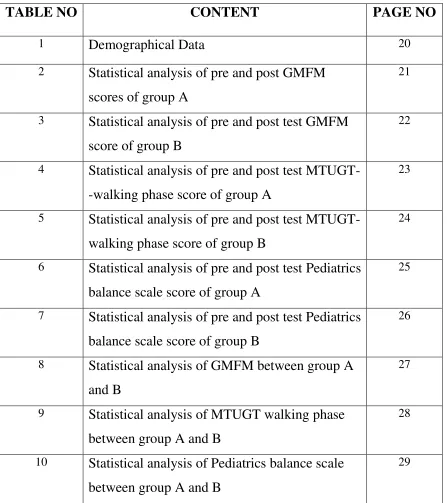
[image:10.612.103.550.103.606.2]LIST OF TABLES
TABLE NO
CONTENT
PAGE NO
1
Demographical Data
202
Statistical analysis of pre and post GMFM
scores of group A
21
3
Statistical analysis of pre and post test GMFM
score of group B
22
4
Statistical analysis of pre and post test
MTUGT--walking phase score of group A
23
5
Statistical analysis of pre and post test
MTUGT-walking phase score of group B
24
6
Statistical analysis of pre and post test Pediatrics
balance scale score of group A
25
7
Statistical analysis of pre and post test Pediatrics
balance scale score of group B
26
8
Statistical analysis of GMFM between group A
and B
27
9
Statistical analysis of MTUGT walking phase
between group A and B
28
10
Statistical analysis of Pediatrics balance scale
between group A and B
x
LIST OF GRAPH
GRAPH NO
CONTENT
PAGE NO
1.
Graphical Representation of pre and post
GMFM scores of group A
21
2.
Graphical Representationof pre and post test
GMFM score of group B
22
3.
Graphical Representationof pre and post test
MTUGT -walking phase score of group A
23
4.
Graphical Representationof pre and post test
MTUGT
–
walking phase score of group B
24
5.
Graphical Representationof pre and post test
Pediatrics balance scale score of group A
25
6.
Graphical Representationof pre and post test
Pediatrics balance scale score of group B
26
7.
Graphical Representationof GMFM between
group A and B
27
8.
Graphical Representationof MTUGT -walking
phase between group A and B
28
9.
Graphical Representationof Pediatrics balance
scale between group A and B
xi
LIST OF FLOW CHART
FLOW
CHART NO
CONTENT
PAGE NO
xii
LIST OF MASTER CHART
MASTER
CHART NO
CONTENT
PAGE NO
1 Pre and Post score values of GMFM,MTUGT,PBS
for group-A
58
2 Pre and Post score values of GMFM,MTUGT,PBS
for group-B
xiii
“
EFFECTIVENESS OF FORWARD VERSUS BACKWARD
STEPPING STRATEGY WITH BODY WEIGHT SUPPORT
TREADMILL TRAINING ON FUNCTIONAL MOBILITY AND
BALANCE AMONG SPASTIC DIPLEGIC CEREBRAL PALSY
”
- A SIMPLE RANDOMIZED EXPERIMENTAL STUDY-
ABSTRACT
BACKGROUND OF THE STUDY:
The term cerebral palsy describes a group of disorders attributed to
non-progressive disturbances that occur in the developing fetal or infant brain and result in a
cluster of disorders that impact development of movement and posture, causing activity
limitation.
OBJECTIVE:
The aim of the study is to find out the effectiveness of forward stepping vs
backward stepping strategy with body weight–supported treadmill training on functional
mobility and balance among spastic diplegic cerebral palsy.
METHODOLOGY:
28 children with spastic diplegic cerebral palsy were screened for the study on
that 24 subjects who come under selection criteria were selected for this study were
selected for this study based on the selection criteria and they were randomly allocated in
to two groups by using tossing method. Subjects in group A were treated with forward
stepping in BWSTT and subjects in group B were treated with backward stepping in
BWS TT. Both the group received intervention for 6 weeks. The baseline and post test
score were measured by using Gross Motor Function Measure – Walking dimension,
Paediatric Berg Balance Scale and TUG test.The results suggest that the effects of
forward stepping versus backward stepping strategy with body weight–supported
treadmill training improving functional mobility and balance among spastic diplegic
cerebral palsy. In GMFM,the t value obtained for Group A 6.20106 and Group B
xiv
Pediatrics balance scale the t value obtained for Group A -13.868 and Group B -7.50341.
The obtained t value is greater than the table value at the significant level of 0.05.Hence
the statistical report states that there were statistically significant differences in posttest
comparison
The post score values of the Gross Motor Function Meaure-88, Paediatric Berg
Balance Scale and TUG test score in all the variables showed significant difference.
CONCLUSION:
Finally, the study concluded that the 6 weeks of backward stepping body weight
support treadmill training program along with regular physiotherapy treatment showed
statistically significant improvement in balance and functional mobility among spastic
diplegic children when compared to forward stepping body weight support treadmill
training program.
KEYWORDS:
Spastic cerebral palsy, Body Weight Support Treadmill Training (BWSTT),
1
CHAPTER
–
I
1.1
BACK GROUND OF THE STUDY:
Cerebral palsy is a common neuro developmental condition encountered by
pediatricians. The condition may present itself in many different clinical spectra. In
many cases, the cause of Cerebral palsy may not be apparent. Cerebral palsy is
invariably associated with many deficits such as mental retardation, speech and
language and oromotorproblems.[1]
The traditional definition of CP is a non-progressive impairment in movement
or posture caused by injury or anomaly of the developing brain.[2]
Cerebral palsy (CP) describes a group of disorders in movement and posture
that limits activity and is attributed to disturbances in the developing fetal or infant
brain.[3]Spastic diplegia is one of the most common types of CP in which lower
limbs are affected more than upper limbs. Children with diplegic CP encounter
difficulties in sensory processing and integration which influence the achievement
of mature postural control.[4]Consanguinity, birth asphyxia, neonatal jaundice are
found to be the important risk factors for CP in our study which can be avoided by
improving maternal and paediatric health services.[5]
CLASSIFICATION:
The topographical classification of CP is monoplegia, hemiplegia, diplegia
and quadriplegia: monoplegia and triplegia are relatively uncommon.
Early signs of cerebral palsy include cerebral palsy is a clinical diagnosis
made by an awareness of risk factors, regular development screening of all high risk
babies and neurological examination. As in all medical conditions, a systematic
approach focusing on maternal, obestrics and perinatal histories, review of
developmental milestones and a through neurological examination and observation of
the child in various positions such as supine, prone, standing, walking and running is
mandatory. It is not possible to diagnose CP in infants less than 6 months except in
very severe cases. Another early feature is persistence of prominent feature,
abnormalities of tone-either spasticity or hypotonia of various distribution, persistence
of abnormal neonatal reflexes, delay in the emergence of protective and postural
2
The CP children have gait pathologies and tend to lose independent walking at
later stages of life because of knee problems, increased spasticity, balance problems,
and lack of physical training.[7]
Poor balance control is one of the most contributing factors for poor gait and
reaching movement because the maintenance of stability is critical to all movement.[8]
There are increasing evidences suggesting rise in prevalence of CP. Profile of
CP in developing country is also different from developed countries.[4]
Modern improved obstetric and advanced prenatal care had resulted in
increased survival of low birth weight babies and is associated with an increased
proportion of cerebral palsy in these babies.[9]
Risk factors include preterm birth, being a twin, certain infections during
pregnancy such as toxoplasmosis or rubella, exposure to methylmercury during
pregnancy, a difficulty delivery and head trauma during the first few years of life
among others. About 2% of cases are believed to be an inherited genetics cause.[5,6]
Spastic CP was the most common type (76%) followed by Dyskinetic 10%, 1%
each in hypotonic and Ataxic CP. 12% cases were of evolving CP infants with Global
3
Amongst the Spastic CP, Diplegia was present in maximum cases (55%)
followed by Quadriplegia 24%, Hemilplegia 19% and Monoplegia 2%.[10]
EPIDEMIOLOGY OF CEREBRAL PALSY:
Population-based studies from around the world report that the prevalence
estimates of CP range from 1.5 to more than 4 per 1,000 live births or children of a
defined age range. The overall birth prevalence of CP is approximately 2 per 1,000
live births.[11]
Its incidence in India around 3 cases per 1000 live births; however, being a
developing country, the actual figure may be much higher. There are increasing
4
The development of independent walking and efficient gait is often a primary
focus of physiotherapy interventions for children with CP. Decreased locomotor
function is predictive of reduced capacity for activity, participation, and social
interaction for children with CP Population-based studies from around the world
report that the prevalence estimates of CP range from 1.5 to more than 4 per 1,000
live births or children of a defined age range. The overall birth prevalence of CP is
approximately 2 per 1,000 live births. Its incidence in India around 3 cases per 1000
live births; however, being a developing country, the actual figure may be much
higher. There are increasing evidences suggesting rise in prevalence of CP.[13]
Physical or mental disability was observed in 1.6% of the population of Tamil
Nadu. We observed that about 1 in every 100 person in Tamil Nadu (1635 per 100
000 persons) is either physically or mentally Disabled.[14]
Moreover, these children demonstrate deficiency in anticipatory postural
adjustments while standing and walking. clinicians and researchers in the field of
pediatric CP have begun to turn their attention to the potential benefits of treadmill
training for improving walking in children with CP. It is suggested that treadmill
training activates neural circuits that mediate central pattern generators to activate
limb muscles repetitively and produced rhythmic movements. [15]
Treadmill training is assumed to modify postural control in children with CP,
by permitting multiple repetitions of steps in rhythmic pattern during the gait cycle.
Additionally, it adjusts control between agonist and antagonist muscles, leading to
5
1.2 NEED OF THE STUDY:
Spastic diplegia implies that the lower extremities are more involved than the
upper extremities where scissoring gait and low grade balance are common. In general
physiotherapy techniques such as PNF, Motor Relearning technique, Rood’s
Approach were effective for CP patients
With a growing body of research evaluating the efficacy of treadmill training
for adults with neurologic disorders, most notably after spinal cord injury, clinicians
and researchers in the field of pediatric CP have begun to turn their attention to the
potential benefits of treadmill training for improving walking in children with CP.
This interest is based on the principle that task-specific and repetitive practice is
required to develop and improve a motor skill such as walking.
So the need of the study is to find out the effectiveness of forward versus
backward stepping strategy in body weight support treadmill on functional mobility
and balance among spastic diplegic cerebral palsy are significant in the field of
6
1.3 AIM OF THE STUDY:
The aim of the study is to find out the effectiveness of forward versus
backward stepping strategy in body weight support treadmill on functional mobility
and balance among spastic diplegic cerebral palsy.
1.4 OBJECTIVES OF THE STUDY:
To evaluate the effectiveness of forward stepping strategy in body weight support
treadmill on functional mobility among children with spastic diplegic cerebral
palsy.
To evaluate the effectiveness of forward stepping strategy in body weight support
treadmill on balance among children with spastic diplegic cerebral palsy
To evaluate the effectiveness of backward stepping strategy in body weight support treadmill on functional mobility among children with spastic diplegic
cerebral palsy.
To evaluate the effectiveness of backward stepping strategy in body weight
support treadmill on balance among children with spastic diplegic cerebral palsy.
To compare the effectiveness of forward versus backward stepping strategy in
body weight support treadmill on functional mobility among children with spastic
diplegic cerebral palsy.
To compare the effectiveness of forward versus backward stepping strategy in
body weight support treadmill on functional mobility among children with spastic
7
1.5 HYPOTHESIS:
Null Hypothesis
There would not have been any statistically significant improvement in
forward versus backward stepping strategy in body weight support treadmill on
functional mobility and balance among spastic diplegic cerebral palsy.
Alternative Hypothesis
There would have been a statistically significant improvement in forward
versus backward stepping strategy in body weight support treadmill on functional
8
1.6 OPERATIONAL DEFINITIONS:
CEREBRAL PALSY:
Cerebral palsy is an umbrella term covering a group of non-progressive, but
often changing motor impairment syndromes which may or may not involve sensory
deficits that are caused by a defect, lesion or anomaly of the developing brain.
- WILLIAMS AND WILKINS
Cerebral palsy is the commonly used name for a group of conditions
characterized by motor dysfunction due to non-progressive brain damage early in life.
There are usually associated disabilities as well as emotional, social and family
difficulties.
- SOPHIE LEVITT
MODIFIED TUG TEST:
Modified TUG is version of TUG test, The TUG test measure is the time
taken, in seconds, by an individual to stand up from a standard arm chair, walk a
distance of 3meter, turn, walk back to chair, and sit down again.
- SANJIVANI N.DHOTE
PAEDIATRIC BALANCE SCALE:
The Paediatric balance scale (PBS), is a modified version of the Berg Balance
Scale that is used to assess functional balance skills in school aged children.
- FRANJOINE MR
GROSS MOTOR FUNCTION MEASURE (GMFM):
The Gross Motor Function Measure (GMFM) is an observational clinical tool
designed to evaluate change in gross motor function in children with cerebral palsy.
There are two versions of the GMFM-the original 88-item measure (GMFM-88) and
the more recent 66-item GMFM(GMFM-66)
- SUSAN B O’SULLIVAN
BODY WEIGHT SUPPORTED TREADMILL TRAINING:
“It consist of suspension system to which a subject is connected so that the weight shifting, balance and stepping can be controlled. The walking is facilitated by
treadmill.”
9
CHAPTER II
REVIEW OF LITERATURE
2.1 REVIEWS RELATED TO INCIDENCE AND PREVALENCE OF
CEREBRAL PALSY:
EDWIN DIAS, et al., (2017):
Done a systemic review on cerebral palsy in India. It is found that 10% of the
global population has some form of disability from different causes; in India, it is
3.8% of the population. Nearly 15-20% of physically disabled children are affected by
cerebral palsy. In India,the estimated incidence is around 3/1000 live births. Diplegic
is the commonest form at 30%-40%,hemiplegia is 20%-30% and quadriplegia
accounts for 10%-15%.In an analysis of 1000 cases of CP from India, It was found
that spastic quadriplegia constituted 61% of cases followed by diplegia 22%.Spastic
CP is the commonest and accounts for 70%-75% of all cases, dyskinetic for 10% to
15% and ataxic for less than 5% of cases.[6]
MK FRANKLIN SHAJU,et al., (2016):
According to World Health Organization (WHO) estimation, 3.8% of the
Indian children have some form of disability due to different causes. Among that
nearly 15-20% was suffering from cerebral palsy (CP), Spastic Diplegic accounts for
22.4 %. The estimated incidence of cerebral palsy in India is around 3/1000 live
births. However, being a developing country, the expected actual figure may be much
higher. An experimental study was conducted to evaluate and compare the efficacy of
task oriented training and conventional physiotherapy on mobility and balance among
spastic Diplegic cerebral palsy children.[17]
2.2 REVIEW RELATED TO AETIOLOGY
TAYLOR et al., (2005)
In about 10-20% of patients, cerebral palsy is acquired postnataly, mainly
because of brain damage from bacterial meningitis, viral encephalitis,
hyperbilirubinemia, motor vehicle collisions, falls or child abuse.
DAMMANN et al., (2004)
In addition to prematurity and low birth weight, other disorders that have been
implicated include multiple gestation, intrauterine viral infection, male gender,
hereditary, fetal blood clotting disorders, placental abnormalities, and signs of
10
2.3 REVIEW RELATED TO IMPAIRMENT IN GROSS MOTOR
FUNCTIONS
ABDEL-AZIEM AA1, EL-BASATINY HM(2017):
A total of 30 children with hemi paretic cerebral palsy of both sexes (10 to 14 years of age, classified as I or II by gross motor function classification system) participated in this study. They were randomly assigned into two equal groups.Both
groups received a conventional physical therapy program for 12 successive weeks (three sessions per week). The experimental group additionally received (25 min) backward walking training. The control group additionally received (25 min) forward walking training.
2.4 REVIEW RELATED TO OUTCOME MEASURES
MODIFIED TIMED UP AND GO TEST:
MK FRANKLIN S.(2016)
Twenty spastic Diplegic cerebral palsy children were selected for the study
and divided into two groups one group received task oriented training and the other
group received conventional physiotherapy daily one hour and the same was
continued for six weeks. Before starting the treatment mobility and balance were
measured by timed up and go test and pediatric balance scale respectively. The
measurements were repeated after six weeks.
SANJIVANI N,et al., (2012)
Studied on reliability of modified timed up and go test in children with
cerebral palsy.The study was conducted on 30 cerebral palsy childrenon 4-12
years.Three trails were conducted for each of the three occasionsinitial
assessment(time 1),30 minutes after initial assessment(time 2),and 1 week after initial
assessment (time 3).The mean score of three trials was documented as the final
score.Results reveals that the reliability of TUG test was high,with ICC of 0.99 for
within-session reliability and 0.99 for test-retest reliability.
GROSS MOTOR FUNCTIONAL MEASURE (GMFM):
ABDEL-AZIEM AA1, EL-BASATINY HM(2017)
A total of 30 children with hemiparetic cerebral palsy of both sexes (10 to 14 years of age, classified as I or II by gross motor function classification system) participated in this study. They were randomly assigned into two equal groups.Both
11
backward walking training. The control group additionally received (25 min) forward walking training.
KIM SGet.al., (2013)
The study was to determine whether an 8-week period of backward walking
(BW) training on the treadmill can improve the gross motor function measure
(GMFM), weight-bearing symmetry, and temporospatial gait parameters in
individuals with spastic cerebral palsy. Twelve participants aged 5-15 years with
spastic cerebral palsy participated in this study. The BW training was conducted on a
treadmill for up to 20 min, with three sessions per week for 8 consecutive weeks.
Before each treadmill training session, lower limb stretching was included in the
session.
PAEDIATRIC BALANCE TEST:
MK FRANKLIN S.(2016)
Twenty spastic Diplegic cerebral palsy children were selected for the study
and divided into two groups one group received task oriented training and the other
group received conventional physiotherapy daily one hour and the same was
continued for six weeks. Before starting the treatment mobility and balance were
measured by timed up and go test and pediatric balance scale respectively. The
measurements were repeated after six weeks.
CHANDAN KUMAR,et.al.,(2013):
Conducted study on effectiveness of task oriented circuit training on
functional mobility and balance in cerebral palsy.This was an experimental study of
30 children with spastic diplegic cerebral palsy.All the subjects were enrolled in an
identical sub group and divided into two equal groups(15 patient in each group) one
experimental group and other control group. Experimental group did task oriented
circuit training while control group performed conventional exercise program. The
functional mobility of lower extremity and balance of all patients are assessed by
Timed Up and Go test and paediatric balance scale.The study concluded that task
oriented circuit training is more effective as compared to the conventional training for
the functional mobility and balance in spastic diplegic cerebral palsy children.
YI SH.et.al.,(2012):
Conducted study on validity of paediatric balance scale in children with
spastic cerebral palsy.Paediatric berg balance scale is modified version of berg
12
participated in this study and this study concluded that paediatric balance scale can be
considered as a simple,valid scale for examining functional balance capacity in
children with spastic cerebral palsy.
2.5 REVIEW RELATED TO INTERVENTION
BODY WEIGHT SUPPORTED TREADMILL TRAINING:
ABDEL-AZIEM AA1, EL-BASATINY HM(2017):
A total of 30 children with hemiparetic cerebral palsy of both sexes (10 to 14 years of age, classified as I or II by gross motor function classification system) participated in this study. They were randomly assigned into two equal groups.Both
groups received a conventional physical therapy program for 12 successive weeks (three sessions per week). The experimental group additionally received (25 min) backward walking training. The control group additionally received (25 min) forward walking training.
AYOUB, H. (2016)
Children were asked to walk backward with suspension held on the treadmill
with body weight support (30% body weight release) with speed of 0.01 m/sec. and 0
degree inclination for 5 min. firstly increased gradually to reach 2m/ sec. for total time
of session 15 min., totally. Partial body weight supported backward treadmill training
was conducted once a day, 3 sessions a week for 3 months.
HAMADA EI SAYED ABD ALLAH AYOU B et.al.,(2015):
He did the study on impact of body weight supported backward treadmill
training on walking speed in children with spastic diplegia.Twenty children with
spastic diplegia enrolled in the study, they were classified into two groups of equal
number.The control group (A) received selected physicaltherapy program based on
the neurodevelopmental approach for such cases,while the study group(B) received
partial body weight supported backward treadmill training in addition to regular
exercise program.Gait pattern was associated using the Biodex Gait trainer II for each
group pre and post three months of the treatment program.There was statistically
significant improvement in the walking speed in the study group(p<0.05)with
significant difference when compared post treatment results between
groups(P<0.05).These findings suggested that the partial body weight supported
13
to improve walking speed and functional abilities of children with diplegic cerebral
palsy.
TOSHIFUMI TAKAO, et.al.,(2015):
They did study on improvement of Gait ability with a short term intensive gait
rehabilitation program using body weight support treadmill training in community
dwelling chronic stroke survivors.In this study the treatment group received BWSTT
3 times a week for 4 weeks (a total of 12 times)with each session lasting 20 minutes.
The main outcome measures were maximum gait speed on flat floor, cadence and step
length. No difference was observed in the baseline clinical data between the 2 groups.
The gait speed in the treatment group was significantly improved compared with that
in the control by 2-way ANOVA, while the other parameters showed no significant
interaction.The study concluded that short term intensive gait rehabilitation using
BWSTT was improving gait ability among community dwelling post stroke subjects.
KIM SGet.al., (2013)
The study was to determine whether an 8-week period of backward walking (BW)
training on the treadmill can improve the gross motor function measure (GMFM),
weight-bearing symmetry, and temporospatial gait parameters in individuals with
spastic cerebral palsy. Twelve participants aged 5-15 years with spastic cerebral palsy
participated in this study. The BW training was conducted on a treadmill for up to 20
min, with three sessions per week for 8 consecutive weeks. Before each treadmill
14
CHAPTER III
MATERIALS AND METHODOLOGY
3.1 STUDY DESIGN:
The study design was an Experimental design with pre and post test evaluation
was done.
3.2 STUDY POPULATION:
Subjects with spastic diplegic cerebral palsy were enrolled for this study.
3.3 SAMPLE SIZE:
24 children with spastic diplegic cerebral palsy who fulfill the selection
criteria were selected for this study.
3.4 SAMPLING TECHNIQUE:
Children were selected by using probability sampling method and they were
divided into two groups by using toss method.
3.5 STUDY SETTING:
The study was conducted at out-patient department of PPG College of
Physiotherapy and Ashwin Hospital, Coimbatore.
3.6 STUDY DURATION:
The total study duration was six weeks. Enrollment period was from
November 2018 to December 2018.
3.7 SELECTION CRITERIA:
3.7.1 INCLUSION CRITERIA Age between 5 to 12 years old.
Both males and females.
Spastic diplegia cerebral palsy.
The Gross Motor Functional Classification System level-II.
Subjects who can follow the treatment instruction.
3.7.2 EXCLUSION CRITERIA All other types of cerebral palsy.
Selective dorsal rhizotomy, botulinum injection to the lower extremity within 6 months.
Any orthopedic problems or medical conditions that prevent children from
15
Children who cannot participate in the exercise program due to contractures and deformities.
Children with cardiac problems like congenital and rheumatic heart diseases.
Children who are having visual and hearing deficits.
3.8 MATERIALS:
Informed consent form
Assessment Chart
Gross Motor Functional Classification System
Body weight support treadmill
Stop watch
Measurement tape
Chairs
Mats
Gross Motor Function Measure version 88
Pediatric Berg Balance Scale
3.9 PARAMETERS
GMFM – Walking Dimension
Balance – Pediatric Berg Balance Scale
Functional Mobility – Modified timed get up and go test.
3.10 PROCEDURE:
The need and objectives of the study were clearly explained to the ethical
committee of PPG college of Physiotherapy and permission was obtained. Then the
study was conducted at out-patient department of PPG College of Physiotherapy and
Ashwin Hospital, Coimbatore.
28 children with spastic diplegic cerebral palsy were screened for the study on
that 24 subjects who come under selection criteria were selected for this study. The
parents of the children were received clear explanation in detail about the need of the
mobility function in cerebral palsy, intervention procedure and merits and demerits of
the study. After that they were asked to submit the written informed consent form.
All the selected subjects were evaluated before staring study. 24 Children were
randomly allocated into two groups by using toss method. The subjects in group A
were consisting of 12 subjects and they were treated with forward body weight
16
and they were treated with backward body weight supported treadmill training. Along
with that both the group children received routine physiotherapy and occupational
therapy treatment.
Both the groups were received intervention for 30 minutes per session, 5 days
in a week for a period of 6 weeks. The pre and post score values of balance and
functional mobility were measured by using GMFM standing dimension, GMFM
walking dimension, Modified timed get up and go test and Pediatric Berg balance
scale. The values were recorded and documented.
3.11 TECHNIQUE:
Group A - Forward body weight supported treadmill training along with
conventional physiotherapy.
Group B - Backward body weight supported treadmill training along with conventional physiotherapy.
TREADMILL PROCEDURE:
FORWARD AND BACKWARD WALKING PROGRAM:
Participant in the Group-A child are asked or assisted to stand upright in the
Treadmill. The treadmill speed at the first session was determined by starting the
treadmill at the lowest speed and gradually increasing to aspeed at which the child
stepped forward comfortably (0.1kphincrements). Treadmill speed was increased
during each walking session as tolerated, and at subsequent sessions the child began
walking at the maximum speed recorded at the previous session. The trainer provided
assistance with components of the gait cycle .A mirror was positioned in front of the
treadmill to provide the child with feedback on postural alignment and to assist
motivation.
Participants in the Group-B asked or assisted to stand upright in the Treadmill.
The treadmill speed at the first session was determined by starting the treadmill at the
lowest speed and gradually increasing to a speed at which the child stepped backward
comfortably (0.1kphincrements). Treadmill speed was increased during each walking
session as tolerated, and at subsequent sessions the child began walking at the
maximum speed recorded at the previous session. The trainer provided assistance with
components of the gait cycle. A mirror was positioned in front of the treadmill to
17
The Physiotherapist provided facilitation of components of the gait cycle as
described for the both groups. At each training session, children were encouraged to
walk faster and for a longer duration than the previous training session.
Both groups walked for a maximum of 30 minutes. Sessions ceased earlier if
the children indicated a desire to stop or when they stopped actively stepping. All
children wore their usual footwear and orthoses during training. A log book was used
to record the duration of training, distance walked, treadmill speed and use of
orthoses, and details of any adverse events.
Throughout the program, participants continued with their usual conventional
physiotherapy program. Each participant’s program remained constant prior to,
during, and after the training period. Parents and guardians were requested not to
initiate any additional interventions, not to have the children perform any treadmill
walking on their own, and not to increase the usual intensity of the children’s walking
practice during the trial.
CONVENTIONAL PHYSIOTHERAPY:
The conventional treatment was given for 6 weeks, single session daily.
outcomes were measured on the first and last day of treatment. The conventional
treatments were passive, active movements and stretching to both upper ,lower limbs
18
RESEARCH FLOW CHART
Subjects assessed for eligibility
N = 28
Subjects selected for the study
N = 24
Forward stepping in BWSTT Group
N = 12(Group-A)
Backward stepping in BWSTT Group
N = 12(Group-B)
Pre Test
Intervention for 6 weeks
Post test
19
CHAPTER IV
DATA ANALYSIS AND
RESULT
4.1 Statistical Tool:
The data were statistically analyzed using following test.
1.PAIRED ‘t’-TEST
The paired t-test was used to find out the statistical significance between pre
and post t-test values of GMFM Score, MTUGT Walking Phase Score, Pediatric
Balance Scale Score before and after training for Group A and Group B.
FORMULA FOR PAIRED t -TEST,
S =√∑(𝑥−𝑥̅)2
𝑛−1
t =𝑑̅√𝑛
𝑠
d = difference between the pre-test Vs post test
𝑑̅ = Mean difference
n = Total number of subjects
S = Standard deviation
2.UNPAIRED ‘t’- TEST
The unpaired t-test was used to compare the statistically significance
difference of GMFM Score, MTUGT Walking Phase Score, Pediatric Balance Scale
Score before and after training for Group A and Group B.
FORMULA FOR UNPAIRED t –TEST,
S = √(𝑛1−1)𝑠1 2+(𝑛
2−1)𝑠22
𝑛1+𝑛2−2
t = |𝑥̅1−𝑥̅2|
𝑠√𝑛11+𝑛21
n1 = Total number of subject in group A
n2 = Total number of subject in group B
x1 = Difference between pre- test and post -test of Group A
𝑥1
20
X2 = Mean difference between pre- test and post- test of Group B
S = Standard Deviation
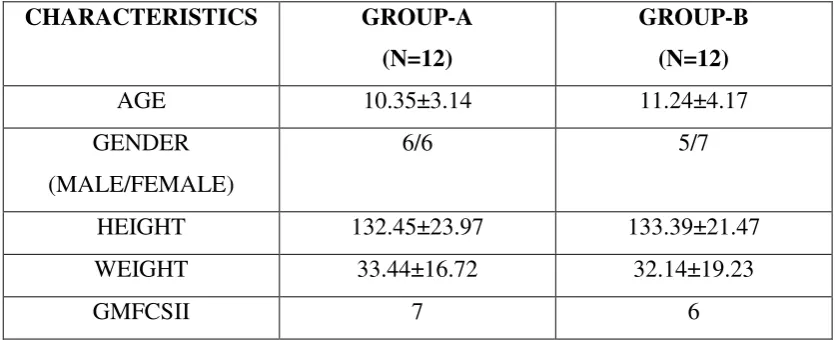
4.2 DEMOGRAPHICAL DATA
CHARACTERISTICS GROUP-A
(N=12)
GROUP-B
(N=12)
AGE 10.35±3.14 11.24±4.17
GENDER
(MALE/FEMALE)
6/6 5/7
HEIGHT 132.45±23.97 133.39±21.47
WEIGHT 33.44±16.72 32.14±19.23
[image:35.595.101.519.161.331.2]GMFCSII 7 6
21
71.27
79.96
66 68 70 72 74 76 78 80 82
[image:36.595.107.525.417.661.2]PRE TEST POST TEST
Table II: STATISTICAL ANALYSIS OF PRE AND POST GMFM SCORES
OF GROUP A
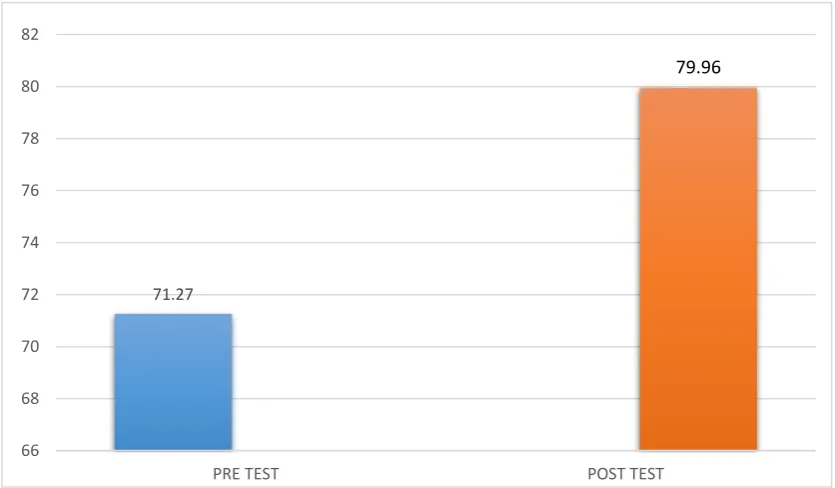
In the statistical analysis of pre and post GMFM scores of group A, the mean
values of GMFM scores of pre test data was 71.27 and that of post test data was
79.96. T value obtained was -6.20106, P value was <.05. The post test score was
significantly different from the pre-test scores.
Data analysis shows significant improvement in gross motor functions of
Group A. This results due to the cumulative effect of forward stepping strategy of
bodyweight treadmill training and conventional physiotherapy.
Graph no I: Graphical Representation of pre and post GMFM scores of group A
Test Mean Standard
Deviation
T value P value
PRE 71.27 4.073
-6.20106 <.05
22
71.69
90.3
0 10 20 30 40 50 60 70 80 90 100
[image:37.595.108.524.445.653.2]PRE TEST POST TEST
Table III: STATISTICAL ANALYSIS OF PRE AND POST TEST GMFM
SCORE OF GROUP B
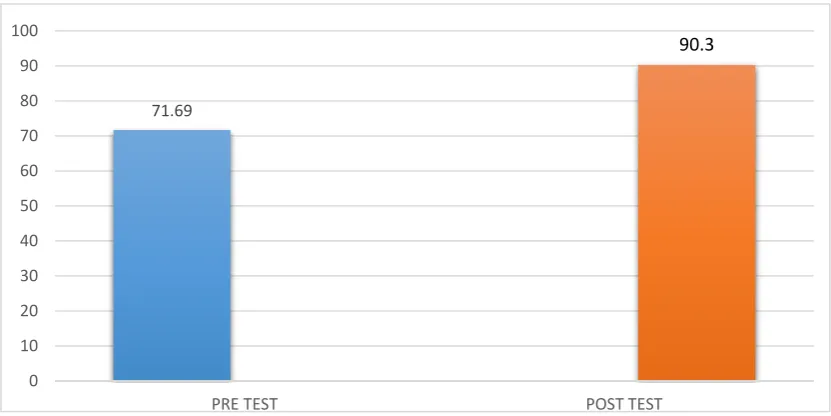
In the statistical analysis of pre and post GMFM scores of group B, the mean
values of GMFM scores of pre test data was 71.69and that of post test data was 90.30.
T value obtained was -10.68867, P value was <.05. The post test score was
significantly different from the pre-test scores.
Data analysis shows significant improvement in gross motor functions of
Group B. This results due to the cumulative effect of Backward stepping Strategy of
bodyweight treadmill training and conventional physiotherapy.
Graph no II: Graphical Representation of pre and post test GMFM score of
group B
Test Mean Standard
Deviation
T value P value
PRE 71.69 4.94
-10.68867 <.05
23
16
14
13 13.5 14 14.5 15 15.5 16 16.5
[image:38.595.107.533.477.683.2]PRE TEST POST TEST
Table IV: STATISTICAL ANALYSIS OF PRE AND POST TEST MTUGT
WALKING PHASE SCORE OF GROUP A
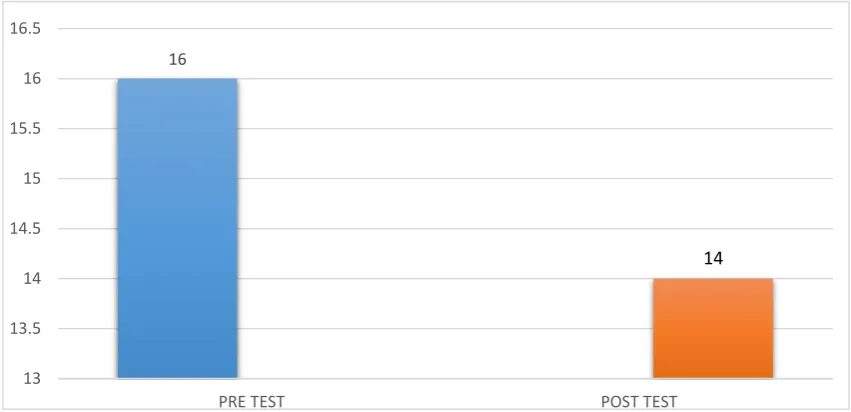
In the statistical analysis of pre and post MTUGT Walking Phase scores of
group A, the mean values of MTUGT Walking Phase scores of pre test data was 16
and that of post test data was 14. T value obtained was 4.50641, P value was <.05.
The post test score was significantly different from the pre-test scores.
Data analysis shows significant improvement in functional mobility of Group
A. This results due to the cumulative effect of forward stepping Strategy of
bodyweight treadmill training and conventional physiotherapy.
Graph no III:Graphical Representation of pre and post test MTUGT walking
Phase score of group A
Test Mean Standard
Deviation
T value P value
PRE 16 0.95
4.50641 <.05
24
16.58
11
0 2 4 6 8 10 12 14 16 18
[image:39.595.108.524.451.693.2]PRE TEST POST TEST
Table V:STATISTICAL ANALYSIS OF PRE AND POST TEST MTUGT
WALKING PHASE SCORE OF GROUP B
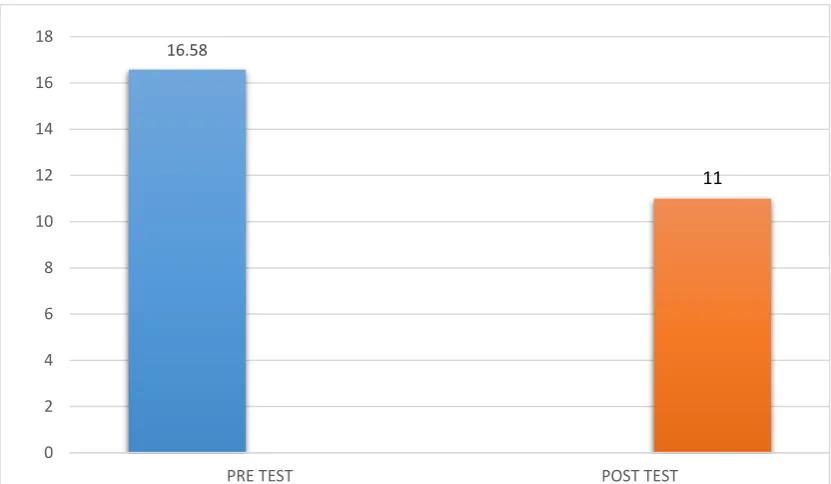
In the statistical analysis of pre and post MTUGT scores of group B, the mean
values of MTUGT scores of pre test data was 16.58and that of post test data was
11.00. T value obtained was 12.36431, P value was <.05. The post test score was
significantly different from the pre-test scores.
The data analysis shows significant improvement in functional mobility in
Group B. This result due to the effect of Backward stepping Strategy of bodyweight
treadmill training and conventional physiotherapy.
Graph no IV : Graphical Representation of pre and post test MTUGT walking
phase score of group B
Test Mean Standard
Deviation
T value P value
PRE 16.58 1.08
12.36431 <.05
25
33.33
42.5
0 5 10 15 20 25 30 35 40 45
[image:40.595.107.525.413.660.2]PRE TEST POST TEST
Table VI: STATISTICAL ANALYSIS OF PRE AND POST TEST
PEDIATRICS BALANCE SCALE SCORE OF GROUP A
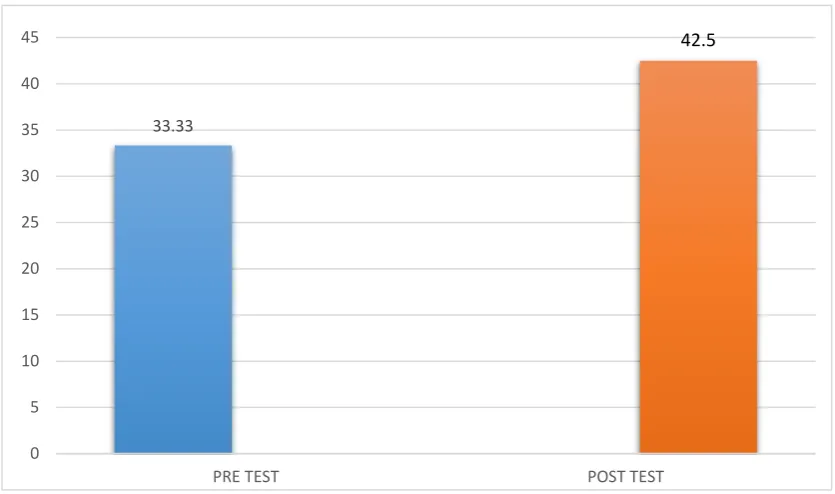
In the statistical analysis of pre and post PBS scores of group A , the mean
values of PBS scores of pre test data was 33.33and that of post test data was 42.50. T
value obtained was 13.868707, P value was <.05. The post test score was
significantly different from the pre-test scores.
Graph no V: Graphical Representation of pre and post test Pediatrics balance
scale score of group A
Test Mean Standard
Deviation
T value P value
PRE 33.33 3.20
13.868707 <.05
26
33.83
46.33
0 5 10 15 20 25 30 35 40 45 50
[image:41.595.108.523.431.674.2]PRE TEST POST TEST
Table VII: STATISTICAL ANALYSIS OF PRE AND POST TES T
PEDIATRICS BALANCE SCALE SCORE OF GROUP B
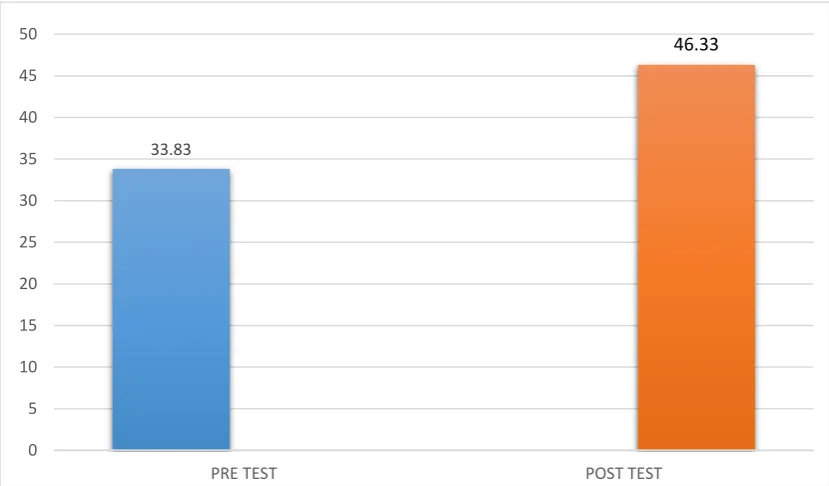
In the statistical analysis of pre and post PBS scores of group B, the mean
values of PBS scores of pre test data was 33.33and that of post test data was 46.08. T
value obtained was -7.50341, P value was <.05. The post test score was significantly
different from the pre-test scores.
Graph no VI: Graphical Representation of pre and post test Pediatrics balance
scale score of group B
Test Mean Standard
Deviation
T value P value
PRE 33.83 3.38
-7.50341 <.05
27
Table VIII: STATISTICAL ANALYSIS OF GMFM BETWEEN GROUP A
AND B-GMFM
TEST GROUP MEAN STANDARD
DEVIATION
T-VALUE P-VALUE
PRE TEST GROUP-A 71.27 4.073 0.09111 >.05
GROUP-B 71.69 4.94
POST
TEST
GROUP-A 79.96 3.87 6.88407 <.05
GROUP-B 90.30 3.47
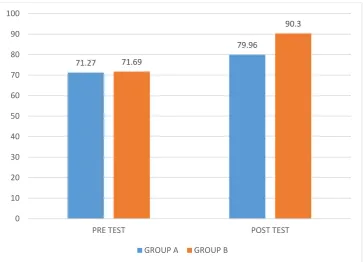
In the statistical analysis of pre test values of both group A and group B were
calculated. The pre mean values of GMFM for both groups were 71.27 and 71.69.
The T-value was 0.09111the obtained t-value is lesser than the table value. and the
P-value showed there were no significant in pre test comparison.
The post test mean values of GMFM for both groups were 79.96 and
90.30.The T-value was 6.88407,the obtained t-value is greater than the table value.
and the P-value showed there were significant in post test comparison. Alternative
hypothesis was accepted.
Graph no VI: Graphical Representation of GMFM Score between Group A and
Group B 71.27 79.96 71.69 90.3 0 10 20 30 40 50 60 70 80 90 100
PRE TEST POST TEST
28
Table VIII: STATISTICAL ANALYSIS OF MTUGT BETWEEN GROUP A
AND GROUP B
TEST GROUP MEAN STANDARD
DEVIATION
T-VALUE P-VALUE
PRE TEST GROUP-A 16 0.95 1.4 >.05
GROUP-B 16.58 1.08
POST
TEST
GROUP-A 14 1.21 4.24 <.05
GROUP-B 13.83 1.19
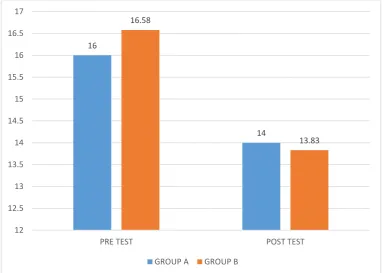
In the statistical analysis of pre test values of both group A and group B were
calculated. The pre mean values of MTUGT for both groups were 16.00 and 16.58.
The T-value was 1.4 the obtained t-value is lesser than the table value. and the
P-value showed there were no significant in pre test comparison.
The post test mean values of MTUGT for both groups were 14 and 13.83.The
T-value was 4.24,the obtained t-value is greater than the table value. and the P-value
showed there were significant in post test comparison. Alternative hypothesis was
accepted.
Graph no VI: Graphical Representation of MTUGT Score between Group A and
Group B 16 14 16.58 13.83 12 12.5 13 13.5 14 14.5 15 15.5 16 16.5 17
PRE TEST POST TEST
29
Table VIII: STATISTICAL ANALYSIS OF PBS BETWEEN GROUP A AND
GROUP B
TEST GROUP MEAN STANDARD
DEVIATION
T-VALUE
P-VALUE
PRE TEST GROUP-A 33.33 3.20 0.3721 >.05
GROUP-B 33.83 3.38
POST
TEST
GROUP-A 46.08 3.60 2.38967 <.05
GROUP-B 46.33 4.68
In the statistical analysis of pre test values of both group A and group B were
calculated. The pre mean values of PBS for both groups were 33.33 and 33.38. The
T-value was 0.3721 the obtained t-value is lesser than the table value. and the P-value
showed there were no significant in pre test comparison.
The post test mean values of PBS for both groups were 46.08 and 46.33.The
T-value was 2.38967,the obtained t-value is greater than the table value. and the
P-value showed there were significant in post test comparison. Alternative hypothesis
was accepted.
.Graph no VI: Graphical Representation of PBS Score between Group A and
Group B 33.33 46.08 33.83 46.33 0 5 10 15 20 25 30 35 40 45 50
PRE TEST POST TEST
30
CHAPTER V
DISCUSSION
CHRISTINE THOROGOOD stated that spastic diplegic accounts about nearly
one-third of all spastic cerebral palsied cases as a result of cerebral lesion in the brain.
JOOYEON KO, In his study, 11 pediatric physical therapists initiallyexamined
the inter-rater reliability of the GMFCS based onvideo recordings. To investigate
intra-rater reliability, anexpert PT and a newly trained PT rescored the same
videoclips one month after the inter-rater reliability assessment.Watkins and
Portney20) reported that an ICC ≥ 0.90 indicatesa high reliability, 0.75–0.90 indicates
good reliability, 0.50–0.75 indicates moderate reliability, and ≤ 0.50 indicatespoor
reliability. Our results indicate that the ICC for theeleven GMFCS raters was high in
all age groups. The intra-rater reliability of newly trained PT, rater B, and expert
PT,rater K were also high
In my study 24 Cerebral Palsy subjects mainly spastic diplegic who were
recruited and randomly allocated based on the selection criteria GMFCS-level-II into
forward walking in body weight support treadmill training group A (n=12) and
backward walking body weight support treadmill training group B (n=12). After the
six weeks of intervention, the group B subjects showed statistically significant
improvement in the gross motor functional measure scale, modified timed up and go
test and pediatric balance scale when compared to the group A subjects.
Another one author named HAMADA EL did the study on forward versus
backward bodyweight supported treadmill training on step symmetry in children with
spastic diplegia. In his study 20 childrens with spastic diplegic from both sexes, they
were classified into two groups of equal numbers. The first group A received partial
bodyweight supported backward treadmill training in addition to regular exercise
program while the second group B received partial bodyweight supported treadmill
training in addition to regular exercise program. Gait pattern was assessed using
biodex gait trainer II for both groups before and after three months of treatment. In his
studies, partial bodyweight supported treadmill training with backward gait training to
improve steps symmetry than forward gait training of spastic diplegic children.
HOPPER T.L.et al., did the study on the effects of graded forward and
31
walking effective to improve the patient balance, proprioception and the lower limb
muscle activity. Also, it will improve speed of the walking.
KIM SG et al., did the study on to determine whether an 8-week period of
backward walking (BW) training on the treadmill can improve the gross motor
function measure (GMFM), weight-bearing symmetry, and temporospatial gait
parameters in individuals with spastic cerebral palsy. Twelve participants aged 5-15
years with spastic cerebral palsy participated in this study. The BW training was
conducted on a treadmill for up to 20 min, with three sessions per week for 8
consecutive weeks. Before each treadmill training session, lower limb stretching was
included in the session. Interlimb differentials of vertical ground reaction force while
standing, temporal-distance gait parameters, and scores of dimension D and
dimension E of the GMFM were determined. Participants showed statistically
significant improvements in a measure of GMFM (P<0.01) and weight-bearing
symmetry value (P<0.05), forward walking velocity (P<0.05), and step/stride length
(P<0.05 or P<0.01). This pilot study suggests that BW therapy on a treadmill may
help to improve walking abilities and other gross motor skills in this sample of
patients.
ABDEL-AZIEM AA, EL-BASATINY HM did the study on Effectiveness of
backward walking training on walking ability in children with hemiparetic cerebral
palsy: To compare the effects of backward walking training and forward walking
training on spatiotemporal gait parameters, and gross motor function measures in
children with cerebral palsy. A total of 30 children with hemiparetic cerebral palsy of both sexes (10 to 14 years of age, classified as I or II by gross motor function classification system) participated in this study. They were randomly assigned into
two equal groups. Both groups received a conventional physical therapy program for
12 successive weeks (three sessions per week). The experimental group additionally received (25 min) backward walking training. The control group additionally received (25 min) forward walking training. Baseline, posttreatment, and follow-up assessment for spatiotemporal gait parameters and gross motor functions were evaluated by using
three dimensional gait analysis system and gross motor function measures. There was
a significant improvement in step length, walking velocity, cadence, stance phase, and
32
(0.39 ±0.13, 0.46 ±0.20, 125.80 ±2.96, 50.27 ±1.62, 49.47 ±1.55, 82.47 ±7.05, 80.47 ±12.61), respectively, ( p < 0.05). The significant improvement of all measured outcomes of the experimental group was maintained at 1 month follow-up assessment ( p < 0.05).In his study they concluded,iIn addition to a conventional physical therapy program, backward walking training is more effective than forward walking training
on spatiotemporal gait parameters, and gross motor function measures in children
with hemiparetic cerebral palsy.
In my present study, subject in control group A were given forward walking
bodyweight supported treadmill training in addition with regular exercise program.
Afterward, subject in experimental group B were given backward walking
bodyweight supported treadmill training in addition to regular exercise program on
gross motor function, functional mobility and balance in children with spastic
diplegia.The statistical report indicates that there was a significant improvement seen
in GMFM score, MTUG score, and PBS after the application of six weeks
intervention. So, the backward walking treadmill training with bodyweight support is
the effective treatment technique than forward walking treadmill training with
bodyweight support to improve gross motor function, functional mobility and balance
33
CHAPTER VI
SUMMARY AND CONCLUSION
6.1 SUMMARY:
The study was conducted to investigate the effectiveness of forward (group A)
- control group consisting of 12 subjects versus backward (group B) - experimental
group consisting of 12 subjects stepping strategy in bodyweight support treadmill
training on functional mobility and balance among spastic diplegic..
Both the groups received intervention for 30 minutes per session, five days in
a week for six weeks along with their routine physiotherapy.
6.2 CONCLUSION:
The study proves that six weeks of backward walking body weight support
treadmill training program with regular exercise program showed statistically
significant improvement in gross motor function, functional mobility when compared
to forward walking body weight support treadmill training program with regular
34
CHAPTER VII
LIMITATIONS AND SUGGESTIONS
LIMITATIONS
1. Sample size was small, which reduces the generalize ability.
2. Duration of treatment program was only 6 weeks.
3. Only children with limited severity and diagnosis participated in the study.
4. The study assessed only short term progress of the patient. Long term follow
up is needed to evaluate the differences in the condition of the patients from
current status.
5. No follow up could be done to determine whether the effect was maintained.
SUGGESTIONS
:1. Further study can be conducted with more sample size.
2. Further studies can be done in other different type of cerebral palsy children
and with various severities of CP.
3. Further studies are recommended with a longer duration of treatment program.
4. Further studies should be undertaken with the similar patient group to confirm
the findings of the study.
35
CHAPTER VIII
REFERENCES
1. Chitra Sankar and Nandini Mundkur-Department of Developmental Pediatrics,
Bangalore Children's Hospital, City Centre, Bangalore, India-[Indian J Pediatr
2005; 72 (10) : 865-868]
2. Wolraich M, Droter D, Dworkin P, Perrin E. Developmental-behavioral
pediatrics. Evidence Practice. 2008;14:483-517.
3. Bax M, Goldstein M, Rosenbaum P, Leviton A, Paneth N, Dan B, et al.
Proposed definition and classification of cerebral palsy, April 2005. Dev Med
Child Neurol. 2005;47:571–576. Rose J, Wolff DR, Jones VK, Bloch DA,
Oehlert JW, Gamble JG. Postural balance in children with cerebral
palsy.Dev Med Child Neurol 2002;44:58–63.
4. Soumya V, Madhavi KVP, Madhavi BD. A study on maternal and perinatal
risk factors of cerebral palsy among children attending a cerebral palsy clinic
in Visakhapatnam. Int J Community Med Public Health 2018;5:317-21.
5. Edwin Dias and Akshay Dias Cerebral Palsy: A Brief Review, Acad J
PedNeonatal,2017 DOI: 10.19080/AJPN.2017.03.555687
6. Christina Andersson.Adults with cerebral palsy;a survey describing
problems,needs,andresources,with special emphasis on
locomotion.Developmental Medicine and child Neurology 2001;43:76-82,
7. Shumway-Cook A,Woollacott MH(2001)Motor control,Theory and practical
applications(2nd Edition).Philadelphia:J.B.Lippincott.
8. Nafi OA. Clinical spectrum of cerebral palsy in South Jordan; analysis of 122
cases. PediatrTher. 2011;1:101-4.
9. Raj Kumar1 , Anand Kumar Gupta2 , Ritesh Runu3*, Sanjay Kumar Pandey4
, Manish Kumar5, Clinical profile of cerebral palsy: a study from
multidisciplinary clinic at tertiary care centre, Int J ContempPediatr. 2018
Jul;5(4):1626-1630.
10.Stavsky M, Mor O, Mastrolia SA, Greenbaum S, Than NG and Erez O (2017)
Cerebral Palsy—Trends in Epidemiology and Recent Development in Prenatal
Mechanisms of Disease, Treatment, and Prevention. Front. Pediatr. 5:21. doi:
36
11.Apexa G. Vyas, Virendra Kumar Kori,1 S. Rajagopala,2 and Kalpana S.
Patel3Etiopathological study on cerebral palsy and its management
by ShashtikaShaliPindaSweda and SamvardhanaGhrita, J Ayuv.34(1);
Jan-Mar 2013,PMC3764881
12.Diane L. Damiano: Katharine E. Alter: Henry Chambers: New Clinical and
Research Trends in Lower Extremity Management for Ambulatory Children
with Cerebral Palsy, Phys Med Rehabil Clin N Am. 2009 August ; 20(3):
469–491. doi:10.1016/j.pmr.2009.04.005.
13.Velayutham B, Kangusamy B, Mehendale S. Prevalance of disability in Tamil
nadu, India. Natl Med J India 2017;30:1225-30
14.Victorine B de Graaf-Peters, Cornill H Blauw-Hospers, Tineke Dirks,
Hanneke Bakker, Development of postural control in typically developing
children and children with cerebral palsy: Possibilities for intervention?
Neuroscience & Biobehavioral Reviews 31(8):1191-200 · February 2007,
DOI: 10.1016/j.neubiorev.2007.04.008
15.Samah Attia El Shemy, PhD Effect of Treadmill Training With Eyes Open
and Closed on Knee Proprioception, Functional Balance and Mobility in
Children With Spastic Diplegia Ann Rehabil Med 2018;42(6):854-862 pISSN:
2234-0645 • eISSN: 2234-0653 https://doi.org/10.5535/arm.2018.42.6.854.
16.MK Franklin S. Study on Efficacy of Task Oriented Training on Mobility and
Balance among Spastic Diplegic Cerebral Palsy Children. Open Access J
Neurol Neurosurg. 2016; 1(3): 555562.
17.Kumar et al. Journal of Industrial Engineering International 2013, 9:6
37
CHAPTER IX
ANNEXURE I
INFORMED CONSENT FORM
TITLE:“EFFECTIVENESS OF FORWARD VERSUS BACKWARD
STEPPING STATERGY IN BODY WEIGHT SUPPORT TREADMILL
TRAINING ON FUNCTIONAL MOBILITY AND BALANCE AMONG
SPASTIC DIPLEGIC CEREBRAL PALSY”
INVESTIGATOR: Mr. RAJKUMAR
CO-INVESTIGATOR: DR.M. PRADEEPA
PURPOSE OF THE STUDY:
I _________________ have been informed that this study will help clinicians
& therapists to find out theEFFECTIVENESS OF FORWARD VERSUS
BACKWARD STEPPING STATERGY IN BODY WEIGHT SUPPORT
TREADMILL TRAINING ON FUNCTIONAL MOBILITY AND BALANCE
AMONG SPASTIC DIPLEGIC CEREBRAL PALSY
PROCEDURE:
I ___________________ understand that Iwill undergo experiment with Mr.
Rajkumar / Dr.M.Pradeepa under the direct supervision of the physiotherapist. I am
aware that I have to follow therapist’s instruction as has been told to me.
RISKS AND DISCOMFORT:
I ___________________ understand that there are no potential risks
associated with this procedure, and understand that Mr. Rajkumar/Dr.M.Pradeepa will
accompany me during this procedure. There are no known hazards associated with
this procedure.
CONFIDENTIALITY:
I ___________________ understand that the medical information produced by
this study will be confidential. If the data are used for publication in the medical
literature or for teaching purpose, no names will be used. And photographs, audio and
38
PHOTOGRAPHY CONSENT:
Mr. Rajkumar/Dr.M.Pradeepa have been explained to me that photography are
required in order to illustrate various aspects of the study for the thesis and at the
presentation or conference by giving my consent.
I ________________ authorize Mr. Rajkumar/Dr.M.Pradeepa to use any of
the photography taken of me in printed format, in slides for presentation.
REQUEST FOR MORE INFORMATION:
I ___________________ understand that I ask any questions about the study
at any time Mr.Rajkumar/Dr.M.Pradeepaare available to answer my question. Copy of
this concern form will be given to me keep for my careful reading.
REFUSAL OR WITHDRAWAL OF PARTICIPATION:
I __________________ understand that my participation is voluntary and I
may withdraw consent and discontinue participation at any time after he has explained
the reasons for doing so.
INJURY STATEMENT:
I understand that the treatment procedure, under the guidance of my therapist,
i