effectiveness of pre-hospital trauma anaesthesia
Lyon
et al.
Lyonet al. Critical Care (2015) 19:134
R E S E A R C H
Open Access
Significant modification of traditional rapid
sequence induction improves safety and
effectiveness of pre-hospital trauma anaesthesia
Richard M Lyon
1†, Zane B Perkins
1,3*†, Debamoy Chatterjee
1, David J Lockey
2, Malcolm Q Russell
1and on behalf of Kent, Surrey & Sussex Air Ambulance Trust
Abstract
Introduction:Rapid Sequence Induction of anaesthesia (RSI) is the recommended method to facilitate emergency tracheal intubation in trauma patients. In emergency situations, a simple and standardised RSI protocol may improve the safety and effectiveness of the procedure. A crucial component of developing a standardised protocol is the selection of induction agents. The aim of this study is to compare the safety and effectiveness of a traditional RSI protocol using etomidate and suxamethonium with a modified RSI protocol using fentanyl, ketamine and rocuronium.
Methods:We performed a comparative cohort study of major trauma patients undergoing pre-hospital RSI by a physician-led Helicopter Emergency Medical Service. Group 1 underwent RSI using etomidate and suxamethonium and Group 2 underwent RSI using fentanyl, ketamine and rocuronium. Apart from the induction agents, the RSI protocol was identical in both groups. Outcomes measured included laryngoscopy view, intubation success, haemodynamic response to laryngoscopy and tracheal intubation, and mortality.
Results:Compared to Group 1 (n = 116), Group 2 RSI (n = 145) produced significantly better laryngoscopy views (p = 0.013) and resulted in significantly higher first-pass intubation success (95% versus 100%; p = 0.007). A hypertensive response to laryngoscopy and tracheal intubation was less frequent following Group 2 RSI (79% versus 37%; p < 0.0001). A hypotensive response was uncommon in both groups (1% versus 6%; p = 0.05). Only one patient in each group developed true hypotension (SBP < 90 mmHg) on induction.
Conclusions:In a comparative, cohort study, pre-hospital RSI using fentanyl, ketamine and rocuronium produced superior intubating conditions and a more favourable haemodynamic response to laryngoscopy and tracheal intubation. An RSI protocol using fixed ratios of these agents delivers effective pre-hospital trauma anaesthesia.
Introduction
Rapid sequence induction of anaesthesia (RSI) is the rec-ommended method to facilitate emergency tracheal intub-ation in trauma patients [1]. It is a complex intervention with significant risks and the procedure is often tailored to the individual patients’ requirements [2,3]. In the pre-hospital and emergency setting, however, a simple and standardised RSI protocol may improve the safety and
effectiveness of the procedure, while also providing train-ing and logistic benefits [4-6]. Currently, there is no accepted standard trauma RSI technique and there is wide variation in practice in the UK [7]. Traditional techniques [8] (comprising oxygenation, administration of a pre-determined dose of induction agent and suxamethonium, followed by cricoid pressure) and modifications of these technique are used [9].
The overall aim of RSI is to rapidly provide optimal conditions for tracheal intubation, as this is thought to reduce the risk of aspiration - the leading cause of mortality associated with airway management [1]. In trauma patients, a secondary aim is to avoid harmful pharmacological and physiological derangements that may exacerbate brain * Correspondence:[email protected]
†Equal contributors
1Kent, Surrey and Sussex Air Ambulance Trust, Wheelbarrow Park Estate,
Pattenden Lane, Marden, Kent TN12 9QJ, UK
3Centre for Trauma Sciences, Queen Mary, University of London, London E1 2AT, UK
Full list of author information is available at the end of the article
© 2015 Lyon et al.; licensee BioMed Central. This is an Open Access article distributed under the terms of the Creative Commons Attribution License (http://creativecommons.org/licenses/by/4.0), which permits unrestricted use, distribution, and reproduction in any medium, provided the original work is properly credited. The Creative Commons Public Domain Dedication waiver (http://creativecommons.org/publicdomain/zero/1.0/) applies to the data made available in this article, unless otherwise stated.
Lyonet al. Critical Care (2015) 19:134
injury or haemorrhage. These include episodes of hy-poxia, hypotension, acute hypertension and elevated intracranial pressure [10-13]. An ideal trauma technique would therefore rapidly provide optimal intubation condi-tions, allowing a high rate of first-pass intubation success, while reliably attenuating excessive haemodynamic changes in all patients requiring the procedure. The RSI agents used would have a wide margin of safety and the dosing regimen would be straightforward. Furthermore, ideal pre-hospital RSI agents would not require dilution, reconstitu-tion or refrigerareconstitu-tion, and would have minimal side effects.
A number of potential RSI agents are available, each with their own benefits and risk of adverse effects [14]. Suxamethonium is the neuromuscular blocking agent that has traditionally been used for RSI [8]. Its major advantage is a rapid onset of action. Suxamethonium also has a short duration of action, which is regarded as a benefit in situations of unanticipated airway difficulty. Rocuronium is an alternative neuromuscular blocker with a rapid onset of action. It has many of the properties of an ideal pre-hospital RSI agent, however, its long duration of action has been a concern. In practice, wake-up of an in-jured patient following RSI is rare, even if difficulties are encountered [15]. Furthermore, it is recognised that diffi-cult airway management becomes considerably more complicated in a partially anaesthetised patient as suxa-methonium paralysis wears off.
In terms of induction agents, thiopentone and propo-fol have been shown to cause significant hypotension, particularly in hypovolaemic patients [14,16,17]. Keta-mine is a haemodynamically stable induction agent with potent analgesic properties [18]. However, ketamine has historically been contraindicated as an induction agent in patients with suspected head injury due to concerns it may worsen outcome by elevating intracranial pressure. This assumption has not withstood scrutiny and recent evidence suggests that ketamine may have a number of beneficial effects in patients with head injury [18-20]. Etomidate has also been popular for its cardiovascular stability but its use is declining, probably because of well-documented adrenal suppression and infrequent use in elective anaesthesia [21]. Additionally, a study from our group showed that although effective at providing satisfac-tory intubating conditions, an RSI protocol using etomi-date and suxamethonium was ineffective at attenuating the haemodynamic responses to tracheal intubation [22]. The addition of an opiate, to attenuate the haemo-dynamic response, is an established modification of hospital RSI techniques [23]. This modification is less common in hospital practice due to concerns of pre-cipitating hypotension and adding unnecessary complexity to the procedure.
The major differences between existing trauma RSI protocols are the choice and dose of RSI agents. Few
studies have compared the effectiveness of different RSI protocols in the pre-hospital setting. The aim of this study was to compare the safety and efficacy of two stan-dardised pre-hospital RSI protocols: a traditional proto-col using etomidate and suxamethonium and a modified protocol using fentanyl, ketamine and rocuronium. We hypothesised that 1) rocuronium would produce equiva-lent intubation conditions to suxamethonium; 2) the addition of fentanyl would result in a more favourable haemodynamic response to laryngoscopy and tracheal intubation.
Methods
Study setting
Kent, Surrey and Sussex Air Ambulance Trust (KSSAAT) operate two dedicated helicopter emergency medical ser-vice (HEMS) teams that serser-vice a population of approxi-mately 4.5 million and undertake approxiapproxi-mately 1,500 missions per year. Each medical team consists of a pre-hospital physician and critical-care paramedic. Physicians have a minimum of 5 years postgraduate experience, in-cluding a minimum of 6 months hospital anaesthesia train-ing. Paramedics undergo critical-care paramedic training, including theoretical modules on RSI. Prior to independent pre-hospital practice, medical crew undergo an intense training period including structured medical education, training and operational supervision by pre-hospital care consultants. During this period, training is focused to en-sure crews are competent at performing safe pre-hospital RSI. The HEMS team adheres to standard operating proce-dures (SOPs), which govern all aspects of pre-hospital prac-tice, including pre-hospital anaesthesia, and undertake regular simulation training practice in the application of these procedures.
Study design
We performed a comparative cohort study over two separ-ate 14-month periods three years apart, comparing two co-horts of major trauma patients undergoing pre-hospital RSI by KSSAAT HEMS. Group 1 (July 2007 to October 2008) underwent pre-hospital RSI using a protocol consist-ing of etomidate and suxamethonium followed by tracheal intubation. Group 2 (February 2012 to March 2013) under-went pre-hospital RSI using a modified protocol consisting of fentanyl, ketamine and rocuronium followed by tracheal intubation. The study was reviewed by the KSSAAT re-search and development committee and met National Institute for Health Research Institute criteria for service evaluation. Formal research ethics committee approval was waived and individual patient consent was not required.
Patient selection
included. For the purposes of this study RSI was defined as the pre-hospital administration of a muscle relaxant drug (suxamethonium or rocuronium). RSI for medical (non-trauma) indications and cases with no monitor printout record of haemodynamic data were excluded.
Pre-hospital RSI protocol
The decision to anaesthetise a patient is based on an individual on-scene risk-benefit assessment. Indications include actual or impending airway compromise, ventila-tory failure, unconsciousness, anticipated clinical course and humanitarian reasons. Prior to induction, the patient’s position is optimised (ideally on an ambulance trolley with 360° access to the whole patient), all necessary anaesthe-sia equipment is prepared in a standard kit-dump, non-invasive monitoring is commenced and the patient is pre-oxygenated for at least 3 minutes. Preparation is checked against a challenge-and-response checklist. To meet in-hospital monitoring standards, oxygen saturation, heart rate (HR), electrocardiogram and capnography are continuously monitored using a Lifepak 15 portable monitor (Physio-Control, Redmond, WA, USA) and non-invasive blood pressure (NIBP) is measured every 3 minutes.
RSI drugs are pre-prepared in labelled syringes and induction is achieved by administration of a predeter-mined dose based on estimated patient weight. Fol-lowing induction, the trachea is intubated with a bougie and a tracheal tube is railroaded into position. Correct placement is confirmed clinically, supported by a qualitative colorimetric CO2 detector (Portex CO2 clip, Smiths Medical, Ashford, UK) and by quantitative waveform capnography.
During the last quarter of 2011, KSSAAT changed the RSI drugs used in the pre-hospital RSI protocol from etomidate and suxamethonium to fentanyl, ketamine and rocuronium. Other than this, the RSI protocol remained identical in both cohorts. In group 1, RSI was achieved with etomidate (0.3 mg/kg intravenously (IV)) followed by suxamethonium (1.5 mg/kg IV). Half the etomidate dose (0.15 mg/kg) was administered in pa-tients with haemodynamic compromise and etomidate was omitted in peri-arrest situations. In group 2, RSI was achieved with fentanyl (3 mcg/kg), ketamine (2 mg/kg) and rocuronium (1 mg/kg). This was known as the 3:2:1 regimen. Drugs were all given in rapid succession in the order fentanyl-ketamine-rocuronium. A reduced dose of fentanyl (1 mcg/kg IV) and ketamine (1 mg/kg IV) was administered in patients with haemodynamic comprom-ise. This was referred to as the 1:1:1 regimen. Again, for severely compromised patients there was the option of ad-ministering a muscle relaxant only. There was no standard physiological definition of haemodynamic compromise and the option of full or reduced dosing was left to the
discretion of the attending HEMS team. In all the proto-cols the muscle relaxant dose remained constant.
Data collection
Data are prospectively collected on all KSSAAT patients. This includes a contemporaneously completed patient report form and electronic database (Aerotech, Horsham, UK), and a printout of three-minute interval monitor recordings. Data on patient demographics, injury cha-racteristics, RSI characteristics (including indications, Cormack and Lehane grade, drug doses and number of attempts) and haemodynamic measures were extracted from these sources. The Trauma Audit and Research Network provided injury severity score (ISS) and outcome data.
Definitions
For the purposes of this study, RSI was defined as the pre-hospital administration of a muscle relaxant drug (suxamethonium or rocuronium). For group 1, a full-dose RSI was defined as the co-administration of >0.2 mg/kg etomidate. For group 2, a full-dose RSI was defined as the co-administration of >2 mcg/kg fentanyl and≥1.5 mg/kg ketamine.
The haemodynamic response to laryngoscopy and intubation is the acute change in haemodynamics that occurs within seconds of the stimulus, lasting up to 5 mi-nutes after stimulation has ceased [24,25]. The generally accepted anaesthetic objective is to maintain a stable blood pressure within 10 to 20% of baseline levels [26]. Patients with changes outside this are at increased risk of complications [27,28] and acute elevations in blood pressure (>20%) are typically considered hypertensive emergencies [26]. We defined a hypertensive response as a greater than 20% increase in systolic blood pressure (SBP) or mean arterial pressure (MAP) above baseline and a hypotensive response as a greater than 20% reduc-tion in SBP or MAP below baseline. Absolute hypotension was defined as a reduction in SBP to less than 90 mmHg. Similarly, a tachycardic response was defined as a greater than 20% increase in HR above baseline, and a bradycardic response as a drop in HR to less than 60 bpm. These defi-nitions are consistent with other studies investigating the response [29,30].
Baseline heart rate (HR), systolic blood pressure (SBP) and mean arterial pressure (MAP) measurements were recorded prior to RSI and procedural haemodynamics were the first of these measurements recorded during a 5-minute window following successful tracheal intub-ation. The timing of successful tracheal intubation was defined by the commencement of capnography. Cases where haemodynamic measurements at these two time points were not recorded were excluded from further analysis of that measurement.
Outcome measures
The primary outcome was intubation success and the acute haemodynamic response (hypertension, hypotension, tachycardia) to laryngoscopy and tracheal intubation. Sec-ondary outcomes were laryngoscopy view and survival to hospital discharge.
Statistical analyses
Statistical analyses were performed using Prism 6.0 (Graphpad, La Jolla, USA) software. Normal-quartile plots were used to test for normality. Categorical data are reported as frequency (n) and percent (%) and numerical data as median with IQR. Where appropriate, the chi-square (χ2) or Fisher’s exact test were used to compare categorical data and the Mann-WhitneyU-test or Student’s
t-test were used to compare numerical data. Paired data were analysed using a paired t-test. Statistical significance was set as a two-tailedP-value of <0.05.
A multivariable logistic regression model was devel-oped to compare patient, injury, and RSI factors associ-ated with mortality. Factors significantly associassoci-ated with mortality (P <0.1) on univariate analysis were included in the model. Results of the logistic regression model are reported as adjusted odds ratio (OR) with corresponding 95% CI. Statistical significance was set as a two-tailed
P-value <0.05.
Results
During the two 14-month study periods, a total of 274 injured patients underwent pre-hospital RSI. Thirteen patients (nine from Group 2 and four from Group 1) were excluded because of missing monitor data, leaving 261 patients available for analysis. There were 116 pa-tients in Group 1 (standard protocol) and 145 papa-tients in Group 2 (modified protocol). Patients in Group 2 were slightly older and more severely injured. Apart from this, the two groups had similar baseline character-istics (Table 1).
Intubating conditions
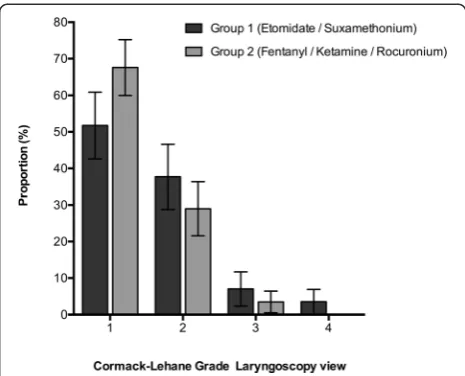
Compared to patients in group 1, laryngoscopy of pa-tients in group 2 resulted in significantly better laryngeal views (P= 0.013, chi-square) (Figure 1). In both groups, all tracheal intubations were successful within three attempts. However, first attempt intubation success was significantly higher in group 2 compared to group 1 (95% versus 100%,P= 0.007).
Haemodynamic response to laryngoscopy and tracheal intubation
Full-dose RSI
[image:5.595.305.538.101.417.2]Seventy-seven patients (66%) in group 1 and 111 pa-tients (77%) in group 2 were administered a full-dose RSI protocol. Baseline haemodynamic measures were
Table 1 Baseline characteristics of included patients
Characteristic Group 1
(n = 116)
Group 2
(n = 145) P
-value
Age, years (range) 39 (2 to 99) 45 (3 to 83) 0.031
Gender, male 86 (74%) 102 (70%) 0.579
Mechanism of injury, blunt 112 (97%) 139 (96%) 1.0
Injury severity:
Injury severity score 22 (13 to 34) 26 (20 to 38) 0.019
Glasgow Coma score 11 (6 to 14) 9 (5 to 13) 0.061
No head injury 19 (16%) 21 (15%) 0.731
Mild head injury 35 (30%) 17 (12%) 0.003
Moderate head injury 16 (14%) 37 (26%) 0.021
Severe head injury 46 (40%) 70 (48%) 0.171
RSI protocol:
Full dose 77 (66%) 111 (77%) 0.069
Reduced dose 39 (34%) 34 (23%)
-RSI indication:
Unconsciousness 61 (53%) 77 (53%) 0.742
Vent failure 18 (16%) 19 (13%)
-Anticipated clinical course 16 (14%) 18 (12%)
-Airway compromise 15 (13%) 20 (14%)
-Humanitarian 3 (3%) 2 (1%)
-Facilitate injury management 3 (3%) 9 (6%)
-Bougie used 114 (98%) 143 (99%) 1.0
Data presented as number (%) or median (interquartile range) unless otherwise specified. Group 1 underwent pre-hospital rapid sequence intubation (RSI) using a protocol consisting of etomidate and suxamethonium. Group 2 underwent pre-hospital RSI using a protocol consisting of fentanyl, ketamine and rocuronium.
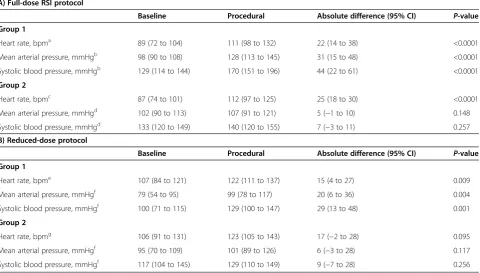
[image:5.595.305.538.498.686.2]similar in the two groups (Table 2A). On average, laryn-goscopy and tracheal intubation increased HR and blood pressure in all patients (Table 2A).
The absolute increase in HR was similar in the two groups. The absolute increase in blood pressure, how-ever, was significantly higher in group 1 when compared to group 2 (absolute increase in SBP, 44 mmHg versus 7 mmHg;P<0.0001; absolute increase in MAP, 31 mmHg versus 5 mmHg;P<0.0001).
The relative change in blood pressure, following laryn-goscopy and tracheal intubation, is shown in Figure 2a (SBP) and Figure 2b (MAP). A hypertensive response was more common following group 1 RSI (80% versus 35%; OR 7.5 (3.6, 15.8);P<0.0001) and an acceptable re-sponse was most common following group 2 RSI (20% versus 54%; OR 0.22 (0.10, 0.45); P <0.0001). Eight pa-tients in group 2 had a hypotensive response (Figure 3) compared to none in group 1(0% versus 7%; OR 0.08 (0.004, 1.4);P= 0.022).
Reduced-dose RSI
Thirty-nine patients (34%) in group 1 and 34 patients (23%) in group 2 were administered a reduced-dose RSI protocol. For each group, the haemodynamic re-sponse following a reduced-dose RSI was similar to the response observed following a full-dose RSI. On average,
laryngoscopy and tracheal intubation increased haemo-dynamics (Table 2B). The baseline HR and absolute in-crease in HR following laryngoscopy were similar in the two groups. Baseline blood pressure was significantly lower in group 1 patients and the absolute increase in blood pressure following laryngoscopy was significantly higher in these patients, when compared to group 2 pa-tients (absolute increase in SBP, 29 mmHg versus 9 mmHg;P= 0.0008; absolute increase in MAP, 20 mmHg versus 6 mmHg;P= 0.013). The relative change in blood pressure, following laryngoscopy and tracheal intubation, is shown in Figure 4a (SBP) and Figure 4b (MAP). The majority of patients in group 1 had a hypertensive response (75% versus 42%; OR 4.2 (1.2, 14.4); P= 0.039) whereas patients in group 2 were more likely to have an acceptable haemodynamic response (21% versus 54%; OR 0.22 (0.06–0.79);P= 0.036). One patient in group 1 had a hypotensive response compared to none in group 2 (P= 1.0).
Acute hypotension
[image:6.595.59.540.444.717.2]There was a single incident of hypotension in group 1. This patient suffered a blunt, rapid deceleration injury and blood pressure dropped precipitously following tra-cheal intubation (pre-RSI SBP, 101 mmHg; post-RSI SBP, 68 mmHg). Post-mortem revealed haemorrhage from
Table 2 The haemodynamic response to laryngoscopy and tracheal intubation in patients anaesthetised using etomidate/suxamethonium (Group 1) and fentanyl/ketamine/rocuronium (Group 2), stratified by dose administered
A) Full-dose RSI protocol
Baseline Procedural Absolute difference (95% CI) P-value
Group 1
Heart rate, bpma 89 (72 to 104) 111 (98 to 132) 22 (14 to 38) <0.0001
Mean arterial pressure, mmHgb 98 (90 to 108) 128 (113 to 145) 31 (15 to 48) <0.0001
Systolic blood pressure, mmHgb 129 (114 to 144) 170 (151 to 196) 44 (22 to 61) <0.0001
Group 2
Heart rate, bpmc 87 (74 to 101) 112 (97 to 125) 25 (18 to 30) <0.0001
Mean arterial pressure, mmHgd 102 (90 to 113) 107 (91 to 121) 5 (−1 to 10) 0.148
Systolic blood pressure, mmHgd 133 (120 to 149) 140 (120 to 155) 7 (−3 to 11) 0.257
B) Reduced-dose protocol
Baseline Procedural Absolute difference (95% CI) P-value
Group 1
Heart rate, bpme 107 (84 to 121) 122 (111 to 137) 15 (4 to 27) 0.009
Mean arterial pressure, mmHgf 79 (54 to 95) 99 (78 to 117) 20 (6 to 36) 0.004
Systolic blood pressure, mmHgf 100 (71 to 115) 129 (100 to 147) 29 (13 to 48) 0.001
Group 2
Heart rate, bpmg 106 (91 to 131) 123 (105 to 143) 17 (−2 to 28) 0.095
Mean arterial pressure, mmHgf 95 (70 to 109) 101 (89 to 126) 6 (−3 to 28) 0.117
Systolic blood pressure, mmHgf 117 (104 to 145) 129 (110 to 149) 9 (−7 to 28) 0.256
Data are presented as median (IQR). Analysis based ona 74,b
66,c 104 andd
95,e 36,f
24 andg
31 patients with complete sets of haemodynamic data.A)Full-dose rapid sequence induction (RSI) protocol andB)reduced-dose RSI protocol.
complete disruption of a major thoracic vascular injury. In group 2, eight patients had a hypotensive response, however, only one patient’s blood pressure dropped below 90 mmHg (Figure 3). This patient suffered blunt chest trauma and developed a tension pneumothorax following tracheal intubation, which was successfully managed with a thoracostomy (pre-RSI SBP, 133 mmHg; post-RSI SBP,
68 mmHg). Half of the patients with a hypotensive re-sponse had baseline hypertension (SBP >140 mmHg) that decreased to normotension following induction (Figure 3).
Outcome
Follow up to hospital discharge was complete for 239 patients (105 in group 1 (91%) and 134 in group 2 (92%)). Overall, 46 patients died from their injuries (19%). In group 1, 20 of 105 patients (19%) died, as com-pared with 26 of 134 patients (19%) in group 2 (OR 0.98 (0.51, 1.87); P= 1.0). Subgroup analysis by head injury severity did not identify any significant differences in outcome.
Univariate and multivariate analyses
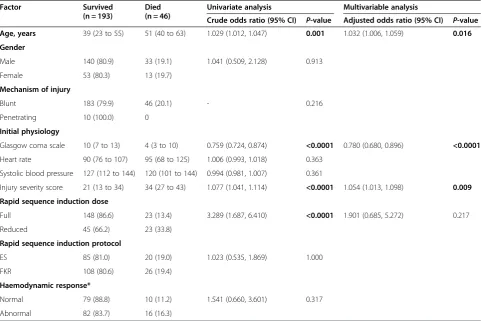
On univariate analysis, the only factors significantly asso-ciated with mortality were age, initial Glagow coma score (GCS), injury severity score (ISS), and RSI dose (that is, full or reduced). After adjusting for these variables, only age, initial GCS, and ISS remained independently associ-ated with mortality. The results of the univariate and multivariate analysis are shown in Table 3.
Discussion
[image:7.595.61.538.88.320.2]This study demonstrates the importance of choice of anaesthetic agent in developing a safe and effective pre-hospital trauma RSI protocol. A modified protocol using fentanyl, ketamine and rocuronium produced superior intubation conditions and a more favourable haemodynamic response to laryngoscopy and tracheal
Figure 2Relative change in a) systolic blood pressure (SBP) and b) mean arterial pressure (MAP) following a full-dose rapid sequence induction of anaesthesia.Group 1 were administered etomidate and suxamethonium and Group 2 were administered fentanyl, ketamine and rocuronium. Grey shaded area indicates an acceptable haemodynamic response (within 20% of baseline measurement).
Figure 3Baseline and procedural systolic blood pressure (SBP) in the eight Group 2 patients who had a hypotensive response.
[image:7.595.57.291.471.685.2]intubation when compared to a traditional protocol using etomidate and suxamethonium. Furthermore, in this study ketamine did not appear to have any ad-verse affects on head injury outcomes, although the study sample size may not have been large enough and may have been prone to type II error. This study suggests that significant departures from traditional RSI protocols can be achieved without major compli-cations and that in our system, RSI using fentanyl, ketamine, rocuronium in a 3:2:1 or 1:1:1 regimen im-proved the quality of pre-hospital trauma anaesthesia.
In terms of intubation conditions, Perry [31] con-cluded in a meta-analysis that the use of suxamethonium was associated with superior intubation conditions, but for clinically acceptable intubation conditions there was no difference when compared to rocuronium. In the au-thors’ subsequent update in 2008, they concluded that rocuronium was inferior to suxamethonium [32]. They did, however, note that the doses of rocuronium in their compared studies varied significantly and called for future studies to look into higher (0.9 to 1.2 mg/kg) doses. In this study higher doses of rocuronium (1 mg/kg) appear to provide superior laryngoscopy views to suxamethonium.
We have previously identified the significant hyperten-sive response to laryngoscopy and tracheal intubation that occurs following a traditional RSI technique [22]. Furthermore, we observed that following neurotrauma, this response is not attenuated by the depth of coma and massive surges in blood pressure occur unpredictably at all degrees of head injury severity [33]. This is important
because even brief episodes of hypertension have been associated with poor outcome following neurotrauma [34]. This study demonstrates that a modified RSI proto-col effectively attenuates the haemodynamic response to tracheal intubation.
The safety of ketamine in patients with head injury is gaining acceptance, as there does not appear to be any evidence supporting a harmful effect [20,35]. Instead, emerging evidence suggests that ketamine may be bene-ficial to patients with head injury and that it may even be the ideal agent for RSI in head injury [18,20,36]. Al-though our sample size was relatively small and not powered to detect differences in outcome, we did not observe any adverse effect on head injury mortality in patients administered ketamine, despite this group being older and having more severe injuries. We did not exam-ine for emergence phenomena associated with ketamexam-ine use.
[image:8.595.59.539.89.320.2]The combination of fentanyl and ketamine effectively attenuated the hypertensive response to tracheal intub-ation, however, we observed a group of patients (n = 8) with a greater than 20% drop in blood pressure following this modified RSI. Only one of these patients developed true hypotension (SBP <90 mmHg), which appeared to be caused by a tension pneumothorax rather than being pharmacologically induced. In the remaining patients, the potent analgesic effect of fentanyl and ketamine may be treating pain-induced hypertension, thus, a relative hypotensive response is observed without true hypoten-sion. Etomidate alone has no analgesic properties, and
Figure 4Relative change in a) systolic blood pressure (SBP) and b) mean arterial pressure (MAP) following a reduced-dose rapid sequence induction of anaesthesia.Group 1 was administered etomidate and suxamethonium and group 2 was administered fentanyl, ketamine and rocuronium. Grey shaded area indicates an acceptable haemodynamic response (within 20% of baseline measurement).
may explain why this effect was not observed following the traditional RSI.
A 3:2:1 or 1:1:1 modified protocol appears safe, al-though caution should be exercised, particularly in the elderly. Elderly patients may have underlying cardiovas-cular comorbidities, which poorly tolerate the sympa-thetic drive of ketamine. This group of patients warrants further investigation. A number of pre-hospital services use an RSI protocol that combines ketamine and a neuromuscular blocker, without an opiate. It is unclear whether this protocol is effective at blunting potentially harmful haemodynamic responses. An analgesic dose of ketamine (average 100 mg), administered prior to trad-itional RSI, did not appear to blunt the response [22].
This study has several limitations. The study reviewed patients retrospectively rather than conducting a pro-spective, randomised trial to compare the anaesthetic regimens. The ideal study to accurately compare the two regimens would be a randomised clinical trial, however the ethical, logistical and operational challenges of conducting such a study, together with the sample size
needed, were prohibitive to this service at the time. The groups were separated in time. There were some differ-ences in the study groups and this may have influenced the results. However, from a clinical perspective, there were no significant changes in pre-hospital anaesthetic practice other than the RSI agents.
[image:9.595.57.540.111.432.2]The study included a heterogeneous group of trauma patients. It is possible that differences in pathology may have influenced the study results. Patients in group 2 were older with more severe injuries, potentially causing a bias; however, even in this group, the new RSI regimen appeared safe, although a larger study would be needed to confirm absolute safety. This study only examined the immediate period following RSI and it is possible that subsequent cardiovascular changes may have occurred. Future studies are planned to explore haemodynamic changes during the maintenance phase of anaesthesia. The effect of individual operator variability, particularly when performing intubation, cannot be accounted for, although the use a single SOP may help minimise vari-ation in practice. This study is from a single pre-hospital
Table 3 Univariate and multivariate analysis of factors associated with mortality in 261 injured patients undergoing pre-hospital rapid sequence induction of anaesthesia by a helicopter emergency medicine service
Factor Survived
(n = 193)
Died (n = 46)
Univariate analysis Multivariable analysis
Crude odds ratio (95% CI) P-value Adjusted odds ratio (95% CI) P-value
Age, years 39 (23 to 55) 51 (40 to 63) 1.029 (1.012, 1.047) 0.001 1.032 (1.006, 1.059) 0.016
Gender
Male 140 (80.9) 33 (19.1) 1.041 (0.509, 2.128) 0.913
Female 53 (80.3) 13 (19.7)
Mechanism of injury
Blunt 183 (79.9) 46 (20.1) - 0.216
Penetrating 10 (100.0) 0
Initial physiology
Glasgow coma scale 10 (7 to 13) 4 (3 to 10) 0.759 (0.724, 0.874) <0.0001 0.780 (0.680, 0.896) <0.0001
Heart rate 90 (76 to 107) 95 (68 to 125) 1.006 (0.993, 1.018) 0.363
Systolic blood pressure 127 (112 to 144) 120 (101 to 144) 0.994 (0.981, 1.007) 0.361
Injury severity score 21 (13 to 34) 34 (27 to 43) 1.077 (1.041, 1.114) <0.0001 1.054 (1.013, 1.098) 0.009
Rapid sequence induction dose
Full 148 (86.6) 23 (13.4) 3.289 (1.687, 6.410) <0.0001 1.901 (0.685, 5.272) 0.217
Reduced 45 (66.2) 23 (33.8)
Rapid sequence induction protocol
ES 85 (81.0) 20 (19.0) 1.023 (0.535, 1.869) 1.000
FKR 108 (80.6) 26 (19.4)
Haemodynamic response*
Normal 79 (88.8) 10 (11.2) 1.541 (0.660, 3.601) 0.317
Abnormal 82 (83.7) 16 (16.3)
service and is not powered to detect an effect on patient outcome in terms of survival. Further prospective research is warranted to examine the impact of implementation of this type of modified pre-hospital RSI regimen.
Conclusion
In this comparative, cohort study, a modified RSI proto-col using fentanyl, ketamine and rocuronium provides effective pre-hospital RSI in trauma patients. Using full dose (3:2:1) or reduced dose (1:1:1) regimens appeared to produce superior laryngoscopy views and more favourable physiology during tracheal intubation when compared to a traditional protocol. Further prospective research is warranted to confirm these findings and to examine the outcome of trauma patients undergoing an-aesthesia with the modified regimen, including exploring any delayed haemodynamic changes during maintenance of anaesthesia and RSI in the elderly population.
Key messages
A simple and standardised RSI protocol may enhance the safety of emergency trauma anaesthesia.
The choice of anaesthetic agents is an important factor in developing a safe and effective RSI protocol.
The combined use of fentanyl, ketamine and rocuronium effectively attenuates acute
hypertension during pre-hospital intubation, without causing significant hypotension in patients with major trauma.
Abbreviations
GCS:Glasgow coma scale; HEMS: helicopter emergency medical service; HR: heart rate; ISS: injury severity score; KSSAAT: Kent, Surrey, and Sussex Air Ambulance Trust; MAP: mean arterial pressure; NIBP: non-invasive blood pressure; OR: odds ratio; RSI: rapid sequence induction of anaesthesia; SBP: systolic blood pressure; SOP: standard operating procedure.
Competing interests
The authors declare that they have no competing interests.
Authors’contributions
ZBP conceived and designed the study, performed statistical analysis and contributed to data collection, data interpretation, drafting of the manuscript and critical revision of the manuscript. RML contributed to data interpretation, drafting of the manuscript and critical revision of the manuscript. DC contributed to data collection and drafting of the manuscript. DJL and MQR contributed to study design, data interpretation and critical revision of the manuscript. All authors read and approved the final manuscript.
Acknowledgements
The authors would like to thank the paramedics and doctors at Kent, Surrey and Sussex Air Ambulance Trust for their assistance in collecting and collating data, advice and constructive criticism. We would especially like to thank the Trauma Audit and Research Network for providing outcome data, and Dr Emily McWhirter and Mr Ben Clarke for their assistance, contributions and support.
Author details
1
Kent, Surrey and Sussex Air Ambulance Trust, Wheelbarrow Park Estate, Pattenden Lane, Marden, Kent TN12 9QJ, UK.2School of Clinical Sciences
University of Bristol & University of Stavanger Norway, North Bristol NHS Trust, Bristol BS16 1LE, UK.3Centre for Trauma Sciences, Queen Mary, University of
London, London E1 2AT, UK.
Received: 29 September 2014 Accepted: 11 March 2015
References
1. Cook T, Woodall N, Frerk CO. Major complications of airway management in the UK: results of the Fourth National Audit Project of the Royal College of Anaesthetists and the Difficult Airway Society. Part 1: anaesthesia. Br J Anaesth. 2011;106:617–31.
2. Wallace C, McGuire B. Rapid sequence induction: its place in modern anaesthesia. Contin Educ Anaesthesia Crit Care Pain. 2014;14:130–5. 3. Helm M, Hossfeld B, Schäfer S, Hoitz J, Lampl L. Factors influencing
emergency intubation in the pre-hospital setting–a multicentre study in the German Helicopter Emergency Medical Service. Br J Anaesth. 2006;96:67–71. 4. The Association of Anaesthetists of Great Britain and Ireland. Pre-hospital
Anaesthesia: A safety guideline. http://www.asgbi.org/sites/default/files/ prehospital_glossy09.pdf (2009). Accessed 17 August 2014.
5. Woodall N, Frerk C, Cook T. Can we make airway management (even) safer?–lessons from national audit. Anaesthesia. 2011;66:27–33.
6. Thomassen Ø, Brattebø G, Søfteland E, Lossius H, Heltne JK. The effect of a simple checklist on frequent pre‐induction deficiencies. Acta Anaesthesiol Scand. 2010;54:1179–84.
7. Lossius HM, Sollid SJ, Rehn M, Lockey DJ. Revisiting the value of pre-hospital tracheal intubation: an all time systematic literature review extracting the Utstein airway core variables. Crit Care. 2011;15:R26.
8. Stept WJ, Safar P. Rapid induction/intubation for prevention of gastric-content aspiration. Anesth Analg. 1970;49:633–6.
9. Lockey D, Crewdson K, Lossius H. Pre-hospital anaesthesia: the same but different. Br J Anaesth. 2014;113:211–9.
10. Chesnut RM, Marshall LF, Klauber MR, Blunt BA, Baldwin N, Eisenberg HM, et al. The role of secondary brain injury in determining outcome from severe head injury. J Trauma. 1993;34:216–22.
11. Sellmann T, Miersch D, Kienbaum P, Flohe S, Schneppendahl J, Lefering R, et al. The impact of arterial hypertension on polytrauma and traumatic brain injury. Dtsch Arztebl Int. 2012;109:849–56.
12. Marmarou A, Anderson RL, Ward JD, Choi SC, Young HF, Eisenberg HM, et al. Impact of ICP instability and hypotension on outcome in patients with severe head trauma. Spec Suppl. 1991;75:S59–66.
13. Mort TC. Complications of emergency tracheal intubation: hemodynamic alterations-Part I. J Intensive Care Med. 2007;22:157–65.
14. Sikorski RA, Koerner AK, Fouche-Weber LY, Galvagno Jr SM. Choice of general anesthetics for trauma patients. Curr Anesthesiol Rep. 2014;4:225–32. 15. Lockey D, Crewdson K, Weaver A, Davies G. Observational study of the
success rates of intubation and failed intubation airway rescue techniques in 7256 attempted intubations of trauma patients by pre-hospital physicians. Br J Anaesth. 2014;113:220–5.
16. Kuisma M, Roine RO. Propofol in prehospital treatment of convulsive status epilepticus. Epilepsia. 1995;36:1241–3.
17. Sivilotti ML, Ducharme J. Randomized, double-blind study on sedatives and hemodynamics during rapid-sequence intubation in the emergency department: the SHRED Study. Ann Emerg Med. 1998;31:313–24. 18. Morris C, Perris A, Klein J, Mahoney P. Anaesthesia in haemodynamically
compromised emergency patients: does ketamine represent the best choice of induction agent? Anaesthesia. 2009;64:532–9.
19. Himmelseher S, Durieux ME. Revising a dogma: ketamine for patients with neurological injury? Anesth Anal. 2005;101:524–34.
20. Filanovsky Y, Miller P, Kao J. Myth: ketamine should not be used as an induction agent for intubation in patients with head injury. CJEM. 2010;12:154–7.
21. Oglesby A. Should etomidate be the induction agent of choice for rapid sequence intubation in the emergency department? Emerg Med J. 2004;21:655–9.
22. Perkins ZB, Gunning M, Crilly J, Lockey D, O’Brien B. The haemodynamic response to pre-hospital RSI in injured patients. Injury. 2013;44:618–23.
23. Morris J, Cook T. Rapid sequence induction: a national survey of practice. Anaesthesia. 2001;56:1090–115.
24. Hickey S, Cameron AE, Asbury AJ, Murray GD. Timing of peak pressor response following endotracheal intubation. Acta Anaesthesiol Scand. 1992;36:21–4.
25. King BD, Harris Jr LC, Greifenstein FE, Elder Jr JD, Dripps RD. Reflex circulatory responses to direct laryngoscopy and tracheal intubation performed during general anesthesia. Anesthesiology. 1951;12:556–66. 26. Goldberg ME, Larijani GE. Perioperative hypertension. Pharmacotherapy.
1998;18:911–4.
27. Murray MJ. Perioperative cardiovascular care. J Cardiothorac Vasc Anesth. 1996;10:173–4.
28. Varon J, Marik PE. Perioperative hypertension management. Vasc Health Risk Manag. 2008;4:615–27.
29. Marlow R, Reich DL, Neustein S, Silvay G. Haemodynamic response to induction of anaesthesia with ketamine/midazolam. Can J Anaesth. 1991;38:844–8.
30. Weiss-Bloom LJ, Reich DL. Haemodynamic responses to tracheal intubation following etomidate and fentanyl for anaesthetic induction. Can J Anaesth. 1992;39:780–5.
31. Perry J, Lee J, Wells G. Rocuronium versus succinylcholine for rapid sequence induction intubation. Cochrane Database Syst Rev. 2003;1:CD002788.
32. Perry JJ, Lee JS, Sillberg VA, Wells GA. Rocuronium versus succinylcholine for rapid sequence induction intubation. Cochrane Database Syst Rev. 2008;2:CD002788.
33. Perkins ZB, Wittenberg MD, Nevin D, Lockey DJ, O’Brien B. The relationship between head injury severity and hemodynamic response to tracheal intubation. J Trauma Acute Care Surg. 2013;74:1074–80.
34. Stein DM, Hu PF, Brenner M, Sheth KN, Liu KH, Xiong W, et al. Brief episodes of intracranial hypertension and cerebral hypoperfusion are associated with poor functional outcome after severe traumatic brain injury. J Trauma. 2011;71:364–73. discussion 373–364.
35. Cohen L, Athaide V, Wickham ME, Doyle-Waters MM, Rose NG, Hohl CM, et al. The effect of ketamine on intracranial and cerebral perfusion pressure and health outcomes: a systematic review. Ann Emerg Med. 2015;65(1):43-51.e2.
36. Zeiler F, Teitelbaum J, West M, Gillman L. The ketamine effect on ICP in traumatic brain injury. Neurocrit Care. 2014;21:163–73.
Submit your next manuscript to BioMed Central and take full advantage of:
• Convenient online submission
• Thorough peer review
• No space constraints or color figure charges
• Immediate publication on acceptance
• Inclusion in PubMed, CAS, Scopus and Google Scholar
• Research which is freely available for redistribution