Review
Supercritical Fluids Extraction of Valuable
Compounds from Algae: Future Perspectives and
Challenges
Siti Machmudah
1,a,*, Wahyudiono
2, Hideki Kanda
2, and Motonobu Goto
2,b1 Department of Chemical Engineering, Sepuluh Nopember Institute of Technology, Kampus ITS
Sukolilo, Surabaya 60111, Indonesia
2 Department of Materials Process Engineering, Nagoya University, Furo–cho, Chikusa–ku, Nagoya 464–
8603, Japan
E-mail: a[email protected] (Corresponding author), b[email protected]
Abstract. Algae (macro and micro) can be used to produce several high–value metabolites
to supply industries as cosmetics, additives and pigments, among others. Those metabolites can have physiological and nutritional benefits for human and animal health. However, the availability of high–value metabolites from algae is still unaffordable due to traditional extraction techniques and their requirements of energy and use of pollutant solvents. Recently, green extraction technologies for the extraction of high–value metabolites have become more desirable due to their sustainability and environmental benefits. Supercritical fluids extraction, as green extraction techniques, has been widely applied for extraction of high–value metabolites from algae. Here, the highlight of supercritical CO2 and subcritical
water on the extraction of bioactive compounds from macro– and microalgae was presented. The perspective and challenge for using supercritical CO2 and subcritical water on the algae
extraction were also concluded.
Keywords: Extraction, macroalgae, microalgae, subcritical water, supercritical CO2.
ENGINEERING JOURNAL Volume 22 Issue 5
1.
Introduction
Algae, the aquatic biomass, are considered a promising sustainable feedstock for food and feed products, materials, chemicals, fuels and various high–value products [1–3]. Algae are diverse aquatic, photosynthetic organisms [4,5] characterized by many different phyla and different physiological attributes, representing 10% of the plant kingdom [6]. Algae are divided in two groups: macroalgae, such as red, green and brown algae and microalgae, such as blue–green algae [7].
Macroalgae, or seaweeds, are classified into 3 major groups based on the pigmentation: Rhodophyceae (red algae), Phaeophyceae (brown algae), Chlorophyceae (green algae). Some specific commercially important cultivated seaweeds and seaweed products include the brown seaweed L. japonica, wakame from the brown seaweed
Undaria pinnatifida, Hizikia from Hizikia fusiforme and the high–value product Nori from the red seaweed Porphyra sp. [8]. Macroalgae provide a wide range of food and food ingredients with pharmaceutical, bio
medicinal and nutritional importance [9]. They are generally fast growing and are able to reach sizes up to 20 m in length. Growth rates of macroalgae far exceed those of terrestrial plants. Cultivation of macroalgae at sea, which does not require arable land and fertilizer, are considered to be important feedstock for future bio refineries (co–producing biofuel and bioenergy). Macroalgae are mainly utilized for the production of food and the extraction of hydrocolloids [10]. Moreover, macroalgal biomass can be used in ethanol fuel production due to its high amounts content of sugars (at least 50%) [11].
Microalgae are the most primitive and simply organized members of the plant kingdom, with the majority existing as small cells of about 3 – 20 mm, and a few species organized into simple colonies. They are extremely diverse and considered important producers of some highly bioactive compounds such as vitamins, pigments, fatty acids, sterols and polysaccharides [12–14]. There is great potential for use of microalgae in production of food ingredients, as they are photoautrophic microorganisms that can grow on a very simple culture medium containing seawater, nitrate, phosphate, trace amounts of certain metals and carbon dioxide [15]. Some cultivated marine microalgae, such as Spirulina, Dunaliella, Chlorella and Crypthecodinium cohnii, have exhibited promising nutraceutical properties, including the presence of –carotene, omega–3 fatty acids and antioxidants [16]. Some products obtained from microalgae include –carotene, astaxanthin, vitamins C, A, E, H, B1, B2, B6 and B12, supplements in health foods, PUFAs and viscosifier gums from polysaccharides [15]. Commercially produced microalgal oils have been incorporated into infant milk formulations and used as dietary supplements and food additives [17]. In addition, microalgae can also provide several different kinds of renewable biofuel, including methane produced by the anaerobic digestion of the algal biomass [18], biodiesel synthesized from the micro algal oil [19] and biohydrogen produced by a photobiological mechanism [20].
The important aspect to be considered when dealing with obtaining bioactives from algae is the development of appropriate, fast, cost–effective and environmental–friendly extraction processes able to isolate the compounds of interest from these natural sources. Many extraction techniques have been used for the discovery of various bioactive compounds such as Soxhlet extraction, maceration and hydro–distillation. However, these techniques can be time consuming and costly, consume large quantities of highly pure organic solvent, poor selectivity and have a risk of decomposition of thermolabile compounds [21]. These difficulties have led to the development of the sub– and supercritical fluids extraction technique using supercritical CO2
or subcritical water as a solvent. These solvents are safe and nonflammable.
In supercritical CO2 extraction, the separation step to recover the target product may be avoided, since
CO2 is gaseous at ambient pressure. The selectivity is obtained by varying pressure and temperature.
Moreover, the depressurization can be done step by step, allowing a fractionating of the extracted compounds, based on their solubility variation with density. The extract yields, which depend on experimental conditions, can be the same as (or even higher than) those obtained with extraction processes using organic solvents, for shorter extraction durations. The environmental benefit in using algae is also more significant if extraction is done using a nonpolluting solvent such as supercritical CO2. In addition, the very low critical temperature of
CO2 allows its use for thermolabile compound extractions. Supercritical CO2 solubilizes nonpolar
compounds; and when the compound of interest is not soluble, the solvent power can be increased using a safe and polar modifier, such as ethanol [22].
and the environment and it is safe to work with and to transport. Therefore, water is the solvent to select in those applications in which polar protic solvents are needed, although considering the change in water properties with the temperature (for instance, the decrease in dielectric constant with increasing temperature), it is also able to extract medium polarity compounds [23].
Supercritical fluids technology is well–known today and is considered as a green process. Indeed, the use of organic solvent can be totally avoided, depending on the chemical nature of the extracted compounds. In supercritical CO2 extraction, the major part of CO2 is recycled, therefore decreasing the consumption per
extracted mass. For the last three decades, a large number of industrial extraction plants using supercritical fluids have been constructed, attesting that this technology is economically viable for a large number of applications. Extraction of valuable compounds from algae with pharmaceutical, bio–medicinal and nutritional importance in a profitable manner can be quite challenging.
In this paper presents a recent progress in the extraction of valuable compounds from algae using supercritical fluids technology including supercritical CO2 and subcritical water extraction for food,
pharmaceutical and bio–medicinal application. The characterization of extracted bioactive compounds and their potential application were also summarized. Furthermore, future perspective and challenges on the production of bioactive compounds from algae were discussed.
2.
Extracted Bioactive Compounds from Algae and Their Potential Application
In the following section, a brief description of the main potential of extracted bioactive compounds that may be isolated from macro– and microalgae was presented. They are antioxidants, polysaccharides, lipids and proteins.
Antioxidants. Generally, an antioxidant can be defined as any substance capable of inhibiting the oxidation of
substrate significantly when present at low concentration, while antioxidant capacity can be expressed as the ability of a substance to reduce oxidation activity. It is more reactive than an oxidizable substrate. Antioxidants possess a positive effect on human health as they may protect the human body from harm by reactive oxygen species, which attack membrane lipids, proteins and DNA and cause many health disorders such as cancer, diabetes mellitus, neurodegenerative and inflammatory diseases with severe tissue injuries. Due the low of oxidative decay in the macro– and microalgae structural components and their stability to oxidation during storage, it indicated that the macro– and microalgae cells have antioxidative defense systems [24]. Hence, macro– and microalgae–derived pharmaceutically active compounds exhibit promising antioxidative effects. Antioxidant activity of macro– and microalgae–derived may arise from phenolic compounds, carotenoids and tocopherols (vitamin E). Directly or indirectly, these compounds participate to inhibition or suppression of free radical generation.
There are at least 8000 various phenolic compounds in various plant species including macro– and microalgae [25]. As the antioxidant components that have been isolated from macro– and microalgae, phenolic compounds are a class of chemical compounds consisting of a hydroxyl group (—OH) bonded directly to an aromatic hydrocarbon group and classified as simple phenols or polyphenols based on the number of phenol units in the molecule [26,27]. Based on their structure, phenolic compounds can be divided into several types, such as simple phenols, phenolic acids, hydroxycinnamic acids, coumarins, naphtoquinones, xanthones, stilbenes, anthraquinones, flavonoids and lignins.
Polysaccharides. Carbohydrates were defined as polyhydroxy aldehydes, ketones, alcohols, acids, their simple
derivatives and their polymers having linkages of the acetal type. They can be divided into monosaccharides (simple sugars), disaccharides (two covalently linked monosaccharides), oligosaccharides (containing three to ten monosaccharides) and polysaccharides (containing ten or more monosaccharides). Of these, polysaccharides are relatively complex carbohydrates and already proved to have several important properties. These macro– and microalgae–derived active ingredients have been known as monosaccharides conjugated polymers by glicosidic bonds and applied in numerous commercial applications. Due to the biological properties of them, polysaccharides were known to possess antioxidative, antiviral, antibacterial, immuno– stimulatory, anticoagulant and anticancer effects. These macro– and microalgae–derived active ingredients were also used to combat obesity [35–37].
It has been known that marine algae including macro– and microalgae contain important polysaccharides which possess potential applications in medicine, food and pharmaceutical industry (cosmeceuticals, nutraceuticals). The major polysaccharides in macroalgae cell walls are carrageenans, agar and alginates. Other polysaccharides such as sulfated fucose, xylans, cellulose, laminarin and Floridean starch were also obtained in macroalgae as minor components. These marine algae–derived active ingredients can be found in brown, red and green seaweed [38]. However, different polysaccharides classes including carrageenan, agar and alginates were found in microalgae. In particular, sulphated exopolysaccharides as specific classes of polysaccharides were existed and found in many species of microalgae [35]. These polysaccharides can act as antiviral agents, health foods, antioxidants. On the other hand, they also possess a role in the immunomodulatory system and anti–inflammatory properties.
Lipids. It has been known that lipid is one of the characteristic ingredients in marine resources, and marine
algae including macro– and microalgae have been considered to contain high–value chemicals including lipids. These substances are naturally occurring compounds that are soluble in nonpolar solvents and insoluble in polar solvents. These physical properties can be attributed solely to the long hydrophobic hydrocarbon chains which have saturated or unsaturated chains. Saturated chains comprise of all single bonds between adjacent carbons while unsaturated chains possess double or triple covalent bonds. In most cases, the lipid derived ingredients from macro– and microalgae include glyco– and phospholipids, fatty acids, sterols and others [39–43].
Currently, most of the studies are emphasized on the fatty acids extraction from macro– and microalgae which can be applied directly for producing biodiesel. However, due to macro– and microalgae sources are widely considered as possessing interesting lipid compositions, they were subjected as a source for lipid extraction that can be applied in various applications, such as food supplements or in the chemical, pharmaceutical and cosmetic industries [43–49]. Phospholipids and glycolipids that have been classified as polar lipids were known as the major classes of lipids found in macro– and microalgae. Phospholipids are structural components of cellular membranes, whereas glycolipids are major constituents of the thylakoid membrane in chloroplasts. Phospholipids consist of a phosphate group and glycerol attached to two fatty acid chains. The combination of the hydroxyl group in glycerol with phosphoric acid may generate a polar phosphate group (glycerophospholipids or sphingophospholipids). Similar to phospholipids, glycolipids also consisted of a carbohydrate group attached to the glycerol skeleton by a glycosidic bond. Consequently, they can applied in medical, pharmaceutical and therapeutic areas [43–50].
Proteins. Proteins are large biomolecules, or macromolecules, consisting of one or more long chains of amino
acid residues. Most of them are made up of 20 different amino acids that are conjugated by substituted amide bonds. Normally, proteins possess the folded compact structure, in which hydrophilic residues are located on the molecular surfaces and nonpolar amino acids residues are located in the molecular interior. The content of proteins in macro– and microalgae have been known vary species to species and the existence of them in macro– and microalgae were also in different forms. They can be found as simple or conjugated proteins. Simple proteins consist of only amino acids and conjugated proteins contain simple proteins linked to non–proteinous substance. In addition, macro– and microalgae may contain protein derivatives, such as enzymes or peptides, as well as free amino acids [50].
have anticancer, antioxidant, antiinflammatory, antiaging and protective activities. These macro– and microalgae proteins are also used as moisturizing agents on skin and hair [51,52]. Hence, these proteins may be effectively applied in functional cosmetics and cosmedicals [53].
3.
Supercritical Fluids Extraction of Bioactive Compounds from Algae
The extraction of macro– and microalgae bioactive compounds have been getting more research attention and interest due to their unique composition and possibilities of various industrial applications. The biodiversity of macro– and microalgae and the diverse chemical nature of their components cause the selection of a suitable extraction method a non–trivial process. Various extraction methods have been applied and used for extraction of macro– and microalgae bioactive compounds into extracts. The conventional extraction methods, such as solid–liquid extraction and liquid–liquid extraction, are often reflected by the use of organic solvents (most frequently toxic) in large amounts and long extraction times. These extraction methods also require labor–intensive and are highly dependent on the operator. Hence, the extraction methods that characterized by a lower consumption of organic solvents, a shorter extraction time, a higher extraction yield and more environmentally friendly than conventional extraction methods should be developed.
Supercritical fluid extraction, microwave assisted extraction, ultrasound–assisted extraction, enzyme assisted extraction and pressurized liquid extraction have been considered as the novel extraction methods to extract valuable bioactive compounds from macro– and microalgae. Currently, the key requirement that should be obeyed from a novel mentioned method is its contribution to a sustainable development in environmental impact. Accordingly, a novel extraction method should fulfill as many of the twelve principles of green chemistry as possible [54]. Of these, supercritical fluid extraction especially supercritical CO2 is an
appropriate and one of the most promising future methods. This technique possess many advantages such as minimal or no use of organic solvents [55-59].
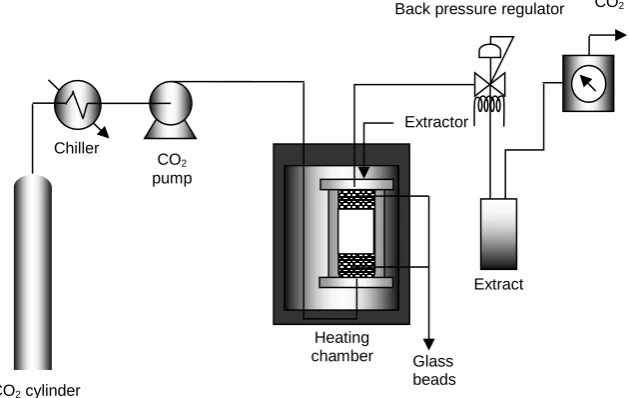
Fig. 1. Typical supercritical CO2 extraction apparatus in laboratory–scale.
Figure 1 shows the schematic diagram of supercritical CO2 extraction apparatus. The main apparatus
consists of a high–pressure pump for CO2, a heating chamber, extractor cell and back pressure regulator. The
high–pressure pump was used to introduce CO2 from CO2 cylinder to the extraction cell that equipped with
removable threaded covers on both sides included filters. To maintain the desired operating temperatures, the extractor was located in the heating chamber. In this system, the operating pressure was controlled by using back pressure regulator and monitored using a pressure gauge. Generally, the extraction procedures were conducted as follow. Initially, the matrix was loaded into the extraction cell and placed in the heating chamber. After the temperature at chamber heater reached to the desired temperature, CO2 from a cylinder
was firstly liquefied and then pumped into the extraction cell. Supercritical CO2 extraction may be conducted
CO2
Heating chamber
Extractor
Back pressure regulator
CO2
pump
Glass beads Chiller
Extract
[image:5.595.142.457.409.608.2]in three ways: static, dynamic and a combination of static and dynamic modes. In static extraction mode, the supercritical CO2 circulates and contacts with sample matrix in extraction cell for a specified time before
being released to the sample trap. In dynamic extraction mode, the sample matrix was continuously swept to the sample trap with fresh supercritical CO2. Increasing the CO2 flow rate may enhance extraction efficiency
in this mode. In combination extraction mode, a static extraction mode is conducted in first for some period of time then followed by a dynamic extraction mode. In this mode, the static state may facilitate the analyte displacement from the sample matrix and followed by a dynamic sweep of the sample matrix cell to result a better extraction yield.
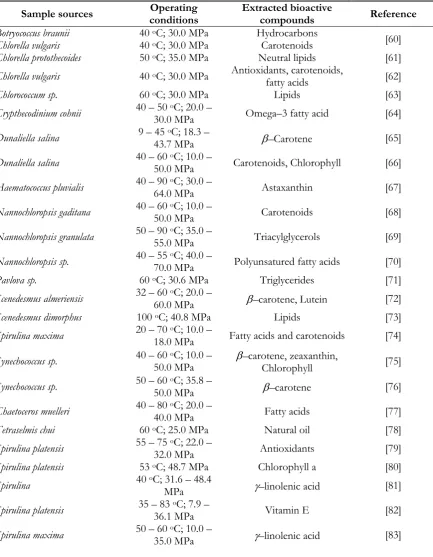
Table 1. Extracted valuable compounds from microalgae using supercritical CO2.
Sample sources conditions Operating Extracted bioactive compounds Reference
Botryococcus braunii 40 oC; 30.0 MPa Hydrocarbons
[60]
Chlorella vulgaris 40 oC; 30.0 MPa Carotenoids
Chlorella protothecoides 50 oC; 35.0 MPa Neutral lipids [61]
Chlorella vulgaris 40 oC; 30.0 MPa Antioxidants, carotenoids,
fatty acids [62]
Chlorococcum sp. 60 oC; 30.0 MPa Lipids [63]
Crypthecodinium cohnii 40 – 50 30.0 MPa oC; 20.0 – Omega–3 fatty acid [64]
Dunaliella salina 9 – 45 43.7 MPa oC; 18.3 – –Carotene [65]
Dunaliella salina 40 – 60 50.0 MPa oC; 10.0 – Carotenoids, Chlorophyll [66]
Haematococcus pluvialis 40 – 90 64.0 MPa oC; 30.0 – Astaxanthin [67]
Nannochloropsis gaditana 40 – 60 50.0 MPa oC; 10.0 – Carotenoids [68]
Nannochloropsis granulata 50 – 90 55.0 MPa oC; 35.0 – Triacylglycerols [69]
Nannochloropsis sp. 40 – 55 70.0 MPa oC; 40.0 – Polyunsatured fatty acids [70]
Pavlova sp. 60 oC; 30.6 MPa Triglycerides [71]
Scenedesmus almeriensis 32 – 60 60.0 MPa oC; 20.0 – –carotene, Lutein [72]
Scenedesmus dimorphus 100 oC; 40.8 MPa Lipids [73]
Spirulina maxima 20 – 70 18.0 MPa oC; 10.0 – Fatty acids and carotenoids [74]
Synechococcus sp. 40 – 60 50.0 MPa oC; 10.0 – –carotene, zeaxanthin, Chlorophyll [75]
Synechococcus sp. 50 – 60 50.0 MPa oC; 35.8 – –carotene [76]
Chaetoceros muelleri 40 – 80 40.0 MPa oC; 20.0 – Fatty acids [77]
Tetraselmis chui 60 oC; 25.0 MPa Natural oil [78]
Spirulina platensis 55 – 75 32.0 MPa oC; 22.0 – Antioxidants [79]
Spirulina platensis 53 oC; 48.7 MPa Chlorophyll a [80]
Spirulina 40 oC; 31.6 – 48.4 MPa –linolenic acid [81]
Spirulina platensis 35 – 83 36.1 MPa oC; 7.9 – Vitamin E [82]
[image:6.595.78.512.215.773.2]Sample sources conditions Operating Extracted bioactive compounds Reference
Chlorococcum littorale 60 oC; 30.0 MPa Carotenoids [84]
Schizochytrium limacinum 40 oC; 35.0 MPa Lipids, Oil, Fatty acids,
DHA [85]
Nannochloropsis oculata 50 oC; 35.0 MPa Zeaxanthin, Carotenoids [86]
Nannochloropsis oculata 50 oC; 35.0 MPa Triglycerides, Astaxanthin [87]
Haematococcus pluvialis 40 – 80 55.0 MPa oC; 20.0 – Astaxanthin [22]
Nannochloropsis gaditana , Synechococcus spp. Dunaliella salina
40 – 60 oC; 20.0 –
50.0 MPa Carotenoids [88]
Chlorella vulgaris 40 – 80 40.0 MPa oC; 20.0 – Lutein [89]
Haematococcus pluvialis 40 – 50 30.0 MPa oC; 20.0 – Lutein, astaxanthin, carotene and – canthaxanthin
[90]
Arthrospira platensis 60 oC; 45.0 MPa Carotenoids, Fatty acids,
Tocopherols [91]
Chlorella vulgaris 60 oC; 30.0 MPa Carotenoids [92]
Chlorella sp. T–89 50 oC; 30.0 MPa Oil, Fatty acids [93]
Arthrospira platensis, Anabaena doliolum, Songiochloris spongiosa, Chlorella vulgaris 40
oC; 10.0 MPa Phenolic compounds [94]
Pavlova sp. 60 oC; 30.6 MPa Fatty acids methyl esters [71]
Scenedesmus obliquus, Chlorella protothecoides, Nannochloropsis
salina 45
oC; 15.0 MPa Oil Fatty acids [95]
Nannochloropsis sp. 40 oC; 30.0 MPa Carotenoids, Fatty acids [96]
Monoraphidium sp. GK12 60 oC; 20.0 MPa Astaxanthin Chlorophyll [97]
Scenedesmus sp. 60 oC; 30.0 MPa Carotenoids [98]
Haematococcus pluvialis 50 oC; 31.0 MPa Astaxanthin, Carotenoids [99]
Nannochloropsis oculata 60 oC; 40.0 MPa Oil (Neutral lipids) [100]
Botryococcus braunii, Chlorella vulgaris, Dunaliella salina, Arthrospira maxima
40 – 60 oC; 12.5 –
30.0 MPa
Alkadienes, Carotenoids,
–carotene, Fatty acids and lipids
[83]
Chlorella vulgaris 40 – 55 MPa oC; 35.0 Carotenoids [101]
Arthrospira platensis 180 oC; 20.7 MPa Fatty acids [102]
Arthrospira platensis 55 – 75 32.0 MPa oC; 7.9 – Vitamin E [82]
Arthrospira maxima 50 – 60 MPa oC; 25.0 Fatty acids, Lipids [103,104]
Synechococcus sp. 50 – 60 50.0 MPa oC; 30.0 – Carotenoids, Chlorophylls [75]
Arthrospira platensis 40 oC; 40.0 MPa Fatty acids [81]
Chlorella vulgaris 40 oC; 30.0 MPa Carotenoids [62]
Haematococcus pluvialis 70 oC; 50.0 MPa Carotenoids [105]
Botryococcus braunii, Chlorella
vulgaris 40 oC; 30.0 MPa Hydrocarbons, Carotenoids [60]
Arthrospira platensis 48 oC; 20.0 MPa
Flavonoids, –carotene, Vitamin A, –tocopherol,
Fatty acids
Sample sources conditions Operating Extracted bioactive compounds Reference
Haematococcus pluvialis,
Arthrospira maxima 60 oC; 30.0 MPa Carotenoids [107] Botryococcus braunii 50 – 85 25.0 MPa oC; 20.0 – Fatty acids, Lipids [108]
Chlorella pyrenoidosa 32 oC; 40.0 MPa Antioxidants, Carotenoids [109]
Spirulina pacifica 40 – 80 35.0 MPa oC; 15.0 – Carotenoids, –cryptoxanthin, –carotene, Zeaxanthin
[110]
Chlorella pyrenoidosa 50 oC, 25.0 MPa Antioxidants, Carotenoids [111]
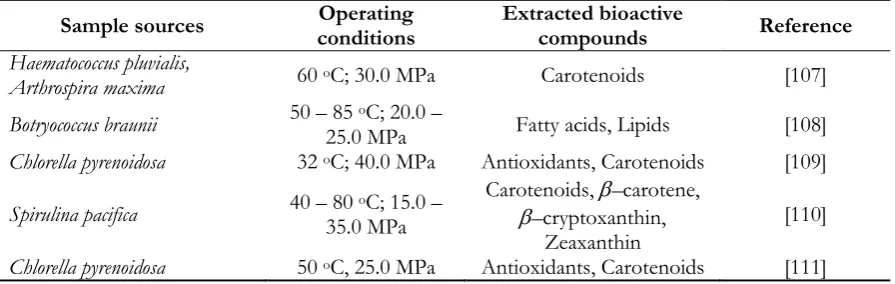
Tables 1 and 2 list the applying supercritical CO2 for macro– and microalgae processing to extract
valuable compounds. Most of the supercritical CO2 utilization on the microalgae was focused on the oil and
its derived compound extraction; and it was deployed to extract carbohydrate based compounds from macroalgae when supercritical CO2 was contacted with macroalgae. In supercritical CO2 extraction process,
the extraction of valuable compounds from macro– or microalgae proceeded in several steps [112]. Initially, the macro– or microalgae matrix absorbs the supercritical CO2 solvent leads to the cellular structures
expansion. This step may facilitate the CO2 solvent flow via the declined resistance to mass transfer.
Simultaneously, the extracted valuable compounds are dissolved in the CO2 solvent and carried to the outer
surface of macro– or microalgae matrix. Next, the dissolved compounds passed through the macro– or microalgae matrix outer surface then left the extractor cell. However, the specific valuable compounds as a target component may become the key factor to determine the selected operating condition (pressures and temperatures). Consequently, as listed in Table 1, a wider range of operating conditions has been applied on the microalgae matrix to extract valuable compounds. The most of operating conditions are 40 – 80 oC for
the temperature and 10 – 60 MPa for the pressure. On the contrary, the narrow range of operating conditions was found when the supercritical CO2 extraction was applied on the macroalgae matrix to extract their
valuable components (see Table 2).
Table 2. Extracted valuable compounds from macroalgae using supercritical CO2.
Sample sources conditions Operating Extracted bioactive compounds Reference
Dictyopteris membranacea 40 oC; 9.1 MPa Volatile oil [113]
Dilophus ligulatus 35 – 55 25.0 MPa oC; 8.0 – Volatile oil [114]
Sargassum hemiphyllum 40 – 50 37.9 MPa oC; 24.1 – Fatty acids [115]
Lessonia vadosa 50 oC; 18.0 MPa Fucosterol [116]
Sargassum muticum 55 oC; 40.0 MPa Fucoxanthin [117]
Undaria pinnatifida 40 oC; 40.0 MPa Fucoidan [118]
Gloiopeltis tenax 45 oC; 30.0 MPa
Sesquiterpenes, fatty acids and their esters,
phenols and sterols [119]
Fucus evanescens, Saccharina
japonica, Sargassum oligocystum 60 oC; 55.0 MPa Fucoidans [120] Hypnea charoides 40 – 50 37.9 MPa. oC; 24.1 – Lipids [121]
Plocamium cartilagineum 40 – 100 40.0 MPa oC; 25.0 – monoterpenes Halogenated [122]
Dunaliella bardawil 40 oC; 44.8 MPa
Separation of cis–trans geometrical isomers of
–carotene
[image:8.595.69.517.80.222.2]In supercritical CO2 extraction, solubility is the most important factor in extraction process of particular
substances contained in solid matrices. It may affect direct to the efficacy of extraction process parameters, i.e., the rate of extraction process and the yield of extract. In other words, solubility possess an impact on the extraction kinetics and efficiency of solid matrices performed under supercritical CO2 conditions. Hence, the
solubility information of substances in supercritical CO2 is essential for the design and the operations of
supercritical CO2 extraction method [124]. In a supercritical CO2 system, the solubility usually depends on
the CO2 density influenced by changes in pressures and/or temperatures. The influence of operating
pressures obviously give a beneficial effect on yields of macro– and microalgae extraction [57]. At a constant temperature, the higher operating pressure resulted to the higher the CO2 density and thereby improved
yields and/or faster extraction kinetics. In some cases, high operating pressure can also inhibit the diffusivity of supercritical CO2 into the macro– and microalgae matrices, therefore decreasing the extraction yield. The
solubility dependence on temperature is somewhat more complex. An increase in operating temperature can cause a large decrease in the CO2 density resulting in a decrease in solute solubility (retrograde behavior).
Either a high solubility or extremely low solubility may be required depending on the desired process, however, high solubility is usually required in supercritical CO2 extraction process.
Considering the low polarity of supercritical CO2, this extraction method is restricted to the low or
medium polarity substances and did not work well in the extraction of compounds with high polarity, for instance carotenoids. However, a change in supercritical CO2 polarity can be attained by modifying CO2 with
cosolvents (polar modifiers) that enhance its solvating power resulting supercritical CO2 able to extract
compounds with high polarity. Ethanol is frequently used as a solvent modifier, where this solvent is efficient and less toxic. The addition of a small amount of ethanol cosolvent may increase the ability of supercritical CO2 to dissolve relatively polar carotenoids. The addition of cosolvent can promote swelling of macro– and
microalgae cells, promoting the rapid mass transfer of analytes from the macro– and microalgae matrices. In addition, ethanol may increase mass transfer by generating hydrogen bonding with analytes [90]. Several solvents such as methanol, propanol, butanol, acetone and vegetable oil also can be used as polarity modifiers for the efficient extraction of carotenoids from macro– and microalgae matrices. Despite the use of cosolvents enhances significantly the extraction yield, the presence of cosolvents can also decrease the extraction selectivity. Therefore, the use of a cosolvent should be considered and might be compromising to product purity.
Beside supercritical CO2 extraction method has been known as a green processing technology to extract
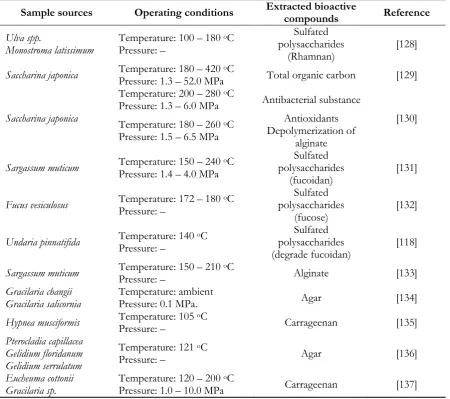
valuable compounds from macro– and microalgae matrices, nowadays, subcritical water extraction method also has been recognized and emerged as a useful media to substitute the conventional extraction methods to extract valuable compounds from solid matrix including macro– and microalgae. Subcritical water extraction method is conducted using water as an extractant at temperatures between 100 and 374 oC under
pressure high enough to keep the liquid state leading to improved extraction efficiency via improvements in mass transfer and shifts in the polarity of water. Some advantages of the subcritical water extraction method are shorter extraction time, higher extraction yield, higher quality of the extracts and the low environment impact [125,126]. In addition, water is also easily available and inexpensive.
Table 3. Extracted valuable compounds from macroalgae using subcritical water.
Sample sources Operating conditions Extracted bioactive compounds Reference
Ulva spp.
Monostroma latissimum Temperature: 100 – 180
oC
Pressure: –
Sulfated polysaccharides
(Rhamnan) [128]
Saccharina japonica Temperature: 180 – 420 Pressure: 1.3 – 52.0 MPa oC Total organic carbon [129]
Saccharina japonica
Temperature: 200 – 280 oC
Pressure: 1.3 – 6.0 MPa Antibacterial substance
[130] Temperature: 180 – 260 oC
Pressure: 1.5 – 6.5 MPa
Antioxidants Depolymerization of
alginate
Sargassum muticum Temperature: 150 – 240 Pressure: 1.4 – 4.0 MPa oC polysaccharides Sulfated
(fucoidan) [131]
Fucus vesiculosus Temperature: 172 – 180 Pressure: – oC polysaccharides Sulfated
(fucose) [132]
Undaria pinnatifida Temperature: 140 Pressure: – oC polysaccharides Sulfated
(degrade fucoidan) [118]
Sargassum muticum Temperature: 150 – 210 Pressure: – oC Alginate [133]
Gracilaria changii
Gracilaria salicornia Temperature: ambient Pressure: 0.1 MPa. Agar [134]
Hypnea musciformis Temperature: 105 Pressure: – oC Carrageenan [135]
Pterocladia capillacea Gelidium floridanum Gelidium serrulatum
Temperature: 121 oC
Pressure: – Agar [136]
Eucheuma cottonii
Gracilaria sp. Temperature: 120 – 200
oC
Pressure: 1.0 – 10.0 MPa Carrageenan [137]
4.
Future Perspective and Challenge
Nowadays, the demand for natural products is on the rise due to their application especially in the functional food and pharmaceutical industry. Public health, environmental impact and safety issues are the important parameters to develop separation method. To cope with this demand, the development of an appropriate extraction technology that is able to provide high–quality extracts is required. As challenges in the development of extraction process are to meet food and pharmaceutical regulation guidelines and to perform the extraction process effectively and economically. Supercritical CO2 and subcritical water extraction are
considered as green method and environmental friendly separation technologies. They have been developed as attractive alternatives to substitute the conventional methods for the extraction of valuable compounds from solid biomass matrices including macro– and microalgae.
[image:10.595.68.519.105.504.2]Supercritical CO2 extraction method, the most common application for supercritical fluid technologies, may
accomplish the drawback of subcritical water extraction method. The major advantages of using supercritical CO2 for the extraction of natural products are a low operating temperature and a low operating pressure.
This is, of course, a beneficial effect in terms of natural products extraction and fractionation by using supercritical CO2. Considering the low polarity of supercritical CO2, the addition of a small amount of
modifiers may increase the ability of supercritical CO2 to dissolve relatively polar compounds. Although the
existence of organic solvents as modifiers may cancel the benign advantages demonstrated by use of supercritical CO2, the supercritical CO2 coupled to modifier looks very promising. Finally, it could be said
that supercritical CO2 and subcritical water are suitable methods for natural products extraction from macro–
and microalgae matrices.
Acknowledgements
We are grateful to the Directorate General of Science, Technology and Higher Education, Ministry of Research, Technology and Higher Education of the Republic of Indonesia for financial support through a research grant Research Competence, Competitive Scheme, 2016–2018.
References
[1] S. Bonotto, “Food and chemicals from microalgae,” Prog. Oceanog., vol. 21, no. 2, pp. 207 – 215, Apr. 1988.
[2] R. Rajkumar, Z. Yaako, and M. S. Takriff, “Potential of the micro and macro algae for biofuel production: A brief review,” BioResources, vol. 9, no. 1, pp. 1606 – 1633, Feb. 2014.
[3] J. J. Milledge, B. V. Nielsen, and D. Bailey, “High–value products from macroalgae: the potential uses of the invasive brown seaweed Sargassum muticum,” Rev. Environ. Sci. Biotechnol., vol. 15, no. 1, pp. 67 – 88, Mar. 2016.
[4] J. N. Rosenberg, G. A. Oyler, L. Wilkinson, and M. J. Betenbaugh, “A green light for engineered algae: Redirecting metabolism to fuel a biotechnology revolution,” Curr. Opin. Biotechnol., vol. 19, no. 5, pp. 430 – 436, Oct. 2008.
[5] A. L. Lane, L. Mular, E. J. Drenkard, T. L. Shearer, S. Engel, S. Fredericq, C. R. Fairchild, J. Prudhomme, K. Le Roch, M. E. Hay, W. Aalbersberg, and J. Kubanek, “Ecological leads for natural product discovery: Novel sesquiterpene hydroquinones from the red macroalga Peyssonnelia sp,” Tetrahedron, vol. 66, no. 2, pp. 455 – 461, Jan. 2010.
[6] E. Ioannou and V. Roussis, “Natural products from seaweeds,” in Plant–derived Natural Products Synthesis,
Function, and Application, A. E. Osbourn and V. Lanzotti, Eds. USA: Springer, 2009, pp. 51 – 81.
[7] R. S. Rasmussen and M. T. Morrissey, “Marine biotechnology for production of food ingredients,” Adv.
Food Nutr. Res., vol. 52, pp. 237 – 292, Apr. 2007.
[8] FAO. (2004). The State of the World Fisheries and Aquaculture (SOFIA) [Online]. Available: http://www.fao.org/sof/sofia/index_en.htm [Accessed: 15 Feb. 2018]
[9] A. C. Freitas, D. Rodrigues, T. A. P. Rocha–Santos, A. M. P. Gomes, and A. C. Duarte, “Marine biotechnology advances towards applications in new functional foods,” Biotechnol. Adv., vol. 30, no. 6, pp. 1506 – 1515, Nov – Dec. 2012.
[10] C. S. Goh and K. T. Lee, “A visionary and conceptual macroalgae–based third generation bioethanol (TGB) biorefinery in Sabah, Malaysia as an underlay for renewable and sustainable development,” Renew.
Sust. Energy Rev., vol. 14, no. 2, pp. 842 – 848, Feb. 2010.
[11] S. G. Wi, H. J. Kim, S. A. Mahadevan, D. Yang, and H. Bae, “The potential value of the seaweed Ceylon moss (Gelidium amansii) as an alternative bioenergy resource,” Bioresour. Technol., vol. 100, no. 24, pp. 6658 – 6660, Dec. 2009.
[12] C. R. Merz and K. L. Main, “Microalgae bioproduction – Feeds, foods, nutraceuticals, and polymers,” in Fuels, Chemicals and Materials from the Oceans and Aquatic Sources, F. M. Kerton and N. Yan, Eds. UK: John Wiley & Sons, 2017, pp. 83 – 103.
[13] J. U. Grobbelaar, “Algal biotechnology: Real opportunities for Africa,” S. Afr. J. Bot., vol. 70, no. 1, pp. 140 – 144, Mar. 2004.
[15] E. E. Luiten, I. Akkerman, A. Koulman, P. Kamermans, H. Reith, M. J. Barbosa, D. Sipkema, and R. H. WijVels, “Realizing the promises of marine biotechnology,” Biomol. Eng., vol. 20, no. 4 – 6, pp. 429 – 439, Jul. 2003.
[16] M. Molyneaux and C. M. Lee, “The U.S. market for marine nutraceutical products,” Food Technol., vol. 52, no. 6, pp. 56 – 57, Jun. 1998.
[17] J. K. Volkman, “Sterols in microorganisms,” Appl. Microbiol. Biotechnol., vol. 60, no. 5, pp. 495 –506, Jan. 2003.
[18] P. Spolaore, C. Joannis–Cassan, E. Duran, and A. Isambert, “Commercial applications of microalgae,”
J. Biosci. Bioeng., vol. 101, no. 2, pp. 87 – 96, Feb. 2006.
[19] D. T. Tran, K. L, Yeh, C. L. Chen, and J. S. Chang, “Enzymatic transesterification of microalgal oil from Chlorella vulgaris ESP-31 for biodiesel synthesis using immobilized Burkholderia lipase,” Bioresour.
Technol., vol. 108, pp. 119 – 127, Mar. 2012.
[20] M. Gavrilescu and Y. Chisti, “Biotechnology – A sustainable alternative for chemical industry,” Biotechnol.
Adv., vol. 23, no. 7 – 8, pp. 471 – 499, Nov. 2005.
[21] E. Ibanez, M. Herrero, J. Mendiola, and M. Castro–Puyana, “Extraction and characterization of bioactive compounds with health benefits from marine resources: Macro and micro algae, cyanobacteria, and invertebrates,” in Marine Bioactive Compounds Sources, Characterization and Applications, M. Hayes, Ed. New York, USA: Springer, 2012, pp. 55 – 98.
[22] S. Machmudah, A. Shotipruk, M. Goto, M. Sasaki, and T. Hirose, “Extraction of astaxanthin from
Haematococcus pluvialis using supercritical CO2 and ethanol as entrainer,” Ind. Eng. Chem. Res., vol. 45, no.
10, pp. 3652 – 3657, Apr. 2006.
[23] S. Machmudah, Wahyudiono, H. Kanda, and M. Goto, “Hydrolysis of biopolymers in near–critical and subcritical water,” in Water Extraction of Bioactive Compounds: From Plants to Drug Development, H. D. Gonzalez and M. J. G. Munoz, Eds. Amsterdam, the Netherlands: Elsevier, 2017, pp. 69 – 107. [24] A. Jimenez–Escrig, I. Jimenez–Jimenez, R. Pulido, and F. Saura–Calixto, “Antioxidant activity of fresh
and processed edible seaweeds,” J. Sci. Food. Agric., vol. 81, no. 5, pp. 530 – 534, Mar. 2001.
[25] L. Bravo, “Polyphenols: Chemistry, dietary sources, metabolism, and nutritional significance,” Nutr. Res., vol. 56, no. 11, pp. 317 – 333, Nov. 1998.
[26] A. Khoddami, M. A. Wilkes, and T. H. Roberts, “Techniques for analysis of plant phenolic compounds,”
Molecules, vol. 18, no. 2, pp. 2328 – 2375, Feb. 2013.
[27] P. Garcia–Salas, A. Morales–Soto, A. Segura–Carretero, and A. Fernandez–Gutierrez, “Phenolic– compound extraction systems for fruit and vegetable samples,” Molecules, vol. 15, no. 12, pp. 8813 – 8826, Dec. 2010.
[28] H. Safafar, J. van Wagenen, P. Moller, and C. Jacobsen, “Carotenoids, phenolic compounds and tocopherols contribute to the antioxidative properties of some microalgae species grown on industrial wastewater,” Mar. Drugs, vol. 13, no. 12, pp. 7339 – 7356, Dec. 2015.
[29] S. Agarwal and A. V. Rao, “Carotenoids and chronic diseases,” Drug Metabol. Drug Interact., vol. 17, no. 1 – 4, pp. 189 – 210, Dec. 2000.
[30] S. De Spirt, K. Lutter, and W. Stahl, “Carotenoids in photooxidative stress,” Curr. Nutr. Food Sci., vol. 6, no. 1, pp. 36 – 43, Feb. 2010.
[31] J. L. Silberstein and J. K. Parsons, “Evidence–based principles of bladder cancer and diet,” Urol., vol. 75, no. 2, pp. 340 – 346, Feb. 2010.
[32] G. Riccioni, B. Mancini, E. Di Ilio, T. Bucciarelli, and N. D. Orazio, “Protective effect of lycopene in cardiovascular disease,” Eur. Rev. Med. Pharmacol. Sci., vol. 12, no. 3, pp. 183 – 190, May – Jun. 2008. [33] M. D. Snodderly, “Evidence for protection against age–related macular degeneration by carotenoids
and antioxidant vitamins,” Am. J. Clin. Nutr., vol. 62, no. 2, pp. 1448S – 1461S, Dec. 1995.
[34] D. DellaPenna and B. J. Pogson, “Vitamin synthesis in plants: Tocopherols and carotenoids,” Annu.
Rev. Plant. Biol., vol. 57, pp. 711 – 738, Jun. 2006.
[35] M. F. De Jesus Raposo, R. M. S. C. de Morais, and A. M. M. B. de Morais, “Bioactivity and applications of sulphated polysaccharides from marine microalgae,” Mar. Drugs, vol. 11, no. 1, pp. 233 – 252, Jan. 2013.
[36] N. Ruocco, S. Costantini, S. Guariniello, and M. Costantini, “Polysaccharides from the marine environment with pharmacological, cosmeceutical and nutraceutical potential,” Molecules, vol. 21, no. 5, pp. pii: E551, Apr. 2016.
[38] C. S. Kumar, P. Ganesan, P. V. Suresh, and N. Bhaskar, “Seaweed as a source of nutritionally beneficial compounds: a review,” J. Food Sci. Technol. J. Food Sci. Technol., vol. 45, no. 1, pp. 1 – 13, Sep. 2008. [39] A. M. Sanghvi and Y. M. Lo, “Present and potential industrial applications of macro– and microalgae,”
Recent Pat. Food Nutr. Agric., vol. 2, no. 3, pp. 187 – 194, Nov. 2010.
[40] D. B. Stengel, S. Connan, and Z. A. Popper, “Algal chemodiversity and bioactivity: Sources of natural variability and implications for commercial application,” Biotechnol. Adv., vol. 29, no. 5, pp. 483 – 501, Sep-Oct. 2011.
[41] K. Kazlowska, H. T. V. Lin, S. H. Chang, and G. J. Tsail, “In vitro and in vivo anticancer effects of sterol fraction from red algae Porphyra Dentate,” Evidence–Based Complementary and Alternative Medicine, Jun. 2013, Article ID 493869.
[42] M. A. Borowitzka, “High–value products from microalgae – Their development and commercialization,”
J. Appl. Phycol., vol. 25, no. 3, pp. 743 – 756, Jun. 2013.
[43] L. Yao, J. A. Gerde, S. L. Lee, T. Wang, and K. A. Harrata, “Microalgae lipid characterization,” J. Agric.
Food Chem., vol. 63, no. 6, pp. 1773 – 1787, Jan. 2015.
[44] E. Plouguerne, L. M. de Souza, G. L. Sassaki, J. F. Cavalcanti, M. T. Villela Romanos, B. A. P. da Gama, R. C. Pereira, and E. Barreto–Bergter, “Antiviral Sulfoquinovosyldiacylglycerols (SQDGs) from the Brazilian brown seaweed Sargassum vulgare,” Mar. Drugs, vol. 11, no. 11, pp. 4628 – 4640, Nov. 2013. [45] E. Plouguerne, B. A. P. da Gama, R. C. Pereira, and E. Barreto–Bergter, “Glycolipids from seaweeds
and their potential biotechnological applications,” Front Cell. Infect. Microbiol., vol. 4, pp. 1 – 5, Dec. 2014. [46] H. Noda, H. Amano, K. Arashima, and K. Nisizawa, “Antitumor activity of marine algae,” Hydrobiologia,
vol. 204, no. 1, pp. 577 – 584, Sep. 1990.
[47] I. Naumann, K. H. Darsow, C. Walter, H. A. Lange, and R. Buchholz, “Identification of sulfoglycolipids from the alga Porphyridium purpureum by matrix–assisted laser desorption/ionisation quadrupole ion trap time–of–flight mass spectrometry,” Rapid Commun. Mass Spectrom., vol. 21, no. 19, pp. 3185 – 3192, Oct. 2007.
[48] V. Reshef, E. Mizrachi, T. Maretzki, C. Silberstein, S. Loya, A. Hizi, and S. Carmeli, “New acylated sulfoglycolipids and digalactolipids and related known glycolipids from cyanobacteria with a potential to inhibit the reverse transcriptase of HIV–1,” J. Nat. Prod., vol. 60, no. 12, pp. 1251 – 1260, Dec. 1997. [49] T. Morimoto, “Anti–tumour–promoting glyceroglycolipids from the green algae Chlorella vulgaris,”
Phytochem., vol. 40, no. 5, pp. 1433 – 1437, Nov. 1995.
[50] A. Rijpma, M. van der Graaf, M. M. Lansbergen, O. Meulenbroek, A. Cetinyurek–Yavuz, J. W. Sijben, A. Heerschap, and M. G. M. Olde Rikkert, “The medical food Souvenaid affects brain phospholipid metabolism in mild Alzheimer's disease: Results from a randomized controlled trial,” Alzheimers Res.
Ther., vol. 9, pp. 51, Jul. 2017.
[51] K. Samarakoon and Y. J. Jeon, “Bio–functionalities of proteins derived from marine algae – A review,”
Food Res. Int., vol. 48, no. 2, pp. 948–960, Oct. 2012.
[52] S. Bleakley and M. Hayes, “Algal proteins: Extraction, application, and challenges concerning production,” Foods, vol. 6, no. 5, pp. pii: E33, Apr. 2017.
[53] S. Sekar and M. Chandramohan, “Phycobili protein as commodity: trends in applied research, patents and commercialization,” J. Appl. Phycol., vol. 20, no. 2, pp. 113 – 136, Apr. 2008.
[54] P. G. Jessop, S. Trakhtenberg, and J. Warner, “The twelve principles of green chemistry in innovations in industrial and engineering chemistry,” in ACS Symposium Series, vol. 1000, 2009, pp. 401 – 436. [55] S. U. Kadam, B. K. Tiwari, and C. P. O. Donnell, “Application of novel extraction technologies for
bioactives from marine algae,” J. Agric. Food Chem., vol. 61, no. 20, pp. 4667 – 4675, May 2013.
[56] R. Halim, M. K. Danquah, and P. A. Webley, “Extraction of oil from microalgae for biodiesel production: A review,” Biotechnol. Adv., vol. 30, no. 3, pp. 709 – 732, May – Jun. 2012.
[57] C. Crampon, O. Boutin, and E. Badens, “Supercritical carbon dioxide extraction of molecules of interest from microalgae and seaweeds,” Ind. Eng. Chem. Res., vol. 50, no. 15, pp. 8941 – 8953, Jun. 2011. [58] F. Sahena, I. S. M. Zaidul, S. Jinap, A. A. Karim, K. A. Abbas, N. A. N. Norulaini, and A. K. M. Omar,
“Application of supercritical CO2 in lipid extraction – A review,” J. Food Eng., vol. 95, no. 2, pp. 240 –
253, Nov. 2009.
[59] S. Nahak, G. Nahak, I. Pradhan, and R. K. Sahu, “Bioethanol from marine algae: A solution to global warming problem,” J. Appl. Environ. Biol. Sci., vol. 1, no. 4, pp. 74 – 80, Jan. 2011.
extraction of bioactive compounds from microalgae and volatile oils from aromatic plants,” J. Supercrit.
Fluids, vol. 60, pp. 21 – 27, Dec. 2011.
[61] Y. H. Chen and T. H. Walker, “Fed–batch fermentation and supercritical fluid extraction of heterotrophic microalgal Chlorella protothecoides lipids,” Bioresour. Technol., vol. 114, pp. 512 – 517, Jun. 2012.
[62] L. Gouveia, B. P. Nobre, F. M. Marcelo, S. Mrejen, M. T. Cardoso, A. F. Palavra, and R. L. Mendes, “Functional food oil coloured by pigments extracted from microalgae with supercritical CO2,” Food
Chem., vol. 101, no. 2, pp. 717 – 723, Apr. 2007.
[63] R. Halim, B. Gladman, M. K. Danquah, and P.A. Webley, “Oil extraction from microalgae for biodiesel production,” Bioresour. Technol., vol. 102, no. 1, pp. 178 – 185, Jan. 2011.
[64] R. M. Couto, P. C. Simoes, A. Reis, T. L. Da Silva, V. H. Martins, and Y. Sanchez–Vicente, “Supercritical fluid extraction of lipids from the heterotrophic microalga Crypthecodinium cohnii,” Eng. Life Sci., vol. 10, no. 2, pp. 158 – 164, Apr. 2010.
[65] L. Jaime, J. A. Mendiola, E. Ibanez, P. J. Martin-Alvarez, A. Cifuentes, G. Reglero, and F. J. Senorans, “–Carotene isomer composition of sub– and supercritical carbon dioxide extracts. Antioxidant activity measurement,” J. Agric. Food Chem., vol. 55, no. 26, pp. 10585 – 10590, Dec. 2007.
[66] M. D. Macias–Sanchez, C. Mantell, M. Rodriguez, E. M. de la Ossa, L. M., Lubian, and O. Montero, “Comparison of supercritical fluid and ultrasound–assisted extraction of carotenoids and chlorophyll a from Dunaliella salina,” Talanta, vol. 77, no. 3, pp. 948 – 952, Jan. 2009.
[67] W. Yothipitak, P. Thana, M. Goto, and A. Shotipruk, “Experiments and statistical analysis of supercritical carbon dioxide extraction,” Chiang Mai J. Sci., vol. 35, no. 1, pp. 109 – 115, Oct. 2008. [68] M. D. Macias–Sanchez, C. Mantell, M. Rodriguez, E. M. De La Ossa, L. M. Lubian, and O. Montero,
“Supercritical fluid extraction of carotenoids and chlorophyll a from Nannochloropsis gaditana,” J. Food
Eng., vol. 66, no. 2, pp. 245 – 251, Jan. 2005.
[69] W. J. Bjornsson, K. M. MacDougall, J. E. Melanson, S. J. B. OLeary, and P. J. McGinn, “Pilot-scale supercritical carbon dioxide extractions for the recovery of triacylglycerols from microalgae: A practical tool for algal biofuels research,” J. Appl. Phycol., vol. 24, pp. 3, pp. 547 – 555, Jun. 2012.
[70] G. Andrich, U. Nesti, F. Venturi, A. Zinnai, and R. Fiorentini, “Supercritical fluid extraction of bioactive lipids from the microalga Nannochloropsis sp,” Eur. J. Lipid Sci. Technol., vol. 107, no. 6, pp. 381 – 386, Jun. 2005.
[71] C. H. Cheng, T. B. Du, H. C. Pi, S. M. Jang, Y. H. Lin, and H. T. Lee, “Comparative study of lipid extraction from microalgae by organic solvent and supercritical CO2,” Bioresour. Technol., vol. 102, no.
21, pp. 10151 – 10153, Nov. 2011.
[72] M. D. Macias–Sanchez, J. M. Fernandez–Sevilla, F. A. Fernandez, M. C. Garcia, and E. M. Grima, “Supercritical fluid extraction of carotenoids from Scenedesmus almeriensis,” Food Chem., vol. 123, no. 3, pp. 928 – 935, Dec. 2010.
[73] L. Soh and J. Zimmerman, “Biodiesel production: the potential of algal lipids extracted with supercritical carbon dioxide,” Green Chem., vol. 13, no. 6, pp. 1422–1429, Apr. 2011.
[74] A. P. R. Canela, P. T. Rosa, M. O. Marques, and M. A. A. Meireles, “Supercritical fluid extraction of fatty acids and carotenoids from the microalgae Spirulina maxima,” Ind. Eng. Chem. Res., vol. 41, no. 12, pp. 3012 – 3018, May 2002.
[75] M. D. Macias–Sanchez, C. Mantell, M. Rodriguez, E. M. de la Ossa, L. M. Lubian, and O. Montero, “Supercritical fluid extraction of carotenoids and chlorophyll a from Synechococcus sp,” J. Supercrit. Fluids, vol. 39, no. 3, pp. 323 – 329, Jan. 2007.
[76] O. Montero, M. D. Macias–Sanchez, C. M. Lama, L. M. Lubian, C. Mantell, M. Rodriguez, and E. M. de la Ossa, “Supercritical CO2 extraction of beta–carotene from a marine strain of the cyanobacterium
Synechococcus species,” J. Agric. Food Chem., vol. 53, no. 23, pp. 9701 – 9707, Dec. 2005.
[77] J. A. Mendiola, C. F. Torres, A. Tore, P. J. Martin-Alvarez, S. Santoyo, B. O. Arredondo, F. J. Senorans, A. Cifuentes, and E. Ibanez, “Use of supercritical CO2 to obtain extracts with antimicrobial activity
from Chaetoceros muelleri microalga. A correlation with their lipidic content,” Eur. Food Res. Technol., vol. 224, pp. 505 – 510, Apr. 2007.
[78] S. Grierson, V. Strezov, S. Bray, R. Mummacari, L. T. Danh, and N. Foster, “Assessment of bio–oil extraction from Tetraselmis chui microalgae comparing supercritical CO2, solvent extraction, and thermal
[79] J. A. Mendiola, L. Jaime, S. Santoyo, G. Reglero, A. Cifuentes, E. Ibanez, and F. J. Senorans, “Screening of functional compounds in supercritical fluid extracts from Spirulina platensis,” Food Chem., vol. 102, no. 4, pp. 1357 – 1367, Oct. 2007.
[80] Y. Tong, L. Gao, G. M. Xiao, and X. M. Pan, “Supercritical CO2 extraction of chlorophyll a from
Spirulina platensis with a static modifier,” Chem. Eng. Technol., vol. 34, no. 2, pp. 241 – 248, Dec. 2011.
[81] M. G. Sajilata, R. S. Singhal, and M. Y. Kamat, “Supercritical CO2 extraction of –linolenic acid (GLA)
from Spirulina platensis ARM 740 using response surface methodology,” J. Food Eng., vol. 84, no. 2, pp. 321 – 326, Jan. 2008.
[82] J. A. Mendiola, D. Garcia–Martinez, F. J. Ruperez, P. J. Martin–Alvarez, G. Reglero, A. Cifuentes, C. Barbas, E. Ibanez, and F. J. Senorans, “Enrichment of vitamin E from Spirulina platensis microalga by SFE,” J. Supercrit. Fluids, vol. 43, no. 3, pp. 484 – 489, Jan. 2008.
[83] R. L. Mendes, B. P. Nobre, M. T. Cardoso, A. P. Pereira, and A. F. Palavra, “Supercritical carbon dioxide extraction of compounds with pharmaceutical importance from microalgae,” Inor. Chim. Acta, vol. 356, pp. 328 – 334, Dec. 2003.
[84] M. Ota, H. Watanabe, Y. Kato, M. Watanabe, Y. Sato, R. L. Smith, and H. Inomata, “Carotenoid production from Chlorococcum littorale in photoautotrophic cultures with downstream supercritical fluid processing,” J. Sep. Sci., vol. 32, no. 13, pp. 2327 – 2335, Jul. 2009.
[85] S. Tang, C. Qin, H. Wang, S. Li, and S. Tian, “Study on supercritical extraction of lipids and enrichment of DHA from oil-rich microalgae,” J. Supercrit. Fluids, vol. 57, no. 1, pp. 44 – 49, May 2011.
[86] B. C. Liau, S. E. Hong, L. P. Chang, C. T. Shen, Y. C. Li, Y. P. Wu, T. T. Jong, C. J. Shieh, S. L. Hsu, and C. M. J. Chang, “Separation of sight–protecting zeaxanthin from Nannochloropsis oculata by using supercritical fluids extraction coupled with elution chromatography,” Sep. Pur. Technol., vol. 78, no. 1, pp. 1 – 8, Mar. 2011.
[87] B. C. Liau, C. T. Shen, F. P. Liang, S. E. Hong, S. L. Hsu, T. T. Jong, and C. M. J. Chang, “Supercritical fluids extraction and anti–solvent purification of carotenoids from microalgae and associated bioactivity,”
J. Supercrit. Fluids, vol. 55, no. 1, pp. 169 – 175, Nov. 2010.
[88] M. D. Macias–Sanchez, C. M. Serrano, M. Rodriguez, and E. M. de la Ossa, “Kinetics of the supercritical fluid extraction of carotenoids from microalgae with CO2 and ethanol as cosolvent,” Chem. Eng. J., vol.
150, pp. 104 – 113, 2009.
[89] D. Ruen–ngam, A. Shotipruk, P. Pavasant, S. Machmudah, and M. Goto, “Selective extraction of lutein from alcohol treated Chlorella vulgaris by supercritical CO2,” Chem. Eng. Technol., vol. 35, no. 2, pp. 255
– 260, Feb. 2012.
[90] B. P. Nobre, F. Marcelo, R. Passos, L. Beirao, A. Palavra, L. Gouveia, and R. Mendes, “Supercritical carbon dioxide extraction of astaxanthin and other carotenoids from the microalga Haematococcus
pluvialis,” Eur. Food Res. Technol., vol. 223, pp. 787 – 790, Mar. 2006.
[91] D. Esquivel–Hernandez, V. Lopez, J. Rodriguez–Rodriguez, G. Aleman–Nava, S. Cuellar–Bermdez, M. Rostro–Alanis, and R. Parra–Saldivar, “Supercritical carbon dioxide and microwave–assisted extraction of functional lipophilic compounds from Arthrospira platensis,” Int. J. Molec. Sci., vol. 17, no. 5, pp. 1 – 11, May 2016.
[92] M. Goto, H. Kanda, Wahyudiono, and S. Machmudah, “Extraction of carotenoids and lipids from algae by supercritical CO2 and subcritical dimethyl ether,” J Supercrit. Fluids, vol. 96, pp. 245 – 251, Jan. 2015.
[93] J. M. Char, J. K. Wang, T. J. Chow, and Q. C. Chien, “Biodiesel production from microalgae through supercritical carbon dioxide extraction,” J. Japan Inst. Energy, vol. 90, no. 4, pp. 369 – 373, Sep. 2011. [94] B. Klejdus, L. Lojkova, and J. Vlcek, “Hyphenated solid phase extraction/supercritical fluid extraction
methods for extraction of phenolic compounds from algae,” Curr. Anal. Chem., vol. 10, no. 1, pp. 86 – 98, Apr. 2014.
[95] M. Solana, C. Rizza, and A. Bertucco, “Exploiting microalgae as a source of essential fatty acids by supercritical fluid extraction of lipids: Comparison between Scenedesmus obliquus, Chlorella protothecoides and
Nannochloropsis salina,” J. Supercrit. Fluids, vol. 92, pp. 311 – 318, Aug. 2014.
[97] K. Fujii, “Process integration of supercritical carbon dioxide extraction and acid treatment for astaxanthin extraction from a vegetative microalga,” Food Bioprod. Process., vol. 90, no. 4, pp. 762 – 766, Oct. 2012.
[98] V. Abrahamsson, I. Rodriguez–Meizoso, and C. Turner, “Determination of carotenoids in microalgae using supercritical fluid extraction and chromatography,” J. Chromatogr. A, vol. 1250, pp. 63 – 68, Aug. 2012.
[99] J. L.Pan, H. M. Wang, C. Y. Chen, and J. S. Chang, “Extraction of astaxanthin from Haematococcus pluvialis by supercritical carbon dioxide fluid with ethanol modifier,” Eng. Life Sci., vol. 12, no. 6, pp. 638 – 647, Nov. 2012.
[100] C. Crampon, A. Mouahid, S. A. A. Toudji, O. Lepine, and E. Badens, “Influence of pretreatment on supercritical CO2 extraction from Nannochloropsis oculata,” J. Supercrit. Fluids, vol. 79, pp. 337 – 344, Jul.
2013.
[101]R. L. Mendes, H. L. Fernandes, J. P. Coelho, E. C. Reis, J. M. S. Cabral, J. M. Novais, and A. F. Palavra, “Supercritical CO2 extraction of carotenoids and other lipids from Chlorella vulgaris,” Food Chem., vol. 53,
no. 1, pp. 99 – 103, Apr. 1995.
[102]M. T. Golmakani, J. A. Mendiola, K. Rezaei, and E. Ibanez, “Expanded ethanol with CO2 and
pressurized ethyl lactate to obtain fractions enriched in –linolenic acid from Arthrospira platensis (Spirulina),” J. Supercrit. Fluids, vol. 62, pp. 109 – 115, Feb. 2012.
[103]R. L. Mendes, A. D. Reis, A. P. Pereira, M. T. Cardoso, A. F. Palavra, and J. P. Coelho, “Supercritical CO2 extraction of –linolenic acid (GLA) from the cyanobacterium Arthrospira (Spirulina) maxima:
Experiments and modeling,” Chem. Eng. J., vol. 105, no. 3, pp. 147 – 152, Jan. 2005.
[104]R. L. Mendes, A. D. Reis, and A. F. Palavra, “Supercritical CO2 extraction of –linolenic acid and other
lipids from Arthrospira (Spirulina) maxima: Comparison with organic solvent extraction,” Food Chem., vol. 99, no. 1, pp. 57 – 63, Sep. 2006.
[105]P. Thana, S. Machmudah, M. Goto, M. Sasaki, P. Pavasant, and A. Shotipruk, “Response surface methodology to supercritical carbon dioxide extraction of astaxanthin from Haematococcus pluvialis,”
Bioresour. Technol., vol. 99, no. 8, pp. 3110 – 3115, May 2008.
[106]L. Wang, B. Pan, J. Sheng, J. Xu, and Q. Hu, “Antioxidant activity of Spirulina platensis extracts by supercritical carbon dioxide extraction,” Food Chem., vol. 105, no. 1, pp. 36 – 41, Mar. 2007.
[107]J. O. Valderrama, M. Perrut, and W. Majewski, “Extraction of astaxantine and phycocyanine from microalgae with supercritical carbon dioxide,” J. Chem. Eng. Data, vol. 48, no. 4, pp. 827 – 830, May 2003.
[108] A. Santana, S. Jesus, M. A. Larrayoz, and R. M. Filho, “Supercritical carbon dioxide extraction of algal lipids for the biodiesel production,” Procedia Eng., vol. 42, pp. 1755 – 1761, Aug. 2012.
[109] Q. Hu, B. Pan, J. Xu, J. Sheng, and Y. Shi, “Effects of supercritical carbon dioxide extraction conditions on yields and antioxidant activity of Chlorella pyrenoidosa Extracts,” J. Food Eng., vol. 80, no. 4, pp. 997 – 1001, Jun. 2007.
[110]M. Careri, L. Furlattini, A. Mangia, M. Musci, E. Anklam, A. Theobald, and C. Von Holst, “Supercritical fluid extraction for liquid chromatographic determination of carotenoids in Spirulina pacifica algae: A chemometric approach,” J. Chromatogr. A, vol. 912, no. 1, pp. 61 – 71, Mar. 2001.
[111]Z. Wu, S. Wu, and X. Shi, “Supercritical fluid extraction and determination of lutein in heterotrophically cultivated Chlorella pyrenoidosa,” J. Food Process Eng., vol. 30, no. 2, pp. 174 – 185, Apr. 2007.
[112]P. G. Jessop and W. Leitner, Chemical Synthesis Using Supercritical Fluids. Weinheim, Germany: Wiley– VCH Verlag GmbH, 1999, p. 90.
[113]M. El Hattab, G. Culioli, L. Piovetti, S. E. Chitour, and R. Valls, “Comparison of various extraction methods for identification and determination of volatile metabolites from the brown alga Dictyopteris
membranacea,” J. Chromatogr. A, vol. 1143, no. 1-2, pp. 1 – 7, Mar. 2007.
[114]P. Subra and P. Boissinot, “Supercritical fluid extraction from a brown alga by stage wise pressure increase,” J. Chromatogr. A, vol. 543, pp. 413 – 424, Dec. 1991.
[115]P. C. Cheung, A. Y. Leung, and P. O. Ang, “Comparison of supercritical carbon dioxide and soxhlet extraction of lipids from a brown seaweed, Sargassum hemiphyllum (Turn.) C. Ag,” J. Agric. Food Chem., vol. 46, no. 10, pp. 4228 – 4232, Sep. 1998.
of fucosterol recovered from Lessonia vadosa Searles (Lessoniaceae) by SFE, PSE and CPC,” Phytochem.
Lett. vol. 11, pp. 418 – 423, Mar. 2015.
[117] P. Perez–Lopez, E. M. Balboa, S. Gonzalez–Garcia, H. Dominguez, G. Feijoo, and M. T. Moreira, “Comparative environmental assessment of valorization strategies of the invasive macroalgae Sargassum
muticum,” Bioresour. Technol., vol. 161, pp. 137 – 148, Jun. 2014.
[118]A.T. Quitain, T. Kai, M. Sasaki, and M. Goto, “Microwave?hydrothermal extraction and degradation of fucoidan from supercritical carbon dioxide deoiled Undaria pinnatifida,” Ind. Eng. Chem. Res., vol. 52, no. 23, pp. 7940 – 7946, May 2013.
[119]J. Zheng, Y. Chen, F. Yao, W. Chen, and G. Shi, “Chemical composition and antioxidant/antimicrobial activities in supercritical carbon dioxide fluid extract of Gloiopeltis tenax,” Mar. Drugs, vol. 10, no. 12, pp. 2634 – 2647, Dec. 2012.
[120] R. Menshova, F. Lepeshkin, S. Ermakova, O. Pokrovskii, and T. Zvyagintseva, “Effect of pretreatment conditions of brown algae by supercritical fluids on yield and structural characteristics of fucoidans,”
Chem. Nat. Compd., vol. 48, no. 6, pp. 923 – 926, Jan. 2013.
[121]P. C. Cheung, “Temperature and pressure effects on supercritical carbon dioxide extraction of n–3 fatty acids from red seaweed,” Food Chem., vol. 65, no. 3, pp. 399 – 403, May 1999.
[122] D. Gao, R. Okuda, and V. Lopez–Avila, “Supercritical fluid extraction of halogenated monoterpenes from the red alga Plocamium cartilagineum,” J. AOAC Inter., vol. 84, no. 5, pp. 1313 – 1331, Sep. – Oct. 2001.
[123]I. Gamlieli-Bonshtein, E. Korin, and S. Cohen, “Selective separation of cis trans geometrical isomers of beta–carotene via CO2 supercritical fluid extraction,” Biotechnol. Bioeng., vol. 80, no. 2, pp. 169 – 174, Oct.
2002.
[124] N. De Zordi, I. Kikic, M. Moneghini, and D. Solinas, “Solubility of pharmaceutical compounds in supercritical carbon dioxide,” J. Supercrit. Fluids, vol. 66, pp. 16 – 22, Jun. 2012.
[125]Wahyudiono, S. Machmudah, and M. Goto, “Utilization of sub and supercritical water reactions in resource recovery of biomass wastes,” Engineering Journal, vol. 17, no. 1, pp. 1-12, Dec. 2012.
[126]M. Plaza and C. Turner, “Pressurized hot water extraction of bioactives,” TrAC Trends Anal. Chem., vol. 71, pp. 39 – 54, Sep. 2015.
[127]C. Zhang, X. Tang, L. Sheng, and X. Yang, “Enhancing the performance of co–hydrothermal liquefaction for mixed algae strains by the Maillard reaction,” Green Chem., vol. 18, no. 8, pp. 2542 – 2553, Dec. 2016.
[128]S. Tsubaki, K. Oono, M. Hiraoka, A. Onda, and T. Mitani, “Microwave-assisted hydrothermal extraction of sulfated polysaccharides from Ulva spp. and Monostroma latissimum,” Food Chem., vol. 210, pp. 311 – 316, Nov. 2016.
[129] P. S. Saravana, J. H. Choi, Y. B. Park, H. C. Woo, and B. S. Chun, “Evaluation of the chemical composition of brown seaweed (Saccharina japonica) hydrolysate by pressurized hot water extraction,”
Algal Res., vol. 13, pp. 246 – 254, Jan. 2016.
[130]A. Meillisa, H. C. Woo, and B. S. Chun, “Production of monosaccharides and bio–active compounds derived from marine polysaccharides using subcritical water hydrolysis,” Food Chem., vol. 171, pp. 70 – 77, Mar. 2015.
[131]E. M. Balboa, A. Moure, and H. Dominguez, “Valorization of Sargassum muticum biomass according to the biorefinery concept,” Mar. Drugs, vol. 13, no. 6, pp. 3745 – 3760, Jun. 2015.
[132]R. Rodriguez–Jasso, S. Mussatto, L. Pastrana, C. Aguilar, and J. Teixeira, “Chemical composition and antioxidant activity of sulphated polysaccharides extracted from Fucus vesiculosus using different hydrothermal processes,” Chem. Pap., vol. 68, no. 2, pp. 203 – 209, Feb. 2014.
[133] N. Gonzalez–Lopez, A. Moure, and H. Dominguez, “Hydrothermal fractionation of Sargassum muticum biomass,” J. Appl. Phycol., vol. 24, no. 6, pp. 1569 – 1578, Mar. 2012.
[134]W. K. Lee, P. Namasivayam, and C. L. Ho, “Effects of sulfate starvation on agar polysaccharides of
Gracilaria species (Gracilariaceae, Rhodophyta) from Morib, Malaysia,” J. Appl. Phycol., vol. 26, no. 4, pp.
1791 – 1799, Aug. 2014.
[135] E. Vazquez–Delfin, D. Robledo, and Y. Freile–Pelegrin, “Microwave-assisted extraction of the carrageenan from Hypnea musciformis (Cystocloniaceae, Rhodophyta),” J. Appl. Phycol., vol. 26, no. 2, pp. 901 – 907, Apr. 2014.
[137] S. Machmudah, Widiyastuti, S. Winardi, Wahyudiono, H. Kanda, and M. Goto, “Sub– and supercritical fluids extraction of phytochemical compounds from Eucheuma cottonii and Gracilaria sp,” Chem. Eng.