R E S E A R C H
Open Access
Effects of changing mosquito host searching
behaviour on the cost effectiveness of a mass
distribution of long-lasting, insecticidal nets: a
modelling study
Olivier JT Briët
1,2*and Nakul Chitnis
1,2Abstract
Background:The effectiveness of long-lasting, insecticidal nets (LLINs) in preventing malaria is threatened by the changing biting behaviour of mosquitoes, from nocturnal and endophagic to crepuscular and exophagic, and by their increasing resistance to insecticides.
Methods:Using epidemiological stochastic simulation models, we studied the impact of a mass LLIN distribution onPlasmodium falciparummalaria. Specifically, we looked at impact in terms of episodes prevented during the effective life of the batch and in terms of net health benefits (NHB) expressed in disability adjusted life years (DALYs) averted, depending on biting behaviour, resistance (as measured in experimental hut studies), and on pre-intervention transmission levels.
Results:Results were very sensitive to assumptions about the probabilistic nature of host searching behaviour. With a shift towards crepuscular biting, under the assumption that individual mosquitoes repeat their behaviour each gonotrophic cycle, LLIN effectiveness was far less than when individual mosquitoes were assumed to vary their behaviour between gonotrophic cycles. LLIN effectiveness was equally sensitive to variations in host-searching behaviour (if repeated) and to variations in resistance. LLIN effectiveness was most sensitive to pre-intervention transmission level, with LLINs being least effective at both very low and very high transmission levels, and most effective at around four infectious bites per adult per year. A single LLIN distribution round remained cost effective, except in transmission settings with a pre-intervention inoculation rate of over 128 bites per year and with resistant mosquitoes that displayed a high proportion (over 40%) of determined crepuscular host searching, where some model variants showed negative NHB.
Conclusions:Shifts towards crepuscular host searching behaviour can be as important in reducing LLIN
effectiveness and cost effectiveness as resistance to pyrethroids. As resistance to insecticides is likely to slow down the development of behavioural resistance andvice versa, the two types of resistance are unlikely to occur within the same mosquito population. LLINs are likely cost effective interventions against malaria, even in areas with strong resistance to pyrethroids or where a large proportion of host-mosquito contact occurs during times when LLIN users are not under their nets.
Keywords:Behavioural resistance, Physiological resistance, LLINs, Open malaria, ITNs, Mosquito, Modelling, Insecticide
* Correspondence:[email protected] 1
Department of Epidemiology and Public Health, Swiss Tropical and Public Health Institute, Basel, Switzerland
2
University of Basel, Basel, Switzerland
Background
Long-lasting insecticidal net (LLIN) distribution cam-paigns have played an important role in recent successes in malaria control [1]. LLINs protect against mosquito bites that mostly occur indoors during sleeping hours, coinciding with times when people are using LLINs. Fur-thermore, the nets have a protective‘community effect’by killing mosquitoes [2], thereby reducing the probability that the infected mosquito will survive the extrinsic incubation period and become infectious.
Resistance to pyrethroids in mosquito populations is increasing [3], threatening the effectiveness of pyrethroid-based interventions such as LLINs [4]. LLIN effectiveness is also threatened by shifts in biting behaviour, from nocturnal towards crepuscular, with mosquitoes actively host searching during the early morning and/or evening, when many LLIN users are not under their nets [5-7]. For example, Russell and colleagues [8] observed increased outdoor feeding after exposure to insecticide treated nets (ITNs) in Tanzania. Such a shift could occur simply ifmosquitoes are unsuccessful in finding a blood meal during their normal active host-searching period and if mosquitoes learn [9,10] and repeat behaviour that resulted in a blood meal The above causes of these shifts can be described as phenotypic plasticity [5]. It could occur if mosquitoes that search for hosts indoors during sleeping hours have a higher risk of being killed (by LLINs). If there is a genetic basis for the behaviour [11], pressure from LLINs could select for alleles that are associated with crepuscular biting behaviour, resulting in decreased expos-ure of mosquitoes to LLINs, and decreased effectiveness of LLINs over time. If these alleles are associated with certain (sub) species, this could lead to differential suppres-sion of (sub) species [8,12].
In this paper,‘behavioural resistance’ is defined as the behaviour-related ability to be unaffected by something. Such ability can, but does not need to be, acquired (or evolved) in response to pressure. Mosquitoes that tend to bite during times that LLIN users are not under their nets are less affected by LLINs than nocturnal host-searching mosquitoes, and thus have some ‘ be-havioural resistance’against LLINs. However, mosqui-toes that avoid contact with LLINs are not necessarily more behaviourally resistant than mosquitoes that do not if the contact-avoiding mosquitoes subsequently fail to find a blood meal or have a lower survival rate associated with crepuscular activity.
If host-searching behaviour varies in the vector popu-lation, this has implications for LLIN effectiveness. Molineaux and colleagues [13] show that with the assump-tion of non-uniform exposure to insecticides, vector control tools are much less effective than under the usual implicit assumption of uniform exposure. If all female mosquitoes in a population have the same stochastic probability of
behaving a certain way each gonotrophic cycle, then mosquito potential exposure to LLINs is uniform. If, at the other extreme, each female always repeats her behaviour each gonotrophic cycle, her behaviour being determined before (genetically or phenotypically) or during the first gonotrophic cycle (through learning from experience), behaviour is fully determined and potential exposure is non-uniform. In the former fully ‘probabilistic’ case, each mosquito hasa priorithe same chance of surviving each gonotrophic cycle. In the latter, fully ‘determined’ case, those mosquitoes that never search for human hosts indoors during human sleeping hours are never exposed to LLINs, and thus their survival is not affected by LLINs. While behaviour is unlikely to be fully probabilistic, it is also unlikely to be fully determined. In reality, the degree of determinedness will lie somewhere in between these two extremes.
The proportion of mosquito-host encounters that occur indoors during sleeping hours in the absence of bed nets gives an indication of how strongly the mosquito population can be affected by LLINs. The more crepuscular and exophagic the vector population, the lower this proportion. This proportion, also called the ‘πi value’[14] or ‘πs value’ [15], can also be defined
as “…the proportion of normal exposure of unprotected humans lacking nets that occurs at times and places when net users would be protected by sleeping under them”[16]. If host-searching behaviour is fully determined, LLINs cannot reduce exposure to bites beyond the level that occurred during human sleeping hours prior to inven-tion. In such a case, and if mosquitoes are killed by LLINs, theπivalue will be lower during intervention than prior to
intervention. However, if there is some stochasticity in the behaviour, LLINs can potentially reduce exposure beyond the level occurring during human sleeping hours prior to intervention, because all mosquitoes are at risk of being killed by LLINs.
A previous modelling study [17] quantified the sensitivity of the effectiveness of a mass distributed LLIN batch to insecticide resistance, as measured in experimental hut studiesa. In that study, the pre-intervention πi was kept
constant at a value of 0.75, and host-searching behaviour was assumed to be fully determined. This paper extends that previous study by incorporating sensitivity to assump-tions about host-searching behaviour into the analysis.
Methods
The model used the same ‘central scenario’as described earlier [17], with LLIN effect parameterization based on results from an experimental hut study with PermaNet 2.0 (P2) LLINs in Pitoa [18], where theAnopheles gambiae
sensu lato population, consisting of 95% Anopheles
arabiensis and 5% Anopheles gambiae sensu stricto,
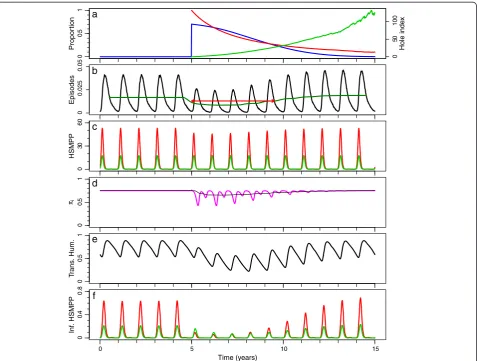
Organization (WHO) insecticide susceptibility tests. Figure 1 illustrates the course of a central scenario simula-tion with a pre-intervensimula-tion entomological inoculasimula-tion rate (EIR) of 16 infectious bites per adult per annum (IBPAPA). In this scenario, LLINs are distributed to 70% of the simu-lated population in a single mass distribution in year five, after which they diminish in number following an attrition curve with a half-life of four years, and decay chemically (lose insecticide) and physically (form holes in their fabric), as shown in Figure 1a.
In this experiment, the pre- intervention πi value
varied between 0.6 (representing behaviourally-resistant mosquitoes) and 0.9 (representing behaviourally-susceptible mosquitoes), with 0.75 as the central value. The degree of
determinedness in host-searching behaviour in the population was examined for the two extremes: fully probabilistic (each gonotrophic cycle, a mosquito may display a host-searching behaviour different from that of the previous gonotrophic cycle), and fully determined behaviour (a mosquito displays the same behaviour each gonotrophic cycle). The latter was modelled using two separate subpopulations, one of which was potentially affected by LLINs. The transmission intensity was varied over a wide range. Also, P2 LLIN effect parameterizations [17] were included in the experiment, for mosquito popu-lations with a varying degree of physiological resistance to deltamethrin [18-22]. Under the assumption of fully deter-mined host-searching behaviour, only the nocturnal adult
Propor
tion
a
Hole inde
x
b
Episodes
HSMPP
c
πi d
T
rans
. Hum.
e
Inf
. HSMPP
0
50
100
00
.51
0
0.025
0.05
03
0
6
0
00
.5
1
00
.5
1
0
0.
4
0.8
0 5 10 15
f
[image:3.595.61.539.273.634.2]Time (years)
host-searching population is directly affected by the LLINs (Figure 1c). In this scenario, host-searching behaviour is assumed to be non-genetically determined and mosquito emergence is assumed to be independent of the adult population size, thus the proportion of nocturnal mos-quitoes (out of the total host-searching mosmos-quitoes (πi)) is reduced temporarily and fluctuates strongly with the
seasonal population dynamics driven mainly by seasonal fluctuations in breeding site capacity (Figure 1d). The amount of reduction in πi depends not only on the
coverage and quality of the LLINs, but also on the pre-intervention πi itself and on the susceptibility of the
mosquito population (Figure 2). Note that under an as-sumption of fully probabilistic behaviour, the πi value
during intervention remains equal to the value prior to intervention. The proportion of humans transmitting mal-aria to mosquitoes is also temporarily reduced (Figure 1e). The number of nocturnal infectious host-searching mosquitoes is strongly reduced by the LLINs, mostly as a result of the LLINs’impact on their survival, reducing their longevity to less than the extrinsic incubation period (Figure 1f). The number of infectious crepuscular mosquitoes is also reduced, but to a lesser extent. This is exclusively due to the reduced transmission from humans to mosquitoes. During the first three years after LLIN
distribution, transmission from crepuscular mosquitoes is more important than that from nocturnal mosquitoes.
For each scenario, ten simulations were run, each with a unique random seed, for each of 14 model variants [23] Simulations were run using the OpenMalaria modelling platform [23-25], which combines stochastic individual-based models for Plasmodium falciparum malaria in humans with a deterministic model for malaria in mosqui-toes [25,26]. As was done previously [17], from each sce-nario output and based on the number of uncomplicated episodes, severe episodes, sequelae and deaths depending on age, disability adjusted life years (DALYs) and health system costs were calculated for each whole year during the simulation run. For intervention scenarios, the period of the epidemiological effect was determined. This was defined as the period from distribution of a batch of LLINs until the time that the effect of LLINs had waned to just over half of the maximum impact in terms of uncomplicated and severe episodes averted. This period, called the‘effective lifetime’of the batch of LLINs, is illus-trated by the red arrow in Figure 1b. By comparing each scenario to its corresponding non-intervention scenario, the effectiveness of a mass distributed batch of LLINs was calculated in terms of episodes averted during the effective lifetime, and cost effectiveness in terms of net health benefits (NHB) [27], expressed in DALYs, depending on biting behaviour and pre-intervention EIR. The costs and cost savings to the health system are included in the NHB, using a ceiling ratio conversion factor of 235.28 United States $2012per DALY. The method for calculating DALYs and NHB is described in detail by Briët and col-leagues [17] in an additional file.
Results
LLIN effectiveness depending on host-searching behaviour and transmission level
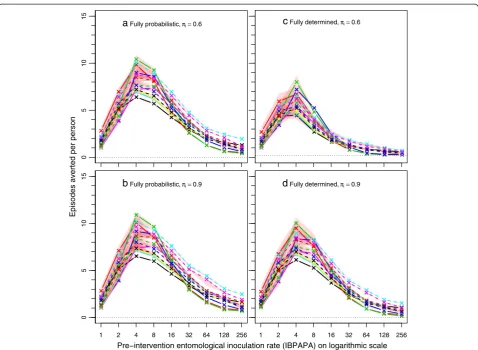
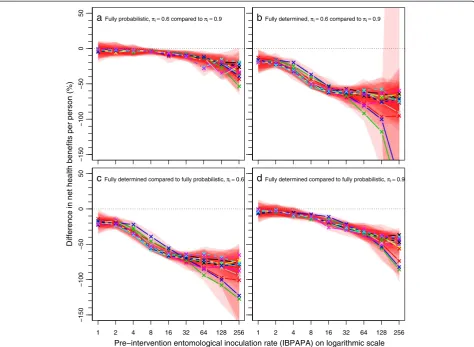
The shape of the relationship between episodes averted (Figure 3) or NHB (Figure 4) and pre-intervention EIR appears to be similar for the four combinations of assump-tions about host-searching behaviour, although with fully determined behaviour and a lowπivalue of 0.6, LLINs are
clearly less effective.
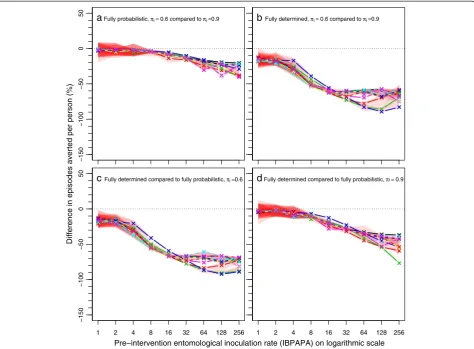
Figures 5 and 6 show the per cent differences of episodes averted and NHB, respectively, among the four combi-nations of assumptions about host-searching behav-iour, depending on the pre-intervention EIR. The per cent difference increased non-linearly with increasing pre-intervention EIR. Figures S1 and S2 show absolute differences [see Additional file 1: Figures S1-S2], which are the proportional differences multiplied by the magnitude of the effect in the comparator.
When the behaviour was assumed to be fully probabilistic (Figures 5a and 6a), the difference between 90 or 60% of the mosquito-host contact occurring during times when
0 20 40 60 80 100
0.0
0.2
0.4
0.6
0
.8
1.0
Minimum achieved annual average
πi
Mortality in 0.05% deltamethrin WHO susceptibility test (%)
Figure 2Minimum achieved annual averageπiduring LLIN
LLIN users would not be under their nets (πivalues of 0.9
and 0.6, respectively) was much less pronounced (with a difference of up to about 30%) than when the behaviour was fully determined (with a difference up to about 70%) (Figures 5b and 6b). A comparison between the assump-tions of fully probabilistic and fully determined behaviour at constant πi value shows that at a πi value of 0.6, the
LLINs are much less effective with determined behaviour than with probabilistic behaviour (Figure 5c and Figure 6c). As expected, with a highπivalue of 0.9, this difference was
much less pronounced (Figures 5d and 6d).
Sensitivity analysis
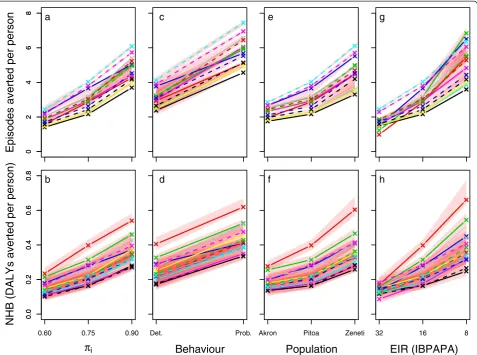
Figure 7 illustrates the sensitivity of the effectiveness of a mass LLIN distribution to assumptions about
host-searching behaviour around a central scenario and allows comparison with results from a previous analysis on sensitivity to insecticide susceptibility and pre-intervention EIR [17]. At a pre-intervention EIR of 16 IBPAPA, the pro-portion of mosquito-host interaction that, prior to interven-tion, occurred during times when people were indoors and asleep (Panels a & b) appears to be as important as insecti-cide resistance status (Panels e & f) if host-searching behav-iour was assumed to be fully determined. As noted before [29], the pre-intervention EIR was extremely important. Even if varied over a small part of its potential range, the pre-intervention EIR had more impact on the effectiveness of an LLIN distribution than the πi value and insecticide
resistance of mosquito populations. Panels c & d show that (at a pre-interventionπivalue of 0.75) the effectiveness of a
0
5
10
15
a Fully probabilistic, π i = 0.6
Pre−intervention entomological inoculation rate (IBPAPA) on logarithmic scale
Episodes averted per person
1 2 4 8 16 32 64 128 256
05
1
0
1
5
b Fully probabilistic, π i = 0.9
c Fully determined, π i = 0.6
1 2 4 8 16 32 64 128 256
[image:5.595.59.538.86.436.2]d Fully determined, π i = 0.9
Figure 3Episodes averted by a mass LLIN distribution depending on host-searching behaviour.Each line represents the median number of episodes averted per person of ten simulation runs (each with unique random seed) during the effective lifetime of a mass distribution, as compared to matching non-intervention scenarios, with population size = 100,000. The red semi-transparent polygons represent the range of the ten runs. Per panel, there are 14 lines (and 14 red polygons), each representing a malaria model variant. Model variants [28]: R0000 = solid black lines; R0063 = solid red lines; R0065 = solid green lines; R0068 = solid blue lines; R0111 = solid light blue lines; R0115 = solid magenta lines; R0121 = solid yellow lines; R0125 = solid grey lines; R0131 = dashed black lines; R0132 = dashed red lines; R0133 = dashed green lines;
R0670 = dashed blue lines; R0674 = dashed light blue lines; R0678 = dashed magenta lines.a) Fully probabilistic host-searching behaviour, with a
mass LLIN distribution is very sensitive to the assumptions about the degree of determinedness of the host-searching behaviour: If host-searching behaviour is fully probabilistic, the LLIN effectiveness is much larger. It should be noted that under the assumption of fully probabilistic behaviour, the effectiveness is much less sensitive to variations in the
πivalue (see Figures 5a and 6a). Discussion
In this sensitivity analysis, a minimum pre-intervention
πi value of 0.6 was used. In the literature, πi values for
malaria vectors as low as 0.45 have been observed [8,16,30], but such low values were in areas already having high coverage of bed nets [30,31], and were likely low as a result of LLIN use or other ITNs [8]. Under the assumption of fully probabilistic host-searching behaviour, all mosqui-toes have the same risk of being affected by LLINs and the
πivalue does not change with LLIN deployment. However,
under the assumption of fully determined behaviour, the LLINs killed only (a proportion of) those mosquitoes that
searched during times when LLIN users were under their nets, thus theπivalue is brought down merely by
selective killing of indoor nocturnal host-searching mosquitoes. With a pre-interventionπivalue of 0.6, the
minimum annually smoothed πi value varied between
0.39 (for the susceptible ‘Zeneti’ population) and 0.58 (for the resistant ‘Yaokoffikro’ population), depending on the mosquito population (Figure 2). This range includes those values observed in areas having high coverage of bed nets [8,16,30,31]. Assuming some degree of determinedness in host-searching behaviour, the pre-intervention πi value
(in the absence of LLINs) in these areas was likely higher [32], and a pre-interventionπivalue of 0.6 seems a
reason-able lower limit to work with for primary malaria vectors. In these simulations, the periodic emergence rate of new adult mosquitoes was independent of the number of adult mosquitoes [26]. This is under the assumptions that mosquito emergence is strongly dependent on breed-ing site capacity and that survival from egg to emergbreed-ing adult is strongly regulated by density dependent processes.
0.0
0.5
1.0
1.5
a Fully probabilistic, π i = 0.6
Pre−intervention entomological inoculation rate (IBPAPA) on logarithmic scale
NHB (DALYs averted per person)
1 2 4 8 16 32 64 128 256
0.0
0.5
1.0
1.5
b Fully probabilistic, π i = 0.9
c Fully determined, π i = 0.6
1 2 4 8 16 32 64 128 256
[image:6.595.58.540.89.437.2]d Fully determined, π i = 0.9
White and colleagues [33] show that at 50 to 80% LLIN coverage, these assumptions lead to only small underesti-mates in the effect of LLINs on the adult mosquito popula-tion, compared to models where the emergence rate is dependent on the number of adult mosquitoes (but where density dependent mechanisms still play an important role). Under the assumption of fully probabilistic or not genetic-ally but otherwise determined mosquito host-searching behaviour, the assumption that the emergence rate of new adult mosquitoes is independent of the number of adult mosquitoes has no further consequences. However, if this behaviour is genetically determined (hereditary), higher survival of ‘behaviourally resistant’mosquitoes (that bite during times that LLIN users are not under their nets) would lead to relatively more eggs being deposited with alleles associated with this trait (even under the assumption of random mating). Assuming no genetic disadvantage in the larval stage, this would lead to a larger proportion of
‘behaviourally resistant’mosquitoes emerging and probably much lowerπivalues than those observed in areas having
high coverage of bed nets [8,16,30,31]. With continued selection pressure, alleles for crepuscular host-searching behaviour could rapidly spread through the mosquito population and eliminate the nocturnal mosquitoes unless the competition between them is weak [34], and the loss in LLIN cost effectiveness could be much higher than esti-mated by these models. However, such lowπivalues have
not (yet) been reported.
Conclusions
The models were very sensitive to assumptions about the degree of the determinedness of mosquito host-searching behaviour when there was heterogeneity in this behaviour. This is in line with results from Molineaux and colleagues [13]. Under the assumption of fully probabilistic mosquito host-searching behaviour, the effectiveness of the LLINs
−150
−100
−50
0
50 a
Fully probabilistic, πi = 0.6 compared to πi =0.9 b Fully determined, πi = 0.6 compared to πi =0.9
1 2 4 8 16 32 64 128 256
−150
−100
−50
0
50
c Fully determined compared to fully probabilistic, πi =0.6
1 2 4 8 16 32 64 128 256
d Fully determined compared to fully probabilistic, πi = 0.9
Pre−intervention entomological inoculation rate (IBPAPA) on logarithmic scale
[image:7.595.62.537.89.438.2]Difference in episodes averted per person (%)
appears relatively insensitive to the pre-intervention πi
values considered hereb. Govella and colleagues [16] also use this assumption in a modelling study on the effect of the πi value on the efficacy of ITNs. They, too, predict
only limited effects, even with pre-intervention πi values
as low as 0.46. However, under the assumption of fully determined mosquito host-searching behaviour, LLIN effectiveness is much more sensitive to the pre-intervention
πivalue. Although little is known about the degree of
deter-minedness in mosquito host-searching behaviour, evidence that allele frequencies can be associated with outdoor-biting behaviour [11], and lowerπivalues after exposure to
ITNs or LLINs [8] suggests that it is not fully probabilistic. Estimation of LLIN effectiveness should therefore account for the likely non-uniform exposure of vectors [13] and more research on the degree of determinedness of host-searching behaviour in vector populations is warranted.
The sensitivity analysis (Figure 7) showed that shifts towards crepuscular host-searching behaviour, if this behaviour is determined, can reduce LLIN effectiveness as much as insecticide resistance in nocturnally biting
mosquitoes can. However, the effect of the pre-intervention transmission level appears still more important than the effects of physiological and behavioural resistance on the effectiveness of LLINs. The models predicted that a single distribution of LLINs remains cost effective in the sim-ulated scenarios, except for in transmission settings with a pre-intervention inoculation rate of over 64 an-nual infective bites and physiologically resistant mos-quitoes (70% mortality in 0.05% deltamethrin WHO susceptibility tests) that displayed a high proportion (over 40%) of determined crepuscular host-searching behaviour, where some model variants showed negative NHB (Figure 4c). This is in line with results from a study during a period of increasing bed net use in São Tomé that suggests that bed nets reduced malaria prevalence [35], despite the vector being predomin-antly early and outdoor biting [36]. However, it should be noted that in most malaria-endemic countries, mal-aria control will not be limited to a single mass distri-bution of LLINs and cost-effectiveness may decrease with prolonged LLIN use.
−150
−100
−50
0
50 a
Fully probabilistic, πi = 0.6 compared to πi = 0.9 b Fully determined, πi = 0.6 compared to πi = 0.9
1 2 4 8 16 32 64 128 256
−150
−100
−50
0
50
c Fully determined compared to fully probabilistic, πi = 0.6
1 2 4 8 16 32 64 128 256
d Fully determined compared to fully probabilistic, πi = 0.9
Pre−intervention entomological inoculation rate (IBPAPA) on logarithmic scale
[image:8.595.62.537.89.436.2]Difference in net health benefits per person (%)
Strong insecticide resistance and strong behavioural resistance against the same vector control intervention are unlikely to occur within the same population. Simulation results in Figure 2 illustrate that in the more insecticide-resistant populations (e.g., population‘Akron’), nocturnally host-searching mosquitoes are less suppressed than in insecticide-susceptible populations (e.g., populations
‘Zeneti’and ‘Malanville’). In this context, it is interesting that the sensitivity of LLIN effectiveness to host-searching behaviour (the πi value) is weaker in populations that
show insecticide resistance in WHO susceptibility tests as
compared to fully susceptible populations [Additional file 2: Figure S3]. The two resistance types likely interfere with each other’s development: mosquitoes that are good at avoiding contact with insecticide do not need to develop physiological resistance and mosquitoes that are physiolo-gically resistant do not need to avoid contact with the in-secticide. Thus, on the one hand, survival of physiologically susceptible mosquitoes under insecticide pressure has been attributed to avoidance [37-39]. On the other hand, recently documented shiftsc in biting rhythm occurred in sus-ceptible populations [8,40,41]. Even though the modelling
0246802468
a
Episodes averted per person
0.0
0.2
0.4
0.6
0.8
0.60 0.75 0.90
0.0
0.2
0.4
0.6
0.8 b
π
iNHB (DALYs averted per person)
c
. b o r P .
t e D
d
Behaviour
e
Akron Pitoa Zeneti
f
Population
g
32 16 8
EIR (IBPAPA)
[image:9.595.60.538.89.444.2]h
Figure 7Effectiveness of LLINs depending on host-searching behaviour, insecticide susceptibility, and transmission level.Each line represents the median number of episodes averted per person (panelsa,c,e&g) or NHB, which are expressed in DALYs averted per person (panelsb,d,f&h) of ten simulation runs during the effective lifetime of a mass distribution, as compared to matching non-intervention scenarios. The red semi-transparent polygons represent the range of the ten runs. Per panel, 14 malaria model variant are shown with colour coding as indicated in the legend of Figure 3. In panelsa&b, theπivalue was varied from 60 to 90 %, with a pre-intervention EIR of 16 IBPAPA, and susceptibility of mosquito population‘Pitoa’. Host-searching behaviour was fully determined. In panelsc&d, fully determined host-searching behaviour (Det.) is contrasted with fully probabilistic (Prob.) host-searching behaviour. Theπivalue was 0.75, and other parameters were as in the first column of panels. In panelse&f, the susceptibility to pyrethroids is varied from the most resistant population,‘Akron’, with less than 10.6 % mortality in 0.05% deltamethrin WHO susceptibility tests, to a medium susceptible population,‘Pitoa’(70% mortality), to a fully susceptible population,‘Zeneti’(100% mortality). Theπivalue was 0.75, and other parameters were as in the first column of panels. In panelsg&h, the pre-intervention EIR was varied between 32 and 8 IBPAPA for population‘Pitoa’. Theπivalue was 0.75, and other parameters were as in the first column of panels. Note that for each model variant, the middle value displayed is the same for all panels in a row of panels
results suggest that, for physiologically resistant mos-quitoes with 30% survival in WHO susceptibility tests (population‘Pitoa’) that also display determined crepuscular host-searching behaviour, LLINs might not be cost effective in very high transmission settings, evidence for the ex-istence of such‘double resistant’ malaria vector popu-lations has yet to be found.
Although models predicted that the LLIN mass distribu-tion would (still) be cost effective against malaria in areas with strong physiological resistance against pyrethroids or where a large proportion of host-mosquito contact occurs during times when LLIN users are not under their nets, in such situations, national malaria control programmes may consider complementing LLINs with other vector control interventions, such as those that are effective against crepuscular and exophagic mosquitoes in order to address the ‘residual’ transmission [6]. At higher transmission reduction targets than those obtainable with LLINs and case management, such combinations may be more cost effective.
Endnotes a
These experimental huts studies measure effects of LLINs against indoor and nocturnally biting mosquitoes in terms of insecticidal effect and protection against feeding. These effects vary with mosquito population depending on physiological resistance in the population and the degree that mosquitoes from the population are deterred from entering the hut or dissuaded (repelled) from attacking once inside a hut with an LLIN, compared to a control hut. These last two types of mosquito behav-iour, resulting in avoidance of contact with the insecticide, are also a form of behavioural resistance against being killed while host searching, just like shifts towards crepuscular host searching behaviour. Nocturnal avoidance of contact with insecticide treated material in otherwise physiologic-ally susceptible mosquitoes [37] could be an important threat to the cost effectiveness of LLINs. Nevertheless, the population level protection against feeding and the population level insecticidal effect in the populations used for parameterization is highly correlated with mortal-ity in WHO susceptibilmortal-ity assays [17], which only measure physiological or biochemical resistance.
b
With πi values closer to zero, not considered here,
sensitivity would increase.
c
Although lacking sufficient baseline data to document a shift, a study [42] in Punta Europa on Bioko Island, Equatorial Guinea found unusual high crepuscular and outdoor biting of An. gambiae sensu stricto after sev-eral years of indoor residual spraying with pyrethroids followed by several years of spraying with a carbamate insecticide. Although a high frequency of resistance against pyrethroids was found [43], this was not true for resistance against carbamates.
Additional files
Additional file 1: Figures S1-S2.Differences in episodes and net health benefits averted by a mass LLIN distribution, depending on host-searching behaviour.
Additional file 2: Figure S3.Effectiveness of LLINs depending on host searching behaviour and insecticide susceptibility.
Competing interests
The authors declare that they have no competing interests.
Authors’contributions
OJTB designed the experiments, analysed results and drafted the manuscript. NC helped conceive of the study and participated in the design. Both authors read and approved the final manuscript.
Acknowledgements
We acknowledge our colleagues in the Swiss TPH Health Systems Research and Dynamical Modelling Unit, particularly Michael Tarantino, for help with the models and simulations, and thank Amena Briët for help with language editing. Simulations were run with the help of volunteers providing computational power. This work was supported through the Malaria Modelling Project #OPP1032350 funded by the Bill and Melinda Gates Foundation (BMGF).
Received: 7 March 2013 Accepted: 23 June 2013 Published: 26 June 2013
References
1. WHO Global Malaria Programme:World Malaria Report 2011.Geneva: World Health Organization; 2011.
2. Hawley WA, Phillips-Howard P, ter Kuile F, Terlouw DJ, Vulule JM, Ombok M, Nahlen B, Gimnig JE, Kariuki SK, Kolczak MS, Hightower AW:Community-wide effects of Permethrin-treated bed nets on child mortality and malaria morbidiy in western Kenya.AmJTrop Med Hyg2003,68(Suppl. 4):121–127. 3. Ranson H, N'Guessan R, Lines J, Moiroux N, Nkuni Z, Corbel V:Pyrethroid
resistance in African anopheline mosquitoes: what are the implications for malaria control?Trends Parasitol2011,27:91–98.
4. Trape JF, Tall A, Diagne N, Ndiath O, Ly AB, Faye J, Dieye-Ba F, Roucher C, Bouganali C, Badiane A, Sarr FD, Mazenot C, Touré-Baldé A, Raoult D, Druilhe P, Mercereau-Puijalon O, Rogier C, Sokhna C:Malaria morbidity and pyrethroid resistance after the introduction of insecticide-treated bednets and artemisinin-based combination therapies: a longitudinal study.Lancet Infect Dis2011,11:925–932.
5. Takken W:Do insecticide-treated bednets have an effect on malaria vectors?Trop Med Int Health2002,7:1022–1030.
6. Durnez L, Coosemans M:Residual transmission of malaria: an old issue for new approaches.InAnopheles Mosquitoes - New Insights into Malaria Vectors.Edited by Manguin S. Rijeka: Intech; 2013.
7. Gatton ML, Chitnis N, Churcher T, Donnelly MJ, Ghani AC, Godfray HC, Gould F, Hastings I, Marshall J, Ranson H, Rowland M, Shaman J, Lindsay SW:The importance of mosquito behavioural adaptations to malaria control in Africa.Evolution2013,67:1218–1230.
8. Russell TL, Govella NJ, Azizi S, Drakeley CJ, Kachur SP, Killeen GF:Increased proportions of outdoor feeding among residual malaria vector populations following increased use of insecticide-treated nets in rural Tanzania.Malar J2011,10:80.
9. McCall PJ, Kelly DW:Learning and memory in disease vectors.Trends Parasitol2002,18:429–433.
10. Chilaka N, Perkins E, Tripet F:Visual and olfactory associative learning in the malaria vectorAnopheles gambiaesensu stricto.Malar J2012,11:27. 11. Smits A, Roelants P, Van Bortel W, Coosemans M:Enzyme polymorphisms in theAnopheles gambiae(Diptera: Culicidae) complex related to feeding and resting behavior in the Imbo Valley, Burundi.J Med Entomol1996, 33:545–553.
12. Bugoro H, Cooper RD, Butafa C, Iro'ofa C, Mackenzie DO, Chen CC, Russell TL: Bionomics of the malaria vectorAnopheles farautiin Temotu Province. Solomon Islands: issues for malaria elimination.Malar J2011,10:133. 13. Molineaux L, Shidrawi GR, Clarke JL, Boulzaguet JR, Ashkar TS:Assessment
data on the man-biting rate and age-composition.Bull World Health Organ1979,57:265–274.
14. Killeen GF, Kihonda J, Lyimo E, Oketch FR, Kotas ME, Mathenge E, Schellenberg JA, Lengeler C, Smith TA, Drakeley CJ:Quantifying behavioural interactions between humans and mosquitoes: evaluating the protective efficacy of insecticidal nets against malaria transmission in rural Tanzania.BMC Infect Dis2006,6:161.
15. Seyoum A, Sikaala CH, Chanda J, Chinula D, Ntamatungiro AJ, Hawela M, Miller JM, Russell TL, Briët OJT, Killeen GF:Human exposure to anopheline mosquitoes occurs primarily indoors, even for users of insecticide-treated nets in Luangwa Valley, South-east Zambia.Parasit Vectors2012,5:101–105. 16. Govella NJ, Okumu FO, Killeen GF:Insecticide-treated nets can reduce
malaria transmission by mosquitoes which feed outdoors.AmJTrop Med Hyg2010,82:415–419.
17. Briët OJ, Penny MA, Hardy D, Awolola TS, Van Bortel W, Corbel V, Dabiré RK, Etang J, Koudou BG, Tungu PK, Chitnis N:Effects of pyrethroid resistance on the cost effectiveness of a mass distribution of long-lasting insecticidal nets: a modelling study.Malar J2013,12:77.
18. Corbel V, Chabi J, Dabiré RK, Etang J, Nwane P, Pigeon O, Akogbeto M, Hougard JM:Field efficacy of a new mosaic long-lasting mosquito net (PermaNet® 3.0) against pyrethroid-resistant malaria vectors: a multi centre study in Western and Central Africa.Malar J2010,9:113. 19. N'Guessan R, Asidi A, Boko P, Odjo A, Akogbeto M, Pigeon O, Rowland M:An
experimental hut evaluation of PermaNet® 3.0, a deltamethrin-piperonyl butoxide combination net, against pyrethroid-resistantAnopheles gambiae andCulex quinquefasciatusmosquitoes in southern Benin.Trans R Soc Trop Med Hyg2010,104:758–765.
20. Koudou BG, Koffi AA, Malone D, Hemingway J:Efficacy of PermaNet® 2.0 and PermaNet® 3.0 against insecticide-resistantAnopheles gambiaein experimental huts in Côte d'Ivoire.Malar J2011,10:172.
21. Van Bortel W, Chinh VD, Berkvens D, Speybroeck N, Trung HD, Coosemans M:Impact of insecticide-treated nets on wild pyrethroid resistant Anopheles epiroticuspopulation from southern Vietnam tested in experimental huts.Malar J2009,8:248.
22. Tungu P, Magesa S, Maxwell C, Malima R, Masue D, Sudi W, Myamba J, Pigeon O, Rowland M:Evaluation of PermaNet 3.0 a deltamethrin-PBO combination net againstAnopheles gambiaeand pyrethroid resistant Culex quinquefasciatusmosquitoes: an experimental hut trial in Tanzania.
Malar J2010,9:21.
23. Smith T, Maire N, Ross A, Penny M, Chitnis N, Schapira A, Studer A, Genton B, Lengeler C, Tediosi F, de Savigny D, Tanner M:Towards a
comprehensive simulation model of malaria epidemiology and control.
Parasitology2008,135:1507–1516.
24. OpenMalaria: a simulator of malaria epidemiology and control.[http://code. google.com/p/openmalaria/].
25. Smith T, Killeen GF, Maire N, Ross A, Molineaux L, Tediosi F, Hutton G, Utzinger J, Dietz K, Tanner M:Mathematical modeling of the impact of malaria vaccines on the clinical epidemiology and natural history ofPlasmodium falciparummalaria: Overview.AmJTrop Med Hyg2006,75(2 Suppl):1–10. 26. Chitnis N, Hardy D, Smith T:A periodically-forced mathematical model for
the seasonal dynamics of malaria in mosquitoes.Bull Math Biol2012, 74:1098–1124.
27. Stinnett AA, Mullahy J:Net health benefits: a new framework for the analysis of uncertainty in cost-effectiveness analysis.Med Decis Making
1998,18(2 Suppl):S68–S80.
28. Smith T, Ross A, Maire N, Chitnis N, Studer A, Hardy D, Brooks A, Penny M, Tanner M:Ensemble modeling of the likely public health impact of a pre-erythrocytic malaria vaccine.PLoS Med2012,9:e1001157. 29. Briët OJT, Hardy D, Smith TA:Importance of factors determining the
effective lifetime of a mass, long-lasting, insecticidal net distribution: a sensitivity analysis.Malar J2012,11:20.
30. Geissbühler Y, Chaki P, Emidi B, Govella NJ, Shirima R, Mayagaya V, Mtasiwa D, Mshinda H, Fillinger U, Lindsay SW, Kannady K, De Castro MC, Tanner M, Killeen GF:Interdependence of domestic malaria prevention measures and mosquito-human interactions in urban Dar es Salaam.Tanzania. Malar J2007,6:126.
31. Russell TL, Lwetoijera DW, Maliti D, Chipwaza B, Kihonda J, Charlwood JD, Smith TA, Lengeler C, Mwanyangala MA, Nathan R, Knols BG, Takken W, Killeen GF:Impact of promoting longer-lasting insecticide treatment of bed nets upon malaria transmission in a rural Tanzanian setting with pre-existing high coverage of untreated nets.Malar J2010,9:187.
32. Huho B, Briët O, Seyoum A, Sikaala C, Bayoh N, Gimnig J, Okumu F, Diallo D, Abdulla S, Smith T, Killeen G:Consistently high estimates for the proportion of human exposure to malaria vector populations occurring indoors in rural Africa.Int J Epidemiol2013,42:235–247.
33. White MT, Griffin JT, Churcher TS, Ferguson NM, Basanez MG, Ghani AC: Modelling the impact of vector control interventions onAnopheles gambiaepopulation dynamics.Parasit Vectors2011,4:153.
34. Murray JD:Models for interacting populations. InMathematical Biology I: An Introduction.3rd edition. Edited by Antman SS, Marsden JE, Sirovich L, Wiggins S. New York: Springer; 2002:79–118. Antman SS, Homes P, and Sreenivasan KR (Series Editors):Interdisciplinary Applied Mathematics, vol 17. 35. Charlwood JD, Alcantara J, Pinto J, Sousa CA, Rompao H, Gil V, Rosario VE:
Do bednets reduce malaria transmission by exophagic mosquitoes?
Trans R Soc Trop Med Hyg2005,99:901–904.
36. Charlwood JD, Pinto J, Ferrara PR, Sousa CA, Ferreira C, Gil V, Do Rosario VE: Raised houses reduce mosquito bites.Malar J2003,2:45.
37. Kitau J, Oxborough RM, Tungu PK, Matowo J, Malima RC, Magesa SM, Bruce J, Mosha FW, Rowland MW:Species shifts in theAnopheles gambiae complex: Do LLINs successfully controlAnopheles arabiensis?PLoS One
2012,7:e31481.
38. Mathias DK, Ochomo E, Atieli F, Ombok M, Bayoh MN, Olang G, Muhia D, Kamau L, Vulule JM, Hamel MJ, Hawley WA, Walker ED, Gimnig JE:Spatial and temporal variation in the kdr allele L1014S inAnopheles gambiaes.s. and phenotypic variability in susceptibility to insecticides in Western Kenya.Malar J2011,10:10.
39. Mbogo CN, Baya NM, Ofulla AV, Githure JI, Snow R:The impact of permethrin-impregnated bednets on malaria vectors of the Kenyan coast.Med Vet Entomol1996,10:251–259.
40. Kulkarni MA, Malima R, Mosha FW, Msangi S, Mrema E, Kabula B, Lawrence B, Kinung'hi S, Swilla J, Kisinza W, Rau ME, Miller JE, Schellenberg JA, Maxwell C, Rowland M, Magesa S, Drakeley C:Efficacy of pyrethroid-treated nets against malaria vectors and nuisance-biting mosquitoes in Tanzania in areas with long-term insecticide-treated net use.Trop Med Int Health2007,12:1061–1073. 41. Moiroux N, Gomez MB, Pennetier C, Elanga E, Djenontin A, Chandre F,
Djegbe I, Guis H, Corbel V:Changes inAnopheles funestusbiting behavior following universal coverage of long-lasting insecticidal nets in Benin.
J Infect Dis2012,206:1622–1629.
42. Reddy MR, Overgaard HJ, Abaga S, Reddy VP, Caccone A, Kiszewski AE, Slotman MA:Outdoor host seeking behaviour ofAnopheles gambiae mosquitoes following initiation of malaria vector control on Bioko Island, Equatorial Guinea.Malar J2011,10:184–10.
43. Reimer LJ, Tripet F, Slotman M, Spielman A, Fondjo E, Lanzaro GC:An unusual distribution of the kdr gene among populations ofAnopheles gambiaeon the island of Bioko, Equatorial Guinea.Insect Mol Biol2005, 14:683–688.
doi:10.1186/1475-2875-12-215
Cite this article as:Briët and Chitnis:Effects of changing mosquito host searching behaviour on the cost effectiveness of a mass distribution of long-lasting, insecticidal nets: a modelling study.Malaria Journal
201312:215.
Submit your next manuscript to BioMed Central and take full advantage of:
• Convenient online submission
• Thorough peer review
• No space constraints or color figure charges
• Immediate publication on acceptance
• Inclusion in PubMed, CAS, Scopus and Google Scholar
• Research which is freely available for redistribution