‘It’s all good’
Evaluation in
Speech-Language Therapy Sessions
Elizabeth Joy Clark May, 2015
Statement of Originality I declare that this thesis is wholly original work
Acknowledgements
I begin by acknowledging and celebrating the people on whose traditional lands the learning involved in this thesis took place, paying my respects to the elders of the Wiradjuri and the Ngunnawal people, past and present. This thesis has been a long and often lonely pursuit, and I have gained much pleasure and solace from walking the country around Albury and Canberra in the pursuit of clarity and distraction.
The completion would not have been possible without the encouragement and support of a number of people. First among these is my supervisor, Dr Johanna Rendle-Short. Johanna agreed to take me on when I was adrift, and helped me to find my way through to a thesis in the data that I had collected. Discussions with her have always been very stimulating experiences, and her advice and encouragement has been invaluable. My respect for her has grown over the years and I offer her my heartfelt thanks for helping me to stay the course and learn what the data, and the thesis process, had to teach me. My thanks also to Dr Chris Lind, who provided valuable comments on multiple drafts and reassured me that I was not straying too far from what the data allowed me to say, and to Prof Jane Simpson for her insightful comments at various stages of the thesis process.
I am honoured by the faith that the people who contributed data to this study had in me, and I cannot express my thanks in anything other than the most banal way – most humbly and sincerely.
I would also like to pay tribute to the members of my CA ‘community of practice’ at the University of Melbourne and at the Australian National University, for stimulating
discussions and sorely needed inspiration when working on my own became difficult. My peers in the Albury ‘Shut Up and Write’ group, which I joined late in the writing process, have been a source of great support in the challenging final stages of bringing the thesis together.
Thanks also to my friends and family, for their increasingly anxious concern as the thesis took longer, then longer again, to complete; they never stopped asking, providing me with light relief, problem-solving advice, willing ears, and the occasional nudge to keep writing. I acknowledge my grateful appreciation of the CSU thesis completion grant awarded earlier this year, and the efforts of Karl, both friend and editor, and A/Prof Bert Peeters, editor extraordinaire, who helped me sweat the ‘small stuff’.
Finally, I wish to dedicate this research to the students that I have had the privilege to teach over the past 18 years, in the hope that the future of our profession will build on the lessons of the past and find ways to more fully value the interaction at the heart of therapy.
ABSTRACT
Speech and language therapy can be characterized in many ways, but at its heart is some kind of action; action done, primarily, through talk. This thesis shows how participants in speech and language therapy interactions reach shared understandings of what therapy is, and, when no such shared understanding exists, how mismatches in understanding are managed. The primary focus is on how both participants orientate to and participate in the satisfactory completion of tasks and the ways in which client performance on tasks is evaluated.
This thesis is an example of ‘institutional applied CA’ (Antaki, 2011) where the focus of analytic attention is on the ways in which the work of speech-language therapy is
collaboratively achieved. The research employs a conversation analytic methodology for the transcription (Jefferson, 1983) and analysis (Pomerantz and Fehr, 2011) of recordings made by speech-language professionals of naturally occurring therapy interactions
involving children and adults engaged in therapy sessions relating to four of the six domains of professional practice in Australia (SPAA, 2011), namely: speech, language, alternative modes of communication and swallowing.
CA research into communication disorders has grown substantially over recent years. However, most of this CA research (Antaki, 2011) has focused on the aspects of
interactional competence of people who have some kind of communication impairment. Our understanding of talk between people with communication disorders and their speech-language therapists, as a specific form of institutional talk remains fragmented. The impact of particular professional modes of interaction on clients’ contributions in therapy
interactions has received little attention. This thesis seeks to address this gap by examining how a key feature of speech-language therapy practice, namely evaluating client
performance on therapy tasks, is accomplished. This feature of speech therapy interactions links to three important aspects of therapy: the existence of some kind of short-, or long-term goals; the professionals’ technical awareness of the nature and potential of the implications of the communication impairment for client participation in everyday social interactions involving talk; and to the nature of learning in therapy.
professional practice and relevant prior research on the institutional nature of speech-language therapy interactions (Chapter 1), the methodology used to collect, transcribe and analyse data (Chapter 2), the confusion of terminology relevant to the action of
‘evaluation’ (Chapter 3). Using data taken from naturally-occurring interactions, this thesis shows how evaluations are produced in three different sequential positions: SLT’s produce evaluations in first turns (chapter 4) with some difficulty, though overwhelmingly
evaluations are produced in third turns (Chapters 5 -positive evaluation & Chapter 6-negative evaluation) of triadic action sequences related to task completion. In one
interaction only, evaluations were produced by the client, in second turns that responded to requests (Chapter 7), providing an important contrast between the way professional and client evaluate performance and progress.
Table of contents
Chapter 1: Background to the Research ... 1
1.1 Introduction ... 1
1.2 Speech therapy practice ... 2
1.2.1 Frameworks of practice ... 2
1.2.1.1 Impairment versus Competence ... 7
1.2.1.2 Linking the ICF and Communicative Competence ... 9
1.2.2 The cycle of intervention ... 11
1.3 SLT interactions as instances of institutional talk ... 14
1.3.1 Institutional interactions and epistemic asymmetry ... 15
1.3.2 Macro-structure of therapy sessions ... 17
1.3.3 Instruction shapes the organisation of therapy ... 19
1.4 Investigating professional talk ... 20
1.4.1 The importance of researching professional talk ... 23
1.4.2 Methodological approaches to professional talk ... 27
1.4.3 CA research on SLT talk ... 29
1.5 Research Questions ... 32
1.6 Contribution of this thesis ... 32
Chapter 2: Methodology ... 35
2.1 Introduction ... 35
2.2 Methodologies for researching interaction in healthcare ... 35
2.3 The power of conversation analysis ... 38
2.4 Data collection, production and analysis ... 40
2.4.1 Data collection ... 40
2.4.2 Transcription and analysis ... 42
2.5 Research questions guiding this study ... 44
Chapter 3: Clarifying the Language of Evaluation ... 47
3.1 What is evaluation? ... 47
3.2 Clarifying assessment ... 48
3.2.1 Assessment in CA literature ... 48
3.2.2 Assessment in SLT literature ... 49
3.3 Clarifying evaluation ... 51
3.3.1 Evaluation in CA literature ... 51
3.3.2 Evaluation in SLT literature ... 52
3.3.3 Evaluation in learning contexts ... 53
3.3.4 Summarising evaluation ... 55
3.4 Clarifying feedback ... 55
3.5 Evaluation in SLT practice is poorly mapped territory ... 57
3.6 How terminology will be used in this thesis ... 58
Chapter 4: First-Turn Evaluations ... 61
4.1 Introduction ... 61
4.2 Features of first-turn evaluations of performance ... 63
4.3 Detailed analysis of FTEs produced during task activities ... 68
4.3.1 Summary FTEs in task completion sequences ... 82
4.4 Analysis of FTEs produced in the closing phase of a session ... 83
4.5 Single production of a FTE by the client ... 93
4.6 Evaluations in social phases of therapy – contrasting patterns ... 95
4.6.1 Assessments in social phases of session ... 95
4.6.2 Example of a FTE in the administrative phase of a session ... 97
4.7 Chapter summary ... 101
Chapter 5: Positive Evaluation in the Third Turn ... 103
5.1 Introduction ... 103
5.2 Third turns in institutional contexts ... 103
5.3 The range of positive evaluative phrases used ... 105
5.4 Positive Third-Turn Evaluations are not all the same ... 107
5.4.1 Good as a clear indication of sequence closure ... 107
5.4.2 Good: you understood the ‘explicit’ requirements of the task ... 109
5.4.3 Upgrading good ... 111
5.5 Summary of evaluative good ... 116
5.6 Chapter discussion ... 117
Chapter 6: Repair, Correction and Negative Evaluation ... 120
6.1 Introduction ... 120
6.2 Correction and repair in learning contexts ... 121
6.2.1 Repair and intersubjectivity in therapy tasks ... 124
6.4 Error correction initiated by the SLT ... 128
6.4.1 Using questions to direct the client to answer again ... 128
6.4.2 Descriptions ... 133
6.4.3 Instructions ... 136
6.5 Negative evaluation can support accurate production ... 137
6.6 Overt negative evaluation ... 141
6.7 Correction initiation by a spouse ... 143
6.8 Concluding comments: The complexity of managing errors ... 145
Chapter 7: Evaluation in Response Turns ... 149
7.1 Introduction ... 149
7.2 Questions and responses ... 150
7.3 Second-Turn Evaluations of task performance ... 152
7.3.1 Setting performance parameters ... 152
7.3.2 Design of evaluation requests ... 154
7.3.3 STEs on multi-syllabic word reading task ... 156
7.3.4 STEs of multi-syllabic words in a story generation task ... 164
7.3.5 STE of performance on volume tasks ... 167
7.3.6 STEs in reading aloud task ... 169
7.3.7 Client STE on progress ... 171
7.3.8 Client requests SLT evaluation of performance ... 172
7.4 Case study summary ... 173
Chapter 8: Concluding Discussion ... 177
8.1 Introduction ... 177
8.2 Evaluation is complex ... 178
8.3 Evaluation is structurally relevant ... 178
8.4 Evaluation as a critical site for understanding interaction ... 182
8.5 Evaluation and learning ... 184
8.6 Enabling the client greater access to the evaluation process ... 188
8.7 The importance of CA as a methodology for SLT research and practice ... 191
8.8 Limitations of this research ... 192
8.9 Contributions of this research to SLT theory and practice ... 194
8.10 Directions for future research ... 194
List of tables and figures
Figure 1.1 Elements of the ICF ... 4
Table 1.2 Key features of three relevant models of practice ... 5
Figure 1.3 Elements of ICF link to aspects of communicative competence ... 8
Figure 2.1 Approaches to analysing conversation (Eggins & Slade, 1999:24)... 32
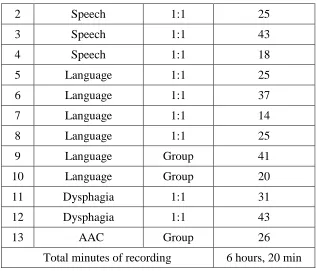
Table 2.2 Nature and length of recordings ... 36
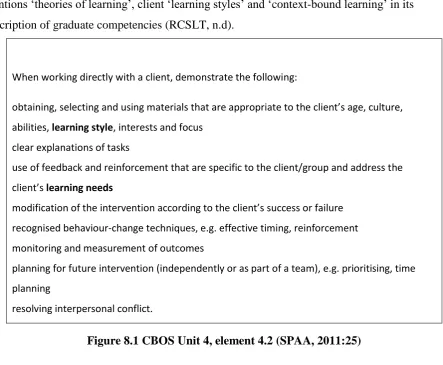
Figure 3.1 Elements of Unit 1 – Assessment (SPA, 2011:3) ... 44
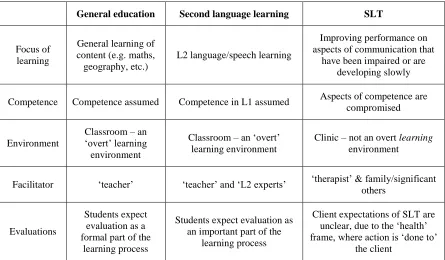
Table 3.2 Features of three related learning contexts ... 47
Table 5.1 Types of positive evaluation ... 99
Chapter 1: Background to the Research
1.1 Introduction
The ability to communicate is a core aspect of our human being. Speech and language are the primary tools by means of which we develop and express ourselves as cultural and social beings. Thus, any impairment of communication ability has the potential to
significantly impact on an individual’s ability to actively and effectively participate in the social and cultural dimensions of everyday life. Speech and language therapists (hereafter SLT1) are allied health professionals who provide assessment, treatment and support to people who have communication difficulties (SPAA, 2014; RCSLT, 2015). Interaction is central to the professional service provided to the client, and yet we know very little about SLT profession-specific ways of talking. My aim in this thesis is to explore in detail the interaction practices related to the completion of therapy tasks, with a specific focus on the way SLTs evaluate client performances on therapy tasks.
Using the research approach of conversation analysis, I show how the ‘institutional’ nature of the SLT-client relationship is co-constructed by both the professional and the client, moment by moment, through talk-in-interaction (Drew & Heritage, 1992:26). The institutional roles of ‘therapist’ and ‘client’ are most clearly seen in the sequential
organisation of talk and action associated with the completion of therapy tasks. Using data provided by SLTs from a range of practice domains, I examine and describe the range of sequential locations where SLTs evaluate client performance on tasks and client progress over time. I also show that the ways in which SLTs evaluate client performance,
particularly the use of evaluative turns involving the word good, may not always be conducive to client (re)learning of speech and language skills. The title of this thesis, It’s
all good, is both a play on the kind of vocabulary used by SLTs to construct evaluations, and a reference to an oft used phrase in Australian English; it’s all good, or all good, can
1
be heard in those situations where a positive spin is put on the current state of
understanding, while subtly referencing a previous problem or state of mis-understanding. In this chapter, I explore the relationship between SLT models and theories of practice, on the one hand, and SLT professional ways of talking, on the other, in light of changing conceptions of professional practice. In order to locate the completion of specific therapy tasks within a broader view of professional practice, I begin this chapter with an overview of how intervention is conceptualised in SLT. Then, I will describe the ‘cycle of
intervention’ (Bunning, 2004) in general terms, with a view to showing why evaluations of client performance are an important element of the intervention process. Evaluations are not only important in potentially supporting client learning, but are key to the institutional nature of SLT-client therapy sessions. Accordingly, this chapter will also review research on institutional interactions, and prior research related to professional talk in SLT practice.
1.2 Speech therapy practice
In seeking to understand ‘therapy talk’, it is important to identify how professionals conceptualise the therapy process and how they learn about interactions with clients in professional practice. This section will review the major frameworks that shape professional practice and explore what Perakyla & Verhilainen (2003) refer to as the “stocks of interactional knowledge” (2003:730) – the ways of interacting with clients that link to models and theories of practice.
1.2.1 Frameworks of practice
There are three ‘health’ frameworks that shape SLT practice in the 21st century: (1) the traditional ‘medical’ model of health care (Leclair, Leclair& Brigham, 2009;Mishler, 1981); (2) the ‘bio-psychosocial’ model of health and well-being as encapsulated in the World Health Organization (hereafter WHO) model known as the ‘International
Classification of Functioning, Disability and Health’ (Threats, ;
The oldest of the three models is the biomedical model( McLeod, 2014), also known as the ‘medical’ model, which focuses on the eradication of disease and on the modification of impairment through effective treatment. As Tamm (1993) noted, the biomedical model has its origins in traditional Greek medicine, which was closely linked to Greek philosophy
and a dualistic view of the separation of mind and body. In the medical model, there is an emphasis on diagnosis (i.e. identification of illness/disease through observation and testing) followed by treatment (to improve health). Both diagnosis and treatment are concentrated on individuals, separate from their lifestyle and/or living conditions.
At the other end of the spectrum is the social model of health, which is centrally interested in the social determinants of health and well-being. It takes into account the social,
environmental and economic factors can affect health, and that need to be addressed alongside biomedical factors in any attempt to bring about changes in health status. This model of health is not only interested in the individual, but in the broader social context for health, and is widely used in the health promotion field, where the focus is on whole communities, rather than on individuals. An off-shoot of this model, the social model of disability (People with a Disability Australia - PWDA, 2014), sees disability as something that comes into being as a result of interactions between people with impairments and a social world that is replete with structural and attitudinal barriers. In this model, it is the social environment that is the focus of intervention, not the individual with ‘different’ abilities, including impairments. The concern many therapists feel about a social model of therapy arises from their misunderstanding of the ways the principles of a social model relate to actual intervention methods. Byng (2005) argued that the principles of a social approach (namely equalizing social relations, creating authentic involvement, creating engaging experiences, establishing user control, and becoming accountable to users) are actually relevant to all types of intervention, whether they focus on impairment or on activity participation.
In the middle ground between these two models lies the bio-psychosocial model , exemplified by the World Health Organization’s ‘International Classification of
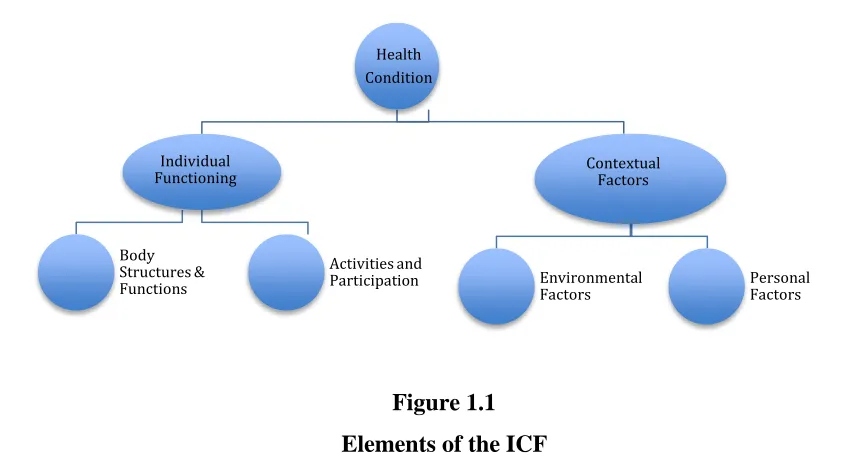
Functioning, Disability and Health’ (hereafter ICF). The diagram below represents the 4 key areas of the ICF: Body functions and structures, activities and participation,
Figure 1.1 Elements of the ICF
The ICF encourages a more holistic focus, not only on the individual but on how they interact with society, as this quote from the WHO Training Manual on disability statistics shows:
The ICF … embodies a paradigm shift in the way health and disability are understood and measured. ICF is based on a bio-psychosocial model of functioning and disability, in which functioning and disability are multi-dimensional phenomena experienced at the level of the body, the person, and society. (WHO, 2008:13)
The ICF draws attention to the factors other than actual impairment that impact on an individual’s ability to participate in a range of activities in his or her environment. This is significantly different from a medical model of health that focuses primarily on the impairment as the sole focus for change/action. Traditionally, SLT practice world-wide adhered to a biomedical model of diagnosis and treatment, which has been argued by many authors (Duchan, 1999; Worrall, 2001; Simmons-Mackie, 2009) to result in an
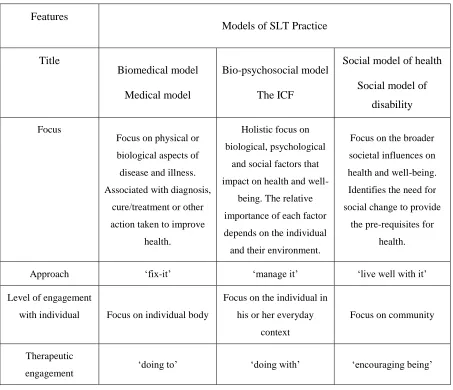
overwhelming focus on the impairment, or on what is ‘wrong’ with a person. Some of the key features of each of the three frameworks mentioned above are encapsulated in table 1.2 on page 5.
Health Condition
Individual Functioning
Body Structures & Functions
Activities and Participation
Contextual Factors
Environmental
Features
Models of SLT Practice
Title
Biomedical model
Medical model
Bio-psychosocial model
The ICF
Social model of health
Social model of
disability
Focus
Focus on physical or biological aspects of disease and illness. Associated with diagnosis,
cure/treatment or other action taken to improve
health.
Holistic focus on biological, psychological
and social factors that impact on health and
well-being. The relative importance of each factor depends on the individual and their environment.
Focus on the broader societal influences on health and well-being. Identifies the need for social change to provide
the pre-requisites for health.
Approach ‘fix-it’ ‘manage it’ ‘live well with it’
Level of engagement
with individual Focus on individual body
Focus on the individual in his or her everyday
context
Focus on community
Therapeutic
[image:16.595.66.519.82.472.2]engagement ‘doing to’ ‘doing with’ ‘encouraging being’
Table 1.2
Key features of three relevant models of practice
While all three models have relevance for the ways in which SLTs conceptualise and actualise the assistance they provide their clients, there have been increasingly energetic calls in recent years for SLTs to use the ICF as an overarching framework of practice (e.g. Cruice, 2003; Hickson & Worrall, 2001; McCooey-O’Halloran, Worrall & Hickson, 2004; McCormack et al, 2010; O’Halloran, Grohn & Worrall, 2012; Threats, 2006, 2012;
The ICF has been adopted by the American Speech-Language-Hearing Association (2007) and by the Australian Speech Pathology Association (2011) as the overarching framework for professional practice. However, there is a tension between the aspirational breadth of the ICF and historically informed practice. Although SLT researchers and professional associations have recognised for some time the importance of the ICF as a framework for practice, this recognition has permeated the professional practice domain very slowly. In my experience as an educator2, it is still common to meet professionals who have never heard of the ICF, let alone understand how it might be used to guide professional practice. In Australia, university training programs are bound to introduce students to the ICF by virtue of the ICF being explicitly named as the framework for professional practice in the competency standards documents (SPAA, 2011) that are central to accreditation by the professional body. The development and use of educational resources for SLT students, which are centred on the ICF, indicates that momentum for change is developing. For example, Papathanasiou, Coppens & Potagas (2010) produced an edited Text that
incorporates chapters on how the ICF should be used as a guide to clinical practice in the area of neurogenic communication disorders. Bunning (2004) produced a clinical Textbook for novice SLTs which acknowledges the power of the ICF and provides examples of how SLT intervention can be understood at three different levels of intervention: intervention aimed at a community level, intervention aimed at the level of context, and intervention aimed at the level of the individual. At this third level, the level of the individual, one focus of intervention can be on some kind of ‘change’ to the actual communication impairment
(aphasia, hearing impairment, articulation disorder, specific language impairment, etc.). Such interventions aim to change the nature, extent or impact of the impairment. It is at this individual impairment level that therapy tasks are most commonly employed. A focus on impairment alone, without attention to the ways in which the person is supported to manage the impact of the impairment in various social contexts of everyday
2
life, runs the risk of perpetuating some of the negative aspects of the more traditional biomedical model, particularly in relation to the passive role of clients in a biomedical approach to intervention. A therapeutic focus on impairment can be at cross-purposes with research showing that the impact of communication impairment on identity is what is most significant for those who experience communication difficulties (O’Halloran, 2010;
Lenyuk & Swain, 2009). A focus on impairment alone is also at odds with more recent calls for what is called a ‘strengths-based’ approach to intervention (King et al, 2007), which foregrounds what people can do and seeks to build on these strengths. One way of focusing on a person’s communication strengths is to focus on communicative
competence, as discussed in the next section.
1.2.1.1 Impairment versus Competence
A different framework of practice that is relevant to language use, used more frequently in child language development and second language learning contexts, is that of
‘communicative competence’. This term initially came into use as alternative to the more static Chomskian notion of lingustic competence, particularly through the work of Dell Hymes (1971). Johnstone and Marcellino (2010) suggest that Hymes was particularly interested in describing the ways in which disadvantaged children had less access to the socio-lingusitic and socio-cultural resources that were required to become a competent communicator. Canale & Swain (1980) developed comprehensive model of
communicative competence, as a combination of grammatical, socio-linguistic and strategic competencies, designed to apply to both instruction and assessment of language learners. These original ideas were refined by Bachman (1990) to involve both
‘organisational’ (grammatical and discourse) competence and ‘pragmatic’ (sociolinguistic and strategic) competence. The multi-dimensional scope of these conceptualizations of communicative competence has relevance to all contexts in which language ability is discussed, and has particular importance for the present discussion of frameworks used to conceptualise interventions for people with speech and language impairments.
Indeed, the notion of communicative competence has been used for many years in one domain of SLT, namely the area of Alternative and Augmentative Communication
socio-cultural and strategic competencies, she added a fourth, viz. technical competence, to account for the technical knowledge of how particular AAC communication systems worked. Children and adults who use AAC systems generally have communication impairments related to health conditions that render verbal communication difficult or impossible, such as cerebral palsy or severe autism. In such circumstances, it is important to be able to identify the range of communicative skills that a person does have, given that verbal communication is by no means the only way to communicate effectively. Light’s original article, on the applicability of communicative competence to the AAC field, was published at a time when most SLTs were still operating predominantly within a
biomedical model of practice. In an area of professional practice where the possibility of ‘fixing’ the underlying impairment is nil, by virtue of the very nature of the impairment, it is not surprising that practitioners might identify the need for a different framework within which to conceptualise their professional practice. The positive connotation of the word
competence balances the negative connotation connected with the word impairment, and encourages a focus on what a person can do, as well as on what that person cannot do. The notion of ‘communicative competence’ does not currently appear to have the kind of widespread clinical applications that the ICF has, even though ‘functional’ and ‘social’ approaches to therapy are presumably premised on something like a notion of
communicative competence. Notably, there is no reference to ‘communicative
competence’ in basic theory Texts on language impairments (eg.Paul and Norbury, 2014) and no reference to SLT practice in the recently published Text, Communicative
Competence, edited by Hannawa &Spitzberg (2015), as one of the institutional contexts in which this concept is relevant. I have been able to locate reference to a broader concept of communicative competence in the literature in relation to intellectual disability (Grunland, 1993), to AAC (Light, 1989; Light & McNaughton, 2014) as well as aphasia (Simmons-Mackie & Damico, 1995). It is also possible to find references to ‘oral language
aspects of competence. While the ‘Life Participation Approach’ to intervention calls for a greater focus on competence, rather than impairment, proponents define this approach as ‘consumer-driven model of intervention focusing on interventions that make real-life differences and minimize the consequences of disease and injury.’ (Chapey et al, 2000: 2)
When SLTs place the focus of therapeutic intervention at the impairment level, they are most often working at the level of linguistic competence, focusing on one or more of the components of language (phonetics, phonology, semantics, pragmatics, syntax). Some impairment-based work may also be focused at the level of socio-cultural knowledge, for example in the case of people who have intellectual impairments, traumatic brain injury or autism, where the ‘impairment’ more directly affects understanding of social dimensions of interaction. In contrast, when SLTs work with a person to use residual communication skills in ways that achieve desired outcomes, they will often draw on the individual’s
socio-cultural competence as a strength to build on, and may also work to develop new
strategic competence, for managing communication breakdown when it occurs. Viewing competence as having different dimensions, and identifying how these dimensions might relate to the focus of intervention within the predominant framework for clinical practice, the ICF, is worth further discussion.
1.2.1.2 Linking the ICF and Communicative Competence
It is useful to identify links between the ICF and communicative competence, at least as far as the discussion of communication disorders is concerned as both these constitute
frameworks for practice, albeit one is more overtly used than the other. The strongest and clearest link is between ‘language’, represented on the ICF as a ‘body function’, and ‘linguistic competence’, however it is possible to identify other linkages. To participate in diverse social activities and roles, a person needs a range of different types of competence: socio-cultural competence (the knowledge and skills relating to social rules, genres and discourses), strategic competence (the ability to manage situations where linguistic or socio-cultural competence is reduced in some way) and, increasingly in our modern day lives, communicative activities are likely to require some degree of technical competence (the ability to use tools and devices to communicate non-verbally or asynchronously). Different environments will present different potential challenges to those with
including the use of technology, though our personal preferences, age, education and attitudes may influence how well or often we use diverse strategies – including technology for communication.
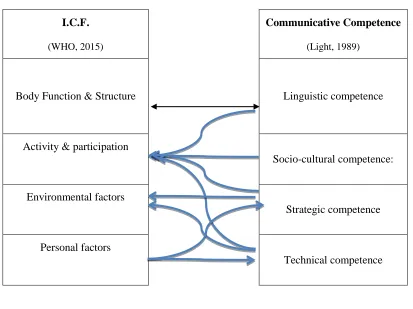
Figure 1.3 below represents the linkages outlined here.
I.C.F.
(WHO, 2015)
Communicative Competence
(Light, 1989)
Body Function & Structure Linguistic competence
Activity & participation
Socio-cultural competence:
Environmental factors
Strategic competence
Personal factors
[image:21.595.86.499.187.496.2]Technical competence
Figure 1.3
Elements of ICF link to aspects of communicative competence
While the above diagram is somewhat simplistic, and linkages between various elements of these frameworks will vary between individuals, I argue that much could be gained from understanding that different kinds of competence are required to participate effectively in everyday interactions. In addition, focusing on competence, and how it relates to different elements of the ICF, both SLT and client are provided with a much broader range of ways to conceptualise and understand the nature and purpose of ‘intervention’.
frameworks that shape professional practice to a broad description of what might happen to clients with communication impairments when they come into contact with a SLT. The next section highlights the main features of what Bunning (2004) describes as a ‘cycle of intervention’.
1.2.2 The cycle of intervention
Intervention rarely occurs in isolation; most commonly, there is a cycle of engagement between a client and a professional, which generally begins with some kind of initial data gathering and analysis. In this initial phase, the SLT builds a picture of the client’s skills, abilities, challenges and needs, and/or of the nature of the ‘problem’ that the client wants
addressed. In the case history and data collection phase, attention is generally given to all the main areas of the ICF, even in circumstances where the individual SLT may not be conscious of using this framework. This phase is generally fairly brief, involving one to three sessions, and it can be distinct, especially when the assessment and subsequent report, with or without recommendations, are the only services being provided. Some SLTs use initial intervention activities as an additional means of collecting data about the
strategies and tasks that might be usefully included in the intervention process over a longer time frame, in what is known as a process of ‘dynamic assessment’ (Dockrell & McShane, 1993; Gutierrez-Clellan & Peria, 2001; Olswang, Bain & Johnson, 1992).
The second stage in the therapeutic cycle is ‘intervention’; this involves doing something to bring about some kind of change. Intervention is central to speech therapy practice and is an important part of the professional service SLTs provide to people with
communication impairments. While intervention may involve modifications to the environment, it generally means that the SLT, or another ‘agent of therapy’ (family member/carer/teacher) implements activities or strategies of some kind directly with the client. These activities or strategies build on a person’s existing skills and/or develop new skills, and are designed to bring about change in the way that person communicates, through repeated practice of specific skills.
Data
Gathering
and Analysis
Intervention Maintenance
The speech-language therapy literature provides little detail about what constitutes a ‘therapy task’, in part because the nature of therapy tasks will vary depending on the client’s impairment and overall goals, as well as on the experience and training of the individual therapist. In their Cochrane review of aphasia therapy, Kelly, Brady & Enderby (2010) initially define SLT interventions as “any form of targeted practice tasks or
methodologies with the aim of improving language or communication abilities” (2010:4). At the most basic level, therapy tasks include activities designed to enable clients to
practiserelevant aspects of communicative performance.
It is worth noting that the ways in which the words practise and relevant are
conceptualised has fuelled some debate within the speech therapy profession. One clear example of this is the controversy about the value of non-speech oro-motor exercises for people with speech sound disorders. Such activities have traditionally been part of therapy for people who have impaired motor speech production as a result of some kind of
neurological impairment of the motor cortex. The case against the use of such activities is based on the argument that the purpose of a motor movement connects to the ways different neural pathways are activated (Lof & Watson, 2010). Thus, practising motor skills devoid of any speech component is likely to have little impact on the way elements of the motor cortex combine to produce specific movements required for speech itself (McCauley, Strand, Lof, Schooling & Frymark, 2009). The extension of the ‘relevance’ argument to the practice of speech sounds in interaction, as opposed to isolated words and phrases, has not yet been tested in any research that I could locate, but the sociolinguistic evidence (see Labov, 1972; Chambers, 2002) that people use sounds differently when they are enacting different social roles, or speaking in different social contexts, may mean that the social dimensions of ‘practice’ might be relevant to language as well as speech therapy.
evaluation of client performance on whatever activities are included in the intervention program. While decisions about content, processes and context for therapy should, in theory, be made through a process of negotiation with the client/significant others
(Bunning, 2004), the everyday reality for many clients is that most of these decisions will be made by the therapist, with the involvement of the client/significant others confined to the ‘edges’ of the overall therapeutic intervention plan (Togher, 2003). The respective involvement of the client and therapist in determining the nature of intervention does not necessarily shape the kind of roles that the therapist and client play in the actual therapy process (active/passive; partners; expert/novice; do-er/evaluator; etc.), though it does have some bearing on the extent to which the client understands what each therapy task is designed to achieve and on the overall purpose of the intervention (e.g. a reduced level of impairment or a greater ability to participate in everyday social interactions).
Intervention not only involves the doing of tasks, it also involves clients entering into a particular kind of learning environment different from those that they may have been previously familiar with. Physically, SLT interventions may occur in a range of environments (e.g. hospital, clinic, home) that are not commonly seen as ‘traditional’ learning environments such as classrooms or workshops. When children are seen within a school environment, they are likely to be seen in a ‘quiet’ space away from the child’s normal classroom. When adults are seen at home, they may use everyday spaces such as kitchen table or dining room, but the ‘work related’ materials associated with therapy tasks modify these environments, albeit temporarily. The learning environment not only relates to the physical context, but also to the relationship between the participants. The 1:1 teaching/learning relationship that is common in therapy is different to classroom learning and to adult learning contexts, as these tend to involve groups of learners rather than the single individual. These issues are relevant inasmuch as the expectations of clients
1.3 SLT interactions as instances of institutional talk
Heritage (2004) describes the notion of institutional talk as “an empirically sound concept”, even while acknowledging “the boundaries between institutional talk and
ordinary conversation are not clearly fixed and demarcated” (2004:108). Ordinary talk can be seen as providing a kind of template of basic resources for talk and action (turn-taking, sequential organisation, repair, etc.) that can be utilised or modified in relevant ways when the setting or the task becomes more specialised (Heritage, 1998). In ordinary talk, there are few restrictions on topics, no specialised turn-taking procedures and no over-arching purpose, other than the maintenance of personal relations. In institutional interactions, many dimensions of ordinary interaction are modified in ways that relate to the purpose of the interaction (Drew & Heritage, 1992).
In the introduction to their seminal edited collection Talk at Work, Drew & Heritage (1992) discuss the differences between ‘formal’ institutional contexts, where “turn-taking systems … depart substantially from the way in which turn-taking is managed in
conversation” (1992:25), in part to “control or curtail the nature of audience participation” (1992:27), and ‘less formal’ institutional contexts where constraints are less apparent. SLT-client interactions rarely occur in front of an audience. They are predominantly face-to-face interactions between SLT and client alone, which means the turn-taking is not as tightly constrained, even though there is clearly a mutual orientation to the goal-based nature of the interaction through the organisation of sequences within the interaction (Drew & Heritage 1992:28).
Since the ‘invention’ of doctor-patient relations in the mid-20th
century (Armstrong, 1983), a significant body of research has identified some of the key features of health
design, lexical choices and asymmetries of knowledge are more relevant to discussions of particular institutional identities.
In the next sections, I will first discuss the asymmetries of knowledge relevant to SLT-client interactions, and then review the organisational aspects of SLT sessions both at a macro-level and at the sequential level.
1.3.1 Institutional interactions and epistemic asymmetry
In conversation, interactants show themselves to be accountable for what they know, their level of certainty, their relative authority and the degree to which they exercise their rights and fulfil their responsibilities. (Stivers, Mondada & Steensig, 2011:9)
In their discussion of knowledge in social interaction, Stivers, Mondada & Steensig (2011) identify three dimensions of knowledge that participants treat as relevant in ordinary conversation: epistemic access, epistemic primacy and epistemic responsibility. As knowledge relates to the ability to make judgements about performance on tasks, it is relevant to consider this further, given that therapists and clients have quite different ‘territories of knowledge’ that they can be expected to be familiar with.
Clients know about their communication impairment in a personal sense, from direct experience, and about the impact of the impairment on their daily life. They may also develop some familiarity with the technical language related to their impairment, particularly if they are older and have the literacy skills to explore information sources relating to their impairment. The therapist is likely to learn something of the client’s personal world over time, through a cycle of intervention; however, what the SLT
primarily brings to the interaction is a technical understanding of the brain structures and functions that are likely to underpin both impairment and intact skills. This technical knowledge of speech and language is developed in both theoretical and practical ways over the course of initial training, and then enhanced by working with people who have diverse kinds of communication impairments.
The ‘technical’ knowledge of the SLT and the ‘lifeworld’ knowledge of the
1999; Gutierrez-Clellen, 2000; Hewitt, 2000; Lund, 2002; Paul, 2002; Watkins & DeThorne, 2002) have written about the need for more ‘naturalised’ assessments. Such assessments would take into account how children and adults actually behave during the process of interaction, and how the interactive nature of communication affects an individual’s ability with articulation, fluency, word-finding, etc. When asked about the benefits of administering tests versus analysing natural language samples, most speech pathologists respond something along the lines of “I know that natural is better, but… but it takes too long”. Tetknowski & Franklin (2002) identified the need for SLTs to embrace qualitative methodologies (specifically conversation analysis and ethnography) in research and assessment, to enable them to better understand the ways communication impairments impact on the daily life of clients. In an early and seminal work on language development and disorders, Bloom & Lahey (1978) claimed that language should be seen in
interactional terms, i.e. as a ‘social act’:
[Children] learn language as a means for obtaining, maintaining and regulating contact with other persons. It should follow that children with language disorders need to learn how to use messages to inquire, converse, direct and otherwise enjoy social interaction with others … structure and content always relate to language use. (1978:viii).
Despite the central focus on the uses or ‘functions’ of language in Bloom & Lahey’s work, influential Texts on speech-language assessment (e.g. Miller, 1981) continue to foreground assessment of the structural and content aspects of language, leaving aside the question of how these aspects integrate with the use for particular purposes to which language is put by children in their interactions with others. Given that diagnosis and intervention focus on components of speech and language (phonetics, phonology, morphology, syntax,
A SLT’s training shapes the territory that they have the responsibility to know about, and this in turn shapes the way therapy is enacted (Bunning, 2004). Limited assessment of how clients use their communication skills in everyday social activities, in the
achievement of diverse social roles which clients are likely to have greater epistemic access to (i.e. what I want to do, and who I want to be), can easily result in therapy that does not focus on these activities. Therapy using tasks aimed at improving aspects of ‘speech’, or ‘language’, both of which are highly complicated social and neurological activities, inadvertently preclude clients from developing some level of shared
understanding of what is required to bring about change in speech or language skills because clients rarely have the sophisticated knowledge of speech and language that the SLT brings to the therapeutic process.
Epistemic primacy, the relative authority (Heritage & Raymond, 2005) to know about the nature of impairment, is directly related to the social category of ‘therapist’. Both clients and SLTs orient to the asymmetrical nature of their relative knowledge of the impairment through the way they interact. This orientation to the SLT’s authority can be seen in a number of ways: clients complete tasks provided by therapists without discussion or questioning, they wait for SLTs to initiate interaction, and therapists assume the right to evaluate the performance of clients on tasks. Not only are SLTs expected to know about the nature of impairments, they also have a professional responsibility to know about ways to help their clients improve their current level of functioning, ways to change underlying brain function or strategies the clients can use to reduce the impact of the impairment on communication. The manner in which SLTs design, produce, present and evaluate tasks confirms their epistemic responsibility for knowing about the therapeutic benefits of specific tasks, and also for managing the sequential structure of a therapy session in ways that support client learning.
1.3.2 Macro-structure of therapy sessions
down’ phase involving completion of more familiar activities, and finally a ‘Goodbye’ phase which may involve both planning for what will be done between sessions, but will definitely involve some kind of leave-taking. Ferguson (1989) and Ferguson & Elliot (2001), using a systemic functional approach to the analysis of naturally occurring interactions, identified similar structural patterns for both stuttering and aphasia therapy sessions, which reflected different kinds of actions taking place. These structural elements were potentially recursive: elements other than opening and closing could happen more than once during a therapy session. The generic structure of SLT therapy session was described as a formula (Ferguson & Elliot, 2001) showing elements that occur in a particular place (^) in the order of elements and (optional) elements as well as those that might recur (┘) and those that might occur in any order (*):
Greeting^ (rapport building)* Procedural orientation^ (Review) Therapy activity┘Plan* Leave-taking^
The elements in Ferguson & Elliot’s description are commensurate with the CA analysis of therapy talk undertaken by Merrills (2005), who identifies three different kinds of talk that she found commonly occurring within the therapy sessions she analysed: (1) social talk, (2) talk about a task, and (3) talk within the task frame. Greetings, rapport building and leave taking came under ‘social talk’, procedural orientation and planning were linked to ‘talk about the task’, which left talk within the therapy activity at the heart of the interaction. Whatever the underlying intent of any ‘general conversation’ that occurs within the therapy interaction, there will be a point at which the primary purpose for the session is made manifest in some way; at this stage, talk is likely to become more constrained by
1.3.3 Instruction shapes the organisation of therapy
All interactions have some kind of structure. Some are pre-determined and quite rigid (court proceedings, weddings, etc.), while others are less rigid but still constrained by goal-related activities. Even in ordinary conversation, where the constraints on participation are at their lowest, the very act of people coming together, interacting and then parting
company will inevitably create some kind of beginning, middle and end to the interaction. At the micro-level of interaction, adjacent pairs of utterances provide the bedrock of structural organisation for interaction (Goffman, 1981). Sacks & Schegloff (1973)
identified adjacency pairs of utterances as one of the most basic patterns in the production of conversation. Schegloff (1972) also found that it was not simply their proximity of production that made certain utterances ‘pairs’: there was clearly some form of conditional relevance in the ways that the second pair part ties back to the first.
Where some kind of learning is the goal of the interaction, this shapes the interaction in particular ways. Coulthard & Sinclair (1975) demonstrated that classroom interactions commonly involve a three-part exchange sequence that has come to be known variously as the initiation-response-follow-up (IRF) or initiation-response-evaluation (IRE) sequence. Instructional exchanges consist of an opening or initiation turn in which the teacher asks a question or provides information, the student then responds or reacts in the next turn, and the teacher provides some degree of comment or evaluation in the third turn.
CA researchers interested in the interactions taking place in either general classrooms (e.g. Lerner, 1995) or second language classrooms (e.g. McHoul, 1990; MacBeth, 2004) have unambiguously shown that analysis of classroom activities from a CA perspective reveals the complexity and dynamic nature of pedagogical interactions, even when these
interactions appear to follow an IRF/IRE pattern. They have identified a range of ways in which errors are repaired, not simply by use of negative evaluations of student
performance, but also through embedded correction. Both corrections and evaluations can be used to scaffold the next-turn responses of learners.
Seedhouse (2004) pointed out that evaluation plays an important part in the ‘institutional fingerprint’ of second language teaching. Numerous authors have also shown that IRE-type sequences are common in SLT therapy sessions as well. Panagos (1990) found that
involving people engaged in developing and refining communication skills. Other SLT authors interested in the sequential nature of talk in therapy contexts (e.g. Nassaji & Wells, 2000; Radford, Ireson & Mahon, 2012) have chosen to use the term triadic discourse to describe IRE sequences because evaluation, while common, is not the only thing that is accomplished by the third part of the sequence.
To summarise, whereas adjacency pairs (e.g. question/answer, information/response) form the most basic units of sequence construction in ordinary interaction (Schegloff, 2007), the basic pattern in instructional activities becomes triadic (Nassaji & Wells, 2000), with control of initiation going to the participant with greater institutional power. In presenting the client with a therapy task, the SLT initiates a sequence that defines the nature of the client’s response (doing the task) and then confirms the SLT as someone with the knowledge to evaluate the client’s performance on that task in some way.
The next section will explore the research on professional talk, as the medium through which SLTs manage social relations and therapy activities with their clients.
1.4 Investigating professional talk
The ways in which a professional interacts with a client is only shaped in part by the theories and models of interaction that become part of professional knowledge through explicit instruction. Academic learning, through Texts and lectures, is primarily focused on the acquisition of a body of professional knowledge, within which there will be some focus on frameworks for professional practice. These frameworks remain ‘hollow’ until they are fleshed out through experience. For people endeavouring to become SLTs, this experience is gained through observation of more experienced clinicians, supervised interactions with clients during professional entry training programs, and lived experience following
The theories and practices that shape the patterns of interaction in the clinical practice of SLTs are amorphous: borrowed from diverse fields (education, psychology, medicine and to a lesser extent linguistics, Applied Linguistics and sociolinguistics), they depend in various ways on the individual practitioner and on the specific domain of practice. The focus of these borrowings is on how particular theories and practices assist in the description and analysis of communication difficulties, then plan for and provide
intervention designed to ameliorate the speech-language competence of the client. Perakyla & Vehvilainen (2003) describe the models and theories of interaction in a professional context as “stocks of interactional knowledge” (2003:730) that vary both in terms of the “degree of detail” (2003:730) relating to interaction practices and in terms of their
“penetration into praxis” (2003:731). There is little in SLT theory that specifically relates to interaction practices between professional and client, other than generic references to the importance of establishing rapport (Fourie, Crowley & Oliviera, 2011). Rapport is often discussed as integral to clinical practice, but as secondary to the real work of therapy; it is
something to be addressed early in the intervention process, with a view to providing a
positive environment for the activity of working on therapy goals.The lack of attention by SLTs to their own talk promotes a sense that professional talk is ‘neutral’, and therefore not worthy of investigation (Ferguson & Armstrong, 2004). The literature describing professional talk as anything but neutral will be explored later in this chapter. For now, it is important to understand why there is an overwhelming focus on the talk of the client in SLT practice.
One obvious reason is that the very nature of SLT practice is concerned with how the client
Another important factor in understanding why SLTs focus so little on their own talk, is the scientific/medical orientation to talk as an object (Duchan, 2011). The major theories that SLTs learn about in their education relate to ways of understanding linguistic
competence. Despite clear articulation of the importance of language in use, professional practice remains firmly entrenched in separating out various ‘aspects’ of language for specific attention (Gould, 2009). Students training to become SLTs are introduced to language predominantly through Texts (e.g. Akmajian, 1991; Fromkin et al, 2010) that promote a focus on the structural aspects of language (phonetics, phonology, syntax, morphology & semantics), with only limited discussion of language beyond the level of the word and sentence. Until recently, analysis of talk beyond the level of sentence was
primarily the domain of the researcher. Even when students in various professional training programs are introduced to discourse-analytical approaches to assessment (Lesser & Milroy, 1999; Tetknowski & Franklin, 2004) and intervention (Lock, Wilkinson & Bryan, 2001; Armstrong, 2002), these practices are rarely affirmed in clinical contexts, where assessment remains focused on de-contextualised processes, often involving formal psychometric tests, and intervention that is focused on sound, word and sentence level activities or on the cognitive functions that underpin these. When words and sounds are disconnected from the people, contexts and purposes for which they are used, there is a much greater risk of relating to language as if it were a ‘thing’ that can be separated out into its various components (semantics, syntax, etc.). Language, however, is much more a
process than a thing; it is a process through which people come to shared understandings, and through which meaning is created.
own right. Nor has the idea of ‘culture’ as the ultimate context for talk (Gould, 2009) been influential in speech-language therapy practice to date.
1.4.1 The importance of researching professional talk
Following the publication of Constructing (In)Competence (Kovarsky, Duchan & Maxwell eds, 1999), in which various authors described the ways professional practices such as report writing (Duchan, 1999) and assessment (Maynard & Marliare, 1999) actually contributed to defining clients with communication impairments as ‘incompetent’, a small but growing body of research has sought to define more clearly the professional practices SLTs should nurture. The importance of understanding the impact of different patterns of SLT talk on the nature of the relationship is underscored by four important shifts in clinical practice.
First, and foremost, is the shift from clinician-directed intervention to more client-centred approaches to intervention (Fourie et al, 2011).
Secondly, there is a strong move to evidence-based practice across the health sector (Dodd, 2007). Research into the efficacy of different intervention techniques and programs cannot provide the required level of evidence, unless we better
understand the nature of the interaction between SLT and client – as it is this relationship that is at the heart of the intervention process.
Thirdly, the call for clinicians to be reflective practitioners (Higgs & Titchen, 2001; McAllister, 2005) requires that SLTs develop ways of understanding their own talk and practice. Given the centrality of talk to the professional practice of SLTs, reflective practitioners need a solid grounding in discourse analysis; this will allow them to acquire the necessary skills to unpack the complexity of spoken interaction. Freeman (2004) noted that the research on therapeutic discourse and interaction is poorly disseminated and is not readily available to practising therapists.
Finally, there have been changes in the support provided to novices to develop effective patterns of interaction with clients. In Australia, the rise in the number of SLT training programs, in conjunction with a rise in private practice and a
impact on providing sufficient practice placements for students, including “staffing shortages, fiscal constraints, increased complexity within the health, human
services and education sectors as well as increasing student numbers” (2008:53). Recent moves towards the use of simulations of various kinds are a particular case in point. Without a clearer understanding of profession-specific ways of interacting, the design of simulations may well result in an even greater focus on the ‘client’ and not on the interaction between ‘client’ and SLT.
In the past decade, there have been a number of calls by researchers for greater
engagement with professional ways of talking. In their seminal article calling for more research on professional ways of talking, Ferguson & Armstrong (2004) identify a number of aspects of professional practice where the actions of professionals do not correlate with the professional ‘rhetoric’. Through reviewing literature relating to diverse aspects of professional practice, they present a picture of discrepancies between activities in therapy sessions and communication practices in the everyday life of the client. They also identify mismatched understandings between clients and their therapists about the aims and
outcomes of therapy, and similar problems in developing shared understandings with other health professionals and with students in clinical education interactions. At the base of many of these discrepancies is the continued power of the medical model to implicitly shape professional ideas about the role of the therapist in interactions with clients and others. While therapists more frequently talk and write about the importance of a ‘social’ model of health as a framework for professional practice, where client understandings and needs have equal importance with expert knowledge, SLTs often continue to act in ways that tend to be consistent with more traditional medical approaches to defining therapist and client roles in interactions.
is an ‘inter-cultural’ one, relevant to professionals working in multicultural and multilingual contexts. This involves developing awareness of cultural variation and commonality in communication as an effective way of “reflecting on general features of therapists’ talk” (2004:480).
Cortazzi & Jin (2004) also point to the central ‘paradox’ in speech-language therapy practice: namely, that the professional focus is on client talk, even though, as with all institutional interactions, this focus is shaped by discourse practices that are co-constructed by the parties to the interaction. They agree with Ferguson & Armstrong’s central assertion that the profession needs to think further about the nature and function of their own talk, particularly in relation to what they describe as three major asymmetries that exist in SLT-client interactions. They note the asymmetries of power – also seen in other institutional interactions – that exist between client and therapist, and the impact this can have on therapy outcomes. More significantly though, they also describe the asymmetries of
communicative competence and asymmetries of discourse identities. The impact of a client’s communicative difficulty on the co-construction of interaction can often be exacerbated by professionals maintaining an ‘idealised’ model of their own talk. The authors note the similarities here with English as a Second Language (hereafter ESL) teachers and suggest that approaches like task-based learning and problem-solving tasks might provide a useful way to reduce the amount of therapist talk time in sessions. An example of this kind of therapy is the project approach to brain injury intervention developed by Yvilisaker, Feeney & Capo (2007). Cortazzi & Jin (2004) also suggest that the professional identities of therapists, shaped by notions of ‘standard’ forms of talking, potentially hamper effective interaction with clients from diverse cultural and social backgrounds, unless therapists are able to self-monitor and reflect on their own patterns of talk.
therapy (e.g. increased confidence and ability in communication) and the persistence of patterns of interaction that involve high levels of evaluation by therapists. She presents a case for greater awareness of qualitative methods for understanding “the how of socio-cultural phenomena, not just the fact that they happen” (2007:72) and argued that ethnography, conversation analysis and framing are three methods of discourse analysis that enable therapists to incorporate participants’ perspectives on phenomena. Leahy further argued that analysing therapeutic discourse provides a means of moving from the predominant professional focus on client performance to a greater focus on interaction as a basis for a working relationship through which ‘therapy’ is conducted. Analysing
interactions, with a focus on the talk of both participants, provides for the possibility of understanding how ordinary therapy interactions are constructed, and how ways of talking shape the clinical roles, and different patterns of participation in therapeutic contexts. Leahy pointed to the importance of supportive relationships in facilitating change and identifies discourse analysis as an important means of identifying the ways in which clients and therapists negotiate various roles. The micro-analytic work involved in discourse analysis also provides a vehicle for identifying aspects of client communicative competence, as opposed to communication difficulty. Leahy suggested that many
clinicians are unfamiliar with discourse analysis as anything other than a tool for research, and thus have reservations about its application generally and as a means of improving therapy. “Approaches to discourse analysis are underexploited in most clinical encounters, with the notable exception of the aphasia clinic” (2007:79).
In their review of early studies in therapeutic interaction, Leahy & Walsh (2008) also identify the prevalence of triadic IRE exchange structures in therapy session. They argue that the asymmetries inherent in this style of interaction enable the therapist to maintain control, in ways that are at odds with a professional rhetoric that promotes partnerships (Sarno, 1993; Roberts & Kaiser, 2011; Byng, Cairns & Duchan, 2002).
1.4.2 Methodological approaches to professional talk
Researchers using different theoretical frameworks for analysing therapeutic discourse (e.g. systemic functional linguistics, critical discourse analysis, ethnography, and conversational analysis) are beginning to inform our understanding of the therapeutic process, and of therapeutic relationships.
An increasing number of speech pathologists are using critical discourse analysis (hereafter CDA) as a research paradigm. These ‘critical’ voices in the profession coherently describe the potential for the systems within which speech-language therapy services are provided (e.g. health, education, disability services) to actually work against clients’ benefits. Systems are designed to be self-perpetuating, which ultimately means putting the needs of the ‘system’ before the needs of the individual. From people such as Beecham (2004, 2009), Hand (2010), Pillay (2001, 1998), Kathard & Pillay (2007) and Kathard et al (2007), we hear the voices of the less powerful (the student and the client) more clearly for having their stories set against a woven background of contextual factors. These
researchers focus on the clients’ experiences of being marginalised within a system; the actual practices or the actions of people that result in marginalisation are discussed at a distance (Maxwell, Kovarsky & Duchan, 1999), not through direct analysis of actual interactional data. While it is undeniable that spoken interaction is a significant aspect of the social-political picture of ‘healthcare’, and that issues of ‘power’ exist in SLT-client interactions, CDA as a theoretical approach provides no way of addressing the moment-by-moment mechanism through which interaction unfolds and is understood (Fairclough, 1995).
SLT interactions, and Ferguson et al. (2010) used a systemic functional methodology to identify differences in the ways SLTs and family members talk about goals for therapy. As with CDA, the representation of the interactions between professional and client in the transcription process tends to focus on the level of the word, without including other semiotic resources available for creating meaning. Intonation, silence, overlaps, gestures, etc. are inherent in the production of talk-in-interaction, and all may have significance for understanding the complexity of spoken interaction as it unfolds in the temporal plane, particularly when analysing interaction involving people for whom spoken interaction might be difficult.
Following on from the work of Hymes (1972), Saville-Troike (1984) developed a framework for exploring the multiple components of context that are relevant for
communicative interaction. Saville-Troike provides a powerful reminder of the importance of aspects of communication other than just ‘content’. Her framework encourages attention to all aspects of the context in which language is used: from the tangible (physical
surroundings, people involved, the mode of language, whether spoken, written, non-verbal, etc.) to the intangible (the emotional ‘key’ of the event, the sociolinguistic rules for
interaction that apply and the norms of interpretation of those rules in a particular local context). Ethnography adopts the kind of ‘emic’ stance required to understand interaction from perspectives of both participants, and conversation analysis researchers frequently use elements of ethnographic methodology to support their exploration of interaction (see Moerman, 1987; Pomerantz, 2005; Depperman, 2001). A number of SLT researchers have identified the value of ethnography to the understanding of professional practice(Kovarsky & Maxwell, 1992) . Kovarsky & Crago (1990) called for an ethnography of
professional modes of talk in actual interactions. The analysis of how talks unfolds in time requires a conversation-analytic approach to interaction.
1.4.3 CA research on SLT talk
A growing number of researchers are using conversation analysis as a means of
understanding the nature of different communication disorders and the impact they can have on interaction. This research has been powerful in showing the ways in which clients display interactional competence, even when linguistic competence is impaired. There have only been a small group of researchers that have specifically focused on the nature of professional talk using CA.
As noted previously, Merrills (2007) used a CA analysis of therapy sessions with children to identify different phases of therapy sessions. She noted that misunderstandings can often occur when the transition between these different phases of talk is not clearly made, as each phase involves different patterns of interaction of SLT and client.
Gardner (1998) used a conversation analytic methodology to analyse interactions between SLTs and children with speech sound disroders. She described the ways SLTs produce initiating turns that provide child clients with significatn phonetic and articulatory information on which they could base their subsequent turns at production of sounds in context of word production. She also identified that SLTs provide opportunities for
children to reflect on the error in some way before they attempted the word a second time – often through presentation of an enhanced model of what the child needed to say. These enhanced productions were then followed by the child repairing their original production of a word. This research also identified that parents showed different style of interaction to that identified for SLTs, and a subsequent study (Gardner; 2008) used the previous
findings about SLT responses to train parents and other agents of therapy to provide stronger cues, prompts and modelling.