IDENTIFYING THE PERCEPTION OF CONSUMER BEHAVIOR TOWARDS THE HYBRID CAR
NUR ADILAH BINTI ISMAIL B060910161
Submitted In Partial Fulfillment of the Requirement for the Bachelor of High Technology Management (High Technology Marketing)
Faculty Of Technology Management & Technopreneurship Universiti Teknikal Malaysia Melaka
ii
VERIFICATION BY SUPERVISOR
I hereby declare that have read this thesis and in my this thesis is sufficient in terms of scope and quality for the award Bachelor of Technology Management
(High Technology Marketing)
Signature :…….………...
Name of Supervisor :……..………
iii
DECLARATION OF ORIGINAL WORK
“I hereby declare that this thesis is the result of my own research except as cited in the references.”
Signature :
iv
DEDICATION
This research paper is lovingly dedicated to my respective parents
who have been my constant sources of inspiration.
They have given me the drive and discipline to tackle any task with more enthusiasm and determination.
Without their love and support, this project would not have been made possible.
v
ACKNOWLEDGEMENT
I am indebted to many individuals who helping me in completing this project. They are people of my respects who involve directly or indirectly throughout this period. First of all, I would like to express a lot of thank to Allah S.W.T to make my project succesful completed during the period given at Universiti Teknikal Malaysia Melaka. A bunch of thanks also goes to my friends who have helping me to finish up the project.
My big gratitude also goes to my supervisor, Mrs. Nor Ratna Bte Masrom, as she guides me throughout my project. Furthermore, she also help me if I have any difficulties and always give her ideas and opinions on my project.
vi ABSTRACT
vii ABSTRAK
viii
TABLE OF CONTENTS
CHAPTER TOPIC PAGE
VERIFICATION BY SUPERVISOR ii
DECLARATION OF WORK iii
DEDICATION iv
ACKNOWLEDGEMENT v
ABSTRACT vi
ABSTRAK vii
TABLE OF CONTENT viii-xi
LIST OF FIGURES xii
LIST OF TABLES xiii-xiv
LIST OF ABBREVIATIONS AND SYMBOLS xv
LIST OF APPENDICES xvi
ix 1. CHAPTER 1- INTRODUCTION
1.1Background 1-4
1.2Statement of the problem 5
1.3Objectives 5
1.4Scope of the project 5-6 1.5Importance of the project 6 1.6Theoretical framework 6-7 1.7Summary 8
2. CHAPTER 2 – LITERATURE REVIEW 2.1Consumer Behavior 9-10 2.2Cultural Factor 10-11 2.3Social Factor 11
2.4Personal Factor 12
2.5Psychological Factor 12
2.5.1 Motivation 13
2.5.2 Perception 13-14 2.5.2.1 Green Product In Hybrid Car 14-15 2.5.3 Learning 16
2.5.4 Belief And Attitude 16-17 3. CHAPTER 3 – RESEARCH METHOD 3.1Introduction 18
3.2 Research Design 18-19 3.3Quantitative research 19
3.4Primary and secondary data sources 20
3.5Location of research 20
3.6Method of primary data collection 20-22 3.7Validity 22
x
3.7.2 Internal validity 23
3.7.3 Construct validity 23
3.8Reliability 24
3.9 Research Sample 24
3.9.1 Processes 25
3.9.2 Measurement 25
3.10 Summary 25
4. CHAPTER 4 – RESULT AND DISCUSSION 4.1Introduction 26
4.2 Result and Analysis 27
4.3Realibility Analysis 27-28 4.4 Demographic Analysis 28
4.4.1 Class Frequencies 28
4.4.2 Gender Frequencies 29
4.4.3 Frequencies of Race 29
4.4.4 Frequencies of Respondents heard about Hybrid Car 30
4.4.5 Frequencies of Respondents know about the 30
Hybrid Car 4.4.6 Frequencies of Respondents want to buy a Hybrid Car 31
4.4.7 Frequencies of Respondents who have been drive a hybrid Car 31
4.5Respondent Profile 32
4.5.1 Perception on Sensation 32
4.5.2 Perception on Absolute Threshold 33
4.5.3 Perception on Differential Threshold 34
4.5.4 Perception on Submininal 35 4.6The consumer perception about the hybrid car 36-38 4.7The variables affecting the students towards the
xi
4.8Testing Hypothesis using Pearson Correlation 41 4.8.1 Testing hypothesis 1 42 4.8.2 Testing hypothesis 2 43-44
4.8.3 Testing hypothesis 3 44-45
4.8.4 Testing hypothesis 4 45-46
4.9Summary 46
5. CHAPTER 5 – CONCLUSION AND RECONMENDATION
5.0 Introduction 47
5.1 Conclusion 47-50
5.2 Recommendation 51
5.3 Summary 51
REFERENCES 52-53
APENDIX A
APENDIX B
xii
LIST OF FIGURES
NO. TITLE PAGE
1.1 Consumer Behavior reflects by Hoyer & Macinnis (2010) 1-2
1.2 Green marketing activities 4
1.3 Theoretical Framework by Schiffman & Kanuk (2007) 7
3.0 Theoretical Framework for the research 24
4.0 Pie chart of frequencies distribution of gender 57 4.1 Bar chart of frequencies distribution of class 57 4.2 Bar chart of frequencies distribution of race 58 4.3 Pie chart of frequencies distribution of respondents heard
about hybrid car 58
4.4 Bar chart of frequencies distribution of respondents know
about the hybrid car 59
4.5 Pie chart of frequencies distribution of respondents wants
to buy a hybrid car 59
4.6 Pie chart of frequencies distribution of respondents who
xiii
LIST OF TABLES
NO TITLE PAGE
3.0 The Scale of Questionnaire Format/Likert Scale 22
4.0 Reliability statistics 28
4.1 Frequencies distribution of class 29
4.2 Frequencies distribution of gender 30
4.3 Frequencies distribution of race 30
4.4 Frequencies distribution of respondents heard about hybrid car 31
4.5 Frequencies distribution of respondents know about the 31
hybrid car 4.6 Frequencies distribution of respondents wants to buy a 32
hybrid car 4.7 Frequencies distribution of respondents who have been drive a hybrid car 32
4.9 Perception on sensation towards the hybrid car 33
4.10 Perception on Absolute Threshold towards the hybrid car 34
4.11 Perception on Differential Threshold towards the hybrid car 35
xiv
4.13 Descriptive statistics for variable one 37
4.14 Descriptive statistics for variable two 37
4.15 Descriptive statistics for variable three 38
4.16 Descriptive statistics for variable four 38
4.17 Descriptive statistics for variable one, two, three and four 38
4.18 Davis table 1971 39
4.19 Multi-Regression analysis among the students of the 39
independent variable 4.20 Pearson Correlation result for testing hypothesis 41
4.21 Simple Regression between perception on sensation and hybrid car 42
4.22 Simple Regression between perception on absolute threshold and the hybrid car 43
4.23 Simple Regression between perception on differential threshold and the hybrid car 44
xv
LIST OF ABBREVIATIONS AND SYMBOLS
UTeM
Universiti Teknikal Malaysia Melaka
FPTT Faculty of Technology Management and Technopreneurship % Percent
n Number of responses
N Total number of respondents f Weight given to each response x Number of responses
Xt Total number of responses
xvi
LIST OF APPENDICES
NO. TITLE
1 Demographic Graph
2 Questionnaire Sample
1 CHAPTER 1
INTRODUCTION
1.1 Background
2
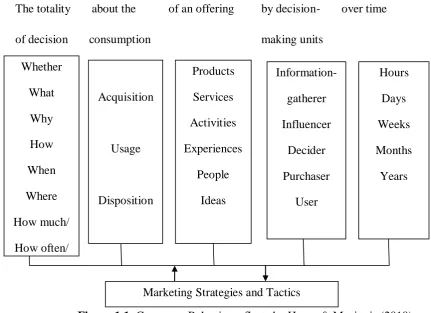
[image:18.595.98.530.69.382.2]The totality about the of an offering by decision- over time of decision consumption making units
Figure 1.1: Consumer Behavior reflects by Hoyer & Macinnis (2010)
Meanwhile, perception is important in making decision. According to the Schiffman & Kanuk (2007) perception can be defined as the process by which an individual selects, organizes and interprets stimuli into a meaningful and coherent picture of the world. For example two individuals may be exposed to the same stimuli under the same apparent conditions, but how each person recognizes, selects, organizes and interprets these stimuli is a highly individual process based on each person needs, values, and expectations. In the perception, there are four elements that influence in the perception. Firstly element is sensation. Sensation is the direct response towards the stimuli of the sensory organ such as brand names, advertisements and others. Sensory receptors that involved are the human organ such as ears, nose, mouth and others. Second element is the absolute threshold. According to Schiffman & Knuk (2007) the absolute threshold is the lowest level which an individual can experience a sensation. It is the point which a person can detect a difference between ‘something’ and ‘nothing’ is that person’s absolute threshold for the stimulus. To illustrate, the distance at which a driver can note a specific billboard on a highway is that individual’s absolute threshold. Next element is the differential threshold. It is the minimal difference that can be
Whether What Why How When Where How much/ How often/ Acquisition Usage Disposition Products Services Activities Experiences People Ideas Information- gatherer Influencer Decider Purchaser User Hours Days Weeks Months Years
3
detected between two similar stimuli but also known as just noticeable difference. And last element is subliminal perception. According to Schiffman & Kanuk (2007), the people are being motivated below their level of conscious awareness. People are also stimulated below their level of conscious awareness that is they can perceive stimuli without being consciously aware that they are doing so. Stimuli that are too weak or too brief to be consciously seen or heard may nevertheless be strong enough to be perceived by one or more receptor cells. Besides that, a green product is a product that gives less impact towards the environment or the human being. The green product must have the quality to protect the environment from being polluted. The natural ingredient is use for making the green product. For example in automotive. The cars are being manufactured to hybrid in order to reduce the air pollution that can causes the depletion of ozone layer and skin diseases to the human being.
4
5 1.2 Statement of the problem
In automotive, hybrid car is produce and manufactured to reduce fuel consumption and emissions reductions. Not only that, the price of hybrid car is rather higher than the local car. This is because the costs of the raw material in producing the hybrid car are increased in the market. Furthermore, it supported by Paul Eng (2004) said hybrid car also very risky in the accidents. This is because hybrid cars stores high amount of battery voltage. This means that there is a high chance to get electrocuted when they are involved in an accident. It is relatively difficult for rescuers to get the driver and passengers out of the hybrid car because of the danger of high voltage in the car. Next is the hybrid car also is heavy because of the heavy batteries installed in the car and causes the acceleration of the car is much slower than the normal car. Therefore, the issues that occur in this research is the perception of consumer behavior towards the green product in automotive. This perception also correlates with the decision making of the consumer. If the perception of the green product is narrow, then the consumer will not be interested and purchase the product for their usage. This may cause the green product has limited user in the market. The consumers also perceive that the green is not as good as the regular stuff.
1.3 Objectives
The main objectives of this research are:
To study the consumer perception about the hybrid car
To analyze variables affecting the students towards the hybrid car
1.4 Scope of the project
6
Malaysia Melaka from the FPTT students. This research focus on the perception that will affect the students about the hybrid car.
1.5 Importance of the project
This research aims to investigate and analyze the perception of consumer behavior towards the hybrid car. Nowadays green marketing is familiar in the market but user of the green product is limited. Not only that, many campaign has been made to promote the awareness of the green products such as go green campaign but consumer still do not care about the environmental that has been contaminated. So by doing this research, researcher will analyze and investigate their perception towards the hybrid car using the survey by distributing the questionnaire among the FPTT students.
1.6 Theoretical Framework
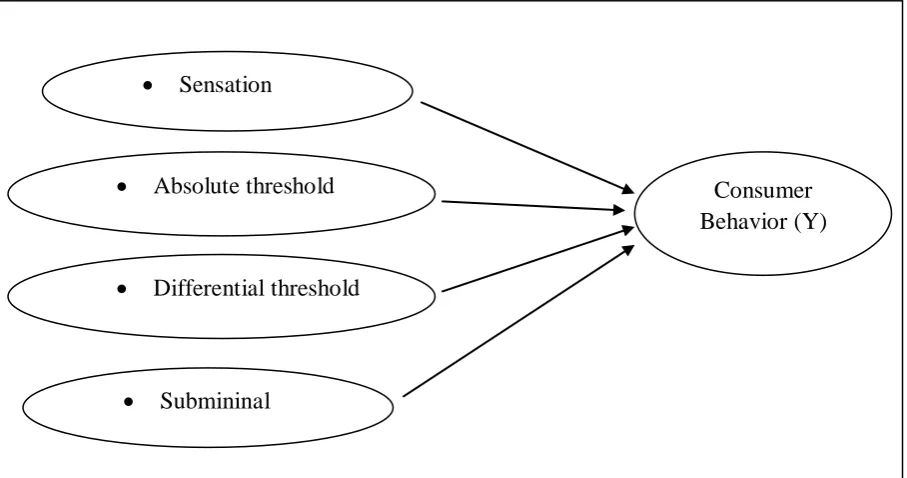
The theoretical framework that has in my research is between the perception and the hybrid car. From the theoretical framework also, the researcher can derived the hypothesis. The hypotheses are:
Perception on Sensation
H0: There is no relationship between the perception on sensation and hybrid car.
H1: There is the relationship between the perception on sensation and hybrid car.
Perception on Absolute Threshold
H0: There is no relationship between the perception on absolute threshold and hybrid car.
7 Perception on Differential Threshold
H0: There is no relationship between the perception on differential threshold and hybrid car
H1: There is the relationship between the perception on differential threshold and hybrid car.
Perception on Submininal
H0: There is no relationship between the perception on submininal and hybrid car.
[image:23.595.80.534.298.537.2] H1: There is the relationship between the perception on submininal and hybrid car.
Figure 1.3: Theoritical Framework by Schiffman & Kanuk (2007) Consumer Behavior (Y) Sensation
Absolute threshold
Differential threshold
8 1.7 Summary