CHARACTERISTICS ON M
-
LEARNING
PREFERENCES
,
AND HOW M
-
LEARNING
PREFERENCES FORM CHOICES IN
DIFFERENT CONTEXTS
A thesis submitted for the degree of
Doctor of Philosophy
of the
Australian National University
Mazen Ibrahim Al Ismail
December 2018
I declare that, to the best of my knowledge, this thesis is my own original work and does not contain any material previously published or written by another person except where otherwise indicated.
Mazen Ibrahim Al Ismail
A
CKNOWLEDGEMENTS
First, I would like to acknowledge the guidance, generous support, encouragement from my supervisor Professor Tom Gedeon. Your continuous support, patience and immense knowledge was vital in guiding me through my PhD journey. I am eternally grateful for everything you have done, and words are powerless to express my gratitude.
Many thanks go to my supervisory panel during my PhD. I would like to thank my second supervisor Dr. Ying-Hsang Liu, your generous help and support especially for the last stages of my PhD are very much appreciated. Your time, guidance, and comments are greatly appreciated. Dr. Mohammad Yamin, thank you for never letting me down, I really value your help specifically for my data collection and publishing papers. I also would like to thank Dr. Ramesh Sankaranarayana for his encouragement, care, and corroboration, with my heartfelt gratitude, please accept my sincere thanks.
My PhD study was sponsored by Saudi Arabian Cultural of Mission (SACM), and by Australian National University (ANU), thus I would like to thank them for their financial support during this period.
My PhD experiments were funded by ANU Teaching Enhancement Grant, therefore, I would like to thank them for their support.
Also, I would like to say to my father, who keeps encouraging me to complete my PhD, here I am and this is for you. Many thanks to my wonderful mother for your precious love and prayers, thank you very much and I love you. To my beautiful wife, I just wouldn’t feel
complete without you, thank you very much for your longstanding support, and your sacrifice in looking after me and my sons. I owe to my brothers and sisters who offered everlasting love to me, and encouragement.
A
BSTRACT
Students adopt different strategies, show a range of preferences, and make individual
choices as they learn to learn effectively and efficiently. Facilitating students to customise their own preferred techniques will maximise students’ learning. Mobile
devices allow learning to occur anywhere and at any time. However, the nature of mobile devices, such as the need to access a digital format on devices with small screens, influence students’ e-learning preferences. There is now a growing research
effort which aims to understand learners’ mobile learning preferences to deliver digital learning materials that best satisfy learners’ needs.
This thesis explores mobile learning (m-learning) preferences and choices in tertiary education to understand the best approaches to deliver digital learning materials (podcasts) in different physical (e.g. quiet, busy, or walking) and social spaces (e.g.
alone, family, or with classmates). This study uses two quantitative methods to understand mobile learners’ preferences and choices. First, 345 students completed a
survey study concerning the role of mobile learners’ characteristics on podcast
preferences in different physical and social spaces. Characteristics which are included in this study are gender, age, nationality (Australian and Saudi), materials status, prior
preferences for podcasts reflect their real choices in two different physical spaces which are quiet (e.g. home or library) and busy (e.g. cafe).
Overall, the results show that differences in characteristics affect m-learning preferences in some contexts (the result of overlapping physical and social spaces). On the other hand, preferences were reliable in predicting students’ choices only in limited physical
spaces. The reason behind these findings are discussed in this thesis. The approaches proposed in the provide ways to understand mobile learners’ preferences and choices, taking in to account a novel method which is a person’s spatial and social contexts.
C
ONTENTS
Acknowledgements iv
Abstract v
Contents vii
List of Tables x List of Figures xii
Publications arising during my PhD xiii
Chapter 1 Introduction 2
1.1 Background to the study 2
1.2 Research problem 4
1.3 Research gap in m-learning preferences 5
1.4 Research objectives 6
1.5 Research motivation 9
1.6 The significance of the study 10
1.7 Thesis structure 11
Chapter 2 Literature Review 14
2.1 Chapter objectives 14
2.2 M-learning is derived from e-learning: similarities and differences 14
2.2.1 Defining m-learning 16
2.2.2 Significance of m-Learning 18
2.3 M-learning podcasts 19
2.3.1 What are podcasts and what is their relationship to m-learning 19
2.3.2 Learner preferences for length of podcast (level of engagement) 22
2.3.3 Learner podcast preferences 24
2.4 Are preferences reflecting choices? 25
2.5 The effect of contexts on m-learning preferences 29
2.6 Characteristics and its effect on m-learning 32
2.6.1 Demographics and cultural effects on m-learning 32
2.6.2 Students’ experiences effect on m-learning 34
2.6.3 Learning style models and its effect on m-learning 36 2.6.4 Personality trait models and its influence on learning 38
2.7 Chapter Conclusion 41
Chapter 3 Methodology 43
3.1 Research design 43
3.2.1 Contexts 46
3.2.2 Demographics 47
3.2.3 Prior experience 47
3.2.4 VARK 47
3.2.5 Personality traits (Big 5) 49
3.3 Methods 51
3.3.1 Sample population 51
3.3.2 Participants 52
3.3.3 Survey instrument 53
3.3.4 Survey data collection 55
3.3.5 Survey analysis 55
3.3.6 Experiment data collection 59
3.3.7 Experiment learning material and tasks 60
3.3.8 Experimental Design and procedure 61
3.3.9 Experiment data analysis 64
3.3.10 Validity and reliability 65
3.3.11 Limitations 66
3.4 Result chapters’ organization 67
Chapter 4 The effect of demographics, prior experience, and context on
podcast preferences 69
4.1 Introduction 69
4.2 Exploring the relationship between demographics and podcast
preferences in different contexts 70
4.2.1 The association between demographics and podcast type preference 70 4.2.2 The effect of demographics on podcast length preferences 73 4.3 The relation between prior podcast experience and podcast preferences75 4.3.1 The association between prior experience and podcast type preference 76 4.3.2 The association between prior experience and podcast length preference77
4.4 The effect of context on podcast preferences 77
4.4.1 The effect of physical and social spaces on podcast type preferences 78 4.4.2 The effect of physical and social spaces on podcast length preferences 79
4.5 Discussion and conclusion 83
4.5.1 The effect of demographics on m-learning preferences 84 4.5.2 The effect of prior experience of podcasting on m-learning preferences 86 4.5.3 The effect of contexts on m-learning preferences 87
Chapter 5 The relation between learning preferences (VARK) and podcast
preferences in different contexts 89
5.1 Introduction 89
5.2 Result 91
5.2.1 Students classification based on VARK learning preferences 91 5.2.2 The relation between VARK cohorts and podcast preferences in different
contexts 95
5.3 Discussion & conclusion 104 5.3.1 The relation between VARK cohorts and podcast preferences in different
contexts 105
5.3.2 The preferences of VARK cohorts across contexts 108
Chapter 6 The effect of personality traits on podcast engagement in different
contexts 110
6.1 Introduction 110
6.2 The effect of personality traits on podcast length preferences 111
6.3 Discussion 116
6.3.1 Australian students with high emotional-stability 116
6.3.2 Saudi students with high agreeableness 118
Chapter 7 Podcast type preferences, choices, and satisfaction 121
7.1 Introduction 121
7.2 Result 122
7.2.1 Descriptive analysis of preferences, choices, and satisfaction 122 7.2.2 Do preferences effect choices in different contexts? 126
7.3 Discussion and conclusion 127
Chapter 8 conclusion 129
8.1 Contribution 130
8.2 Recommendations for designing podcasts 131
L
IST OF
T
ABLES
Table 2.1 Advantages and disadvantages of podcast types (synthesised from the literature) Table 2.2 Advantages of podcasting that relates to m-learning attributes
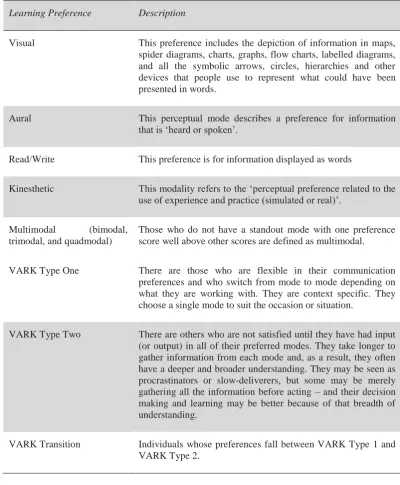
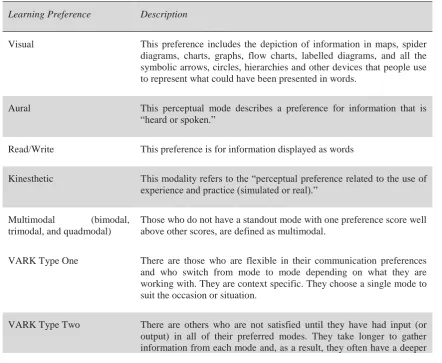
Table 2.3 Learners’ media preferences and choices for e-learning and m-learning. Table 2.4 VARK learning preference
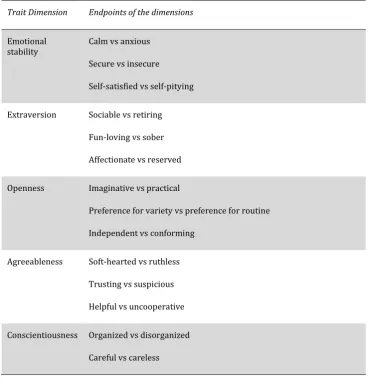
Table 2.5 Big Five dimensions.
Table 3.1. The result of combining physical space and social space (contexts). Table 3.2 VARK learning preference
Table 3.3 Big Five dimensions.
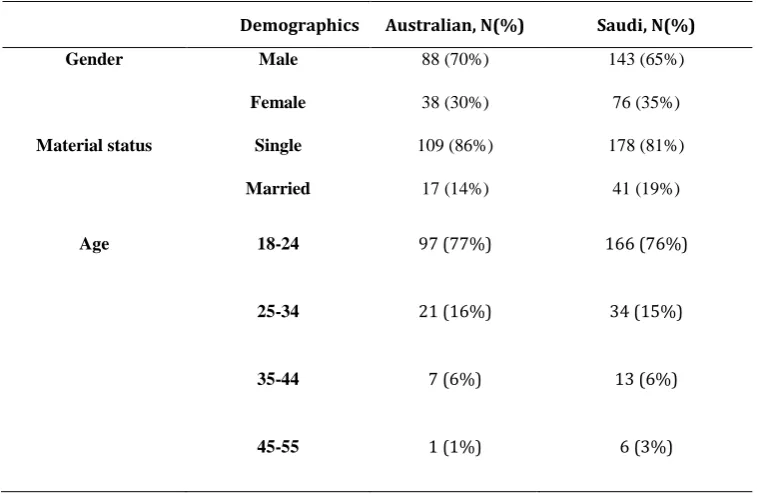
Table 3.4 Participants' demographics for the survey study
Table 4.1 Predicting podcast type preferences based on age, material status, and nationality
Table 4.2 the distribution of preferences by age, material status, and nationality in statistically significant contexts.
Table 4.3 A correlation between students’ demographics and podcast length
preferences in different contexts.
Table 4.4 Students experience of accessing educational learning materials using mobile devices
Table 4.5 shows Saudi students' preferences for different podcast types in the 'vehicle with classmate' context based on prior experience listening to podcasts.
Table 4.6 The association between students’ preferences for podcast engagement and their prior experience of podcasts (listening, watching, reading). Table 4.7 The effect of contexts on podcast type preferences.
Table 4.9 the effect of contexts on m-learning (podcast) engagement for Saudi students.
Table 4.10 The order of contexts by level of engagement with m-learning.
Table 5.1 Podcast type preferences have been ranked based on MRT from low to high.
Table 5.2. The distribution of VARK cohorts by gender and nationality.
Table 5.3 Median values for Australian Mobile learners’ preference for podcast
richness on non-stationary contexts
Table 5.4 Median values for VARK subgroups across context for Australian mobile learners
Table 5.5 Median values for VARK subgroups across context for Saudi mobile learners
Table 5.6 Post hoc analysis for Australian mobile learner with visual preference Table 5.7 Post hoc analysis for Australian mobile learner with VARK2 preference Table 5.8 Post hoc analysis for Saudi mobile learners from the visual cohort Table 5.9 Post hoc analysis for Saudi mobile learner with VARK1 preference Table 5.10 rich and lean learning contexts for visual, VARK1, VARK2, and
kinesthetic learners based on podcast preferences for both cultures. Table 6.1 Means and standard deviations for each personality trait by gender
and nationality.
Table 6.2 The result of ordinal regression to show the effect of personality traits on level of engagement with m-learning for Australian students in different contexts.
Table 6.3. The result of ordinal regression to show the effect of personality traits on level of engagement with m-learning for Saudi students in different contexts.
Table 6.4 A summary table show the significant results of the effect of personality traits on level of engagement with m-learning for Australian and Saudi students in different contexts.
Table 7.1 the distribution of students’ preferences, choices, satisfaction,
preferences when dissatisfied in quiet and busy contexts.
L
IST OF
F
IGURES
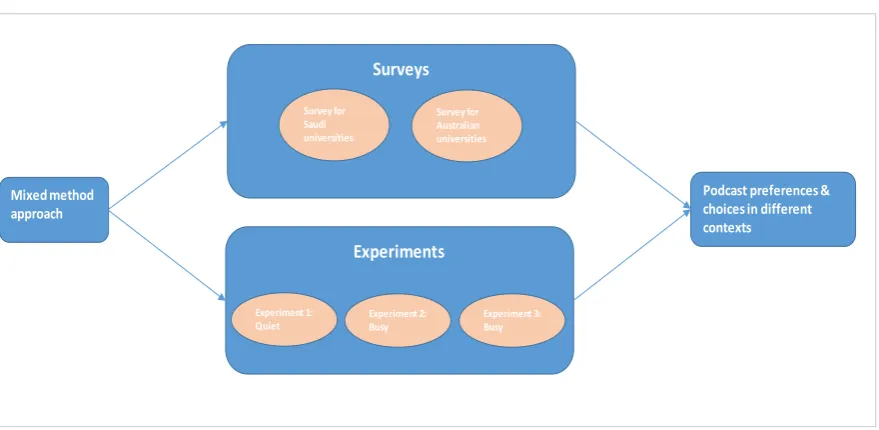
Figure 1.1 The thesis theoretical model of learners’ characteristics, and choices relationships in m-learning preferences, Figure 3.1 Research design of the study with mixed methods approach to determine podcast preferences
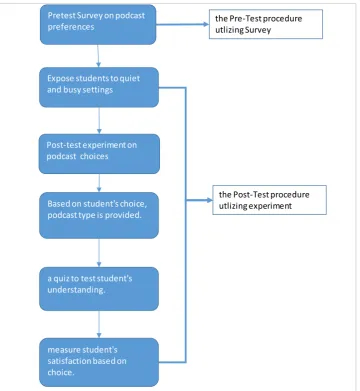
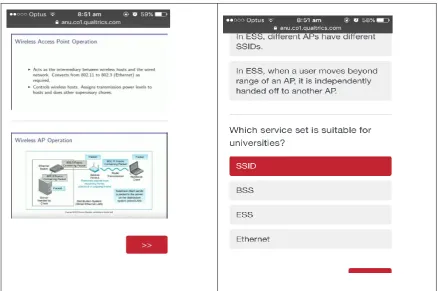
Figure 3.2 Experiment process to compare preferences and choices for podcasting in quiet and busy contexts Figure 3.3 An example of podcast text (left), and quizzes provided (right).
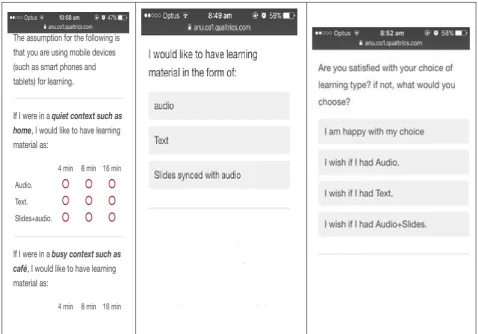
Figure 3.4 students’ podcast preferences (left), students’ podcast choices (middle), page measures students’ satisfaction regarding their choices (right).
Figure 3.5 Students in lecture theatre as a quiet environment where headphones were provided to prevent noise.
Figure 3.6 Students in lecture theatre as a busy environment.
Figure 5.1 distribution of mobile learners based on VARK categories and gender for Australian students. Bimodal VR: Visual/Read/Write, Bimodal VK: Visual/Kinesthetic.
Figure 5.2 distribution of mobile learners based on VARK categories and gender for Saudi students. Bimodal VR: Visual/Read/Write, Bimodal VK: Visual/Kinesthetic.
Figure 5.3 Mobile learners with aural and read/write preference compared with average of all VARK groups.
Figure 7.1 Students’ choices for (audio, text, and Vodcast), based on preferences in
P
UBLICATIONS ARISING DURING MY
P
H
D
Refereed conference and journal papers
• Al-Ismail, M., T. Gedeon, and M. Yamin, Effects of personality traits and preferences on M-learning. International Journal of Information Technology, 2017. 9(1): p. 77-86.
• Al-Ismail, Mazen, Gedeon Tom, Sankaranarayana Ramesh, and Yamin Mohammad. "M-Learning Preferences and Learning Preferences" Proceedings of the 10th INDIACom; INDIACom-2016; IEEE Conference ID: 37465 2016 3rd International Conference on “Computing for Sustainable
Global Development”, 16th- 18th March, 2016 Bharati Vidyapeeth's Institute of Computer Applications and Management (BVICAM), New Delhi (INDIA).
• Al-Ismail, Mazen, Gedeon Tom, Sankaranarayana Ramesh, and Yamin Mohammad. " Big 5 Personality Traits Affect MLearning Preferences in Different Contexts and Cultures” Proceedings of the 10th INDIACom; INDIACom-2016; IEEE Conference ID: 37465 2016 3rd International Conference on
“Computing for Sustainable Global Development”, 16th- 18th March, 2016 Bharati Vidyapeeth's Institute of Computer Applications and Management (BVICAM), New Delhi (INDIA).
• Al-Ismail, Mazen, and A. S. M. Sajeev. "Usability Challenges in Mobile Web Access: A Systematic Literature Review."
COMNETSAT 2014, IEEE. (Jakarta).
Chapter 1
I
NTRODUCTION
1.1
Background to the study
Learning is a crucial process for individuals and communities and is a lifelong experience, which can develop confidence, self-esteem, and lead to a better quality of life. Lifelong learning is not simply about economic success, but also personal
development. Henry Ford, the founder of the Ford Motor Company, famously noted that ‘Anyone who stops learning is old, whether at twenty or eighty. Anyone who keeps
learning stays young’ ( http://www.henry-ford.net/english/quotes.html, accessed 17
April 2018).
Over the last few decades, learning is increasingly facilitated by learning technologies
(e.g. tablets, laptops, and smartphones). The adoption of technology in education has many advantages, such as unlocking educational boundaries, increasing access to
educational resources, stimulating students to learn, tracking students’ progress, enhancing individual learning, as well as increasing collaboration between students and teachers. Therefore, especially in industrialised nations, almost every student and
teacher utilises educational technologies, which often means that learning can occur outside of the classroom and at times of the students’ choosing.
and at any time a mobile learner is willing to study. A mobile device is any wireless portable device capable of receiving learning content, and includes mobile phones,
smartphones, tablets, PDAs, portable media players, and MP3 players. Thus, m-learning concentrates on sharing information among learners through interactive systems. All students or mobile learners can interact with each other to share knowledge and
experiences, without the usual constraints of time or place. The number of mobile devices has increased dramatically compared to stationary devices (e.g. desktop
computers). According to the ITU, mobile broadband subscriptions are four times more numerous that fixed broadband subscriptions (International Telecommunication Union, 2017). The reason for this is that portable devices are now more affordable, the
capabilities of smartphones and other portable devices have been substantially enhanced, and networking infrastructures have been expanded.
However, the use of mobile devices in education is seen by some to be problematic, as the growth in these devices has led to sometimes contentious changes in education, such as presenting learning materials on small screen devices, and lack of face to face
teaching. Consequently, there is a growing need to explore mobile learners’ preferences, choices, and the effectiveness of educational m-learning tools to develop learning
approaches that effectively complement traditional modes of instruction.
This thesis investigates how the personal and social characteristics of tertiary students
influence m-learning preferences in different contexts. As well the thesis will investigate whether students’ m-learning preferences are reflected in their actual choices. This chapter also established the rationale behind the study and the research
m-study’s objectives and research questions are also discussed. The chapter ends by
highlighting the importance of this study and how the thesis has been organised.
1.2
Research problem
learning enables learning activities to be pursued anywhere and at any time.
M-learning can receive and deliver diverse M-learning media (mainly text, audio, or video) that vary in length (short moderate, and long). These opportunities pose some
challenges when used in traditional courses, such as (but not limited to) the limitation of location and time, the cost, the number of students, and the learner occasionally not fully concentrating as the teacher is not present. Thus, and along with traditional
courses, curricula and feedback are digitally delivered to mobile devices as these devices are affordable, portable, personal, and ubiquitous.
Although m-learning allows portability, can be personalised, and is ubiquitous, these attributes give rise to two interrelated challenges, which are technological and behavioural. Mobile devices are small and easy to carry. Thus, mobile learners can
encounter many unexpected social and environmental situations that influence his/her learning. The presentation of learning materials is limited by small screen sizes, which
affect learning preferences and effectiveness. Unlike PCs, mobile devices have limitations of connectivity, battery capacity, and data storage, and these technical issues can have negative effects on the level of engagement, preferences, and effectiveness of
learning. These issues have to be carefully addressed, as m-learning is utilised in different contexts, by learners’ with different characteristics, and mostly occur away
Thus, understanding m-learning preferences is a challenging task. First, m-learning is mostly utilised in informal settings as learner interact with m-learning out of class,
which means that these learning activities cannot be easily monitored by teachers. These m-learning activities also occur in different contexts, such as but not limited to social spaces (e.g. being alone or surrounded by family members) and physical spaces (e.g. at
home, café, or while walking). These social and physical spaces can affect m-learning preferences, such as the type of media or level of engagement. Furthermore, in each context, learners’ personal and social characteristics will play an important role in
m-learning (Karimi, 2016). Research is required not only to determine m-m-learning preferences but also to understand the reasons behind these preferences.
1.3
Research gap in m
-
learning preferences
M-learning has received increased attention from both educators and researchers. Although researchers contribute to m-learning design, and evaluate its effectiveness and efficiency, there are few studies on mobile learners’ preferences (Cassidy et al., 2014;
Copley, 2007; Kobayashi, 2017; Matava, Rosen, Siu, & Bould, 2013; Parson, Reddy, Wood, & Senior, 2009; Phillips, Grosch, & Laosinchai, 2014; Rodgers, Mabley, &
Garforth, 2017). The few studies that have been conducted however ignore one of the essential factors affecting mobile learners’ preferences, which is how mobility influences mobile use in different contexts. It is vital to research m-learning in different
contexts, such as social and physical spaces (Kukulska-Hulme, Sharples, Milrad, Arnedillo-Sanchez, & Vavoula, 2009), and indeed the general effect of context on
learners find themselves in different situations, no study has investigated m-learning preferences in different contexts. Thus, this study fills this gap by evaluating mobile learners’ preferences in different contexts, such as the overlapping of physical spaces
(quiet, busy, and moving) and social spaces (alone, family, friend, and with a classmate).
Differences in learners’ characteristics influence m-learning. However, the majority of existing studies investigate the impact of mobile learners’ characteristics on m-learning
adoption and acceptance. In the marketing literature, consumers’ characteristics are seen as essential to understanding their preferences and choices, though only one study examines the relationship between learner’s characteristics and m-learning preferences
(Bouhnik Dan & Alona, 2016).
Learners’ preferences do not always predict their actual choices. The researcher could only find one study that investigated the influence of learners’ preferences on their
choices (Lee & Chan, 2007). The study disseminated online podcasts that could be accessed via different devices and investigated whether the type of device preferred
(stationary or mobile devices) was eventually chosen to access the podcast. This study will investigate whether the preferred type of podcast will be chosen using only mobile
devices in two different physical spaces, i.e. quiet and busy.
1.4
Research objectives
The overall aim of this thesis is to understand mobile learners’ preferences for podcast
types, to achieve this, two subsidiary aims have been established. First, examine the impact of mobile learners’ characteristics (demographics, prior experience, learning
different contexts. Second, to determine if m-learning preferences are reflected in learners’ actual choices, the study then investigates how the preferences of mobile
learners’ in tertiary education affect their choices of podcast in different contexts. To
achieve the subsidiary aims, the following objectives need to be addressed:
• Determine the relation between mobile learners’ demographics (gender, age,
material status, and nationality) and m-learning preferences for podcast types
and length in different contexts.
• Determine the relation between mobile learners’ prior podcast experience
(listening, reading, and watching) and m-learning preferences for podcast
types and length in different contexts.
• Determine the relation between mobile learners’ learning styles and m -learning preferences for podcast types (text, audio, video) in different
contexts.
• Determine the relation between mobile learners’ personality traits and m -learning preferences for podcast lengths: short, moderate, and long (level of
engagement) in different contexts.
• Examine the effect of mobile learners’ preferences on their choices for
podcast types in different contexts (quiet and busy).
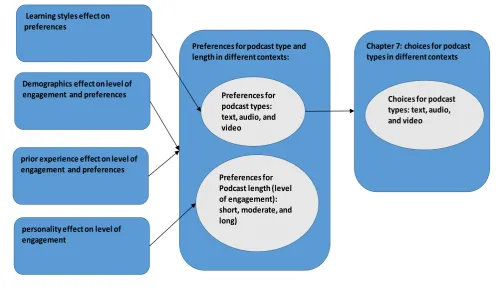
The theoretical model of the thesis is presented in Figure 1.1. It aims to understand the relation between the learners’ characteristics, preferences, and choices in different
model show learner characteristics which are learning styles, demographics, personality traits, and prior experience on m-learning. Learning style is to assess students’ Visual,
Aural, Read/write, and Kinesthetic (VARK) learning style and to suggest a learning strategy. On the other hand, demographics which are included in this study are gender, age, material status, and nationality. This model also includes personality traits which to
assess the degree of individual Openness to new experiences, Conscientiousness, Extraversion, Agreeableness, and emotional-stability. Lastly, prior experience is to assess students’ prior podcast learning experience (e.g. audio as learning material) using
mobile devices.
Figure 1.1. The thesis theoretical model of learners’ characteristics, preferences, and choices
relationships in m-learning.
Demographics effect on level of engagement and preferences
Learning styles effect on preferences
personality effect on level of engagement
Preferences for podcast type and length in different contexts:
Chapter 7: choices for podcast types in different contexts
Preferences for podcast types: text, audio, and video
Preferences for Podcast length (level of engagement): short, moderate, and long)
Choices for podcast types: text, audio, and video
[image:24.595.36.538.387.682.2]Thus, the main research question and the four subsidiary research questions for this study are as follows:
What is the impact of mobile learners’ characteristics on podcast preferences in
different contexts, and how do m-learning preferences influence choices in different contexts?
Subsidiary question 1: is there a relationship between students’ characteristics (gender, age, nationality, material status, and prior experience) and students’ podcast preferences
in different contexts?
Subsidiary question 2: is there a relationship between students’ learning style and students’ preference for podcast types in different contexts?
Subsidiary question 3: is there a relationship between students’ personality traits and students’ level of engagement with podcasts in different contexts?
Subsidiary question 4: is there a relationship between students’ preferences and students’ choices of podcasts in different contexts?
1.5
Research motivation
It is not clear which podcast type and length is preferred for learning through m-learning. This is due to the absent of including context in previous research settings. As m-learning can be done at anytime, anywhere and it is extremely dynamic, preferences
for podcasts should be examined in different context such as stationary and non-stationary contexts. Moreover, the differences of learner characteristics impact student
It is vital to address these risen issues to understand mobile learners’ preferences. Thus,
this research examines the impact of learner characteristics on m-learning preferences in
different contexts. This will fill the gap in the literature and enhance our understanding of mobile learners’ preferences.
1.6
The significance of the study
Understanding learning preferences helps to maximise students’ learning potential and
enhance the learner’s personality. At a personal level, a focus on learning preferences can increase self-confidence, motivation, and enjoyment, and customising teaching techniques can assist the learners by allowing them to use strategies that are most
effective for them. The study of learning preferences is not a new subject. However the dynamic development of mobile technologies, which are portable and allow real-time
communication, opens up a new field or research in learning preferences.
This thesis aims to explore m-learning preferences and choices, which can lead to an improved understanding of the best way to efficiently and effectively deliver learning
materials (podcasts). In doing so the study provides a better understanding of the role personal characteristics have on m-learning preferences in different contexts. It also
provides a rationale and a balanced investigation, as this is the first study to examine m-learning preferences and choices in different physical and social spaces. The study also contributes to the development of theory about m-learning.
Thus, this study could contribute towards the development of the theory and practice of
examining how preferences form m-learning choices. Furthermore, the thesis recommends further investigation for future studies in m-learning. For practice,
recommendations for appropriate m-learning podcast type and length based on learner characteristics and m-learning contexts are presented in chapter 4 and 6. Also, the methodology chapter provides details how m-learning practitioners can utilize different tools to measure students’ preferences for m-learning.
1.7
Thesis structure
The thesis has eight chapters, which include the introduction, literature review,
methodology, four chapters for the results and discussion, and the conclusion. Each chapter is briefly outlined below.
Chapter 2 defines m-learning and podcasts, as the latter is playing an important role on m-learning. The chapter then focuses on m-learning preferences for podcast types and length, where podcast length is also used in this thesis as a proxy for the level of
engagement. After that, the theoretical framework is established, which deals with the impact of context, the characteristics on m-learning, and understanding the relationship
between m-learning preferences and choices. Note that these three important issues are the main gaps in the literature on m-learning preferences and choices.
Chapter 3 will provides a detailed discussion of the methodology used in this thesis. In
Chapter 3 I explain the main purpose of the research, followed by setting out the independent variables (IVs) and dependent variables (DVs). The survey and
Chapter 4 is the first results chapter, and discusses the effect of demographics, as well as prior experience, on m-learning preferences for podcast types and length in different
contexts. Thus, the chapter explores the relationship between learners’ characteristics (gender, age, material status, nationality, and prior experience) and podcast types and length preferences in different contexts. The chapter also investigates the effect of
physical and social spaces on podcast type and length preferences.
Chapter 5 explores podcast type preferences and the differences between mobile learners’ learning styles, e.g. visual learners and/or aural learners, in different contexts.
The analysis firstly deals with students based on their learning styles, then explores whether there are differences in podcast type preference in different contexts.
Chapter 6 explains the effect of personality traits (Big Five) on podcast length preferences. Thus, the chapter examines the impact of students’ Big Five personality
traits (Openness, Conscientiousness, Extroversion, Agreeableness, and Emotional-stability) on m-learning engagement across physical and social spaces.
Chapter 7 is an experimental study that compares students’ podcast preferences with
their actual choices. The procedure has three stages: a survey on podcast preferences (for text, audio, and video) for different physical spaces (quiet and busy). The students
are then exposed to these physical spaces to observe their actual podcast choices, after which the students’ satisfaction based on their actual podcast choices is derived. This
Chapter 8 concludes the thesis and re-visits the aims of the research and reviews each chapter. It also discusses how this thesis contributes to knowledge in the research area
Chapter 2
L
ITERATURE
R
EVIEW
2.1
Chapter objectives
This chapter will focus on how personal and social characteristics influence m-learning preferences in different contexts, and explore the relationship between m-learning preferences and choices. The chapter begins by clarifying the potential ambiguities
around the terms m-learning and e-learning. Second, it makes an argument that the study of the use of podcasts is a superior means of assessing m-learning. Finally, the
chapter identifies the gaps in the research on m-learning preferences which this thesis is attempting to fill. These gaps are: the m-learning context, the vagueness in understanding the relationship between preferences and choices in m-learning, and the
way that personal and social characteristics influence m-learning preferences (demographics, prior experience, learning styles, and personality traits).
2.2
M
-
learning is derived from e
-
learning: similarities and
differences
In discussing m-learning, e-learning and distance education there is a need to provide clear definitions, as the first two terms are relatively recent, and the field of ICT
mediated education is so dynamic and that there is a lack of clarity at times about the meaning of terms.M-learning derives from e-learning, while e-learning derives from distance learning (d-learning) (Georgiev, Georgieva, & Smrikarov, 2004). This is not
different forms on non-traditional learning can help to avoid negative impacts, such as those caused by inadequate design (Güler, Kılıç, & Çavuş, 2014).Thus, m-learning and
e-learning are not modalities that are in competition, as both have similar techniques and features, and m-learning complements but does not substitute for e-learning in blended learning environments. They complement each other because e-learning
supports collaborative learning while m-learning supports situated learning (Ozuorcun & Tabak, 2012).
The most common shared features of m-learning and e-learning are that both use electronic devices, require internet connections, and are student-centred (Georgiev et al., 2004; Korucu & Alkan, 2011; Ozuorcun & Tabak, 2012). Students using both e- and
m-learning can access a range of teaching materials including text, images, audio, video, and email and messages from peers and teachers. Using e- and m-learning means that
geographic boundaries become less meaningful, and learning can be undertaken whenever internet connections are available. M-learning and e-learning both arise out of distance learning (d-learning), which originally relied on hard-copy course materials
and assessments, provided for students who could not attend, for various reasons, regular face-to-face classes. Distance education now relies on various forms of
electronic delivery, using platforms such as Moodle, but now also leverages mobile devices to broaden the ways that students can access courses.
The core difference between e-learning and m-learning revolves around tethering. E-learning requires tethering to a high bandwidth network via stationary devices (e.g. desktop computers), while m-learning is wirelessly connected (e.g. 3G and GPRS) via
of the classroom. E-learning is also more formal and usually accessed at the home or the workplace. E-learning also uses a richer suite of media to deliver primarily text and
graphics based instruction, while m-learning relies more on graphics and animation. (Korucu & Alkan, 2011). This is because e-learning uses powerful PCs connected to fast high bandwidth networks, which combined with more powerful data storage and
e-learning platforms installed on the PC, means that e-e-learning can draw on a wider range of more powerful resources than the devices used for m-learning. However, it is
important to note the unique contributions m-learning is making to e-learning, especially as there are now many more mobile devices owned than desktop computers (International Telecommunication Union, 2017). The impact of m-learning has been so
great that the addition of m-learning opportunities to e-learning has altered the terminology applied to e-learning. The most widely used terms used to describe
m-learning are: lightweight, informal, connected, situated, intimate, and spontaneous, while common terms for e-learning stress that it is media-rich, hyperlinked, interactive, and multimedia enabled (Korucu & Alkan, 2011).
2.2.1
Defining m-learning
For the purposes of this study, m-learning is defined as the ability for anyone to choose learning materials (e.g. text, audio, and video) at any time and anywhere using mobile devices. As m-learning is extremely dynamic, mobile learners can learn in a far broader
range of contexts. This flexibility has several dimensions, such as, but not limited to: technology (e.g. the student can change from one device to another), environments (e.g.
well as mobile learner choices of mode of delivery (e.g. audio, text, or video). The choices students make, dependent on their social and personal characteristics, should be
considered in m-learning definitions for two interrelated reasons. First, learners have individual differences, which lead to a range of different choices. Second, m-learning, compared to traditional learning and e-learning, allows greater expressions of individual
differences as learning occurs mostly in an informal setting, thus, the acquisition of knowledge is not well organized in informal setting compared to formal settings.
The majority of m-learning situations can be captured using three related concepts: the ability to learn, anywhere at any time, while using mobile technologies. Consequently, mobile learning is a process that leverages the mobility, access, immediacy, ubiquity,
convenience and contextuality of communication services (Evrim, 2014), to provide meaningful learning experiences through wireless mobile technology such as cell
phones, Personal Digital Assistants (PDA), mini-computers and ipods (Stevens & Kitchenham, 2011). More importantly, e-learning also includes the learning and teaching techniques that utilise mobile wireless technology to provide ubiquitous and
seamless access to information, so that students can learn in a variety of environments (e.g., inside and outside classroom settings) using handheld and portable devices.
A number of earlier m-learning definitions are no longer valid, due to the massive expansion in mobile devices and networking infrastructures. For example, (C. Quinn,
2000) defined m-learning as ‘e-learning through mobile computational devices: Palms, Windows CE machines, even your digital cell phone.’. Quinn’s definition showed that m-learning was highly dependent on e-learning, and that access to mobile learning was
and devices’ (Pocatilu & Boja, 2009). However, the capabilities of current mobile
technologies allow more than just receiving educational content; they can now receive
and send (e.g. learning materials, feedback, and quizzes) at any time and from anywhere. By 2013, mobile learning was defined more expansively as giving students the capacity to learn with their own context at any time and in different environments.
Compton defined mobile learning as learning across multiple contexts, through social and content interactions, using personal electronic devices’ (Crompton, 2013). As the
development of m-learning is so fluid its definition will continue to change as new technologies emerge and m-learning innovations accumulate.
2.2.2
Significance of m-Learning
Over the last few years, the effectiveness of constructivist learning strategies, the
change from computer-based learning to web-based learning, and the development of new technologies, has meant that mobile learning has become a widespread mode of educational provision (Göksu & Atici, 2013). These innovations address many of the
problems of available distance learning methods. It also takes advantage of sympathetic innovations in non-traditional modes of learning, captured by initiatives such as lifelong
learning, peripheral learning, learning when needed, autonomous learning, situated learning, and learning depending on the conditions (Göksu & Atici, 2013; Vavoula & Sharples, 2011).
Thus, the uniqueness of m-learning is the ability for anyone to engage with learning any time and anywhere, and how this offers educators and students new pedagogical
lightweight and easy to carry. Second, it also offers accessibility anywhere and any time as mobile devices can access a range of networked communication modes, such as
Wi-Fi, 3G, and Bluetooth. Consequently, opportunities are created for students to access course materials or platforms with few constraints of space or time. So, m-learning presents new opportunities to motivate students, especially when multimedia modes are
available, and gaming can be combined with lessons, which make learning enjoyable. Also, m-learning can support independent learning and collaborative learning since
students can share the same material.
Thus, the adaption of mobile learning is increasing, as mobile devices are developing, the availability of networks is increasing, and networking charges are becoming more
affordable, which facilitates the adoption of podcasting (audio, text, and video) using mobile devices as learning materials. The next section will discuss in detail the use of
podcasting for m-learning.
2.3
M
-
learning podcasts
2.3.1
What are podcasts and what is their relationship to m-learning
Podcasting is defined as an audio content syndication through RSS feeds (Cebeci & Tekdal, 2006), and is also described as audio, video, text and other media files that canbe played on the computer or downloaded to MP3 players (Sprague & Pixley, 2008). Podcasting can support communication and the delivery of course materials between lecturers and students. Previous research studies have slightly different definitions of
player or a computer via the Internet (Takeda, 2013). For this study, podcasts are defined as text, audio, or video materials that support one-way communication to students’ mobile devices.
Thus, the types of podcasts mainly depend on the way they use video, audio and text. The video podcast known as Vodcast (Sutton-Brady, Scott, Taylor, Carabetta, & Clark,
2009) is the most popular podcast term. Vodcast also includes audio podcasts synced with images and text (Brittan & Glowacki, 2006; Sutton-Brady et al., 2009). Hence, the
podcast types used in m-learning are described in Table 2.1, along with their merits and demerits.
Table 2.1. Advantages and disadvantages of podcast types (synthesised from the literature)
Types of podcasts
used in m-learning Merits Demerits
Text
Easy to follow the
information, and small file size.
The engagement is very low.
Audio
More engaged compared to
text, lecturer's voice reduce students’ anxiety (Chan &
Lee, 2005; Kemp, Myers, Campbell, & Pratt), and easy to download.
Easy to lose focus, and
time-consuming in term of preparation.
audio, and more ‘real world’. Stopping and
rewinding provides
flexibility in learning.
presented, and time-consuming to edit and produce. Requires high-speed internet for
downloading and watching.
Many of the advantages of podcasts are useful for m-learning. In fact, Sutton-Brady et
al. (2009) stated that podcasts empower m-learning. Table 2.2 details m-learning and its relation to podcast advantages. Kukulska-Hulme and Traxler (2005) list attributes of
m-learning, such as spontaneity, personalisation, informality, portability, and ubiquity, which are defined in Table 2.2. Lee and Chan (2007) have also explored the relationship between podcast advantages and m-learning attributes by listing the possible
manifestation in educational podcasting applications (see Table 2.2).
Table 2.2. Advantages of podcasting that relates to m-learning attributes (Lee & Chan, 2007).
Attributes of
m-learning description Aspects of podcast relate to m-learning
Spontaneous
learning resources can be accessed whenever a chance arises.
Access is on-request as the podcast automatically becomes available. Furthermore, the capability of mobile devices and MP3 players with large memories allow learners to have ‘libraries’ of various podcasts while on the move.
Personal
Learner-centred; the
personalising preferable media.
Informal
Makes learning a casual and relaxed activity.
Podcasts can use the lecturer’s or someone else’s voice which affords a casual and relaxed feeling (Chan & Lee, 2005; Kemp et al.). Furthermore, background music can also be combined to form a friendly and informal feeling. Also, the podcasts can be listened to and watched in informal settings (e.g. walking or at the cafe).
Portable
m-learning can be utilised in different locations with different devices.
Podcasts can be played on a variety of mobile devices, which enable to be used everywhere.
Ubiquitous
using universally available mobile devices.
Audio MP3 and video MP4 playback functionality is universally integrated into mobile devices (e.g. smartphones) which are already pervasive.
As well as the technological aspects of podcasts, learner preferences for podcasts are an important theme in research trends about m-learning and e-learning. Thus, the next section considers learners’ podcast preferences and how preferences influence choices.
2.3.2
Learner preferences for length of podcast (level of engagement)
Many studies have examined different podcast lengths to improve their effectiveness in
too long to be reliably downloaded. Thus, more studies to investigate the optimal podcast length are required to improve the educational effectiveness of podcasts.
The research for this thesis found only one study which explicitly classified podcast lengths (Carvalho et al., 2009). The study used podcasts in a blended learning environment at Minho University and categorised podcasts’ lengths into short, moderate
and long. The short length is a range of one to five minutes, moderate duration was six to fifteen minutes, and long was over fifteen minutes.
The majority of research studies have shown that students prefer short podcasts (Gillie, Dahli, Saunders, & Gibson, 2017; Lee & Chan, 2007; Sutton-Brady et al., 2009; Van Zanten, Somogyi, & Curro, 2012)while a few showed that students prefer moderate and
long podcasts (Giannakos, Jaccheri, & Krogstie, 2016; Matava et al., 2013). Sutton-Brady et al. (2009) considered a short format of podcasting to be promising, as a shorter
podcast does not take a long time to watch/listen to or download. Moreover, few studies have suggested that students would not watch/listen to podcasts longer than 7-8 minutes (Bell, Cockburn, Wingkvist, & Green, 2007; Gillie et al., 2017; Rodgers et al., 2017).
The advantages of shorter podcasts, from the students’ perspective, are that they highlight important information, assist study, extend and personalise learning, and assist
assessment preparation (Sutton-Brady et al., 2009). Lecturers’ perceptions, on the other hand, is that the concise presentation of information reinforces learning and increase students’ interest. Both lecturers and students agreed that short format podcasts saved
consultation time.
It is important to note here that the literature review for this thesis suggests that no
their preferences for podcast length. The current study addresses this gap by examining the effect of demographics and personality traits on podcast lengths in different
contexts.
2.3.3
Learner podcast preferences
In the mid-2000s, audio was a popular media in education. Fill and Ottewill (2006) noted that although video has potential benefits for learners, audio was more commonly
used. In the same period, two studies investigating learners’ preferences and usage of podcasts were conducted. First, a study was conducted by (Brittan & Glowacki, 2006) using podcast lectures in three different formats (video, audio synced with PowerPoint
slides, and audio) which students could choose. The second study (Copley (2007) disseminated audio and video podcasts to four different classes and found that more
audio podcasts were downloaded than video podcasts. The file size of the video podcasts is much larger than an audio podcast. Thus, the time and cost is higher when a video is downloaded. Consequently, learners preferred audio to video, most probably
due to the limitation of technology and networking infrastructure at that time.
In the decade of the teens, Vodcast (video) was the most popular format (Cassidy et al.,
2014; Howard, Meehan, & Parnell, 2017; Phillips et al., 2014) and audio the least popular (Saunders & Hutt, 2015) choice amongst students. An interesting study on library services (Cassidy et al., 2014) investigated the emerging technologies in higher
education explored the shifting trends in student usage between 2010 and 2013. In 2010, 38% of students of students were interested in video (e.g. YouTube) for library
as well as its emerging usage patterns (Giannakos, Jaccheri, & Krogstie, 2015), convenient length and purpose (Giannakos et al., 2015; Rodgers et al., 2017; Van
Zanten et al., 2012). See Kay (2012) for a valuable literature survey about the educational use of vodcasts.
Currently, students readily use all podcast types irrespective of time and place, and in
different contexts, though no studies have yet explored students’ preferences in different contexts. More specifically, how students with different characteristics react to
m-learning podcasts in different contexts has not been a topic of research. This study is trying to address this gap by conducting research on how students’ personal and social characteristics and learning styles influence podcast preferences in different contexts.
However, preferences do not always accurately predict students’ actual choices. Thus, the next section aims to differentiate between preferences and choices, in terms of
definitions and research findings.
2.4
Are preferences reflecting choices?
Although some researchers could swap the terms preference and choice, there are
differences between the terms. Preferences are latent and prior to actions, thus, preferences influence our choices, and choice is an act of intentional selection and is not a latent property (Brouwer, Dekker, Rolfe, & Windle, 2010; Hoeffler & Ariely, 1999;
Savage & Waldman, 2008; Savani, Markus, & Conner, 2008). Thus, the methods used to address these problems, as would be expected in a mixed-methods study, need to
Only one study has examined both students’ preferences and choices (Lee & Chan,
2007). Their study examines distance learners’ choices and preferences for
supplementary audio podcasting for one semester. Podcast choices and preferences were collected using surveys at the end of the semester. Most learners preferred audio podcasts because of being able to listen while moving using portable devices. However,
when learners were asked about their use of audio podcasts, the majority had chosen to use podcasts at home, and access them on stationary computers. It appears that choices
do not always reflect learners’ preferences, thus, researchers have to select carefully the methodological approach when collecting data.
Preference and choice studies in online learning are set out in Table 2.3. The table
shows the type of educational media examined and the outcome preference/choice of media suggested by corresponding studies. The existing literature, which has
investigated preferences/choices for different online media and in different contexts, does not adequately address the relationship between preferences and choices as shown in Table 2.3.
Table 2.3. Learners’ media preferences and choices for e-learning and m-learning.
Preferences studies Examined media outcome
(Kobayashi, 2017)
15 different media
The text media is highly preferred such as Email,
(Phillips et al., 2014) 48 different media used by Thai students
Video and interactive media such as
YouTube and
Facebook are highly preferred by
undergraduate Thai students.
(Cassidy et al., 2014)
preference for different library online services such as e-readers, YouTube, podcasts. Preferences were collected in 2010 and 2013
popularity for image and voice increased by 2013. For example, YouTube was 38% in 2010 and 52% in 2013.
(Matava et al., 2013)
audio, video, and (images + audio)
Canadian anesthesia residents prefer podcasts as follows: 34% audio, 37% (audio + slides), and video 28%.
(Parson et al., 2009)
audio and video second-year psychology students prefer video over audio.
Preference and choice:
(Lee & Chan, 2007)
Using audio as learning material on different devices (e.g. computers and MP3 players)
computers.
Choice studies:
(Howard et al., 2017)
Lectures to be
delivered as video, live lecture, or in
combination.
Many learners chose video lecture over live lecture.
(Rodgers et al., 2017)
Video as full lecture, tutorial solution, short key concept, revision lecture, chapter summary, or laboratory video.
short concept video often chosen
compared to other video types.
(Gillie et al., 2017)
lecture podcasts, key-concept videos and tutorial solution videos
Learner chose and value all three types of resources.
(Giannakos et al., 2015) different video length, and different platforms for watching video.
no significant
difference on chosen video length.
While learners’ choices for platforms are as follow: 38% NTNU Video, 42% YouTube, and 20% for both.
(Van Zanten et al.,
Video length: short vs long
2012) focused learning format.
Based on the literature review there are no studies that investigate the influence of m-learning podcast preferences on students’ choices of podcasts. Thus, this study
addresses and tries to fill this gap by exploring students’ preferences and choices of m-learning podcasts in different contexts (e.g. quiet and busy).
2.5
The effect of contexts on m
-
learning preferences
Previous studies on the impact of mobility on m-learning only considered discrete environments, such as a field around a school (Shih, Chu, Hwang, & Kinshuk, 2011) or
a museum (Chiou, Tseng, Hwang, & Heller, 2010). Context in this study is a combination of mobility in physical space (the student has the freedom to move from
one place to another) and social space (the student has the freedom to participate in different social events such as being with family members and/or friends) (M. Al-Ismail et al., 2016; Mazen Al-Ismail et al., 2017; Yamin, Al-Ismail, Gedeon, &
Sankaranarayana, 2016). Physical and social spaces are very important in m-learning (Kukulska-Hulme et al., 2009). As a result, students can be in many combinations of
physical and social environments yet still be engaged in learning. For example, a student can be in a busy environment such as a café with a friend, or in a busy environment alone.
over time. Mobility in physical space allows learners to take advantage of gaps in daily life to engage with educational materials in different locations as they move from one
place to another. The ability to learn as people are moving about is enabled by mobile devices which learners can easily carry, such as mobile phones, tablets and PDAs.
(Pocatilu & Boja, 2009)) define Mobile Learning Devices (MLD) as ‘the hardware
component and is represented by any mobile electronic device that can be configured and has a minimal set of features that can provide support for executing and managing software applications’. Mobility of technology also means learners can shift from one
mobile device to another, for example from a laptop to a tablet. Further to this, mobility in conceptual space rests on a transformation of learner attention. (Sharples,
Arnedillo-Sánchez, Milrad, & Vavoula, 2009) develop this concept using the example of an adult enrolled in a course with eight units (formal learning) who at the same time encounters
everyday situations which also require learning (informal learning). In this situation, the learner’s attention shifts from one mode to another. In this scenario, a student meets
the formal requirements of their course while engaging in more spontaneous learning
moments, i.e. the student shifts attention between formal learning and informal learning. As well, mobility in social space means that learners could learn in a less traditional
social situation, such as with their family or in the office. Finally, Sharples et al. (2009) illustrated learning dispersed in time by citing (Dierking, Falk, Rennie, Anderson, &
Investigating the experience of m-learning in different contexts is essential to simplify learning design across contexts for mobile devices. Thus, Kukulska-Hulme et al. (2009)
described context as a central construct in m-learning development and stressed the need to examine m-learning in different contexts.
There are a number of ways that context affects m-learning. For example, Karimi
(2016) investigated factors that influenced the adoption of m-learning in two different contexts (formal and informal learning), and found that performance expectancy affect
(formal learning) while personal innovativeness affect (only informal learning) to adopt m-learning. Also, many studies have confirmed that learners access podcasts in a range of contexts, such as being stationary (Collier-Reed, Case, & Stott, 2013; R. H. Kay,
2012), while moving (Kelly & Klein, 2016), after working hours (Hill & Nelson, 2011), and at the end of the academic year (Collier-Reed et al., 2013). Thus, evaluating
m-learning in only one context (e.g. in the classroom) would not produce a well-rounded account to m-learning. Consequently, m-learning research should concentrate on different contexts such as physical and social spaces.
This study is trying to address this gap, i.e. little attention being paid to context, by evaluating m-learning preferences in different physical (quiet, busy, and moving) and
social (alone, family, friend, and classmate) spaces. This is done by showing how students with different characteristics interact with m-learning in different contexts. The next section therefore discusses the effect of students’ personal and social
2.6
Characteristics and its effect on m
-
learning
In marketing, customers’ characteristics are regularly used to statistically model the customer’s preferences and choices, however, very few studies on m-learning investigate the effect of learner’s characteristics on m-learning preferences.
The characteristics that are seen as important factors influencing m-learning in this
theses are demographics (e.g. gender, age, and culture), technological literacy (e.g. computer literacy and mobile literacy), learning styles, and personality traits.
2.6.1
Demographics and cultural effects on m-learning
Gender has always been a factor when investigating the effect of demographics on m-learning. Indeed, many studies have only investigated the gender effect on m-learning
(Bao, Xiong, Hu, & Kibelloh, 2013; Chen, 2015; Kang, Lundeberg, Wolter, delMas, & Herreid, 2012; Padilla-Meléndez, del Aguila-Obra, & Garrido-Moreno, 2013; Smeda,
Shiratuddin, & Wong, 2017; Yoo, Huang, & Kwon, 2015). Other studies address the combined effect of gender and age on m-learning (Bouhnik Dan & Alona, 2016; Wang, Wu, & Wang, 2009), and very few studies (Viberg & Grönlund, 2013) combined
gender, age and culture to investigate their effect on m-learning. Based on the researcher’s literature review, no study investigated the effect of other demographic
variables such as material status and personal income on m-learning.
Most studies examine the effect of demographics on m-learning adoption and acceptance (Bao et al., 2013; Chen, 2015; Padilla-Meléndez et al., 2013; Smeda et al.,
2017; Viberg & Grönlund, 2013; Wang et al., 2009; Yoo et al., 2015), while only one study examines the effect of demographics on m-learning preferences (Bouhnik Dan &
between m-learning preferences and demographics. This thesis is trying to address this research gap by investigating the effect of gender, age, culture and material status on
preferences and the level of engagement with m-learning in different contexts.
Gender effect on m-learning
Research suggests that both man and women are positive about m-learning (Bao et al.,
2013; Padilla-Meléndez et al., 2013; Smeda et al., 2017; Wang et al., 2009), however, females are more positive than males about m-learning when learning languages (Chen, 2015; Viberg & Grönlund, 2013). For example, Viberg and Grönlund (2013) have
found that among Chinese and Swedish students females are significantly more positive about adopting mobile devices for learning languages in higher education than males.
On the other hand, Wang et al. (2009) investigated m-learning adoption among Taiwanese students, and found that both genders intended to use m-learning
One study has investigated the gender effect on m-learning preferences (Bouhnik Dan
& Alona, 2016). The study demonstrated that there are no gender differences in intentions to use mobile devices among higher education students in Israel. As
m-learning is flexible in space and time, preferences need to be adequately assessed. For example, investigating m-learning preferences in different contexts (e.g. walking or at a cafe) might reveal gender differences. This study is trying to address this gap by
investigating gender preferences for m-learning in different contexts.
Age effect on m-learning
Although the literature review found few studies that examined how age influences
m-learning for assessments (e.g. quizzes) (Viberg & Grönlund, 2013). However, there is no effect of age on m-learning preferences (Bouhnik Dan & Alona, 2016). As
mentioned earlier this is probably because these studies have not investigated learners’ preferences by including contexts.
Cultural effect on m-learning
Although cultural differences can be expected to play an important role in m-learning, very few studies have examined the impact of culture on m-learning. There are two reasons to research cultural influence. First, the influence of culture on the adoption of
new technologies has been widely investigated (Dinev, Goo, Hu, & Nam, 2009; Li, Hess, McNab, & Yu, 2009; McCoy, Galletta, & King, 2005; Srite, 2006; Tarhini, Hone,
Liu, & Tarhini, 2017). Second, some cultures may have varying responses in different contexts. Consequently, this study addresses culture (Australian vs Saudis) as a variable in m-learning engagement and preferences in different contexts. This is simply because
major differences exist between the two cultures. First, Australia is considered as developed country, while Saudi Arabia is a developing country. Second, differences
exist in Hofstede cultural dimensions between Australians and Saudis (e.g. the degree of power distance is very high in Saudi culture while it is very low in Australian culture).
2.6.2
Students’
experiences effect on m-learning
The literature on mobile learners’ experiences has several different approaches, notably
instant experience vs prior experience and technological experience vs mobile
experience. The timing of when learner’s gain experience is the difference between
prior experience and instant experience. Prior experience is simply the acquisition of
experience requires asking a learner about his/her experience immediately after using m-learning or any other form of educational technology. The m-learning literature
addresses a range of types of learner’s experiences with technology, such as their general knowledge of technology and computer literacy, as well as specific mobile literacy or forms of knowledge about m-learning.
The effect of students’ mobile experience positively influences m-learning acceptance
and effectiveness (Cavus & Uzunboylu, 2009; Chen, 2015; Mac Callum & Jeffrey,
2013). However, there was no influence on m-learning when students were asked about unrelated technological experience (e.g. advance information technology) (Mac Callum & Jeffrey, 2013). Technology is now extremely diverse and is used in specialised ways
in every discipline. Thus, asking participants about their specific technological expertise (e.g. expertise in using mobile phones), rather than their use of other technologies (e.g.
computer literacy), seems to be a more productive strategy.
As mentioned above, some studies investigated the effect of instant experience (e.g. pre-experience and post-experience) on m-learning adoption and effectiveness (Cavus
& Uzunboylu, 2009; Chen, 2015), while other studies investigated the effect of prior
experience on m-learning (Mac Callum & Jeffrey, 2013), such as self-reporting on
usage experience of certain technology. To investigate the longer-term effects of experience with technology asking students about their prior experience rather than
instant experience is necessary.