This is a repository copy of A scoping review of important urinary catheter induced
complications..
White Rose Research Online URL for this paper:
http://eprints.whiterose.ac.uk/112508/
Version: Accepted Version
Article:
Dellimore, K. H., Helyer, A. R. and Franklin, S. E. (2013) A scoping review of important
urinary catheter induced complications. Journal of Materials Science: Materials in
Medicine, 24 (8). pp. 1825-1835. ISSN 0957-4530
https://doi.org/10.1007/s10856-013-4953-y
Reuse
Unless indicated otherwise, fulltext items are protected by copyright with all rights reserved. The copyright exception in section 29 of the Copyright, Designs and Patents Act 1988 allows the making of a single copy solely for the purpose of non-commercial research or private study within the limits of fair dealing. The publisher or other rights-holder may allow further reproduction and re-use of this version - refer to the White Rose Research Online record for this item. Where records identify the publisher as the copyright holder, users can verify any specific terms of use on the publisher’s website.
Takedown
If you consider content in White Rose Research Online to be in breach of UK law, please notify us by
Title: A Scoping Review of Important Urinary Catheter Induced Complications
Authors: Dellimore KH, Helyer AR, Franklin SE
Author Affiliation:
Philips Research, High Tech Campus 4, 5656 AE, Eindhoven, The Netherlands
Corresponding Author:
Dr KH Dellimore
Philips Research, High Tech Campus 4, 5656 AE, Eindhoven, The Netherlands
Email: [email protected]
Tel: +31 63 986 7449
Abstract:
This study presents a scoping review of the literature on the morbidity and mortality associated with several common complications of urinary catheterization. Data gathered from the open literature were analyzed graphically to gain insights into the most important urinary catheter induced complications. The results reveal that the most significant catheter complications are
symptomatic bacterial infection, severe mechanical trauma (perforation, partial urethral damage and urinary leakage) and anaphylaxis, catheter toxicity and hypersensitivity. The data analysis also revealed that the complications with the highest morbidity are all closely related to the mechanical interaction of the catheter with the urethra. This suggests that there is a strong need for urinary catheter design to be improved to minimize mechanical interaction, especially mechanical damage to the urinary tract, and to enhance patient comfort. Several urinary catheter design directions have been proposed based on tribological principles. Among the key recommendations is that catheter manufacturers develop catheter coatings which are both hydrophilic and antibacterial, and which maintain their antibacterial patency for at least 90 days.
1 Introduction
Urinary catheters have been used to treat patients with urological problems such as urinary
incontinence and retention since Greco-Roman times [1 4]. Today over 4 million patients undergo
urinary catheterization in the United States [5] with more than 30 million urinary catheters inserted
annually [6]. Currently there are three main types of urinary catheters which are commonly used in
clinical settings: condom (i.e., external) catheters, indwelling (i.e., long-term; typically up to 90
days) catheters and intermittent (i.e., short or medium-term; typically between 14 to 30 days)
catheters [7 8]. Condom catheters are most often used in elderly males with severe functional
disabilities such as dementia or restricted mobility [4, 9]. Indwelling and intermittent catheters are
indicated for use in patients with chronic urinary incontinence and retention, as well as in
individuals who have undergone surgical operations or are suffering from conditions such as
multiple sclerosis, enlarged prostate and spinal cord injury [7 8, 10 12]. Urinary catheters are also
indicated for intermittent use for the measurement of bladder residual volume, obtaining
uncontaminated urine for microscopy and culture, intravesical installation of drugs, urodynamic
assessment and the treatment of acute urinary retention [7, 13 14].
Adult urinary catheters come in a wide range of sizes (between 10 - 24 Fr [7, 15 16]) and
lengths (23-26cm, 30 cm and 40-45 cm [16]) which are chosen for a patient based on such factors
as gender, age, clinical application (e.g., irrigation vs. drainage) and urinary tract health (e.g.,
debris, mucous, blood clots, may occlude small catheter lumens) [16]. There are also two main
shapes of urethral catheter tips: Foley (i.e., straight tip) and Coudé (i.e., elbowed tip; also referred
to as a Tiemann tip) [17]. Urinary catheters are made from many different biomaterials which
often have surface coatings to enhance their biocompatibility, functionality (e.g., friction
reduction) and resistance to bacterial infection. Among the most widely used biomaterials are
C-flex®, latex, nylon, percuflex®, polyethylene, polyvinylchloride (PVC), polyurethane, silicone,
silitek®, tecoflex®, teflon® (polytetrafluoroethylene or PTFE), silver, and stainless steel [15 16, 18 20]). Several different material coatings may be also applied to the surface of urinary catheters to improve their biocompatibility and minimize bacterial infection. These include coatings
minocycline, nitric oxide, nitrofuroxone (also called nitrofurazone), polymixin, rifampicin,
silicone elastomer, silver hydrogel, silver oxide, silver alloy, silver sulfadiazine, teflon® coatings
and triclosan [15 16,18,21 36].
In spite of the ubiquity of urinary catheters several complications arise from their use which
often limits their clinical effectiveness. Among the most common urinary catheter complications
are: anaphylaxis (allergic reaction to latex), cytotoxicity and hypersensitivity [37 40],
symptomatic bacterial infection [19,41 51], catheter blockage (due to calculi and encrustations)
[52 60], catheter fracture and malignancy [61], hematuria (blood in urine) [ 52,59, 62 64], intravesical knotting [4, 65 67], inflammation (due to pyelonephritis and epididymitis) [44,56,58-59,62,68], erosion and periurethral abscess [56, 59, 62], mechanical trauma (partial damage, perforation and urinary leakage) [11 12, 52, 55, 69 73], urethral fistulae [59, 62], urethral stenosis and stricture [56, 62, 72], and urosepsis [62 63, 74 76]. While several studies have investigated the morbidity and mortality associated with urinary catheters [52, 62], to date no comprehensive
review has been performed which has focused specifically on identifying and analyzing important
complications caused or exacerbated by the mechanical interaction (i.e., physical contact) between
the catheter and urinary tract.
The aim of this paper is therefore to investigate and identify the most important catheter
induced complications associated with urinary catheterization by performing a scoping review of
the literature. In addition, using the insights gained from this analysis, recommendations will be
made for engineering and design improvements to urinary catheters which are aimed at reducing
the morbidity (i.e., prevalence) and mortality associated with urinary catheterization. This study
has been undertaken as part of the European Union Framework Programme 7 project,
Understanding Interactions of Human Tissue with Medical Devices (UNITISS,
FP7-PEOPLE-2011-IAPP / 286174). UNITISS focuses on catheterization procedures involving acute (< 24
hours) to more sustained (< 30 days) usage, where the catheters are inserted into blood vessels and
the urinary tract. Among the main objectives of the UNITISS project is the development of device
design guidelines, including the use of improved materials and coatings that minimize
complications such as patient discomfort, irritation, inflammation, infection and tissue damage.
2 Materials and methods
2.1 Methodology
A scoping review of the literature on adult urinary catheterization complications was
performed using several online search engines and databases including “Google,” “Pubmed,”
“MEDLINE,” “Wiley Online Library” and “ScienceDirect.” Emphasis was placed on recent
papers (i.e., published within the last 25 years) which quantitatively report morbidity and mortality
data from randomized controlled trials, cohort and case-controlled studies, individual case reports,
meta-analyses and previous reviews. In particular, this study has focused on bibliographic
references which provided information and insight into complications caused by the mechanical
damage (i.e., urethral erosion, friction, inflammation, perforation and partial damage) of catheters
with the urinary tract, as well as studies which report important co-morbidities and risk factors
such as advanced age, diabetes mellitus, gender, immobility, institutionalization, length of
hospitalization, recurrent urinary tract infections and spinal cord injury [14, 77 78].
The literature review excluded studies on pediatric and neonatal urinary catheterization since
the morbidity and mortality rates of complications in infants are significantly different from adults.
It also important to note that clinician error could not be accounted for in the current study, since
this information is not reported widely in the literature and may be difficult to interpret due to
variations in clinical practice. In addition, in cases in which studies report different (morbidity and
mortality) statistics associated with the same complication, a data range has been specified.
For simplicity and to facilitate data management, closely or semi-related complications were
grouped under a single complication heading. For example, perforation, partial urethral damage
and urinary leakage were all classified as forms of severe mechanical trauma to the urethra.
Similarly, anaphylaxis (allergic reaction to latex), cytotoxicity and hypersensitivity have been
grouped together. It is also important to note here the definition of symptomatic bacterial infection,
and in particular catheter associated urinary tract infection (CAUTI), which is used in the current
study. A CAUTI occurs when there is a systemic or local response to a bacterial agent associated
with the urinary catheter which triggers edema (i.e., swelling), erythema (inflammation), pain or
2.2 Data Analysis
The morbidity and mortality data extracted from the literature were input into Microsoft
Excel (Redmond, WA) for analysis. In the current paper the morbidity rate is defined as the
percentage of patients in a given sample population who have experienced a specific complication
during urinary catheterization; while the mortality rate is defined as the percentage of patients in a
given sample population who have died after experiencing a specific catheterization related
complication. To gain insight into the relative importance of each complication the morbidity and
mortality data were plotted graphically. For each complication the highest morbidity and mortality
rate has been plotted, in order to present the worst-case scenario. In general this was not found to
have a significant effect on the results obtained since most studies report data that are fairly
consistent. The data were also analyzed to differentiate between complications which are directly
related to mechanical interaction or trauma between the urethra and the catheter and those which
are indirectly related. This distinction was made by carefully considering the causes of each
complication with respect to the influence of urinary catheter biomaterial interaction, friction,
3 Results
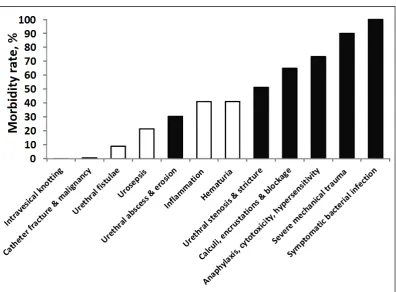
Fig. 1 Morbidity rate (%) of common complications arising from urinary catheterization procedures. Filled and unfilled bars indicate complications which are directly related and indirectly related to mechanical interaction or trauma between the urethra and the urinary catheter, respectively.
Figure 1 is a plot showing the morbidity rate (%) associated with the occurrence of twelve
common urinary catheterization complications. The filled and unfilled bars correspond to the
complications which are directly related and indirectly related to mechanical trauma or interaction
associated with urinary catheterization, respectively. The figure shows that the most common
urinary catheterization complications are symptomatic bacterial infection (100%), severe
mechanical trauma (90%) and anaphylaxis, cytotoxicity and hypersensitivity (80%). The least
morbid complications are intravesical knotting (0.0002%), catheter fracture and malignancy
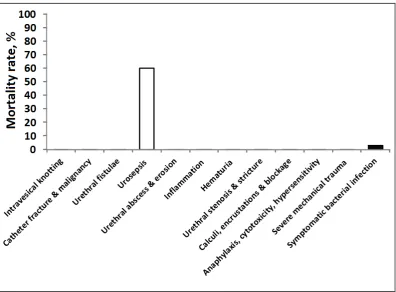
[image:7.595.129.526.95.387.2]Fig. 2 Mortality rate (%) of major complications arising from urinary catheterization procedures. Filled and unfilled bars indicate complications which are directly related and indirectly related to mechanical interaction and trauma between the urethra and the urinary catheter, respectively.
Figure 2 is a plot showing the mortality rate (%) associated with the occurrence of twelve common
urinary catheterization complications. The filled and unfilled bars correspond to the complications
which are directly related and indirectly related to mechanical trauma and interaction associated
with urinary catheterization, respectively. The most fatal urinary catheterization complications are
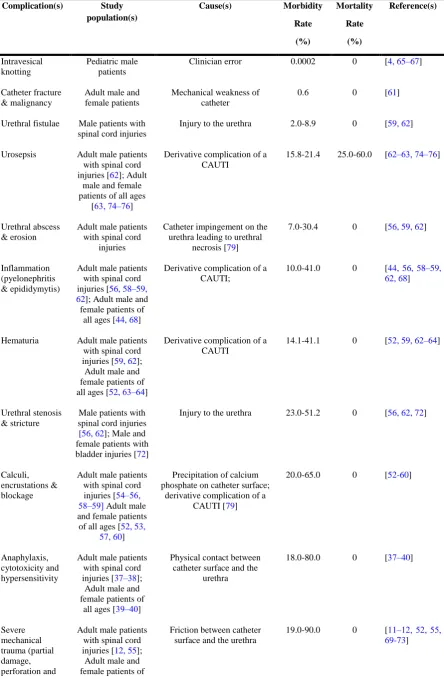
[image:8.595.129.526.68.360.2]Table 1 Summary of urinary catheter complication morbidity and mortality rates.
Complication(s) Study population(s)
Cause(s) Morbidity
Rate (%) Mortality Rate (%) Reference(s) Intravesical knotting Pediatric male patients
Clinician error 0.0002 0 [4, 65 67]
Catheter fracture & malignancy
Adult male and female patients
Mechanical weakness of catheter
0.6 0 [61]
Urethral fistulae Male patients with spinal cord injuries
Injury to the urethra 2.0-8.9 0 [59, 62]
Urosepsis Adult male patients with spinal cord injuries [62]; Adult
male and female patients of all ages
[63, 74 76]
Derivative complication of a CAUTI
15.8-21.4 25.0-60.0 [62 63, 74 76]
Urethral abscess & erosion
Adult male patients with spinal cord
injuries
Catheter impingement on the urethra leading to urethral
necrosis [79]
7.0-30.4 0 [56, 59, 62]
Inflammation (pyelonephritis & epididymytis)
Adult male patients with spinal cord injuries[56, 58 59, 62];Adult male and female patients of
all ages[44, 68]
Derivative complication of a CAUTI;
10.0-41.0 0 [44, 56, 58 59, 62, 68]
Hematuria Adult male patients with spinal cord injuries [59, 62]; Adult male and female patients of all ages [52, 63 64]
Derivative complication of a CAUTI
14.1-41.1 0 [52, 59, 62 64]
Urethral stenosis & stricture
Male patients with spinal cord injuries
[56, 62];Male and female patients with bladder injuries[72]
Injury to the urethra 23.0-51.2 0 [56, 62, 72]
Calculi, encrustations & blockage
Adult male patients with spinal cord injuries [54 56, 58 59] Adult male and female patients of all ages [52, 53,
57, 60]
Precipitation of calcium phosphate on catheter surface;
derivative complication of a CAUTI [79]
20.0-65.0 0 [52-60]
Anaphylaxis, cytotoxicity and hypersensitivity
Adult male patients with spinal cord injuries [37 38]; Adult male and female patients of
all ages [39 40]
Physical contact between catheter surface and the
urethra
18.0-80.0 0 [37 40]
urinary leakage) all ages [11,52, 69-72]; Elderly adult
male and female patients [73]
Symptomatic bacterial infection (CAUTI)
Adult male and female patients of all ages [19, 41 42,
44, 49 51, 57]; Elderly adult male and female patients
[43, 45 48]
Introduction of uropathogens into the urinary tract via the catheter surface [80]; bacterial
adherence to catheter surface leading to biofilm formation
[80 81]; injury to the protective uroepithelial mucosa creating new bacterial
binding sites [82 83].
90.0-100.0a 3.1 (21.0b) [19, 41 51, 57]
a
For indwelling catheters after 30 days.
b Klevens et al. (2007) [48] report a 21.0% mortality rate in elderly patients only.
4 Discussion
The morbidity data presented in Fig. 1 and Table 1 provide many valuable insights into
urinary catheter complications and how they are related to various aspects of catheter design (i.e.,
material composition, coatings, catheter shape and physical properties). In particular, Fig. 1
highlights the fact that, including symptomatic bacterial infection, the five most common urinary
catheter complications (with > 45% morbidity) are caused by the mechanical interaction (i.e.,
physical contact) between the catheter and the urethra. This is important since it emphasizes the
key role that catheter design plays in the occurrence and aggravation of complications during
urinary catheterization. Moreover, the figure reveals that severe mechanical trauma (i.e., partial
damage, perforation and urinary leakage), which is strongly correlated with patient discomfort and
increased risk factors for other urinary complications, occurs in as many as 90% of urinary
catheterization procedures. This is consistent with expectation since catheter insertion into the
urethra involves the generation of friction between the catheter and the urethra, which can lead to
the application of excessive forces that can injure the urinary tract. Furthermore, other
mechanically related damage including urethral stenosis and stricture, as well as urethral abscess
and erosion occur very frequently (in more than 30% of catheterization procedures). Taken
together this suggests that there is a strong need for urinary catheter design to be improved to
minimize mechanical damage to the urinary tract and to enhance patient comfort.
It is also imperative to discuss the high morbidity (100% after 30 days) of symptomatic
bacterial infection during urinary catheterization. Several complications with high morbidity rates
tract infections (CAUTIs). This finding highlights not only the ubiquity of urinary catheter
associated bacterial infection, but also the indirect, yet significant role played by mechanical
(tribological) interactions (which contribute to the initiation of CAUTIs), in the morbidity of
several common urinary catheter complications. Although considerable research effort has been
applied over the past 30 years towards reducing CAUTIs during long term catheterization by the
application of antibacterial catheter coatings, this finding underscores the need for further research
to be undertaken to develop catheter coatings which can maintain their patency for extended
periods of time (>30 days). Urinary catheters with enhanced bacterial resistance would greatly
reduce the morbidity (i.e., prevalence) associated with CAUTIS as well as several other derivative
complications such as urosepsis.
Consideration of Figure 2 indicates that most urinary catheter complications are non-fatal.
This is consistent with expectation since mortality is generally not considered a major risk from
urinary catheterization except in elderly patient populations [43]. It is therefore, very striking to
note the very high mortality rate (25-60%) reported for patients suffering from urosepsis; which is
a complication that is aggravated by the mechanical interaction between the urethra and the
urinary catheter [83]. However, this high mortality rate can be explained by the fact that urospesis
is a systemic inflammatory response to a urinary tract infection that has spread to the bloodstream
[84]. It is therefore a derivative complication of an initial CAUTI. Since CAUTIs, have a
morbidity of 100% (after 30 days), it can be inferred that if the prevalence of CAUTIs is reduced
through improved catheter design (in particular enhanced antibacterial coatings) and better clinical
management, this will likely also significantly reduce the morbidity and overall mortality rate (i.e.,
the morbidity multiplied by the mortality rate) of urosepsis.
From tribology principles it is known that mechanical (i.e., friction) forces govern the friction
behavior and damage occurring on surfaces. Depending on the tribological system in question,
different friction mechanisms can be active, such as mechanical ploughing, adhesion, deformation
(hysteresis) and (elasto-) hydrodynamic friction [85]. Under non-hydrodynamic lubrication
conditions, with relatively smooth surfaces sliding against very soft surfaces that are capable of
significant deformation at the micro-scale, adhesion friction dominates. This is known to be the
relatively soft urethral tissue may help to reduce tissue damage and discomfort caused during
catheter insertion and removal.
The adhesion friction force, Ff(adh), is given by:
R i a dh
f
A
F
( )
(1)
where i is the Interfacial shear strength (N.m-2), i.e. shear strength of the interface between the
two surfaces; AR is the real area of contact (m2), i.e., the sum of individual contact areas at all
physical points of contact between the two surfaces.
Consideration of Eq. (1) clearly shows that by reducing either i or AR or both will result in a
lower adhesion friction force.
Reduction of the interfacial shear strength can be achieved through the use of coatings that
provide a lubricating effect. Hydrophilic coatings are typically applied for this purpose in
catheters. Such coatings interact with water to produce gel-like substances, providing a smooth
semi-solid surface that is easily sheared. If this shearing occurs within the coating, it will
necessarily lead to displacement and wearing of the coating material, which raises durability
issues.
Reduction of the real area of contact could in principle be achieved by applying an appropriate
surface topography or texture to the catheter surface. The catheter surface should be such that the
degree of deformation of the human tissue surface is not sufficient to result in full conformity,
under all usage conditions. However, care should be taken here to design the applied surface
topography or texture so that it does not result in higher friction through the ploughing mechanism
and increased tissue damage through abrasion.
Based on the above and the results as well as insights gained from Figures 1 and 2 the
following recommendations can be made as generic design directions to improve long and
short-term urinary catheters, especially with regards to reducing the detrimental effects of mechanical
interaction between the catheter and the urinary tract:
• A durable, lubricious, hydrophilic and antibacterial coating should be applied to the surface of
urinary catheters, to reduce the likelihood of severe urethral trauma by improving the ease of
insertion of the catheter into the urethra. Hydrophilic coatings capable of being combined with
antibacterial agents are currently under development [88], and have become commercially
hydrophilic-coated urinary catheters reduces the incidence of urethral strictures and fistulae [92]. However,
challenges still remain with regard to durability, since these coatings have been shown to wear
away with repeated use and also to become sticky if inserted over extended periods of time [93].
• Catheter coatings should be designed to maintain 95% of their antibacterial patency over a period
of at least 90 days (i.e., spanning the maximum duration of long term catheterization). This will
reduce the frequency of CAUTIs which will in turn diminish the likelihood of severe
complications such as urosepsis. Slow release antibacterial coatings show potential in this regard
[94 95], however, problems associated with the development of drug resistant bacteria still need to be overcome [35, 96].
• Manufacturers should eliminate the use of latex and any other anaphylactic or irritating materials
in the fabrication of urinary catheters in order to eradicate the problem of hypersensitivity and
anaphylaxis during urinary catheterization. This can be achieved by fabricating catheters from
materials such as silicone (polydimethylsiloxane), aromatic polyurethane and Teflon
(polytetrafluoroethylene). This can also be achieved by applying silicone and silver-hydrogel
coatings to catheters. These coatings have been clinically shown to cause less irritation [40, 72,
97]. However, some challenges remain since silicone catheters, for instance, are known to suffer from more rapid fluid loss than other types of catheters which increases the risk that the catheter is
dislodged after insertion [98].
• Catheter manufacturers should explore the use of slow release anti-inflammatory coatings (in
combination with antibacterial agents, lubricious behavior and hydrophilic properties) which can
suppress a patient’s inflammation response during long term catheterization and enhance patient
comfort.
• Urinary catheters should be designed to reduce the contact surface area (AR) between the catheter
and the urethra which may help to reduce discomfort caused by friction during insertion of the
urinary catheter. This can be achieved through the development of novel surface geometries which
minimize the contact area between the urethra and the catheter, while also maintaining appropriate
draining and flushing performance.
complications are symptomatic bacterial infection, severe mechanical trauma (perforation, partial
urethral damage and urinary leakage) and anaphylaxis, catheter toxicity and hypersensitivity. In
addition, it was found that the complications with the highest morbidity (with a morbidity of >
45%) are all strongly influenced and aggravated by the mechanical interaction of the catheter with
the urethra. This suggests that there is a strong need for urinary catheter design to be improved to
minimize mechanical interaction with the urethra, particularly mechanical damage to the urinary
tract, and to enhance patient comfort. Several generic urinary catheter design directions have been
proposed based on the insights gained from the data analysis and on tribological principles.
Among the key recommendations is that catheter manufacturers utilize catheter coatings which are
both hydrophilic and antibacterial, and which maintain their antibacterial patency for at least 90
days.
Abbreviations
CAUTI = catheter associated urinary tract infection
Fr = French gauge
PVC = polyvinylchloride
PTFE = polytetrafluoroethylene
References
1. Celsus AC. De Medicina (Spencer WG, trans). London: William Heinmann; Cambridge and Massachusetts: Harvard University Press; 425.
2. Desnos EC. The history of urology up to the latter half of the nineteenth century. In: Murphy LJT, ed. The history of urology. Springfield, Illinois: Charles C. Thomas; 1972. p. 152 5.
3. Bloom DA, McGuire EJ, Lapides J. A brief history of urethral catheterisation. J Urol. 1994;151:
317 25.
4. Ramnakrisnan K, Mold JW. Urinary catheters: A review. Inter J Family Prac. 2005;3(2):1 20.
5. Hazelett SE, Tsai M, Gareri M, Allen K. The association between indwelling urinary catheter use in the elderly and urinary tract infection in acute care. BMC Geriatrics. 2006;6:15 25.
6. Trautner BW, Darouiche RO. Catheter-associated infections: pathogenesis affects prevention. Arch Intern Med. 2004;164:842 50.
7. Cravens DD, Zweig S. Urinary catheter management. Am Fam Physician. 2000;61:369 76.
8. Warren JW. Catheter-associated urinary tract infections. Infect Dis Clin North Am.
1997;11 22.
9. Ouslander JG, Greengold B, Chen S. External catheter use and urinary tract infections among incontinent male nursing home patients. J Am Geriatr Soc. 1987;35:1063 70.
10. Blaivas JG, Holland NJ, Giesser B, LaRocca N, Madonna M, Scheinberg L. Multiple sclerosis bladder. Studies and care. Ann N Y Acad Sci. 1984;436:328 46.
11. Roe BH, Brocklehurst JC. Study of patients with indwelling catheters. J Adv Nurs. 1987;12:713 8.
12. Mohapatra RN. Urine leakage in persons with spinal cord injury and using long-term Foley
catheters: a simple solution. Spinal Cord. 2010;48:774 5.
13. Gammack JK. Use and management of chronic urinary catheters in long-term care: much controversy, little consensus. J Am Med Directors Assoc. 2002;3:162 8.
14. Kang SC, Hsu NW, Tang GJ, Hwang SJ. Impact of urinary catheterization on geriatric inpatients with community-acquired urinary tract infections. J Chin Med Assoc. 2007;70:236 40.
15. Pomfret IJ. Catheters: design, selection and management. Br J Nurs. 1996;5:245 51.
16. Robinson J. Urethral catheter selection. Nurs Stand. 2001;15:39 42.
17. Vilke GM, Ufberg JW, Harrigan RA, Chan TC. Evaluation and treatment of acute urinary retention. J Emerg Med. 2008;35:193 8.
18. Beiko DT, Knudsen BE, Watterson JD, Cadieux PA, Reid G, Denstedt JD. Urinary tract biomaterials. J Urol. 2004;171:2438 44.
20. Fong N, Poole-Warren LA, Simmons A. Development of sustained-release antibacterial urinary biomaterials through using an antimicrobial as an organic modifier in polyurethane nanocomposites. J Biomed Mater Res B Appl Biomater. 2013;101:310 9.
21. Liedberg H, Lundeberg T, Ekman P. Refinements in the coating of urethral catheters reduce the incidence of catheter-associated bacteriuria. Eur Urol. 1990;17:236 40.
22. Bologna RA, Tu LM, Polansky M, Fraimow HD, Gordon DA, Whitmore KE. Hydrogel/silver ion-coated urinary catheter reduces nosocomial urinary tract infection rates in intensive care unit patients: a multicenter study. Urology. 1999;54:982 7.
23. Pugach JL, DiTizio V, Mittelman MW, Bruce AW, DiCosmo F, Khoury AE. Antibiotic hydrogel
coated Foley catheters for prevention of urinary tract infection in a rabbit model. J Urol. 1999;162:883 7.
24. Richards CL, Hoffman KC, Bernhard JM, et al. Development and characterization of an infection inhibiting urinary catheter. ASAIO J. 2003;49:449 53.
25. Al-Habdan I, Sadat-Ali M, Corea JR, et al. Assessment of nosocomial urinary tract infections in orthopaedic patients: a prospective and comparative study using two different catheters. Int Surg. 2003;88:152 4.
26. Vapnek JM, Maynard FM, Kim J. A prospective randomized trial of the LoFric hydrophilic coated catheter versus conventional plastic catheter for clean intermittent catheterization. J Urol. 2003;169:994 8.
27. Chaiban G, Hanna H, Dvorak T, Raad I. A rapid method of impregnating endotracheal tubes and urinary catheters with gendine: a novel antiseptic agent. J Antimicrob Chemother. 2005;55:51 6.
28. Cottenden A, Bliss D, Fader M, et al. In: Abrams P, Cardozo L, Khoury S, et al. (eds), Incontinence, Health Publication Ltd.; 2005. p.1188 212.
29. Getliffe K. Managing Problems With Urinary Catheters. Euro Genitourinary Dis. 2007, 90 92.
30. Gray M. Does the construction material affect outcomes in long-term catheterization? J Wound, Ostomy & Continence Nurs. 2006;33(2):116 21.
31. Johnson JR, Kuskowski MA, Wilt TJ. Systematic review: antimicrobial urinary catheters to prevent catheter-associated urinary tract infection in hospitalized patients. Ann Intern Med. 2006;144:116 26.
32. Estores IM, Olsen D, Gómez-Marin O. Silver hydrogel urinary catheters: evaluation of safety and efficacy in single patient with chronic spinal cord injury. J Rehabil Res Dev. 2008;45:135 9.
33. Hatt JK, Rather PN. Role of bacterial biofilms in urinary tract infections. Curr Top Microbiol Immunol. 2008;322:163 92.
34. Hachem R, Reitzel R, Borne A, Jiang Y, Tinkey P, Uthamanthil R, Chandra J, Ghannoum M, Raad I. Novel antiseptic urinary catheters for prevention of urinary tract infections: correlation of
in vivo and in vitro test results. Antimicrob Agents Chemother. 2009;53:5145 9.
36. Krane LS, Gorbachinsky I, Sirintrapun J, Yoo JJ, Atala A, Hodges SJ. Halofuginone-coated urethral catheters prevent periurethral spongiofibrosis in a rat model of urethral injury. J Endourol. 2011;25:107 12.
37. Monasterio EA. Latex allergy in adults with spinal cord injury: a pilot investigation. The J Spinal Cord Med. 2000;23:6 9.
38. Garabrant DH, Schweitzer S. Epidemiology of latex sensitization and allergies in health care workers. J Allergy Clin Immunol. 2002;110:S82 S95.
39. Achmetov T, Gray M. Adverse reactions to latex in the clinical setting: A urologic perspective.
Inf Control Res. 2003;2:4 6.
40. Huang WY, Wei LP, Ji YG, Xu DX, Mo JK. Effect of silicon and latex urinary catheters: a
comparative study. Di Yi Jun Yi Da Xue Xue Bao. 2005;25:1026 8.
41. Platt R, Polk BF, Murdock B, Rosner B. Reduction of mortality associated with nosocomial urinary tract infection. Lancet. 1983;23:1:893 7.
42. Rudman D, Hontanosas A, Cohen Z, Mattson DE. Clinical correlates of bacteremia in a Veterans Administration extended care facility. J Am Geriatr Soc. 1988;36:726 32.
43. Kunin CM, Douthitt S, Dancing J, Anderson J, Moeschberger M. The association between the use of urinary catheters and morbidity and mortality among elderly patients in nursing homes. Am J Epidemiol. 1992;135:291 301.
44. Stickler DJ, Zimakoff J. Complications of urinary tract infections associated with devices used for long-term bladder management. J Hosp Infect. 1994;28:177 94.
45. Nicolle LE. The chronic indwelling catheter and urinary infection in long-term-care facility residents. Infect Control Hosp Epidemiol. 2001;22:316 21.
46. Nicolle LE. Catheter-related urinary tract infection. Drugs Aging. 2005;22:627 39.
47. Nicolle LE. Urinary tract infections in the elderly. Clin Geriatr Med. 2009;25:423 36.
48. Klevens RM, Edwards JR, Richards CL Jr, Horan TC, Gaynes RP, Pollock DA, Cardo DM. Estimating health care-associated infections and deaths in U.S. hospitals, 2002. Public Health Rep.
2007;122:160 6.
49. Esposito S, Noviello S, Leone S. Catheter-associated urinary tract infections: epidemiology and prevention. Infez Med. 2008;16:130 43.
50. Tambyah PA, Oon J. Catheter-associated urinary tract infection. Curr Opin Infect Dis. 2012;25:365 70.
51. Temiz E, Piskin N, Aydemir H, Oztoprak N, Akduman D, Celebi G, Kokturk F. Factors associated with catheter-associated urinary tract infections and the effects of other concomitant nosocomial infections in intensive care units. Scand J Infect Dis. 2012;44:344 9.
54. Mitsui T, Minami K, Furuno T, et al. Is suprapubic cystostomy an optimal urinary management in high quadriplegics? A comparative study of suprapubic cystostomy and clean intermittent catheterization. Eur Urol. 2000;38:434 8.
55. Nomura S, Ishido T, Teranishi J, Makiyama K. Long-term analysis of suprapubic cystostomy drainage in patients with neurogenic bladder. Urol Int. 2000;65:185 9.
56. Weld KJ, Dmochowski RR. Effect of bladder management on urological complications in spinal cord injured patients. J Urol. 2000;163:768 72.
57. Choong S, Wood S, Fry C, Whitfield H. Catheter associated urinary tract infection and
encrustation. Int J Antimicrob Agents. 2001;17:305 10.
58. Ku JH, Choi WJ, Lee KY, et al. Complications of the upper urinary tract in patients with spinal
cord injury: A long-term follow-up study. Urol Res. 2005;33:435 9.
59. Katsumi HK, Kalisvaart JF, Ronningen LD, et al. Urethral versus suprapubic catheter: Choosing the best bladder management for male spinal cord injury patients with indwelling catheters. Spinal Cord. 2010;48:325 9.
60. Stickler DJ, Feneley RC. The encrustation and blockage of long-term indwelling bladder catheters: a way forward in prevention and control. Spinal Cord. 2010;48:784 90.
61. Smedley FH, Rimmer J, Taube M, Edwards L. 168 double J (pigtail) ureteric catheter insertions: a retrospective review. Ann R Coll Surg Engl. 1988;70:377 9.
62. Larsen LD, Chamberlin DA, Khonsari F, Ahlering TE. Retrospective analysis of urologic complications in male patients with spinal cord injury managed with and without indwelling urinary catheters. Urology. 1997;50:418 22.
63. Rosser CJ, Bare RL, Meredith JW. Urinary tract infections in the critical ill patient with a urinary catheter. Am J Surg. 1999;177:287 90.
64. Madigan E, Neff DF. Care of patients with long-term indwelling urinary catheters. Online J
Issues Nurs. 2003;8:7.
65. Foster H, Ritchey M, Bloom D. Adventitious knots in urethral catheters: report of 5 cases. J
Urol. 1992;148:1496 8.
66. Arena B, McGillivray D, Dougherty G. Urethral catheter knotting: Be aware and minimize the
risk. CJEM. 2002;4:108 10.
67. Sarin YL. Spontaneous intravesical knotting of urethral catheter. APSP J Case Rep. 2011;2:21.
68. Turi MH, Hanif S, Fasih Q, Shaikh MA. Proportion of complications in patients practicing clean intermittent self-catheterization (CISC) vs indwelling catheter. J Pak Med Assoc. 2006;56:401 4.
69. Mitchell JP. Injuries of the urethra. Br J Urol. 1968;40:649 70.
70. McAnich JW. Traumatic injuries to the urethra. J Trauma. 1981;21:291 7.
72. Sandler CM, Goldman SM, Kawashima A. Lower urinary tract trauma. World J Urol. 1998;16:69 75.
72. Le Guillou M, Pariente JL, Ferriere JM, Maire J, Bouker A, Hostyn B. Therapeutic strategy apropos of 122 cases of early disclosed traumatic rupture of the urethra. Chirurgie. 1996;121:367 71.
73. Ziemann LK, Lastauskas NM, Ambrosini G. Incidence of leakage from indwelling urinary catheters in homebound patients. Home Healthc Nurse. 1984;2:22 6.
74. Bone RC, C Bone-Larson. Gram-negative urinary tract infections and the development of SIRS.
J Crit Ill. 1996;11(suppl):S20 S29.
75. Leone M, Albanèse J, Garnier F, Sapin C, Barrau K, Bimar MC, Martin C. Risk factors of
nosocomial catheter-associated urinary tract infection in a polyvalent intensive care unit. Intensive Care Med. 2003;29:1077 80.
76. Leone M, Albanèse J, Garnier F, Sapin C, Barrau K, Bimar MC, Martin C. Risk factors of nosocomial catheter-associated urinary tract infection in a polyvalent intensive care unit. Intensive Care Med. 2003;29:929 32.
77. Holroyd-Leduc JM, Sands LP, Counsell SR, Palmer RM, Kresevic DM, Landefeld CS. Risk factors for indwelling urinary catheterization among older hospitalized patients without a specific medical indication for catheterization. J Pat Safe. 2005;1:201 7.
78. Briongos-Figuero LS, Traveso T, Bachiller-Luque P, Domínguez-Gil González M, Gómez-Nieto A, Palacios-Martín T, González-Sagrado M, Dueñas-Laita A, Pérez-Castrillón JL. Epidemiology, risk factors and comorbidity for urinary tract infections caused by extended-spectrum beta-lactamase (ESBL)-producing enterobacteria. Int J Clin Pract. 2012;66:891 6.
79. Dalton JR, Bergquist EJ. Urinary tract infections. Sheridan Medical Books, New York; 1987. p. 195 6.
80. Jacobsen SM, Stickler DJ, Mobley HL, Shirtliff ME. Complicated catheter-associated urinary tract infections due to Escherichia coli and Proteus mirabilis. Clin Microbiol Rev. 2008;21:26 59.
81. Feneley RC, Kunin CM, Stickler DJ. An indwelling urinary catheter for the 21st century. BJU Int. 2012;109:1746 9.
82. Garibaldi RA, Burke JP, Britt MR, Miller MA, Smith CB. Meatal colonization and catheter-associated bacteriuria. N Engl J Med. 1980;303:316 8.
83. Kunin CM. Catheter-associated urinary tract infections: a syllogism compounded by a questionable dichotomy. Clin Infect Dis. 2009;48:1189 90.
84. Kalra OP, Raizada A. Management issues in urinary tract infections. J Gen Med. 2006;18:16 22.
85. Matthews A, Holmberg K. Coatings tribology: properties, mechanisms, techniques and applications in surface engineering, 2nd Ed., Elsevier, New York; 2009. p. 47 66.
87. Kwiatkowska M, Franklin SE, Hendriks CP, Kwiatkowski K. Friction and deformation behaviour of human skin. Wear. 2009;267:1264 73.
88. Ahmed N, Al-Lamee K. A hydrophilic technology for intermittent urinary catheters. Med Device Technol. 2008;19:17 9.
89. DSM Biomedical Inc. Berkeley, CA. ComfortCoat® Coatings. 2012 Brochure.
http://www.medicaldevice-network.com/contractors/biotechnology/dsm1. Accessed 14 Feb 2013.
90. R M C S MN M A H
Intermittent Catheter Brochure. 2011.
http://www.rocm.com/index.php/products/details/personal_catheters_advantages. Accessed 14 Feb 2013.
91. AST Products Inc. Billerica, MA. LubriLAST-K L A H C 2013. http://www.astp.com/medical-coating/repelacoat-anti-microbial-coating. Accessed 14 Feb 2013.
92. Waller L, Jonsson O, Norlen L, Sullivan L. Clean intermittent catheterization in spinal cord injury patients: long-term follow-up of a hydrophilic low friction technique. J Urol. 1995;153:345 8.
93. Vaidyanathan S, Krishnan KR, Soni BM, Fraser MH. Unusual complications of intermittent self-catheterisation in spinal cord injury patients. Spinal Cord. 1996;34:745 7.
94. Rochester Medical Corporation. Stewartville, MN. StrataNF Product Brochure. 2009.
http://www.rocm.com/index.php/products/details/stratanf_advantages. Accessed 14 Feb 2013.
95. Regev-Shoshani G, Ko M, Miller C, Av-Gay Y. Slow release of nitric oxide from charged catheters and its effect on biofilm formation by Escherichia coli. Antimicrob Agents Chemother. 2010;54:273 9.
96. Tambyah PA. 2004. Catheter-associated urinary tract infections: diagnosis and prophylaxis. Int J Antimicrob Agents. 2004;24(Suppl. 1):S44 S48.
97. Nacey JN, Delahunt B. Toxicity study of first and second generation hydrogel-coated latex urinary catheters. Br J Urol. 1991;67:314 6.