1
Ongoing activities to optimize the quality and efficiency of lipid-lowering agents in the Scottish National Health System: influence and implicationsAxel Leporowski1, *Brian Godman2,3,4,5, Amanj Kurdi2,6, Sean MacBride-Stewart7, Margaret Ryan7, Simon Hurding8, Renata CRM do Nascimento2,9,10, Marion Bennie2, Alec Morton1
1Department of Management Science, Strathclyde Business School, University of Strathclyde, Glasgow, United Kingdom.
2Strathclyde Institute of Pharmacy and Biomedicial Sciences, University of Strathclyde, Glasgow, United Kingdom. [email protected]; [email protected] 3Division of Clinical Pharmacology, Karolinska, Karolinska Institutet, Stockholm, Sweden. 4School of Pharmaceutical Sciences, Universiti Sains Malaysia, Penang, Malaysia
5Department of Public Health Pharmacy and Management, School of Pharmacy, Sefako Makgatho Health Sciences University, Garankuwa, South Africa
6Department of pharmacology, College of Pharmacy, Hawler Medical University, Erbil, Iraq 7National Health Service Greater Glasgow and Clyde (NHS GGC).
8NHS Scotland
9Post-Graduate Program of Medicines and Pharmaceutical Assistance, School of Pharmacy, Federal University of Minas Gerais (UFMG), Belo Horizonte, Minas Gerais, Brazil
10SUS Collaborating Centre for Technology Assessment and Excellence in Health (CCATES), School of Pharmacy, Federal University of Minas Gerais, Brazil
*Author for correspondence: Brian Godman, Strathclyde Institute of Pharmacy and Biomedical Sciences, University of Strathclyde, Glasgow G4 0RE, United Kingdom. Email:
[email protected]. Telephone: 0141 548 3825. Fax: 0141 552 2562 and Division of Clinical Pharmacology, Karolinska Institute, Karolinska University Hospital Huddinge, SE-141 86, Stockholm, Sweden. Email: [email protected]. Telephone + 46 8 58581068. Fax + 46 8 59581070
Keywords: Lipid lowering agents, Scottish NHS, expenditure, reforms, drug utilisation
(Accepted for publication Expert Review Pharmacoeconomics and Outcomes Research – Please keep CONFIDENTIAL)
Abstract
Introduction and aims: Prescribing of lipid lowering agents (LLAs) has increased worldwide including in Scotland with increasing prevalence of coronary heart disease, and higher dose statins have been advocated in recent years. There have also been initiatives to encourage prescribing of generic versus patented statins to save costs without compromising care. There is a need to document these
initiatives and outcomes to provide future direction. Method: Assessment of utilization (items
dispensed) and expenditure of key LLAs (mainly statins) and expenditure between 2001 and 2015 in Scotland alongside initiatives. Results: Multiple interventions have increased international non-proprietary name (INN) prescribing (99% for statins) and preferential prescribing of generic versus patented statins, and reduced inappropriate prescribing of ezetimibe. This resulted in a 50% reduction in LLA expenditure between 2001 and 2015 despite a 412% increase in utilization, increased
prescribing of higher dose statins (71% in 2015) especially atorvastatin following generic availability, and reduced prescribing of ezetimibe (reduced by 72% between 2010 and 2015). As a result, the quality of prescribing has improved. Conclusion: Generic availability coupled with multiple measures has resulted in appreciable shifts in statin prescribing behavior and reducing ezetimibe prescribing, resulting in improvements in both the quality and efficiency of prescribing.
1. Introduction
2
Currently over half the adults in the UK have raised cholesterol (>5mmol/ l) (13). As a result, many patients are at risk of developing coronary heart disease (CHD), cerebrovascular disease, and peripheral vascular disease unless adequately treated (14). Studies have shown that patients with dyslipidemias benefit from an intensive treatment with lipid lowering therapies for both primary, secondary and tertiary prevention of cardiovascular disease (15-17). The National Health Service (NHS) of Scotland, which provides universal healthcare for its citizens including no co-payment for medicines, spent over GB£23 million in 2015 alone on LLAs, with the objective of decreasingcardiovascular morbidity and mortality among its population. This represented just over 2% of the total budget for medicines and appliances dispensed in 2015 at GB£1017.6billion (18).
To maximize the cost-effectiveness of using LLAs in the face of continuing resource pressures associated with changing demographics and funding new premium priced medicines, the Scottish government combined with the Health Boards have introduced a range of measures to enhance prescribing efficiency. Scotland currently has 14 Health Boards with devolved budgets that manage patients within their region. Ongoing initiatives include promoting international non-proprietary (INN) prescribing starting in medical schools and continued in practice-settings with education and IT support systems (19, 20). This is particularly important in the UK as pharmacists are not allowed to substitute an originator for a generic if the physician prescribes the originator (21). This is unlike Sweden where there is compulsory generic substitution and Lithuania where there is compulsory INN prescribing (22, 23). Acceptance of INN prescribing in the UK in this situation is facilitated by studies showing no difference in effectiveness between generic and originator statins (24, 25). However, we are aware that there are still European countries where physicians have concerns with generics (26-29). Potential savings in the UK from generic statins are enhanced by prices as low as 3% of pre-patent loss originator prices (19, 20). Low prices for generics in the UK are aided by the introduction of the ‘M’ and ‘W’ scheme (Manufacturer and Wholesaler) in April 2005. The scheme was introduced to enhance transparency in the prices of generics, including any rebates, and is based on quarterly surveys of transaction prices between manufacturers, wholesalers, and pharmacists in the UK (19). Prior to this, prices of generics were less transparent with generic manufacturers offering discounts up to 80% or more on their list prices to community pharmacists to increase their volumes (19), with the NHS typically paying the full list price. Other activities include measures to enhance the prescribing of low cost generic statins first line once available rather than appreciably higher cost patented statins, with all statins initially seen as similar at therapeutic doses (20). These combined measures have resulted in considerable savings (20). This is different to countries where there have been limited demand side measures to encourage the prescribing of generic statins first line, which have resulted in expenditure on statins up to ten times greater when adjusted for population size (30). Switching to preferentially prescribing generic statins has not compromised care (31-33). A similar situation has also been seen in other product classes across Europe including the proton pump inhibitors and the renin-angiotensin inhibitors (30, 34, 35).
Recent initiatives in Scotland to improve the quality of prescribing include advocating the prescribing of higher doses of statins. This is based on recommendations to physicians from SIGN (Scottish
Intercollegiate Guidelines Network), which is the national guidelines group in Scotland, to prescribe higher dose statins, e.g. 40mg simvastatin, following publications such as the Heart Protection Study (10, 20). In addition, the instigation of quality standards, the Quality and Outcome Framework (QoF), linked with financial incentives to meet agreed quality targets, with data collated by ISD in Scotland (19, 20, 36). The quality target goals included the following for patients with hypercholerterolaemia; (i) the percentage of patients with CHD whose last measured total cholesterol (measured in the last 15 months) is 5mmol/l or less; (ii) the percentage of patients with a TIA or stroke whose last measured total cholesterol (measured in the last 15 months) is 5mmol/l or less and (iii) the percentage of patients with diabetes whose last measured total cholesterol within previous 15 months is 5 or less (19, 20). More recently in Scotland high dose statins, e.g. 80mg atorvastatin, have been advocated in patients with establish coronary vascular disease (37). High dose atorvastatin is increasingly advocated because of safety concerns with high dose simvastatin, enhanced by generic atorvastatin availability (11).
We wish to add to our original research following the availability of generic atorvastatin, greater endorsement of the prescribing of high dose statins as well as growing concerns with the
appropriateness of prescribing of ezetimibe due to issues with its effectiveness in reducing cardiac events compared with statins (38-41). We are aware that studies have been published advocating the prescribing of higher dose statins; however, we are unaware of European countries formally
3
publications as seen in the UK. As a result even in Stockholm County Council, Sweden, withconsiderable activities to enhance the quality and efficiency of prescribing in ambulatory care,
including financial incentives for GPs (23, 42-44), the average dispensed dose of simvastatin was only 20.4mg in 2008, with 35% of prescriptions as 10mg and only 25% as higher strength simvastatin (20). In addition, only a limited number of European countries have introduced initiatives to enhance
appropriate prescribing of ezetimibe (41).
In this paper, we will ascertain the effects of ongoing activities among the Health Boards in Scotland to improve efficient prescribing of LLAs to take advantage of the availability of generic atorvastatin and simvastatin. Our analysis will shed light on both the scale of the potential patient benefit which can be realized through the use of LLAs as well as the influence of changing prices on the prescribing mix. We are aware that there have been many published studies that have investigated the influence of different approaches either singly such as prescribing restrictions or combined initiatives across Europe to enhance the prescribing of generic versus patented LLAs (7, 30, 35, 45-50). However, we believe this is the first time that such a comprehensive analysis has been undertaken in a European country combining multiple initiatives to improve both the quality and efficiency of prescribing of LLAs.
This builds on our previous publications regarding policies to influence the prescribing generic statins in Scotland (20, 34).
2. Methodology
2.1 Uilisation and expenditure data
To evaluate the utilisation and prescribing patterns of LLA in Scotland, the prescription costs analysis (PCA) database compiled by the Information Services Division (ISD) of NHS Scotland was analysed from 2001 to 2015 (18). NHS Scotland is a universal service which serves the entire resident population of Scotland (20). There is currently no co-payment for medicines in Scotland.
PCA contains information on all prescriptions being dispensed in the community setting in Scotland. Only drugs categorized as “Lipid-Regulating Drugs” by the British National Formulary (BNF)
(https://www.bnf.org/products/bnf-online/), and which were simultaneously dispensed by NHS
Scotland, were considered initially to be eligible for inclusion in this study. Many studies have shown that statins and inhibitors of the cholesterol-absorption are more effective, safe, and better tolerated, in comparison to other classes of LLAs (9, 10, 51-53), and the prescribing of bile acid sequestrants, fibrates, derivatives of nicotinic acid, derivatives of niacin, and derivatives of omega-3 fatty acids, have greatly reduced in the past decades. As a result, these classes of LLAs were not included in this study. Furthermore, in 2015, this group of LLAs represented just 1.6% of total LLA units dispensed by the Scottish NHS.
Between 2001 and 2015, the Scottish NHS made 16 different types of LLAs available to be
prescribed; however, because of the aforementioned reasons, only seven LLAs are included in this study. They comprise five different statins, i.e. atorvastatin, rosuvastatin, pravastatin, simvastatin and fluvastatin, one selective cholesterol-absorption inhibitor (ezetimibe) and one combination product (simvastatin/ezetimibe).
From each medicine included in this study, the following information was extracted from the PCA between 2001 and 2015: generic name, commercial name(s), formulation(s), drug strength(s), number of dispensed units, cost per unit and total gross expenditure. All costs are depicted in Great Britain pounds (GB£s). No adjustment for inflation for the prices was made. This is in line with previous studies, due to the rapid reduction in prices once statins became available as generics (20, 30, 34).
4
For each LLA and year, the total costs, items dispensed and expenditure proportion they represent to the NHS were calculated. In addition, a sub-analysis of the prescription costs for generic and patented presentations of each LLA was estimated. This information was plotted over time in years, and used to compare all generics and originators of one particular LLA. The date at which the each LLA became generically available in Scotland was obtained from an internal NHS database. In addition to the loss of patent, other interventions were considered and analyzed. We did not adjust prices according to inflation as the tendency is for medicine prices to appreciably reduce rather than increase, especially once generics are available. This is similar to previous published analyses assessing the influence of policies to encourage the prescribing of low cost generics versus patented statins (7, 19, 20, 30, 41, 49, 50).2.2 Demand-side measures
Accordingly, the ongoing activities within the Health Boards and NHS Scotland to improve the efficiency of LLA prescribing were collated using the 4E methodology, building on previous findings: Education, Engineering, Economics and Enforcement (20, 34, 56). Education refers to initiatives such as guidelines and academic detailing; engineering refers to organizational or managerial interventions such as prescribing indicators; economics to financial incentives for prescription; and enforcement refers to regulations from health authorities (34, 56). NHS Scotland initiatives incorporate both
education including SIGN guidelines for patients with coronary vascular diseases including diabetes as well as national prescribing indicators including the percentage of statins prescribed as generics versus patented statins, the extent of prescribing of ezetimibe versus other LLAs as well as lipid level targets for patients with hypercholesterolaemia (20, 37, 54) (Table 2, Figure 2).
We did not undertake any time-series analyses as multiple interventions inter-linked activities were undertaken at different times both nationally and regionally between 2001 and 2015. Consequently, it was impossible to select just one intervention or interventions to concentrate on at one time point to the exclusion of others.
3. Results
3.1 Generic availability of LLAs
[image:4.595.74.464.529.763.2]Of the 7 different types of LLAs that were included in this study, none were generically available in 2001. Furthermore 27 different formulations and strengths of all LLAs (including generic and patented) were available at NHS Scotland in the year 2001. By 2015, 4 out of 7 (57.1%) LLAs were generically available and the availability of different formulations and strengths had doubled, with 56 different combinations (Table 1).
Table 1 - Lipid lowering agents included in this study and patent expiration date in Scotland from 2001 to 2015
Generic Name Commercial Name Formulations and Number of Strengths
Year of patent expiration
Atorvastatin Lipitor® 14 2012
Ezetimibe Ezetrol® 2 2017
Ezetimibe/simvastatin Inegy® 3 2019
Fluvastatin
Dorosin XL®
9 2008
Lescol® Luvinista PR® Pinmactil MR®
Pravastatin Lipostat® 6 2004
Rosuvastatin Crestor® 8 2017
Simvastatin
Simvador®
14 2003
Ranzolont® Zocor®
5
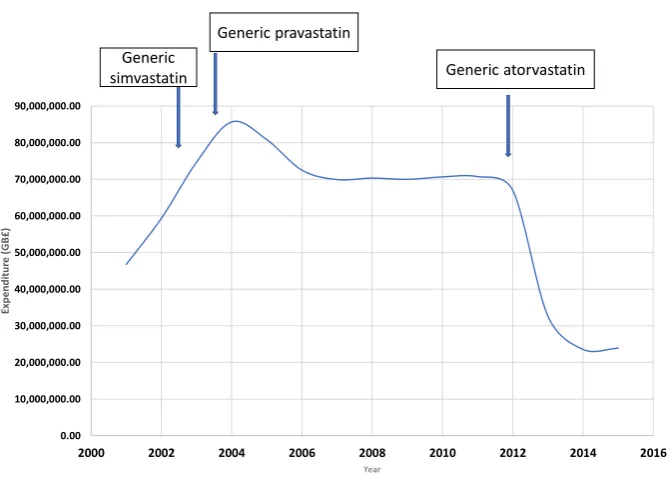
3.2 Total utilisation and expenditure [image:5.595.139.473.211.456.2]A steady increase in the number of total items dispensed was observed between 2001 and 2015 for the seven LLAs of interest. 1.212 million items were dispensed in 2001 with an associated cost of GB£43.39 million, rising to 4.99 million units in 2015 at a cost of GB£21.77 million. This represents an increase of 412.1% in the prescription rate but a decrease of 50.2% in overall costs during the past 14 years due to increasing use of low cost generics. In 2001, LLA expenditure represented 6.82% of the total NHS budget for medications, but by 2015, this was reduced to 2.34% enhanced by generic availability (Figure 1).
Figure 1 - Total expenditure of selected LLAs between 2001 and 2015
Even though the loss of patents has a meaningful impact on the prescription rate (items dispensed) and the costs associated with it, they do not constitute the only explanations for the trends observed with LLAs in Scotland.
3.3 Demand-side measures
Multiple reforms and initiatives were introduced in the UK to enhance the prescription and use of low-cost generic drugs. As mentioned, the introduction of the “M” (manufacturer) and “W” (wholesaler) scheme in April 2005 led to an average reduction of 32.4% in the prices of generics (19, 34, 57, 58), with prices falling still further. The inclusion of lipid level targets in the Quality and Outcomes (QoF) Framework since 2003 (target of <5 mmol/l) (20, 59), and the development of the Scottish
Intercollegiate Guidelines Network (SIGN Guideline) (60) for the risk estimation and the prevention of CVD, which advocated high doses of simvastatin (40 mg/day) in adults with high risk for a
cardiovascular event, led to an increase in their prescribing and doses. Table 2 contains a summary of measures that were introduced in Scotland by the Health Boards and nationally since 2001 to increase and efficiently use LLAs while simultaneously reducing costs over the years, with Figure 2 providing a timeline of major events.
0.00 10,000,000.00 20,000,000.00 30,000,000.00 40,000,000.00 50,000,000.00 60,000,000.00 70,000,000.00 80,000,000.00 90,000,000.00
2000 2002 2004 2006 2008 2010 2012 2014 2016
Exp
e
n
d
it
u
re
(
G
B
£)
Year
Generic simvastatin
Generic pravastatin
6
Table 2 - Summary of principal demand-side measures introduced in Scotland between 2001 and 2015 that influenced the consumption of lipid lowering agents [Adapted from (20, 30, 34, 54, 59-67)]Measure Year National or
Regional Initiative
Education
2001 -
2007 National and Regional
Physicians typically trained in medical school to prescribe by INN name with follow up in the community coupled with IT systems to enhance INN prescribing
National guidance and guidelines (SIGN) for primary and secondary prevention with statins including patients with diabetes, with higher doses of statins (e.g. 40mg simvastatin) advocated
Regional formularies statins such as the Lothian and Greater Glasgow formularies advocating generic simvastatin (40mg generic simvastatin)
General monitoring of prescribing, benchmarking and academic detailing to enhance appropriate statin prescribing
2011 Regional (NHS Highland)
Educational initiatives encouraging the switching of atorvastatin to simvastatin where applicable
2012 Regional (GGC)
Educational initiatives advocating that ezetimibe should only be prescribed by specialists when cholesterol targets are not reached on maximal tolerated statins 2013 Regional
(GGC)
Educational initiatives outlining generic simvastatin is considered more cost-effective than generic atorvastatin or other LLAs, with atorvastatin recommended as second choice in patients not reaching target levels on 40mg/ day simvastatin
2013 Regional (GGC)
Educating physicians that pravastatin should only be prescribed in patients that are on other medicines that interact with either atorvastatin or simvastatin; otherwise encouraged to switch to atorvastatin and simvastatin as pravastatin is considered less potent
2014 National High dose atorvastatin (80mg) first choice for secondary prevention CHD Engineering 2001 - 2007 National and Regional
‚Better Care Better Value’ indicators to enhance the prescribing of low cost statins versus single sourced statins
Quality targets for statin prescribing as part of Audit Scotland in 2003
Quality and Outcome Framework targets including those for diabetes, hypertension, stroke and CHD
Therapeutic switching by Health Board pharmacists when working with GPs
2012 National Proportion of simvastatin, atorvastatin and pravastatin compared to total statins
Proportion of ezetimibe compared to total ezetimibe and statins
2012 Regional An audit of existing patients receiving ezetimibe and ezetimibe combination products should be carried out at baseline and as part of routine follow-up after an appropriate period to reduce its use
2012 Regional (GGC)
Screening of patients to identify those that can be successfully switched from ezetimibe to a statin
Screening of patients who can be successfully switched from rosuvastatin to either atorvastatin or simvastatin
Economics
2001 -
2007 National and Regional
Practice based financial incentive schemes for statins to encourage prescribing of generic statins especially simvastatin
Payment by result schemes around statins 2007 Regional
(GGC, NHS
7
Highland andothers)
Enforcement/ Engineering
2010 Regional Ezetimibe removed from Health Board formularies 2011 Regional West of Scotland Cardiac Prescribing Group issued an
action notice to NHS Scotland Boards advising them to disinvest completely from the prescribing of ezetimibe except for those patients who are intolerant of statins and where optimum statin prescribing has been unsuccessful in reducing cholesterol levels 2013 Regional
(GGC)
Rosuvastatin still on the formulary but restricted to third line after simvastatin and atorvastatin
[image:7.595.74.504.265.540.2] Practices should agree a policy to reduce its use and screen patients to identify appropriate patients
Figure 2 – Timelines for key demand side initiatives in Scotland in recent years [adapted from (37, 54, 64, 65, 67-69)]
3.4 Influence of supply- and demand-side measures on LLAs in Scotland
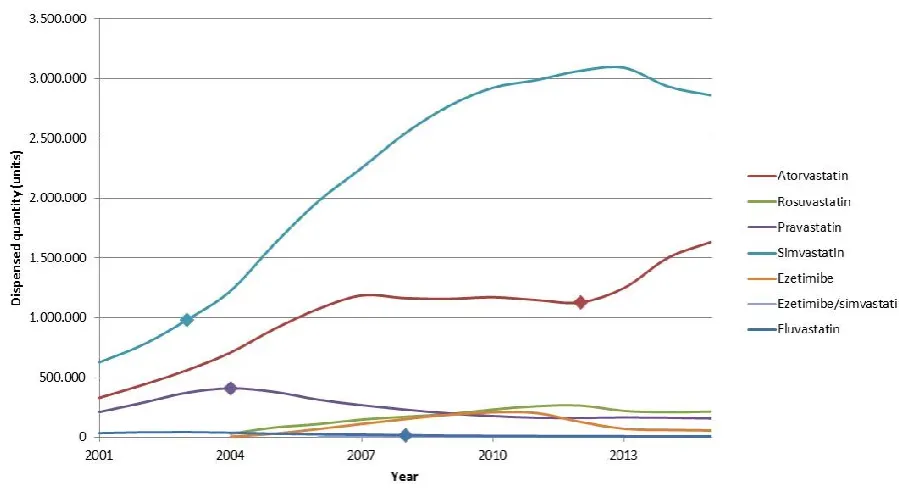
In 2001, simvastatin, atorvastatin and pravastatin were the most prescribed LLAs, and combined they represented 85.54% of all dispensed LLAs in Scotland. They represented 5.54% of total expenditure on medicines in NHS Scotland and 91.32% of total LLA expenditure. By 2015, rosuvastatin had replaced pravastatin, and the most prescribed LLAs in terms of items dispensed were simvastatin, atorvastatin and rosuvastatin. Together they represented 95.19% of total LLA utilization, and 2.09% and 89.14% of the total NHS costs and total LLA costs respectively (Figures 3 and 4). This reflects the influence of ongoing efforts by the Health Boards and NHS in Scotland and others to promote
8
Figure 3 - Total expenditure of selected lipid lowering agents between the years 2001 and 2015 by the Scottish NHSNB: The diamonds represent the year of generic availability
Figure 4 - Total dispensed units (items dispensed) of selected LLAs between 2001 and 2015
NB: The diamonds represent the year of generic availability
[image:8.595.76.526.419.666.2]9
a result of successful measures to encourage the preferential prescribing of multiple sourced statins when available (Table 2, Figure 4), this national indicator for the statins was dropped in 2014 (66). This reflects the importance of regularly reviewing quality indicators to only concentrate on the most meaningful.The availability of generic presentations of simvastatin and atorvastatin, in conjunction with quality and efficiency prescribing measures (Table 2, Figure 3), led to an appreciable increase in their prescribing (Figure 4), while simultaneously reducing the expenses and prescriptions of other LLAs, in particular presentations that contained ezetimibe as well as rosuvastatin (Figures 3 and 4). This increase in their prescribing was helped by high voluntary INN prescribing in Scotland for all medicines where there are no concerns with generic switching (20, 34). In 2015, INN prescribing rates were 99.7% for
[image:9.595.74.521.301.576.2]atorvastatin and pravastatin and 99.1% for simvastatin, similar to other medicines in other disease areas in Scotland (34, 70). Simvastatin 40 mg tablets were £44.44 in 2003 per item dispensed reducing to £1.96 in 2015. Similar trends were seen with atorvastatin with its price dropping from £38.20 per item dispensed pre-patent loss to £3.15 per item dispensed in 2015, mirroring other generic medicines in Scotland (34, 70). These price reductions helped to bring down total expenditure on statins (Figure 3), with typically stable prices for patented statins (Figure 5).
Figure 5 - Price per item dispensed of LLAs from 2001 to 2015
NB: The diamonds represent the year of generic availability
Between 2003 and 2011, the growth rate of atorvastatin prescriptions (Figure 3) was slowed in favor of appreciably cheaper (Figure 5) and perceived equally effective generic simvastatin. As soon as
atorvastatin lost its patent, prices and expenditure fell (Figures 3 and 5) whilst utilization rose (Figure 4). In 2001, simvastatin and atorvastatin represented 69.99% of LLA prescriptions. By 2015, this had increased to 89.49% of total items dispensed.
The use of higher strength simvastatin (40 and 80 mg) was encouraged to reduce morbidity and mortality secondary to cardiovascular events (Table 2) and as part of QoF targets (20, 34), with more recently high strength atorvastatin advocated over simvastatin and rosuvastatin following generic availability. As mentioned, this is due to the better tolerability of atorvastatin compared with simvastatin at higher doses. These combined activities resulted in stabilization of simvastatin use in recent years, with the growth in the utilization of atorvastatin (Figure 4). Overall, high dose atorvastatin (20 to 80mg) and simvastatin (40mg and 80mg) now represent 71.3% of total items dispensed for these two statins, up from 17.3% in 2001 (Table 3). The percentage of high dose atorvastatin (40mg and 80mg) has also appreciably increased over the years as a percentage of total atorvastatin dispensed (Table 3).
0.00 10.00 20.00 30.00 40.00 50.00 60.00 70.00 80.00
2001 2004 2007 2010 2013
P
ri
ce
pe
r
m
e
di
ca
m
e
nt
(
£
)
Year
Generic price for Lipid Lowering Agents in NHS Scotland between years
2001-20015
Price atorvastatin Tabs 40mg (£)
Price rosuvastatin Tabs 10mg (£)
Price pravastatin Tabs 40mg (£)
Price simvastatin Tabs 40mg (£)
Price ezetimibe Tabs 10mg (£)
Price ezetimibe/simvastatin Tabs 10/40mg (£)
10
Table 3 – Prescribing of high and low doses statins 2001 to 2015Other statins, like fluvastatin and pravastatin, are currently not recommended by the Health Boards in Scotland despite low individual costs. Their use has been replaced by perceived more cost-effective LLAs with appreciable evidence of effectiveness in both primary and secondary prevention coupled with considerable evidence on safety (Figure 4).
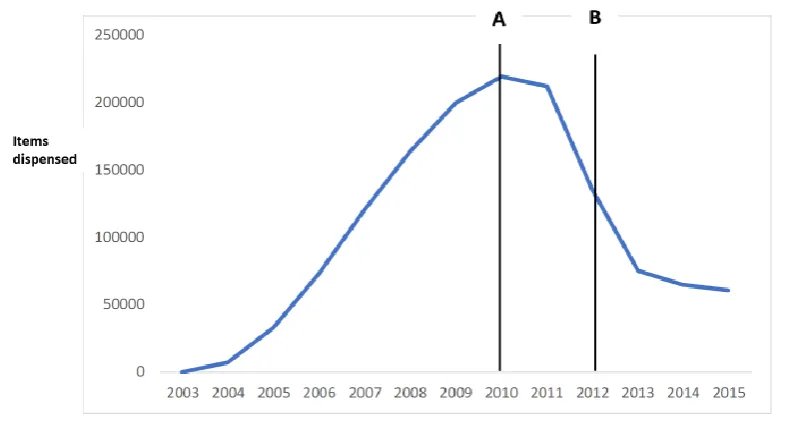
There have also been active campaigns nationally and among the Health Boards in Scotland in recent years to reduce potentially inappropriate prescribing of ezetimibe alone or in combination due to concerns about the actual impact on cardiac events in reality (Table 2) versus the proven
effectiveness of higher doses of atorvastatin and simvastatin at considerably lower cost (Figure 5). This included incentive schemes to reduce ezetimibe use, removal of ezetimibe from Health Board NHS formularies as well as national therapeutic indicators for ezetimibe. As a consequence, the prescribing of ezetimibe in terms of items dispensed decreased by 72% between 2010 and the end of the year 2015 (Figure 6), representing saving of over £6 million in 2015.
2015
2001
Atorvastatin (items dispensed)
10mg
322250
208809
20 and 30mg
478380
91082
40 to 80mg
836370
32591
% LD atorvastatin
19.7
62.8
% HD atorvastatin
80.3
37.2
% 40 + 80 mg vs all
51.1
9.8
Simvastatin (items dispensed)
2015
2001
10 and 20mg
970125
586013
40 and 80mg
1889792
43059
% LD simvastatin
33.9
93.2
% HD simvastatin
66.1
6.8
Overall (statins combined)
% LD statins
28.7
82.7
11
Figure 6 – Utilisation of ezetimibe (including combinations) in NHS Scotland 2003-2015NB: Point A represents the time when ezetimibe was removed from local health board formularies in Scotland and Point B when national therapeutic indicators were launched for ezetimibe
4. Discussion
The tendency to prescribe LLA depends not only on their clinical efficacy and safety, but also associated costs. The loss of a patent appears to appreciably influence subsequent prescribing patterns not only for the particular LLA, but also the other LLAs that have similar indications as long as they share similar efficacy and safety profiles and are broadly seen as interchangeable. For example, simvastatin experienced a constant increase in volumes from 2001 to 2003 following a number of publications including the 4S study (17), during which time the dispensed volume increased by 56%, but its use accelerated further following patent loss in 2003, and by 2013 the prescription rate in terms of items dispensed was 2.9 times higher than seen in 2003 (Figure 4).
Atorvastatin saw its increasing prescription trend slow, and latterly plateau, following the availability of generic simvastatin. This trend was reversed as soon as atorvastatin lost its patent in the 2012 along with appreciably lower prices and NHS Scotland advocating high doses statins (Table 2, Figures 3 and 4), with prescription rates increased 10% per year on average after that. As a consequence, the utilisation of simvastatin was affected, and its prescription rate decreased by approximately 8% between 2013 and 2015. The prescribing of rosuvastatin also fell by 18.6% following the availability of generic atorvastatin (Figure 4). This exemplifies how generic and patented products interact with each other and affect the way they are prescribed.
Again, multiple initiatives surrounding the 4Es appeared necessary to effect these changes in prescribing patterns, similar to other studies (35, 71, 72). In addition, multiple initiatives in Scotland had a similar influence on prescribing patterns to formal prescribing restrictions, which are not possible in Scotland for statins, similar to other disease areas (34, 46, 48).
It is important to mention that the price of medicines does not have a direct effect on prescribed volumes (as prices are effectively invisible to patients); however, there is an indirect effect as price changes call forth educational and other initiatives on the part of the government and the local Health Boards (Table 2). In Scotland, the increased utilization of statins over other LLAs was assisted by the Quality and Outcomes Framework and SIGN guidelines, which combined recommend simvastatin at high doses to achieve target lipid levels (20). More recently, SIGN and other prescribing guidance have advocated high dose atorvastatin (80mg) for patients with established CVD. In addition,
12
patent during the study period and generic atorvastatin was available with similar effectiveness at considerably lower costs (Figures 3 and 5), resulting in successful switching programmes and falling prescribing (Table 2, Figure 4). Similarly, the availability of generic simvastatin and atorvastatin, coupled with the lack of outcome data, resulted in active educational and other activities to limit inappropriate prescribing of appreciably more expensive ezetimibe alone or in combination in recent years (Figures 4 and 6).As a result, the multiple demand side measures introduced for the various LLAs over time in Scotland (Table 2, Figure 2) appear to have successfully moderated or reduced the prescribing of LLAs with higher costs but no perceived additional benefits (Figures 3 to 5), providing exemplars to other countries with limited demand side measures to encourage the prescribing of patented medicines with limited additional benefits (30, 34, 35, 74). At the same time, the quality of prescribing has been improved with the advocacy of higher statin doses and limiting inappropriate prescribing of ezetimibe.
Patented medicines have an important impact on the Scottish NHS medicines’ budget. In 2005, the use of patented LLAs represented over £18.1 million, but by 2015 this had decreased to £10 million, nevertheless still representing 42.1% of the total budget for LLAs. As older statins lose their patent and become cheaper, moving away from patented formulations in favor of generic presentations or other statins with similar efficacy and safety profiles, is now a reality that it is possible to achieve. This can contribute to substantial additional savings within the NHS system despite increasing volumes and doses without endangering the health of the population. These savings can be used to fund increased use of medicines in other disease areas as a result of ageing populations, as well as new higher priced but valued medicines, within a universal healthcare system with finite resources. Ongoing strategies will intensify to help further increase the prescribing of LLAs without increasing budgets at a time of increasing pressure on resources. We will be researching their impact in the future.
We are aware of a number of limitations. The major ones are the fact that we cannot link prescribing of statins to any diagnoses or outcomes with this dataset. In addition, there can be differences between prescribing and dispensing data. We also could not measure adherence rates, which is a key
consideration with statin prescribing (75-78). This is particularly important with higher dose statins and the potential for increasing side-effects, which will be the subject of future research. Lastly, as
mentioned, the use of items dispensed rather than DDDs will mean that the overall increase in utilisation will be appreciably lower than if DDDs has been used, especially when coupled with the increasing length of prescriptions in recent years to reduce physician workloads and increased prescribing of higher strength statins. Never-the-less, we believe our findings are robust, providing guidance for the future.
5. Conclusion
The instigation of multiple supply- and demand-side measures in Scotland in recent years have resulted in increased prescribing of generic statins once available versus patented statins, leading to appreciably reduced expenditire between 2001 and 2015 despite over 400% increase in utilisation during this period. Concurrent with this, there has been increasing prescribing of higher dose statins to improve outcomes whilst limiting inappropriate prescribing of ezetimibe alone or in combination with no proven effect to reduce cardiac events. This includes advocating 80mg atorvastatin in revent years for secondary prevention. Consequently, we believe the multiple activities in Scotland and their outcome can be an exemplar for other countries seeking to enhance their quality and efficiency of prescribing. We will now be researching statin adherence in more detail combined with ongoing initiatives to enhance high strength prescribing.
6. Key issues
Over half the adults in the UK have hypercholesterolaemia, which increasingly needs treating with high dose statins to help prevent future coronary events
This can be financed through the instigation of multiple initiatives to increase the prescribing of low cost generic statins at the expense of appreciably more expensive patented statins without
13
Multiple regional and national initiatives in Scotland including physician education, guidelines, prescribing targets and financial incentives appreciably increased the prescribing of low dose statins and limited ezetimibe prescibing. As a result, whilst items dispensed for lipid lowering agents increased by 412% between 2001 and 2015, there was a 50% reduction in their expenditure
The many measures resulted in appreciably increased prescribing of high dose statins over the years (representing 71% of items dispensed in 2015) and reduced inappropriate prescribing of ezetimibe (items dispensed reduced by 72% between 2010 and 2015)
These initiatives will continue given increasing pressure on budgets in Scotland including the medicine’s budget
7. Expert Commentary
There are continuing pressures on resources in European countries with ageing populations and continued unmet needs. As a result, ongoing supply- and demand-side measures are needed to enhance both the quality and efficiency of prescribing to maintain universal and comprehensive healthcare where this exists. This is particulalry the case for LLAs given increasing rates of hypercholesterolaemia across Europe including Scotland, as well as the need to prescribe higher statin doses to reduce the rate of future cardiac events. Scotland has introduced multiple measures before and during the availability of generic statins, as well as initiatives to improve the quality of prescribing, to achieve these aims.
These multiple measures have resulted in high rates of INN prescribing for the statins (99%) as well as preferential prescribing of generic versus patented statins. In addition, increased prescribing of higher dose statins, which now represent 71% of all statins dispensed in Scotland. Multiple measures have also reduced inappropriate prescribing of ezetimibe, with a 72% reduction in items dispensed between 2010 and 2015. Overall, there was a 50% reduction in expenditure on LLAs in Scotland between 2001 and 2015 despite a 412% increase in the number of items dispensed during this period. These
measures are ongoing to further improve the quality and efficiency of LLA prescribing in Scotland, providing examplars to other European countries faced with similar issues.
8. Five-year review
It is likely that generic atorvastatin will dominate statin prescribing in the coming years at high doses. The availability of generic rosuvastatin will help further ease expenditure on LLAs, although it is unlikely the prescribing of rosuvatstatin will increase significantly over the coming years at the expense of atorvastatin. However, it is likely we will see increased prescribing of appreciably more expensive PCSK9 inhibitors for patients who have familial hypercholesterolaemia with uncontrolled high lipid levels or those with mixed dyslipidaemia not controlled wtih low cost statins. As a result, while we are likely to see increased prescribing of LLAs including the PCSK9 inhibitors, it is unlikely we will see apperciable falls in expenditure compared with 2015 levels.
Author contribution
AL, BG, AK, RdoN and AM developed the concept of the paper with AL undertaking the initial analysis supported by AK. BG, AK, MB, SH, MR and SMS collated the information on demand-side measures both regionally and nationally in Scotland. AL and BG wrote the first draft of the paper, with all authors contributing to successive drafts before submission. BG undertook the first write of the
re-submission before all authors contributed to successive drafts before re-re-submission. All authors approved the final re-submission.
Funding
Axel Leprowski was funded on a grant to Alec Morton by the University of Strathclyde under the university’s New Professors‘ Fund.
Conflicts of interest
14
References* Of importance; ** of considerable importance
1. Eurostat. Causes of death statistics 2017 [updated 11 October 2017. Available from:
http://ec.europa.eu/eurostat/statistics-explained/index.php/Causes_of_death_statistics. 2. Heidenreich PA, Trogdon JG, Khavjou OA, Butler J, Dracup K, Ezekowitz MD, et al. Forecasting the future of cardiovascular disease in the United States: a policy statement from the American Heart Association. Circulation. 2011;123(8):933-44.
3. NCHStats. Statistics on statin use. Available at UTL:
https://nchstats.com/2013/11/14/statistics-on-statin-use/.
4. Choudhry NK, Dugani S, Shrank WH, Polinski JM, Stark CE, Gupta R, et al. Despite
increased use and sales of statins in India, per capita prescription rates remain far below high-income countries. Health affairs. 2014;33(2):273-82.
5. Godman B, Bishop I, Campbell SM, Malmstrom RE, Truter I. Quality and efficiency of statin prescribing across countries with a special focus on South Africa: findings and future implications. Expert review of pharmacoeconomics & outcomes research. 2015;15(2):323-30.
6. Akunne OO, Godman B, Adedapo AD, Truter I, Fadare J. Statin prescribing among hypertensive patients in southwest Nigeria: findings and implications for the future. Journal of comparative effectiveness research. 2016;5(3):281-8.
7. Godman B, Shrank W, Andersen M, Berg C, Bishop I, Burkhardt T, et al. Policies to enhance prescribing efficiency in europe: findings and future implications. Frontiers in pharmacology.
2010;1:141.
8. Davignon J. Beneficial cardiovascular pleiotropic effects of statins. Circulation. 2004;109(23 Suppl 1):Iii39-43.
9. Pedersen TR, Kjekshus J, Berg K, Haghfelt T, Faergeman O, Faergeman G, et al. Randomised trial of cholesterol lowering in 4444 patients with coronary heart disease: the
Scandinavian Simvastatin Survival Study (4S). 1994. Atherosclerosis Supplements. 2004;5(3):81-7.10. MRC/BHF Heart Protection Study of cholesterol lowering with simvastatin in 20,536 high-risk individuals: a randomised placebo-controlled trial. Lancet. 2002;360(9326):7-22.
**Critical paper demonstrating the effectiveness of higher dose statins in high risk patients
11. Nissen SE. Halting the progression of atherosclerosis with intensive lipid lowering: results from the Reversal of Atherosclerosis with Aggressive Lipid Lowering (REVERSAL) trial. The American journal of medicine. 2005;118 Suppl 12A:22-7.
12. Lu Y, Cheng Z, Zhao Y, Chang X, Chan C, Bai Y, et al. Efficacy and safety of long-term treatment with statins for coronary heart disease: A Bayesian network meta-analysis. Atherosclerosis. 2016;254:215-27.
13. Heart UK. Coronary Heart Disease remains the number 1 killer in the UK. UK2016. Available from: https://heartuk.org.uk/press/press-kit/key-facts-figures.
14. Wallis EJ, Ramsay LE, Ul Haq I, Ghahramani P, Jackson PR, Rowland-Yeo K, et al. Coronary and cardiovascular risk estimation for primary prevention: validation of a new Sheffield table in the 1995 Scottish health survey population. BMJ (Clinical research ed). 2000;320(7236):671-6.
15. Brugts JJ, Yetgin T, Hoeks SE, Gotto AM, Shepherd J, Westendorp RGJ, et al. The benefits of statins in people without established cardiovascular disease but with cardiovascular risk factors: meta-analysis of randomised controlled trials. BMJ. 2009;338.
16. Levine GN, Bates ER, Bittl JA, Brindis RG, Fihn SD, Fleisher LA, et al. 2016 ACC/AHA Guideline Focused Update on Duration of Dual Antiplatelet Therapy in Patients With Coronary Artery Disease: A Report of the American College of Cardiology/American Heart Association Task Force on Clinical Practice Guidelines. An Update of the 2011 ACCF/AHA/SCAI Guideline for Percutaneous Coronary Intervention, 2011 ACCF/AHA Guideline for Coronary Artery Bypass Graft Surgery, 2012 ACC/AHA/ACP/AATS/PCNA/SCAI/STS Guideline for the Diagnosis and Management of Patients With Stable Ischemic Heart Disease, 2013 ACCF/AHA Guideline for the Management of ST-Elevation Myocardial Infarction, 2014 AHA/ACC Guideline for the Management of Patients With Non–ST-Elevation Acute Coronary Syndromes, and 2014 ACC/AHA Guideline on Perioperative Cardiovascular Evaluation and Management of Patients Undergoing Noncardiac Surgery. 2016.
17. Scandinavian Simvastatin Survival Study Group. Randomised trial of cholesterol lowering in 4444 patients with coronary heart disease: the Scandinavian Simvastatin Survival Study (4S). The Lancet.1994; 344(8934):1383-9.
*Key paper demsontrating the impact of simvastatin in reducing coronary events
18. ISD Scotland. Prescription Cost Analysis UK2016 [updated 28 June 2016. Available from:
15
19. McGinn D, Godman B, Lonsdale J, Way R, Wettermark B, Haycox A. Initiatives to enhance the quality and efficiency of statin and PPI prescribing in the UK: impact and implications. Expert review of pharmacoeconomics & outcomes research. 2010;10(1):73-85.20. Bennie M, Godman B, Bishop I, Campbell S. Multiple initiatives continue to enhance the prescribing efficiency for the proton pump inhibitors and statins in Scotland. Expert review of pharmacoeconomics & outcomes research. 2012;12(1):125-30.
*Initial paper demonstrating the influence of multiple initiatives in Scotland to enhance the prescribing of low cost statins and PPIs
21. Ferner RE, Lenney W, Marriott JF. Controversy over generic substitution. BMJ. 2010;340:c2548.
22. Garuoliene K, Godman B, Gulbinovic J, Wettermark B, Haycox A. European countries with small populations can obtain low prices for drugs: Lithuania as a case history. Expert review of pharmacoeconomics & outcomes research. 2011;11(3):343-9.
23. Godman B, Wettermark B, Hoffmann M, Andersson K, Haycox A, Gustafsson LL. Multifaceted national and regional drug reforms and initiatives in ambulatory care in Sweden: global relevance. Expert review of pharmacoeconomics & outcomes research. 2009;9(1):65-83.
24. Corrao G, Soranna D, Arfe A, Casula M, Tragni E, Merlino L, et al. Are generic and brand-name statins clinically equivalent? Evidence from a real data-base. European journal of internal medicine. 2014;25(8):745-50.
25. Manzoli L, Flacco ME, Boccia S, D'Andrea E, Panic N, Marzuillo C, et al. Generic versus brand-name drugs used in cardiovascular diseases. European journal of epidemiology.
2016;31(4):351-68.
26. Labiris G, Fanariotis M, Kastanioti C, Alexias G, Protopapas A, Karampitsakos T, et al. Greek Physicians' Perceptions on Generic Drugs in the Era of Austerity. Scientifica. 2015;2015:251792. 27. Dunne SS, Shannon B, Cullen W, Dunne CP. Beliefs, perceptions and behaviours of GPs towards generic medicines. Fam Pract. 2014;31(4):467-74.
28. Fabiano V, Mameli C, Cattaneo D, Delle Fave A, Preziosa A, Mele G, et al. Perceptions and patterns of use of generic drugs among Italian family pediatricians: first round results of a web survey. Health policy . 2012;104(3):247-52.
29. Colgan S, Faasse K, Martin LR, Stephens MH, Grey A, Petrie KJ. Perceptions of generic medication in the general population, doctors and pharmacists: a systematic review. BMJ open. 2015;5(12):e008915.
30. Godman B, Shrank W, Andersen M, Berg C, Bishop I, Burkhardt T, et al. Comparing policies to enhance prescribing efficiency in Europe through increasing generic utilization: changes seen and global implications. Expert review of pharmacoeconomics & outcomes research. 2010;10(6):707-22. **Key paper demonstrating the impact on expenditure between health authorities that instigated multiple measures to enhance the prescribing of low cost generic PPIs and statins vs. those with limited demand-side measures
31. Switching from high-efficacy lipid-lowering therapies [atorvastatin or rosuvastatin] to simvastatin and the results on low-density lipoprotein cholesterol level. Journal of the Medical Association of Thailand. 2015;98(1):21-5.
32. Norman C, Zarrinkoub R, Hasselstrom J, Godman B, Granath F, Wettermark B. Potential savings without compromising the quality of care. International journal of clinical practice.
2009;63(9):1320-6.
*Good paper demonstrating that the use of low cost generics did not compromise patient care in practice
33. Usher-Smith J, Ramsbottom T, Pearmain H, Kirby M. Evaluation of the clinical outcomes of switching patients from atorvastatin to simvastatin and losartan to candesartan in a primary care setting: 2 years on. International journal of clinical practice. 2008;62(3):480-4.
34. Godman B, Bishop I, Finlayson AE, Campbell S, Kwon HY, Bennie M. Reforms and initiatives in Scotland in recent years to encourage the prescribing of generic drugs, their influence and
implications for other countries. Expert review of pharmacoeconomics & outcomes research. 2013;13(4):469-82.
35. Godman B, Wettermark B, van Woerkom M, Fraeyman J, Alvarez-Madrazo S, Berg C, et al. Multiple policies to enhance prescribing efficiency for established medicines in Europe with a particular focus on demand-side measures: findings and future implications. Frontiers in pharmacology.
2014;5:106.
36. ISD Scotland. Quality & Outcomes Framework. 2008/09 Achievement at Scotland and NHS Board level. Available at URL:
16
37. SIGN. Clinical Guideline 149. Risk estimation and the prevention of cardiovascular disease. Available at URL:http://www.scot.nhs.uk/sign-clinical-guideline-149-risk-estimation-and-the-prevention-of-cardiovascular-disease/.
38. Dujovne CA, Ettinger MP, McNeer JF, Lipka LJ, LeBeaut AP, Suresh R, et al. Efficacy and safety of a potent new selective cholesterol absorption inhibitor, ezetimibe, in patients with primary hypercholesterolemia. The American journal of cardiology. 2002;90(10):1092-7.
39. Knopp RH, Gitter H, Truitt T, Bays H, Manion CV, Lipka LJ, et al. Effects of ezetimibe, a new cholesterol absorption inhibitor, on plasma lipids in patients with primary hypercholesterolemia. European heart journal. 2003;24(8):729-41.
40. Davidson MH, McGarry T, Bettis R, Melani L, Lipka LJ, LeBeaut AP, et al. Ezetimibe coadministered with simvastatin in patients with primary hypercholesterolemia. Journal of the American College of Cardiology. 2002;40(12):2125-34.
41. Godman B, Schwabe U, Selke G, Wettermark B. Update of recent reforms in Germany to enhance the quality and efficiency of prescribing of proton pump inhibitors and lipid-lowering drugs. PharmacoEconomics. 2009;27(5):435-8.
42. Gustafsson LL, Wettermark B, Godman B, Andersen-Karlsson E, Bergman U, Hasselstrom J, et al. The 'wise list'- a comprehensive concept to select, communicate and achieve adherence to recommendations of essential drugs in ambulatory care in Stockholm. Basic & clinical pharmacology & toxicology. 2011;108(4):224-33.
43. Wettermark B, Pehrsson A, Juhasz-Haverinen M, Veg A, Edlert M, Tornwall-Bergendahl G, et al. Financial incentives linked to self-assessment of prescribing patterns: a new approach for quality improvement of drug prescribing in primary care. Quality in primary care. 2009;17(3):179-89. 44. Bjorkhem-Bergman L, Andersen-Karlsson E, Laing R, Diogene E, Melien O, Jirlow M, et al. Interface management of pharmacotherapy. Joint hospital and primary care drug recommendations. European journal of clinical pharmacology. 2013;69 Suppl 1:73-8.
45. Godman B, Shrank W, Wettermark B, Andersen M, Bishop I, Burkhardt T, et al. Use of Generics-A Critical Cost Containment Measure for All Healthcare Professionals in Europe? Pharmaceuticals. 2010;3(8):2470-94.
46. Martikainen JE, Saastamoinen LK, Korhonen MJ, Enlund H, Helin-Salmivaara A. Impact of restricted reimbursement on the use of statins in Finland: a register-based study. Medical care. 2010;48(9):761-6.
*Good paper demonstrating the impact of introducing prescribing restrictions for patented statins in Finland
47. Sakshaug S, Furu K, Karlstad O, Ronning M, Skurtveit S. Switching statins in Norway after new reimbursement policy: a nationwide prescription study. British journal of clinical pharmacology. 2007;64(4):476-81.
48. Godman B, Burkhardt T, Bucsics A, Wettermark B, Wieninger P. Impact of recent reforms in Austria on utilization and expenditure of PPIs and lipid-lowering drugs: implications for the future. Expert review of pharmacoeconomics & outcomes research. 2009;9(5):475-84.
49. Fraeyman J, Van Hal G, Godman B, Beutels P. The potential influence of various initiatives to improve rational prescribing for proton pump inhibitors and statins in Belgium. Expert review of pharmacoeconomics & outcomes research. 2013;13(1):141-51.
50. Woerkom M, Piepenbrink H, Godman B, Metz J, Campbell S, Bennie M, et al. Ongoing measures to enhance the efficiency of prescribing of proton pump inhibitors and statins in The Netherlands: influence and future implications. Journal of comparative effectiveness research. 2012;1(6):527-38.
51. Kapur NK, Musunuru K. Clinical efficacy and safety of statins in managing cardiovascular risk. Vascular Health and Risk Management. 2008;4(2):341-53.
52. Shepherd J, Cobbe SM, Ford I, Isles CG, Lorimer AR, MacFarlane PW, et al. Prevention of coronary heart disease with pravastatin in men with hypercholesterolemia. West of Scotland Coronary Prevention Study Group. The New England journal of medicine. 1995;333(20):1301-7.
53. Sever PS, Chang CL, Gupta AK, Whitehouse A, Poulter NR. The Anglo-Scandinavian Cardiac Outcomes Trial: 11-year mortality follow-up of the lipid-lowering arm in the U.K. European heart journal. 2011;32(20):2525-32.
54. NHS Scotland. National Therapeutic Indicators. 2012 - Baseline data. Available at URL:
http://www.sehd.scot.nhs.uk/pca/PCA2012(M)08report.pdf.
55. WHO. WHO Collaborating Centre for Drug Statistics Methodology. ATC/ DDD Index. Available at URL: https://www.whocc.no/
56. Wettermark B, Godman B, Jacobsson B, Haaijer-Ruskamp FM. Soft regulations in
17
*Key paper introducing the concept of the 4Es57. Godman B, Abuelkhair M, Vitry A, Abdu S, Bennie M, Bishop I. Payers endorse generics to enhance prescribing efficiency: impact and future implications, a case history approach. GABI. 2012;1(2):69-83.
58. Godman B, Bennie M, Baumgärtel C, Sović-Brkičić L, Burkhardt T, Fürst J, et al. Essential to increase the use of generics in Europe to maintain comprehensive health care? Farmeconomia Health economics and therapeutic pathways. 2012;13(3S):5-20.
59. ISD Scotland. Quality and Outcomes Framework Scotland: ISD Scotland; 2010 [updated 2010]. Available from:
http://www.isdscotland.org/Health-Topics/General-Practice/Quality-And-Outcomes-Framework/QOF-Points-Pounds-Available-Summary.asp.
60. Scottish Intercollegiate Network. Risk estimation and the prevention of cardiovascular disease. SIGN, ed Edinburgh: SIGN. 2007.
61. Lothian Prescribing Bulletin. Updated Lipid Guidelines. Available at URL:
http://www.ljf.scot.nhs.uk/PrescribingBulletins/Prescribing%20Bulletins/Lothian%20Prescribing%20Bull
etin%20Issue%2077%20January%202016%20FINAL.pdf.
62. PostScript Primary Care. NHSGGC Prescribing Indicators 2013/2014. Available at URL:
http://www.ggcprescribing.org.uk/media/uploads/ps_primary_care/ps_pc_may_13_indicators_final.pdf
63. PostScript Primary Care. NHSGGC Prescribing Indicators 2014/2015. Availabe at URL:
http://www.ggcprescribing.org.uk/media/uploads/ps_primary_care/pspc_april_2014.pdf.
64. Audit Scotland. Prescribing in General Practice in Scotland. 2013. Available at URL:
file:///C:/Users/mail/Desktop/My%20documents/Strathclyde/Alec%20and%20high%20price%20medici nes/Lipid%20lowering%20paper/Audit%20Scotland%202013.pdf.
65. NHS Greater Glasgow & Clyde Area Drug and Therapeutics Committee. Greater Glasgow and Clyde Medicines. Available at URL: http://www.ggcprescribing.org.uk/.
66. NHS Scotland. National Therapeutic Indicators 2014/ 2015. Available at URL:
http://www.sehd.scot.nhs.uk/publications/DC20141201nti.pdf [
67. NHS Dumfries & Galloway - Medicines Management Audit. Ezetimibe use in the management of cardiovascular disease. Available at URL:
http://www.dgprescribingmatters.co.uk/documents/Ezetimibe%20review%20document.pdf
68. The Inverness Courier. Switching tablets could save £1m in Highlands. Available at URL:
http://www.inverness-courier.co.uk/News/Switching-tablets-could-save-1m-in-Highlands-1391.htm.
69. NICE. Cardiovascular disease: risk assessment and reduction, including lipid modification. Clinical guideline [CG181]. Available at URL: https://www.nice.org.uk/guidance/CG181.
70. Godman B, Baker A, Leporowski A, Morton A, Baumgärtel C, Bochenek T, Fadare J et al. Initiatives to increase the prescribing of low cost generics; the case of Scotland in the international context Medical Research Archives. 2017;5(3):1-34.
71. Barton S. Using clinical evidence. BMJ. 2001;322(7285):503-4.
72. Bero LA, Grilli R, Grimshaw JM, Harvey E, Oxman AD, Thomson MA. Closing the gap between research and practice: an overview of systematic reviews of interventions to promote the implementation of research findings. The Cochrane Effective Practice and Organization of Care Review Group. BMJ. 1998;317(7156):465-8.
73. Jones PH, Davidson MH, Stein EA, Bays HE, McKenney JM, Miller E, et al. Comparison of the efficacy and safety of rosuvastatin versus atorvastatin, simvastatin, and pravastatin across doses (STELLAR* Trial). The American journal of cardiology. 2003;92(2):152-60.
74. Voncina L, Strizrep T, Godman B, Bennie M, Bishop I, Campbell S, et al. Influence of demand-side measures to enhance renin-angiotensin prescribing efficiency in Europe: implications for the future. Expert review of pharmacoeconomics & outcomes research. 2011;11(4):469-79.
75. Cramer JA, Benedict A, Muszbek N, Keskinaslan A, Khan ZM. The significance of compliance and persistence in the treatment of diabetes, hypertension and dyslipidaemia: a review. International journal of clinical practice. 2008;62(1):76-87.
76. Colantonio LD, Huang L, Monda KL, Bittner V, Serban MC, Taylor B, et al. Adherence to High-Intensity Statins Following a Myocardial Infarction Hospitalization Among Medicare Beneficiaries. JAMA cardiology. 2017;2(8):890-5.
77. Bitton A, Choudhry NK, Matlin OS, Swanton K, Shrank WH. The impact of medication
adherence on coronary artery disease costs and outcomes: a systematic review. The American journal of medicine. 2013;126(4):357 e7- e27.
78. Simoens S, Sinnaeve PR. Patient co-payment and adherence to statins: a review and case studies. Cardiovascular drugs and therapy. 2014;28(1):99-109.

![Table 2 - Summary of principal demand-side measures introduced in Scotland between 2001 and 2015 that influenced the consumption of lipid lowering agents [Adapted from (20, 30, 34, 54, 59-67)]](https://thumb-us.123doks.com/thumbv2/123dok_us/1392843.92417/6.595.73.526.105.765/summary-principal-measures-introduced-scotland-influenced-consumption-lowering.webp)
![Figure 2 – Timelines for key demand side initiatives in Scotland in recent years [adapted from (37, 54, 64, 65, 67-69)]](https://thumb-us.123doks.com/thumbv2/123dok_us/1392843.92417/7.595.74.504.265.540/figure-timelines-demand-initiatives-scotland-recent-years-adapted.webp)