City, University of London Institutional Repository
Citation
:
Kiratli, N., Rozemeijer, F., Hilken, T., de Ruyter, K. and de Jong, A. (2016). Climate setting in sourcing teams: Developing a measurement scale for team creativity climate. Journal of Purchasing and Supply Management, 22(3), pp. 196-204. doi: 10.1016/j.pursup.2016.04.006This is the accepted version of the paper.
This version of the publication may differ from the final published
version.
Permanent repository link:
http://openaccess.city.ac.uk/15740/Link to published version
:
http://dx.doi.org/10.1016/j.pursup.2016.04.006Copyright and reuse:
City Research Online aims to make research
outputs of City, University of London available to a wider audience.
Copyright and Moral Rights remain with the author(s) and/or copyright
holders. URLs from City Research Online may be freely distributed and
linked to.
Climate Setting In Sourcing Teams: Developing A
Measurement Scale for Team Creativity Climate
Kiratli, N., Rozemeijer, F.A., Hilken, T.G., de Ruyter, J.C.., de Jong, A.D., 2016. Journal of Purchasing and Supply Management,
Creative sourcing strategies, designed to extract more value from the supply base, have become
a competitive, strategic differentiator. To fuel creativity, companies install sourcing teams that
can capitalize on the specialized knowledge and expertise of their employees across the
company. This article introduces the concept of a team creativity climate (TCC) - team
members’ shared perceptions of their joint policies, procedures, and practices with respect to
developing creative sourcing strategies – as a means to address the unique challenges
associated with a collective, cross-functional approach to develop value-enhancing sourcing
strategies. Using a systematic scale development process that validates the proposed concept,
the authors confirm its ability to predict sourcing team performance, and suggest some
2 Introduction
Driven by competitive pressures, sourcing strategies constantly seek ways to satisfy customer
demands and mitigate supply risk at lower costs (AT Kearney 2011; Eltantawy and Giunipero
2013). Developing such value-enhancing strategies is complex (Ellis et al. 2010; Wu and Pagell
2011) and demands substantial creativity and innovative problem solving (Giunipero et al.
2005; O’Brien 2012). According to a recent industry survey (State of Flux 2013), nearly 70%
of buying companies have installed sourcing teams to formulate and implement creative
sourcing strategies and thereby attain superior business performance (Hardt et al. 2007). These
teams pool the problem-solving capabilities and specialized knowledge of employees from
different functional backgrounds (Englyst et al. 2008). For example, at Target, sourcing is a
cross-functional process and a competitive differentiator in its retail environment (Forbes
2015). By challenging product specifications or the underlying business need for a purchase,
sourcing teams are able to creatively resolve problems (Giunipero et al. 2005), realize lower
purchase prices (Johnson et al. 2002), and improve bottom-line results (AT Kearney, 2011).
However, it is also becoming clear that many sourcing teams fail to reach their full potential
or meet general management expectations (Driedonks et al. 2014; Moses and Ahlstrom 2008).
In a recent market survey (Deloitte 2014), more than half of participating Chief Procurement
Officers (57%) believed their teams were incapable of delivering unique, effective solutions to
current sourcing challenges. A major reason for this failure might be the widespread use of
top-down instructions (i.e., formal sourcing processes, templates, and protocols), which are
inadequate for guiding sourcing teams in formulating creative, value-enhancing strategies
(Kauffmann et al. 2014; Monczka et al. 2010). For example, Englyst et al. (2008) criticize
extant research for not providing concrete guidance on the specific processes that govern
creative problem solving and effective team functioning. Understanding how an atmosphere
3
enable such teams to focus their attention directly on the processes needed to develop creative,
value-enhancing sourcing strategies.
In our attempt to do so, we seek theoretical guidance from emerging team climate research.
The concept of climate implies the shared perceptions of team members toward the policies,
procedures, and practices that will be rewarded and supported in a specific work setting (Zohar
and Tenne-Gazit 2008). It thus provides a means to capture the collective sensemaking process
by which individual team members derive information about relevant role behaviours that are
expected of them, to attain strategically-focused outcomes as a team (Schneider et al. 1992). In
sourcing teams, a current challenge is to rely less on formal sourcing protocols and deploy
creativity as a relevant role behaviour, instead. That is, sourcing teams appear to provide
impactful means to attain breakthrough sourcing strategies (Pagell 2004; Trent and Monczka,
1994). However, little research conceptualizes or measures how creative processes and
behaviours unfold in these teams (Driedonks et al. 2010; Englyst et al. 2008; Moses and
Ahlström 2008). Within this study, we draw on work-unit climate research to address our
central research question of how creative processes and behaviours unfold in sourcing teams.
The purpose is to conceptualize the creativity climate in sourcing teams, develop a
measurement instrument to assess the creativity climate in sourcing teams, and test its impact
on sourcing team performance. With this approach, we contribute to extant literature in two
important ways.
First, we conceptualize team creativity climate (TCC) as a facet-specific work-unit climate
that can reveal how individual members collaboratively develop creative solutions to sourcing
challenges. With the notable exception of Driedonks et al. (2014), scholars have ignored
behavioural theory perspectives on how sourcing teams perform. Climate research offers an
appropriate lens to examine how team members’ perceptions of or experiences in the
4
From this theoretical grounding, we develop a measurement scale that can capture creative
work-unit climates in sourcing teams. To the best of our knowledge, prior sourcing literature
has not offered a measurement scale for creative behaviour in teams. Following a systematic
scale development process (Churchill 1979; DeVellis 1991; Netemeyer et al. 2003), we
develop a one-dimensional measurement scale, using expert interviews and survey data
collected from a sample of 120 sourcing professionals. In compliance with established scale
development protocols, we conduct an empirical test of discriminant and convergent validity,
reliability, and the unidimensionality of the target construct.
Second, we provide evidence of the predictive power of the newly developed scale for
sourcing team performance; extant literature lacks evidence about the precise impact of
creative team work on sourcing performance. We draw on previous research that demonstrates
an inextricable link between team-level climates and strategically-focused output (Schneider
et al. 1992). Because TCC can be related to relevant output, such as the extent to which sourcing
strategies are truly creative, it offers the potential of contributing to bottom-line results.
Specifically, we correlate team members’ ratings of the creativity climate with their team
leaders’ ratings of the teams’ creative performance. Team leaders are experts in the domain of
interest and can thus use their subjective judgment to assess the appropriateness of the solution
for fulfilling business unit or corporate objectives (Amabile 1996; Amabile and Pillemer 2012).
In the next section, we offer a conceptualization of TCC and explain how it relates
theoretically to the creative performance of sourcing strategies. Following a two-stage scale
development process, we subsequently derive a measurement scale for the TCC construct.
After formulating, purifying, and pretesting the scale items, we validate our construct as well
as its impact on sourcing performance with data from a sample of 52 sourcing teams. We
conclude with a discussion of the theoretical and managerial implications.
5
Theoretical Perspectives on Creativity
The complex and competitive sourcing environment requires sourcing teams to look for
solutions off the beaten paths (Giunipero et al. 2005). Given the multi-dimensionality of
sourcing effectiveness, decision-makers have to seek a delicate balance between cost, value
and risk (Driedonks et al. 2010). This new sourcing reality has led to a call for more creativity
and innovative problem-solving in the procurement profession in general and within sourcing
teams in particular (Deloitte 2013). For several years, companies have relied on a multitude of
creative methods, trainings and processes advocated by consultants or experts of applied
creativity (e.g. Synectics: Gordon 1961; Lateral Thinking: De Bono 1985; Intuition:
Mintzberg,1998; TRIZ: Terninko, Zusman, and Zlotin 1998). Intended to facilitate the
development of novel and meaningful solutions to problems, their validity has been contested
by creativity scholars (see e.g., Sternberg and Lubart 1999). According to Puccio et al. (2006),
this abundance of creative methods might have contributed to the view that the field of
creativity is imbalanced towards application and lacks scientific rigor. In an attempt to build a
stronger theoretical foundation for empirical research on the applied nature of creativity, we
thus set out to shed light on more fundamental aspects of creative problem-solving in work
groups, such as sourcing teams.
Contemporary research increasingly distinguishes between creativity as an output (i.e., how
novel and useful the idea is) and creativity as a process (i.e., how the idea is achieved). While
scholars agree that more attention is needed to elucidate the creative process by which
individual members produce creative outcomes at the team level (Anderson et al. 2014;
Mumford 2000), the approaches taken to explicate this process are varied. Drazin et al. (1999)
stipulate a process-oriented sensemaking perspective to describe employees’ participation in
creative behaviour. This perspective is focused on “how individuals attempt to orient
6
and ill defined” (p. 287). In contrast, Zhang and Bartol (2010) adopt a behaviour-oriented
approach and use an engagement perspective to argue that the extent to which employees
engage in creativity-relevant methods or processes – such as problem identification,
information search and idea generation – is decisive for attaining creative outcomes. Haslam
et al. (2013) adopt a social identity perspective to explain the eminent role of teams in
stimulating and shaping creative acts and determining the reception or judgment of individual
team members’ ideas. A shared social identity motivates people to rise to creative challenges
and provides a basis for recognizing certain forms of creativity among team members.
On a similar note, studies on work-unit climates examine how people’s perceptions of or
experiences in the immediate work environment influence a team’s creative endeavors (Hunter
et al. 2007). The theoretical foundation for climate formation recognizes that team climates
originate from the bottom up within teams and thereby shape team members’ behaviour.
Hackman’s (1987) model of group effectiveness similarly posits that the process by which
team-level climates arise is dynamic in nature, such that the construction of shared meaning
occurs through team member interactions. As a proxy for the creative sensemaking process
among sourcing team members, climate constructs qualify as team-level process variables that
can explain how collective, creative behaviour translates into creative solutions (Anderson et
al. 2014). Therefore, the climate perspective offers an appropriate lens for conceptualizing the
collective sensemaking process that occurs during creative sourcing teamwork. Adopting this
team process focus, and in line with previous conceptualizations of facet-specific climates, we
define TCC as team members’ shared perceptions of their joint policies, procedures, and
7
A Conceptualization of Team Creativity Climate
When people must perform work activities as a team, the notion of climate might provide
a missing link between management-related factors and desired outcomes (Anderson et al.
2014). According to Katz and Kahn (1978), climate is the result of a distinct pattern of
individual team members’ collective beliefs that are developed through interaction with their
social environments. As climate research evolved, scholars have introduced distinct climate
constructs for varying contexts and levels of analysis (Schneider et al. 2013), including
customer service (Schneider et al. 1998), safety (Zohar 1980), and innovation (Scott and Bruce
1994) climates. Climates directed at a specific goal or activity (e.g., creativity) and at a specific
level (e.g., team) thus offer highly proximal measures of the process by which team members
develop a sense of “the way we do things around here” (Schneider et al. 1996, p. 12). Scholars
argue that these facet-specific climates can better capture the phenomenon of interest and its
relationship with any particular outcome than generic or organizational climates (Zohar and
Luria 2004; Zohar and Tenne-Gazit 2008). Therefore, we opt for a facet-specific description
of a work-unit climate to understand how individual sourcing team members might derive
meaning from their participation in collective creativity as well as their interactions with one
another to devise business solutions (Hoegl et al. 2003).
An important contribution of this study is that we make creativity the focal facet of
work-unit climates in sourcing teams, by focusing on the process by which sourcing team members
collectively develop creative, value-enhancing sourcing strategies. According to Amabile
(1996), creativity is commonly defined as the production of novel and useful ideas in any given
domain. It is seldom the result of an individual employee’s efforts. Instead, increasing
managerial and theoretical support emphasizes the importance of shared perceptions. In
particular, as strategic sourcing has emerged primarily as a team responsibility (State of Flux
8
et al. 2014; Driedonks et al. 2010; Fischer et al. 2005; Fisher and Amabile 2009). A team
perspective on sourcing strategy development increases solution flexibility and quality,
because it pools more broad and deep functional knowledge and skills (Englyst et al. 2008).
The precondition for spotting breakthrough ideas for sourcing strategies is that team
members have open minds and exhibit their willingness to gain a deeper understanding of the
sourcing category, internal stakeholders, suppliers, supply markets, supply chain risks, and
opportunities (Driedonks et al. 2010; Monczka et al. 2010; O’Brien 2012). Against this
background, the challenge of developing value-enhancing sourcing strategies as part of a team
becomes evident: Team members must accommodate or overcome contrasting viewpoints,
different ways of doing things, and silo thinking to arrive at shared mental models (Zhang and
Bartol 2010). Only then is it possible to develop collaborative, creative sourcing strategies that
contribute to a company’s top and bottom lines. Sharing ideas, communicating viewpoints, and
discussing positions with a myriad of organizational stakeholders are crucial tactics to develop
a shared perception of the problem or task that the team confronts, as well as its possible
resolution and corporate-level implications. In this context, the presence of strong team
climates might be indicative of the fact that power issues, political behaviour, and information
asymmetries are overcome – or at least efficiently dealt with.
The Climate - Sourcing Team Performance Link
Facet-specific work unit climates correlate strongly with numerous output criteria of
interest (De Jong et al. 2004; Patterson et al. 2005; Zohar and Luria 2004). Previous research
has shown that climate constructs are appropriate for predicting creative performance (e.g., Si
and Wei 2012) or general firm performance (e.g., Baer and Frese 2003). In a similar fashion, a
sourcing team’s creative climate is likely to relate to relevant output, such as the extent to which
the sourcing strategy is creative and enhances value. Because value-based sourcing constitutes
9
sourcing strategies demand holistic measures to evaluate their success (Monczka et al. 2010).
Established key performance indicators (KPIs), such as working capital expenditures or price
and cost reductions, typically serve to assess bottom-line outcomes. These conventional KPIs
need to be preceded by and complemented with measures of the intangible, abstract nature of
creative and value-enhancing sourcing strategies. Creative performance thus tends to involve
two dimensions: novelty (i.e., outputs are new and different) and meaningfulness (i.e., outputs
are appropriate and useful for the target audience) (Amabile 1983; Carson 2007; Im et al. 2013).
To determine sourcing strategies’ ability to fulfill business unit or corporate objectives, we also
assess their specificity (i.e., outputs are described in detail) and feasibility (i.e., outputs can be
[image:10.595.74.521.367.706.2]implemented with existing resources and skills) (Kim and Wilemon 2002).
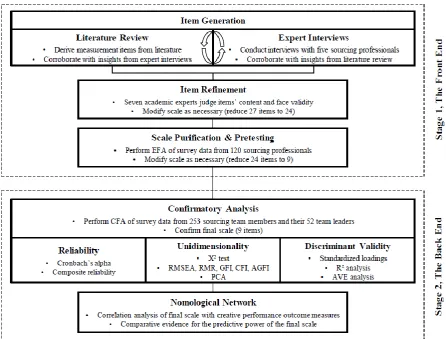
Figure 2.1 Scale development process chart
10
Valid and reliable measurement lies at the heart of any scientific endeavor (Netemeyer et al.
2003). Thus, it requires a systematic approach to developing conceptually relevant,
psychometrically sound measurement instruments (Churchill 1979; DeVellis 1991). To
operationalize a facet-specific climate construct such as TCC, we followed a two-stage
multi-item scale development approach, as proposed by Rosenzweig and Roth (2007) and Menor and
Roth (2007) and depicted in Figure 2.1.
Stage 1: Item and Scale Construction
Item Generation and Refinement. The primary purpose of the first stage is to provide a
conceptual foundation for the TCC construct and arrive at a representative measurement item
pool that captures the domain of interest (Churchill 1979; DeVellis 1991; Netemeyer et al.
2003). We derived initial measurement items from a thorough investigation of creative
behaviour research (Gilson and Shalley 2004), as well as creativity and innovation climates
(Anderson and West 1998; Ekvall 1996; Isaksen and Ekvall 2010; Isaksen and Akkermans,
2011). We conducted face-to-face interviews with five sourcing professionals from the fast
moving consumer goods, manufacturing, and chemical industries. All practitioners were men
and came from Sweden (1), the Netherlands (3), or the United Kingdom (1). They held senior
management positions, with general work experience ranging from 6.5 to more than 20 years
and sourcing-related work experience of 10 years on average. As a prerequisite, all
respondents participated in sourcing-related teamwork at the time of the interview. Thus,
each interviewee was knowledgeable about the research topic and representative of the
sample of sourcing professionals that we ultimately targeted with the final survey
(Rosenzweig and Roth 2007). The interviewees named aspects that contributed to their
sourcing team’s creative performance and helped complement insights gained from prior
research (Netemeyer et al. 2003).
11
literature review resulted in a pool of initial 27 items (see Appendix A). Because our target
construct describes a team-level process, we used the team as a referent in formulating the
items. Consistent with the referent shift consensus model (Chan 1998), the use of referent
formulations such as “team,” “our,” and “we” constitute a precondition for the aggregation of
scale items measured at the individual level to the team level of analysis. That is, aggregating
referent shift items is conceptually appropriate because they refer to the level (i.e., team) to
which individual responses will be aggregated (Le Breton and Senter 2008). To establish
empirical evidence that the respondents offered shared perceptions, we assessed the degree of
“sharedness” with an interrater agreement approach (James et al. 1984). The Rwg measure
reflects the extent to which respondents agree in their assessment of climate, such that their
ratings should be largely interchangeable (Schneider et al. 2013).
Finally, before proceeding to the item reduction stage of the scale development (see
Appendix B), we obtained expert judgments of the items’ content and face validity, and
adjusted, added or dropped items as necessary (Churchill 1979; DeVellis 1991; Netemeyer et
al. 2003). Seven faculty members from the supply chain management department of a
university commented on the item wording and judged each item’s relevance to our
conceptual definition of TCC1. This qualitative input produced a final pool of 24 initial items
that were proofread, formatted, and prepared for inclusion in the pilot study.
Scale Purification and Pretesting. A pilot study served to purify the scale and establish the
initial psychometric scale properties. During November and December 2013, we disseminated
an electronic survey to industry experts through the online channels of NEVI, the Dutch
association of purchasing professionals. We collected 140 responses, of which 120 were
complete. Considering our narrowly defined construct and the reasonable size of the initial
12
item pool, a sample size between 100 and 200 provided an adequate basis for further item and
factor analysis (Netemeyer et al. 2003). These respondents were sufficiently knowledgeable
about the research topic, in that they spent, on average, 53% of their total work time in a
sourcing team. Moreover, the respondents primarily represented senior (42%) or middle (32%)
management levels, and a large majority (79%) actively led one or more sourcing teams.
Surveying senior-ranking informants yields more reliable results than lower-ranking
informants (Rosenzweig and Roth 2007). Our sample also covered a variety of industries,
including manufacturing, food and beverages, construction, and financial services. Therefore,
our sample can be considered representative of the population of sourcing professionals.
The respondents received a brief definition of creative sourcing teamwork, and were then
asked to use a five-point Likert scale (1 = “fully disagree,” 5 = “fully agree”) to indicate how
relevant they regarded each of the 24 items for a creative climate in sourcing teams. To affirm
discriminant validity and emphasize the uniqueness of the facet-specific TCC construct, we
included the 14-item team climate inventory (TCI) scale (Anderson and West 1998) and the
8-item constructive controversy (CC) scale (Chen et al. 2005). Both constructs relate
conceptually to TCC, yet we expect them to be ill-suited for measuring creativity in a sourcing
team context, as defined in our conceptual development. This is due to the fact that the TCI
scale was developed for various team contexts (e.g., hospital teams, oil company teams) and
tasks (e.g., nursing, management, psychiatric care) and the CC scale specifically aims to
measure conflict management in teams.
We performed Harman’s (1976) single-factor test to check for common method bias. No
single factor accounted for the majority of the variance explained (max. = 37.25%), so common
method bias was not a prominent concern (Podsakoff et al. 2003). We assessed non-response
bias by comparing early (first 60) and late (last 60) respondents’ scores on all construct
13
respondents were slightly older than late responders, we found no significant differences in
work time spent in sourcing teams, work experience, management level, industry, or the TCC,
TCI, and CC construct means.
We used an exploratory factor analysis (EFA) with principal components analysis (PCA)
and direct Oblimin rotation on the 24 TCC items. The correlation matrix, Kaiser-Meyer-Olkin
(KMO) criteria, and Bartlett’s test of sphericity revealed the suitability of the data for factor
analysis. Specifically, the correlation matrix exhibited significant coefficients above .3
(Tabachnick and Fidell 2007), the KMO value of .91 exceeded the recommended cut-off value
of 0.6 (Kaiser 1970), and Bartlett’s (1954) test of sphericity reached statistical significance at
the 1% level (p < .001, χ2(df) = 1439.76 (276)). The first PCA with all 24 items yielded six
factors with eigenvalues exceeding 1, explaining 40.6%, 6.1%, 5.6%, 4.6%, 4.3%, and 4.2%
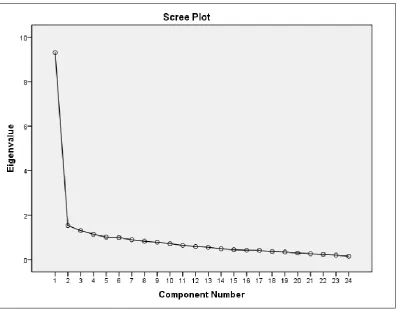
of the variance. However, the scree plot indicated a clear break after one component (Figure
2.2), implying a one-factor solution. Additional parallel analyses confirmed the presence of a
one-factor solution (Horn 1965). To arrive at a more parsimonious scale, we dropped items
with low loadings (< 0.3) on the first factor (Floyd and Widaman 1995) and communalities
below .4 (Hair et al. 2010), in a stepwise iterative manner. This procedure reduced the number
of scale items from 24 to 9, for a reduction ratio of 2.67, in line with common suggestions for
adequate domain sampling2 (De Vellis 1991; Netemeyer et al. 2003) and good scale
development practices in operations management research (i.e., 3.25, Ambulkar et al. 2015;
2.24, Menor and Roth 2007; 2.86, Rosenzweig and Roth 2007).
Figure 2.2 Scree plot of EFA
14
An EFA of the remaining nine items resulted in the extraction of a single factor (Table 2.1).
The final nine-item TCC scale accounted for approximately 61% of variance in the items, with
significant factor loadings above 0.5 for all items (Hair et al. 2010). Moreover, the scale
exhibited good internal consistency, with a Cronbach’s alpha (0.92) that exceeded the
recommended threshold of 0.7 (De Vellis 1991). We also examined the scale with respect to
its discriminant validity, that is, whether the construct shared more variance with its own
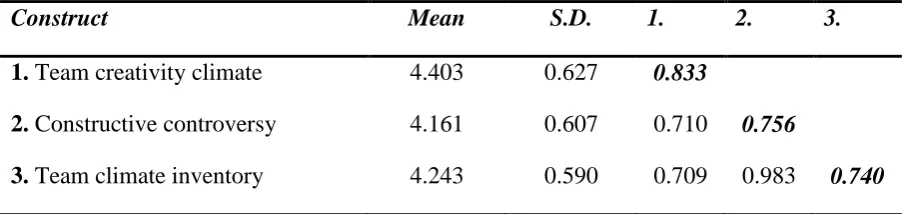
measures than with the related CC or TCI constructs (Chin 1998). Fornell and Larcker (1981)
suggest that the square root of the focal construct’s average variance extracted (√AVE = 0.833)
should exceed its correlation with related constructs (CorrCCTCC = 0.710; CorrTCITCC =
0.709). The correlation matrix in Table 2.2 affirms this requirement, in support of the
discriminant validity of the nine-item TCC measurement scale, relative to both TCI and CC.
Despite their conceptual distinctiveness, we found no evidence of discriminant validity across
[image:15.595.77.475.70.379.2]the TCI (√AVE = 0.756 < CorrCCTCI = 0.983) and CC (√AVE = 0.740 <
15 Team Creativity Climate (n = 120)
Item Coefficients Communalities
TCC1 In our team we are open to each other’s views and ideas.
0.853 0.728
TCC2 In our team we strive to think across departmental boundaries.
0.790 0.624
TCC3 In our team we actively seek out each other for constructive discussions.
0.700 0.490
TCC4 In our team we are encouraged to try new ways of doing things.
0.819 0.671
TCC5 In our team we are comfortable with exploring unfamiliar or unknown ideas and perspectives.
0.770 0.593
TCC6 In our team we openly share our thoughts without fear of rejection.
0.737 0.544
TCC7 Building on each other’s ideas is an integral part of how we work in our team.
0.821 0.674
TCC8 In our team every team member’s contribution is taken seriously.
0.829 0.688
TCC9 In our team we promote behaviours that are conducive towards a trustful environment.
0.716 0.512
Eigenvalue 5.523
Percentage of variance explained 61.369%
[image:16.595.72.524.595.702.2]Cronbach’s α 0.920
Table 2.2 Construct Intercorrelations
Construct Mean S.D. 1. 2. 3.
1. Team creativity climate 4.403 0.627 0.833
2. Constructive controversy 4.161 0.607 0.710 0.756
3. Team climate inventory 4.243 0.590 0.709 0.983 0.740
Notes: The square root of the average variance extracted is on the diagonal.
16
well suited to the sourcing team context, and we demonstrated its psychometric superiority
compared with seemingly similar constructs. The first-stage results, based on a literature
review, practitioner interviews (n=5), expert judging (n=7), and pilot study (n=120), thus
provide a tentatively reliable, valid, nine-item scale as a basis for the second-stage confirmatory
analysis.
Stage 2: Confirmatory analysis
Sample and Survey Design. To confirm our initial assessment of scale validity and
reliability, we conducted a confirmatory factor analysis (CFA) on data obtained from a larger
sample. These survey data came from four global companies operating in the chemical,
construction, manufacturing, and oil and gas industries3. To further distinguish our proposed
construct from seemingly related ones, we included creative ability (CA; Amabile 1983; Choi
et al. 2009), task expertise (TE; Amabile et al. 1994), and task motivation (TM; Amabile et al.
1994) constructs in our survey. In line with the componential theory of creativity (Amabile
1983), we regard all three constructs as antecedents, rather than inherent characteristics, of a
creative team climate, such that we expect significant differences across constructs. Such
differences also should give rise to theoretical considerations that TCC might serve as process
variable, mediating between input and output variables, as suggested by Hackman’s (1987)
input-process-output theory. Accordingly, we first attempt to provide evidence of the predictive
power of the TCC construct by collecting team members’ and team leaders’ ratings of the
creative performance of the sourcing teams (Im et al. 2013). The items for all constructs were
measured on fivpoint Likert scales (1 = “strongly disagree,” 5 = “strongly agree”). We
e-mailed the survey to 315 team members of 52 sourcing teams across four companies. After
several reminders, we received 253 complete responses from team members and 52 complete
17
responses from team leaders, yielding 80% and 100% response rates, respectively. On average,
respondents had been working for their sourcing team for approximately 2 years and averaged
19 years of general work experience. Approximately 70% of respondents reported that they
were currently also working in other teams. Sample respondent job titles included global
purchasing manager, category manager, procurement director, and strategic buyer.
Harman’s (1976) single-factor test indicated that the largest variance explained by a single
factor was 30.93%, indicating an absence of common method bias in this second study
(Podsakoff et al. 2003). A comparison of early (first half) and late (second half) respondents’
scores (Armstrong and Overton 1977) within each company did not reveal any statistically
significant differences for the constructs under analysis (TCC, CA, TE and TM). Further,
respondents did not differ in age, work experience, time of employment with current firm, and
percentage of work time spent in sourcing teams.
Reliability. To augment our assessment of scale reliability, we derived a composite
reliability coefficient (Fornell and Larcker 1981) from a CFA in AMOS 20. As we show in
Table 2.3, the Cronbach’s alpha and composite reliability both exceeded the common threshold
of 0.70 (De Vellis 1991), indicating good construct reliability of the TCC scale.
Unidimensionality. We assessed scale unidimensionality with several model fit statistics
and indices. The square test results indicate a poor model fit, with a large, significant
chi-square statistic (χ2 = 82.588; p < 0.001). However, for large samples, the chi-square test of
model fit may erroneously reject a valid model (Gatignon 2010). Hair et al. (2010) assert that
a large, significant chi-square statistic for samples larger than 250 is not indicative of poor
model fit, so other measures must be consulted. The root mean square error of approximation
(RMSEA = 0.090 < 0.1) is robust to differences in sample size; for our data, it indicated a
moderate model fit (Hu and Bentler 1999). The root mean square residual (RMR = 0.027 0 .05)
18
goodness-of-fit index (GFI = 0.92 > 0.9), comparative fit index (CFI=0.946 >0.9), and adjusted
goodness-of-fit index (AGFI = 0.872 > 0.8) all were well above the respective threshold values
(Hair et al. 2010). Finally, a separate PCA with direct Oblimin rotation resulted in the extraction
of a single factor, which confirmed our conclusions with regard to scale unidimensionality.
Convergent and Discriminant Validity. The use of an independent research design and
sample in each stage of the scale development process enabled us to hedge against
single-source or common method biases (Rosenzweig and Roth 2007). A more quantifiable way to
demonstrate convergent validity is to consider each scale item as a different approach to
measuring the construct and determine whether all items converge. We therefore examined the
magnitude and sign of the item factor loadings (see Table 2.3). Each standardized loading was
in the anticipated direction and statistically significant at p < 0.05 (Froehle and Roth 2004).
Moreover, all items’ R-square values were larger than 0.30, and much of the variance in each
item was accounted for by the overall TCC construct (Chen and Paulraj 2004). The AVE for
the TCC scale also exceeded the cut-off value of 0.5 (Fornell and Larcker 1981; Rosenzweig
and Roth 2007). Finally, we consulted the Bentler-Bonett (1980) normed fit index (NFI =
0.922>0.9), which indicated the strong convergent validity of the scale (Hair et al., 2010). With
regard to discriminant validity, we determined whether the TCC construct shared more
variance with its own measures than with related yet conceptually different constructs. The
correlation matrix in Table 2.4, with the square root of the constructs’ AVEs on the diagonal,
reveals that the square root of the AVE for TCC (0.788) exceeded its correlations with any
other constructs (CorrCATCC = 0.686; CorrTETCC = 0.684; CorrTMTCC = 0.505), in
strong evidence of discriminant validity.
Table 2.3 CFA results
19
Item SL Critical
ratio R
2 Mean S.D.
TCC1 0.743 10.54*** 0.53 4.166 0.6987
TCC2 0.678 12.25*** 0.42 4.028 0.8747
TCC3 0.781 10.89*** 0.57 3.913 0.8020
TCC4 0.699 9.793*** 0.40 3.648 0.7810
TCC5 0.632 9.851*** 0.40 3.775 0.7404
TCC6 0.636 11.78*** 0.49 4.170 0.7338
TCC7 0.753 10.07*** 0.61 3.889 0.7738
TCC8 0.649 11.37*** 0.46 4.178 0.7155
TCC9 0.728 10.54*** 0.55 3.877 0.7049
Cronbach’s α 0.895
Composite reliability (CR) 0.940 Average variance extracted (AVE) 0.621
[image:20.595.74.526.352.436.2]*** p < .001.
Table 2.4 Construct Intercorrelations
Construct Mean S.D. 1. 2. 3. 4.
1. Team creativity climate 3.960 0.560 0.788
2. Creative ability 3.661 0.568 0.686 0.758
3. Task expertise 3.999 0.539 0.684 0.691 0.778 4. Task motivation 3.565 0.716 0.505 0.629 0.587 0.803
Notes: The square root of the average variance extracted is on the diagonal.
Nomological Validity. Finally, to assess nomological validity, we investigated whether the
TCC construct was positively associated with one or more relevant outcome variables.
Consistent with extant theorizing (Si and Wei 2012), we expect that a more positive creativity
climate in a sourcing team corresponds with more positive creative outcomes. We therefore let
the 253 participating team members and their 52 team leaders rate their team’s creative
performance (novelty, meaningfulness, feasibility, specificity) on multi-item Likert type scales
(1 = “fully disagree,” 5 = “fully agree”). By aggregating the team member scores on creative
climate and performance to the team level, we formed team averages (James et al., 1984). The
20
of creative performance (r=0.694, p<0.001) and team leaders’ evaluations of these outcomes4
(r = 0.382, p < 0.01). These values are comparable to or higher, on average, than the correlations
between TCI and innovative performance in previous studies (e.g., 0.36–0.53, Kivimäki and
Elovainio 1999). That is, TCC performs well relative to established climate constructs and
constitutes a reliable, valid construct for predicting sourcing teams’ creative performance.
Conclusion
At the heart of this study lies the recognition that developing creative sourcing strategies is a
social endeavor. It arises from collective sensemaking and interactions among employees
assigned to sourcing teams, as well as other involved stakeholders. These teams cannot rely
fully on standard processes or top-down instructions to develop breakthrough sourcing
strategies. Accordingly, this study set out to illuminate the process by which team members
develop shared beliefs about how to approach creative sourcing strategy building. Drawing on
the notion of work-unit climates and adopting creativity as the focal facet, this study makes
two primary contributions.
First, we introduce a creative team climate construct to account for the collective
sensemaking process that precedes the origination of creative and successful strategies in
sourcing teams. Following established scale development rules, we built a scale to assess the
sourcing team’s creative climate. Rigorous and relevant research is needed to advance the
insights on creative sourcing team behaviour from anecdotes to testable theory (Van Weele and
Van Raaij 2014). In this effort, TCC represents a valid and reliable measurement instrument to
address the dynamics inherent to creative work in sourcing teams. By drawing on the
organizational behaviour domain, we fill a research void associated with creative work
21
behaviour in sourcing teams, as is evident in current sourcing literature. Specifically, we follow
recent advances by Driedonks et al. (2010, 2014), who investigate team effectiveness from a
behavioural perspective and focus on soft or social factors of sourcing teamwork.
Second, we provide evidence of the predictive power of the TCC construct, by placing it in
a nomological network. The newly developed construct captures a great deal of explained
variance in the actual creative performance of the 52 sourcing teams from which we obtained
survey data. The Pearson correlation values in this study are appropriate, relative to the values
reported in other studies (e.g., Kivimäki and Elovainio 1999). In sum, TCC offers a reliable,
valuable team process construct that can be deployed in further research related to sourcing
team performance.
Managerial Implications
From a managerial point of view, this study aims to sensitize sourcing team leaders to the
soft or social factors that underlie team performance. The general change in focus, from cost
to value, requires the adoption of different working styles to respond to contemporary sourcing
challenges. Formal processes and technocratic measures alone cannot suffice. Instead, these
measures must be complemented by efforts to encourage and fuel creative behaviour among
sourcing teams. Our research offers a starting point, in that we offer sourcing team leaders an
inventory of specific behaviours and activities that can build sourcing strategies in creative
ways. The individual items of the TCC scale provide sourcing team leaders with concrete
guidance about which behaviours they can adopt to promote creative role behaviour among
sourcing team members.
Sourcing team leaders also can use the TCC scale as a comprehensive, ready-to-use
measurement instrument for assessing their sourcing teams’ creative climates. In addition to
using the climate scores as a basis for designing and planning corrective actions to improve
22
TCC scale as an additional KPI that complements conventional team evaluation can provide
leaders with a more holistic view of their teams’ performance.
The principles of creative team climates might be integrated into team workshops and
leadership training to raise awareness and provide guidance for creative behaviour in sourcing
teams. The behaviours and activities described by the items that constitute the TCC scale also
can be used to design and target human resource incentives and initiatives more effectively to
encourage sourcing teams’ performance.
Managers and team leaders can choose from a vast array of creativity techniques, tools, and
instruments developed by consultants and experts to help their teams become more creative.
However, while companies oftentimes hire and pay these external consultants or trainers, using
their techniques comes with no guarantee of more creative ideas. In contrast, our measurement
scale offers a fairly simple and inexpensive way to assess and systematically manage a team’s
underlying creative climate. In more practical terms, training budget could be utilized more
efficiently by basing the decision of whether or not, and what type of training is needed on the
respective climate score. We also believe that our TCC scale and other relevant creativity
techniques can be used in a complementary fashion.
As the sourcing landscape is very diverse in terms of what is sourced (i.e. product, service,
process) and from where it is sourced (i.e. markets, industries, regions), one might raise the
issue whether creativity is relevant for all sourcing teams. Clearly, creativity may be less
relevant for highly standardized purchases, compared to highly strategic and technically
complex ones. Nonetheless, the sourcing of products as simple as doors is growing in
complexity, as exemplified by a sourcing manager from the construction industry in one of our
valorization workshops:
“A door is not simply a door anymore. Doors do not have a single key anymore but
23
material to be used, design, safety etc. That in turn, has as a consequence that being a
generalist is not sufficient anymore. Deep and specialized knowledge is needed.”
Such sourcing assignments demand the collaborative work of a cross-functional team in
which each and every one brings in their own expertise. We point managers to Kraljic’s (1983)
widely used purchasing portfolio analysis for guidance on the type of purchases that require
high levels of creativity. Although we see opportunities for creative sourcing behaviour in all
four quadrants of the purchasing portfolio, we suggest focusing on creative climates when
sourcing teams are involved in highly strategic items with large financial impact.
In addition, purchasing organizations may differ tremendously in maturity, as reflected in
differences in the quality of processes, systems and people employed in sourcing. As such,
purchasing maturity accounts for contextual differences in sourcing teams’ composition, focus,
strategy, structure, targets, information systems and staff (Keough 1993; Rozemeijer 2008).
According to participants of one of our valorization workshops, strategic sourcing is “not only
about what you do, but also how you do it”. This seems especially true when procurement
engages in supply chain optimization, actively participates in innovation projects or heads
cross-functional sourcing teams. As these activities are typically associated with higher
purchasing maturity (Schiele 2007), we believe that the need for creative climates in sourcing
teams is most pronounced in organizations at higher stages of purchasing maturity. That is,
companies with higher purchasing maturity have more opportunities for using creativity as a
means to create value. In contrast, teams in less mature purchasing organizations are not
included in the corporate strategic planning process, occupy a rather passive role in setting the
business agenda, have no support and power to pursue corporate and/or strategic initiatives.
They therefore have less potential to add value by means of creative sourcing strategies
(Paulraj, Chen, and Flynn 2006). We thus advise managers and team leaders to carefully assess
24 organization’s respective purchasing maturity.
Limitations and Suggestions for Further Research
Every study should be assessed in light of its limitations; these are outlined as well as
discussed in terms of future research opportunities in this section. The sampling method we
applied during the item reduction stage of the scale development process might evoke some
discussion. The 120 individual respondents sampled for the pilot study, as well as the sample
of 52 sourcing teams obtained to establish psychometric scale properties, constitute a
heterogeneous crowd. Despite their affiliation with the sourcing profession and similar
professional backgrounds, each respondent faced a distinct working environment, reflecting
both industry-specific and company-specific dynamics. To guarantee the robustness of our
developed TCC scale, additional research should validate the proposed construct using
additional, large samples drawn from sourcing teams in a variety of companies and industries.
The pilot study and survey included constructs to establish discriminant and convergent
validity. Conceptual distinctness, informed by empirical evidence of construct validity (see
Hair et al. 2010; Hu and Bentler 1999), is desirable for establishing the TCC scale, so we hope
further research seeks to delineate this construct from other, seemingly similar constructs that
tap behavioural aspects of sourcing, such as continuous improvement or organizational
learning.
We did not account for the heterogeneity across different types of sourcing teams. In
addition to installing cross-functional sourcing teams, companies increasingly extend beyond
their organizational boundaries to tap the capabilities of their suppliers and fulfill their sourcing
goals. Sourcing professionals also collaborate more frequently with colleagues and suppliers
in virtual teams, using all sorts of social media channels. The contextual factors that govern
25
instance, team leaders are confronted with the challenge of uniting team members from diverse
functional backgrounds, channeling their efforts, and balancing the interests of several
organizational stakeholders. Buyers-supplier innovation teams in turn are subject to contextual
influences at both, the buyer and supplier organization (see e.g., Wagner and Hoegl 2006).
Further research should assess systematically the applicability of the TCC scale across different
team contexts.
Finally, it is of academic and managerial interest to hypothesize and empirically assess a
set of distinct, context-specific antecedents to determine the influence of, for instance,
leadership behaviour and team member capabilities on TCC. Positioning the TCC construct as
a focal, mediating construct within a conceptual model might provide a more fine-grained
investigation and direct the appropriate management of teams’ creative performance across