This is a repository copy of Dancing in the Streets - a design case study.
White Rose Research Online URL for this paper: http://eprints.whiterose.ac.uk/74745/
Article:
Palmer, SD and Popat, SH (2008) Dancing in the Streets - a design case study. Interactions (New York), XV (3). 55 - 59 . ISSN 1072-5520
https://doi.org/10.1145/1353782.1353797
[email protected] https://eprints.whiterose.ac.uk/ Reuse
Unless indicated otherwise, fulltext items are protected by copyright with all rights reserved. The copyright exception in section 29 of the Copyright, Designs and Patents Act 1988 allows the making of a single copy solely for the purpose of non-commercial research or private study within the limits of fair dealing. The publisher or other rights-holder may allow further reproduction and re-use of this version - refer to the White Rose Research Online record for this item. Where records identify the publisher as the copyright holder, users can verify any specific terms of use on the publisher’s website.
Takedown
If you consider content in White Rose Research Online to be in breach of UK law, please notify us by
Dancing in the Streets
Draft article for Interactions (New York) vol XV.3, May 2008
[image:2.612.197.415.437.579.2]Scott Palmer | University of Leeds | [email protected] Sita Popat | University of Leeds | [email protected]
How do you transform a city centre at night to enhance the experience
of residents and visitors and to combat the public’s fears over safety
and security after dark?
This challenge was set by the York City Council’s “Renaissance Project: Illuminating York,” and we took them up on it. We made it our goal to get pedestrians to engage with our interactive light installation—and to get them dancing without even realizing it.
People out shopping or on their way to restaurants and nightclubs found themselves followed by ghostly footprints, chased by brightly colored butterflies, playing football with balls of light, or linked
together by a “cat’s cradle” of colored lines. As they moved within the light projections, participants found that they were literally dancing in the streets!
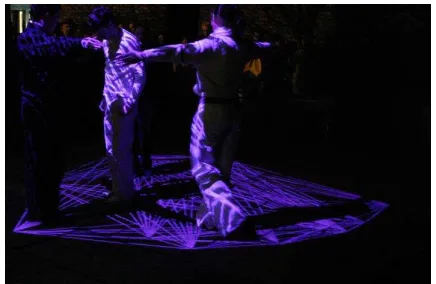
Figure 1: Cat's Cradle linking users. (Photo: Paul Davies)
The Setting
is a historic thoroughfare in a busy commercial area, close to the Parliament Street market. It is home to small department stores, cafes, bookstores, and up-market clothes shops.
The square, like an empty stage, looks like one of the many bombed-out spaces found in postwar British cities. One can almost imagine a noble building once standing in the space, set back from the road and raised above road level by three steps. The enclosure and height combine to ensure that it is largely bypassed by those traveling along Davygate itself, yet the open floor seems to invite a sense of display.
The location is intriguing, as it was almost like a vacuum in the busy city center. The potential that this creates is such that mounting the few steps up to the square has a more distancing effect than stepping off the road into a shop or onto another street. We recognized the transformative potential that this space had for engaging people with interactive artwork, since it felt removed from everyday life and could potentially “authorize” different behaviors as a result [1]. If people were going to dance anywhere in the streets of York, here was a likely place.
Our team, made up of Kit Monkman and Tom Wexler from KMA
Creative Technology Ltd. and ourselves from the University of Leeds, created a relatively simple technical infrastructure. A thermal-imaging camera misappropriated from the military was used as the input device to sense the bodies in the square. Digital images were then processed and sent to a projector, which was also perched high above the ground to create constantly moving projected light onto the surface of the square. This imagery was designed to respond directly to the
movement of people who might enter the space. The challenge was to entice them into this flag-stoned square with its four iron benches, two trees, and two square planters. It is not an inviting space and is
consequently largely neglected by the local population and tourists
alike. The square doesn’t even register on many of the modern maps
of York City Centre.
The square in which the installation was located. (Photo: Scott Palmer)
Looking out onto Davygate from inside the square. (Photo: Scott Palmer)
The Square Comes Alive
On our first evening of installation, we waited until darkness and then turned on the projected light which we hoped would entice the public into the square. Those walking by stopped to stare, and a few began to interact with the space, timidly walking between the lights.
The installation capitalized on immediate, intuitive body/movement responses to light and space. Users quickly established that the lights were following them, although often they did not know where the light was coming from or how the light was able to change. The chaotic elements of the programming prevented the experience from
becoming predictable. The butterflies that flocked around users’ feet
pathways, would dictate their own routes to a degree. Sometimes users would run after the escaping butterflies or footprints to try to recapture them, reacting to the computer programming so that any linear equation of action/reaction was disrupted and the game-like qualities were therefore enhanced.
The recognition of the game aesthetic here was crucial to the
experience. The user would walk into the space and realize that the lights were responding directly to his or her motion in space. People naturally played with that response. The “rules” were understood by users as part of the game—with the behavior of the images enabling, responding, or failing to respond. For example, if the user moved within the parameters of space and timing that the computer could sense, then the images responded, but if the user stepped out of the range of the thermal camera, then the images no longer responded to his or her movements.
Many visitors to the installation described the experience as “playful,”
“transparent,” or “magical.” The position of the square, set back and up from the street, encouraged the impression that visitors had moved further away from the thoroughfare than the distance traveled. It was almost like stepping onto a stage, with the lights picking out the users in the darkness. The remoteness of the space from “normal” life
supported the potential for a magical experience, particularly at night when the space was dark. The introduction of colorful, moving lights to that dark space created a feeling of festival and celebration. Passers-by on Davygate could not see exactly what was happening in the square, but they could see people moving, lit up as if by colored spotlights—unconsciously dancing in the streets.
Equally, users brought their own independent choices and modes of engagement to the work, as they discovered the rules and worked out how they wished to interact with them. They could step in and out of the light source, selecting the images with which they wished to interact. (Some groups even worked out the length of time between cycles of the football game and would return regularly to the square to participate energetically in this highly competitive element.) One of the key factors that made the installation so successful was its simplicity
from the user’s point of view. The rules of engagement were not
written down or taught, but were inherent in the design of the images and their programming.
yet chaotic relationship allowed for still more-sophisticated interactive experiences. It had been a major aim to get strangers dancing
together and communicating through movement where they might otherwise remain isolated, passing on the street. The clear sense of purpose and goal-oriented play led to reports of particularly strong experiences of interaction and communication. Yet it was interesting that the more abstract digital images encouraged a different kind of playful communication.
One of the installation elements was a game of Cat’s Cradle (Figure 1), with lines of light that linked everyone in the space. As users moved into the space, the ribbons of light immediately extended to include them in the web, changing the projected geometric shape to
accommodate the new body. The instant, dynamic response promoted a sense of connection that was fundamental to the work. It did indeed tie people together in a playful and communicative engagement with the space, resulting in spontaneous choreography of duets and groups. The linking of strangers via light beams sometimes led to eye contact and laughter, rather than necessarily engendering speech. People were not only dancing in the streets, but dancing together in the streets.
Individuals became totally engrossed in the experience of playing
within the installation. One woman came into the space and discovered as she walked around it that white squares appeared to light up under her feet. She became entranced by this and started to twirl as she moved around the space, holding the edges of her long coat out and looking down at the floor to watch the morphing light patterns. She seemed unselfconscious and at ease in the experience, despite the presence in the square of other people whom she did not know. She appeared to be reacting to the experience with a child-like playfulness. Apparently she had not understood that the lights were responding directly to her body heat and not to her clothing or how she
manipulated it. This did not affect her obvious enjoyment. In fact her circling movement, with constantly shifting projections on her
extended coat, became a beautiful and hypnotic image. As a user she seemed unaware of the image that she was creating, but it served to attract attention from other passersby who then also entered the space and interacted with the projected light.
The white squares in development in the theatre space.
The space and the choice of light as a medium had set up an
environment in which there was ambiguity, liminality, and safety. The small square became a safe place to play in a public environment where play is not usually an assigned activity for adults. Not only did a large proportion of people interviewed describe their interaction as magical, they also experienced moments of self-transcendence. When they left the space, they carried the memory of those experiences with them, but nothing was left behind.
Beyond York City Centre
The remit of this installation was not simply to engage individual participants in the potentially transformative experience of dancing in the streets. “Renaissance Project: Illuminating York” sought
transformation of the city itself after dark. Light has the potential to reveal, sculpt, and enhance the buildings and spaces of urban
landscapes. Dramatic lighting of the environment dates back at least to the Renaissance spectaculars of the Italian courts and their light festivals and water feasts, where eyewitnesses spoke enthusiastically of the dazzling, glittering brilliance of the outdoor theatrical
The temporary or permanent lighting of city buildings and areas has developed significantly in recent years. Town planners and regional arts coordinators have increasingly recognized light as having a transformative impact on the urban environment. Today many civic authorities consider light to be one of the main components of their policy for urban development and for enhancing their international influence. Light is used to show off architectural heritage while also playing an important role in improving the quality of life in the city.
The focus of such urban lighting designs has remained largely on the buildings and edifices. The city of Lyon, France, has chosen to use light to make a dramatic urban statement, employing lighting designers to transform more than 200 buildings and public areas into nocturnal panoramas. York has embarked on a similar program, aiming to animate its historic environment while inspiring and showcasing creative talent.
In “Dancing in the Streets,” we chose to prioritize people and their relationships over the buildings and the urban space. Through sensing
the heat of participants’ bodies and then projecting the light sources
back onto those bodies in space, we revealed the dynamics of human movement rather than the facets of historic buildings. Thus the
interface was dependent upon people moving and interacting with both the light projections and each other. Nathan Shedroff might say that we were making the interface essentially “human [3].”
There have been a number of further projects directly related to the original “Dancing in the Streets.” In 2006 the same installation was shown at the Esterni Festival in Rome, but it was less successful due to the fact that it was installed in a larger, more public square, with more ambient light. In the summer of 2006, the football element of the installation was developed into “Five Courts” for Light Night in Northern England. The cities of Bradford, York, Leeds, Hull, and
“Five Courts” at Light Night. (Photo: KMA Ltd)
The sides of each square represented goals into each of the other four cities, so the court in Sheffield had four goals marked “Bradford,”
“Hull,” “York,” and “Leeds.” If you kicked a ball into the Hull goal, it would appear in the court in Hull. At the end of a set time period, the
winning city’s name would appear in the centre of all five courts. This was a popular event, running for one night only. The concept behind
“Dancing in the Streets” has also been employed on a much larger scale in KMA’s installation “Flock” in London’s Trafalgar Square in 2007
and “The Hive” in Dublin, 2008.
“Dancing in the Streets” invited users to improvise together as
unselfconscious performers within the urban landscape. Attali’s
manifesto for composition proved influential in our work: “We are all condemned to silence unless we create our own relation with the world and try to tie other people into the meaning we thus create. This is
what composing is. Doing solely for the sake of doing… Playing for one’s own pleasure, which alone can create the conditions for new
communication… it relates to the emergence of the free act, self -transcendence, pleasure in being instead of having [4].”
Playful communication was evident through all aspects of the
installation. Attali’s metaphor of tying other people into the meaning that we create is particularly exemplified in the purple ribbons of light
used in the game of Cat’s Cradle in a visual interpretation linking
everyone together in the space. For the duration of the installation, the space became a new meeting point for participants, a place of
[1] De Certeau, M. The Practice of Everyday Life. 135-136. Minneapolis: University of Minnesota Press, 1998.
[2] Information from KMA’s web site; http://www.kma.co.uk
[3] Shedroff, N. “Research Methods for Designing Effective
Experiences.” In Design Research: Methods and perspectives, edited by Brenda Laurel, 155-163. Cambridge: MIT Press, 2003.
[4] Attali, J. Noise: The Political Economy of Music. Translated by B. Massumi. Minneapolis: University of Minnesota Press, 1985.
Acknowledgements
The authors gratefully acknowledge their collaborators in this and other projects, Kit Monkman and Tom Wexler at KMA Creative
Technology Ltd., York (http://www.kma.co.uk). The authors would also like to thank Joy Cann, assistant archivist at the City of York Archives, for her kind assistance in researching the history of the square in which the installation was located.
Notes
This article is based on a case study presented at DUX 2007. A video clip of “Dancing in the Streets” can be accessed on the interactions website.
About the Authors
Scott Palmer is lecturer in scenography in the School of Performance and Cultural Industries at the University of Leeds, UK. His research interests focus on lighting design and the interaction between technology and performance. Current projects include “Projecting Performance” (AHRC-funded) in collaboration with Sita Popat and KMA Creative Technology Ltd
(http://www.leeds.ac.uk/paci/projectingperformance/home.html), and
“Emergent Objects”(AHRC/EPSRC-funded) using performance perspectives to model design processes in a technological society
(http://www.emergentobjects.co.uk). Scott is the author of the Hodder and Stoughton Essential Guide to Stage Management, Lighting and Sound. He was editor of the Association of Lighting Designers’ journal Focus from 2002 to 2006, and is currently writing A Lighting Reader for the Palgrave Macmillan “Theatre Practices” series.
research interests center on relationships between dance choreography and new technologies. Current projects include
“Projecting Performance” with Scott Palmer and KMA Creative Technology Ltd, “Emergent Objects,” and “e-Dance”
(AHRC/EPSRC/JISC-funded) combining choreography and e-Science (http://www.ahessc.ac.uk/e-dance).She is the author of Invisible Connections: Dance, Choreography and Internet Communities
Designing Dancing in the Streets
“Dancing in the Streets” was designed to be experienced, so we
developed it by using/experiencing it. The installation was created via workshops in which we played within the developing artwork from the earliest possible point. Undergraduate students from the dance and performance design programs at the University of Leeds played with us, suggesting ideas for developments to both the visual imagery and the interface. Passing colleagues were encouraged to join in so that we could see how they reacted to the emerging installation and gain their feedback on what might make it more engaging for them.
The relatively simple programming environment enabled us to work quickly and improvise with the technology. Usually, only a few minutes were needed to alter the parameters of the sprites (e.g., colors,
behavior). This approach focused on both our own “in the moment” responses and those of the colleagues and students whom we co-opted as testers.
The football game being developed in rehearsal in the theatre studio. (Photo: Scott Palmer)
to distinguish between the “ball” and the circles responding to the
user’s body heat. Another user wanted to keep track of the score, so
score-boards were added on either side of the projection area. If the ball was kicked to the side of the projection area, then it was a goal.
The design for “Dancing in the Streets” needed to be based upon a framework of possibilities so that users could interact and improvise within a responsive environment. We sought an interface that would feel transparent but would be sufficiently reflective to produce a meaningful response, an aesthetic effect regardless of how the user chose to interact with it. The digital images were selected and modified to establish key ways in which they would respond to human
interaction. They were fixed in terms of their behavioral qualities, range of color, and the sequence in which they appeared to the users on a regular timed cycle, but each image had fluidity, as it was
constantly responding to user input. Some images, such as ghostly footprints, echoed the history of the space in which the installation was set—once an old graveyard, now deconsecrated and paved. Others were unrelated, such as the butterflies and the abstract lines and ribbons.
The overall aesthetic of the artwork was carefully controlled to provide artistic cohesion and form. But crucially, the ways in which the
audience could interact with these images were not fully prescribed; they existed within a framework that included potential for significant variability and even surprise within the rules of engagement. KMA
describe how their work is “rooted in the modelling of the physics of