A STUDY TO ASSESS THE EFFECTIVENESS OF GINGER TEA
ON REDUCTION OF MORNING SICKNESS AMONG FIRST
TRIMESTER PRIMI ANTE NATAL MOTHERS AT SELECTED
PRIMARY HEALTH CENTRE IN DINDIGUL DISTRICT
A DISSERTATION SUBMITTED TO
THE TAMILNADU DR.M.G.R MEDICAL UNIVERSITY,
CHENNAI,
IN PARTIAL FULFILLMENT OF THE REQUIREMENTS
FOR THE DEGREE OF
MASTER OF SCIENCE IN NURSING
A STUDY TO ASSESS THE EFFECTIVENESS OF GINGER TEA
ON REDUCTION OF MORNING SICKNESS AMONG FIRST
TRIMESTER PRIMI ANTE NATAL MOTHERS AT SELECTED
PRIMARY HEALTH CENTRE IN DINDIGUL DISTRICT.
Mrs. ANNA KAMU.S
A DISSERTATION SUBMITTED TO
THE TAMILNADU DR. M.G.R MEDICAL UNIVERSITY,
CHENNAI,
IN PARTIAL FULFILMENT OF THE REQUIREMENTS
FOR THE DEGREE OF
MASTER OF SCIENCE IN NURSING
OCTOBER-2017
CERTIFICATE
This is a bonafide work of
Mrs. ANNA KAMU.S.M.Sc (N)
II Year
Student from Sakthi college of Nursing, Dindigul, Tamilnadu, India,
submitted in partial fulfillment for the Degree of Master of Science in
Nursing under the Tamil Nadu Dr.M.G.R Medical University, Chennai.
Signature of the Principal __________________________________
Prof. V.JANAHI DEVI, M.Sc (N).,
A STUDY TO ASSESS THE EFFECTIVENESS OF GINGER TEA
ON REDUCTION OF MORNING SICKNESS AMONG FIRST
TRIMESTER PRIMI ANTE NATAL MOTHERS AT SELECTED
PRIMARY HEALTH CENTRE IN DINDIGUL DISTRICT.
1. RESEARCH GUIDE:
Prof.V.JANAHI DEVI, M.Sc (N)., Principal,
Sakthi College Of Nursing, Oddanchatram,
Dindigul. (DT)
2. SUBJECT GUIDE:
Asst. Prof.T.GANGA ESWARI, M.Sc(N),MBA(HM)
HOD.Obstetrics and gyneacological Nursing, Sakthi College Of Nursing,Oddanchatram, Dindigul (DT).
3. MEDICAL EXPERT:
A STUDY TO ASSESS THE EFFECTIVENESS OF GINGER TEA
ON REDUCTION OF MORNING SICKNESS AMONG FIRST
TRIMESTER PRIMI ANTE NATAL MOTHERS AT SELECTED
PRIMARY HEALTH CENTRE IN DINDIGUL DISTRICT.
OCTOBER-2017
CERTIFIED BONAFIDE WORK DONE BY
Mrs. ANNA KAMU. S
M.SC (NURSING) II YEAR
SAKTHI COLLEGE OF NURSING, ODDANCHATRAM,
DINDIGUL.
INTERNAL EXAMINER EXTERNAL EXAMINAR
1.
2.
ACKNOWLEDGEMENT
”
Thanks to be God for his all blessings and miracles’’My great indebted thanks to the Lord Almighty for his abundant blessings, endless grace and love showered on me in providing the strength to overcome all the
difficulties and made me to complete my study successfully, without which it would
not have been possible.
There are several hands behind in giving a shape to this research study, which
would be impossible to mention all by name. There are some whom the investigator
would particularly like to thank.
I am substantially thankful to our chairman Dr.K.Vembanan M.B.B.S.,
M.S., and I express my deep gratitude and heartfelt thanks to our vice-chairman Dr. GokilaVembanan M.B.B.S, DGO for their encouragement and dedication towards the academic excellence and for providing me an opportunity to
finish my project successfully.
It is my bounden duty to express my heartiest gratitude to
Prof.V.Janahi devi, M.Sc (N), Principal, Sakthi College of Nursing, for her constant enthusiastic support, warmth inspiration and gave innovative ideas to incorporate in
this project.
I express my deep heartfelt thanks to my subject
guide Asst.Prof.T.Ganga Eswari, M.SC (N)., MBA (HM), HOD of obstetrics and
gyneacological Nursing, for diligent effort to ensure the best quality, peace
of work, her reassuring plan and a very approachable and inspiring quote, than
I Proudly convey my deep indebtedness to Asso.Prof.Nithyaveni M.SC(N)., Department of obstetrics and gyneacological Nursing, Asst.prof.Thulasi mani
M.SC(N)., Department of Medical Surgical Nursing, Asst.Prof.Sathya Sri, M.SC(N) Department of Mental Health Nursing and Asso.prof.Chinthamani, M.SC(N) Department of Community Health Nursing, for the timely help and guidance.
I extend my whole hearted thanks to all Faculty Members of Sakthi College of Nursing for their continuous encouragement, guidance and valuable suggestions for
this project.
I profusely thank all Medical and Nursing Experts who validated the content
and tool, which helped to incorporate their views in this project.
I am thankful to MS.vanitha B.Tech and Mrs.Poongodi (B.A), P.A.M.L.I.Sc., librarian of Sakthi College of Nursing for helping me with literature work and for extending library facilities throughout the study.
I wish to communicate my extraordinary credit to Mr. Mani, M.Sc, M.Phil. Bio statistician for his well-timed and opportune aid and backing in statistical analysis
and presentation of data.
I extend my special thanks to Dr. Elangovan .M.B.B.S., Block Medical Officer and Dr.Sasi kala M.B.B.S Obstetrics and gyneacologist of primary health centre in Guziliyamparai and Dr.Ponmageshwari M.B.B.S., Block Medical Officer of Primary Health Centre in, Dindigul district who gave me permission to conduct the study and my special heartful thanks to all the participants for their co-operation throughout the study. Without their co-operation it would not have been
My greatful thanks to Mrs.B.Rathi devi M.A., M.Phil, M.A., Ph.D., HOD of
Tamil and Mrs.Sathya, M.A., M.Phil. M.B.A HOD of English, Sakthi college of Arts and Science for editing this manuscript and tool in Tamil and English.
I also express my warm wholehearted thanks and gratitude to my
Classmates and my lovable seniors and juniors for their constant help throughout the
study.
Life has blessed me with an understanding, lovable and value oriented my
beloved husband Mr.M.Senthil Kumar B.E,.M.B.A., who persuaded me to pursue Post Graduate study, I am ever grateful to his supportive presence all along.
I am extend my warmest gratitude to my lovable daughter Baby. S.Vaisali,
who missed my love and care during the course of the study above all.
It is my honour and previledge to thank my Father Mr.V.Subramani and my
Mother Mrs.S.Vijaya, and my sister Ms.S.Angu lakshmi M.E, and my mother-in-law Mrs.Packiyam, for their constant and continuous support, timely help, prayer and encouragement to complete this study as a very successive one.
This study drew upon the knowledge and help, experience and expertise of
many persons of good will, though too numerous to name, each one of them is
remembered for their individual contributions without which the realization and
presentation of this research would not have been possible. So I shower my great deal
ENDORSEMENT BY THE SUBJECT GUIDE AND HOD
This is to certify that the dissertation entitled
“
A Study To Assess
The Effectiveness Of Ginger Tea On Reduction Of Morning Sickness
Among First Trimester Primi Ante Natal Mothers At Selected
Primary Health Centre In Dindigul District
”
is a bonafide research
work done by
Mrs.Anna Kamu.S
in partial fullfilment of the
requirement for the degree of Master of Science in Nursing (Obstetrics
and Gyneacological Nursing)
Seal and Signature of the subject guide and HOD
Asst. Prof.T.GANGA ESWARI, M.Sc(N),MBA(HM) HOD. Obstetrics and gyneacological Nursing,
Sakthi College Of Nursing, Oddanchatram,
Dindigul (DT).
Place:
ABSTRACT
A Study was conducted “to assess the effectiveness of ginger tea on reduction of morning sickness among first trimester primi ante natal mothers at selected primary health centre in Dindigul district” was done by Mrs. Anna kamu.s as a partial fulfilment of the requirement for the Degree of Master of science in Nursing to the Tamilnadu Dr.M.G.R. Medical University, Chennai during the year 2015-2017.
The objectives of the study were, to assess the level of morning sickness among first trimester among primi ante-natal mother in control and experimental group, to find out the effectiveness of ginger tea in reduction of morning sickness and among first trimester primi ante –natal mothers in experimental group and to determine the association between the pre test level of morning sickness with selected demographic variables among first trimester primi ante-natal mothers in control and experimental group. In this study a quasi experimental non-randomized control group pre test post test design was adopted. Non probability purposive sampling technique was used to select each 30 samples in experimental and control group equally. Interview technique was used to collect the demographic variables and Modified Rhodes Index of Nausea, Vomiting and retching scale was used to assess the level of morning sickness. Experimental group receives ginger tea twice a day for 4 days.
The control group, majority 18(60%) of the primi ante natal mothers belonged to the age group of 26-30 years,21(70%) of them had primary education,13(43.3%) of them in sedentary work, 14(46.7%) of them are daily waged workers, 59(50%) of them are in 9-12 weeks of gestation, 25(83.3%) were non vegetarian, 12(40%) of them had monthly income <5000, 23(76.7%) of them are in rural,21(40%) of them are Hindu, 17(56.7%) belonged to nuclear family.
The level of morning sickness in control group were 1(3.3%)subject experienced mild sickness,8(26.7%) had moderate sickness ,12(40%) shown severe symptoms and 9(30%) experienced profound sickness respectively in post test. The level of morning sickness in the experimental group were 12(40%) subject experienced mild sickness, 17(56.7%) had moderate sickness, 1(3.3%) shown severe sickness and no one experienced profound sickness respectively in post test. This finding reveals that the levels of morning sickness among first trimester were decreased in experimental group than control group.
The control group calculated‘t’ test value was 1.79 which is not significant at P<0.05 level. The experimental group calculated‘t’ test value was 11.1 which is significant at P<0.001 level.
In comparing post test scores of experimental group and control group calculated ‘t’ test value for 7.84 which was significant at P<0.001 level. Hence H1
was accepted. It can be concluded that ginger tea was effective in reducing the morning sickness among first trimester primi ante natal mothers in experimental group than control group.
TABLE OF CONTENTS
CHAPTER
CONTENTS
PAGENO
I
INTRODUCTION
1Need for the study 4
Statement of the problem 7
Objectives of the study 7
Hypothesis 7
Operational definitions 8
Assumptions 9
Delimitation 9
Project outcome 9
II
REVIEW OF LITERATURE
Studies related to morning sickness 10
Studies related to management of morning sickness 12 Studies related to use of ginger in reducing nausea and
vomiting
13
Conceptual frame work 17
III
METHODOLOGY
Research approach 21
Research design 21
Variables under the study 22
Setting of the study 22
Population 23
Sample / Sample size 23
Criteria for sample selection 25
Sampling technique 25
Development of tool 26
Scoring procedure 27
Validity and reliability of the tool 27
Data collection procedure 28
Plan for data analysis 28
Protection of human rights 29
IV
DATA ANALYSIS AND INTERPRETATION
32-55V
DISCUSSION
56-58VI
SUMMARY AND RECOMMENTATION
Summary 59
Implication 62
Limitation 63
Recommendation 64
REFERENCES
Book reference 65
Journal reference 67
Net reference 68
LIST OF TABLES
TABLE
NO
TITLE
PAGE
NO
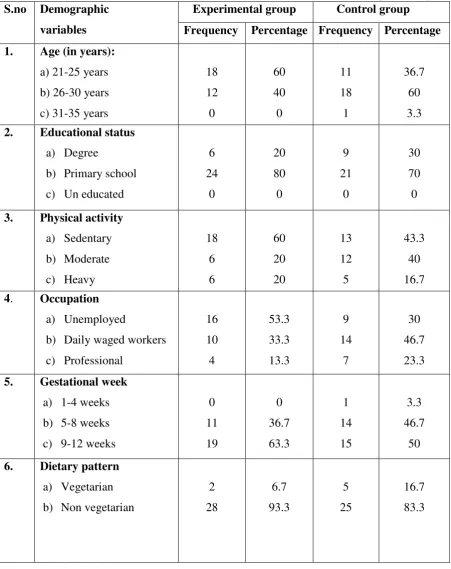
1 Data on demographic variables of First trimester primi antenatal mothers in experimental and control group.
32
2 Data on level of morning sickness among First trimester primi ante natal mothers in experimental and control group.
46
3 Paired ‘t’test of pre and post test level of morning sickness among First trimester primi ante natal mothers in control and experimental group.
49-50
4 Unpaired ‘t’test of post test level of morning sickness among First trimester primi ante natal mothers in control and experimental group.
51
5 Data on association between the level of morning sickness and their Selected demographic variables in control group.
52
6 Data on association between the level of morning sickness and their Selected demographic variables in experimental group.
LIST OF FIGURES
FIGURES
TITLE
PAGE
NO
1 Conceptual Frame Work Based on Wiedenbach’s Helping Arts ofClinical Nursing Theory(1964
20
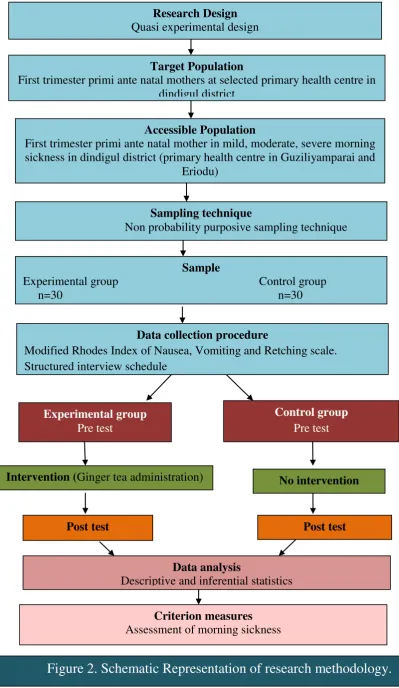
2 Schematic Representation of Research Methodology 24
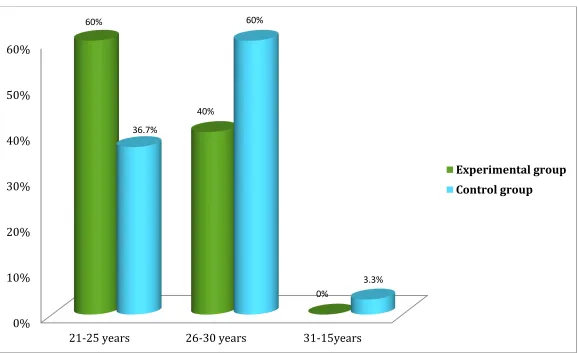
3 Distribution of subjects based on their age in experimental and control group.
36
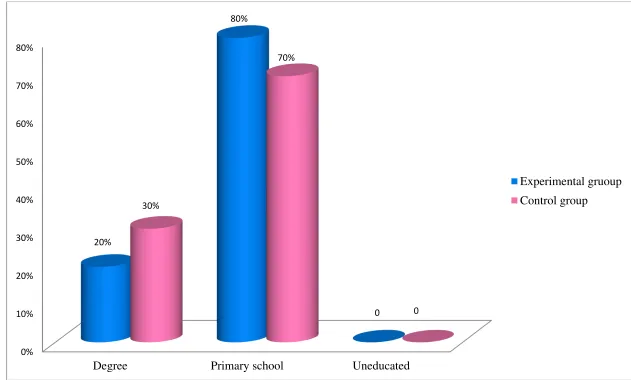
4 Distribution of subjects based on their educational status in experimental and control group.
37
5 Distribution of subjects based on their physical activity in experimental and control group.
38
6 Distribution of subjects based on their occupation in experimental and control group.
39
7 Distribution of subjects based on their gestational week in experimental and control group.
40
8 Distribution of subjects based on their dietary pattern in experimental and control group.
41
9 Distribution of subjects based on their family income in experimental and control group.
42
10 Distribution of subjects based on their place of living in experimental and control group.
43
11 Distribution of subjects based on their religion in experimental and control group.
44
12 Distribution of subjects based on their family type in experimental and control group.
45
13 Distribution of subjects based on the pre test and post test level of morning sickness in control and experimental group.
LIST OF APPENDICES
APPENDIX
NO
TITLE
PAGE
NO
I Permission seeking letter i
II Permission letter for content validity iii
III Certificate of content validity v
IV List of Expertise ix
V Certificate of English Editing x
VI Certificate of Tamil Editing xi
VII Certificate for ethical clearance xii
VIII Data Collection Tools
Section -I:Demographic variables
Section –II: Rhodex index of nausea, vomiting and retching scale
xiii xv
IX Content of ginger tea xxi
1
CHAPTER-I
INTRODUCTION
“Pregnancy seems designed to prepare you for life as a mother. You start making sacrifices nine months before the child is born, so by the time they put in
an appearance you are used to giving things up for them.”
― Brett Kiellerop
Motherhood is an inevitable part of a woman’s life. It’s a natural law that a woman should carry her baby in her womb for 9 months and to undergo the process of
labor. From the time the mother starts conceiving the baby, it is called pregnancy and
the mother elicits describable and undifferentiated changes in the physical and
physiological process of life. The mother experiences some signs and symptoms right
from the first trimester of pregnancy. As each woman are unique, different mothers
experience and present different signs and symptoms and it is not a must that all
women should have the same manifestations (Mary, 2008).
About 90% of the women experience nausea and vomiting during pregnancy.
The intensity of nausea and vomiting depends upon the individuals according to other
predisposing factors which are still remaining unknown. Some argue about the role of
familial predisposing factors as the cause relating to nausea and vomiting, while
others contradict. Even though the factors remain unknown, the problems faced by the
pregnant ladies due to nausea and vomiting make it difficult for them to manage the
time of pregnancy as well as to succeed in maintain normal and recommended
nutritional status which in its absence can create complications for the mother and the
baby (Ruth & Linda , 2009).
Morning sickness is common among pregnant women. Fortunately, for the
2
arum, the problem is even worse - and potentially dangerous. These women would
readily settle for normal morning sickness - their vomiting is so severe no food or
liquid can be kept down. Unlike most morning sickness, hyperemesis gravidarum
usually persists past the first trimester (third) of pregnancy. It typically subsides by
week 21 of pregnancy, but can last much longer (Merriam, 2012).
Nearly all women have some nausea, vomiting or "morning sickness,"
particularly during the first 3 months of pregnancy. The cause of nausea and vomiting
during pregnancy is believed to be rapidly rising blood levels of a hormone called
HCG (human chorionic gonadotropin), which is released by the placenta. Nausea and
vomiting usually peaks between 2 and 12 weeks of pregnancy and goes away by the
second half of pregnancy. With proper identification of symptoms and careful
follow-up, this condition rarely presents serious complications for the infant or mother. Too
much vomiting is harmful because it leads to dehydration and poor weight gain during
pregnancy. Social or psychological problems may be associated with this disorder of
pregnancy. If such problems exist, they need to be identified and addressed
appropriately (Russell, 2011).
The venerable medical journal Obstetrics and Gynecology published a study
on the effectiveness of ginger for pregnancy-related nausea and vomiting. Seventy
pregnant women who were less than 17 weeks pregnant were studied for five months
to determine if ginger had any effect on morning sickness. They were given either 1
gram of ginger daily or a placebo. Both nausea and vomiting decreased significantly
in the ginger group, while barely at all in the control group. No adverse outcomes
were reported. The researchers concluded that ginger is safe and effective for nausea
3
Researchers have linked ginger’s efficacy in treating NVP to its ability to either prevent or to help expel gas. Ginger uses gastric effects to increase rhythmical
passage of food down the digestive tract, called peristalsis. Unlike medications, ginger
does not act on the central nervous system. Instead, it only acts on the digestive tract
and thus avoids the complications associated with stimulating the nervous system.
Chemical compounds called gingerol and -shogaol are thought to give ginger its
anti-nausea properties (Jean Harvey-Berino, 2015).
According to the National Health Service (NHS), UK, about 28% of women
experience nausea without vomiting. If nausea and vomiting is to occur it will usually
do so during the 6th week of pregnancy, but in some cases it may strike during the
second week. For many women the symptoms of morning sickness are their first signs
of pregnancy. Most pregnant women find that the morning sickness improve after the
12th week of pregnancy. Unfortunately, for some women symptoms persist
throughout their pregnancy.
In the vast majority of cases, morning sickness, although an unpleasant
experience has no health risk for the baby, and is a normal part of pregnancy. In fact,
some studies indicate that morning sickness during pregnancy often bodes towards a
healthy pregnancy, with lower rates of miscarriages and still births, compared to
pregnancies with no nausea or vomiting. Although viewed romantically and
humorously, morning sickness can seriously affect the mother's quality of life and
how she goes about her daily activities. Women who are able to receive the support of
family and friends tend to cope much better (Christian Nordqvist, 2015).
Herbal preparations such as ginger tea may help to relieve morning sickness
4
NEED FOR THE STUDY:
Pregnancy is a long and very special journey for a women .It’s a wonderful experience yet it is associated with some minor disorders as nausea and vomiting,
heart burn, constipation, cramps, backache, varicose veins, ankle edema
(Ruth.V,2011).
According to WHO, in World the total fertility rate was 2.7 and total fertility
rate in India was 3.1 in the year 2000-2005. According to UNICEF data, in India the
antenatal care coverage percentage in the year 2005-2006 was 74% and 47% of birth
attended by skilled health personnel. According to Census of India, in Karnataka
female population constitutes 49.11% of total population and the total fertility rate is
2.2 (WHO, 2013).
Among all the minor discomforts associated with pregnancy a very common
experience shared by pregnant women all over the world is “morning sickness”, a normal psychological phenomenon not an illness but a part of being healthy. Nausea
and vomiting specially in the morning, soon after getting out of bed are usually
common in primi gravida. They usually appear following first and second missed
period and subside by the end of first trimester (Dutta, 2011).
Hyperemesis gravidarum is the severe type of vomiting of pregnancy which
has got deleterious effect on the health of the mother and/or incapacitates her in day to
day activities. It affects 1 in 1000 pregnancies or 0.5-2%. 70-80% of pregnant women
will endure nausea symptoms and 40-50% will experience vomiting. Although 20%
of women will experience morning sickness for a longer period of time and 2% of
these will suffer until baby is finally born. The incidence seems to higher among
teenagers, women over age 35, women who are obese, non smokers or women with
5
Some researchers consider morning sickness to be normal because growing
placenta produce estrogen which can heighten a woman’s sense of smell and cause nausea. If a placenta is not producing estrogen it means that there may be a problem
with pregnancy. Others suggested morning sickness may also be exerting a protective
mechanism by making a pregnant women shy away from foods that may be unhealthy
for her fetus.
A cross sectional comparative study was done to examine perceived stress,
social support, maternal psychological adaptation among 150 pregnant women with
different severities as mild, moderate, severe of nausea and vomiting of pregnancy.
The findings revealed that pregnant women with mild nausea vomiting had
significantly lower stress than did pregnant women with severe nausea and vomiting.
Social support and maternal adaptation were not different but the severity was
associated with fear of helplessness and loss of control.
A study was conducted among 160 women who provided daily recordings of
pregnancy duration, severity of nausea and vomiting. The findings were that 74% of
women reported nausea lasting a mean of 36.4 days. Morning sickness occurred in
only 1.8% of women whereas 80% reported nausea lasting for all day. Only 50% of
women were relieved by 14 weeks of gestation and 90% had relief by week
22.Researcher suggested a larger study is needed in clinical trial.
A study was conducted to assess nausea vomiting of pregnancy among 363
pregnant women. Results were that 28% experience nausea only while 52% nausea
and vomiting. The mean number of days from last menstrual period to onset and
cessation was 39 and 84 respectively. The mean total number of hours of nausea per
6
occurring in 9th week. Researcher concluded a detailed study is needed to know the
etiology of nausea (Gadsby.R, 2011).
Management includes reassurance, dietary modifications, pharmacological therapy for
patient with persistent symptoms and complementary alternative treatment as psycho
therapy, herbal remedies, acupressure (Quinla.J.D, 2013).
Ginger is used in more ways than any other spices. The derived products are
such as ginger powder, syrup ginger, volatile oil. The chemistry of component which
contributes aroma and pungency that characterize ginger is reviewed. Areas where
more research is needed are functional, physiological, toxicological properties in use
of ginger (Govindrajan, 2014).
A clinical trial study conducted among 70 antenatal women who were
experiencing severe nausea and vomiting during pregnancy were randomly assigned
to take capsules 250mg of ginger four times a day or a placebo. Compared to controls
women who took ginger for 4 days reported significant improvement in nausea at the
level of p<0.014and fewer episodes of vomiting at the level of p<0.021.Although
results were good but researcher suggest a larger study is needed to determine safety
of ginger during pregnancy (Vutyavanich.T, 2011).
The researcher has observed during her clinical posting that morning sickness
is one of the main health problems which affect all pregnant women. As conventional
antiemetic are burdened with potential of teratogenic effects during embryogenesis
period of pregnancy. Researchers felt that there is a need of intervention in this field
in order to support pregnant mother so that she can enjoy her pregnancy. Ginger tea is
one of the herbal remedy used in the treatment of nausea and vomiting but as there is
need for further study in that area, so the investigator is interested to conduct an
7
STATEMENT OF THE PROBLEM:
A Study to assess the effectiveness of ginger tea on reduction of morning
sickness among first trimester primi ante natal mothers at selected primary health
centre in dindigul district .
OBJECTIVES
:
1. To assess the level of morning sickness among first trimester among primi
ante-natal mother in control and experimental group.
2. To find out the effectiveness of ginger tea in reduction of morning sickness among
first trimester primi ante –natal mothers in experimental group.
3. To determine the association between the pre test level of morning sickness with
selected demographic variables among first trimester primi ante-natal mothers in
control and experimental group.
HYPOTHESES:
H1-The mean post test level of morning sickness will be significantly lower than the
mean pre test level of morning sickness among first trimester primi ante-natal mothers
in experimental group.
H2-The mean post test level of morning sickness in experimental group will be
significantly lower than the mean post test level of morning sickness in control group
among first trimester primi ante-natal mothers.
H3-There will be significant association between the level of morning sickness among
first trimester primi ante- natal mothers and their selected demographic variables in
8
OPERATIONAL DEFINITIONS:
1. Effectiveness: the desired effect.
In this study it refers to the extent to which ginger tea has the effects as
measured by reduction in occurance of vomiting and feeling of nausea.
2. Morning sickness: It refers to nausea and vomiting which occurs during first three months of pregnancy.
In this study morning sickness refers to the sense of feeling nauseated and
vomiting experienced by first trimester primi antenatal mothers who will be assessed
in terms of characters such as retching and dry heaves, distress and sick to the stomach.
3. Ginger tea: It refers to tea made of ginger root in this study ginger tea was prepared by boiling 300ml of water over medium to high heat and then added 500mg
ginger root, allowed it to boil for 3-5mts removed from heat and strained. Added
sugar for taste (1/2 teaspoon) and served the mothers twice a day for four days.
4 .First trimester: Refers to the first three months of pregnancy i.e. period between 1-12 weeks of pregnancy.
In this study first trimester refers to the first day of last period and lasts
until the end of week 12.
5. Primi antenatal mothers: Refers to all pregnant women before childbirth and who are pregnant for the first time.
In this study primi antenatal mother refers to mothers who are pregnant for the
9
ASSUMPTION:
1. Morning sickness may differ from one individual to another.
2. Morning sickness is the normal physiological changes during pregnancy
for most of the mothers during first trimester.
3. Ginger tea will reduce the severity of morning sickness.
DELIMITATION:
The study is limited to;
1. The area which is selected for the data collection.
2. The primi antenatal mothers who are in first trimester.
3. The primi antenatal mothers who are not in high risk of pregnancy.
4. Each sample for 4 days.
PROJECTED OUTCOME:
The findings of the study would help nurse to understand the effect of
ginger tea for morning sickness.
The findings would also help nurse in conduction of future research by
10
CHAPTER-II
REVIEW OF LITERATURE
Review of literature is an integral component of research process. It enhances
the depth of knowledge and inspires a clear insight into crux of problem. It help the
researcher to know what data are available to narrow the problem itself as well as the technique that might be used.
Review of literature helps to develop a strong knowledge base to carry out
research in educational, clinical practice settings and for further development of
knowledge in nursing science (Pilot, Beck. 2011)
Literature relevant for this study had been organized in the following sections.
A) Studies related to morning sickness.
B) Studies related to management of morning sickness.
C) Studies related to use of ginger in reducing nausea and vomiting
A) Studies related to morning sickness.
Lacro.R, et al, (2014) had done a study in Norway to estimate the risk of
morning sickness according to whether the daughters and sons under study were born
after pregnancies complicated by morning sickness. The samples of the study were
544087 units of mother and childbearing daughter and 399777 units of mother and
child producing son. The study states that daughters who were born after a pregnancy
complicated by morning sickness had a 3% risk of having morning sickness in their
own pregnancy, while women who were born after an unaffected pregnancy had a risk
of 1.1% Female partners of sons who were born after pregnancies complicated by
morning sickness had a risk of 1.2%. Daughters born after a pregnancy not
11
had morning sickness in a previous or subsequent pregnancy 3.2 if morning sickness
had occurred in one of the mother’s previous pregnancies and 3.7 if it had occurred in
a later pregnancy. The study concluded that morning sickness is more strongly
influenced by the maternal genotype than the fetal genotype, though environmental
influences along the maternal line cannot be excluded as contributing factors.
Swallow B.L.S et al, (2012) conducted a study to find out aversive stimuli that
are related to nausea vomiting in pregnancy among 273 women in an antenatal
setting. Data was collected by using nausea and vomiting in pregnancy instrument:
General Health Questionnaire (GHQ).Results stated that total of 5% women reported
that an aversive stimulus was olfaction, with 72% reported food smells. A number of
women were affected by the odour of drinks 26% and other products 31%.Researcher
concluded odour appears to be an important stimulus related to pregnancy nausea
vomiting.
Koken.G, et. al, (2011) had undertaken a study to investigate association
between depression and anxiety early in pregnancy and nausea and vomiting. Anxiety
and depression scores of 230 women were investigated by using Hospital Anxiety and
Depression Scale. Nausea and vomiting of pregnancy were scored by using Rhodes
System. Results shown a significant correlation between Rhodes score and anxiety at
the level of r=0.388,p<0.001 and depression score at the level of r=0.331,p<0.001was
found Gestational age showed inverse correlation with anxiety score at the level of
p=0.019.The conclusion was that there is an association between anxiety and
depression early in pregnancy and severity of NVP.
Iatrakin.S.M (2013) conducted a study using questionnaire to 102 pregnant
women in the first 12 weeks of pregnancy in an effort to see which factor is co-related
12
unsuitable diet with big and rare meals, poor communication with husband, poor
communication with obstetrician, stress doubts and inadequate information about
pregnancy and childbirth.
B) Studies related to management of morning sickness.
Shulkin. J (2014) conducted a study to assess obstetrician-gynecologists
treatment of nausea and vomiting of pregnancy and to compare it with
recommendations in American College Of Obstetrician and Gynecologists (ACOG)
bulletin. A questionnaire was mailed to 1075 ACOG fellows who constitute
Collaboratory Ambulatory Research Network. The result was most frequently
recommended treatment for patient with moderate to severe nausea were eat frequent,
small meals 93%, snack on soda crackers 68.5%and take vitamin B6 plus doxylamine
67.18%.Respondents who read the bulletin were more likely to prescribe vitamin B6
84% vs.73.8%, p=0.005 and vitamin B6 plus doxylamine 70.9% vs.59.3%,
p=0.009.The conclusion was that obstetrician gynecologist treatment and prescribing
practices generally follow ACOG recommendations.
Rosen. T, DE, et. al, (2013) had evaluated the effectiveness of low level nerve
stimulation therapy over the volar aspect of wrist at the P6 point to treat nausea and
vomiting in early pregnancy. Pregnant volunteers n=230 with mild to severe nausea
vomiting between 6 and 12 weeks gestation participated in a 21 days trial. The
outcome was measured by Rhodes Index of Nausea, Vomiting, and Retching.
Pretreatment Rhodes index scores for entire population demonstrated no significant
difference between study and control group. The time averaged change in Rhodes
index total experience of 6.48 for the study group was better than control value of 4.6
at the level of p=.02.Researcher concluded that nerve stimulation therapy is effective
13
Boon.H, et. al, (2012) examined the use of Complementary and Alternative
Medicine (CAM) among 70 women suffering from nausea vomiting during
pregnancy. Samples were asked to fill a questionnaire which includes demographic
data as well as use of CAM. Results were 61% reported using acupressure,21% of
those reported using CAM, 8% their physician or pharmacist and 71% discussed the
usage with family, friends other health professionals. The Researcher concluded that
Complementary and Alternative Medicine is effective in reducing nausea, vomiting in
the first trimester of pregnancy.
C) Studies related to use of
ginger in reducing nausea and vomiting
Estelle Viljoen, et. al, (2014) conducted a systematic review and meta-analysisof the effect and safety of ginger in the treatment of pregnancy-associated nausea and
vomiting. The primary objective was to assess the effectiveness of ginger in treating
NVP. The secondary objective was to assess the safety of ginger during pregnancy.
Randomized controlled trials (RCTs) of the efficacy of orally administered ginger, as
treatment for NVP in pregnant women at any stage of pregnancy, published in
English, were included. Two researchers independently extracted data and assessed
trial quality. RevMan5 software (Cochrane Collaboration) was used for data analysis.
p <0.05 was considered statistically significant. Twelve RCTs involving 1278
pregnant women were included. Ginger significantly improved the symptoms of
nausea when compared to placebo (MD 1.20, 95% CI 0.56-1.84, p = 0.0002, I2 = 0%).
Ginger did not significantly reduce the number of vomiting episodes during NVP,
when compared to placebo, although there was a trend towards improvement (MD
0.72, 95% CI -0.03-1.46, p = 0.06, I2 = 71%). Subgroup analyses seemed to favor the
lower daily dosage of <1500 mg ginger for nausea relief. Ginger did not pose a
0.65-14
15.11, p = 0.15; I2 = 0%), or to vitamin B6 (RR 0.49, 95% CI 0.17-1.42, p = 0.19, I2 =
40%). Similarly, ginger did not pose a significant risk for the side-effects of heartburn
or drowsiness.
Thomas, et. al, (2014) performed a meta-analysis of clinical trials using
ginger for NVEP as published in Pub Med and EMBASE, CINAHL, Cochrane
Library, and all EBM reviews. Studies satisfying 3 criteria were selected: (1)
randomized placebo-controlled design; (2) use of ginger or Z. officinale; and (3)
extractable data on improvement in NVEP. Data were synthesized into pooled odd
ratios based on the random effects model, and results were tabulated with the aid of
Forest plots. Identified 135 potentially relevant records; only 6 studies met the final
criteria. Of the total 508 subjects, 256 and 252 subjects were randomly assigned to
receive ginger and placebo, respectively. The use of ginger (∼1 g daily) for at least 4
days is associated with a 5-fold likelihood of improvement in NVEP. Heterogeneity
among the clinical studies were acknowledged in the final interpretation of results.
Jean Harvey (2013) had recently confirmed the effectiveness of ginger in
decreasing nausea during pregnancy. Sixty-seven pregnant women in Iran who were
experiencing nausea and vomiting were given 250 mg of ginger 4 times a day, while
the control group was given placebo. The women taking the gingerroot demonstrated
85% improvement, while the placebo group reported a 56% improvement. A
significant decrease in the frequency of vomiting occurred among the ginger group:
50% versus 9% for the placebo group. The clinicians concluded that ginger is an
effective tool for decreasing nausea and vomiting during pregnancy.
Ozgoli.G ,et. al, ( 2012) had confirmed the effectiveness of ginger in
decreasing nausea during pregnancy. Sixty-seven pregnant women in Iran who were
15
the control group was given placebo. The women taking the gingerroot demonstrated
85% improvement, while the placebo group reported a 56% improvement. A
significant decrease in the frequency of vomiting occurred among the ginger group:
50% versus 9% for the placebo group. The clinicians concluded that ginger is an
effective tool for decreasing nausea and vomiting during pregnancy.
Crowther.C (2014) had done a study to examine the effect of 1.05g of ginger
or 75mg of vitamin B6 per day were compared using randomized double blind design
among 291 South Australian women less than 16 weeks pregnant. Women took either
treatment daily for 3 weeks. Results shown ginger was equivalent to vitamin B6 in
reducing nausea at the level of mean difference 0.2; 90% confidence interval CI-0.3,
0.8, retching at the level of mean difference=0.3, 90% CI-0.0,0.6 and vomiting at the
level of mean difference 0.5, 90% CI=0.0.0.9.Researchers concluded that ginger is as
effective as vitamin B6 in controlling nausea vomiting and dry retching in early
pregnancy.
Eden (2013) reported that the effectiveness of ginger extract on symptoms of
morning sickness among 120 women who were less than 20 weeks pregnant in a
double blind randomized placebo controlled trial. They received 125mg of ginger
extract or placebo four times per day for four days. The result was that the nausea
experience score was significantly less for ginger extract group relative to placebo
after the first day of treatment and this difference was observed for every treatment.
Sontokke, et. al, (2012) conducted a study to assess the effectiveness of ginger
as an antiemetic in nausea vomiting induced by chemotherapy. Patients were
randomly assigned to receive one of the three antiemetic; ginger, metaclopromide and
ondasterone. Results were complete control of nausea was achieved in 62% of
16
concluded that powdered ginger root was effective in reducing nausea and vomiting
and the antiemetic property of ginger was found to be equal of metaclopromide.
Anaesth.J (2012) performed a systematic review of the evidence from
randomized controlled trails for or against the efficacy of ginger for nausea and
vomiting .6 studies met all inclusion criteria and were reviewed. 3 on post operative
nausea and vomiting were identified and two of these suggested that ginger was
superior to placebo and equally effective as metaclopramide. The pooled absolute risk
reduction for the incidence of post operative nausea however indicated a
non-significant difference between the ginger and placebo groups for ginger 1 g taken
before operation (absolute risk reduction 0.052). One study was found for each of the
following condition: sea sickness, morning sickness and chemotherapy induced
nausea. These studies collectively favored ginger over placebo.
Fischer.w (2014) had done a study to evaluate the efficacy of powdered
ginger root in the treatment of hyperemesis gravidarum among 30 women. Each
women swallowed capsules containing either 250mg ginger or lactose q.i.d during
first four days of treatment. The severity of symptoms before and after each period
was evaluated.19 women 70.4% stated preference to the period in ginger had been
given at the level of p=0.003.More objectively assessed by relief scores a significantly
greater relief of the symptoms was found after ginger treatment compared to placebo
at the level of p=0.035, suggesting that powdered ginger in daily dose of 1g for four
days is best in eliminating symptoms of hyperemesis gravidarum.
17
CONCEPTUAL FRAMEWORK
A conceptual framework can be defined as a set of concept and assumptions that integrate them into a meaningful configuration (polit and Beck 2012).
A conceptual framework facilitates communication and provides systematic approach to nursing research, educational status, administration and practice.
The conceptual framework selected for this project is Wiedenbach’s Helping
Art Model for Clinical Pratices (1964). It consists of three factors central purpose,
prescription, and realities of the situation.
1) CENTRAL PURPOSE
It refers to what the nurse want to accomplish. It is an overall goal towards which a nurse strives.
In this study the central purposes of the researcher is to reduce the morning sickness among first trimester primi ante natal mothers.
2) PRESCRIPTION
It refers to plan of care for a client. It will specify the nature of action that will
fulfill the nurse central purpose.
In this study, prescription is administering ginger tea to the first trimester
primi ante natal mothers.
3) REALITY
18
The five realities identified by wiedenbach are agent, recipient, goal, means, and
framework.
The conceptualization of nursing practice according to this theory consists of
three steps as follows,
Step-I: Identifying the need for help
Step-II: Ministering the needed help
Step-III:Validating that the need for help was met.
STEP-I: IDENTIFYING THE NEED FOR HELP
The investigator identifying the need for reducing morning sickness among first
trimester primi ante natal mothers through collecting the data of demographic
variables and Modified Rhodes Index of Nausea, Vomiting and Retching scale.
STEP-II: MINISTERING THE NEEDED HELP
After identifying the need for reducing morning sickness among first trimester
primi ante natal mothers, 500gms of ginger tea administered twice daily for 4days. Agent : Investigator
Recipient : First trimester primi ante natal mothers at primary health centre in Guziliyamparai and Eriodu. Goal : Reducing morning sickness.
Mean activities : Administering 500gms of ginger tea twice daily for 4 days.
19
STEP-III: VALIDATING THAT THE NEED FOR HELP WAS
MET
It is accomplished by means of post test on assessment of morning sickness
among first trimester primi ante natal mothers using and Modified Rhodes Index of
Nausea, Vomiting and Retching scale.The pre test and post test on morning sickness
will be compared. The effectiveness of ginger tea among first trimester primi ante
natal mothers in experimental group show reduction of morning sickness where as the
first trimester primi ante natal mothers in control group will show no significant
20
Central purpose Reduction of morning
Sickness
Demographic variables
Age, Education, Physical Activity, Occupation Gestational week, Dietary pattern, Income, Place of living, Religion.
Pre test
Identifying morning Sickness by Modified Rhodex Index of Nausea, Vomiting and Retching scale.
Control group Agent: Investigator.
Recipient:First trimester primi ante natal mothers.
Goal:Reduction of morning sickness assessed by Modified Rhodex Index of Nausea, Vomiting and Retching scale Mean activities: No intervention given.
Framework: primary health centre at Eriodu.
Experimental group Agent: Investigator.
Recipient:First trimester primi ante natal mothers.
Goal:Reduction of morning sickness assessed by Modified Rhodex Index of Nausea, Vomiting and Retching scale . Mean activities: Administering 500mg of ginger tea twice daily for 4 days.
Frame work: primary health centre at guziliyamparai..
Post test Assess the Effectiveness of ginger tea on morning sickness. Reduced morning sickness No significant changes. Feed back
[image:36.842.64.817.76.499.2]STEP-I STEP-II STEP-III
Figure 1.
Conceptual Frame work Based On Wieden bach”s Helping Art
of Clinical Nursing Theory (1964 )
Identifying the need for help
Ministering the needed help
21
CHAPTER-III
METHODOLOGY
The methodology of research indicates the general pattern of organizing, the
procedure for gathering valid and reliable data for the problem under investigation.
(Polit and Beck, 2013).
This chapter dealt with the research approach, research design, variables,
setting of the study, population, sample, sampling technique, criteria for sample
selection, ,data collection tool, techniques, validity of the tool, reliability of the tool,
pilot study, data collection procedures, plan for data analysis and ethical
considerations.
RESEARCH APPROACH:
The investigator has adopted a quantitative evaluative approach because the
aim of the investigator was to determine the effectiveness of ginger tea administration
on reducing morning sickness among first trimester primi ante natal mothers.
RESEARCH DESIGN:
Research design is the blue print for conducting a study maximizes control over factors that could interfere with the validity of the findings guides the planning
and implementation of a study in a way that is most likely to achieve the intended
goal (Sharma, 2014).
The research design selected for this study was quasi experimental
non-randomized control group pre test post test design to measure the effectiveness of
22 Diagrammatic representation.
Study subjects Pre test Manipulation Post test
Experimental group O1 X O2
Control group O1 - O2
𝑶𝟏 - Represents pre test level of morning sickness measured by using modified Rhodes Index of Nausea, Vomiting and Retching scale.
X - Represents the administration of ginger tea
𝑶𝟐- Represents post test level of morning sickness measured by using modified Rhodes Index of Nausea, Vomiting and Retching scale.
VARIABLES OF THE STUDY:
Dependent variableMorning sickness among first trimester primi antenatal mothers.
Independent variable Ginger tea
SETTING OF THE STUDY:
Setting is the physical location and condition in which data collection takes
place in this study (Polit, 2009). The Study was conducted at selected primary health
centre in dindigul district. The study was conducted in primary health centre at
Guziliyamparai will be selected for experimental group and primary health centre at
Eriodu will be selected for control group. Guziliyamparai primary health centre is
situated around 35km and Eriodu primary health centre is situated around 22km from
sakthi college of nursing. The settings of both primary health centre are similar in
23 POPULATION OF THE STUDY:
Population is the entire set of individual or subjects having same common characteristics (Polit, 2012). The target population is the entire population in which a
researcher interested and to which he or she would like to generalize the study results
(Polit, 2012).
The target population selected for this study was first trimester primi gravida
mothers at selected primary health centre in dindigul district.
Accessible population was first trimester primi gravida mothers with mild,
moderate, and severe morning sickness at selected primary health centre in dindigul
district.
SAMPLE:
Samples refer to the subset of the population comprising those selected to
participate in a study (Polit, 2012). In this study the sample compromised of first
trimester primi antenatal mothers with morning sickness who fulfilled the inclusion
criteria of the study.
SAMPLE SIZE
Number of subjects, events, behavior or situations that are examined in a study
(Sharma, 2014).
A total of 60 first trimester primi antenatal mothers with morning sickness
was chosen for the present study.
24
Target Population
First trimester primi ante natal mothers at selected primary health centre in dindigul district
Research Design Quasi experimental design
Accessible Population
First trimester primi ante natal mother in mild, moderate, severe morning sickness in dindigul district (primary health centre in Guziliyamparai and
Eriodu)
Sampling technique
Non probability purposive sampling technique
Sample
Experimental group Control group n=30 n=30
Control group
Pre test
No intervention
Post test Intervention (Ginger tea administration)
Post test
Data collection procedure
Modified Rhodes Index of Nausea, Vomiting and Retching scale. Structured interview schedule
Experimental group
[image:40.595.103.503.65.754.2]Pre test
Figure 2. Schematic Representation of research methodology.
Criterion measuresAssessment of morning sickness Data analysis
25 SAMPLING TECHNIQUE:
Sampling techniques refers to the process of selecting a representative part of
a population (Sharma, 2014). The researcher wants to study the first trimester primi
ante natal mothers with mild, moderate, and severe morning sickness.
The sampling technique adopted for this study was purposive sampling
technique.
CRITERIA FOR SAMPLE SELECTION: Inclusion criteria
The criteria designating the specific attributes of the target population, by
which people are selected for inclusion in a study (Polit, 2012). The study included
the samples with the following traits.
Primi antenatal mothers who:
1. are in first trimester.
2. have nausea and vomiting.
3. can read and understand Tamil, English.
Exclusion criteria
Sampling criteria specifying characteristics that a population does not have
(Polit, (2012). The study excluded the following characteristics;
Primi antenatal mothers who;
1. are not available during data collection.
2. are having other obstetric problems.
26
DATA COLLECTION TOOLS AND TECHNIQUES
Tool development is a complex and time consuming process. It consists of
defining the construct to be measured, formulating the items, assessing the items for
content validity and conducting the pilot study (Polit, 2012). The following
instruments were prepared used by the investigator for the data collection.
S.NO TOOLS TECHNIQUES PURPOSE
1. Demographic Interview Assessment of demographic Variables technique data of first trimester primi
antenatal mothers with
morning sickness.
2. Modified Rhodes Assess the level of morning
Index of Nausea, Self report sickness.
Vomiting and retching Scale.
DESCRIPTION OF THE TOOL: The study had two tools
Tool: I
Demographic and clinical variables such as age in years, educational status,
physical activity, occupation, dietary pattern, family income, place of living, religion,
and gestational week of first trimester primi antenatal mothers.
Tool: II
Modified Rhodes Index of Nausea, Vomiting and Retching scale. It’s a self
administered tool which contain 8 items and is a total symptom experience scale. The
scoring ranging from 0-32. The Modified Rhodes Index of Nausea, Vomiting and
27 SCORING INTERPRETATION:
Tool: I
Demographic variables
Demographic data and obstetric history was collected from first trimester
primi antenatal mothers by interview method. It was used for analysis.
Tool: II
It consists of Modified Rhodes Index of Nausea, Vomiting and Retching scale, which had given the scoring from 0 to 32. The score was interpreted as follows:
Morning sickness Scores
Mild 0-8
Moderate 9-16
Severe 17-24
Profound 25-32
VALIDITY OF THE TOOL:
Validity of the tool was obtained from four experts in the field of
nursing and one from the field of medicine.
RELIABILITY OF THE TOOL:
The Modified Rhodes Index of Nausea, Vomiting and Retching scale is a well accepted instrument to measure the severity of morning sickness.
PILOT STUDY:
28
tool was administered. It was found feasible for first trimester primi ante natal mother.
They can easily follow the instruction and co-operated. It also helped the investigator
to select suitable statistical methods.
PROCEDURE FOR DATA COLLECTION: Step: I
The purpose of the study was explained and oral consent was obtained from
the subjects before the procedure. The researcher administered the questionnaire to
assess the demographic variables and Modified Rhodes Index of Nausea, Vomiting
and Retching scale questionnaire to assess the degree of morning sickness in the pre-
test.
Step: II
30 samples were selected from selected primary health centre in dindigul
district. In this study ginger tea was prepared by boiling 300ml of water over medium
to high heat and then added 500mg ginger root, allowed it to boil for 3-5mts removed
from heat and strained. Added sugar for taste (1/2 teaspoon) and served the mothers
twice a day for four days.
Step: III
The post test score was done after 4 days of the intervention to assess level of reduction of morning sickness using the same tool, and the data was kept confidential.
STASTICAL ANALYSIS:
Data were analyzed by using descriptive statistics (frequency, percentage,
29 Descriptive statistics
Frequency, percentage, means, standard deviation was planned to use for the
analysis of pre test and post test assessment.
Inferential statistics
Chi-square test was used to determine the association between the pretest and
the demographic variables.
HUMAN RIGHTS PROTECTION:
Prior to the data collection,written permission was obtained from the Block medical officer of Guziliyamparai and Eriodu primary health center at dindigul
district.Following which concern doctors and staff permission was taken prior to
proceed with conduction of the study.
30
CHAPTER
–
IV
DATA ANALYSIS AND INTERPRETATION
“
All meanings, we know, depend on the key of interpretation
”
.
-George Eliot
The process of evaluating data using analytical and logical reasoning to
examine each component of the data provided. This form of analysis is just one of the
many step that must be completed when conducting a research experiment. Data from
various source is gathered, reviewed, and then analyzed to form some sort of finding
or conclusion. There are a variety of specific data analysis method, some of which
include data mining, text analytics, business intelligence and data visualizations.
Analysis is a process of organizing and synthesizing data so as to answer
research questions and test hypothesis. (Polit and Beck, 2010)
This chapter describes analysis and interpretation of data collected to assess
the effectiveness of ginger tea on reduction of morning sickness among first trimester
primi ante natal mothers in selected primary health centre at dindigul district.The
collected data was organized, analyzed and tabulated by using descriptive and
inferential statistics. These datas were represented as follows.
1. Data on demographic variables of first trimester primi ante natal mothers in
experimental and control group.
2. Data on level of morning sickness among first trimester primi ante natal
mothers in experimental and control group.
3. Data on effectiveness of ginger tea on reduction of morning sickness among
31
4. Data on association between the pre test level of morning sickness in
experimental group and their selected demographic variables.
5. Data on association between the pre test level of morning sickness in control
32
1. Data on demographic variables of first trimester primi ante natal mothers in
experimental and control group
Table: 1 Frequency and percentage distribution of first trimester primi ante natal
mothers according to their Demographic variables.
(N=30+30) S.no Demographic
variables
Experimental group Control group Frequency Percentage Frequency Percentage 1. Age (in years):
a) 21-25 years b) 26-30 years c) 31-35 years
18 12 0 60 40 0 11 18 1 36.7 60 3.3 2. Educational status
a) Degree
b) Primary school c) Un educated
6 24 0 20 80 0 9 21 0 30 70 0 3. Physical activity
a) Sedentary b) Moderate c) Heavy 18 6 6 60 20 20 13 12 5 43.3 40 16.7 4. Occupation
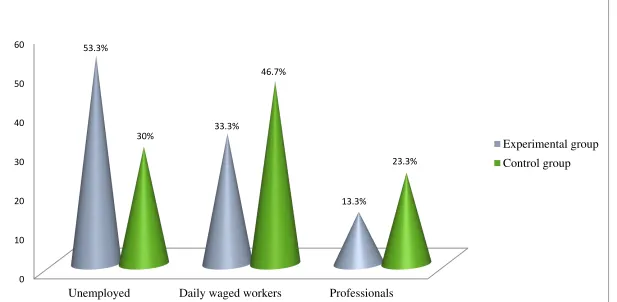
a) Unemployed
b) Daily waged workers c) Professional 16 10 4 53.3 33.3 13.3 9 14 7 30 46.7 23.3 5. Gestational week
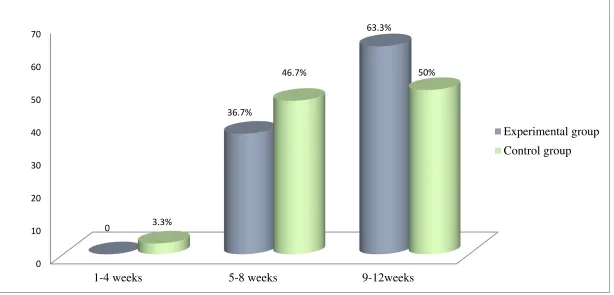
a) 1-4 weeks b) 5-8 weeks c) 9-12 weeks
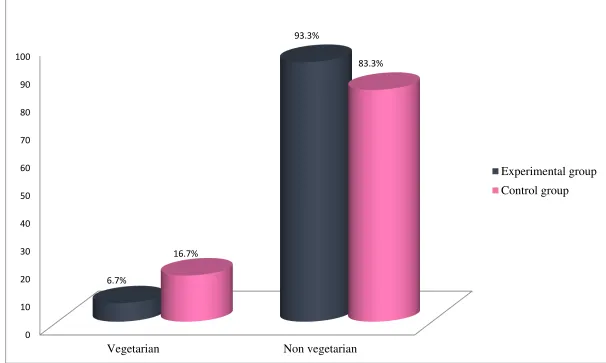
0 11 19 0 36.7 63.3 1 14 15 3.3 46.7 50 6. Dietary pattern
a) Vegetarian b) Non vegetarian
[image:48.595.91.543.195.765.2]33
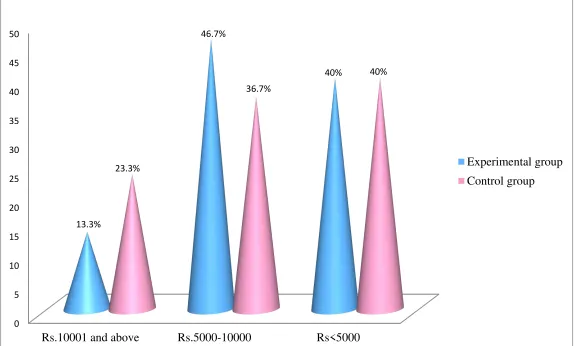
7. Family income
a) Rs.10001 and above b) Rs.5001-10000 c) Rs <5000
4 14 12 13.3 46.7 40 7 11 12 23.3 36.3 40 8. Place of living
a) Rural b) Urban 20 10 66.7 33.3 23 7 76.7 23.3 9. Religion
a) Hindu b) Christian c) Muslim 10 11 9 33.3 36.7 30 12 7 11 40 23.3 36.7 10. Family type
a) Nuclear family b) Joint family
21 9 70 30 17 13 56.7 43.3
EXPERIMENTAL GROUP:
The above table shows that among 30samples, with regards to age 18(60%) samples belonged to 21-25 years,12 (40%) belonged to 26-30years and no is
belonged to 31-35 years.
Regarding educational status 6(20%) of them had degree education,24(80%)
of them had primary school education, and no one of them is uneducated.
With regards to physical activity 18(60%) of them are insedentaryactivity,6(20%) of them are in moderate activity,6(20%) of them are in
heavy activity.
34
About family income is 4(13.3%) samples income between Rs 10001 and
above 14(46.7%) samples income between Rs.5001-10000,12(40%) samples got
<5000.
Regarding the place of living 20(66.7%) samples were in rural and 10(33.3%)
samples are in urban.
With respect to religion, 10(33.3%) samples of them belonged to Hindu , 11(36.7%) samples of them belonged to Christian and 9(30%) samples of them
belonged to Muslim.
In relation to family type 21(70%) of the samples belonged to nuclear family
and 9(30%) of the samples belonged to joint family.
CONTROL GROUP:
The above table shows that among 30 samples, with regards to age 11(36.7%)
samples belonged to 21-15 years, 18((60%) samples belonged to 26-30 years and 1(3.3%) sample belonged to 31-35 years.
Regarding educational status 9(30%) of them had degree education, 21(70%) of them had primary school education, and none of them are uneducated.
With regards to physical activity 13(43.3%) of them are in sedentary activity, 12(40%) of them are in moderate activity, 5(6.7%) of them are in heavy activity.
With regards to occupation un employed were 9(30%), 14(46.7%) were daily
waged workers and 5(16.7%) were professional.
In relation to gestational week 1(3.3%) of the samples belonged to 1-4 weeks,
14(46.7%) of the samples belonged to 5-8 weeks and 15(50%) of the samples
belonged to 9-12 weeks.
35
About family income was Rs 10001 and above for 7(23.3%) samples, 11(36.7%) samples income between Rs.5001-10000, 12(40%) samples got <5000.
Regarding the place of living 23(76.7%) samples were in rural and 7(23.3%)
samples are in urban.
With respect to religion, 12(40%) samples of them belonged to Hindu,
7(23.3%) samples of them belonged to Christian and 11(36.7%) samples of them
belonged to Muslim.
In relation to family type 17(56.7%) of the samples belonged to nuclear family and 13(43.3%) of the samples belonged to joint family.
36
Figure 3.Distribution of subjects based on their age in experimental and control group.
0%10% 20% 30% 40% 50% 60%
21-25 years 26-30 years 31-15years
60%
40%
0% 36.7%
60%
3.3%
37
Figure 4.Distibution of subjects based on their educational status in experimental and control group
0%10% 20% 30% 40% 50% 60% 70% 80%
Degree Primary school Uneducated
20%
80%
0 30%
70%
0
38
Figure 5. Distribution of subjects based on their physical activity in experimental and control group
0%10% 20% 30% 40% 50% 60%
Sedantary Moderate Heavy
60%
20% 20%
43.3%
40%
16.7%
39
Figure 6.Distribution of subjects based on their occupation in experimental and control group
010 20 30 40 50 60
Unemployed Daily waged workers Professionals
53.3%
33.3%
13.3% 30%
46.7%
23.3%
40
Figure 7. Distribution of subjects based on the gestational week experimental and control group
010 20 30 40 50 60 70
1-4 weeks 5-8 weeks 9-12weeks
0
36.7%
63.3%
3.3%
46.7% 50%
41
Figure 8. Distribution of subjects based on the dietary pattern in experimental and control group 0
10 20 30 40 50 60 70 80 90 100
Vegetarian Non vegetarian
6.7%
93.3%
16.7%
83.3%
42
Figure 9.Distribution of subject based on the family income in experimental and control group 0
5 10