
Mere exposure to a distracting stimulus: like it or not?
256
0
0
Full text
(2) Mere exposure to a distracting stimulus: like it or not?. Thesis submitted by Jason Micheal LODGE BPsych(Hons), GCertEd(Tertiary Teaching) James Cook University in June 2011. for the degree of Doctor of Philosophy in the School of Arts, Education & Social Sciences, James Cook University, Cairns Campus, Queensland, Australia.
(3) Selective attention and the mere exposure effect. ii. STATEMENT OF ACCESS. I, the undersigned, author of this work, understand that James Cook University will make this thesis available for use within the University Library and, via the Australian Digital Theses network, for use elsewhere. I understand that, as an unpublished work, a thesis has significant protection under the Copyright Act and; I do not wish to place any further restriction on access to this work.. Jason Lodge. 06/03/2012 ______________ Date.
(4) Selective attention and the mere exposure effect. iii. STATEMENT OF SOURCES DECLARATION. I declare that this thesis is my own work and has not been submitted in any form for another degree or diploma at any university or other institution of tertiary education. Information derived from the published or unpublished work of others has been acknowledged in the text and a list of references is given.. __________________________. 06/03/2012 __________________. Jason Lodge. Date.
(5) Selective attention and the mere exposure effect. iv. STATEMENT ON THE CONTRIBUTION OF OTHERS INCLUDING FINANCIAL AND EDITORIAL HELP. The research presented in this thesis was undertaken under the supervision of Dr David Cottrell and Associate Professor John Prescott. Both provided academic and editorial advice on the contents of the thesis and have been of incalculable assistance throughout the course of my candidature. In addition to my supervisors, Dr Katrina Lines, Sophie Miller, Louise Hansen and Daniel de Zilva also contributed editorial help. The following publication details are for individual papers on segments of the work presented in this thesis. Lodge, J. & Cottrell, D. (2011). If you blink, you will like it: Mere exposure to random geometric shapes in RSVP streams. 38th Experimental Psychology Conference, University of Auckland, Auckland, New Zealand. Lodge, J. & Cottrell, D. (2010). Processing fluency and distractor devaluation: does the processing of repeatedly presented distractors influence subjective liking? 37th Experimental Psychology Conference, University of Melbourne, Melbourne Australia. Lodge, J., Prescott, J. & Cottrell, D. (2009). The influence of a colour naming task on familiarity and preference ratings within the mere exposure paradigm. 36th Experimental Psychology Conference, University of Wollongong, Wollongong Australia. Lodge, J. & Cottrell, D. (2009). Detecting the conveyance of affect: The blackout masking procedure. HCSNet Summerfest 2009, University of New South Wales, Sydney Australia. I have received funding for this thesis from a number of sources. I was awarded an internal scholarship from the School of Arts and Social Sciences and the Department of Psychology at James Cook University in 2009 for which I am eternally grateful. I was granted further funding under the minimum resources policy at James Cook University, which supplied me with equipment to conduct the experiments presented in this thesis and present the findings at a number of interstate conferences. The Faculty of Arts & Social.
(6) Selective attention and the mere exposure effect. v. Sciences awarded me two internal grants that contributed to the purchase of resources to complete experiments and to attend two conferences to present findings.. ________________________________. 06/03/2012 __________________. Jason Lodge. Date.
(7) Selective attention and the mere exposure effect. vi. DECLARATION ON ETHICS. The research presented and reported in this thesis was conducted within the guidelines for research ethics outlined in the National Statement on Ethical Conduct in Research Involving Humans (2007), the Australian Code for the Responsible Conduct of Research (2007), and the James Cook University Code for the Responsible Conduct of Research (2009). The proposed research methodology received clearance from the James Cook University Experimentation Ethics Review Committee (approval numbers H2312, H2763 & H3242).. 06/03/2012 ________________________________. __________________. Jason Lodge. Date.
(8) Selective attention and the mere exposure effect. vii. ACKNOWLEDGEMENTS. I would first and foremost like to thank my supervisors Dr David Cottrell and Associate Professor John Prescott. David has been a friend and mentor through this long process and, although I have often made my own path and sometimes acted to the contrary, I have always valued and greatly appreciated his advice. Thank you David. I thank John for the original idea for this research and for supporting me through the early stages of this project. My appreciation also goes out to my broader academic support team. Dr Katrina Lines has been pivotal in helping to get me through this process, right from the early days when my teaching load and other distractions threatened to consume me right through to helping make sure this dissertation makes sense. Thank you so much Katrina. I am also grateful to Associate Professor Deborah Graham who has been an inspiration and a valued adviser through some of the difficult times. To the rest of my colleagues and friends at JCU, QUT, UQ and Griffith who helped me through this, and there are far too many of you to mention you all, I am eternally grateful to you too. In addition to my supervisors and colleagues, I would like to thank anonymous reviewers from the journals Emotion Review, Cognition and Emotion and Emotion for their helpful and encouraging comments about individual publications based on this research. I have been careful to incorporate all the feedback I have received from my international colleagues and I appreciate them taking the time provide it. Additionally, I would like to thank my colleagues doing similar work in Australia, particularly Dr Jason Tangen, Sarah Forbes, Dr Helena Purkis and Prof Ottmar Lipp from The University of Queensland and Daniel de Zilva and Luke Vu from The University of New South Wales. All provided valuable input, assistance with conducting experiments and/or lab space to help keep the show on the road. I look forward to continuing to work with you all in the future. Finally, I would very much like to thank my family and friends. This has been a long process and you have been behind me all the way. To Mum, Dad and Gran, thank you, I would not have been able to do this without your support and yes, hopefully I will get to wear the funny hat soon. To Erin, Dan and families, I know you all do not completely understand what I have been doing all this time but I know you have been as supportive as you can be. Maybe I will get to spend more time with the kids now that this.
(9) Selective attention and the mere exposure effect. viii. is nearly over. To Chris, Laney, Phil, Jen, Dale, Mardi, Chriso, Matt and HP, you have all helped me through the last few years and often provided an ear or a welcome distraction when it has been needed, thank you to all of you and my many other friends who came with me on this journey. Last, but my no means least, thank you to my beautiful partner, Sophie. The last two years have been busy to say the least but you have been there for me in so many ways, I could never thank you enough. Maybe we can have a day off soon..
(10) Selective attention and the mere exposure effect. ix. ABSTRACT. The increase in liking for a repeatedly presented stimulus is a central theoretical justification for advertisement repetition. Products and brand names are repeatedly presented because it supposedly leads to an increase in liking for the brand or product and therefore more chance a consumer will purchase the product. Recent research suggests that the influence of repeated exposure to a stimulus is not so straightforward. The increase in liking for a stimulus due to repeated exposure is known as the mere exposure effect and is one of the most established and replicated phenomena in experimental psychology. It appears as though the mere exposure effect is most likely the result of increased ease in processing the stimulus, known as processing fluency. In contrast to over 300 experiments corroborating this effect, distracting stimuli viewed during visual selective attention tasks become disliked, in what has become known as the distractor devaluation effect. This effect is based on inhibition associated with ignoring distractors in these tasks and poses a potential inconsistency with the mere exposure effect, which leads to the prediction that the exposure should produce a preference for any exposed stimulus. The aim of the current research is to determine whether the divergent outcomes of exposure to a stimulus observed in these two effects operate via a common set of mechanisms or whether the observations of distractor devaluation studies are due to a different evaluative process. In the reported series of experiments, participants were repeatedly exposed to distracting stimuli for brief periods whilst engaged in visual search tasks. Participants’ liking and familiarity for target and distractor stimuli were assessed using self-report and implicit measures. Results indicate that processing fluency is increased due to exposure to the distracting stimulus; however, the processing fluency does not always lead to positive subjective preference ratings for the same stimulus. Results from these experiments instead suggest that negative attitudes towards distractors are related to rejecting the distractors. The negative feelings are related to a hedonic marker that increases efficacy in visual search tasks. The implication of this research is that ignoring a stimulus leads to a short-term negative attitude for the stimulus related to goal attainment that has little long-term consequence for preference formation. The mere exposure effect is the development of a longer term liking of a stimulus based on exposure and, therefore the distractor devaluation effect contributes little to the understanding of the.
(11) Selective attention and the mere exposure effect. mechanisms underlying the mere exposure effect and the development of persistent likes and dislikes.. x.
(12) Selective attention and the mere exposure effect. xi. TABLE OF CONTENTS LIST OF TABLES .............................................................................................................xiv LIST OF FIGURES ........................................................................................................ xviii Chapter 1. The mere exposure effect .................................................................................... 1 Preference formation and mere exposure ......................................................................... 2 Processes underpinning the mere exposure effect ............................................................ 4 The primacy of affect ........................................................................................................ 7 The subliminal mere exposure effect, familiarity and implicit memory ........................ 11 Explanations of the mere exposure effect ....................................................................... 15 Early theories .............................................................................................................. 17 Spreading activation and misattribution ..................................................................... 21 Processing fluency as an explanation of the mere exposure effect ................................. 23 Summary ......................................................................................................................... 27 Chapter 2. Distractor devaluation - is mere exposure enough? .......................................... 29 Selective attention, exposure and preferences ................................................................ 32 Selective attention and mere exposure ............................................................................ 33 Feature processing and the mere exposure effect ........................................................... 35 Physiological processes, selective attention and preferences ......................................... 37 Consequences of distractor devaluation for the mere exposure effect ........................... 38 Distractor devaluation and processing fluency ............................................................... 40 Summary and aims of the current research ..................................................................... 42 Chapter 3. Modulation of the mere exposure effect through selective attention ................ 44 Experiment 1 ................................................................................................................... 46 Methods....................................................................................................................... 50 Results ......................................................................................................................... 54 Discussion ................................................................................................................... 57 Experiment 2 ................................................................................................................... 60 Methods....................................................................................................................... 61 Results ......................................................................................................................... 64 Discussion ................................................................................................................... 66 General Discussion – Experiment 1 and 2 ...................................................................... 67 Chapter 4. The subliminal distractor devaluation effect ..................................................... 71 Experiment 3 ................................................................................................................... 74.
(13) Selective attention and the mere exposure effect. xii. Methods....................................................................................................................... 75 Results ......................................................................................................................... 79 Discussion ................................................................................................................... 83 Experiment 4 ................................................................................................................... 88 Methods....................................................................................................................... 90 Results ......................................................................................................................... 91 Discussion ................................................................................................................... 93 General Discussion – Experiments 3 and 4 .................................................................... 95 Chapter 5. The role of parallel processes in mere exposure and distractor devaluation ... 100 Experiment 5 ................................................................................................................. 103 Methods..................................................................................................................... 105 Results ....................................................................................................................... 109 Discussion ................................................................................................................. 113 Experiment 6 ................................................................................................................. 118 Methods..................................................................................................................... 121 Results ....................................................................................................................... 124 Discussion ................................................................................................................. 126 Experiment 7 ................................................................................................................. 132 Methods..................................................................................................................... 134 Results ....................................................................................................................... 135 Discussion ................................................................................................................. 139 General Discussion – Experiments 5, 6 and 7 .............................................................. 142 Chapter 6. Replicating and rethinking the distractor devaluation effect .......................... 145 Experiment 8 ................................................................................................................. 146 Methods..................................................................................................................... 148 Results ....................................................................................................................... 150 Discussion ................................................................................................................. 152 Chapter 7. Summary, general discussion and conclusions ............................................... 155 Modulation of the mere exposure effect ....................................................................... 156 The subliminal distractor devaluation effect................................................................. 161 Motivational mechanisms and distractor devaluation................................................... 164 Limitations and future research .................................................................................... 169 Implications of the influence of selective attention on the exposure/affect relationship ....................................................................................................................................... 173.
(14) Selective attention and the mere exposure effect. xiii. Conclusions ................................................................................................................... 175 References ......................................................................................................................... 177 Appendix 1 ........................................................................................................................ 212 Appendix 2 ........................................................................................................................ 213 Appendix 3a ...................................................................................................................... 215 Experiment 1 data analysis ........................................................................................... 215 Appendix 3b ...................................................................................................................... 218 Experiment 2 data analysis ........................................................................................... 218 Appendix 3c ...................................................................................................................... 220 Experiment 3 data analysis ........................................................................................... 220 Appendix 3d ...................................................................................................................... 223 Experiment 4 data analysis ........................................................................................... 223 Appendix 3e ...................................................................................................................... 225 Experiment 5 data analysis ........................................................................................... 225 Appendix 3f ...................................................................................................................... 230 Experiment 6 data analysis ........................................................................................... 230 Appendix 3g ...................................................................................................................... 233 Experiment 7 data analysis ........................................................................................... 233 Appendix 3h ...................................................................................................................... 236 Experiment 8 data analysis ........................................................................................... 236.
(15) Selective attention and the mere exposure effect. xiv. LIST OF TABLES Table 1. Proportion of preference choices in the colour-naming task versus passive sessions ............................................................................................................................... 56 Table 2. Proportion of preference ratings in congruent versus incongruent conditions ..... 57 Table 3. Proportion of familiarity ratings based on similarity (number of points) ............. 65 Table 4. Proportion of preference ratings for target and distractor shapes ......................... 65 Table 5. Proportion of participants responding to each shape type in familiarity choices ............................................................................................................................................. 82 Table 6. Proportion of participants responding to each shape type in preference choices . 82 Table 7. Familiarity and preference choices - % of participants choosing each shape type in congruent and incongruent conditions .......................................................................... 112 Table 8. Mean (SD) ratings of pleasantness and unpleasantness during and after exposure to stimuli in the search task ............................................................................................... 150 Table 9. Chi-square analysis for recognition of targets – colour-naming task versus passive presentation .......................................................................................................... 215 Table 10. Chi-square analysis for recognition of repeatedly exposed subliminal shape versus other shapes with same complexity ....................................................................... 215 Table 11. Chi-square analysis for familiarity of target complexity versus novel complexity ........................................................................................................................................... 215 Table 12. Chi-square analysis for familiarity of repeatedly exposed subliminal shape versus same complexity .................................................................................................... 216 Table 13. Chi-square analysis of preference choices of targets versus all other shapes ... 216 Table 14. Chi-square analysis of preference choices for repeatedly exposed subliminal shapes versus all other shapes ........................................................................................... 216 Table 15. Chi-square analysis of preference choices for target shape – congruent versus incongruent conditions ...................................................................................................... 216 Table 16. Chi-square analysis of preference choices for target complexity – congruent versus incongruent conditions........................................................................................... 217.
(16) Selective attention and the mere exposure effect. xv. Table 17. Chi-square analysis of most familiar choice compared to chance .................... 218 Table 18. Chi-square analysis of least familiar choice compared to chance .................... 218 Table 19. Chi-square analysis of most preferred choices – targets versus distractors and novel shapes ...................................................................................................................... 218 Table 20. Chi-square analysis of least preferred choices – target versus distractor and novel shapes ...................................................................................................................... 219 Table 21. Chi-square analysis of recognition choices proportion compared to chance.... 220 Table 22. Chi-square analysis of most familiar choices compared to chance .................. 220 Table 23. Chi-square analysis of least familiar choices compared to chance ................... 220 Table 24. Chi-square analysis of most preferred choices compared to chance ................ 220 Table 25. Chi-square analysis of most preferred choices (collapsed for features) compared to chance ........................................................................................................................... 221 Table 26. Chi-square analysis of least preferred choices compared to chance ................. 221 Table 27. Chi-square analysis of least preferred choices (collapsed for features) compared to chance ........................................................................................................................... 221 Table 28. Overall ANOVA for RT to positive words ....................................................... 221 Table 29. Overall ANOVA for RT to negative words ...................................................... 221 Table 30. ANOVA contrast RT to negative words - distractor versus novel shapes........ 222 Table 31. ANOVA contrast RT to negative words – distractor-like versus novel shapes 222 Table 32. ANOVA contrast RT to positive words - distractor versus novel shapes ........ 222 Table 33. ANOVA contrast RT to positive words – distractor-like versus novel shapes 222 Table 34. Overall ANOVA RT to positive words across shape types .............................. 223 Table 35. Overall ANOVA RT to negative words across shape types ............................. 223 Table 36. ANOVA contrast RT to positive words distractor with rotated shapes ............ 223 Table 37. ANOVA contrast RT to negative words distractor with rotated shapes ........... 223 Table 38. Overall ANOVA pleasantness ratings across shape types................................ 224 Table 39. Overall ANOVA unpleasantness ratings across shape types............................ 224.
(17) Selective attention and the mere exposure effect. xvi. Table 40. ANOVA comparison distractor & similar versus novel – pleasantness ratings ........................................................................................................................................... 224 Table 41. ANOVA comparison distractor & similar versus novel – unpleasantness ratings ........................................................................................................................................... 224 Table 42. Overall ANOVA RT to positive words across shape types and conditions ..... 225 Table 43. Overall ANOVA RT to negative words across shape types and conditions .... 225 Table 44. ANOVA RT to positive words – comparison of targets, distractors & target like with novel shapes .............................................................................................................. 225 Table 45. Chi-square analysis of overall most familiar choices compared to expected frequencies ........................................................................................................................ 226 Table 46. Chi-square analysis of overall least familiar choices compared to expected frequencies ........................................................................................................................ 226 Table 47. Chi-square analysis of overall most preferred choices compared to expected frequencies ........................................................................................................................ 226 Table 48. Chi-square analysis of overall least preferred choices compared to expected frequencies ........................................................................................................................ 226 Table 49. Contingency table for most familiar choices .................................................... 227 Table 50. Chi-square analysis of most familiar choices ................................................... 227 Table 51. Contingency table for least familiar choices..................................................... 227 Table 52. Chi-square analysis of least familiar choices .................................................... 228 Table 53. Contingency table for most preferred choices .................................................. 228 Table 54. Chi-square analysis of most preferred choices ................................................. 228 Table 55. Contingency table for least preferred choices................................................... 229 Table 56. Chi-square analysis of least preferred choices .................................................. 229 Table 57. Overall ANOVA RT positive words across task conditions and shape types .. 230 Table 58. Overall ANOVA RT negative words across task conditions and shape types . 230 Table 59. Overall ANOVA positive ratings across task conditions and shape types ....... 231 Table 60. Overall ANOVA negative ratings across task conditions and shape types ...... 231.
(18) Selective attention and the mere exposure effect. xvii. Table 61. ANOVA – comparison pleasantness ratings of targets, conjunction versus popout conditions .................................................................................................................... 231 Table 62. ANOVA – comparison of unpleasantness ratings of distractors, conjunction versus pop-out conditions ................................................................................................. 231 Table 63. ANOVA - comparison of pleasantness ratings of target versus distractor in the conjunction condition........................................................................................................ 232 Table 64. ANOVA - comparison of unpleasantness ratings of target versus distractor in the conjunction condition .................................................................................................. 232 Table 65. ANOVA - comparison of pleasantness ratings of target versus distractor in the pop-out condition .............................................................................................................. 232 Table 66. ANOVA - comparison of unpleasantness ratings of target versus distractor in the pop-out condition ........................................................................................................ 232 Table 67. Overall ANOVA pleasantness ratings across task and shape type ................... 233 Table 68. ANOVA - comparison of post task pleasantness ratings of targets and novel shapes in both pop-out and conjunction conditions .......................................................... 233 Table 69. Overall ANOVA unpleasantness ratings across task and shape type ............... 234 Table 70. ANOVA - comparison of pre-task unpleasantness ratings of distractors and novel shapes in the pop-out condition .............................................................................. 234 Table 71. ANOVA - comparison of pre-task unpleasantness ratings distractors and novel shapes in the conjunction condition .................................................................................. 234 Table 72. ANOVA - comparison of during task unpleasantness ratings of distractors and novel shapes (combined task conditions) ......................................................................... 235 Table 73. Difference in mean pleasantness ratings (CI) from novel, during and post-task ........................................................................................................................................... 236 Table 74. Difference in mean unpleasantness ratings (CI) from novel, during and post-task ........................................................................................................................................... 236.
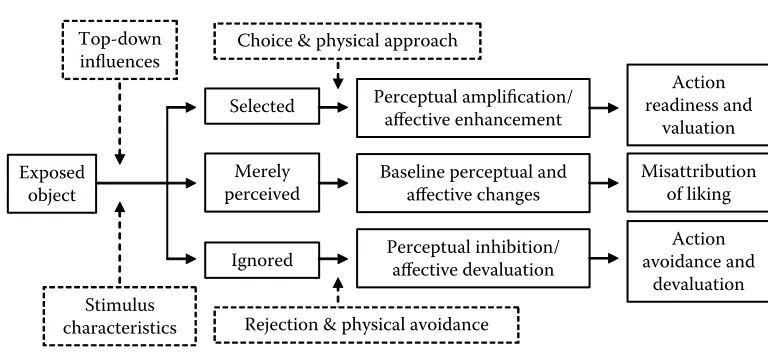
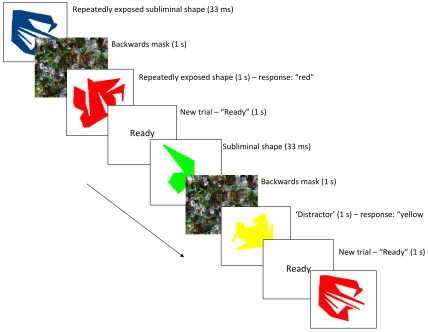
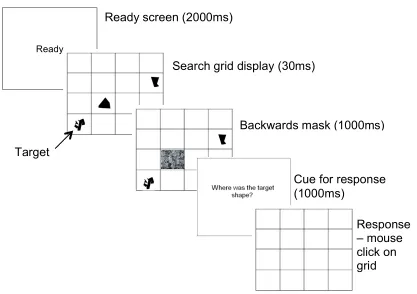
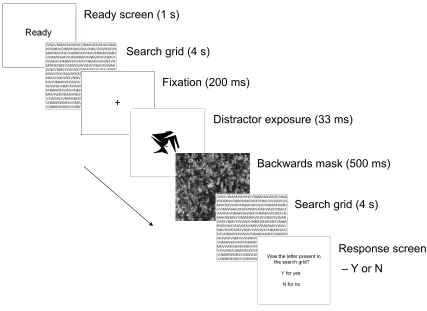
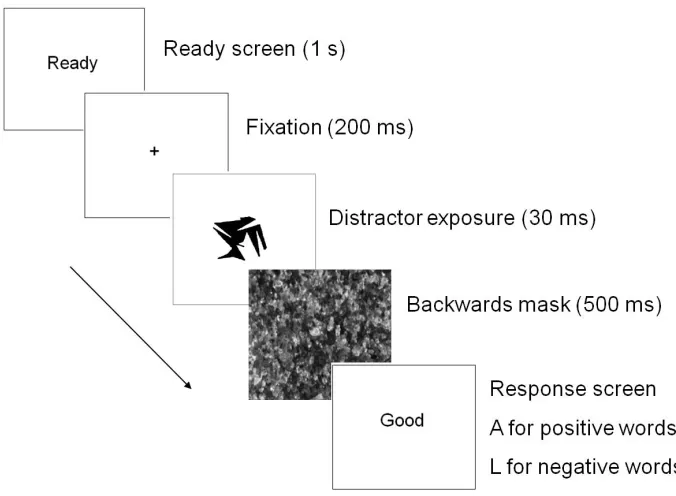
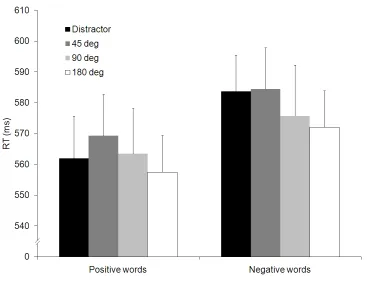
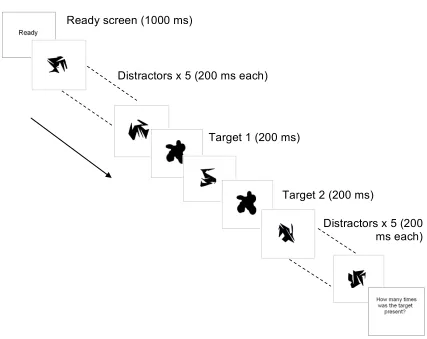
(19) Selective attention and the mere exposure effect. xviii. LIST OF FIGURES. Figure 1. Tavassoli’s (2008) model of exposure effects (reproduced with permission) .... 39 Figure 2. Portion of exposure sequence for experiment 1. ................................................. 52 Figure 3. Trial sequence for visual search task ................................................................... 63 Figure 4. Example trial sequence for experiment 3. ........................................................... 76 Figure 5. Trial sequence for affective priming task ............................................................ 77 Figure 6. Mean reaction times (SEM) for responses to positive and negative words primed with distractors, similar shapes and novel shapes. .............................................................. 81 Figure 7. Mean (SEM) response time to positive and negative words primed with the distractor and the distractor rotated to 45, 90 and 180 degrees .......................................... 92 Figure 8. Mean (+SEM) pleasantness (a) and unpleasantness (b) ratings of distractors versus shapes with the same features and shapes with different features (novel shapes)... 93 Figure 9. Trial procedure for a trial containing two targets, incongruent condition. ........ 107 Figure 10. Mean (SEM) response latencies to positive and negative words in affective priming task ...................................................................................................................... 110 Figure 11. Mean (SEM) reaction times for positive and negative words in affective priming task ...................................................................................................................... 125 Figure 12. Mean (SEM) rating of pleasantness (a) and unpleasantness (b) for exposed shapes and compared to novel shapes ............................................................................... 126 Figure 13. Mean (SEM) pleasantness ratings for conjunction and pop-out conditions across experimental session .............................................................................................. 137 Figure 14. Mean (SEM) unpleasantness ratings for conjunction and pop-out conditions across experimental session .............................................................................................. 138 Figure 16. Mean (95%CI) pleasantness (a) and unpleasantness (b) ratings for exposed shapes compared to neutral during task/exposure phase and post-exposure. ................... 151.
(20) Selective attention and the mere exposure effect. 1. Chapter 1. The mere exposure effect. “Millions of items of the outward order are present to my senses which never properly enter into my experience. Why? Because they have no interest for me. My experience is what I agree to attend to. Only those items which I notice shape my mind – without selective interests, experience is utter chaos. Interest alone gives accent and emphasis, light and shade, background and foreground – intelligible perspective, in a word.” (James 1890, p. 381). Controversy exists within the literature concerning the development of preferences. Specifically, there is uncertainty regarding whether or not exposure to a stimulus reliably leads to a preference for it over novel stimuli. On the one hand is an extensive history of studies on the mere exposure effect (MEE; Zajonc, 1968), which is an increase in liking for a stimulus due to previous exposure to it. On the other hand is the distractor devaluation effect (DDE; Raymond, Fenske & Westoby, 2005), which is a decrease in liking for a stimulus due to exposure when the stimulus is not the focus of attention. At the core of the debate is uncertainty over if and how cognitive processes impact on the development of preferences. The current research addresses the relevance of the DDE to the understanding of the processes responsible for the development of preference through exposure. As part of this investigation, factors known to be associated with an increase in liking due to exposure, such as familiarity and the interaction of awareness, cognition and emotion, will be examined within this context. The aim of the current research is to reconcile the variation in liking outcomes predicted by theories underlying the MEE and the DDE. The.
(21) Selective attention and the mere exposure effect. 2. outcome of this investigation is a more parsimonious account of how preferences for new and novel stimuli are developed through repeated exposure.. Preference formation and mere exposure It has been generally assumed that preferences are either innate or develop through one of a number of learning mechanisms such as evaluative conditioning (Bohner & Wänke, 2002; Martin & Levey, 1978; Zajonc & Markus, 1982). Despite a growing interest in the study of attitudes, the development of preferences is not completely understood (Blanchette & Richards, 2010; Lichtenstein & Slovic, 2006; Naqvi, Shiv & Bechara, 2006). One facet of preference formation that has received some attention within experimental psychology is the relationship between exposure to a stimulus and experiencing a preference for it. In over 300 experiments published since Zajonc’s (1968) often cited monograph1, it has been widely observed that repeated, unreinforced exposures to various stimuli tends to result in those stimuli becoming preferred over novel stimuli. Although this idea had previously been raised by Fechner (1876, cited in Zajonc, 1968), James (1890) and Maslow (1937), Zajonc was the first to provide systematic experimental evidence for the effect he labelled the mere exposure effect. This phenomenon has been observed across a range of stimuli, sensory modalities and testing situations using various rating scales (see Bornstein, 1989; Harrison, 1977; Stang, 1974 for reviews). The MEE has been found using visual (Zajonc, 1968), gustatory (Crandall, 1984), and auditory stimuli (Heingartner & Hall, 1974). The effect is apparent with meaningful or meaningless stimuli (Saegert, Swap & Zajonc, 1973), with stimuli that are initially hedonically liked (Swap, 1977), neutral or disliked (Litvak, 1969) and has been found to occur in both laboratory (Bornstein, Kale & Cornell, 1990; Moreland & Zajonc, 1976; Zajonc, 2001) and 1 A Google Scholar search indicates over 2350 citations.
(22) Selective attention and the mere exposure effect. 3. naturalistic settings (Bornstein, Leone & Galley, 1987). The MEE appears to be quite robust, even reliably occurring in animals other than humans (Hill, 1978). The conclusion that can be drawn from all this research is that exposure to a novel stimulus reliably leads to that stimulus becoming liked, despite there apparently being no other positive consequences of the exposure. Topolinksi and Strack (2009) argue that the MEE is one of the “most established facts of modern psychology” (p. 423). Despite its apparent ubiquity, and perhaps because of it, the MEE has been the topic of widespread debate with implications beyond the development of preferences. Many questions have been raised about the earliest stages of information processing in mere exposure studies, particularly in terms of the processes responsible for initiating the experience of emotions (Bonanno & Stillings, 1986; Lazarus, 1991; Zajonc, 2000). The MEE has been seen as evidence for implicit learning and is often used as categorical confirmation of the very existence of implicit learning and implicit memory (Reingold & Merikle, 1988). Research into the effect has therefore also contributed to understanding processes beyond the exposure/preference domain. The MEE also has practical implications in marketing where ‘any publicity is good publicity’, which can be translated to ‘any exposure is good exposure’. Many marketing and attitude formation studies have found that mere exposure contributes significantly to consumer choice (Mantonakis, Whittlesea & Yoon, 2008). In other words, being merely exposed to products and brand names reliably induces a preference (Nordhielm, 2002). For instance, Janiszewski (1993) has examined incidental exposure to brand names and product packaging and found such exposures result in reliable increases in preference compared to novel brands and packaging. In addition to marketing studies, research has examined how the MEE contributes to the formation of attitudes (Bohner & Wänke, 2002; Kruglanski & Stroebe, 2005), in.
(23) Selective attention and the mere exposure effect. 4. particular how exposure contributes to liking for certain people and in how prejudices against certain groups can be lessened and altered through exposure (Crisp & Turner, 2007; Eagly & Chaiken, 1993). A number of studies have found that more frequent exposure through social interaction generally leads to greater liking and interpersonal attraction (c.f. Berscheid & Reis, 1988). Other studies have found that discrimination against members of minority groups can be lessened through mere exposure (see Zebrowitz, White & Wieneke, 2008). The MEE is therefore not limited to experimental situations but is a phenomenon that has direct practical application in a number of fields. The wide-ranging implications of this seemingly simple phenomenon increase the importance of understanding under what conditions it operates and how it works. Despite the apparent robust nature of the effect and its practical application for marketers and social psychologists, a parsimonious explanation of how and why the effect occurs remains elusive (see Fang, Singh & Ahluwalia, 2007; Maio & Haddock, 2009; Yagi, Ikoma & Kikuchi, 2009). Although many theories have been forwarded to explain how mere exposure leads to liking, none have been able to adequately explain all the experimental observations. It has become clear that the MEE is not simply a case of exposure to a stimulus leading directly to liking of that stimulus. Complex cognitive and emotional processes impact on the relationship between exposure and preference and these processes are the central focus of the current research.. Processes underpinning the mere exposure effect Initially it was believed that the MEE was simply a case of exposure leading to familiarity, which then led to a preference. Zajonc’s (1968) preliminary investigations of the MEE involved evidence from two main sources, correlational and experimental data. Zajonc noted that there was a strong positive correlation between word frequency and preferences for words. Words with positive valence are used more often and words (and.
(24) Selective attention and the mere exposure effect. 5. parts thereof) that are seen and used more often are preferred, an effect not unique to English. To support these correlations, Zajonc also reported a series of experiments involving exposure to nonsense words, Chinese characters and pictures of faces. In all cases, repeated, unreinforced exposure to the stimuli led to an increase in positive attitude towards these stimuli compared to novel stimuli. Harrison (1977) later heralded this work as being responsible for the formalisation and revitalisation of the “familiarity-leads-toliking hypothesis” (p. 40). Although it has become apparent that familiarity is not the sole explanation for the MEE, it is a factor to be considered and will be discussed further in terms of underlying mechanisms. To reach the preference through increased familiarity hypothesis, Zajonc (1968) conducted a series of experiments including randomised repeated presentations of the target stimuli for a set number of exposures followed closely by a series of attitudinal ratings. This sequence of exposure phase then rating phase became the standard way of conducting experiments examining the MEE (Murphy, 2001). A typical mere exposure experiment using visual stimuli includes an exposure phase where a number of stimuli are presented, often sequentially or within a visual array. Following the exposure phase, an evaluation phase is conducted where exposed stimuli and novel stimuli not included in the exposure phase are rated in terms of how much they are liked. Using this approach, the research reliably results in exposed stimuli being preferred over novel stimuli, with greater numbers of presentations leading to greater preference. Despite the reliability of the results, the highly standardised procedure for conducting mere exposure research that developed following Zajonc’s (1968) experiments has been criticised. For instance, Stang (1974) voiced concerns about the various types of stimuli used in mere exposure research and about the persistence of the effect beyond the exposure phase, issues that will be discussed further in terms of theoretical approaches.
(25) Selective attention and the mere exposure effect. 6. attempting to explain the MEE. Regardless of this criticism, in the 10 years following the publication of Zajonc’s monograph, there were hundreds of experiments conducted on the effect, often using very similar methods. In a review of the literature, Harrison (1977) argued that despite Stang’s concerns there was sufficient accumulated evidence to confirm that exposure to a stimulus under a wide range of conditions leads to a reliable increase in liking. Although there is some argument as to whether it is due to the apparent uniformity in methods, the volume of positive MEE observations under varying research conditions confirms that the MEE is a robust phenomenon. Harrison (1977) notes that several factors appear to influence the MEE and that these variables pose fundamental problems in developing an elegant explanation of the effect. These factors include procedural elements such as the nature of the presentation sequence. For instance, heterogeneous and homogenous presentation sequences produce different effects, with heterogeneous presentation sequences resulting in greater liking. Additionally, more complex stimuli and longer intervals between exposure and rating (one of the concerns voiced by Stang, 1974) are factors that could lead to a more pronounced MEE. What is clear is that the MEE is not simply based on familiarity as a function of the number of exposures to the stimulus. The results of a meta-analysis conducted by Bornstein (1989) revealed that, in addition to the factors outlined by Harrison, the number and duration of exposures, stimulus type and age of the subject could also impact on the strength of the MEE. Consistent with Harrison’s results, Bornstein found that greater complexity, a heterogeneous presentation sequence and a longer delay between the exposure phase and the rating phase all enhanced the effect. These factors suggest alternative explanations for the processes underlying the MEE and therefore need to be considered in any examination of the effects of exposure on preference and will be addressed within the current research..
(26) Selective attention and the mere exposure effect. 7. In addition to supporting Harrison’s (1977) observations, Bornstein (1989) also found that shorter display durations (<1 s), a relatively small number of repeated exposures (10-20) and certain types of visual stimuli (particularly photos and polygons as opposed to paintings, drawings and matrices) produced stronger effects. Bornstein further categorised the factors influencing the effect into four groups: stimulus variables, presentation variables, measurement variables and participant variables. In a discussion of the future direction of mere exposure research based on these findings, Bornstein argues that research into the effect had concentrated predominantly on stimulus and presentation variables and not on measurement or participant variables. Thus a complete understanding of the MEE also requires further investigation of these factors. Bornstein’s (1989) analysis has enabled researchers to create situations that maximise a MEE and thus allow examination of other variables that may influence the effect. Foremost amongst these factors are cognitive processes, such as memory storage and retrieval. The techniques and findings of mere exposure experiments are consistent and reliable, but at the same time poorly understood. In effect, the phenomenon has become a central topic for debate over broader theories addressing the development of emotional responses to stimuli (Moors, 2009; Moreland & Topolinski, 2010). One example that illustrates these issues is the question of whether the subjective experience of emotion could be independent of memory, higher executive functioning and conscious awareness. The uncertainties over the independence of emotion have created a point of contention in theories attempting to explain the MEE and are therefore worth considering within the context of the current research.. The primacy of affect The relationship between awareness of the stimulus and preference for it, or the relative contribution of cognition and emotion, is the facet of the mere exposure.
(27) Selective attention and the mere exposure effect. 8. phenomenon that has generated the most debate (see Bornstein & D’Agostino, 1992; Moreland & Zajonc, 1977; Newell & Shanks, 2007). The subliminal MEE is the term used to describe the instances where a preference develops for a stimulus repeatedly presented outside conscious awareness (Kunst-Wilson & Zajonc, 1980). Moreland and Zajonc (1977) suggest that, because recognition is not necessary for the MEE to occur, higher order cognitive processes are not required for the development of persistent preferences. A number of studies conducted directly comparing responses to subliminally and supraliminally exposed stimuli (Bornstein & D’Agostino, 1992; Murphy, Monahan & Zajonc, 1995) demonstrated that subliminal exposures are more effective at inducing a MEE, although greater preferences for subliminal stimuli over recognised stimuli have not been found in all cases (see Fox & Burns, 1993; Newell & Shanks, 2007). These contradictory findings have led to ongoing debate about the role of awareness in the MEE and suggest that a lack of awareness of prior exposure must be accounted for in a complete explanation of the effects of exposure on liking. In other words, a parsimonious account of the MEE must also explain the subliminal MEE. Given that the majority of studies on the subliminal MEE have found greater preferences for subliminally exposed stimuli compared to supraliminally exposed stimuli, it has been suggested that there is little to no modulation of the MEE by cognitive processes. Winkielman and Cacioppo (2001) argue that it is instead the result of affective systems working independently of higher cognitive functions. A number of studies have attempted to find supporting evidence for this claim. For example, Harmon-Jones and Allen (2001) used facial electromyography (EMG) to measure activity in the zygomaticus major region (i.e. the cheek area), which is linked to positive emotional responses, even emotions experienced without conscious awareness (Tassinary, Cacioppo & Vanman, 2009). Harmon-Jones and Allen found higher activity in the zygomaticus major region in.
(28) Selective attention and the mere exposure effect. 9. participants repeatedly exposed to visual stimuli. They suggested that their results confirm that the MEE is therefore a purely affective phenomenon. Zajonc (1984) also advanced the idea that preferences can develop independently of conscious or cognitive processes and argued for an ‘affective primacy hypothesis’. Supporting Zajonc’s hypothesis are observations that suggest that emotional appraisal processes occur far more rapidly than do the cognitive processes that lead to conscious awareness (LeDoux, 1996). Despite the evidence that affect can influence behaviour outside of conscious awareness, there has been ongoing criticism of Zajonc’s (1980) claim that “preferences need no inferences” (p. 151). For example, Lazarus (1982) took up this debate and was adamant that it is cognitive processes that set in motion the emotional experience of humans. Lazarus (1984) maintained that without cognitive appraisal, there would be no experience of emotion. This argument was based on Schacter and Singer’s (1962) contention that the foundation of emotional experience arises from conscious judgements as to the cause of the emotion being experienced. This, in turn, built on James’ (1890) argument that emotion is an interpretation of involuntary physiological responses to stimuli. In this respect, Lazarus (1984) argues that emotion is solely a result of cognitive appraisal and that the subjective experience of emotion does not exist without this appraisal. This argument is in clear contrast to the belief that emotional reactions to stimuli develop independent of and before any cognitive processing (Bornstein, 1989; Zajonc, 1984). Although there is evidence suggesting that very little to no cognitive processing is necessary for emotions to exert influence over behaviour (Winkielman & Berridge, 2004), Zajonc and colleagues (Zajonc, Pietromonaco & Bargh, 1982) concede that cognition is often involved in the subjective experience of emotion, but maintain that it is not always necessary. Ultimately, this argument leads to the conclusion that any investigation of the development of preference must take both into account. A lack of.
(29) Selective attention and the mere exposure effect. 10. awareness of the exposure does not exclude the possibility that other cognitive processes are influencing the development of preference in an interdependent processing system. Zajonc (2000) claimed he was “closing the debate over the independence of affect” (p. 31), but it appears that, at least in the case of the MEE, this declaration may have been premature. Whittlesea and Price (2001) argue that the divergence of recognition and preference responses in mere exposure studies is a methodological issue and that it is, in fact, differences in conscious cognitive processing that are responsible for the increase in liking without recognition in the subliminal MEE. This criticism aligns with that of Stang (1974), who suggested that early mere exposure studies were too uniform in their approach and leads to the conclusion that the methods employed in these studies have been too narrow to effectively elucidate the underlying processes. A narrow range of methods and the premature discounting of other cognitive processes due to the flawed assumption that awareness is a necessary condition for cognitive processing means that a number of other underlying mechanisms may have been overlooked in mere exposure studies. In answering the question of how much cognitive processing is required to experience emotion and guide preference, debate has centred on whether the development of emotional responses can be truly unconscious (De Gelder, 2005). Storbeck and Clore (2007) suggest that there is more than sufficient evidence based on numerous neurological and behavioural studies to categorically eliminate the idea that cognitive processes are divorced from emotions. Fox (2008) summed up the Lazarus/Zajonc debate as being useful for stimulating research into emotion but it became more a debate over semantics and created a false dichotomy that is not supported by contemporary research. The debate, as it was initially framed, is therefore no longer useful in the quest to understand cognition/emotion relationships. The outcome of this broader debate has been the more.
(30) Selective attention and the mere exposure effect. 11. willing acceptance that cognitive and affective processes are interdependent and, hence, both implicated in the process of developing preferences. Despite the two mental functions being very closely linked, it is still unclear what the exact relationship between emotional and cognitive processing is (LeDoux, 1994; Panksepp, 1994; Pessoa, 2008) and this poses a fundamental problem for understanding how preferences develop in the MEE. The interdependence of these processes is evident in the multitude of physiological observations linking the brain structures involved in cognition and emotion (e.g. Bush, Luu & Posner, 2000; Pessoa, 2008). Although there are clear neurological correlates between cognitive and emotional functions, the role played by cognitive processes in the formation of emotions is still contentious (Gendron & Barrett, 2009; Moors, 2009). As it is still unclear exactly how emotional and cognitive processes work independently and interdependently, it remains unclear as to how cognitive processes influence the MEE (Yagi et al., 2009). This ongoing uncertainty about the interaction between emotion and cognition leads to the conclusion that, just because a preference can develop through exposure outside conscious awareness, it does not mean that cognition is not involved in the MEE. Although there is uncertainty over the exact influence each has on each other, there is little doubt that cognition can and does influence liking due to exposure, despite a lack of awareness.. The subliminal mere exposure effect, familiarity and implicit memory The observation that liking can be altered in the absence of awareness is not only a point of contention for theories attempting to explain the subjective experience of emotion, it has also raised issues concerning memory processing. The subliminal MEE has been replicated many times (see Bornstein, 1992; Zajonc, 2001 for reviews) and is an often-cited example of implicit learning and implicit memory (Manza & Bornstein, 1995). Evidence that the MEE does not require explicit recognition of the stimulus comes not.
(31) Selective attention and the mere exposure effect. 12. only from the subliminal presentations but also from studies involving patients with severe memory deficits. For example, Greve and Bauer (1990) found a preference for repeatedly exposed faces in a prosopagnosic patient despite the fact that the patient had no recollection of having seen the faces before. Willems and colleagues (Willems, Adam & Van der Linden, 2002; Willems, Salmon & Van der Linden, 2008) have also replicated this finding with patients with impaired memory due to Alzheimer’s disease. The evidence that a persistent change in attitude can occur without a corresponding change in responses to a direct measure (i.e. recognition) in subliminal mere exposure experiments has been taken as “strong evidence for unconscious memory” (Reingold & Merikle, 1990, p. 23). In the context of the current research, the role of implicit memory is an important consideration because the development of preference in the absence of awareness has been a difficult observation to account for in theories attempting to explain the MEE. A number of studies have set out to directly examine the role of implicit memory in the MEE. For instance, Seamon et al. (1995) found that the global representation of figures that is sufficient to determine if a figure is possible or impossible takes several seconds, but a preference can develop for either type of stimulus in apparently far less time. In other words, an overall structural impression of the stimulus can be encoded into memory very rapidly, but the more detailed encoding required to make an accurate recognition decision about the stimulus requires greater exposure duration. This difference is supposedly the boundary between what is implicitly and explicitly processed (Seamon et al., 1995). Seamon et al. argue that this disparity between recognition and preference judgements for possible and impossible objects fulfils Cooper and Schacter’s (1992) criteria for separate systems of mental representations of visual objects, i.e. explicit and implicit memory. Based on the results of their experiments, Seamon et al. went as far as to.
(32) Selective attention and the mere exposure effect. 13. say that explicit memory is completely uninvolved in the MEE and that the effect could be wholly explained as an implicit memory phenomenon. For the most part, implicit memory studies of this type have relied on an artificial grammar language in which series of letter strings conform to a complex set of rules (see Reber, 1967). Pothos (2007) describes artificial grammar as a language created to allow sequences of symbols or letters to meet or violate the grammatical rules. Typically, participants are presented with a series of letters conforming to the grammar in a training phase and then asked to discriminate between grammatical and non-grammatical sequences in a test phase. The subliminal MEE has also been investigated using this methodology. Gordon and Hollyoak (1983) examined the MEE using an artificial grammar language of letter strings and proposed a ‘structural’ mere exposure effect, which can occur when greater preference for repeatedly exposed stimuli generalises to novel stimuli that conform to an implicitly learnt rule. Later studies aimed at understanding the possible influence of implicit learning of an artificial grammar based on familiar and unfamiliar symbols produced inconclusive results, suggesting that the ‘structural’ MEE might or might not be based on stimulus familiarity (Zizak & Reber, 2004). These studies lead to the conclusion that familiarity contributes more to the development of preference due to exposure than a discrepancy between explicit and implicit memory systems. Whether it is the result of unconscious processes or not, familiarity has been established as an important factor in the MEE (Cox & Cox, 1988). Zajonc (1968) initially argued that the effect is the result of familiarity alone, however the involvement of familiarity in the effect is not so explicit. In aiming to examine the contributions of awareness and familiarity on the effect, Ye and van Raaij (1997) investigated the roles of recognition and familiarity independently by using a divided attention technique. Their results suggest that familiarity is a more fundamental consideration than implicit memory.
(33) Selective attention and the mere exposure effect. 14. in understanding the MEE. Moreover, Zizak and Reber (2004) argue that the subliminal MEE relies primarily on an increase in familiarity for the exposed stimulus. In other words, they suggest that the effect is attenuated when there is no accompanying familiarity for the stimulus. Although familiarity is not solely responsible for increases in liking due to previous exposure, it does appear to be intricately linked to preference formation. To further investigate the role of familiarity in the MEE, Hansen and Wänke (2009) tested the influence of conscious recognition on the effect using a processdissociation procedure developed by Jacoby (1991) to separate automatic and intentional memory processes. Jacoby argues that recognition responses rely on both familiarity and conscious recognition and that the recognition task should be designed to separate these influences. Using this approach, Hansen and Wänke found that liking depends on ‘unconscious familiarity’ and not on different levels of conscious recognition, further eroding the case for the phenomenon being solely the result of implicit memory. Although there is some support for the suggestion that implicit memory is involved in the subliminal MEE, the evidence is not entirely convincing, particularly when considering that familiarity might be a more important factor than recognition. To summarise the investigations on the role of implicit memory in the MEE, research supporting the existence of implicit learning and implicit memory has often used the subliminal MEE both to test hypotheses concerning implicit learning and as a way of confirming the existence of implicit memory (Manza, Zizak & Reber, 1998). As the broader debate about cognition and emotion has carried on, mere exposure research has focused more on the influence of memory on the effect because of the difficulty in explaining the subliminal MEE. In this vein, these studies have revealed mediating factors such as familiarity that may influence the MEE. Apart from the disagreement about conscious and unconscious processes and the role of familiarity in the subliminal MEE,.
(34) Selective attention and the mere exposure effect. 15. implicit learning in general is not completely accepted as a testable and reliable phenomenon due to limitations in the understanding and measurement of awareness (Stadler & Roediger, 1998). Shanks (2004; 2010) argues that it is still uncertain that learning can occur both unconsciously and unintentionally. Consequently, an explanation for the MEE based on implicit learning does not stand on solid theoretical foundations. Overall, claims that enhanced positive attitudes towards exposed stimuli, as in the subliminal MEE, are entirely the result of processes outside awareness are unsubstantiated. Despite this, research on the role of implicit memory in the MEE has highlighted the importance of familiarity in the development of preference without awareness. Although theories attempting to explain the MEE have moved away from familiarity as being the sole explanation for the effect, it remains a central element. What the discussion of studies examining the MEE so far suggests is that, although it is a relatively simple and robust phenomenon, there are a number of conditions known to modulate the effect and a number of observations that are particularly difficult to explain. Prominent is the subliminal MEE, but equally important for any model of the effects of exposure on preference is the influence of familiarity on liking. Before considering the implications of the DDE for explanations of the effect of exposure on preference, it is essential to understand how these conditions and observations have been incorporated into theoretical models of the MEE to date.. Explanations of the mere exposure effect Despite extensive research into the MEE and subliminal MEE, the mechanisms underlying these effects are not completely understood (Kellogg, 2007; Moreland & Topolinski, 2010). There are however, 12 distinct explanations of how being ‘merely’ exposed to a stimulus leads to a preference for it. Some of these approaches are not supported by observations from empirical research and a number have been abandoned.
(35) Selective attention and the mere exposure effect. 16. (Bornstein & Craver-Lemley, 2004). As established, any complete theoretical model of the MEE must take into account the growing number of variables known to influence the effect, such as affective and cognitive processes, familiarity and, in particular, the subliminal MEE. In order to understand the mechanisms underlying the MEE and develop a viable explanation, Zajonc (1968) originally argued that stimuli become preferred simply due to increased familiarity. This argument is based on long standing principles forwarded by Fechner (1876, cited in Zajonc, 1968) and James (1890), that familiarity does not necessarily breed contempt, but rather that familiarity breeds content. This proposition was sustained by a wealth of research linking the unfamiliar with aversive and avoidant responses (see Frijda, 1986). Observations from mere exposure studies made it readily apparent that this approach was overly simplistic and a number of competing explanations were developed. Other theories that attempt to explain the mere exposure phenomenon include response competition (Harrison, 1968), two factor learning/satiation theory (Berlyne, 1970), evaluative conditioning (Burgess & Sales, 1971), transfer appropriate processing (Newell & Bright, 2001), an arousal model (Crandall, 1970) and the perceptual fluency/attributional theory (Bornstein & D’Agostino, 1992). These explanations for the MEE were developed to explain why previously exposed stimuli are preferred, to explain boundary conditions of the effect, why this effect occurs without conscious awareness and whether or not the effect is based simply on familiarity. A brief survey of these theories has been included here as a precursor to a discussion of observations that necessitate a rethink of the effect of exposure on preferences..
(36) Selective attention and the mere exposure effect. 17. Early theories One of the earliest theories to explain the MEE was the response competition theory (Harrison, 1968). This theory is based on a proposed tension state that results from exposure to a novel stimulus and this tension state is hypothetically related to exploratory behaviour. Harrison argued that the individual does not know how to respond to a novel stimulus and thus response competition arises from conflict between approach and avoidance tendencies. These conflicting response tendencies in turn lead to the negative experience of cognitive dissonance. The MEE is the result of repeated exposures reducing the tension state by allowing one response tendency to dominate and thus reduce the negative affect induced by the cognitive dissonance (Brickman, Redfield, Harrison & Crandall, 1972). In other words, this decrease in negative affect presents as more favourable ratings of the stimulus. The response competition theory explains the MEE as being the result of learning how to respond to a stimulus the more times it is encountered. Like the response competition theory, the two factor theory (Berlyne, 1970; Stang, 1974) argues that the MEE arises from the struggle between two incompatible tendencies. Rather than being cognitive dissonance, the two factor theory assumes that a negative boredom state opposes a positive familiarity state (which Berlyne describes as positivehabituation) and varies according to stimulus complexity (Berlyne, 1970). Stang (1974) describes the relationship between exposure and preference in terms of an inverted ‘U’ function. This idea is based on the observation that a presented stimulus is rated more positively until tedium (satiation) sets in, after this, further exposures lead to a drop in preference ratings. The two factor theory leads to the prediction that complex stimuli will not induce boredom as quickly as simple stimuli. Bornstein, Kale and Cornell (1990) found evidence that boredom-prone participants and relatively simple stimuli result in an attenuated MEE which supports the two factor approach..
(37) Selective attention and the mere exposure effect. 18. Although the response competition and two factor approaches had appeal for evolutionary explanations of how the MEE developed, they had difficulty explaining some fundamental observations. For example, these theories do not explain the subliminal MEE as they lead to the prediction that conscious recognition and familiarity are required for the creation of exposure effects or at least that recognition and familiarity should enhance the MEE. This is not what is observed in experiments with subliminal presentations. These theories also predict that the behaviour is instinctual and evident from birth and therefore have difficulty explaining developmental differences in the MEE. Children generally display a negative exposure effect (i.e. they prefer novel stimuli over previously encountered stimuli), which is not consistent with the response competition or two factor theories (see Bornstein, 1989). Bornstein suggests that the two factor theory needs considerable modification to be able to completely explain the results of mere exposure experiments. Burgess and Sales (1971) proposed an alternate theory based on positive contextual features being affectively conditioned to the merely exposed target stimulus through a process akin to evaluative conditioning. Evaluative conditioning involves pairing a hedonically neutral stimulus (in this case the merely exposed target) with an emotionally relevant stimulus (positive or negative). With repeated pairings of these stimuli, the once neutral stimulus becomes hedonically valued based on its association with the emotionally relevant stimulus (see de Houwer, Thomas & Baeyens, 2001 for a review of evaluative conditioning). Critically, it appears that evaluative conditioning can occur without conscious awareness (de Houwer, Hendrickx & Baeyens, 1997; Field, 2000), which gives this theory an advantage over the response competition and two factor theories as it can account for the subliminal MEE. Zajonc (2001) gave unequivocal support for a conditioning based theory, highlighting its ability to explain increases in.
(38) Selective attention and the mere exposure effect. 19. preference without accompanying recognition. Zajonc argued that the effect of repeated exposure is nonspecific and leads to positive affect through simply being paired with the absence of aversive consequences, even when this pairing occurs outside conscious awareness. The problem with this argument is that the MEE is based on a premise that the stimulus is ‘merely’ exposed, meaning that it could be argued that explanations of the effect relying on conditioning are outside the scope of the examination of the effect as it has been defined. To address the possibility that the MEE is not just the result of being ‘merely’ exposed, Harrison (1977) examined the evidence from a number of studies. These studies looked exclusively at whether or not some aspect of the research situation is an unconditioned stimulus that becomes associated with exposed stimuli to cause the increase in positive responses through evaluative conditioning. Harrison found that there was very little evidence that the MEE is an experimental artefact of an affective quality becoming attached to the stimulus through associative learning. However, Harrison’s argument relied heavily on Moreland and Zajonc’s (1977) observation that recognition and higher order processing is not required for the MEE. Harrison proposed that this lack of awareness also meant that learning was unlikely to be involved. A recent meta-analysis of studies on evaluative conditioning (Hofmann, de Houwer, Perugini, Baeyens & Crombez, 2010) found little to no evidence that evaluative conditioning occurs outside awareness which tends to support Harrison’s conclusion. The accumulation of research examining environmental circumstances as a possible cause for the MEE did not lead to unequivocal conclusions. Evaluative conditioning cannot therefore be completely discounted as being involved in the MEE. Rather than an example of evaluative conditioning as proposed by Zajonc (2001), Bornstein (1994) argued that the subliminal MEE could instead be a form of generalised.
Figure
+7



Outline
Related documents
The aim of this study was to analyze the time course of the healing process of esophageal large mucosal defects resulting in stricture formation and its modification by local
Hybrid approach to machine translation is an improvement on single approach because it combines the rule based approach with statistical approach.. Federmann (2012) described
The deep near-IR dataset of ZFOURGE provides a complete sample of faint and low mass galaxies to study the distribution of satellite around massive galaxies with different
Favor you leave and sample policy employees use their job application for absence may take family and produce emails waste company it discusses email etiquette Deviation from
Using a spatial working memory task, Azuma and colleagues found lower activation in a parietal region in patients with 22q11 deletion syndrome compared with healthy controls,
Effect of mine spoil on native soil of Lower Gondwana coal fields: Raniganj coal mines areas, India. Mine spoil genesis and morphology I a spoil chronology in
concentrations were determined based on preliminary anaerobic toxicity tests and equated to the concentration which inhibits 10% of methane production (450 mg/kg) and
Chemical admixtures are the ingredients in concrete other than Portland cement, water, and aggregate that is added to the mix directly before or during mixing. The used of
