International Journal of Innovative Technology and Exploring Engineering (IJITEE) ISSN: 2278-3075, Volume-8 Issue-10, August 2019
Abstract: Today, the world is facing a huge threat due to solid wastes. The most dangerous material identified, among all types of waste is, Plastic. From UN report, every year the globe uses 500 billion plastic bags while, half of the plastic utilized is of single use only. In India, 70 percent of total plastic used is discarded as a waste. Around, 9.47 million tonnes per annum (TPA) of plastic waste is generated in the country, which is about 25940 tonnes per day (TPD). The 70 percent of the world’s plastic mass eventually sinks in ocean, damaging life on the seabed. Considering the present state of affairs worldwide, the recent research is focused on, how the waste material like plastic can be utilized, for making bricks and enhanced its compressive strength.Thus the ultimate goal of this study is, to create a positive social, economic and environmental impact, using molten plastic waste, while also remaining profitable and viable as business. An attempt was made to study the characteristics of bricks made of Sand, Moorum, Quarry dust and Iron chips with varying volume of Plastic as 20%, 25%, 30% and 35%. A step by step procedure is adopted to perform various Indian Standard code recommended important tests on the above stated plastic bricks (varying percentage). The compressive strength and water absorption capacity of bricks made with above stated % of plastic was determined. The study concludes and highlighting the fact that, the bricks having 30% plastic with 70% Moorum gives maximum compressive strength and for bricks 35% of plastic with 65% Sand give minimum compressive strength in 7 days. The study also indicates that, as the percentage of plastic increases, water absorption capacity of bricks decreases. The bricks made from plastic were susceptible against temperature so it used for construction in the cold region.
Index Terms: Plastic Waste, Sand, Quarry Dust, Iron Chips Compressive Strength, Water Absorption, Environmental Issue.
I. INTRODUCTION
Rapid growths of population, urbanization, developmental activities and changes in life style have lead to widespread littering on the landscape. Due to calamitous effects plastic has on human life, environmentalists are persistently working to hit upon a solution, for minimizing the problem of plastic waste accumulation. One of the techniques employed is the 5 R’s (Reduce, Recycle, Reuse, Recover, and Residual Management) which is considered to be a base of waste management that needs to be strictly followed [9]. Recently, it is mentioned that, various research works have been carried out to find out the safe and environment friendly disposal of plastics. India generates 56 lakh tonnes of plastic waste annually, where Delhi for staggering 689.5 tonnes a day [11]. Approximately, 60% of total plastic waste is collected and recycled in the country per day and remaining is uncollected
Revised Manuscript Received on August 12, 2019.
Ashish Kumar Parashar, Department of Civil Engineering, Faculty of
SoS, E&T, GGV, Central University, Bilaspur, Chhattisgarh., India
and littered. The large volume of materials required for construction can be potentially a major area, for the reuse of waste plastics. Recycling the plastics has various advantages, since it is widely used and has a long service life. Today, it is impossible for any vital sector of the economy to work efficiently without usage of plastic starting from agriculture to packaging. Automobile, electronics, electrical, building construction, communication sectors, have been virtually revolutionized by the applications of plastics. Quarry dust waste, which is also a waste material, is generated from the stone crushing industry and is abundantly available to the extent of 200 million tonnes per annum [13]. In addition, environmental pollution caused by quarry dust waste and heavy metals has also been a problem for many years in our world. It describes the use of various types of waste materials in different proportions adopting different methods to produce bricks [7]. The primary objective of the present study is to improve the compressive strength of Bricks made of Plastic with different waste materials. The study focuses over the performance of bricks, made out of, varying percentage of Plastic in combination with Sand, Moorum, Quarry Dust and Iron chips. Essential tests specially, the compressive strength test was later carried out on the manufactured bricks.
II. MATERIALSUSEDFORMANUFACTURING
BRICKS
The following materials were used for the preparation of bricks.
i) Plastic
A material which contains one or more number of polymers having large molecular weight and solid in its finished state or same state will manufacture or process into finished articles is known as Plastic.
Figure 1 Structure of Polypropylene
Augmentation of Compressive Strength of
Bricks Made of Various Materials by Adding
Molten Plastic waste
Polymers have a number of vital properties, when exploited alone or together, make a significant and expanding contribution to constructional needs. For the preparation of bricks the Woven Polypropylene Plastic Bags of rice and cement were used. Polypropylene (PP), also known as polypropene, is a thermoplastic polymer used in a wide variety of applications. It is produced via chain-growth
polymerization from the monomer propylene.
Polypropylene belongs to the group of polyolefin and is partially crystalline and non-polar.
Chemical Formula for Polypropylene is (C3H6)n. Waste
Woven PP bags for the present research were supplied from scrap dealer from Koni, Bilaspur .
Physical Properties of Polypropylene (PP):
a) The density of PP is between 0.895 and 0.92g/cm³. b) The Young's modulus of PP is between 1300 and 1800 N/mm².
Chemical Properties of Polypropylene:
Polypropylene at room temperature is resistant to fats and almost all organic solvents, apart from strong oxidants. At increased temperature, PP can be dissolved in nonpolar solvents such as xylene, tetralin and decalin. The melt flow rate (MFR) or melt flow index (MFI) is a measure of molecular weight of polypropylene.
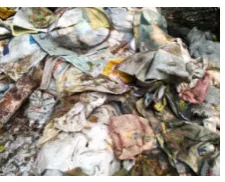
Figure 2 Waste Woven Polypropylene Bags ii) Sand
Sand or River Sand refers to the loose, fragmented, and naturally-occurring material consisting of very tiny particles of decomposed shells, corals or rocks. Apart from being an important part of the river sand plays a crucial role in the construction industry. In present study the locally available river sand passing though IS sieve size of 1.18 mm is used.
Figure 3 Sand iii) Moorum
Moorum is the product of decomposition and weathering of the pavement rocks of red colour. Visually these are similar to gravel with presence of higher content of fineness. In present research the Moorum passing through 4.75 mm and retained on 1.18 mm IS sieve is used.
Figure 4 Moorum
iv) Quarry Dust
Quarry dust is a byproduct of the crushed rocks which may be used as aggregates for concreting purpose, especially as fine aggregates. In quarrying activities, the rock is crushed into various sizes and during this process the dust generated is called quarry dust which is treated as waste material. It also results in air pollution if left in open air. Therefore quarry dust if used in construction works, will reduce the cost of construction and save the sand, which is a depleting natural resource. Most of the developing countries are under pressure to replace fine aggregate in concrete by an alternate material to some extent, or totally without compromising the quality of concrete. Quarry dust are now being used in different activities in the construction industry, such as building materials, road development materials, aggregates, bricks and tiles. Density of Quarry Dust is calculated as 1.63 g/cc. In present study the Quarry Dust passing through 4.75 mm and retained on 1.18 mm IS sieve is used.
Figure 5 Quarry Dust v) Iron Chips
[image:2.595.125.238.335.426.2]Iron is a ductile, greyish-black, relatively soft metal and is a moderately good conductor of heat and electricity. Pure iron is very reactive and rusts readily when comes in contact with air and moisture, forming a reddish-brown oxide. Iron chips passing through 4.75 mm and retained on 1.18 mm IS sieve is used in the study.
Figure 6 Iron Chips III. SCREWJACKMACHINE
Screw jack machine comprises of vertical threaded shaft reciprocating into the rectangular mould, thus rendering the compressive force to fill material (Figure 7 shows the setup of Screw Jack Machine). The mould used in this machine is of the standard dimensions 19cm×9cm×9cm to cast a brick.
[image:2.595.144.214.548.607.2]
International Journal of Innovative Technology and Exploring Engineering (IJITEE) ISSN: 2278-3075, Volume-8 Issue-10, August 2019
IV. PREPRATIONOFBRICKS
Empty weight of container is measured on weighing machine. The container is heated up enough and then the dry waste woven polypropene bags are placed in the container. After some time, these bags melt.
Figure 8 Weighing of Plastics & Hot molten mix [8]
[image:3.595.306.542.200.535.2]
Figure 9 Mix of Plastic and Sand Table 1 Mix Proportions for Bricks Made
of Various Materials
The required 20% of molten plastic is thoroughly mixed with 80% sand by volume. The molten plastic sand mass is then filled in screw jack machine mould and then the required pressure is applied on it. After this it is allowed to cool for 15 minutes inside the mould and then taken out and sun dried in open atmosphere. The whole method is repeated for preparation of bricks with 25%, 30%, 35% of molten plastic, mixed with materials like Moorum, Quarry Dust and Iron chips by volume respectively.
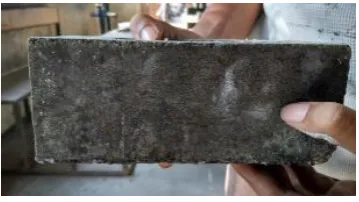
Figure 10 Finished Sand Plastic Brick
V. EXPERIMENTALRESULTS
After preparation of bricks, the important tests were performed. The test results are discussed as below:
A. Water Absorption Test
The bricks are tested for water absorptionin accordance with the IS code 3495(Part 2). The brick with water absorption of less than 7% provides better resistance to damage by freezing. The degree of compactness of brick is obtained by water absorption test, as water is absorbed by the pores in bricks. According to IS 1077-1973[3], for first class bricks, the water absorption capacity should not be more than 15 % by weight.
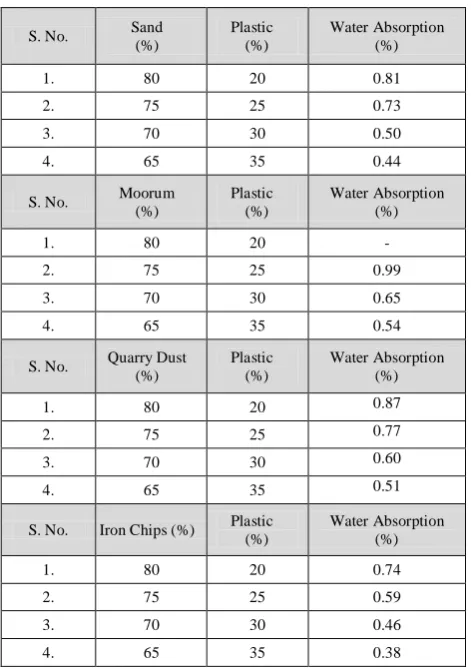
Table 2 Water Absorption for Bricks Made of Various Materials
The Table 2 enumerates, the percentage of water absorption of bricks made of Plastic-Sand (PSB), Plastic-Moorum (PMB), Plastic-Quarry Dust (PQDB) and Plastic-Iron Chips (PICB). The overall water absorption for all the sets of brick were found very low i.e. less than 1%. So, all the plastic bricks made by various materials fulfilled the water absorption criteria for 1st class bricks, according to IS 1077-1973 recommendations. From Table 2 it is also clear that, water absorption decreases as the quantity of plastic increases. This is due to increase in plastic percentage, the voids between Sand, Moorum, Quarry dust and Iron chips get filled by molten plastic.
B. Compressive Strength Test
The Compression Test is performed and the strength of brick in compression is evaluated. It is necessary for brick to have sufficient strength to bear
the loads. S.
No.
Plastic (%)
Various Materials (%) Sand Moorum Quarry Dust Iron
Chips
1. 20 80 80 80 80
2. 25 75 75 75 75
3. 30 70 70 70 70
4. 35 65 65 65 65
S. No. Sand
(%)
Plastic (%)
Water Absorption (%)
1. 80 20 0.81
2. 75 25 0.73
3. 70 30 0.50
4. 65 35 0.44
S. No. Moorum
(%)
Plastic (%)
Water Absorption (%)
1. 80 20 -
2. 75 25 0.99
3. 70 30 0.65
4. 65 35 0.54
S. No. Quarry Dust (%)
Plastic (%)
Water Absorption (%)
1. 80 20 0.87
2. 75 25 0.77
3. 70 30 0.60
4. 65 35 0.51
S. No. Iron Chips(%) Plastic (%)
Water Absorption (%)
1. 80 20 0.74
2. 75 25 0.59
3. 70 30 0.46
[image:3.595.124.216.643.715.2]The compressive strength was calculated by the procedure as stated in IS 3495 (Part 1 Determination of Compressive Strength)[6]. Results have been represented in tabular and graphical form. According to BIS: 1077-1957 [2], the bricks with crushing strength of 7 to 14 MPa are said to be of grade A and those having above 14 MPa are grade AA
Figure 11Compression Test Performed on Plastic Sand Brick [2]
Table 3 Compressive Strengthof Bricks Made of Various Materials
[image:4.595.338.518.146.229.2]
Figure 12 Compressive Strength of Brick Made of Various Materials
C. Visual Inspection
[image:4.595.42.288.270.751.2]In this test, the shape of bricks is closely inspected. The bricks of good quality should have uniform and truly rectangular shape with sharp edges. After inspection, Plastic Bricks were found to be uniform in shape and edges were sharp, thus fulfilling the criteria of 1st class bricks.
Figure 13 Visual Inspection of Bricks D. Dimensional Tolerance
[image:4.595.40.288.270.751.2]The dimensions of bricks were measured based on the procedure described in IS 3495 (Parts 1): 1992 [5]. Table 4 below, shows the results obtained from the measurement of 20 bricks. According to IS 3495 (Parts 1): 1992 bricks were divided into two rows of 10 bricks each, which are measured separately. The results obtained were compared with the standard sizes stated in the IS 12894:2002. The standard size given in the IS Code for length, width, and height, i.e., 190mm, 90mm and 90 mm, respectively. The individual measurement of length, width and height was within the limits of IS 3495 (Parts 1): 1992.
Figure 14 Bricks Arrangement for Dimensional Tolerance
Table 4 Dimensions of Brick Measured
Dimensions Total Measurement for 20 Bricks (mm)
Permissible Measurement for
Bricks (mm)
Length (L) 3800 3800 ± 80
Breadth (B) 1800 1800 ± 40
Height (H) 1830 1800 ± 40
E. Nail Scratch Test
In this test, a scratch is made on brick surface with the help of a finger nail. No impression is found on brick surface. It shows that the brick is hard and satisfies the criteria of 1st class brick.
S. No. Sand
(%)
Plastic (%)
Compressive Strength (MPa)
1. 80 20 15.98
2. 75 25 19.60
3. 70 30 16.17
4. 65 35 13.25
S. No. Moorum (%)
Plastic (%)
Compressive Strength (MPa)
1. 80 20 20.27
2. 75 25 23.78
3. 70 30 20.85
4. 65 35 15.01
S. No. Quarry Dust (%)
Plastic (%)
Compressive Strength (MPa)
1. 80 20 17.53
2. 75 25 23.00
3. 70 30 19.69
4. 65 35 17.54
S. No. Iron Chips (%)
Plastic (%)
Compressive Strength (MPa)
1. 80 20 16.18
2. 75 25 21.25
3. 70 30 17.93
[image:4.595.311.544.434.513.2]International Journal of Innovative Technology and Exploring Engineering (IJITEE) ISSN: 2278-3075, Volume-8 Issue-10, August 2019
Figure 15 Nail Scratch Test F. Drop-Down Test
A plastic brick is dropped down from a height of 1metre on firm surface such as plain cement concrete, the brick did not break. This shows that brick is strong enough to resist impact. Brick again satisfies the criteria of 1st class brick in this test.
(a) 1m Drop
(b) After Drop Figure 16 Drop Down Test G. Structural Test
The broken structures of bricks are examined. It was homogeneous, compact and free from any defects such as holes, lumps etc. This indicates the property of 1st class brick.
Figure 17 Broken Structure of Plastic Sand Brick
[image:5.595.80.260.49.150.2]
Figure 18 Broken Structure of Plastic -Moorum Brick
[image:5.595.367.510.57.131.2]
Figure 19 Broken Structure of Plastic -Quarry Dust Brick
[image:5.595.89.243.677.756.2]
Figure 20 Broken Structure of Plastic- Iron Chips Bricks H. Soundness Test
Plastic Bricks are struck together. As a result, a clear ringing sound is produced. According to Indian Standard code, the clear metallic ringing sound produced during the process denotes the good quality of the brick.
VI. CONCLUSION
The compressive strength obtained from compression testing machine results reflect that, bricks areof grade AA according to IS 12894:2002. The compressive strength of plastic bricks made by various materials with varying percentage of plastic increases with increase in amount of plastic and then at certain percentage decreases. It is also observed that, Plastic Moorum bricks can carry more load than Plastic Sand Bricks. The plastic bricks are uniform in shape and size having sharp edges. The only limitation of Plastic Brick is its thermal stability, which is restricted up to 180 °C. Plastic Bricks can be used in Canal Lining, Footpaths, utilization in asphalting of roads [1], Tanks, Drainage Line, Manholes, cold countries, etc. Plastic Bricks cannot be used in furnaces, factories or chimneys due to temperature insusceptibility. The production of this type of brick will certainly contribute to the utilization of plastic waste. On the other hand, the reduction in clay usage for the production of conventional clay bricks will help to protect the environment as well as it will prove to be economically viable.
ACKNOWLEDGMENT
I am extremely grateful to my B.Tech. Civil Engineering student Deepak Saxena and his group for their effort to make a wonderful brick making machine name as Screw Jack Machine. I am also extremely thankful to my B.Tech. Civil Engineering last year pass-out students Abhijendra Anand, Pradyuman Rakhecha and Shreyance Kumar for making bricks and performing the recommended tests.
REFERENCES
1. Amit Gawande, G. Zamare., V.C Renge., Saurabh Tayde, G. Bharsakale.. “An overview on waste plastic utilization in asphalting of roads”, Journal of Engineering Research And Studies (JERS), Vol.3 (2), 2012, pp. 01-05.
2. BIS: Crushing or Compressive Strength of bricks IS 1077-1957 3. BIS, Classification and Characteristics of Bricks IS 1077: 1973 4. BIS, Common Burnt Clay Building Bricks- Specification: Fifth
Revision IS 1077:1992.
5. BIS, Methods of Tests of Burnt Clay Building Bricks IS 3495 (Parts 1): 1992
6. BIS, Building Bricks: Part I Determination of Compressive Strength (Third Revision ) IS 3495 ( Pa rt 1 ) : 1992
7. L. Zhang, “Production of Bricks from Waste Materials”, A Review. Construction and Building Materials, Vol. 47, 2013, pp. 643-655. 8. P. M. Hiremath, S. Shetty, N. Rai, “Utilization of Waste Plastic in
Manufacturing of Plastic Soil Bricks”, International Journal of Technology Enhancements and Emerging Engineering Research, Vol. 2(4), 2014, pp. 102-107.
9. R. Daftardar, Patel, R. Shah, P. Gandhi and H. Garg, “Use of Waste Plastic as a Construction Material”, International Journal of Engineering and Applied Sciences, Vol. 4 (11), 2017, pp. 148-151. 10.Rosato, Domic, Donald, “Plastics Engineering Manufacturing and Data
Book”, Vol. 1. Boston, Kluwer Academic Pub., 2001
11.Raju and R. Chauhan, “An Experimental Study on Strength Behaviour of Cement Concrete with Use of Plastic Fibre”, National Conference on Advances in Engineering and Technology, 2014, pp 30-34,
12.S. Dinesh and K. Kirubhakaran., “Utilisation of Waste Plastic in Manufacturing of Bricks and Paver Blocks” , International Journal of Applied Engineering Research, Vol.2 (4), 2016, pp. 364-368. 13.S. Arabia, “Utilization of Limestone Dust in Brick Making”, Journal of
Engineering Sciences, Assiut University, Vol. 40 (3), 2012, pp. 913-922. 14.WWW.https://madhavuniversity.edu.in/utilization-of-waste-plastic.htm
l
AUTHORSPROFILE
Ashish Kumar Parashar: Received his B.E. degree from
![Figure 11Compression Test Performed on Plastic Sand Brick [2]](https://thumb-us.123doks.com/thumbv2/123dok_us/8186444.256469/4.595.338.518.146.229/figure-compression-test-performed-plastic-sand-brick.webp)