PROGRAMME ON KNOWLEDGE REGARDING
CARE OF PATIENT WITH CEREBRO
VASCULAR ACCIDENT AMONG
CARE GIVERS
Dissertation Submitted To
THE TAMILNADU DR.M.G.R MEDICAL UNIVERSITY
CHENNAI
IN PARTIAL FULFILMENT OF REQUIREMENT FOR THE AWARD OF
DEGREE OF
CARE OF PATIENT WITH CEREBRO VASCULAR
ACCIDENT AMONG CARE GIVERS
IN DR. KAMAKSHI MEMORIAL
HOSPITAL CHENNAI 2011-2012.
Certified that this is the bonafide work of
MS. AGNES.J
MADHA COLLEGE OF NURSING, MADHA NAGAR, KUNDRATHUR,
CHENNAI – 600 069.
COLLEGE SEAL:
SIGNATURE:
Prof. TAMILARASI. B R.N., R.M., M.Sc.(N)., Ph.D., Principal,
Madha College of Nursing, Kundrathur,
Chennai - 600 069, TamilNadu.
Dissertation Submitted To
THE TAMILNADU DR. M.G.R. MEDICAL UNIVERSITY CHENNAI
IN PARTIAL FULFILMENT OF REQUIREMENT FOR THE AWARD OF DEGREE OF
CARE OF PATIENT WITH CEREBRO VASCULAR ACCIDENT AMONG CARE GIVERS
IN DR. KAMAKSHI MEMORIAL HOSPITAL CHENNAI 2011-2012.
Approved by the dissertation committee on: 03-02-2011
Research Guide
Prof. TAMILARASI. B
R.N., R.M., M.Sc,(N)., Ph.D., Principal,
Madha College of Nursing, Kundrathur,
Chennai - 600 069, TamilNadu.
Clinical Guide
Mrs. KANIMOZHI. M. R.N.,R.M., M.Sc,(N).,
Reader, Medical Surgical Nursing, Madha college of Nursing,
Kundrathur,
Chennai – 600 069, TamilNadu.
Medical Guide
Dr. CHANDRA MOULEESWARAN
M.D., D.M., (Neurologist),
Consultant Clinical Neurologist,
Dr. Kamakshi Memorial Hospital, Pallikaranai,
Chennai-600 100, TamilNadu.
Dissertation Submitted To
THE TAMILNADU DR.M.G.R MEDICAL UNIVERSITY CHENNAI
IN PARTIAL FULFILMENT OF REQUIREMENT FOR THE AWARD OF DEGREE OF
I owe my success to the almighty God who blessed me with the necessary
will power, strength, courage and health throughout this endeavor.
My heartfelt thanks to the founder Dr. Peter.S, Chairman,Madha Group of Academic Institutions for his support and providing the required facilities for the successful completion of the study.
I express my deep gratitude and immense thanks to Prof.Tamilarasi.B, R.N., R.M., M.Sc,(N)., Ph.D., Principal, Madha College of Nursing, who was a great inspiration throughout the study .
I also express my sincere thanks to Prof. Grace Samuel, R.N., R.M., M.Sc.(N)., Vice principal, Madha College of Nursing, for her constant support.
I express my heartfelt sincere thanks to Mrs.Kanimozhi.M, R.N., R.M., M.Sc,(N)., Reader and Mrs.Vathana.V, R.N., R.M., M.Sc,(N)., Reader, Department of Medical-Surgical Nursing, for their guidance, valuable suggestions and continuous support which made my study a fruitful one.
It gives me great pleasure to thank Dr.Kanniammal.C, R.N., R.M., M.Sc. (N)., Ph.D., Principal, Arulmigu Meenakshi College of Nursing, for her valuable suggestions contributed to the refinement of the data collection tool.
My sincere thanks to Mrs.Hema Suresh, R.N., R.M., M.Sc.(N)., Vice Principal, Meenakshi College of Nursing, for her help in validating the tool for my study.
I sincerely express my thanks to Dr.Chandramouleeswaran, M.D., D.M., for his help in validating the tool for my study.
My deep sense of gratitude to Mr. Sattanathan M.A (Eng. Lit.), B.Ed., for her immense help in English and grammatical corrections for my study.
I would like to convey my thanks to Mr.Narayanan M.A (Tamil Lit.), B.Ed., for her great help in Tamil corrections for my study.
I would like to express my thanks to the biostatistician for his guidance in data analysis.
I express my heartfelt thanks to the librarians of Madha College of Nursing, Chennai for providing the library facility.
I intensively express my heartfelt thanks to my parents, my brothers and sisters for their economical support and co-operation throughout my study.
CHAPTER CONTENTS PAGE No.
I INTRODUCTION 1-7
Need for the study Statement of the problem Objectives Operational Definitions Hypothesis Delimitations 3-6 6 6 7 7 7
II REVIEW OF LITERATURE 8
Review of related literatures Conceptual framework
9-20 21-23
III METHODOLOGY 24-29
Research Design Setting of the study Population
Sample Sample size
Sampling Technique
Criteria for sample selection Description of the Instrument Data Collection Procedure Data Analysis 24 24 24 24 25 25 25 25-27 27-28 28
IV DATA ANALYSIS AND
INTERPRETATION 30-54
V DISCUSSION 55-59
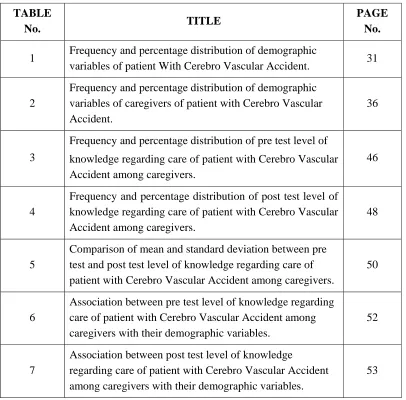
TABLE
No. TITLE
PAGE No.
1 Frequency and percentage distribution of demographic
variables of patient With Cerebro Vascular Accident. 31
2
Frequency and percentage distribution of demographic variables of caregivers of patient with Cerebro Vascular Accident.
36
3
Frequency and percentage distribution of pre test level of knowledge regarding care of patient with Cerebro Vascular Accident among caregivers.
46
4
Frequency and percentage distribution of post test level of knowledge regarding care of patient with Cerebro Vascular Accident among caregivers.
48
5
Comparison of mean and standard deviation between pre test and post test level of knowledge regarding care of patient with Cerebro Vascular Accident among caregivers.
50
6
Association between pre test level of knowledge regarding care of patient with Cerebro Vascular Accident among caregivers with their demographic variables.
52
7
Association between post test level of knowledge
regarding care of patient with Cerebro Vascular Accident among caregivers with their demographic variables.
[image:7.612.122.528.107.507.2]FIGURE
No. TITLE PAGE No.
1 Conceptual framework 23
2 Schematic representation of methodology 29
3 Percentage distribution of age among the patient with
Cerebro Vascular Accident. 32
4 Percentage distribution of sex among the patient with
Cerebro Vascular Accident. 33
5 Percentage distribution of duration of illness among
the patient with Cerebro Vascular Accident. 34
6 Percentage distribution of associated disease among
the patient with Cerebro Vascular Accident 35
7 Percentage distribution age among the care givers of
patient with Cerebro Vascular Accident 38
8 Percentage distribution of sex among the care givers
of patient with Cerebro Vascular Accident 39
9
Percentage distribution of relationship with patient among the care givers of patient with Cerebro Vascular Accident.
40
10
Percentage distribution of duration of caregiving among the care givers of patient with Cerebro Vascular Accident.
41
11
Percentage distribution of educational status among the care givers of patient with Cerebro Vascular Accident.
42
12
Percentage distribution of occupational status among the care givers of patient with Cerebro Vascular Accident.
43
13 Percentage distribution of monthly income among the
care givers of patient with Cerebro Vascular Accident.
15
The percentage distribution of pre test level of knowledge among caregivers of patient with Cerebro Vascular Accident.
47
16
The percentage distribution of post test level of knowledge among care givers of patient with Cerebro Vascular Accident.
49
17
Comparison of mean and standard deviation of pre and post test level of knowledge among care givers of patient with Cerebro Vascular Accident.
APPENDIX No TITLE PAGE No
A Instrument i
B Consent letter ii
C Permission letter iii
D Certificate for content validity iv
E Certificate for editing v
A sound health leads to a sound life. Nowadays, Cerebro Vascular Accident is becoming a challenging disease to the world. One in six people worldwide will have a stroke in their lifetime. Every six seconds on regardless of age or gender someone, somewhere will die from Cerebro Vascular Accident but 90% of disability can be prevented. As it has a residual disability, the patient needs others for their Activities of Daily Living like nurses, family members and etc. In order to improve the care, the caregivers should be educated regarding the care of patient with Cerebro Vascular Accident.
A study was conducted to evaluate the effectiveness of structured teaching programme regarding care of patient with Cerebro Vascular Accident among care givers in Dr. Kamakshi Memorial Hospital at Chennai 2011-2012. The objective of the study was to determine the effectiveness of structured teaching programme regarding care of patient with Cerebro Vascular Accident among care givers.
A pre experimental one group pre test post test design was selected for this study. It was carried out with 30 care givers of patient with Cerebro Vascular Accident who fulfilled the inclusion criteria selected by purposive sampling technique. An interview schedule was conducted to the participants to assess the pre test level of knowledge. After that structured programme for 20 -30 minutes was given to the care givers. The post test was conducted to the participants after 3 days by using same tool.
CHAPTER-I
INTRODUCTION
“Life is not merely to be alive, but to be well”.
~Marcus Valerius Martial
Health is the level of functional and/or metabolic efficiency of a living being. In human, it is the general condition of a person in mind, body and spirit, usually mean to being free from illness, injury or pain. The World Health Organization defined health in its broader sense in 1946 as a state of complete physical, mental and social well-being and not merely the absence of disease or infirmity. Generally, the context in which an individual lives is of great importance on health status and quality of life. It is increasingly recognized that health is maintained and improved not only through the advancement and application of health science, but also through the efforts and intelligent lifestyle choices of the individual and society.
According to the World Health Organization, the main determinants of health include the social and economic environment, the physical environment and the person's individual characteristics and behaviors. Health damaging behaviors particularly tobacco use, lack of physical activity and poor eating habits are major contributors to the leading chronic diseases. A disease is an abnormal condition affecting the body of an organism. It is often considered to be a medical condition associated with specific symptoms and signs. Chronic diseases generally cannot be prevented by vaccines or cured by medication, nor do they just disappear.
Chronic diseases are diseases of long duration that is 3 months or more and generally slow progression. Chronic diseases, such as heart disease, stroke, cancer, chronic respiratory diseases and diabetes are by far the leading cause of mortality in the world, representing 60% of all deaths. Out of the 35 million people who died from chronic disease in 2005, half were under 70 and half were women.
Jusko (2008), estimates indicated that 58 million people died and in them chronic diseases accounted for 35 million deaths. After heart disease, CVA is the second leading single cause of death, with 5.8 million fatal cases per year, 40% are reported as younger than 70 years. About 15 million new acute CVA events arise every year and about 55 million people had a CVA at some time in the past, either with or without residual disability. And two-thirds of these individuals live in low income and middle-income countries.
Demographic changes, urbanization and increased exposure to major CVA risk factors will fuel the CVA burden in the future. The prevalence of stroke in India varies in different regions of the country and ranges from 40 to 270 per 100000 population. Approximately 12% of all CVA occur in the population <40 years of age. Major risk factors to CVA identified in India are hypertension hyperglycemia, tobacco use and low hemoglobin levels CVA accounts for 2 percent of hospital registrations, 1.5 percent of medical registrations and 9 to 30 percent of neurological admissions in major hospitals. The National Commission on Macroeconomics and Health has projected that cases of stroke would increase from 1,081,480 in 2000 to 1,667,372 in 2015. The ICMR study on Burden of Disease has estimated that there has been an increase in the number of CVA cases in India during the last one and a half decades by 17.5 %. Mortality due to CVA has increased by 7.8% from 1998 to 2004. CVA is the third commonest cause of death worldwide. Among the Asians, the number who died from CVA was more than three times that for CHD.
There were limited data available on CVA related mortality in India. Although medical certification of the cause of death is a legal requirement, only 13.5% of all deaths in India were medically certified in 1994. Therefore ascertainment of the cause of death was grossly inadequate in India.
It was estimated that CVA represented 1.2 % of the total deaths in the country, when all ages were included. The proportion of CVA death increased with age and in the oldest group CVA contributed to 2.4% of all deaths. The gender ratio of death due to CVA was 1.
developed countries. It was responsible for about 4·4 million deaths worldwide. In the recent estimates made in 1999, the number of deaths due to CVA reached 5·54 million worldwide, with two-thirds of these deaths occurring in less developed countries. CVA is also a major cause of long-term disability and has potentially enormous emotional and socioeconomic consequences for patients, their families and health services.
NEED FOR THE STUDY
The neurological problem is the leading cause of death next to cardiac disease. Among all the neurological disease of adult life, the CVA is the one clearly rank first in frequency and importance. CVA holds the destination of being of the leading cause of death in India. In the verses more than 700000 people suffer CVA each year an approximately 2/3 of these individual survive and require rehabilitation.
CVA prevention patient outcome research team recognized that increased risk for CVA is more likely to engage in CVA prevention practice than those who do not yet, over half of patient at increased risk for CVA or unaware of their CVA risk. American Heart Association (2000) had reported that CVA is the third leading cause to death and the major cause of disability.
The “World Health Organization.” (2010) estimates that fifteen million individuals suffer from a stroke on an annual basis worldwide. Five million of these individuals will have a permanent disability caused by their stroke while another five million of these individuals will die. Stroke is one of the leading cause of mortality and morbidity worldwide. Gupta, et al., (2008) reported that developing countries account for 85% of global deaths from stroke and it is also a leading cause of functional impairments, with 20% of survivors requiring institutional care after 3 months and 15% - 30% being permanently disabled.
The leading cause of stroke worldwide is hypertension however, the WHO reports a decline in the instances of stroke within developed countries largely due to progress being made in controlling blood pressure and a decline in smoking. Therefore, in order to reduce your chances of having a stroke significantly. It is essential to have regular checkups to monitor blood pressure and make every effort to quit if you are a smoker.
The primary goals of CVA management are to reduce brain injury and promote maximum patient recovery. Rapid detection and appropriate emergency medical care are essential for optimizing health outcomes when available; patients are admitted to an acute CVA unit for treatment. These units specialize in providing medical and surgical care aimed at stabilizing the patient’s medical status. Standardized assessments are also performed to aid in the development of an appropriate care plan. Current research suggests that CVA units may be effective in reducing in-hospital fatality rates and the length of hospital stays.
Once a patient is medically stable, the focus of their recovery shifts to rehabilitation. Some patients are transferred to in-patient rehabilitation programs, while others may be referred to out-patient services or home-based care. In-patient programs are usually facilitated by an interdisciplinary team that may include a physician, nurse, physical therapist, occupational therapist, speech and language pathologist, psychologist and recreation therapist. The patient and their family or caregivers also play an integral role on this team. The primary goals of this sub-acute phase of recovery include preventing secondary health complications, minimizing impairments and achieving functional goals that promote independence in activities of daily living.
In the later phases of CVA recovery, patients are encouraged to participate in secondary prevention programs for CVA. Follow-up is usually facilitated by the patient’s primary care provider.
Family caregivers and friends play a critical role in the recovery from CVA, particularly as length of stay in hospitals and rehabilitation settings continue to decrease. CVA recovery continues for at least two years after CVA onset, so most of the support during this period comes from informal sources including friends and family members.
Providing care for a CVA patient can be an extremely rewarding experience. At the same time it can be very stressful and frustrating to be suddenly thrust into the position of caregiver with little or no warning. It is crucial therefore, to remember to cater to their own needs, in addition to those of the patient. Some of those needs may include the need for information, the need for skills in the physical aspects of care and the need for support in the “case management” aspects of care.
In terms of emotional reactions, caregivers often feel one or more of the following: anxiety, guilt, depression, frustration, resentment, impatience and fear. Fear that a CVA may happen again, fear that the CVA survivor may be unable to accept the disabilities, fear that the survivor may require nursing home placement, fear that the caregiver may make mistakes and fear that families and friends will abandon them. Coping with these reactions is paramount to a healthier caregiver and ultimately, to a healthier patient.
To help informal care providers assume the caregiver role, nurses must have an understanding of the common needs and experiences of caregivers of CVA patients. By more fully understanding the caregiving experience from the perspectives of actual caregivers, nurses can help potential informal caregivers become more competent in the caregiving role and promote optimum outcomes for both CVA patient and caregivers.
patients and caregivers on various issues that are specific to the various recovery phases after stroke
When the investigator posted in Dr. Kamakshi Memorial Hospital at Chennai she provided nursing care to the patient with Cerebro Vascular Accident. While caring the patient with the caregivers asked so many questions about care of the patient and they did not know how to assist the patient in maintaining personal hygiene, feeding, exercising and communicating. So the investigator found that the caregiver’s inadequacy of knowledge on caring of patient with Cerebro Vascular Accident. Hence the investigator interested to assess the level of knowledge and to impart education on care of patient with CVA.
STATEMENT OF THE PROBLEM
A study to assess the effectiveness of structured teaching programme on knowledge regarding care of patient with Cerebro Vascular Accident among caregivers in Dr. Kamakshi Memorial Hospital at Chennai.
OBJECTIVES
1. To assess the pre test level of knowledge regarding care of patient with Cerebro Vascular Accident among care givers.
2. To assess the post test level of knowledge regarding care of patient with Cerebro Vascular Accident among care givers.
3. To evaluate the effectiveness of the structured teaching programme on
knowledge regarding care of patient with Cerebro Vascular Accident among care givers.
OPERATIONAL DEFINITIONS
Effectiveness: Refers to the positive outcome of structured teaching programme regarding care of patient with Cerebro Vascular Accident among caregivers.
Structured teaching programme: Refers to the systematically developed information and visual aids regarding physiological and psychological care of patient with Cerebro Vascular Accident among caregivers.
Knowledge: Refers to the facts and information gained by caregivers regarding nutrition, personal hygiene, mobility and exercise, communication and psychological care of the patient with Cerebro Vascular Accident.
Care Giver: Refers to a person who is taking care of the patient with Cerebro Vascular Accident.
Cerebro Vascular Accident: Refers to a condition in which neurological deficits result from a sudden decrease in blood flow to localized area of the brain.
HYPOTHESIS
There is no significant relationship between the Structured Teaching Programme and level of knowledge regarding care of patient with Cerebro Vascular Accident among caregivers.
DELIMITATIONS
• The study sample was delimited to 30.
• The study was delimited to Tamil and English speaking caregivers only.
CHAPTER-II
REVIEW OF LITERATURE
The review of literature is an essential aspect of the scientific research. It is a systematic identification of location, scrutiny and summary of written material that contains information about the problem under study. The investigator gained insight in selected problem from an extensive research review.
This chapter is designed to include the reviews of related literature and the conceptual framework adopted for the study.
PART-I REVIEW OF RELATED LITERATURE
A Stroke happens when a part of brain dies from lack of blood. Early treatment can help to prevent a stroke. The World Health Organization recommends that countries take care of their population and adopt urgent measures to compact the silent epidemic caused by stroke. The goal is to make this fight as a central theme in the global health agenda.
This chapter is organized systematically and classified in the following manner.
• Literature related to nutritional aspects in care of patient with Cerebro Vascular Accident
• Literature related to personal hygiene in care of patient with Cerebro Vascular Accident
• Literature related to mobility and communication in care of patient with
Cerebro Vascular Accident
• Literature related to psychological aspects in care of patient with Cerebro Vascular Accident
• Literature related to structured teaching programme in care of patient with Cerebro Vascular Accident
PART-I
REVIEW OF RELATED LITERATURE
On October 29, all counties in the world reinforce the fight against stroke. “Cerebral ischemia” - a disease that affects 16 million people and causes 6 million deaths worldwide per year. On 2009 more than 68 thousand Brazilians lost their lives victim of stroke that is the leading cause of death and disability but 90% of strokes can be prevented and if it occurs is possible to treat the patient appropriately. The essential is that he gets to the hospital quickly and that the hospital to prepare to give appropriate and immediate assistance.
The ministry of health truly celebrates this October 29 investigating in the formulation of the system of assistance for uses of the public system of health with an integrated approach to the patient providing the best strategy for diagnosis and treatment to decrease the impact of stroke. Stroke awareness foundation educates the public about warning signs of Cerebro Vascular Accident and seeks proper medical services immediately.
Literature related to nutritional aspects in care of patient with Cerebro Vascular Accident
Maeshima.S, et al., (2011) did a study to determine whether dysphagia present at initial swallowing evaluation is associated with the type of diet eaten at the time of discharge and the location to which the patient is transferred after discharge. The sample size was 409 newly diagnosed acute stroke patients. They found that after their hospital discharge, 140 patients returned home, 250 were transferred to another hospital for rehabilitation and 7 were admitted to a nursing home. Twelve patients had died. A total of 205 patients were on a regular diet, 96 were receiving a dysphagia diet and 96 were on enteral feeding at discharge. A total of 90.7% of patients who were discharged to home were on a regular diet. Most of the patients on a dysphagia diet or enteral feeding could not return home. The scores of the functional independence measure were higher in the patients who returned to their homes than in other groups.
Medin.J, et al., (2011) conducted a study comparing eating difficulties among patients 3 months after stroke in relation to the acute phase from March 2007 to June 2008. Thirty six stroke patients with 2-7 eating difficulties or problems with reduced alertness or swallowing in the acute phase were included. Eating difficulties were detected using a structured protocol of observation of meals. The proportion of eating difficulties had decreased significantly from the acute phase to the 3-month follow-up in 'sitting position', 'managing food on the plate' and 'manipulating food in the mouth' and increased regarding inadequate food consumption. Improvements were shown at 3 months in stroke severity, functional status, nutritional status and neglect. Oral status and psychological well-being remains unchanged. They found that the majority of eating problems persisted 3 months after stroke despites a marked improvement in most of the physical functions.
Thus the cases had concluded in 100 cases studied, none of them fulfilled the calorie requirement up to the standard level according to the guideline of Nutrition & Food Science Institute.
Leder.SB, et al., (2009) did a study on dysphagia among 4070 acute care setting patients with altered mental status to determine, there was a difference in odds for aspiration based upon correctly answering specific orientation questions. The study finding revealed that a protocol for dysphagia testing was developed that begun with verbal stimuli to determine patient orientation status and ability to follow single step verbal commands. A protocol for dysphagia testing was developed that begun with verbal stimuli to determine patient orientation status and ability to follow single-step verbal commands. The odds of liquid aspiration were 31% greater for patients not oriented to person, place and time, the odds of liquid aspiration puree aspiration and being deemed unsafe for any oral intake were respectively, 57, 48 and 69% greater for patients unable to follow single-step verbal commands. They concluded that the knowledge of potential increased odds of aspiration allows for individualization of dysphagia testing there by optimizing swallowing success.
Westergren.A, et al., (2008) conducted a study to describe meal time preparation, eating, fatigue, mood and nutritional status among stroke survivors, six months after discharge from hospital. Standardized questions and methods were used. Difficulties with swallowing, ingestion and energy to eat occurred among 27%, 20% and respectively. Difficulties with cooking and buying food occurred among 57% and 56% respectively and 41% were at nutritional risk. Feeling full of energy less than 61% while 15% had felt gloomy and sad at least four weeks. Considering the activities of daily living, having a less favorable nutritional status was significantly predicted by difficulties with buying food, difficulties with ingestion and being a woman. Considering psychological state, having a less favourable nutritional status was significantly predicted by a lack of energy and high age. Thus the study supports the occurrence of a nutritionally related fatigue by means of “lack of energy”.
thirty-eight had a serum albumin concentration below 35 gram/litre. Baseline nutritional status was worse among those who had died later than those who had remained in the hospital, compared with those who got discharged and most patients who remained in hospital showed marked and significant deterioration in all the measures of nutritional status within 4 weeks of hospitalization.
Kumlien.S, & Axelsson.K, (2002) conducted a study to explore eating, feeding and nutrition among 40 patients with CVA in nursing home as described by their nurses and by assessment. A comprehensive instrument, the resident assessment Instrument were used to asses these patient’s state of health. The result showed that more than 80% of the CVA patients in nursing home, were assisted as having some sort of dependence in eating. Dysphagia was reported in almost one fourth of the patient and 30% were described and assisted as having poor intake of poor appetite. The finding highlighted the important of making careful observation and assessment of maintaining documentation about eating and nutrition early after a patient’s arrival in the nursing home to enable appropriate care and promotion of health.
Westergren.A, et al., (2001) conducted a study to describe the types and extent of eating difficulties, the need for assistance when eating, the nutritional status and pressure ulcers in consecutive patients (n = 162) admitted for stroke rehabilitation over a period of 1 year. Difficulties in eating were found in 80%, 52.5% were unable to eat without assistance and 32% were undernourished. The study concluded that all patients with stroke admitted for rehabilitation need to be systematically assessed for eating difficulties and action needs to be taken to facilitate eating, especially as patients with eating difficulties risk becoming undernourished and in turn developing pressure ulcers.
Literature related to personal hygiene in care of patient with Cerebro Vascular Accident
objective improvement in functional ability after CVA, they had significantly poorer to periodontal health compared with community dwelling elderly without CVA.
Tsang.MH, et al., (2009) did a randomized controlled trial to investigate the efficiency of conventional treatment with right half-field eye patching in treating 35 sub-acute CVA patients. The patients were randomized into intervention and control group. The patients in the intervention group received 4 weeks of conventional occupational therapy with modified eye patching and control group received only 4 weeks conventional treatment. Both the groups were assessed using Behavioral Inattention Test (BIT) and Functional Independence Measure (FIM) on admission and at 4 weeks. The results showed that there is a significant difference in BIT gain, but no difference in FIM in both the groups.
Brady.M, et al., (2006) reviewed eight randomized controlled trials to compare the effectiveness of staff-led oral care interventions with standard care for
ensuring oral hygiene for individuals after a CVA. The sample size was 67 individuals with a CVA which was obtained from the larger cluster randomized
controlled trials. The study showed that denture plaque scores were significantly reduced up to six months and providing oral care training for carers had improved their knowledge and attitudes towards the provision of oral care.
Literature related to mobility and communication in care of patient with Cerebro Vascular Accident
Hedberg.B, et al., (2008) conducted a study regarding communicating stroke survivors health and further needs for support in care-planning meetings. A qualitative and a quantitative design were adopted with a sample size was 14 authentic audio-recorded care-planning meetings. The transcribed meetings were together with observational notes, analyzed from a data-driven approach. They found that the importance of strengthening stroke survivors participation in care-planning meetings is highlighted. This study showed the necessity for professionals to involve relatively when negotiating these patients' need for further care and to learn more about, how to advocate stroke survivors.
DuBard.CA, et al., (2006) did a study to find the effect of language on heart
698 English-speaking Hispanics, 527 Spanish-speaking Hispanics and 24, 201non-Hispanics. Cross-sectional analysis showed that Spanish-speaking Hispanics remain significantly less likely than all other groups to correctly identify symptoms after adjustment for socio demographic characteristics, healthcare access and cardiovascular risk factors (p<0.05). The study revealed that lack of English proficiency was strongly associated with lack of heart attack and stroke knowledge among Hispanics. That was highlighted the need for educational intervention about cardiovascular emergencies targeted to Spanish-speaking communities.
Greenland.KJ, et al., (2002) did a study on physician advice, patient actions and health-related quality of life in secondary prevention of stroke through diet and exercise. Out of 51193 participants in the 1999, Behavioral Risk Factor Surveillance System, a state-based telephone survey were assessed using HRQOL Questionnaire Overall, 2.4% of the participants reported a history of stroke. Sixty-one percent of those who reported a history of stroke had been advised to eat fewer high fat or high cholesterol foods and 85.4% of those who had received such advice reported a dietary change compared with 56.0% of those who did not receive such advice. Almost 64% of those who reported a stroke had been advised to exercise more and 76.5% of those who received such advice reported exercising more versus 38.5% of those who did not receive such advice. The study revealed that person with stroke who reported exercising had fewer limited activity days and days when physical health was not good and more healthy days than did persons who did not exercise. Dietary actions were not associated with differences in HRQOL.
and further, when needed, being present on the level of mystery, i.e. caring communion.
Dowswell.G, et al., (2001) conducted a observational study to examine the positioning, handling and mobilizing of stroke patients in hospital. Poor position was observed to end 158 times in 380 patient hours of observation. The most frequent causes of positional improvement were activities whose primary intention was unrelated to position correction. The deliberate adjustment of patients’ position by nurses was a rare event which occupied a small part of nurses time.
Literature related to psychological aspects in care of patient with Cerebro Vascular Accident
Baseman.S, et al., (2010) conducted a descriptive, correlational survey to examine the relationships of functional status, depression and overall stroke recovery to social integration in a convenience sample of ischemic stroke survivors. The survey response rate was 21.4%. Results showed that functional status, overall stroke recovery and depression are highly significant predictors of social integration, explaining 62% of the variance. Comorbid depression was negatively and significantly correlated to social integration, such that higher levels of depression are associated with lower levels of social integration. They found that social integration is an important and understudied aspect of stroke recovery that warrants further research.
Greenop.KR, et al., (2009) did a prospective study to investigate the relationship between post- stroke depressive symptoms and premorbid personality between May 2003 to January 2005. The pre-stroke personality of stroke survivors was assessed by interviewing a close family number within four weeks of the index stroke using the NEO Personality Inventory-Revised. Three months after the stroke patient were followed up and assessed with the Cambridge cognitive examination and hospital anxiety and depression scale and their informants completed neuropsychiatric inventory carer distress version and instrumental activities of daily living scale. The result showed that depressive symptoms were the most commonly reported post- stroke symptom. Spearman correlation showed that high neuroticisms were positively correlated with NPI total scores. NPI total distress scores and specifically with agitation and irritability NPI composite scores. Agreeableness was inversely correlated with agitation and irritability composite scores.
Moroni.L, (2008) conducted a study to analyze the psychometric validity and reliability of the Caregiver Needs Assessment questionnaire. The sample size to 226 family caregivers of 197 patients hospitalized for neuromotor rehabilitation after a stroke, head injury, Lateral Amyotrophic Sclerosis, Parkinson or other severely impairing diseases. They found that the statistical analysis confirms the good psychometric properties of the Caregiver Needs Assessment questionnaire. For its brevity and ease in compilation the Caregiver Needs Assessment is promising practical tool aimed at assessing caregivers' needs in order to personalize a programme of psychological support to measure it's outcome and to provide comparison of the different needs in different diseases.
Carlsson. E, et al., (2004) did a qualitative case study to explore how people affected by stroke experience living with eating difficulties, during a prolonged period. The group size was with the three persons, 1.5 to 2 years who had their last stroke repeated interviews and through participant observations. Data were analyzed using qualitative analysis. The informants experienced a loss of functional eating ability and the ability to perform activities related to food and meals. Feelings of dependence were experienced in mealtime situations. The study revealed that living with eating difficulties after stroke is a complex phenomenon. The study indicated a need for nurses to develop and use evidence-based guidelines for eating training during the continuum of care.
Man-Son-Hing.M, et al., (2002) did a study to compare the effect of quantitative versus qualitative presentation of probability estimated in patient decision making. The study design was randomized trial with a 2 x 2 factorial design. The total of 198 volunteers aged 60-80 years. Participants were asked to imagine that they had atrial fibrillation and using a decision aid, were then randomized to two ways of receiving pertinent risk information regarding the probability of stroke and major bleeding when taking warfarin, aspirin or no therapy. Quantitatively, in which the 2-year probabilities of stroke and major haemorrhage were presented both numerically and graphically with 100 faces and qualitatively in which these probabilities were presented with the use of verbal phrases. Participants reviewing quantitative risk information scored better on the informed subscale of the decisional conflict scale. There were no significant difference between the quantitative and qualitative groups in their ability to the rank-order with their stroke risk in spite of taking warfarin, aspirin and no treatment. Overall knowledge about atrial fibrillation and its treatment and other dimensions of decisional conflict (all P-values >0.05).
Literature related to structured teaching programme in care of patient with Cerebro Vascular Accident
media varied between the sexes. They concluded that educational programs do have gender-specific effects and future campaigns should be tailored economically and should focus on different media and educational messages on the two sexes accordingly.
MacKay-Lyons.M, et al., (2010) conducted a single blind, randomized controlled trial to compare the effectiveness of a program of rehabilitative exercise and education versus usual care in modifying vascular risk factors in adults after Non-Disabling Stroke or Transient Ischemic Attack. The sample size was 250 adults within 90 days of being diagnosed with Non-Disabling Stroke or Transient Ischemic Attack was randomly allocated to a 12-week program of exercise and education or to an outpatient clinic assessment and discussion of secondary prevention recommendations with return clinic visits as indicated. They anticipated that the findings of this trial would make a meaningful contribution to the knowledge base regarding secondary stroke prevention.
Norris.M, et al., (2010) did a review on the findings of a qualitative study informed by both hermeneutic phenomenology and ethnography. The sample size with 11 persons with stroke and 18 of their carers. The study had examined the lay concepts of stroke, described as a condition resulting from a local blockage in blood from multiple causes, many of which are not recognized within the biomedical frame. The blockage is understood to be reversible and therefore the condition curable. The results illustrated that the similarities and differences with other cross-cultural studies and suggested areas of future research and points of consideration for stroke education strategies.
level and being young. Information campaigns are needed to improve the population's attitude towards this disease.
Schlote.A, et al., (2008) did a survey of knowledge of and acquaintance with institutions and organizations offering support after stroke and actual use of these resources. 84 patients and their nearest others were questioned concerning their acquaintance with and use of professional and institutional resources for support and also with respect to social support and self-efficacy. The study revealed that six and twelve months after stroke, actual use of the various resources for support varied between 0 and 13%. Only part of the patients 11-65% and relatives up to 78% knew about the professional and institutional resource available.
Dahlin.FN, et al., (2008) conducted a study to determine whether a nurse-led support and education programme for spouses of patients affected by stroke improved the psychological health of the spouses. The study design was a longitudinal, open randomized controlled trial. The sample size was one hundred spouses of stroke patients who were randomly assigned to either an intervention or a control group. No significant difference was found between the intervention and control groups concerning overall psychological health. Encouraging participation in the group meetings of a support programme might have a positive effect on psychological health.
Williams.LS, (2002) conducted a study to highlight the need for greater public education regarding recognition of risk factors and symptoms of stroke. They surveyed 39 patients with recent cerebral infarction without cognitive or language difficulties and 16 carers. Only 14 of the patients and 10 of the carers recognized the onset of stroke and when presented with some common scenarios a third did not recognize half the common presenting symptoms of stroke. When asked about risk factors for cerebral infarction the 55 people interviewed could only name 1.5 risk factors on average 17 could not name any. After an information booklet on stroke was provided they could name 2.5 risk factors on average and only nine could not identify any. Thirty six of the participants read the booklet. The audit suggests that most patients and many carers do not recognize the onset of stroke and hence the knowledge of risk factors are poor.
PART
-
IICONCEPTUAL FRAMEWORK
The researcher adapted Kenny’s Open System model for conceptual framework. This theory was introduced by Jennet. W. Kenny. He was born in the year 1946 at Scotland. The open system model was formulated in the year 1999. The open system enumerates various aspects of system and interaction. She formulated various theories based on management.
The researcher applied Kenny’s Open system model aimed to assess the effectiveness of structured teaching programme regarding care of patient with Cerebro Vascular Accident among caregivers. This involves interaction between the researcher and the caregiver of patient with Cerebro Vascular Accident.
An open system is a system which continuously interacts with its environment. The interaction can take the form of information, energy or material transfers into or out of the system boundary, depending on the discipline which defines the concept. An open system should be contrasted with the concept of an isolated system which exchanges neither energy and matter nor information with its environment.
Open system theory is useful in breaking the whole process into sequential tasks to ensure goal realization.
The three major aspects of the systems are:
a) Input
b) Throughput
c) Output
programme in selected aspects like nutrition, personal hygiene, mobility, communication and psychological care.
Throughput is any information, energy or material that is processed through the system boundaries. In this study the throughput is the process of transformation of knowledge regarding care of patient with Cerebro Vascular Accident among caregivers.
Output is information that leave the system, enters the environment through system. In this study it refers to the improved level of knowledge either adequate, moderately adequate or inadequate level of knowledge after structured teaching program among caregivers on care of patient with Cerebro Vascular Accident. In this study, output is measured with the structured tool.
23
Fig.1: MODIFIED J.W. KENNY’S OPEN SYSTEM MODEL (1999)
[image:34.612.68.720.118.499.2]CHAPTER - III
METHODOLOGY
The study was conducted to assess the effectiveness of structured teaching programme on knowledge regarding care of patient with Cerebro Vascular Accident among caregivers in Dr. Kamakshi Memorial Hospital at Chennai. It includes aspects like research design, setting of the study, population, sample, sample size, sampling technique, criteria of the sample selection, description of instrument, scoring interpretation, data collection procedure and data analysis.
RESEARCH DESIGN
Pre experimental one group pre test post test research design was used for the study.
SETTING OF THE STUDY
This study was conducted in Dr. Kamakshi Memorial Hospital, Chennai. This is 200 bedded multi specialty hospital, which is equipped with all facilities. This hospital has all the specialty departments like Cardiovascular, Neurology, Nephrology, Gastroenterology, Diabetology, Critical Care and Emergency units. In Neurology department all types of patients are admitted. The monthly statistics of Neurology department is 100 patients. Among this, the average monthly statistics of patient with CVA is 35.
POPULATION
The population consists of caregivers of patient with Cerebro Vascular Accident who were admitted in Dr. Kamakshi Memorial Hospital, Chennai.
SAMPLE
The caregivers of patient with Cerebro Vascular Accident, who fulfilled the inclusion criteria, were selected as samples for the study.
Pre test
Structured teaching programme on Cerebro Vascular
Accident
SAMPLE SIZE
The sample size was 30 caregivers of patient with Cerebro Vascular Accident.
SAMPLING TECHNIQUE
Purposive sampling technique was used to select the samples among the population.
CRITERIA FOR SAMPLE SELECTION
Inclusion criteria
• The caregivers within the age group of 21-60 yrs.
• Care givers who were willing to participate in this study.
• Care givers who understand Tamil or English. Exclusion criteria
• Care givers of patients with other Neurological abnormalities.
• Care givers who were deaf and dumb. DESCRIPTION OF THE INSTRUMENT
The instrument was developed after the literature review and guidance from the experts. The instrument for the data collection consists of 3 parts,
Part-I
The demographic variables consists of Patient’s age, sex, duration of illness, associated disease and Care givers age, sex, duration of care giving, relationship with the patient, education, occupation, income and marital status.
Part II
Accident, knowledge regarding physiological aspect of care and knowledge regarding psychological aspect of care.
Each correct answer carries one mark. The total score was 30 marks.
Scoring Interpretation
• >75% = Adequate knowledge.
• 51-75% = Moderately adequate knowledge.
• ≤50% = Inadequate knowledge.
Part III
Instructional module for structured teaching program regarding care of patient with Cerebro Vascular Accident consist of general information about Cerebro Vascular Accident, physiological care includes nutrition, personal hygiene, mobility and communication and psychological care. Audio visual aids like chart, flip chart, pamphlet and booklet were used for this structured teaching programme.
VALIDITY
The content of the instrument was validated by nursing and medical experts from the field of neurology. The tool was modified based on the suggestion given by the experts.
RELIABILITY
Reliability of the tool was established by using test, retest method. The reliability score obtained was r= 0.81 which showed that the tool was reliable for conducting the study.
ETHICAL CONSIDERATION
PILOT STUDY
The refined tool was used for pilot study to test the feasibility, appropriateness and practicability. The pilot study was conducted in Dr. Kamakshi Memorial Hospital at Chennai from 18-04-2011 to 24-04-2011. A formal permission was obtained from the concerned authorities and the written consent from the caregivers also obtained. It was carried out with 3 caregivers who fulfilled the inclusion by purposive sampling method.
A brief introduction and the purpose of the study were explained to the caregivers to get their co-operation. A structured questionnaire was conducted to the participants to assess the pretest level of knowledge regarding care of patient with Cerebro Vascular Accident for 15-20 minutes. After that, structured teaching programme was given to the caregiver with the duration of 20-30 minutes regarding care of patient with Cerebro Vascular Accident. Post test was assessed by using the same tool.
The result of the study showed that structured teaching was effective to improve the knowledge regarding the patient with Cerebro Vascular Accident.
The investigator got the caregivers adequately. The investigator found difficulty in obtaining the data from the illiterates, as they need explanation. The study was feasible. The tool used in pilot study was used for main study.
DATA COLLECTION PROCEDURE
The investigator used interview schedule to assess the knowledge regarding care of patient with Cerebro Vascular Accident among caregivers. A formal written permission was obtained from the Medical Director in Dr. Kamakshi Memorial Hospital, Chennai. The collection procedure was scheduled from 1-6-2011 to 30-6-2011. The study was carried out with total of 30 caregivers, who were fulfilling the inclusion criteria. The investigator introduced herself to the caregiver of patient with Cerebro Vascular Accident and the purpose of the study was explained to ensure better co-operation. Purposive sampling technique was used to select the sample.
knowledge regarding care of patient with Cerebro Vascular Accident. After 30 minutes the tool was recollected. Then the structured teaching program was given to the patient about 20 to 30 minutes. After 3 days Post Test was conducted by using the same interview schedule.
DATA ANALYSIS
The data obtained was analyzed using both descriptive and inferential statistics. Frequency and percentage distribution was used to determine the demographic variables. Paired‘t’ test was used to evaluate the effectiveness of structured teaching programme on knowledge regarding care of patient with Cerebro Vascular Accident among caregivers.
A STUDY TO ASSESS THE EFFECTIVENESS OF STRUCTURED
TEACHING PROGRAMME ON KNOWLEDGE REGARDING CEREBRO
VASCULARE ACCIDENT AMONG CAREGIVERS IN DR.KAMAKSHI
MEMORIAL HOSPITAL, CHENNAI.
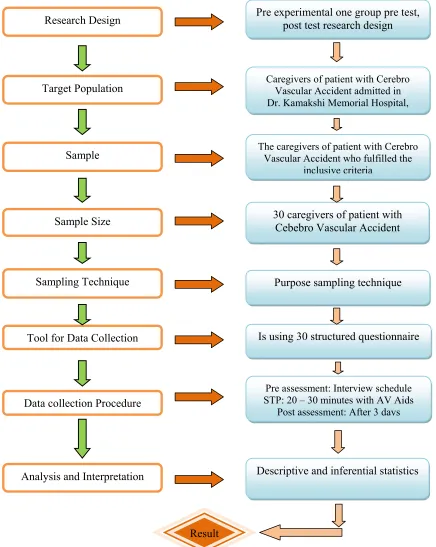
Research Design Pre experimental one group pre test, post test research design
Target Population
Sample
Caregivers of patient with Cerebro Vascular Accident admitted in Dr. Kamakshi Memorial Hospital,
The caregivers of patient with Cerebro Vascular Accident who fulfilled the
inclusive criteria
Sample Size 30 caregivers of patient with Cebebro Vascular Accident
Sampling Technique
Tool for Data Collection
Data collection Procedure
Analysis and Interpretation
Purpose sampling technique
Is using 30 structured questionnaire
Pre assessment: Interview schedule STP: 20 – 30 minutes with AV Aids
Post assessment: After 3 days
Descriptive and inferential statistics
[image:40.612.121.557.169.716.2]Result
CHAPTER-IV
DATA ANALYSIS AND INTERPRETATION
Data analysis is the systemic organization of research and synthesis of research data. The purpose of data analysis is to organize, provide structure and elicit meaning from research data. The analysis of research data provides the results of the study. These results need to be evaluated and interpreted giving thought to the aims of the study. The interpretative task involves attending to their credibility, their meaning, their importance, the extent to which they can be generalized and their implication.
The data findings have been analyzed and tabulated in accordance to the plan for data analysis and are interpreted under the following headings.
Section A: Frequency and percentage distribution of the demographic variables of patient with Cerebro Vascular Accident.
Section B: Frequency and percentage distribution of pre test level of knowledge regarding care of patient with Cerebro Vascular Accident among care givers.
Section C: Frequency and percentage distribution of post test level of knowledge regarding care of patient with Cerebro Vascular Accident among caregivers.
Section D: Comparison of mean and standard deviation between pre test and post test level of knowledge regarding care of patient with Cerebro Vascular Accident among caregivers.
SECTION-A
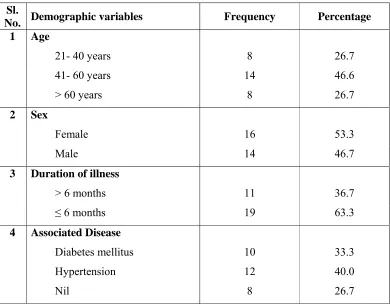
Table 1: Frequency and percentage distribution of the demographic variables of
patient with Cerebro Vascular Accident
N=30
Sl.
No. Demographic variables Frequency Percentage
1 Age
21- 40 years 8 26.7
41- 60 years 14 46.6
> 60 years 8 26.7
2 Sex
Female 16 53.3
Male 14 46.7
3 Duration of illness
> 6 months 11 36.7
≤ 6 months 19 63.3
4 Associated Disease
Diabetes mellitus 10 33.3
Hypertension 12 40.0
[image:42.612.129.519.150.458.2]Nil 8 26.7
Table 1 shows the distribution of the demographic variables of patients with Cerebro Vascular Accident who were participated in the study. With respect to age, the majority of the patients 14 (46.7%) were in the age between 41-60 years and 8 (26.7%) patients were in the age group between 21-40 years and above 60 years respectively. With respect to the gender, the majority of the patients 16 (53.3%) were female and 14 (46.7%) patients were male.
32 Fig. 3: Percentage distribution of age among the patient with Cerebro Vascular Accident
Per
centa
ge
33 Fig. 4: Percentage distribution of sex among the patient with Cerebro Vascular Accident
Sex
34 Fig. 5: Percentage distribution of duration of illness among the patient with Cerebro Vascular Accident
Duration of Illness
35 Fig. 6: Percentage distribution of associated disease among the patient with Cerebro Vascular Accident
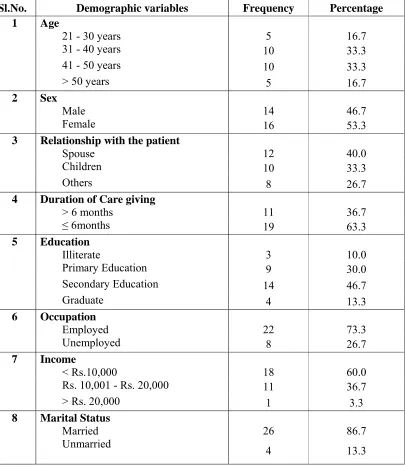
Table 2: Frequency and percentage distribution of demographic variables of caregivers of patient with Cerebro Vascular Accident.
N=30
Sl.No. Demographic variables Frequency Percentage 1 Age
21 - 30 years 5 16.7
31 - 40 years 10 33.3
41 - 50 years 10 33.3
> 50 years 5 16.7
2 Sex
Male 14 46.7
Female 16 53.3
3 Relationship with the patient
Spouse 12 40.0
Children 10 33.3
Others 8 26.7
4 Duration of Care giving
> 6 months 11 36.7
≤ 6months 19 63.3
5 Education
Illiterate 3 10.0
Primary Education 9 30.0
Secondary Education 14 46.7
Graduate 4 13.3
6 Occupation
Employed 22 73.3
Unemployed 8 26.7
7 Income
< Rs.10,000 18 60.0
Rs. 10,001 - Rs. 20,000 11 36.7
> Rs. 20,000 1 3.3
8 Marital Status
Married 26 86.7
Unmarried
Table 2 shows the demographic variables of caregivers of patients with Cerebro Vascular Accident.
With respect to age, the majority of the caregivers 10 (33.3%) were in the age between 41-50 years, 10 (33.3%) were between 31-40 years, 5 (16.7%) were between 21-30 years and 5 (16.7%) were in the age group of above 50 years. With respect to the gender, the majority of the patients 16 (53.3%) were female and 14 (46.7%) patients were male.
In regard to caregivers relationship with the patient, the majority 12 (40%) were spouse, 10 (33.3%) were children and 8 (26.7%) were others. Considering duration of care giving, the majority 19 (63.3%) were giving care for less than 6 months and 11 (36.7%) more than 6 months.
With respect to education, the majority 14 (46.7) were got secondary education, 9 (30%) were primary educated and 4 (13.3%) were graduated and 3 (10%) were illiterate. In account with occupation, the majority of the caregivers 22 (73.3%) were employed and 8 (26.7%) were unemployed.
Regarding income of the caregivers, 18 (60%) were less than Rs.10,000,
11 (36.7%) were getting Rs.10,001 to Rs.20,000 and 1 (3.5%) was getting above Rs. 20,000. With regard to marital status, the majority of caregivers 26 (86.7) were
38 Fig.7: Percentage distribution age among the care givers of patient with Cerebro Vascular Accident
Per
cent
age
Age 21-30
Years
31-40 Years
41-50
Years >50 Years
39 Fig.8: Percentage distribution of sex among the care givers of patient with Cerebro Vascular Accident
40 Fig.9: Percentage distribution of relationship with patient among the care givers of patient with Cerebro Vascular Accident
41 Fig.10: Percentage distribution of duration of care giving among the care givers of patient with Cerebro Vascular Accident
42 Fig.11: Percentage distribution of educational status among the care givers of patient with Cerebro Vascular Accident
Pe
rc
en
ta
ge
43 Fig.12: Percentage distribution of occupational status among the care givers of patient with Cerebro Vascular Accident.
44 Fig.13: Percentage distribution of monthly income among the care givers of patient with Cerebro Vascular Accident
Per
cent
age
45 Fig.14: Percentage distribution of marital status among the care givers of patient with Cerebro Vascular Accident
Per
centage
SECTION-B
Table 3: Frequency and percentage distribution of pretest level of knowledge
regarding care of patient with Cerebro Vascular Accident among caregivers
[image:57.612.125.523.199.371.2]N=30
Table 3 shows, the frequency and percentage distribution of pretest level of knowledge regarding care of patient with Cerebro Vascular Accident among
caregivers. The majority of 24 (80%) caregivers had inadequate knowledge, 5 (16.7%) had moderately adequate knowledge and 1 (3.3%) caregiver had adequate
knowledge.
Level of knowledge
Pre test
Frequency Percentage
Inadequate 24 80.0
Moderately adequate 5 16.7
47 Fig. 15: The percentage distribution of pre test among caregivers of patient with Cerebro Vascular Accident
Pe
rcentage
SECTION-C
Table 4: Frequency and percentage distribution of posttest level of knowledge regarding care of patient with Cerebro Vascular Accident among care givers.
[image:59.612.128.518.184.382.2]N=30
Table 4 shows the frequency and percentage distribution of posttest level of knowledge regarding care of patient with Cerebro Vascular Accident among caregivers. In post test level of knowledge, majority of care givers 23 (76.7%) had adequate knowledge, 6 (20%) had moderate knowledge and only one (3.3%) had inadequate knowledge.
Level of knowledge
Post Test
Frequency Percentage
Inadequate 1 3.3
Moderately adequate 6 20.0
49 Fig. 16: The percentage distribution of post test level of knowledge among care givers of patient with Cerebro Vascular Accident
Per
centage
SECTION-D
Table 5: Comparison of mean and standard deviation between pre test and post test level of knowledge regarding care of patient with Cerebro Vascular Accident among caregivers.
N=30
Level of Knowledge Mean Standard Deviation Paired ‘t’ test
Pre test 12.4 3.19
20.54***
Post test 24.17 1.9
[image:61.612.124.525.193.358.2]*** P<0.001
51 Fig. 17: Comparison of mean and standard deviation of pre and post test level of knowledge among care givers of patient with Cerebro
Vascular Accident
Me
an sc
ore
SECTION-E
Table 6: Association between pre test level of knowledge regarding care of patient with Cerebro Vascular Accident among caregivers with their demographic variables.
[image:63.612.90.509.154.560.2]NS= Non Significant
Table 6, shows the association between pre test level of knowledge regarding care of patient with Cerebro Vascular Accident among caregivers with their demographic variables. The analysis revealed that there was no statistically significant association could be established with the demographic variables like age, sex, relationship with the patient and duration of care giving, education, occupation, income and marital status.
Sl.
No. Demographic variables
Pretest level of knowledge
Pearson chisquare test
Inadequate Moderate/
Adequate
n % n %
1
Age
< 40 yrs 11 73.3% 4 26.7% χ2=0.83
df=1 NS
> 40 yrs 13 86.7% 2 13.3%
2
Sex
Male 10 71.4% 4 28.6% χ2=1.21
df=1 NS
Female 14 87.5% 2 12.5%
3
Relationship with the patient
Spouse/children 17 77.3% 5 22.7% χ2=0.38
df=1 NS
Others 7 87.5% 1 12.5%
4
Duration of Care giving
> 6 months 10 90.9% 1 9.1% χ2=1.29 df=1
NS
< 6months 14 73.7% 5 26.3%
5
Education
Primary Education 11 91.7% 1 8.3% χ2=1.70
df=1 NS
Secondary Education/Graduate 13 72.2% 5 27.8%
6
Occupation
Employed 18 81.8% 4 18.2% χ2=0.17 df=1
NS
Unemployed 6 75.0% 2 25.0%
7
Income
< Rs.10,000 15 83.3% 3 16.7% χ2=0.31
df=1 NS
Rs. 10,001 - Rs. 20,000 9 75.0% 3 25.0%
8
Marital Status
Married 22 84.6% 4 15.4% χ2=2.60 df=1
NS
Table 7: Association between posttest levels of knowledge regarding care of patient with Cerebro Vascular Accident among caregivers with their demographic variables.
* P<0.05 **P<0.01 NS= Non Significant S= Significant
Sl. No.
Demographic variables
Pretest level of knowledge
Total Pearson chisquare test/Yates corrected Chi square test
Inadequate Moderate
/Adequate n Percentage N Percentage
1. Age χ2=9.33
df=1 S* <40 yrs 6 40.0 9 60.0 15
>40 yrs 1 6.7 14 93.3 15
2. Sex χ2=0
df=1 NS
Male 3 21.4 11 78.6 14
Female 4 25.0 12 75.0 16
3. Relationship with
the patient χ2=4.34
df=1 S* Spouse/children 3 13.6 19 86.4 22
Others 4 50.0 4 50.0 8
4. Duration of Care
giving χ2=0.15
df=1 NS > 6 months 3 27.3 8 72.7 11
< 6months 4 21.1 15 78.9 19
5. Education
χ2=7.95
df=1 S** Primary Education 6 50.0 6 50.0 12
Secondary
Education/Graduate 1 5.6 17 94.4 18
6. Occupation χ2=0.02
df=1 NS
Employed 5 22.7 17 77.3 22
Unemployed 2 25.0 6 75.0 8
7. Income
χ2=0
df=1 NS < Rs.10,000 5 27.8 13 72.2 18
Rs.10,001 -
Rs.20,000 2 16.7 10 83.3 12
8. Marital Status χ2=0.01
df=1 NS
Married 6 23.1 20 76.9 26
Table 7 shows, the association between posttest level of knowledge regarding care of patient with Cerebro Vascular Accident among caregivers with their demographic variables.
CHAPTER V
DISCUSSION
This chapter deals with the discussion of the results obtained from the statistical analysis. This study aimed to assess the effectiveness of the structured teaching program on knowledge regarding care of patient with CVA among care givers in Dr. Kamakshi Memorial Hospital at Chennai.
The hypothesis formulated that there was no significant relationship between the structured teaching programme and level of knowledge regarding care of patient with CVA among caregivers. The review of literature included the related studies which provide a strong foundation for the study including the basis for conceptual framework and formation of tool.
The conceptual framework for this study was developed based on Kenny’s open system model. The research design used in this study was pre experimental one group pre test and post test design. It was carried out with 30 samples those were fulfilled the inclusion criteria. Purposive sampling technique was used to select the samples among the target population.
The investigator used interview schedule to assess the knowledge regarding care of patient with Cerebro Vascular Accident among caregivers. A formal written permission was obtained from the Medical Director in Dr. Kamakshi Memorial Hospital, Chennai. The collection procedure was scheduled from 1-6-2011 to 30-6-2011. The study was carried out with total of 30 caregivers, who were fulfilling the inclusion criteria. The investigator introduced herself to the caregiver of patient with Cerebro Vascular Accident and the purpose of the study was explained to ensure better co-operation. Purposive sampling technique was used to select the sample.
Every week 7 to 8 samples were assessed on the knowledge regarding care of patient with Cerebro Vascular Accident. An interview schedule was used to assess the
knowledge regarding care of patient with Cerebro Vascular Accident. After 30 minutes the tool was recollected. Then the structured teaching program was given
The data collected was analyzed using descriptive and inferential statisti