“ELEVATED BETA HUMAN CHORIONIC GONADOTROPHIN IN SECOND TRIMESTER IN COMPARISON TO ROLL OVER TEST AS A PREDICTOR
FOR PRE ECLAMPSIA”
A Dissertation submitted in partial fulfillment of the requirements for the degree of
M.D. DEGREE EXAMINATION
BRANCH II – OBSTETRICS & GYNECOLOGY
STANLEY MEDICAL COLLEGE, CHENNAI.Dissertation Submitted to
THE TAMILNADU DR.M.G.R. MEDICAL
UNIVERSITY
CHENNAI
This is to certify that the dissertation titled,
“ELEVATED BETA HUMAN CHORIONIC
GONADOTROPHIN IN SECOND TRIMESTER IN
COMPARISON TO ROLL OVER TEST AS A PREDICTOR
FOR PRE ECLAMPSIA” is an original work done by
Dr.S.VIDHUBALA, Post Graduate Student, Govt. RSRM
Lying in Hospital attached to Stanley Medical College,
Chennai-1, under my supervision and guidance.
Dr.C.VAMSADHARA, M.D.,Ph.D., Dean Stanley Medical College Chennai-1
Dr.SHANTHI DINAKARAN, M.D., D.G.O.
Superintendent,
Govt. RSRM Lying in Hospital, Stanley Medical College
Chennai -1 Place: Chennai-1
ACKNOWLEDGEMENT
I owe my thanks to Dr.C.Vamsadhara,M.D,Ph.D., Dean, Government Stanley Medical College for allowing me to avail the facilities needed for my dissertation work.
I am grateful to Prof.Dr.Shanthi Dinakaran, M.D,D.G.O
Superintendent of Government RSRM – Lying in Hospital for permitting me to do the study and for her encouragement.
I express my sincere gratitude to Prof.Dr.N.Hepzibha Kirubamani, M.D,D.G.O.,PhD., under whose expert guidance and encouragement, I was able to complete this study.
I express my deep sense of sincere thanks to
Prof.DrN.Bagyalakshmi, M.D, D.G.O, for her guidance and suggestions for the completion of this study.
ProfDr.D.Tamilselvi M.D for their constant guidance and encouragement.
I am also thankful to Mr.Sathish, Thyrocare laboratories for helping me to get lab values fastly for the study.
CONTENTS
SL.NO TITLE PAGE NO
1 INTRODUCTION 1
2 REVIEW OF LITERATURE 3
3 AIM OF STUDY 51
4 MATERIALS AND METHODS 52
5 RESULTS AND ANALYSIS 55
6 DISCUSSION 66
7 SUMMARY 73
8 CONCLUSION 75
9 PROFORMA
10 BIBLIOGRAPHY
11 ABBREVIATIONS
1
coming events cast their shadow before
INTRODUCTION
Gestational hypertension is a multisystem disorder, affecting virtually every organ and system in the body. Pre eclampsia denotes development of proteinuria >1+ along with gestational hypertension. Pre-eclampsia develops usually after 20 weeks of pregnancy. It is a major cause of maternal, fetal, neonatal morbidity and mortality.
If we wish to prevent such disorder we must seek ways of preventing the disease process. In preventing this disorder the most important limiting factor is lack of timely prediction. Several methods of identifying pregnant women who are at risk for pre eclampsia have been proposed. These include the use of angiotension II pressor response, roll over test, the isometric hand grip exercise test and the mean arterial pressure test. Many tests have limitations as screening tools in the clinical setting because of either their complexity, the high incidence of false positive results or the subjective nature of result interpretation.
HCG has been acknowledged as hormone for years. Recent studies have revealed its immunological role. Placental function changes in the form of increased Serum Beta HCG has been documented and several prospective studies showed changes in the hormone level which may present before the clinical diagnosis of pre-eclampsia. Many reasons have been postulated for suspecting the role of HCG in predicting immunological condition in obstetrics (Sayeed et al 1984).
REVIEW OF
REVIEW OF LITERATURE
Hypertensive disorders are the most common medical complications of pregnancy. Pre-eclampsia / Eclampsia have been recognized as clinical entity since the time of Hippocrates.
In 1916 zweiff first termed pre-eclampsia as “TOXEMIA” the disease of theories
Beverage wrote hat eclampsia was mentioned in the ancient Egyptian, Chinese, Indian and Greek literature. Probably the oldest reference is in the Atharva Vedha 200 BC.
Rossilin (1513) described convulsion as one of the ominous sign during pregnancy.
Bossier coined the word eclampsia differentiating eclampsia from epilepsy.
4 The most common forms of hypertension are gestational hypertension which accounts for 70% of hypertension during pregnancy and pre-existing chronic hypertension which is responsible for most of the remaining cases.
Hypertensive disorders are associated with increased maternal and perinatal mortality and present a wide spectrum of disorders, ranging from minimal elevation of blood pressure alone to severe hypertension with multiple organ dysfunction.
Incidence and pre disposing factors
Incidence of pre eclampsia is commonly cited to be about 5% - 10%, although remarkable variations are reported. According to Michael and Deswiet the incidence in primi, fluctuated between 3.0 to 13.7% since 1950 epidemiology. .
Risk factors for Pre-eclampisa
Maternal factors
:1.
Primigravidity
Mc.Gillivray in 1959 postulated that primigravidae are fifteen times more likely to develop proteinuria than parous women.
2.
Primi paternity
The first conception by the current partner causing pre-eclampsia is also a risk factor (Deswiet 2002).
3.
Short period of co habitation
6 4.
Extremes of age.
Robillard and Halsey (1992) explained special predisposition to develop pre-eclampsia among teenage pregnant women. The risk increases slightly with age, but is not affected by social class (Baird 1977).
5.Family history of preeclampsia
The predisposition to pre-eclampsia is in part inherited (Chesley and Cooper) (1986), so that a positive family history is a risk factor (Cincotta and Brennecke 1998). Daughters of eclamptic patients have a 3% risk of developing pre-eclampsia (Johnstudd 14th edition)
6
.
Previous
preeclampsia
The risk of recurrence varies from 1.9 to 24.9% (Johnstudd, 14th edition).
7.
Obesity
Obese women are particularly susceptible (Sibai et al., 1997; Ros et al., 1998) although in one series of eclampsia the women tended to be under weight (Obesley 1984).
Obesity is associated with constellation of other medical problems including type II diabetes and hypertension (Syndrome X). The separate parts of this constellation of having all been associated with an increasing tendency to pre eclampsia (Kaaja et al., 1999)
8.
Medical disorders.
8 ii. Chronic Hypertension
→
Women with chronic hypertension are3-7 times more likely to develop higher blood pressure combined with proteinuria.
iii. Chronic renal disease :Women having renal disease are more prone to develop hypertension,superimposed preeclampsia.
iv. Migraine
→
pre-eclamptics had been repeatedly associated with the condition (Moox and Redman 1983; Marcoux et al., 1992).v. Antiphospholipid antibody syndrome and thrombophilia; The association with APLA is strong (Branch et al., 1989). Because of the very intense growth restriction that occurs it is said due to poor placentation.
Antiphospholipid antibodies are an acquired cause of thrombophilia. This is a term used to describe a constitutional tendency to thrombo embolism some of which are genetically determined for example possession of factor V leiden gene or antithrombin III deficiency. Thrombophilia is associated with more pregnancy complications and preinatal losses, including pre-eclampsia (Kupfermine et al., 1999).
be more associated with coincidental corticosteroid therapy than the disease itself (Schatz et al., 1997).
9.Stressful Job
There are a number of reports (for example Klonoff Cohen et al., 1996) suggesting that stress at work may increase the risk of pre- eclampsia.
PLACENTAL / FETAL FACTORS
Considering pre-eclampsia is primarily a placental disease. It is not suprising that placental or fetal factors may increase the risk.
i. Advancing gestational age. ii. Poor placentation
If it is considered that it is a separate condition that may or may not be associated with pre-eclampsia then it must be also considered to be a powerful predisposing factor (Redman et al., 1999).
10 v. Hydatiform mole (Chun et al., 1964)-onset<20 weeks.
vi. Triploidy (Rijhsinghani et al., 1997) Trisomy-13 (Boyd et al., 1987)
Trisomy-16 mosaicism (Brandenburg et al., 1996).
They all increase the risk by placental mechanisms presumably. vii. Polyhydramnios (Mac.Gillivray 1959).
viii. Secondary sex ratio
Butter observed an excess of male fetuses in Pre-eclampsia.
GESTATIONAL HYPERTENSION
National high blood pressure education programme working group report on high blood pressure in pregnancy (2000) defines
→
Gestational hypertension as- Blood pressure > 140/90mm Hg for the first time during pregnancy.
- No proteinuria
- Blood pressure returns to normal < 12 weeks postpartum - Final diagnosis made only postpartum
- May have other signs of pre-eclampsia, for example, epigastric discomfort or thrombocytopenia.
- Blood pressure of more than 140/90mm Hg after 20 weeks if gestation.
- Proteinuria of more than 300mg in 24 hrs or more than 1 + dipstick.
David K.James in his High risk pregnancy defines the criteria for severe pre-eclampsia as one or more of the following.
- Blood pressure reading with the patient at bed rest of atleast 160/110mm Hg on two occasions atleast 6 hours apart.
- Proteinuria levels of atleast 5g in 24 hours urine collection (or 3 + to 4 + on semiquantitative assay)
- Oliguria: 24 hours urinary output of less than 400-500ml
- Cerebral or visual disturbances – altered consciousness, headache, scotomata or blurred vision.
- Pulmonary edema or cyanosis
- Epigastric or right upper quadrant pain – caused by stretching of glisson’s capsule. Occasionally the pain precedes hepatic rupture.
- Impaired liver function of unclear etiology.
- Thrombocytopenia (Postulated to be caused by platelet adherence to collagen exposed at sites of disrupted vascular endothelium) below 1 lakh per cubic mm.
- Intra uterine growth restriction or oligohydramnios with abnormal umbilical artery Doppler readings.
- HELLP syndrome.
Eclampsia - is the occurence of convulsions in a woman with pre-eclampsia. Eclampsia was not differentiated from Epilepsy until 1739. Ven De Sacevages wrote – all convulsions of acute causation as eclampsia.
THEORIES OF CAUSATION OF PRE-ECLAMPSIA
1.
ENDOTHELIAL DYSFUNCTION
2.
VASOACTIVE COMPOUNDS
A variety of cellular and serum vasoactive factors play a role in the etiology / pathogenesis of pre-eclampsia. Endothelins are potent vasoconstrictors and Endothelin 1 produced by human endothelium is increased in pre-eclamptic females. [Clark 1992, Mastrogiannis 1991, Nover 1991, Schiff 1992]. Nitric oxide, a potent vasodilator synthesized by endothelial cells is shown to be decreased in preeclampsia (Chang and Colleagues in 1992).
Williams obstetrics twenty first edition published the study of Benedetto and associates (2000) that the Nitric oxide production appears to be increased in severe preeclampsia. It appears to be a consequence of hypertension and not the inciting event (Morris and Colleagues, 1996).
14
3.
IMMUNOLOGICAL MECHANISM
Risk of preeclampsia is enchanced in circumstances where formation of blocking antibodies to antigenic sites in the placenta is impaired. This may arise when numbers of antigenic sites are greater (Beer, 1978) or where immunization by previous pregnancy is lacking.
4.
GENETIC PREDISPOSITION
Copper + Liston (1979) suggested that pre-eclampsia is dependent on single recessive gene. Hayward and Co-workers (1992) reported an association between the histocompatibility antigen (HLA-DR 4) and proteinuric hypertension.
5.INFLAMMATORY FACTORS
Cytokines, including tumour neurosis factor (TNF
) and theinterleukins may contribute to the oxidative stress associated with pre-eclampsia.In this scheme, oxygen free radicals lead to the formation of self-propagating lipid peroxides that in turn propagate highly toxic radicals, which inturn, injure endothelial cells.
PATHOLOGY
16
Abnormal trophoblastic invasion.
In pre-eclampsia there may be incomplete trophoblasticinvasion,the deeper myometrial arterioles do not lose their endothelial lining and musculoelastic tissue and their mean external diameter is only half that of vessels in normal placentas (Fisher and colleagues 2009)and remain responsive to vasoconstrictor stimuli (Dixon and Robertson 1961, Broges et al., 1972, Roberston 1976).
Thus it is likely that the abnormally narrow arterioles impair placental flow.Diminished perfusion and a hypoxic environment eventually lead to release of placental debris that incites a systemic inflammatory response.
(Redman and Sargent,2008)
ACUTE ATHEROSIS
VASOSPASM
It is the basic factor in preeclampsia. Hypoxia that results leads to the injury that releases thromboplastic substances by placenta into the blood steam which later leads to intravascular coagulation.
Classification of hypertensive disorders in pregnant woman.
1. Gestational hypertension 2. Pre-eclampsia
3. Eclampsia
4. Chronic hypertension
5. Super imposed pre-eclampsia on chronic hypertension NORMAL PREECLAMPSIA
18
PATHOPHYSIOLOGY OF PRE-ECLAMPSIA
6. 7. 8. 9.
Oxygen free radicals,lipid peroxides
Fibronectin
e ndothelin, SFLT- endoglins Vascular endothelial cell dysfunction PLACENTAL ISCHAEMIA Prostacyclin deficiency ↓Prostacylins Increased Thromboxances
MATERNAL AND FETAL COMPLICATIONS IN
PREECLAMPSIA
1.
CARDIOVASCULAR CHANGES
i. Increased arterial sensitivity to angiotensin II.
ii. Increased pulse rate and hyperdynamic ventricular function. (Beneditti 1980, Hawkins 1984)
iii. Increased blood pressure.
iv. Decreased circulating blood volume and hemoconcentration.
2.
RENAL SYSTEM
i. Decreased renal perfusion and glomerular filtration rate. ii. Increased serum uric acid (Chesley and Williams 1945). iii. Serum Creatinine level is elevated two to three times. iv. Serum Sodium level is increased.
v. Decreased urinary excretion of calcium due to increased tubular reabsorption.
20 Albuminuria occurs due to increased permeability to large molecular weight proteins.
vii. Histopathological lesion is glomerular capillary endotheliosis.
3.
LIVER
Derangement in hepatic function occurs. Delayed excretion of Bromosulfothalein and increased SGOT (Serum Oxaloacetate glutamate Transaminase) and Serum Alkaline phosphatase occurs (Combes and Associates and Adam et al., 1972).
Hyperbilirubinimia is uncommon with Pedal edema (Pritchard in 1976).
Anatomical lesion which is the periportal haemorrhagic necrosis in the periphery of the liver lobules leads to increased liver enzymes.
4.
COAGULATION SYSTEM
ii. Disseminated intravascular coagulation occurs. iii. Serum fibrin degradation products load increase. iv. Microangiopathic hemolysis occurs.
v. Plasma fibrinogen does not differ unless some degree of placental abruption occurs.
5.
BRAIN
i. Edema, hyperemia, thrombosis and haemorrhage occurs in association with pre-eclampsia.
ii. Most women with varying degree of amaurosis are found to have extensive occipital lobe hypodensities with vasospasm of ophthalmic arteries (Williams 1992).
6.HELLP SYNDROME
Liver involvement in pre-eclampsia is accompanied by hemolysis and thrombocytopenia. [De Boer 1991, Pritchard 1954, Weinstein 1985]. It is associated with a high incidence of recurrent eclampsia, pre-term delivery, fetal growth restriction, placental abruption and caesarean deliveries.
Diagnosis of HELLP syndrome
22 Schistocyte in blood smear
Elevated Serum indirect bilirubin Absent plasma haptoglobin.
2.Increased Liver enzymes
Serum Oxaloacetate glutamate transaminase more than 72 IU/L. Lactate dehydrogenase more than 600IU/L.
3.Decreased Platelet count
Platelets less than 1 lakh per cubic milli liter.
CLINICAL FEATURES
Most of the pregnant women are unaware of the two most important signs of pre-eclampsia, hypertension and proteinuria. By the time the symptoms such as head-ache, visual disturbances or epigastric pain develop, the disorder is severe.
SYMPTOMS
Head-ache
symptoms and may frequently be intense, especially when preceding the onset of convulsions. This may be due to cerebral artery vasospasm.
Epigastric Pain
It is a symptom of severe pre-eclampsia and occurs due to hepatocellular necrosis,ischaemia,edema that stretches glisson’s capsule. This is accompanied by elevated liver enzymes in serum.
Visual Disturbances
Visual disturbances are common with severe pre-eclampsia,.
Retinal artery vasospasm may also be associated with visual disturbances (Ohno and Colleagues, 1999).Blindness can occur either alone or accompanies convulsion.
Decreased urinary output
24
SIGNS
Blood pressure
Diastolic pressure is probably a more reliable prognostic sign than systolic blood pressure.
In severe pre-eclampsia the systolic blood pressure is more than 160 mm Hg and the diastolic blood pressure is more than 110 mmHg.
Proteinuria
It usually follows or appears simultaneously with hypertension and is non-selective. Proteinuria is a valuable prognostic sign. Frequent monitoring of the amount of protein excreted in the urine should be done and a significant increase in proteinuria indicates worsening of the disease.
26 standard turbidimetric method) on two or more occasions at least 6 hours apart. The urine must be a clean voided midstream specimen. Proteinuria may be the most ominous sign of pre-eclampsia.
A combination of 2+ (proteinuria) or 1g/litre and hypertension at least doubles the perinatal mortality rate. De Alvarez, (1976). Maccartney and Co-workers (1971) in their extensive experience studying renal biopsy specimens of hypertensive pregnant women invariably found that proteinuria was present ,when the glomerular lesion considered to be characteristic of pre-eclampsia was evident. (Glomerular endotheliosis).
Edema
It is the accumulation of fluid in the extra cellular spaces. High oestrogen levels in pregnancy contribute to the generalized edema occurring in some pregnancies (Mudaliar and Menon, Ninth edition). Edema has been abandoned as a diagnostic criteria because it occurs in too many normal pregnant women to be discriminant.
Fundus changes
Grade 0 Normal fundus Grade 1 and 2 Arteriovenous narrowing Grade 3 Haemorrhage, exudates Grade 4 Papilledema
COMPLICATIONS OF SEVERE PRE-ECLAMPSIA
MATERNAL COMPLICATIONS
1.Central Nervous System
28
• Cerebral haemorrhage
• Cerebral edema
• Cortical blindness
2. Renal System
• Renal cortical necrosis
• Renal tubular necrosis
3. Respiratory System
• Laryngeal edema
• Pulmonary edema
4. Liver
• Jaundice
• Hepatic infarction
• HELLP syndrome
• Hepatic rupture
5. Coagulation System
• Disseminated intravascular coagulation
• Microangiopathic hemolysis
6. Placenta
• Placental infarction
• Retroplacental bleeding and Abruptio Placentae
7. Eye
• Papilledema
• Cortical blindness
• Retinal detachment
Fetal Complications
1.Intra uterine death – spasm of uteroplacental circulation leading to abruption and acute hypoxia.
2.Intra uterine growth retardation due to placental insufficiency and chronic hypoxia.
3.The fetus is often malnourished and small for gestational age (Moore and Redman, 1983)
30
SCREENING TESTS
1.Estimation of Beta human chorionic gonadotrophin in (early)
second trimester as a predictor for pre-eclampsia.
Serum Beta HCG shows as elevated level in mid trimester in patients prone to develop pre-eclampsia. This may probably due to impaired placental function and a reflection of sub optimal utero placental blood flow. Among all the predictor tests, a test which estimated BHCG will be a better marker since the pathophysiology of gestational hypertension is mainly due faulty placentation and reduced placental perfusion.
given by Heloner et al., (1996) who said that this rise was probably a secondary response of the trophoblasts to an immunological insult.
Serum Beta Human chorionic gonadotrophin (BHCG) in normal
pregnancy and in pre-eclampsia
BHCG is a pregnancy hormone. It is a glycoprotein with biological activity similar to Leuteinising hormone (LH), both of which acts on the plasma membrane of LH/HCG receptor. HCG is produced exclusively in the placenta, the detection of HCG in blood and urine is almost always indicative of pregnancy.
Levels of BHCG in pregnancy
The hormone is produced exclusively by the
32 reaches a peak at about 60-70 days. Thereafter the concentration
declines slowly until a nadir is reached at about 100-130 days.
HOW TO DETECT BHCG
Many different testing systems are available in kit form.Each is dependent upon the same principle, recognition of HCG (or a subunit) by an antibody to the HCG molecules or epitopes of the Beta subunit.
LH, TSH, BHCG have structurally similar (alpha) subunit. But their beta subunit were structurally distinct. Specific antibodies were developed for beta subunit of BHCG to avoid cross reactivity against LH, TSH (thyroid stimulating hormone) immunoassay without radio isotopes.
ELISA – Chemiluminescent immuno assay
34 the amount of second antibody bound. This in turn indicates the quantity of HCG in the test sample. The sensitivity of ELISA for BHCG is serum is 50 MIU/ML. The method is said to be chemiluminescent assay.
Sensitivity80% ,Specificity90% ,PPV75 ,NPV90. (Luckas et al study 1998)
2.ROLL OVER TEST
Gant et al (1974) elicited marked pressor response by turning from lateral to supine recumbency in whom later developed pre-eclampsia.
This test done in pregnant women between 18-22 weeks of gestational age (Referral Iandonald’s – sixteenth edition).
The woman lay on left side, blood pressure taken and then turned on their back,again blood pressure recorded. The blood pressure was taken on one and five mintues interval after change in position. The diastolic pressure rose by 20 mmHg in women who later developed pre-eclampsia.
36
3.MIDTRIMESTER BLOODPRESSURE MEASUREMENT
Blood pressure normally falls at the beginning of pregnancy and reaches its lowest level in the second trimester. The use of mid trimester blood pressure recording as a screening test for pre-eclampsia is done during fifth and sixth month of gestation. A mean arterial pressure (which is diastolic pressure plus one third of pulse pressure) of more than 90 mm hg increased the risk of gestational hypertension. Sensitivity 44%, specificity 87%, PPV 90%, NPV 98%, (Conde-Agudelo et al., 1993).
There are several factors which influence blood pressure measurement. The position of the arm relative to the heart also affects recording each centimeter of vertical height above or below the level of heart being equivalent to a difference of pressure .7 mm Hg. There is also variation of blood pressure with the circadian rhythm, values being highest during afternoon and early evening. Also blood pressure is found to be elevated under stressful condition. For methods based on blood pressure measurements to be effective increased uniformity of recording measurement is necessary (Arias – third edition).
4.HAND – GRIP TEST
38
5.ANGIOTENSIN – II CHALLENGE TEST
This test is based on the loss of refractoriness to angiotensin II in pregnant woman who later develop pre-eclampsia. In normal pregnancy, 12 ng of angiotensin-II/kg per minute is needed to increase the diastolic pressure of at least 20 mm hg. But woman prone to develop pre-eclampsia needed only 8 ng angiotensin II/kg per minute to increase diastolic blood pressure. Sensitivity 91%. However the test is expensive, time consuming and at times unreliable (Ian Donald’s 16th edition).
6.DOPPLER ULTRA SOUND
In gestational hypertension, the physiological invasion of spiral arteries is incomplete. Doppler wave forms appear to be abnormal in some hypertensive pregnancy. Doppler velocimetry at 22-24 weeks is useful to identify women destined to develop pre-eclampsia, the sensitivity of a pulsablity index above the 95th percentile or the presence
and pre-eclampsia without fetal growth restriction was 24%. The sensitivity increased to 93 and 80% respectively for woman developing severe forms of these complications requiring delivery before 32 weeks.The positive likelihood ratio is 6.61. Though better test it can be confirmatory at 22-24 weeks only and Doppler ultrasound not available in every nook corner. (Arias 3rd edition)
ROUTINE BLOOD TESTS
SERUM URIC ACID
Serum uric acid levels is a better indicator of fetal prognosis than blood pressure. Serial uric acid measurements gave warning of the disorder before the appearance of other clinical features in woman who subsequently develop gestational hypertension.
PLATELET COUNT
40
URINE ASSAYS
1.Urinary protein excretion normally increases in pregnancy and may occasionally rise to 200mg/24 hours, but it is usually undetectable by conventional laboratory test.
2. A study found that fasting urinary albumin creatinine ratio of 16 or over was taken to indicate a positive screening test.
3.Another study found that microalbuminuria > 11 mg/ml as a positive test for predicting pre-eclampsia.
4. Urinary kallikrein to ,protein excretion ratio in a random sample collected at the booking visit (16-20 weeks) could be used to predict pre-eclampsia.False positive rate 50%.False negative rate 10%.
There is difficulties in its assay.
5..Urine calcium / creatinine ratio
eclampsia (Normal is 0.44 + 0.32) . PPV is 85%, NPV – 91%. (Arias 3rd edition)
Other predictive tests for development of the pre-eclampsia
syndrome (Adapted from conde-agudelo and associates 2009)
Testing related to Examples
1. Placenta perfusion / vascular resistance
24 hours ambulatory blood pressure monitoring.
2. Fetoplacental unit endocrine dysfunction
Alpha feto protein, estriol, PAPP-A, inhibin-PAPP-A, activin-A.
3. Renal dysfunction Microtransferrinuria, Nacetyl B glucosaminidase.
4. Endothelial dysfunction / oxidant stress
Fibronectin, prostaglandin, thromboxane, CRP, leptin, P-selectin SF lt-1 (Fms like tyrosine kinase receptor-1.)
5. Other / miscellaneous Antithrombin – III, atrial
42
COMPARISON OF SENSITIVITY AND SPECIFICITY OF VARIOUS SCREENING TEST WITH BHCG ESTIMATION AND ROLL OVER TEST
S.
No NAME OF SCREENING TEST
GESTATIONA L AGE AT WHICH DONE SENSI TIVIT Y SPECI FICIT Y PPV NPV
1. Mid trimester
BP (20-22 wks) 44 87 90 98
2. Hand grip
test (28-32 wks) 81.8 68.4 81 96
3. Doppler USG (23-24 wks) 93 80 85 95 4. Roll over test 18-22 wks 80 90 33 -
5. BHCG 16-2o wks 80 90 75 90
6. Urinary Calcium / creatinine ratio
PREVENTION OF PRE-ECLAMPSIA
Primary prevention of Pre-eclampsia (Deswiet, fourth edition)
Low-Dose Aspirin
The benefits of Aspirin (75mg OD) appear to be greatest in preventing early onset pre-eclampsia (relatively lesser) and least in preventing the disorder at term (which is common) (CLASP, 1994)
Probably or definitely ineffective May be effective
Weight restriction Salt restriction Diuretics
Antihypertensive agents Calcium supplements Fish oil supplements
44
Antioxidants
Antioxidant therapy significantly reduced endothelial cell activation and there was a definite reduction in the incidence of pre-eclampsia in those women given Vitamin C and E (Chappel 1999).
ANTI HYPERTENSIVE LINE OF MANAGEMENT
ACTION EFFECT Methyldopa Induces the synthesis
of alphamethyl nor epinephrine which stimulates alpha receptors and decreases the
sympathetic outflow from the central nervous system.
After3-6 hours of oral administration the hypotensive effect appears. It causes decrease in cardiac output and total peripheral resistance. 250mg tds,.. increased upto 500mg tds. Sedation, fatigue, decrease in intellectual drive, drowsiness, fever, altered liver function test
Nifedipine Calcium channel blocker (introduced in clinical practice by Flert eaten in 1970)
Blocks calcium
transport through its channel-inhibits the entry of extracellular ca 2+ necessary for
excitation contraction so vasodilation of vessel, decrease in resistance.
10mg tds Head ache, tachycardia, dizziness, fatigue, orthostatic
Labetalol Acts by decreasing peripheral vascular resistance. It is both alpha and Beta
receptor blocker.
Rapid reduction of blood pressure.
If given IV 20mg as initial dose, followed by 40-80mg every 10 minutes. It can be given IV drop 250mg in 250 ml of NS and giving 20ml / minute.
Contraindicated in congestive cardiac failure, bronchial asthma, can cause fatigue, insomnia, hypoglycemia.
Hydralazine Vasodilator Rapidly lowers blood pressure, increases cardiac output and plasma volume.
5-10mg IV that are repeated at 10-20 min intervals.
MANAGEMENT OF SEVERE PRE-ECLAMPSIA
Definitive Management
Prevent convulsion (Magnesium sulfate) Control blood pressure (Nifedipine)
Deliver by vaginal or caesarean birth (depending on fetal and maternal condition) having stabilized the maternal condition (if time permits) and obtained an update on renal, hepatic and hematologic status.
Prevention of convulsions
Magnesium sulphate has been shown in randomized trials to be the preferred agent for prevention and treatment of eclamptic convulsions.
Intravenous loading dose of 4g results in immediate plasma concentration of 5-9mg/dl and it falls to 3-4mg/dl in 60 minutes. It is excreted almost solely by kidney. Then 4 gms in each buttock I.M is given. This is repeated every 4 hours.
48 seizures could be blocked by magnesium. Treatment should be continued upto 24 hours after the last convulsion or at least 24 hours post partum.
Expectant management of severe pre-eclampsia less than 36 weeks
(Arias 3rd edition – high risk pregnancy and delivery)
- Bed rest
- Daily weight
- Antihypertensive treatment
- Steriod for pulmonary maturity
- RFT
- LFT Every other day
- D-dimer evaluation
- CBC
- Daily questioning about head-aches, visual disturbances, epigastric pain and fetal movement.
- Daily non-stress test.
- Daily FKC
complications, pregnancy is to be terminated with oxytocin or lower segment caesarean section
Recurrence of pre-eclampsia in subsequent pregnancies
Probability of recurrence is 30% it depends on,
a. At which gestation age previous pre-eclampsia developed [ If - <30 weeks developed, recurrence is 70%
30-37 weeks – 40% >37 weeks – 25% ]
b. Multiparous (50% chance of developing hypertension in later pregnancies)
c. Persistent hypertension for more than 10 days in the immediate post partum period
d. Maternal obesity
e. Severity of hypertension and symptoms
f. Developing pre-eclampsia – later more prone to develop chronic hypertension (Pritchard & Pritchard 1977)
g. If complicated by eclampsia in subsequent pregnancy development of
50 Recurrence of eclampsia – 1.4% can occur.
51
AIM OF THE STUDY
MATERIALS AND
52
MATERIALS AND METHODS
This study was a prospective study.
This study was conducted at department of obstetrics, gynecology, RSRM lying in hospital attached to Stanley medical college from October 2009 to October 2010.
150 normal pregnant women between 16 and 22 weeks of gestation who come to antenatal O.P ,under gone both the tests.
a. Serum BHCG estimation done between 16-20 weeks and b. Roll over test done between 18-22 weeks
Exclusion criteria for the study were
1. Multiple gestation 2. Diabetes mellitus
3. Previous h/o chronic hypertension 4. Renal disease
5. Congenital anomalies of the baby
For BHCG estimation
5ml of blood collected from the women between 16-20 weeks of gestation and sent to thyrocare lab. There by enzyme linked chemiluminescent immuno assay method, they quantified the BHCG level. If BHCG >2 M.O.M for the gestational age it predicts development of pre-eclampsia later.
Reference Range of BHCG
GESTATIONAL
WEEKS
BHCG RANGE
1 -2 10 - 94 MIU/ml 2 -3 61 -2922
3 -4 66 -18900 4 -5 1536 -49380 6- 7 13860 -90600 7 -11 12540 -174600 11 -16 3684 -61800
16 -20 2882 -48060(median value25100) 21 -39 1620 -46860
54 For roll over
The same women first in supine position in the right arm blood pressure measured.Then the women lies on left lateral position after 5 minutes and again blood pressure checked.
RESULTS AND
55
RESULTS
The incidence of preeclampsia in RSRM since 2005 varied between 8.5%-10.2%.
Between 2009 March-2010 March-Total number deliveries 12738, PIH cases 1224 the incidence is 9.6%. The sample size is 150.Patients enrolled were 150.
Among 150 persons, (After excluding 4 persons due to non-compliance 2,developed GDM 2 )rest 146 persons followed up.
TABLE – 1
DISTRIBUTION OF PATIENTS WITH PRE-ECLAMPSIA ACCORDING
TO AGE
Above table shows the distribution of person with pre-eclampsia. Pre-eclampisa was high between 17-20 yrs (23%) and 31-34 years(26%).
Age
Study group
Total No Pre-eclampsia Positive (%)
17 – 20 34 8(23%)
21 – 25 47 3(6.4%)
26 – 30 42 3(7.1%)
31 – 34 23 6(26%)
TABLE –2
DISTRIBUTION OF PATIENTS WITHI PRE-ECLAMPSIA ACCORDING
TO PARITY
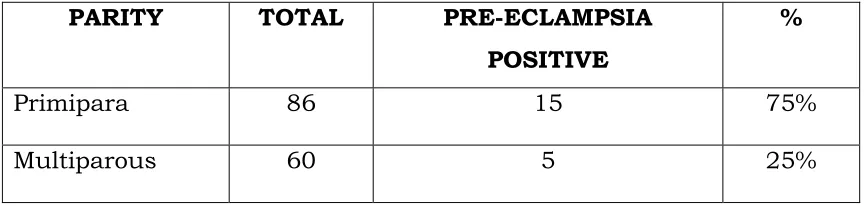
Above table shows the distribution of patients with pre-eclampsia according to parity. It shows high incidence of pre-eclampsia in primiparous women (75%) than in multiparous women.
Among 86 primi ,15 developed preeclampsia.the incidence is 17.4% and 8.3% for multi in my study.
PARITY TOTAL PRE-ECLAMPSIA POSITIVE
%
Primipara 86 15 75%
58
TABLE - 3
DISTRIBUTION OF PRE-ECLAMPSIA PATIENTS ACCORDING TO
THEIR FIRST APPEARANCE OF PRE-ECLAMPSIA (IN WEEKS).
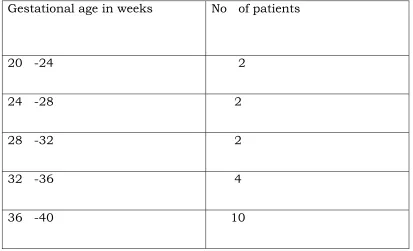
The above table shows highest incidence of pre-eclampsia between 36-40 weeks of gestation.
Gestational age in weeks No of patients
20 -24 2
24 -28 2
28 -32 2
32 -36 4
59
TABLE – 4
RELATIONSHIP OF BHCG >2 M.O.M AND DEVELOPMENT OF
PRE-ECLAMPSIA Group (BHCG) Pre-eclampsia Positive Pre-eclampsia Negative
No % No % > 2 MOM
n = 22
18 81.8% 4 18.2%
< 2 MOM n = 124
2 1.6% 122 98.4%
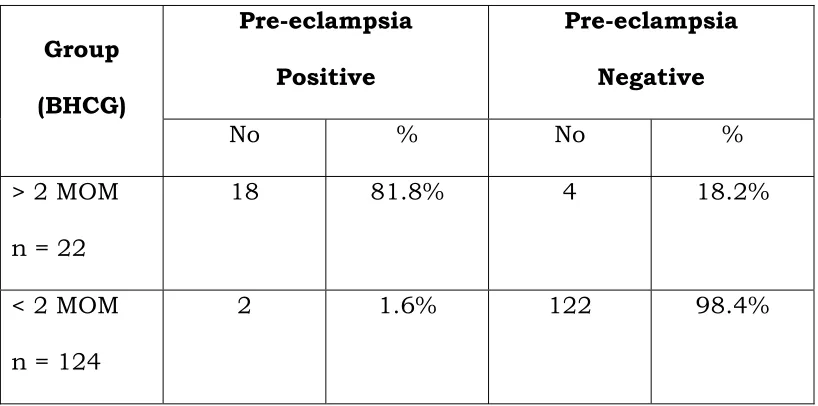
Above table shows the relationship of BHCG >2 MOM developing pre-eclampsia. About 81.8%(PPV) of persons with BHCG >2 MOM develop pre-eclampsia. 98.4%(NPV) of person with BHCG <2 MOM does not develop pre-eclampsia.
Out of 20 preeclampsia patients, with BHCG >2MOM 18 developed preeclampsia with Sensitivity of 90%,
60
TABLE – 5
RELATIONSHIP OF ROLL OVER TEST AND DEVELOPMENT OF
PRE-ECLAMPSIA
Roll over test group
Pre-eclampsia Positive
Pre-eclampsia Negative
No % No % Roll over test positive n = 28 14 50% 14 50
Roll over test negative n = 118 6 6% 102 94%
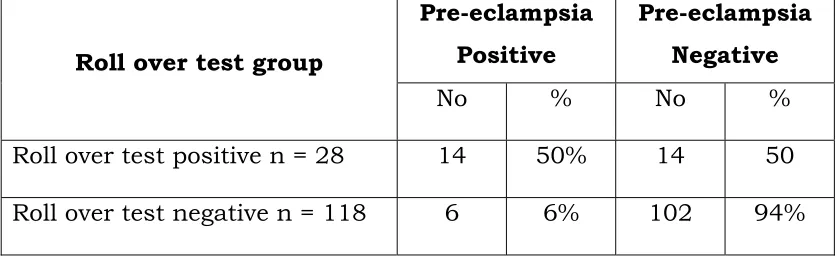
Above table shows the relationship of roll over test positive persons developing pre-eclampsia.
About 50%(PPV) of persons with roll over test posistive develop pre-eclampsia. 94% (NPV)of persons with roll over test negative does not develop pre-eclampsia.
Among 20 preeclampsia patients,14 with roll over test positive developed the disease with Sensitivity 70%,
TABLE – 6
RELATIONSHIP OF BOTH BHCG > 2 MOM + ROLL OVER TEST
POSITIVE GROUP WITH DEVELOPMENT OF PRE-ECLAMPSIA
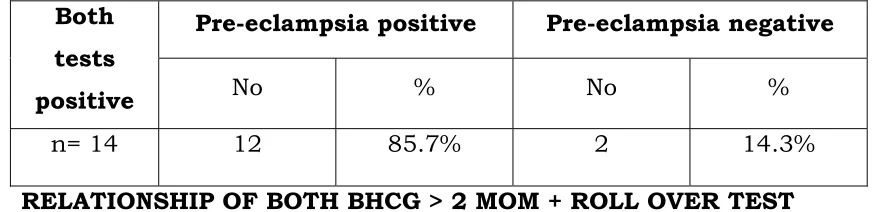
Above table shows development of pre-eclampsia when both tests are positive.
85.7% of persons with both test positive developed pre-eclampsia.
Both tests positive
Pre-eclampsia positive Pre-eclampsia negative
No % No %
RELATIONSHIP OF BOTH ( BHCG & ROLL OVER TEST)
NEGATIVE BUT DEVELOPED PRE-ECLAMPSIA
Both tests
Negative
Pre-eclampsia positive Pre-eclampsia negative
No % No %
110 2 1.8% 108 98.2%
[image:81.612.89.528.180.266.2]Above table shows development of pre-eclampsia when both tests were negative only 1.8% of persons with both tests negative developed pre-eclampsia
TABLE - 8
Distribution of persons developed pre-eclampsia in relation to
parity with BHCG > 2 MOM
Parity BHCG > 2 MOM
No %
Primipara n=15 15 100%
Multipara n=5 3 60%
[image:81.612.90.524.459.579.2]TABLE - 9
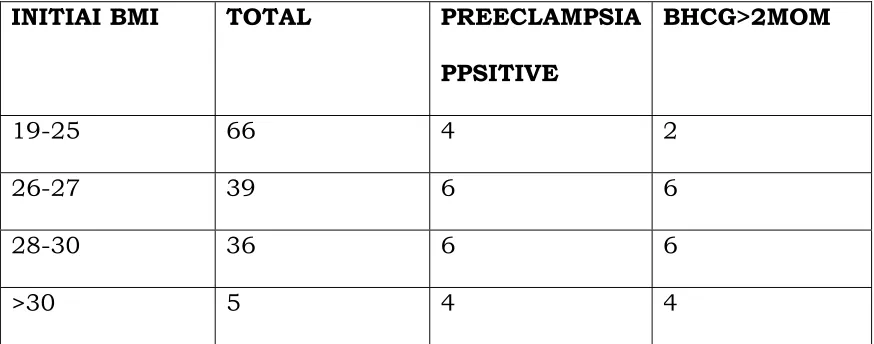
DISTRIBUTION OF PATIENTS WITH PRE-ECLAMPSIA ACCORDING
TO INITIAL BODY MASS INDEX (BMI) AND BHCG ELEVATION
INITIAI BMI TOTAL PREECLAMPSIA
PPSITIVE
BHCG>2MOM
19-25 66 4 2
26-27 39 6 6
28-30 36 6 6
>30 5 4 4
64
TABLE - 10
DISTRIBUTION OF PERSONS DEVELOPED EARLY ONSET
PRE-ECLAMPSIA PREDICTED BY ROLL OVER TEST POSITIVE GROUP &
BHCG > 2 MOM GROUP.
Above table shows that 75% of persons with early onset pre-eclampsia had BHCG > 2 MOM, but 25% persons had roll over test positive.
EARLY ONSET
PRE-ECLAMPSIA
ROLL OVER TEST
POSITIVE BHCG > 2 MOM
No % No 75%
TABLE - 11
RELATIONSHIP OF BHCG > 2 MOM AND DEVELOPING
PRE-ECLAMPSIA WITH INTRAUTERINE GROWTH RETARDATION (IUGR)
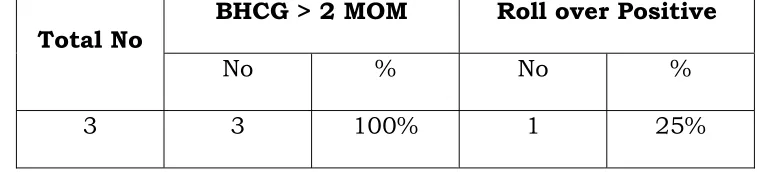
100% of IUGR women had BHCG>2MOM and BHCG is highly predictive of severe preeclampsia with IUGR
Total No
BHCG > 2 MOM Roll over Positive
DISCUSSION
Study Comprised of 150 asymptomatic pregnant who undergone both serum BHCG estimation and roll over test between 16-20 weeks and 18-22 weeks of gestational age respectively.
Among them 4 women excluded due non-compliance and development of gestational diabetics mellitus.
But women with history of chronic hypertension, family history of hypertension, diabetes, renal disease, elderly primi, previous obstetric history with still birth & pre-eclampsia, abruption, intrauterine fetal death, congenitally anomalous baby were excluded. These have been excluded because of their influence with BHCG estimation. BHCG estimation done by chemiluminiscent immuno assay method.
INCIDENCE
67
AGE DISTRIBUTION
In this study, most of the pre-eclampsia developed between 17-20 years of age group and between 31-34 years, this correlates with the incidence of pre-eclampsia is more common with extremes of age as cited in many studying .
Lehman analysed severe preeclampsia cases during 1970-1990 and found the incidence highest at extremes of child bear age.
Therefore this study shows that extremes of age probably acts as one of the risk factors of developing pre-eclampsia.
PARITY
Incidence of pre-eclampsia (17.4%) is high in primiparous women. This in concordance with reported incidence in India and western studies, showing and incidence of 16% in nullipara and 7% in multipara.
Also 75%developed preeclampsia are primi and 25% are multi. In Parkland patients 70% were primi. Sibai and colleagues (1995) confirmed the higher risk of developing hypertension in the first pregnancy.
SOCIO ECONOMIC STATUS
economic group, a comparison could not be done between socio-economic groups in this study,
OBESITY
Also pre-eclampsia is high(20%) in patients with high body mass index (>25). This study showing high pre-eclampsia incidence with high BMI in concordance with many other reported studies in India.Walker(2000) study shows that ai incidence of 13.3% in those with a BMI >30.
BHCG ESTIMATION
22 patients out of 146 had BHCG > 2 MOM out of which 18 developed pre-eclampsia and remaining 4 did not develop pre-eclampsia. Sensitivity being 90%, Specificity 96.8%. the Positive predictive value 81.8%, Negative predictive value 98.4%.
The tables given below compare the sensitivity, specificity, positive and negative predictive value of
BHCG with other studies.
Author Year No.of
Patients Parity Pre-eclampsia incidence Sensiti vity Specifi city
PPV NPV
Pankaj desai et al
(1995-2000)
220 Both multi and primi
16.15% 71% 65% 40 95
Luckas et al
1998 430 Primi 13.5% 80% 90% 75% 90%
Roiz
Hernandez et al
2006 784 Both multi Primi
12% 92% 92% 46 98%
Present study 2009 oct_ 2010 oct
150 Both multi primi
This table shows comparing the sensitivity, specificity and positive and negative predictive value of roll
over test with others study.
Author Year No.of Patients Parity Pre-eclampsi a incidence Sensiti vity Specific ity PPV NPV
Gant et al 1974 438 Primi 5.8% 80% 90% 33% 90%
Narvaez et al 1988 782 Primi 8.10% 70% 95% 88% 92.5%
Present
study
2009 oct to
2010 oct
150 Both multi
primi
71
BHCG ESTIMATION
The sensitivity(90%) and specificity(96.8%) of our present study were similar to the study of Roiz Hernandez et al (2006).
The PPV of the study was similar to Luckas et al.
The NPV was similar to Pankaj desai et al (1995-2000),Roiz Hernandez et al(2006).
Also BHCG has high predictictability for primi para preeclampsia(100%) than multi(60%)This is similar to Francoise muller et al(1996).
BHCG is highly valuable for early onset preeclampsia(75%).This was similar to the study of Sayeed et el-80%(1995).But roll over predicts only (25%) of cases.
Also BHCG predicts 100% cases of severe preeclampsia with IUGR.This is similar to L.S.Ondero et al study (1997).
ROLL OVER TEST
The sensitivity of the test is similar to the Narvaez et al.(1998) The specificity is simslar to Gant et al(1994) study.
The NPV of the study is similar to Narvaez et al(1988).
Roll over test is a simple test to perform,but having high sensitivity specificity,NPV.
But it has some flaws. Some patients have unusually low diastolic pressure in the left lateral position,thus creating a false positive results when compared with the reading in the supine position.
An artifact arises when the patient rolls from the left lateral position to ths supine position, as the position of the sphygmomanometer cuff relative to heart altered.
SUMMARY
Following conclusions are drawn from the study.
1.The present study compared BHCG elevation in comparison to roll over test among 150 asymptomatic pregnant women.
2. The incidence of pre-eclampsia in the study is 13.6%. 3.Primiparity was found to be significant risk factor.
4.High body mass index, extremes of age (i.e) <20 years and >30 years are associated with increased risk of developing pre-eclampsia.
5.BHCG >2 MOM found in 22 persons among which 18persons developed pre-eclampsia. Sensitivity 90% specificity 96.8%, positive predictive value 81.8%, Negative predictive value 98.4%, ODDS ratio 274 and P<0.001.
74 8.Also early onset preeclampsia <28 weeks, severe pre-eclampsia with IUGR are predicted by BHCG estimation with sensitivity of 75% and 100% respectively.
9.Also predicting primipara pre-eclampsia by BHCG is more(100%) than predicting multipara pre-eclampsia.
10.Roll over test found positive in 28 persons among which 14 persons developed pre-eclampsia. Sensitivity 70%, specificity 86.6%, positive predictive value 50%, negative predictive value 94% OPPs ratio 15 and P <0.01.
75
CONCLUSION
1.The study shows that BHCG>2 MOM in early second trimester is an excellent screening tool for the prediction of pre-eclampsia with sensitivity of 90% and specificity of 96.8% , positive predictive value of 81.8%, Negative predictive value of 98.4%.
2. This test is ideal because it is now a days readily available, relatively cheap, cost effective, safe, easy to perform, readily interpretable.
3. It has a good predictive value especially for early onset pre-eclampsia and severe pre-pre-eclampsia with IUGR which are said to have poor progmosis .
4. A primi para of extremes of age group with high body mass index with a high BHCG is especially at a high risk for development of pre-eclampsia.
77
PROFORMA
NAME: AGE: OP NO:
ADDRESS: REG NO:
SOCIO ECONOMIC STATUS: DATE: GRAVIDA PARA ABORTION LIVE BIRTH
LMP EDD
MENSTRUAL HISTORY MARITAL HISTORY MEDICAL HISTORY DIABETES
HYPERTENSION EPILEPSY
RENAL DISEASE HEART DISEASE
PAST OBSTETRIC HISTORY:- H/O STILL BIRTHS
GESTATIONAL HYPERTENSION FAMILY HISTORY:-
DIABETES
HYPERTENSION
GESTATIONAL HYPERTENSION TWINS
CONGENITAL ANOMALIES ON GENERAL EXAMINATION PATIENT
- BUILT
- TEMPERATURE - ANEMIA
- PULSERATE
- BLOOD PRESSURE AT SITTING POSTURE - PEDAL EDEMA
79
CVS RS PER ABDOMEN
FUNDAL HEIGHT
WHETHER ACTING OR NOT INVESTICATIONS:
HB%
URINE – ALBUMIN SUGAR BLOOD – SUGAR
- HIV
- BLOOD GROUPING
- BLOOD FOR BHCG ESTIMATION (Between 16-20 weeks) - ROLL OVER TEST
(Between 18-22 weeks) - ULTRA SOUND
FOLLOW UP
Specific Symptoms
Weight Pedal Edema
Blood Pressure
Urine Protein
BIBLIOGRAPHY
1. Desai P Rao. S predictive value of raised mid-trimester Beta HCG in pregnancy induced hypertension. Indian journal of obstetrics and gynaecology 2002, 52 (1); 68
2. Satyanarayanan. K, Sowhney.H, Vashista. K associative between second trimester HCG levels and pregnancy induced hypertension(Indian journal of obstetrics and Gynaecology 2001 51(5); 85)
3. Reproductive biology and Endocrinology by Estaun-Ram – 2005 by 42 related articles.
4. Screening for placental insufficiency in high risk pregnancies by SL Costa 2008 cited by 7 related articles.
5. Sibai BM Ewall M, Levine RJ etal, Risk factors associated with pre-eclampsia in healthy nulliparous women. American Journal Obstetrics and Gynaecology 177; 1003, 1997.
6. Review article Immunological factors in pre-eclampsia by DA Clark 2008 cited 12-related articles.
82 8. Gant VF, Chand S, Worley RJ etal, A clinical test useful for
predicting the development of acute hypertension in pregnancy. American Journal of Obstetrics and Gynaecology 120:1,1974.
9. Conde Agudelo A, Romero lind heimer MD, tests to predict pre-eclampsia. In lind heimer MD, Roberts JM, Cunnighim FG (eds), Cherley’s hypertensive disorders of pregnancy 3rd edition, Newyork,
Elsevier 2009, P.19.
10. Progress in O & G by John stud (14th Edition)
11. William’s obstetrics, 23rd edition.
12. Iandonald’s practical obstetrical problems – 6th edition.
13. Practical guide to high risk pregnancy and delivery by Fernando Arias, 3rd Edition.
14. Ian Mac Gillivray – University of Aberden. Etiology of pre-eclampsia. Journal of applied medicine Dec 1988-87; 963.
15. Cherley LC, Diagnosis of pre-eclampsia (O& G) 1985, 65: 423-425. 16. Clinical hypertension by Norman.M.Kaplan-8th Edition.
17. Dewhursts Text book of O & G for postgraduats 6th edition P
(167-169).
18. Medical disorders in obstetric practice by Michael de sweet-4th
19. Mudaliar and Menon’s clinical obstetrics-10th edition.
20. Luckas et al – BHCG in early second trimester as a predictor for pre-eclampsia.Journal O & G 201; 190; 2001.
21. Reiz Hernandez at al – An evaluation of predictor tests for pre-eclapsia – Journal of O& G 272;109;2005.
22. Conde Agudelo A Belzan JM lede. R etal what does an elevated mean arterial pressure in the second half of pregnancy predict Gestational hypertension or pre-eclampsia. AMJ Obstetrics Gynaecology 1993; 169, 509-14.
23. Fisher KA luger A, Spargo BH etal hypertension in pregnancy, clinical, pathological to realtions and remote prognosis. Medicine (Battimore) 1981; 60; 267-76.
24. Kaur.D, Saini AS, Kaur.A, etal evaluation of Isometric exercise as a predictor of PIH. Journal of O & G India 2003; 53; 115.
25. Lieberman et al The value of elevated second trimester BHCG in predicting development of preeclampsia,AJOG,1993-002-9388. 26. L.S.Ondero et al E levated second trimester BHCG level associated
84 27.Bojana brajenovic milic et al Elevated second trimester free BHCGas an isolated finding and pregnancy outcome, Fetal diagnostic
therapy,2004,19;483-487.
28.Knobil and neills physiology of reproduction vol 2 page 2881.
29.Bassamhaddad et al Predictive value of early BHCG serum profiles for Fetal growthrestriction ,Oxford journals ,vol 14,issue11,pages 2872-2875.
30.K.yousef nedad et alSerum BHCG in diagnosis of preeclampsia and management.J Med science 8; 722-727. Maternal HCG 31.Gerelyn et al Second trimester level of Maternal HCG and inhibin A as a predictors of preeclampsia,Reproductive sciences ,may and june 2000,vol no3170-174.
31.Francoise muller et al Maternal serum HCG level at 15 weeks is a predictor for preeclampsiaAJOG VOL 175 ISSUE 1,page 37-40.july 1996. 32.Schachidandham kanagasabai, Biochemical markers of preeclampsia Are we there yet?internet journal of o&g2010 vol 14,no 1.
33.Zahra basirat et al Serum BHCG level & preeclampsiaSaudi j o&g 2006; vol 27(7) 1001-1004.
35. Davidson BJ et al Maternal serum Activin. Inhibin. BHCG.aipha feto proteinas second trimester prediction of preeclampsia,BJOG
2003,110,46-52.
36. Gurbuza et al Can serum BHCG levels be used in differential diagnosis of PIH?Hypertens pregnancy2004;23,1-12.
37.Bartha AJ et al,BHCG & VEGFin normal and complicated pregnancies,IJOG 2003 ,102,995-997.
38. CasartAC etal Bioactivity of BHCG preeclampsia Obs&gynae2001,98,463-465 .
39.Ashour am et al The value of elevatedsecond trimester BHCG in predicting development of preeclampsia,AJOG1997,176,438-442. 40.Morssent et al The association between PIH and abnormal second trimester maternal HCG& alpha feto protein,Obste&gynae1997,90,480-481.
41.Steir j a et al HCG & TESTOSTERONE in normal &preeclamptic pregnancies in relation to fetal sexObstetri&gynae,2002,100.170-174 . 42.Vaimant P;Validity in nullipara of increased BHCG at mid term for predicting PIH with proteinuria and IUGR nephron,AJOG 1996,72,557-563.
86 44.The role of HCG in reproductive medicine,BJOG,Nov 2004, vol 1
11,pp1218-1228.
45.J S Barron et al, HCG In human,placentas from normal & preeclamptic pregnancies,Archives of Gynae&Obste vol 266. 46.David LWalton et al; Second trimester HCG Concentrate
&complication and outcome of pregnancy Eng J M 1999,341,2033-2038.
47.Yemin M ET AL; Predictive value of roll over test in women with mild preeclampsia AmJOG 1985,SEP .153(1).77-78.
ABBREVIATIONS
Sflt-1 - Serum fms like tyrosine Kinase receptor -1 IU/L - International Units / Litre
BHCG - Beta human chorionic gonadotrophin PPV - Positive Predictive Value
NPV - Negative Predictive Value CRP - C-reactive Protein
PAPP-A - Pregnancy associated placental Protein-A RFT - Renal Function Tests
LFT - Liver Function Tests
CBC - Complete hemogram
FKC - Foetal Kick Chart AFI - Amniotic fluid index MOM - Multiples of Median HLA - Human Leucocyte Antigen
MASTER CHART
S.No Name OP.No Age S/E Obstetric
status BMI BHCG Roll test over Remarks
1. Malini 11776 19 V Primi 23 < 2 MOM Negative 2. Priya 11706 21 V Primi 22 < 2 MOM Positive 3. Punitha 10766 17 V G2P1L1 22 > 2 MOM Positive 4. Angammal 11780 20 V Primi 25 > 2 MOM Positive
5. Syednisha 10788 22 V Primi 28 < 2 MOM Negative Developed Mild Pre-eclampsia 6. Akila 10700 24 V G2P1L1 25 < 2 MOM Negative
7. Tamilarasi 10005 25 V G2P1L1 27 > 2 MOM Positive Developed Mild Pre-eclampsia 8. Indhira 2881 34 V Primi 29 > 2 MOM Positive Developed early onset pre-eclampsia 9. Gowri 2851 28 V G2P1L1 30 < 2 MOM Negative
10. Rangalakshmi 3678 20 V Primi 26 < 2 MOM Negative 11. Vijaya 3679 27 V Primi 25 < 2 MOM Negative
12. Devi 6509 26 V Primi 26 > 2 MOM Positive Developed Mild Pre-eclampsia 13. Lakshmi.K 6016 28 V Primi 25 < 2 MOM Negative
14. Vidhya 6210 25 V Primi 25 < 2 MOM Negative
15. Mahadevi 12140 20 V Primi 27 > 2 MOM Positive Developed Mild Pre-eclampsia 16. Maya 2820 26 V Primi 24 < 2 MOM Negative
17. Hashish 2888 31 V Primi 23 < 2 MOM Negative
18. Vanaja 11920 18 V G2P1L1 24 > 2 MOM Positive Developed Mild Pre-eclampsia 19. Lakshmi. 10906 27 V G2P1L1 23 < 2 MOM Negative
S.No Name OP.No Age S/E Obstetric
status BMI BHCG Roll test over Remarks
41. Saradha 11750 25 V G2P1L1 23 < 2 MOM Negative 42. Sarawathi 11850 23 V G2P1L1 29 < 2 MOM Negative 43. Poongodi 11860 31 V Primi 30 < 2 MOM Negative 44. Maheswari 13321 28 V Primi 23 > 2 MOM Negative 45. Nandhini 2321 33 V G2P1L1 32 < 2 MOM Negative
46. Kavitha 7252 26 V Primi 34 > 2 MOM Positive Developed Mild Pre-eclampsia 47. Violet 30 V G2P1L1 30 < 2 MOM Negative
48. Mohana 7777 V Primi 26 > 2 MOM Positive Developed Mild Pre-eclampsia 49. Nirmala 1673 27 V Primi 24 < 2 MOM Negative
S.No Name OP.No Age S/E Obstetric
status BMI BHCG Roll test over Remarks
61. Ramamani 6667 19 IV Primi 27 > 2 MOM Positive Developed Mild Pre-eclampsia 62. Manpreeth 4231 30 IV Primi 28 < 2 MOM Negative
S.No Name OP.No Age S/E Obstetric
status BMI BHCG Roll test over Remarks
81. Manimehalai 8320 33 V Primi 22 < 2 MOM Negative 82. Koushalya 8991 23 V Primi 29 < 2 MOM Negative 83. Kuppu 8995 20 V Primi 28 < 2 MOM Negative
84. Dharani 6121 24 V Primi 31 > 2 MOM Negative Developed early onset pre-eclampsia 85. Kannmani 8890 34 V Primi 29 < 2 MOM Negative
86. Ananthi 9025 21 V G3P1A1 27 < 2 MOM Negative 87. Kowsor 9028 25 V Primi 24 < 2 MOM Positive 88. Sudha 9063 25 V Primi 25 < 2 MOM Negative 89. Ramya 9960 26 IV Primi 24 < 2 MOM Positive 90. Shoba 9265 26 IV Primi 23 < 2 MOM Negative
91. Shophia 9385 29 IV Primi 29 < 2 MOM Negative Developed Mild Pre-eclampsia 92. Govindhammal 6127 22 IV G3P2L2 24 > 2 MOM Negative
93. Marypunitha 9388 30 IV Primi 21 < 2 MOM Negative 94. Chellammal 9408 32 IV Primi 26 < 2 MOM Negative 95. Roshini 9510 30 IV Primi > 2 MOM Negative
96. Dheepu 12230 18 IV Primi 32 > 2 MOM Positive Developed early onset pre-eclampsia 97. Muniammal 9660 31 IV Primi 27 < 2 MOM Negative
S.No Name OP.No Age S/E Obstetric
status BMI BHCG Roll test over Remarks
101. Yamuna 8330 17 V Primi 23 < 2 MOM Negative 102. Thavamani 8419 17 V Primi 23 < 2 MOM Negative 103. Menaha 8420 18 V G2P1L1 20 < 2 MOM Positive 104. Alamelu 8505 20 V Primi 21 < 2 MOM Negative 105. Roopavathi 8507 21 V Primi 27 < 2 MOM Negative
106. Alphonsa 6531 33 V Primi 28 > 2 MOM Negative Developed severe Pre-eclampsia with IUGR 107. Vasuki 8003 23 V Primi 27 < 2 MOM Negative
108. Periyamma 8590 23 V G3P2L2 26 < 2 MOM Negative
109. Jothi 8661 25 V Primi 25 > 2 MOM Negative Developed Mild Pre-eclampsia 110. Sapna 8708 25 V Primi 24 < 2 MOM Negative
111. Reshma 8503 27 V Primi 23 < 2 MOM Negative 112. Jeevitha 8888 30 V Primi 23 < 2 MOM Negative 113. Geetha 6101 30 IV Primi 24 < 2 MOM Negative 114. Sudarmani 5217 29 V Primi 23 < 2 MOM Negative
115. RejinaMary 6555 31 IV G2P1L1 32 > 2 MOM Positive Developed Mild Pre-eclampsia 116. Ranjitha 5333 27 V Primi 24 < 2 MOM Negative
117. Manonmani 5389 23 V Primi 21 < 2 MOM Negative 118. Muthukumari 5390 25 V Primi 21 < 2 MOM Negative 119. Shree 5399 22 V Primi 20 < 2 MOM Negative
S.No Name OP.No Age S/E Obstetric
status BMI BHCG Roll test over Remarks
121. SelvaMary 6010 21 V Primi 25 < 2 MOM Negative 122. Nagajothi 6111 19 V Primi 20 < 2 MOM Negative 123. Suganya 6212 19 V Primi 20 < 2 MOM Negative
124. Pradeepa 12111 24 V Primi 23 > 2 MOM Negative Developed Mild Pre-eclampsia 125. Malathi 6236 17 V Primi 20 < 2 MOM Negative
126. Subha 6337 23 V Primi 21 < 2 MOM Negative 127. Nithya 6837 18 V Primi 21 < 2 MOM Negative 128. Yogalakshmi 6890 18 V G2P1L1 21 < 2 MOM Negative 129. Ramani 7110 21 V G2P1L1 29 < 2 MOM Negative 130. Sonali 7029 27 V Primi 26 < 2 MOM Negative 131. Preethi Kour 2916 21 V Primi 22 < 2 MOM Negative
132. Priyanka 2902 32 V G2P1L1 26 > 2 MOM Positive Developed Mild Pre-eclampsia 133. Ishwarya 2920 20 V Primi 24 < 2 MOM Negative
134. Ponni 3020 22 V G2P1L1 23 < 2 MOM Negative
135. Sarala 3221 21 V Primi 21 < 2 MOM Positive Developed Mild Pre-eclampsia 136. Yeswathbegam 3226 21 V Primi 21 < 2 MOM Negative
137. Chitra 3418 33 IV Primi 26 < 2 MOM Negative 138. Fathima 3510 32 IV G2P1L1 28 < 2 MOM Negative
S.No Name OP.No Age S/E Obstetric
status BMI BHCG Roll test over Remarks
141. Vijayarani 3552 32 IV G2A1 25 < 2 MOM Negative 142. Masthani 2319 32 IV Primi 25 > 2 MOM Negative 143. Radhika 3555 23 IV G2A1 25 < 2 MOM Negative 144. Vimala 8120 21 IV Primi 24 < 2 MOM Negative 145. Parimala 8005 28 IV Primi 24 < 2 MOM Negative 146. Nazimunisha 8017 25 IV G2A1 24 < 2 MOM Negative
ABBREVIATIONS
GDM - Gestational diabetes mellitus OP No - Out patient number
S/E - Socio-economic status S.No - Serial Number