COMMUNITY BASED STUDIES TO INVESTIGATE
RISK FACTORS AND TO DEVELOP A NURSING
INTERVENTION TO REDUCE SUICIDE
THESIS
Submitted to The Tamil Nadu Dr. M.G.R. Medical University
for the award of the Degree of
Doctor of Philosophy
In
Nursing
By
S.D. MANORANJITHAM, M.Sc (N)., R.N., R.M.,
College of Nursing
Christian Medical College
Vellore - 632004
South India
ACKNOWLEDGEMENT
I owe my sincere gratitude to God Almighty who blessed me with his
immense presence throughout this study.
I would like to record my gratitude to my guide Dr. K.S. Jacob for his
special research skills, advice and guidance from the very early stage of this
research. I was privileged to do the research work under the intellectual guidance
of Dr. K.S. Jacob without whom this would not have been possible.
I am grateful to my co-guide Mrs. Rosaline Jayakaran for her valuable
suggestions and guidance. I also thank her for giving her time during my difficult
moments. My heartfelt thanks to Dr. K. Lalitha for giving her valuable comments
as an advisory committee member.
It gives me a great pleasure to thank Dr. Anto Rajkumar, who has given
shape to this study. Contribution of Dr. Anju Kuruvilla is deeply appreciated. My
sincere thanks to Dr. Thangadurai for helping me as a consultant Psychiatrist
with the Psychological autopsy discussions.
A special word of thanks to Mrs. Kadatcham Prabakaran and
Dr. Punitha Ezhilarasu for their motivation and encouragement to undertake this
task. My gratitude is extended to Dr. Jasmine Prasad for her excellent advice
and constructive comments.
I thank Mrs. Bharathy Jacob, Dean, College of Nursing and
Mrs. Sundari Edwin, Nursing Superintendent, CMC for their constant support
Dr. Jayaprakash Muliyil for permitting me to perform the study in the
Community Health and Development Programme (CHAD). I would like to express
my thanks to Mrs. Pearlin for assisting me in getting the data whenever required.
My special thanks to my friends Grace, Vathsala, Premila Lee, Mary
Anbarasi and Beulah for their continuous prayers and who stood by me always.
I add a special note of thanks to my colleagues in the department, my students
for their help and support to complete this task.
I would like to thank the nursing staff of CHAD, community health nursing
department, Health Aids and community health workers for their willingness to
help me at any time and giving their assistance during data collection. I thank the
office staff of college of nursing and Mental Health Centre nursing staff for their
support and prayers
My special thanks to the study participants and families of suicide
victims, without whose cooperation I would not have been able to perform and
complete the study.
I would like to express my thanks to Mr. D. Krishna Kumar and his team
from Web city for their computer assistance.
My special gratitude is due to my mother, brothers, sister and their
families for their loving support. My special thanks to my son Samuel who
sacrificed moments of his precious time and helping me with the computer work. I
thank my husband, Sathy who stood by me at every step of the way and
constantly encouraged me in completing the study.
I dedicate this piece of research work to my beloved father (Late).
TABLE OF CONTENTS
CHAPTER
CONTENTS
PAGE
NO.
CHAPTER 1 INTRODUCTION
1.1. Background of the Study 1
1.2. Significance and the Need for the Study 4
1.3. Statement of the Problem 6
1.4. Objectives 7
1.5. Operational Definitions 7
1.6. Research Hypotheses 8
1.7. Assumptions 8
1.8. Limitations 8
1.9. Projected Outcome 8
CHAPTER 2 REVIEW OF LITERATURE
2.1 Related Literature 10
2.1.1. Suicide 11
2.1.2. Psychological Autopsy 24
2.1.3. Qualitative Methods
382.1.4. Educational Interventions for Suicide Prevention
432.1.5. Goals and Programmes of a National Strategy
for
Suicide Prevention
462.2 Conceptual Frame Work 53
CHAPTER 3 METHODOLOGY
3.1. A qualitative study to explore the perceptions regarding
suicide 59
3.2. A community based case control study to evaluate the
risk factors for suicide 63
3.3 A controlled trial to assess the effectiveness of a structured teaching programme regarding suicide for school children
67
CHAPTER 4 RESULTS 72
CHAPTER 5 DISCUSSION
5.1. Perspectives about suicide in the local population 118
5.1.1. Methodological Considerations 118 5.1.2. Interpretation of major findings 120
5.1.3. Implications 126
5.2. A Community based case control study to evaluate the
risk factors for suicide 127
5.2.1. Methodological considerations 127
5.2.2. Interpretation of major findings 130
5.2.3. Implications 136
5.3. A controlled trial to assess the effectiveness of the structured teaching Programme regarding suicide for school children.
136
5.3.1. Methodological considerations 137
5.3.2. Interpretation of major findings 137
5.3.3. Implications 140
CHAPTER 6 SUMMARY AND RECOMMENDATIONS
6.1. Significant Findings of the study 142
6.2. Implications of the study
1456.3. Recommendations
1476.4. Conclusion
148APPENDICES
Appendix – I List of Publications
Appendix – II A Psychological Autopsy Interview Guide
Appendix – II B Psychological Autopsy Interview Guide (Tamil Version)
Appendix – III A Structured Clinical Interview for DSM – III R (SCID)
Appendix – III B Structured Clinical Interview for DSM – III R (SCID)
(Tamil Version)
Appendix – IV A Knowledge Scale Regarding Suicide
Appendix – IV B Knowledge Scale Regarding Suicide (Tamil Version)
Appendix – V A Attitude Scale Regarding Suicide
Appendix – V B Attitude Scale Regarding Suicide (Tamil Version)
Appendix – VI A Case Vignettes
Appendix – VI B Case Vignettes (Tamil Version)
Appendix – VII A Structured Teaching Programme on Suicide
Appendix – VII B Structured Teaching Programme on Suicide (Tamil Version)
Appendix – VIII A Ethical Clearance Certificate
Appendix – IX A Consent Form
Appendix – IX B Consent Form (Tamil Version)
Appendix – X Permission Letter from C.E.O.
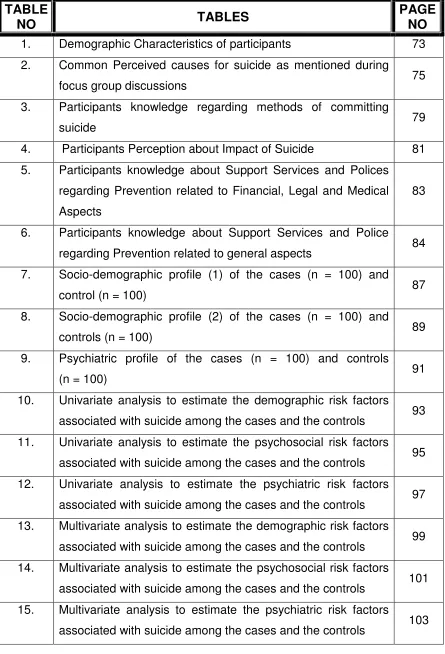
LIST OF TABLES
1. Demographic Characteristics of participants 73
2. Common Perceived causes for suicide as mentioned during
focus group discussions 75
3. Participants knowledge regarding methods of committing
suicide 79
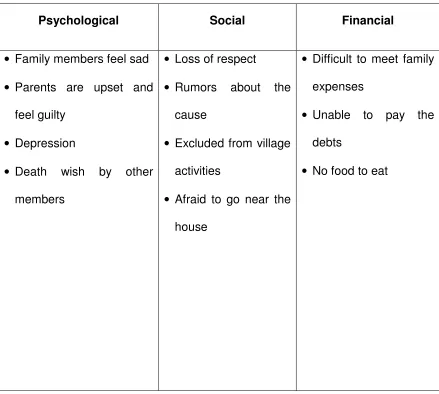
4. Participants Perception about Impact of Suicide 81
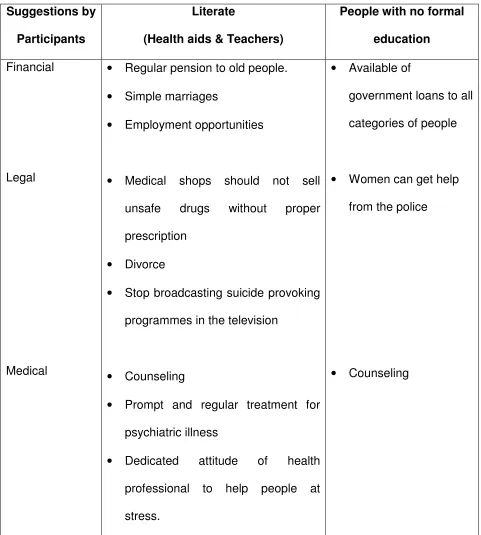
5. Participants knowledge about Support Services and Polices regarding Prevention related to Financial, Legal and Medical Aspects
83
6. Participants knowledge about Support Services and Police
regarding Prevention related to general aspects 84
7. Socio-demographic profile (1) of the cases (n = 100) and
control (n = 100) 87
8. Socio-demographic profile (2) of the cases (n = 100) and
controls (n = 100) 89
9. Psychiatric profile of the cases (n = 100) and controls
(n = 100) 91
10. Univariate analysis to estimate the demographic risk factors
associated with suicide among the cases and the controls 93
11. Univariate analysis to estimate the psychosocial risk factors
associated with suicide among the cases and the controls 95
12. Univariate analysis to estimate the psychiatric risk factors
associated with suicide among the cases and the controls 97
13. Multivariate analysis to estimate the demographic risk factors
associated with suicide among the cases and the controls 99
14. Multivariate analysis to estimate the psychosocial risk factors
associated with suicide among the cases and the controls 101
15. Multivariate analysis to estimate the psychiatric risk factors
associated with suicide among the cases and the controls 103
TABLE
NO
TABLES
[image:11.595.86.531.107.761.2]16. Socio-demographic data of the participants (n = 83) 106
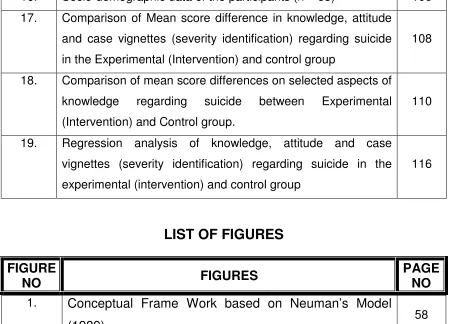
17. Comparison of Mean score difference in knowledge, attitude and case vignettes (severity identification) regarding suicide in the Experimental (Intervention) and control group
108
18. Comparison of mean score differences on selected aspects of knowledge regarding suicide between Experimental (Intervention) and Control group.
110
19. Regression analysis of knowledge, attitude and case vignettes (severity identification) regarding suicide in the experimental (intervention) and control group
116
LIST OF FIGURES
1.
Conceptual Frame Work based on Neuman’s Model
(1989)
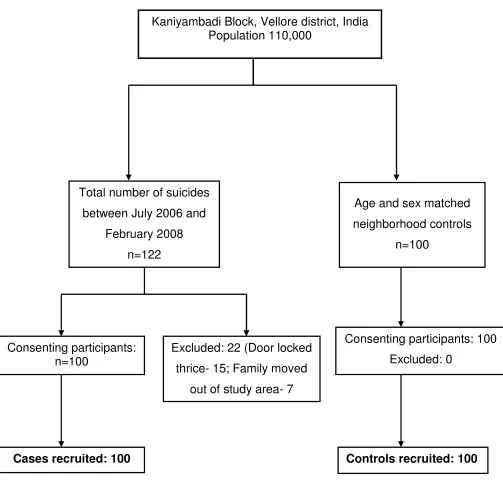
582. Flowchart of recruitment of cases and controls 86
3. Knowledge of Students regarding suicide in the Control and
Experimental (Intervention) group 112
4. Attitude of Students regarding suicide in the Control and
[image:12.595.83.532.83.407.2]Experimental (Intervention) Group 114
FIGURE
NO
FIGURES
CHAPTER 1
INTRODUCTION
1.1. BACKGROUND OF THE STUDY
Suicide is a major public health problem in many developing countries1. It
contributes to premature mortality accounting for over 8,00,000 deaths worldwide
every year2. Suicide is not only a medical issue but it also has economic, social,
moral and political dimensions. Consequently, the prevention of suicide has
medical, social, psychological, economic and political implications.
According to the World Health Organization (WHO), suicide is among the
top 10 causes of death in most countries, and one of the three leading causes of
death in the 15 to 35 year age group. The WHO estimates that in 2020, based on
current trends, approximately 1.53 million people will die from suicide, and 10-20
times more people will attempt suicide worldwide. This represents, on average,
one death every 20 seconds and one attempt every 1-2 seconds3.
The suicide rate in many western countries is between 8 and 30 per
1,00,000 population with a recent increase in suicide among young men4. In
almost all the countries men are more likely to commit suicide than women.
There is constant predominance of suicide rates in males over suicide rates in
females: 3.2 : 1 in 1950; 3.6 :1 in 1995; and it estimated to be 3.9:1 in 20203. The
lower rate of suicide for women is ascribed to several factors. Alcoholism is a
significant contributory factor to suicidal behaviour and women are less prone to
alcohol abuse. It is also suggested that women have more “flexible coping skills”
Several investigators have studied suicide in different parts of India, using
police records, and have reported that suicide rates vary from 6.8 to 58.3 per
1,00,000 population6. Problems with suicide research in India include the
reluctance of families of suicide victims to allow a postmortem because of the
fear of mutilation of the body of the deceased, the time consuming nature of the
process and the stigma attached. Families also prefer not to get involved with
police investigations. In India 71% of suicides are by persons below the age of 44
years, which imposes a huge social, emotional and economic burden on our
society7. South India accounts for the world’s largest number of suicides by
young people. In 2002, there were 10,982 suicides in Tamil Nadu, 11,300 in
Kerala, 10,934 in Karnataka and 9,433 in Andhra Pradesh8. Kerala, the country’s
most literate state, has the highest number of suicides of approximately 32 per
1,00,000 population per year. Uttar Pradesh and Bihar which have a much higher
population and a far lower level of literacy report fewer suicides.
The annual suicide rate in Kaniyambadi Block, Vellore District, Tamilnadu
was 95.2 per 1,00,000 during the years 1994-99. This is 8-10 times higher than
the reported national rate and 2 to 3 times higher than the findings from earlier
studies9. The investigators focusing on the adolescent population reported a rate
of 148/1,00,000 and 58/1,00,000 for young women and men respectively10. The
suicide rate of 189/1,00,000 was reported among people over 55 years of age
from this region11.
Western data suggests that suicide is more common in males, the elderly,
those with poor social support and people with mental illness. It is also commonly
stress12. However, studies from India have shown recent adverse life events,
interpersonal stress and relationship difficulties, severe financial distress, the use
of alcohol and a lack of religious faith as risk factors for suicide.13-16. In the case
of women, harassment for dowry, divorce, failure in love, illegitimate pregnancy,
extra marital affairs and not able to get married at the right age play a very
important role in increasing the risk of suicide. Domestic violence has also been
found to be a major risk factor for suicide17.
Mental health experts have listed various “Acute Stress Factors”8
considered as risk factor for suicide and include: (i) family conflicts, domestic
violence, academic failures and unfulfilled romantic ideals, (ii) the wide gap
between people’s aspirations and actual capabilities, (iii) the disintegration of
traditional social support mechanisms as was prevalent in joint families,
(iv) emergence of a trend towards nuclear families, alcohol abuse, financial
instability and family dysfunction, (v) a growing population of the aged and
elderly, (vi) failure of crops, huge debt burdens, growing costs of cultivation and
shrinking yield among farmers. The National Crime Bureau of India has
suggested that the main reason for the increasing suicide rate in the country is
the increase in domestic problem8.
Many social scientists believe that a society’s structure and values can
influence suicide rates. French sociologist Emil Durkeim argued that suicide rates
are related to social integration18 (i.e.) the degree to which an individual feels part
of a larger group. The suicides were more likely to happen when a person lacked
Shneidman19 noted that individuals who kill themselves are not only the
victims of suicide, the survivors (i.e. the relatives and friends of suicide victims)
also are victims. According to Shneidman, “The person who commits suicide,
puts his psychological skeleton in the survivors’ emotional closet – he sentences
the survivor to deal with many negative feelings and more to become obsessed
and thoughts regarding their own actual or possible role in having precipitated the
suicidal act or having failed to abort it. It can be heavy load”. According to the
American Association of Suicidology (AAS), deaths by suicide affect the lives of
many people related to the deceased.20.
Older people are generally at a greater risk for suicide. The risk factors in
the elderly include:21-23: (i) physical illness, (ii) social isolation and loneliness more
commonly seen in widows and widowers, (iii) the accumulation of losses, such as
friends, physical and mental abilities, social status and health. Older people tend
to use more lethal methods to attempt and to commit suicide. They are also less
likely to survive any grievous level of injury than younger people.
1.2. SIGNIFICANCE AND THE NEED FOR THE STUDY
Suicide is the outcome of multiple inter-related factors.24 The majority of
studies from the West suggest that psychiatric and addictive disorders contribute
to 90% of all completed suicides in all age grops.25,26 However, the number of
published reports specifically studying the psychiatric diagnosis of people who die
by suicide is relatively small. The majority of the reports (82.2%) come from
Europe and North America, with a mere 1.3% from developing countries27. The
data from India on the contribution of psychiatric disorder to suicide rates is
people who commit suicide compared to controls13. Many studies also argue that
mental disorder is a necessary condition for suicide, while it is not sufficient, as
majority of subjects affected by these disorders do not die by suicide. The
diagnosis of substance abuse (especially alcohol), conduct disorders or anti
social personality also have been reported consistently in large proportion of
completed suicides.
Many epidemiological studies on suicide from India have reported
changing pattern in the methods used for suicide, age group characteristics and
the complex interaction of causative and socio cultural factors for the occurrence
of suicide. Reports suggest that psychosocial, cultural and economic issues
rather than severe mental disorders are related to suicide in India16. These
factors indicate that suicides in India is different from those reported in Western
countries even though some commonalities are observed in the pattern and
causation of suicides28-30.
Many investigators who have studied suicide in different parts of India
have used data collected from police records13, 31, 32. Suicide is considered a
crime in this country and the families of suicide victims often prefer not to get
involved in police investigations. In addition, many families are against autopsies
and there is social stigma related to suicide. The investigators in the field argue
that police statistics, therefore, under-report suicides.14-16 The inefficient civil
registration system, non-reporting of deaths, variable standards in certifying
death and the legal and social consequences of suicide are other major obstacles
The incidence, methods and risk factors for suicide may vary among the
different cultures, thus making it necessary to study the risk factors for suicide in
specific settings in order to design adequate intervention strategies.
Psychological autopsies are an important research tool in establishing risk factors
associated with suicide. A significant methodological issue is that, available case
control psychological autopsy studies seldom use structured diagnostic interview
to categorize psychiatric morbidity.
The present studies aimed to examine local perspectives using qualitative
methodology, and use quantitative methodology to investigate risk factors,
psychosocial issues and mental disorders using the psychological autopsy
method and employing a structured diagnostic interview in a population under the
surveillance of a comprehensive community programme33-35. A nursing
intervention to change knowledge and attitudes to suicide was also evaluated.
1.3. STATEMENT OF THE PROBLEM
The review of literature reveals that the public are not fully aware of the
facts regarding suicide. The high suicide rates reported suggest the need for a
suicide prevention programme that is comprehensive in its approach and
encompasses the promotion, coordination and support of activities that will be
implemented across the country. Considering the above, community based
studies to investigate risk factors and to develop a nursing intervention to reduce
suicide were undertaken:
A. A qualitative study to explore the perceptions regarding suicide in the
B. A community based case control study to evaluate the risk factors for
suicide
C. A controlled trial to assess the effectiveness of the structured teaching
programme regarding suicide for school children.
1.4. OBJECTIVES
The studies aimed to examine the following issues:
1. Perspectives about suicide in the local population.
2. The risk factors for suicide.
3. The relationship between mental illness and suicide.
4. The development of a nursing intervention to educate school students
about suicide.
1.5. OPERATIONAL DEFINITIONS
Suicide is an attempt made by a person to destroy his / her life
Risk factors in this study are the factors which predisposes an individual to
commit suicide
Perception in this study refers to peoples’ views or understanding about suicide.
Effectiveness in this study refers to the significant increase in the level of
knowledge and a positive change in attitude of school children on suicide after
education
Structured Teaching Programme consists of a subject content including
etiology, warning signs, risk factors, misconception and management and
prevention of suicide.
1.6. RESEARCH HYPOTHESES
H1 - Depression is more likely to be common among subjects who
commit suicide than among controls.
H2 - Emotional, physical and sexual abuse is more likely to be common
among women who commit suicide than among female controls.
H3 - Alcohol abuse is more likely to be common among men who
commit suicide than among male controls
1.7. ASSUMPTIONS
1. The general public is not aware about the facts regarding suicide.
2. Socioeconomic and sociocultural factors can influence suicide.
3. Nurses have an important role in educating the public regarding suicide
prevention.
4. Knowledge and attitude regarding suicide differ from individual to
individual.
1.8. LIMITATIONS
The studies were limited only to the permanent residents of Kaniyambadi
Block. Case control designs, focus group discussions and controlled trials have
limitations and the attempts to overcome these are discussed in the subsequent
chapters.
1.9. PROJECTED OUTCOME
Suicide is recognized as a global phenomenon and many countries now
have national suicide prevention strategies. Nurses hold a key role in the
implementation of national, regional and local policies into practice. The study will
framework for an effective intervention programme which is specific and culturally
accepted. The structured teaching module prepared and tested by the
investigator can be used by nurses, health workers and school teachers in
CHAPTER 2
REVIEW OF LITERATURE
The literature review is presented under the following headings
2.1 Related Literature
2.2 Conceptual Frame Work
2.1. RELATED LITERATURE
2.1.1. SUICIDE
2.1.1.1 Theories of suicide
2.1.1.2 Risk factors for suicide
2.1.1.3 Suicide warning signs
2.1.1.4 Methods of committing suicide
2.1.1.5 Common misconceptions about suicide
2.1.1.6 Protective factors
2.1.1.7 Suicide and culture
2.1.2.
PSYCHOLOGICAL AUTOPSY
2.1.2.1. Concept
2.1.2.2. History
2.1.2.3. Purposes
2.1.2.4. Semi structured interview for psychological autopsy
2.1.2.5. Trends in the use of Psychological autopsy
2.1.2.6. Integrity of the psychological autopsy
2.1.2.7. Limitation
2.1.2.8. Studies related to the use of psychological autopsy method to
assess the risk factors.
2.1.2.9. Psychological autopsy studies which have DSM diagnosis
2.1.3. QUALITATIVE METHODS
2.1.3.1. Focus groups
2.1.3.2. Direct observation
2.1.3.2. In-depth interviews
2.1.3.4. Studies on suicide using qualitative methods
2.1.4. EDUCATIONAL INTERVENTIONS FOR SUICIDE PREVENTION
2.1.5.
GOALS AND PROGRAMMES OF A NATIONAL STRATEGYFOR
SUICIDE PREVENTION
2.1.5.1. Community Intervention
2.1.5.2. Intervention at institutional and organizational levels
2.1.5.3. Interventions at the Individual level
2.1.5.4.
World Suicide Prevention Day2.1.1. SUICIDE
Suicide is a death caused by an action initiated by a person with the
intention of causing his / her own death.
2.1.1.1. Theories of Suicide
Suicide is a tragic phenomenon that has preoccupied professionals from
various disciplines. Deaths by suicide leave broad psychological and social
impacts on families and societies throughout the world. Suicide’s toll on the living
has been estimated by the World Health Organization in terms of disability –
adjusted life years, which indicates the number of healthy years of life lost to an
illness or event. According to this calculation, the burden of suicide is equal to the
Sociological Theory of Suicide
The first major contribution to the study of the social and cultural
influences on suicide was made at the end of the 19th century by the French
sociologist Emile Durkheim, He described four major types of suicide, all related
to group cohesion or solidarity. They are Egoistic, Altruistic, Anomic and
Fatalistic36.
Egoistic suicide was most common among groups of individuals with few
connections to social groupings of any kind. Thus married people committed
suicide at lower rates than singles: and nations undergoing political crises
experienced lower rates because competing interests and parties became tightly
integrated under stress.
Altruistic suicide is the opposite of egoistic suicide. The individual who is
prone to altruistic suicide is excessively integrated into the group. The group is
often governed by cultural, religious or political ties and allegiance is so strong
that the individual will sacrifice his or her life for the group.
Anomic suicide was identified with an abrupt shift in an individual’s
circumstances. Shifts that removed his or her from membership in what had been
a well integrated group. Durkheim showed that nations where divorce was
common experienced higher suicide rates than nations where the practice was
illegal.
Fatalistic suicide occurred within tightly knit groups where members
sought, but could not attain escape, whose futures are pitilessly blocked and
student takes his own life upon failing in an internal examination is an example
for this type of suicide.
Psychological Theories of Suicide
Sigmund Freud37 believed that suicide was a response to the intense
self-hatred that an individual possessed. The anger had originated toward a love
object but was ultimately turned inward against the self. Freud believed that
suicide occurred as a result of an earlier repressed desire to kill someone else.
He interpreted suicide to be an aggressive act toward the self that often was
really directed toward others.
Carroll – Ghosh, Victor and Bourgeois38 identified hopelessness as a
central underlying factor in the predisposition to suicide. Beck39 and associates
also found a high degree of correlation between hopelessness and suicide.
Rich, Warsradt and Neniroff40 have associated developmental level with
certain life stressors and their correlation to suicide. The stressors of conflict,
separation and rejection are associated with suicidal behaviour in adolescence
and early adulthood.
The main stressor associated with suicidal behaviour in the 40 to 60 year
old group is economic problems. Medical illness plays an increasingly significant
role after 60 years of age and becomes the leading predisposing factor to suicidal
behaviour in individuals older than age 80.
Biological Theories
Recent studies with suicide attempters have focused on the genotypic
significant association to suicidality41. Some studies have revealed a deficiency of
serotonin in depressed clients who attempted suicide42. Some changes in the
noradrenergic system also been reported.
2.1.1.2. Risk Factors for suicide
Many risk factors are involved, but there is no single theory that explains
suicide. Data from India, on the contribution of mental illness to suicide rates is
limited. A study from Chennai, Tamilnadu, reported a higher risk of mental
disorder among people who commit suicide compared to controls13. This study
employed police records to diagnose suicide. However, other studies suggest the
presence of chronic stress and precipitating life events rather than possible
severe mental disorders as the major risk factors for suicide16. The commonly
reported stress factors include marital and sexual conflicts, interpersonal conflict,
alcohol use, financial problems and failure in examination and in love.
Suicide seems to cluster in some families; therefore family history is
pertinent. A striking example is the novelist Ernest Hemingway’s family in which
five members in four generations committed suicide42.
Gould et al43 conducted a study among 120 young suicides and 147
matched community controls in the New York city metropolitan area and the
entire state of New Jersey, and reported comparable effects of psychosocial
factors and psychopathology on the risk of suicide. Lin, Wo and Lee44 conducted
a study in Taiwan to examine the risk factors associated with 3 month post
discharge suicide among cancer patients. The study findings showed that the
mean interval from discharge to suicide was 39.7 days and almost half (46.3%) of
Kolves, Varnik, Schneider et al45 analyzed the differences in the
disposition and frequency of recent life events preceding suicide in two cities with
different political backgrounds. The study was conducted at Tallinn in Estonia
(1156 suicides) and Frankfurt in Germany (163 suicides). The result revealed that
family discord (OR = 4.5 95%. CI = 2.5-8.1) loss of job (OR = 2.6; 95% CI =
1.0-6.4) and financial deterioration (OR = 2.2; 95% CI = 1.3-3.8) were more prevalent
among suicides in Tallinn, in comparison with those in Frankfurt.
Blackmore, Murce, Weller et al46 identified a number of psychosocial risk
factors for suicidal acts in Canada. The data were obtained from a
epidemiological survey of 36,984 respondents aged 15 years and older. They
found that the female gender (OR = 4.27, 95% CI = 4.05 – 4.50) being separated
(OR = 37.88, 95% CI 33.92-42.31); divorced (OR = 7.79, 95% CI 7.22-8.41),
being unemployed (OR = 1.70, 95% CI 1.50-1.80), experiencing a chronic
depressive episode (OR = 9.10, 95% CI 8.65 – 9.59) were significantly
associated with a suicidal act. These findings reinforce the importance of the
determination of suicide risk and its prevention not only of psychiatric illness but
of physical and psychosocial factors as well.
Research has identified various risk factors for suicide and include47:
(i) previous suicide attempt (s), (ii) history of mental disorders particularly
depression, (iii) history of alcohol and substance abuse, (iv) family history of
suicide and child maltreatment, (v) impulsive and aggressive tendencies,
(vi) barriers to accessing mental health treatment, (vii) financial loss,
methods, (xi) local epidemics of suicide and (xii) Isolation, a feeling of being cut
off from other people.
2.1.1.3. Suicide Warning Signs
There are often signs that someone may be thinking about or planning a
suicide attempt. It is important to be alert to clues or warning signs. The warning
signs of suicide are48: (i) appearing depressed or sad most of the time, (ii) feeling
hopeless, expressing hopelessness, (iii) withdrawing from family and friends,
(iv) sleeping too much or too little, (v) feeling tired most of the time, (vi) gaining of
losing a significant amount of weight, (vii) making overt statements like “I can’t
take it anymore”; “Life isn’t worth living anymore”; “I wish I were dead”; “Everyone
would be better off if I died”. (viii) making covert statements like “It’s okay now,
everything will be fine”; “Things will never work out”; “I wont be a problem for
much longer”; “Nothing feels good to me anymore, and probably never will”; “How
can I give my body to medical science? (ix) Writing poems or notes about suicide
or death, (x) loosing interest in most activities, (xi) giving away prized
possessions, (xii) making out a will, (xiii) putting personal affairs in order, (xiv)
reduced sense of humor, (xv) feeling excessive guilt or shame, (xvi) acting
irrationally, (xvii) being preoccupied with death or dying, (xviii) neglecting
personal hygiene and (xix) abusing alcohol or drugs.
Some people who die by suicide do not show any warning signs but most
people show some suicide warning signs. The recognition of these signs will help
2.1.1.4. Methods of Committing Suicide
The common method of committing suicide in India is poisoning and the
common poison in pesticide. Pesticides are easily available in rural households in
India as such societies are predominantly agrarian. Pesticide self poisoning
accounts for about one third of the world’s suicides. Plant poisons (eg)
oddvanthalai Oleander – cleistanthus collinus are also used in rural communities
in India to commit suicide. Over the counter medication are also used for suicide
in urban settings. The other methods used are hanging, drowning, burning
oneself (self immolation) and jumping from tall structures. Electrocution is a rare
option.
Zhang, Li, Zhu et al49 analyzed the patterns of suicide and suicide
attempts by poisoning as reported through a national poison control system for
the purpose of improving intervention and preventions in China. During the period
of 2000 to 2006, 6440 cases of poisoning suicide were reported to the telephone
consultation service system of the National Center for Poison Control. Pesticide
poisonings were the most common method in these cases of consultation for
suicide and suicide attempts.
Srivastava, Peshin, Kaleelal and Gupta50 retrospectively analyzed the
poisoning calls received by the national poison information centre at New Delhi. It
showed a total of 2719 calls over a period of three years. The queries were made
on poisoning management (92%) and information (8%) about various products
and functioning of the centre. The most common mode of poisoning was suicidal
phosphide was the most commonly consumed followed by organo chlorines,
organophosphates, ethylene dibromide herbicides and fungicides.
Kanchan and Menezes51 have reported in their study that hanging is one
of the preferred means of committing suicide in India. A study conducted by
Bastia and Kar52 in Cuttack, India reported that married females, age group of
21-30 years, unmarried males, dowry related stress, unemployment, prolonged
illness, failure in examinations, relationship and financial problems were
associated more frequently with suicidal hanging.
Gunnell, Eddleston, Phillips and Ronradsen53 systematically reviewed the
worldwide literature to estimate the number of pesticides suicides in each of the
World Health Organizations six regions and the global burden of fatal
self-poisoning with pesticides. They have estimated that there are 258,234 deaths
from pesticide self poisoning world wide each year, accounting for 30% (range
27% to 37%) of suicides globally.
2.1.1.5. Common Misconceptions about Suicide
There are many misconceptions about suicide. Some of them are54
Myth - People who talk about suicide are just trying to get attention.
Fact - It is possible that they are trying to get attention but unless
someone gives them some attention, the consequences
could be fatal.
Myth - People who talk about suicide do not complete suicide
Fact - Many people who die by suicide have given definite warnings
Myth - All suicidal individuals are mentally ill.
Fact - Most suicidal people are not psychotic or insane. They must
be upset, grief stricken, depressed and in despair.
Myth - People who attempt suicide and survive will oftentimes make
additional attempts
Fact - People who have made prior suicide attempts may be at a
greater risk of actually committing suicide
Myth - Asking people if they are thinking about suicide gives them
the idea for suicide
Fact - Bringing up the subject of suicide and discussing it openly is
one of the most helpful things.
Myth - People who attempt suicide really want to die.
Fact - A very small number of people may want to die. The majority
desperately want the pain to stop but have given up hope
that it can stop.
Myth - Suicide always occurs without any warning signs.
Fact - There are almost always warning signs.
Myth - Once people decide to die by suicide, there is nothing you
can do to stop them.
Fact - Suicide can be prevented. Most people who are suicide do
Myth - Suicide only strikes people of a certain gender, race, age
financial status etc.
Fact - Suicide can strike anyone.
Myth - Young people never think about suicide, they have their
entire life ahead of them.
Fact - Suicide is the third leading cause of death for young people
aged 15-24 years.
Myth - People who are suicidal do not seek help.
Fact - Many people who are suicidal reach out for help.
Myth - There is little correlation between alcohol or drug abuse and
suicide
Fact - Often times people who die by suicide are under the
influence of alcohol or drugs.
Myth - It is best to keep someone’s suicidal feelings a secret
Fact - Never, ever keep someone’s or your suicidal thoughts and
feelings a secret.
Myth - People who complete suicide always leave notes.
Fact - Most people don’t leave notes.
Myth - Once the emotional state improves, the risk of suicide in
over.
Fact - The highest rates of suicide occur within about three months
of an apparent improvement in a severely depressed state.
Therefore, an improvement in emotional state doesn’t mean
2.1.1.6. Protective Factors
The protective factors buffer people from the risks associated with suicide.
A number of factors have been suggested as playing a potentially protective role
for young people and older adults55-59. The protective factors for young people
are: (i) good coping skills and problem – solving behaviours, (ii) positive beliefs
and values, (iii) feelings of self-esteem and belongings, (iv) connections to family
or school, (v) secure cultural identify, (vi) supportive family, (vii) responsibility for
children, (viii) social support and (ix) holding attitudes against suicide.
The protective factors for older adults include: (i) a confiding, supportive
relationship, (ii) social support, social connectedness and interaction, including
participation in organizations and having a hobby, (iii) good coping and adaptive
skills, (iv) good physical and mental health, (v) adequate pain relief, (vi) good
palliative care, and treatment of depression for those with terminal illnesses, (vii)
early, adequate and sustained treatment and management of depression, (viii)
strong religious and / or spiritual values, (ix) adequate support following
bereavement, (x) recognition of, and respite from family discord and conflict and
(xi) restricted access to means of suicide, especially guns, for older adult males.
2.1.1.7. Suicide and culture
Cultural beliefs and practices affect nearly all aspects of normal behavior.
Culture has its influence in the conception of personal identity (group identity
vs individual autonomy), mind body relationship (separate vs whole). Many other
differences which can influence the onset, course and outcome of mental
disorders have been established between cultures - e.g. communication styles
gender and leadership roles) and in beliefs and rituals (e.g. child rearing
practices). Thus, culture can be conceived as a complex construct of socially
transmitted ideas, feelings and attitudes that shape behaviour, organise
perceptions and label experiences60.
The impact of culture on suicide and psychopathology can occur at
different levels, in the form of pathogenetic, pathoselective, pathoplastic,
pathoelaborating, pathofacilitative and pathoreactive effects60. Culture impacts
on psychosocial stress that causes suicide, on the choice of suicide as a coping
method, on forms of suicidal behaviour and on the elaboration of suicidal action,
on its frequency and on the social reaction to such behaviour. Knowledge of the
cultural profile for suicide in specific populations are helpful in the following ways:
assisting clinicians in determining culture sensitive ways to approach the subject,
in making culturally accurate clinical assessments of suicidality and in
undertaking culturally relevant actions in dealing with suicidal behaviour60.
Elfawal61 conducted a study in Saudi Arabia to explore how racial and
cultural factors could possibly influence suicidal rates and patterns. The suicide
rate for the entire population averaged 1.1/1, 00,000 population per annum. The
male to female ratio was 4.5:1. The highest suicide rate was among the age
group from 30 to 39 years (44.3%). Immigrants formed 77% of the cases, and of
these, Asians accounted for 70% of the overall cases and Indians showed the
highest suicidal rates (43%).
Van Berger, Smit, Kerkhof and Saharso62 conducted a study on gender
and cultural patterns of suicidal behaviour among young Hindustani immigrant
immigrant women attempt suicide four times more often than young Dutch
women. It is suggested that young Hindustani women who displayed suicidal
behaviour possess certain personality and cognitive constellations that are
interlocked with specific parenting styles in stressful family environments. These
families are embedded in a context of moral transformations resulting from
migration to a western culture and may be facing difficulties accompanying the
transitional processes encountered in the west, particularly those regarding
gender roles.
A cultural analysis was done on women and suicidal behaviour by
Canett63. The result revealed that around the world girls and women have higher
rates of suicidal ideation and behaviour but lower rates of suicide than boys and
men. There is, however, significant variability in gender patterns and meanings of
social behaviour within and across culture. For example, in the United States
suicide is most common among older “White” men, and is typically considered
masculine behavior. Women who kill themselves are viewed as acting like men,
and therefore deviant. By contrast, in other societies, including China, suicide is
viewed as an act of the powerless, and is most frequent in young women. In
these societies, men who kill themselves are considered weak and effeminate.
The cultural diversity in gender patterns and interpretations of suicidal behavior
challenges essentialist perspectives on gender and suicidal behavior. It also
challenges the assumption, common in industrialized countries, that women are
protected from suicide as long as they stay “feminine” and subsumed within the
family. This cultural diversity also points to the pitfalls of theorizing about clinical
phenomena as if they were culture-free, and calls for culturally grounded theory,
2.1.2. PSYCHOLOGICAL AUTOPSY
Psychological autopsy is a post – mortem investigative tool that aids in the
determination of the cause of a person’s death. The psychological autopsy
method offers the most direct technique currently available for examining the
relationship between particular antecedents and suicide.
There are often many questions left unanswered, when a person dies in a
mysterious manner. In these cases, it is up to the researchers, interviewers,
detectives and psychologists to uncover hidden secrets that may help to give
family members peace of mind. The investigators use interviews, eyewitness
reports, journals, newspapers and medical records to determine the cause of
death (i.e.) natural or accidental or suicidal or homicidal64.
2.1.2.1. Concept
The concept of “Investigative psychology” is used in psychological
autopsy. Investigative psychology is a term encompassing all the ways that
psychology can be used or integrated with the process and procedures of
criminal investigation65.
2.1.2.2. History
In 1958 in Los Angeles, Chief Medical Examiner, Theodore Curphy was
frustrated with too many cases of drug-related deaths. So he re-enlisted with help
of Edwin. S. Shneidman and Normen Faderow, Co-directors of the Los Angeles
Suicide Prevention Center, to assist him in the investigation. The psychiatrist
Edwin Shneidman coined the phrase “Psychological Autopsy” to describe the
procedure he and his team of researchers developed during those investigations.
a spouse, lover, parent, grown child, friend, colleague, physician, supervisor and
coworker who knew the deceased66.
In the 1970’s and 1980’s researchers using the psychological autopsy
method investigated risk factors for suicide. Several scientific studies and
publications highlight that Psychological Autopsy in suicide cases has shown
useful as an instrument for clinical assessment and research16, 34, 67.
2.1.2.3. Purposes
The purposes of conducting psychological autopsy study are:68
1. To determine the mode of death. The mode of death determines if the
death was by natural cause, an accident, a suicide or a homicide.
2. To determine why the deceased chose to take his or her own life at the
specific time and place.
3. To conduct interviews with family and friends by which explanations are
provided for the loss of their love one. This serves as a sort of therapy for
their suffering and grief.
4. To learn better ways to predict suicidal tendencies and treat people before
their behaviour reaches harmful levels.
Besides determining the manner of death, psychological autopsy may
serve other purposes like: (i) in the event of homicide, help the crime
reconstruction and block attempts by a defendant to raise the victim’s suicide as
defense, (ii) answer questions about testamentary capacity prior to death, (iii)
postvention for survivors (i.e.) helping survivors deal with grief and loss, (iv) help
2.1.2.4. Semi structured Interview for Psychological autopsy
The procedure of conducting semi structured interview for psychological
autopsy is as follows68. There are four basic questions to be answered in the
psychological autopsy: What? Why? From what? And how has the subject died?
And there are respectively, four constructs underlying the psychological autopsy’s
strategy, which are elicited by semi-structured interview for psychological
autopsy. They are: (i) precipitants and / or stressors (ii) motivation, (iii) lethality
and (iv) Intentionality. Precipitants and / or stressors are immediate facts or
circumstances that would trigger the last push for suicide. Motivation can be
understood identifying the psychological reasons to die, rooted, in lifetime, in the
subject’s conduct, thought, life style and personality. The degree of lethality is
measured by the chosen method and its consequences. The assessment of the
degree of lucidity in the planning, preparation and objectivity of the
self-destructive action establishes the subject’s intent.
Different modules to assess issues have been suggested68:
First Module – Precipitants and stressors
Step 1:Is there any immediate event with possible relation with the fact?
Step 2: Has the reaction of the deceased showed that the event has caused
affective involvement or frustration that was sufficiently stressing to cause
behavioral modifications that could have led to suicide? Specify, Please.
Step 3: Would there be other events that have also influenced in the decision of
committing suicide?
Second Module – Motivation
Step 1: Are there psychological forces and / or reasons (in life time) for desiring
to die?
Step 2: Are there psychosocial, environmental issues or events that are severe
enough to be the target of a decision to finish with them?
Step 3: Are there symptoms of bio-psycho-social malfunctioning which would
explain the action?
Step 4: Are there characteristic personality traits that may constitute a pattern of
an existential non-confrontation?
Step 5: Are there familial or other antecedents that use to be considered as
predisposing to a suicidal act?
Step 6: Would there be other reasons which better explain the fact?
Step 7: Final decision
Third Module – Lethality
Step 1:Has a lethal method been used?
Step 2: Are there signs suggesting that the method has been possibly
self-inflicted?
Step 3: Would there have been knowledge and / or capability of assessing the
degree of lethality of the used method?
Step 4: Was the method accessible or would it be easy to obtain it?
Step 5: Final decision
Fourth Module – Intentionality
Step 1: Is there evidence that the deceased would have performed a direct and
Step 2: Has the deceased shown in the interpersonal acts, verbal and / or
behavioral signs that could announce the purpose and the intent of committing
suicide as a solution for his / her problems.
Step 3: Is there in the life style any involvement with activities that would be
dangerous or harmful to health and could demonstrate desires or intention of
dying?
Step 4: Has he / she given recommendations, performed arrangements,
distributed objects, made wills, written letters or notes or had other behaviors
suggesting a possible suicide?
Step 5: Has he / she chosen place, time, day and method suggesting the
objectivity of a self – destructing act as the only available option?
Step 6: Is it possible to justify the self-destructing action by an unsustainable
situation and / or altruism?
Step 7: Would there be other evidence that explained better the possibility of
existing intentionality?
Step 8: Final decision
Shneidman and Farberow66 developed the psychological autopsy
procedure that today’s professional’s use as their model. The identified 16
categories for possible inclusion in this process. They are
1. Identifying information (name, age, address, sex, marital status,
occupation, religion).
2. Details of death (police reports).
3. History (siblings, illnesses and treatments, suicide attempts)
5. Patterns of reaction to stress
6. Recent tensions or confrontations
7. Role of alcohol and / or drugs in the overall lifestyle and death of the
deceased.
8. Interpersonal relationships
9. Fantasies of the deceased
10. Dreams of the deceased (or nightmares)
11. Thoughts and fears of the deceased relating to death, accident or suicide
12. Change in habits, hobbies, eating, sexual patterns or other life routines
just prior to death.
13. Information relating to the “life side” of the deceased (upswings,
successes, inspirations)
14. Assessment of intention (role of the deceased in his / her own demise)
15. Rating of lethality reaction of informants to deceased’s death.
16. Comments and special features. .
There is no consensus on the exact procedure for conducting a
psychological autopsy. However Psychological Autopsy studies for research
purposes often use complex methods to ensure that the information is reliable
and valid. Most studies have found that the optimal time to conduct this kind of
investigation is between 2 and 6 months after the death.
A major weakness of psychological autopsy may be the lack of
standardized procedures. Recently psychologists have developed a guide with 26
remember that this is only to assist investigator and that not all categories will
apply to every case. Young64 described the guide as follows:
1. Alcohol history
2. Suicide notes
3. Writing / diaries
4. Books
5. Relationship assessments on the day before death
6. Marital assessments
7. Mood
8. Psycho-social stressors
9. Pre-suicidal behaviors
10. Language
11. Drug history
12. Medical history
13. Reflective mental status exam of deceased’s condition before death
14. Psychological history
15. Laboratory studies
16. Coroner’s report
17. Motive assessment
18. Reconstruction of events
19. Assess feelings regarding death as well as preoccupations and fantasies
20. Military history
21. Death history of family
22. Family History
24. Educational history
25. Deceased’s familiarity with methods of death
26. Police reports
2.1.2.5. Trends in the use of Psychological autopsy
There are two major trends in the use of psychological autopsies: (i)
Research investigation, (ii) Clinical and legal use. Research investigations
generally involve many people who died by suicide and comparing the results
with another group. For example, accident victims, in order to see if some factors
are important in discriminating between suicides and other details. Clinical and
legal use of psychological autopsies involves investigations of a single death in
order to clarify why or how a person died. These involve descriptive
interpretations of the death and may include information to help family and friends
better understand why a tragic death has occurred. They also may lead to
suggesting means of preventing suicides for example by suggesting
improvements in suicide prevention and hospital treatment.
2.1.2.6. Integrity of the Psychological Autopsy
The most important aspect of any branch of psychology is the integrity of
the patient. In the case of psychological autopsy, the patient is deceased. All the
facts and data must be handled with the utmost care and respect. Three points
deserve particular attention i.e. integrity of the deceased, respect of the
interviewees and health of the investigators69. Potential problem in psychological
autopsies is that all who participate possess the potential to contaminate the
results. Therefore, proper caution and scrutiny are always exercised by those
2.1.2.7. Limitations
The limitations of the procedure include: (i) Recall bias, (ii) imprecise
information. Possibility of the under reporting of psychiatric symptoms and illness
by informants and (iii) all who participate possess the potential to contaminate the
results. And yet, the psychological autopsy remains the best available tool to
assess suicide.
2.1.2.8. Studies related to the use of psychological autopsy method to
assess the risk factors
The psychological autopsy studies among suicides have reported numbers
of psychosocial risk factors are associated with the risk of suicide34, 67, 70. Chen71
conducted a case control study of suicide using psychological autopsy method,
among two aboriginal groups and the Han Chinese in East Taiwan. They have
reported that a high proportion (i.e.) 97% to 100% suicides suffered from mental
illness before committing suicide. The two most prevalent psychiatric disorders
were depression and alcoholism. 51% of all suicides had consulted medical
professionals in the previous month.
Cheng et al72 conducted study in Taiwan among 113 consecutive suicides
and 226 living controls matched for age, gender, ethnicity and area of residence.
They used a semi-structured interview guide modified from that used by
Barraclough et al67. The investigators reported that five major factors have an
independent effects on suicide, like loss event, suicidal behaviour in first degree
relatives, ICD – 10 major depressive episode, emotionally unstable personality
Kolves et al73 in their study reported that Alcohol abuse and dependence
was significantly prevalent among suicides. A total of 427 people who committed
suicide during one year were paired with religion, gender, age and nationality with
controls. Alcohol abuse was found in 105 and alcohol dependence in 51% of
suicide cases. The corresponding figures for controls were 7% and 14%
respectively.
A study was conducted to identify the psychosocial and clinical risk factors
to suicide among Chinese population by Chen et al34 using case control
psychological autopsy method. 150 suicide deceased were compared with 150
living controls matched by age and gender using semi structured interviews. Six
factors were found to be significantly and independently contribute to suicide they
are unemployment, indebtedness, being single, social support, psychiatric illness
and history of past attempts.
Vijayakumar et al13 conducted a study to identify the risk factors for
completed suicide in India. A case control study using psychological autopsy
technique was conducted among 100 completed suicides identified through
police records and 100 neighbourhood controls. The odds ratios for the risk
factors were 19.5 for presence of Axis I disorder, 12.75 for family history of
psychopathology, 15.1 for life events in the previous month. These findings
suggest that risk factors for complete suicide are universal across countries and
cultures.
Another study was conducted in India by Gururaj et al17 to identify and
quantify the risk factors for completed suicides in the city of Bangalore. A case
identified through the use of police records and 269 living controls using
psychological autopsy methods. The study has shown that several factors in the
areas of marriage, family, education, occupation, general health, mental health
and absence of protective factors contribute significantly to suicide. The
significant factors were presence of previous suicidal attempt (odds ratio (OR) =
42.62), inter personal conflicts and marital disharmony with spouse (OR = 27.98),
alcoholism in self (OR = 23.38), presence of mental illness (OR = 11.07), sudden
economic bankruptcy (OR = 7.1) domestic violence (OR = 6.82) and
unemployment (OR = 6.15).
A study was conducted to investigate the psychosocial and psychiatric risk
factors of suicides among Belgium adolescents, using case-control psychological
autopsy method by Portzky et al74. The relatives and other informants were
interviewed by means of a semi-structured interview schedule. Results showed
that suicide victims had been exposed more frequently to suicidal behaviour by
friends and through media and have experienced more relationship problems in
the past year. Suicidal communication was less frequently reported in suicide
victims. Treatment of psychiatric disorders was significantly less found in suicide
victims.
Pompili et al75 conducted study using psychological autopsy method to find
out the risk factors in older adults in a north Italy area. The study participants
were 99 elderly suicides and 134 younger comparison suicides. The elderly
victims were nine times (OR = 9.09; 95% CI = 1.32 – 62.63) more likely to live
14 times (OR = 14.57; 95% CI : 2.48-85.65) more likely to have attended school
for not more than 5 years than adult suicides.
2.1.2.9. Psychological autopsy studies which have DSM diagnosis
Over the last years, the relationship between suicide and mental disorders
has been the focus of several studies71,76-78. The psychological autopsy
procedure entails the retrospective psychiatric assessment of the deceased by
variable methodologies. Genevieve et al79 carried out a review of studies in which
in which psychological autopsy studies were performed. Studies were identified
by means of Medline database searches and by scanning the reference list of
relevant publications. Twenty-seven studies comprising 3275 suicides were
included, of which 87.3% (SD 10.0%) had been diagnosed with a mental disorder
prior to their death. Diagnoses of substance related problems (OR = 3.58),
personality disorders (OR = 2.01) and childhood disorders (OR = 4.95) were
more common among male suicides, where as affective disorders (OR = 0.66;
including depressive disorders (OR = 0.53) were less common among males.
Geographic differences are also likely to be present in the relative proportion of
psychiatric diagnoses among suicides. The authors have concluded that although
psychopathology clearly medicates the risk of suicide, gender and geographical
differences seem to exist in the relative proportion of the specific psychiatric
disorders found among suicide completers.
Heila et al80 examined the clinical characteristics of suicide victims with
schizophrenia in the general population of Finland. All suicides over a 12 months
period of persons with DSM – III – R schizophrenia were investigated by using
identified as having schizophrenia. Both active illness (78%) and depressive
symptoms (64%) were highly prevalent immediately before suicide, and a history
of suicide attempts (71%) was also common. Marked variation in depressive
symptoms, alcoholism, and suicide methods was found among sexes and age
groups. The results indicate clinically important variation in depression,
alcoholism, and suicide methods among suicide victims with schizophrenia.
Shaffer et al81 conducted a study to examine the psychiatric risk factors
and the relationship between them and demographic variables. A case control
psychological autopsy study was conducted among 120 to 170 consecutive
subjects (age < 20 years) who committed suicide and 147 community age, sex
and ethnic matched controls who had lived in the greater New York area. 59% of
the subjects who committed suicide and 23% of the control subjects met DSM III
criteria for a psychiatric diagnosis. Mood disorders were more common is
females, substance and / or alcohol abuse occurred exclusively in males (62% of
18 to 19 year old suicides).
Conwell et al82 established DSM III axis I diagnosis in 141 person aged 21
to 92 years who had completed suicide using the psychological autopsy method.
They have reported that one or more axis I conditions were diagnosable in 90.1%
of the suicide victims. Substance use disorders were more frequent, followed by
mood disorders and primary psychotic illness. Younger age was a significant
predictor of substance abuse or dependence and older predicted major mood
disorder.
Another study was conducted by Margda et al83 using psychological