1
The Role of Social Networks on Socialization and Political Participation of Political science Students of Islamic Azad University, South Tehran Branch (2007- 2017)
Garineh Keshishyan Siraki*
Assistant professor, Islamic Azad University, South Tehran Branch, Tehran, Iran
Abstract:
The present study was conducted with the aim of analyzing the impact of social networks on political socialization and political participation of political science students of the Islamic Azad University of Tehran, Tehran south branch during 2007-2017. This article is a descriptive-survey research based on the theory of planned behavior and has been done based on random sampling with a population of 280 samples. The findings indicate that 93% of students use social media and spend a significant part of their study hours on social networks, which mainly include Telegram, Instagram, Facebook, Twitter and WhatsApp. The variables related to social networks affect the socialization and political participation of students, and the extent of the impact of social networks on encouraging individuals to participate in the election as a component of political socialization is positive and significant. This finding and other findings are a positive and significant impact of social networks on the attitudes, values and norms, attitudes and behaviors of political science students as a sample population, and thus the hypothesis of this research has been confirmed.
Key Words: Political Socialization, Political Participation, Social Networking, Political Science Students, Islamic Azad University
*Corresponding Author’s Email: [email protected]
2
Problem statement:
Nowadays, the spread of information and communication technologies has affected the various dimensions of political, social, cultural, security and economic life of human beings. With the dimming of the importance of time and space and the need for a common place to communicate, people can more easily communicate with one another in cyberspace. This new form of communication has changed the community, culture and identity of individuals. The features of cyber-communication provide different conditions for face-to-face relationships. The speed of action, anonymity, etc., provides the same space, regardless of the requirements of gender, class, ethnicity, race, and place, which creates different experiences for users. The interactions that take place in this space provide Internet users with a new mindset and tendency that can change their behavior and interactions in the real world, anyway, and, in fact, their socialization process, especially in the political arena will be affected. If political socialization is a continuous process of learning, whereby individuals, through acquisitions and experiences, acquire their duties, rights and roles, in particular their political duties in society, the development of cyberspace and expansion of Social networks are one of the new ways in which this process can be strengthened and even as a tool for changing or adjusting values, attitudes, institutions, customs and beliefs, including political issues in the process of transition from generation to the other generation works.
Social networks that are considered as an important part of interactive media and their content is fully provided by users with diverse tastes and different thoughts; and, of course, in such a space, there is the ability to generate content by any individual with any number of users , and even the administrators of these networks; hence, these networks, are in line with the circulation of their production, have a special place in the emergence of tastes, norms and values of the social community in a wide range of users, and are effective in changing the way people behave. The emergence of new habits, changing and creating the interaction of citizens and the formation of new cultures from the effects and consequences of the existence of these mass and social media were effective in the lives of peoples of the last decade.
3
The importance of these media is taken into account that the content they are produced can transfer specific and planned thoughts to the user, and this is similar to the one that easily relates to the subject and the ordinary event turn into a crisis, or by highlighting a specific topic, public opinion will distract users from a distant event, and they will notice something else. Of course, it cannot be ignored that good, accurate and timely information through these networks can prevent the occurrence of various events and crises. In this regard, the activity of social networks, especially by educated young generations, can be somehow effective in the process of socialization and political participation of this stratum. This paper tries to examine this trend by relying on a survey of students from Islamic Azad University, Tehran South Branch. In this regard, the research question is: How have social networks influenced the socialization and political participation of political science students of the Islamic Azad University of South Tehran branch between 2007 and 2017? In response to this question, the following hypothesis is raised. Hypothesis: The development of social networks based on modern information technologies has caused changes in the values, norms and structures of political socialization among political science students of Islamic Azad University, South Tehran branch during a decade.
Research method:
4
The main purpose of this study was to investigate the role and impact of social networks on socialization and political participation of political students of Islamic Azad University, Tehran South Branch between 2007 and 2017.
Importance and necessity of research:
The dramatic developments in information technology, one of which are now social networks, are in the form of titles such as the era of communications, the explosion of information, the emergence of the information society as well as the digital society, which is an irrefutable reality. This phenomenon can change the fate of a people in a country or even the world in the process of political socialization of societies. In addition, the adaptation of political socialization to the ideals, goals and norms of society can be indicative of the rise of social cohesion and political development. Hence, the study of the process of socialization and political participation in Iran under the influence of new developments such as the expansion of social networks is of strategic importance. The importance of this issue becomes more apparent when it comes to the role of social networks in shaping the transformation of values, norms and political stances among students as future forces of the social fabric. Despite the importance of this, there is little research in this field, and in such a situation, the necessity of analytical and field research in this matter seems to be more.
Information Society and Cyberspace:
The information society today has become a wide range of topics and discourses in such a way as to include issues such as citizens' right to information, participatory democracy, the global intelligence world, and, in general, the supremacy of theoretical knowledge on empiricism. Of course, in the other part, the implications of the information society include the role of oversight, manipulation and direction of thought, the destruction of the public sphere, and the creation of gaps and inequalities at the national and international levels. However, the fact is that the expansion of the intelligence community through modern technology and quick and easy access to information has brought many opportunities and challenges to modern humans.
5
transformed the nature of communications and made fundamental changes to production processes, power and culture.
Political Socialization:
Political socialization is a continuous process of learning and participation in power and culture, in which individuals, through acquisitions of information and experiences, acquire their duties, rights and roles, especially political duties in society. This process cannot undermine the role of information and the transmission of this information, including information technology and one of its dimensions, social networks.
In the process of political socialization, values, norms, attitudes, customs, and beliefs, including in relation to politics, are passed from one generation to another, and changes or adjustments may occur during this transition. (Alem, 2001: 118). In this regard, social networks as one of the new means of transition can contribute to the process of political socialization and because of social, political and cultural transformations. Of course, this transition starts from the childhood and continues until the middle and end years of his life. Teens and young people are the best option for the transfer of political culture. Each political culture is a specific distribution of attitudes, values, emotions, information and political skills. As people's attitudes affect their actions, the political culture of a nation also affects the behavior of its citizens and its leaders throughout the political system. (J. Mont, 2003: 71)
In the meantime, IT as a global trend, with the ever-increasing expansion of its unique tools and capabilities, has provided a new and more effective ground for the political socialization of people at different levels. In other words, in the new era, the traditional structure of socialization with its basic factors: the family, the media, peer groups, and education, due to inherent constraints and the domination of the political and economic elites, did not allow for the possibility of political socialization in Providing the optimum level, the IT field with its unique characteristics, including censorship, synchronization of communication, interactivity, learning and decentralization (Dehghan, 2005), provides free and equal access to public information for all, facilitates critical rational dialogue In cyberspace, the formation of public opinion and, ultimately, collective political action have also taken place In this way, with the various features available to its users, it has been able to support a wide range of interests.
Social networks and its impact on social transformation:
6
world, it has become a tool for social movements. These movements should be able to achieve three goals in order to achieve their goals:
1- Formation of collective identity; 2. Convince their followers,
3. Mobilize followers; these movements can be easily achieved with new information technologies, for all three purposes. (Hamidi, 2011)
In these networks, the effect on public opinion and its mobilization is that, due to these media, a kind of public space forms and many people, without seeing and discussing each other, think each other and, as a result, they act like each other. On this basis, through the production of message, slogan and thought, it is manipulated and mobilized in an artistic way through images, graphics, sound and music, images and beliefs, and ultimately political activity can be achieved. Which is blended with everyday life? In addition, virtual social networks are like a laboratory in which social movements examine their level of ability. In such a case, social networks do not act only as a political means, but they become themselves in the political arena. In this regard, the use of social networks enables this to social movements, which use traditional methods, the protest itself, like marches, encounters, slogans and the use of symbols, can be easily applied and combined with new symbolic methods. Accordingly, these movements have the potential to attract the young class of society and shape public opinion (Hamidi, 2011). Because public opinion is the set of beliefs or thoughts of a group that has focused on a particular topic. Public opinion is a kind of people's judgment in a matter of common discretion at a specific time. Hence, the sum of public opinion is not individual, but the result of individual and collective interaction in a particular cultural, social and economic structure, which in general can be called a kind of social production, which in many cases is determinative and can impose itself on the decisions of a community (Zareiyan, 2006). Some elements related to the concept of public opinion can be categorized as such; public opinion includes behaviors that are spoken by a large number of people and are related to a subject that is considered by all contracts. This is important for everyone. Public opinion is often associated with the intention of participating (with the notion that there are others who act in the same way). Public opinion is expressed with various social instruments and is a social construct (Lazar, 2007). Thus, public opinion is an interactive and dynamic social process in which various thoughts are expressed and ultimately reflected within the framework of a collective manifestation.
7
people and because of social transformations. In fact, these new tools simultaneously play several roles; first, it is an easy, up-to-date, low-cost stream of communication between people; a true connection, such as television, radio and the press and, in addition, all users can contribute to the transfer of news and ideas. Moreover, bloggers and other users in these networks criticize official and state media and criticize their orientations, and since many videos and images of events and news is available online to people, there is no longer a place to direct public opinion by providing selective news from official sources. Therefore, most people, rather than pursuing news through the official media of the country, made social networks; networks that themselves were covered by news coverage. On the other hand, these networks have replaced parties and groups and organizations in protest movements, and there is no longer any need for a protest, a member of an organization or special party, nor does it need to be influenced by the leaders of these groups were, in many cases, political leaders who are influenced by the movements of the people who are formed and driven out in these spaces and are analyzing it. Therefore, the use of social networks, despite restrictive measures to government access by users, is an integral part of shaping the anti-government opposition process. Considering the above, we somehow see the impact of social networks in the present time, but to prove this claim, there is a need for different stages of research, multiple research, research in different strata and in different places, so that the extent of this effect has become known.
Background and Literature Research:
8
the 2013 Argentine election also confirmed that electoral candidates through Facebook and Twitter had established a constructive relationship with their supporters (Dadamo et al 2016). On the other hand, the younger generation also opts for new social media in political choice and decision-making. In the 2014 local elections in Turkey, 50% of Twitter users were between 19 and 25 years old, and 70% of them had access to twitter from a Smartphone, and they used comments for political correspondence (Mengu et al, 2015). Also in the 2010 local elections in Germany, voters affected by the behavioral subjective norm (the influence of family and friends) placed the social network in their electoral campaign. (Schmitt &Mackenrodt, 2010) Other findings suggest that in the United States, social networks with a religious orientation have positively correlated with increasing audience voting.
Statistical Analysis:
In this section of the article, statistical analysis and analysis of how the statistical sample is distributed in terms of variables such as gender, age, level of education and marital status of respondents are discussed.
1- Demographic characteristics 1-1. Gender
As shown in Table 1-1, out of 280 respondents, about 68% of them (190) are men and 32% of them (90) are women. In the following, the abundance (number and percentage) of the respondents' gender status has been determined.
Table 1-1: the sample by gender Gende
r Abundance Percent
Male 190 68.00
Female 90 32.00
Total 280 100
9
Figure 1-1: sample groups based on gender
1-2- The age of the respondents 2. The age of respondents
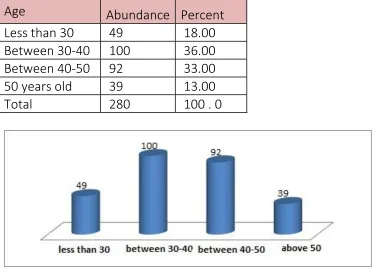
According to the findings of Table 1-2 and the responses to the questionnaires, it was determined that about 18% of respondents (49 people) were less than 30 years old, 36% of respondents (100 people) aged 30 Up to 40 years old, 33% of respondents (92 people) aged between 40 and 50 years old and 13% of respondents (39) are aged 50 and over. In the following, the abundance (number and percentage) of the respondents' age status was determined. From the numbers obtained, it was found that the frequency of age is 30-40 years old.
Table 1 -2: sample groups based on age
Age Abundance Percent
Less than 30 49 18.00
Between 30-40 100 36.00
Between 40-50 92 33.00
50 years old 39 13.00
Total 280 100 . 0
10
1.3 Education of respondents
3. The degree of respondents' education
According to the responses to the questionnaires, 23.22% of the respondents (65) were undergraduate students, 50.00%, (140 students), 26.78% of respondents (75 students) were Ph.D. students. In the following, the abundance (number and percentage) of the respondents' education curve has been determined.
Table 1 - 3 Number and percentage of respondents by level of education Education level Abundance Percent
Undergraduate
student 65 23.22
Masters
student 140 50.00
Ph.D. student 75 26.78
Total 280 100. 0
11
1-4- marital status
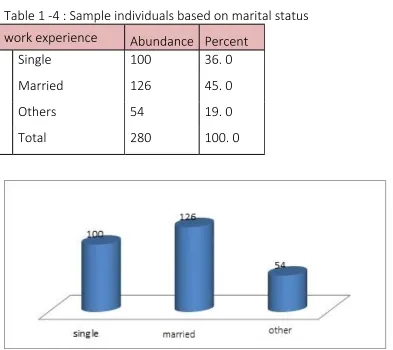
Table 1 -4 findings indicate that the marital status of the sample group and the percentage is the highest frequency.
Table 1 -4 : Sample individuals based on marital status
work experience Abundance Percent
Single 100 36. 0
Married 126 45. 0
Others 54 19. 0
Total 280 100. 0
Diagram 1 -4: Sample individuals based on marital status
1-5 - Use of social networks
12
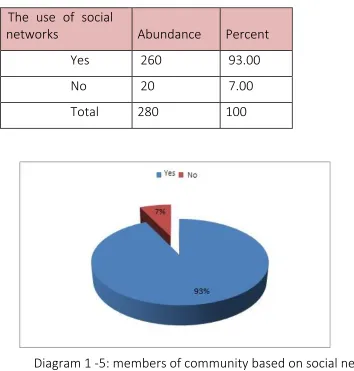
have been identified. From now on, we will use 260 instead of 280 statistics. Because 20 people do not use social networks at all.
Table 1 -5: sample groups based on monitoring the use of social networks
The use of social
networks Abundance Percent
Yes 260 93.00
No 20 7.00
Total 280 100
Diagram 1 -5: members of community based on social network use.
Table 1 - 6 the frequency response of variable questions first reading on social networks in terms of political socialization (260 = n )
Your priority in
reading social
networks Abundance Percent
X2 Significance
level
Political content 83 32.00 1.82 042/0
The contents of the community
58 22:00
Religious Articles 46 18:00
13
Total 260 100
Table 1-6 shows the descriptive information about the priority variable in reading social networking content in terms of political socialization, in which the abundance of the number of people who have chosen the options for each item is indicated. As can be seen, the results of the X2 Independence test show that there is a significant relationship between the priority in reading social networking content in terms of political socialization (p <3 = df1.82 = x2).
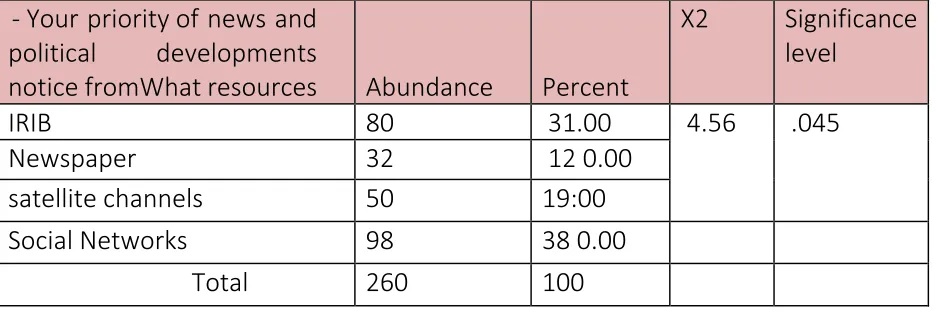
Table 1 - 7 : frequency response of variable questions the priority of news and political and social developments in terms of political socialization (260 = n )
- Your priority of news and
political developments
notice fromWhat resources Abundance Percent
X2 Significance
level
IRIB 80 31.00 4.56 .045
Newspaper 32 12 0.00
satellite channels 50 19:00
Social Networks 98 38 0.00
Total 260 100
14
Table 1 - 8 : The frequency response of variable questions, make sure to provide news and information on social networks in terms of political socialization (260 = n )
confidence in the
news and
information
provided in social
networks Abundance Percent
X2 Significance
level
I do not have 2 1.00 1.53 .023
very little 5 2.00
Somewhat 3 1.00
I have 70 27.00
So I 180 69.00
Total 26 0 100
Table 1-8 shows the descriptive information about the confidence variable in the news and information provided in social networks in which the abundance of the number of people who have chosen the options for each item indicates as observed. The results of the X2 Independence test indicate that there is a significant relationship between the reliability of news and information provided in social networks. (05 / 0p <4 = df53 / 1 = X2)
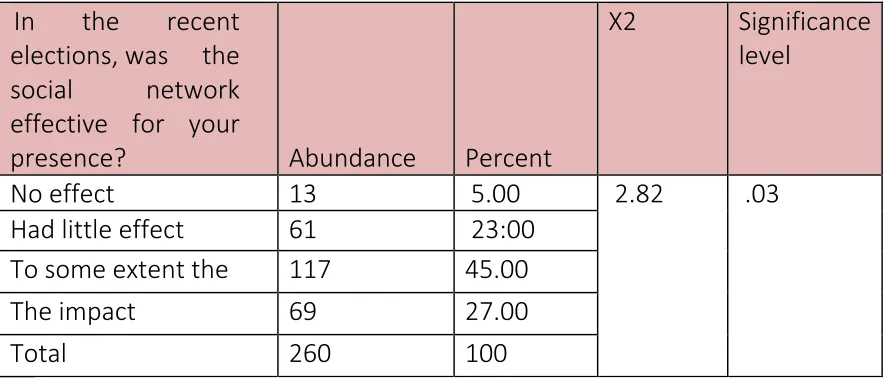
Table 1 - 9 : Frequency Response of questions ranging presence in the social networks in terms of political socialization (260 = n )
In the recent
elections, was the
social network
effective for your
presence? Abundance Percent
X2 Significance
level
No effect 13 5.00 2.82 .03
Had little effect 61 23:00
To some extent the 117 45.00
The impact 69 27.00
Total 260 100
15
Table 1.9. Indicator of the variable information in the recent elections. Social networks were effective in your presence in the election, in which the abundance of people who chose the options for each item. As can be seen, the results of the X2 Independence test show that there is a significant relationship between the priority of informing about news and political and social developments of the day in terms of political socialization (df2.82X2, p <4)
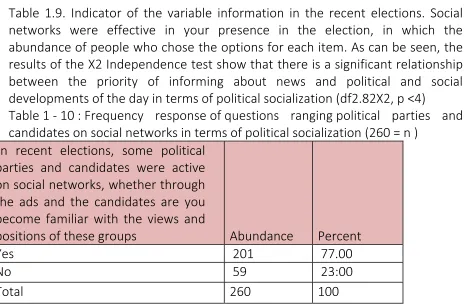
Table 1 - 10 : Frequency response of questions ranging political parties and candidates on social networks in terms of political socialization (260 = n )
In recent elections, some political parties and candidates were active on social networks, whether through the ads and the candidates are you become familiar with the views and
positions of these groups Abundance Percent
Yes 201 77.00
No 59 23:00
Total 260 100
Table 1-10 indicates that most people in the recent election are active in some political factions and electoral candidates on social networks, and through these advertisements, they are familiar with the views and positions of these groups and candidates.
Table 1 -1 1-frequency response of variable questions about your participation in the elections and the impact of social networks in terms of political socialization
In the recent
elections , was the
social network
effective in your
presence in
elections Abundance Percent
X2 Significance
level
No effect 20 7.00 3.54 .03
Had little effect 15 6.00
To some extent the 85 33.00
The impact 140 54.00
16
Table 1-11 shows the descriptive information about the variable of your election presence on social networks in terms of political socialization, in which the abundance of the number of people who have chosen options for each item is shown. As you can see the results of the X2 Independence Test show that there is a significant relationship between the presences of your election on social networks in terms of the socialization of the media. (05 / 0p <4 = df3.54 = X2)
Research hypothesis: Social networks have an impact on political socialization
Study hypothesis: social networks affect the political socialization
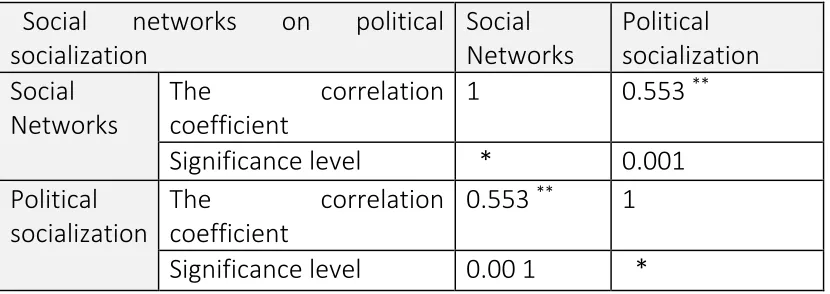
Table 1-12- reviews hypothesis and the correlation coefficient
Social networks on political socialization
Social Networks
Political socialization Social
Networks
The correlation
coefficient
1 0.553 **
Significance level * 0.001
Political socialization
The correlation
coefficient
0.553 ** 1
Significance level 0.00 1 *
As the results of Spearman's correlation test between the research variables indicate a significant number observed between social networks and political socialization that is less than 0.01, and therefore the correlation between these variables is confirmed (01/0> p). In addition, due to this connection, the impact of social networks on political participation is also proven.
Diagram 1 - 6: regression effect of social networks on political socialization and political participation
17
The findings of research:
Based on the findings of this paper, using the results of the correlation and regression tests to investigate the relationship between the development of social networks and political socialization and the result of political participation, the results of this research show that Given that the correlation coefficient for this test was 0.553, the results show the positive and relatively strong impact of social networks on political socialization. This effect is significant at a confidence level of 99%. In this sense, according to the respondents of social networking development, based on modern information technologies, they have changed the values, norms and structures of political socialization among political science students of Islamic Azad University in the last decade. Especially that 93% of those who are questioned about using social networks are using this new communication method. (Table 1-5)
18
respondents said they were participating in election campaigns due to social networking ads. (Table 1-10). In this connection, the information revolution in the virtual world has increasingly expanded the role of social networking, and other non-state actors who are challenged as a new online platform and with a new discourse to traditional societies.
Howard Rayon gold, who since 1985, as a member of a virtual community, has been interacting with other members of the network since 1985, is the result of his experiences in developing a theory of the effects of virtual networks on strengthening and consolidating democracy and creating new forms of political participation. Citizens used a virtual public domain. His main idea is that the Internet has created a new era of participatory democracy as a public sphere of politics. He believes that growing online virtual communities can help citizens regain their lost dimensions of democracy and play a more active role in the political process. Therefore, the role of social networks cannot be ignored in shaping public opinion and because of the political developments in the world. Given the fact that social networks in recent years have caused fundamental political and social changes around the world, in Iran, the use of cyberspace in general, and especially social networks, is dramatically influenced by people, parties and groups Before and after the elections held in previous years, and it seems that the use of social networks based on modern information technologies has changed the values, norms and structures of political socialization among individuals.
Conclusion:
19
arenas with the freedom of expression contained in these networks show more political activity in the real world of the community, and cyberspace, especially social networks with its own unique features, can be the basis for the development of political socialization of individuals. In general, in explaining this finding, given the theoretical approaches and the results of the research, social networks, which are virtual communities of Internet users, have provided a significant part of the time to users' activities and awareness. In fact, the use of social networks is so widespread that the current generation has been named as the generation of networks. Thus, it can be said that virtual social networks increase the level of political knowledge and competencies of individuals to understand and deal with political affairs.
With the increase of political knowledge, the sense of self-efficacy of individuals has also been developed. The feeling that political action can affect the political process has also increased, which has facilitated political participation. In this regard, Wright Philip states; newer news media such as websites, blogs, and virtual networks provide more diverse types of content and more political information, and more non-leaner outlook on traditional news sources such as the newspaper and TV. Meanwhile, these media also provide citizens with the opportunity to increase political knowledge and improve public participation by allowing citizens to create and share information and reveal their identity without revealing their identity. Thus, it can be said that the impact of virtual social networks on the provision of information is obvious, since virtual social networks are the fastest, cheapest and most reliable channel for information distribution, including political information. Virtual social networks, by allowing citizens to access massive amounts of information and formulating online discourse, will inform users of each other's views and provide them with a multidisciplinary understanding of the issues involved and will bring about the transformation of political culture of the nation. This is a way of transferring political ideas and beliefs from one generation to the next, the process that promotes political socialization.
References:
Alam, Abdul Rahman (2001) Political Science Foundation, Tehran, Publishing
Bode, L., Dalrymple, KE, 2014. Politics in 140 characters or less: campaign communication, network interaction, and political participation on twitter. J. Political Mark. (January 2015).
20
Buenos Aires. Revista Mexicana de Opinión Pública, Julio - diciembre de 2015, ISSN 1870-7300, pp. 107-125.
Dehghan, Alireza (2005) "Internet Gambling" Quarterly Iranian Cultural Studies Association (Internet Specifics and Social Damage), Year 1, No. 2.
Hamidi, Sedigheh (2011). The role of social networks in the Egyptian revolution. Al-Mustafa Al-Allameh Society.
J. Mont, Robert and Gabriel Almond (2002) Theoretical framework for the study of comparative politics, Alireza Tayeb, Tehran, Higher Education and Research Management and Planning Institute
Lazar, Jodit (2007). Public Opinion (Translation by Morteza Written). Tehran: Nizar Nye
Mengu, S., Güçdemir, Y., Ertürk, D. &Canan, S. (2015) .Political preferences of generation Y university student about governance and social media: A study on March 2014 local elections. Procedia - Social and Behavioral Sciences 174 (2015) 791 - 797.
Nulty, Paul, Theocharisb, Y., Popab, A., Parnetc, O., Benoita, K. (2016). Social media and political communication in the 2014 elections to the European Parliament. Electoral Studies, In Press, Corrected Proof.
Schmitt-Beck, R &Mackenrodt, C. (2010). Social networks and mass media as mobilizes and demobilizes: A study of turnout at a German local election. Electoral Studies Volume 29, Issue 3, Pages 392-404