1
The Prevalence and Sociodemographic Correlates of Social phobia in Oman:
Online national survey
Aamal Ambusaidi1, Salim Al Huseini2, Hiba Alshaqsi2, Manal AlGhafri2, Moon-Fai
Chan3, Nasser Al-Sibani1, Samir Al-Adawi1
1Department of Behavioral Medicine, College of Medicine & Health Sciences/Sultan
Qaboos University Hospital, Muscat 123, Oman
2
Psychiatry Residency Program, Oman Medical Specialty Board, Muscat 123, Sultanate of Oman
3
Department of Family Medicine and Public Health, College of Medicine & Health Sciences, Sultan Qaboos University, Muscat 123, Oman
*
Corresponding author: Dr. Samir Al-Adawi
Department of Behavioral Medicine, College of Medicine & Health Sciences Sultan Qaboos University
P.O. Box 35, P.C. 123
Al Khoudh, Muscat, Sultanate of Oman Phone : (+968) 2414 -1139
Mobile : (+ 968) 9938 -0246 Fax : (+ 968) 2441 -3419
Email : [email protected]
AUTHORS’ EMAIL ADDRESSES
Aamal Ambusaidi ([email protected])
Salim Al Huseini [[email protected]] ORCID https://orcid.org/0000-0002-6557-7033
Hiba Alshaqsi ([email protected])
Manal AlGhafri ([email protected])
Moon-Fai Chan [[email protected]] ORCID orcid.org/0000-0003-2290-3182 Nasser Al-Sibani [[email protected]]
Samir Al-Adawi [[email protected]]
2
CREDIT AUTHORSHIP CONTRIBUTION STATEMENT
Aamal Ambusaidi
:
Conceptualization, Project administration, Resources, Writing –
review & editing
Salim Al Huseini
:
Data curation, Methodology, Writing – original draft
Hiba Alshaqs
i:
Investigation, Data curation
Manal AlGhafri
:
Investigation,
Data curation
Moon-Fai Chan
:
Data curation, Formal analysis
Nasser Al-Sibani
:
Writing – review & editing
Samir Al-Adawi
:
Methodology, Writing – review & editing
FUNDING: None
Conflict of interest: The authors declare they have no competing interests.
3
Abstract
Background: Social Anxiety Disorder (SAD) is among the most common anxiety disorders worldwide with data largely emerging from the Euro-American and Pacific Rim populations. In contrast, there is a dearth of studies among the populations of Arabian Gulf countries including Oman. This study has two interrelated aims: (i) to explore the prevalence of SAD among Omani adults, and (ii) to tease out the links between sociodemographic factors and SAD in Oman.
Methods: A cross-sectional study via an online survey was conducted among 1019 adult Omani nationals residing in Oman. The presence of SAD was assessed using the Arabic version of the Liebowitz Social Anxiety Scale (LSAS).
Result: Nearly half the participants (45.9%, n=468) endorsed themselves as having features of SAD as defined by LSAS. In the multivariate logistic analysis, participants below 40 years of age were 1.6 times (OR=1.568, p=0.026) more likely to have SAD than those who were 40 and older. Women were 1.3 times (OR=1.348, p=0.038) more likely to endorse SAD than men. Participants who had secondary or undergraduate education were respectively 1.5 times (OR=1.45, p=0.014) and 2.5 times (OR=2.509, p<.001) to have SAD than who were postgraduates.
Conclusion: The present data suggest that 45.9% of the participants reached the cut-off for case-ness in LSAS, which is high compared to reports from other populations. As online survey respondents tend to belong to similar demographics, the current results need not be representative of the Omani adult population, which calls for studies that adopt more inclusive survey methods.
4
Introduction:
Social Anxiety Disorder (SAD), more commonly known as social phobia, is
characterized by morbid fears of being the focus of attention, or fear of conducting
oneself that would lead to embarrassment or humiliation [1]. The outcome of such
preoccupation can be avoidance of social exposure, and if exposed, development of a
spectrum of anxiety symptoms as well as physical distress, often manifested as
unwarranted trembling, sweating, blushing, palpitations and biliousness [2]. Initially
thought to be rare in the general population [3], this ‘illness of lost opportunities’ is
being increasingly recognized as a ‘hidden epidemic’ [4]. In the USA, a community
survey using a gold-standard interview reported by Schneier et al. [5] suggested a
prevalence of 2%-3% among general population. In Australia, Lampe et al. [6] reported 1%–2.7%. In Brazil, Rocha et al.’s [7] community survey found a prevalence of 4.7–7.9% depending on the psychiatric nomenclature used. In Sweden, Furmark et al. [8] conducted a postal survey among nationally representative adults, suggested a very
high prevalence of 15.6%. A few hospitals- and college-based studies conducted on
the Arabian Gulf population suggest that SAD is common in this region [9, 10]. These
tentative results suggest that wider community studies are warranted in the Arabian
Gulf countries.
Various studies have examined the factors associated with SAD. In terms of
gender, various studies have concluded that SAD may be more common in females (5.67%) than in males (4.20%) [11,12]. Studies among college students in Arabian Gulf countries have also endorsed this trend [13,14,15]. However, literature also yields a few studies which have reported the opposite trend [16,17].
In addition to gender, age is also associated with SAD, with likely onset during
childhood or adolescence 18]. Rapee & Spence [19] have suggested that shyness in
childhood is a strong determinant of social phobia in adulthood and that adult-onset
SAD is rare. However, Cairney et al reported adult-onset SAD among their older
subjects [20]. Even though the Arabian Gulf studies have reported that SAD tends to
manifest during the formative years [21], these findings emerged from school-and-
college-going populations. Studies are needed among the Arabian Gulf adult
5
An important characteristic of SAD is that it affects interpersonal relationships.
Hart et al. 22] have suggested that “some individuals with social phobia manage to
construct a lifestyle that allows them to avoid anxiety-provoking social interactions, but
that also leads to loneliness and isolation” (p. 31). This is supported by the observation
in western populations that people with SAD are more likely to be single [5]. As most
studies in the Arabian Gulf have focused on pre-adults, the relation of marital status
SAD remains unexplored. Addressing this issue would shed light on the
socio-demographic factors associated with SAD.
In general, studies from both developed and emerging economies suggest
higher prevalence of psychiatric disorders in urban areas which is often attributed to
lower social cohesion in cities [23,24]. Intuitively, one would assume that those with
SAD would fare worse in an urban setting. It is also possible that the traditional rural
setup consisting of close-knit families with frequent interactions between neighbors
might not be preferred by people with SAD. While ample studies are emerging
worldwide throwing light into the urban-rural dichotomy among the psychiatric
population [25], such studies are scant in the Arabian Gulf in the context of SAD.
Since the tendency to avoid anxiety-provoking social interactions is the
hallmark of people with SAD, the condition can be presumed to impact their
educational attainments as well. Some studies have suggested that there is pervasive
academic underachievement among people with SAD. Heimberg Stein, Hiripi &
Kessler [26] have suggested that indices such as educational attainment depend on
whether the SAD is characterized by ‘exclusive
speaking fears’ or ‘social-evaluative
fears’. However, due to insufficient research internationally, the relationship between
SAD and educational attainments is still unclear, calling for more studies. Related to
education is the issue of employment or labor-force participation. Some studies
perceive SAD as a barrier to steady careers and labor-force participation compared to
the general population [27]. People with SAD are also likely to endorse the view that
their work as stressful and seek earlier retirement [28].
The aforementioned discussion has suggested that while social phobia has
been reported in the Arabian Gulf population, the majority of them have been focused
on hospital-based studies or children and adolescents and particularly those in
6
This study aimed to take advantage of the emerging online research tools to explore
the prevalence of SAD among adult Omanis and examine the association between
social anxiety disorder and sociodemographic variables. Despite its limitations, the
online survey can be fast and cost-effective in reaching a wider community. In addition
to this, there is a heuristic value for the online survey since people with SAD are known
to prefer social media instead of face to face communication [29].
Methodology:
Setting
The present online survey was conducted from October 2 to November 3, 2019,
following the protocol followed elsewhere [30]. During this period there were
approximately 3.3 million internets (71% of the total population of 4.6 million in Oman.
Oman’s high middle-income status, youthful demography, high literacy level (>97%)
[31,32], has resulted in the predominance of ‘yuppies’ in the population, who are users
of online social media [30].
The majority of Oman’s population lives in the long, narrow northern coastal
region overlooking the Gulf of Oman. The capital city Muscat and its satellite towns are
also located here. The rest of the population lives on/near Al Hajar and Qara Mountains
adjacent to the ‘Empty Quarter’ or Rub Al Khali desert [33]. Oman has eleven
administrative governorates (
muhafazah
). The targeted population was stratifiedaccording to the population for each administrative governorate. The inclusion criteria
included Omani nationals >18 years of age. An electronically signed, printable consent
form was sent to the invitees specifying that they needed to give their consent before
answering the questions in the study proforma.
Online survey
To reach all strata of the society, a video clip of the study and URL of the study
proforma was distributed via popular social media platforms such as Twitter,
WhatsApp, Instagram, and Facebook. All participants were informed that their
participation would remain confidential and voluntary, that the collected data would
7
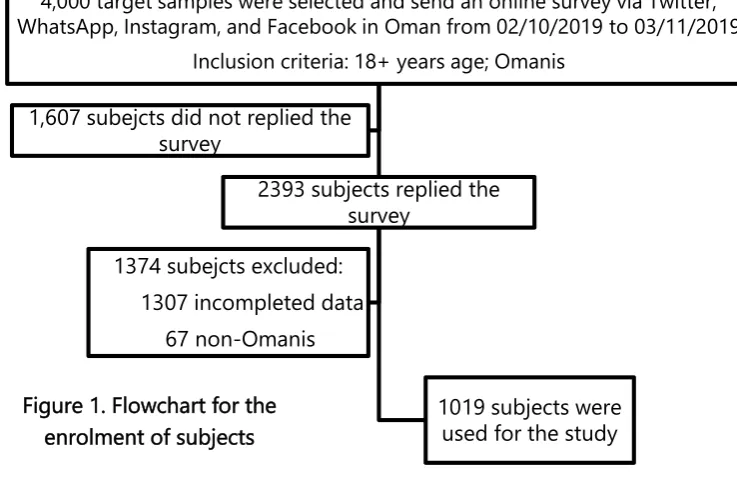
A total of 2,393 people sent in their responses. Participants who had sent in
incomplete data were excluded, leaving 1086 participants. Among them, 67
non-Omanis were excluded. The final number of participants whose responses were
admitted into the study was n =1019 (see Figure 1).
Outcome measures
Sociodemographic correlates
The first part of the study questionnaire sought socio-demographic information
like gender, marital status, education level, labor-force participation, etc. Responses
from the eleven administrative governorates Oman were categorized as either
urban
or
rural
to facilitate exploration of the urban-rural dichotomy aspect of the researchquestion.
Quantification of SAD
To identify the presence of SAD, the Liebowitz Social Anxiety Scale (LSAS) was
employed. LSAS has 24 items that focus on two aspects of SAD, namely social
relationships and performance, on its Likert type questionnaire which gave options to
respondents on a 0–3 scale (‘none’, ‘mild’, ‘moderate’, ‘severe’) [34]. LSAS has
undergone extensive validation in various populations and linguist groups including in
4,000 target samples were selected and send an online survey via Twitter, WhatsApp, Instagram, and Facebook in Oman from 02/10/2019 to 03/11/2019
Inclusion criteria: 18+ years age; Omanis
2393 subjects replied the survey
1019 subjects were used for the study 1374 subejcts excluded:
1307 incompleted data
67 non-Omanis 1,607 subejcts did not replied the
survey
8
the Arab world [35,36,37]. Its psychometric properties are adequate, including the
presently used Arabic version, which has identified a cut-off of 55 to differentiate
between the case and non-case [38].
Data analysis
Data was analyzed by Statistical Package for Social Sciences (SPSS) v. 23.0 and the
results of those who were identified as having SAD (LSAS score 55) or were normal
(LSAS ≤ 54) were analyzed using descriptive statistics. Univariate analysis was used,
and demographic variables evaluated with the chi-square test and odds ratio to reveal
the association between the social phobia and normal groups. Next, multiple logistic
regression analyses were used, where social phobia status was the dependent variable,
and those variables in the univariate analysis were the independent variables and
concurrently adjusted by each other. This analysis could address the research aim to
identify the contributing variables associated with social phobia.
Ethical approval
The study was approved by the Ethics Committee of the College of Medicine at
Sultan Qaboos University Hospital (MREC#1749).
Results
A total of 1019 participants fulfilled the inclusion criteria. Table 1 shows the
results for the subject’s demographic variables and their association with the social
phobia status. Out of 1019 participants, 45.9% (n=468) fulfilled the presence criteria
for case-ness for SAD. There were more female participants (51.2%) than males (48.8%).
The participants’ average age was 29.9 (SD=8.4 years) years based on a range from 18
to 60 years. More than 71.0% (n=728) had university education, and 58.6% (n=597) of
them were employed, 52.4% (n=534) were married, and 55.2% (n=562) were not living
in an urban setting.
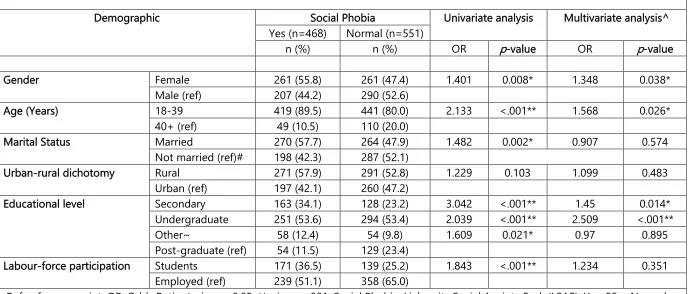
Table 2 shows univariate and multivariate (logistic regression) analysis for social
phobia in association with demographics. Among the demographic variables, a
significant association was found between social phobia status and gender (OR=1.401,
9
status, and labor-force participation (OR=0.626, p=0.22) except for those living in the
urban region (OR=1.229, p=0.103). The multivariate logistic analysis suggested that
three demographic variables had significant association with SAD. The model shows
that subjects who were of ages below 40 years were 1.6 times (OR=1.568, p=0.026)
more likely to have SAD than subjects of 40 years and above. Female subjects were
reported as 1.3 times (OR=1.348, p=0.038) more likely to have SAD than males. In
education, subjects who have completed only secondary education and undergraduate
education were 1.5 times (OR=1.45, p=0.014) and 2.5 times (OR=2.509, p<.001)
respectively, more likely to be prone to SAD than those who had post-graduate
education.
Discussion:
To our knowledge, this is the first study using a national representative sample
of Omani adults to examine the prevalence of SAD using an online survey. The related
aim has been to examine the factors which influence SAD. Previous studies in Oman
have focused on these factors only in educational settings [15,38]. Using LSAS,
Al-Hinai et al. [15] identified 37% of college students to meet the caseness of SAD. Among
school-going pupils, using Composite International Diagnostic Interview [39],
Al-Sharbati et al. [38] reported 36.6% of the sample as having SAD. In the other Arabian
Gulf countries also, there was a SAD prevalence of 11.7% using LSAS [40] and 16.3%
using the Social Phobia Inventory [41]. While such data are welcome, they do not cover
the higher age groups, which is what the current study has attempted.
The present results revealed that nearly half the sample 45.9% (n=468) had
social phobia, which is higher than the international rates reported from community
surveys [5,6,7]. However, data for most such studies were derived from community
surveys conducted using the gold-standard interview rather than a checklist such as
LSAS. Other possible issues that account for divergent prevalence rates are variations
in sample sizes, assessment tool employed, and the possible socio-cultural factors
which have been previously endorsed to cause variations in the social-phobia-like
repertoire of human behavior [42,43].
The second aim of this study is to establish the correlates of SAD. This study
10
educational attainment, urban-rural dichotomy, and labor-force participation. While
using logistic regression, three variables emerged to be significantly associated with
SAD, namely being ≤ 40 years old, female gender, and having attained less than
postgraduate education. These socio-demographic variables are discussed below in
tandem within the background literature.
Vast empirical studies are suggesting that temperament is known as behavioral
inhibition system (BIS), colloquially known as ‘shyness,’ is often associated with SAD
[44]. Such a temperament often appears in childhood and may persist into adulthood
[18] and the entrance of the diathesis-stress model as postulated by Ingram & Luxton
[45] may apply to the individuals who are likely to manifest SAD. When SAD is of
adult-onset, Rapee & Spence [19] have reported it is likely to be associated with adverse life
events and the resultant depression and episodic paroxysmal anxiety. In the present
cohort, which was divided into two age groups (<40 vs > 40), SAD is strongly associated
with the former. If SAD is mostly of childhood-onset, it remains to be seen whether
age has the potential to mitigate the symptoms of SAD. This study was not equipped
to address this issue. Longitudinal studies are needed to assess the durability of SAD.
Conceptually, if one tends to avoid interpersonal relationships and perceives
unfamiliar social behavior as threatening, one would assume that such temperament
would hamper one from academic excellence. However, evidence on the link between
the pursuit of education and SAD has been generally mixed. Popular author Cain [46]
has pointed out a tendency in Euro-American culture to underestimate the capabilities
of introverts and the socially timid. In support of such a view, a longitudinal study
among Finnish adolescents suggested that teens with SAD are likely to academically underperform their non-SAD peers [47]. Kessler [48], drawing from the United States
National Comorbidity Survey, concluded that teens with SAD are less likely to make a
smooth transition from school to higher education. While SAD is perceived as a
culturally devalued temperament in the West, in non-western societies, an extraverted
individual is more likely to be perceived as selfish and marked with the tendency to
disrupt social modesty [38]. Within such a background, the question remains on the
relationship between SAD and educational attainment in non-Western cultures such as
Oman. Being an online survey, by definition, this study has likely been
11
it is not surprising that the majority of the participants, 53.5%, are undergraduates. In
terms of the association between education and SAD, the present study suggests that
secondary school and undergraduate education are strongly related to the presence
of SAD. The question remains whether the temperament that is intimately related to
SAD is a significant dampener in a young person’s academic performance and later as
an adult, in his integration into the labor-force. More studies are needed to clearly
understand this vital issue so that remedial measures can be contemplated.
There are contradictory views on whether gender is strongly associated with
SAD. Some studies have found SAD to be more common in females than males [11]
and among the reasons postulated include hormonal differences [49]. On the other hand, a few studies have found SAD to be more common among males [11,12]. Earlier studies in Oman have added to this conflicting view. Among school-going pupils, Al-Sharbati et al. [38] have reported more female pupils to be affected than the male pupils. A similar trend also has been reported from the neighboring countries of Oman
[13,14]. Among the college-going population in Oman, Al-Hinai et al. [15] found equal
distribution in the endorsement of SAD for both genders. Among the clinical population, Chaleby and Raslan [50] have reported that more males are presenting with symptoms akin to SAD in their clinical practice in Saudi Arabia. Taking all this data
into account, there is reason to believe that SAD is more common among women
among those in the education stream but that the trend may change in clinical settings.
This study, first of its kind in the Omani community also suggests that females are more
likely to endorse themselves with the symptoms of SAD than their male counterparts.
Limitation:
Among factors that may hamper the generalizability of the present study, the following
seem most important: First, this study constitutes an online survey. Online surveys are
known to produce spurious results and therefore studies such as this as best followed
up with traditional community surveys among the same region and demography. In
relation to this, traditional surveys require a response rate exceeding 75% [51] of the
required minimum sample size. In this study, as well as many online surveys in
literature, the response rate was below 50% of the invitees. Consequently, the response
12
hamper the generalization of this study. It is also likely that social media users might
not have the patience to answer online surveys compared to personalized ones. The
offer of incentives might be explored. Secondly, symptom checklists such as LSAS is
likely to be inferior in detecting SAD compared to gold standard interviews. Future
studies should address this important confounder in using a symptom checklist to
detect the presence of psychiatric disorder. Thirdly, studies have previously suggested
that SAD tends to be lower in non-western societies, and on the contrary, this study
has found a higher prevalence compared to international trends. Studies are therefore
needed to shed light on whether the presently found prevalence is not an artifact of
the instrument used or something inherently in the way Omanis perceive the items of
the LSAS. Finally, is also the possibility that social media might have a preponderance
of people who prefer to be alone, which may have exaggerated the proportion of SAD
endorsers in the sample [52].
Conclusion
This study found the prevalence of social phobia among a sample of Omani adults to
be at 45.9%. This is much higher than that of international trends. The demographic
variables that were positively associated with endorsement of SAD were female gender,
younger age (<40 years), and lower-to-mid strata of education. This study would
require replication using a more robust methodology than online survey alone. If the
present finding withstands further scrutiny, then it is essential to mitigate such a high
prevalence of SAD as this hidden epidemic may lead to chronic opportunity-costs and
loss of productivity at individual and national levels.
References
1. American Psychiatric Association (2013). Diagnostic and Statistical Manual of Mental Disorders, Fifth Edition. Washington, DC: American Psychiatric Association.
13
The fear of being laughed at as additional diagnostic criterion in social anxiety disorder and avoidant personality disorder?. PLoS One, 12(11), p.e0188024.
3. Amies, P. L., Gelder, M. G., & Shaw, P. M. (1983). Social phobia: A comparative clinical study. The British Journal of Psychiatry, 142(2), 174-179.
4 Jenike M. A. 198). Obsessive-compulsive and related disorders: a hidden epidemic. The New England journal of medicine, 321(8), pp.539–541.
https://doi.org/10.1056/NEJM198908243210811
5. Schneier, F.R., Johnson, J., Hornig, C.D., Liebowitz, M.R. and Weissman, M.M., 1992. Social phobia: Comorbidity and morbidity in an epidemiologic sample.
Archives of general psychiatry, 49(4), pp.282-288.
6. Lampe, L., Slade, T., Issakidis, C. and Andrews, G., 2003. Social phobia in the Australian national survey of mental health and well-being (NSMHWB). Psychological Medicine, 33(4), p.637.
7. Rocha, F.L., Vorcaro, C.M.R., Uchoa, E. and Lima-Costa, M.F., 2005. Comparing the prevalence rates of social phobia in a community according to ICD-10 and DSM-III-R. Brazilian Journal of Psychiatry, 27(3), pp.222-224.
8. Furmark, T., Tillfors, M., Everz, P.O., Marteinsdottir, I., Gefvert, O. and Fredrikson, M., 1999. Social phobia in the general population: prevalence and
sociodemographic profile. Social psychiatry and psychiatric epidemiology, 34(8), pp.416-424.
9. Bassiony, M.M., 2005. Social anxiety disorder and depression in Saudi Arabia. Depression and anxiety, 21(2), pp.90-94
10. Eapen, V., Ghubash, R., Salem, M.O. and Sabri, S., 2005. Familial predictors of childhood shyness: A study of the United Arab Emirates Population. Public Health Genomics, 8(1), pp.61-64.
11. Xu, Y., Schneier, F., Heimberg, R.G., Princisvalle, K., Liebowitz, M.R., Wang, S. and Blanco, C., 2012. Gender differences in social anxiety disorder: Results from the national epidemiologic sample on alcohol and related conditions. Journal of anxiety disorders, 26(1), pp.12-19.
12. Caballo, V.E., Salazar, I.C., Irurtia, M.J., Arias, B., Hofmann, S.G. and Ciso-A
Research Team, 2014. Differences in social anxiety between men and women across 18 countries. Personality and Individual Differences, 64, pp.35-40.
14
14. Elhadad, A.A., Alzaala, M.A., Alghamdi, R.S., Asiri, S.A., Algarni, A.A. and Elthabet, M.M., 2017. Social phobia among Saudi medical students. Middle East Current Psychiatry, 24(2), pp.68-71.
15. Al-Hinai SS, Al-Saidy, O, Dorvlo, ASS, Al-Riyami, BMS, Bhargava K, Northway MG, Al-Sharbati M, Al- Hussaini A, Al-Adawi, S. , 2006. Culture and Prevalence of Social Phobia in a College Population in Oman. In, M V Landow, College Students: Mental Health and Coping Strategies. Hauppauge, NY, US: Nova Science Publishers, pp. 2-19.
16. Mohammadi, M. R., Salehi, M., Khaleghi, A., Hooshyari, Z., Mostafavi, S. A.,
Ahmadi, N., Hojjat, S. K., Safavi, P., & Amanat, M. 2020. Social anxiety disorder among children and adolescents: A nationwide survey of prevalence, socio-demographic characteristics, risk factors and co-morbidities. Journal of
affective disorders, 263, pp. 450–457. https://doi.org/10.1016/j.jad.2019.12.015
17. Canino, G., Shrout, P.E., Rubio-Stipec, M., Bird, H.R., Bravo, M., Ramirez, R., Chavez, L., Alegría, M., Bauermeister, J.J., Hohmann, A. and Ribera, J., & Martinez-Taboas A.(2004). The DSMIV rates of child and adolescent disorders in Puerto Rico. Archives of General Psychiatry, 61(1), pp.85-93.
18. Nelson, E.C., Grant, J.D., Bucholz, K.K., Glowinski, A., Madden, P.A.F., Reich, W. and Heath, A.C., 2000. Social phobia in a population-based female adolescent twin sample: co-morbidity and associated suicide-related symptoms. Psychological Medicine, 30(4), pp.797-804.
19. Rapee, R.M. and Spence, S.H., 2004. The etiology of social phobia: Empirical evidence and an initial model. Clinical psychology review, 24(7), pp.737-767.
20. Cairney, J., McCabe, L., Veldhuizen, S., Corna, L.M., Streiner, D. and Herrmann, N., 2007. Epidemiology of social phobia in later life. The American journal of geriatric psychiatry, 15(3), pp.224-233.
21. Fox, A.S. and Kalin, N.H., 2014. A translational neuroscience approach to understanding the development of social anxiety disorder and its
pathophysiology. American Journal of Psychiatry, 171(11), pp.1162-1173.
22. Hart, T.A., Turk, C.L., Heimberg, R.G. and Liebowitz, M.R., 1999. Relation of marital status to social phobia severity. Depression and Anxiety, 10(1), pp.28-32.
23. Peen, J., Schoevers, R.A., Beekman, A.T. and Dekker, J., 2010. The current status of urban‐rural differences in psychiatric disorders. Acta Psychiatrica
15
24. Zijderveld, A.C., 1998. A theory of urbanity: the economic and civic culture of cities. Transaction Publishers.
25. Breslau, J., Marshall, G.N., Pincus, H.A. and Brown, R.A., 2014. Are mental disorders more common in urban than rural areas of the United States?. Journal of psychiatric research, 56, pp.50-55.
26. Heimberg, R. G., Stein, M. B., Hiripi, E., & Kessler, R. C. (2000). Trends in the prevalence of social phobia in the United States: a synthetic cohort analysis of changes over four decades. European Psychiatry, 15(1), 29–37.
https://doi.org/10.1016/S0924-9338(00)00213-3.
27. Bruch, M.A., Fallon, M. and Heimberg, R.G., 2003. Social phobia and difficulties in occupational adjustment. Journal of counseling psychology, 50(1), p.109.
28. Butterworth, P., Gill, S.C., Rodgers, B., Anstey, K.J., Villamil, E. and Melzer, D., 2006. Retirement and mental health: analysis of the Australian national survey of mental health and well-being. Social science & medicine, 62(5), pp.1179-1191.
29. Joseph, N., Rasheeka, V.P., Nayar, V., Gupta, P., Manjeswar, M.P. and Mohandas, A., 2018. Assessment of determinants and quality of life of university students with social phobias in a coastal city of south India. Asian journal of psychiatry, 33, pp.30-37.
30. Al-Alawi, M., Al-Sinawi, H., Al-Adawi, S., Jeyaseelan, L. and Murthi, S., 2017. Public perception of mental illness in Oman: a cross sectional study. International journal of culture and mental health, 10(4), pp.389-399.
31 Kumaraswamy PR, Quamar MM. Oman. InPersian Gulf 2019 2020 (pp. 135-155). Palgrave Macmillan, Singapore.
32. Islam, M.M., 2020. Demographic transition in Sultanate of Oman: emerging demographic dividend and challenges. Middle East Fertility Society Journal, 25(1), pp.1-14.
33 Al Kindi, M., Pickford, M., Gommery, D. and Qatan, A., 2020. Stratigraphy, palaeoclimatic context and fossils of the Southern Rub Al Khali (the Empty Quarter): results of a geo-archaeological survey around the area of Maitan in the Sultanate of Oman. Historical Biology, pp.1-22.
34. Liebowitz M. R. 1987. Social phobia. Modern problems of pharmacopsychiatry, 22, pp.141–173. https://doi.org/10.1159/000414022
16
between Spanish youths with and without subtypes of social anxiety. Journal of Anxiety Disorders, 21(5), pp.603-624.
36. Terra, M.B., Barros, H.M., Stein, A.T., Figueira, I., Athayde, L.D., Gonçalves, M.D.S., Tergolina, L.P., Rovani, J.S. and Silveira, D.X.D., 2006. Internal consistency and factor structure of the Portuguese version of the Liebowitz Social Anxiety Scale among alcoholic patients. Brazilian Journal of Psychiatry, 28(4), pp.265-269.
37. Soykan, Ç., Özgüven, H.D. and Gençöz, T., 2003. Liebowitz social anxiety scale: the Turkish version. Psychological reports, 93(3_suppl), pp.1059-1069.
38. Sharbati, M., Adawi, S., Petrini, K., Bait Amer, A. S., Suleimani, A., Al-Lawatiya, S., Zaidan, Z., Al-Adawi, S. S. and Al Hussaini, A. (2012) Two-phase survey to determine social anxiety and gender differences in Omani
adolescents, Asia-Pacific Psychiatry, 4(2): 131–139. https://doi.org/10.1111/j.1758-5872.2012.00181.x.
39. World Health Organization.1993. Composite International Diagnostic Interview. Geneva: WHO.
40. Ghazwani, J.Y., Khalil, S.N. and Ahmed, R.A., 2016. Social anxiety disorder in Saudi adolescent boys: Prevalence, subtypes, and parenting style as a risk factor. Journal of family & community medicine, 23(1), p.25
41. Taha, A.A., El-shereef, E.A., Abdullah, T.I.M., Abdullah, R.I.M. and Aldahasi, W.A.M., 2017. Social anxiety disorder and its correlates among female students at Taif University, Saudi Arabia. Res Psychol Behav Sci, 5(2), pp.50-56.
42. Kleinknecht, R.A., Dinnel, D.L., Kleinknecht, E.E., Hiruma, N. and Harada, N., 1997. Cultural factors in social anxiety: A comparison of social phobia symptoms and Taijin Kyofusho. Journal of anxiety disorders, 11(2), pp.157-177.
43. Okano, K.I., 1994. Shame and social phobia: A transcultural viewpoint. Bulletin of the Menninger Clinic, 58(3), pp.323-338.
44. Lan, X. and Wang, W., 2020. To be Shy or avoidant? Exploring the longitudinal association between attachment and depressive symptoms among left-behind adolescents in rural China. Personality and Individual Differences, 155, p.109634.
17
46. Cain, S., 2013. Quiet: The power of introverts in a world that can't stop talking. New York: Broadway Books.
47. Ranta, K., La Greca, A.M., Kaltiala-Heino, R. and Marttunen, M., 2016. Social phobia and educational and interpersonal impairments in adolescence: A prospective study. Child Psychiatry & Human Development, 47(4), pp.665-677.
48. Kessler, R.C., 2003. The impairments caused by social phobia in the general population: implications for intervention. Acta Psychiatrica Scandinavica, 108, pp.19-27.
49. Van Veen, J.F., Jonker, B.W., Van Vliet, I.M. and Zitman, F.G., 2009. The effects of female reproductive hormones in generalized social anxiety disorder. The International Journal of Psychiatry in Medicine, 39(3), pp.283-295.
50. Chaleby KS, Raslan, A., 1990. Delineation of social phobia in Saudia Arabians. Social psychiatry and psychiatric epidemiology, 25(6), pp.324-327
51. Fan W, Yan Z. Factors affecting response rates of the web survey: A systematic review. Computers in human behavior. 2010 Mar 1;26(2):132-9
18 Table 1. Sociodemographic variables of participants ( n =1019)
Social Phobia
Total (n=1019) Yes (n=468) 45.9% Normal (n=551) 54.1%
Demographic n (%) n (%) n (%)
Gender
Female 522 (51.2) 261 (55.8) 261 (47.4)
Male 497 (48.8) 207 (44.2) 290 (52.6)
Age (Years)
18-39 860 (84.4) 419 (89.5) 441 (80.0)
40+ 159 (15.6) 49 (10.5) 110 (20.0)
Marital Status
Married 534 (52.4) 270 (57.7) 264 (47.9)
Not married, e.g. single, divorced, widow
485 (47.6) 198 (42.3) 287 (52.1)
Urban-rural dichotomy
Rural 562 (55.2) 271 (57.9) 291 (52.8)
Urban 457 (44.8) 197 (42.1) 260 (47.2)
Educational level
Secondary education 291 (28.6) 163 (34.1) 128 (23.2)
Undergraduate 545 (53.5) 251 (53.6) 294 (53.4)
Post graduate 183 (18.0) 54 (11.5) 129 (23.4)
Other, e.g., housewife, retired, unemployed
112 (11.0) 58 (12.4) 54 (9.8)
Labor-force participation
Student 310 (30.4) 171 (36.5) 139 (25.2)
19
Table 2. Univariate and multivariate (logistic regression) analysis for social phobia in the association of demographic factors
Demographic Social Phobia Univariate analysis Multivariate analysis^
Yes (n=468) Normal (n=551)
n (%) n (%) OR
p
-value ORp
-valueGender Female 261 (55.8) 261 (47.4) 1.401 0.008* 1.348 0.038*
Male (ref) 207 (44.2) 290 (52.6)
Age (Years) 18-39 419 (89.5) 441 (80.0) 2.133 <.001** 1.568 0.026*
40+ (ref) 49 (10.5) 110 (20.0)
Marital Status Married 270 (57.7) 264 (47.9) 1.482 0.002* 0.907 0.574
Not married (ref)# 198 (42.3) 287 (52.1)
Urban-rural dichotomy Rural 271 (57.9) 291 (52.8) 1.229 0.103 1.099 0.483
Urban (ref) 197 (42.1) 260 (47.2)
Educational level Secondary 163 (34.1) 128 (23.2) 3.042 <.001** 1.45 0.014*
Undergraduate 251 (53.6) 294 (53.4) 2.039 <.001** 2.509 <.001**
Other~ 58 (12.4) 54 (9.8) 1.609 0.021* 0.97 0.895
Post-graduate (ref) 54 (11.5) 129 (23.4)
Labour-force participation Students 171 (36.5) 139 (25.2) 1.843 <.001** 1.234 0.351
Employed (ref) 239 (51.1) 358 (65.0)
Ref, reference point; OR, Odds Ratio; *, sig., p<0.05; **, sig., p<.001; Social Phobia, Liebowitz Social Anxiety Scale(LSAS): Yes: 55+, Normal: <=54; Enter; Hosmer and Lemeshow Test, 2=6.506, p=0.591; Sensitivity=68.8%, Specificity=50.8%, overall predicting power=59.1%; #,