Gender Issues In Virtual Reality Learning Environments
Dayana Farzeeha Ali ¹ & Mohd Safarin Nordin ²
1
Fakulti Pendidikan, Universiti Teknologi Malaysia 81310 Johor, Malaysia
ABSTRACT: Virtual environment for education have been discussed in various ways. A virtual learning environment plays an important role in one of the main aims of education and it is designed to educate the user either in school level or at higher learning institutions. The question of how technological advances in this field will impact education is difficult to answer at present with any degree of certainty, but is one that must be considered by educational researchers, teachers, and administrators. Virtual Reality (VR) has been shown to be an effective way of teaching difficult concepts to learners. VR helps instructors motivate students to discover those essential links in a fresh, exciting educational environment which develops well-rounded thinking and real-world behaviors.This study examined gender-related issues in using new virtual reality (VR) technology as a learning tool in career and technical education. this paper reviews the effects of virtual reality learning environment explanation with particular reference toward gender differences in spatial abilities. Finally, this paper will discuss the issues of virtual reality learning environment on gender differences in spatial abilities.
ABSTRAK : Realiti maya dalam dunia pendidikan telah dibincangkan dalam pelbagai cara. Persekitaran pembelajaran realiti maya memainkan peranan penting dalam pendidikan dan direka untuk mendidik pengguna baik di peringkat sekolah mahupun di institusi pengajian tinggi. Persoalan tentang bagaimana kemajuan teknologi di dalam bidang ini mampu memberi impak dalam pendidikan agak sukar untuk dijawab dengan tepat, tetapi ia adalah salah satu bidang yang harus diberi tumpuan oleh para penyelidik pendidikan, guru, dan pentadbir. Realiti maya telah terbukti sebagai cara yang berkesan untuk mengajar konsep-konsep yang sukar untuk diajar kepada pelajar. Realiti maya membantu pengajar mendorong pelajar untuk mencari hubungan pembelajaran dengan persekitaran dan mewujudkan suasana pendidikan yang menarik untuk membina pemikiran yang sempurna dan tingkahlaku dalam dunia nyata. Kajian ini mengkaji isu-isu berkaitan jantina dalam menggunakan teknologi baru realiti maya sebagai satu alat pembelajaran dalam kerjaya dan pendidikan teknikal. kajian ini membincangkan kesan-kesan penjelasan persekitaran pembelajaran realiti maya dengan merujuk khusus ke arah perbezaaan-perbezaan jantina dalam kebolehan ruang.
1.0 INTRODUCTION
holds the power to facilitate learning. The educational benefits offered by this technology include ability to take students into environments otherwise inaccessible, the high memory-retention of “experience” as opposed to passive observation, and the ability to reach out to visually oriented learners and global learner. Virtual Reality is a powerful computer based tool for education since people comprehend images much faster than they grasp lines of text or columns of numbers. Participation is critical to learning and VR offers multi-sensory immersive environments that engage students and allow them visualize information.
For a long time, science and engineering education has relied on drawings and pictures to describe a variety of systems and objects sometimes accompanied by laboratory experiments with real systems for hands-on practice. It is now possible and easy to generate virtual models of systems. Developments in this technology provide new tools and approaches to facilitate better learning-teaching environment. Before we can take full advantage of this new tool, we must first study its strengths, weaknesses, and capabilities, in order to determine how best to apply VR to engineering education, practical engineering, and scientific visualization.
2.0 VIRTUAL REALITY
education educators is that these technologies now bring the advantages of VR experiences within the technical capabilities of most schools and instructors. Because of the improvements in the technical capabilities and features of VR and its accessibility to schools, teachers, and organizations, this technology is emerging as an important new tool for career and technical education programs.
Recent literature reviews of published research (c.f., Ausburn & Ausburn, 2004, 2008a, 2008b; Ausburn, Ausburn, Cooper, Kroutter, & Sammons, 2007; Ausburn, Ausburn, Ashton, Braithwaite, Dotterer, Elliott, Fries, Hermes, Reneau, Siling, & Williams, 2006) have consistently showed the effectiveness of virtual reality (VR) as a learning tool in a variety of learning purposes. The research has shown that many educational institutions, industries, and organizations are now using VR to provide effective and cost-efficient ways of teaching and learning preparation. The field most often reported in the VR literature is medical or dental, where lots of published studies have attested to VR’s benefits (Harb, Adams, Dominguez, Smith, & Randall, 2005; Imber, Shapira, Gordon, Judes, & Mitzgar, 2003; Jaffe & Brown, 2000; Jeffries, Woolf, & Linde, 2003; Mantovani, Gaggiolo, Castelnuovo, & Riva, 2003; Moorthy, Smith, Brown, Bann, & Darzi, 2003; Patel, Gallagher, Nicholson, & Cates, 2004; Riva, 2003; Seymour, Gallagher, Rorr, O’Brien, Bansal, & Anderson, 2002; Urbankova & Lichtenthal, 2002; Wilhelm, Ogan, Roehaborn, Caddedder, & Pearle, 2002). Engineering has also reported considerable success with virtual reality instruction reality instruction (Sulbaran & Baker, 2000). Besides that, a variety of field and industries have showed positive improvement in the virtual reality research literature. Application of VR technology for career training has also been reported in recent years in a variety of other fields such as aerospace, petroleum, equipment design, manufacturing, accident investigation and analysis, law enforcement, driving, aircraft inspection and maintenance, and facilities planning (e.g. Flinn, 2005; Government Technology, 2003; Halden Virtual Reality Center, 2004; Jezernik, 2003; Sandia National Laboratories, 1999; Scavuzzo & Towbin, 1997; Sims, 2000; Shneidermann, 1993).
.
3.0 GENDER DIFFERENCES AND VIRTUAL ENVIRONMENTS
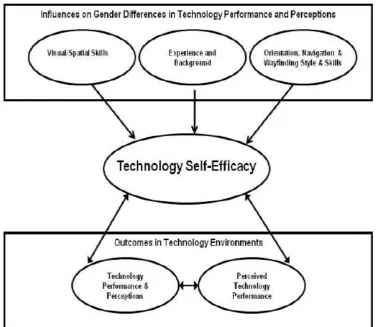
Figure 1: framework for gender effects in technology-based learning environments applies specifically to virtual reality environments.
( Adapted from: Lynna J. Ausburnet. al., 2009)
In the area of visual-spatial functioning, half a century of research history with paper-and-pencil and performance tests such as the Differential Aptitude Tests (Bennett, Seashore, & Wesman, 1973), the Cards Rotation Test, (Allen, 1974), the Generic Mental Rotation Test
women perceive virtual experiences quite differently, with men preferring more interactive environments than women (Space, 2001; University of Washington, 2001).
Waller, Knapp, and Hunt (1999) asserted that:
(a) understanding the spatial characteristics of virtual environments may be more challenging for women than for men.
(b) in general, tests of mental visual manipulation and spatial orientation – in which females have typically been less skilled than males – are highly predictive of the ability to acquire accurate spatial information in a virtual environment.
(c) gender-related differences in proficiency with a VR navigational interface are particularly important in determining ability to acquire spatial information.
(d) individual differences related to gender and cognitive ability account for more variance in performance on tasks requiring spatial knowledge acquisition from virtual environments than does the actual visual fidelity of the VR representation of the physical world.
According to Waller (2000), women who used VR were statistically less likely to derive accurate spatial information from it than men, and that gender was one of the most powerful predictors of spatial knowledge transfer in virtual environments. Similarly, other studies of virtual environments have reported gender differences in favor of males on a variety of performance measures (Waller, Hunt, & Knapp, 1998a, 1998b; Waller, Knapp, & Hunt, 1999). One possible explanation of at least part of observed male advantage in acquiring and using spatial configurational information in complex environments has been proposed by both Hunt and Waller (1999) and by Lawton (1994; Lawton, Charleston, & Zieles, 1996). The explanation proposed by these researchers is based in human wayfinding
and navigation theory. The proposed rationale for male advantage in spatial wayfinding is
that it can be at least partially attributed to gender differences in specific strategies used during the “wayfinding” process. They proposed that males tend to use wayfinding strategies appropriate for navigation (e.g. bearing to landmarks), while females concentrate on strategies more suitable to tracking and piloting (e.g. describing control points and route cues such as street signs).
This notion of technology self-efficacy raises the possibility that gender differences in success with learning from and in virtual environments may be related to different experiences and perceptions of digital technologies. The technology literature of the 1980s – 2000 period presented many studies showing that attitudes toward technology differed significantly between males and females, reporting that males had greater interest in and knowledge of technology, and that females perceived technology as more difficult and less interesting. Typical of the period were studies by Temple and Lips (1989) that found males generally reported more comfort and confidence with computers, and by Waller, Knapp, and Hunt (1999) that found gender-related differences in prior computer use accounted for considerable variance in performance on tasks requiring gaining spatial knowledge from VR. Also abundant over the last 15 years have been studies documenting female “technophobia” and computer anxiety (e.g. Gilbert, Lee-Kelley, & Barton, 2003; Rainer, Laosethakul, & Astone, 2003; Schumacher & Morahan-Martin, 2001; Todman & Day, 2006; Weil & Rossen, 1995; Whitley Jr., 1996).
recent study, Hogan (2006) documented the persistence of higher levels of technophobia among older women and men in Ireland, suggesting this persistence may not be confined to the United States.
Research has frequently identified gender as a strong predictor of technological self- efficacy, with females more likely to rate self-perception of their computer skills lower than males (Bain & Rice, 2006-2007; Busch, 1995; Hargittai & Shafer, 2006; Hogan, 2006; Temple & Lips, 1989). Women have also frequently reported less confidence and more anxiety with usage of spatially-related materials and computer software (Terlecki & Newcombe, 2005). It would thus appear from the research evidence that despite gains in their positive perceptions and usage of computers, females may still lag behind males in technology self-efficacy, which may continue to impact their performance in high-technology learning environments such as VR.
Several reasons have been proposed for gender differences in technology self-efficacy. These have included (a) the spatial ability differences discussed by Waller and his associates, (b) differences in interest and experience with video games and related technologies such as VR (Philips, Rolls, Rouse, & Griffiths, 1995), (c) psycho-social gender differences in preferences related to functions and features of games (Heeter, Chu, Mishra, Egidio, & Lee, 2005; Heeter, Mishra, Egidio, & Wolf, 2005; Heeter & Winn, 2005; Heeter, Winn, Egidio, Mishra, & Lownds, 2003; Heeter, Winn, & Greene, 2005), and (d) a general “masculinization” of computer gaming and related technologies. For example, Graner (2004) asserted that males are encouraged to gain pleasure from aggressive behavior and competitive play of violent games while females, because of their historically more nurturing care-giving roles, are less comfortable with aggressive competitive violence in gaming.
The relationships among the variables impacting the gender differences observed in research on learning technology have been well documented over more than two decades in the reported literature in educational technology, computing and information sciences, cognitive sciences, and sociology. This research history was synthesized by Cooper (2006) in an extensive review of 20 years of digital divide literature based on gender. In a psychological analysis of these variables, Cooper contended that the gender digital divide in technology self-efficacy and performance is fundamentally a problem of computer anxiety rooted in gender socialization interacting with stereotype of computers as toys for boys. For Cooper, this anxiety leads to, and manifests itself in, the differences in computer attitudes and performances that are frequently observed and reported in cross-gender computer studies (2006).
4.0 CONCLUSION
settings. New high-quality VR is now within the technical and fiscal reach of many schools, programs, and instructors. These developments have important implications for career and technical education programs in which mastery of such skills are frequently critical in providing optimum curricula. However, if VR is to reach its full potential as a career and technical education programs instructional tool, it will be the task of VR designers to develop, and of career and technical education instructors to carefully evaluate and select, user interfaces and implementation strategies to overcome gender-specific limitations of this medium. career and technical education instructors wishing to implement VR in their curricula should be aware of potential gender-related learning issues and take steps to maximize the learning benefits of this exciting new technology for everyone.
REFERENCES
llen, M. J. (1974). Sex differences in spatial problems-solving styles. Perceptual and
MotorSkills. 39, 843-846 American Association of University Women, (2000). Tech-
savvy: Educating girls in the new computer age. Retrieved July 21, 2008, from archived research reports site:http://www.aauw.org/research/upload/TechSavvy.pdf
Ausburn, F.B., Ausburn, L.J., Ashton, J., Braithwaite, P., Dotterer, G., Elliiott, W., Fries, C., Hermes, M., Reneau, D., Siling, C., & Williams, M.S. (2006). Effects of desktop virtual reality on scenic orientation, recall of details, and perceived confidence levels in scenic comprehension. Oklahoma Association of Teacher Educators: OATE
Journal, 10, 8-16.
Ausburn, F. B., Ausburn, L.J., Cooper, J., Kroutter, P., & Sammons, G. (2007). Effects of virtual reality technology: Current status, applications, and directions for education research. Oklahoma Association of Teacher Educators: OATE Journal, 11, 7-15.
Ausburn, F. B., & Ausburn, L. J. (1978). A supplantation model for instructional design: Investigation of a behavioural science approach. The Australian Journal of Education, 22(3), 277-284.
Ausburn, L. J., & Ausburn, F. B. (2003). A comparison of simultaneous vs. sequential presentation of images in a visual location task to learners with visual and non-visual perceptual styles: A study of supplantational instructional design. Oklahoma
Association of Teacher Educators: OATE Journal, 7, 1-20.
Ausburn, L.J., & Ausburn, F.B. (2004). Desktop virtual reality: A powerful new technology for teaching and research in industrial teacher education. Journal of Industrial Teacher
Education, 41(4), 33-58.
Ausburn, L.J., & Ausburn, F. B. (2008a). New desktop virtual reality technology in technical education. i-Manager’s Journal of Educational Technology, 4(4), 48-61.
Ausburn, L.J., & Ausburn, F.B. (2008b). Effects of desktop virtual reality on learner performance and confidence in environment mastery: Opening a line of inquiry.
Ausburn, L.J., Martens, J., Dotterer, G., & Calhoun, P. (2009). Avatars, pedagogical agents, and virtual environments: Social learning systems online. i-Manager’s Journal of
Educational Technology, 5(4), 1-13.
Bain, C.D., & Rice, M.L. (2006-2007). The influence of gender on attitudes, perception, and use of technology. Journal of Research on Technology in Education, 39(2), 119-132.
Bandura, A. (1994). Self-efficacy. In V.S. Ramachaudran (Ed.), Encyclopedia of human
behavior (pp. 71-81). New York: Academic Press.
Bandura, A. (1997). Self-efficacy: The exercise of control. New York: Freeman. Beier, K.P. (2004). Virtual reality: A short introduction. Retrieved February 20, 2006, from http://www-vrl.umich.edu/intro/index.html
Bennett, G.K., Seashore, H.G., & Wesman, A.G. (1973). Differential Aptitude Tests, Form S
and T. New York: The Psychological Corporation.
Brown, R.D. (2001). Welcome to the world of virtual reality. Retrieved March 3, 2006, from http://www.crd.rea.ac.uk/staff/richard/vr.html
Busch, T. (1995). Gender differences in self-efficacy and attitudes towards computers.
Journal of Educational Computing Research, 12, 147-158.
Cooper, J. (2006). The digital divide: The special case of gender. Journal of Computer
Assisted Learning, 22(5), 320-334.
Cronbach, L. J., & Snow, R. E. (1977). Aptitudes and instructional methods: A handbook for
research on interactions. New York: Irvington.
Dale, E. (1954). Audio-visual methods in teaching (Rev. ed.). New York: The Dryden Press. Davies, R. (2004). Adapting virtual reality for the participatory design of work environments.
Computer Supported Cooperative Work: The Journal of Collaborative Computing, 13(1), 1-33.
Di Blas, N.D., & Poggi, C. (2007). European virtual classrooms: Building effective “virtual” educational experiences. Virtual Reality 11(2-3), 129-143.
Eastin, M.S., & La Rose, R. (2000). Internet self-efficacy and the psychology of the digital divide. Journal of Computer Mediated Communication, 4(2), 18-41.
Flinn, E. (2005). Virtual reality emerges lighter and faster. Aerospace America, 43(2), 20-21.
Gallus, W. (2003). An example of a virtual reality learning environment. Bulletin of the
American Meteorological Society, 84(1), 18-20.
Gannon, S. (2007). Laptops and lipsticks: Feminizing technology. Learning, Media and
Gilbert, D., Lee-Kelley, L., & Barton, M. (2003). Technophobia, gender influences and consumer decision-making for technology-related products. European Journal of
Innovation Management, 6(4), 28-39.
Government Technology. (2003). News release: NIST developing virtual reality training tools
for firefighters. Retrieved October 18, 2005, from
http://www.govtech.net/news/news.php?id=64605
Graner, R. (2004). Gender inclusive game design: Expanding the market (Advances in Computer Graphics and Game Development Series). Hingham: Charles River Media Press.
.
Halden Virtual Reality Center. (2004). Information products and projects. Available at http://www2.hrp.no/vr
Harb, T., Adams, R., Dominguez, C., Smith, D., & Randall, H. (2005). Effects of virtual reality training on operating room performance in gynecological laparoscopic
surgery. Department of Gynecology and Obstetrics, Emory University School of
Medicine.
Hargittai, E., & Shafer, S. (2006). Gender differences in actual and perceived online skills: The role of gender. Social Science Quarterly, 87(2), 432-448.
Hakstian, A.R., & Cattell, R.B. (1975). An examination of adolescent sex differences in some ability and personality traits. Canadian Journal of Behavioral Science, 7, 295-315.
Heckman, J., & Joseph, R. (2003). Virtual reality painter training becomes real. Metal
Finishing, 101(5), 22-26
Heeter, C., Chu, K. C., Mishra, P., Egidio, R., & Lee, S. (2005). Gender and learning from games: Commercial and educational game play in a gender-segregated informal learning context. Retrieved July 7, 2008 from Professor Punya Mishra Web site: http://punya.educ.msu.edu/publications/submitted/Heeter_Chu_Mishra_etal_JOC05.p df
Heeter, C., Mishra, P., Egidio, R., & Wolf, L. (2005). Does involving girls as designers result in girl-friendly science education software? Comparing processes and outcomes of same-sex 5th and 8th grade girl and boy design teams. Retrieved June 24, 2008, from http://aliengames.org
Heeter, C., & Winn, B. (2005). Gender, playstyle, and learning: Constructing in-game
measures of playstyle. Paper presented at Future Play 2005 - The International
Conference on the Future of Game Design and Technology.
Heeter, C., Winn, B., Egidio, R., Mishra, P., & Lownds, N. (2003). Girls as space game
designers: Extreme baseline research. Paper presented at the Proceedings of the 2003
conference on Designing for User Experience, New York.
Heeter, C., Winn, B. M., & Greene, D. D. (2005). Theories meet realities: Designing a
learning game for girls. Paper presented at the Proceedings of the 2005 Conference on
Hess, R. & Niura, I. (1985). Gender differences in enrollment in computer camps and classes.
Sex Roles, 13, 193-203.
Hunt, E., & Waller, D. (1999). Orientation and wayfinding: A review. Retrieved May 21, 2008, from http://www.cs.umu.se/kurser/TDBD12/HT01/papers/hunt99orientation.pdf
Imber, S., Shapira, G., Gordon, M., Judes, H., & Metzger, A. (2003). A virtual reality dental simulator predicts performance in an operative dentistry manikin course. European
Journal of Dental Education, 7(4), 160-163.
Jaffe, D. L., & Brown, D. L. (2000). Virtual reality training for fall prevention. Physical
Therapy Magazine, January/February, p. 56.
Jeffries, P. R., Woolf, S., & Linde, B. (2003). Technology- based vs. traditional instruction: A comparison of two methods for teaching the skill of performing a 12-lead ECG.
Nursing Education Perspectives, 24(2), 70-74.
Jezernick, A. (2003). A solution to integrate computer-aided design (CAD) and virtual reality (VR) databases in design and manufacturing processes. International Journal of
Advanced Manufacturing Technology, 22(11/12), 768-774.
Kandies, J., & Stern, M.B. (1999, April). Weaving the Web into the classroom: An evolution
of Web enhanced instruction. Paper presented at the Teacher Education International
Conference, San Antonio, TX.
Keyes, S. (1983). Sex differences in cognitive abilities and sex- role stereotypes in Hong Kong Chinese adolescents. Sex Roles, 9, 853-870.
LaPoint, J. F., & Roberts, J. M. (2000). Using VR for efficient training of forestry machine operators. Education and Information Technologies, 5(4), 237-250.
Lawton, C.A. (1994). Gender differences in way-finding strategies: Relationship to spatial ability and spatial anxiety. Sex Roles, 30(11-12), 765-779.
Lawton, C.A., Charleston, S.I., & Zieles, A.S. (1996). Individual and gender-related differences in indoor wayfinding. Environment and Behavior, 28(2), 204-219.
Linn, M. C., & Peterson, A. C. (1985). Emergence and characterization of sex differences in spatial ability: A meta-analysis. Child Development, 56, 1479-1498.
Loftin, R. B., Chen, J. X., & Rosenblum, L. (2005). Visualization using virtual reality. In C. D. Hansen and C. R. Johnson (Eds.), The visualization handbook (pp. 479-489). New York: Elsevier.
Mantovani, F., Gaggiolo, A., Castelnuovo, G., & Riva, G. (2003). Virtual reality training for health-care professionals. CyberPsychology and Behavior, 6(4), 389-39.
processes. International Journal of Computer Integrated Manufacturing, 19(3), 294-300.
McConnas, J., MacKay, M., & Pivik, J. (2002). Effectiveness of virtual reality for teaching pedestrian safety. CyberPsychology and Behavior, 5(3), 185-190.
Miles, M. B., & Huberman, A. M. (1994). Qualitative data analysis: An expanded sourcebook
(2nd ed.). Thousand Oaks, CA: Sage.
Moore, M. G., & Kearsley, G. (2005). Distance education: A systems view (2nd ed.). Belmont, CA: Thompson Learning.
Moorthy, K., Smith, S., Brown, T., Bann, S., & Darzi, A. (2003). Evaluation of virtual reality bronchoscopy as a learning and assessment tool. International Journal of Thoracic
Medicine, 70(2), 195-199.
Oldenziel, R. (1999). Making technology masculine: Men, women and modern machines in
America. Amsterdam: Amsterdam University Press.
Patel, A., Gallagher, A., Nicholson, W., & Cates, C. (2004). Learning curves and reliability measures for virtual reality simulation in the performance assessment of carotid angiography. Journal of the American College of Cardiology, 47(9), 1796-1802
.
Philips, C.A., Rolls, S., Rouse, A., & Griffiths, M.D. (1995). Home video game playing in schoolchildren: A study of incidence and patterns of play. Journal of Adolescence, 18,
687-691.
Rainer, R. K., Jr., Laosethakul, K., & Astone, M. K. (2003). Are gender perceptions of computing changing over time? The Journal of Computer Information Systems, 43(4), 108-114.
Riva, G. (2003). Applications of virtual environments in medicine. Methods of Information in
Medicine, 42, 524-534.
Salomon, G. (1970). What does it do to Johnny? A cognitive- functionalistic view of research on media. Viewpoints: Bulletin of the School of Education, Indiana University, 46(5), 33-62.
Salomon, G. (1972). Heuristic models for the generation of aptitude-treatment interaction hypotheses. Review of Educational Research, 42, 327-343.
Sandia National Laboratories. (1999). Virtual reality training tool pits emergency rescue
teams against computerized terrorist attacks. Retrieved December 29, 2005, from
http://www.sandia.gov/media/NewsRef/NR1999/biosim
Scavuzzo, J., & Towbin, G. (1997). Amoco’s PC-based virtual reality simulation enables it to cut driver training costs. Information Systems Analyzer Case Studies, 36(3), 2
Seth, A., & Smith, S. S. (2002). PC-based virtual reality for CAD model viewing. Journal of
Seymour, N., Gallagher, A., Rorr, S., O’Brien, K., Bansal, V., & Anderson, D. (2002). Virtual reality training improves operating room personnel: Results of randomized, double-blind study. Annals of Surgery, 236(4), 458-464.
Schumacher, P., & Morahan-Martin, J. (2001). Gender, Internet, and computer attitudes and experiences. Computer in Human Behavior, 17, 95-110.
Voyer, D., Voyer, S., & Bryden, M. P. (1995). Magnitude of sex differences in spatial ability: A meta-analysis and consideration of critical variables. Psychological Bulletin, 117, 250-270.
Waller, D. (2000). Individual differences in spatial learning from computer-simulated environments. Journal of Experimental Psychology: Applied, 6(4), 307-321.
Waller, D., Hunt, E., & Knapp, D. (1998a). The transfer of spatial knowledge in virtual environment training. Presence: Teleoperators and Virtual Environments, 7(2), 129-143.
Waller, D., Hunt, E., & Knapp, D. (1998b, November). Measuring spatial knowledge in a virtual environment: Distances and angles. Paper presented at the 39th Annual Meeting of the Psychonomics Society, Dallas, TX.
Waller, D. K., Knapp, D., & Hunt, E. (1999). Spatial representations of virtual mazes: The role of visual fidelity and individual differences. Retrieved July 3, 2998, from http://depts.washington.edu/huntlab/vr/pubs/mazes5.pdf
Watson. D. (2000). Editorial. Education and Information Technologies, 5(4), 231-232.
Weil, M. M., & Rossen, L. D. (1995). The psychological impact of technology from a global perspective: A study of the technological sophistication in university students from twenty-three countries. Computers in Human Behavior, 11(1), 95-135.
Whitley, Jr., B. E. (1996). Gender differences in computer- related attitudes: It depends on what you ask. Computers in Human Behavior, 12(2), 275-289.
Wilhelm, D. M., Ogan, K., Roehaborn, C. G., Caddedder, J. J., & Pearle, M. S. (2002). Assessment of basic endoscopic performance using a virtual reality simulator. Journal
of the American College of Surgeons, 195(5), 675-681.