Detection of child exploiting chats from a mixed chat dataset as a text
classification task
Md Waliur RahmanMiah School of Science, Information
Technology and Engineering University of Ballarat [email protected]
John Yearwood School of Science, Information
Technology and Engineering University of Ballarat [email protected]
Sid Kulkarni School of Science, Information
Technology and Engineering University of Ballarat [email protected]
Abstract
Detection of child exploitation in Internet chatting is an important issue for the protec-tion of children from prospective online pae-dophiles. This paper investigates the effectiveness of text classifiers to identify Child Exploitation (CE) in chatting. As the chatting occurs among two or more users by typing texts, the text of chat-messages can be used as the data to be analysed by text classi-fiers. Therefore the problem of identification of CE chats can be framed as the problem of text classification by categorizing the chat-logs into predefined CE types. Along with three traditional text categorizing techniques a new approach has been made to accomplish the task. Psychometric and categorical infor-mation by LIWC (Linguistic Inquiry and Word Count) has been used and improvement of performance in some classifier has been found. For the experiments of current research the chat logs are collected from various web-sites open to public. Classification-via-Regression, J-48-Decision-Tree and Naïve-Bayes classifiers are used. Comparison of the performance of the classifiers is shown in the result.
1 Introduction
The online chatting has become a popular tool for personal as well as group communication. It is cheap, convenient, virtual and private in nature. In an online chatting one can hide ones personal in-formation behind the monitor. This makes it a source of fun in one hand but possess threat on the other hand. The privacy and virtual nature of this
medium increased the chance of some heinous acts which one may not commit in the real world. O’Connell (2003) informs that the Internet affords greater opportunity for adults with a sexual interest in children to gain access to children. Communica-tion between victim and predator can take place whilst both are in their respective real world homes but sharing a private virtual space. Young (2005) profiles this kind of virtual opportunist as ‘situ-ational sex offenders’ along with the ‘classical sex offenders’. Both these types of offenders are taking the advantages of the Internet to solicit and exploit children. This kind of solicitation or grooming by the use of an online medium for the purpose of exploiting a child may refer to the problem of ‘online child exploitation’.
decision. Therefore a research to develop such an automatic system will have a significant contribu-tion in both the online and offline situacontribu-tion for the protection of children from exploitation.
This paper introduces the results of the prelimi-nary experiments of an ongoing research aims to develop a novel methodology that can automati-cally identify the child exploitation in chats through the analysis of the contents of the chat-logs using data-mining and machine learning tech-niques. For the experiments the chat logs are col-lected from various websites open to public. Three classifiers, named Classification-via-Regression, J-48-Decision-Tree and Naïve-Bayes classifiers are used from the WEKA data mining tool. Along with term based feature set a new kind of features named psychometric and word categorical infor-mation has been used. The LIWC (Linguistic In-quiry and Word Count) is used to get this information of the chat-terms. The result and per-formances of the classifiers are compared in the experiment and result section.
The contributions of this paper are many fold. First, in the information and language technology field currently it is difficult to find a good number of researches focusing on the issue of detection of internet child exploitation. This paper emphasises on this issue and examines the technical aspects of chat messages that can be used to find a solution. Second, the experiments in the current paper use archived chat logs instead of single chat posts. Single chat posts contain only a few terms, on the other hand a log of chats contain a good number of terms which provides more facility for a machine learning system to learn the prediction function of a class. Third, this research uses psychometric in-formation for the first time to detect CE chats. No other research has been found that is doing the same. This psychometric information seems enriching the feature set that improves the perfor-mance of some classifiers.
The remainder of this paper is organized as fol-lows. Section 2 reviews the related works. Section 3 describes the methodology followed in this re-search. The experimental results are analysed in section 4 while section 5 presents conclusion and future work.
2 Related work
In the recent years, IT research community has paid good attention to the chat-text analysis and chat-mining. Different applications evolved in this area though are not perfect in all situations. Litera-ture review suggests that most of the existing tech-niques have good performance only for its specific context. The context of the current research is par-ticularly unique; it focuses on detecting CE chats. In addition, it uses archived chat logs instead of single chat posts used by others. Therefore the ex-isting works does not match with the current re-search problem. As any technique that corresponds to the same context is not found, related works on chat massages is discussed in this section.
Following subsections provide a short descrip-tion of the analysis of unique properties of chat messages, psychological aspect of child exploita-tion and a brief overview of the related existing work on chat text.
2.1 Analysis of Chat messages
The texts in the chat possess some unique charac-teristics that distinguish them from other literary formal texts (Rosa and Ellen 2009; Kucukyilmaz et al. 2008). Chat-users suppose to type spontane-ously and instantly. Therefore the individual post is very brief, as short as a word. Frequently it is con-fined within a couple of words. Generally the chats do not follow any grammar rules. Therefore the chat-text is grammatically informal and unstruc-tured. This made them more difficult to process by traditional sentence parsers. Chat-users are though typing texts, but are actually trying to talk with each other through it. So the text is typed very quickly, frequently unedited, errors and abbrevia-tions are more common. For example, “ASL” is a common chat abbreviation for Age, Sex and Loca-tion asked at the introducLoca-tion stage. “P911” is a chatting code used by teenagers. It stands for “Par-ent Alert!”(teenchatdecoder.com). These kinds of previously unseen abbreviations and erroneous texts are difficult to be handled by any currently available text processing techniques.
that display graphical representation of different emotional feelings. For example, ‘‘:-)” means “happy” and ‘‘:-(” represents “sad”. Another way of emotion transfer is by emphasizing a word with repeating some specific characters. For example, “soryyyyyyyyyyyy”. This kind of deliberate mis-spelling is also frequent in chat text. The emoti-cons and intentional misspelled words may contain valuable contextual information in a chat text. For example, in the grooming phase the perpetrator may reconstruct relation by an emphasized “sory-yyyyyyyy” when the child felt threatening by any obtrusive language. Another example may be the emoticon for “hug (>:d<)” and “kiss (:-*)” for a soft introduction of sexual stage. However, pre-serving such information makes traditional text processing methods (e.g., stemming and part of speech tagging) unsuitable for processing chat text (Kucukyilmaz et al. 2008).
The concern of the current research is child ex-ploiting (CE) chats. This kind of chats is done be-tween an adult perpetrator and a child victim. The perpetrator types the text targeting to entice the child. Therefore this type of chats can be consid-ered as a special type of chats inheriting the above mentioned general properties as well as having special CE properties. Sexually explicit language, though not found in the beginning, may be intro-duced gradually in the text as the conversation progresses. Matching those words may show some preliminary detection of exploitation, yet this raises some confusions. If the perpetrator is an ex-perienced groomer he may cleverly avoid sexually exploiting words. Instead he may use other words for gentle and soft pressure on the child’s sexual boundaries. On the other hand a chat log between two adults, who have sexual relationship, may also have sexually explicit languages in their intimate private chat sessions. Matching only sexually ex-plicit words does not solve the problem. A robust analysis of the entire chat text is required that may detect the particular child exploiting (CE) profile in the chat log.
2.2 Psychological information and LIWC
Rachel O’Connell (2003) identified psychological progressive stages in online child exploitation. The exploitation does not occur instantly. It starts by making an innocent friendship and gradually advances towards the stage of exploitation through
a psychological progression. A perpetrator tends to follow the model of luring communication theory, proposed by Olson et.al. (2007). According to this model a perpetrator builds up a deceptive psycho-logical trust. This indicates that the terms used in the process of exploitation are categorically and psychologically different than the terms used in general chatting. Therefore analysing the psycho-logical and categorical information of the chat terms would be helpful to learn the psychological pattern of the exploitation. To find out the cate-gorical and psychological properties of terms LIWC (Linguistic Inquiry and Word Count) has been used in this current research. According to Pennebaker et al.(2007) LIWC is a text analysis application designed to provide an efficient and effective method for studying the various emo-tional, cognitive, and structural components pre-sent in the terms of a text. The LIWC system counts the number of structural and psychologi-cally significant words in the text. For example it gives the count of the words that contain the fol-lowing information: social, family, friend, sexual, positive emotion, negative emotion, sad, anger, anxiety etc.
2.3 Existing Work on Chat-text
Wu et al. (2005) applied transformation based learning for tagging the chat post. For this purpose the authors used templates incorporating regular expressions. A tag is the type of the post, for ex-ample, a statement, a yes no question or a wh-question. The authors provided a list of 15 prede-fined tags. However the list of the tags does not include any tag that indicate child exploition.
Adams and Martell (2008) worked on topic de-tection and topic thread extraction in chat-logs. Each chat post or line is treated as a document. The typical TF-IDF-based vector space model approach along with cosine similarity measure is used. The authors used chat text from the Internet public chat rooms. The focus of the paper was conversation topic thread detection and extraction in a chat ses-sion. Attention for the topic of ‘child exploitation’ is not provided.
Bengel et al. (2004) developed a system that cre-ates a concept-based profile that represents a sum-mary of the topics discussed in a chat room or by an individual participant. Vector space classifiers are used to categorize the concepts of chat mes-sage. Though about luring activities in the online chat room is mentioned in this paper as an example of detection of chat topics but neither specific ex-perimental result nor any guideline provided. Moreover no particular result was provided regard-ing the accuracy of the system.
Kucukyilmaz et al. (2008) worked on author-ship attribution and authorauthor-ship characterization in chat messages. Different supervised classification techniques are used for extracting information from the chat messages. Both term-based and writ-ing-style-based approach is used to identify the author of the chat message. The chat messages were in Turkish instead of English.
Rosa and Ellen (2009) applied traditional text classifiers to categorize military micro-texts. The micro-text is like a post (a line) in a chat among defence personnel. The posts are categorized into different predefined categories of military interest. Child sex exploitation was neither any context of the categorization nor the authors used any civilian chat ; they used only military chat.
Bifet and Frank (2010) used classifiers to ana-lyse sentiment in twitter messages. The twitter messages are small texts somewhat similar to chat messages. Instead of prequential accuracy the au-thors used Kappa statistics to measure the predic-tive accuracy of classifiers.
Focuses of the above mentioned researches are different than the focus of current research. There-fore it is very unlikely that any of these researches would be directly applied to solve the problem of the detection of CE chats. This research used su-pervised machine learning methods i.e. classifiers to learn the distinctive features of CE chats and then applied for the detection.
3 Methodology
3.1 Formulation of the Problem of Chat Classi-fication
To understand the problem of detection of child exploitation (CE) one need to look on chats from
the CE point of view. In this view, chats can be defined into the following three categories:
1. CE chat: These are Child Exploiting (CE) chats. An adult perpetrator is involved in this type of chat with a minor. The purpose of the perpetra-tor is to solicit the child and achieve sexual gratifi-cation. The exploitation may occur either online or a physical meeting is arranged for further abuse.
2. Near to CE chat: These chats are Sex Fantasy (SF) chats between two adults. Sexual gratification is one of the common motives in both the CE and the SF types of chats. Similar sexually explicit terms are present in both of them. They may also have similar progression style. As no minor child is involved, these chats are not CE. However both types have some similarity, so we consider SF chats as near to CE type.
3. Far from CE chat: Other general (GN) type of chats which does not have any similarity with CE type chats and easy to distinguish from them. For example chat between a client and an expert to solve a technical problem.
3.2 Procedural Framework
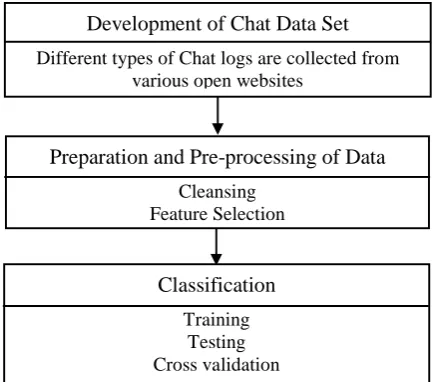
[image:5.595.69.288.170.361.2]Figure 1 on the next page illustrates the procedural framework followed in the experiments of the cur-rent research.
Figure 1: Procedural framework
Development of Chat Dataset: Due to the sexual-ly explicit nature of the child exploiting chats, and the surrounding legal and ethical issues, it is diffi-cult to find such data in an authenticated academi-cally available research databases. However, a number of such chat-logs are found in the Per-verted Justice Foundation Incorporated (PJFI) website available at http://pjfi.org. The PJFI worked with Law and Enforcement Agency (LEA) in a covert operation to catch the online paedo-philes. The chat logs contain chat-text between users posing as a child and perpetrators trying to procure children over the Internet for exploitation. The perpetrators involved in those chats are prose-cuted according to US law. The chat-texts were used as evidence and finally the perpetrators were convicted. In absence of chats between a real child and a paedophile these chat-texts may work as a benchmark because they contain evidence of child exploitation and the evidence are established in the court of Law. The chat-logs are open for all in the World Wide Web. Permission through email from the administrator of the website has been received to use those chat-logs for the purpose of current research.
For the classification experiments different oth-er kinds of chats are also needed which include SF and GN type chats. Websites like http://www.fugly.com and http://chatdump.com have a collection of anonymous chats. The chats were provided by volunteers making fun with people online. Some of the chats can be considered as SF type. This type of chats contains elements of sex fantasy. However as the main purpose was on-ly to make fun, in some part of the chat one of the user behave weirdly to make fun out of the already built sex fantasy. For example, after a considerable time of chatting and starting up a romantic rela-tionship, a user appears to be a different person (though he is not) and turns the conversation into a different direction other than sex fantasy. An ex-ample excerpt of a turning point is as bellow:
Man: Hello? Man: Who is this?
Man: What the hell do you think you're doing?
Man: cybering with my 10 year old son? Woman: OMG
Woman: I didn't know he was 10. I'm sooo sorry
[image:5.595.301.532.321.424.2]Woman: The Profile said he was 26! Man: This is MY account. NOT his.
Figure 2: Example of an edited portion of a SF chat
We collected the chats and edited this kind of direction changing parts to keep it as SF. To test the chat-logs are really SF or not, we mixed them with some CE type chat logs and some GN type chat logs to make a collection of 120 chat logs. The collection was sent to an expert researcher of psychology to verify the SF types. The researcher of psychology identified 73 of the collections as SF types. To increase the number of chats in SF type, some of the SF chats are randomly crossed with each other. Finally 85 SF type chats are used in the experiments.
The main objective of this experiment is to ob-serve if the text classifiers are capable of distin-guishing CE type chats among different other types of chats. In the experiments the data set consists of text of a number of chat-log files. The logs include child exploiting offensive CE chat-logs, general non offensive (GN) chat-logs and sex fantasy type SF chat-logs. Each log is a member of the data set and is considered as an individual instance. The instances are divided into three classes; CE, SF and Classification
Training Testing Cross validation
Preparation and Pre-processing of Data Cleansing
Feature Selection Development of Chat Data Set Different types of Chat logs are collected from
GN. The total number of instances was 392. Among the 392 instances 200 were CE chat-logs, 85 were SF type and 107 were GN type chat-logs.
Preparation and Pre-processing of Data: The chat log files were pre-processed by cleansing and feature selection. In cleansing stage the usernames are removed. Then the text is converted into string vectors.
Two types of features are selected for two sets of experiments. In one set of experiment the term-based features are used. The other set of experi-ment used psychometric and categorical informa-tion from LIWC. The categorical counts are used as features in the classifiers.
Classification: Three classifiers from WEKA da-tamining tool are used in the classification experi-ments. These are Naïve Bayes (NB), J48-Decision Tree (J48-DT) and Classification via Regression (CvR) classifiers. Training, testing and 10 fold cross validations are done. An analysis of the re-sults is given in the following section.
4 Experimental Result and Analysis
4.1 Result
A number of experiments have been done with different combination of the available chat data set. The combination of the data set is indicated in the corresponding table. The odd numbered tables show the confusion matrices of experiments with term-based feature set whereas the even numbered tables are for experiments with feature set based on psychometric and categorical information from LIWC. For example, the Table 1 corresponds to the results in the Experiment Set-1. It uses 392 in-stances of chat logs, where 200 are of CE type, 107 are of GN type and 85 are of SF type. Table 1.1, 1.2 and 1.3 show the confusion matrices of the re-sults from Naïve Bayes (NB), J48-Decision Tree (J48-DT) and Classification via Regression (CvR) classifiers respectively. In the confusion matrices the rows specify true class and columns show the prediction of the classifier. Experiment Set-1 does not use psychometric information. It uses term-based feature set. On the other hand, Experiment Set-2 uses psychometric and categorical informa-tion as the feature set with the same chat dataset as
of Experiment Set-1. The results of Experiment Set-2 are in Table 2.
4.2 Analysis of Result
From the results it can be seen that psychometric and categorical information improves the perfor-mance of some classifiers. Table 1.1 and 2.1 shows the result of for Naïve Bayes (NB) classifier. In these tables the correctly detected chats for the CE types are increased by 11.3% (from 168 to 187). Moreover incorrect classification of the CE type chats are decreased by 59.4% (from 28+4=32 to 7+6=13). Similar improvements are found in all results with NB classifiers using psychometric in-formation. Results of Classification via regression (CvR) classifier is also improved in some cases (Table 2.3, 4.3 and 8.3) when psychometric infor-mation feature set is used. In those cases it is de-tecting more CE chats, however at the same time it is predicting more chats as CE which are actually not CE. For the J48-Decision Tree (J48-DT), psy-chometric information does not make any im-provement.
Comparing the results of multiclass classifica-tion with binary classificaclassifica-tion (Table 2 and 4) it is found that the effectiveness of the classifiers are almost same in regards of correctly predicting CE chats. For example, NB classifier correctly detects CE chats 187 times in multiclass classification and 188 times in binary classification. Regarding the false negative case the figure is also very near, 13 and 12. The other two classifiers are also having nearby results.
The results of Experiment Set-5 and 6 (Table-5 and 6) and Experiment Set-7 and 8 (Table 7 and 8) shows that classifiers find more difficulties to dis-tinguish CE vs. SF chats than to disdis-tinguish CE vs. GN chats. For example, the result of NB using LIWC (Table 6.1 and 8.1) shows that, incorrectly classified instances in CE vs. SF is 9.8% ((10+18)/285) which is much higher than 4.5% ((10+4)/307) in CE vs GN. Results of other clas-sifiers also support this idea.
Tables : Confusion Matrices for different Classification Experiments
Experiments with Term-based feature set
Experiments with feature set of psychometric and word categorical information from LIWC
Table 1: Confusion Matrices for Experiment Set-1: CE vs. GN vs. SF
Total Number of Instances 392; CE = 200, GN = 107, SF = 85
Naïve Bayes J48-Decision Tree
Clas. Via Regression CE GN SF CE GN SF CE GN SF 168 28 4 181 7 12 188 2 10 CE
4 103 0 10 77 20 5 91 11 GN 2 57 26 13 22 50 5 17 63 SF
Table 1.1 Table 1.2 Table 1.3
Table 2: Confusion Matrices for Experiment Set-2: CE vs. GN vs. SF
Total Number of Instances 392; CE = 200, GN = 107, SF = 85
Naïve Bayes
J48-Decision Tree
Clas. via Regression CE GN SF CE GN SF CE GN SF 187 7 6 174 12 14 189 10 1 CE
3 95 9 17 77 13 11 86 10 GN 14 13 58 11 12 62 20 13 52 SF
Table 2.1 Table 2.2 Table 2.3
Table 3: Confusion Matrices for Experiment Set-3: CE vs.NonCE
Total Number of Instances 392; CE = 200, NonCE = 192
Naïve Bayes
J48-Decision Tree
Clas. via Regression
CE NonCE CE Non CE CE Non CE 154 46 183 17 178 22 CE
10 182 19 173 17 175 NonCE
Table 3.1 Table 3.2 Table 3.3
Table 4: Confusion Matrices for Experiment Set-4: CE vs. NonCE
Total Number of Instances 392; CE = 200, NonCE = 192
Naïve Bayes
J48-Decision Tree
Clas. via Regression
CE NonCE CE Non CE CE Non CE
188 12 170 30 182 18 CE
22 170 20 172 37 155 NonCE
Table 4.1 Table 4.2 Table 4.3
Table 5: Confusion Matrices for Experiment Set-5: CE vs. SF Total Number of Instances 285;
CE = 200, SF = 85 Naïve
Bayes
J48-Decision Tree
Clas. via Regression
CE SF CE SF CE SF
179 21 179 21 188 12 CE
3 82 18 67 12 73 SF
Table 5.1 Table 5.2 Table 5.3
Table 6: Confusion Matrices for Experiment Set-6: CE vs. SF Total Number of Instances 285;
CE = 200, SF = 85 Naïve
Bayes
J48-Decision Tree
Clas. via Regression
CE SF CE SF CE SF
190 10 176 24 185 15 CE
18 67 17 68 24 61 SF
Table 6.1 Table 6.2 Table 6.3
Table 7: Confusion Matrices for Experiment Set-7: CE vs. GN Total Number of Instances 307;
CE = 200, GN = 107 Naïve
Bayes
J48-Decision Tree
Clas. via Regression
CE GN CE GN CE GN
171 29 186 14 185 15 CE
4 103 11 96 15 92 GN
Table 7.1 Table 7.2 Table 7.3
Table 8: Confusion Matrices for Experiment Set-8: CE vs. GN Total Number of Instances 307;
CE = 200, GN = 107 Naïve
Bayes
J48-Decision Tree
Clas. via Regression
CE GN CE GN CE GN
190 10 192 8 188 12 CE
4 103 14 93 21 86 GN
(False positive) but should minimize Type-II error (False negative) as much as possible. Considering this, we try to find out the classifier which is per-forming best among the three classifiers. In multic-lass cmultic-lassifications, in the case of term-based feature set (Table1) CvR is detecting the highest number of CE chats. It is predicting 188 chats as CE whereas prediction by NB is 168 and predic-tion by J48-DT is 181. Both NB and CvR are competing with each other when psychometric in-formation are used (Table 2). Both of them are detecting almost the same number of CE chats (187 and 189). The number of false negative is also about the same (13 and 11).
In binary classification in Table 3 and 4, NB with psychometric information (Table 4.1), is perform-ing the best. It is detectperform-ing 188 CE chats out of 200 and CvR (Table 4.3) is catching 182, whereas J48-DT (Table3.2) catching 183.
5 Conclusion and Future Work
Psychometric and categorical information can be used by classifiers as a feature set to predict the suspected child exploitation in chats. The new fea-ture set significantly improves the performance of Naïve Bayes (NB) classifiers to predict CE type chats. In some cases it also improves the perfor-mance of Classification via Regression (CvR) clas-sifier. It seems that the chat dataset is enriched by the psychometric and categorical information. However it is interesting that while it is improving the performance of two classifier (NB and CvR), the same enriched dataset does not improve the performance of another classifier (J48-DT). It can be a future scope to look at the profile of CE chats and investigate the interesting behavior of different classifiers.
Though the text classifiers are classifying logs of chat text into predefined suspected CE type they do not provide any particular aspect of the chat that can be used as evidence of the chat being an arti-fact of child exploitation. Therefore, further analy-sis is required to detect specific evidences inside the suspected CE chat. This is another future scope of this research.
References
Adams, P. H., and Martell, C. H. 2008. Topic Detection and Extraction in Chat. In Proceedings of the IEEE International Conference on Semantic Computing
2008 (ICSC '08), Santa Clara, CA, USA, p. 581-588.
Bengel, J., Gauch, S., Mittur, E., and Vijayaraghavan, R. 2004. ChatTrack: Chat Room Topic Detection using Classification. In Intelligence and Security Infor-matics. In the series of Lecture Notes in Computer
Science, Vol. 3073, p. 266-277, Springer.
Bifet, A., and Frank, E. 2010. Sentiment Knowledge Discovery in Twitter Streaming Data. In Proceed-ings of the 13th International Conference on
Dis-covery Science (DS10), Canberra, Australia, p. 1-15.
chatdump.com. Available at http://chatdump.com/ (ac-cessed January 2011).
fugly.com. Available at http://www.fugly.com/victims/ (accessed January 2011).
Hall, M., Frank, E., Holmes, G., Pfahringer, B., Reute-mann, P., and Witten, I. H. 2009. The WEKA Data Mining Software: An Update. In ACM SIGKDD
Ex-plorations Newsletter, Vol. 11 (1), p. 10-18, ACM.
Krone, Tony. 2005. Queensland Police Stings in Online Chat Rooms. In Trends & Issues in Crime and
Criminal Justice Series, Australian Institute Of
Criminology. Retrieved from http://www.aic.gov.au/ documents/B/C/E/%7BBCEE2309-71E3-4EFA-A5 33-A39661BD1D29%7Dtandi301.pdf
Kucukyilmaz, T., Cambazoglu, B. B., Aykanat, C., and Can, F. 2008. Chat Mining: Predicting User and Message Attributes in Computer-Mediated Commu-nication. In Information Processing & Management,
Vol. 44 (4), p. 1448-1466, Elsevier.
(accessed No vember 2010).
O’Connell, Rachel. 2003. A Typology of Child Cyber-sexploitation and Online Grooming Practices. Cy-berspace Research Unit, University of Central Lancashire. Retrieved from http://image.guardian. co.uk/sys-files/Society/documents/2003/07/17/ Groo mingreport.pdf
Olson, L. N., Daggs, J. L., Ellevold, B. L., and Rogers, T. K. K. 2007. Entrapping the Innocent: Toward a Theory of Child Sexual Predators’ Luring
Com-munication. In Communication Theory, Vol. 17
(3), p. 231-251, Wiley-Blackwell.
Pennebaker, J. W., Chung, C. K., Ireland, M., Gonzales, A., and Booth, R. J. 2007. The Development and
Psychometric Properties of LIWC2007. Published in
LIWC.Net. Available at http://www.liwc.net/LIWC 2007LanguageManual.pdf (accessed November, 2010).
pjfi.org. Perverted Justice Foundation Incorporated. Available at http://pjfi.org/ (accessed January 2011).
Rosa, K. D., and Ellen, J. 2009. Text Classification Methodologies Applied to Micro-Text in Military Chat. In Proceedings of the Eighth IEEE Interna-tional Conference on Machine Learning and
Appli-cations (ICMLA '09), Miami Beach, Florida, USA, p.
710-714.
teenchatdecoder.com. Available at http://www.teenchat decoder.com/
Wu, T., M. Khan, F., A. Fisher, T., A. Shuler, L., and M. Pottenger, W. 2005. Posting Act Tagging using Transformation-Based Learning. In Foundations of Data Mining and Knowledge Discovery. In the
se-ries of Studies in Computational Intelligence, Vol. 6,
p. 319-331, Springer.
(accessed November 2010).
Young, K. 2005. Profiling Online Sex Offenders, Cyber Predators, and Pedophiles. In Journal of Behavioral