
The Evaluation and Enhancement of Case Driven Diagnostic Advice
Systems. A Study in Three Domains
Dr. Gordon John Brooks
Royal Free Hospital School of Medicine
A thesis Submitted in part fulfilment of requirements for the degree of Doctor of Philosophy in the Faculty of Medicine
of the University of London
The Evaluation and Enhancement of Case Driven Diagnostic Advice S y stems. A Stud y in Three Domains
Abs tract
Relevant literature has been reviewed regarding the performance, implementation and evaluation of computer based medical decision support systems.
The diagnostic performance of five simple case driven acute chest pain advice systems, have been compared using a standardized set of clinical records. A
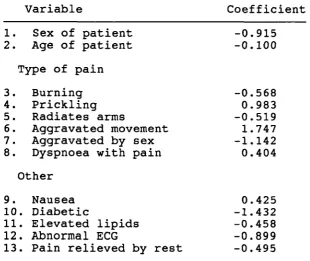
Bayesian inference model demonstrated superiority over two derived by logistic regression. Small data set flow charts performed well but both relied upon the use of expert opinion.
A Bayesian acute abdominal pain diagnostic advice system has been evaluated in a clinical trial.
Standardized data collection improved the diagnostic performance of doctors. In practice, the computer system offered little additional user benefit. From further tests in primary care, it was concluded that, whereas general practitioners might enhance their performance by using data collection sheets,
paramedics might benefit through direct use of the computer.
DERMIS is a new dermatology primary care diagnostic advice system. Components include a database derived from 5203 prospectively collected clinical records, a user interface, and an enhanced Bayesian inference model incorporating combined frequency estimates, expert beliefs and rationalized end-point groups. On laboratory testing, the diagnostic accuracy of DERMIS was 83%. The correct diagnosis appeared in the top three, of a possible 42 disease list on 97% of occasions.
In a semi-field trial of DERMIS involving 49 general practitioners, doctors did not always collect the same information as a dermatologist but were able to
significantly increase their chance of making a
correct diagnosis through use of the computer system. It has been concluded that although implementation of DERMIS might well increase general practitioner
diagnostic accuracy and lead to improvements in the management of skin disease in primary care, rates of referral for specialist opinion might not be affected unless standard management plans are adopted.
Acknowledgements
I am most grateful to the following people and organisations;
Dr Richard Ashton, the Royal Navy consultant dermatologist for sharing his clinical expertise and allowing access to his clinics.
Doctors and staff of the surgical department at the Royal Naval Hospital Haslar for their assistance and participation in trials of acute abdominal pain advice systems.
Dr Paul Collinson, clinical pathologist, at the West
Middlesex Hospital, for his assistance with the theory and application of diagnostic advice systems in cardiology.
Dr Roger Pethybridge, Head of Statistics at the Institute of Naval Medicine for his guidance in statistical matters.
Professor Tony Winder, of the Royal Free Hospital, London for his practical support.
The Ministry of Defence for giving me the opportunity to undertake this research.
My wife, Christine and the rest of the family whose
boundless support and understanding made submission of this thesis possible.
The Evaluation and Enhancement of Case Driven Diagnostic
Advice Systems. A Study in Three Domains
List of Contents
Page List of Tables, Figures and Abbreviations ...5
Introduction . ...10
Chapter 1; Medical Decision Support Systems:
Evolution and Medical Context ...12
Chapter 2; Review of Decision Support System
Evaluation ...64 Plan & Justification of Experimental Work 90
Chapter 3; Experimental Work: Methods
...
95 Chapter 4; Experimental Work: Results...
132 Chapter 5; Discussion and Context of Results ....
190 Overview ;DERNIS and other Diagnostic Advice Systems 236References
...
239Lists of Tables, Fi gures and Abbreviations Tables
Table 1 [page 100 ]
Joswig Logistic Regression Model: List of Features and Coefficients
Table 2 [page 102 ]
Pozen Logistic Regression Model: List of Features and Coefficients
Table 3 [page 133 J
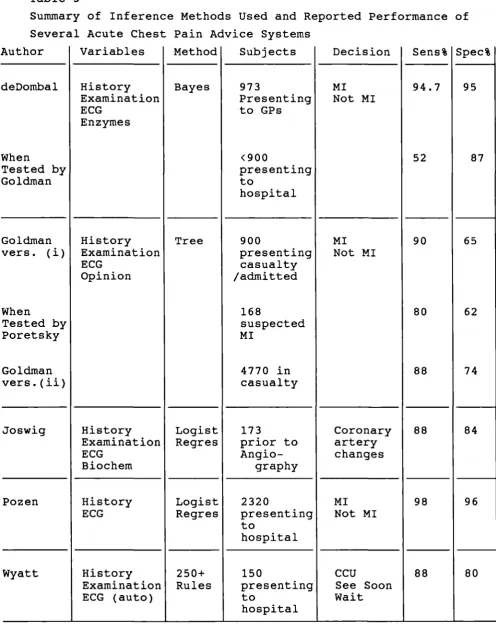
Summary of Inference Methods Used and Reported Performance of Several Acute Chest Pain Advice Systems
Table 4 [page 134 ) 104 CCU Admissions:
Age I Sex Distribution of Patients Included Table 5 [page 135 ]
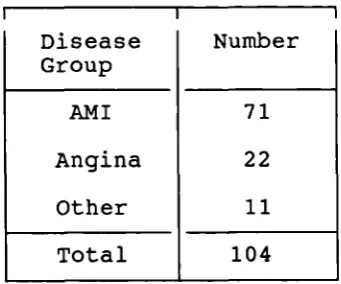
104 CCU Admissions: Final Diagnosis Table 6 [page 136 ]
104 CCU Admissions:
Previous Cardiac Events in Test Group Table 7 [page 136 ]
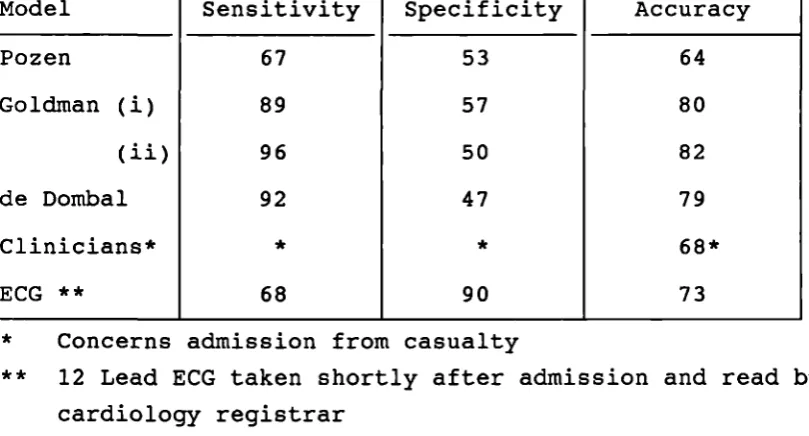
Sensitivity and Specificity for Models Considered When Tested on 104 CCU Admissions: Distinction of Acute MI from Not Acute MI
Table 8 [page 137 ]
Sensitivity and Specificity for Models Considered When Tested on 104 CCU Admissions: Distinction of Cardiac From Not Cardiac
Table 9 [page 138 ]
Comparison of the Accuracy of Acute MI Prediction Between Advice Systems Tested on 104 CCU Admissions:
McNemar's Test Applied to Differences Table 10 [page 139 ]
Comparison of the Accuracy of Prediction of a Cardiac Cause for Acute Chest Pain Between Advice Systems Tested on 104 CCU Admissions: McNemar's Test Applied to Differences Table 11 [page 140 ]
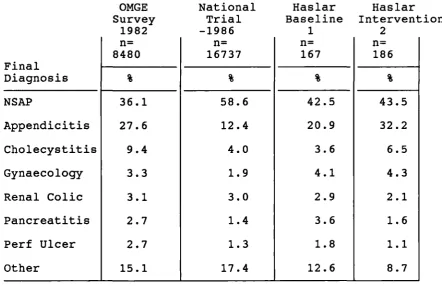
Comparison of Hospital Admission Rates for Diseases Causing Acute Abdominal Pain found in National AAP trial, OMGE
Tables (continued) Table 12 [page 142 ]
Haslar Trial of Acute Abdominal Pain Advice System: Surgical Unit Performance
Table 13 [page 143 ]
Haslar Trial of Acute Abdominal Pain Advice System: Diagnostic accuracy % by diagnosis
Table 14 [page 146 ]
Haslar Trial of Acute Abdominal Pain Advice System: Accuracy of referral diagnosis in 249 cases
(70.5% of total) Table 15 [page 147 3
99 Suspected Appendicitis Case Breakdown by Final Diagnosis
Table 16 [page 148 1
99 Suspected Appendicitis Cases, Use of Computer: Table 17 [page 149 1
The Estimated Annual Incidence of Appendicitis by Age Group For UK National and Royal Navy Populations Table 18 [page 150 3
99 Suspected Appendicitis Cases, Use of Computer:
Comparison of Accuracy of Assignment to Diagnostic Group Between Paramedics and Computer
Table 19 [page 152 3 Medical Data Collection
By Paramedical and Non-Medical (Coxswains) Personnel: Summary of cases collected (15 cases)
Table 20 [page 154 3
99 Suspected Appendicitis Cases, Performance of Practitioners and Computer Program:
Comparison of Accuracy of Assignment to Diagnostic Group Table 21 [page 155 3
Comparison of General Practitioner's Reason for Referral with Specialist Advice Given in 211 Consecutive Cases Attending the Dermatology Clinic at Haslar Hospital; Table 22 [page 170 3
Production of the 32 End-Point Group Model for DERMIS: Examples of Diseases Included in Groups
Table 23 [page 172 3
32 Clinical End-Point Group Model: Disease categories and accuracy; Groups Formed Prior to Diagnostic
Prediction
Tables (continued
Table 24 [page 174 ]
Comparison of the Overall Diagnostic Accuracy of Clinical Algorithms for Three Skin Diseases, and the DERMIS Program
on 5336 Case Records Table 25 [page 176 ]
42 Clinical End-Point Group DERMIS Accuracy of Assignment of Correct Diagnosis to Top of Differential List in 'One Out' Analysis of 5203 Cases in Database
Table 26 [page 177 ]
Most Common Errors: Confusion Between Specific Disease Groups
Table 27 [page 179 ]
A Random Sample of 125 Cases Referred to Dermatology Clinics By Primary Care Physicians:
Reason for Referral vs. Outcome Table 28 [page 180 ]
Breakdown by Diagnosis of 76 Randomly Selected Cases Referred by General Practitioners to Dermatology Clinics for Diagnosis and Management
Table 29 [page 184 )
Observer Variation: Diagnosis, Number of Data Items Collected and Computer Diagnosis
Table 30 [page 186 ]
Observer Variation: Comparison of the Ability of General Practitioners to Identify the Same Features of Diseases as a Dermatologist.
Table 31 [page 188
Effects of Use of the DERMIS System Upon General
Practitioner Diagnostic and Management Decision Making
Figures
Figure 1 [page 40 ] Effects of Feature Association Figure 2 [page 98 ]
Goldman Recursive Partitioning Tree
(1)
Model for Acute Chest Pain DiagnosisFigure 3 [page 105 1
Assessment of Advice System Performance: 2x2 Table Analysis
Figure 4 [page 109 J
Acute Abdominal Pain Data Collection Sheet Figure 5 [page 119 ]
Assessment of Association Between Variables Figure 6 [page 125 J
Ashton Algorithms: Extract from One of Several Pathways that Can Result in Prediction of Basal Cell Carcinoma Figure 7 [page 157 j
Full Dermatology Data Collection Sheet Figure 8 (page 159 )
Appendicitis; Examples of First Order Associated Terms Figure 9 [page 160 ]
Myocardial Infarction: Examples of First Order Associated Terms
Figure 10 [page 161 )
Eczema: Examples of First Order Associated Terms Figure 11 [page 161 )
Basal Cell Carcinoma:
Examples of First Order Associated Terms Figure 12 [page 162 )
Diagnostic Flowchart for the Differentiation of
Appendicitis from Other Causes of Acute Abdominal Pain Figure 13 [page 163 ]
First Part of a Diagnostic Flowchart for the
Differentiation of Basal Cell Carcinoma from Solar Keratosis
FIgure 14 [ page 167 ] Reduced Dermatology Data Collection Sheet
Figure 15 [page 169]
Schematic Representation of Crossover Effecting the Eczema Group
Abbreviations AAP ACP Al AMI CAD -CCTJ -CI -CK ECG -GI IBM -lBS IHD MI NAASA NSAP -NSE OMGE -RL RLQ RN RNH RNMS TS -tJSN WHO
-Acute abdominal pain Acute chest pain
Artificial intelligence Acute inyocardial infarction Coronary artery disease Coronary care unit
Conditional independence Creatine kinase
Electrocardiogram Gastrointestinal
International Business Machines Irritable bowel syndrome
Ischaemic heart disease Myocardial infarction
National abdominal pain study association Non surgical abdominal pain
Number of standard errors
Organisation Mondiale de Gastroenterology Relative likelihood
Right lower quadrant Royal Navy
Royal Navy Hospital
Royal Navy Medical Staff Training School United States Navy
World Health Organisation
Publications are referred to in the text by use of bracketed numbers eq. (1).
Cross references within the text are made in square brackets and follow the system;
Chapter.heading.sub-heading.item eq [4.5.b.ii]
[ Table number ] [Table 11)
[ Figure Number J [Figure 5]
[ page ] [p 100]
The Evaluation and Enhancement of Case Driven Diagnostic
Advice Systems. A Study in Three Domains
Introduction
The broad aims of this work have been to;
a) Study the design and evaluation of past and current diagnostic advice systems in at least three clinical domains, in order to identify adopted methodology and other factors that appear to make systems suitable for use in clinical practice.
b) To evaluate, through experimentation, the strengths and weaknesses of various diagnostic advice systems that have found use in clinical practice. To assess the suitability of such systems for the roles they were designed to fulfill.
C) To investigate, and where possible enhance, the function of simple inference mechanisms used in diagnostic advice systems.
d) To document and discuss the requirement for, design, construction and evaluation of a new medical
diagnostic advice system.
The first aim has been met in part by the review of
literature and is completed during later discussion. The other aims have been pursued through experimentation. Three medical domains that encompass the causes acute chest pain, acute abdominal pain and skin disease have been investigated in depth. Advantages have accrued from
studying each of the domains.
A number of advice systems that have been designed to assist casualty officers with the task of identifying patients suffering with 'high risk' chest pain have
found use in clinical practice. They use differing methods of diagnostic inference and different lists of
clinical variables.
Comparative testing has revealed strengths and weaknesses of the methods adopted.
In contrast, a single advice system designed to assist junior surgeons with the diagnosis of patients suffering with acute abdominal pain has probably been subjected to a more detailed programme of evaluation than any other
diagnostic advice system. It has been shown to confer
advantage upon its users and upon patients, yet it is not in widespread use. Here, the opportunity has been taken to
conduct an independent field trial of the system in order to assess its suitability for practical clinical use.
Investigation has also been performed into a possible primary care role for the system.
The development of DERMIS has been described in greatest detail. The work has involved the collection of a large database of over 5300 case records and investigations of the ways in which the intrinsic descriptions of disease locked within the case records can be represented in order to assist with the prediction of the presence of disease in new cases.
In the first two chapters of the thesis the history and evolution of medical decision support systems are put into the context of the clinical requirements of the three
medical domains chosen for particular study.
The theme of the second chapter is medical advice system evaluation. This chapter closes with a detailed
justification and planned order for the investigative work to be carried out. The ordering is maintained throughout the remaining methods, results and discussion in order to allow
logical progression and easy cross reference between the sections.
The Evaluation and Enhancement of Case Driven Diagnostic Advice S y stems. A Study in Three Domains
Chapter 1
Medical Decision Support Systems: Evolution and Medical Context
1. The Role of Dia gnostic Advice Systems
Medicine, the art or science of prevention and cure of
disease, is a vast, expanding and evolving subject. Medical practitioners cannot hope to keep up with all its
developments and tend to concentrate on parts of the subject. In practice this has lead to the development of specialities and the recognition of specialist or expert practitioners.
In the United Kingdom, there is separation into primary and secondary medical care. Patients initially consult general practitioners who have broad but necessarily focused
knowledge of medicine. A minority of cases cannot be dealt with by general practitioners and are referred to secondary care doctors for further guidance, investigation or specific treatment. Secondary care tends to be based in hospitals, but even here expertise is shared amongst generalists, specialists and sub-specialists.
In both the community and in hospitals, practical day to day patient care is often provided by nursing and paramedical staff who rely upon registered medical practitioners for support in clinical decision making.
to the community in an efficient and effective manner.
However, the person most qualified to deal with a patient's problems may not always be the person who is first
consulted. This is not unreasonable as a patient will often not know which expert to consult and in any case, more often than not, a specialist opinion will not be required.
Medical decision support systems, including those that provide diagnostic advice have been proposed as a means of enhancing the performance of generalists by giving them rapid access to the knowledge and decision making
capabilities of specialists (1).
It has been argued that GP's are most in need of decision aids because they see a variety of problems at early stage, have restricted resources and few colleagues available for immediate consultation (2).
Medical diagnostic advice systems have appeared in many shapes and forms. Text books can be considered as being, on the whole, passive advice systems. They contain distillates of expert knowledge and experience but users must determine which parts are appropriate to current decision making. Active systems could assist with the recording of
information and its evaluation, diagnosis and treatment (1)
The Three Clinical Domains of Study
Throughout this thesis particular attention has been paid to the application of diagnostic advice and other decision
support tools to three clinical domains. These are the
diseases that cause acute abdominal pain, the diseases that cause acute chest pain and diseases of the skin. The three domains will now be introduced with reference to diagnostic decision making and possible roles for advice systems.
2. Acute Abdominal Pain
a) The Clinical Importance of Acute Abdominal Pain
Abdominal pain is a common symptom that is associated with a variety of surgical and medical diseases whose consequences range from being trivial to life threatening. Abdominal pain of sudden onset will often cause a patient to urgently seek medical advice. Acute abdominal pain (AAP) was defined by de Doinbal as having a duration of one week or less (3,4). An indication of the proportions of each of the common causes of AAP likely to be found amongst patients attending
hospital casualty departments are shown in Table A. The two most common causes of AAP are Appendicitis and
Non-Surgical Abdominal Pain (NSAP). In the UK, approximately 55,000 cases of appendicitis and 120,000 cases of NSAP
present to hospital each year (NASA). NSAP is a general term that refers to all causes of abdominal pain that do not
require surgical intervention (5) including for example, mild gastro-enteritis and a urinary tract infection. Appendicitis is a surgical emergency for which the
recommended management is laparotomy and excision of the appendix. If operation is delayed the appendix may perforate and its contents spill into the abdominal cavity causing generalised peritonitis which is a life threatening
complication.
Conditions such as a peptic ulcer and diverticulitis also lead to perforation of the gut and peritonitis. Other organs such as the spleen, aorta, and a fallopian tube in ectopic pregnancy, can rupture or be ruptured and lead to an 'acute abdomen' that requires surgical intervention (OHCM).
with acute abdominal pain that is initially central and colicky, but which moves after several hours to become steady and located in the right iliac fossa. Renal colic is a particularly severe form of AAP that is commonly
associated with the blockage of a ureter by a stone and may require surgical intervention (6).
In this study I will be investigating the use of decision support in the management of patients suffering with AAP in three clinical settings that include the hospital
environment, remote locations and general practice in the community.
b) Mana g ement of Acute Abdominal Pain in Hos p itals and Decision Support
Patients who develop AAP might seek the advice of their general practitioner or be taken straight to the casualty department of a hospital. Depending upon his diagnosis, a general practitioner may offer treatment at home or arrange for hospitalisation. In the casualty department, the
casualty officer may seek the advice of surgeons in deciding whether or not a patient should be admitted for possible operation. Once a patient has been admitted to a surgical ward, decisions need to be taken concerning the necessity for and urgency of operative intervention.
We have seen that in some cases of acute abdominal pain timely surgery and therefore hospitalisation is essential, whereas in others treatment may be conducted at home. The timing and nature of management offered can depend upon decisions taken by a patient, his general practitioner, the casualty officer, and junior and senior surgical staff. If this screening process were efficient then we might expect that there would be few unnecessary admissions to hospital and few inappropriate operations carried out. However, in
practice it has been found in the UK, for example, that some 175 thousand cases of 'suspected appendicitis' are admitted annually of which a third are finally diagnosed as having had the disease. Of patients who are suspected of having appendicitis, some 16% are operated on but are found not to have suffered the disease. Approximately 23% of patients with appendicitis go on to suffer the complication of a perforated appendix.
The performance of hospital staff dealing with patients suffering with AAP has been extensively studied
(3,4,7,5,8,9). When diagnostic accuracy was measured for various grades of surgical hospital doctor it was discovered that a house officer could be expected to produce the
correct diagnosis on 50% of occasions, whereas senior house officers might attain an accuracy of 60%. Consultants were found to be able to perform at even higher levels of
accuracy.
It was postulated that the use of a computer based advice system might improve the diagnostic accuracy of junior hospital doctors who are called to deal with patients suffering with acute abdominal pain. This in turn might
promote more appropriate management decision making and lead to measurable improvements in health care (3,4).
c) Acute Abdominal Pain Mana gement in Primary Care (i) The Remote Location
The development of AAP whilst at sea is probably one of the most feared ailments of the seafarer. Hester (10) found that AAP was the most common surgical emergency occurring on
population is aged under 40 (11).
In the UK, Appendicitis and NSAP account for 77% of cases of AAP in males aged between 15 and 40, who are sufficiently ill to seek guidance at a casualty department (NAASA).
Within this group, NSAP is found to be the cause of the pain more than twice as frequently as appendicitis. Although
there is no significant difference between the incidence of appendicitis in young adult males and females (NAASA), the hospital presentation rate of females suffering with NSAP is higher than that for males. In young adults, 4% of patients develop peritonitis in every 12 hour period that the disease remains untreated (NAASA).
In the RN, medical officers spend most time at sea
immediately following their house officer training. However, RN warships rarely carry a medical officer and much of the medical support to the Fleet is provided by paramedics or designated non-medics working alone. The larger ships are provided with a basic medical library.
In military service, a large number of young persons can be isolated from hospital facilities for many months. Unless a surgical specialist is present, the preferred management of a patient presenting with appendicitis at sea is evacuation to the nearest surgical facility. Such an evacuation can prove to be a major logistic exercise with both operational and financial penalties. The type of management provided to a patient who develops AAP at sea will depend largely upon the ability of a ship's medical personnel to discriminate between appendicitis, NSAP and other causes of the symptom.
(ii) General Practice
the advice of his general practitioner. The general
practitioner has to decide whether immediate referral to hospital is appropriate. If he decides upon referral then care of the patient is delegated to doctors at the hospital. If, however, he concludes that referral is currently
inappropriate then he must decide whether any further monitoring is necessary, how frequently this should be performed and the criteria that might indicate subsequent admission.
d) Decision Su pport for AAP Mana g ement in Primary Care General practitioners working in the community and medical officers, paramedics and other military staff responsible for health care in remote locations do not normally receive specialist surgical training. It is suggested, therefore, that they might benefit from the use of a decision support system that increased their diagnostic accuracy and lead to improvements in the management of patients presenting to them with acute abdominal pain.
The tJSN faced with the same problem decided that computer based decision support might be employed to enhance the ability of paramedics who were required to make decisions concerning the evacuation of patients with acute abdominal pain (12,13). They adopted the Leeds acute abdominal pain advice system on the basis of reports of its diagnostic performance in hospital based studies (14,15).
3. Ischaemic Heart Disease a) Epidemiology
Ischaemic heart disease (IHD) is a common cause of acute chest pain. The regional prevalence rate of IHD in the UK amongst men aged between 40 and 59 of as measured by a WHO chest pain questionnaire and electrocardiogram (ECG) has been found to vary between 17% and 30% (16).
Transient ischaemic episodes with self limiting pain is described as angina, whereas prolonged pain with permanent ischaemic change is referred to as myocardial infarction. In the UK, IHD accounts for some 354 annual deaths per hundred thousand of the male population aged 35 and over (WHO
figures, 1988). This represents one of the highest national IHD mortality rates. Although the IDH mortality rate for British women is much lower at 269 deaths per hundred thousand, this is still high in relation to equivalent international rates.
In some 'western' countries such as the United States, Australia, Canada and New Zealand, the mortality rate for
IHD has fallen in recent years. However, in the UK there has been little change in the past decade (17).
b) Ischaemic Heart Disease: S ymptoms and Signs
Frequently, the sudden onset of heart muscle ischaemic pain is the first indication of heart disease. Cardiac ischaemia probably develops when myocardial demands for oxygen exceed the capacity of the diseased vessels to supply blood.
Coronary vasoconstriction may also increase resistance and thus reduce blood flow. Vasoconstriction can be mediated through neural pathways or caused by substances released by aggregating platelets and is believed to be associated with cigarette smoking, exposure to cold, exercise, endothelial
injury (18) and possibly mental stress (19). Ischaemia is most common in the early morning (18) at a time when the fibrinolytic activity of blood at its lowest.
Only half of those with definite MI detected by ECG (16), however, are likely to have suffered chest pain suggestive of angina or MI. Epstein, for example, found that 70% of ischaemic episodes in patients with symptomatic coronary heart disease were not associated with angina and some 10-15% of acute MIS are silent (18).
Various other signs and symptoms may be present in acute presentations of IHD depending upon the site, extent and effect of any infarct and the physiological response to myocardial damage. Accordingly, the presentation of the disease in patients with ACP may vary from sudden collapse and death with pump failure due to arrhythmia to one of retrospective detection in apparent non-sufferers. Patients with acute symptoms suggestive of acute MI are often
referred or present themselves to a hospital casualty department.
The likely presenting clinical features, results of investigations from, and risks to, a patient vary with
duration of myocardial ischaemia. For example, in acute MI,
the conductive abnormalities that cause the classic ECG features of Q waves, ST elevation and T wave inversion tend to develop during the illness, but an ECG taken in casualty soon after the start of pain may be normal. Similarly,
enzyme indicators of heart muscle damage such as creatinine kinase (CK-MB) attain their peak serum levels many hours after the start of the illness.
c) Earl y Intervention
definitive early treatment of acute MI (20). Current opinion is that decision making should begin in the first few
minutes of arrival at hospital, as the early use of
thrombolytics in patients with ANI has been shown to reduce the risk of death and help preserve the myocardium. Early intravenous streptokinase, for example, has been shown to result in recanalisation of coronary arteries in 55-75%
patients (21,22). The greatest benefit has been demonstrated in patients with anterior infarction (23) where a 5%
reduction in mortality rate is possible. The treatment is not without risk, however, and can only be given once,
because of the likelihood of sensitisation. It is important, for this reason, that every effort is made to reach the correct diagnostic conclusion before the enzyme is given.
It has been recommended (20) that all patients who present within four hours of the onset of chest pain, without contraindications to treatment, should receive intravenous streptokinase with appropriate anti-allergic cover, but that consideration should still be given, however, to patients presenting within 12 hours.
The immediate treatment is usually followed up with further anticoagulent therapy such as short term heparin followed by daily aspirin. Revascularisation is possible at angioplasty, but is not always available. Patients presenting with chest pain and ECG changes (ST elevation or depression) are likely to benefit from intravenous nitrates which minimise phasic vasoconstriction. This treatment may also limit the extent of the infarct. Intravenous 13 blockers may also reduce short term mortality if given to selected patients (24).
With time and investigation the correct diagnostic
However as the mortality of MI is greatest in the first 12 hours, with 50% occurring in the first two hours and 80% occurring in the first 4 hours of the onset of pain, it is also important that such a decision be reached quickly. If patients are admitted through the casualty department then a decision must be made by the staff as to when the patient will be seen by the doctor (20). wyatt, for example,
reported that patients with ACP might have to wait between 1/2 hour and 5 hours to be seen by the casualty officer
(25). In assessing the patient, the casualty officer will have to decide whether the patient should be admitted or returned to the care of the general practitioner.
d) Hos p ital Admission
If a provisional diagnosis of MI has been made, initial management is normally carried out in a hospital coronary care unit (CCU), where facilities for expert monitoring and resuscitation are provided. Such units are costly to run and are best used if occupied only by high risk patients who have, for example, suffered acute MI.
The application of strict admission criteria may have the adverse effect of reducing the sensitivity of selection with persons at risk of developing complications being admitted to a general ward or being sent home. The management policy with the highest specificity would be to admit all patients with acute chest pain to the CCTJ. This would lead to
unnecessary intensive management of some patients and possible exclusion of patients from the CCIJ when all the beds have been filled.
It has been reported that current practice often results in between 20% and 50% of CCTJ admissions being eventually
(27), rather than being admitted to the CCTJ.
As has been discussed, in the first few hours, ECG and enzyme investigations may be of no value in determining which patients require admission and intensive management
(28). The diagnosis must be made in these cases on the
history and clinical features alone. Unaided physicians have been shown to achieve specificity rates for ANI
identification of between 66% and 93%. Poretsky (29) has suggested that physicians perform better when admission numbers are limited by CCU bed availability.
Diagnostic classification, in itself, is not necessarily a predictor of risk to the patient. In many cases, physicians assessing the necessity for CCU admission, try to identify high risk patients. These may include patients who have unstable angina.
e) Further Investigation
It is often the case that standard follow-up investigation of patients who have suffered ACP fails to prove or disprove MI and there is discharge from hospital without a firm
diagnosis having been made. The clinical choice is to incur the expense of further investigation or to accept the
provisional diagnosis. One of the further investigations that can be performed is coronary angiography, where the coronary arteries are viewed following the injection of contrast medium. In general, patients without coronary artery narrowing are unlikely to have suffered ischaemic pain and have a better prognosis than those where narrowing has been found. Coronary artery narrowing, however, does not necessarily indicate that patients have suffered ischaemia.
f) Non-Ischaemic Acute Chest Pain
Although ischaemic heart disease is the commonest serious cause of ACP others diseases such as pericarditis, aortic dissection, pulmonary embolism, pleurisy, nerve root lesions and chest wall pathology should not be overlooked when
formulating a differential diagnosis. Castro-intestinal diseases such as oesophagitis, peptic ulcer, pancreatitis and cholecystitis also possible causes of acute chest pain.
g) Role of A Dia gnostic Advice S y stem Advice S y stem in Acute Chest Pain Mangement
The clinical problems in ACP can perhaps be summarised as follows;
(i) A patient with ACP may be suffering with life
threatening IHD, where the mortality is greatest in the first 12 hours.
(ii) There are currently no simple tests that will guarantee confirmation of diagnosis within the first few hours of the onset of pain. At this time provisional diagnosis must
normally be made on clinical grounds.
(iii) Patients presenting to casualty departments with ACP may have to wait in order to be assessed. Many acute
ischaemic events are asymptomatic.
(v) High risk patients including those with acute MI and unstable angina should be admitted to the coronary care unit for monitoring and further specialist treatment as required.
(vi) A decision concerning admission must be made within the first few hours of presentation. 15% of high risk patients are sent home. Up to 50% of patients admitted to the CCU are subsequently found not to be in the high risk group (25,30).
(vii) Incorrectly classified admissions should be given appropriate management once diagnosis is known.
Diagnostic advice systems could well be of value in the management of patients with ACP if they were able to influence the speed and accuracy of decision making.
4. An Advice S y stem for Dermatoloqy
a) Introduction
In considering the place for advice systems in dermatology, there is an immediate shift of emphasis from the high risk clinical decision making scenario of acute abdominal pain or acute chest pain to a subject where inappropriate
decisions frequently mean little more than an extension of the required treatment time before problem resolution.
b) Skin Disease : The Clinical Setting
Skin disease is common in the community, but normally causes annoyance rather than a threat to life. For example, in 1987, the UK all age death rate per 100,000 of the
population for dermatological disease was 2.9 as compared with that for ischaemic heart disease which was 628.3 (1987 Annual WHO statistics). For this reason, perhaps, lesions
and rashes of the skin are often treated as being relatively trivial in nature, both by the sufferers and those that
treat them. It is commonly, then, after some period of tolerance and perhaps self medication, that the problem
causes sufficient annoyance or interruption of daily routine for a patient to seek medical guidance.
The diagnosis of skin lesions is in essence a problem of pattern recognition. A dermatologist can usually rapidly identify causative disease by visual inspection (31). Patients will, however, normally first consult a general practitioner for whom skin disease makes up 7% of all consultations (OPCS GP morbidity statistics). Many doctors find the accurate diagnosis of skin disease difficult which may be in part due to the limited amount of dermatology
experience included within standard professional training programmes.
Immediate advice is available to primary care physicians in the form of text books and articles (31), packed with colour photographs. Unfortunately, although these may be useful in training they cannot normally be used during consultations. A search of the photographs and chapters that contained
information about the observed features of a patient's
condition could be time consuming, perhaps embarrassing, and would necessitate some knowledge of the possible diagnosis. The result is that patients suffering with even quite common skin disorders are referred to hospital clinics for advice concerning diagnosis and management. The management
provided, rarely involves hospital admission or detailed investigation, and often takes the form of reassurance or a course of medication.
practitioners because of suspected malignancy. Common causes of concern are the pigmented lesion that might be a melanoma and the rough, expanding lesion that could be a carcinoma. General practitioners tend to adopt a policy of referring all such cases in an attempt to produce a high sensitivity in tumour identification, as it is well known that cure is possible with early treatment. If there is any doubt that the lesion is benign, the dermatologist will in turn
commonly perform an excision biopsy. In many other cases, however, the patient will receive nothing but reassurance.
A case could be made for providing a dermatology diagnostic advice system in primary care if it could be shown that improvements in general practitioner diagnostic accuracy might lead to improvements in patient care.
5. The Use of Com puters in Medical Practice
Calculating and computing machines can assist with data processing tasks. They offer powerful and reliable means of storing and rapidly manipulating vast quantities of
numerical and textual information and will operate with the same efficiency despite time of day (1). However, they have no inherent common sense.
The widespread use of computers in all walks of life is a relatively new phenomenon. There is a necessary time lag between the development of new procedures that use computers and the dissemination of the methodology through teaching. Doctors who have had no basic computer awareness education have often felt uneasy about the adoption of automated techniques that might directly interfere with the practice of medicine as they know it (32). This situation is
changing. In 1981, Teach and Shortliffe (33) detected the emergence of positive attitudes towards computers amongst
doctors. In 1984, Kunz (34) noted that attitudes to
computers in medicine were changing from initial scepticism through curiosity towards acceptance. As the years go by, greater proportions of medical graduates will be aware of the advantages and limitations of computer use.
In recent years, there has been a considerable increase in the numbers of computer based patient record and
administration systems installed in both hospitals and general practice in the UK. This trend was initially stimulated in general practice by a commercially lead programme of offering a free system in exchange for the commitment to provide statistical information about
patients. The UK government now offers general practitioners incentives in the form of re-embursement of installation and running costs to allow them to purchase systems of their choice. At the time of writing, nearly 75% of UK general practices have installed computer systems (35).
Numerous systems are available to general practitioners although the vast majority are supplied by a few companies. The UK government is promoting standardisation and partially funding trials of data exchange between general practice, health authority and hospital computer systems.
The UK government has sponsored the READ Clinical Classification system as a means of encoding clinical information held on health care computer systems. Other
classifications commonly used in practice include ICD(9) and the Unified Medical Language System which is a superset of the majority of other known classification systems (36,37).
systems. It can also facilitate communication with other computer systems and remote databases (37). Current coding systems have disadvantages. They are not as a rule issued with lists of definitions and are not always sufficiently rich to allow accurate representation of clinical findings
(36).
Current general practice systems offer a wide range of facilities to their users including for example;
- the storage and retrieval of patient data - a drug information and interaction database - an appointments manager
- simple decision support tools such as template designers that allow for standardised data collection and protocol builders that allow users to construct and follow clinical protocols and management guidelines.
A straight forward application of computer technology to the problem of assisting with medical decision making has been the appearance of text books, such as the Oxford Text Book of Medicine, on electronic media. Flow charts can also be represented and computer programs written to guide the user through the embedded logic. Canon and Gardner (38), have found that compliance in the use of flowsheets can be increased by transferring them to a computer.
It is a short step from this position to the provision of interactive decision support (39). As a simple example, Ornstein et al. (40) reported a module of a computer system could assess whether a patient attending for consultation was in a population group whose members were being offered routine screening, for example of serum cholesterol in males with a high risk of heart disease. If so, the computer
immediately generated and displayed a reminder for the doctor. The result was improved compliance with agreed screening programmes.
Another program has been developed to screen hospital inpatient records for evidence of adverse drug reactions. Over an 18 month period the program identified 731 new, and subsequently verified, cases among 36,635 admissions. Only 9 cases were detected by traditional methods (41).
Reminder and text book systems have also appeared on computer systems in hospital practice. For example, HOIS, the house officer information system was an electronic text book that contained data sheets of symptom causes and
suggested managements (32).
6. Dia gnostic Advice Systems: The Form and Usa g e of Simp le Models
A model of the diagnostic reasoning process was set down by Ledley and Lusted in 1959 (42). Since that time many have been inspired to find algorithms that could be used by computers to actively assist in the process of medical decision making.
a) Clinical Algorithms
Clinical algorithms or protocols are flow sheets that are normally designed by expert clinicians with the aim of assisting less experienced doctors with diagnosis and management (34,1). They are essentially the expert's
"descriptive" perceptions of his own reasoning process
(43,44) and as such can form a link between the knowledge in a text and the ways in which an expert might use it.
Clinical algorithms are well accepted within the medical profession and are normally quick to use (32). They often cope well with common presentations and provide a basic plan upon which to base investigation and other action.
presentations, however, and the limitations can often be found by applying the details of a difficult case, when a course of action may not be found. Other common problems are continuous loops and ambiguous questions.
A number of clinical algorithms have been developed by Lynch (43), which are designed to enable the user to classify
dermatological disease by stepwise analysis of the presenting features. The stated objective has been to provide a short differential list of likely diseases.
Although simple and quick to use, the system has potential limitations. Only a small number of diseases are considered and there is minimal definition of the terms used. In common with other clinical algorithms, no evaluation is reported.
A more ambitious project has been undertaken by Ashton (44). He has produced a book of dermatology algorithms with
supporting definitions and clinical photographs. New cases can be classified by following branches of the tree from page to page. A single diagnostic solution can be reached in each case. There has been no formal evaluation of the
system.
Mc Donald (45), suggested that clinical protocols can help reduce the effects of information overload and thus improve quality of care. He found however that this effect only applied when clinicians had agreed the protocol before use and was reversed by removal of the decision aid (46).
Smith (47) in a BMJ editorial bemoaned the general lack of agreement within the medical profession as to how management protocols should be produced or by whom and what bodies
should sanction their use.
b) Statistical Models
Statistical methods have been employed in diagnostic
decision support for many years (34,48,49) and have included discriminant analysis (50,51), linear regression
(48,52,53,54), cluster analysis (48,55), pattern recognition (56), scoring systems (57,58) and Bayesian analysis. In many ways, the statistical methods of prediction form a coherent group which relies, to a large extent upon the benefits and limitations of averaging (59).
Bay es Formula
(After Thomas Bayes 1702-61):
If disease D (e.g. appendicitis) and sign S (e.g. rebound tenderness) are independent events then (60,61);
P (SID) x P (D) P ( D I S ) =
P (S)
where P (DIS) is the probability of the disease being present given the sign elicited
P (SID) is the probability of the sign occurring in the disease
P (D) is the (prior) probability of the disease P (S) is the probability of the sign occurring
Application of the Bayesian method thus takes into account all that is known about a new case and can be used to
produce a relative prediction (43) or differential listing from amongst the included (exhaustive) set of diseases. 7. Bayesian Dia gnostic Advice Systems
In terms of diagnostic advice system production, Bayesian analysis probably the most commonly employed 'statistical' method. Examples can be found for its use in jaundice (62),
chest pain (63,64), cerebral disease (65,66), head injury (67), gastroenterology (15,50,68), upper GI bleeding (69), dentistry (203), vaginal discharge (70) and rheumatology
(71).
Its popularity peaked in the early days of diagnostic advice systems but declined following the widespread adoption by research workers of 'expert system' techniques. In recent years there has been a revival of interest in the
application of Bayesian methods in the construction of simple clinical diagnostic aids (71,72,73).
a) The Leeds Acute Abdominal Pain Advice System
One of the most well known clinical advice systems that uses Bayesian inference is the Leeds acute abdominal pain
diagnostic advice system.
In 1972, de Dombal et al. (3) first described a computer program that could offer a diagnostic solution in cases of acute abdominal pain. They attracted considerable interest, and probably disbelief, by claiming that the program could diagnose new cases with an accuracy of greater than 90%, a performance that matched the best consultants and far
exceeded that of junior surgeons. Further details of
(4) when it was suggested that junior doctors might be able to improve their performance through use of the program when dealing with patients suffering with AAP.
The Leeds abdominal pain system evolved from this work. Its basic structure has changed very little over the years and
includes a single page multiple choice data collection sheet, a prospectively collected database of information derived from many thousands of hospital cases and program that uses a Bayesian algorithm to compare new case
information with stored data in order to produce a suggested diagnosis. Various other teaching and explanatory modules have been included from time to time.
A clinician wishing to use the system is first required to select appropriate pieces of information about the patient's history and examination from a structured list of 132
elements on the data collection sheet. He or an assistant then enters the responses into the computer using a
keyboard. The program performs a Bayesian calculation using frequency information from the database that relate to the chosen responses. As a result of the calculation, each of the considered diseases (between 7 and 13 depending upon the version) is assigned a relative likelihood score. The
disease with the highest relative likelihood score is offered as the diagnosis. In order to justify and explain its decision, the system can select and display parts of a data bank of stored information about diagnosis and
treatment.
b) Takin g Disease Prevalence into Account
must be of a member of a rare disease group (203). For this reason Ohmann (69) in a system for the diagnosis of upper GI bleeding set the prior probabilities of each of the four considered diseases to 0.25 (74).
On the other hand, the inclusion of prior probabilities will ensure that the most common disease will be chosen, if the system has reached no decision by the analysis of other data. In fact, this mimics the adage taught during medical training that
"Common diseases occur commonly"
a piece of advice that is designed to ensure that the junior doctor attributes appropriate importance to the members of his differential diagnosis set.
A differential diagnosis can be obtained by listing diseases in order according to their relative likelihood scores, with the highest scoring disease at the top. There may, however, not always be a clear favourite and minimum thresholds can be employed to prevent the a system predicting diseases with low relative likelihood scores (75). For example, a minimum relative likelihood for positive prediction of 85% was
selected by Weiner in 1986 (203) for a dental adviser. The balance of sensitivity and specificity can normally be selected, within the bounds of accuracy of the system by moving the decision boundary;
Moving the decision boundary for +ve identification of disease (dl)
Boundary RL ( dl) =
RI, (dl) ... J ...R.L(dl)
=0% 50% =100%
Increase < ---.----> Increase sensitivity specificity
Decrease Decrease
specificity sensitivity
Setting upper and lower relative likelihood bounds for exclusion and assignment to disease dl
Boundary Boundary
RL(dl)= RL(dl)=
RL(dl). • • ... I ... I ... I ...R.L(dl)
=0% 25% 75% =100%
---> No decision made in poor area of discrimination
Threshold values are of particular value in selecting the sensitivity and specificity values necessary for screening. Davenport (76), arranged for organic disease screening to be conducted, amongst dyspeptic patients, by a non-medical
The value of identifying high risk groups is that priority can be given for conducting further, possibly invasive, investigation. Such screening might be cost effective in dyspepsia as the condition represents approximately 1% of a GP's workload and there is a high clinical false positive
(referral) rate for organic disease (77). c) Scoring S y stems For Prediction
Although the computer has remained a central and 'glamorous' (78) element in the construction and operation of most
diagnostic advice systems, there have been attempts to replace the complex calculations of, for example, Bayesian analysis by simple scoring systems that can be operated without a computer. Many such systems use a corruption of Bayesian method based use of weights of evidence (57,58) which are based on the measure;
sensitivity wt=
(1-specificity)
for a particular feature with relation to a particular disease.
Logarithms of the weights can be summated and the totals for diseases compared in order to produce a differential ranking (79). Knill-Jones has suggested that adding up weights might be more acceptable to doctors than the use of 'black box' calculation (79). It has also been suggested the weights could be adjusted by according to perceived clinical importance (71).
In a comparison of such scoring systems with independent Bayesian analysis in rheumatological disorders and dyspepsia
(78), similar accuracy of prediction was obtained by both methods (71).
d) The Problems with Bayes
Teather (80) has commented to the effect that the majority of diagnostic advice systems that use statistical methods have relied upon unrealistic assumptions concerning basic distributions within the population. Diseases are often
difficult to separate, for example intermediate states exist between Crohns disease and Ulcerative colitis that could acceptably be attributed to either group.
It has been suggested by Teather (81) and Feinstein (82) that as Bayesian analysis fails to exploit the redundancies and correlations within diagnostic information, misleading conclusions may result. This failure becomes even more
important when it is realised that in developing a Bayesian system, there has commonly been a meticulous, time consuming and costly collection of the data (83). Additionally, once the algorithm has been applied it is often discovered that the relative probability statements made, fail to be
reliably associated with true probability of disease or outcome predicted (83).
Szolovitz & Pauker (75) pointed out that a fixed Bayesian system would not allow for changes in the incidence of a disease or of its symptoms with time or location. There might also be problems in identifying the effects of
e) Non-IndeDendence of Variables and Bayes
In considering possible reasons for failure in a Bayesian system, one of the first factors to consider is the validity of the assumptions made (80). Creators of Bayesian advice systems have often made broad assumptions about the
relationships between clinical findings and disease states. Spiegeihalter has coined the expression 'idiots Bayes' to describe the resulting methodology.
One assumption has been that an exhaustive set of mutually exclusive diseases has been used (80,3). Ohmann when failing to produce satisfactory performance from a model for CI
bleeding, attributed the difficulties of diagnosis based on clinical features to various interactions, including the presence of physiological states (69) within disease groups. A second assumption of conditional independence (CI) has often been made and challenged. de Dombal (84), and others
(50), have assumed that symptoms and signs found in patients with acute abdominal pain have been independent indicators of disease presence. Kronmal has suggested that although the CI assumption may not be wholly applicable to Bayesian and other statistical diagnostic systems, the effects of any dependence can be ignored (85). Séroussi (50), has suggested that CI applies to rare disease groups where associations have been lost through combination of disparate cases. An example of the possible deleterious effects upon system performance, of assuming CI, has been described by Teather (80). He considered the two diseases (dl and d2) which had two symptoms (sl and s2) [Figure 1];
Figure 1
Effects of Feature Association
Binary state sl/s2 % Cases d=1 % Cases d=2
From cases, actual first order
distribution
00 01 10 11 50 0 0 50 0 50 50 0
Frequencies assuming CI
10 01 11 50 50 50*50 50 50 50*50
In disease 1, both symptoms were either present or absent. The occurrence of only one symptom was wholly associated with disease 2. When CI is applied and frequencies generated then this perfect discrimination is lost and (for this
example) a Bayesian system would predict both diseases as being equally likely whatever the status of the two
symptoms.
Hilden has discussed the robustness of the CI Bayes model and demonstrated a relaxed model where the effects of dependence upon outcome were minimised (59). He concluded however that on most occasions the CI model could be
satisfactorily applied especially where there was the
possibility of missing data. He suggested that in practice medicine tended towards CI for the following reasons;
(i) Where variables are known to be related they are often replaced by a single variable.
C) The most widely used estimate of accuracy is frequency of correct classification. Violation of CI by dependency is likely to produce extreme odds but without any change in the relative order of the predictions.
Fryback (86),considered that any effects of dependence could be minimised by concentrating upon a reduced number of
variables.
Spiegeihalter and knill-Jones suggested weights of evidence using in scoring systems could be adjusted by logistic
regression in order to take non-independence of disease features into account (79,87).
f) Minimum Data Sets
One method of minimising the chance of dependence between variables is to reduce the total number of variables used by picking out those that are most important (80).
Stepwise variable selection has been used in a Bayesian system designed to assist in the diagnosis of upper gastro-intestinal (GI) bleeding (74,88). A computer intensive iterative procedure was adopted using the 46 variables available. Following independent frequency
estimation variables were randomly added and the combination producing the best diagnostic result kept for the next
stage. Addition continued until the diagnostic accuracy
peaked, as determined using the non-parametric Spearman rank correlation coefficient (86), in this case with a feature set of 17. It was found that once the peak had been
reached,the addition of further variables tended to slightly reduce diagnostic accuracy.
Teather used an iterative process of data set reduction to produce a decision tree for the differentiation of surgical
from non-surgical jaundice (80). He started with 64 features and selected the feature that had the highest predictive value for surgical jaundice. He then partitioned the case database according the presence or absence of the feature. The confidence interval for the diagnostic accuracy of the tree was calculated. The process was repeated within the partitioned groups using further variables until the
diagnostic accuracy peaked. The result was a minimal dataset which used the dependent combinations of the top three
features (age, if transferred from another unit, and drug exposure). The reported accuracy of the tree was 81%. The system was no more accurate, however, than one that used CI Bayes on all the available features (80).
When studying cerebral disease Morton (83) determined that an independence model did not produce an appropriate
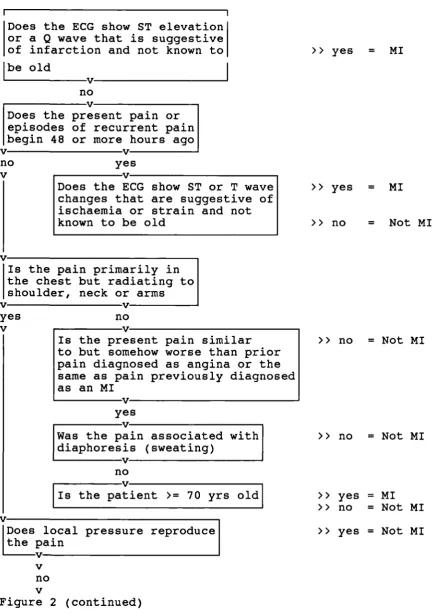
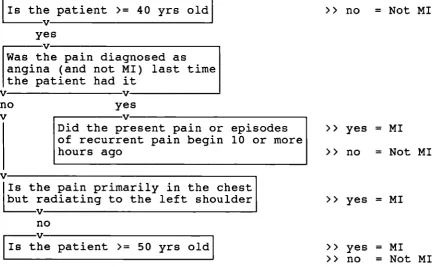
representation of disease states. As a solution a diagnostic tree was constructed and found to improve classification. Between 1982 (89) and 1988 (90), Goldman used a partitioning method to develop a minimum data set clinical algorithm for identification of patients with ACP who had suffered MI and found that it produced more accurate classification of cases than a Bayesian model produced by de Dombal (91).
Ohmann tested a similar method of data set reduction under a variety of conditions by various splits of a case database and concluded that a single selected sequence of features may not be appropriate for other that the conditions under which it was set up (74).
If a purely dependent system, like a diagnostic tree, is set up then problems arise when subsets become small. Where CI is applied, intra and inter disease feature dependence may cause errors of prediction. Methods have been proposed, that allow dependence to be taken into account, within the
applied is the Lancaster model (92) which utilises all first order feature combinations.
This was put to a practical test in AP (50) against surgeons and a CI Bayes model where allocation to the correct
diagnostic group was the criterion for success. In the first test where allocation was to individual disease group, the surgeons and the CI Bayesian model performed equivalently at approximately 63% accuracy (note: this is not the Leeds AP system, but uses the same collection sheet), and the
Lancaster variation produced 67.7% accuracy. In a second prediction of surgical vs non-surgical outcome, an accuracy of 70.8% was reported for the surgeons and 88.7% for the Lancaster variation of the Bayes model.
There are two reasons for adopting CI; to reduce the estimation of P(SId) to a reasonable calculation and to avoid the errors of estimate that would be involved with attempted calculation of the complete (D,S) array.
By considering all first order combinations (Lancaster), a compromise is reached whereby, the frequency estimates are still being made on fairly large groups but an element of inter feature dependency is taken into account.
8. Exp ert S y stems as Thinking Machines
In problem solving, computers were perhaps seen initially as efficient calculating machines. However, with the evolution of the concept of computer as a "thinking machine" came new hopes for a medical expert role.
The view that clinicians see diagnosis as probabilistic was criticised as being over-optimistic (69,93,94,95) and it was suggested that as human decision making depends upon the
manipulation of large amounts of symbolic knowledge, rather than any statistical method, computer decision aids should mimic this process (96).
More natural human skills were considered to include
integration, judgement and hypothesis testing (97). It was pointed out that integration might be modified by
experience, intuition hunches and response to cues (72). Eddy and Clanton suggested that as clinical problems become more complex, physicians move from algorithmic to heuristic reasoning (98).
There followed a shift in research emphasis from purely providing something that would work to detailed studies of the mechanisms involved in creation and implementation expert systems. This required research in such areas as knowledge representation, heuristic search, the use of natural language and models of the thought process.
A generally held outline model of the human diagnostic process was set down by Young (32) and followed the line; - Collect appropriate information
- Generate hypothesis - Test sub-goals
- If successful adopt diagnosis
where the first three steps are repeated as required.
Gorry (100), argued along the following lines, his support for the use of symbolic reasoning in medical advice (expert) systems;
- Clinical judgement is not based on a detailed knowledge of pathophysiology but on gross chunks of knowledge and
experience from which rules of thumb are derived. - Clinicians know facts but their knowledge is largely
judgmental. Their derived rules allow them to focus attention and generate hypotheses quickly without a
detailed search of all the information available to them.
- Clinicians recognise levels of belief or certainty
associated with rules but do not use them in any formal statistical manner.
- It is easier for experts to state their rules in response to perceived misconceptions in others than it is for them to generate such decision criteria a priori.
It was envisaged that medical expert systems could serve as consultants for human decision makers, but must be employed in an area where experts out perform generalists (72) and less experienced specialists. They would use general and domain specific knowledge and employ symbolic reasoning and heuristics to infer what was not explicitly described. They would be able to construct and test hypotheses by using a
systematic yet transparent methodology that mimicked the mechanisms employed by consultants (34).
"...trend from techniques based on general knowledge, such as statistical methods, towards emphasis on techniques based on domain-specific symbolic knowledge, such as diagnostic inference rules. This trend has resulted in an emphasis on
systems which interpret and explain the clinical
significance of their findings, rather than simply produce another number for the user to interpret."
(Kunz, 1984)(34)
9. Construction of Ex p ert Systems a. Methods and History
Expert systems have classically been described as having three main modules, the knowledge base, a control structure
(inference engine or interpreter) and an interactive
man-machine interface. The knowledge base has commonly been derived by a knowledge engineer whose task has been to
elicit information and heuristics from an expert and
represent them in a logically coherent form that can be used by a computer.
This has often required the use of a specialist computer language such as LISP or PROLOG. The use of formal logic to describe disease was not a new concept, however. In 1955, Dale (101), proposed the use of Boolean algebra in
psychiatry. Ledley & Lusted (42,102), went on to described disease and their symptom sets as Boolean functions.
Feinstein (103) and Wulff (104), employed Venn diagrams. In 1981, Burton (105) proposed the use of formal logic in
dermatology (for acne) where definition is often "imprecise".
By the early 1980s several medical expert systems had been developed and reported upon in the literature
(106,107,108,109).
production rules as descriptions of the clinicians
knowledge. Flow of operation in pursuit of sub goals was controlled by meta rules. Backward chaining was used to call up sub goals and specific questions that could be used to support the current hypothesis. In practice it was possible for the same question to be asked several times in pursuit of similar sub goals. The rules were written in such a way that they could be readily understood by clinician and computer alike and were displayed in support of offered therapy suggestions.
Another well known expert system, INTERNIST -1 (49) was designed to produce advice on test selection and diagnosis in internal medicine. Miller (49), considered that its
reasoning process was unduly restricted by not being able to refer to anatomical and pathophysiological (deep)
information that might be important in diagnosis. He observed that;
"The issue is whether such artificial intelligence models can reach conclusions similar to those of a competent clinician and can justify those conclusions in a rational and clinically acceptable way"
Details emerged of the construction and usage of other early systems which include ONCOCIN (111) which was constructed to assist with the management of patients on chemotherapy
protocols and PUFF (112) which interprets pulmonary function data that is derived from a lab computer.
b) Ex p ert Opinion
Al workers appeared to assume that medical experts are
correct and with this justification used their knowledge for prediction (113). Carroll (72), discussed doctors perception of their own skills and pointed out that clinicians are
often not aware of their own fallibility and can become overconfident, especially with experience. This confidence estimate does not necessarily equate with the difficulty of the case, however (32). One way for doctors to establish personal confidence limits is to monitor results of
recommended treatments. Unfortunately, it is human nature to be selective in this process and to rationalise poor
decisions. The evidence available to clinicians monitoring their own performance might also be biased in that patients affected by poor decision making might not be heard from again (32).
Even when clinicians identify the correct diagnosis it has been suggested that they might not always provide optimal treatment and even allow harm because they are wary of side effects (72). The choice of treatment is also in part
determined by standard practice which may not represent the best option for the patient (99).
Some have expressed doubts about methods of expert selection (72). In INTERNIST, the expert simply volunteered for the task of providing knowledge for the system. It seemed that the expertise could not always be elicited and in such cases there was evidence that experts might be forced into
producing explanations that they did not necessarily use themselves (72).
"But who is to say what experts make the rules? Experts to some, to others may be fools!"
(de Dombal,1983)
not adequately represent the experts knowledge (114,115). It seemed possible to produce general rules for easy cases but in more difficult cases there was incomplete knowledge
available and the addition of rules that detailed the exceptions and qualifications could rapidly make a system unmanageable (72).
c) Expert S y stems, Difficult Cases and Deep Knowledge It has been recognised that difficult diagnostic problems are sometimes caused when patients present with more than one condition (116) or the presentation of a condition changes with time. A rule based expert system might well fail on these occasions by trying to fit all the presenting symptoms and signs to one pattern.
In TNET, a temporal network extension to ONCOCIN (117), symptoms, signs and test results are time stamped and are assigned a life span of activity, according to their nature, during which they can be used in inference.
A logical method of dealing with possibility of the co-occurrence of two diseases in the same patient was
proposed by Reggia (118), in 1985. The basic principles were that, if a manifestation can occur in a disease then this is a reason for the disease to exist in the differential. If, on the other hand, it cannot be explained by one disease then this is a reason to postulate the occurrence of two diseases simultaneously.
Non-numeric probability terms were included as a weighting scheme to order the differential and provide detail to the justification.
![Table 13Has].ar Trial of Acute Abdominal Pain Advice System:](https://thumb-us.123doks.com/thumbv2/123dok_us/8095845.1351266/143.595.120.517.289.578/table-has-ar-trial-acute-abdominal-pain-advice.webp)

