Bootstrapping language-neutral term extraction
Wauter Bosma and Piek Vossen
Dept. Language & Communication, Vrije Universiteit Boelelaan 1105, 1081HV Amsterdam, The Netherlands
{w.bosma,p.vossen}@let.vu.nl
Abstract
A variety of methods exist for extracting terms and relations between terms from a corpus, each of them having strengths and weaknesses. Rather than just using the joint results, we apply different extraction methods in a way that the results of one method are input to another. This gives us the leverage to find terms and relations that otherwise would not be found. Our goal is to create a semantic model of a domain. To that end, we aim to find the complete terminology of the domain, consisting of terms and relations such as hyponymy and meronymy, and connected to generic wordnets and ontologies. Terms are ranked by domain-relevance only as a final step, after terminology extraction is completed. Because term relations are a large part of the semantics of a term, we estimate the relevance from its relation to other terms, in addition to occurrence and document frequencies. In the KYOTO project, we apply language-neutral terminology extraction from a parsed corpus for seven languages.
1.
Introduction
Knowledge of the key terms in a domain is useful for end-users as well as for further processing. For ‘generic’ words in most popular languages, this knowledge is par-tially available in manually constructed resources such as wordnets. Automatic terminology extraction technology can help for small languages and specific domains, where no such resources exist or where existing resources are in-complete. The extracted data are then used as is, or auto-matic extraction is used as a basis for manual processing or annotation.
Terminology extraction may include any automatic process which contributes to building or enriching a terminological resource, such as a thesaurus or an ontology. This includes extracting lists of terms and relations between terms such as hyponymy or meronymy. The traditional aim of termi-nology extraction is to find the list of terms which have a specific meaning within a domain, given a domain corpus. Then, more information is gathered about those terms, such as relations.
This may be useful in some applications, but it implies that terms are ignored if they are also used in other domains, even if they contribute to the domain in question as well. Since our goal is to build a complete terminology of the do-main, we drop the requirement of domain specificity – any domain-relevant term is a valid term. We define relevance in terms of the semantic contribution to the domain.
If an extracted term is already present in a given resource, such as wordnet, we establish a so-called plug-in relation between the extracted term to the existing term (Roventini and Marinelli, 2004). In this way we benefit from given relations in the existing resource and provide the new linked terms as an extension of the existing resource.
A number of technologies is currently available which con-tributes to our goal. Term extraction methods are employed to extract candidate terms using syntactic features (Bouri-gault, 1992). Relations between words can be extracted
from corpora automatically by learning and using patterns which express these relations (van der Plas, 2008). Dis-tributional statistics of a term’s context can help general-izing relations by using the hierarchical structure of word-net (Miller, 1995). And finally, co-occurrence statistics are used to decide which terms are significant in the domain, and which terms are not (Lin, 1998). All of these tech-niques have proven their use in the past for specific appli-cations. We hypothesize that they are also complementary and that the combination is even more powerful, and an im-portant next step towards reaching our goal of terminology extraction.
In this paper we describe our approach to performing term extraction in the KYOTO (Knowledge Yielding Ontologies for Transition-based Organization) project1in the environ-mental domain. The process consists of a language-specific phase and a language-neutral phase. In the language-specific phase we use generic tools for parsing, such as FreeLing2and Alpino (Bouma et al., 2000). The language-neutral phase involves morpho-syntactic analysis, pattern-based analysis, distributional statistics and co-occurrence statistics.
2.
The KYOTO system
The goal of KYOTO is a system that allows people in com-munities to define the meaning of their words and terms in a shared Wiki platform so that it becomes anchored across languages and cultures but also so that a computer can use this knowledge to detect knowledge and facts in text. Whereas the current Wikipedia uses free text to share knowledge, KYOTO represents this knowledge so that a computer can understand it. For example, the notion of environmental footprint will become defined in the same way in all these languages but also in such a way that the computer knows what information is necessary to calcu-late a footprint. With these definitions it will be possible to
1
www.kyoto-project.org
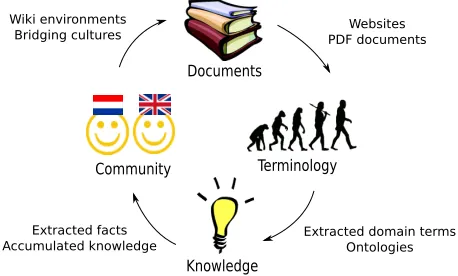
Figure 1: The data flow in the KYOTO system.
find information on footprints in documents, websites and reports so that users can directly ask the computer for ac-tual information in their environment. The KYOTO system is used for seven languages: Basque, Chinese, Dutch, En-glish, Italian, Japanese and Spanish.
Figure 1 shows an overview of the information flow in the KYOTO system. Users input documents of their interest. Those documents are processed and the terminology is ex-tracted. Users have access to a shared platform which al-lows them to build community knowledge by altering and enriching the terminology of their domain. They also for-mulate fact profiles, which are used to configure the fact extraction module to extract specific types of facts. These facts can be searched or used by a “fact alert” system. The KYOTO system is work in progress. Interaction between modules is still provisional, and a first integrated system is expected early 2010.
A central aspect of the system is the Kyoto Annotation For-mat (KAF), a multi-layered and language-neutral annota-tion format. Each document in the corpus (which is a col-lection of websites and PDF documents provided by users in the environmental domain) is processed by a number of modules, each of which adds annotation layers to the same KAF file. The result is an integrated view on the document which includes annotation of multiwords, parts of speech, constituents, syntactic dependencies, disambiguated links to wordnet, named entities, ontological relations, and facts. KAF documents which include at least the layers up to constituents can be used as input for terminology extrac-tion. Since KAF documents already contain structural in-formation, we can keep the terminology extraction itself language-neutral. The language-neutral word sense dis-ambiguation module automatically links the extracted ter-minology to wordnet and domain terter-minology databases (Agirre and Soroa, 2009). An example of such a domain terminology database in the environmental domain is the Species 2000 database3, a taxonomy of species. KAF is de-scribed in greater detail in (Bosma et al., 2009, outline) and in (Agirre et al., 2009, manual).
Term extracting in KYOTO involves detecting a small num-ber of generic relations between terms. At present, we
fo-3www.sp2000.org
cus on hyponymy and meronymy, but we may extend this to other relations in the future. Other term extraction systems have included conceptual or domain specific relations, such as X causes Y or X obstructs Y (Sporleder and Lascarides, 2005). In KYOTO, we decided to regard such phenom-ena as processes or events rather than as relations between terms.
3.
Terminology extraction
While we acknowledge that some words have more rele-vance to a domain than others, we consider any syntactic unit as a potential term. Rather than focusing on extract-ing the most relevant terms, we try to establish a view on the terminology of the domain which is as complete as pos-sible. Since an essential part of the meaning of a term is defined by its relations to other terms, discovering relations is as important to our goal as ranking terms by relevance. Once we have extensive knowledge of how the terms re-late to each other, we are also more capable of judging the domain-relevance of a term. After a domain-relevance score is assigned, the list of terms can be reduced as desired by setting a threshold to filter out the least relevant terms.
The process of language-neutral terminology extraction is split up into the following phases:
1. Extract candidate terms.
2. Use morpho-syntactic analysis to find hyponymy.
3. Use pattern-based analysis to find hyponymy and meronymy.
4. Use distributional statistics to find other potential (but untyped) relations.
5. Previously acquired relations in combination with document frequencies to rank terms for domain-relevance.
6. Language alignment.
Preceding term extraction, we perform tokenization, part-of-speech tagging, lemmatization, dependency parsing and word-sense disambiguation. This produces all the morpho-syntactic information required, which is stored in KAF. As a result, the input to the term extraction process is a set of KAF files which contains the following levels of annota-tion:
Tokenization. Tokens are grouped by page, paragraph and
sentence.
Lemmatization. A lemma and part-of-speech is assigned
to a single-word or multi-word. References to tokens are inserted as well. Wordnet senses are assigned to lemmas where possible.
Constituents. Phrases such as noun phrases and
Dependencies. Lemmas have dependency relations to
other lemmas. The relation type (subject, object, etc.) is also identified.
The language-neutral nature of KAF allows us to keep any processing from this point on language-neutral.
Because all words in the source documents are linked to the wordnet of the corresponding language, also the ex-tracted candidate terms are linked to wordnet (either di-rectly or through hypernym relations). Since the word-nets are mapped to the English wordnet, the majority of extracted candidate terms also have a hypernym which is linked to its equivalent in other languages. For instance, the term invasive species is linked to species (based on its morpho-syntactic structure). The term species is in word-net and linked to foreign equivalents of the term (e.g. soort in Dutch).
3.1. Extraction of candidate terms
Two essential characteristics of a term are its semantic func-tion to represent a concept, and a set of syntactic constraints that make up its form. The general strategy of candidate term extraction is to extract any possible sequence of words that meets the syntactic constraints of the target category. The same procedures can be followed for the target cat-egories of noun phrases, prepositional phrases, adjectival phrases, etc. This results in a large list of candidate terms, not all of which are domain-relevant. In this stage how-ever, our main concern is recall, as the aim is to achieve a semantic view on the domain which is as complete as pos-sible. Domain-relevance can be better assessed once more information about a term is available.
Both the lemmas and constituents are sources of candidate terms. In case of lemmas, the part-of-speech is used to check if the lemma matches the target category. If they match, the lemma is added to a repository of candidate terms of the corresponding target category and language, along with its surface form, and a pointer to the specific in-stance in the source document. This information is directly taken from the KAF input file. If the lemma is already rep-resented in the candidate term repository, just the surface form and the pointer to the instance is added to the existing candidate term.
In case of constituents, the procedure is identical to that of lemmas, except that the phrase category is used instead of the part-of-speech, and additional normalization is ap-plied. Normalization is necessary to detect that two words belong to the same term. For lemmas this is assumed if they are equivalent. This is sufficient to detect that words like
vertebrate and vertebrates are both instances of the term vertebrate. For constituents, a straight-forward way of
nor-malizing phrases would be to use the lemmas of each of its elements instead of their surface form. As a result,
migrat-ing species would be normalized as migrate species, and so
would be the phrase migrated species, although there is a significant difference in their semantics. A more accurate solution is to lemmatize just the head, so that agriculture
policies and agriculture policy are both normalized as agri-culture policy, but migrating species and migrated species
remain distinct term candidates. Still, variation in the use of determiners results in failure to match instances of the same term. For instance, migrating species, most
migrat-ing species and a migratmigrat-ing species remain three different
terms. To solve this issue, all leading and trailing (the lat-ter is not applicable to English) delat-terminers are removed, so that the previously mentioned terms all normalize to
mi-grating species. The resulting normalized form is stored as
the lemma with the corresponding candidate term.
3.2. Morpho-syntactic analysis
Domain terms are often multi-words or compounds. They are typically not in generic resources such as wordnets, but they do have a rich syntactic structure which may be used as a substitute for some information which would be in a do-main wordnet. Specifically, we use this structure to derive hyponymy relations.
For each candidate term which is a multi-word and for each compound, we find its largest substring unit which satisfies the following conditions.
• the unit is a consecutive sequence of words or com-pound elements;
• the unit contains the head of the multi-word or com-pound;
• the unit is a candidate term.
If there is a candidate term which satisfies these condi-tions, it is considered to be more general than the longer term (of which it is a substring). As a consequence, the two candidate terms are potentially connected by a hy-ponym/hypernym relation.
By using this method, we can relate many domain terms to generic (wordnet) terms. For instance, if the noun phrase
most tropical terrestrial species occurs in the corpus, the
candidate term tropical terrestrial species is extracted by stripping off the determiner. Since species is the head of the candidate term, the largest possible substring is terrestrial
species. If there is no such candidate term, the next term
to consider is species, and species would be a hypernym of the more specific tropical terrestrial species. If
terres-trial species is actually a candidate term, it is taken to be
the hypernym. Since this process is applied to each candi-date term, terrestrial species will eventually be related to its hypernym species.
The algorithm also works for compound languages. For in-stance, the Dutch word landbouwbeleid (English:
agricul-tural policy) is a compound whose head is beleid (English: policy). Following the beforementioned procedure, beleid
is recognized as a hypernym of landbouwbeleid.
3.3. Pattern-based analysis
ex-pressed in morpho-syntactic features. Since this concerns just a subset of all hyponymy relations and most other rela-tions, alternative methods are needed to find additional re-lations. In order to increase the recall of relations, we apply a pattern-based analysis of the source documents. Exam-ple patterns are mined automatically from the source text, given pairs of terms which are known to be related, using wordnet as a resource for such relations.
There appears to be a consistent way of in which meronymy and hyponymy are expressed in text. For example, consider the following text snippets (all of them originate from the Wikipedia page about frogs4).
1. The skin secretions of some toads, such as the
Col-orado River toad and cane toad, contain ...
2. Neobatrachia is further divided into the Hyloidea and Ranoidea.
3. ... with smooth and/or moist skins, ...
4. The physiology of frogs is generally like that of other
amphibians (and differs from other terrestrial verte-brates) ...
5. A few of the larger species may eat prey such as small
mammals, fish and smaller frogs.
The first two snippets express hyponymy in a relatively straight-forward way. In both cases, one of the arguments of the relation is a single term and the other is a list of terms. The relation itself is expressed in a phrase which separates them. Also the bare fact that two terms are men-tioned in the same list tells us that they have some kind of relation: they are typically co-hyponyms, or they have some other common feature which justifies there cluster-ing. The third snippet shows a list of terms (smooth, moist) which have in common that they indicate frog skin types, although the characteristics of the relation does not become apparent from just the list by itself.
In snippet 4, two hyponymy relations are expressed, but this requires more complex pattern than those in the previ-ous snippets. Properly recognizing these relations requires resolving the reference from other to frogs.
A Pattern similar to those in snippet 1 and 2 also appears in snippet 5. Following an analogous reasoning, prey would (incorrectly) be seen as a hypernym of fish. In this case, the first argument of the relation (prey) is the name of a role in an event, and the second argument is a list of items which can play this role. Although this is not technically an instance of hyponymy, such relations are a significant part of the terminology of a domain.
The rigidity status of terms helps to distinguish between hyponymy and role relations (Guarino and Welty, 2002). For instance, a rigid term cannot be a hyponym of a non-rigid term. If such a hyponymy relation is indicated by a pattern nonetheless, it must be a role relation rather than a hyponymy relation. In KYOTO, the rigidity of terms is
4
http://en.wikipedia.org/wiki/Frog
estimated by looking for occurrences of the term in contex-tual patterns which indicate rigidity or non-rigidity (Hicks and Herold, 2009).
For finding hyponymy and meronymy, we use word se-quence patterns which are automatically learned from ex-amples in a corpus, using wordnet. Wordnets are avail-able in a fair number of languages and they already contain meronymy and hyponymy relations, which makes them a suitable resource for learning relation patterns. For collect-ing examples, we use a corpus which is preprocessed as described previously: all words are already linked to word-net senses if possible. For each sentence in the corpus, we find all pairs of words which are linked to wordnet. Then, for each of those pairs, we find out how they are related in wordnet. If they do not have a hyponymy or meronymy re-lation, we skip the pair and start processing the next one. If they do, we extract the text which separates the words and store it as an example of the corresponding relation, along with the order of the arguments (e.g., X-pattern-Y or
Y-pattern-X). If a word is part of an enumeration, we do not
include any part of the enumeration in the extracted text. The result is, for each relation type, a repository of exam-ples of the relation which function as patterns for detecting relations between domain terms.
Note that, so far, we acquired only positive evidence of a relation. We could scan the same corpus again and count the number of occurrences of each pattern in absence of a relation. Doing so, we can estimate the probability that the pattern expresses the relation, based on the number of occurrences where the pattern does or does not express a re-lation. However, wordnets contain incidental errors which may have significant consequences, especially in specific domains. Also, we think that role relations are expressed similarly to hyponymy relations, and wordnets typically lack these role relations. In short, we refrain from using negative examples because our guess is that pattern occur-rences will erroneously count as negatives too frequently to be useful.
Next, the domain corpus is processed in order to find oc-currences of the examples in the repository. Once a pattern is found to separate two candidate terms between which no relation was previously known, we have evidence of a re-lation. However, the presence of the pattern may just be coincidental.
3.4. Distributional statistics
There have been a number of attempts to find different types of relations by using distributional statistics (Hindle, 1990; Lin, 1998; van der Plas, 2008). The key assumption is that terms which share a common habitat are related in some way. The context used to measure this can be the term’s linear context (e.g., the words immediately following the term) or its syntactic context (e.g., the dependency rela-tion and/or the parent in the dependency hierarchy). For instance, if small mammals and fish are frequently the ob-ject of eat, this may be an indication that they are related.
but in general, the result is a mixture of different relation types. Nevertheless, such techniques have been used to au-tomatically build thesauruses and have proven to be a valu-able source of conceptual relations. These measures are es-pecially suitable for applications which need a high recall, and are in that way complementary to previously described (precision-oriented) methods of relation extraction. Also, this method is relatively cheap in computational terms.
The distributional measures are based on the degree to which terms are ‘attracted’ to each other. This is expressed by the mutual information (MI) value which is associated with a pair of terms (Hindle, 1990). A pair of terms get an MI value of 0 if they co-occur as frequently as expected by chance. The MI value is positive if the terms co-occur more frequently, or negative if they co-occur less frequently. The MI value of a pair of termsw,w′is calculated as follows:
I(w, w′
) = log P(w, w
′ ) P(w)·P(w′)
= log||(w, w
′)|| · ||(∗,∗)||
||(w,∗)|| · ||(∗, w′)||
where||(a, b)||is the number of occurrences in the corpus of the pair (a, b), and∗ is a wildcard which matches any term. The MI value does not prescribe where or how the pairs are found. For instance, Hindle counted pairs of terms where they participate in a verb-object or a verb-subject re-lation. He calculated an MI value for each type of rere-lation. In KYOTO, we use linear proximity relations in addition to verb-object and verb-subject.
The MI value provides information on which terms co-occur. Since similar words are used in a similar context, we can use these data to find similar words. For this, we use Hindle’s similarity measure with normalization to compen-sate for differences caused by word frequencies:
sim(w1, w2, w) =
max(0, max(|I(w1, w)|,|I(w2, w)|)
−|I(w1, w)−I(w2, w)|) sim(w1, w2) =
2·Pw∈Wsimr(w1, w2, w)
P
w∈W|I(w1, w)|+
P
w∈W|I(w2, w)|
wheresim(w1, w2)is the similarity of the termsw1 and
w2, andW is the set of all terms in the corpus.
3.5. Domain-relevance assessment
After completing relation extraction, we assign a domain-relevance score to each term. Note that domain-domain-relevance does not imply domain-specific – a term might be relevant to the domain and also to other domains. A term which is well connected in the terminology graph extracted from the source documents is potentially highly relevant to the do-main. In particular, to calculate the domain-relevance of a
term, we use its document frequency and its number of hy-ponyms. In the future, we may extend this algorithm to use additional features and other relations, such as meronymy. The domain-relevanceR(t)of a termtis calculated as fol-lows:
R(t) = ||doc(t)|| ·(1 +||hypo(t)||)
where ||doc(t)|| is the document frequency of t; and ||hypo(t)||is the number of hyponyms oft.
The rationale behind this is that a high number of hyponyms and a high document frequency indicates a high relevance. If the document frequency is 0, the domain-relevance is 0. We use1 +||hypo(t)||so that the term has a domain-relevance, even if there are no hyponyms.
The range of possible values ofR(t)is[0..∞i. Because such an unrestricted range is hard to interpret, we normalize this to[0..1]. To this end, we define the normalized domain-relevance functionRnorm(t):
Rnorm(t) =
1−(1 +log(1 +R(t))))−1
A normalized domain-relevance value is assigned to each term candidates. This value can be used to rank term candi-dates, and a threshold value can be used to reduce the term list to the most relevant terms.
3.6. Language alignment
to bedreigd in Dutch, then this is probably also true for en-dangered species and bedreigde soorten.
Once we have established an alignment of term hierarchies across languages for a domain, we can use the combina-tion for further mining of relacombina-tions and scoring of rele-vance. First of all, relations detected in one language can be proposed for another language. These can be relations to existing terms that have not been established in the target language, while there is still some equivalence relation be-tween the source and target terms. In the most strict sense interpretation, it means that both the components of a new term and the target in two languages have some equivalence across the languages whereas the target in one language has a relation to the new term but the equivalent in the other language has not. Typically when the hierarchy in one lan-guage skips levels compared to another hierarchy, we can expect that new relations can be proposed to the more shal-low structure, e.g. if birds are subdivided into water birds and waders in one language hierarchy but not in another hierarchy, we can suggest this subdivision to the other lan-guage.
Finally, we can use the cross-linguistic evidence that equiv-alent terms have many relations in multiple languages, as a further strong clue that the concept of the term is important for the domain.
4.
Conclusion
We perform terminology and relation extraction by bining several established methods in a way that the com-bination is more effective than the sum of its parts. As a re-sult, we can find information which cannot be found by any of these methods individually. In doing so, we do not ap-ply an a-priori statistical selection of domain-specific terms but consider all terms with many important semantic rela-tions as being important, including terms that may occur in other domains. As all required syntactic information is pro-vided by language specific processors and represented in a uniform way, the terminology extraction process itself is language-neutral. When applied to comparable corpora in multiple languages, it generates comparable term databases across languages that can be further aligned through their implicit wordnet mappings. This provides further novel possibilities for finding more and better relations and scor-ing relevance of term concepts in a domain. This paper describes work in progress. Our term extraction module is running on multiple languages as part of the KYOTO sys-tem. It has been used to build many databases in all the different KYOTO database and empirical validation is to be completed soon.
Acknowledgments
The KYOTO project is co-funded by the European Union FP7 ICT Work Programme under Challenge 4.2: Intelligent Content and Semantics.
5.
References
E. Agirre and A. Soroa. 2009. Personalizing pagerank for word sense disambiguation. In Proceedings of EACL. E. Agirre, X. Artola, A. Diaz de Ilarraza, G. Rigau,
A. Soroa, and W. E. Bosma. 2009. Kaf: Kyoto anno-tation framework. Technical Report TR 1-2009, Univer-sity of the Basque Country, dept. Computer Science and Artificial Intelligence.
W. E. Bosma, P. Vossen, A. Soroa, G. Rigau, M. Tesconi, A. Marchetti, M. Monachini, and C. Aliprandi. 2009. Kaf: a generic semantic annotation format. In
Proceed-ings of the GL2009 Workshop on Semantic Annotation,
September.
G. Bouma, G. van Noord, and R. Malouf. 2000. Alpino: wide-coverage computational analysis of dutch. In
Pro-ceedings of CLIN.
D. Bourigault. 1992. Surface grammatical analysis for the extraction of terminological noun phrases. In
Proceed-ings of the 14th conference on Computational linguis-tics, pages 977–981, Morristown, NJ, USA. Association
for Computational Linguistics.
N. Guarino and C. Welty. 2002. Evaluating ontological decisions with ontoclean. Communications of the ACM, 45(2):61–65.
A. Hicks and A. Herold. 2009. Evaluating ontologies with rudify. In Proceedings of the International Conference
on Knowledge Engeneering and Ontology Development (KEOD), October.
D. Hindle. 1990. Noun classification from predicate-argument structures. In Proceedings of the 28th annual
meeting on Association for Computational Linguistics,
pages 268–275, Morristown, NJ, USA. Association for Computational Linguistics.
D. Lin. 1998. Automatic retrieval and clustering of similar words. In COLING-ACL98.
G. A. Miller. 1995. WordNet: a lexical database for en-glish. Communications of the ACM, 38(11):39–41. A. Roventini and R. Marinelli. 2004. Extending the
ital-ian wordnet with the specialized language of the mar-itime domain. In P. Sojka, K. Pala, P. Smrˇz, C. Fellbaum, and P. Vossen, editors, Proceedings of the second
Inter-national WordNet Conference (GWC 2004), pages 193–
198, January.
C. Sporleder and A. Lascarides. 2005. Exploiting linguis-tic cues to classify rhetorical relations. In Proceedings of
Recent Advances in Natural Language Processing, pages
532–539.
L. van der Plas. 2008. Automatic lexico-semantic
acquisi-tion for quesacquisi-tion answering. Ph.D. thesis,