IJEDR1602218
International Journal of Engineering Development and Research (www.ijedr.org)1233
Securing IOT for Smart Home System
1K Aparna Reddy, 2A Krishna Murthy, 1Assistant Professor, 2Assistant Professor,
1Department of Electronics and Communications Engineering, 1Princeton institute of engineering & Technology for women, Hyderabad, India
________________________________________________________________________________________________________
Abstract – Security in IOT has become an advanced concept to research in environment of Internet of Things (IoT) This paper presents an approach to incorporate strong security in deploying Internet of Things (IOT) for smart home system, together with due consideration given to user convenience in operating the system. Applications of IOT are increasing. Uses of new technologies in IOT environment are increasing rapidly. It has been already developed in Industrial Wireless Sensor Network (WSN). A smart home is also one of the applications of IOT.A wifi gateway is used as the center node of the system to perform the system initial configuration. It is then responsible for authenticating the communication between the IOT devices as well as providing a mean for the user to setup, access and control the system through an Android based mobile device running appropriate application program. This paper presents not only the problems and challenges come in IOT and Smart homes system using IOT but also some solutions that would help to overcome on some problems and challenges.
Index Terms – Security, Internet of Things (IOT), Smart homes system.
________________________________________________________________________________________________________
I INTRODUCTION
The Internet of Things is infiltrating the home. A plethora of connected devices are currently available for consumer uses that are intended to make the most basic, everyday processes smarter and more intuitive. In fact, CNET just recently compiled a list of the top smart-home devices in 2015. It includes smart thermostats, smart light bulbs, a do-it-yourself smart security kit, smart outlets, a smart lock and more. These are only some of the basic household items that have been infused with connectivity. Big-name retailers such as The Home Depot have already updated online stores with official smart home sections for shoppers. Garage door openers, security systems, sprinkler sets and household appliances with connected features are being manufactured and sold.
According to Part 1 of Trend Micro's, "The Smartification of the Home" report, manufacturers and developers of hardware for the home are under pressure to create convenient products that are also energy efficient and secure. Part 2 of the report states that this has resulted in broadband providers offering service-package add-ons specifically for smart home technology. Exactly how wide spread the adoption of smart home technology will be remains to be seen, but so far it’s been fast out of the gates.
IILITERATUREREVIEW
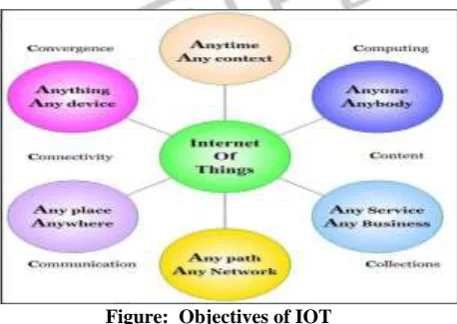
IOT allows people and things to be connected Anyplace, Anytime with anyone and anything, by using ideally in any network/path and any service. IOT has come as a bonus to a variety of sectors like transport, education, energy, business, home and many more. IOT’s possibility is unrestricted only to smart homes, but it encompasses huge application domains.
IOT represents the next advancement of the Internet, taking an enormous hike in its ability to gather, analyze, and distribute data that we can turn into facts, info and eventually, wisdom. Such data-analysis, distribution, information and knowledge can be very helpful for an application such as a smart home. These [IOT] applications become platforms for innovative commercial services, and with these added services you can also generate new revenue streams [5]. The following figure 2 shows the worldwide smart homes managed service revenues up to the year 2017:
Following are the benefits of smart homes:
1. Adding Convenience to your Daily Life: When your home is converted into a smart home, you’ll have all of your products
programmed to your specific needs. Additionally being able to governor your home, no matter where you are, can be extremely beneficial.
2. Customization: There are numerous smart products in the marketplace currently and you definitely don’t need to buy all of
them at once. As the consumer it’s up to you to select which product you want most, determine if you like it, and then add on to your collection of smart home products as you go. A decent item to begin with would be a thermostat or home security system if you’re in the market for either of those.
1. Security: Smart home security systems allow you to view your home irrespective of where you are. You can have motion detectors, locks, cameras installed, etc. and you will be notified immediately if something is out of the ordinary. Various systems will even let you know of any unexpected temperature changes so that you’re warned if there is a probable fire.
2. Ease of Use: Almost all smart home products can be installed without much hassle, countless of them don’t even want you to
IJEDR1602218
International Journal of Engineering Development and Research (www.ijedr.org)1234
3. Save Money and the Environment: Smart homes feature products like air conditioners, thermostats and lighting. Having the ability to put these things on a timer, or switch them on and off when you’re not at home will likely help you save money on your electricity bills. Several of these products permit you to track your energy usage and costs. A few technologies used for smart homes are described below: Mobile controlled home mechanization structure provides a easier solution of a Global System for Mobile GSM network. It will aid to turn-off the entire system, improves the convenience and comfort of the user while it provides energy efficiency and safety. GSM is used to digitalize a signal or data and transmit signal or data to the receiver. GSM component can be used to direct the signal over a mobile in a fixed frequency to other mobile phone connected with the receiver [3]. Cloud computing is the practice of using remote servers on the internet to store, manage and process data as an alternative to a personal computer. Cloud computing is a general term that is better divided into three categories: Infrastructure-as-a Service, Software-as-a Service and Platform-as-a-Service [4]. These services can be exploited in the implementation of smart homes where all device information can be stored on the cloud and accessed by the user.
III EXISTING SYSTEM
Recent advancements in the semiconductor technology have enabled cost effective solutions to directly integrate wireless network connectivity in embedded processors and sensors, which in turn lead to great interest in the Internet of Things (IOT), many existing home automation system uses Zig Bee or Bluetooth for the wireless connection, wifi is also a viable alternative due to the introduction of IPv6 that enables the connection of almost unlimited number of embedded devices for providing security to the home system but sometimes we are unable to provide security due to network problem so to overcome this network we will go for the following technique.
Proposed System:
The proposed system consists of a home gateway and several IOT devices connected via a Wi-Fi network. The user can access and control the system using a mobile device by accessing the home gateway. The gateway is responsible for authenticating and monitoring the communication between devices in the system. The gateway can also provide translation between different IOT standards at the lower layer while maintaining a common security scheme at the higher layer. Each IOT device can only communicate with the gateway. Based on user preferences, the information from one device can also trigger the gateway to send a message to another device in order to response with appropriate action. The proposed system uses a gateway to provide a better authentication process and a convenient interface for the user via an Android device.
IV OVERVIEW OF INTERNET OF THINGS (IOT)
What makes IOT devices different than ordinary sensor devices is basically the ability to communicate directly or indirectly to the internet. So what are the main reasons a device would that be and what kind of features would it have? Firstly, sensors generate a lot of data that needs somehow to be managed. Usually embedded memory is quite limited so people utilize alternative solutions like storing data on memory cards, or in computers in cases sensors are connected directly with them. Since sensors can be integrated to devices with further networking capabilities, why not to store the information online? By this we can solve the problem of limited storage and at the same time we can access the data anywhere, anytime using appropriate web applications. Fig 2 illustrates the main features of „Things‟ and their interconnection with internet services. In this digital world, the people also want to communicate with all non-living things through internet such as home appliances. The people already have a lot of technologies to interact with living things but IOT enables to communicate with non-living things with comfort manner.
Figure: Objectives of IOT
IJEDR1602218
International Journal of Engineering Development and Research (www.ijedr.org)1235
interoperability. Simply this phase focuses the functionalities and communications among sensor/actuators, embedded devices and any other smart devices.Figure: Functional Integration of IOT
The Smart Things concept has four logical architectural layers 1) which connect to the Smart Things Hub or in some cases directly to the Cloud 2) which acts as a gateway for getting events and messages to or from the Cloud 3) which provides the abstraction and intelligence layers described above, as well as the web services that support the presentation layer 4) which provides the presentation layer for smart things in the form of mobile applications and our web IDE. Within the Smart Things-Cloud, however there are also four logical “Layers” of the architecture as well 1) Connectivity: Which is responsible for maintaining persistent connectivity to Smart Things Hubs, Smart Things Mobile application 2) Event processing and routing: This layer routes events from hubs or devices to smart applications that are subscribed to specific devices or events 3) Application: This layer provides the data access layer for data about accounts, users, and devices and is responsible for the execution of smart applications 4) Web Services: This layer provides the web services or Application Programmatic Interface (API) layer that supports both the mobile applications as well as developers who want to integrate from an external system using the Smart Things APIs.
GSM Interface:
The GSM receiving module acts as a gateway in communication module. This receiving module can be a GSM/GPRS modem, mobile phone or any SMS send/receiving device. This device connects with computer and microcontroller through USB or serial cable [17]. The AT (Attention) commands are used to manage connections and to send/receive the SMS. The IOT Agent will receive SMS by NEW_MESSAGE_RECEIVED event. When new SMS arrived the agent parsed and process what the SMS command tells. Sample AT Commands are “AT+CMGL” List messages, “AT+CMGR” Read message, “AT+CMGS” Send message [17]. The interface module communicates with GSM device and reads the SMS and checks whether it’s a special SMS or ordinary SMS. If it’s a command SMS, this commands are executed by IOT Agent.
Prototype and working:
The prototype model of this project is shown in figure.
Figure: IOT based smart home V APPLICATIONS OF INTERNET OF THINGS (IOT)
There are many applications of IOT as it can play a vital role in many areas. All the applications are comprised in many smarter „Things‟ such as sensors, actuators, microcontrollers etc.
There are three major categories of IOT applications:
Society, Environment Industry
IJEDR1602218
International Journal of Engineering Development and Research (www.ijedr.org)1236
Lastly, in the whole society the “Thing” may be related to devices within public spaces or devices for Ambient Assisted Living, etc. For example Agriculture & breeding, recycling, environmental management services, energy management, smart home, smart city, smart office etc.Hardware Requirements:
Micro Controller (LPC 2148)
LCD
Relay Load
Driver Circuit DC FAN Wi-Fi Module Power Supply
Software Requirements:
Kile IDE Embedded ‘C’ ORCAD
Figure: Block Diagram VI SOFTWARE
Overview of KEIL CROSS C COMPILER:
It is possible to create the source files in a text editor such as Notepad, run the Compiler on each C source file, specifying a list of controls, run the Assembler on each Assembler source file, specifying another list of controls, run either the Library Manager or Linker (again specifying a list of controls) and finally running the Object-HEX Converter to convert the Linker output file to an Intel Hex File. Once that has been completed the Hex File can be downloaded to the target hardware and debugged. Alternatively KEIL can be used to create source files; automatically compile, link and covert using options set with an easy to use user interface and finally simulate or perform debugging on the hardware with access to C variables and memory. Unless you have to use the tolls on the command line, the choice is clear. KEIL Greatly simplifies the process of creating and testing an embedded application.
Microcontroller (LPC 2148):
LPC2148 microcontroller board based on a 16-bit/32-bit ARM7TDMI-S CPU with real-time emulation and embedded trace support, that combine microcontrollers with embedded high-speed flash memory ranging from 32 KB to 512 KB. A 128-bit wide memory interface and unique accelerator architecture enable 32-bit code execution at the maximum clock rate. For critical code size applications, the alternative 16-bit Thumb mode reduces code by more than 30% with minimal performance penalty. The meaning of LPC is Low Power Low Cost microcontroller. This is 32 bit microcontroller manufactured by Philips semiconductors (NXP). Due to their tiny size and low power consumption, LPC2148 is ideal for applications where miniaturization is a key requirement, such as access control and point-of-sale.
LCD (LIQUID CRYSTAL DISPLAY)
LCD is a type of display used in digital watches and many portable computers. LCD displays utilize to sheets of polarizing material with a liquid crystal solution between them. An electric current passed through the liquid causes the crystals to align so that light cannot pass through them.
MICRO
CONTROLLER
LOAD
RELAY
DC FAN
DRIVER
Android
Mobile
Wi-Fi Module
LCD
IJEDR1602218
International Journal of Engineering Development and Research (www.ijedr.org)1237
Figure: LCD display
Relay:
Figure: Relay Construction
It is an electro-magnetic relay with a wire coil, surrounded by an iron core. A path of very low reluctance for the magnetic flux is provided for the movable armature and also the switch point contacts. The movable armature is connected to the yoke which is mechanically connected to the switch point contacts. These parts are safely held with the help of a spring. The spring is used so as to produce an air gap in the circuit when the relay becomes de-energized.
Driver Circuit:
Figure: Driver Circuit
Wide supply-voltage range: 4.5V to 36V Separate input- logic supply
Internal ESD protection Thermal shutdown
High-Noise-Immunity input
Functional Replacements for SGS L293 and SGS L293D Output current 1A per channel (600 MA for L293D) Peak output current 2 A per channel (1.2 A for L293D)
IJEDR1602218
International Journal of Engineering Development and Research (www.ijedr.org)1238
L293D is a dual H-bridge motor driver integrated circuit (IC). Motor drivers act as current amplifiers since they take a low-current control signal and provide a higher-current signal. This higher current signal is used to drive the motors. L293D contains two inbuilt H-bridge driver circuits. In its common mode of operation, two DC motors can be driven simultaneously, both in forward and reverse direction. The motor operations of two motors can be controlled by input logic at pins 2 & 7 and 10 & 15. Input logic 00 or 11 will stop the corresponding motor. Logic 01 and 10 will rotate it in clockwise and anticlockwise directions, respectively.
Wi-Fi Module:
The ZG2100 single-chip 802.11b transceiver includes MAC, baseband, RF and power amplifier, and built in hardware support for AES, and TKIP (WEP, WPA, WPA2 security). The device has an API targeted for embedded markets so an operating system is not required for operation. There is a fully integrated radio ideal for 1 & 2Mbps operation with optional support for external PA and antenna switch operation. The ZG2100M modules incorporate the ZeroG ZG2100 single chip 802.11b transceiver with all associated RF components, crystal oscillator, and bypass and bias passives along with a printed antenna to provide a fully integrated Wi-Fi I/O solution controllable from an 8 or 16-bit processor. The ZG2101M module is similar but bypasses the on-board PCB antenna and uses a U.FL connector for connection to an external antenna. Interface is via SPI slave interface with interrupt for HOST operation. The modules support RS232 serial interfaces (requires level shifter) for debug and JTAG boundar y scan. Operation is via a single 3V supply utilizing internal 1.8V regulator, supporting various power states, such as hibernate and SLEEP, for end applications long battery life. ZG2100M contains a built in PCB antenna for ease of system integration and significant BOM reduction. The module is manufactured on an FR4 PCB substrate, with components on the top surface only. Connection is made as a surface mount component via flat pack (no pin) connections on two sides.
Figure: Wi-Fi ZG2101M Module
Power Supply:
There are many types of power supply. Most are designed to convert high voltage AC mains electricity to a suitable low voltage supply for electronic circuits and other devices. A power supply can by broken down into a series of blocks, each of which performs a particular function.
VII CONCLUSION
This paper presents Securing IOT for Smart Home System. Smart Things are playing an active role in our everyday life, and these applications are fabulous and countless. The best part of Smart Things is that they are bringing the quality of life to human beings, operational efficiency and handles the situations where human being intervention is not at all possible. Both the Technologies GSM, Cloud can be used for home automation which are unique in their own way. Based on the need of the application we can choose either of them.
In future this system will be extending to flexibility, etc. Implement with video streaming of home activities using GSM-MMS and RTMP protocol and improve the security of data transmission process. We also need to concentrate on network communications protocols, as much trillions of smart devices or objects are connecting to the virtual World.
REFERENCES
[1]. K. Vidyasagar, G. balaji”RFID-GSM imparted school children security system”vol-2, number-2, jun2015.
IJEDR1602218
International Journal of Engineering Development and Research (www.ijedr.org)1239
[3]. Abhi khan, Ravi mishra”GPS-GSM based tracking system”vol-3, 2012.[4]. Khaled Shaban, Abdelmaula Bekkali” Smart tracking system for school buses using passive.
[5] Khaled Shaaban et.al, “Smart Tracking System for School Buses Using Passive RFID Technology to Enhance Child Safety “, Journal of Traffic and Logistics Engineering, Vol 1(2): pages 191-196, Dec 2013.
[6] Seong-eun Yoo, Poh Kit Chong, Daeyoung Kim, “School Zone Safety System Based on Wireless Sensor Network”, Journal of Sensors, Vol 9, Pages 5968-5988, July 2009.
[7] C. Kumar, “RFID based embedded system for vehicle tracking and prevention of road accident”. International Journal of Engineering Research-, Vol.1, No. 6, pp3-5, 2012.
[8] Anon., 2011. Smart school bus monitoring and tracking system. IEEE Trans. Single processing, 55 (9), 200 -205. Available Online: http://www.hammruki.com/html/products/monitoring.html.