ORIGINAL RESEARCH ARTICLE
EFFECTIVE PLANNED TEACHING PROGRAMME ON KNOWLEDGE &PRACTICE OF BASIC LIFE
SUPPORT AMONG STUDENTS IN ARAKKONAM
Kavitha, M.,
School Health Nurse, Directorate of Public Health and Preventive Medicine, Tamil Nadu
ARTICLE INFO ABSTRACT
Background: Heart disease is the world's largest killer, claiming 17.5 million lives every year About every 29 seconds, an Indian dies of heart problem.By 2020, India will have the largest coronary heart disease (CAD) burden in the world and will account for one third of all deaths, many of them will be young. The risk of sudden cardiac death from coronary artery disease.in adults is estimated to be 1 per 1,000 adults 35 years of age and older per year, About 75 percent to 80 percent of all outofhospital cardiac arrests happen at home. Hence, being trained to perform basic life support (BLS) can make the difference between life and death for a victim.
Objectives
1. To assess the existing level of knowledge and practice of high school student on BLS.
2. To develop and validate planned teaching programme (PTP) knowledge and practice regarding basic life support.
3. To determine the effectiveness of PTP in terms of gain in knowledge and practice scores.
4. To determine the relationship between knowledge and practice scores of BLS among high school students.
Research Methodology: The research design used for the study was quasi-experimental design. The sample consisted of 40 rural high school students belonging to 14-16 years. The study was conducted in rural high schools of Arakkonam and the subjects were selected through simple random sampling technique. The structured questionnaire on BLS consisted of meaning goal of BLS, procedure of BLS and post resuscitation complication observation checklist consisted of assessment phase and performance phase.
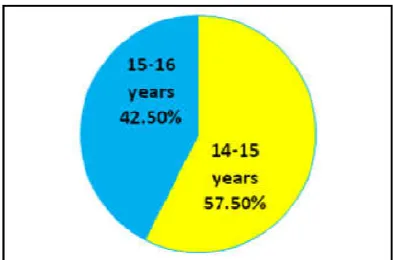
Results: Data analysis revealed that majority of the sample (23, 57.5%) were in the age group of 14-15 years and 17 (42.5%) in the age group of 15-16 years; 20 (50%) were males and 20 (50%) were females; 34 (85%) were not ex-posed to any information on BLS. The mean post-test knowledge score (74.92%) was found to be significantly higher than the mean pre-test knowledge score (27.03%) (t value =31.019, p <0.05). Similarly the mean post-test practice score (69.50%)was found to be significantly higher than the mean pre-test practice score (18.11%). (ta value =30.929, p < 0.05 ).The coefficient of correlation between the pre-test knowledge and practice and posttest knowledge and practice were (r=-0203, r= -0.021) at 0.05 level of significance indicating there is low negative correlation.
Conclusion: The study showed that majority 35 (87.5%) of the students had inadequate knowledge and 40 (100%) had poor practice. The PTP facilitated them to update their knowledge and practice related to BLS. Hence the PTP was an effective teaching strategy to improve the knowledge and practice of sample on BLS.
Copyright © 2019, Kavitha. This is an open access article distributed under the Creative Commons Attribution License, which permits unrestricted use, distribution, and reproduction in any medium, provided the original work is properly cited.
INTRODUCTION
Heart disease is the world's largest killer, claiming 17.5 million lives every year About every 29 seconds, an Indian dies of heart problem. As many as 20,000 new heart patients develop every day in India, six crore Indians suffer from heart disease and 30 per-cent more are at high risk. By 2020, India will have the largest coronary heart disease (CAD) burden in the world and will account for one third of all deaths, many of them will be young. The risk of sudden cardiac death from coronary artery disease. in adults is estimated to be 1 per 1,000 adults 35
*Corresponding author: Kavitha, M.,
School Health Nurse, Directorate of Public Health and Preventive Medicine, Tamil Nadu
years of age and older per year, About 75 percent to 80 percent of all outofhospital cardiac arrests happen at home. Hence, being trained to perform basic life support (BLS) can make the difference between life and death for a victim. CPR can consist of many different things, but the initial, vital part is Basic Life Support (BLS).Cardio means “of the heart” and pulmonary means “of the lungs”. Resuscitation is a medical word that means “to revive” or bring back to life. Sometimes cardio pulmonary resuscitation (CPR) can help a person who has stopped breathing, and whose heart may have stopped beating, to stay alive. Despite advances in cardiopulmonary resuscitation (CPR) methods, including the introduction of the automatic electrical defibrillator (AED) and therapeutic hypothermia, only about 10% of adult out-of-hospital cardiac
ISSN: 2230-9926
International Journal of Development Research
Vol. 09, Issue, 03, pp.26541-26545, March, 2019
Article History:
Received 07th December, 2018
Received in revised form 11th January, 2019
Accepted 15th February, 2019
Published online 31st March, 2019
Key Words:
Vitamin D; Chemical analysis; Health insurance, Health services.
Citation: Kavitha, 2019. “Effective planned teaching programme on knowledge &practice of basic life support among students in Arakkonam”, International Journal of Development Research, 09, (03), 26541-26545.
arrest (OHCA) victims survive to hospital discharge, and the majority of survivors have moderate to severe cognitive deficits 3months after resuscitation. People who handle emergencies such as police officers, firefighters, paramedics, doctors and nurses are all trained to do CPR. Many other teens and adults like lifeguards, teachers, child care workers, and may be even your mom or dad know how to do CPR too. Many people may think you need to get a degree to get a healthcare job, but the truth is many jobs simply require applicants to be CPR and First Aid certified Courses to receive certification in CPR and First Aid are offered at colleges, technical schools, and Red Cross facilities across the country. This makes getting certified easy and very accessible to anyone. People can get both certifications as young as 16 years of age. This means they can start getting credible work experience at an earlier age, which will only help them out more down the road. And since the courses are so short, it does not have to interfere with high school.
Background of the Study: CPR is a rescue procedure to be used when the heart and lungs have stopped working. There is a wide variation in the reported incidence and outcome for out of hospital cardiac arrest. These differences are due to definition and ascertainment of cardiac arrest as well as differences in treatment after its onset. Several authors described the problem of poor performance in CPR, even when provided by medical professionals. Numerous investigations have reported the problem of poor skills retention after various CPR courses. Studies reporting the need for improvement of resuscitation techniques led to the recent changes in BLS and ALS algorithms. Dangers of Sudden Cardiac Arrests (SCA) that can lead to death of an individual within a few minutes. As per WHO census statistics mortality due to cardiac arrest approximately 4280 out of every one lakh people die every year from SCA in India alone. After a cardiac arrest there are four to six minutes before brain death and death occur. Chances of survival reduce by 7-10 percent with every passing minute. It is a silent epidemic. Cardiac arrest is reversible if the victim is administered prompt and appropriate emergency care. This generally involves administration of cardiopulmonary resuscitation (CPR), shock treatment to the chest to reset the heart'srhythm (defibrillation) and advanced life support.
In India the annual incidence of sudden cardiac death accounts for 0.55 per1000 population. The survival rate of a sudden cardiac arrest is almost less than 1%.Sudden cardiac death constitutes 40-45% of cardiovascular deaths and out of this almost 80% are due to heart arrhythmia disturbances or arrhythmia. Maximum arrests were because of cardio respiratory arrests. Immediate survivors were 5 out of 6 (83.3%), out of 5 patients only 2 were alive at the end of 24h (40%), and none of them survived to be discharged. Overall survival to hospital discharge was 3.8% (1.7-13%) of a 3,220 pooled patient group. Analysis of their functional recovery found good outcome in 86.7% (44-89%), moderate impairment in10.2% (8.5-44%) and severe impairment in 3.1% (2-36%) of survivors from a cohort of 1679 pooled patients. Although, survival from prehospital arrest is diminished ingeriatric groups, those who survive often have good functional recovery. Each year almost 330,000 peoples die from heart disease. Half of these willdie suddenly, outside of the hospital because their heart stops beating. The most common cause of death from heart attack in adult is a disturbance in the electrical rhythm of the heart or ventricular fibrillation. It can
be treated by applying anelectrical shock to the chest. One way of buying time until a defibrillator becomes available is to provide artificial breathing and circulation by performing CPR. Effective BLS provided immediately after cardiac arrest can double a victim's chance of survival. If more people know BLS, more lives can be saved. Health behaviour is a major target of teaching and it is assumed that teaching helps in changing behaviour through cognitive and psychomotor changes. Each individual is responsible for maintenance of their health. The younger generation needs to grow into healthy behaviour and acquire health related knowledge and skills hence the investigator felt that planned teaching programme is the method of imparting necessary kills on BLS with which casualities can be revived.
Objectives
To assess the existing level of knowledge and practice of high school student on BLS.
To develop and validate planned teaching programme (PTP) knowledge and practice regarding basic life support.
To determine the effectiveness of PTP in terms of gain in knowledge and practice scores.
To determine the relationship between knowledge and practice scores of BLS among high school students.
Assumptions
High school students will have some knowledge on basic life support.
High school students have the potential to learn about BLS.
Knowledge and practice are measurable.
There will be a relationship between knowledge and practice of BLS.
PTP is an effective way to improve the knowledge on BLS of high school students on BLS.
Hypotheses: To achieve the stated objectives, the following hypotheses were formulated at 0.05 level of significance.
H1: The mean post-test knowledge score of students will be significantly higher than the mean pre-test knowledge scores on BLS.
H2: The mean post-test practice score of students who underwent PTP will be significantly higher than the mean pre-test practice score on BLS.
H3: There will be a significant relationship between knowledge and practice of high school students on BLS.
Delimitations
The study is delimited to
High school students of 14- 16 years studying in 10th standard.
High school students who are willing to participate.
High school students of rural Arakkonam.
High school students who can speak and read English and Tamil.
High school students present at the time of data collection.
Conceptual Framework
The conceptual framework adopted for the study was from general systems theory by Ludwig von Bertalanffy. It serves as a model for viewing people as interacting with environment. System can be opened or closed. Open system have varying degree of interaction with environment from which the system receives. Input and output in the form of matter energy or information. He defined system ‘as a complex interaction which means the system consists of two or more converted elements which form anorganized whole. In the present study, degree students considered as a system with the elements with variable factors related knowledge regarding CPR, which interacted with the students in determining their knowledge.
Input: According to the theorist input refers to energy, matter and information. All system must receive varying type and amounts of information from the environment. In this system the input was to maintain its homeostasis. In this study the information related CPR.
Throughout
Through put refers to the process by which the system process inputs and release on output. In the present study the throughput considering out processing of inputs which are pre and post test regarding the knowledge of BLS.
Output and Feedback: Feedback refers to output which is returned to the system that allows it to monitor itself overtime in an attempt to more clearly to a steady state known as equilibrium or homeostasis. Feedback may be +ve,-ve or neutral. Feedback is difference in mean percentage of pre and post test knowledge score of student regarding BLS.
RESEARCH METHODOLOGY
The research design used for the study was quasi-experimental design. The sample consisted of 40 rural high school students belonging to 14-16 years. The study was conducted in rural high schools of Arakkonam and the subjects were selected through simple random sampling technique. The investigator after obtaining BLS certification from a reputed institute conducted the data collection.
Research Approach: Quantitative approach was used for the present study. Quasi experiment involve the manipulation of independent variables that is implementing an intervention.
Research Design: The Research design helps the researcher in the selection of subjects, manipulation of experimental variables, testing the research hypothesis procedure of data collection and types of statistical analysis to be used to interpret the data. Quasi Experimental design used in this study.
Population: Population refers to the aggregate or totally of those conforming to a set of specification. (polit and Beck, 2006). The population of this study was High school students.
Sample: Sampling refers to the process of selecting the portion of population to represent the entire population (Polit and Hungler, 2002). The students studying in Govt. Hr. Sec. schools at Arakkonam.
Sample Size: Sample is subset of the population selected for a particular study and the number of sample are the subjects (Burns N, 2001). The sample size was 40 students in a selected schools at Arakkonam.
Sampling Technique: The students were selected by simple random sampling technique.
Inclusion Criteria: This study was conducted for the student who were,
• High school students
• Studying in Govt. Hr. Secondary schools • Age group(15-17)
• Able to read English and Tamil.
Exclusion Criteria
• Not willing to participate • Not able to read English
• Not available during the time of data collections.
Testing of the Tool: The tools for the data collection were structured knowledge questionnaire & observation check list. The content validity was established by 9 experts. The reliability of the structured questionnaire was computed by split half method and found to be 0.8 and observational check list by interpreter reliability and found to be 0.82.
Pilot Study: The pilot study was con-ducted on five samples selected randomly. The structured questionnaire on BLS consisted of meaning goal of BLS, procedure of BLS and post resuscitation complication observation checklist consisted of assessment phase and performance phase. The pretest was conducted on the first day followed by PTP and post-test was con-ducted on day 8.
Data Analysis: The data analysis was planned according to the objective of the study. As this was a quasi-experimental study, analysis was done by description and inferential statistics (frequency, percentage, mean and standard deviation).
[image:3.595.343.524.652.797.2]SECTION – A
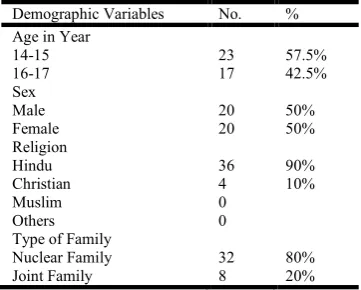
Table 1. Frequency and Percentage distribution of demographic variables of high school students
Demographic Variables No. % Age in Year
14-15 16-17
23 17
57.5% 42.5% Sex
Male Female
20 20
50% 50% Religion
Hindu Christian Muslim Others
36 4 0 0
90% 10%
Type of Family Nuclear Family Joint Family
32 8
The table 1 shows that, majority 23 (57.5%) were in the age group of 14-15 yrs, 20 (50%) were female all 32 (80%) were Hindus and 32 (80%) belong to Nuclear family.
Pie diagram showing age distribution of high school students
[image:4.595.63.260.128.258.2]Pie diagram showing sex distribution of high school students
Table 2. Comparison of pre test and post test mean score of knowledge about BLS among high school students
Knowledge Mean Value Level of Significance Pre test 27.03 31.019 P<0.05
Post test 74.92
[image:4.595.51.274.297.427.2]The mean post test knowledge score (74.92%) was found to be significantly higher than the mean pre-test knowledge score (t value – 31.09, p<0.05).
Table 3. Comparison of pre test and post test mean score of practice about BLS among high school students
Knowledge Mean Value Level of Significance Pre test 18.11 30.929 P<0.05
Post test 69.50
Correlation pre-test and post test percentage of knowledge and practice
Table 4 shows there is significant difference between the pre-test and post-pre-test mean score. It implies that the practice score of students’ was improved significantly after structured teaching programme. Table 4 that there is a positive correlation between the knowledge score and practice core in post test. This shows that there is significant difference between pretest and post test knowledge and practice score after structured teaching programme.
DISCUSSION
Data analysis revealed that majority of the sample (23, 57.5%) were in the age group of 14-15 years and 17 (42.5%) in the age group of 15-16 years; 20 (50%) were males and 20 (50%) were females; 34 (85%) were not ex-posed to any information on BLS. The mean post-test knowledge score (74.92%) was found to be significantly higher than the mean pre-test knowledge score (27.03%) (t value =31.019, p <0.05). Similarly the mean post-test practice score (69.50%) was found to be significantly higher than the mean pre-test practice score (18.11%). (ta value =30.929, p<0.05 ).The coefficient of correlation between the pre-test knowledge and practice and posttest knowledge and practice were (r=-0203, r= -0.021) at 0.05 level of significance indicating there is low negative correlation.
Scope of the Study: The study sought to reveal the existing knowledge and practice of high school students on BLS, and motivate the high school students to update on BLS. Further, the administration of PTP would increase the knowledge and practice on BLS.
Suggestions: Nurses should be motivated to take keen interest in preparing different teaching strategies suitable for the schools as well as community on BLS. 171 Using different teaching strategies would help in imparting knowledge and skill to the students and public on BLS. Awareness campaigns can be conducted on regular basis with emphasis on basic life support. 171 BLS competency should be included in the orientation programme for the new graduates. In-service education can be planned for the nurses to keep them updated with latest guidelines on BLS; also there should be renewal of BLS competency at least twice a year. Periodical evaluation should be conducted by the nursing superintendent to ensure that standard of CPR competency is maintained. Ongoing school health programmes can be con-ducted for high school student on BLS. BLS should be included in the general education so that students can attain competency on BLS.
Recommendations
It is recommended that a similar study can be replicated (i) on a larger sample with different demographic characteristics, (ii) an experimental study may be conducted with randomization using video tapes, simulators and other teaching aids, (iii) using two rescuer methods on adult, pediatric basic life support. A comparative study can be carried out on knowledge of BLS among students and staff nurses.
Conclusion
[image:4.595.44.282.574.770.2]teaching strategy to improve the knowledge and practice on BLS.
Implication: According to Tolsma (1995) the section of the research report that focuses onnursing implication usually includes specific suggestions for nursing practice, nursingeducation, nursing administration and nursing research.
Nursing Practice: Nurses have the responsibility to improve the knowledge level of degree students. The present study will help the nurse to know the effectiveness of structured teaching programme on knowledge regarding BLS. It will help in creating the awareness among students about the Cardiopulmonary Resuscitation. BLS is one of the emergency management.
Nursing Education: Student has to update their knowledge regarding BLS in emergency management. The faculty member has to motivate the student to learn about the Cardiacarrest and its immediate care.
Nursing Administration: The present study proposed to help the health administrator to create awareness about the effectiveness of structured teaching programme on knowledge regarding BLS among degree students to give a valuablelife. Administrators have to educate the students through media regarding the practice of BLS.
Nursing Research: The study will be valuable reference for further research. The findings of the study would help to expand the scientific body of professional knowledge upon which further research can be conducted.
REFERENCES
American Heart Association Guidelines for CPR & Emergency Cardiovascular care circulation 2005; 112:1V1-203
Anil Kumar Parashar. Effective Planned Teaching Programme on Knowledge& Practice of Basic Life Support among Students in Mangalore. THENURSING JOURNAL OF INDIA. February 2010-Feb, Vol. Cl No. 2.
Bakhsh F (2010) Assessing The Need And Effect Of Updating TheKnowledge About Cardio-Pulmonary Resuscitation In Experts,JOURNAL OF CLINICAL AND DIAGNOSTIC RESEARCH. 4(3) 2511-14
Basavanthappa, B.T. “MEDICAL SURGICAL NURSING”, 2ndEdition(2009),, Jaypee publishers India,Pp no:956-958 Benjamin S. Abella, he, Quality of cardiopulmonary
resuscitation duringin hospital cardiac arrest. THE JOURNAL OF AMERICAN MEDICALASSOCIATION. 2005 Jan 19; Vol.3: 293-98.
Brendan Docherty. Basic Life Support and AED. Clinical Manager Cardiologyand Critical Care. 2003, August: 56-59.
Brunner & Suddarth’s, “Textbook Of
Medicalsurgicalnursing”, 10th Edition(2004),“, Lippincott Williams & Wilkins, Pp No:250-251.
Christense PJ, Kenney JM. Nursing Process Application of Conception Models (4th edn): St Louis: Mosby Publishers,1985
Conover MB et al; “Understanding electrocardiography, arrhythmias and the 12-lead ECG; 5th edition; pp no: 49. Davidson; “DAVIDSONS PRINCIPLE AND PRACTICE
OFMEDICINE”; 19th Edition; churchillivingstone Publishers; pp no: 403-405.
Editorial in: 'Young India On The Move Into The ICU Times of India. September 30
George. JB, “NURSING THEORY, THE BASE OF
PROFESSIONALNURSING PRACTICE”,4th Edition
(1995), ,United States: Appleton & Lange Pp No:14-19. http:// Indian heart journal. corn accessed on 25/08107 http://www.emedicine nealth.com accessed an 10/02106 http://www.searo.who.inf accessed on 15/061207
Julia J Hedges Christine (2003). Cardiac arrest - the effect on the brain. American Journal Of Nursing, 103_ pp: 50-54 Kothari CR (2004).Research Methodology ( 2nd Edn), New
Delhi. New Age International Publishers, Ch 1-2; pp: 56-57
Neiswiadomy RM (1998). Foundation of Nursing Research (3rd edn); London. Prentice Hall Inter-national Publishers Talbot LA (1955). Principles and Practice of Nursing
Research, Missouri, Mosby Publication