University of South Carolina
Scholar Commons
Theses and Dissertations
2017
Two Essays on the Impact of Memory on
Consumer Well-Being and Self-Definition
Kara Bentley
University of South Carolina
Follow this and additional works at:https://scholarcommons.sc.edu/etd
Part of theBusiness Administration, Management, and Operations Commons
This Open Access Dissertation is brought to you by Scholar Commons. It has been accepted for inclusion in Theses and Dissertations by an authorized administrator of Scholar Commons. For more information, please [email protected].
Recommended Citation
TWO ESSAYS ON THE IMPACT OF MEMORY ON CONSUMER WELL-BEING AND SELF-DEFINITION
by
Kara Bentley
Bachelor of Business Administration Texas Christian University, 2009
Submitted in Partial Fulfillment of the Requirements
For the Degree of Doctor of Philosophy in
Business Administration
Darla Moore School of Business
University of South Carolina
2017
Accepted by:
Priyali Rajagopal, Major Professor
Felipe Thomaz, Committee Member
Abhijit Guha, Committee Member
Thomas Kramer, Committee Member
ABSTRACT
Consumer memory is an important variable for marketers to study because it is
well documented that memories influence consumer attitudes, preferences, and
behavioral intentions (Chattopadhyay and Alba 1988). In my dissertation, I focus on two
specific types of consumer memories that are important for consumer well-being and
self-definition – memories of shared (social) experiences and memories of special
experiences. In my first essay, I contend that shared experiences are remembered better
than individual experiences because of their positive impact on consumer well-being,
while in my second essay, I investigate the manner in which memories of special
experiences, which are inherently important for self-definition and well-being, are
protected from contamination.
Essay 1investigates the impact of social context on consumer memory.
Specifically, I consider how shared (versus individual) experiences can lead to more
accessible memories, i.e. I document a social bias in consumer memory. I suggest that
shared memories are more accessible than memories of individual experiences because
they fulfill belongingness needs, build esteem, and contribute to a positive
self-definition to a greater extent than memories of individual experiences. I also provide
evidence that the social bias is more pronounced for memories of positive, rather than
than individual positive. Interestingly, I find the opposite pattern of results for memories
of negative experience such that individual/negative memories are remembered better
that shared/negative. I suggest that a correlation between shared experience and
wellbeing exists such that social context amplifies both the benefits of a positive memory,
but also the threat posed by a negative memory, to wellbeing, thereby motivating
enhanced recall of shared positive but not shared negative experiences.
In Essay 2, I turn my focus to another aspect of consumer memory - strategic
memory protection. Past research has found that memories of special experiences can be
viewed as assets because of the utility that recollection provides and because of their
importance for self-definition (Elster and Loewenstein 1992). Further, it has been shown
that consumers will strategically protect memories that they view in this manner from
contamination (Zauberman, Ratner, and Kim 2009). In my research, I examine memory
protection more closely by documenting the type of contamination that special memories
are protected from, the process underlying memory protection, and the implications that
memory protection strategies have for marketers. I find that memories of special
experiences are protected only from contamination by non-special, but not additional
special, cues and propose that this type of protection occurs as a means of protecting their
TABLE OF CONTENTS
ABSTRACT ... iii
LISTOFFIGURES ... vi
ESSAY 1: JUST ME VERSUS WE: THE IMPACT OF SOCIAL CONTEXT ON MEMORY ... 1
ESSAY2:SPECIALMEMORIESREQUIRESPECIALPROTECTION ... 40
REFERENECES ... 84
APPENDIXA:STUDYSTIMULI ... 91
LIST OF FIGURES
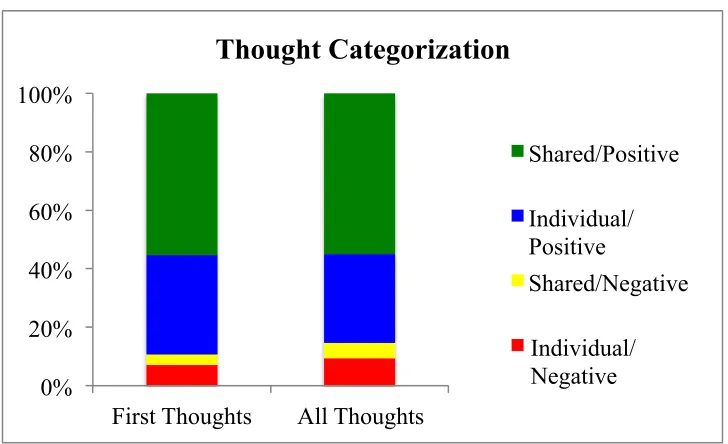
Figure 1.1: Number of memories placed into each category ... 35
Figure 1.2: Percent of cured recall measures correctly recalled ... 36
Figure 1.3: Percent of recognition measures correctly recalled ... 36
Figure 1.4: Mood immediately after reading scenario ... 37
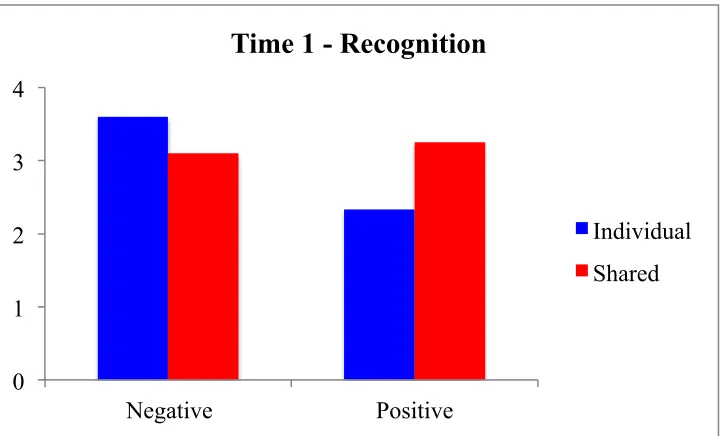
Figure 1.5: Corrected recognition immediately after reading scenario ... 37
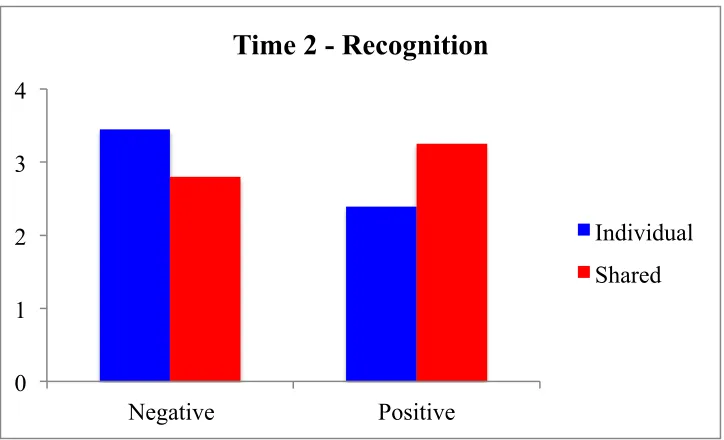
Figure 1.6: Corrected recognition after 48-hour delay ... 38
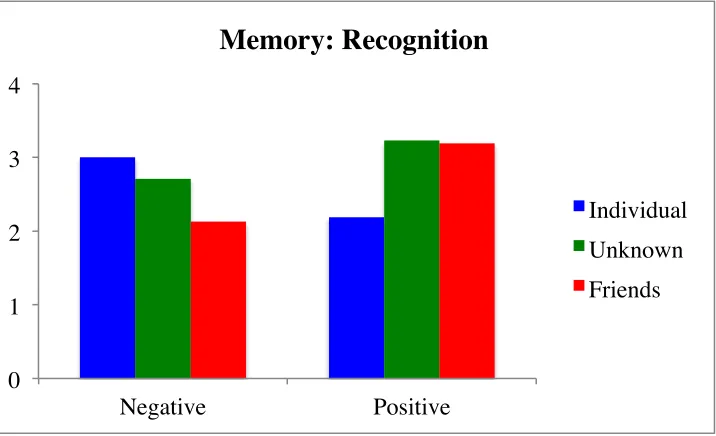
Figure 1.7: Corrected recognition after 20-minute delay ... 39
Figure 2.1: Evaluations of the clothing item ... 79
Figure 2.2: Likelihood of replacing the clothing item ... 80
Figure 2.3: Willingness to pay to replace the clothing item ... 80
Figure 2.4: Specialness perceptions ... 81
Figure 2.5: Restaurant evaluations ... 81
Figure 2.6: Perceptions of personal specialness ... 82
Figure 2.7: Restaurant evaluations ... 82
Figure 2.8: Specialness perceptions at time 2 ... 83
ESSAY 1: JUST ME VERSUS WE: THE IMPACT OF SOCIAL CONTEXT ON MEMORY
INTRODUCTION
Consumer memory is an important variable for marketers to study because of its
documented effects on consumer attitudes, preferences and behavioral intentions
(Chattopadhyay and Alba 1988), and much research in marketing has examined the
antecedents, moderators and consequences of consumer memories. In the current paper, I
focus on an aspect of experience that has received relatively little attention in the memory
literature - social context. Specifically, I consider how the shared (versus individual)
nature of experiences can both enhance as well as reduce memory for the experience.
Thus, I find that shared positive experiences are remembered better than individual
positive experiences, but shared negative experiences are remembered worse than
individual negative experiences, suggesting that the social context and valence of an
experience interact to impact memory for that experience.
Past research has documented a correlation between one’s memories and
wellbeing such that people are motivated to remember positive experiences better than
negative experiences because such a positivity bias enhances wellbeing (Taylor and
Brown 1988; Wagenaar 1986; Walker, Skowronski, and Thompson 2003; White 1982). I
suggest that a correlation between shared experiences and wellbeing may also exist such
posed by a negative memory, to wellbeing, thereby motivating enhanced recall of shared
positive but not shared negative experiences. Thus, a shared positive memory allows the
self to not only be defined in a positive manner, but also in a social manner, thereby
positively influencing one’s self view and amplifying the benefits of the memory to
well-being. A shared negative memory, on the other hand, defines the self in a negative
manner, and because other people were present during the negative experience,
exacerbates this negative impact, thus further reducing the effect on well-being. Across
five studies, I show that shared positive (negative) experiences are remembered faster
(slower), earlier (later) and in greater (fewer) numbers than individual positive (negative)
experiences (pretest and study 1), even when the experiences are experimentally
controlled to be identical in detail and valence (study 2). Further, I show the process
underlying this effect (study 3) and explore the impact of relationship quality on the
social bias (study 4). Finally, I show that this social bias has important implications for
memory of consumption experiences (studies 2-4).
My research contributes to the literatures on memory and social context in several
ways. First, I document that social memories may be as, if not more so, accessible than
individual memories, i.e. a social memory bias, thereby demonstrating that the social
aspects of an experience can have a strong impact on memory accessibility. To the best of
my knowledge, this is the first paper to document a systematic memory impact in
autobiographical memory for socially shared experiences. Additionally, I document the
moderating role of valence on the social bias such that shared positive experiences are
remembered better than individual positive experiences, but I find the opposite pattern of
influencing consumer attitudes, preferences and choice, the presence of a social bias leads
to important implications for marketers with respect to brand communications.
Second, research has only recently begun to explore how social context may
impact consumer perceptions of consumption experiences (Bhargave and Montgomery
2013; Ratner and Hamilton 2015) and memory for these experiences (Dalton and Huang
2014; Puntoni and Tavassoli 2007); I add to this stream of research by adding the social
bias as an outcome within the domain of social context and social connection. From a
marketing standpoint, I provide greater insight into how people remember consumption
experiences and advertisements, which can help to determine which aspects of an
experience will be remembered and potentially used for forming attitudes towards
products and services. Hence, my findings hold important practical implications for
marketing communications.
Third, I show the process underlying this effect by documenting the relationship
between memory and wellbeing via the amplification of the benefits versus threats of
positive versus negative social experiences. In doing so, I extend prior literature on the
amplification effect of social context on product evaluations (Boothby, Clark, and Bargh
2014) to the domain of consumer well-being.
I begin by summarizing some key findings from the research on memory and
social context. I then present results from five studies supporting my predictions and
conclude with a discussion of my findings and some areas for future research. I focus the
first two studies on establishing the existence of an interactive effect between social
context and valence on memory and subsequently focus the last three studies on
LITERATURE REVIEW
Memory and self-enhancement
A memory bias is a memory error that leads people to forget or remember certain
pieces of information to a greater extent than others, and a robust finding in the memory
literature is evidence of a positivity bias in autobiographical memory (Lishman 1974;
Wagenaar 1986; White 1982). The positivity bias refers to the episodic memory
advantage enjoyed by positive autobiographical information in terms of recall and
accessibility. Thus, people appear to rehearse positive experiences more than negative
experiences (D’Argembeau, Comblain, and Van der Linden 2003; Porter and Birt 2001;
Schaefer and Philippot 2005), and recall pleasant experiences more so than unpleasant
experiences (Matlin and Stang 1978). Specifically, the peripheral details of an experience
appear to be recalled more when the experience is positive as compared to negative
(Berntsen 2002; Talarico, Berntsen, and Rubin 2009), thus enhancing the vividness of
positive memories (Talarico, LaBar, and Rubin 2004), and these effects hold whether
memory retrieval is voluntary (Meltzer 1930) or involuntary (Berntsen 1996) and even
when controlling for the emotional intensity of an event (Holmes 1970; Thompson et al.
1996; Tromp et al. 1995; Wagenaar 1986; Walker, Vogl, and Thompson 1997).
Positive autobiographical memories are thought to enjoy these memory
advantages relative to negative memories for several reasons. First, memories of positive
experiences lead to increased elaboration and rehearsal in order to help maintain positive
self-esteem and beliefs in personal efficacy, and to promote an optimistic view of the
future, which can lead to increased happiness (Taylor and Brown 1988). Second, positive
greater extent than negative memories, again suggesting that positive memories are
retrieved as a means of enhancing one’s self-concept (Rasmussen and Berntsen 2009).
Finally, research on the fading affect bias (Walker et al. 2003; Walker et al. 1997)
suggests that the emotional intensity associated with negative experiences fades faster
over time than the intensity associated with positive experiences, therefore providing
positive experiences a memory advantage. A consideration of all of these findings
suggests that there appears to be a motivational underpinning to the positivity bias such
that remembering positive experiences as compared to negative experiences yields
greater self-esteem and happiness.
Social Context and Memory
I suggest that just as positive memories serve the function of protecting and
maintaining a positive self-image, memories of social connection – shared experiences –
may also perform the same function. Prior research has documented the importance of
social relationships on happiness and wellbeing (Diener and Seligman 2002). I extend
these findings and suggest that even memories of social connection ought to serve the
same function and fulfill belonging needs, build self-esteem, and contribute to a positive
self-definition. In this regard, I define a shared memory as an episode in which an
individual feels a sense of social connection with at least one other individual. Thus, an
individual could feel a sense of social connection by physically being with someone else,
by talking on the phone or texting with someone, or even through the online presence of
another person with whom they are not necessarily communicating with, but whom is
other customers browsing the same web page at the same time or playing an online game
with another person).
Research has shown that the need for social connection is a fundamental human
need (Baumeister and Leary 1995), and that mental and physical well-being depends on
the fulfillment of belonging needs (DeLongis, Folkman, and Lazarus 1988; Lynch 1979).
Social connection therefore leads to greater happiness (Baldassare, Rosenfield, and Rook
1984; Lee and Ishii-Kuntz 1987), subjective well-being (McAdams 1985), and physical
health (Reis et al. 1985) while a lack of social connection, has been shown to be
negatively correlated with happiness and result in anxiety and depression (Baumesiter
and Tice 1990; Leary 1990). Interestingly, research also suggests that perceptions of
positive social connections mediate the relationship between positive emotions and
physical health (Kok et al. 2013). Recent work by Ratner and Hamilton (2015) finds that
even anticipated inferences about one’s social connection status can impact consumption,
such that consumers will avoid engaging in hedonic activities when they are alone
because they think that other people will make negative inferences about how socially
connected they are.
The above research suggests that perceptions of social connection are an
important influencer of consumer wellbeing and happiness, and thereby are also likely to
impact autobiographical memory. However, the effects of social connection on memory
will vary depending on the valence of the experience, since the positive effect of social
context on consumer self-enhancement will hold only for positive, but not negative,
experiences. That is, shared and positive experiences ought to have strong positive effects
effects on wellbeing, thereby leading to memory enhancement for the former, but
attenuation for the latter.
In this regard, there is some support for the amplification of experiences due to
social context with research finding that shared consumption experiences lead to more
intense product evaluations (Boothby et al. 2014). The researchers found that participants
evaluated a sample of pleasant tasting chocolate more positively, and bitter tasting
chocolate more negatively, when sampling the chocolate with another person, as opposed
to by themselves. These results suggest that social context can amplify an experience, and
this amplification effect was attributed to the notion that people pay more attention to
stimuli when they are in a group setting, as opposed to by themselves, as suggested by the
social learning literature (Shteynberg 2010; Shteynberg and Apfelbaum 2013), thus
leading to more intense evaluations.
I rely on these findings and suggest that sharing a positive experience with
someone else, as opposed to being by oneself during a positive experience, can amplify
the benefits of that memory to well-being because the memory of a shared/positive
experience can lead one to remember and define the self not only in a positive manner,
but also as a social being whose belonging needs are being fulfilled. Thus, I predict that
shared/positive memories will be stronger and more accessible than individual/positive
memories due to an increase in the positive impact of that memory on overall well-being.
Further, I propose the opposite pattern of results for memories of negative
experiences such that the memory of sharing a negative experience with someone else
could be even more detrimental for overall well-being than a memory of being alone
in a negative light, but if there were other people present to witness the negative
experience, it could also negatively impact those people’s perceptions, thus threatening
belonging needs and being even more detrimental to well-being. Thus, I predict that
shared/negative memories will be weaker and less accessible than individual/negative
memories due to the increased threat of those memories to overall well-being.
To summarize, I suggest that the social context of experiences will impact
consumer happiness and wellbeing such that memories of shared positive (negative)
experiences will be recalled more (less) and accessed faster (slower) as compared to
memories of individual positive (negative) experiences.
In order to test my predictions, I conducted five studies with different measures of
memory accessibility including response time (pretest), recall order and proportion of
free recall (study 1) using real-life, autobiographical memories to establish the finding
that social/shared memories enjoy greater accessibility than individual memories. I then
show that the social bias holds even when controlling for the details of various
consumption experiences including shopping (study 2), going to a concert (study 3), and
eating at a restaurant (study 4) thereby establishing the robustness of the social bias.
PRETEST
In order to test my intuition that shared positive (negative) experiences ought to
be more (less) accessible in memory than individual positive (negative) experiences, I
conducted a pretest online using a sample of 108 undergraduate students (Mage = 20.26
years; 40 % male). The independent variables were social context (With Others vs. By
was response time (Fazio, Williams and Powell 2000) to agree or disagree with one of the
following statements “Over my lifetime, I have had a lot of positive (negative)
experiences in which I was with other people (by myself).” I also included response times
to agree/disagree with five practice questions (e.g. “The weather outside is sunny”) to
control for individual differences in reading and typing times.
After the response time task, participants were asked to recall and describe one
memory that fit within the category presented during the response time task (e.g. shared,
positive). After describing the memory, participants were asked how thinking about the
memory made them feel (1- very negatively; 7 – very positively). If memories of
shared/positive (negative) experiences are, in fact, seen as better (worse) for well-being,
as opposed to memories of individual/positive (negative) experiences, then recalling them
should amplify positive (negative) affect.
Participants then reported their age and gender and completed an involvement
manipulation check (IMC - Goodman, Cryder and Cheema 2012), which comprised one
question asking participants to count and report the number of colors listed in a set.
Results:
Response Time: An ANCOVA with the five practice times as covariates and
social context and valence as the independent variables revealed a significant interaction
(F (1, 99) = 4.432; p < .05) such that participants in the shared positive condition
(Msharedpos = 4.08 seconds, SD =1.35 seconds) were faster than those in the individual
positive condition (Mindpos = 5.85 seconds, SD = 2.77 seconds, (F (1,47) = 8.44, p < .01).
seconds) were directionally slower than those in the individual negative condition (Mindneg
= 5.99 seconds, SD = 1.97 seconds), but this difference was not significant (p > .20).
Neither age nor gender had any significant effects in this study or in any of my other
studies, and are not discussed further. These results provide preliminary support for my
contention that social context can lead to more (less) accessible positive (negative)
memories.
Affect: An ANOVA with affect as the dependent variable and social context
(shared vs. individual) and valence (positive vs. negative) as the independent variables,
revealed a significant main effect of valence (F (1, 104) = 356.84, p < .001) and
significant interaction between social context and valence (F (1, 104) = 8.54, p < .01).
Planned contrasts revealed that in the negative conditions, affect was significantly more
positive, in the individual condition (Mindividual = 2.84, SD = 1.21) as opposed to the
shared condition (Mshared = 2.28, SD = 1.22; F (1, 104) = 122.92, p < .001). However, in
the positive conditions, affect was significantly more positive in the shared condition
(Mshared = 6.59, SD = .57) as opposed to the individual condition (Mindividual = 6.00, SD =
.96; F (1, 104) = 247.07, p < .001). These results support my view that social context can
amplify the positive (negative) impact of positive (negative) memories.
Mediation Analysis: To explore whether the interactive effect between social
context and valence impacts memory accessibility via affect amplification, I ran a
mediation analysis using the PROCESS SPSS macro (Model 7; Preacher and Hayes
moderator, affect was the mediator, and response time was the dependent variable. In
order to control for individual differences in typing and reading speed, I transformed the
response time variable by dividing the response time to the target statement by the
average response times to the control statements. The effect of the mediator – affect - was
significant (β = -.103, t = -.198, p = .03). The bootstrap analysis showed support for
moderated mediation (95% CI = -0.31 to -0.02), and was significant in the positive
condition (β = -0.06, 95% CI = -.1689 to -.0100) but was not significant in the negative
conditions (β = .058, 95% CI = -0.0015 to 0.1865). These results provide support for the
notion that a shared/positive experience, as opposed to an individual/positive, can
amplify positive affect and lead to more accessible memories. However, when an
experience is negative and shared, it can amplify negative affect, leading to less
accessible memories.
Discussion:
These results confirmed my intuition and provide initial evidence for a social bias
in memory. Study 1 extends the findings of my pretest through the use a different
memory measure – recall, which allows me to examine whether the social bias holds
across both memory availability and accessibility. Previous research suggests that
differences in accessibility may be reflective of differences in availability (Rajagopal,
Raju, and Unnava 2006). That is, there may be a bigger pool of shared experiences as
compared to individual experiences to recall (availability), or shared memories may be
attempted to distinguish these two alternate possibilities by measuring both the
availability as well as the accessibility of recalled memories.
STUDY 1
This study was conducted using a sample of 112 college students (Mage = 24.3
years), recruited via MTurk, who were paid for their participation. Only college students
were recruited for this study in order to try and control for the types of events that were
being recalled.
Design and Procedure:
Participants were asked to recall all of the memorable events they had
experienced during their time as a college student. They were then shown all of the
events they had listed and asked to categorize each memory as shared versus individual
and as positive versus negative. The proportion of each type of memory (e.g.
individual-negative vs. individual-positive vs. shared-positive vs. shared –individual-negative) for the first
thought listed was the measure of memory accessibility, since the first thought that came
to the respondents mind should be the most accessible, while the proportion of all
thoughts listed for each category was the measure of memory availability. Previous
research suggests that such proportions are measures of availability and accessibility in
memory (Rajagopal et al. 2006). Participants then reported demographic information and
completed an involvement manipulation check (Goodman et al. 2012), which comprised
of one question asking participants to count and report the number of colors listed in a
Results:
Availability: The participants listed a total of 520 thoughts. In line with
expectations, a chi-square analysis on all thoughts listed (χ² (1, N = 520) = 22.60; p <
.001; Figure 1.1) revealed that shared/ positive memories accounted for the majority at
55% (n = 286). Individual/positive memories accounted for 30.4% (n = 158),
individual/negative for 9.4% (n = 49) and shared/negative for 5.2% (n = 27). As
expected, the number of thoughts categorized as shared/positive was significantly larger
than individual/positive (χ² (1, N = 444) = 36.90; p < .001). Additionally, the number of
thoughts categorized as individual/negative was significantly larger than those
categorized as shared/negative (χ² (1, N = 76) = 6.37; p < .05). In line with prior research
on the positivity bias in autobiographical memory, the number of thoughts listed as
individual/positive was significantly larger than individual/negative (χ² (1, N = 207) =
57.40; p < .001), and the number of thoughts listed as shared/positive was significantly
larger than shared/negative (χ² (1, N = 313) = 214.32; p < .001).
Accessibility: A chi-square analysis on the first thought listed (χ² (1, N = 112) =
3.64; p = .056; Figure 1.1) revealed that shared/positive memories were also the majority
of first thoughts listed at 55.4% (n = 62). Individual/positive accounted for 33.9 % (n =
38) of first thoughts listed, individual/negative for 7.1% (n = 8), and shared/negative for
3.6% (n = 4). The number of thoughts listed as shared/positive was significantly larger
than individual/positive (χ² (1, N = 100) = 5.76; p < .05), but there was no significant
difference between the number of first thoughts categorized as shared/negative and
number of respondents who listed any negative event as their first thought (a total of 12
respondents ~ 10% of the total respondents).
In support of a positivity bias, the number of thoughts listed as individual/positive
was significantly larger than individual/negative (χ² (1, N = 46) = 19.57; p < .001), and
the number of thoughts listed as shared/positive was significantly larger than
shared/negative (χ² (1, N = 66) = 50.97; p < .001).
Discussion:
The results of this study support my notion of the interaction of a social and a
positivity bias in autobiographical memory, and that both biases can cumulatively lead to
a significant memory advantage for shared and positive experiences as compared to
shared/negative, individual/positive and individual/negative experiences.
A limitation of these studies is that I only assess the social bias for real memories.
It is possible that there are significant differences in the content of the memories recalled
by respondents in terms of their significance and impact, which may have influenced the
results. For example, it could be argued that shared memories are more consequential
(graduations) than individual memories (doing well on an exam), and hence recalled
more easily. Past research has found that intense emotional experiences are more likely in
interdependent contexts than in independent contexts (Jaremka, Gabriel, and Carvallo
2011), and that both positive and negative experiences are more intense when they are in
a shared context relative to an individual context (Boothby et al. 2014). This could lead to
the argument that shared experiences are remembered better because they are often more
cannot yet rule out the potential influence of socially desirable responding as a possible
alternative explanation. Since I rely on participants’ self-reported memories, it is possible
that although they were recalling both individual and shared experiences when thinking
about their lives, they only reported the shared experiences in the study because they felt
as though these memories would paint a more positive picture of themselves. In order to
rule out these alternate explanations, I conducted the remainder of my studies with
experimentally controlled experiences.
Finally, the remaining studies focus specifically on consumption experiences and
document that the social bias holds for such experiences.
STUDY 2
In this study, both the social context of the experience (Shared vs. Individual) and
the valence of the experience (Positive vs. Negative) served as manipulated factors. The
study was conducted in two parts. 140 undergraduate students completed both parts of the
study (Mage = 21.3 years; 35% male). The link for the first part of the study was posted
online for 24 hours, and, after a 24-hour delay, the link for the second part of the study
was posted online for 24 hours. Students could access the links at any time during the 24
hours that they were posted.
Design and Procedure:
Participants were told to imagine that they had gone shopping at the mall either by
themselves (individual condition) or with a group of friends (shared condition) to
was manipulated by including details in the experience that either made for a positive
shopping experience (e.g. were able to find jeans on sale, unexpected discount on tennis
shoes) or a negative shopping experience (e.g. were not able to find any jeans or tennis
shoes). The brands that appeared in the scenarios were identical between all conditions
(Appendix A), but in the individual condition, participants were told they were shopping
for two different brands of jeans for themselves (Lucky and True Religion), while in the
shared condition, participants were told they were shopping for one brand of jeans
(Lucky) while their friend was shopping for a different brand (True Religion).
Respondents then filled out manipulation check questions to ensure that the social context
and the valence manipulations were successful. Three social context manipulation check
questions were included, the first of which asked participants if they were alone or with
others in the scenario and forced them to choose between the two options while the other
two questions were scaled measures (1 = completely individual, 7 = completely shared; 1
= not at all socially connected, 7 = extremely socially connected). The valence
manipulation check consisted of two scaled measures (1 = very negative, 7 = very
positive; 1 = very bad, 7 = very good; α = .96). Finally, participants filled out
demographic measures and the same involvement questions as were used in previous
studies (α = .93). In part two of the study, participants filled out the same memory
measures for the scenario as they had filled out in part 1.
Dependent Measures:
Participants answered seven recall questions about the shopping scenario. The
scenario followed by a blank space for participants to generate and provide their answer
(e.g. “Where did you eat lunch?”). The next set of questions were recognition measures
and consisted of a question about the scenario and five multiple-choice options to choose
from (e.g. “Which brand of shoes were you shopping for today?” followed by five
options). Each answer was coded as one (+1) if the participant correctly answered the
question, negative 1 (-1) if the participants incorrectly answered the question, and zero
(0) if the participated indicated that they did not know the answer. I then calculated the
proportion of questions answered correctly for the cued recall measures and recognition
measures and used these measures of corrected recall as the main dependent measures of
memory.
Results:
11 participants (8%) failed the manipulation check questions (e.g. read the
scenario for the shared (individual) condition and then indicated that they were in the
individual (shared) condition thus leading them to answer the questions for the individual
(shared) condition rather than the shared (individual) condition), and were therefore
dropped from analysis, leaving a final sample of one-hundred and twenty-nine. An
analysis across experimental conditions revealed no significant difference in respondent
dropout rate across conditions (p > .1).
Manipulation Checks: The manipulation checks confirmed that those in the
shared condition felt as though their experience was significantly more shared (Mshared=
1.31; F (1,127) = 126.08, p < .001), and that they felt significantly more socially
connected (Mshared= 4.74, SD = 0.99) compared to those in the individual condition
(Mindividual= 3.31, SD = 1.4; F (1,127) = 44.74, p < .001). Additionally, those in the
shared condition were more likely to select the “with others” option as opposed to the
“alone” option (χ² (1, 1) = 106.12; p < .001). The manipulation checks also confirmed
that those in the positive condition felt as though their shopping experience was
significantly more positive (Mpositive= 6.02, SD = 1.02) compared to those in the negative
condition (Mnegative= 2.44, SD = 1.29; F (1,127) = 307.6, p < .001).
Cued Recall: An ANOVA with cued-recall as the dependent variable and social
context (shared vs. individual), valence (positive vs. negative), and their interaction as the
independent variables, revealed a significant interaction between social context and
valence (F (1,125) = 12.51, p = .001; Figure 1.2), with no main effects of social context
or valence (p’s > .1). Planned contrasts revealed that in the positive conditions,
cued-recall was marginally higher in the shared shopping experience (Mshared = .68, SD = .47)
compared to the individual experience condition (Mindividual = .45, SD = .38; F (1,125) =
3.28, p = .07). Further, in the negative conditions, cued-recall was significantly higher in
the individual shopping experience (Mindividual = .74, SD = .32) compared to the shared
experience condition (Mshared = .33, SD = .70; F (1,125) = 9.99, p < .01).
Recognition: An ANOVA with recognition as the dependent variable and social
context (shared vs. individual), valence (positive vs. negative), and their interaction as the
(1,125) = 3.77, p < .10) and significant interaction between social context and valence (F
(1,125) = 7.84, p < .01; Figure 1.3), but no main effect of valence (p > .1). Planned
contrasts revealed that in the negative conditions, recognition was significantly higher in
the individual shopping experience (Mindividual = .83, SD = .30) compared to the shared
experience condition (Mshared = .44, SD = .63; F (1,125) = 10.74, p < .01). In the positive
conditions, the pattern of results was consistent with the results for cued-recall such that
recognition was higher in the shared shopping experience (Mshared = .76, SD = .40)
compared to the individual experience condition (Mindividual = .68, SD = .41), but this
contrast was not significant (p > .10).
Discussion:
Study 2 extends the effects found in the pretest and study 1 by replicating the
findings within an experimentally controlled consumption experience (shopping) context.
Thus, memory for the shopping experience was significantly more accurate when the
experience was a shared experience than when it was an individual experience.
Interestingly, the effects hold even when respondents are asked to simply imagine the
experience rather than actually experience the events.
Thus far, I have documented the interactive effect of social context and valence
on memory using both real memories and memory experimentally controlled
experiences, but I have not yet been able to explore the process underlying these effects.
In study 3, I address this issue by measuring participants’ mood immediately after
reading the imagined scenario. According to appraisal theories, emotions arise in
well-being (Frijda 1986; Lazarus 1991). Therefore, if memories of shared, as opposed to
individual, positive experiences, are viewed as more beneficial for well-being, seeing as
they allow the self to be defined in both a positive and social manner, I should find that
participants are in an even more positive mood after imagining a shared/positive
experience rather than an individual/positive experience. Further, I should find that this
difference in mood mediates the interactive effect of social context and valence on
memory. In regards to negative memories, if indeed memories of shared, as opposed to
individual, negative experiences are seen as more threatening to well-being, since this
type of memory not only leads the self to be defined in a negative manner but also
threatens belonging needs, I should find that participants are in an even more negative
mood after imagining a shared, negative experience as compared to an individual,
negative experience. Essentially, what I aim to show is that social context amplifies how
beneficial or threatening a particular memory is for overall well-being and this
amplification effect further impacts memory.
Additionally, it is still unclears whether this effect occurs at the encoding or
retrieval stage, so in the next study I collected measure of memory both immediately after
reading the scenario and after a 48-hour delay in order to understand at what stage this
process takes place.
STUDY 3
In this study, the social context of the experience (Shared vs. Individual) and the
valence of the experience (Positive vs. Negative) served as manipulated factors, while
was conducted in two parts. Participants were recruited via Mturk and paid separately for
their participation in each part of the study. 158 participants (Mage = 36 years; 53% male)
completed both parts of the study. The link for the second part of the study was sent to
participants after a 48-hour delay and participants were given 48 hours to complete the
follow-up survey.
Design and Procedure:
In part 1 of this study, participants were asked to imagine that they had gone to a
classical music concert either by themselves (individual condition) or with some friends
(shared condition). The valence of the experience was manipulated by including details
of the experience that made for either a positive concert experience (e.g. comfortable
seating, pleasant ambiance, the tickets were for good seats so that you could see the
concert very well) or a negative concert experience (e.g. uncomfortable seating,
unpleasant ambiance, the tickets were for bad seats so that you could not see the concert
very well). After reading through the scenario, participants listened to a music clip that
was pretested to be pleasant (positive conditions) or unpleasant (negative conditions) that
was supposedly one of the pieces played during the concert. The music clips were
pretested to ensure that they differed in terms of valence, but did not differ on dimensions
such as imagery provoking, interesting, arousing, powerful, or familiarity (all p’s > .10),
thus ensuring that the results could not be explained by any of these variables.
Actual music clips were included in this study to increase the realism of the scenario and
to intensify the valence manipulation. The brands that appeared in the scenarios were
After listening to the music clip, participants reported their mood (1 – very bad
mood/very sad, 7 = very good mood, very happy; α = .74), how much they liked the
music clip (1 – not at all, 7 = very good mood, very much; α = .96), and then filled out
manipulation check measures for both valence (α = .98) and social context similar to
those which were used in previous studies. Participants then answered four measures of
memory recognition, which consisted of a question about the scenario followed by five
options for them to choose from (e.g. “In the concert scenario, what brand of candy did
you purchase?” followed by 5 options). Each answer was coded as one (+1) if the
participant correctly answered the question and negative one (-1) if the participants
incorrectly answered the question. The number of recognition questions correctly
answered was then summed giving me a measure of recall, with -4 being the lowest
possible score if the participant did not correctly remember any details and 4 being the
highest if the participants correctly remembered all of the details of the scenario.
In part two of the study, participants filled out the same memory recognition
measures for the scenario as they had filled out in part 1.
Results:
2 participants (1.7%) reported having technical issues during the first part of the
study (e.g. were unable to hear the music clip) and were therefore dropped from analysis.
This left a final sample of one-hundred and fifty-six.
Manipulation Checks: The manipulation checks confirmed that those in the
5.38, SD = 1.47) compared to those in the individual condition (Mindividual= 2.72, SD =
1.73; F (1,154) = 106.56, p < .001), and that they felt significantly more socially
connected (Mshared= 4.91, SD = 1.35) compared to those in the individual condition
(Mindividual= 3.21, SD = 1.64; F (1,154) = 50.10, p < .001). Additionally, those in the
shared condition were more likely to select the “with others” option as opposed to the
“alone” option (χ² (n = 156) = 105.03; p < .001). The manipulation checks also
confirmed that those in the positive condition felt as though their concert experience was
significantly more positive (Mpositive= 6.22, SD = 1.07) compared to those in the negative
condition (Mnegative= 2.65, SD = 1.65; F (1,154) = 253.26, p < .001).
Part 1 – Mood: An ANOVA with mood at time 1 as the dependent variable and
social context (shared vs. individual), valence (positive vs. negative), and their interaction
as the independent variables, revealed a significant main effect of valence (F (1, 152) =
49.58, p < .001) and significant interaction between social context and valence (F (1,
152) = 8.71, p < .01; Figure 1.4). Planned contrasts revealed that in the negative
conditions, mood was significantly less negative (more positive) in the individual
condition (Mindividual = 4.38, SD = 1.31) as opposed to the shared condition (Mshared =
3.85, SD = 1.20; F (1, 152) = 3.92, p = .05). In the positive conditions, mood was
significantly more positive in the shared condition (Mshared = 5.75, SD = 1.01) as opposed
to the individual condition (Mindividual = 5.15, SD = 1.19; F (1, 152) = 4.80, p < .05).
Part 1 – Recognition: An ANOVA with recognition at time 1 as the dependent
their interaction as the independent variables, revealed a significant main effect of
valence (F (1, 152) = 4.02, p < .05) and significant interaction between social context and
valence (F (1, 152) = 6.47, p = .01; Figure 1.5). Planned contrasts revealed that in the
positive conditions, recognition was significantly higher in the shared condition (Mshared =
3.25, SD = 1.55) as opposed to the individual condition (Mindividual = 2.33, SD = 2.55; F
(1, 152) = 5.28, p < .05). In the negative conditions, recognition was directionally higher
in the individual condition (Mindividual = 3.60, SD = .93) as compared to the shared
condition (Mshared = 3.10, SD = 1.63), but this difference did not reach significance (F (1,
152) = 1.66, p = .20).
Part 1 – Mediation Analysis: To explore whether the interactive effect between
social context and valence impacts memory via mood, I ran a mediation analysis using
the PROCESS SPSS macro (Model 7; Preacher and Hayes 2004). In the model, social
context served as the independent variable, valence as the moderator, mood as the
mediator, and recognition as the dependent variable. The effect of the mediator, mood,
was significant (β = -.19, t = -1.85, p = .065). The bootstrap analysis did show support
for moderated mediation (95% CI = -0.49 to -0.05), and was significant in both the
negative condition (β = 0.10, 95% CI = 0.0069 to 0.2673) and the positive conditions (β
= -0.1138, 95% CI = -0.3112 to -0.0173). These results provided support for the notion
that when an experience is positive and shared, as opposed to individual, it improves
mood and leads to stronger memories. However, when an experience is negative and
Part 2 – Recognition: An ANOVA with recognition at time 2 as the dependent
variable and social context (shared vs. individual), valence (positive vs. negative), and
their interaction as the independent variables, revealed a significant interaction between
social context and valence (F (1,152) = 6.57, p = .01; Figure 1.6). Planned contrasts
revealed that in the positive conditions, recognition was significantly higher in the shared
condition (Mshared = 3.25, SD = 1.61) as opposed to the individual condition (Mindividual=
2.39, SD = 2.28; F (1, 152) = 4.15, p < .05). In the negative conditions, recognition was
directionally higher in the individual condition (Mindividual = 3.45, SD = 1.28) as
compared to the shared condition (Mshared = 2.80, SD = 2.06), but this difference did not
reach significance (F (1, 152) = 2.50, p = .12)
Follow-Up Analysis: Prior literature has found that evaluations are more intense
in a shared context (Boothby et al. 2014), so it is possible that the differences that I found
in terms of mood or memory recognition were due to a stronger liking or disliking of the
stimuli or music in the shared condition. In order to rule out this possibility, I ran an
ANOVA with music evaluation as the dependent measure (1 – did not at all enjoy/like
music, 7 = very much enjoyed/liked music; α = .97) at time 1 as the dependent variable
and social context (shared vs. individual), valence (positive vs. negative), and their
interaction as the independent variables. The results showed a main effect of valence (F
(1, 152) = 54.60, p < .001) but no main effect of social context (p > .20) and no
significant interaction between social context and valence (p > .20). Therefore, it does not
seem as though differences in the evaluations of the music can account for the differences
Discussion:
The results from this study provide support for the process underlying these
memory effects such that social context and valence do indeed interact to impact memory
and this relationship is mediated by mood. Further, I do find differences in mood and
memory both immediately after participants read the scenario and after a 48-hour delay,
indicating the effect occurs at the encoding stage but has a long-term impact on memory.
Finally, the memory advantage for shared experiences held with a delay of 48 hours after
the experience, as compared to a shorter delay in study 2, attesting to the robustness of
this effect.
Thus far, I have only looked at social context as a dichotomous variable, i.e.
participants were told to either imagine being with others or being alone. It is still unclear
as to whether all events where others are present will enhance memory for an experience
or if this effect only holds when an individual is with close others. For example, is it
possible that one can be alone during a consumption experience but in the presence of
other customers, such as when one goes to a coffee shop by themselves but there are
other customers present, and feel a sense of social connection that will impact memory?
Prior research has found that having the same experience as another person, even when it
is a very simple experience such as waiting in a dentist’s office, can foster a sense of
social connection (Tajfel et al. 1971). Additionally, it has been shown that perceptions of
a similar thinking style or having the same preferences as another person can lead to a
sense of social connection (Billig and Tajfel 1973). Thus, it is possible that choosing to
visit the same coffee shop as other customers may foster a sense of social connection that
different levels of social context interact with valence to impact memory for a
consumption experience.
STUDY 4
In study 4, I utilized a coffee shop scenario in which participants were told that
they were by themselves (e.g. individual), by themselves but that there were several other
customers in the store (e.g. unknown others), or they were with friends (e.g. known
others). The valence of the experience was also manipulated (positive vs. negative). This
study was conducted in two parts, part one was the first study in a sequence of 5 studies
and part two was the last. There was approximately a 20-minute delay in between part 1
and 2. 196 undergraduate students completed both parts of the study (Mage = 20.65 years;
57.5% male).
Design and Procedure:
Participants were asked to imagine that they had gone to a local coffee shop that
recently opened either by themselves (individual condition), by themselves but that there
were several other customers in the coffee shop (unknown others condition), or with a
group of friends (friends condition). The valence of the experience was manipulated by
including details in the experience that either made for a positive experience (e.g. the
coffee is the perfect temperature and has the perfect amount of cream and sugar, the store
has a nice ambiance) or a negative experience (e.g. the coffee is much too hot and does
not have the right amount of cream or sugar, the store does not have nice ambiance). The
Respondents then filed out manipulation check questions to ensure that the social context
and valence manipulations were successful. I included two social context manipulation
check questions (1 = completely individual, 7 = completely shared; 1 = not at all socially
connected, 7 = extremely socially connected). The valence manipulation check consisted
of two scaled measures (1 = very negative, 7 = very positive; 1 = very bad, 7 = very
good; α = .92). Finally, participants filled out demographic measures and the same
involvement questions as were used in previous studies (α = .90). In part two of the study,
participants completed the main dependent measures.
Dependent Measures:
I assessed memory for the scenario through four recognition measures (e.g. “What
musician or band was playing the background?” followed by five options). Each answer
was coded as one (+1) if the participant correctly answered the question and negative one
(-1) if the participants incorrectly answered the question, and then a sum for all four
questions was calculated. Therefore, the range of the dependent measure went from -4, if
the participant answered none of the questions correctly, to +4, if the participants
answered all of the questions correctly.
Results:
15 participants (7.6%) failed the IMC (e.g. reported the wrong number of colors),
and were therefore dropped from analysis, leaving a final sample of one-hundred and
eighty-one. An analysis across experimental conditions revealed no significant difference
Manipulation Checks: The manipulation checks confirmed a significant effect of
social context condition on the degree to which participants felt as though their
experience was individual versus shared (F (2,178) = 15.81, p < .001). Participants in the
friends condition felt as though their experience was more shared (Mfriends = 4.09, SD
=1.50) compared to those in the individual condition (Mindividual = 2.74, SD = 1.44;
t(1,178) =5.27, p < .001), and those in the unknown others condition (Munknownothers = 2.97,
SD = 1.24; t(1,178) = 4.39, p < .001). There was not a significant different between the
individual and unknown others condition (p > .25).
Additionally, participants in the friends condition felt significantly more socially
connected (Mfriends = 4.16, SD = 1.34) compared to those in the individual condition
(Mindividual = 3.49, SD = 1.42; t (1,178) = 2.60, p < .05), and those in the unknown others
condition (Munknownothers = 3.47, SD = 1.47; t (1,178) = 2.67, p < .01). There was not a
significant different between the individual and unknown others condition (p > .25).
There was not a significant effect of social context on valence (p > .25).
The manipulation checks also confirmed that those in the positive condition felt as
though their shopping experience was significantly more positive (Mpositive = 6.13, SD =
0.85) compared to those in the negative condition (Mnegative = 3.10, SD = 1.17; F (1,179) =
399.72, p < .001). Additionally, there was significant effect of valence on perceptions of
social connection such that participants in the positive condition (Mpositive = 4.04, SD =
1.40) felt more socially connected than those in the negative condition (Mnegative = 3.36,
Recognition Memory: An ANOVA with recognition as the dependent variable and
social context (individual vs. unknown others vs. friends), valence (negative vs. positive),
and their interaction as the independent variables revealed a significant interaction
between social context and valence (F (2,175) = 4.15, p < .05; Figure 1.7).
Planned contrasts revealed that in the positive conditions, recognition was
significantly higher in the friend’s condition (Mfriends = 3.19, SD = 1.15) as compared to
the individual condition (Mindividual = 2.19, SD = 2.33; F (1, 175) = 4.28, p < .05).
Additionally, recognition was higher in the unknown others condition (Munknownothers =
3.23, SD = 0.99) as compared to the individual condition (F (1, 175) = 4.98, p < .05).
There was no difference in recognition between the shared and the unknown others
conditions (p > .25).
In the negative conditions, planned contrasts revealed that recognition was
marginally higher in the individual condition (Mindividual = 3.00, SD = 1.55) as compared
to the friends condition (Mfriends= 2.13, SD = 2.47; F (1,175) = 3.49, p = .06). There was
no difference in recognition between the individual and the unknown others conditions (p
> .25), nor was there a difference between the unknown others and friends conditions (p
= .21).
Discussion:
The results from this study provide evidence that even when an individual is with
other people whom they do not know, as is very typical in many consumption settings,
they can still experience social connection, which can enhance memory for the
variable, but as the strength of the social relationship increases, so does memory for the
experience. This finding fits well with my theorizing seeing as strong social relationships,
as compared to weak relationships, should provide a greater sense of social connection
and fulfill belonging needs to a greater extent. Therefore, the memory of an experience
with close others should be more beneficial to well-being than a memory involving
unknown others, but a memory with unknown others may still be more beneficial than a
memory of being alone during a positive event.
Further, the memory of a negative event that was experienced with a close other
should be the most threatening to well-being, thus leading this type of memory to be
weaker than one involving unknown others, but a negative memory with unknown others
is still more threatening than a memory of being alone during a negative experience.
GENERAL DISCUSSION
Past research on memory has documented the susceptibility of episodic human
memory to several biases including a positivity bias (Kennedy, Mather and Carstensen
2004; Walker et al. 2003). I extend this stream of research and document the presence of
a social bias in memory such that memories of episodes that are shared with other people
are recalled to a greater extent, and recalled faster and earlier than memories of episodes
that are experienced alone. I suggest that this effect occurs because of the advantages
conferred by social memories, namely increased feelings of belongingness, higher
self-esteem and thereby greater happiness. Thus, just as social relationships have been shown
Umberson 1988) and happiness (Baldassare et al. 1984), I find that just memories of
social relationships may have similar effects.
Across five studies I document that this social bias exists, explore the process
underlying the effect, and examine boundary conditions. Thus, shared experiences are
remembered faster (pretest), earlier, and in greater numbers (study 1) than individual
experiences, even when the details of the experiences are controlled (studies 2, 3, 4).
Further, I show that this social bias is stronger for positive memories, as opposed to
negative memories, and, interestingly, find the opposite pattern of results for negative
memories. Additionally, I show that this effect has significant implications for memory of
consumption experiences (studies 2, 3, and 4). Lastly, I am able demonstrate that this
effect is robust across spontaneously recalled memories as well as experimentally
controlled memories.
This research contributes to the literature on memory biases in several ways. First,
the addition of a new bias to the memory literature is an important contribution. While
some past research has suggested that older adults may value social experiences more
than individual experiences (Field 1981, 1997; Mather 2006), my research documents
that this differential valuation may hold true for both older and younger consumers, and
may translate into robust differences in how shared versus individual experiences are
recalled. To the best of my knowledge, this paper is the first to empirically document
such a social bias. Further, I show that the social bias occurs for both distant and recent
events as well as natural and experimental events, thereby adding to my confidence that it
Additionally, I find that shared experiences tend to be more positive rather than
negative in tone. I contend that this finding suggest that at least part of the positivity bias
that has been previously documented may be attributed to the social nature of such
positive experiences. Thus, my research also adds to the work on the positivity bias in
adding greater insight into the processes underlying this bias.
Limitations and opportunities for future research
While I document these effects using both participants memories from their own
lives and using experimentally controlled stimuli, I was not able to give participants an
actual experience to be remembered. Although I feel confident that my effects would
hold in such a scenario, future research replicating my results with a new real-life
experience would be important.
Additionally, although I show the moderating effects of valence on the social bias,
I do not know whether all positive and negative emotions would interact with social
context in the same manner. Thus, the impact of social context may differ based on the
specific emotion being experienced during an event, i.e. whether a positive event
produces happiness versus relaxation or whether a negative event produces sadness
versus embarrassment. For example, a memory for an embarrassing experience that is
shared with others may be more threatening to well-being than that of a sad experience
that is shared. It would be very interesting for future research to investigate the
interactive impact of social context and different types of emotions on memory.
Another interesting idea that warrants greater research is the realm of false
strong as genuine consumption memories (Rajagopal and Montgomery 2011), there has
been little research on the biases that affect such false memories. While I did not provide
respondents with an actual consumption experience to examine whether false product
experiences would be affected by the social bias, future research in this area would be
ESSAY 1 FIGURES
Figure 1.1: Number of memories placed into each category. 0%
20% 40% 60% 80% 100%
First Thoughts All Thoughts
Thought Categorization
Shared/Positive
Individual/ Positive
Shared/Negative
Figure 1.2: Percent of cured recall measures correctly recalled.
Figure 1.3: Percent of recognition measures correctly recalled. 0% 10% 20% 30% 40% 50% 60% 70% 80% 90%
Negative Positive
% C or re ct
Recognition
Individual Shared 0% 20% 40% 60% 80% 100%Negative Positive
% C
or
re
ct
Cued Recall Results
Figure 1.4: Mood immediately after reading scenario.
Figure 1.5: Corrected recognition immediately after reading scenario. 0
1 2 3 4 5 6
Negative Positive
Time 1 - Mood
Individual Shared
0 1 2 3 4
Negative Positive
Time 1 - Recognition
Figure 1.6: Corrected recognition after 48-hour delay. 0
1 2 3 4
Negative Positive
Time 2 - Recognition
Figure 1.7: Corrected recognition after 20-minute delay.
0 1 2 3 4
Negative Positive
Memory: Recognition
Individual
Unknown
ESSAY 2: SPECIAL MEMORIES REQUIRE SPECIAL PROTECTION
INTRODUCTION
Past research has found that memories can be viewed as assets because of the
post-experience utility that recollection and reliving can provide, and that consumers will
strategically protect memories that they view in this manner (Elster and Loewenstein
1992; Zauberman, Ratner, and Kim 2009). Thus, Zauberman and colleagues (2009)
found that consumers avoid situations that they feel may contaminate memories of
special experiences. Specifically, participants in their studies were less willing to repeat a
special experience (e.g. staying at a resort) when aspects of the new experience were to
be different (going to the resort with a work group) than they were during the original
experience (going to the resort for a personal vacation). Based on these findings,
Zauberman et al. (2009) inferred that consumers would be reluctant to repeat any special
experiences due to the fear of potential memory contamination of these experiences.
However, consumers often do repeat such special experiences in real life. For example,
couples renew wedding vows at the same location as their original weddings, birthdays
are celebrated at the same location/venue every year and romantic partners revisit their
“special” restaurant or vacation destination regularly - all actions seemingly contrary to
the notion of memory protection.
The current research therefore aims to expand our understanding of strategic
memory protection by suggesting that consumers do not avoid every situation that may
special memories non-special. Specifically, I argue that consumers will avoid repeating a
special experience under non-special, but not special, circumstances in order to avoid
contamination by non-special cues. For example, if a consumer has a special birthday
dinner at a new restaurant, s/he will avoid returning to that same restaurant for an
ordinary dinner, but may be willing to return for another special dinner, even if aspects of
the new experience (e.g. such as who the person is with) will be different from the
original experience. In other words, the type of contamination cue moderates memory
protection such that non-special, but not special cues trigger memory protection and
thereby avoidance of memory contamination.
Further, I explore the process underlying memory contamination and protection. I
suggest that contaminating a special memory with a non-special cue not only devalues
the memory, by making it remembered as less special, but also, because there is strong
link between special memories and the self-concept, devalues the self, by making the
individual feel as though they are less special, and is therefore perceived as a self-concept
threat.
I also expand current theorizing on how memories can be contaminated. Previous
research on memory protection has focused largely on contamination that occurs due to
the repetition of an experience (e.g. having to revisit a resort), but I argue that there are
other ways in which memories can be contaminated with non-special cues (Zauberman et
al. 2009). It has been found that information presented in advertisements can distort a
consumer’s memory of an experience through the addition of new cues to the memory
(Bower, Thompson-Schill, and Tulving 1994; Cowley 2007; Loftus 1982; Zauberman et