Vol. 3, Issue 12, December 2015
Hashing Based Query Image Search using
ORB Algorithm
Vidya B. Phad
1, Mr. S. V. Patil
2Student, Dept. of E&TC, J. T. Mahajan College of Engg., Faizpur. NMU University, Maharashtra, India1 Associate Professor, Dept. of E&TC, J. T. Mahajan College of Engg, Faizpur, NMU University, Maharashtra, India2
ABSTRACT: Images have a greatest importance in computer vision. Query image search based on visual similarities has been lively topic of research in recent years. Wide range of images on the internet, there is a robust need to develop techniques for efficient and scalable image search. Usually hashing methods are used to embed high dimensional image features into Hamming space, where search can be performed in real-time based on Hamming distance of compact hash codes. There are large numbers of images sharing same hamming distances to a query image, so that fine-grained ranking is very important. This paper proposed query adaptive image retrieval system to retrieve image with equal hamming distance to the query. This is achieved by firstly extracting the features of an individual image and then features are embedded into hash codes and store in a database. Query adaptive weights are then calculated by evaluating the proximity between a query and the semantic concept classes. Here we used ORB algorithm, which is proposed based on FAST algorithm and BRIEF algorithm, is a method to describe feature points by using the binary string. Experiments on a VOC and standard size image datasets of various categories show clear improvements from our proposed approach.
KEYWORDS: Query image search; scalability; weighted Hamming distance; SIFT; ORB.
I. INTRODUCTION
With the fulmination of images on the Internet, there is a strong need to develop techniques for efficient and scalable image search. While traditional image search engines heavily rely on textual words associated to the images, scalable content-based search is receiving increasing attention. large-scale similar image search has also been demonstrated to be very helpful for solving a number of very hard problems in computer vision and multimedia such as image categorization [1].
Generally a large-scale image search system consists of two key components—an effective image feature representation and an efficient search mechanism. It is well known that the quality of search results relies heavily on the representation power of image features. The latter, an efficient search mechanism, is critical since existing image features are mostly of high dimensions and current image databases are huge, on top of which exhaustively comparing a query with every database sample is computationally prohibitive.
In this work we represent images using the popular bag of- visual-words (BoW) framework [6], where local invariant image descriptors (e.g., SIFT [2]) and ORB (Oriented FAST & rotated BRIEF) [13] are extracted and quantized based on a set of visual words. The BoW features are then embedded into compact hash codes for efficient search. For this, Locality sensitive Hashing (LSH) [4] is preferable over tree-based indexing structures (e.g., kd-tree [7]) as it generally requires greatly reduced memory and also works better for high dimensional samples. With the hash codes, image similarity can be efficiently measured (using logical XOR operations) in Hamming space by Hamming distance, an integer value obtained by counting the number of bits at which the binary values are different. In large scale applications, the dimension of Hamming space is usually set as a small number to reduce memory cost and avoid low recall.
In this paper, we propose a computationally-efficient replacement to SIFT that has similar matching performance, is less affected by image noise, and is capable of being used for real-time performance.
II. RELATED WORK
Vol. 3, Issue 12, December 2015
Lowe introduced the Scale-Invariant Feature Transform (SIFT) descriptor [Lowe 1999] in 1999. The basic idea is to extract interesting features from an image sample and be able to compare them to template features, regardless of a change in scale or orientation. Embedding high-level image features into hash codes has become very popular recently. Hashing satisfies both query time and memory requirements as the binary hash codes are compact in memory and efficient in search via hash table lookup or bitwise operations. Locality Sensitive Hashing (LSH) [4] is one of the most well-known unsupervised hashing methods. Recently, Kulis and Grauman [4] extended LSH to work in arbitrary kernel space, and Chum et al. proposed min-Hashing to extend LSH for sets of features. In [3], Kulis and Darrell proposed a supervised hashing method to learn hash functions by minimizing reconstruction error between original feature distances and Hamming distances of hash codes. In [3], Salakhutdinov and Hinton proposed a method called semantic hashing, which uses deep belief networks [1] to learn hash codes. All these hashing methods (either unsupervised or supervised) have one limitation when applied to image search. The Hamming distance of hash codes cannot offer fine-grained ranking of search results, which is very important.
III.PROPOSED SYSTEM A. System Framework
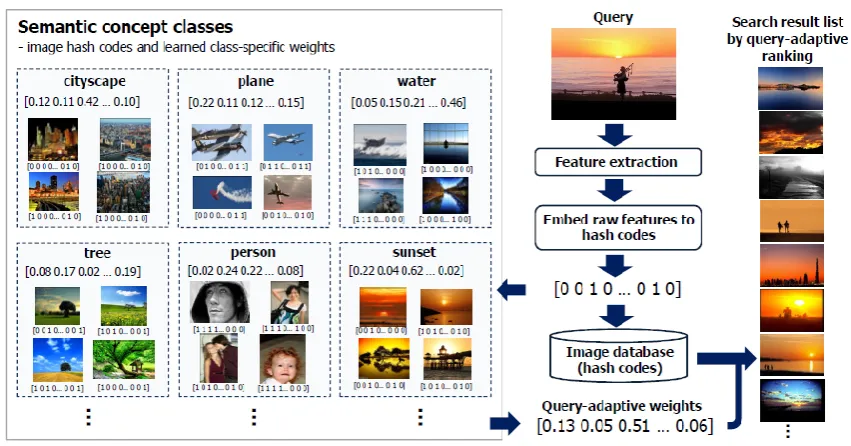
Figure 1. Proposed query adaptive image search system.
The proposed query-adaptive image search system is depicted in Figure 1. To reach the goal of query-adaptive search,
we harness a set of semantic concept classes, each with a set of representative images as shown on the left of the figure.
Low-level features (bag-of-visual-words) of all the images are embedded into hash codes, on top of which we compute
Vol. 3, Issue 12, December 2015
B. Logical Architecture Of Query Image Search
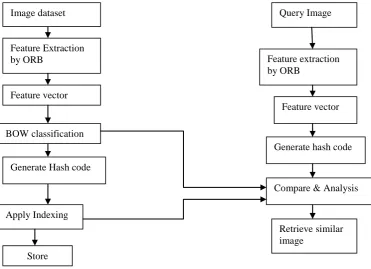
Figure 2. Flowchart of proposed query image search system.
In this system (fig. 2) there are two images taken as a input to the system. First is query image which is to be search and another is image from a dataset. Here we represent images using the popular bag-of-visual-words (Bow) model [6], where feature are extracted by ORB (oriented FAST & rotated BRIEF) and quantized based on a set of visual words. The features are then embedded into compact hash codes for efficient search and store in a feature database. Query image feature vectors and image dataset feature vectors store in database are comparing. This process usually called similarity matching and calculating the hamming distance in a hamming space. Similarity of two images depends on the distance in feature space between the feature points defined by the vectors. We called this distance as a query adaptive hamming distance. Shorter the distance between two points, the images are similar. Finally, it retrieves image which is similar.
C. Proposed Algorithm
In this work, we propose a computationally-efficient replacement to SIFT that has similar matching performance, is less affected by image noise, and is capable of being used for real-time performance. Our main motivation is to enhance many common image-matching applications. Our proposed feature builds on the well-known FAST key point detector and the recently-developed BRIEF descriptor [13]; for this reason we call it ORB (Oriented FAST and Rotated BRIEF). Both these techniques are attractive because of their good performance and low cost.
Image dataset
Feature Extraction by ORB
Feature vector
BOW classification
Generate Hash code
Apply Indexing
Store
Query Image
Feature extraction by ORB
Feature vector
Generate hash code
Compare & Analysis
Vol. 3, Issue 12, December 2015
Figure 3. Flowchart of ORB algorithm.
D. Oriented FAST-Keypoints
FAST key-point detector is used to detect key-points in real-time system such as parallel tracking and mapping. It is
more efficient and reasonable corner detection algorithm. FAST algorithm has good computation properties. Detection
of key-points in FAST involves consideration of intensity threshold between centre pixel and circular ring about the
centre. FAST in ORB detects corners at multiple scales by making a scale pyramid of the image and add orientation to
the corners. Orientation to key-points is assigned using a technique known as intensity centroid. In the intensity
centroid it assumes that the corners intensity is offset from its centre, and vector is used to impute orientation. Rosin
[13 ] defines moments of patch as:
𝑚
𝑝𝑞= 𝑥
𝑝𝑦
𝑞 𝑥,𝑦𝐼 𝑥, 𝑦 (1)
The intensity centroid of patch of a pixel is:
𝑐 =
𝑚
10𝑚
00,
𝑚
01𝑚
00(2)
E. BRIEF Key-point Descriptor
Find the position of the key points by FAST
Selecting N best points by Harris
Scale-pyramid transform
Add a direction of the points in Intensity Centroid
Extracting Binary descriptor by BRIEF
Vol. 3, Issue 12, December 2015
The BRIEF descriptor uses a shortcut method to find the descriptor bit string. A binary test is performed on the pixels.
This is carried out by selecting d pixel location pairs randomly. Assume the first location pair to be p and q and binary
test on them will yield:
𝜏 𝑝; 𝑥, 𝑦 ∶= 1 ∶ 𝑝(𝑥 < 𝑝(𝑦))
0 ∶ 𝑝(𝑥) ≥ 𝑝(𝑦) (3)
If intensity of I(p) < I(q) then the result is 1 or else the result is 0. This process is applied to all nd locations. The length
of the nd can be 128, 256 or 512 and the hamming distance is applied on the bit string to match the descriptor.
F. Hashing method
There are two hashing techniques adopted semi-supervised hashing [4] and semantic hashing with deep belief networks [6] Review from paper most of the existing hashing techniques are unsupervised. Among them, one of the most known hashing methods is Locality Sensitive Hashing (LSH) [4]. Recently, Kulis and Grauman [4] extended LSH to work in arbitrary kernel space, and Chum et al. [15] proposed min-Hashing to extend LSH for sets of features. Weiss et l. [3] proposed a spectral hashing (SH) method that hashes the input space depend on data distribution. SH also ensures that the projections are orthogonal and sample number is balanced over different buckets. Although SH can achieve similar or even better performance than LSH with a fewer number of bits, it is important to view that these unsupervised hashing techniques are not robust enough for similar image search. The fact is that similarity in image search is not simply equivalent to the proximity of low-level visual features, but is more related to high-level image semantics (e.g., objects and scenes). Several supervised methods have been proposed to learn hash functions by minimizing reconstruction error between original feature distances and Hamming distances of hash codes. By replacing the original feature distances with semantic similarities, this method can be applied for supervised learning of hash functions.
F. Query-Adaptive Search
Hashing based, scalable image search can be performed in Hamming space using Hamming distance. Hamming distance can be defined as distance between two hash codes where total number of bits at which the binary values are different. In this paper, we propose to learn query adaptive weights [5] for each bit of the hash codes, so that images with the same Hamming distance to the query can be ordered in a finer resolution. Specific indices/locations of the bits with different values are not considered. For example, given three hash codes P = 1100, Q = 1111, and R = 0000, the Hamming distance of P and Q is equal to that of P and R, regardless of the fact that R differs from P in the first two bits while Q differs in the last two bits. Due to this nature of the Hamming distance, practically there can be hundreds or even thousands of samples sharing the same distance to a query. Going back to the example, suppose we knew that the first two bits are more important (discriminative) for P, then Q should be ranked higher than R if P was the query.
IV RESULT AND DISCUSSION
Experimental results of proposed system are presented in this section. We conduct image search experiments on standard size image dataset. Local invariant features are extracted from all the images based on Lowe’s DoG detector and SIFT descriptor. Soft-weighted bag-of-visual-words features are then computed using a visual vocabulary generated by clustering a subset of SIFT features. For performance measurement, we rank all images in the dataset according to their (weighted) Hamming distances to each query.
In proposed system we used advanced feature detection method that is combination of FAST and BRIEF that is ORB. To evaluate ORB, we perform experiments that test the properties of ORB relative to SIFT. We also illustrate the efficiency of ORB by implementing algorithm in image retrieval.
In this work we had taken an Image dataset of different size. In each dataset there are number of images of different classes. That means in one dataset there are images of phoning, teddy bear, cars, flowers and variety of butterflies etc. Firstly, extract the features of each image, by bow technique create a bag of feature, and then create feature vector by LSH then calculating the hamming distance in a hamming space. From large feature vector there may be same hamming distance to a more than one feature, so that query adaptive weights are given to a bits.
Vol. 3, Issue 12, December 2015
1. SIFT Algorithm 2. ORB Algorithm
A SIFT Algorithm result: Query image: phonning-16.jpg
Table 1.Result table by using SIFT Feature extraction method
Image dataset Query image Total time (s) Accuracy (%)
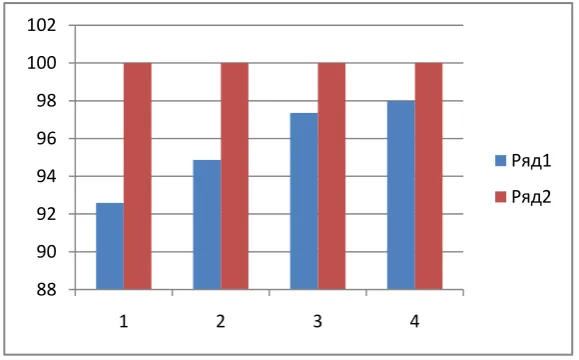
25 Images Phoning_16.jpg 0.0150 92.59
50 Images Phoning_16.jpg 0.0310 94.87
75 Images Phoning_16.jpg 0.0452 97.36
100 Images Phoning_16.jpg 0.0527 97.99
B. ORB Algorithm result:
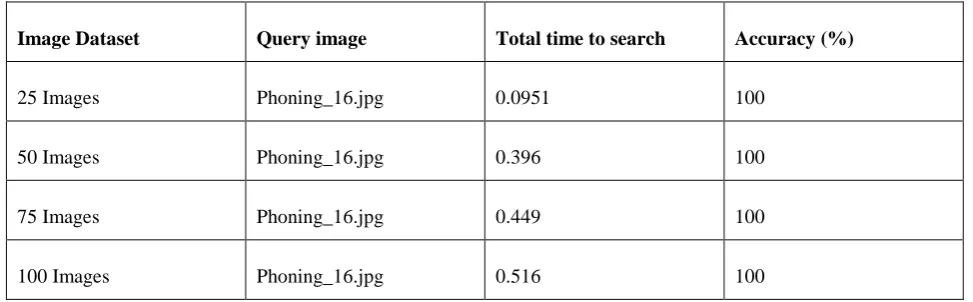
Table 2. Result table by using ORB Feature extraction method
Image Dataset Query image Total time to search Accuracy (%)
25 Images Phoning_16.jpg 0.0951 100
50 Images Phoning_16.jpg 0.396 100
75 Images Phoning_16.jpg 0.449 100
Vol. 3, Issue 12, December 2015
GUI RESULT:
In the above search result it retrieve the most similar 8 images to query image. Each image shows the value that is difference between the query image feature vector hamming distance and the retrieve image feature vector hamming distance. The similar image is retrieve which has difference 0. That is accurate result of this system.
C Graphical representation :
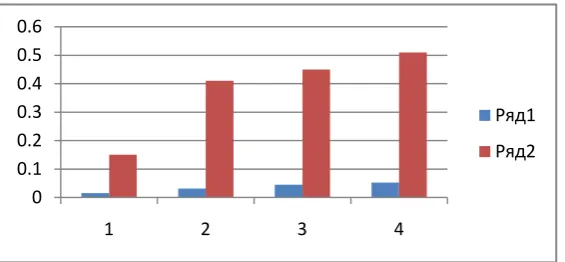
1. Total time search by LSH using SIFT detector and ORB descriptor.
Figure 4. Graphical chart of total time to search verses different size of dataset.
Query Image Distance:0 Distance:4.3368e-018Distance:7.8063e-018
Distance:8.6736e-018Eistance:9.541e-018Distance:1.0408e-017Distance:1.1276e-017
Distance:1.301e-017
0 0.1 0.2 0.3 0.4 0.5 0.6
1 2 3 4
Ряд1
Vol. 3, Issue 12, December 2015
2. Percentage accuracy obtained by LSH using SIFT and ORB descriptor.
Figure 5. graphical chart of Accuracy verses different size of dataset.
In graphical chart blue color shows the result of SIFT and red color shows result of ORB.
V CONCLUSION
We have presented a novel framework for query-adaptive image search with hash codes. By harnessing a large set of predefined semantic concept classes, our approach is able to predict query-adaptive bitwise weights of hash codes in real-time, with which search results can be rapidly ranked by weighted Hamming distance at finer-grained hash code level. This capability largely alleviates the effect of a coarse ranking problem that is common in hashing-based image search. Experimental results on a widely adopted standard size image dataset confirmed the effectiveness of our proposal.
We have shown that the proposed algorithm, although simple to implement and efficient to run, is very effective at finding nearest neighbours of binary features. We have also shown that the performance of the algorithm is on par or better with that of LSH, the algorithm most often used at present for binary feature matching, and that it scales well for large datasets.
REFERENCES
1. Yu-Gang Jiang, Jun Wang, Xiangyang Xue, and Shih-Fu Chang, ―Query-Adaptive Image Search with Hash Codes‖, IEEE TRANSACTIONS ON MULTIMEDIA, VOL. 15, NO. 2, FEBRUARY 2013.
2. D. Lowe, ―Distinctive image features from scale-invariant keypoints,‖International Journal on Computer Vision, vol. 60, no. 2, pp. 91– 110 ,2004.
3. J. Wang, S. Kumar, and S.-F. Chang, ―Semi-supervised hashing for scalable image retrieval,‖ in IEEE Conf. on Computer Vision and Pattern Recognition, 2010.
4. B. Kulis and K. Grauman, ―Kernelized locality-sensitive hashing for scalable image search,‖ in IEEE International Conference on Computer Vision, 2009.
5. Y.-G. Jiang, J. Wang, and S.-F. Chang, ―Lost in binarization: Query adaptive ranking for similar image search with compact codes,‖ in ACM International Conference on Multimedia Retrieval, 2011.
6. Csurka, G., C. R. Dance, L. Fan, J. Willamowski, and C. Bray. Visual Categorization with Bags of Keypoints. Workshop on Statistical Learning in Computer Vision. ECCV 1 (1–22), 1–2.
7. J. L. Bentley, ―Multidimensional binary search trees used for associative searching,‖ Communications of the ACM, vol. 18, no. 9, pp. 509–517, 1975.
8. W. Smeulders, M. Worring, S. Santini, A. Gupta, and R. Jain, ―Content-based image retrieval at the end of the early years,‖ IEEE Transactions on Pattern Analysis and Machine Intelligence, vol. 22, no. 12, pp. 1349–1380, 2000.
88 90 92 94 96 98 100 102
1 2 3 4
Ряд1
Vol. 3, Issue 12, December 2015
9. R. Datta, D. Joshi, J. Li, and J. Z. Wang, ―Image retrieval: ideas, influences, and trends of the new age,‖ ACM Computing Surveys, vol. 40, no. 2, 2008.
10. D. Nister and H. Stewenius, ―Scalable recognition with a vocabulary tree,‖ in IEEE Conf. on Computer Vision and Pattern Recognition, 2006.
11. M. Muja and D. G. Lowe, ―Fast approximate nearest neighbors with automatic algorithm configuration,‖ in International Conference on Computer Vision Theory and Applications, 2009, pp. 331–340.
12. Deza, Elena; Deza, Michel Marie (2009). Encyclopedia of Distances. Springer. p. 94."Cluster analysis". March 2, 2011. 13. Lowe, David G. (1999). "Object recognition from local scale-invariant features"CCV.1999.790410.
14. Rubleee, Rabaudv and Konoligek,―ORB: an efficient alternative to SIFT or SURF‖, Proc of IEEE International Conferenceon Computer Vision,(2011), pp. 2564-2571.
BIOGRAPHY
Mrs. Vidya B. Phad is a Student in the Electronics and Telecommunication Department, J. T. Mahajan College of engineering Faizpur, India. North Maharashtra University. She received Bachelor degree in Electronics and Telecommunication in 2010 from, MET’S IOE Nasik, India.