JOURNAL OF SOCIAL WORK &
SOCIAL DEVELOPMENT
DEPARTMENT OF SOCIAL WORK
Visva-BharatiSriniketan-731236, W.B
Volume 10, Number 01, 2019
DEPARTMENT OF SOCIAL WORK
Visva-BharatiSriniketan-731236, W.B
Volume 10, Number 01. 2019
JOURNAL OF SOCIAL WORK &
SOCIAL DEVELOPMENT
© Copyright 2019 by Department of Social Work, Visva-Bharati
The material printed in this journal should not be reproduced without the written permission of the Editor. The statements and opinions contained within this publication are solely those of the contributors and not of the Editor or Department of Social Work, Visva-Bharati.
For more information about subscription or publication, please contact: Professor Prasanta Kumar Ghosh
Department of Social Work Visva-Bharati
Sriniketan-731236 Birbhum, W.B., India.
Email: [email protected]
JSWSD is a bi-annual refereed journal to publish original ideas that will promote issues pertinent to social justice, well being of individuals or groups or communities and social policy as well as practice from development perspectives. It will encourage young researchers to contribute and well established academics to foster a pluralistic approach in the continuous efforts of social development. JSWSD is a UGC approved journal (Category: Social Science - all, SI. No. 1112, Journal Number - 47298).
Associate Professor, Visva-Bharati, Santiniketan Editorial Assistance:
Paramita Roy Editor:
Prasanta Kumar Ghosh Professor, Visva-Bharati, Santiniketan Editorial Advisors:
Surinder Jaswal B. T. Lawani Sukladeb Kanango Sonaldi Desai
Professor, Tata Institute of Social Sciences, Mumbai Director, Bharati Vidyapeeth University, Pune Retired Professor, Visva-Bharati, Santiniketan Professor, University of Maryland, USA Editorial Board:
P. R. Balgopal Monohar Pawar Niaz Ahmed Khan D. Rajasekhar Rama V. Baru Swapan Garain Kumkum Bhattacharya Prof. Asok Kumar Sarkar Debotosh Sinha
Professor Emeritus, University of Illinois, USA Professor, Charles Stuart University, AU Professor, University of Dhaka, Bangladesh Professor, ISEC (Centre of Excellence), Bangalore Professor, JNU, New Delhi
Professor, TISS, Mumbai
Professor, Visva-Bharati, Santiniketan Professor, Visva-Bharati, Santiniketan Professor, Visva-Bharati, Santiniketan
Composed & Design by:
The Journal of Social Work and Social Development is a multidisciplinary journal mostly communicating the issues of social science research and practices. I would like to thank the founder editor Professor Asok Kumar Sarkar for his initiative in laying the foundation stone of the journal in 2010. This was a response to a much felt academic need. The Journal is in its tenth year of bi-annual issues when we started but due to several exigencies we had few annual numbers; however we are making it bi-annual from June 2019. One of the reasons for reducing the number of issues per year was the rising cost of publishing hard copies. The Journal since its inception had been accorded recognition by the UGC and recently it has been possible to place it in the CARE list. Over the years we have been able to institutionalize the system of blind review and the authors have greatly benefited from this as they are made aware of the suggestions and amendments necessary.
We are deeply indebted to Professor Kumkum Bhattacharya for her engagement and association with this journal. I am thankful to the members of the editorial board, reviewers and my colleagues of the department for their support and encouragement in bringing out this volume 10; issue 01 (2019). To overcome the major challenge of printing hard copies and the paucity of fund, we are tapping into the possibilities of contract publication so as to sustain the journal. We have already started with the e-versions of the journals; the past issues are available on https://sites.google.com/a/ visva-bharati.ac.in/visva-bharatisocialworkjournal/about This Volume 10 Number 01 June 2019 contains 8 articles and one book review. We are happy to report that most of the articles included in this volume are based on primary data and the topics dealt with are topical and takes a critical look into development initiatives and concerns.
Study of PDS in Puducherry, India’, by Dr. Dilip Diwakar and Renjith R. Pillai critically analyses the Public Distribution System (PDS) initiated by the British government to address household food security issues. The government has taken several measures to address the problem of corruption, leakage and delay in distribution. The most recent initiative is the direct cash transfer (DBT) which has been piloted in 3 union territories. This study examines the functioning of cash transfer programme and enquires if it has succeeded in ensuring food security in rural Puducherry.
The third paper ‘Multi-Dimensional Poverty and Migration - A Case Study of Darbhanga District of Bihar, India, by Dr. Ugra Mohan Jha and Ms. Nisha Varghese is an attempt to understand the multidimensional approach that is needed to define as well as tackle poverty. The authors have tried to address the issue of poverty among migrants in Bihar. They have used the multidimensional poverty index developed by Oxford Poverty and Human Development Initiative to measure poverty and migrants in Bihar with reference to Darbhanga district.
Dr. Subhasis Bhadra, the subsequent paper, undertook a study on leprosy colony in “leprosy-free” India, where they are living on meagre livelihood options in socially oppressive situation. Still leprosy, the ancient disease is not fully eradicated, though it is curable and preventable. This research evaluated the livelihood interventions, across India in 26 leprosy colonies. He argues with some important success made still strong focuses on multidimensional strategies of inclusion; social capital-building could be a feasible means of integration of affected persons and freeing them of stigma. Ms. Priyanka Nupur in her article ‘Women’s Organization, Participation, and Environmental Conservation: Mediating Factors and Implications for Social Work Practice’ raises the discourse of environmental social work which is critical in the present time, owing to the production and consumerist value-oriented society that results in various environmental externalities. This article explores this field by engaging with debates on the role of women in environmental conservation and how environmental social work can play a definitive role in such efforts. This paper draws its empirical data from a study in Gairsain block of Uttarakhand. The paper highlights micro-practices and needs for micro-planning based on local realities and dynamics to develop strategies for environmental social work practices.
and Sauria Paharia tribes in Bihar state. This study is based primarily on the experiences from the field work conducted among two Scheduled Tribes communities- Santhal and Sauria Paharia of Banka and Bhagalpur districts of Bihar respectively.
Prof. D. P. Singh in his article ‘Humanizing Social Development: A Response of Social Work Professionals’ address the issues of social development, confronted with multiple and complex dilemmas. In market-driven development what is often overlooked is the fact that human life is not just about money, consumption and economics but about peace, creativity, knowledge, imagination, spiritual realization and contentment. The paper argues that linking and prioritizing the needs and aspirations of the people and reconciling them with the varied development perspectives of contemporary society has to be at the core of development.
Mr. Chandan Kumar Behera, Dr. Bishnu Mohan Dash and Dr. Atal Bihari Das conducted a study on Civil Society Organizations and Utilization of MCH services in Tribal and Non-Tribal Regions of Odisha. This study has identified the utilization pattern of maternal and child health (MCH) services among rural poor women in tribal and non-tribal regions of Odisha. The study has examined the scope of involvement of CSOs in improving the utilization pattern of MCH services among tribal communities of Odisha. The articles and papers have come from a range of social science disciplines; majority of them are drawn from primary data; some have given us theoretical and philosophical models that may be put to advantageous use in Social Work research, practice and pedagogical tool development. The articles suggest a broad range of topics that need more investment in terms of research. What is repeatedly underscored in each of the presentations is the value attached to questions of ethics in practice and learning and the urgent need to conduct more studies on the ground to build up an indigenous body of knowledge from which we may derive more appropriate discourse, techniques and tools to effect change and empower individuals, communities to grow into meaningful social capital.
Where the mind is without fear and the head is held high; Where knowledge is free;
Where the world has not been broken up into fragments by narrow domestic walls; Where words come out from the depth of truth;
Where tireless striving stretches its arms towards perfection;
Where the clear stream of reason has not lost its way into the dreary desert sand of dead habit;
Editorial . . . iii Competency Based Social Work Education: An Indian Perspective . . . 1
Rajeev SP M. K. Joseph
Implementation of DBT to ensure Food Security: A Case Study of PDS in Puducherry, India . . . 16
G. Dilip Diwakar Dr.Renjith R. Pillai
Multi-Dimensional Poverty and Migration - A Case Study of Darbhanga District of Bihar, India . . . 34
Ugra Mohan Jha Nisha Varghese
Livelihood Interventions with Marginalized Leprosy Affected Communities: A Life Course Perspective . . . 51
Subhasis Bhadra
Women’s Organization, Participation, and Environmental Conservation:
Mediating Factors and Implications for Social Work Practice . . . 73
Priyanka Nupur
Exposure of Tribal Communities to Modern Mass Media: A Case of Bihar State . . . 90
Sunita
Rajeev Kamal Kumar
Humanizing Social Development: A Response of Social Work Professionals 109
D. P. Singh
Civil Society Organizations and Utilization of MCH Services in Tribal and Non-Tribal Regions of Odisha . . . 124
Chandan Kumar Behera Bishnu Mohan Dash Atal Bihari Das
Book Review . . . 143
Perspective
Rajeev SP1 M. K. Joseph2
Abstract
One of the major shifts in higher education is the reimaging of professional programmes from outcome based patterns to competency based approach to meet the industry demands. From the perspective of the student, outcome is important as it directly indicates the relative performance level but it is also increasingly apparent that maintaining a certain level of outcome only without a clear idea of the competencies required does not serve the student in the professional world. Often the students feel that there is a need for unlearning in the real world. This paper is an attempt at identifying key competencies required for professional Social Workers on completing their professional education (MSW) in India. The competencies identified from the stakeholders demand pedagogical restructuring right from the contents to the contexts of practicum.The paper also involves succinct conceptual review to add substance to the theories of outcome based or competency based education in Social Work.
Key Words: Competency based education, stakeholders of outcome-based education, student-first approach, competency mapping
Introduction
Outcome based education (OBE) in professional segment is a call to come out of the illusionary reality of numbers placed on the boxes of answer scripts is the learning of a student, his capacity or the ‘passport to his future’; according to Spady and Schwahn (2010), in this era of empowerment, the education system needs to move from closed system paradigm – ‘Educentrism’ to empowering learning communities and systems,maintaining a transformational philosophy of pedagogy, restructured learning systems and most importantly the education system must derive life-performance learner outcomes. The
1 Assistant Professor, Rajagiri College of Social Sciences (Autonomous), Affiliating Institution: Rajagiri College of Social Sciences (Autonomous)
major concerns the education systems share and the employers experience is the lack of competencies or skills in certified professionals and outcome-based education is promoted to reduce the distance between the expectations and the realities.
Concept and background
‘Human beings, their learning, their potential, their achievement, their worth, and their passports to the future cannot and will not be reduced to a few numbers in tiny boxes that “reformers,” ideologues, and politicians can hold up to either praise or ridicule!’
(Spady and Schwahn, 2010. P.iv)
This excerpt seems to be very critical but it very well emphasises the need for reimaging the education system and adds to the criticism on the existing ‘educentric’ pedagogy. There is no shortcut to come out of it but to focus on the competencies as the outcome of education (Sornson, 2016). According to Spady (2000), the schools are expected to fulfil their obligations of equipping all students with the competencies and qualities needed to face the challenges beyond the schoolhouse door. The Outcome Based Education refers to clearly focusing and organizing everything in an educational system around what is essential for all students to be able to do successfully at the end of their learning experiences (Spady, 2000). In outcome based education the competencies the students master are the outcomes. The studies show that the concept has been in use for decades. CBE (Competency Based Education) has actually been around for decades, leveraged primarily to address barriers for degree completion in adult learners and pioneered by institutions such as Alverno College and DePaul University, USA (Deborah Bushway, as cited in DeSchryver and Klein, J., 2017). The authors also explain the competency as an individual skill, piece of knowledge, values and attitude developed in a transparent way and aligned with academic and industry expectations.
and DeSchryver and Klein, 2017).Competency-Based Education Network (2002) specifies the student centrality of CBE as an intentional and transparent approach to curricular design with an academic model in which the time taken to demonstrate competencies varies and the expectations about learning are held constant. Students acquire and demonstrate their knowledge and skills by engaging in learning exercises, activities and experiences that align with clearly defined programme outcomes. Students receive proactive guidance and support from faculty and staff. Learners earn credentials by demonstrating mastery through multiple forms of assessment, often at a personalized pace. The major requisites of outcome based education are; ensuring program quality and encouraging responsible scaling, reimaging the role of faculty, flexibility in design and implementation, prioritize access and affordability, resource utilization, curricular design, accredited competencies and facilitating connections between higher education and employers (Spady 2000; Spady and Schwahn, 2010).
empowers the learner more throughout the pedagogical duration.
There are some arguments that the purpose of education is not mere skill development. Dewey, 1997 (as cited in Preston, 2017), ‘The cognitive development of children and adults, their happiness and social functioning are partly products of our education system. Education is considered to be central to earnings, economic growth and competitiveness. Even in terms of community and social cohesion education is a key component. All of these things might be important but perhaps the most fundamental feature of education is that it is part of what makes us human’ (Preston, 2017. p. 02). According to Preston (2017), the competency based education along with humanity, humans and individual consciousness is what makes education more sustainable or the competencies and education will become extinct from human beings. For example, the full capitalisation of humanity constitutes the human as merely a vessel for the production of labour power with no regard to consciousness or resistance (Rikowski 2002, as cited in Preston, 2017). So the competency based education must keep people at the centre of it or it can be implemented in a sustainable way by keeping the best interest of the people, economy and society in mind (Preston, 2017).
indigenous knowledge base and societal linkages to scale up the quality of social work education. The goal of the outcome approach in Social Work is to demonstrate the integration and application of the competencies in practice with individuals, families, groups, organizations, and communities (Council on Social Work Education, 2008, 2012).
A competency-based approach refers to identifying and assessing what students demonstrate in practice (CSWE, 2015). The councils of Social Work education in various countries have directed their respective social work institutions to move from a content based education to competency based education in social work responding to the outcome based perspectives and practices prevailing in the global education domain. Identifying field Education as the ‘Signature Pedagogy’ of Social Work Education and incorporating the ten practice competencies of Educational Policy and Accreditation Standards (EPAS, 2015) in the curriculum by Council of Social Work Education (CSWE) is one such initiatives. The core of Outcome Base Education (OBE) in Social Work is that curriculum and training should be designed and delivered based on the identified competence and expected practice behaviour of the Social Workers in the profession. The OBE model demands the clarity of focus, purposefully opted design and delivery, need based expectations and expanded opportunities in the curriculum.
professionals in USA. EPAS has identified nine core competencies (CSWE, 2012) and those competencies are; Demonstrate Ethical and Professional Behavior; Engage with Diversity and Difference in Practice; Advance Human Rights and Social, Economic, and Environmental Justice; Engage In Practice-informed Research and Research-informed Practice; Engage in Policy Practice; Engage with Individuals, Families, Groups, Organizations, and Communities; Assess Individuals, Families, Groups, Organizations, and Communities; Intervene with Individuals, Families, Groups, Organizations, and Communities, and Evaluate Practice with Individuals, Families, Groups, Organizations, and Communities.
Methodology
The aim of the empirical analysis was to identify the key competencies of Social Workers to be incorporated into the basic pedagogy from the perspectives of Students, academicians, professional practitioners, researchers and employers. Interviews were conducted with all the major stakeholders of Social Work education, the information was analysed, and themes were developed based on the skills identified. Along with interviews, focused group discussions with students, teachers and practitioners were also conducted. Sets of skills gathered were then synchronised and aligned with the practical skill sets in the field education (Fieldwork). The style of empirical analysis was more of an interpretative enquiry than a quantitative research. A group of hundred and thirty students were placed for group discussions to identify their responses on the outcome based perspective in their education and field practicum.
The process of identifying core competencies for Social Work education involved collaborative efforts of all the stakeholders of education and integrating them into the curriculum. This study identified certain core competencies suggested by various stakeholders and the students’ perspectives on mapping the outcomes of the social work programme.
Key findings
programme. They primarily focussed on ethical behaviour as one of the most important competencies to deal with people and their problems or conditions. This naturally drives them to build healthy rapport (professional relationship) with the members of the community or the client system. During their field practicum many times they came across the need for mobilising funds and resources for various community initiatives and therefore they strongly suggested the need for developing skills for resource mobilisation
in their education. As suggested by the student community ‘evidence based practice is a requisite to tackle the real needs of the people’ for which they recommend the skills based on informed-research practice need to be included in the curriculum. Assessment and intervention skills were the related skills students proposed as being relevant in the teaching of clinical practices. The need for a holistic assessment of the service receivers was emphasised in curriculum and students suggested the inclusion of skill improvement sessions in the curriculum. They also found a connection between assessments, research informed practice and the intervention with the people. While working in real situations they are in high need for technological skills - especially for communication and documentation. The students view documentation skills as essential and it enables them to maintain the evidences of practice. The cultural competencies that emerged from the students’ discussion were - the capacity to work with differences in patterns of living and not being judgemental of any cultural difference and maintaining cultural neutrality during practice.
Teachers’ perspective is another contributing factor in imparting the skill sets for students to be trained in. Teachers also view ethical behaviour during field practice and thereafter in the professional practice as one of the most important competencies that Social Workers need to possess. They consider
about assessment and intervention modalities in the curriculum of Social Work. They must judiciously apply the intervention techniques that suit the service users. While practicing the human rights of people and justice for the planet need to be given much consideration and students are expected to be competitive to provide service based on human rights and justice system. The teachers view planning and implementation of various activities for the people and welfare systems as the other competency required for professional Social Workers.
Practicing Social Work for years have changed certain perspectives and enabled the practitioners to sharpen their skills. According to them the
skill sets vary from setting (field of practice) to setting but the primary skill
sets remain the same. For them the primary skills like communication, teamwork, documenting, assessment and intervention remain the same for all fields. When working with client system a Social Worker has to go through advocacy roles and it is a skill that connects the Social Workers to justice based practice for the people. They also believe that the networking and public relation is a skill that is usually demanded from a Social Worker by the organisations, clients and the community. Analytical skills, resource mobilisation, project planning and service orientation are some of the skills often determine the quality of service provided to the community. They also strongly support the cultural competence as one of the major deciding factors in improving rapport with the service users. Many times the conflict resolution skills are demanded in the field while working with differences.
Another major area of Social Work is research orientation in practice. A Social Worker is expected to work on evidence and develop models of practice. Researchers create the indigenised models and therefore the perspectives of researchers are more important in the pedagogical system. The researchers highlighted the need for analytical skills related to reflective practices in
the cultural practices is another skill for social workers when conducting research in the field. The findings of the research and the evidences become more meaningful when they are applied to the field for intervention including
advocacy for change.
Diagram 1: Knowledge and Skills - competencies
Source: From this study
The other set of competencies suggested by the participants of the study reveal the behavioural competencies expected from a Social Worker who completes his studies at master’s level. Those competencies are indicative of the behaviour patterns expected from a professional. It ranges from ethical behaviour on the part of the social worker towards all clients and the client system to their overall professionalism maintained when working with multi-disciplinary teams.
Diagram 2: Behavioural competencies
Source: From this study
the stakeholders highlight the need of indigenous models and pedagogical considerations. The competencies were also discussed in focused group discussions before consolidating. The core competencies listed based on various perspectives are: (i) demonstrating ethical and professional behaviour; (ii) effective communication; (iii) Inclusive practices (engaging with diversiti); (iv) Assessment and intervention; (v) research integrated practice / evidence based; (vi) Planning and implementation; (vii) teamwork (viii) analyse, reflect evaluate and document; (ix) rights, justice and policy focused practice and (x) involving technological assistance in practice.
Students’ responses on the outcome based pedagogy
The students’ responses on the listed outcomes of Social Work education affirm their interest in targeted or focussed activities. In their opinion the competencies ‘guarantees the job’ after studies. They feel the connectedness to the industry when they engage in field education through fieldwork
assignments. The focus from the beginning of the academics could be on these competencies and the theories can be better integrated into practice. The practice based education is more participatory and students can then feel a sense of ownership over the discipline. This is important that the students feel ownership of the activities required as part of the academic programme. They also feel the selection of the programme (joining for the particular education programme) could be based on the competencies to be developed and this could be matched with the existing interests, aptitudes and competencies. The students believe that they can maintain a link between their interest, aptitude and the academic content. The selection of agencies
for field work or practicum would be on the grounds of the competencies to be developed. The progresses on the competencies are assessed objectively and feedback is not mere requirement but leading to plans for improvement.
The students also feel a connectedness throughout the modules (theory learning), each semester or year until the end. The students’ responses on the outcomes indentified were related to the field practice and they think are achievable with more field education. The students require more time
the settings the students would be able to identify their agencies for field education. The requirements the students put forward are: timely assessment of their competencies, feedback on time, (pre-planned) yearly plan of action that support competency enhancement, mapping of competencies with the curriculum (including field education), and well developed and pre-planned assessment criteria.
Discussion
The competencies identified and consolidated in the Indian context also reflect the participation of students and their experience in the field education. They find it as being more engaging and future oriented. A competency-based approach refers to identifying and assessing what students demonstrate in practice (CSWE, 2012) and this echoed in the reflections of the students regarding competencies. The student community also feels that their choice of the Social Work programme, specialisation (if any), agencies of fieldwork practicum and the settings of practice could be based on the competencies to be sharpened. The observation made by CSWE, is true that in Social Work education the competencies are assessed based on the demonstrated capacities of the students while engaging the client system in various settings. The students’ responses are also in favour of the idea that the field education can be better nourished with the marked competencies. The outcome-based education as far as students are concerned is a platform for their future life and it is envisaged in the concepts of Spady, (2000).
The identified competencies are also in line with the methods of Social Work: Primary methods and secondary methods.
Diagram 3
Source: From this study
and employability. This primarily creates a student friendly practice in the education system and the students will be more employable and thereby the equity issues in education can be better handled by the empowered educational institutions. According to Vaidya (2014) the purpose of education is not mere creation of skill sets in students but also creating better human beings. It is possible to make the education meeting both condition by creating better human beings with skills to meet the human needs, including development needs. In Social Work, the competencies throw light on the humanitarian aspects, clinical skills, people orientation and technological skills. This would create better human Social Workers who are skilful in meeting the wellbeing needs of individuals, communities and the organisations. This study constitutes only the primary portion of the process and the competencies identified are to be disseminated, more academic institutions are to be involved and these need to be incorporated into the curriculum. This indicates to the need of a larger study all over India involving more number of academic institutions, employers and practitioners. The student perspectives on outcome-based education seem to be encouraging and they are very well engaged in the process. As a conclusion, the process of identifying the competencies and reflecting on them reveal that the approach is student friendly and appropriate to meet the needs of the students and other stakeholders. In Social Work only a better human being not a robot can be effective and therefore the competencies are focussed more on creating a human being with set of competencies to engage with the needs of people. The students identify themselves as the catalysts of change and equip themselves to be employable with effectiveness to make that change.
References
Council on Social Work Education. (2015). Education Policy and Accreditation Standards- 2015.
Retrieved from https://www.cswe.org/getattachment/Accreditation/Accreditation-Process/2015-EPAS/2015EPAS_Web_FINAL.pdf.aspx.
Doel, M. & Shardlow, S. (2005). Modern social work practice : teaching and learning in practice settings. Aldershot, Hampshire, England Burlington, Vt: Ashgate.
Emerging Strategy.(2015). Report on competency-based education in brazil and India.
Retrieved from http://www.emerging-strategy.com/publication/competency-based-education-in-brazil-and-india/.
Emerging Strategy.(2015). Report on competency-based education in brazil and India. Retrieved from http://www.emerging-strategy.com/publication/competency-based-education-in-brazil-and-india/.
Preston, J. (2017). Competence based education and training (CBET) and the end of human learning : the existential threat of competency. Cham, Switzerland: Palgrave Macmillan.
Sornson, R., (2016). Over-tested and under-prepared : using competency based learning to transform our schools. New York: Routledge, Taylor & Francis Group.
Spady, W. (2000). Outcome-based education : critical issues and answers. Arlington, Va: American Association of School Administrators.
Spady, W., & Schwahn, C. (2010). Learning Communities 2.0: Educating in the Age of Empowerment. Lanham: Rowman & Littlefield Pub. Group.
Unrau, Y., Gabor, P.,& Grinnell, R. (2007). Evaluation in social work : the art and science of practice. Oxford New York: Oxford University Press
Implementation of DBT to ensure Food Security: A Case
Study of PDS in Puducherry, India
G. Dilip Diwakar1 Dr.Renjith R. Pillai2
Abstract
The Public Distribution System (PDS) was initiated by the British government to address household food security issues, it is continuing for the last 8 decades even after independence. The government has taken several measures to address the problem of corruption, leakage and delay in distribution. The most recent initiative is the direct cash transfer (DBT) which has been piloted in 3 union territories. This study examines the functioning of cash transfer programme and enquires if it has succeeded in ensuring food security in rural Puducherry.
Key Words: Direct Benefit Transfer (DBT), Public distribution system (PDS), Food security, National Food Security Act (NFSA), 2013.
Introduction
In India since independence lot of programmes for food security have been implemented such as applied nutrition programme, supplementary nutrition programme, mid-day meals, integrated child development programme, public distribution system, food for work etc. (GOI, Planning Commission, 2008). Each and every programme has a different target group/s, some of them have targeted the children, some adolescent girls, some pregnant and lactating mothers, and programme like PDS has targeted the entire household food security. Even with all these initiatives, India has the largest number of children who suffer from under nourishment (Dreze,J& A.K Sen, 2013). Apart from that a large number of children and women are anaemic, there is high infant mortality and high maternal mortality rates (Indian Institute of Population Studies & Inter City Fund, 2017).
The NFHS 4 (2015-16) data show, nearly every third child in India is undernourished. The anthropometric data shows, 35.7 per cent of the children
1 Assistant Professor in Social Work, Central University of Kerala, Kasaragod, Kerala-671316.
are underweight, 38.4 per cent are stunted and 21% of children under five years are wasted. Moreover, the NFHS-4 data indicates that every second child is anaemic; roughly about 58.4 per cent of the children are anaemic. This is very alarming as a lot of public money has been and continues to be spent on various programmes such as ICDS, MDM and PDS. This becomes more pertinent in the context of the National Food Security Act, 2013 so that these issues of non-performance are addressed. This act ensures food security of 75 per cent rural poor household and 50 per cent urban poor household, with a total coverage of 67 per cent of the total population of the country (GOI, 2013).
Even though the government has initiated many programmes for ensuring food security of the population, the studies show that the benefits are not reaching the desired target groups because of certain lacunae in distribution and implementation. Some of the identified gaps are leakages in distribution, delay in distribution and more importantly, inclusion errors in the beneficiary identification which restricts the eligible beneficiaries from accessing the services (Seventh Report, 2007). The studies have shown that most of the food security programmes are infected with corruption, leakage, delay, pilferage etc. (GOI, 2005).Therefore, to address these problems the government of India has brought in the scheme of Direct Benefit Transfer (DBT).
Direct Benefit Transfer Scheme in India
During 2013, DBT was begun with the implementation of 26 programmes, later 78 programmes were added and by April 2017, 135 schemes from 25 ministries were implemented through DBT. As of June 2019 DBT, was scaled up to 439 schemes from 55 ministries. The data during the financial year 2013-14 shows that there were 10.8 Crore beneficiaries that has gradually increased to 129.2 Crore for the financial year 2018-19, of which 70.2 Crore IKT(In Kind Transfer) and 59 Crore is cash transfer benefit (GOI, 2019). It clearly indicates the direction and intention of just distribution of the government in implementing the welfare programmes.
Broadly there are two types of transfers in the DBT, Conditional Cash Transfer (CCT) and In Kind Transfer (IKT). Through the ‘cash transfer’ method the government will transfer the cash benefit directly to the beneficiary account eg. Mahatma Gandhi National Rural Employment Guarantee Scheme (MGNREGS), National Social Assistance Programme (NASP), Pratyaksha Hastaantarit Laabh (PAHAL)etc. In case of ‘In Kind Transfer’ the benefits are given to the beneficiaries through the intermediate agency for example, public distribution system where the FCI is the government agent responsible for procurement, transport, storage and distribution of food grains to the fair price shops (Ghatak M. et al., 2016:58).
In the case of PDS the government of India has adopted DBT on 1st September
account directly.
It was believed that this initiative will address the existing pilferage of subsidised grain under the present PDS. But there is apprehension by the activists who are working in the area of Right to Food; who question whether the money transferred would reach the identified beneficiary on time, whether the money sanctioned be adequate to purchase the food grains from the open market, and how fast their grievances would be redressed. Also, there is apprehension as to how many families would actually use this money for purchasing the food grains, without which the underlying objective of this programme would be lost (Sinha, 2015:18).
Issues in Direct Cash Transfer
An in-depth understanding of the Direct Benefit Transfer (DBT) especially in case of conditional cash transfer (CCT) and in-kind transfer (IKT) is required, both have their advantages and disadvantages. There could be valuable lessons to be learnt from the international experiences of Bolsa Família (Family Grant) programme implemented by Brazil government in 2004 ensuring human rights to adequate nutrition (Mourão & De Jesus, 2011:2). The programme Progresa (Program for Education, Health, and Nutrition) was created in 1997 as a response to the economic crisis that had hit Mexico during 1994-95. It started as a conditional cash transfer (CCT) program functional from 1997-2002, during 2002 they introduced
Oportunidades (Program for Human Development) that continued till 2014. By 2014 they launched a comprehensive conditional cash transfer (CCT) program Prospera (Social Inclusion Program), using a proxy mean test to identify the eligible beneficiary (Davila Lárraga, 2016: 7). Though there were certain limitations but overall these programmes have shown positive result in bringing changes in the lives of the poor.
shops (Ghatak M, etal., 2016: 56). These are some of the limitations that the beneficiaries in Bihar encountered.
The study conducted by Baird S et al (2014:25), has reviewed 75 articles published in the last 15 years on the conditional cash transfer (CCT) and unconditional cash transfer (UCT) in schooling. The results show the effectiveness of CCT being higher in terms of enrolment and attendance as compared to UCT. The schools having explicit conditions i.e., monitoring compliance and penalizing non-compliance have substantively larger effects as compared to schools having no conditions or having some conditions with minimal monitoring and enforcement.
study has been conducted in Puducherry where the cash transfer in PDS is implemented. The study claims only two-thirds (67%) of the beneficiaries received the entitled amount. In case of Puducherry about 24 per cent did not receive the money and 10 per cent did not know about this benefit being available. It was stated that 65 per cent of the respondents preferred cash transfer compared to kind transfer; the reason primarily being the possibility of availing of procuring diverse foods (Muralidharan et al., 2017: 5).
Methodology
The direct cash transfer in PDS is piloted in 3 union territories namely Puducherry, Chandigarh and Dadra and Nagar Haveli. Puducherry was purposively selected as the study area for the proposed study. Puducherry and Tamil Nadu have a well implemented and universal PDS; since, the people have benefited from receiving the food grains from the PDS for a very long time. It was been seen as more appropriate to select Puducherry as study area so as to capture the recent change occurring from DBT instead of IKT, i.e., getting cash instead of food grains.
There are very few studies that have explored the implementation DBT in the PDS. However, there are no studies available to see the implication of DBT in ensuring the food security of the beneficiaries. Therefore, this study adopts an exploratory research design. While coming to the sampling procedure, there are 377 PDS shops in Puducherry, with 1,33,348 card holders having BPL and AAY cards benefiting 4,92,665 people through DBT. Of the total 377 shops, 11 shops from rural areas were selected for the proposed study. From each shop roughly 20 samples were selected, a total 216 heads of households were interviewed from the selected PDS shops. A systematic random sampling method was adopted for selecting the sample households3. Interview schedule was used to collect the data from
the selected respondent household.
Major findings of the study
Socio-demographic Characteristics
The socio demographic characteristics provide a comprehensive understanding of the respondents. Therefore, variables such as gender, caste, age, occupation, income and marital status were examined in the study. The finding shows that 67 per cent of the respondents are male and 33 per cent are female. The sample was selected from all the three major caste groups from Puducherry; this will help to get the perspective from all the three communities. About 39 per cent of the respondents are from SC (Scheduled Castes), 17 per cent BC (Backward Classes) and 44 per cent MBC (Most Backward Classes), however there is no representation of the ‘General’.
Though traditionally men are responsible for ensuring household requirement, women usually take care of the food requirements of the family. Because of this reason the government wanted to route the food related schemes through women. Albeit, the data shows majority of the respondents are male, about one third of the respondents are female. This will help us to get the perspective of women on the issues related to household food security.
The data shows a substantial number (35%) of the respondents are above the age group of 60 years. As age increases vulnerability and dependency of the person increases. Moreover about 26 per cent of the respondents are widow/er and separated. This also shows the trend of dependency of the respondents towards household members and relatives. All this will have impact on their decisions.
are earning monthly income above Rs. 10000, and the mean income is Rs. 7553. This clearly shows the programme is targeting the poor household as it is the intention of this programme.
Socio-demographic Characteristics of the Respondent
Variables Categories Frequency Percent
Gender Male 145 67.1
Female 71 32.9
Caste
SC 85 39.4
BC 37 17.1
MBC 94 43.5
Marital Status
Married 160 74.1
Widow/er 54 25.0
Separated 2 .9
Beneficiary Age
Less than 40 yrs 16 7.4
41-50 yrs 61 28.2
51-60 yrs 63 29.2
61-70 yrs 52 24.1
Above 70 yrs 24 11.1
Occupation
Self-employed in non-agricultural
activities 10 4.6
Casual workers/ daily
wage earners 151 69.9
Private Salaried 17 7.9
Pension 31 14.4
Unemployed 7 3.2
Respondent Income
Less than 5000 77 35.6
5001-10000 113 52.3
10001-15000 16 7.4
Above 15000 10 4.6
Benefits received by the respondent from DBT
The data shows that 87 per cent of the respondents have priority card and 13 per cent had Antyodaya Anna Yojna (AAY). As per the National Food Security Act, 2013 each beneficiary will get 5 Kg of Rice/wheat but under the DBT scheme instead of 5 kg ride beneficiary will get Rs. 133.60 per person/per month. In the case of Antyodaya Anna Yojna each household will get Rs. 933 irrespective of the number of household members. The amount covers about the average household size of the family is 3.8±1.6. Nearly about 29 households had AAY cards, of which only17 households were paid Rs. 933, their entailed amount. The remaining 12 households were considered only as priority household and they were paid as per the number of actual household members. This shows there are discrepancies in paying benefit to the AAY beneficiaries. The data on amount received by the respondents show that majority 63 per cent of the respondents have received Rs. 533 or less than that, about 25 per cent have received money between Rs. 533-799 and 12 per cent have received more than Rs. 933. The data shows almost all the households have received the money in the last 3 months. Money was deposited regularly in their account by the first week of every month. However, only 69 per cent of the respondents were aware that money was deposited in their account and remaining 31 per cent of the beneficiaries were not aware of the money deposited on their account. Reasons for not being aware of the deposits were i) bank pass book was not updated regularly, 2) son/daughter linked the bank accounts in their names, 3) not aware about the scheme or of the money deposited in their accounts, 4) amount of money is very less so they did not realise that it was a benefit received and 5) many pensioners thought it was some increment in their pension amount.
from 2018. It clearly implies, majority of the respondents were excluded from the beneficiary list, they had to undergo lot of difficulties and challenges, to get their name listed. This has created lot of apprehension among the respondents in the initial years of inception of the programme.
Benefits from DBT
Variables Categories Frequency Percent
Card Type
AAY 29 13.4
Priority card
holder 187 86.6
Amount Received through DBT
133 18 8.3
266 24 11.1
399 25 11.6
533 70 32.4
666 41 19.0
799 12 5.6
Rs 933 and above 26 12.0
Aware of DBT Yes 149 69.0
No 67 31.0
Year of starting to receiving money
2015 26 12.0
2016 105 48.6
2017 76 35.2
2018 9 4.2
Beneficiary choice and preferences
The data on beneficiary choices and preferences in receiving the food rations or money through DBT is very crucial to understand. The data shows majority 87 per cent of the respondents preferred food rations from the PDS shop and only 13 per cent preferred DBT. Since an overwhelming majority preferred the food ration we further enquired the reasons. Majority 84 per cent of the respondents said they were getting ration free of cost, one per cent said it saves time and remaining 13 per cent had requested for DBT but were given ration instead.
Variables Categories Frequency Percent
Beneficiary prefer-ence
Ration from Fair price
shop 187 86.6
Money to purchase in
open market 29 13.4
Reasons for prefer-ring food material from PDS
Save time 2 .9
free 185 85.6
Not Applicable 29 13.4
Which schemes en-sures food security
Ration at PDS 182 84.3
Direct money transfer 34 15.7
Total 216 100.0
Food security at Stake
Across the socio-demographic variables bivariate tables were generated to examine the beneficiary’s choice of scheme for food security. Using the chi-square test the level of significance was also tested. An overwhelming 84 per cent of the beneficiaries have mentioned that ration from fair price shop ensures household food security. Therefore, across the socio demographic variables there is not much variations only for a few variables the gap was significant.
The data on beneficiary age shows there is 4 percentage point variation between beneficiary below the age group of 60 years and above the age group of 60 years. About 87 per cent of the respondents above the age group of 60 years told ration from FPS would ensure household food security as compared to 83 per cent of respondents below the age group of 60 years. The gap between the respondents’ ages was not significant.
Beneficiaries’ responses on schemes which ensure food security across socio-demographic variables
Variables Categories
Which Scheme ensures Household Food
Secu-rity
P Value Sig Ration from Fair price shop- N (%) Money to purchase in open market - N
(%) Beneficiary
Age Less than 60 yrsAbove 60 yrs 116 (82.9% 24 (17.1%)66 (86.8%) 10 (13.2%) 0.590 0.287
Gender Male 121 (83.4%) 24 (16.6%) .219 0.400
Female 61 (85.9%) 10 (14.1%)
Marital Status Married 133 (83.1%) 27 (16.9%) 0.599 0.293 Widow/er 49 (87.5%) 7 (12.5%)
Income
Less than Rs.
5000 65 (87.8%) 9 (12.2%)
2.259 0.323 Rs. 5001-10000 95 (84.1%) 18 (15.9%)
Above Rs. 10000 22 (75.9%) 7 (24.1%)
Occupation
Other Jobs 25 (65.8%) 13 (34.2%)
13.458 0.001 Daily Wage
Labour 126 (90.0%) 14 (10.0%) Pensioner 31 (81.6%) 7 (18.4%)
Amount Received from DBT
Less than Rs 500 57 (85.10%) (14.90%)10
0.989 0.61 Rs. 501-750 95 (85.60%) (14.40%)16
Above Rs. 750 30 (78.90%) 8 (21.10%)
Caste SC 77 (90.6%) 8 (9.4%) 4.233 0.029
All Others 105 (80.2%) 26 (19.8%)
Scheme preference of Beneficiaries
Ration from Fair
price shop 176 (96.7%) 6 (3.3%)
134.998 0.000 Money to
pur-chase in open
market 6 (17.6%) 28 (82.4%)
is only slight variation among the respondents receiving above Rs. 750. However, the chi-square result shows there is no significant relationship. The data on caste background of the client and their preference of scheme for food security shows 91 per cent of the Scheduled caste respondents as compared to 80 per cent of the other caste group respondents said that ration from FPS ensures household food security. The chi-square result shows the p value is 4.233 and it is significant at 0.05 per cent level. It means there is a relationship between the caste group of the respondents and the choice of scheme to ensure household food security.
There is a very direct relationship between the beneficiaries’ choice
of scheme and their response to scheme which ensures household
food security. The data shows 97 per cent of the respondents who
preferred the ration from fair price shop told that they believe the
FPS will ensure household food security. Similarly, 84 per cent of
the respondents who preferred the DBT believed DBT will ensure
the household food security. The chi-square result shows the p value
is
134.998and it is significant at 0.001 per cent level. It means there
is relationship between the respondents’ choice of scheme and their
choice of scheme to ensure household food security.
Conclusion
The government believed the computer based reforms such as computerisation of ration shops, Aadhar linking and electronic point of sale will reduce the leakage and institute more accountability. This reform was carried out all-over India and along with this government has introduced the direct cash transfer instead of grains in 3 Union Territories. It was believed that direct cash transfer will address corruption, leakage and delay in supply. Moreover, the people can purchase their choice of food materials so that food diversification can happen.
However, the study result shows there were lots of issues in the initial phase of implementation till beginning of 2017 only 61 per cent eligible beneficiaries have received the benefit. The study by Muralidharan et.al (2017:5) also reported 67 per cent; this study also confirms the result. Even now only 69 per cent of the beneficiaries were aware that money was deposited in their account and remaining 31 per cent of the beneficiaries were not aware of the money deposited in their account and they were not using that money for the purchase of food grains. Lack of awareness was one of the major problems that exist in the programme.
very strongly supported the provision of ration from PDS, they said it will ensure food security and the result was statistically significant. Looking into the view of the findings it is clear that cash transfer programme will not be the solution for all government programmes. Especially in the case of food security programmes like PDS, Midday Meals (MDM), Integrated Child Development Service (ICDS) etc they should consider the provision of benefit in kind and not as cash.
Acknowledgement
The authors express heartfelt gratitude to ICSSR for their generous financial support to carry out this research study. Without their support this study would not have been possible. The author also wishes to express gratitude to the Director, Civil Supplies for giving permission to undertake the study and providing also the list of beneficiaries in the PDS shops. The authors also acknowledge the guidance and support of Kumaran M during the conceptualization of the proposal. The authors are thankful to the anonymous reviewers for their useful comments and suggestions, it has helped to bring out the paper in proper shape. The opinions expressed in this paper are authors’ personal opinion and are responsible for any shortcomings in the paper. There is no conflict of interest. Usual disclaimers apply.
Reference:
Baird, Sarah, Francisco, H., Ferreira G., Özler, B., &Woolcock M. (2014), Conditional, Unconditional and Everything in-between: A Systematic Review of the Effects of Cash Transfer Programs on Schooling Outcomes, Journal of Development Effectiveness, 6(1).
https://www.tandfonline.com/doi/abs/10.1080/19439342.2014.890362, Retrieved on 25th May, 2019.
Barnwal, P. (2019), Curbing Leakage in Public Programmes: Evidence from Direct Benefit Transfer Policy for LPG subsidies, International Growth Centre, Policy Brief No. 89111.
Retrieved on 22nd May 2019.
Dash, D.K (2015), Centre to begin cash transfer for 1.5 lakh families entitled to PDS grains, Times of India, Aug 27. https://timesofindia.indiatimes.com/india/Centre-to-begin-cash-transfer-for-1-5-lakh-families-entitled-to-PDS-grains/articleshow/48689944. cms, Retrieved on 12th May, 2019.
Dreze,J& A K Sen(2013). An Uncertain Glory: India and its Contradictions. London: Allen Lane.
Ghatak, Maitreesh., Chinmaya Kumar & Sandip Mitra (2016), Cash versus Kind: Understanding the Preferences of the Bicycle Programme Beneficiaries in Bihar, Economic & Political Weekly, 51 (11), 51-60
Government of India (GOI) (2005), Programme Evaluation of Targeted Public Distribution System, New Delhi: Planning Commission
Government of India, Planning Commission (2008), Five Year Plans, New Delhi: GOI. http://planningcommission.nic.in/plans/planrel/fiveyr/welcome.html, Retrieved on 20th May 2019.
Government of India (GOI) (2013), The National Food Security Act (2013), Ministry of Law and Justice, New Delhi: GOI
Government of India (GOI) (2015),Economic Survey, Department of Economic Affairs,
Ministry of Finance, New Delhi: Government of India.
Government of India (GOI) (2016). The Direct Benefit Transfer, DBT Mission. https:// dbtbharat.gov.in/data/documents/DBT%20Flyer%204-7-2016.pdf, Retrieved on 2nd May 2019
Government of India (GOI) (2019).The Direct Benefit Transfer, https://dbtbharat.gov.in, Retrieved on 2nd May 2019
International Institute for Population Sciences (IIPS) and Inter City Fund International (ICF). (2017),National Family Health Survey (NFHS-4), 2015-16: India. Mumbai: IIPS
Kapur, Devesh., P. Mukhopadhyay & A. Subramanian (2008), The Case for Direct Cash Transfers to the Poor, Economic& Political Weekly, 43 (15). https://www.epw.in/ journal/2008/15/specials/case-direct-cash-transfers-poor.html, Retrieved on 10th May 2019.
DávilaLárraga, Laura G. (2016), How does Prospera work?:Best practices in the implementation of conditional cash transfer programs in Latin America and the Caribbean. Inter-American Development Bank, Technical Note 971
Mourão, L., & A Mde Jesus, (2011), BolsaFamília (Family Grant) Programme: an analysis of Brazilian income transfer programme, Field Actions Science Reports, The journal of field actions’, Special Issue 3, 1-7
Muralidharan, Karthik.,Paul Niehaus & Sandip Sukhtankar,. (2017),Direct Benefits Transfer in Food: Results from one year of process monitoring in union territories. https:// econweb.ucsd.edu, Retrieved on 5th May, 2019.
Seventh Report (2007), Seventh Report of the Commissioners of the Supreme Court in PUCL vs UOI and Others, Writ Petition (Civil) No 196 of 2001, November.
Sharma, Aman (2018), Savings from direct benefit transfer pegged at Rs 83,000 Crore,
Economic Times, March 23. https://economictimes.indiatimes.com, Retrieved on 10th May, 2019.
Sinha, Dipa (2015), Cash for Food—A Misplaced Idea,Economic & Political Weekly, 50(16).
Multi-Dimensional Poverty and Migration - A Case
Study of Darbhanga District of Bihar, India
Ugra Mohan Jha1 Nisha Varghese2
Abstract
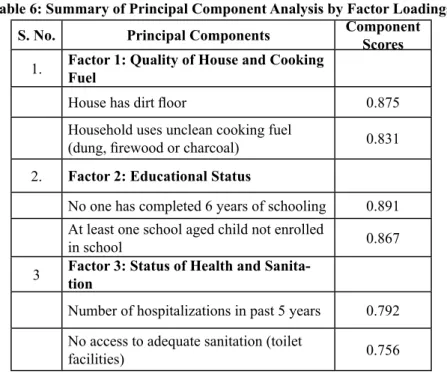
In India the percentage of migrant population has risen from a mere 10.8 percent in 1950 to 37.5 percent in 2011. Bihar is one of the high migrating states in India and Darbhanga is one of the highest migrating districts in Bihar with around 6% male out-migration. The estimated per capita income of Darbhanga is one of the lowest in the country. Migration and poverty are very closely related. It has been observed that those who are poverty stricken tend to migrate to urban areas for occupation and livelihood. Poverty is a complex phenomenon and cannot be explained in terms of income alone. A multidimensional approach is needed to define as well as tackle poverty. The authors have tried to address the issue of poverty among migrants in Bihar. We have used the multidimensional poverty index developed by Oxford Poverty and Human Development Initiative to measure poverty of migrants in Bihar. We have further used the Principal Component Analysis to identify the most important indicators which contribute to multidimensional poverty. It was found that in Darbhanga the average poor person in migrant households is deprived in more number of weighted indicators as compared to the non-migrant households. Three principal components were identified in this analysis which together explain 75 percent of the variation in Multidimensional Poverty.
Key Words: Migration, Multidimensional Poverty Index, Income, Poverty, Remittance
Introduction
Migration is happening since the beginning of human history. Many theories explain the occurrence of migration. A number of social, cultural, economic, spatial, climatic and demographic factors affect migration. Among them, the economic factors are considered to be as the primary reasons of migration. India has witnessed more than threefold increase in the levels of migration from 10.8 percent of the total population classified as migrants in 1951
1 PhD Research Scholar, Indira Gandhi National Open University, New Delhi-110068 2 Assistant Professor, School of Extension and Development Studies,Indira Gandhi National
(Mehta, 1990) to 37.5 percent in 2011 (Census of India, 2011). Migrants from rural areas accounted for 60 percent of the total migrants in India in 2011. This reveals that there is still a strong tendency to migrate from rural to urban areas. Migration brings several socio-economic as well as political ramifications at both places from where out-migration takes place and where in-migration settles. The neo-classical theory of migration by proponents like Lewis and Todaro (1970) states some of the issues concerning rural-urban migration.
Migration from Bihar has been reported since pre-independence era of 1830s with large number of workers from Bihar being indentured in the British colonies of Mauritius, Guyana, Trinidad and Fiji to work as labourers in the fields and plantations. After independence, in the mid-1960s and 1970s during the Green Revolution, large number of labour migrated from Bihar to Punjab and Haryana. In 1990s and 2000s, after opening of economy and post-liberalization, a significant number of migrants have also started going to several other areas to work which includes Delhi, Gujarat, Maharashtra, and Assam (Sharma,2005).
Bihar is the 3rd most populous state in India. It has a population of over
100 million people, of which 36 million are estimated to be poor. Bihar is one among the faster growing low-income States. Since 2005, the pace of poverty reduction in the state has picked up. Despite this, large parts of the state remain very poor (World Bank, 2016). Darbhanga is one of the 38 districts of Bihar. The population of Darbhanga is 39,37,385 with sex-ratio (911 female per 1000 male) and literacy rate 56.56% (Census, 2011). The main occupation of the people of Darbhanga is agriculture, fishery and daily wage labour. Major source of income of the districts is agriculture. The estimated per capita income of Darbhanga was Rs 15,870 in 2011-12 at current price. At the same time per capita income of Bihar and India were Rs 23,525 and Rs 60,972 respectively. In recent years per capita income of Bihar has increased. As per Economic Survey 2016-17 per capita income of Bihar has increased to Rs 36,964 in 2015-16 at current price whereas India’s per capita income has increased to Rs 93,293 in 2015-16 as per data on Provisional Estimates of Annual National Income and Quarterly Estimates of Gross Domestic Product 2015-16.
In 2006, the Ministry of Panchayati Raj, Government of India has named Darbhanga as one of the 250 most backward districts in the country receiving funds from the Backward Regions Grant Fund Programme (BRGF) (Jha, 2016). Darbhanga faces the bane of floods every year. Recurring floods have an adverse effect on the district’s agricultural productivity every year. Majority of the district’s population (over 90%) lives in rural areas (Census, 2011). The district is characterized by poor urban infrastructure and lack of industries due to which there are not enough non-farm based employment opportunities. Due to lack of economic opportunities in the district, people in large number migrate to cities like Delhi, Punjab, Gujarat, Mumbai etc. for employment opportunities.
national average of HDI is 0.6087 (UNDP, 2016).The HDI of Darbhanga was measured at 0.4342 (Singh and Keshari, 2016), which is very low compared to Bihar and National average of HDI.
Poverty is defined as a state or condition in which a person or community lacks the financial resources and essentials to enjoy a minimum standard of life and well-being that’s considered acceptable in the society. The definition and methods of measuring poverty differs from country to country. Since 1971, the Planning Commission has based its classification of poverty on the cost of calorie consumption in rural and urban India. Accordingly, poverty line was defined on the basis of recommended nutritional requirements of 2,400 calories per person per day for rural areas and 2,100 calories for urban areas. Many studies have stated that remittances sent by the migrants to their native villages help the families of the migrants to evade poverty and increase consumption; these remittances may help to reduce economic inequality among the social groups in the area of origin (Rempel and Lobdell, 1978 & Rozelle et. al., 1999).
Migration and Poverty are very closely related. It has been observed that those who are poverty stricken tend to migrate to urban areas for occupation and livelihood. There are many studies which have shown that migration helps households both directly and indirectly: directly by increasing the income and consumption of their families through remittances and thereby possibly decreasing poverty in these areas; and indirectly by improving the social capital and standard of living in the areas (Cox, 1987; Stark, 1991; Winkels and Adger, 2002).
exclusion, low education, bad housing conditions etc. as their poverty woes.
Multidimensional Poverty Index (MPI, commissioned by UNDP 2010) was designed to portray both incidence and intensity of deprivation. It takes care of the shortcomings of other measures of poverty which rely only on income and consumption levels. Against this backdrop this research paper makes an attempt to assess the relation between multidimensional poverty and migration in Darbhanga district of Bihar.
Materials and Methods
Retrospective case control study design was applied in this study. The cases were ‘migrants’ and controls were ‘non-migrant’ households. The data from migrant and non-migrant households regarding various factors related to migration were collected through primary survey. Based on the out-migration data and other socio-demographic parameters; Darbhanga was selected as one of the high out-migrating districts of Bihar. To have parity among the districts additional criteria were applied for selection of district. These include percentage of male out-migration out of total male population in the district; percentage of male population in the district out of total male population of state; percentage of cultivated land area in the district, out of total geographical area of the district, and percentage of female literacy in the district. The two-stage stratified design for selection of villages was applied. In the 1st stage, two blocks were randomly selected from the list of
all blocks from the district and in the 2nd stage villages were selected from
selected blocks based on the local knowledge and feasibility of getting the required sample. Data from 200 households were collected from Darbhanga district, which include 100 migrants and 100 non-migrants’ households.
Multidimensional Poverty Index
the proportion of the population who are poor according to the MPI i.e. (those who are deprived in at least one third of the weighted indicators). The MPI identifies deprivations across the same three dimensions as the HDI (Human Development Index developed by Mahbub Ul Haq, 1996) and shows the number of people who are multi-dimensionally poor (suffering deprivations in 33% or more of the weighted indicators) and the number of weighted deprivations with which poor households typically contend with. The MPI can help in the effective allocation of resources by making possible the targeting of those with the greatest intensity of poverty and monitoring impacts of policy intervention.
Following are the key steps used in computation of MPI:
Step 1: Household deprivation score (c) measured as the sum of each deprivation multiplied by its assigned weight
Step 2: All the households with > 33.3 percent deprivation identified
(Is the household poor; c > 33.3 percent).
Step 3: Headcount ratio (H) = Number of people who are Multidimensional poor/ Total population
Step 4: Intensity of poverty (A) = Sum of Household size of MDI Poor/ Sum of deprivation scores of Households>33.3% Deprivation
Step 5: Multidimensional Poverty Index (MPI) = H. A
There are ten indicators used in this study to measure Multidimensional Poverty Index that are as follows:
1. Education (each indicator is weighted equally at 1/6)
i. Years of Schooling: deprived if no one has completed six years of schooling
enrolled in school
2. Health (each indicator is weighted equally at 1/6)
iii. Child Mortality: deprived if any child has died in the family ● Nutrition: deprived if any person in the family has been hospitalized
in the past 5 years (This indicator was adapted in place of the original indicator: ‘Deprived if at least one member is malnourished’ as collection and verification of information on it was untenable)
3. Standard of Living (each indicator is weighted equally at 1/18) iv. Electricity: deprived if the household has no electricity
v. Drinking water: deprived if the household does not have access to clean drinking water
vi. Sanitation: deprived if they do not have toilet facilities in the household vii. Flooring: deprived if the household has dirt, mud or dung floor viii. Cooking Fuel: deprived if they cook with wood, charcoal or dung ix. Assets: deprived if the household does not own more than one of: radio,
TV, telephone/mobile, car, truck, two-wheeler, rickshaw/animal cart, cultivable land, house, shop, livestock, and gas stove
Principal Component Analysis
the linear combination chosen have maximum variance. Eigen values (also called characteristic values) are the variances of the principal components. We use the size of the Eigen value to determine the number of principal components and retain the principal components with the largest Eigen values. The Eigen vectors and Eigen values of a covariance matrix are central part of the Principal Component Matrix. While the Eigen vectors determine the direction of the new feature space, the Eigen values explain the variance of the data along the new feature axis.
Results and Discussion
Profile of the Migrants