Katie’s Jogger
Final Design Review (FDR)
December 6th, 2019
By
Megan Guillermo [email protected]
Katie Mangiaracina [email protected]
Abdullah Sulaiman [email protected]
Erin Wint [email protected]
Prepared For
Edward Robinson [email protected]
Mechanical Engineering Department California Polytechnic State University
Statement of Disclaimer
Table of Contents
1.0 Introduction ... 2
2.0 Background ... 2
2.1 Customer Meetings and Interviews / Interview with Sponsor ... 2
2.2 Product Research ... 3
2.2.1 Ombrelo BodyMap ... 3
2.2.2 Adaptive Star Axiom Improv Indoor/Outdoor Mobility Push Chair ... 4
2.2.3 Special Tomato Jogger ... 4
2.2.4 Supracor Honeycomb Cushion – Stimulite Classic Cushion ... 5
2.2.5 J3 Wheelchair Back ... 5
2.3 Technical Literature ... 6
2.4 Codes, Standards, and Regulations ... 6
3.0 Objectives ... 6
3.1 Problem Statement ... 6
3.2 Boundary Diagram ... 7
3.3 Customers Wants and Needs ... 8
3.4 QFD ... 8
3.5 Engineering Specifications Table... 9
4.0 Concept Design ... 9
4.1 Concept Generation Process... 10
4.1.1 Frame ... 10
4.1.2 Seatbelt ... 10
4.1.3 Wheels... 11
4.1.4 Seating... 11
4.1.5 Brakes ... 12
4.1.6 Suspension ... 12
4.1.7 Footrest ... 13
4.1.8 Headrest ... 13
4.1.9 Armrest ... 13
4.2 Concept Selection ... 14
4.4 Preliminary Analysis ... 16
4.5 Risk Assessment ... 16
5.0 Final Design ... 16
5.1 Detailed Final Design ... 16
5.2 Calculations/Simulations ... 17
5.2.1 Hand Calculations ... 17
5.2.2 FEA ... 18
5.3 Safety, Maintenance, and Repair Considerations... 19
6.0 Manufacturing Plan ... 19
6.1 Frame ... 19
6.1.1 Cutting the Metal ... 19
6.1.2 Bending the Tubes ... 20
6.1.3 Mitering the Round Tubes ... 21
6.2 Wheels ... 21
6.2.1 Manufacturing Rear Axles ... 21
6.2.2 Manufacturing Front and Back Dropouts ... 21
6.3 Braking System ... 22
6.3.1 Manufacturing the Reverse Caliper Brake ... 22
6.3.2 Dead Man’s Brake Lever ... 23
6.4 Footrest Plate ... 23
6.5 Commercial Components ... 23
6.6 Outsourcing ... 24
6.7 Challenges and Future Recommendations ... 25
7.0 Design Verification Plan ... 25
7.1 Structural Prototype... 26
7.2 Testing Descriptions and Results ... 28
7.2.1 Weld Test ... 28
7.2.2 Lean Test ... 28
7.2.3 Braking System ... 28
7.2.4 Ease of Pushing Test ... 28
7.3 Testing Conclusions and Recommendations... 29
8.1 Design Process ... 29
8.2 Timeline ... 30
8.3 Gantt Chart ... 30
8.4 Project Management Assessment ... 30
Table of Figures
Figure 2.2.1.1 Ombrelo Body Map Child and Adult Stroller 3
Figure 2.2.2.1 Adaptive Star Axiom Improv Jogger 3
Figure 2.2.3.1 Special Tomato Jogger 4
Figure 2.2.4.1 Stimulite Classic Cushion 5
Figure 2.2.5.1 J3 Wheelchair Back 5
Figure 3.2.1 Boundary Diagram of Katie’s Jogger 6
Figure 4.3.1 Frame Design 14
Figure 5.1.1 Final Frame Design 16
Figure 5.2.2.1 Stresses Determined by Finite Element Analysis 18
Figure 6.1.1.1 Cutting the Square Tubing Using a Chop Saw 20
Figure 6.1.2.1 Using the Tube Bender to Bend Aluminum Tubing 20
Figure 6.1.3.1 Mitering the Ends of the Handlebar 21
Figure 6.2.2.1 Custom Front Dropouts 22
Figure 6.3.1 Detailed Photo of the Reverse Caliper Brake 23
Figure 6.6.1 Clamping the Entire Frame to Weld Rear Forks and Dropouts 24
Figure 6.6.2 Sanding Down the Welds 24
Figure 7.1 Fully Assembled Frame with Wheels and Brakes Attached 26
Figure 7.1.1 Structural Prototype 27
Figure 7.2.1.1 Erin Testing the Strength of the Welds 28
Figure 8.1.1 Katie’s Jogger Displayed at Senior Project Expo 29
List of Tables
Table 3.3.1 Customer Wants and Needs ...8
Table 3.5.1 Engineering Specifications Table ...9
Table 7.7.1 Final Dimensions of the Frame ...21
-1-
Abstract
Edward Robinson is an avid runner who would like to take his daughter on runs. His daughter, Katie, is 100% wheelchair bound and currently does not fit in any commercial joggers on the market. The project team was expected to design, build, and test a custom working prototype of a jogger that the sponsor can use to take his daughter on runs. This entire project was performed over a span of three quarters.
Initially, background research was conducted with the Robinson family and online to determine the critical features of the design. By working with Katie, the team was able to measure the most comfortable lengths and angles of the jogger. Multiple conceptual designs were considered based off specific elements such as seating, wheels, suspension, etc. After extensive research and recommendation from our peers and professionals, a final design was approved by the entire team.
All components of the jogger were manufactured by the team with the exception of a few commercial products such as the sun cover, wheels, and the seat cushion. However, these commercial products were adapted to properly integrate with the frame. Welding was performed by a Cal Poly Professor and powder coating and upholstering of the jogger was outsourced to local companies in San Luis Obispo.
The project team was able to deliver a working prototype to the sponsor. The final prototype was able support a load much heavier than the rider and could provide a comfortable ride. All welds could withstand a heavy load and all dimensions were matched. The cushions, covers, and wheels are all detachable. The jogger is easy to push; however, it is difficult to turn due to the front fixed wheel.
This report details the entire design process taken over the course of 30 weeks including background information, conceptual design, manufacturing, and testing.
-2-
1.0 Introduction
Edward Robinson is an avid runner who wants the opportunity to take his daughter on runs. His daughter, Katie, lacks the ability to walk nor stand and utilizes a wheelchair for 100% of her mobility. The Robinson family has tried using strollers and joggers that are available on the market but none of these products were suitable for Katie’s disabilities. Edward has requested the team to design and build a custom prototype jogger for Katie to sit in while he is running. This jogger must provide comfort, support, and security to Katie and be equipped to be used over a variety of terrain and surfaces for up to two to three hours.
The team working on this project includes Megan Guillermo, Katie Mangiaracina, Abdullah Sulaiman, and Erin Wint. Megan, Erin, and Katie are Mechanical Engineering majors, and Abdullah is a General Engineering major with a concentration in Biomedical and Mechanical Engineering.
This document includes the background information, objectives/requirements, and the chosen final design. This report includes a complete description of the final design with a detailed explanation of how the jogger will be manufactured and tested. A project management section that details the schedule of the project and key deliverables is also included.
2.0 Background
This section presents the results found from doing design research. Our team conducted extensive research to understand the technical challenges of the project. This research includes an interview with the Robinson family, determining similar products available on the market, obtaining technical literature, and referencing related patents.
2.1 Customer Meetings and Interviews / Interview with Sponsor
To gain a clear idea of what the project entails and what is expected of the team, a meeting was conducted with the Robinson family. Katie has several limitations such as:
Does not walk
Low muscle functionality in her lower extremities
o Cannot bear weight in lower extremities Low strength and low balance in her upper body
o Can propel a wheelchair and use arms to balance Scoliosis (sideways curvature of the spine)
No protective reflex due to low balance and strength Cannot resist a force against her
Contractures in her hips Low strength in grip
-3-
Katie needs a very specific design for a jogger that caters to all her limitations. The family has tried using a typical stroller, but it was not suitable for running and she grew out of it. They have also tried joggers, but Katie’s rigid spine prevented her from cradling in the seat comfortably. The jogger must allow Katie to sit upright (approximately 90 degrees), and it must be lightweight and easy to use. She also needs a seatbelt and handles to stabilize herself while in the jogger, as she lacks the ability to balance without them.
Appendix A presents a table of patents for existing joggers and strollers. Most of these patents specify the design and assembly of the frame while leaving the specifications for the comfort and cushion up to the user. Therefore, these patents do not fully meet the needs of Katie and her parents; however, parts of these designs can be utilized in the final design for Katie’s Jogger.
2.2 Product Research
During the product research phase, many similar existing products were found. However, the consumer base of these products typically only encompassed infants to children rather than adults. Also, when the adult consumer base was considered, most of those devices are not usable for jogging. Therefore, inspiration will be taken from these designs in order to engineer the best design to suit Katie and the Robinson family.
2.2.1 Ombrelo BodyMap
The Ombrelo BodyMap [6], seen in Figure 2.2.1.1, is a lightweight, foldable, and durable stroller for both children and adults. It focuses on the comfort of the client with the use of the BodyMap cushion system to reduce the pressure on soft tissues. Its main intent is to transport patients in hospitals as well as go on long walks, however, this is not ideal for jogging. Nevertheless, the placement of the cushions and the collapsibility of this product can be emulated in the design for Katie’s Jogger.
-4-
2.2.2 Adaptive Star Axiom Improv Indoor/Outdoor Mobility Push Chair
Figure 2.2.2.1 shows the Adaptive Star Axiom Improv Jogger [1]. The initial cost of this jogger ranges between approximately $990 - $1700 without the add-ons that make the design comfortable. The project aims to maximize safety and comfort while minimizing expenses. This all-terrain jogger seems to have many features that the project can utilize in the design. For example, the jogger has removable wheels for easy transport. Also, the wheels and shock absorption system work cohesively to create comfort while riding on uneven terrain. Unlike most other commercial designs meant for adults, the Axiom Improv includes storage pockets for water bottles in addition to hand brakes.
Figure 2.2.2.1. Adaptive Star Axiom Improv Jogger
2.2.3 Special Tomato Jogger
-5-
Figure 2.2.3.1. Special Tomato Jogger
2.2.4 Supracor Honeycomb Cushion – Stimulite Classic Cushion
The Stimulite Classic Cushion provides support and stability in addition to comfort. This particular design is 2 ¾” thick, weighs 3 lbs, and is machine washable and dryer safe. Katie currently uses a Supracor honeycomb cushion for her seat. Cost estimates predict this product to be a minimum of $440. Because the team knows that Katie is comfortable using this product, it is worth the cost of the cushion since her comfort is a guarantee. Figure 2.2.4.1 shows a picture of the Supracor Stimulite Classic Cushion [9].
Figure 2.2.4.1 Stimulite Classic Cushion
2.2.5 J3 Wheelchair Back
-6-
Figure 2.2.5.1. J3 Wheelchair Back
2.3 Technical Literature
Through research, the team discovered that there is a wide variety of joggers and strollers, but not many joggers for adults with specific needs like Katie’s needs. There have been a few senior projects at Cal Poly that are similar to Katie’s Jogger. Joseph’s Jogger, a senior project in 2016, is the most relevant, so the team will most likely use this report as a dominant resource. Bodyspace: Anthropometry, Ergonomics, and the Design of Work is a book that offers insights into how to design around the human body. The team needs to ensure that she is comfortable and able to reach everything she needs.
2.4 Codes, Standards, and Regulations
Due to the lack of demand for this product, there are not many existing standards for it; however, there are some existing standards that can be used as guides, including the ASTM F833-15 Standard Consumer Safety Performance Specification for Carriages and Strollers. The ASTM F2680-17 Standard Test Methods and Specifications for Bicycle Manually Operated Front Wheel Retention Systems may also be useful since the sponsor requested a jogger that can be disassembled, including the detachable wheels.
3.0 Objectives
Information obtained from the background research was used to develop a problem statement that is precisely specified. This section also establishes goals, evaluation criteria, and deliverables for the project.
-7-
Edward Robinson would like to take his daughter, Katie, on runs but is restricted due to Katie’s limitations. Edward needs a device to push Katie in that is easy to use, lightweight, and safe. This device must also cater to Katie’s disabilities and support her on 2-3 hour long runs over mixed terrain.
3.2 BoundaryDiagram
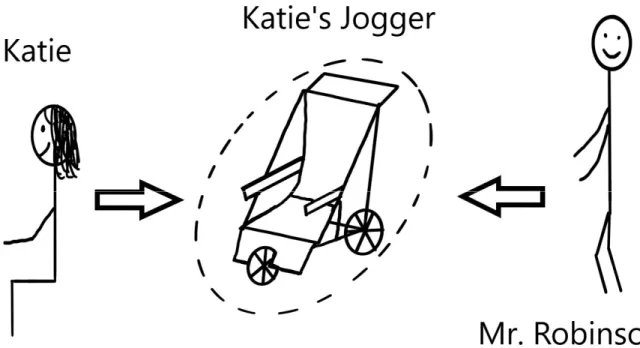
Figure 3.2.1 is a visual depiction of the entire system that the team is designing for. The purpose of this diagram is to clearly show the boundaries and the interfaces.
-8-
3.3 CustomersWants and Needs
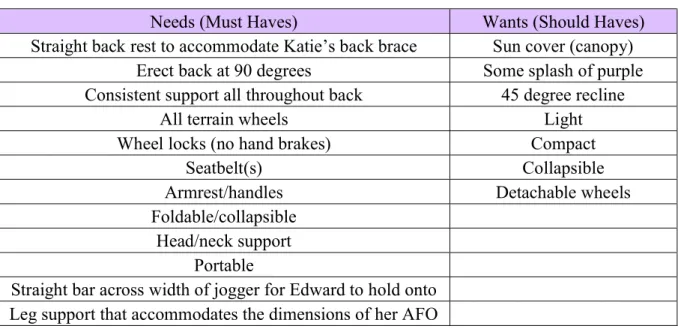
Table 3.3.1 Customer Wants and Needs
Needs (Must Haves) Wants (Should Haves)
Straight back rest to accommodate Katie’s back brace Sun cover (canopy)
Erect back at 90 degrees Some splash of purple
Consistent support all throughout back 45 degree recline
All terrain wheels Light
Wheel locks (no hand brakes) Compact
Seatbelt(s) Collapsible
Armrest/handles Detachable wheels
Foldable/collapsible
Head/neck support
Portable
Straight bar across width of jogger for Edward to hold onto Leg support that accommodates the dimensions of her AFO
Update 03/06/19: After speaking with the sponsor, it was determined that hand brakes are necessary for the design. It was also determined that foldable/collapsible is a want more than a need, due to the budget and time constraints.
3.4 QFD
-9-
3.5 Engineering Specifications Table
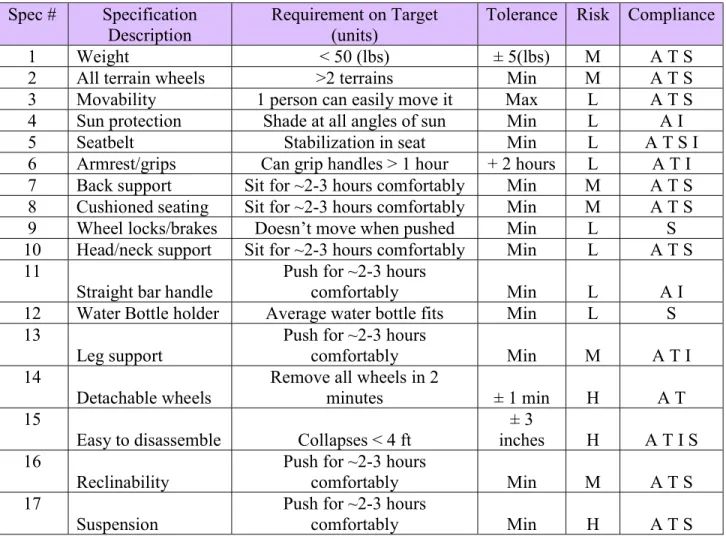
In Table 3.4.1., the tolerance column is the acceptable variation from the target (min, max, or +/- tolerance). Risk is how challenging you think it will be to meet each specification — low risk is denoted by L, medium risk is denoted by M, and high risk is denoted by H. Compliance is the way that determines whether the design meets each specification by Test (T), Analysis (A), Inspection (I), or Similarity (S) to an existing product.
Table 3.5.1 Engineering Specification Table Spec # Specification
Description
Requirement on Target (units)
Tolerance Risk Compliance
1 Weight < 50 (lbs) ± 5(lbs) M A T S
2 All terrain wheels >2 terrains Min M A T S
3 Movability 1 person can easily move it Max L A T S
4 Sun protection Shade at all angles of sun Min L A I
5 Seatbelt Stabilization in seat Min L A T S I
6 Armrest/grips Can grip handles > 1 hour + 2 hours L A T I
7 Back support Sit for ~2-3 hours comfortably Min M A T S
8 Cushioned seating Sit for ~2-3 hours comfortably Min M A T S
9 Wheel locks/brakes Doesn’t move when pushed Min L S
10 Head/neck support Sit for ~2-3 hours comfortably Min L A T S 11
Straight bar handle Push for ~2-3 hours comfortably Min L A I 12 Water Bottle holder Average water bottle fits Min L S 13
Leg support
Push for ~2-3 hours
comfortably Min M A T I
14
Detachable wheels
Remove all wheels in 2
minutes ± 1 min H A T
15
Easy to disassemble Collapses < 4 ft inches ± 3 H A T I S 16
Reclinability Push for ~2-3 hours comfortably Min M A T S 17
Suspension Push for ~2-3 hours comfortably Min H A T S
4.0 Concept Design
-10-
4.1 Concept Generation Process
To begin concept ideation, the team brainstormed as many solutions as possible for Katie’s Jogger. These solutions were then refined to more realistic, smaller concept designs. Specific features of design were analyzed individually. For each critical feature, two or more potential designs were considered.
4.1.1 Frame
The frame is one of the main features of the jogger, since its design influences other design features. The frame must be strong, durable, comfortable, lightweight, and have a low center of gravity to reduce the potential of tipping. Taking into consideration these design requirements led to four different designs:
Design 1
This is an exact replica of the frame used in a Senior Project mentioned previously, Joseph’s jogger. This frame has wide dimensions with a wheel extended past the footrest but does not strongly accommodate Katie’s limited bending in her knees.
Design 2
This is a fully fixed frame with a seat that sits a 90-95˚ angle at a slight incline. This frame sits more upright compared to Joseph’s jogger.
Design 3
This is an adapted version of Joseph’s jogger that includes a more upright seating position and the addition of an armrest.
Design 4
A collapsibility feature would be incorporated into this design with the bottom half of the frame folding towards the backrest.
4.1.2 Seatbelt
-11-
Design 1
This is a four-point harness system that would buckle around her waist.
Design 2
This is a traditional three-point seatbelt found in most cars.
Design 3
This harness is the traditional seatbelt that Katie uses in her wheelchair.
4.1.3 Wheels
Multiple wheel designs were considered to decide which types of wheels would perform best for the jogger’s every day usage.
Design 1
These are bike tires that are found on many typical joggers.
Design 2
This is an oversized tire with larger and wider rims that are known to allow for riding on soft and unstable terrain.
Design 3
These solid tires are airless and made with rubber. Although these tires are extremely durable, they are more expensive than pneumatic tires. Solid tires also result in an uncomfortable ride.
4.1.4 Seating
-12-
Design 1
This design would adapt the cushioning and support from Katie’s current jogger, such as the J3 back and the Supracor cushion.
Design 2
A seat found on typical joggers would be used.
Design 3
This design from Joseph’s jogger would incorporate upholstered cushioned seating that would be attached to the frame with the addition of form padding attachments.
4.1.5 Brakes
For safety purposes, our team decided to include a braking system for emergency situations. Two types of brakes were considered.
Design 1
This is a dual-pivot caliper brake that squeezes the rim of the wheel and prevents it from moving when engaged.
Design 2
This is a disc brake that creates friction and restricts movement when the calipers squeeze pairs of pads against a disc connected to the wheel hub.
4.1.6 Suspension
Because Edward specified that the jogger must be equipped to use over a variety of terrain, the jogger must have a suspension system to absorb the shock and provide a smoother ride for Katie.
Design 1
-13-
Design 2
This design would utilize pneumatic tires to act as the suspension.
4.1.7 Footrest
Because Katie wears an AFO on both her feet, the jogger must design around this to ensure that the jogger does not interfere with Katie in an uncomfortable place and create a pressure point.
Design 1
The same footrest style on Katie’s current wheelchair would be used.
Design 2
This design would replicate typical joggers with an entire leg/footrest encased with fabric.
4.1.8 Headrest
For added safety and comfort, our team decided to include a headrest for Katie to support her during unstable rides.
Design 1
A headrest much like the one found on Joseph’s Jogger would be used where Katie’s head would be enclosed between foam padding on either side.
Design 2
An extruded headrest would be attached to the jogger that Katie would lay her head on.
4.1.9 Armrest
Since Katie has no protective reflex, an armrest must be included that Katie can use to stabilize herself.
Design 1
-14-
Design 2
This design would use the armrest that is found on most commercial airplanes that has a rounded edge that Katie can grip.
Design 3
A hand grip that Katie can hold would be attached to the end of an armrest.
4.2 Concept Selection
Pugh matrices were used to determine which of the designs for each subsystem were best. Pugh matrices for each subsystem can be seen in Appendix D. A Pugh matrix is a method of evaluation that compares each concept to a chosen datum. This datum represents the best existing product on the market. The team decided to use a stroller from Phil and Ted’s as the datum, since it best satisfies all the specifications and requirements of Katie’s Jogger. Each concept is compared to the datum based on a certain set of criteria. The following nomenclature is used to compare each concept [11]:
+ (plus): better than the datum - (minus): worse than the datum S (same): same as the datum
Once the best designs for each subsystem were chosen from the Pugh matrices, a total of three potential final designs were created based on a combination of different chosen subsystems. These designs were evaluated in a weighted decision matrix. This is a tool that is used to compare multiple alternatives based on a specific set of weighted criteria [12]. The weighted decision matrix for the team’s three conceptual designs can be seen in Appendix E.
4.3 Full System Concept
-15-
Figure 4.3.1. Frame Design
-16-
4.4 Preliminary Analysis
Several assumptions were made to make the calculations easier. Most of these assumptions err on the side of caution. We initially analyzed a simple case in which Edward was pushing the jogger with Katie sitting in it. According to ErgoMatters, a good estimate of force used to push a cart over long distances is 25 lbf. Using this pushing force and the weight of Katie and the frame, the team found the typical forces and stresses in the jogger under normal use. These calculations are included in Appendix F. These calculations also serve as a check for the finite element analysis (FEA) done by Abdullah. From these calculations, the team can explore how changing the geometry of the cross-section affects the strength of the jogger.
4.5 Risk Assessment
The biggest risk with the current design is the jogger may be prone to tipping, particularly if a bump is hit at an odd angle. To mitigate this risk, the team is refining the design to have a lower center of mass by adding a seat tilt, as well as other modifications. Furthermore, to ensure Katie’s safety in the event that the jogger tips, a harness will be added so Katie will remain within the jogger. Refer to Appendix G for the design hazard checklist where possible risks for the project were considered.
5.0 Final Design
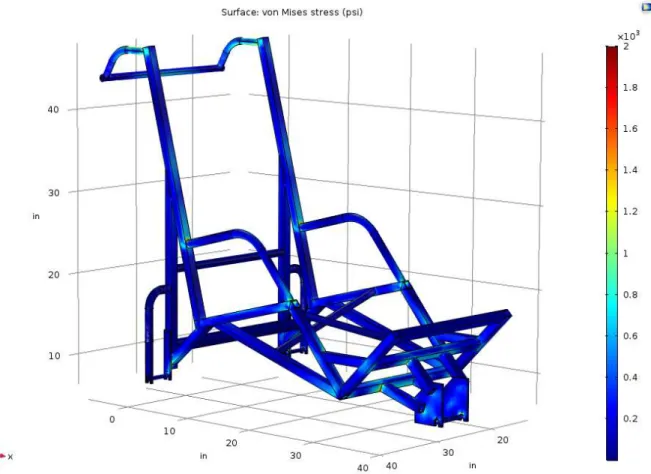
The final design of the jogger was decided on by the team after much deliberation. Abdullah performed FEA on the final design to confirm that it will not break under normal usage, as well as extreme load cases like running into a curb. This section covers the changes made since the CDR and the justification behind the changes.
5.1 Detailed Final Design
-17-
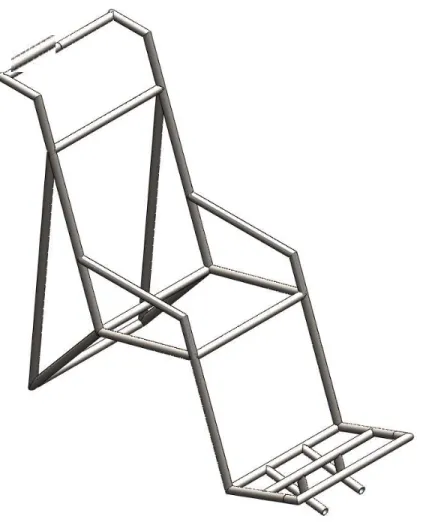
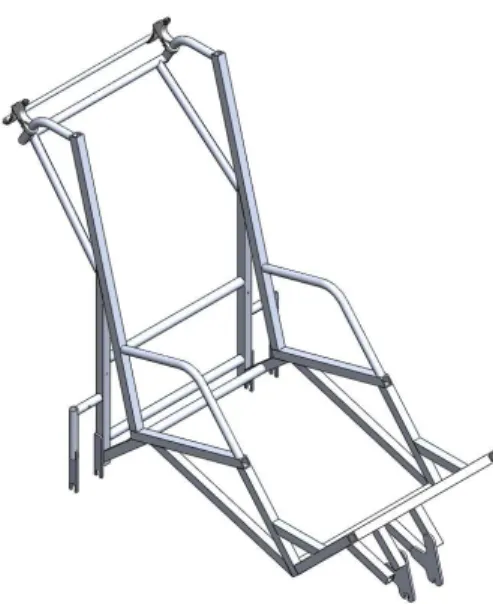
The final frame design, shown in Figure 5.1.1, includes many changes from the initial design. Starting from the top, the handlebar has been lowered to a location preferred by Mr. Robinson. A cross bar has been added to the member that connects to the backrest and back wheels to increase the stiffness of the frame when experiencing forces exerted on the sides of the jogger. The crossbar was previously connected to the two back wheels has been moved up to remove the potential of Mr. Robinson hitting his leg on it when running. Additionally, it serves to increase the stiffness of the frame. Two round bars have connecting the bottom of the handlebar to the back of the frame have been added to provide additional support when Mr. Robinson is pushing down on the handlebar. The two axles for the back wheels (only one can be seen in this view) are positioned higher than the front axle to account for height difference caused by 16” wheels in the back and 12” in the front. The member that runs diagonally from the footrest to the back-seat corners is added to structurally support the loads the front wheel will experience by allowing the load to be evenly distributed through the frame. The small corner members between the leg and footrest, and the members between the front fork and footrest, also serve the same purpose as was just mentioned. There are dropout plates on the front and back wheels to allow an attachment for the hubs.
A strong, breathable mesh recommended by SLO Sail and Canvas, will be used to create a sling seat and an adjustable backrest that will allow Katie to recline. A Supracor cushion will be used for the seat and firm, high density foam will be used for the back, and headrest. A high polymer plastic will be used for the platform on the footrest. A sun cover will be attached to the backrest. 16” wheels fitted with reversed caliper brakes (dead man’s brake) will be used for the back wheels, and a 12” wheel will be used in the front.
5.2 Calculations/Simulations
A combination of hand calculations and FEA using COMSOL were performed to ensure that the frame can withstand normal usage and unexpected scenarios. Normal usage is defined as the jogger being pushed while Katie is sitting in it, and an unexpected scenario is the jogger going over a bump or curb. The hand calculations are based off a previous frame design. The results from the hand calculations were used to check that the same design analyzed through FEA would output the same results. Once this was confirmed, the team was able to do further analysis on updated frame designs solely through FEA.
5.2.1 Hand Calculations
-18-
a factor of safety is to ensure that the jogger is intentionally built stronger than it needs to be. Based off a factor of safety of 3 and the calculated stresses, the team has chosen to build the frame out of aluminum with a wall thickness of 0.125”. Updated hand calculations can be seen in Appendix F.
5.2.2 FEA
Figure 5.2.2.1 Stresses Determined by Finite Element Analysis
-19-
of the frame is 4+. Although the max stress is within the steel’s yielding limits, to account for dynamic and unexpected loading such as bumps, pot-holes, or curbs, which magnify the forces the frame about threefold, the frame will have thicker steel tubes. The thicker tubes will be used at the axles and fork joints which will lower the stress experienced by the steel at those points, thus increasing the factor of safety to prevent any possible failure of the frame.
5.3 Safety, Maintenance, and Repair Considerations
Several precautions have been taken to verify that the final prototype will function as intended. The team conducted a Failure Modes and Effects Analysis (FMEA) where potential failure modes were evaluated. This process allowed the team to consider safety risks that may occur if the design does not perform its intended function. A detailed FMEA can be seen in Appendix K.
6.0 Manufacturing Plan
This section details how the jogger was manufactured. This includes how and what components were purchased/manufactured, how they were be assembled, and all outsourcing.
6.1 Frame
The materials for the frame consisted of round and square aluminum tubing. The square tubing was 1” x 1” x 1/8” and was purchased from Coast Aluminum. The round tubing was 7/8” with a 1/8” thickness and was purchased from OnlineMetals. All components of the frame interacting directly with a human used round tubing while the rest of the structural frame was made from square tubing.
6.1.1 Cutting the Metal
-20-
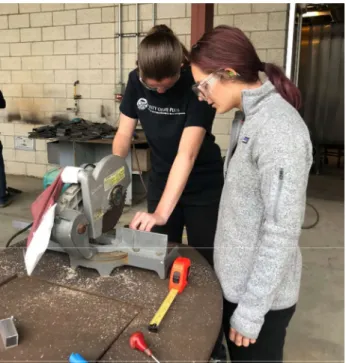
Figure 6.1.1.1 Cutting the Square Tubing Using a Chop Saw
6.1.2 Bending the Tubes
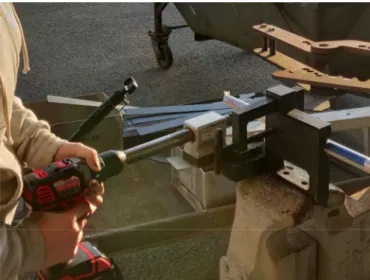
The side components of the handlebars and the armrests were bent using a tube bender outside the welding laboratory on Cal Poly’s campus. The round tube was simply and securely loaded into the tube bender and using a manual ratchet, a bend was created around the master die. The length of the bend was calculated according to its arc length and the beginning and the end of the bend was marked on the aluminum stock. Physical bending began and ended approximately 0.5” before and after the first and last mark, respectively, in order to ensure bending occurred along the marked length.
-21-
6.1.3 Mitering the Round Tubes
To ensure that all round tube component connections were flush (such as the bent handlebar components connecting to the horizontal handlebar), a 7/8” hole saw was used to miter both ends of the handlebar. The round tubing was securely fastened, and the hole saw was drilled straight through one end using a cordless drill. This gave the tube a “fish-mouth” shape and allowed for easy connection to other parts of the frame.
Figure 6.1.3.1 Mitering the Ends of the Handlebar
6.2 Wheels
This section details the manufacturing process of all the components relating to the wheels.
6.2.1 Manufacturing Rear Axles
Because the jogger used 16” kid’s bike wheels as the rear wheels, commercial axles were not easily attainable. Thus, the team created custom rear axles out of 0.5” stainless steel round bar. The Ø 0.5” x 12” length stock piece of round stainless steel was cut in half to manufacture 2 axles. Next, the piece was placed in the lathe and both ends were faced to the appropriate length. Then, the piece was turned down to a diameter of 0.492” for a length of 0.5” on either end. Next, both ends of the axle were chamfered. Finally, a die was used to create external threads for the nuts to be placed on the outside of the dropouts. This process was repeated for the second axle.
6.2.2 Manufacturing Front and Back Dropouts
-22-
the dropouts were welded to the outside of the frame while the other two were welded into the back forks.
For the front wheel, two custom dropouts were made using a waterjet in the Industrial Technology department on campus. Detailed drawings for both the front and back dropouts can be seen in Appendix H.
Figure 6.2.2.1 Custom Front Dropouts
6.3 Braking System
6.3.1 Manufacturing the Reverse Caliper Brake
-23-
Figure 6.3.1 Detailed Photo of the Reverse Caliper Brake
6.3.2 Dead Man’s Brake Lever
The team decided to create a horizontal lever that spans across the entire handlebar that Edward can push down on to disengage the brake. This is more comfortable than pressing down regular brake levers and the horizontal lever and can be strapped down the handlebar to prevent Edward from having to constantly push down on it. This was created by purchasing an aluminum rod and gluing it to both brake levers using metal glue.
6.4 Footrest Plate
For the footrest plate, the team purchased Delrin acetal plastic and measured the desired length and width of the plate using the frame. It was then cut on the using the laser cutter in the machine shop on campus. Afterwards, it was glued to the frame using epoxy glue.
6.5 Commercial Components
-24-
6.6 Outsourcing
All welding was performed by a Cal Poly welding professor, Kevin Williams. One side of the frame was clamped down and welded first. This shape was then compared to the other side of the frame to ensure both sides were symmetrical. Once confirmed, the other side was welded together. Afterwards, all width tubes were welded to connect both sides of the frame. Smaller components, such as the forks, dropouts, and handlebar were welded on last. Once the entire frame was intact, all previous welds were spot-checked and finalized.
Figure 6.6.1 Clamping the Entire Frame to Weld Rear Forks and Dropouts
-25-
After the frame was completely welded and touchups were done, the frame was sent to Full Spectrum Powder Coating in Atascadero. Powder coating ensures that the integrity of the frame is maintained and prevents rusting over time.
All the upholstery for the jogger was done by SLO Sail and Canvas. This included sewing together one continuous and detachable piece of mesh along the back, seat, and leg portion of the jogger. The also created a custom back cushion and added a matching cover for the head, back, and seat cushion.
6.7 Challenges and Future Recommendations
Many challenges that we could not anticipate occurred while manufacturing the jogger. Only one of the team members, Katie, has manufacturing experience, which caused some delay while building the jogger. In addition, none of the team members had any prior experience in building something this large and magnitude, so it proved to be a steep learning curve for all team members.
If this jogger, or anything similar to this jogger, was to be manufactured again, the team would recommend to leave a large timeline for manufacturing and to have an extremely detailed plan of attack for creating all the custom components. Another recommendation includes designing a future jogger than can use all regular wheels (instead of children’s wheels) so that commercial axles can be used. Lastly, the team recommends to design and implement a new brake design that is more easily manufacturable.
Although the team faced many challenges, the manufacturing process was completed and the full prototype was built. The team was able to experience and understand how much time and effort goes into building a full-size model. The team is extremely grateful to have had this experience because it improved our manufacturing skills and allowed us to all work with tools we did not use before.
7.0 Design Verification Plan
-26-
Figure 7.1 Fully Assembled Frame with Wheels and Brakes Attached
7.1 Structural Prototype
-27-
Figure 7.1.1 Structural Prototype
Once the prototype was assembled, Katie was placed in the prototype along with the Supracor cushion to best replicate the situation of her sitting in the future jogger. With Katie sitting in the jogger, we found the best lengths for each part of the jogger as well as the most adequate angles. It was critical that the team worked with the Robinson family to find the most suitable dimensions for Katie due to her limited mobility and the unevenness of her legs. Using the new dimensions, an updated version of the SolidWorks model was created. Table 7.7.1 lists all the exact dimensions of the frame that the team obtained from the structural prototype:
Table 7.7.1 Final Dimensions of the Frame
Feature Length
Backrest height 33"
Leg height (measured from the bottom of foot to seat) 12" Seat
Width: 19"
Depth: 15"
Seat Cushion Width: 18"
Footrest 10.5”
Armrest (measured from the top of the seat) 9.5"
Back incline angle 90˚
Leg incline angle 115˚
Footrest angle 85˚
-28-
7.2 Testing Descriptions and Results
Due to time constraints, the team was not able to perform the lean test and the easy of harness test. However, we were able to perform all other tests listed in the DVP&R.
7.2.1 Weld Test
The weld test tested the strength of the welds by testing the ability of the jogger to withstand a load without breaking or fracturing. For this test, we placed Erin in the jogger and pushed her around.
Figure 7.2.1.1 Erin Testing the Strength of the Welds
7.2.2 Lean Test
This purpose of this test was to ensure that the jogger does not tip over a maximum tip angle of 45°. This one done by tipping the jogger in different directions with one of the team members sitting in it.
7.2.3 Braking System
This test was designed to determine if the braking system would operate in the reverse manner. The conduct this test, one of the team members engaged the braking system and pushed the jogger and then after a certain distance, let go and released the braking system. The jogger successfully stopped after this motion.
-29-
This test was designed to test how easy the jogger was to push and turn over multiple terrain. Our original design used a fixed front wheel since this was how most commercial joggers were designed. However, since the center of gravity was more towards the center of the jogger, the jogger did not turn with ease. A large amount of force is required to make the jogger turn.
7.3 Testing Conclusions and Recommendations
There are some minor drawbacks with the final prototype that the team was not able to improve in the given timeframe. For example, the reverse braking system was able to function properly, but the arms of each caliper brake did not react in unison. This was temporarily fixed by clasping one arm of each caliper brake to the frame using a zip-tie. Another drawback is the difficulty of turning the jogger due to the fixed front wheel. If more time was given to work on the project, the team would have changed the design of the front wheel to allow rotation.
8.0 Project Management
This section outlines a description of the overall design process and a list of deliverables to be completed to prove that the team had considered a design schedule.
8.1 Design Process
The overall design process began with interviewing the Robinson family to obtain a better understanding of Katie’s limitations and their expectations. This information was used to research current designs of joggers, strollers, and wheelchairs, as well as specific accessories such as back supports and seat cushions. This research was then used to write the problem statement and outline the Scope of Work. The ideation process then began, which included building concept prototypes and CAD models. Once the design is finalized, the design was with the sponsor during the Critical Design Review. Afterwards, manufacturing and testing was conducted until a final functioning prototype was reached. This prototype was showcased at the Senior Project Exposition on November 22, 2019.
-30-
8.2 Timeline
Table 5.2.1 contains a list of key deliverables that were completed and met throughout the design process along with the dates that they will be completed. All items have been completed.
Table 8.2.1. Key Deliverables and their Due Dates
Key Deliverables Due Date
Concept Models 2/12/2019
Conceptual CAD Design 2/21/2019
Concept Prototype 2/26/2019
Preliminary Design Review 3/8/2019 Critical Design Review 5/3/2019
Risk Assessment 5/7/2019
Order Materials 5/9/2019
Begin Building 5/21/2019
Operations Manual 9/26/2019
Confirmation Prototype Review 10/22/2019 Senior Project Exposition 11/22/2019
Final Design Report 12/6/2019
Deliver Final Prototype 12/14/2019
8.3 Gantt Chart
The team has also created a Gantt Chart that better illustrates the project schedule. The Gantt chart can be seen in Appendix C. This Gantt chart lists all the tasks and a timeline for how long they will take to complete. The gray lines connecting the tasks bars indicate dependencies, which means that the proceeding task cannot be started until the previous one is completed. The team used this Gantt Chart throughout the three quarters of Senior Project.
8.4 Project Management Assessment
Having key deliverables and deadlines outlined by our sponsor every quarter helped us stay on track throughout project. However, our team had trouble meeting specific deadlines during the third quarter due to many challenges during the manufacturing process. For future design projects, we will start working on upcoming deliverables earlier to leave space for error.
9.0 Conclusion
This document serves as the Final Design Report for Katie’s Jogger. This report is an extension of the Critical Design Review, with the updated information regarding the final design, manufacturing plan, and design verification plan.
-31-
throughout the course of the project. We are glad to be able to allow a new opportunity for Katie and hope this improves her quality of life, as well as her family’s.
This project could not have been done without the help and support of many people. We would like to thank Katie, for being the inspiration behind our project, the Robinson family, for working and supporting us, our advisor, Lee McFarland, for guiding us throughout the entire process, our outsourcing vendors for supplying key components to the jogger, and Break the Barriers, for being the official sponsor for the project. We would also like to show our gratitude to all our financial sponsors such as CPConnect, MESFAC, and outside donors through GoFundMe.
-32-
References
[1] “Axiom Improv.” Adaptive Star, 2019, adaptivestar.com/product/axiom-improv/. [2] “J3 Wheelchair Back.” Sunrise Medical, 2018,
www.sunrisemedical.com/seating-positioning/jay/wheelchair-backs/j3-back#prettyPhoto. [3] Kretschmer, Oliver, et al. Jogger. 14 May 2009.
[4] Murdock, Janet. Adult Stroller. 12 Apr. 2007. [5] Nelson, Richard L. Jogging Stroller. 8 Oct. 1996.
[6] “OMBRELO BodyMap.” Akces Med, 2015, akces-med.com/product/ombrelo-bodymap/. [7] Santoski, Paul. Foldable Three-Wheeled Jogging Stroller. 18 July 2006.
[8] “Special Tomato Jogger.” Adaptive Mall, 2019, www.adaptivemall.com/sptojo1.html. [9] “Stimulite Classic Cushion.” Supracor Medical Cushions, 2019,
www.supracor.com/products/show/1.
[10] Sudakoff, Carle H, and Billie D Matthews. Jogging Stroller. 4 Sept. 1990.
[11] “Design Core: Conceptual Design.” Total Design: Integrated Methods for Successful Product Engineering, by Stuart Pugh, Prentice-Hall, 2010, pp. 74–77.
[12] “DesignWIKI.” Pairwise Comparison [DesignWIKI],
deseng.ryerson.ca/dokuwiki/design:weighted_decision_matrix.
[13] “Measuring Push/Pull Forces on Carts.” ErgoMatters, content.statefundca.com/safety/ErgoMatters/Carts.asp.
-33-
Appendices
A. Patent List
B. QFD House of Quality C. Gantt Chart
D. Pugh Matrices
E. Weighted Decision Matrix
F. Preliminary Analyses and/or Testing Details G. Design Hazard Checklist
H. Drawing Package
I. Analysis and Test Results J. Summary Cost Analysis
K. Failure Modes and Effects Analysis L. Design Verification Plan and Report M. Risk Assessment
-34-
Appendix A
Patent Number Patent Name
Patent
Inventor Patent Description Patent Image
US 5562300A Jogging Stoller Richard L. Nelson
This Jogging Stroller has a tricycle wheeled frame that includes the capacity to include
a seat with rigid clips that attach to metal rod structure.
Removable wheels are 15 inches to easily maneuver over
uneven terrain. Also, the handle bars are foldable [5].
US 20090121455A
1 Jogger
Oliver Kretcshme
r et al.
This patent is for a child's rehabilitation jogger that contains a pivoting frame for a
seat recliner [3].
US 4953880A Jogging Stroller
Carle H. Sudakoff
et al.
This stroller device is intended to carry infant children and is
easily assembled and disassembled due to interconnectable segments [10].
US 7077420B1 Foldable Three-Wheeled Jogging Stroller Paul Santoski
This stroller contains three members that enables the use of pulley and cables to rotate the frame and to assemble and
disassemble the stroller [7].
US 20070080519A 1 Adult Stroller Janet L. Murdock
This is an adult stroller that contains a canopy and inclement weather cover and a
-35-
-36-
-37-
Appendix D
Frame
Phil & Ted's Sport
Stroller Joseph's Jogger Fully Fixed Frame Adapted Joseph's Jogger Collapsible Frame
Manufacturability 0 S S S -
Lightweight 0 - - - -
Cost 0 - - - -
Safety (Pinch Points) 0 S S S -
Portable 0 + S + +
Low Center of Gravity 0 + + S +
Strength/Durability 0 + + + -
Comfort 0 - S + S
Collapsible 0 - - - S
Σ+ 3 2 3 2
ΣS 2 4 3 2
-38-
Harness
Criteria Concept
Phil & Ted's Sport
Stroller 4-Point Harness Car Seatbelt Wheelchair Seatbelt
Manufacturability 0 S S S
Lightweight 0 S S S
Cost 0 + + +
Safety (Pinch Points) 0 S S S
Safety (containment) 0 - - -
Comfort 0 + + +
Ease of use 0 S - +
Strength/Durability 0 + + -
Σ+ 3 3 3
ΣS 4 3 3
-39-
Wheels
Criteria Concept
Phil & Ted's Sport
Stroller small bike tire Fat tire Solid tire
Manufacturability 0 s s s
Lightweight 0 + - -
Cost 0 + - -
Suspension 0 s + -
Attachments 0 + + +
Performance 0 + + -
Maintenance 0 S S +
Σ+ 4 3 2
ΣS 3 2 1
-40-
Seating
Criteria Concept
Phil & Ted's Sport
Stroller Katie's Old Wheel Chair Adaptive Star Jogger Joseph's Jogger
Manufacturability 0 s s -
Lightweight 0 - s -
Cost 0 + s -
Comfort 0 - s +
Strength/Durability 0 + s +
Safety (Pressure Points) 0 - s +
Maintenance 0 - s +
Σ+ 2 0 4
ΣS 1 7 0
-41- Brake
Criteria Concept
Phil & Ted's Sport
Stroller Caliper Brake Disc Brakes
Manufacturability 0 + +
Cost 0 + -
Strength/Durability 0 + +
Engagement 0 - +
Performance 0 - +
Maintenance 0 + +
Σ+ 4 5
ΣS 0 0
Σ- 2 1
Suspension
Criteria Concept
Phil & Ted's Sport
Stroller Spring-Frame Suspension Wheel Suspension
Manufacturability 0 - +
Lightweight 0 + +
Cost 0 - -
Comfort 0 + +
Stength/Durability 0 + +
Maintenance 0 - -
Σ+ 3 4
ΣS 0 0
-42- Footrest
Criteria Concept
Phil & Ted's Sport Stroller Wheelchair Footrest Axiom Improv Footrest
Manufacturability 0 + -
Lightweight 0 - S
Cost 0 S -
Comfort 0 + +
Stength/Durability 0 + +
Safety (Pressure Points) 0 + S
Σ+ 4 2
ΣS 1 2
Σ- 1 2
Headrest
Criteria Concept
Phil & Ted's Sport
Stroller Joseph's Jogger Extruded headrest
Manufacturability 0 - -
Lightweight 0 - -
Cost 0 - -
Comfort 0 + +
Safety (Pressure Points) 0 + +
Safety (Padding) 0 + +
Σ+ 3 3
ΣS 0 0
-43- Armrest
Criteria Concept
Phil & Ted's Sport
Stroller Wheelchair Armrest
Armrest With Rounded
Edge Hand Grip
Comfort 0 - - +
Attachment 0 + + +
Manufacturability 0 - - -
Lightweight 0 - - -
Cost 0 S S -
Stength/Durability 0 + + +
Safety 0 + + +
Σ+ 1 1 1
ΣS 1 1 0
-44-
Appendix E
Weighted Decision Matrix
Criteria Weighting
Options
Option A Option B Option C Score Total Score Total Score Total
Lightweight 3 4 12 3 9 4 12
Portable 4 2.5 10 2.5 10 2.5 10
Maintenance (Brake) 2 3 6 3 6 4 8
Maintenance (Seating) 2 4 8 3 6 4 8
Easy to Use 3 3 9 3 9 3 9
Easy to Manufacture 4 3 12 2 8 4 16
Collapsible 2 0 0 0 0 0 0
Aesthically Pleasing 1 3 3 4 4 3 3
Comfortable (Katie) 5 5 25 3 15 5 25
Comfortable (Edward) 5 3 15 3 15 3 15
Cost 4.5 4 18 2 9 3 13.5
Adjustable 3 4 12 2 6 4 12
Safety 5 3 15 3 15 4 20
Total 145 Total 112 Total 151.5
Option A
Adapted Joseph's Frame with 4 point harness, small bike tires (pneumatic to handle suspension), with wheelchair sling seating
and added cushions such as supracor honeycomb cushion, deadman/caliper brake combination, wheelchair footrest, and sling headrest plus cushion (like airplane padding), reclinable
with sling fabric, and wheelchair armrest
Option B
Same as above, but with upholstered seating throughout the frame
-45-
-48-
Appendix G
DESIGN HAZARD CHECKLIST
Team: Katie’s Jogger Advisor: McFarland Date: 2/27/19
Y N
1. Will the system include hazardous revolving, running, rolling, or mixing actions? 2. Will the system include hazardous reciprocating, shearing, punching, pressing,
squeezing, drawing, or cutting actions?
3. Will any part of the design undergo high accelerations/decelerations?
4. Will the system have any large (>5 kg) moving masses or large (>250 N) forces? 5. Could the system produce a projectile?
6. Could the system fall (due to gravity), creating injury?
7. Will a user be exposed to overhanging weights as part of the design? 8. Will the system have any burrs, sharp edges, shear points, or pinch points? 9. Will any part of the electrical systems not be grounded?
10. Will there be any large batteries (over 30 V)?
11. Will there be any exposed electrical connections in the system (over 40 V)? 12. Will there be any stored energy in the system such as flywheels, hanging weights
or pressurized fluids/gases?
13. Will there be any explosive or flammable liquids, gases, or small particle fuel as part of the system?
14. Will the user be required to exert any abnormal effort or experience any abnormal physical posture during the use of the design?
15. Will there be any materials known to be hazardous to humans involved in either the design or its manufacturing?
16. Could the system generate high levels (>90 dBA) of noise?
17. Will the device/system be exposed to extreme environmental conditions such as fog, humidity, or cold/high temperatures, during normal use?
18. Is it possible for the system to be used in an unsafe manner? 19. For powered systems, is there an emergency stop button?
-49-
For any “Y” responses, add (1) a complete description, (2) a list of corrective actions to be taken, and (3) date to be completed on the reverse side.
Description of Hazard Planned Corrective Action Planned
Date
Actual Date
The jogger may be prone to tipping, particularly if a
bump is hit at an odd angle.
Lower the center of mass by adding a seat
tilt, or other modifications 4/30
Add a harness to hold Katie in the seat so she doesn’t hit the ground.
-50-
-73-
Appendix I
-75-
-77-
-80-
Appendix L
Senior Project DVP&R
Date: 4/28/19 Team: Katie's Jogger Sponsor: Edward Robinson Description of System: Custom jogger for Katie
Robinson
TEST PLAN TEST REPORT
Item No
Specification # Test Description Acceptance Criteria Test
Responsibility
TIMING TEST RESULTS
Start date Finish date Test Result
1 Weld Test Add 120 lbs to seat of jogger and push it
over a variety of terrains
Jogger can withstand load without breaking or fracturing
KM 11/5/2019 12/6/2019 Pass
2 Lean Test Tip the stroller in different directions with
a 120 lb load Does not tip over at a maximum tip angle of
45 degrees
KM 11/5/2019 12/6/2019 Pass
3 Incline Test Push the jogger over multiple inclines to
see when the jogger begins to tip
Can withstand a 40 degree incline without tipping over
KM 11/5/2019 12/6/2019 Pass
4 Footrest Test Measure the distance between the footrest
and the seat
Find a length that is comfortable for both of Katie's feet
EW 4/24/2019 4/25/2019 Pass
5 Back Incline Test Measure angles between 90 to 100 degrees Find the most
comfortable backrest angle range
EW 4/24/2019 4/25/2019 Pass
6 Leg Incline Test Measure angles between 90 to 100 degrees Find the most
comfortable angle for Katie's legs
EW 4/24/2019 4/25/2019 Pass
7 Footrest Incline Test Tilt footrest at various angles Find the most
comfortable angle for Katie's feet
EW 4/24/2019 4/25/2019 Pass
8 Height Measure with measuring tape Under 53" MG 10/24/2019 12/6/2019 Pass
9 Width Measure with measuring tape Under 30.25" MG 10/24/2019 12/6/2019 Pass
10 Braking System Push jogger and engage braking system Jogger stops when
released MG 5/30/2019 12/6/2019 Pass
11 Ease of Pushing Easy to push over multiple terrain with a
load of 120 lb Easy to push over multiple terrain with a
load of 120 lb
AS 11/7/2019 - Tentatve
-81-
to 100˚ without breaking
16 Comfort Test Measure if all features (sun protection,
harness, cushions) are comfortable
Can ride comfortably for at least an hour
-82-
-84-
Appendix N
Operator’s Manual
Brake Operation
Components:
(1) Brake calipers
(2) Deadman’s brake lever
The default position for the brakes are closed such that the brake calipers are engaged, the Deadman’s brake lever is open, and the wheels are locked. To release the brakes to be able to move the jogger:
1) Push the Deadman’s brake lever toward the handlebar, the closed position. 2) Use Velcro strap to lock the lever in place.
a. Make sure the Velcro is attached such that it is released by pulling the strap down toward the ground. To engage the brakes again when stopped or storing the jogger simply release the Velcro strap and Deadman’s brake lever.
Using the Harness
Before seating Katie in the jogger, make sure that all the harness straps are out of the way. This makes it easier to access them when Katie is seated. Place the top shoulder/chest straps over her shoulders and connect them to the crotch support. Ensure a snug fit and tighten as needed.
Adjusting the Backrest and the Head Cushion
A reclining feature is built into the jogger’s upholstered frame fabric. To recline or incline the backrest, simply loosen/tighten the top two straps to the desired position, accessible from the backside of the jogger.
To adjust the position of the head rest, pull the head cushion away from the back cushion to release it from the Velcro and reposition its height. Once the optimum height is found, firmly press back onto the back cushion.
Jogger Cushion/Fabric Removal and Installation
The seat cushions, cushion fabric, and jogger fabric are all designed to be removable and washable.
Removal:
The seat cushions are Velcroed to the seat fabric and can be simply removed by pulling it away from the jogger fabric. The back and seat cushion fabric can be removed via the zipper and washed as desired.
The jogger fabric can be removed by accessing and disengaging all [INSERT NUMBER OF STRAPS] straps along the back side of the jogger (make sure the straps are completely removed from the buckle). Then simply pull the fabric away from the jogger.
-85-
To install the cushion fabric, place the cushions back into the fabric and seal the cushion in with the zipper.
To install the cushions back on to the jogger fabric, align the Velcro straps on the cushions and jogger fabric and press together firmly.
Wheel Removal
Front Wheel:
Components:
(1) 12” wheel (2) Axle (3) 5 washers (4) 2 fasteners
To remove the front wheel, loosen the fasteners on both sides of the front wheel and lift the jogger (loosen the fasteners until the axle falls off of the dropouts when the frame is lifted. You may need to remove the fasteners completely.).
Back Wheel:
Components:
(1) 16” wheel [2] (2) Axle
(3) 5 washers (4) 2 fasteners (5) 1 spacer
To remove the back wheels, loosen fasteners on both sides of both back wheels. Then disengage the Deadman’s brake system to allow wheels to pass around the brake pads.
Tire Pressure
![Figure 2.2.2.1 shows the Adaptive Star Axiom Improv Jogger [1]. The initial cost of this jogger ranges between approximately $990 - $1700 without the add-ons that make the design comfortable](https://thumb-us.123doks.com/thumbv2/123dok_us/8223171.2180111/11.918.271.576.337.670/figure-adaptive-axiom-improv-jogger-initial-approximately-comfortable.webp)