THE IMPACT OF DISCLOSURE ON HEALTH OUTCOMES IN HIV-INFECTED NIGERIAN CHILDREN
Angela Odiachi
A dissertation submitted to the faculty at the University of North Carolina at Chapel Hill in partial fulfilment of the requirements for the degree of Doctor of Public Health in the Gillings School of Global
Public Health.
Chapel Hill 2015
iii ABSTRACT
Angela Odiachi: The Impact of Disclosure on Health Outcomes in HIV-Infected Nigerian Children (Under the direction of Harsha Thirumurthy)
AIM: The study aimed to determine the prevalence, age and main agent of disclosure among Nigerian children on antiretroviral treatment. The study also sought to elicit barriers to, and facilitators of disclosure, and the context and process of disclosure. METHODS: In this cross-sectional, facility-based study, a semi-structured questionnaire was administered to 110 parents/caregivers of children ≥ 6 years, to determine child’s disclosure status. This was followed by a more detailed interview with 15 parent/caregivers of disclosed children. CD4, viral load, opportunistic infections and adherence
information were also extracted from medical records for all 110 children. RESULTS: The mean age (SD) of the children in the study was 10.15 (2.97) years, with a median (range) of 9.50 (6 – 18) years.
one-iv
vi
ACKNOWLEDGMENTS
Except the LORD build the house, they labor in vain that build it.
Psalm 127: 1
It has been quite a journey getting this far on the DrPH program. So many individuals deserve appreciation for supporting me to get to this point. First, Dr Sue Babich, former Director of the DrPH Health Leadership program at UNC: Ever so encouraging, and ever so approachable, there was no challenge for which Sue was not able to suggest a workable solution. Dika and I miss you so! Second, Dr Ned Brooks, the voice of reason and encouragement. Thank you for helping me stay on track and keeping my dissertation manageable.
I am grateful to Dr Harsha Thirumurthy, my dissertation committee chair, and committee members – Dr John Paul, Dr Carol Golin, Dr Vicki Tepper – for all the time and energy you invested in reviewing drafts of my proposal and dissertation, and for your valuable comments that made my
research all the better. I am also grateful to Cohort 6 and my adopted Cohort 8 of the DrPH program, for all the banter during the many visits at Chapel Hill and online. I hope you are all doing fine.
vii
parents/caregivers at the University of Abuja Teaching Hospital, who were willing to share their time and stories. I am grateful to you all.
viii
TABLE OF CONTENTS
LIST OF TABLES……….xi
LIST OF FIGURES……….xii
LIST OF ABBREVIATIONS………..xiii
CHAPTER 1: INTRODUCTION………1
Nigeria………..2
HIV in Nigeria………3
Institute of Human Virology Nigeria………4
Structure of this dissertation………5
References……….6
CHAPTER 2: THE IMPACT OF DISCLOSURE ON HEALTH OUTCOMES IN HIV-INFECTED CHILDREN: A LITERATURE REVIEW……….8
Introduction……….8
Method……….10
Results………13
Discussion………..18
ix
References………..30
CHAPTER 3: METHODOLOGY……….33
Study design and Methods………..33
IRB and Ethical Considerations……….44
Data Analyses………47
References………..49
CHAPTER 4: PATTERNS, PREVALENCE AND PREDICTORS OF PEDIATRIC DISCLOSURE AMONG HIV-INFECTED NIGERIAN CHILDREN ON TREATMENT..………....….50
Introduction……….……….50
Methods……….……….52
Results……….……….55
Discussion……….……….64
Conclusion……….……….67
Acknowledgments.………67
References………..68
CHAPTER 5: THE CONTEXT AND PROCESS OF PEDIATRIC HIV DISCLOSURE………70
Introduction……….……….70
Methods……….……….…….71
Results……….……….……….73
x
Conclusion……….……….87
Acknowledgments.………..……87
References………..89
CHAPTER 6: PLAN FOR CHANGE………91
Introduction……….……….91
Study Recommendation………….……….…….93
Moving from research to policy guidelines: The Advocacy Planning Framework..……….……….93
Advocacy planning for the development of pediatric HIV disclosure guidelines ……….95
References………..100
APPENDIX 1: QUESTIONNAIRE PARENTS/CAREGIVER OF PEDIATRIC ART PATIENTS……….101
APPENDIX 2: PATIENT DATA EXTRACTION FORM………107
APPENDIX 3: INTERVIEW GUIDE FOR PARENTS/CAREGIVERS OF DISCLOSED CHILDREN……… ……108
APPENDIX 4: UNIVERSITY OF ABUJA TEACHING HOSPITAL INSTITUTIONAL REVIEW BOARD LETTER OF APPROVAL……….……..110
xi LIST OF TABLES
Table
2.1 Overview of studies included in the literature review………..19
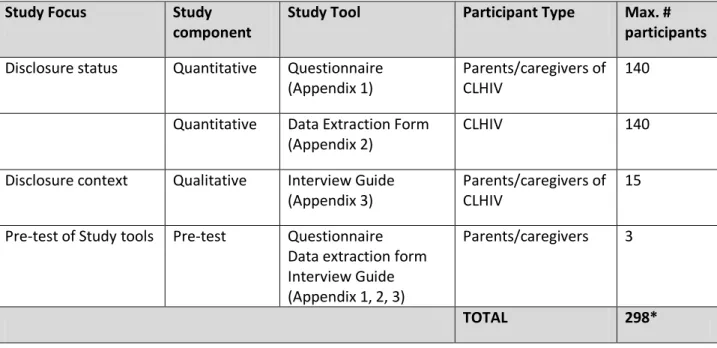
3.1 Overview of study design………..39
4.1 Respondent characteristics………..55
4.2 Child characteristics………..……57
4.3 Child’s knowledge of HIV status………..….58
4.4 Reasons for disclosure of child’s status to child………58
4.5 Reasons for non-disclosure of child’s status to child……….59
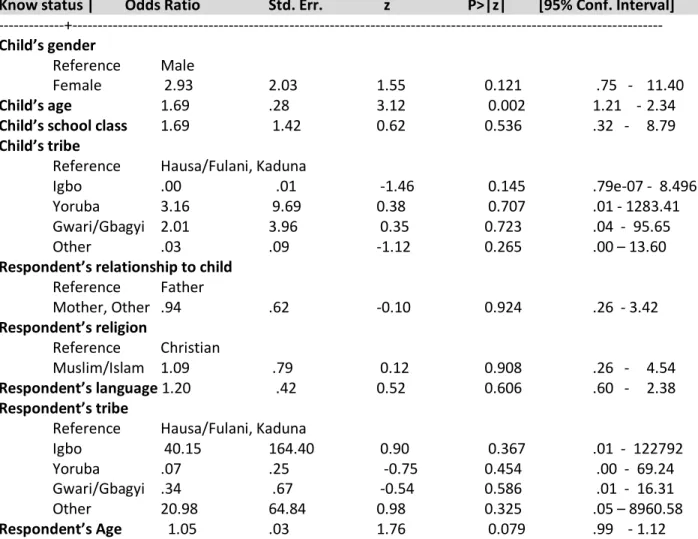
4.6 Multivariate logistic regression of HIV disclosure to child (n=108)……….60
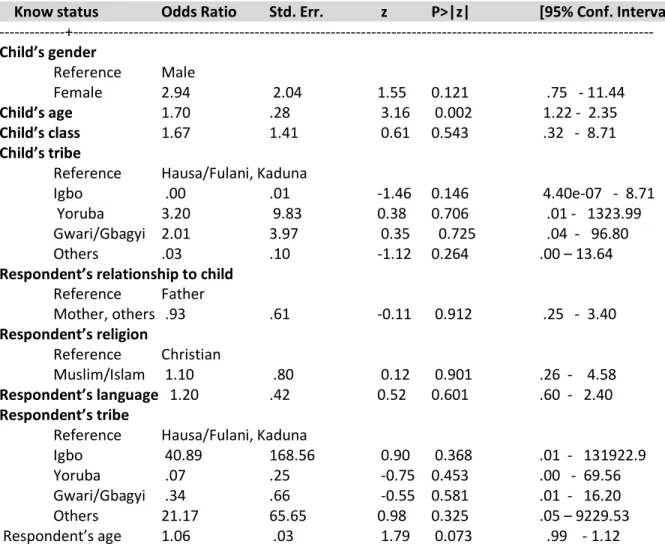
4.7 Multivariate logistic regression of HIV disclosure to child (n=110)………..61
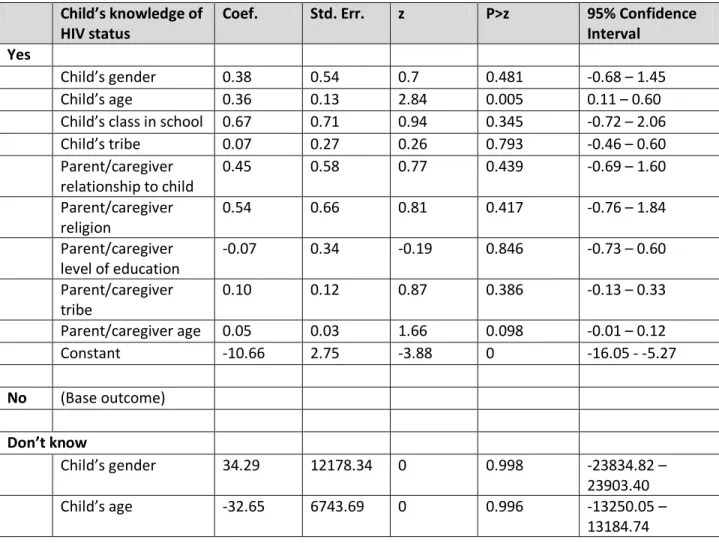
4.8 Multinomial logistics regression of HIV disclosure to child………62
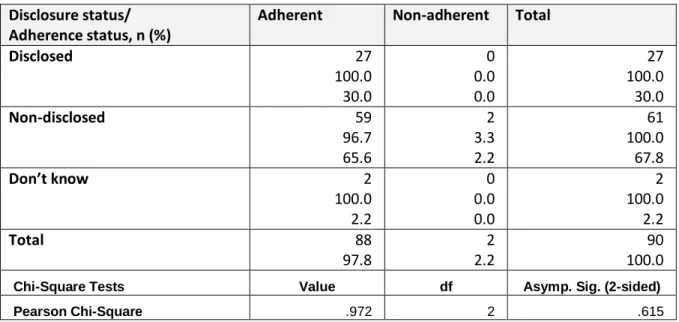
4.9 Relationship between disclosure and adherence……….64
5.1 Characteristics of caregivers and disclosed children……….75
5.2 Characteristics of caregivers and disclosed children……….79
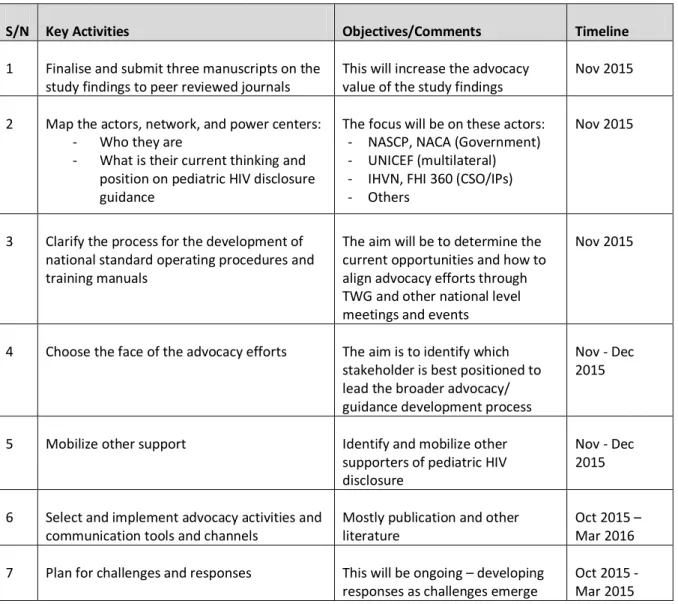
6.1 Key activities for advocating for the development of pediatric HIV disclosure guidance………98
xii LIST OF FIGURES
Figure 2.1 Flowchart of the identification of studies included in the literature
review………..……….12
xiii
LIST OF ABBREVIATIONS
ACTION AIDS Care and Treatment in Nigeria Program
ACTIONplus AIDS Care and Treatment in Nigeria (ACTION) Follow-on Program APF Advocacy Planning Framework
AIDS Acquired Immune Deficiency Syndrome ART Antiretroviral therapy
ARV Antiretroviral drug CLHIV Children Living with HIV CSO Civil Society Organization HIV Human Immunodeficiency Virus IHVN Institute of Human Virology Nigeria MTCT Mother to Child Transmission
NACA National Agency for the Control of AIDS PACTG Pediatric AIDS Clinical Trial Group
PEPFAR (US) President’s Emergency Plan for AIDS Relief PI Principal Investigator
PMTCT Prevention of Mother to Child Transmission PSD Paediatric Spectrum of Disease
QoL Quality of Life
SDQ Strengths and Difficulties Questionnaire SOP Standard Operating Procedures or Protocols SRH Sexual and Reproductive Health
SSA Sub Saharan Africa TWG Technical Working Group
CHAPTER 1 INTRODUCTION
Ninety percent of the 2.5 million children infected with HIV live in Sub-Saharan Africa (SSA) [1]. Despite significant increases in access to antiretroviral drugs (ARV) Prevention of Mother-to-Child (PMTCT) programs in resource-limited countries are fraught with major challenges and coverage is not complete. Consequently, many children continue to be infected perinatally with HIV. However, as a result of ARV access, these children are living longer [2]. Thus, a generation of children living with HIV (CLHIV) is coming of age. As these children approach adolescence, many of them have not been disclosed to, i.e. they have not been told they are living with HIV. The term disclosure, in this context, refers to informing children that they have HIV. World Health Organisation Guideline on HIV Counselling for Children up to 12 years of Age recommends that children of school age (6-12 years) be told they have HIV [3]. The American Academy of Pediatrics also recommends HIV status disclosure to school aged children [4].
Disclosure prevalence from four studies in developing countries ranged from 29% to 62 % [2]. Vaz et al. [2] reported only 3% pediatric disclosure in their study in the Democratic Republic of Congo, while Vreeman et al. [5] also reported almost 100% non-disclosure. More recent studies on SSA have similarly reported low disclosure rates - 13.5% (Nigeria), 21% (Ghana), 17.4% and 39.5% (Ethiopia), 19% and 26% (Kenya), and 32.6% (Cote d’Ivoire) [6-12]. Factors that influence pediatric disclosure include child’s age and cognitive development, concerns around antiretroviral treatment (ART) adherence, imminent onset of sexual activity, and the need to protect others from infection. Benefits of pediatric disclosure include improved adherence to ART, and psychosocial well-being and mental health. Despite these benefits of disclosure, nondisclosure remains high because disclosure carries with it a negative
2
exposure due to the association of HIV positive status and sex (promiscuity). Disclosure of HIV status to children living with HIV, or to partners, remains ‘navigation in a moral field’ [13]. Therefore to protect the family name and one’s reputation, and avoid rejection and discrimination, many choose not to disclose HIV status to children.
Literature on disclosure suggests that when disclosure does happen, it is not done in a
systematic way [2]. The process remains largely context dependent. It is also not clear whether there are policies and guidelines on pediatric disclosure in many countries. Yet, disclosure could be a potent force in the prevention and control of HIV infection to those not infected, and for those who are already infected it provides an opportunity for improved quality of life for the HIV infected and their families, and slowing of disease progression.
This study, therefore, aimed to explore the association between pediatric disclosure i.e. disclosure of child’s seropositive HIV status, and health outcomes among children living with HIV in Nigeria: Is there any correlation between HIV disclosure and improved or worsened health – physical, psychological, or other dimensions of health? The study also aimed to assess the prevalence, patterns and predictors of HIV status disclosure to children. The study also looked at non-disclosure to determine if there were any relevant ethical issues to consider in pediatric disclosure, and how these would be applicable to the SSA context; and how disclosure policies and guidelines would facilitate or support HIV control measures.
While the literature review looked at pediatric HIV disclosure in all contexts, particular interest was on SSA, since most CLHIV reside in this part of the world. As much as possible, the literature review also attempted to tease out any regional differences, if any, on health outcomes and HIV disclosure.
Nigeria
3
and the Atlantic Ocean. Its 36 states and Federal Capital Territory Abuja are further divided into 774 local government areas in six geopolitical zones (South east, South south, South west, North central, North east and North west). The main religions in the country are Christianity, Islam and Traditional religions.
HIV in Nigeria
With an estimated 3.4 million people (including 430,000 children under 15 years) living with HIV [1], Nigeria has the second highest number of persons living with HIV in the world, after South Africa. The first HIV case in Nigeria was reported in 1986. Since then the HIV prevalence rate has changed from 1.8% in 1991 to 5.8% in 2001, then 4.4% in 2005 and 4.1% in 2010. HIV prevalence is highest in urban areas. Each year, 215,130 persons die from AIDS, and 56,681 children are born with HIV [14]. The main route of HIV transmission in Nigeria is heterosexual sex. Low risk heterosexual sex contributes almost 50% of new infections [14]. Other modes of infection are injecting drug use, female sex workers and men who have sex with men, which contribute almost 25% of new infections. Illiteracy, poverty, sexually transmitted infections, low condom use and a lack of perceived personal risk have been identified as drivers of the HIV epidemic in Nigeria.
The HIV response in Nigeria was established in 1986, and was health sector driven. In 2000, a multi-sectoral response commenced. Antiretroviral therapy (ART) in Nigeria began in 2002, with a free ART program introduced in 2006. By December 2012, there were 566 ART facilities in Nigeria (up from 20 sites in 2002) providing treatment to 491,021 of the about 1.66 million persons in need of treatment [15].
The PMTCT program started in 2002 with six sites. By 2013, 5622 sites provided PMTCT services [16]. Guidelines to prevent perinatal transmission of HIV include providing prophylaxis of three
4
include testing women who are pregnant for HIV; providing antiretroviral drugs to women who are identified during pregnancy, or delivery, followed by ARV to the infant from birth and up to 6 weeks after birth, to prevent HIV transmission. Early infant diagnosis also ensures that children who are exposed (i.e. children born to HIV positive women) are identified early, and if HIV positive, are started on ART immediately.
In 2013 only 58,000 (or 27%) HIV-positive pregnant women received ARV prophylaxis to prevent transmitting the virus to their unborn or breastfeeding children [16]. Yet, 10% of new infections in Nigeria are due to mother to child transmission (MTCT) [15]. Spectrum modeling suggests that MTCT accounted for 24.5% of new infections in 2011. The main challenge to PMTCT service delivery is that only 35.8% of women deliver in health facilities where these services are provided, even though up to 60.6% of pregnant women attend antenatal clinics [17]. Also of the many women who are tested for HIV, fewer receive their HIV results, and far fewer commence ARV to prevent HIV transmission to their infants during pregnancy, delivery or breastfeeding.
Institute of Human Virology Nigeria
5 Structure of this dissertation
The findings from this study are presented as follows in this dissertation: Chapter 2 presents the studies included in the literature review. Chapter 3 describes the study methods, while Chapter 4 presents the findings from the quantitative component of the study. These include the prevalence, patterns and predictors of HIV disclosure to children at the pediatric clinic at the University of Abuja Teaching Hospital (UATH). Chapter 4 also presents the limited analyses that could be done on the relationship between disclosure and health outcomes. (There were limited data on patient CD4 count, viral load and opportunistic infections in the patient paper and electronic medical records). Chapter 5 contains the findings from the qualitative component of the study. It presents the context and process of HIV disclosure to children. Chapter 6 – the plan for change - is a summary of the proposed strategies for disseminating the findings from the study in order to influence policy on pediatric HIV disclosure in Nigeria, and sub Saharan Africa, as well as programming for children living with HIV. The study instruments used in the study are contained in the appendices.
This dissertation adopted the three paper format. The following are the three papers presented in the dissertation:
1. The impact of disclosure on health outcomes in HIV-infected children: A literature review (Chapter 2). The target journal for publishing this paper is AIDS Care: Psychological and Socio-medical Aspects of AIDS/HIV.
2. Patterns, prevalence and predictors of pediatric disclosure among HIV-infected Nigerian children on treatment (Chapter 4). The target journal for publishing this paper is the Journal of the International AIDS Society.
6 REFERENCES
1. Joint United Nations Programme on HIV/AIDS. (2013.) Global Report 2013.
2. LME Vaz, E Eng, S Maman, T Tshikandu, F Behets (2010) Telling Children They Have HIV: Lessons Learned from Findings of a Qualitative Study in Sub-Saharan Africa. AIDS Patient Care and STDs, Vol. 24 (4) 247 - 256
3. World Health Organisation. (2011) Guidelines on HIV Disclosure Counselling for Children up to 12 years of age.
4. American Academy Pediatrics. (1999) Disclosure of Illness Status to Children and Adolescents with HIV Infection.
5. RC Vreeman, VM Nyandako, SO Ayayo (2010) The Perceived Impact of Disclosure of Paediatric HIV Status on Antiretroviral Therapy Adherence, Child Well Being, and Social Relationships in a Resource Limited Setting. AIDS Patient Care and STDs., Vol. 24 (10) 639-649.
6. B Brown, R Oladokun, K Osinusi, S Ochigbo, I Adewole, P Kanki. (2011) Disclosure of HIV Status to infected children in a Nigerian HIV Care Programme: AIDS Care, Vol. 23 (9) 1053 - 1058. 7. S Kallem, L Renner, M Ghebremichael, E Paintsil (2011) Prevalence and Pattern of Disclosure of
HIV Status in HIV-Infected Children in Ghana.: AIDS Behaviour, Vol. 15. 1121-1127.
8. S Biadgilign, A Deribew, A Amberbir, HR Escudero, K Deribe (2011) Factors associated with HIV/AIDS diagnostic disclosure to HIV infected children receiving HAART: A multi-center study in Addis Ababa, Ethiopia. PLoS ONE, Vol. 6. e17572.
9. D Negese, K Addis, A Awoke, Z Birhanu, D Muluye, S Yifru, B Megabiaw (2012) HIV-Positive Status Disclosure and assosiated factors among children in North Gondar, North West Ethiopia.
International Scholarship Research Network AIDS. ID 485720.
10. GC John-Stewart, G Wariua, KM Beima-Sofie, BA Richardson, C Farquhar, E Maleche-Obimbo, D Mbori-Ngacha, D Wamalwa (2013) Prevalence, perceptions, and correlates of pediatric HIV treatment program in Kenya. AIDS Care, Vol. 25 (9) 1067 - 1076
11. RC Vreeman, ML Scanlon, A Mwangi, M Turissin, SO Ayaya, C Tenge, WM Nyandiko (2014) A cross sectional study of disclosure of HIV status to children and adolescents in Western Kenya. PLoS ONE, Vol. 9. eB6616.
12. GD Meless, H Aka-Dago-Akribi, C Cacou, TF Eboua, AE Aka, AM Oga, B Bouah, M Euge`ne, C Moh, E Arrive´, M Timite´-Konan and V Leroy (2013) Notification of HIV status disclosure and its related factors in HIV-infected adolescents in the Aconda Program in Abidjan, Cote d'Ivoire, The PRADO Study. Journal of the International AIDS Society, Vol. 16. 18569
7
14. National Agency for the Control of HIV and AIDS (2011) Update on the HIV/AIDS epidemic and response in Nigeria.
15. National Agency for the Control of HIV and AIDS(2013) President's Comprehensive Plan for HIV/AIDS in Nigeria.
16. Federal Ministry of Health (2014) National Operational Plan for the Elimination of Mother to Child Transmission (eMTCT) of HIV in Nigeria 2015 - 2016.
17. National Population Commission (NPC) [Nigeria] and ICF International. (2014). Nigeria
Demographic and Health Survey 2013. Abuja, Nigeria, and Rockville, Maryland, USA: NPC and ICF
8 CHAPTER 2
THE IMPACT OF DISCLOSURE ON HEALTH OUTCOMES IN HIV-INFECTED CHILDREN: A LITERATURE REVIEW
INTRODUCTION
Ninety percent of the 2.5 million children infected with HIV live in Sub-Saharan Africa (SSA) [1]. Despite significant increases in access to antiretroviral drugs (ARV), Prevention of Mother-to-Child (PMTCT) programs in resource-limited countries are fraught with major challenges and coverage is not complete. Consequently, many children continue to be infected perinatally with HIV. In 2014, there were 220,000 new HIV infections in children 0-14 years globally. Of these, 190,000 were in SSA [2], and Nigeria contributed 60,000 of these in 2012 [3]. However, as a result of ARV access, these children are living longer [4]. Thus, a generation of children and children living with HIV (CLHIV) is coming of age. As these children approach adolescence, many of them have not been disclosed to, i.e. they have not been told they are living with HIV. The term disclosure, in this context, refers to informing children that they have HIV. World Health Organisation Guideline on HIV Counselling for Children up to 12 years of Age
recommends that children of school age (6-12 years) be told they have HIV [5]. The American Academy of Pediatrics also recommends HIV status disclosure to school aged children [6].
9
imminent onset of sexual activity, and the need to protect others from infection. Benefits of pediatric disclosure include improved adherence to ART, and psychosocial well-being and mental health. Despite these benefits of disclosure, nondisclosure remains high because disclosure carries with it a negative exposure due to the association of HIV positive status and sex (promiscuity). Disclosure of HIV status to children living with HIV, or to partners, remains “navigation in a moral field” [15]. Therefore to protect the family name and one’s reputation, and avoid rejection and discrimination many choose not to disclose HIV status to children.
Literature on disclosure suggests that when disclosure does happen, it is not done in a
systematic way [4]. The process remains largely context dependent. It is also not clear whether there are policies and guidelines on pediatric disclosure in many countries. Yet, disclosure could be a potent force in the prevention and control of HIV infection to those not infected, and for those who are already infected it provides an opportunity for improved quality of life for the HIV infected and their families, and slowing of disease progression.
This literature review, therefore, aimed to explore the association between pediatric disclosure i.e. disclosure of child’s seropositive HIV status, and health outcomes among children living with HIV: Is there any correlation between HIV disclosure and improved or worsened health – physical,
psychological, or other dimensions of health? The review also aimed to assess the prevalence, patterns and predictors of HIV status disclosure to children. The literature review also looked at non-disclosure to determine if there were any relevant ethical issues to consider in pediatric disclosure, and how these were applicable to the SSA context; and how disclosure policies and guidelines could facilitate or support HIV control measures.
10 METHOD
Search Process: A multi-stage process was used to search for data on disclosure of HIV status to children living with HIV in 2011. First, the ISI Social Science website database was searched for relevant articles. This was followed by a search in the bibliography sections of these articles for other publications that were relevant i.e. pursuing references of references. Articles pertinent to the research question, “The Impact of Disclosure on Health Outcomes for HIV-Infected Children,” were searched for in the ISI Web of Science database, using the terms arrangement as follows:
((Child* OR adolescent OR p*diatric OR perinatal*) AND (HIV OR status) AND (Diclos*)) Child(ren)
OR Pediatric OR Paediatric OR Adolescent OR Perinatal(ly)
AND HIV
OR Status
AND Disclosure
OR Disclosing
The search strategy was repeated in 2014 for additional peer reviewed articles that may have been published since the last search. This second search was limited to studies conducted on SSA.
11
only children to whom their status had been disclosed to them, or also contain a control group whose status was not disclosed to them. The most important element was that studies were limited to those where full disclosure of HIV status was done. In other words, children knew they were HIV positive. “A child was considered to be fully informed of his or her status if the term HIV, AIDS, or any local term specifically associated with HIV/AIDS has been used in a discussion with the child about the child’s health” [4]. Reviewed articles also had to include a clear description of the population size, data collection process, the independent and dependent variables, and how data were analyzed.
Exclusion criteria: Studies on disclosure of other childhood illnesses other than HIV were not included. Also disclosure studies of status of others – adults, parents, and so on - were not included. Only studies where disclosure was by a parent, caregiver or health care provider were included. Studies where children learned of their serostatus inadvertently through sources other than parents, caregivers or health care providers were not included in the review, as it is believed that the effect of such disclosure may be different from that through a controlled environment through a parent/caregiver or health provider.
Studies where there was only partial disclosure i.e. discussing with children about the child’s health in general terms, without specific mention of HIV or AIDS, and non-English language articles were not included. There was no time limit or country or regional restriction to the studies or publications included in the review.
12
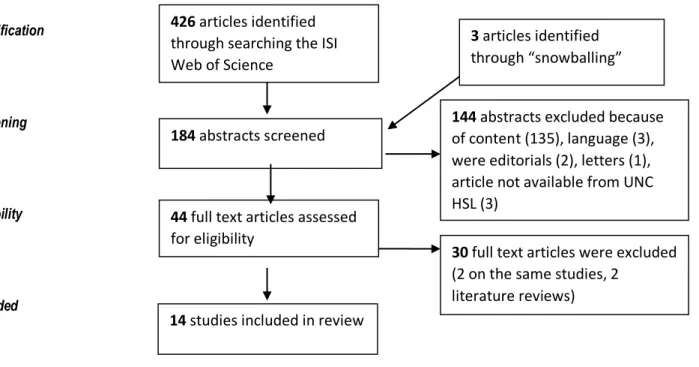
the research question was then reviewed for eligibility. Fifteen articles met the inclusion criteria, but two articles were publications on the same study, so one was eliminated from further review.
Figure 2.1: Flow Chart of the Identification of Studies included in the Review
Identification
Screening
Eligibility
Included
An additional eight studies were identified from the 2014 search. While all reported disclosure rates and factors that affected status disclosure, only one study assessed the association between disclosure and health outcomes, namely ART adherence, and stigma and depression [13], and was included in the review.
Due to the limited number of studies that met the inclusion criteria, the inclusion of articles did not focus on their internal validity based on the study approaches, strong statistical power, or an experimental approach. Nor were the external validity of articles a limiting factor in terms of a large study population, random sample, and explicit analysis of context and intervention factors for which generalization is possible. (The impact is discussed under the Discussion section, as a limitation of the studies in this review).
144 abstracts excluded because of content (135), language (3), were editorials (2), letters (1), article not available from UNC HSL (3)
184 abstracts screened
44 full text articles assessed for eligibility
30 full text articles were excluded (2 on the same studies, 2
literature reviews) 14 studies included in review
426 articles identified through searching the ISI Web of Science
13
Data extraction: The following data were then extracted from the studies that met the inclusion criteria. In addition to information on authors, year of article, and country where study was conducted,
participant characteristics (study participants, children’s age), and study characteristics (sample size, study type and design, type of analysis, dependent and independent variables, results, statistics, significance and study validity information), and the health outcomes of disclosure were extracted from the studies.
RESULTS
Five major health outcomes emerged from children’s knowledge of their seropositive status (Table 2.1): Disease progression (CD4 count, death) and other physical outcomes; Adherence to antiretroviral treatment (ART); Self-esteem, mental, emotional and other psychosocial outcomes; and Sexual and reproductive health, including HIV prevention outcomes. The latter was particularly relevant to another theme that emerged from the results, that was not in the original review conceptualization – disclosure of status by the children to friends and sexual partners.
Physical outcomes
14
A 1997 multicenter Pediatric Spectrum of Disease (PSD) active surveillance study of 100 American school CLHIV in Massachusetts, however, did not show any association between clinical severity of children’s symptoms (CDC clinical stage of mild, moderate or severe) with whether a child was told of his or her disease status [17]. Forty-eight percent of children with severe symptoms had been told of their status compared to 39% of children with mild to moderate symptoms. Similarly, Vreeman et al. did not find any associations between disclosure status and clinical indicators like CD4 count and WHO disease stage in their study of 792 caregiver-child dyads in Kenya [13].
Adherence to treatment
One would have expected more studies on the effect of disclosure on treatment adherence, since this is the reason most often given for promoting status disclosure. However, only three studies focused on the effect of disclosure of child’s status to the child and treatment adherence. The quasi experimental study of disclosure’s effect on 40 children on ART in Puerto Rico showed that over half (58%, 95% CI 41% - 73%) self-reported that knowing their status had helped them develop better adherence to their medicines [18]. All 25 adolescents and their caregivers in the South African qualitative study reported good adherence as a result of the children knowing their status [19]. In the Kenya study by Vreeman et al., disclosure status was not associated with adherence as reported on the clinical encounter form or by caregivers. However, disclosure was associated with child-reported adherence (p= .03), and disclosed children reported more non-adherence than non-disclosed children [13].
Mental and Psychosocial outcomes
15
prospective cohort study, the authors and foci of the two articles were different, and were therefore included as separate studies in this review. The first PACTG 219 C study focused on the effect of HIV disclosure on the quality of life (QoL) based on 2423 study visits by 395 CLHIV in USA [20]. The study showed that there were no statistically significant differences between pre-disclosure and post-disclosure quality of life domains (general health perception, symptom distress, psychological status, health care utilization, physical functioning, and social/role functioning). Disclosure was not significantly associated with QoL in crude or adjusted mixed effects model analyses, indicating that QoL did not change because of disclosure of HIV infection status. Caregivers reported lower QoL scores after
disclosure for all domains except social/role functioning, although these differences were not significant. The other PACTG 219C study, however, reported that CLHIV were at increased risk of psychiatric
hospitalization than the general pediatric population, and knowledge of seropositive status was significantly associated with increased risks of admission in this population [21]. Multivariate analysis showed that CLHIV who were aware of their status were six times more likely to be hospitalized because of psychiatric illnesses compared to those who were not, mostly for depression and behavioral disorders – which are precursors for more severe pathologic conditions, such as bipolar disorder and suicide.
The progression of patients’ self-reported emotions after disclosure ranged from sadness immediately after disclosure to normalcy by most youth (70%, N=40, p<0.05) after six months of disclosure. However, one patient remained depressed six months after depression [18]. Lester et al., however, showed that disclosure of status may not necessarily minimize emotional distress, as HIV disclosure was associated with increased parent-rated anxiety in HIV-infected children (p=.04) [22]. This points to the need for further studies on the appropriate timing and type of disclosure of pediatric HIV [22].
16
Questionnaire (SDQ score of 0.56 which approaches acceptability levels). However, a similar study in Zambia using the same SDQ methodology [24] showed increased mental health problems (OR = 2.1), especially emotional symptoms (OR = 3.6) and peer problems (OR = 7.1). Univariate analysis showed no difference between children who knew their HIV status and those who were aware of their status. However, the non-disclosure group was twice as likely to experience emotional difficulties (OR=2.63, 95% CI: 1.11 to 6.26).
The South African study by Petersen et al. [19] showed similar emotional difficulties for children who received a positive HIV diagnosis. Thirty-six percent (N=9) reported withdrawing from their friends and social activities, and over 50% reported internalized stigma. But for the eight children in an
exploratory study in the Democratic Republic of Congo who knew their status, despite the negative emotions experienced at the time of disclosure, there were no (subsequent) negative effects of knowing their status [4]. Instead the benefits of knowing their status included no longer worrying so they could avoid being sicker, as well as being able to protect others from HIV infection.
The Kenya study of 792 caregiver-CLHIV dyads found that disclosed children experienced higher rates of HIV-related stigma and depression symptoms although only depression symptoms were significantly associated with disclosure in multivariate regression (OR =2.6, 95% CI 1.1-6.2) [13].
Sexual and reproductive health
Young CLHIV receive health services under pediatric care, and are often not being adequately prepared for adult life. Only one study focused on sexual and reproductive health (SRH) issues for CLHIV. In terms of SRH services, especially in relation to preventive practices, such as condom or contraceptive use among sexually active CLHIV, only 37% (N=236) of CLHIV in a Population Council study in Uganda
17
p<0.05). These are relatively high use rates compared to the general population, and especially for adolescent population [25].
Disclosure of status to others by children
Research has shown that self-disclosure of traumatic or secretive information produces observable health benefits [26]. In this regard, the focus is on whether self-disclosure influences health outcomes such as the immune response, psychological well-being and other health outcomes. Four studies on this issue met the inclusion criteria. Sherman et al. observed a small but significant increase in CD4 percent - a predictor for disease progression (mean = +1.78, SD =5.03, t (63) =2.83, p<0.01) in children who had self-disclosed to friends. This increase was still significant even when child’s age was controlled in the analysis. An ANOVA for these data were also significant (F (2,60) =4.28, p<0.05). Psychological well-being as measured by self-concept did not approach significance (F (2,60) =0.56, p>.15). Similar ANOVA
analysis for changes in behavioral problems also did not approach significance (F (2, 5) = 0.69, p>0.15). Battles and Weiner [27] examined the psychosocial factors associated with long-term survival of pediatric HIV in 80 parent-child dyads of disclosed children. Pearson product moment correlations showed that disclosure was positively related to social support (r=.35, p<0.05), self-competence (r=.35, p=.08), and decreased problem behavior (r= -.21, p<=.08) except for public disclosure (i.e. disclosure to the media), where the Student’s t-test showed a negative association with self-competence (F=3.5, p<0.05).
A small scale qualitative study of six program participants at a transition to adulthood program embedded in the National Health Service family clinic in the UK showed that participation in the
transition program facilitated a positive attitude towards medication, and hope for the future. However, respondents reported not disclosing their status to others, including sexual partners [28].
18 Findings
The first major finding from this review is that HIV disclosure to children living with HIV has an effect on disease progression in terms of clinical severity of symptoms, CD4 percent and ultimately death. While the Romanian comparison study showed that HIV disclosure led to a slowing down of disease
Table 2.1: Overview of studies included in the literature review
Authors Study Goal Country Sample size Study Type Study Design Type of analysis Independent variable Dependent variable Results
A A: Physical outcomes
1 Ferris et al., 2007 [16]
Disclosure effect on disease
progression Romania 325
Quantitative and Qualitative Comparison groups - disclosed versus non-disclosed; retrospective database analysis
Student t tests, chi square test, Fischer's Exact test, Cox
regression models HIV disclosure
Death, CD4 decline, combined, time to HIV disease progression
Death =4.9% vs 11.0%; CD4 17.3% vs 21.3%; Cox regression Hazard ration 0.60 (p=0.03). no statistical significant difference in CD4 decline between disclosed and non-disclosed children (p=0.26); non-disclosed children more likely to experience disease progression through death or CD4 decline (p=0.03). non-disclosed children were more likely to die ()
2 Cohen et al., 1997 [17]
Issues related to school attendance and
HIV disclosure USA 100 Surveillance Abstraction of medical records
Logistic regression, using SAS, X2,
HIV disclosure
Clinical severity of symptoms
49% of children with severe symptoms have been told compared with 39% of children with mild and moderate symptoms. Clinical severity of child's symptoms not associated with child's knowledge of status or not
3 Vreeman et al., 2014 [13]
Association between disclosure and key child level demographic, clinical, and psychosocial
characteristics Kenya
792 caregiver-child dyads Cross – sectional, quantitative Comparison groups – disclosed and non-disclosed children, medical chart review Pearson’s chi-squared test, multivariate logistic regression
with odds ratio HIV disclosure
Clinical characteristics – adherence, CD4 count, CD4 %, WHO staging
No association between disclosure and WHO staging (p=0.079), and CD4 count
B: Adherence to treatment
1 Blasini et al., 2004 [18] Disclosure model Puerto Rico 40 CLHIV Quantitative
Quasi experimental, before after,
Fisher's exact test, report p values for
two-tailed test HIV disclosure
Sadness, worry, insecurity and other psychosocial outcomes
42% CLHIV felt sad immediately after disclosure. At 6 months, 70% youth reported normalcy. One patient reported depression after 6 months. 58%, 95% CI reported better adherence
20
2 Petersen et al., 2010 [19]
Examine psychosocial challenges and
protective factors South Africa 25 Qualitative thematic using NVivo8 HIV disclosure
Identity, psychosocial issues, internalised stigma
22 CLHIV knowing status emotionally difficult; 36% (9) withdrew from friends; >50% showed internalised stigma; 100% good adherence
3 Vreeman et al., 2014 [13]
Association between disclosure and key child level demographic, clinical, and psychosocial
characteristics Kenya
792 caregiver-child dyads Cross – sectional, quantitative Comparison groups – disclosed and non-disclosed children, medical chart review Pearson’s chi-squared test, multivariate logistic regression
with odds ratio HIV disclosure
Clinical characteristics – adherence, CD4 count, CD4 %, WHO staging
Disclosure was associated with child reported adherence (p=0.03) with disclosed children reporting more non-adherence than non-disclosed children
C: Mental and Psychosocial outcomes
1 Vaz et al., 2010 [4]
Explore events before, during and after disclosure Democratic Republic of
Congo 8 Qualitative HIV disclosure
Worry; protect others from infection
Children felt sad immediately after disclosure; but later did not state any negative effect of knowing their status; benefits included not being worried and avoid being sicker; being able to protect others.
2 Sopena et al., 2011 [23] Psychological adjustment United Kingdom 30 Quantitative Correlational design, Pearson correlations HIV disclosure
Psychological adjustment (behavioural and emotional); disclosure to others
Psychological adjustment score = -1.03. p>0.05, no significant differences btw CLHIV and general UK population
3 Menon et al., 2007 [24]
Relationship between disclosure and
mental health Zambia 127 Quantitative, Qualitative Cross sectional survey
Mann Whitney U test, Spearman,
content analysis HIV disclosure
Emotional, conduct, hyperactivity, peer relations, pro-social behaviour
Difficulties 29.1% (N=37) OR2.1 (CI 95%); increased mental problem OR=2.1), peer problem (OR=7.1), emotional symptoms (3.6). Those whose status not disclosed more likely to score abnormal range for emotional difficulties (OR=2.63, 95% CI). Disclosure did not have negative impact on mental health
21
4 Gaughan et al., 2004 [21]
Examine long term outcomes among CLHIV
and nonCLHIV USA
2298 CLHIV, 1021
nonCLHIV Quantitative
Prospective cohort study (PACTG) 219C Relative risks using Poisson rate parameters; Cox proportional hazards regression
techniques HIV disclosure Psychiatric hospitalisation
CLHIV incidence of 6.17 cases per 1000 person years (CI 95%) versus 1.7 cases per 1000 person years for non CLHIV.CLHIV aware of their status were 6 times more likely to be hospitalised due to psychiatric illnesses, compared to CLHIV not aware of their status (hazard ratio 6.13). Depression and behavioural disorders were most common reasons for hospitalisation. knowledge of HIV status significantly associated with increased risk of psychiatric hospitalisation
5 Butler et al., 2009 [20]
Impact of disclosure on
quality of life USA
395 CLHIV (2423 study
visits) Quantitative Prospective cohort study
Spearman’s, Pearson's, Wilcoxon signed
rank tests HIV disclosure
QoL (general health perception; symptom distress; psychological status, physical functioning; social/role functioning, health care utilisation
Health perception 0.410 (P=.70); symptom distress 0.588 (P=.31), psych status 0.005 (P>0.999), physical functioning 0.536 (P=0.79); social/role functioning 0.380 (p=0.69); health care use -0.275 (p=.61). No statistically significant difference between pre and post disclosure quality of life; caregivers reported lower QoL scores after disclosure, though not stat significant
6 Lester et al., 2002 [22]
Explore factors associated with emotional
distress in CLHIV USA 51
Quantitative and Qualitative Content data analysis; Kaplan Meier survival curves, multiple
linear regression HIV disclosure
Child's parent rated anxiety level
Higher anxiety significantly associated with HIV disclosure; (t=2.15, p=.04). Child rated depression or anxiety showed no association with HIV disclosure. Disclosure does not necessarily minimise emotional distress
7 Blasini et al., 2004 [18] Disclosure model Puerto Rico 40 CLHIV Quantitative
quasi experimental, before after,
Fisher's exact test, report p values for
two-tailed test HIV disclosure
Sadness, worry, insecurity and other psychosocial outcomes
42% CLHIV felt sad immediately after disclosure. At 6 months, 70% youth reported normalcy. One patient reported depression after 6 months. 58%, 95% CI reported better adherence
8 Petersen, et al., 2010 [19]
Examine psychosocial challenges and
protective factors South Africa 25 Qualitative Thematic using NVivo8 HIV disclosure
Identity, psychosocial issues, internalised stigma
22 CLHIV knowing status emotionally difficult; 36% (9) withdrew from friends; >50% showed internalised stigma; 100% good adherence
21
22
9 Vreeman et al., 2014 [13]
Association between disclosure and key child level demographic, clinical, and psychosocial
characteristics Kenya
792 caregiver-child dyads Cross – sectional, quantitative Comparison groups – disclosed and non-disclosed children, medical chart review Pearson’s chi-squared test, multivariate logistic regression
with odds ratio HIV disclosure
Clinical characteristics – adherence, CD4 count, CD4 %, WHO staging
caregiver-reported depression symptoms (OR 2.63, 95%CI 1.12–6.20) were significantly associated with knowing one’s status
D: Sexual and reproductive health outcomes
1
Birungi, et al., 2009 [25]
Sexual expressions of
CLHIV Uganda 740
Qualitative and
Quantitative
Quantitative - cross tabs, chi square, significance tests of proportions; Qualitative - content analysis HIV disclosure Condom use, contraceptive use; status disclosure to others
Condom use 37%;
contraception 50%; disclosure to partner 38%, p<0.05; condom use 37%; contraception 50%; disclosure to partner 38%
E. Child's disclosure of
status to others
1 Sherman et al., 2000 [26]
Physiological and psychological consequences of children's
self-disclosure USA
64 CLHIV-caregiver
dyads Quantitative
Before-after, comparison groups
Univariate ANOVA, X2,
Tukey's Honestly Significant
Difference test, Child's self-disclosure
CD4% (disease progression), self-concept, behavioural problems
Disease progression: CD4% showed small but significant increase (mean =+1.78, SD=5.03); t(63)=2.83, p<.01); ANOVA data significant: F(2,60)=4.28, p<.05; Self-concept did not approach significance, F(2,60)=0.56, p>.15; Behavioural problems also did not approach significance, F(2,57)=0.69, p>.15. Even with child's age controlled, self-disclosure to friends was associated with significantly greater CD4% change
2 Campbell et al., 2010 [28]
Impact of transition
program UK 6 Qualitative Thematic approach HIV disclosure
Disclosure to others; hopes for the future
100% difficulty disclosing to others; hopeful about future # not included)
23
3 Battles et al., 2002 [27]
Examine psychosocial factors associated with long term survival of pediatric HIV. USA
80 parent- CLHIV
dyads Quantitative
Descriptive. Longitudinal study Pearson product moment relations, Chi-square,
Student's t HIV disclosure
Child behaviour, self-perception,
Disclosure significant positive association with peer social support (r=.35, p<.05), marginally negatively associated with aggressive behaviour (r=-.21, p=.08, marginally positively associated with perceived social self-competence (r=.35, p=.08. Pearson product-moment correlations showed disclosure was positively related to social support, self-competence, decreased problem behaviour, except for public disclosure, where Student t showed negative association with global self-competence.
4 Birungi, et al., 2009 [25]
Sexual expressions of
CLHIV Uganda 740
Qualitative and
Quantitative
Quantitative - cross tabs, chi square, significance tests of proportions; Qualitative -
content analysis HIV disclosure
Condom use, contraceptive use; status disclosure to others
Condom use 37%;
contraception 50%; disclosure to partner 38%; p<0.05; condom use 37%; contraception 50%; disclosure to partner 38% CLHIV = Children living with HIV
24
on larger sample CLHIV populations are needed to draw any definitive conclusions on the effects of HIV disclosure on disease progression and severity.
The second major health outcome of HIV disclosure was ART treatment adherence. Since ART is life long, one recurring challenge for caregivers and CLHIV is how to maintain treatment adherence. With ART, a high adherence level of up to 95% or more is necessary to avoid drug resistance and its very serious consequence of treatment failure. As such ART adherence is a critical factor in managing HIV infection. One would, therefore, have expected more studies on the effect of disclosure on CLHIV treatment adherence, since this is the reason most often given for promoting status disclosure. However, only three studies focused on the effect of disclosure of child’s status to the child and treatment adherence [13, 18, 19]. As expected, the children and their caregivers reported improved adherence to treatment as a result of the children knowing their HIV status. Incidentally, the small sample sizes (40 and 25) and the less than rigorous analyses limit any broad conclusions on the impact of disclosure on treatment adherence. This review, therefore, calls for more studies considering the importance of adherence on HIV treatment.
Understandably, majority of the studies focused on the mental, emotional and other psychosocial effects of disclosure, since this is one of the reasons often cited for both disclosure and non-disclosure to children. Five of the nine studies in the review reported a negative impact of
25
of psychiatric hospitalization, with CLHIV who were aware of their status being six times more likely to be hospitalized due to psychiatric illnesses, compared to CLHIV not aware of their status (hazard ratio 6.13). It is not clear what the reasons could be for the different conclusions from the two studies. A possible explanation for the different conclusions could be that while Butler et al. measured pre and post disclosure QoL changes in the same CLHIV, Gaughan’s study compared psychiatric hospitalization in HIV disclosed CLHIV to children not living with HIV. The experience of a significant life event (such as death in the family, beginning school) also contributed to the positive correlation between disclosure and hospitalization, and may partly explain the contrasting conclusions from the studies. Although the Kenya study by Vreeman [13] had a large sample of 792, and reported higher rates of depression and stigma among disclosed children, the study was not designed to assess the impact by pre- and post-disclosure characteristics.
The only study on the impact of disclosure on SRH outcome showed a positive and statistically significant correlation between disclosure and condom use and contraceptive use rates that are even much higher than the general population rates for adolescents, in addition to status disclosure to partners [25]. Obviously, this is a less well researched area and further studies are needed [25].
26 Implications and Recommendations
Disclosure of a child’s HIV status to the child has value in terms of positive health outcomes for the child, such as better adherence and slower disease progression [16]. Yet, there does not seem to be a
systematic or coherent system for child disclosure. One recommendation from this review, therefore, is the need for government and program policies and guidelines that will promote child HIV disclosure in order to address the current low rates of disclosure in SSA. To date, no SSA country has developed detailed disclosure guidelines. However, WHO has published Guideline on HIV Counselling for Children up to 12 years of Age for adaptation in countries [5]. As more CLHIV are of school age, such policies and guidelines also need to include disclosure to education personnel in the school environment, as well as how to build capacity in the school environment to limit stigma and facilitate support for CLHIV in schools. Although the decision to inform schools of the child’s HIV status should remain a family
decision, providers and program managers can facilitate the process and help build family capacity to do this [17].
Disclosure may not always be beneficial, as negative effects may manifest both in the short and longer term, such as precipitated psychiatric issues [21]. While it is not clear how much of a challenge this is in SSA, or whether the resulting psychiatric illness is due to HIV or other psychosocial factors, clinicians need to set up systems to monitor and identify warning signs of psychiatric illness, and establish systems for referrals for mental health services [21]. Programs that not only address clinical needs of children but other aspects of child well-being, including psychosocial, life skills, for instance., self-competence, and SRH needs, as well as psychosocial support programs for caregivers are also needed.
27
prevention, and contraceptives to CLHIV. They also need to emphasize status disclosure, especially in discordant relationships (where one partner is not living with HIV), and encourage consistent condom use to prevent further infection of CLHIV and others [25].
Research gap
Only five of the 15 studies included in this review were conducted in sub-Saharan Africa (none in West Africa), two of which had very small sample size of 8 and 25, and limited the ability to perform rigorous analyses that will also focus on causality, and not just correlations. However, currently 90% of CLHIV live in SSA, with ~15% of them living in Nigeria alone [1]. Clearly, therefore, a major recommendation is the need for more studies on SSA, especially as the different cultural, social and economic environment in SSA may (or may not) influence health outcomes and HIV disclosure differently. Another
recommendation is for more studies of larger sample size, and more rigorous analyses – not only for studies on SSA, but also for studies from other regions (the US and elsewhere), as nine of the 15 studies reviewed were of sample size 100 or less.
Studies in this review focused mostly on children infected perinatally. However, it is not clear if there will be differences in health outcomes between perinatally acquired HIV and non-parental transmission (such as, blood transfusion, and sexual transmission) and differences in disclosure and health outcomes. Experiences of youth who learn of their status accidentally (outside of their families or health providers) also need to be studied. Programs also need a better understanding of disclosure on school attendance and performance, and to study the complex social needs of HIV positive children, as these relate to the school environment [17].
28
further research on who is best positioned to disclose to the child; and what factors can promote or act as barriers to disclosure [5]. Such studies could provide important information for policy development and guidelines on pediatric HIV disclosure. Studies of physical health outcome also need to include other markers of HIV disease progression, such as viral load, clinical status and/or growth velocity [16].
Furthermore, more studies adapted for SSA are needed that use standardized measures to assess emotional health.
Limitations
This review and the interpretation of the findings presented here have several limitations. First, only one database was searched. It is likely that widening the study search to additional databases, such as PubMed, would have yielded other relevant studies. Also, with only one reviewer, the study review process did not benefit from a second opinion where there were uncertainties on whether to include a study or not. The third limitation is the very small sample size of most of the studies. This limited the sophistication of analyses that could be performed by the researchers, including adjusting for confounders. As such, very limited conclusions can be drawn from the studies. Fourth, most of the studies were cross sectional. Therefore, only correlational inferences between disclosure and health outcomes could be made, without establishing causality.
29 CONCLUSION
30 REFERENCES
1. Joint United Nations Programme on HIV/AIDS. (2013) Global Report 2013
2. Joint United Nations Programme on HIV/AIDS. (2014) Fact Sheet: 2014 Statistics.
3. Joint United Nations Programme on HIV/AIDS. (2013) 2013 Progress Report on the Global Plan towards the elimination of new infections among children by 2015 and keeping their mothers alive.
4. LME Vaz, E Eng, S Maman, T Tshikandu, F Behets (2010) Telling Children They Have HIV: Lessons Learned from Findings of a Qualitative Study in Sub-Saharan Africa. AIDS Patient Care and STDs, Vol. 24 (4) 247 - 256
5. World Health Organisation. (2011) Guidelines on HIV Disclosure Counselling for Children up to 12 years of age.
6. American Academy Pediatrics. (1999) Disclosure of Illness Status to Children and Adolescents with HIV Infection.
7. RC Vreeman, VM Nyandako, SO Ayayo (2010) The Perceived Impact of Disclosure of Paediatric HIV Status on Antiretroviral Therapy Adherence, Child Well Being, and Social Relationships in a Resource Limited Setting. AIDS Patient Care and STDs., Vol. 24 (10) 639-649.
8. B Brown, R Oladokun, K Osinusi, S Ochigbo, I Adewole, P Kanki. (2011) Disclosure of HIV Status to infected children in a Nigerian HIV Care Programme: AIDS Care, Vol. 23 (9) 1053 - 1058. 9. S Kallem, L Renner, M Ghebremichael, E Paintsil (2011) Prevalence and Pattern of Disclosure of
HIV Status in HIV-Infected Children in Ghana.: AIDS Behaviour, Vol. 15. 1121-1127
10. S Biadgilign, A Deribew, A Amberbir, HR Escudero, K Deribe (2011) Factors associated with HIV/AIDS diagnostic disclosure to HIV infected children receiving HAART: A multi-center study in Addis Ababa, Ethiopia. PLoS ONE, Vol. 6. e17572.
11. D Negese, K Addis, A Awoke, Z Birhanu, D Muluye, S Yifru, and B Megabiaw (2012) HIV-Positive Status Disclosure and assosiated factors among children in North Gondar, North West Ethiopia.
International Scholarship Research Network AIDS. ID 485720.
12. GC John-Stewart, G Wariua, KM Beima-Sofie, BA Richardson, C Farquhar, E Maleche-Obimbo, D Mbori-Ngacha & D Wamalwa (2013) Prevalence, perceptions, and correlates of pediatric HIV treatment program in Kenya. AIDS Care, Vol. 25 (9) 1067 - 1076.
31
14. GD Meless, H Aka-Dago-Akribi, C Cacou, TF Eboua, AE Aka, AM Oga, B Bouah, M Euge`ne, C Moh, E Arrive´, M Timite´-Konan and V Leroy (2013) Notification of HIV status disclosure and its related factors in HIV-infected adolescents in teh Aconda Program in Abidjan, Cote d'Ivoire, The PRADO Study. Journal of the International AIDS Society, Vol. 16. 18569
15. VA Bond (2010) It is not an easy decision on HIV, especially in Zambia: opting for silence, limited disclosure and implicit understanding to retain a wider identity. AIDS Care - Psychological and Sociomedical Aspects of HIV/AIDS, Vol. 22. Suppl 1, 6 - 13.
16. M Ferris, K Burau, AM Schweitzer, S Mihale, N Murray, A Preda, M Ross, M Kline. (2007) The Influence of Disclosure of HIV Diagnosis on Time and Disease Progression in a Cohort of Romanian Children and Teens. AIDS Care. Vol. 19 (9) 1088 - 1094.
17. J Cohen, C Reddington, D Jacobs, R Meade, D Picard, K Singleton, D Smith, MB Caldwell, A DeMaria, H Hsu (1997) School related issues among HIV infected children.Pediatrics, Vol. 100. e8 18. I Blasini, C Chantry, C Cruz, L Ortiz, I Salbarria, N Matos, I Febo, C Diaz. (2004) Disclosure Model
for Pediatric Patients Living with HIV in Puerto Rico: Desifn, Implementation, and Evaluation.
Developmental and Behavioral Pediatrics. Vol. 25 (3) June; 181-189
19. I Petersen, A Bhana, N Myeza, S Alicea, S John, H Holst, M Mckay, C Mellins. (2010)
Psychosocial chalenges and protective influences for socio-emotional coping of HIV+ adolescents in South Africa: a qualitative investigation. AIDS Care, Vol. 22 (8) 970- 978
20. AM Butler, PL Williams, LC Howland, D Storm, N Hutton, GR Seage. (2009) Impact of disclosure of HIV infectionon health related quality of life among children and adolescents wih HIV
infection. Pediatrics, Vol. 123. 935 - 943.
21. DM Gaughan, MD Hughes, JM Oleske, K Malee, CA Gore, S Nachman. (2004) Psychiatric Hospitalizations Among Children and Youths With Human Immunodeficiency Virus Infection.
Pediatrics. 2004, Vol. 113; , e544 - e551.
22. P Lester, M Chesney, M Cooks, R Weiss, P Whalley, B Perez, D Glidden, A Petru, A Dorenbaum, D Wara. (2002) When the time comes to talk about HIV: Factors associated with diagnostic disclosure and emotional distressing HIV-infected children. Journal of of Acquired Immune Deficiency Syndrome, Vol. 31. 309 - 317.
23. S Sopena, M Evangeli, J Dodge, D Melvin.(2010) Coping and psychological adjustment in adolescents with vertically acquired HIV. AIDS Care, 2010, Vol. 22 (10) 1252 - 1258..
24. A Menon, C Glazebrook, N Campain, M Ngoma. (2007) Mental Health and Disclosure of HIV Status in Zambian Adolescents with HIV Infection. Epidemiology and Social Science. 2007, Vol. 46, 3; 349 - 354.
32
26. BF Sherman, GA Bonnano, LS Wiener, HB Battles (2000) When children tell their friends they have AIDS: Possible consequences for psychological well being and disease progression.
Psychomatic Medicine, 2000, Vol. 62. 238 - 247.
27. HB Battles, LS Weiner (2002) From adolescence through young adulthood: Psychosocial
adjustment associated with long term survival of HIV. Journal of Adolescent Health. Vol. 30. 161 - 168.
33 CHAPTER 3 METHODOLOGY STUDY DESIGN AND METHODS
The cross-sectional, facility-based study consisted of (1) a quantitative evaluation that used a
combination of primary data collection and secondary data analysis to characterize pediatric disclosure
(defined as disclosure of child’s seropositive HIV status to the child or informing the child that s/he has HIV) and explored its association with health outcomes in Nigerian children; and (2) a qualitative component to determine the context and process of disclosure to children.
The central research question for the quantitative component was: “Is there any association between pediatric HIV serostatus disclosure and the child’s health? In other words, “Does HIV disclosure have any association with improved or worsened child’s physical (clinical) health outcomes?“ The study also aimed to describe the rates and context of disclosure in a cohort of children in Nigeria.
The main study objectives were the following: In Nigerian children on ART,
1. Determine the rate and nature of HIV status disclosure, and identify the main agent (family, healthcare worker, religious leader, school staff) of disclosure to these children 2. Determine and document the age at HIV disclosure among disclosed children
3. Investigate locally pertinent barriers to, and facilitators of disclosure among disclosed and non-disclosed children
34
The independent variable was HIV status disclosure (disclosed or not disclosed). Key dependent
variables that were examined were the following health outcomes: changes in CD4 count (CD4 decline), frequency of opportunistic infections, treatment adherence, and viral load. Due to the cross-sectional design of the study, it was not possible to establish causality. The focus of the study was, therefore, to determine if there was any association between key dependent variables and disclosure.
Study setting
This study was conducted at the pediatric antiretroviral treatment (ART) clinic of the University of Abuja Teaching Hospital (UATH) in the Federal Capital Territory Abuja, Nigeria, between February and July 2015. This ART program is supported by the US President’s Emergency Plan for AIDS Relief (PEPFAR) through the AIDS Care and Treatment in Nigeria (ACTION) program of the Institute of Human Virology Nigeria (IHVN). At the time of the study, a total of 401 children were currently receiving ART at the clinic. Of these, 35 (8.7%) were 0 – 5 years; 177 (44.1%) were 6 – 9 years; 139 (34.7%) were 10 – 14 years; and 50 (12.5%) were ≥ 15 years.
35 Sample size calculation
Previous studies on disclosure in Nigeria showed very low rates of HIV disclosure to children. Therefore, the sample size that could capture a sufficient number of disclosed children, based on the proportion of children expected to be disclosed, was determined as follows:
n = (Z/MoE)2 * p * (1-p)
Where
n = sample size
z = 1.96 (95% CI)
MoE = margin of error = 5%
p = disclosure rate (= average 10% based on two studies in Nigeria: Brown et al. at 13% [1] and Tepper et al, – personal communication, at 7%)
n = (1.96 * 1.96 * 0.10 * 0.90)/(0.05 * 0.05)
=138.2976
= 140
The study therefore, sought to sample a total of 140 children.
Study participants
36
principal investigator (PI) did not have any direct contact with the CLHIV. The quantitative component of the study involved administering a questionnaire (Appendix 1) to the 110 parents/caregivers of pediatric ART patients; and also extracting health data on the children from their medical records, using a data extraction form (Appendix 2). The qualitative component consisted of in-depth interviews by use of an interview guide (Appendix 3) with a total of 15 parents/caregivers of disclosed children to
determine the context and process of disclosure to the children. Only families receiving pediatric ART were in this clinic. It was not expected that a family will be in the clinic for any other reason besides HIV
treatment, as this was a pediatric ART clinic.
Participant recruitment and study procedure
Parents/ caregivers of every eligible pediatric ART patient who visited the clinic for their regular consultation were invited to participate in the study. After the medical consultation with the medical provider (doctor), the doctor read out information from the study recruitment form pre-approved by both the University of North Carolina at Chapel Hill, USA and the UATH institutional review boards to the parents/ caregivers. The doctor asked those who agreed to participate in the study to meet with the PI. The PI then presented more detailed information about the study to potential participants. Thereafter, the PI consented the respondents who agreed to participate, and administered the study tools. Participants were informed they could terminate the discussion at any time.
A: Quantitative component: The PI interviewed those who agreed to participate in the study by administering a semi-structured questionnaire. The questionnaire format was in sections – icebreaker, disclosure status (whether child had been disclosed, or not), and socio-demographic data. In closing, the participants were invited to ask any questions they had.
37
questionnaire also captured socio-demographic data about the caregiver and the child, including
relationship of respondent to child (i.e. if biological parent or other relative), and other characteristics of the family. The administration of each questionnaire lasted about 20 - 25 minutes (including consent time). The interviews were conducted in the absence of the children to prevent accidental disclosure. Questionnaires were administered in English, Pidgin English, or Hausa through an interpreter. The PI continued with participant recruitment until the end of June 2015 when 110 participants had been recruited, and interviewed.
For each completed questionnaire, secondary data on dependent variables – CD4 count, opportunistic infections, WHO staging, viral load, and treatment adherence - were later extracted from patient’s paper charts for all 110 children. Extracted data spanned the period 2013 to 2015. Other extracted data included patient age, date ART was started, and ART regimen. Not all patient paper medical records were available. For the eight missing paper files, patient data were extracted from electronic medical records (which often contained less data required for the study than paper records). The data extraction process did not involve any direct contact with the children or their
parents/caregivers.
B: Qualitative component: A total of 15 parent/caregivers of children who reported their child had been disclosed to during the administration of the study questionnaire (described above) were also
38
perceptions of the effects that disclosure had on the child, including but not limited to the child’s emotional reaction to the diagnosis. For a child to be determined as fully disclosed, the term HIV or AIDS or a local equivalent term must have been used in discussion with the child about the child’s health by parent/caregiver, or healthcare worker [3].
The PI took notes during the interviews. No participant agreed to be audiotaped, so the interviews were not recorded on a voice recorder. Each interview lasted for 20 – 25 minutes.
Pre-test: The survey questionnaire and interview guide were pretested with two parents/caregivers at the ART site. These were not included among the final 110 parents/caregivers in the study analyses. The main aim of the pretest was to enable the PI fine-tune the study instruments, if necessary. The pretest also involved linking the questionnaire responses to the data extraction form. At this point, patient identifier coding modalities were finalized to ensure confidentiality of data and protection against deductive disclosure of participant identity through linking the questionnaire and medical data to the patient.
The questionnaire and interview were administered in the subject’s language of choice, and where this was different from the interviewer’s language, with the help of an interpreter, who was a health care worker at the clinic. Since there are many Nigerian languages, the questionnaire was not translated into Nigerian languages. Since many of the parents/caregivers were themselves HIV-positive and receiving treatment at the adjoining adult ART clinic, it was usual for parents to leave their children in the pediatric clinic, while they consulted with the doctor at the adult clinic.