Sex Differences in Addiction: The Effects of Cocaine Self-Administration and Abstinence on Astrocytes in the Nucleus Accumbens of Female Rats
By: Natalie E. Brown
Honors Thesis
Department of Psychology & Neuroscience University of North Carolina at Chapel Hill
Dr. Kathryn Reissner, Thesis Advisor
Acknowledgements
I would first like to thank Dr. Kathryn Reissner, who believed in me, and offered me the wonderful opportunity to join the lab and begin my career in research. I have found a true love and appreciation for neuroscience research. Thank you for all of your support and kindness along the way.
I am so grateful for the Reissner Lab, and for the potential you all saw in me. All of you have invested your time and effort to teach me about astrocytes, animal research, molecular
techniques, and so much more.
A special thank you to Ronald Kim and Anze Testen. I would not have been able to complete this project without your generous help and mentoring. You have both shared an abundance of research knowledge, and I have truly enjoyed my time spent with you in and out of the lab. I also want to thank Dr. William Snider and Dr. Regina Carelli for serving on my Honors Thesis Committee, and offering their time and support.
I want to thank my family – my mom and dad – for providing me endless support. You have always believed in me, and encouraged me to be the person I am today. I am also appreciative of my other family and friends who have supported me along the way.
I am very grateful for the David Bray Peele Memorial Award and the Lindquist Undergraduate Research Award, for supporting this project.
Abstract
Astrocytes are the most numerous glial cell of the brain, and are implicated in various psychiatric disorders including addiction. Previous research on male rats demonstrates cocaine-induced changes in surface area, volume, and synaptic colocalization in astrocytes of the nucleus accumbens (NAc), a reward center of the brain. However, it is unknown whether the effects of cocaine on astrocytes in male rats are also observed in females. Thus, the goal of my Honors Thesis was to test the hypothesis that prolonged abstinence following cocaine self-administration (SA) would lead to a reduction in morphometric features and synaptic colocalization of NAc astrocytes in female rats. Twenty-four female Sprague-Dawley rats underwent 10-days of long-access (6 h/day) self-administration of cocaine or saline, followed by 45 days of abstinence. Fluorescently-labelled astrocytes in the NAc were imaged and analyzed for morphological properties and synaptic colocalization. My results revealed no significant differences between saline and cocaine groups in astrocyte morphology and synaptic contact, suggesting the effects of cocaine on astrocytes in male rats do not extend to females. This study demonstrates a sex
Introduction
Astrocytes
The term astrocyte is derived from a Greek word meaning “star,” which alludes to an astrocyte’s many fine projections that encapsulate blood vessels and contact neighboring neurons. Astrocytes are the most numerous glial cell of the brain, and are essential to central nervous system function (Sofroniew & Vinters, 2010; Volterra & Meldolesi, 2005). For example, astrocytes perform integral roles in synaptic development and function, and in the regulation of blood flow and energy levels among neurons (Allen & Barres, 2009; Kim, Healey, Sepulveda-Orengo, & Reissner, 2018; Sofroniew & Vinters, 2010).
Communication among astrocytes has been observed, as well as bidirectional communication with neurons (Allen & Barres, 2009). Communication with neurons and synapses allow astrocytes to play a significant role in synaptic function; astrocytes can respond to neuronal activity with calcium signals, and can participate in the uptake and release of neurotransmitters such as glutamate (Berlinguer-Palmini et al., 2014; Kalivas, 2009; Scofield, 2018). Thereby, the term “tripartite synapse” was coined, as reflection of the integral role that astrocytes play in synaptic function and plasticity (Araque, Parpura, Sanzgiri, & Haydon, 1999).
overstimulation and excitotoxicity (Soni, Reddy, & Kumar, 2014). Both of these mechanisms, though appearing to play contradicting roles, are critical in the maintenance of glutamate homeostasis. Glutamate homeostasis is impaired in various neurological processes and
psychiatric disorders, including drug abuse and relapse, implicating a role for astrocytes in these conditions (Kim, Healey, et al., 2018; Paixao & Klein, 2010).
Astrocytes and Addiction
Addiction, defined clinically as a substance use disorder, is characterized by preoccupation with drug use and compulsive drug-seeking despite negative consequences (American Psychatric Association, 2013). At the neural level, addiction is largely characterized as a disorder of drug-induced neuronal plasticity (Kalivas, 2009). In other words, the chronic use of a psychoactive drug results in modifications at the cellular and molecular level within the brain’s reward circuitry, which are believed to mediate the behaviors characteristic of a substance use disorder.
Research on the biological underpinnings of relapse to drug use have focused primarily on the corticostriatal circuit, and how drugs of abuse modify this pathway. For instance, chronic cocaine use results in changes in glutamate homeostasis in the nucleus accumbens (NAc), a seminal reward region of the brain (Kalivas, 2009; Reissner & Kalivas, 2010). This disruption in glutamate homeostasis is likely to be due to a combination of various mechanisms, including astroglial uptake by GLT-1 and release of extracellular glutamate by xC- (Kalivas, 2009).
transporter (xC-) (Moran, McFarland, Melendez, Kalivas, & Seamans, 2005). In contrast, following chronic cocaine use, a reinstatement/ relapse event causes an efflux of glutamate into the synaptic space (Reissner & Kalivas, 2010), where this physiological response has been linked to the decreased expression of GLT-1 in the NAc (Kim, Sepulveda-Orengo, Healey, Williams, & Reissner, 2018; Reissner & Kalivas, 2010). GLT-1 as well as xC- are demonstrated to be critical mechanisms in cocaine relapse. For example, ceftriaxone has been identified as an effective intervention to attenuate cocaine relapse, by upregulation of GLT-1 and xC- in the NAc, an effect blocked by pharmacological knockdown of GLT-1 and xC- (LaCrosse et al., 2017;
Trantham-Davidson, LaLumiere, Reissner, Kalivas, & Knackstedt, 2012). Further, recent studies have demonstrated the experience of withdrawal from cocaine as a requirement for the observed decrease in gene expression of GLT-1 in the NAc of male rats (Kim, Sepulveda-Orengo, et al., 2018). This disruption in glutamate homeostasis, accompanied by a reduction in the expression of astroglial glutamate transporters and exchangers in the NAc following cocaine intake, highlight the importance of astrocytes in cocaine addiction and relapse (Baker et al., 2003; Kalivas, 2009).
Along with an impairment in astrocyte-mediated mechanisms critical to maintaining glutamate homeostasis, chronic cocaine use induces morphological changes in astrocytes (Scofield et al., 2016). Short-access (2h/day) self-administration of cocaine followed by
from cocaine (Testen et al., 2018). Further, unpublished data from the Reissner lab has revealed that long access (6 h/day) to cocaine self-administration followed by forced abstinence of 45 days has a profound effect (~40% reduction) on astrocyte morphology in male rats, suggesting these drug-induced changes are long lasting and do not repair over time. However, there is no data available on whether this same effect occurs in female rats. In fact, overall, there is a current lack of data on how the female brain, and particularly female astrocytes, respond to drugs.
Sex Differences
Animal models of addiction have revealed that females demonstrate differences in cocaine-seeking behavior in comparison to their male counterparts. In self-administration, females tend to have increased lever pressing, though infusion intake tends to be similar among groups (Fuchs, Evans, Mehta, Case, & See, 2005). Males and females tend to have a similar behavioral response to cocaine, and have similar levels of c-Fos in response to cocaine-conditioned cues (Zhou et al., 2014). Nevertheless, there are opposing findings on the sex differences in conditioned place preference (CPP) of cocaine. For example, Becker et al. (Becker, Perry, & Westenbroek, 2012) found that female rats develop CPP to lower doses of cocaine, and have higher levels of reinstatement at higher doses of cocaine when compared to males. Fuchs et al. (Fuchs et al., 2005), on the other hand, found that females trained on higher doses of cocaine had lower levels of reinstatement than males.
Estrogen levels have been proposed to play a role in drug-seeking behavior, but a consensus among the scientific community does not exist. However, recent studies are
exhibited heightened motivation to administer cocaine, measured by increased behavioral response to cues, and increased activation of the NAc (Johnson et al., 2019). In addition, the intervention of ceftriaxone failed to attenuate cocaine seeking in females in estrus, in comparison to males as well as females in other phases (Bechard, Hamor, Schwendt, & Knackstedt, 2018). These recent findings suggest that females in estrus display increased vulnerability to addiction and relapse (Bechard et al., 2018; Johnson et al., 2019), and highlight the need for further research on how the female brain responds to drugs, as many questions on sex differences in drug use and addiction remain.
The Current Study
To address this gap in the literature, the current study was designed to investigate the morphological properties of astrocytes in the NAc of female rats following long access to cocaine followed by forced abstinence. This project utilized the rodent model of cocaine self-administration for 10 days, followed by 45 days of forced abstinence, the same behavioral paradigm which has a ~40% reductive effect on morphometric features and synaptic colocalization of NAc astrocytes in male rats (Kim et al., unpublished observations). Self-administration is considered to be a valid representation of human drug abuse, as the subjects control their intake (Panlilio & Goldberg, 2007). The animal is trained to administer a drug by pressing an active lever, which is accompanied by auditory (tone) and visual (light) cues. Active lever pressing is an operant response to the reinforcing properties of the drug, thereby allowing for measurement of the rate of intake and escalation, as well as the motivation to administer the drug.
All animals in this study received chronic indwelling catheters as well as a viral
individual cell imaging under the control of an astrocyte-specific promoter. Two groups—the control and experimental group—had the same behavioral experience but the control group received the non-rewarding infusion of saline rather than cocaine. After self-administration and abstinence, sections of the nucleus accumbens were taken from each animal and
Methods
Animal Care and Procedures
Animal Care. Twenty-four adult female Sprague-Dawley rats (200-225 g, upon arrival)
were purchased from Envigo. Upon arrival, rats were housed in individual, temperature and humidity-controlled cages, at an Association for Assessment and Accreditation of Laboratory Animal Care International (AAALAC) approved facility. Rats were on a 12-hour reverse light-dark cycle (light-dark 7A.M. – 7P.M.), with all procedures performed during the light-dark cycle. All procedures were approved by the Institutional Animal Care and Use Committee (IACUC) at the University of North Carolina at Chapel Hill, and followed NIH guidelines.
Surgical Procedures. Rats were anesthetized with ketamine (100 mg/ml), xylazine
(7mg/ml), and given meloxicam analgesia (4 mg/ml). Catheters were implanted into the right jugular vein for intravenous administration, with an exit on the back and medial to the shoulder blades. Catheters were flushed with an antibiotic gentamicin (100 mg/ml, 0.1 ml) and an
anticoagulant heparin (100 U/ml, 0.1 ml), daily, throughout self-administration. Catheter patency was confirmed before self-administration with propofol (1 mg/ 0.1 ml). Immediately following catheter implantation, rats received microinjections of an adeno-associated virus (AAV)
minutes to ensure the virus dispersed into the region of interest. Rats were given one week of post-operative recovery before behavioral testing.
Estrous Samples. Vaginal swabs were taken from each rat for determination of the stage
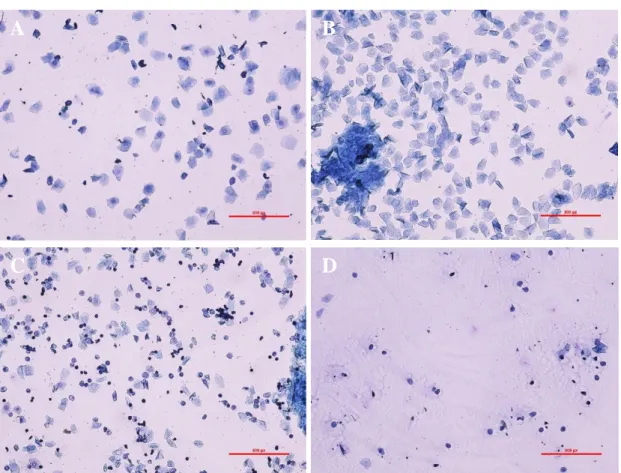
in the estrous cycle, starting four days prior and on the day the rats were sacrificed. Cotton-tipped applicators (Medline), softened with saline, were inserted slightly into the vagina to collect vaginal fluid. Two samples from each animal were collected, and transferred onto glass slides. The slides were treated for Wright’s stain, and examined under a light microscope (Nikon Eclipse 50i) at 10X to identify cell types (Cora, Kooistra, & Travlos, 2015; Goldman, Murr, & Cooper, 2007).
The stage of the estrous cycle was defined by the relative abundance of each cell type: neutrophils, nucleated epithelial cells, and anucleated keratinized epithelial cells (Cora et al., 2015). Images were analyzed with knowledge of surrounding days, in order to accurately
determine the stage in the cycle (Cora et al., 2015). Images of estrous swab samples are provided in Appendix A, along with a description of how images are classified.
Behavioral Training
Behavioral training was conducted in a rat operant conditioning chamber (Med
Associates, Fairfax, VT). Prior to self-administration, rats were trained to press the active lever to administer a single food pellet (45 mg/ pellet, BioServ) for 6 hours, or until completion of 100 active lever presses.
during 6-hour (long-access) sessions, in which an active lever press resulted in an intravenous infusion of cocaine or saline (0.75 mg/kg per infusion), auditory and visual cues (tone and light), and was followed by a 20-second time out period. During the first 2 days of self-administration, cocaine self-administering rats were limited to 80 infusions – following that, intake was
unrestricted. Following 10 days of self-administration, rats experienced 45 days of forced
abstinence in their home cages, where they were handled twice weekly. Rats were on a restricted diet during the first three days of self-administration—otherwise, rats were provided unlimited food (Envigo Teklad laboratory animal diet). Water was unrestricted throughout the experiment.
Tissue Preparation
On the 45th day of withdrawal, rats were anesthetized with pentobarbital (50 mg/ml, 0.8-1.8 ml). Transcardial perfusion was performed using 200 ml of phosphate buffer (1X PB), followed by 200 ml of 4% paraformaldehyde (PFA) to fix the tissue. Brains were extracted, and post-fixed in 4% PFA for 3 hours. The samples were then transferred to a 30% sucrose solution (in 1X PBS) for 2 days to cryoprotect the tissue. Sections (100 µm) of the NAc were collected using a cryostat (Leica Biosystems Inc., Buffalo Grove, IL, United States) and placed into a glycerol solution (50/50 Glycerol/1X PBS) as free-floating sections. Sections were stored at -20°C until imaging was performed.
NAc sections with the best fluorescent expression were selected for
and mouse anti-PSD-95 (6G6-1C9, Thermo Fisher Scientific, Waltham, MA, United States) diluted 1:500 in 10% NGS and 0.4% PBST. The sections incubated for 3 days at 4°C while shaking, and were flipped midway through the incubation to ensure uniform staining. Next, sections were transferred to a new well plate where they were washed with 1X PBS (3 x 10 min). Secondary antibodies, goat anti-rabbit Alexa Fluor 647 (A32733, Thermo Fisher Scientific, Waltham, MA, United States) and goat anti-mouse Alexa Fluor 594 (A11032, Thermo Fisher Scientific, Waltham, MA, United States), were diluted 1:100 in 10% NGS and 0.4% PBST, and incubated following the protocol detailed above. Previous studies in our lab have indicated that prolonged antibody incubation provides optimal results for consistent immunostaining
throughout the thick slices. Sections were washed in 1X PBS (3 x 10 min) and left as free-floating sections. Immediately prior to imaging, sections were mounted and cover-slipped with Dapi (Dapi-fluoromount-G, Southern Biotech), a stain for cell nuclei.
Astrocyte Imaging and Analysis
Astrocytes were imaged using a confocal microscope (Zeiss LSM 800 confocal-scanning microscope; 405, 488, 561, 640 nm diode lasers; 2 Gallium Arsenide Phosphide (GaAsP)
detectors) with a 63x oil-immersed objective (Zeiss, Oberkochen, Germany), and ZEN software (ZEN 2.3, blue edition, Zeiss). Images were taken through the z-plane at 1 µm, in which frame size was set to 1024 x 1024 pixels, bit depths to 16-bit, and averaging to 4 times. Astrocytes were imaged only if within the nucleus accumbens core, isolated from other astrocytes, and the entire cell was present throughout the z-dimension. Images were obtained blindly, with
approximately eight astrocytes per rat collected.
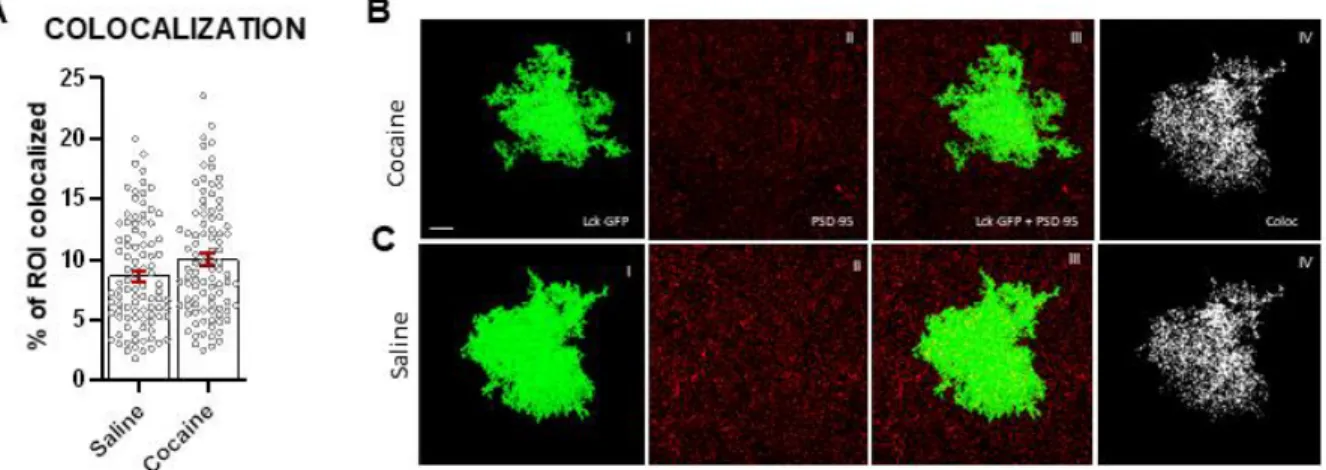
Imaris software was used to analyze the images for morphological properties including surface area, volume, and synaptic colocalization. First, the e-GFP and PSD-95 channels were attenuated to ensure uniform signaling throughout the image. Next, each astrocyte was 3D reconstructed by building a surface around it, and creating a masked e-GFP channel to represent the isolated astrocyte without background signal. This masked e-GFP channel was used for analysis of morphometric properties. In order to analyze for synaptic colocalization, a channel was constructed to represent the overlap of PSD-95 and the masked e-GFP channel.
The threshold for the PSD-95 channel was selected based on an average measure of puncta intensity throughout the slices, and used to isolate signal from background. After
correcting for background, a colocalization channel was created where the PSD-95 and masked-EGFP signal overlapped, and used to calculate the percentage of synaptic colocalization in the region of interest (ROI). Images remained coded throughout the analysis process to ensure unbiased processing.
Statistical Analyses
Results
Cocaine Group Administered Significantly More Than the Saline Group
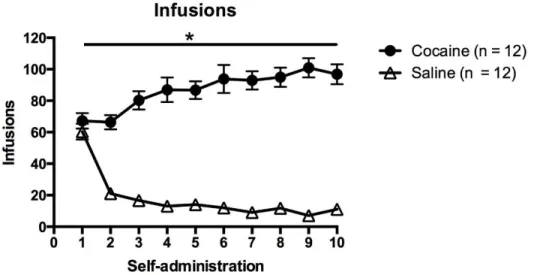
Figures 1 and 2 illustrate the behavioral data across the 10-day self-administration sessions for both groups. Two-way ANOVA analyses revealed main effects of both treatment group (saline versus cocaine) and time across self-administration in active lever presses (treatment: F (1,220) = 128.3, p < 0.05; time: F (9,220) = 9.351, p < 0.05), and infusions (treatment: F (1,220) = 1028, p < 0.05; time: F (9,220) = 2.277, p < 0.05). Animals in the cocaine group exhibited significantly higher levels of active lever presses and infusion intake, which escalated across days of self-administration, in comparison to the saline group (Figs. 1,2).
No Differences in Morphometric Properties Between Saline and Cocaine Groups
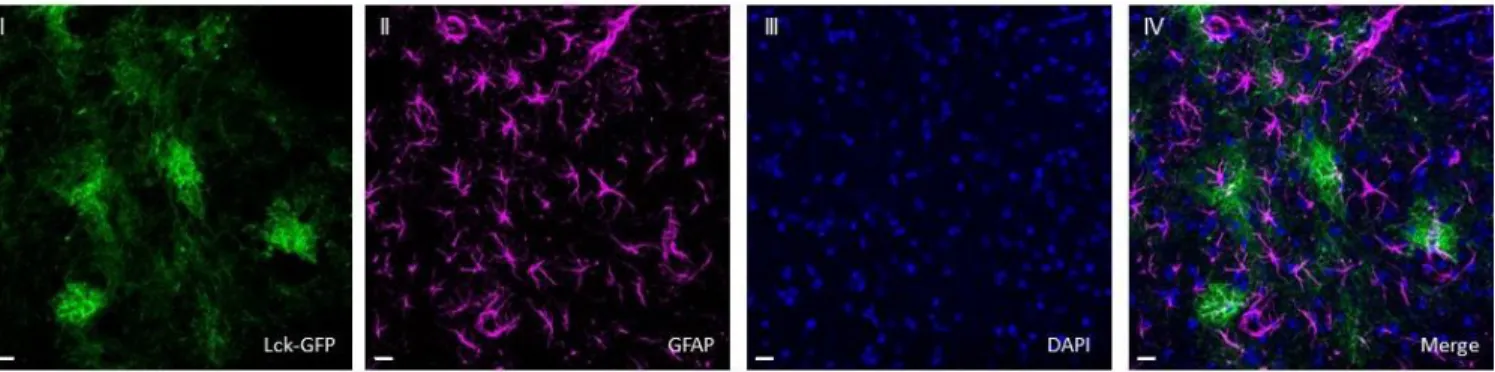
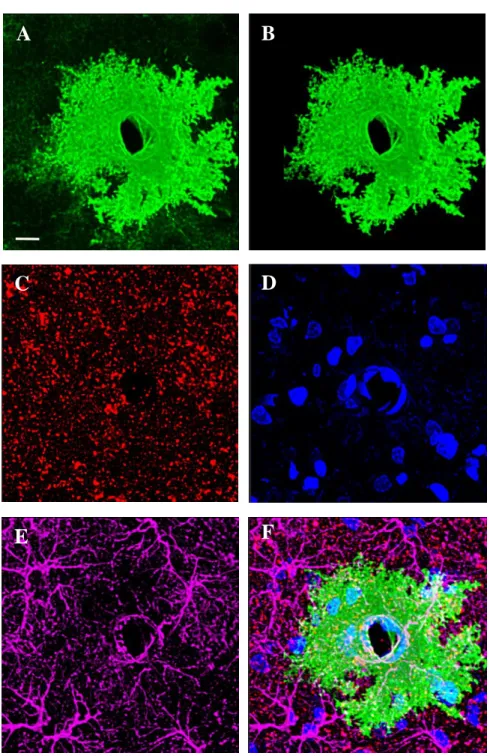
The microinjections of AAV5 Lck-GFP successfully dispersed into the region of interest, and demonstrated specific fluorescent-labelling of astrocytes, which was confirmed by the distinct structure of astrocytes, as well as by GFAP staining (Fig. 3, Appendix Figure B1). All of the images obtained included staining for GFAP, Dapi, and PSD-95 (Fig. 3). Cells were selected for imaging only if within the NAc, isolated from other cells, and if the whole cell was included in the z-dimension.
[saline: 8.748 ± 0.544, cocaine: 10.11 ± 0.546, F = 3.12, p > 0.091] of NAc astrocytes (Figs. 4-6).
No Effect of the Estrous Cycle on Astrocyte Morphology
Beginning 4 days prior to perfusion, vaginal swabs were collected from each animal for determination of the phase in the estrous cycle (see Appendix A). A two-way nested ANOVA revealed that the stage in the estrous cycle had no effect on astrocyte morphology within the groups of saline and cocaine. Specifically, within the saline group, there were no differences between estrous cycle stages in surface area [proestrus: 41,473 ± 6,166 µm2, estrus: 43,117 ± 2,413 µm2, metestrus: 42,220 ± 3,701 µm2, diestrus: 36,346 ± 6,545 µm2 ,F = 0.32, p > 0.811], volume [proestrus: 16,940 ± 3,752 µm3, estrus: 17,583 ± 1,468 µm3, metestrus: 17,199 ± 2,251 µm3, diestrus: 13,739 ± 3,979 µm3,F = 0.27, p > 0.842], or synaptic colocalization [proestrus: 10.341 ± 2.506, estrus: 8.492 ± 0.969, metestrus: 9.994 ± 1.483, diestrus: 5.6 ± 2.603,F = 0.88, p
Discussion
I hypothesized that there would be no sex differences in astrocyte morphology following cocaine self-administration and abstinence among male and female rats. Specifically, I predicted that there would be a similar effect of cocaine on the surface area, volume, and synaptic contact of astrocytes in the nucleus accumbens of female rats, as previously observed in male rats (Scofield et al., 2016; Testen et al., 2018). In addition to these published results following short-access (2h/d) self-administration and extinction, unpublished results from the Reissner laboratory also indicate a significant ~40% decrease in properties of NAc astrocytes in male rats following long-access (6h/day) self-administration and 45 days of abstinence, as performed in the current study (Kim et al, unpublished observations). However, the results presented herein do not support my hypothesis, as there were no significant differences in morphometric properties or synaptic colocalization between saline and cocaine groups. These results indicate a sex difference in the cellular effects of cocaine self-administration, and suggest that females may have protective factors against cocaine-induced astrocyte retraction.
Female Astrocytes May Display Protective Effects Against Cocaine-Induced Retraction
These results suggest that female astrocytes may display protective effects against cocaine-induced morphological changes. The mechanism responsible for the effects of cocaine on NAc astrocytes in male rats (and the lack of effect in female rats) is unknown. Interestingly,
in vitro studies have revealed protective effects in female astrocytes in response to various forms of injury, and overall higher survival rates in cell cultures in comparison to their male
(Liu et al., 2007; Pawlak, Brito, Kuppers, & Beyer, 2005). In addition, Morizawa et. al found that spinal astrocytes from neonatal female rats had greater uptake of extracellular glutamate in comparison to their male counterparts, relying on the glial glutamate transporter, GLAST
(Morizawa et al., 2012). The lack of cocaine-induced changes observed in female NAc astrocytes may be related to the protective factors previously observed, including the high capacity for glial glutamate uptake in female astrocytes, as revealed in in vitro studies (Morizawa et al., 2012). Further research is required to address the mechanisms underlying the cocaine-induced astrocyte retraction in males, and lack thereof in female rats.
The Potential Role of Estrogen
An in vitro study by Pawlak et. al (Pawlak et al., 2005) revealed a link between estrogen and the expression of glial glutamate transporters, GLAST and GLT-1. The administration of
estrogen in cultured midbrain astrocytes resulted in increased GLT-1 and GLAST mRNA and protein levels (Pawlak et al., 2005). Moreover, estrogen has been reported to have sex-dependent effects on astrocytes. For instance, the administration of estradiol in cultured hippocampal astrocytes resulted in a decrease in lipotoxicity-induced cell death in female astrocytes, whereas no protective effect was observed in male astrocytes (Frago et al., 2017). Results from in vitro
studies indicate that estrogen serves as a protective factor at the cellular level in female
astrocytes (Pawlak et al., 2005), suggesting a potential role for estrogen in the protection against cocaine-induced morphological changes in female astrocytes. However, it is important to note that the data presented herein do not suggest the estrous cycle to play a role in astrocyte morphology.
Cora et al., 2015; Johnson et al., 2019). Female rats in estrus demonstrated an increased vulnerability to cocaine cues (Johnson et al., 2019), and did not respond to the intervention of ceftriaxone in attenuating cocaine reinstatement at the behavioral or cellular level (Bechard et al., 2018), which was previously shown as an effective intervention in male rats
(Trantham-Davidson et al., 2012).
Sex-Dependent Stress Responses
Previous research has also elucidated sex-dependent responses to stress, and have implications in cocaine abstinence and withdrawal. Specifically, results from other studies indicate that glucocorticoids in the periphery can exert similar effects on astrocytes as observed following extinction and abstinence from cocaine self-administration (Lou, Li, Wang, Xia, & Chen, 2018; Unemura et al., 2012; Yu, Yang, Holsboer, Sousa, & Almeida, 2011). Further, glucocorticoid responses to stress are more pronounced in males than females (Kudielka & Kirschbaum, 2005; Rainville & Hodes, 2019), and glucocorticoid receptor stimulation contributes to depression-related behaviors in male mice, but not in females (Solomon et al., 2012). Thus, the stress associated with withdrawal and abstinence following drug use may produce the effects observed in male astrocytes, but not females. Further research is necessary to address these possible mechanisms and hypotheses.
NAc and PFC in male rats but not females (Ganguly, Honeycutt, Rowe, Demaestri, &
Brenhouse, 2019). These males also exhibited higher CPP to cocaine in comparison to female and control subjects, an effect reversed by the administration of a blood brain barrier (BBB) blocker of TNF-α (Ganguly et al., 2019). Interestingly, elevated TNF-α levels have been reported in a wide range of traumatic brain injuries, and have been linked with excitotoxity (Fine et al., 1996; Olmos & Llado, 2014). Human neuronal cultures have revealed that elevated levels of TNF-α disrupt glial glutamate transport by downregulation of GLAST and GLT-1 and thereby, can result in an increase in cell death by excitotoxicity (Fine et al., 1996; Olmos & Llado, 2014). The involvement of TNF-α in traumatic brain injury and neurological disorders, as well as glial glutamate uptake, highlights the need for further research on the role of TNF-α in addiction, as well as astrocyte pathology (Forshammar et al., 2013).
In conclusion, the female brain responds differently to stress, injury, and drug use in comparison to their male counterpart. The underlying mechanisms by which the sexes differ in this regard remain unknown. Sex differences have emerged in various neurological pathways, and should be further explored to determine the mechanisms that drive sex-dependent
characteristics at the behavioral and cellular level.
Implications & Further Research
The results reported here revealed no differences in female astrocyte morphology among saline and cocaine-administering groups, suggesting that female astrocytes may have protective effects against cocaine-induced changes, or may lack the mechanism driving this effect in male rats. Not only do these data support previous findings that astrocytes have sex-dependent
2012). Most research on sex-differences in astrocytes have been performed primarily in vitro, highlighting the need for further in vivo and behavioral experiments on astrocyte morphology, as well as how sex and stress hormones may be involved.
It continues to remain unknown how cocaine self-administration and withdrawal affect astrocyte morphology and function (Testen et al., 2018). Thereby, it is critical that we understand the mechanism behind the cocaine-induced morphological changes in male astrocytes, and how females may differ. These results have important implications in potential targets in the treatment of addiction and in the understanding of neurobiological sex differences.
Conclusion
In this study, I demonstrated that astrocytes located in the NAc of female rats do not exhibit morphological changes in surface area, volume, and postsynaptic colocalization
References
Allen, N. J., & Barres, B. A. (2009). Glia — more than just brain glue. Nature, 457, 675. doi:10.1038/457675a
American Psychatric Association. (2013). Diagnostic and Statistical Manual of Mental Disorders (5th ed.). Washington, D.C.
Anderson, C. M., & Swanson, R. A. (2000). Astrocyte glutamate transport: Review of properties, regulation, and physiological functions. 32(1), 1-14.
doi:doi:10.1002/1098-1136(200010)32:1<1::AID-GLIA10>3.0.CO;2-W
Araque, A., Parpura, V., Sanzgiri, R. P., & Haydon, P. G. (1999). Tripartite synapses: glia, the unacknowledged partner. Trends Neurosci, 22(5), 208-215.
Baker, D. A., McFarland, K., Lake, R. W., Shen, H., Tang, X. C., Toda, S., & Kalivas, P. W. (2003). Neuroadaptations in cystine-glutamate exchange underlie cocaine relapse. Nat Neurosci, 6(7), 743-749. doi:10.1038/nn1069
Bechard, A. R., Hamor, P. U., Schwendt, M., & Knackstedt, L. A. (2018). The effects of ceftriaxone on cue-primed reinstatement of cocaine-seeking in male and female rats: estrous cycle effects on behavior and protein expression in the nucleus accumbens.
Psychopharmacology (Berl), 235(3), 837-848. doi:10.1007/s00213-017-4802-7
Becker, J. B., Perry, A. N., & Westenbroek, C. J. B. o. S. D. (2012). Sex differences in the neural mechanisms mediating addiction: a new synthesis and hypothesis. 3(1), 14.
doi:10.1186/2042-6410-3-14
Berlinguer-Palmini, R., Narducci, R., Merhan, K., Dilaghi, A., Moroni, F., Masi, A., . . . Mannaioni, G. (2014). Arrays of MicroLEDs and Astrocytes: Biological Amplifiers to Optogenetically Modulate Neuronal Networks Reducing Light Requirement. PLOS ONE, 9(9), e108689. doi:10.1371/journal.pone.0108689
Cora, M. C., Kooistra, L., & Travlos, G. (2015). Vaginal Cytology of the Laboratory Rat and Mouse: Review and Criteria for the Staging of the Estrous Cycle Using Stained Vaginal Smears. Toxicol Pathol, 43(6), 776-793. doi:10.1177/0192623315570339
Fine, S. M., Angel, R. A., Perry, S. W., Epstein, L. G., Rothstein, J. D., Dewhurst, S., & Gelbard, H. A. (1996). Tumor necrosis factor alpha inhibits glutamate uptake by primary human astrocytes. Implications for pathogenesis of HIV-1 dementia. J Biol Chem, 271(26), 15303-15306.
Forshammar, J., Jörneberg, P., Björklund, U., Westerlund, A., Lundborg, C., Biber, B., &
Hansson, E. (2013). Anti-inflammatory substances can influence some glial cell types but not others. Brain Research, 1539, 34-40.
doi:https://doi.org/10.1016/j.brainres.2013.09.052
Frago, L. M., Canelles, S., Freire-Regatillo, A., Argente-Arizón, P., Barrios, V., Argente, J., . . . Chowen, J. A. (2017). Estradiol Uses Different Mechanisms in Astrocytes from the Hippocampus of Male and Female Rats to Protect against Damage Induced by Palmitic Acid. Frontiers in molecular neuroscience, 10, 330-330. doi:10.3389/fnmol.2017.00330 Fuchs, R. A., Evans, K. A., Mehta, R. H., Case, J. M., & See, R. E. (2005). Influence of sex and estrous cyclicity on conditioned cue-induced reinstatement of cocaine-seeking behavior in rats. Psychopharmacology (Berl), 179(3), 662-672. doi:10.1007/s00213-004-2080-7 Ganguly, P., Honeycutt, J. A., Rowe, J. R., Demaestri, C., & Brenhouse, H. C. (2019). Effects of
Goldman, J. M., Murr, A. S., & Cooper, R. L. (2007). The rodent estrous cycle: characterization of vaginal cytology and its utility in toxicological studies. Birth Defects Res B Dev Reprod Toxicol, 80(2), 84-97. doi:10.1002/bdrb.20106
Johnson, A. R., Thibeault, K. C., Lopez, A. J., Peck, E. G., Sands, L. P., Sanders, C. M., . . . Calipari, E. S. (2019). Cues play a critical role in estrous cycle-dependent enhancement of cocaine reinforcement. Neuropsychopharmacology. doi:10.1038/s41386-019-0320-0 Kalivas, P. W. (2009). The glutamate homeostasis hypothesis of addiction. Nat Rev Neurosci,
10(8), 561-572. doi:10.1038/nrn2515
Kim, R., Healey, K. L., Sepulveda-Orengo, M. T., & Reissner, K. J. (2018). Astroglial correlates of neuropsychiatric disease: From astrocytopathy to astrogliosis. Prog
Neuropsychopharmacol Biol Psychiatry, 87(Pt A), 126-146. doi:10.1016/j.pnpbp.2017.10.002
Kim, R., Sepulveda-Orengo, M. T., Healey, K. L., Williams, E. A., & Reissner, K. J. (2018). Regulation of glutamate transporter 1 (GLT-1) gene expression by cocaine self-administration and withdrawal. Neuropharmacology, 128, 1-10.
doi:10.1016/j.neuropharm.2017.09.019
Kudielka, B. M., & Kirschbaum, C. (2005). Sex differences in HPA axis responses to stress: a review. Biol Psychol, 69(1), 113-132. doi:10.1016/j.biopsycho.2004.11.009
LaCrosse, A. L., O'Donovan, S. M., Sepulveda-Orengo, M. T., McCullumsmith, R. E., Reissner, K. J., Schwendt, M., & Knackstedt, L. A. (2017). Contrasting the Role of xCT and GLT-1 Upregulation in the Ability of Ceftriaxone to Attenuate the Cue-Induced Reinstatement of Cocaine Seeking and Normalize AMPA Receptor Subunit Expression. J Neurosci, 37(24), 5809-5821. doi:10.1523/jneurosci.3717-16.2017
Liu, M., Hurn, P. D., Roselli, C. E., & Alkayed, N. J. (2007). Role of P450 aromatase in sex-specific astrocytic cell death. J Cereb Blood Flow Metab, 27(1), 135-141.
doi:10.1038/sj.jcbfm.9600331
Lou, Y. X., Li, J., Wang, Z. Z., Xia, C. Y., & Chen, N. H. (2018). Glucocorticoid receptor activation induces decrease of hippocampal astrocyte number in rats.
Psychopharmacology (Berl), 235(9), 2529-2540. doi:10.1007/s00213-018-4936-2
McFarland, K., Lapish, C. C., & Kalivas, P. W. (2003). Prefrontal glutamate release into the core of the nucleus accumbens mediates cocaine-induced reinstatement of drug-seeking behavior. J Neurosci, 23(8), 3531-3537.
Moran, M. M., McFarland, K., Melendez, R. I., Kalivas, P. W., & Seamans, J. K. (2005). Cystine/glutamate exchange regulates metabotropic glutamate receptor presynaptic inhibition of excitatory transmission and vulnerability to cocaine seeking. J Neurosci, 25(27), 6389-6393. doi:10.1523/jneurosci.1007-05.2005
Morizawa, Y., Sato, K., Takaki, J., Kawasaki, A., Shibata, K., Suzuki, T., . . . Koizumi, S. (2012). Cell-autonomous enhancement of glutamate-uptake by female astrocytes. Cell Mol Neurobiol, 32(6), 953-956. doi:10.1007/s10571-012-9829-z
Olmos, G., & Llado, J. (2014). Tumor necrosis factor alpha: a link between neuroinflammation and excitotoxicity. Mediators Inflamm, 2014, 861231. doi:10.1155/2014/861231
Paixao, S., & Klein, R. (2010). Neuron-astrocyte communication and synaptic plasticity. Curr Opin Neurobiol, 20(4), 466-473. doi:10.1016/j.conb.2010.04.008
Pawlak, J., Brito, V., Kuppers, E., & Beyer, C. (2005). Regulation of glutamate transporter GLAST and GLT-1 expression in astrocytes by estrogen. Brain Res Mol Brain Res, 138(1), 1-7. doi:10.1016/j.molbrainres.2004.10.043
Rainville, J. R., & Hodes, G. E. (2019). Inflaming sex differences in mood disorders.
Neuropsychopharmacology, 44(1), 184-199. doi:10.1038/s41386-018-0124-7
Reissner, K. J., & Kalivas, P. W. (2010). Using glutamate homeostasis as a target for treating addictive disorders. Behav Pharmacol, 21(5-6), 514-522.
doi:10.1097/FBP.0b013e32833d41b2
Scofield, M. D. (2018). Exploring the Role of Astroglial Glutamate Release and Association With Synapses in Neuronal Function and Behavior. Biol Psychiatry, 84(11), 778-786. doi:10.1016/j.biopsych.2017.10.029
Scofield, M. D., Li, H., Siemsen, B. M., Healey, K. L., Tran, P. K., Woronoff, N., . . . Reissner, K. J. (2016). Cocaine Self-Administration and Extinction Leads to Reduced Glial Fibrillary Acidic Protein Expression and Morphometric Features of Astrocytes in the Nucleus Accumbens Core. Biol Psychiatry, 80(3), 207-215.
doi:10.1016/j.biopsych.2015.12.022
Shimamoto, A., Rappeneau, V., Munjal, H., Farris, T., Davis, C., Wilson, A., . . . Meshul, C. K. (2018). Glutamate-Glutamine Transfer and Chronic Stress-Induced Sex Differences in Cocaine Responses. Neuroscience, 391, 104-119.
doi:10.1016/j.neuroscience.2018.09.009
Sofroniew, M. V., & Vinters, H. V. (2010). Astrocytes: biology and pathology. Acta Neuropathologica, 119(1), 7-35. doi:10.1007/s00401-009-0619-8
Solomon, M. B., Furay, A. R., Jones, K., Packard, A. E., Packard, B. A., Wulsin, A. C., & Herman, J. P. (2012). Deletion of forebrain glucocorticoid receptors impairs
neuroendocrine stress responses and induces depression-like behavior in males but not females. Neuroscience, 203, 135-143. doi:10.1016/j.neuroscience.2011.12.014
Soni, N., Reddy, B. V., & Kumar, P. (2014). GLT-1 transporter: an effective pharmacological target for various neurological disorders. Pharmacol Biochem Behav, 127, 70-81. doi:10.1016/j.pbb.2014.10.001
Testen, A., Sepulveda-Orengo, M. T., Gaines, C. H., & Reissner, K. J. (2018). Region-Specific Reductions in Morphometric Properties and Synaptic Colocalization of Astrocytes Following Cocaine Self-Administration and Extinction. Front Cell Neurosci, 12, 246. doi:10.3389/fncel.2018.00246
Trantham-Davidson, H., LaLumiere, R. T., Reissner, K. J., Kalivas, P. W., & Knackstedt, L. A. (2012). Ceftriaxone normalizes nucleus accumbens synaptic transmission, glutamate transport, and export following cocaine self-administration and extinction training. J Neurosci, 32(36), 12406-12410. doi:10.1523/JNEUROSCI.1976-12.2012
Unemura, K., Kume, T., Kondo, M., Maeda, Y., Izumi, Y., & Akaike, A. (2012). Glucocorticoids decrease astrocyte numbers by reducing glucocorticoid receptor expression in vitro and in vivo. J Pharmacol Sci, 119(1), 30-39.
Volterra, A., & Meldolesi, J. (2005). Astrocytes, from brain glue to communication elements: the revolution continues. Nat Rev Neurosci, 6(8), 626-640. doi:10.1038/nrn1722
Yu, S., Yang, S., Holsboer, F., Sousa, N., & Almeida, O. F. X. (2011). Glucocorticoid Regulation of Astrocytic Fate and Function. PLOS ONE, 6(7), e22419.
Figures
Figure 1. Active lever responses across 10 days of self-administration for saline and cocaine groups. A two-way ANOVA analysis demonstrated that animals in the cocaine-administering group (n = 12) had significantly higher active lever pressing, in comparison to the saline-administering group (n = 12), where p < 0.05 was considered significant.
Figure 3. 20X multiple intensity projection image collected within the NAc, showing expression of (I) Lck-GFP, (II) GFAP, (III) DAPI, and (IV) overlap of the channels. These representative images were collected from a rat in the saline-administering group. Scale bar = 20 μm.
Figure 5. Volume of astrocytes isolated from the NAc of female rats, in saline and cocaine-administering groups. A) A nested two-way ANOVA revealed no significant differences in volume of astrocytes between saline (n = 12) and cocaine (n = 12) groups, where p < 0.05 was considered significant. B) Imaris image software was used to build a surface (top panel) and masked e-GFP channel (bottom panel) to calculate the volume of the isolated E-GFP signal. This representative image is from a rat in the cocaine-administering group. Scale bar = 10 μm.
Appendices
Appendix A: Estrous Cycle Images
Figure A1. Representative images of estrous samples from this cohort. Estrous samples were collected by a cotton-tipped swab inserted slightly into the vagina. Smears were transferred onto glass slides and imaged using a light microscope at 10X. A) Proestrus. This stage is
characterized by small and round nucleated epithelial cells. B) Estrus, which is characterized by the flat, keratinized epithelial cells. These cells have a distinct appearance, as they lack nuclei and present a pale area where a nucleus once existed. C) Metestrus. This stage is determined by the presence of neutrophils, which present as small, round, and dark cells. The abundance of neutrophils increases as metestrus goes on. D) Diestrus. This stage is characterized by the
primary presence of neutrophils, and often samples have very low cellularity, as pictured above.
A
B
Appendix B: Astrocyte Imaging
Figure B1. 3D representations of the channels collected during astrocyte imaging, shown in 63X. A) E-GFP signal of a NAc astrocyte. B) The masked e-GFP channel was constructed by building a surface around the astrocyte signal shown in A, to isolate signal from background. C) PSD-95 signal, a marker for a postsynaptic protein. D) Dapi, a stain for cell nuclei. E) GFAP, a stain for glial filaments, which was used to confirm astrocyte signal observed in the e-GFP channel. F) Overlap of channels detailed above. This astrocyte is encapsulating a blood vessel, evidenced by DAPI signal within the blood vessel that appears as a “hole” in the center of the astrocyte. This representative image is from a cocaine-administering rat. Scale bar = 10 μm.