The economic stimulus legislation passed in 2009 formalized the adoption of health information technology as a policy priority. While much attention has focused on providers and organizations transitioning to electronic health records, "going digital" is more ambitious than simply replicating manual processes with computers. To realize benefits from new systems, information must be shared between care settings. Health information exchanges (HIEs) are the administrative bodies that enable communication of clinical data. HIEs are complex entities, with a variety of organizational and technical structures. Most HIEs are still in development, but stakeholders need not wait until the organizations are fully operational to perform meaningful evaluations. Qualitative, incremental evaluation efforts have the potential to yield important insights into the ways that HIEs are implemented and sustained. Evaluating HIEs in all stages of their
development will provide important lessons that may inform current and future efforts to improve technologies and health.
Headings:
Medical informatics
Electronic data interchange
by
Mitchell J. Goldman
A Master’s paper submitted to the faculty of the School of Information and Library Science of the University of North Carolina at Chapel Hill
in partial fulfillment of the requirements for the degree of Master of Science in
InformationScience.
Chapel Hill, North Carolina April 2012
Approved by
Introduction
In 2004 President Bush announced a goal that all Americans have an electronic health record (EHR) by 2014 (Executive Order 13335, 2004). This pronouncement was followed by progress in areas of technology, policy, and clinical practice. The economic stimulus legislation passed in 2009 formalized the adoption of health information technology (HIT) as a federal policy priority. The stimulus bill contained the HITECH Act, which defined the meaningful use provisions to provide incentive payments for doctors to adopt and use EHR systems with a defined set of features and functionality.
While adoption rates are increasing, the overwhelming majority of providers, especially those in small, independent practices, still lack even basic digital records (President’s Council of Advisors on Science and Technology, 2010). Thus, despite advanced technologies in many areas of diagnostic and interventional clinical practice, the United States lags behind other industrialized nations in the use of health information technologies (President’s Council of Advisors on Science and Technology, 2010).
While much popular and academic attention focuses on providers switching from paper to computers, "going digital" is more than a question of replicating manual
adoption, wherein the advantages of the technology accelerates its adoption and utilization (President’s Council of Advisors on Science and Technology, 2010).
Health information exchanges (HIEs) are the structures that will enable inter-provider and inter-organizational communication of clinical data. These organizations will facilitate access to data generated across a range of settings and increase capabilities for coordination of care. Data sharing and exchange through these infrastructures will help patients and providers realize the reported benefits of HIT and EHRs. These capabilities also promise significant financial savings (Vest & Gamm, 2010).
An HIE is a "system of systems" and thus exponentially more complex than the individual technologies that it is comprised of. HIEs require the cooperation of diverse stakeholders, often with competing interests, as well as standards for interoperability that allow for different systems used in various settings to communicate with each other. HIE organizations must present models for long-term financial sustainability, accounting for startup and ongoing maintenance costs. They must overcome closed, proprietary
technologies to achieve interoperability across regions.
Sensitivity to these challenges can allow administrators, policy makers, and researches to focus their evaluation strategies. While the goals of HIEs and policies encouraging their creation are improved clinical outcomes, it is not realistic to expect immediate, quantifiable results. However, evaluation methodologies that attend to
incremental, qualitative gains may address stakeholder hesitations and cumulatively make the case for continued development of health information exchange.
operational structures; and a summary of barriers to adoption. The second section will present an overview of evaluation frameworks and approaches that have been applied to health IT initiatives. It will then describe the unique features of HIEs that require novel evaluation strategies. The study will conclude with recommendations for effective evaluation of HIE implementations.
Background HIE and RHIO Definitions
Somewhat confusingly, health information exchange is both a general idea and an operational entity.1 Conceptually, it is the act of electronically sharing patient data
between health care organizations (Adjerid & Padman, 2011; Vest & Gamm, 2010). In the simplest sense, one provider faxing a patient's health record to another provider may be considered a basic example of health information exchange. However, health
information exchange is more commonly conceptualized as robust electronic
transmission of structured clinical information between a variety of stakeholders. This level of communication is often facilitated by a single administrative body that oversees and coordinates local or regional network architectures and sharing policies (Dixon & Zafar, 2010). These administrative entities are often called regional health information organizations (RHIOs) (Adler-Milstein, Landefeld, & Jha, 2010). Most high-level definitions of RHIO do not specifically indicate operational or technical requirements. Instead, they focus on organizational structures, stakeholder involvement, and overall purpose (Mäenpää, Suominen, Asikainen, Maass, & Rostila, 2009). RHIOs operate in
geographic regions that may be limited to a single city or cover multi-state areas (Adler-Milstein, Bates, & Jha, 2009).2
HIE and RHIO History
In the 1980s and 1990s large consortia and academic institutions such as
Intermountain Health Care in Utah and Partners Health Care in Massachusetts began to realize benefits of health IT and develop information exchange capabilities within their organizations. Even though these systems were advanced for their time, they were, in effect, information silos that could not dynamically exchange information with outside parties to solve problems of transitions of care, treatment redundancies, and longitudinal analysis of quality and outcomes (Kuperman, 2011). True interoperability would require data standards and the ability to uniquely identify patients who were assigned different identifiers or medical record numbers by each provider or facility (Kuperman, 2011).
In the early to mid 1990s, a small number of community health management information systems (CHMISs) attempted to integrate individual patient demographics and clinical data in a central repository. These systems were hindered by a lack of affordable technology, such as hardware, software, and network connections. The CHMIS efforts lacked agreed upon data standards which prevented integration of data from a multitude of sources. Community health information networks (CHINs) followed CHMISs in the mid-1990, but competing stakeholder interests and the difficulty of making a business case for what was still a novel network architecture prevented widespread adoption (Lorenzi, 2003; Vest & Gamm, 2010).
The National Committee for Vital and Health Statistics provided one of the first high-level policy frameworks for health information exchange with the 2001 publication of Information for Health: A Strategy for Building a National Health Information
Infrastructure. The report, presented to the Secretary of Health and Human Services, outlined the need for a robust interoperable health information exchange (National Committee on Vital and Health Statistics, 2002). Soon after, policy discussions began to include health IT interoperability, in addition to adoption, as it became clear that the true value of EHRs and related technologies lied in their ability to move data across
institutions, organizations, and practices (Marchibroda, 2007). Stakeholders and policy makers began to recognize that systems would need to "talk to each other" in order to justify expenses and realize benefits for patients (Marchibroda, 2007).
While a national infrastructure with patient identifiers may seem like the ideal solution to interoperability, differences in regional market environments, concerns about privacy and security, and technical feasibility combined to create the "network of
framework that maintains privacy and security. Stakeholders are also exploring solutions to issues of financial sustainability, governance, and network management issues
(Kuperman, 2011). Currently, the HITECH Act provides approximately $18 billion to promote health information exchange (Adjerid & Padman, 2011; Adler-Milstein & Bates, 2011; Fontaine, Ross, Zink, & Schilling, 2010).
HIE Structures
HIE organizations can be classified according to their technical, administrative, and operational features. Understanding distinctions between and within these categories can help stakeholders determine which evaluation methodologies to apply.
Technical Structures
The variety and complexity of technical details surrounding health information exchange is beyond this paper. However, a brief survey of the relevant high-level issues provides sufficient awareness of the challenges facing HIEs and likeminded information exchange organizations. HIE architectures exist along a continuum that begins with a federated model in which each provider or organization maintains separated systems. These information silos represent the pre-HIE environment when then patient was the primary source of information, and there was little inter-provider or inter-institutional communication. The opposite pole, one which maximizes interoperability, is a
monolithic (see Table 1). The important aspects of the progression include not only access to patient records but also the ability to integrate that information into the querying clinician's EHR system (Vest & Jasperson, 2010).
Table 1. Continuum of Architectural Approaches to HIEs (Wilcox et al., 2006) HIE Architecture Key Features
Separated systems Information exchange only possible via telephone or fax Separated federated model "Outside" providers have read-only access to an institution’s
electronic medical record Separated federated model with
notification
Adds notification functionality to the separated federated model, which allows providers to be alerted to the presence of data on separated systems.
Must centralize and automate some level of patient identification across systems.
Users still carry the burden of authentication, and patient selection in the separate systems.
Context-aware federated model Allows providers to move between separate applications or medical record systems without having to re-authenticate or select patients.
Information must still be accessed according to its location, but movement between locations is eased significantly.
Centralized data Centralizes actual patient data in a single location or repository.
Requires a centralized vocabulary that standardizes structured data from multiple sources.
Monolithic system Currently only exist within large integrated delivery organizations, such as the Veterans' Health Administration and Kaiser Permanente.
Requires all participants to use the same EHR, which is usually only possible where organizational control is centralized.
patient's records, wherever they are locally stored, in response to a query (eHealth
Initiative, n.d.). The MPI interfaces with a Record Locator Service that would point to the locations and types of medical records for a particular patient, allowing a system to "pull" relevant patient information. (L. Lenert, Sundwall, & Lenert, 2012). These interim
strategies are necessary because current practices and privacy laws preclude single patient identifiers (Kuperman, 2011).
Administrative and Operational Structures
In addition to varying technical strategies, there are also several administrative and operational structures for health information exchange. HIEs generally exist at the regional level, with multiple stakeholders in a defined geographic area pursuing
information exchange under the auspices of a formal governance model (Kern, Wilcox, Shapiro, Yoon-Flannery, Abramson, Barron, & Kaushal, 2011b). These stakeholders may include hospitals, clinicians, patients, government, laboratories, payers, and public health departments (Kern, Wilcox, Shapiro, Yoon-Flannery, Abramson, Barron, & Kaushal, 2011b). Multistate or nationwide networks would be technically and politically difficult to manage (Scholl, Stine, Lin, & Steinberg, 2010). The "sweet spot" of HIE jurisdiction is thus broad enough to justify the operational costs but not so large that complexities outweigh advantages (Grannis, Banger, & Harris, 2009).
(Labkoff & Yasnoff, 2007). There are as many philosophical as practical considerations in establishing functional HIEs. For example, if a region is dominated by a single institution such as a large academic medical center with affiliated practices and clinics, the value proposition for that organization to share patient information might be difficult to articulate (Lorenzi, 2003). Furthermore, as predicted by technology diffusion models, early adopters may pay a disproportionate penalty in terms of absorbing costs and "growing pains" of the network (Fontaine et al., 2010).
HIE Adoption
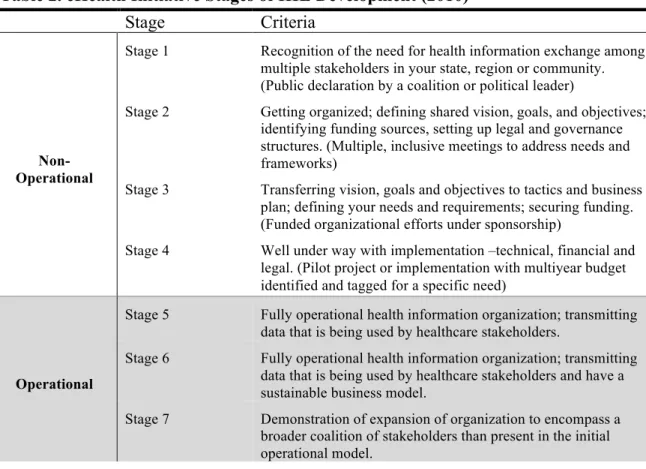
Table 2. eHealth Initiative Stages of HIE Development (2010)
Stage Criteria
Non-Operational
Stage 1 Recognition of the need for health information exchange among multiple stakeholders in your state, region or community. (Public declaration by a coalition or political leader)
Stage 2 Getting organized; defining shared vision, goals, and objectives; identifying funding sources, setting up legal and governance structures. (Multiple, inclusive meetings to address needs and frameworks)
Stage 3 Transferring vision, goals and objectives to tactics and business plan; defining your needs and requirements; securing funding. (Funded organizational efforts under sponsorship)
Stage 4 Well under way with implementation –technical, financial and legal. (Pilot project or implementation with multiyear budget identified and tagged for a specific need)
Operational
Stage 5 Fully operational health information organization; transmitting data that is being used by healthcare stakeholders.
Stage 6 Fully operational health information organization; transmitting data that is being used by healthcare stakeholders and have a sustainable business model.
Stage 7 Demonstration of expansion of organization to encompass a broader coalition of stakeholders than present in the initial operational model.
Statistics concerning overall adoption show variations. Using 2009 data, one study identified 313 HIE initiatives. Eighty-nine of these efforts were operational and actively exchanging health information, while 132 organizations were planning to
Technology, 2010). Despite differences in tabulation, the key trends are that HIE efforts are increasing, even as many of the organizations are in different levels of development and implementation.
Deeper analysis of these figures reveals significant imbalances with regard to practice setting. While the overall trend of HIE development indicates growth (L. Lenert et al., 2012), only 14 percent of U.S. acute care hospitals participated in fully operational exchanges and only 3 percent of ambulatory practices were part of these HIEs (Adler-Milstein & Bates, 2011). This conclusion is worrisome not only because of the low aggregate numbers, but also because, in reality, the majority of patients receive their care in the ambulatory practices that lag behind in adoption (Fontaine et al., 2010; Ross et al., 2010). Reasons for this adoption pattern are complex. One theory, which will be explored below, is that ambulatory practices have fewer technical and financial resources and thus a higher threshold for demonstrated value and return on investment (Ross et al., 2010).
Complicating a discussion of adoption rates is the notion that implementation of an HIE does not ensure active, regular utilization by individual clinicians (Vest, Zhao, Gamm, & Ohsfeldt, 2011). Studies have not addressed adoption relative to the
differences in system architecture described above. These differences would have an obvious effect on actual usage because, in some cases, such as with a monolithic system imbedded in the clinical workflow, HIE use would essentially be required (Vest et al., 2011). In other words, a higher level of functional integration reduces the need for additional interfaces, log-ins, and permissions that may discourage individual clinician use and thus facilitates actual on-the-ground utilization (Vest et al., 2011). By
have to choose whether or not to access information (Wilcox). Thus, more mature systems eliminate structural and user barriers (Vest et al., 2011).
An even more nuanced approach to adoption and utilization addresses the
difference between using a system and using the information provided by the system. The former level of access may be studied through system logs. However, determining when and how clinicians actually apply information gleaned from HIE is a difficult proposition, and it is even more challenging to associate information access patterns with clinical process and outcomes improvements (Vest & Jasperson, 2010).
In addition to complicating research methodologies, these differences between organization-level adoption and provider-level utilization hinder attempts to associate health information exchange and other health information technologies with improved outcomes. Providers must use systems in order to realize their benefits. Underutilized or improperly utilized systems are unlikely to demonstrate benefits (Vest & Jasperson, 2010). This point will be further emphasized below, as evaluation strategies are explored. Barriers to Adoption
A full exploration of barriers to HIE adoption is beyond the scope of this study. However, an overview of key issues falls into four categories: cultural barriers, legal barriers, technical barriers, and financial barriers.
Cultural Barriers
Kaushal, 2011b). Many hospitals and large health care groups have already invested significant resources in organization-specific information systems (Fontaine et al., 2010; Frisse, 2005). These institutions view patients and their data as business assets and may be wary of spending additional money on an effort that shares information with
organizations that, in most other contexts, are competitors (Fontaine et al., 2010; Grossman, Kushner, & November, 2008). This reluctance to share extends from small practices to large hospital systems (Vest & Gamm, 2010).
An additional cultural barrier is the "first-mover" disadvantage in which the organizations that make the initial investment in HIE infrastructure may be, in effect, subsidizing later adopters (Fontaine et al., 2010; Frisse, 2005). Stakeholders may also have differing or incompatible perceptions of outcomes and what they want to gain from information exchange. For example, it is unlikely that a laboratory company would be concerned with clinical processes and associated quality metrics that direct-care providers would prioritize (Dixon & Zafar, 2010).
Stakeholder trust is an underlying issue that must be resolved to ensure broad adoption. As the number of organizations sharing information increases,
appropriate consent and feel comfortable providing information to providers (Choi, Capitan, Krause, & Streeper, 2006). While information technology may enable
significant gains, a consequence of improperly implemented tools is patient distrust and poor outcomes that may come with incomplete or partial patient reporting (Angst, 2009).
A final cultural barrier is the challenge of imposing new workflows on health care providers and organizations. Depending on the level of functional integration of an HIE architecture, sharing information may require use of web portals or other interfaces outside of the normal clinical workflow. Building exchange features into accepted workflow could increase the adoption and use of HIE tools (President’s Council of Advisors on Science and Technology, 2010).
Legal Barriers
While strong privacy laws may increase costs and technical considerations, they also mitigate concerns that would otherwise limit growth and success of HIEs (Adjerid & Padman, 2011). In that sense, privacy laws are not, as might be expected, deterrents to HIE. One study found that states with stronger privacy laws actually have a higher level of information exchange (Adjerid & Padman, 2011).
That said, the complexity of these laws and the variations between state
as it is unclear which standard takes precedence (Dimitropoulos, 2007). Patients who travel between states to receive care may be unwitting casualties of these legal variations. For example, this confusion may directly affect "snow birds" who not only maintain multiple residences but also may require enhanced care coordination because of age-related conditions (Grannis et al., 2009; McGraw, 2009).
Even if providers can navigate the complexity of varying state and federal laws, as well as organizational policies, there are related issues that patients must address. Opt-in and opt-out models are often complex, with patients makOpt-ing decisions on a provider-by-provider basis. There are questions about whether or not HIE networks can handle this type of variation and if it is realistic to expect patients to make decisions on such a small scale (Wilkinson, 2006). On a broader level, policy makers and researchers have not resolved questions of whether participation in an HIE should be voluntary or mandatory (Angst, 2009). Some advocates consider information exchange a public good that can only reach its potential for improving individual and population health through broad access to more and better information (Adler-Milstein et al., 2009; Angst, 2009). The opposite approach, of course, argues for patient empowerment, decision-making, and the right to nondisclosure (Angst, 2009).
Technical Barriers
widespread use of electronic records, even the most robust exchange network will fail to reach its potential (Adler-Milstein & Bates, 2011; Ross et al., 2010).
Patient matching through a MPI is enormously challenging. Health information is distributed among many independent electronic systems within and across organizations (Grannis et al., 2009). Because patients do not have universal health identifiers, matching algorithms must process divergent information that is, in some cases, quite dynamic. Names change after marriage, patients may maintain multiple addresses, and common surnames may complicate matching (Grannis et al., 2009). In order to prevent harmful treatment errors, the threshold for avoiding false-positive and false-negative matches must be quite high, which suggests that there will still be some degree of costly and time-consuming manual matching (Grannis et al., 2009).
Several concurrent efforts are dedicated to resolving the question of standards for interoperability. Without agreed upon standards for the underlying structure of clinical information, as well as methods for data storage and retrieval, information exchange will not be fully realized (Fontaine et al., 2010). Proprietary EHR system vendors must have incentives to adopt universal protocols. Otherwise, systems will be unable to "talk to each other," and there will be demands on resources to create customized middleware and ad hoc solutions to interoperability (President’s Council of Advisors on Science and
aggregates marked-up data elements from multiple sources (President’s Council of Advisors on Science and Technology, 2010).
Financial Barriers
HIE startup and maintenance costs are significant, and there is not consensus regarding how these organizations can develop sustainable business models (Shapiro et al., 2011). The general model for development has been one-time public-sector startup funding, with the expectation that organizations will eventually become self-sustaining through stakeholder contributions (Adler-Milstein & Bates, 2011; Vest & Gamm, 2010). Federal support for ongoing operational costs will be limited, and states may or may not step in, depending on budgetary priorities (Adler-Milstein, McAfee, Bates, & Jha, 2008). The current period between subsidization and sustainability is crucial for building support for HIE and demonstrating the value of information sharing (Adler-Milstein & Bates, 2011). Recent data indicates that only one-third of HIEs are able to cover operating expenses with revenues, and of the HIEs that are not yet financially viable, only 40 percent reported that they expected to become so (Adler-Milstein & Bates, 2011).
that, benefits take a long time to be realized. Thus, articulating and quantifying a business case of information exchange, beyond intuitive and tentative estimations of benefits, is difficult but also urgent (Dixon & Zafar, 2010; Marchibroda, 2007).
In addition to high costs and challenges in stating a business case for all stakeholders, the notion of misaligned financial incentives clouds the entire HIE proposition. Under a fee-for-service payment structure, more efficient care and fewer duplicated services saves money for payers. When hospitals and provider groups are expected to absorb costs of HIE infrastructures and related capital improvements, they are, in effect, paying for improvements that benefit other groups (Adler-Milstein & Bates, 2011; Patel, Abramson, Edwards, Malhotra, & Kaushal, 2011). Thus, without clear incentives or aggressive regulatory mandates, the business case for providers is difficult to make (Vest & Gamm, 2010). This misalignment leads to intractable questions about who should pay for development, implementation, and maintenance (Dixon & Zafar, 2010; Walker, 2005). However, as pay-for-performance models such as Accountable Care organizations and Patient-Centered Medical Homes spread, the motivation and incentive for coordination will increase (Williams et al., 2012). If policy makers can convince stakeholders that information exchange is a public good, with benefits that go beyond a balance sheet, this argument may render moot discussions of sustainability and financial incentives (Dixon & Zafar, 2010; President’s Council of Advisors on Science and Technology, 2010).
Summary of Key Background Issues
implementation hinder attempts to draw meaningful conclusions through comparisons. Underlying concerns regarding financial sustainability and the need to demonstrate a convincing business case necessarily influence evaluation priorities. All of these issues are relevant when considering approaches to evaluating HIEs.
HIE Evaluation
Evaluation of HIE efforts is essential in order to demonstrate value and learn lessons that may be applied across organizations and geographic areas (Dixon & Zafar, 2010). However, there are few published reports evaluating HIEs and even fewer validated frameworks specifically designed for evaluating HIEs (Dixon & Zafar, 2010; Hripcsak et al., 2007; Yusof, Kuljis, Papazafeiropoulou, & Stergioulas, 2008a). While the goals of most health care initiatives either implicitly or explicitly support improved care coordination and clinical outcomes, the reality is that many initiatives have significant maturation timelines. Therefore, measurable clinical benefits, if and when they occur, will happen downstream and depend not only on sound policy goals but also on many organizational, technical, user, and patient variables (Kern, Ancker, Abramson, Patel, Dhopeshwarkar, & Kaushal, 2011a). In the meantime, lacking reliable clinical data, evaluation of HIE programs should be aligned with their phases of development and account for sociotechnical context (K. B. Johnson & Gadd, 2007).
applicability of findings (K. B. Johnson & Gadd, 2007). HIEs are complex entities, with varying organizational structures, technologies, stakeholders, and goals. Thus, focusing the study of operational HIEs on RCT binaries such as present/absent or before/after does not reveal sufficient detail to enable meaningful ongoing assessment or comparison (Ancker, Kern, Abramson, & Kaushal, 2011; Labkoff & Yasnoff, 2007). RCTs are resource intensive and time consuming. Trying to use RCT techniques at the expense of more modest evaluation strategies may be detrimental to less ambitious but equally valid goals (McGowan, Cusack, & Poon, 2008; Poon, Cusack, & McGowan, 2012).
Thus, there exists an evaluation paradox wherein demonstrated results and progress are needed to justify continued HIE efforts, but conventional metrics of effectiveness are unreasonably difficult to apply (Adler-Milstein, US, Vest, What). Qualitative, incremental evaluation strategies, in place of RCT approaches, are not an admission of failure or a mid-stream attempt to reconfigure a project's goals and standards of success. Rather, they are essential to understanding the many stages of development of HIE networks and add to the overall body of knowledge about such systems (Dixon & Zafar, 2010). They are also able to capture unintended effects, both positive and negative, of implementation efforts (Hripcsak et al., 2007).
Approaches to Evaluation
There is a large body of work that describes theoretical and practical approaches to evaluating health information technology, but few studies focus specifically on HIEs. While the purpose of this study is not to undertake a complete survey, it is worthwhile to review general themes and strategies.3 Describing a complete taxonomy of evaluation strategies is complex. In some cases, a specific methodology may be an applied example of a more general framework. In other cases, multiples approaches may be given different names, even though they purport to use similar techniques to answer comparable
questions. The goal, then, is to define the often overlapping and synonymous frameworks and eventually hone in on guiding principles and specific methods that may be most suited to HIE evaluation. The following section will move from general to specific, identifying broad starting points or assumptions and then focusing on specific evaluation examples that may be applied to HIEs.4
The Need for Evaluation
Health IT implementation failures are both common and costly, and the mixed record of technology advancement in health care environments indicates that these organizations are not immune to the complex processes that can derail implementation efforts (R. H. Miller & Miller, 2007). Systems fail for a variety of reasons. Suboptimal technology, financial constraints, and social or political dynamics within organizations all may contribute to project termination or severe reconfiguration of scope. Evaluating any
3 A thorough summary of the variety of interdisciplinary evaluation frameworks that have been applied to health IT systems can be found in Kaplan and Shaw (2004) and Kukafka, Johnson, Linfante, & Allegrante (2003).
health IT system requires not only an understanding of technology, but also insights into user behaviors and the social processes that affect and are affected by such an ambitious effort. To ensure that technology initiatives accomplish their intended purposes,
stakeholders must perform ongoing evaluations at all stages of planning, implementation, and post-installation.
Evaluation Questions
Intuitively, the goals of HIE evaluation are to answer a basic set of questions about system performance in order to understand its effects on quality of care and costs and to then apply lessons learned to identify more effective interventions (Friedman & Wyatt, 2006; Yusof, Kuljis, Papazafeiropoulou, & Stergioulas, 2008a). More specifically, these questions pertain to whether or not an information system is performing as intended and to what extent it affects clinical processes and outcomes (Friedman & Wyatt, 2006). Of course, thorough evaluators will extend these overarching questions, seeking to understand why or how outcomes occur. Several studies propose research questions of varying specificity and applicability to HIE efforts (Ammenwerth, Gräber, Herrmann, Bürkle, & König, 2003; Anderson & Aydin, 2005; Hripcsak et al., 2007; Vest & Jasperson, 2010). The following is a relevant but by no means exhaustive list:
• Does the system work technically as designed?
• Is the system being used as anticipated? • Does the system produce the desired results?
• Does the system work better than the procedures it replaced?
• How well have individuals been trained to use the system? • What is the usability of the information technology?
• Do the users accept the information technology and use it as intended?
• What are the technical and system features (e.g. performance, software quality) of the information technology that affect its use?
• How does the information technology affect structural or process quality (time saving, data quality, clinical workflow, patient administration) with regard to different users (physicians, nurses, administrative staff)?
As will be shown below, many factors, such as stakeholder concerns and the
requirements of a specific research framework will influence which questions to address and how to approach them (Anderson & Aydin, 2005).
Comparing Research and Evaluation
One high-level distinction that informs a general orientation towards evaluation is the difference between research and evaluation. Research is often quantitative and
Rather, a key difference lies in recognizing the needs of the interests of stakeholders in light of the overall purpose of the study (Anderson & Aydin, 2005). This distinction, in another context, has been termed conclusion-oriented (research) versus decision-oriented (evaluation) (Johnson & Gadd, 2007).
Formative and Summative Approaches
Another key distinction is between formative and summative evaluation.
Formative evaluation is an incremental and iterative approach that occurs during design and implementation and focuses on process variables (Dixon & Zafar, 2010). Its goal is to identify problems and improve the system as it is being developed, and it focuses on issues such as usability and workflow (Hripcsak et al., 2007; Yusof, Papazafeiropoulou, Paul, & Stergioulas, 2008b). In contrast, summative evaluation occurs after
implementation and tries to assess the overall effectiveness of an operational system (Yusof, Papazafeiropoulou, Paul, & Stergioulas, 2008b). In the HIE context, examining barriers to implementation would be formative evaluation, while assessing effects on clinical outcomes would be summative evaluation. Because of the inherent complexity of HIEs and their varying stages of development, formative evaluations are likely more useful at this time.
Objectivist and Subjectivist Approaches
Papazafeiropoulou, Paul, & Stergioulas, 2008b). In contrast, subjectivist approaches, while less often utilized in biomedicine, are often eclectic, qualitative, and iterative. These approaches account for uncertainty and contextual variation, and are less inclined to definitive statements of right-wrong, good-bad (Friedman & Wyatt, 2006).
Sociotechnical and Pluralist Approaches
Sociotechnical evaluation is a formative, subjectivist approach that eschews strict evaluation formulas and rubrics in favor of holistic insights into work environments. Technologies are thus viewed as one part of a dynamic network of actors, tools,
workflows, and information artifacts . Their introduction (or disappearance) reverberates throughout an information environment. Sociotechnical approaches attempt to assimilate work processes rather than discrete tasks. That said, they suggest limitations to step-by-step analyses of workflows, positing that such summaries are overly rigid, incomplete, and falsely assume that inefficiencies and process variability can be structured. The sociotechnical approach is empirical, qualitative, and mindful of end-user realities. It blurs the borders between analysis, design, implementation, and evaluation, instead considering the interplay between each of those elements. The perspective conceives of dynamic networks of people, tools, roles, systems, and processes, all occurring within specific contexts (Berg, 1999). Thus, applied to HIE, the sociotechnical approach views information systems as only one part of a larger social program that includes technology, users, information artifacts, and organizational processes (Johnson & Gadd, 2007; Yusof, Papazafeiropoulou, Paul, & Stergioulas, 2008b).
implemented and what the organization and users do with the tools. This approach is similar to a sociotechnical view by suggesting that changes caused by a system may reverberate between and among individuals, departments, organizations, and patients. Furthermore, these changes, either positive or negative, are the result of complex interactions between technology, users, and policies (Anderson & Aydin, 2005).
"Smallball" Approaches
As proposed by Friedman and applied to HIEs by Johnson and Gadd (2007), "smallball," like the sociotechnical view, is less a formal methodology and more of a philosophy or approach. The term is borrowed from baseball, where smallball strategies promote incremental advances. Its counterpart is "powerball," which eschews base-by-base progress in favor of home runs. Applied to health technology evaluation, smallball promotes evaluation throughout the project lifecycle, in place of powerball methods that attempt ambitious randomized control evaluations of mature projects. Smallball studies are well suited to the needs of community-based interventions such as HIE, as they address pre-implementation assessment, prototype testing, and understanding user needs. They are preferred when operational constraints preclude ambitious randomized
(powerball) studies. The complexity of HIEs and their discreet stages of development make them well-suited to approaches that evaluate progress at each juncture (Johnson & Gadd, 2007).
and the character of the need. Evaluation during deployment would assess whether the anticipated behavior changes are occurring in system users. Each evaluation can inform strategies for correction or future progress. In a powerball approach that waits until the end of the process, it is difficult to identify and amend process steps that may have negatively affected the outcomes.
HIE Evaluation Challenges
Challenges to evaluating HIEs include limited resources, delays between HIE operation and evidence of their effects, uncertainty about what to measure, and most importantly, the inherent complexity of HIEs.
Limited Resources
Given finite resources, there is an underlying political dimension to any
evaluation effort (Friedman & Wyatt, 2006; Kaplan & Shaw, 2004). Stakeholder interests, demands of funders, and evaluators' own biases all contribute to difficult decisions about where to focus evaluation efforts. Levels of motivation may differ for a variety of reasons, including anxiety about discovering deficiencies or negative outcomes (Ammenwerth et al., 2003). An infinite number of questions can be asked about any health information intervention. In practice, only a small subset of questions receives attention, and deciding which to explore and which to ignore is a value-laded process (Friedman, 2005).
et al., 2012). These contextual factors may hinder efforts at defining evaluation scope, collecting data, and synthesizing outcomes of information exchange (McGowan et al., 2008).
Slow Pace of HIE Maturation
There is no agreed upon time after which a system is understood to be functioning at a level that merits outcomes-based evaluation (Friedman, 2005; K. B. Johnson & Gadd, 2007). One survey of HIE evaluation proposed that clinical effects may not be seen for 18 months after full operation and that a further six months would be needed for data
gathering and analysis (Hripcsak et al., 2007). HIE implementation is often a long process, with frequent delays that cause corresponding setbacks in evaluation research (Kern, Ancker, Abramson, Patel, Dhopeshwarkar, & Kaushal, 2011a). Given the
immaturity of most HIE implementations, reliable conclusions about clinical effects are not yet feasible. Furthermore, the changing regulatory environment and the pace of technological advancement makes HIEs "moving targets" that are difficult to isolate without ignoring key contextual factors (Ammenwerth et al., 2003; Kaplan & Shaw, 2004). Therefore, as will be discussed in greater detail below, HIEs are better suited to process-oriented evaluation methods that address issues such as planning, user needs, and implementation strategies.
Identifying Variables and Confounders
contextual issues that may confound meaningful comparisons (Hripcsak et al., 2007). Each HIE is likely unique, making generalizations difficult (Ammenwerth et al., 2003). Broad categories of variables include system, organizational, user, and clinical variables. For reasons already mentioned, clinical variables are not considered here.
System variables, including technologies such as software and hardware, as well as network design and overall architecture, should inform the evaluation and
measurement strategy. Comparing a separated system to a monolithic system must account for inherent differences in technology features and user behaviors the system affords (Vest & Jasperson, 2010). For example, a monolithic system that provides the same interface to all providers essentially mandates HIE usage, while a separated system will likely require engagement with multiple interfaces or portals that can affect
utilization (Vest & Jasperson, 2010).
Organizational variables include the variety of governance models and internal stakeholder dynamics. Some HIEs are truly collaborative and driven by community consensus. Others may be governed by a small number of influential stakeholders such as hospitals or practice groups that assume significant financial and administrative
responsibilities. In some cases, clinicians hold significant decision-making authority and may have specific usability concerns. In all cases, organizational culture is a complex phenomenon that must be accounted for.
encounters with an interface may have long-lasting effects on likelihood of continued use or openness to additional iterations (Friedman, 2005). User information needs and work practices may be studied (Unertl, Johnson, & Lorenzi, 2011). Additional user-centric considerations include changes to care processes brought by introduction of new technologies. These process changes are often included in quality measures that are becoming increasingly important in provider performance reporting (Hripcsak et al., 2007). Finally, user studies may address not only provider-level access patterns but also the actual utilization of information available from the HIE. Studying end-user
application of information in the decision making process is quite challenging but potentially of great use to evaluators (Vest & Jasperson, 2010).
HIE Complexity
The complexity of any information system is a significant barrier to meaningful evaluation (Yusof, Kuljis, Papazafeiropoulou, & Stergioulas, 2008a). HIEs are perhaps best seen not as a single entity but as a collection of technologies—a "system of
systems"—that happen to have information exchange as a unifying goal (Hripcsak et al., 2007). HIE evaluations thus address not a single product or tool, but a larger information ecosystem (Ammenwerth et al., 2003). Each organization exists in a unique context, with distinct end-user groups, patient populations, technologies, and organizational objectives (Vest & Jasperson, 2010). Two HIEs networks with similar architectures may have significant "on-the-ground" differences such as user interface and end-user training (Ancker et al., 2011). Understanding the impact of HIEs on improved health is
perform "apples-to-apples" comparisons between organizations to build sufficient
evidence about quality and efficiency (Hripcsak et al., 2007). Evaluation must consider a chain of variables including whether the technology is properly deployed and functioning, whether the intended users appropriately engage with the system, and whether utilization engenders health behavior changes (Friedman, 2005).
Financial considerations add a final layer of complexity, as evaluators must be able to assess the value of HIE services and outcomes to the various stakeholders
(Mäenpää et al., 2009). Not surprisingly, beyond expert opinion and forecasting, there is little primary data and peer-reviewed literature about financial costs and benefits.
Financial data, when available, is likely to be only partial, reflecting specific system capabilities such as savings attributed to reduced laboratory duplications (Hripcsak et al., 2007). A final complicating financial consideration is the challenge of calculating return on investment from a societal point of view. While it may be feasible to evaluate discreet financial factors, a holistic return-on-investment calculation is obviously more complex. Such an analysis would have to consider complex, multivariate data such as improved chronic disease management and public health biosurveillance (Hripcsak et al., 2007). These benefits are ongoing and difficult to quantify in financial terms.
Specific Approaches to HIE Evaluation
the broader principles described above and are candidates for eventual application. In general, approaches focus on different aspects of HIE and, appropriately deployed, can be quite complimentary (Yusof, Papazafeiropoulou, Paul, & Stergioulas, 2008b). The
following discussion focuses on frameworks, which provide conceptual guidance, and instruments, which describe specific tools for conducting evaluation studies.
Proposed HIE Evaluation Frameworks
The United Hospital Fund meeting on evaluating health information exchange
(Hripcsak et al., 2007)
A frequently cited 2007 article describes a collaborative effort to define evaluation priorities. Acknowledging the lack of literature focusing on the measured benefits of HIEs as well as the complexity and diversity of HIE initiatives, an expert panel described a framework to guide future HIE evaluations. The recommendations progress in a series of steps, ordered by complexity and the amount of time needed to synthesize results. They begin with study of the technical infrastructure to determine if the system is functioning as intended. This starting point echoes other frameworks that similarly address the "nuts and bolts" of HIE operation and adoption (Anderson & Aydin, 2005; Sittig et al., 2005). The framework goes on to address user needs and behaviors, short-term financial sustainability, clinical processes and outcomes, overall return on investment, and finally an overall program evaluation.
A framework for evaluating nationwide health information exchange (Dixon &
Zafar, 2010)
persistent lack. They state that, "HIE evaluation itself is a nascent sub-discipline within the field of informatics" (296) and make a convincing case for the importance of progress. Their framework recognizes that various HIE stakeholders may be concerned with
different evaluation metrics. Thus, it addresses five categories of data exchange:
implementation, technology, policy, data standards and quality, and value. Each category contains relevant research questions to guide evaluation.
A draft framework for measuring progress towards the development of a
national health information infrastructure (Sittig et al., 2005)
This study extrapolates a three-tiered evaluation framework from a conceptual model of data exchange. The framework is structured around structure, process, and outcomes, which are translated by the authors into notions of availability, use, and
effectiveness. Each of these three constructs corresponds to a phased evaluation approach. The initial "availability" phase addresses the existence of and access to data-sharing technologies. The "use" phase targets provider-level utilization of systems. The final phase proposes to measure HIE effects relative to the IOM's six-part quality framework (safety, timeliness, efficiency, effectiveness, equitability, and patient-centeredness).
What should we measure? Conceptualizing usage in health information
exchange (Vest & Jasperson, 2010)
Vest and Jasperson present a detailed and persuasive evaluation hierarchy that provides a nuanced perspective on levels of analysis for evaluation. Specifically, the authors present a four-tiered approach that addresses network (multiple organizations), organizational (single institution or practice), group (unaffiliated providers involved in care for a single patient), and individual (single provider) measures of HIE usage. The framework also accounts for different HIE system architectures, acknowledging that separated systems and monolithic systems create vastly different contexts and create different ways to measure a provider's usage.
The study is notable for the attention paid to user-system interactions, stating an obvious but infrequently recognized truth: end users must both access and apply
information in order to realize benefits of HIEs. In other words, there is a difference between installing a system, accessing a system, and using the information provided by the system. Furthermore, the type of system architecture has a significant influence on a provider's willingness and ability to assimilate information into a clinical context. The article also suggests that user characteristics such as system training, attitude towards technology, and satisfaction all may influence variables of interest relating to usage.
Significantly, the authors also state that, of the articles reviewed in the study, only one employed a known framework for usage evaluation. This suggests that other
HIE evaluation agenda that addresses levels of adoption, architectural differences, and end-user information behaviors.
Applied HIE Evaluation Frameworks
A framework for systematic evaluation of health information infrastructure
progress in communities (Labkoff & Yasnoff, 2007)
Labkoff and Yasnoff made an early attempt at developing a specific evaluation instrument for HIEs. Their work was informed by previous studies suggesting criteria to measure HIE progress and their concern that existing approaches were designed for evaluating mature systems but had little utility for guiding design and implementation. Thus, they sought to develop and test measures that are sensitive enough to capture change, comprehensive enough to capture metrics important to most stakeholders, and meaningful enough to provide useful information to policymakers.
The authors proposed four categories or requirements around which to structure HIE evaluation:
• Completeness of information: The amount of medical information on community members that is in the HIE system and accessible at all points of care. This category was subdivided to represent the range of medical information.
• Degree of usage: The proportion of patients and providers using the system.
• Financial sustainability: The percentage of the overall budget generated from operational sources, rather than grants or one-time funding.
The strengths of the Labkoff-Yasnoff approach are that it was specifically designed for HIE evaluation and it is relatively simple to conduct. Among its weaknesses are that it has not been rigorously tested and its rating scale may not be properly weighted to reflect the true importance of each category.
Success in health information exchange projects: Solving the implementation
puzzle (Sicotte & Paré, 2010)
Risk analysis approaches have been used in more general information systems studies and may be suitable for HIE evaluation because they focus on implementation challenges. This 2010 study used a five-dimension risk analysis framework, adapted from more general information systems research, to study the planning and implementation of two HIEs in Canada. Taken together, the five dimensions–technological risk, human risk, usability risk, managerial risk, and political risk–capture and classify the large number of barriers to HIE implementation.
One weakness is the difficulty in identifying discreet HIE development stages, as several parts of the development cycle are overlapping or iterative. The risk analysis approach is also not well-suited to affecting mid-stream changes.
Electronic data interchange usage in China’s healthcare organizations: the
case of Beijing’ s hospitals (Liang, Xue, Byrd, & Rainer, 2004)
This study investigated the extent and characteristics of data exchange at 57 hospitals in China. While the inter-organization communication described does not occur under the auspices of an HIE, the principles of connectivity and interoperability are applicable to this analysis. Of particular relevance is the authors' application of a formal four-part framework to measure electronic data exchange. These facets include volume, diversity, breadth, and depth of information. Considered together, these dimensions can offer a holistic understanding of the factors that promote and impede electronic
communication within and between health care settings. Selecting Approaches to Evaluation
There are many considerations that inform the decision about which evaluation approach to take. Several authors suggest that the questions asked and the methods utilized will depend on the developmental stage of the HIE, as certain strategies are better suited to certain stages (K. B. Johnson & Gadd, 2007; Stead, Searle, Fessler, Smith, & Shortliffe, 2011; Vest & Jasperson, 2010). Limited resources will force evaluators to focus on asking appropriate questions that they have the capacity to answer (Poon et al., 2012). The previous discussion suggests that, for HIEs that are not fully operational, qualitative methods are preferable (K. B. Johnson & Gadd, 2007). While biomedical research favors quantitative data, that approach can miss important sociotechnical insights (Cusack & Poon, 2007).
The following are general criteria and recommendations, synthesized from the above research, that may guide future HIE evaluations:
• Define the evaluation questions and utilize appropriate methods for answering
them. The selection of questions already mentioned is a small sampling. Certain questions may correspond to established evaluation techniques, while others may require multiple methods.
• Perform evaluations throughout the implementation process. Taking an HIE from conception to operation is a difficult process marked by several stages. Progress or stasis builds from one stage to another, and evaluators should be attentive to factors that may help or hinder further development and prospects for success.
arrangement has unique features that must be accounted for in evaluation approaches.
• Remain mindful of user information needs and behaviors. The success of any HIE will ultimately depend on users' ability to access and apply information provided by the system.
• Utilize multiple methods. While biomedicine favors quantitative evaluation and RCTs, qualitative approaches are likely more appropriate for evaluations of HIEs in early stages of development. Fields such as information science, organizational behavior, and education have many tools and techniques that may be applied to HIE evaluation.
• Address financial sustainability and return on investment. One-time startup grants to HIEs are not sufficient to fund ongoing operations. Stakeholders must be convinced of the value of information exchange, either as quantifiable revenue-neutral efforts or as a public good whose benefits outweigh economic costs.
• Conduct evaluations at different levels of analysis. A complete understanding of HIE will only occur with awareness that networks, organizations, groups, and individuals require different approaches.
• Enable non-academic evaluation. Organizations must have the tools and resources to perform evaluations in the absence of formal, university- or government-based studies.
Conclusion
they are linked through information exchange infrastructures. Currently, these
communication networks take the form of health information exchanges. HIEs have the potential to improve many clinical outcomes through efficient care coordination. However, HIEs are complex entities, with a variety of organizational and technical structures. While conventional metrics of "success" fall under the broad and somewhat vaguely defined umbrella of improved health and clinical outcomes, it is not yet reasonable to place these expectations on nascent technologies. However, stakeholders need not wait until their organizations are fully operational to perform meaningful evaluations of HIEs. Qualitative, incremental evaluation efforts have the potential to yield important insights into the ways that HIEs are developed and sustained. These approaches can also address end-user needs and behaviors, shedding light not only on if
References
Adjerid, I., & Padman, M. (2011). Impact of health disclosure laws on health information exchanges. AMIA Annual Symposium Proceedings, 48-56.
Adler-Milstein, J., & Bates, D. (2011). A survey of health information exchange organizations in the United States: implications for meaningful use. Annals of Internal Medicine, 154(10), 666-671.
Adler-Milstein, J., Bates, D. W., & Jha, A. K. (2009). U.S. regional health information organizations: progress and challenges. Health Affairs, 28(2), 483–492.
Adler-Milstein, J., Landefeld, J., & Jha, A. K. (2010). Characteristics associated with regional health information organization viability. Journal of the American Medical Informatics Association, 17(1), 61–65.
Adler-Milstein, J., McAfee, A. P., Bates, D. W., & Jha, A. K. (2008). The state of regional health information organizations: current activities and financing. Health Affairs, 27(1), w60–w69.
Ammenwerth, E., Gräber, S., Herrmann, G., Bürkle, T., & König, J. (2003). Evaluation of health information systems—problems and challenges. International Journal of Medical Informatics, 71(2-3), 125–135.
Ancker, J. S., Kern, L. M., Abramson, E., & Kaushal, R. (2011). The Triangle Model for evaluating the effect of health information technology on healthcare quality and safety. Journal of the American Medical Informatics Association, 19(1), 61–65. Anderson, J., & Aydin, C. (2005). Overview: theoretical perspectives and methodologies
for the evaluation of healthcare information systems. In J. G. Anderson & C. E. Aydin (Eds.), Evaluating the organizational impact of healthcare information systems (pp. 5–29). New York, NY: Springer Science + Business Media, Inc.
Angst, C. M. (2009). Protect my privacy or support the common-good? ethical questions about electronic health information exchanges. Journal of Business Ethics, 90(2), 169–178.
Appari, A., & Johnson, M. E. (2010). Information security and privacy in healthcare: current state of research. International Journal of Internet and Enterprise
Berg, M. (1999). Patient care information systems and health care work: a sociotechnical approach. International Journal of Medical Informatics, 55(2), 87–101.
Choi, Y. B., Capitan, K. E., Krause, J. S., & Streeper, M. M. (2006). Challenges associated with privacy in health care industry: implementation of HIPAA and the security rules. Journal of Medical Systems, 30(1), 57–64.
Cusack, C. M., & Poon, E. G. (2007). Health information technology evaluation toolkit (AHRQ Publication No. 08-0005-EF). Rockville, MD: Agency for Healthcare Research and Quality.
Dimitropoulos, L. (2007). Privacy and security solutions for interoperable health information exchange: impact analysis (RTI Project Number 0209825.000.018). Dimitropoulos, L., & Rizk, S. (2009). A state-based approach to privacy and security for
interoperable health information exchange. Health Affairs, 28(2), 428–434.
Dixon, B., & Zafar, A. (2010). A framework for evaluating the costs, effort, and value of nationwide health information exchange. Journal of the American Medical
Informatics Association, 17(3),295-301.
eHealth Initiative. "Infrastructure to integrate with regional HIEs." Retrieved from http://www.ehealthinitiative.org/connecting-technically/infrastructure-to-integrate-with-regional-hies.html
eHealth Initiative. (2010). The state of health information exchange in 2010: connecting the nation to achieve meaningful use.
Executive Order 13335—Incentives for the Use of Health Information Technology and Establishing the Position of the National Health Information Technology Coordinator. (2004). 69 F.R. 24059.
Fontaine, P., Ross, S. E., Zink, T., & Schilling, L. M. (2010). Systematic review of health information exchange in primary care practices. The Journal of the American Board of Family Medicine, 23(5), 655–670.
Friedman, C. P. (2005). “Smallball” evaluation: a prescription for studying community-based information interventions. Journal of the Medical Library Association, 93(4 Suppl), S43-S48.
Frisse, M. E. (2005). State and community-based efforts to foster interoperability. Health Affairs, 24(5), 1190–1196.
Grossman, J. M., Kushner, K. L., & November, E. A. (2008). Creating sustainable local health information exchanges: can barriers to stakeholder participation be
overcome? (Center for Studying Health System Change, NIHCM Foundation,
Research Brief No. 2).
Hripcsak, G., Kaushal, R., Johnson, K. B., Ash, J. S., Bates, D. W., Block, R., Frisse, M. E., et al. (2007). The United Hospital Fund meeting on evaluating health information exchange. Journal of Biomedical Informatics, 40(6), S3–S10.
Johnson, K. B., & Gadd, C. (2007). Playing smallball: approaches to evaluating pilot health information exchange systems. Journal of Biomedical Informatics, 40(6), S21–S26.
Kaplan, B., & Shaw, N. (2004). Future directions in evaluation research: people, organizational, and social issues. Methods of Information in Medicine, 43(3), 215– 231.
Kern, L. M., Ancker, J. S., Abramson, E., Patel, V., Dhopeshwarkar, R. V., & Kaushal, R. (2011a). Evaluating health information technology in community-based settings: lessons learned. Journal of the American Medical Informatics Association, 18(6), 749–753.
Kern, L., Wilcox, AB, Shapiro, J., Yoon-Flannery, K., Abramson, E., Barron, Y., & Kaushal, R. (2011b). Community-based health information technology alliances: potential predictors of early sustainability. The American Journal of Managed Care,
17(4), 290-295.
Kukafka, R., Johnson, S. B., Linfante, A., & Allegrante, J. P. (2003). Grounding a new information technology implementation framework in behavioral science: a
systematic analysis of the literature on IT use. Journal of Biomedical Informatics,
36(3), 218–227.
Kuperman, G. J. (2011). Health-information exchange: why are we doing it, and what are we doing? Journal of the American Medical Informatics Association, 18(5), 678–682. Labkoff, S. E., & Yasnoff, W. A. (2007). A framework for systematic evaluation of
health information infrastructure progress in communities. Journal of Biomedical Informatics, 40(2), 100–105.
Lenert, L., Sundwall, D., & Lenert, M. E. (2012). Shifts in the architecture of the
nationwide health information network. Journal of the American Medical Informatics Association.
International Journal of Information Management, 24(6), 507–522.
Lorenzi, N. M. (2003). Strategies for creating successful local health information infrastructure initiatives. Nashville, TN: Vanderbilt University.
Marchibroda, J. M. (2007). Health information exchange policy and evaluation. Journal of Biomedical Informatics, 40(6), S11–S16.
Mäenpää, T., Suominen, T., Asikainen, P., Maass, M., & Rostila, I. (2009). The outcomes of regional healthcare information systems in health care: a review of the research literature. International Journal of Medical Informatics, 78(11), 757–771.
McGowan, J. J., Cusack, C. M., & Poon, E. G. (2008). Formative evaluation: a critical component in ehr implementation. Journal of the American Medical Informatics Association, 15(3), 297–301.
McGraw, D. (2009). Privacy and health information technology. The Journal of Law, Medicine & Ethics, 37, 121–149.
Miller, R. H., & Miller, B. S. (2007). The Santa Barbara County Care Data Exchange: what happened? Health Affairs, 26(5), w568–w580.
National Committee on Vital and Health Statistics. (2002). Information for health: a strategy for building a national health information infrastructure. Washington, DC: U.S. Department of Health and Human Services.
Patel, V., Abramson, E. L., Edwards, A., Malhotra, S., & Kaushal, R. (2011). Physicians' potential use and preferences related to health information exchange. International Journal of Medical Informatics, 80(3), 171–180.
Polit, D. F., & Beck, C. T. (2004). Nursing research: principles and methods, seventh edition. Philadelphia, PA: Lippincott Williams & Wilkins.
Poon, E. G., Cusack, C. M., & McGowan, J. J. (2012). Evaluating healthcare information technology outside of academia: observations from the National Resource Center for Healthcare Information Technology at the Agency for Healthcare Research and Quality. Journal of the American Medical Informatics Association, 16(5), 631–636. President’s Council of Advisors on Science and Technology. (2010). Report to the
President Realizing the Full Potential of Health Information Technology to Improve the Healthcare of Americans: The Path Forward.
Ross, S., Schilling, L., & Fernald, D. (2010). Health information exchange in small-to-medium sized family medicine practices: motivators, barriers, and potential
Scholl, M., Stine, K., Lin, K., & Steinberg, D. (2010). Security architecture design process for health information exchanges (HIEs) (NISTIR 7497). Washington, DC: U.S. Department of Commerce, National Institute of Standards and Technology. Shapiro, J. S., Mostashari, F., Hripcsak, G., Soulakis, N., & Kuperman, G. (2011). Using
health information exchange to improve public health. American Journal of Public Health, 101(4), 616-623.
Shaw, N. T. (2002). “CHEATS”: a generic information communication technology (ICT) evaluation framework. Computers in Biology and Medicine, 32(3), 209–220.
Sicotte, C., & Paré, G. (2010). Success in health information exchange projects: solving the implementation puzzle. Social Science & Medicine, 70(8), 1159–1165.
Sittig, D., Shiffman, R., Leonard, K., Friedman, C., Rudolph, B., Hripcsak, G., Adams, L., et al. (2005). A draft framework for measuring progress towards the development of a national health information infrastructure. BMC Medical Informatics and Decision Making, 5(1).
Stead, W. W., Searle, J. R., Fessler, H. E., Smith, J. W., & Shortliffe, E. H. (2011). Biomedical informatics: changing what physicians need to know and how they learn.
Academic Medicine, 86(4), 429–434.
Unertl, K. M., Johnson, K. B., & Lorenzi, N. M. (2011). Health information exchange technology on the front lines of healthcare: workflow factors and patterns of use.
Journal of the American Medical Informatics Association.
Vest, J. R., & Gamm, L. D. (2010). Health information exchange: persistent challenges and new strategies. Journal of the American Medical Informatics Association, 17(3), 288–294.
Vest, J. R., & Jasperson, J. (2010). What should we measure? conceptualizing usage in health information exchange. Journal of the American Medical Informatics
Association, 17(3), 302–307.
Vest, J. R., Zhao, H., Gamm, L. D., & Ohsfeldt, R. L. (2011). Factors motivating and affecting health information exchange usage. Journal of the American Medical Informatics Association, 18(2), 143-149.
Walker, J. (2005). The value of health care information exchange and interoperability.
Health Affairs. W5-10–W5-18.
Wilkinson, J. (2006). Commentary: what's all the fuss about? BMJ British Medical Journal.
Williams, C., Mostashari, F., Mertz, K., Hogin, E., & Atwal, P. (2012). From the Office of the National Coordinator: the strategy for advancing the exchange of health information. Health Affairs, 31(3), 527–536.
Yusof, M. M., Kuljis, J., Papazafeiropoulou, A., & Stergioulas, L. K. (2008a). An evaluation framework for health information systems: human, organization and technology-fit factors (HOT-fit). International Journal of Medical Informatics, 77(6), 386–398.