Abstract
Introduction Carbamazepine is an anticonvulsant that is FDA-approved to treat bipolar I disorder, epilepsy, glossopharangeal neuralgia, and trigeminal neuralgia, and also has expansive non-labeled indications. On January 12, 2007, the FDA released an alert stating that carbamazepine can cause dangerous, or even fatal, skin reactions (Stevens Johnson Syndrome and Toxic Epidermal Necrolysis), most commonly in patients with a particular human leukocyte antigen (HLA) allele variation HLA-B*1502. This allele occurs almost exclusively in patients with Han Chinese ancestry, but also is found in South Asian Indians. Toxic reactions may occur up to 3-6 months after starting
carbamazepine. Genetic tests for HLA-B*1502 are available, but Mission Neurology and Mission Hospital currently do not administer these tests prior to carbamazepine use. Purpose The purpose of the study was to characterize the use of carbamazepine at Mission Neurology; and with Mission Neurology physicians, develop and evaluate different approaches to minimize use of carbamazepine in at risk populations. Especially of interest is the frequency in which Asian patients have received
carbamazepine as outpatients (Mission Neurology Clinic) and as inpatients at Mission Hospital.
Methods An electronic chart review of patients who received carbamazepine at Mission Neurology outpatient clinic and inpatient at Mission Hospital (including ED) between 2008 and 2014 was conducted. The initial search query included the following clinical and demographic variables to characterize carbamazepine use: date of visit, date prescribed carbamazepine, clinic location, primary health insurance plan, race or ethnicity, sex, age, ICD9 diagnosis code, allergies, other medications, and ICD9 codes associated with adverse drug events.
Results The reviewed medical records from Mission Neurology revealed that a total of 180 patients were prescribed carbamazepine, with 165 Caucasian, 2 American Indian, 1 Asian, 1 African American, and 11 patients of unknown ancestry. At Mission Hospital a total of 2,407 individual patients were administered carbamazepine as an in-patient. Of those patients, 1,823 were Caucasian, 105 African American, 17 American Indian, 4 Pacific Islander, 4 Asian, and 449 patients were of unknown ancestry. Between 2008 and 2014 at Mission Hospital, there were 72 incidences of erythema multiforme rash, SJS, or TEN, in 62 unique patients.
Conclusion This data demonstrates that at-risk patients, due to their ancestry, have received carbamazepine at Mission Health between 2008 and 2014. This data supports the consideration of a policy change to require testing before carbamazepine is
Introduction
Carbamazepine is an anticonvulsant medication that approved by the U.S Food and Drug Administration (FDA) to treat bipolar I disorder, epilepsy, glossopharangeal
neuralgia, and trigeminal neuralgia, and also has expansive non-labeled indications. On January 12, 2007, the FDA released an alert stating that carbamazepine can cause dangerous, or even fatal, skin reactions (Stevens Johnson Syndrome and Toxic Epidermal Necrolysis), most commonly in patients with a particular human leukocyte antigen (HLA) allele variation HLA-B*1502. This allele occurs almost exclusively in patients with Han Chinese ancestry, but also is found in South Asian Indians. Toxic reactions may occur up to 3-6 months after starting carbamazepine. Genetic tests for HLA-B*1502 are available, but Mission Neurology and Mission Hospital currently do not administer these tests prior to carbamazepine use. The purpose of the study was to characterize the use of carbamazepine at Mission Neurology; and with Mission Neurology physicians, develop and evaluate different approaches to minimize use of carbamazepine in at risk populations.
Carbamazepine FDA Black Box Warning
On January 12, 2007, the FDA released an alert stating that carbamazepine can cause dangerous or even fatal skin reactions (Stevens-Johnson Syndrome and Toxic
Epidermal Necrolysis).1 Up to one in 1000 patients treated with epileptic drugs will experience one of these reactions.2 There is known cross reactivity between different epileptic drugs, but the mechanism of the cross reactivity has not been elucidated. Studies have shown that there are associations between human leukocyte antigen (HLA) alleles and carbamazepine, lamotrigine, and phenytoin-induced Stevens-Johnson Syndrome.3
The FDA issues black box warnings to be featured in the labeling of drugs associated with serious adverse reactions. Reactions are identified through the Adverse Event Reporting System and the Office of Surveillance and Epidemiology, which evaluate post market safety findings. Black box warnings are highly publicized, yet the drugs involved remain viable treatment options, and it is up to physician to decide when the benefit of treatment outweighs the risk of the adverse reactions.4
For carbamazepine, and the warning in discussion, the FDA states their reasoning: “In the Caucasian population, the risk of developing a subcutaneous skin reaction is 1-6 per 10,000 patients. But in the Asian population, the risk is 10-fold higher and tends to be associated with a specific allele HLA-B*1502.” Also in Asians who developed SJS/TEN with carbamazepine, 98% of the patients carry an HLA-B*1502 allele.5 This boxed warning takes into account this information, giving physicians an opportunity to use clinical judgment to make the best decision for at-risk patients.
Carbamazepine’s labeled indications for use are partial seizures with complex
syndrome can be treated with carbamazepine as well, but the use is unlabeled.6 The drug, manufactured by Novartis, is commonly used for many indications, posting 400 million dollars in sales in 2007, alone.
Stevens Johnson Syndrome (SJS) and Toxic Epidermal Necrolysis (TEN) are serious, blistering, cutaneous adverse drug reactions with poor outcomes and mortality rates of up to 1-5% and 25-35%, respectively.7 SJS is characterized by epidermal detachment affecting up to 10% of the body surface area, whereas TEN usually involves >30% of the body surface area. Mission Health triages patients with SJS/TEN, eventually having to send to outside hospitals with burn units.
The FDA currently recommends that “patients with ancestry in at-risk populations should be screened for the presence of HLA-B*15:02 allele prior to starting
carbamazepine.” The genetic test for HLA-B*15:02 test is available in the US. The test requires either 7mL of whole blood or four buccal swab, and costs about $330. There is also a significant cost associated with the treatment of SJS/TEN, which in the case of Mission Health involves the need to pay travel and medical expenses to safely transfer the patient to the nearest burn center, which is about two hours away at Wake Forest Medical Center. By developing a protocol for pre-carbamazepine genotype testing and/or developing a policy to offer alternative therapies at Mission Health to patients of Asian/Indian descent, these debilitating adverse reactions could be avoided or at least minimized, which would improve patient safety and reduce costs.
Pharmacogenomics
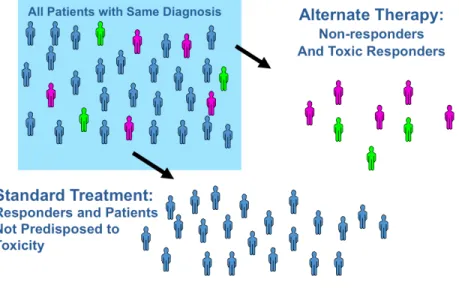
Pharmacogenomics is the science of identifying how specific human gene variations can be used to predict drug response in individual patients. Thus, by knowing genetic information, clinicians may be better able to predict drug response; including minimizing potentially toxic side effects and maximizing dosing effectiveness.8 Figure 1 illustrates these principles. The field is currently limited to about 28 non-oncololytic drug-gene associations, mostly regarding drug metabolism and adverse events.
Human Leukocyte Antigen Allele, HLA-B*1502
The HLA gene family codes for a group of proteins that make up the human leukocyte antigen complex. This complex acts within the immune system to distinguish the body’s own proteins from foreign proteins. HLA-B genes arespecifically located on the short arm of chromosome 6 (6p21.3). HLA-B genes code for proteins that distinguish intracellular antigens as self or foreign, non-self proteins. The HLA-B complex carries fragments of the foreign proteins to the surface of the cell, to flag for destruction by the immune system. Thus, triggering an immune response.9
Carbamazepine-induced SJS/TEN reactions are T cell-mediated, delayed-type drug hypersensitivity reactions. SJS/TEN lesions are induced by the migration of circulating skin-homing cytotoxic T lymphocytes that are activated, proliferate, and release
cytotoxic proteins to induce keratinocyte apoptosis. A direct interaction between HLA-B*1502 and carbamazepine has been shown to activate these cytotoxic T lymphocytes, leading to drug-induced SJS/TEN reactions.10
In the case of carbamazepine, SJS and TEN are significantly more common in patients with a particular HLA allele, HLA-B*1502. This allele occurs almost exclusively in patients with ancestry across broad areas of Asia, especially those of Han Chinese ancestry but also including South Asian Indians.11 Table 1 lists specific populations and calculated HLA-B*1502 allele frequencies.
Table 1: Population Frequency of HLA-B*150211
Continent Ethnicity Allele Frequency (%)
North America Asian 5.1
African 0.2
European 0
Hispanic 0
Asia Korean 0.5
Han Chinese 10.2
Singapore 11.6
Malay 8.4
Thai 6.1
Filipino 5.3
India Mumbai Marathas 1
India North Hindi 2
HLA-A*3101 has also been associated with carbamazepine hypersensitivities, including SJS/TEN, maculopapular exanthema (MPE), and DRESS (drug reactions with
eosinophilia and systemic symptoms). Of interest is that this allele is associated with a wider range of ethnicities, including, not only Han Chinese, but also those of Japanese, South Korean, and Caucasian descent. HLA-A*3101 more commonly leads to
subcutaneous skin reactions. Although when looking at specifically SJS/TEN, which are more severe subcutaneous skin reactions, HLA-B*1502 has a stronger association, thus why it is the focus of this study.11
In 2013, the Clinical Pharmacogenetics Implementation Consortium (CPIC), a group formed as a shared project between PharmGKB and the Pharmacogenomics Research Network, released guidelines to help clinicians understand how genetic test results should be used to optimize the use of carbamazepine in at-risk populations. Genetic tests for HLA-B*1502 are available through commercial lab testing companies, and patients with ancestry from areas in which this genotype is present should be screened for the allele before starting treatment for carbamazepine. CPIC guidelines recommend that if a patient tests positive, the treatment should not be started unless the expected benefit clearly outweighs the risk of these events ever developing from
carbamazepine.11
Currently, Mission Health does not have a policy to address the use of carbamazepine in regards to the 2007 FDA warning or the CPIC guidelines and recommendations. This project provides the data necessary to guide a protocol for pre-carbamazepine
genotype testing and/or developing a policy to offer alternative therapies at Mission Health to patients of Asian and Pacific Islander descent.
Methods
Study Design
The study was a retrospective chart review, in which pre-recorded data was collected from patient medical records to characterize the use of carbamazepine at Mission Health. Medical records were abstracted for eligible patients. This included both
inpatients Mission Hospital and ambulatory patients at Mission Neurology between 2008 and 2014 who were prescribed and administered carbamazepine and who were at least 18 years or older. Patients identified with at-risk genetic backgrounds, Asian or Pacific Islander, received further chart review. A secondary query was done for inpatients at Mission Hospital, which involved searching medical records for patients with ICD-9 codes associated with SJS/TEN reactions, 695.10, 695.12, 695.13, 695.14, 695.15, 695.19 and the administration of carbamazepine plus other medications associated with hypersensitivity responses.
The secondary query for SJS/TEN reactions included documentation of medications received during stay, as well as home medications. A manual review of drugs of interest was conducted, looking for drugs known to be associated with these reactions including: carbamazepine, oxcarbamazepine, phenytoin, abacavir, allopurinol,
amoxicillin/clavulanate, sulfamethoxazole/trimethoprim, efavirenz, hydralazine,
reasoning behind conducting the secondary query was to determine whether any identified cases of SJS/TEN occurred in a patient of Asian or Pacific Islander descent. Also, the sencondary query was meant to be hypothesis generating, leading to further studies regarding drug-induced incidences of SJS/TEN reactions at Mission Health. The Mission Health Institutional Review Board approved all study procedures. Mission Health, based in Asheville, NC is a large, community, not-for-profit health system, including 6 hospitals, numerous outpatient and surgery centers, home health providers, and the region’s only level II trauma center, Mission Hospital. Mission Hospital is a ~750 bed hospital, serving largely a rural and underserved population within 19 counties of Western North Carolina. Although this region is mainly European American (89.7% Caucasian), as a tourist town and retirement location, there is
potential for increased growth in the Asian population is predicted over the next several years. In addition, Western North Carolina has a growing Russian/Ukrainian population whose allele frequencies are largely unknown.
Study Outcomes
Queried data included the following clinical and demographic variables to characterize carbamazepine use: date of visit, date prescribed carbamazepine, clinic location, primary health insurance plan, race or ethnicity, sex, age, ICD9 diagnosis code, allergies, other medications, and ICD9 codes associated with adverse drug events. Reviewing medical records from Mission Neurology and Mission Hospital provided the assessment of the frequency with which carbamazepine is being used, the dose and the condition it is being used to treat; the frequency with which Asian patients (especially Han Chinese descent or Indian Asians) have been prescribed and/or discharged with carbamazepine; the frequency with which patients have been hospitalized for SJS or NET or similar cutaneous skin lesions that might be associated with “culprit” drug use (e.g. carbamazepine).
Results
At the ambulatory outpatient clinic, Mission Neurology, data was collected from
Table 2: Mission Neurology Carbamazepine Frequency of Prescribing
Race Frequency
Caucasian 165
American Indian 2
Asian 1
African American 1
Unknown 11
Total 180 patients
Table 3: Mission Hospital Carbamazepine Frequency of Prescribing
Race Frequency
Caucasian 1,823
African American 105
American Indian 17
Hispanic or Latino 5
Pacific Islander 4
Asian 4
Unknown 449
Total 2,407 patients
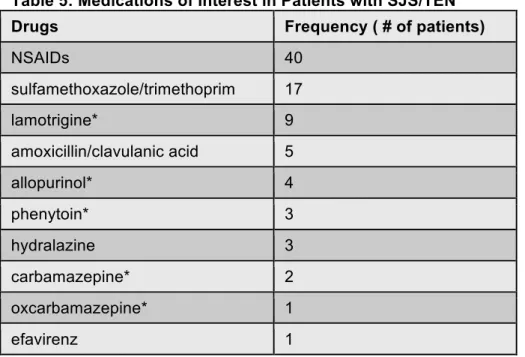
The secondary query demonstrated that between 2008 and 2014 at Mission Hospital, there were 72 incidences of erythema multiforme rash, SJS, or TEN, in 62 unique patients. Of these patients, 50 were Caucasian, 9 African American, 1 Hispanic, and 1 patient of unknown ancestry as seen in table 4. Table 5 details specific medications these patients were taking that are known to be associated with these reactions, some of which having known pharmacogenomics predictor value.
Table 4: Frequency of SJS/TEN
Race Frequency
Caucasian 50
African American 9
Hispanic 1
Unknown 1
Table 5: Medications of Interest in Patients with SJS/TEN Drugs Frequency ( # of patients)
NSAIDs 40
sulfamethoxazole/trimethoprim 17
lamotrigine* 9
amoxicillin/clavulanic acid 5
allopurinol* 4
phenytoin* 3
hydralazine 3
carbamazepine* 2
oxcarbamazepine* 1
efavirenz 1
*drugs with known pharmacogenomics predictors
Discussion
For safety and quality issues, it is paramount that Mission Hospital addresses the 2007 FDA Black Box Warning on Carbamazepine. The data from this study is helping to inform the development of practice policy to appropriately address the use of carbamazepine in genetically at-risk groups at Mission Health, those of Asian and Pacific Islander descent, thereby preventing the risk of serious adverse drug events. The results of this study demonstrate that at-risk patients have received carbamazepine at Mission Health between 2008 and 2014. Although, no incidences of SJS/TEN were seen in these patients, the genetic predisposition of the HLA-B*1502 allele to
carbamazepine-induced SJS/TEN in Han Chinese patients is the strongest
HLA-disease association reported thus far. Because at-risk patients have received the drug, a protocol should be implemented.6 This data will serve to support the consideration of a policy change at Mission Hospital. Currently a proposal to develop an electronic warning as an Alert Trigger, or “pop-up” in the electronic medical record when
carbamazepine (brand or generic) medication AND race = Asian OR Pacific Islander is being drafted. The warning message would suggest alternative medications for the genetically at-risk patient, or provide the clinician the ability to order the genetic test prior to drug use.
In this study, we also identified that 19% (n=449) of patients who received carbamazepine at Mission Hospital between 2008 and 2014 were missing race information in their medical record. This gap of information included patients that
refused to give race, as well as data that were just not collected. If we assume that one in five patients at Mission Hospital have unknown races at Mission Hospital, this is an area of considerable concern regarding patient safety in the light of the strung
would be a significant barrier to the implementation of clinical pharmacogenomics initiatives at Mission Health.
This study has several limitations. The sample size of at-risk patients is small. This study also is limited regionally, and the results cannot necessarily be applied to different areas or medical centers. Larger medical centers in more diverse areas may have more compelling reasons to address this population-specific adverse event. Nonetheless, this research project has provided the evidence to support a policy change at Mission
Health. In addition, as part of the study, a proposal was drafted for policy change, which is now being finalized through clinical pharmacists and submitted to Pharmacy and Therapeutics Committee at Mission Health.
This research study will directly lead to a proposal for practice change at Mission Health regarding the use of carbamazepine in high-risk populations, also generating further awareness related to the implementation of pharmacogenomics testing at Mission Health. This study also demonstrates that there is a large rate of SJS/TEN reactions in other populations at Mission Hospital, with 72 incidences between 2008 and 2014, and that there may be possible drug/pharmacogenomics implications. Future research is needed to address the biologic basis of these observations, their clinical impact, and what can be done to minimize these reactions.
References
1. United States Food and Drug Administration. Information for Healthcare Professionals: Dangerous or Even Fatal Skin Reactions – Carbamazepine. 2007, Rockville, MD.
2. Mehta, M, Sha, J, Hemavathi KG. Anticonvulsant hypersensitivity syndrome associated with carbamazepine administration: Case series. J Pharmacol Pharmacother. 2014, 5(1):59-62. 3. Block KM, Sills GJ, Pirmohamed M. Pharmacogenetics of antiepileptic drug-induced
hypersensitivity. Pharmacogenomics. 2014, 15(6):857-868.
4. O’Connor NR. FDA boxed warnings: how to prescribe drugs safely. Am Fam Physician. 2010, 81(3):298-303.
5. Hung SI, Chung WH, Jee SH, Chen WC, Chang YT, Lee WR, Hu SL, Wu MT, Chen GS, Wong TW, Hsiao PF, Chen WH, Shih HY, Fang WH, Wei CY, Lou YH, Huang YL, Lin JJ, Chen YT. Genetic Susceptibility to carbamazepine-induced cutaneous adverse reactions. Pharmacogenet Genomics. 2006, 48:1015-1018
6. LexiComp Online, Drug Index Lexi-Drugs Online, Hudson Ohio: Lexi-Comp, Inc; 2014 7. Harr T, French LE. Toxic epidermal necrolysis and Stevens-Johnson syndrome. Orphanet J
Rare Dis. 2010, 5:39.
8. Evans WE, Relling MV. Moving towards individualized medicine with pharmacogenomics. Nature. 2004, 429: 464-8.
9. Martin MA, Klein TE, Pirmohamed M, Haas DW, Kroetz DL, Clinical Pharmacogenetics Implementation Consortium. Clinical Pharmacogenetics CoImplementation Consortium guidelines for HLA-B geneotype and abacavir dosing. Clin Pharmacol Ther. 2012, 91: 734-8. 10. Wei CY, Chung WH, Huang HW, Chen YT, Hung SL. Direct interaction between HLA-B and
carbamazepine activates T cells in patients with Stevens-Johnson syndrome. J Allergy Clin Immunol. 2012, 129(6): 1562-9.