Longitudinal Stability of Optical Coherence Tomography Measures of Peripapillary Retinal Nerve Fiber Layer Thickness, Macular Thickness, and
Macular Volume in Control and Glaucomatous Eyes of Children
By
Dana M. Hornbeak
A Master’s Paper submitted to the faculty of the University of North Carolina at Chapel Hill
In partial fulfillment of the requirements for the degree of Master of Public Health in
the Public Health Leadership Program.
Chapel Hill June 2008
______________________________________ Advisor
______________________________________ Second Reader
MANUSCRIPT:
(Submitted for publication to the British Journal of Ophthalmology in June 2008) ABSTRACT:
Background/Aims:
To document baseline and longitudinal values for peripapillary retinal nerve fiber layer (RNFL) thickness, macular thickness, and macular volume as measured by optical coherence
tomography(OCT) in glaucomatous and control eyes of children, followed prospectively for a mean of 2.4 years (range 0.5-5.3 years).
Methods:
OCT measurements (Fast RNFL 3.4 Thickness, Fast RNFL Map, and Fast Macular Thickness Map protocols; StratusOCT, Carl-Zeiss-Meditech, Dublin,CA) were obtained at baseline and on follow-up in 27 control and 19 glaucoma participants at the Duke University Eye Center
Pediatric Clinic. Longitudinal changes were compared between groups with a two-sample-t-test and multiple linear regression analysis of covariance model adjusting for age, race, and baseline refractive error.
Results:
Eyes with glaucoma exhibited reduced baseline macular thickness, macular volume, and RNFL thickness, and increased myopia, compared to control eyes (eg. macular volume 6.54 vs. 7.03 mm3, p=0.006; RNFL 3.4 thickness 87.8 vs. 110.6µm, p=0.02). All OCT parameters studied showed minimal change over time, and rates of change were similar between groups.
Conclusion:
INTRODUCTION:
Pediatric glaucoma causes an estimated 9.5-10.8% of childhood visual impairment.[1, 2] If treated surgically and/or medically at an appropriately early stage, juvenile glaucoma’s negative effects can be lessened substantially. If untreated, glaucoma can result in irreversible blindness. Thus objective, sensitive ocular measurements are extremely valuable for early diagnosis, treatment, and measurement of disease progression in children with glaucoma.
Optical Coherence Tomography (OCT), a rapid, non-invasive imaging technique, has been studied extensively in adult eyes with glaucoma and to a lesser extent in children. It has been shown to have high inter-operator reproducibility,[3] reliably distinguish glaucomatous eyes from normals,[4] match the diagnostic efficacy of ONH stereophotography in early glaucoma,[5] have high sensitivity and specificity in measuring RNFL thickness,[6] predict future glaucomatous change,[7] and provide earlier detection of glaucomatous damage.[8] Baseline OCT and refractive error measurements have been studied in adult[7, 9] and
pediatric[10, 11] glaucoma patients; longitudinal progression of OCT measurements[7, 12, 13] has been examined only in adults. Baseline cross-sectional studies in adults have shown a correlation between glaucoma and decreased baseline RNFL, macular thickness, and macular volume;[6, 9, 14] between increased myopia and decreased RNFL thickness[15] and between baseline RNFL thinning and future glaucomatous change.[7] In children, glaucoma has been correlated with reduced baseline macular thickness and macular volume, increased myopia, and reduced RNFL thickness, particularly in the inferior quadrant.[10, 11, 16] Longitudinal OCT monitoring in adults has shown either no difference,[12] or a slightly greater rate of RNFL thickness reduction,[13] in glaucomatous vs. control eyes in adults over time. OCT
Caucasian individuals; thinner RNFL in Caucasian than Hispanic or Asian individuals;[18] and decreased RNFL thickness with increased age, axial length, and myopia.[18, 19] Most studies in adults, and all studies in children, have been cross-sectional. Prospective longitudinal OCT measurements have not been studied in children, nor has the longitudinal relationship between pediatric glaucoma and RNFL thinning been examined.
We conducted a 6-year prospective study of 46 children aged 2 to 16 years old recruited from a pediatric ophthalmology clinic at a large academic medical center. Our objective was to document longitudinal changes in OCT measurements of peripapillary RNFL thickness, macular thickness, and macular volume in glaucomatous vs. control eyes of children.
MATERIALS AND METHODS:
Study Participants:
OCT measurements were completed in both eyes of 21 control participants, 6 participants with uniocular glaucoma (whose normal eyes were included in the control group), and 19
study was approved by the Duke University Medical Center Institutional Review Board; informed consent was obtained from the legal guardian of each child before study enrollment. Measures:
OCT protocols performed included Fast RNFL 3.4 Thickness, Fast RNFL Map, and Fast Macular Thickness Map.(Figure 1) Measurements were obtained at baseline and at one to four clinically-indicated visits for glaucoma or routine eye care during a mean 2.4 years of follow-up (range 0.5-5.3 years); demographic data and refractive error measurements were also recorded. The baseline and most recent measurements from the right eye of normal and bilateral glaucoma participants, and from the normal eye of uniocular glaucoma participants, were used for analysis. To account for unequal lengths of follow-up, and to provide a clinical context for each patient’s progression, outcomes were expressed as rates: percent change per year (of each eye’s baseline value) and absolute change per year. Three OCT machines were used (Stratus OCT, Carl-Zeiss-Meditech, Dublin, CA); they are located in the Duke University Eye Center Photography Department and are frequently calibrated by the Department to minimize variability. Analysis:
First the unadjusted outcomes [absolute and percent change per year in average RNFL 3.4 thickness (µm), RNFL inner- and outer-ring thickness (µm), macular inner- and outer-ring thickness (µm), and macular volume (mm3)] were compared between glaucomatous and control eyes, using a two-sample t-test. A multiple linear regression analysis of covariance (ANCOVA) model was then constructed for each outcome, adjusted for age (years), parent-reported race (white/black/other), and baseline refractive error (spherical equivalents).
To determine whether OCT parameters were affected by length of follow-up, Pearson’s correlation coefficients were calculated between each outcome and follow-up time within the regression model. To determine whether RNFL thickness was correlated with baseline refractive error as has been observed previously in adults,[15] a Pearson’s correlation coefficient was calculated between these two values within the regression model.
RESULTS:
Of the study’s 27 control participants, 6 (22%) had glaucoma in the other eye, 18 (67%) had large cups, and 3 (11%) had small cups. Of the study’s 19 participants with glaucoma, 13 (69%) had juvenile open-angle glaucoma (JOAG), 5 (26%) had congenital glaucoma, and 1 (5%) had secondary pseudophakic glaucoma. All patients with glaucoma have been clinically stable during follow-up, established by optic nerve examination and visual field testing when possible.
Mean age at baseline was 10.5 and 8.9 years for the glaucoma and control groups,
FIGURE 1.
TABLE 1.
Participant characteristics: control and glaucomatous eyes (1 eye/participant)
Control Glaucoma p-value
Number of participants (n) 27 19
Mean age at baseline (years) (95% CI)
8.9 (7.8,10.0)
10.5 (9.0, 12.0)
0.07 Mean follow-up (years)
(95% CI)
2.5 (2.04, 2.92)
2.3 (1.65, 2.98)
0.67
Gender (male:female %) 44:56 42:58 0.88
TABLE 2.
Mean and 95% confidence interval of baseline ocular parameters: control and glaucomatous eyes
Baseline ocular parameter Control Glaucoma p-value
Mean peripapillary RNFL thickness [µm, Fast RNFL 3.4 Thickness]
110.6 (104.0, 117.2) (n=15) 87.8 (60.1, 115.4) (n=7) 0.02
Mean RNFL Thickness, Inner Ring [µm, Fast RNFL Map]
89.2 (78.4, 99.9) (n=11) 81.3 (67.5, 95.1) (n=14) 0.36
Mean RNFL Thickness, Outer Ring [µm, Fast RNFL Map]
69.3 (59.5, 79.1) (n=11) 62.6 (50.2, 75.0) (n=13) 0.38
Mean macular thickness, Inner Ring [µm, Fast Macular Thickness Map]
271.2 (263.2, 279.2) (n=27) 257.8 (247.1, 268.4) (n=19) 0.04
Mean macular thickness, Outer Ring [µm, Fast Macular Thickness Map]
243.2 (235.2, 251.3) (n=27) 225.3 (215.1, 235.5) (n=19) 0.006
Mean macular volume
[mm3, Fast Macular Thickness Map]
7.03 (6.81, 7.25) (n=27) 6.54 (6.27, 6.82) (n=19) 0.006
Mean refractive error [spherical equivalents] -0.10 (-0.78, 0.57) (n=27) -1.51 (-2.21, -0.81) (n=19) 0.006
n=number of participants (1 eye/participant) for each OCT scan protocol.
During a mean 2.4 years of follow-up, the six OCT parameters changed little, and rates of change between glaucomatous and control eyes were similar.(Table 3) Age was significantly correlated with baseline refractive error (correlation coefficient -0.32, p = 0.03), so the
TABLE 3.
Adjusted mean and range of OCT changes in control and glaucomatous eyes during a mean 2.4 years of follow-up (ANCOVA regression model, adjusted for age, race, and baseline refractive error)
Adjusted OCT parameter
Absolute change (µm) per year (95% CI)
Percent change per year from baseline
(95% CI)
p-value*
Control Glaucoma Control Glaucoma Mean peripapillary RNFL
thickness [µm, Fast RNFL 3.4 Thickness]
-0.4 (-3.5, 2.7) (n=14) 4.3 (-0.3, 8.9) (n=7) -0.1 (-3.3, 3.0) (n=14) 3.5 (-1.2, 8.2) (n=7) 0.25
Mean RNFL Thickness, Inner Ring [µm, Fast RNFL Map] 2.6 (-1.4, 6.6) (n=11) 0.03 (-3.6, 3.6) (n=13) 3.4 (-2.1, 9.0) (n=11) 0.2 (-4.8, 5.2) (n=13) 0.47
Mean RNFL Thickness, Outer Ring [µm, Fast RNFL Map] 2.4 (-3.3, 8.1) (n=11) -2.3 (-7.7, 3.0) (n=12) 5.3 (-3.8, 14.5) (n=11) -1.0 (-9.7, 7.6) (n=12) 0.39
Mean macular thickness, Inner Ring [µm, Fast Macular Thickness Map]
1.4 (-0.9, 3.6) (n=27) 0.7 (-2.1, 3.5) (n=18) 0.5 (-0.4, 1.4) (n=27) 0.3 (-0.8, 1.3) (n=18) 0.73
Mean macular thickness, Outer Ring [µm, Fast Macular Thickness Map]
-0.4 (-1.8, 0.9) (n=27) 1.7 (-0.05, 3.4) (n=18) -0.2 (-0.7, 0.4) (n=27) 0.7 (-0.02, 1.4) (n=18) 0.08
Mean macular volume [mm3, Fast Macular Thickness Map] -0.02 (-0.06, 0.03) (n=27) 0.05 (-0.004, 0.1) (n=18) -0.2 (-0.8, 0.4) (n=27) 0.7 (-0.1, 1.5) (n=18) 0.10
n=number of participants (1 eye/participant) for each OCT scan protocol.
* p-value for difference between glaucomatous and control eyes, in percent change per year from each eye’s baseline.
DISCUSSION:
In this prospective study of children aged 2 to 16 with glaucoma, glaucomatous eyes exhibited reduced baseline RNFL thickness, macular thickness, and macular volume, and increased baseline myopia, compared to control eyes. During a mean 2.4 years of follow-up, OCT measurements in control and glaucomatous eyes changed minimally. Annual changes ranged from -0.4µm/year (for macular outer-ring thickness) to 4.3µm/year (for average RNFL 3.4 thickness), clinically modest amounts in the context of OCT’s intra-eye variability of 3.14µm for Fast Macular Thickness protocol and 2.68µm for Fast RNFL 3.4 Thickness protocol.[3] To our knowledge, this is the first study to prospectively analyze longitudinal changes in OCT measurements of peripapillary RNFL thickness, macular thickness, and macular volume in children with and without glaucoma.
The rates of change for the six OCT parameters were similar between control and glaucomatous eyes, adjusted for age, race, and baseline refractive error. There was also no correlation between change in OCT parameters and length of follow-up (i.e. participants with long and short follow-up showed similar rates of change). Furthermore, since the expected axial length increase in children older than 10 years is 0.4-0.5mm over 8 years (10-18 years old),[20] and average RNFL thickness decreases by 2.2µm for every 1mm increase in axial length,[18, 21] adolescent axial length increase would be expected to account for no more than about 1.1 µm decrease in OCT measurements of average RNFL thickness over 8 years.
decreased baseline RNFL thickness in our population was not predictive of future RNFL thinning. There are several potential explanations for our findings.
The limited length of time between baseline and subsequent OCT measurements in our study might be insufficient to detect ongoing glaucomatous changes in OCT parameters such as RNFL and macular thickness. Second, the present study included eyes of children whose glaucoma was clinically stable; the stable OCT measurements in these eyes would seem to confirm the clinical impression of disease control over the study period. Third, and likely most important, the limited number of eyes in the present study limits its power to detect small differences between study groups. Additionally, many eyes in the control group had been referred to our practice as glaucoma suspects based upon optic nerve cups, biasing the study toward more similarity between glaucoma and control groups than otherwise might be observed. Furthermore, many children with severe glaucoma could not be included in the study because of media opacities or poor fixation. These eyes with severe glaucoma might have demonstrated higher rates of decline in OCT parameters than the stable glaucomatous eyes included in the study. This is particularly important given the potentially proportional relationship between disease progression and ocular changes, as has been shown with macular volume.[18]
There are several additional limitations to the present study. The patients attending the Duke University Eye Center, a research-focused tertiary care center, may not be representative of the general population, thus reducing generalizability of results. Data were collected as part of normal clinic visits, so participants, clinicians, and data collectors were unmasked. Baseline and repeat OCT measurements were completed by different operators, introducing potential
The present study has examined longitudinal changes in OCT measurements of peripapillary RNFL thickness, macular thickness, and macular volume in children with and without glaucoma. While confirming previously reported baseline differences between
glaucomatous and control eyes in children,[10, 11] we found that longitudinal OCT parameters were essentially stable in both groups, with similar, minimal rates of change over a relatively short time period. Despite its limitations, our findings support continued study of OCT as an easily performed clinical adjunct in the evaluation and management of children with glaucoma.
ACKNOWLEDGEMENTS:
Many thanks to Margaret Gourlay, MD, MPH and Thelma Mielenz, PhD for their statistical and editing expertise (also see page 36).
FUNDING:
This study was funded by the Duke Ophthalmology Department and by a Research-to-Prevent-Blindness grant.
REFERENCES:
1. Robaei D, Huynh SC, Kifley A, Mitchell P. Correctable and non-correctable visual impairment in a population-based sample of 12-year-old Australian children. Am J Ophthalmol 2006;142:112-118.
2. Haddad MA, Sei M, Sampaio MW, Kara-Jose N. Causes of visual impairment in children: a study of 3,210 cases. J Pediatr Ophthalmol Strabismus 2007;44:232-40. 3. Paunescu LA, Schuman JS, Price LL, Stark PC, Beaton S, Ishikawa H, et al.
4. Leung CK, Chan WM, Yung WH, et al., Comparison of macular and peripapillary measurements for the detection of glaucoma: an optical coherence tomography study. Ophthalmology. 2005;112:391-400.
5. Badala F, Nouri-Mahdavi K, Raoof DA, Leeprechanon N, Law SK, Caprioli J. Optic disk and nerve fiber layer imaging to detect glaucoma. Am J Ophthalmol. 2007;144:724-732.
6. Liu X, Ling Y, Luo R, Ge J, Zheng X. Optical coherence tomography in measuring retinal nerve fiber layer thickness in normal subjects and patients with open-angle glaucoma. Chin Med J (Engl). 2001;114:524-529.
7. Lalezary M, Medeiros FA, Weinreb RN, et al. Baseline optical coherence tomography predicts the development of glaucomatous change in glaucoma suspects. Am J
Ophthalmol. 2006;142:576-582.
8. Jonas JB, Grundler AE. Correlation between mean visual field loss and morphometric optic disk variables in the open-angle glaucomas. Am J Ophthalmol. 1997;124:488-497. 9. Guedes V, Schuman JS, Hertzmark E, et al. Optical coherence tomography
measurement of macular and nerve fiber layer thickness in normal and glaucomatous human eyes. Ophthalmology. 2003;110:177-189.
10.Hess DB, Asrani SG, Bhide MG, Enyedi LB, Stinnett SS, Freedman SF. Macular and retinal nerve fiber layer analysis of normal and glaucomatous eyes in children using optical coherence tomography. Am J Ophthalmol. 2005;139:509-517.
11.Mrugacz M, Bakunowicz-Lazarczyk A. Optical coherence tomography measurement of the retinal nerve fiber layer in normal and juvenile glaucomatous eyes.
12.Wollstein G, Schuman JS, Price LL, et al. Optical coherence tomography longitudinal evaluation of retinal nerve fiber layer thickness in glaucoma. Arch Ophthalmol. 2005;123:464-470.
13. Tsai JC, Lin PW, Teng MC, Lai IC. Longitudinal changes in retinal nerve fiber layer thickness after acute primary angle closure measured with optical coherence
tomography. Invest Ophthalmol Vis Sci. 2007;48:1659-1664.
14.Lederer DE, Schuman JS, Hertzmark E, et al. Analysis of macular volume in normal and glaucomatous eyes using optical coherence tomography. Am J Ophthalmol. 2003;135:838-843.
15.Leung CK, Mohamed S, Leung KS, et al. Retinal nerve fiber layer measurements in myopia: An optical coherence tomography study. Invest Ophthalmol Vis Sci.
2006;47:5171-5176.
16.Quinn GE, Berlin JA, Young TL, Ziylan S, Stone RA. Association of intraocular pressure and myopia in children. Ophthalmology. 1995;102:180-185.
17.Asefzadeh B, Cavallerano AA, Fisch BM. Racial differences in macular thickness in healthy eyes. Optom Vis Sci. 2007;84:941-945.
18.Budenz DL, Anderson DR, Varma R, et al. Determinants of normal retinal nerve fiber layer thickness measured by Stratus OCT. Ophthalmology. 2007;114:1046-1052. 19.Salchow DJ, Oleynikov YS, Chiang MF, et al. Retinal nerve fiber layer thickness in
normal children measured with optical coherence tomography. Ophthalmology. 2006;113:786-791.
21.Huynh SC, Wang XY, Rochtchina E, Mitchell P. Peripapillary retinal nerve fiber layer thickness in a population of 6-year-old children: findings by optical coherence
NON-MANUSCRIPT ADDENDA, UNC MPH THESIS:
Research Question:
Do children with glaucoma exhibit greater changes in peripapillary RNFL thickness, macular thickness, and macular volume [as measured by Optical Coherence Tomography (OCT)] compared to non-glaucomatous children during a mean 2.4 years of follow-up?
Hypothesis:
We expect OCT measurements of ocular parameters to reflect those in the adult population: that is, to show an association between glaucoma and reduced baseline and longitudinal RNFL thickness, reduced baseline and longitudinal macular volume, and greater baseline refractive error. Thus we hypothesize that our study’s participants with glaucoma will have lower baseline RNFL thickness, macular inner- and outer-ring thicknesses, and macular volume, and higher baseline refractive error, than control participants. During follow-up, we expect glaucomatous eyes to exhibit greater decreases in peripapillary retinal nerve fiber layer (RNFL) thickness, inner- and outer-ring retinal thicknesses, inner- and outer-ring macular thicknesses, and macular volume than control participants.
Addendum to Abstract (see page 1):
Background/Aims:
management to prevent retinal thinning in children with glaucoma, or the limitations of the study’s small sample size.
Addendum to Introduction (see page 2):
Burden of Disease:
Glaucoma is the leading cause of preventable blindness in the United States, and the second leading cause of bilateral blindness in the world. 1, 2 One form of the disease, pediatric glaucoma, causes an estimated 9.5%-10.8% of childhood visual impairment 3, 4
and occurs as congenital glaucoma or juvenile open-angle glaucoma (JOAG), or can be secondary to syndrome complexes, medications, chemical and physical trauma, cataract surgery and pseudophakia, or other ocular pathologies.
High intraocular pressure can permanently damage the optic nerve, and can distend and thin the cornea and sclera.5, 6 Due to more elastic ocular collagen, corneal and scleral thinning are even more pronounced in children younger than 3 years of age, making early diagnosis even more important in these children. 40% of patients with infantile glaucoma have symptoms at birth, and 86% by 1 year of age;7 however, the age of medical diagnosis for children with later-onset JOAG ranges from birth until late childhood.
Disease Etiology:
The etiology of congenital and juvenile open-angle glaucoma, like adult glaucoma, remains unclear. These progressive conditions can be caused by abnormal fetal development of ocular angle structures, leading to impaired drainage of the aqueous fluid and elevated
these traits.8 Mutations in genes affecting angle development, such as in CYP1B1 (a member of the cytochrome P450 superfamily of enzymes), have been correlated with the degree of angle dysgenesis, age of onset, and difficulty of achieving intraocular pressure control.8 In some populations, mutations in this gene accounted for 37.5-70% of primary congenital glaucoma cases.9-11
Pediatric glaucoma can also occur secondary to syndrome complexes, medications, chemical and physical trauma, cataract surgery and pseudophakia, or other ocular pathologies. A prime example of glaucoma within a syndrome complex is Sturge-Weber syndrome (also known as encephalotrigeminal angiomatosis), a rare congenital neurological and skin disorder caused by a cerebral arteriovenous malformation. Most often unilateral, it is associated with glaucoma, port-wine stains of the face, mental retardation, seizures, and leptomeningeal angioma. Many medications (eg. topical steroid eye drops) can reduce aqueous humor drainage and thereby cause ocular hypertension and raise an individual’s risk of developing glaucoma; infants and very young children are particularly sensitive to this pressure rise.12 Chemical or physical trauma can cause corneal inflammation, hemorrhage, or lens dislocation or rupture, all producing a secondary pressure increase. Cataract surgery in pediatric patients, with or without intraocular lens implant (pseudophakia and aphakia, respectively), is associated with glaucoma.13 In
particular, early surgery (at <9 months of age) has a 7.2-fold increased risk of glaucoma compared with later surgery (>9 months of age), a higher risk that continues for more than 10 years after cataract surgery.14 Other ocular pathologies such as tumors (eg. retinoblastoma), uveitis, iridocyclitis, or Coats’ Disease also can affect aqueous drainage and raise intraocular pressure. 15-17
The three most commonly used glaucoma diagnostic techniques are visual field testing, optic nerve head (ONH) stereophotography, and measurement of intraocular pressure (IOP) (see page 2). Visual field testing takes 7-10 minutes per eye and requires significant concentration from the patient, making it unreliable in young children and those with nystagmus; in addition, it only shows changes in advanced stages of the disease.18 ONH stereophotography (the gold standard in adults) has high inter-observer variability.19 IOP measurements are completed via applanation or indentation tonometry, can vary substantially within one day in the same patient, and provide no information about retinal thinning or optic nerve damage. In addition,
applanation measurements are dependent upon central corneal thickness (CCT),20 yielding IOP deviation up to 7 mm Hg from the true IOP for every 100-µm variation in CCT from the normal CCT of 520 µm for which the tonometer is calibrated.20, 21 This biases toward glaucoma
overdiagosis in patients with thicker CCT, and underdiagnosis of patients with thinner CCT. In addition to the above three modalities, several imaging techniques have emerged for evaluating and managing glaucoma, including optical coherence tomography (OCT), Heidelberg retinal tomography, and scanning laser polarimetry. Since its introduction into adult and
pediatric clinical practice in the past two decades,22 OCT has rapidly become a valuable tool for providing high-resolution cross-sectional tomographic images of the ocular microstructure (see page 2).
used independently and/or in conjunction with other ophthalmic diagnostic technologies such as stereoscopic fundus photography, visual field testing, static automated pachymetry (SAP), and biomicroscopy.24-26 Other ophthalmic variations of traditional OCT technology include the OCT ophthalmoscope for en face OCT images of retinal diseases,27 and anterior segment OCT for evaluation of the cornea and anterior segment before and after lamellar transplantation surgery.28 OCT is also used in non-ophthalmic tissue imaging requiring micrometer resolution and
millimeter penetration depth: for example, hard and soft dental tissues;29 skin layers in inflammatory dermatologic disorders such as contact dermatitis and psoriasis;30 and preneoplastic lesions and epithelial changes in the esophagus, esophagogastric junction, duodenum, colon, and pancreatico-biliary ductal system.31 Currently it is also being investigated for use in imaging allergic and infectious changes in nasal mucosa;32 proximal airway microstructure changes in adult respiratory diseases;33 normal and pathologic features of the pediatric airway;34 and features of atherosclerotic plaques that predict plaque rupture, including fibrous cap thickness, lipid core size, and percentage of lipid content.35, 36 Outside medicine, OCT is used in art conservation projects to non-invasively analyze different layers of underdrawings in museum paintings.37
Despite the promise of OCT as a useful adjunct in the clinical management of glaucoma, several potential problems exist. These include variable reproducibility of measurements
depending on quadrant measured,38 variable inter-individual reproducibility depending on protocol applied,22
imaging may fail to identify true positives or may falsely identify glaucoma and its progression; thus clinicians should not make treatment decisions based on the results of a single test or technology. Due to OCT’s relatively recent introduction into clinical practice, the efficacy of OCT in monitoring long-term disease progression has not been thoroughly demonstrated. In addition, although OCT has shown to be an extremely safe, noninvasive imaging modality, there may be unforeseen adverse consequences of multiple ocular exposures to ultrasound over time; such consequences may only become apparent after several decades of routine OCT use. Glaucoma Treatment:
Treatment for pediatric glaucoma can be medical and/or surgical, with medications (typically given as eye drops) usually tried before surgery. The objective of most medications is to decrease intraocular pressure, the only treatment that has been proven effective in preventing the onset or progression of glaucoma.41 Medications achieve IOP reduction either by reducing aqueous humor production or increasing uveoscleral or transcanalicular aqueous humor outflow. The vast majority of medication data are from adult studies, and almost all of the drugs are not officially licensed for use in children,42 nor do they have pediatric safety labeling information.43 However, most topical drugs have shown to be safe and well-tolerated in children. These drugs include beta-blockers (eg. timolol), adrenergic α2-receptor agonists, and carbonic anhydrase inhibitors (e. acetazolamide), which inhibit aqueous humor formation; prostaglandin analogs (eg. latanoprost) and adrenergic a1-receptor antagonists, which increase uveoscleral aqueous humor outflow; and miotics (eg. pilocarpine), which increase transcanalicular aqueous humor
The impact of IOP reduction (via IOP-lowering medication) on RNFL thickness in newly-diagnosed adult glaucomatous patients has been equivocal, varying from no effect to a significant protective effect on RNFL thickness.47, 48 The relationship between IOP reduction by different ophthalmic medications and degree of RNFL thinning has been examined in adults, with brimonidine appearing to have a more protective effect on RNFL thickness compared to timolol.49 Studies have differed in their findings of the effect of IOP reduction on optic nerve topography, showing that IOP reduction either has no effect on optic nerve topography
changes,50 or that it moderately increases optic rim area and reduces optic cup area, cup volume, and cup-to-disk ratio.51
In addition to established glaucoma medications, novel classes are currently under
investigation. For example, selective Rho-associated coiled coil-forming protein kinase (ROCK) inhibitors, are the first medications to act directly on the trabecular meshwork; these medications inhibit formation of actin stress fibers and focal adhesions, thereby improving aqueous outflow.45 A forefront example is the ophthalmic solution SNJ-1656, currently in its Phase 1 clinical trial. This medication has demonstrated effective reduction of intraocular pressure, but is associated with post-instillation hyperemia of the bulbar and palpebral conjunctiva,45 which may limit its use in both adults and children.
If intraocular hypertension is unresponsive to medical therapy, it can cause increased retinal thinning and necessitate surgical treatment. First-line procedures usually include trabeculotomy (surgical opening of the canal of Schlemm to treat glaucoma), trabeculectomy (removal of part of the trabecular meshwork to relieve high intraocular pressure), or
combined trabeculotomy-trabecolectomy, which has shown efficacy in reducing intraocular pressure in surgery-naïve patients;53 and viscotrabeculotomy (use of viscoelastic materials during trabeculectomy), which has shown higher success rates than classical trabeculotomy due to its reduction of postoperative hemorrhage, adhesion of incision lips, or fibroblastic proliferation.54 Further surgical treatment can include implantation of an Ahmed glaucoma valve (New World Medical, Inc, Rancho Cucamonga, California, USA), which has been shown to reduce
intraocular pressure and number of necessary ophthalmic medications in patients with refractory pediatric glaucoma,55 and has shown long-term success (particularly when combined with glaucoma medications) in patients with uveitic glaucoma.56
Addendum to Materials and Methods (see page 4):
Measures:
To account for unequal lengths of follow-up between participants, and to address both statistical and clinical significance of OCT changes, outcomes were expressed as percent change per year (of each eye’s baseline value) in addition to absolute change per year. This provides a clinical context for each patient’s progression; for example, a thinning of 10µm is more clinically concerning in a patient with baseline RNFL thickness of 50µm than in a patient with baseline RNFL thickness of 120µm.
between glaucomatous and control participants; such a finding could have several implications, including a different etiologic mechanism for pediatric and adult glaucoma, an opportunity for medical management to halt glaucomatous damage, a limited sample size, bias toward similarity between control and glaucomatous participants, or longitudinal regression to the mean.
Analysis:
The inclusion of age, race, and baseline refractive error as covariates in the ANCOVA regression model was due to the known effect of these factors on OCT measurements (see page 2); it also results in a thorough yet parsimonious model, remaining consistent with the advised limitation of number of model parameters per study case.58
Addendum to Results (see page 8):
TABLE 4.
Unadjusted mean and range of OCT changes in control and glaucomatous eyes during a mean 2.4 years of follow-up (two-sample t-test)
Unadjusted OCT parameter
Absolute change (µm) per year (95% CI)
Percent change per year from baseline
(95% CI)
p-value*
Control Glaucoma Control Glaucoma Mean peripapillary RNFL
thickness [µm, Fast RNFL 3.4 Thickness]
-0.6 (-3.7, 2.5) (n=14) 4.7 (0.4, 9.1) (n=7) -0.3 (-3.3, 3.0) (n=14) 3.9 (-0.6, 8.5) (n=7) 0.15
Mean RNFL Thickness, Inner Ring [µm, Fast RNFL Map] 2.0 (-2.3, 6.2) (n=11) 2.1 (-1.7, 5.8) (n=14) 3.0 (-2.7, 8.6) (n=11) 2.5 (-2.5, 7.5) (n=14) 0.91
Mean RNFL Thickness, Outer Ring [µm, Fast RNFL Map] 0.7 (-4.5, 5.9) (n=11) -0.3 (-5.1, 4.5) (n=13) 2.2 (-5.9, 10.3) (n=11) 2.4 (-5.0, 9.8) (n=13) 0.97
Mean macular thickness, Inner Ring [µm, Fast Macular Thickness Map]
1.7 (-0.4, 3.7) (n=27) 0.3 (-2.2, 2.7) (n=19) 0.6 (-0.2, 1.4) (n=27) 0.1 (-0.8, 1.0) (n=19) 0.41
Mean macular thickness, Outer Ring [µm, Fast Macular Thickness Map]
0.1 (-1.2, 1.5) (n=27) 0.9 (-0.7, 2.5) (n=19) 0.1 (-0.5, 0.6) (n=27) 0.4 (-0.3, 1.1) (n=19) 0.49
Thickness Map] (n=27) (n=19) (n=27) (n=19)
n=number of participants (1 eye/participant) for each OCT scan protocol.
* p-value for difference between glaucomatous and control eyes, in percent change per year from each eye’s baseline.
Methods for Systematic Review of the Literature:
We searched the MEDLINE/PubMed database (August 1983 to May 2008) using the following search terms: “childhood blindness U.S.” and “congenital glaucoma prevalence” for articles on congenital glaucoma’s burden of disease; “congenital glaucoma retina,” “congenital glaucoma refractive error,” and “infantile glaucoma” for articles on baseline ocular
characteristics of pediatric glaucoma patients; “glaucoma optical coherence tomography,” “congenital glaucoma diagnosis,” and “glaucoma diagnosis retinal thickness” for articles on congenital glaucoma diagnosis; “glaucoma treatment,” “congenital glaucoma treatment,”
“congenital glaucoma treatment trabeculectomy,” “congenital glaucoma medication,” “glaucoma medication,” and “glaucoma drugs” for articles on medical and surgical management of
glaucoma; “glaucoma progression retinal thickness,” “glaucoma progression macular thickness,” “congenital glaucoma outcome,” “glaucoma progression optical coherence tomography,” and “RNFL decrease OCT” for articles on longitudinal glaucoma progression; “intraocular pressure
medications retinal thickness,” “intraocular pressure retinal thickness,” “glaucoma retinal nerve fiber layer thickness,” “glaucoma macular thickness,” and “glaucoma retinal thickness OCT” for articles on the relationship between glaucoma and baseline RNFL and macular thickness;
safety,” and “optical coherence tomography risk” for articles on potential problems with OCT technology; “secondary glaucoma children” and “secondary glaucoma children medication” for articles on the etiology of non-congenital glaucoma in children; “congenital glaucoma corneal thickness” for articles on the effect of glaucoma on corneal and scleral thickness; “congenital glaucoma gene” for articles on the molecular etiologies of glaucoma; “pediatric spherical equivalent change” for articles on eye development over time; “race retinal thickness”, “age retinal thickness”, and “refractive error retinal thickness” for articles on the influence of participant characteristics (covariates) on retinal thickness.
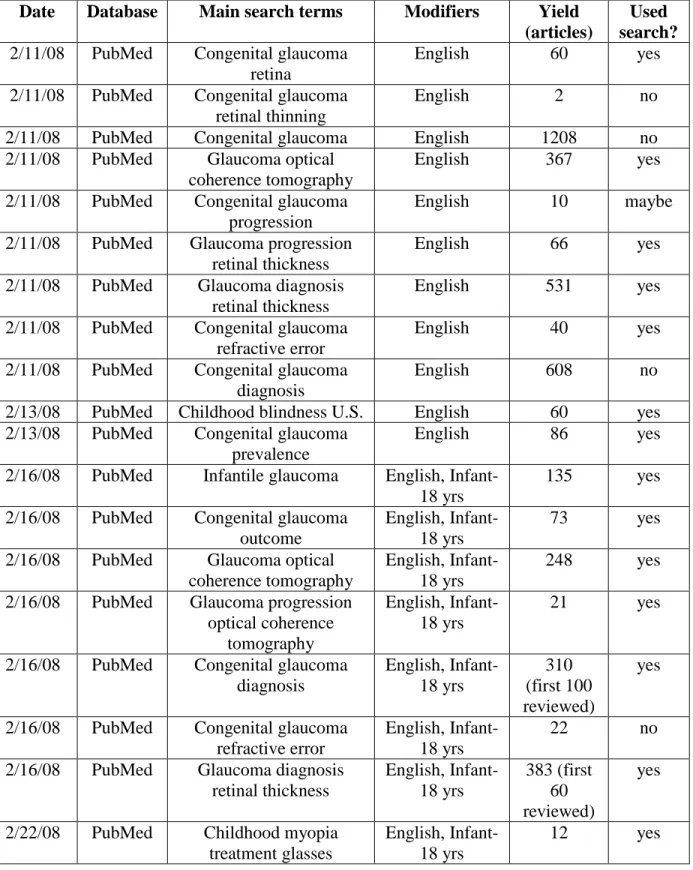
We reviewed abstracts for citations in peer-reviewed journals, using the limits of age (Infant-18 years old), language (English), and subjects (human) for the majority of searches; for the OCT-problems, OCT-uses, OCT-accuracy, and some of the longitudinal OCT-parameters searches, no limits were applied. For a detailed list of systematic search terms and limits, please refer to Table 5 in the Appendix. We excluded the following: studies of insufficient length to assess change in ocular outcomes (two months or less), studies that did not adjust for
confounding variables (age, race), studies that did not include follow-up measures, and studies with a lack of glaucoma-related ocular outcomes. Due to the small number of studies on pediatric ophthalmology patients, we considered all study designs except case reports and case series, and included articles with adult ophthalmology patients. We then used a checklist,
modified from two established quality assessment guidelines,59, 60 to evaluate the internal validity of scientific studies, systematic reviews, and meta-analyses that met the eligibility criteria. For evidence grading checklist, please see Table 6 in the Appendix.
axial length and retinal thickness, 2 articles including OCT reproducibility data, 1 article on ROCK inhibitors, 3 articles on translaminal pressure and glaucoma, 1 article on modeling and variable selection in epidemiologic analysis, 1 article including images of OCT reports, and 2 articles on quality assessment guidelines.
Addendum to Discussion (see page 9):
Limitations:
The present study has limited generalizability due to the tertiary-care, clinically complex patient population attending the Duke Eye Center, as discussed previously (see page 10). In addition, it may be limited by selection bias, necessitating a discussion of the participant selection process. Participants with glaucoma were selected sequentially; every patient with glaucoma between 2002 and 2006 who was able to fixate and had no media opacities was included in the study. Control participants with large physiologic cups or uniocular glaucoma were also selected sequentially. All control participants with normal cups were approached to participate in the study, and were included if they were willing to receive baseline and repeat OCT scans. Since the Clinic sees relatively few patients with normal cups, and since selection largely depended upon the guardians’ willingness to allow their children to participate, these participants constitute somewhat of a “convenience sample.” This could reduce the
generalizability of the study findings, although this limitation is likely small considering that the control group only contained 3 participants (11% of group) with normal cups (see page 5).
medications, and thus the effect of specific medications on retinal thinning was not evaluated. Confocal scanning laser tomography was not completed in participants, so baseline and
longitudinal changes in optic nerve topography could not be reported. There were no previous studies of longitudinal change in macular thickness and macular volume, so we could not determine whether our findings were consistent with previously observed results.
Specific to longitudinal studies of OCT measurements, it is important to consider both glaucomatous thinning and normal age-related eye growth. Potential effects of the latter must be discerned from the former, through inclusion of age in regression analysis (see page 7), through demonstration of independence between outcome and follow-up time (see page 8), and/or
through interpreting the results in the context of normal pediatric axial length increases (see page 9).
Increased axial length has been shown to be correlated with increased foveal thickness (in the central retina) and decreased parafoveal thickness;61, 62 these trends are present in both
Caucasian and African American individuals, although they are more prominent in the latter, for unknown reasons.63 Thus it is not entirely surprising for our study to show a longitudinal increase in macular volume and macular inner-ring thickness in participants with increased refractive error (and presumably increased axial length) at baseline, i.e. in our study population’s participants with glaucoma (see page 8).
Broader Implications:
nerve damage, and that intraocular hypertension, retinal thinning, and increased refractive error are signs independently associated with this insult; this definition has led to the use of the phrase “optic neuropathy” to describe glaucoma, and helps explain why glaucoma occurs across the entire spectrum of intraocular pressure and often progresses despite normalization of IOP.64 This hypothesis would account for the baseline differences in RNFL and macular thickness, macular volume, and refractive error seen between control and glaucomatous individuals in our study. The lack of change in OCT parameters over time in our study counter this hypothesis, as an initial optic nerve insult would be expected to result in decreased OCT values in
glaucomatous participants despite attainment of intraocular pressure control; however, since average follow-up was relatively short (2.4 years), it is difficult to say that a difference would not have been observed if the sample were followed for a longer time period.
A second hypothesis, illustrated in a recent population-based case-control study, demonstrates a “tipping point” or paradigm shift in our understanding of glaucoma.64
The study showed that cerebrospinal fluid (CSF) pressure is significantly lower in patients with primary open-angle glaucoma, supporting the novel hypothesis that translaminal pressure difference – rather than absolute pressure values - may play an important role in the mechanism by which increased intraocular pressure causes optic nerve damage.65 The optic nerve is exposed to two different pressurized regions (intraocular space anteriorly, average IOP pressure 10-21 mmHg, and subarachnoid space posteriorly, average CSF pressure 5-15 mmHg), with the lamina cribrosa separating the two regions.66 If elevated, the pressure difference between them (the translaminar pressure difference) can cause optic nerve head swelling or optic nerve cupping: the former occurs when CSF pressure is elevated relative to IOP (eg. due to high CSF pressure in
Indeed, the study showed that IOP, CSF pressure, and translaminal pressure difference all correlate with cup-to-disc ratio.65 It is also suggested that the high translaminar pressure gradient disrupts retinal ganglion cell axoplasmic flow, leading to retinal ganglion cell apoptosis and visual loss.64 This is supported by the observed kinking of retinal ganglion cell axons as they pass through the lamina cribrosa in the setting of elevated translaminal pressure difference, and the observation of reduced axonal transport at the lamina cribrosa in glaucoma models.65 It is also supported by the thinning and posterior bowing of the lamina cribrosa observed in glaucomatous human eyes.69, 70 The importance of pressure differences, rather than absolute values, in glaucoma pathogenesis is further underscored by studies in rabbits, which have shown that peripheral nerves can withstand high absolute pressures of 3800 mmHg, but show reduced axonal transport in the presence of a pressure gradient of only 4.5 mmHg.71
Relating the above findings to our study, it is possible that the higher translaminal pressure difference seen in glaucoma – rather than the intraocular pressure alone – is the important factor in affecting the macula and retinal nerve fiber layer; this could account for the finding of lower baseline RNFL and macular thicknesses in glaucomatous than control
size was not large enough, and the follow-up period not long enough, to detect longitudinal differences between groups.
A third hypothesis reflects an even broader view: it is possible that retinal thinning, refractive error, and elevated IOP are all downstream manifestations of a common disease process involving innate differences in connective tissue makeup between glaucomatous and non-glaucomatous individuals. Such differences suppose the ocular (and perhaps subarachnoid) connective tissue of the former to be more readily deformable than that of the latter. This upstream mechanism could account for our study’s findings as well as for the aforementioned lower CSF pressure, elevated rates of myopia, lower central corneal thickness (CCT), and lower corneal hysteresis observed in glaucoma.
The reasoning behind this hypothesis is as follows. Corneal hysteresis is determined by the viscoelastic properties of the corneoscleral shell and thus is a useful indicator of the
biomechanical properties of the eye; lower values are associated with more easily deformable corneoscleral coats, and have been reported to be associated with higher risk of glaucoma progression.72 A recent study in Chinese schoolchildren also showed a significant correlation between lower corneal hysteresis and longer axial length;73 the mean corneal hysteresis observed in the study was significantly lower than that previously reported in Caucasian children.74 This finding could help explain the higher prevalence and faster progression of myopia in Asian children than Caucasian children, since increased axial length is a major determinant of myopia development. It also could explain the observed association between myopia and glaucoma,75 as a more compliant ocular coat could predispose individuals to axial elongation as well as provide less physical support for the optic nerve (and thus predispose to glaucoma progression).
across the entire spectrum of intraocular pressure, and that it often progresses despite
normalization of IOP.64 It also could help explain why certain patients experience much greater optic nerve damage and visual field loss than other patients, despite having similar intraocular pressures.
This third view counters the first hypothesis that optic neuropathy is the initial insult predisposing to elevated IOP, myopia, and retinal thinning. It is consistent with the second hypothesis that an increased translaminal pressure gradient could lead to glaucoma, although it differs in its placement of that gradient along the causative disease pathway. In contrast to the second hypothesis, increased IOP, axial elongation, myopia, and retinal thinning all could be manifestations of the same upstream mechanism in glaucomatous eyes – that of more pliable connective tissue makeup. The lower CCT seen in glaucomatous eyes could be an additional manifestation of this increased biomechanical pliability.
it is necessary to demonstrate support for this hypothesis in children, whose ocular collagen is naturally more elastic than that in adults, and whose glaucoma etiology may be significantly different than that of adult glaucoma. Unfortunately, to prove such a hypothesis, it would be necessary to measure CSF pressure and sample intraocular connective tissue concurrently with taking ocular measures, both of which are clinically impractical propositions.
Public Health Application:
In many cases a research study will apply to the general population and thus allow for public health interventions. Given the rare incidence of pediatric glaucoma, population-based interventions are unlikely; however, the study’s results are very significant to the entire subpopulation of pediatric patients with glaucoma. This includes patients with congenital glaucoma as well as JOAG and secondary glaucoma, since RNFL thinning is expected in all. The Duke University Eye Center Pediatric Clinic is a tertiary-care, referral-heavy institution, and thus sees a substantial number of the eastern U.S.’s pediatric glaucoma patients. This referral pattern means that study participants are from varied regions across the Eastern U.S., which improves applicability to the general population; however, it also means that the study
population likely has more complex glaucoma cases, more proactive families, and slightly higher socioeconomic status than that of the general pediatric glaucoma population. In addition,
Duke’s location in the Southeast gives the study a racial makeup of primarily African American and Caucasian individuals, thereby preventing direct comparison to demographically different populations, such as the Caucasian/Hispanic/Asian makeup of the U.S. West Coast.
Future Studies:
makes a randomized controlled trial unrealistic; however, prospective and retrospective case-control study designs, such as in this study, would be both reasonable and cost-effective.
Immediately, this study’s cohort could continue to be followed for several additional years; this would provide further information on longitudinal changes in RNFL and macular thicknesses and macular volume in children with and without glaucoma, and potentially establish reference ranges for expected OCT changes in patients with well-controlled glaucoma. In addition, pharmaceutical companies could begin clinical trials on glaucoma medications in children, given that the vast majority of data are from adult studies and almost all the drugs are not licensed for use in children. Pediatric use of adult medications is a major problem because ocular dosing is not weight-adjusted (thus giving children a much higher dose than is likely needed), infants’ incompletely-developed ocular apparatus cannot efficiently metabolize the medication, and drugs can more easily access the brain due to an immature blood-brain barrier.42 Lower doses are likely just as efficacious and have a lower incidence of complications, such as the successful use of less-concentrated mitomycin-C in congenital glaucoma post-trabeculotomy patients.76 However, such studies are needed for other glaucoma medications commonly used in the pediatric population.
A longer-term research step could include completing a similar prospective longitudinal study of RNFL thickness, macular thickness, and macular volume change over time in a
environment interactions responsible for myopia in Singaporean children, who have some of the highest rates of myopia in the world. Study of this cohort has shown a correlation between increased axial myopia and decreased retinal thickness at baseline;78 however, longitudinal changes have not been established for either the SCORM cohort or many other Asian study populations. The Asian eye differs structurally from the Caucasian eye, as evidenced by the increased frequency, severity, and progression of myopia in the Asian population;79-81 the
abovementioned difference in retinal thickness;78 and the earlier and more prevalent incidence of primary angle-closure glaucoma in Asian than in Caucasian individuals.4, 82, 83 These differences make Asia an opportune location for clinical trials on pediatric glaucoma. In addition,
previously identified myopia-related genes or newly-identified genes from the SCORM trial could be examined in future glaucoma studies, to determine if there is a common molecular etiology to both myopia and glaucoma in Asian and/or Caucasian populations.
ACKNOWLEDGEMENTS:
This has been an incredible year, and I am blessed and thankful to many people for making it so: - Dr. Sharon Freedman, MD, my thesis mentor at Duke, for her clinical expertise,
willingness to take on third-year mentorship, and for being my professional role model. - Dr. Margaret Gourlay, MD, MPH, my thesis mentor at UNC, for her exquisite editing
skills and teaching ability, and for her continual encouragement.
- Dr. Mays El-Dairi, MD, for her mathematical and computer genius, editing help, Excel tips, and for always being able to make me laugh.
- Dr. Thelma Mielenz, PhD, for her statistical insights, kindness, and willingness to assist in mentorship.
- The wonderful advisors in the Health Care and Prevention MPH program at the UNC School of Public Health, for their intellectually stimulating courses and unfailing availability to help us with our projects.
- The talented professors whose courses I’ve been fortunate to take this year, for challenging me to think outside the box, see medical problems in a population-based context, and develop statistical and epidemiologic research tools I will use throughout my life as an academic physician.
- My parents, whose emotional support and practical help (eg. in the “life stuff”) have helped get me through this year.
- My friends, for keeping me sane, encouraging balance, and loving me despite my quirks. - My CMDA Bible study and church community, for reminding me I have audience of
APPENDIX:
TABLE 5. Systematic Review Literature Searches
Date Database Main search terms Modifiers Yield (articles)
Used search? 2/11/08 PubMed Congenital glaucoma
retina
English 60 yes
2/11/08 PubMed Congenital glaucoma retinal thinning
English 2 no
2/11/08 PubMed Congenital glaucoma English 1208 no 2/11/08 PubMed Glaucoma optical
coherence tomography
English 367 yes
2/11/08 PubMed Congenital glaucoma progression
English 10 maybe
2/11/08 PubMed Glaucoma progression retinal thickness
English 66 yes
2/11/08 PubMed Glaucoma diagnosis retinal thickness
English 531 yes
2/11/08 PubMed Congenital glaucoma refractive error
English 40 yes
2/11/08 PubMed Congenital glaucoma diagnosis
English 608 no
2/13/08 PubMed Childhood blindness U.S. English 60 yes 2/13/08 PubMed Congenital glaucoma
prevalence
English 86 yes
2/16/08 PubMed Infantile glaucoma English, Infant-18 yrs
135 yes 2/16/08 PubMed Congenital glaucoma
outcome
English, Infant-18 yrs
73 yes
2/16/08 PubMed Glaucoma optical coherence tomography
English, Infant-18 yrs
248 yes 2/16/08 PubMed Glaucoma progression
optical coherence tomography
English, Infant-18 yrs
21 yes
2/16/08 PubMed Congenital glaucoma diagnosis English, Infant-18 yrs 310 (first 100 reviewed) yes
2/16/08 PubMed Congenital glaucoma refractive error
English, Infant-18 yrs
22 no
2/16/08 PubMed Glaucoma diagnosis retinal thickness English, Infant-18 yrs 383 (first 60 reviewed) yes
2/22/08 PubMed Childhood myopia treatment glasses
English, Infant-18 yrs
3/1/08 PubMed Optical coherence tomography problem
None 32 yes
3/1/08 PubMed Optical coherence tomography resolution
None 850 no
3/1/08 PubMed Optical coherence tomography resolution
glaucoma
None 51 yes
3/1/08 PubMed Optical coherence tomography glaucoma
adverse
None 33 no
3/1/08 PubMed Optical coherence tomography safety
None 134 (first 60 reviewed)
no
3/1/08 PubMed Optical coherence tomography risk
None 161 (first 40 reviewed)
no
4/21/08 PubMed Secondary glaucoma children Humans, English, Infant-18 yrs 324 (first 40 reviewed) yes
4/21/08 PubMed Secondary glaucoma children medication
Humans, English,
Infant-18 yrs
26 yes
4/21/08 PubMed Congenital glaucoma corneal thickness
Humans, English,
Infant-18 yrs
6 yes
4/21/08 PubMed Congenital glaucoma gene
Humans, English,
Infant-18 yrs
63 yes
4/26/08 PubMed Pediatric spherical equivalent change
None 8 yes
4/26/08 PubMed Race retinal thickness None 49 yes 4/26/08 PubMed Age retinal thickness Humans,
English, Infant-18 yrs
115 yes
4/26/08 PubMed Refractive error retinal thickness
None 31 yes
4/27/08 PubMed Glaucoma treatment Humans, English, Infant-18 yrs 2243 (first 40 reviewed) yes
4/27/08 PubMed Congenital glaucoma treatment
Humans, English,
Infant-18 yrs
237 yes
4/27/08 PubMed Congenital glaucoma treatment trabeculectomy
Humans, English,
Infant-18 yrs
medication English, Infant-18 yrs 4/27/08 PubMed Glaucoma medication Humans,
English, Infant-18 yrs
317 yes
4/27/08 PubMed Glaucoma drugs Humans, English,
Infant-18 yrs
206 yes
4/28/08 PubMed Closed angle glaucoma Asia prevalence
Humans, English,
Infant-18 yrs
91 yes
4/28/08 PubMed Intraocular pressure retinal thinning
Humans, English,
Infant-18 yrs
12 yes
4/28/08 PubMed SCORM Humans,
English, Infant-18 yrs
12 yes
5/04/08 PubMed Optical coherence tomography diagnosis
accuracy
None 109 yes
5/04/08 PubMed Optical coherence tomography uses
None 91 yes
5/10/08 PubMed Intraocular pressure medications retinal
thickness
None 17 yes
5/10/08 PubMed Intraocular pressure retinal thickness
None 436
(first 60 reviewed)
yes
5/11/08 PubMed Glaucoma retinal nerve fiber layer thickness
Humans, Infant-18 yrs
42 yes
5/11/08 PubMed Glaucoma macular thickness
Humans, Infant-18 yrs
11 yes
5/11/08 PubMed Glaucoma macular volume
Humans, Infant-18 yrs
5 yes
5/11/08 PubMed Glaucoma retinal thickness OCT
Humans, Infant-18 yrs
18 yes
5/11/08 PubMed Glaucoma progression retinal thickness
Humans, Infant-18 yrs
7 yes
5/11/08 PubMed Glaucoma progression macular thickness
Humans, Infant-18 yrs
0 no
5/11/08 PubMed Glaucoma progression Humans, Infant-18 yrs
136 (first 40 reviewed)
no
5/11/08 PubMed Myopia glaucoma risk None 144 yes 5/11/08 PubMed Myopia glaucoma
association
5/26/08 PubMed OCT error None 94 yes 5/29/08 PubMed RNFL decrease OCT None 23 yes 5/29/08 PubMed Macular volume increase
OCT
None 10 no
TABLE 6. Evidence Quality Scoring Checklist, modified from two established quality assessment guidelines59, 60
Level of review: ______ Title ______ Abstract ______ Article Study authors, citation, year:
Type of Study:
1. Is there description of the source population, including basic demographic and prognostic information?
_____ YES (1) _____ NO (0)
2. Is the study population representative of the source population? _____ YES (1) _____ NO (0)
3. Is the measurement described and reliably ascertained?
_____ YES, both (2) ______ YES, described or ascertained (1) _____ NO (0)
4. Were case and control groups comparable on important confounding factors (age, race)? _____ YES (1) _____ NO (0)
5. Was there adjustment for the effects of these confounding variables? _____ YES (1) _____ NO (0)
6. Was follow-up long enough for outcomes to occur (more than 2 months)? _____ YES (1) _____ NO (0)
7. Were the data collectors identified and masked?
_____ YES (1) _____ NO (0)
9. Were results reported thoroughly, including p-values and confidence intervals? _____ YES (1) _____ NO (0)
OVERALL QUALITY SCORE (maximum 11 points):
APPENDIX ITEM 3:
British Journal of Ophthalmology Submission Requirements: Original articles:
1. Clinical Science: up to 2500 words, 5 images and tables, 25 references All types of original article should include the following:
1. Title
2. Keywords (up to four)
3. Addresses and which author address for correspondence 4. Structured abstract
(200 words, headings, "Background/aims", "Methods", "Results", and "Conclusion") 5. Introduction
6. Materials and methods 7. Results
8. Discussion
9. References and acknowledgements
10.Legends for display items (Figures and Tables)” Manuscript format:
The manuscript format must be presented in the following order: 1. Title page
2. Abstract (or summary for case reports)
3. Main text (tables should be inserted where cited in the text; images must be uploaded as separate files)
4. Acknowledgments Competing interests Funding 5. References
6. Appendices
Do not use the automatic formatting features of your word processor such as endnotes, footnotes, headers, footers, boxes etc.
Provide appropriate headings and subheadings as in the journal. We use the following hierarchy: BOLD CAPS, bold lower case, Plain Text, Italics.
Images must not be embedded in the text file, but submitted as individual files. Statistics:
Statistical analyses must explain the methods used.
Tables:
Tables should be submitted in the same format as your article and embedded in the main body of the article. Please note: Bench>Press cannot accept Excel files. If your table(s) are in Excel, copy and paste them into the manuscript file (where cited is preferable). In extreme circumstances, Excel files can be uploaded as supplementary files; however, we advise against this as they will not be acceptable if your article is accepted for publication. Tables should be self-explanatory, and the data they contain must not be duplicated in the text or figures.
References:
Authors are responsible for the accuracy of references cited: these should be checked against the original documents before the paper is submitted. It is vital that the references are styled
correctly so that they may be hyperlinked. In the text:
References must be numbered sequentially as they appear in the text. References cited in figures or tables (or in their legends and footnotes) should be numbered according to the place in the text where that table or figure is first cited. Reference numbers in the text must be given in square brackets immediately after punctuation (with no word spacing) - for example, .[6] not [6]. Where more than one reference is cited, separate by a comma - e.g. [1, 4, 39]. For sequences of consecutive numbers give all numbers without spaces - for example, [22-25]. References
References:
1. Leske MC. The epidemiology of open-angle glaucoma: a review. Am J Epidemiol 1983;118:166-91.
2. Quigley HA. Number of people with glaucoma worldwide. Br J Ophthalmol 1996;80:389-93.
3. Haddad MA, Sei M, Sampaio MW, Kara-Jose N. Causes of visual impairment in children: a study of 3,210 cases. J Pediatr Ophthalmol Strabismus 2007;44:232-40.
4. Robaei D, Huynh SC, Kifley A, Mitchell P. Correctable and non-correctable visual impairment in a population-based sample of 12-year-old Australian children. Am J Ophthalmol 2006;142:112-118.
5. Wygnanski-Jaffe T, Barequet IS. Central corneal thickness in congenital glaucoma. Cornea 2006;25:923-5.
6. Henriques MJ, Vessani RM, Reis FA, de Almeida GV, Betinjane AJ, Susanna R, Jr. Corneal thickness in congenital glaucoma. J Glaucoma 2004;13:185-8.
7. Yanoff M, Fine BS. Ocular pathology, 5th ed. Philadelphia: Mosby, 2002:xxi, 761 p.
8. van Koolwijk LM, Despriet DD, van Duijn CM, et al. Genetic contributions to glaucoma: heritability of intraocular pressure, retinal nerve fiber layer thickness, and optic disc morphology. Invest Ophthalmol Vis Sci 2007;48:3669-76.
9. Stoilov IR, Costa VP, Vasconcellos JP, et al. Molecular genetics of primary congenital glaucoma in Brazil. Invest Ophthalmol Vis Sci 2002;43:1820-7.
10. Chitsazian F, Tusi BK, Elahi E, et al. CYP1B1 mutation profile of Iranian primary congenital glaucoma patients and associated haplotypes. J Mol Diagn 2007;9:382-93.
11. Reddy AB, Kaur K, Mandal AK, et al. Mutation spectrum of the CYP1B1 gene in Indian primary congenital glaucoma patients. Mol Vis 2004;10:696-702.
12. Hutcheson KA. Steroid-induced glaucoma in an infant. J Aapos 2007;11:522-3. 13. Trivedi RH, Wilson ME, Jr., Golub RL. Incidence and risk factors for glaucoma after pediatric cataract surgery with and without intraocular lens implantation. J Aapos
2006;10:117-23.
14. Haargaard B, Ritz C, Oudin A, et al. Risk of glaucoma after pediatric cataract surgery. Invest Ophthalmol Vis Sci 2008;49:1791-6.
16. Foster CS, Havrlikova K, Baltatzis S, Christen WG, Merayo-Lloves J. Secondary glaucoma in patients with juvenile rheumatoid arthritis-associated iridocyclitis. Acta Ophthalmol Scand 2000;78:576-9.
17. Han ES, Choung HK, Heo JW, Kim SJ, Yu YS. The effects of external subretinal fluid drainage on secondary glaucoma in Coats' disease. J Aapos 2006;10:155-8.
18. Hess DB, Asrani SG, Bhide MG, Enyedi LB, Stinnett SS, Freedman SF. Macular and retinal nerve fiber layer analysis of normal and glaucomatous eyes in children using optical coherence tomography. Am J Ophthalmol 2005;139:509-17.
19. Hermann MM, Garway-Heath DF, Jonescu-Cuypers CP, et al. Interobserver variability in confocal optic nerve analysis (HRT). Int Ophthalmol 2005;26:143-9.
20. Johnson TV, Toris CB, Fan S, Camras CB. Effects of central corneal thickness on the efficacy of topical ocular hypotensive medications. J Glaucoma 2008;17:89-99.
21. Ehlers N, Bramsen T, Sperling S. Applanation tonometry and central corneal thickness. Acta Ophthalmol (Copenh) 1975;53:34-43.
22. Kamppeter BA, Schubert KV, Budde WM, Degenring RF, Jonas JB. Optical coherence tomography of the optic nerve head: interindividual reproducibility. J Glaucoma 2006;15:248-54.
23. Huang D, Swanson EA, Lin CP, et al. Optical coherence tomography. Science 1991;254:1178-81.
24. Virgili G, Menchini F, Dimastrogiovanni AF, et al. Optical coherence
tomography versus stereoscopic fundus photography or biomicroscopy for diagnosing diabetic macular edema: a systematic review. Invest Ophthalmol Vis Sci 2007;48:4963-73.
25. Madgula IM, Kotta S. Stratus optical coherence tomogram III: a novel, reliable and accurate way to measure corneal thickness. Indian J Ophthalmol 2007;55:301-3.
26. Hood DC, Harizman N, Kanadani FN, et al. Retinal nerve fibre thickness measured with optical coherence tomography accurately detects confirmed glaucomatous damage. Br J Ophthalmol 2007;91:905-7.
27. van Velthoven ME, Verbraak FD, Yannuzzi LA, Rosen RB, Podoleanu AG, de Smet MD. Imaging the retina by en face optical coherence tomography. Retina 2006;26:129-36.
28. Lim LS, Aung HT, Aung T, Tan DT. Corneal imaging with anterior segment optical coherence tomography for lamellar keratoplasty procedures. Am J Ophthalmol 2008;145:81-90.
30. Welzel J, Bruhns M, Wolff HH. Optical coherence tomography in contact dermatitis and psoriasis. Arch Dermatol Res 2003;295:50-5.
31. Testoni PA. Optical coherence tomography. ScientificWorldJournal 2007;7:87-108.
32. Mahmood U, Ridgway J, Jackson R, et al. In vivo optical coherence tomography of the nasal mucosa. Am J Rhinol 2006;20:155-9.
33. Han S, El-Abbadi NH, Hanna N, et al. Evaluation of tracheal imaging by optical coherence tomography. Respiration 2005;72:537-41.
34. Ridgway JM, Ahuja G, Guo S, et al. Imaging of the Pediatric Airway Using Optical Coherence Tomography. Laryngoscope 2007;117:2206-2212.
35. Cilingiroglu M, Oh JH, Sugunan B, et al. Detection of vulnerable plaque in a murine model of atherosclerosis with optical coherence tomography. Catheter Cardiovasc Interv 2006;67:915-23.
36. Low AF, Tearney GJ, Bouma BE, Jang IK. Technology Insight: optical coherence tomography--current status and future development. Nat Clin Pract Cardiovasc Med 2006;3:154-62; quiz 172.
37. Liang H CM, Cucu R, Dobre G, Podoleanu A, Pedro J, Saunders D. En-face optical coherence tomography: a novel application of non-invasive imaging to art conservation. Optics Express 2005;13:6133-6144.
38. Lalezary M, Medeiros FA, Weinreb RN, et al. Baseline optical coherence tomography predicts the development of glaucomatous change in glaucoma suspects. Am J Ophthalmol 2006;142:576-82.
39. Bourne RR, Medeiros FA, Bowd C, Jahanbakhsh K, Zangwill LM, Weinreb RN. Comparability of retinal nerve fiber layer thickness measurements of optical coherence
tomography instruments. Invest Ophthalmol Vis Sci 2005;46:1280-5.
40. Caprioli J, Nouri-Mahdavi K, Law SK, Badala F. Optic disc imaging in
perimetrically normal eyes of glaucoma patients with unilateral field loss. Trans Am Ophthalmol Soc 2006;104:202-11.
41. Kass MA, Heuer DK, Higginbotham EJ, et al. The Ocular Hypertension Treatment Study: a randomized trial determines that topical ocular hypotensive medication delays or prevents the onset of primary open-angle glaucoma. Arch Ophthalmol 2002;120:701-13; discussion 829-30.
42. Levy Y, Zadok D. Systemic side effects of ophthalmic drops. Clin Pediatr (Phila) 2004;43:99-101.