An Evaluation of HEY-Durham, a High School Curriculum Addressing Health-Risk Behaviors in Adolescents
By
Marie Clark
A Master's Paper submitted to the faculty of The University of North Carolina at Chapel Hill
In partial fulfillment of the requirements for The degree of Master of Public Health in
The Public Health Leadership Program.
ABSTRACT
Background
The prevalence of health-risk behaviors is high in the adolescent population; medical-student run health curricula are one potential solution to help improve high school student knowledge, attitude and behavior toward these health risks. The Health, Education, and Youth in Durham (HEY-Durham) program is an eight-week high school health curriculum taught by Duke University medical students at Durham School of the Arts. We performed an evaluation of HEY-Durham to test the hypothesis that the program would 1) increase high school student knowledge, behavior and self-efficacy and 2) improve high school student, medical student and high school teacher attitude toward the HEY-Durham program.
Methods
Pre-intervention and post-intervention surveys were administered to high school students, medical students, and high school teachers during the HEY-Durham curriculum. The Mann-Whitney test and Pearson's Chi-square test were used to detect the statistical significance of differences between pre-intervention and post-intervention responses to survey items assessing knowledge, safe behavior
intention and self-efficacy of high school students and attitude of all participants.
Results
There was no significant difference in total know ledge score of the high school students. One knowledge item (emergency contraception) showed a significant increase in knowledge post-intervention, and one item showed a significant decrease in knowledge (appearance ofHlV infection). Knowledge score in one subject area (sexuality/contraceptive knowledge) significantly increased. There was a significant increase in student intent to carry a weapon to school. High school students had a positive attitude toward the program and showed a
significant increase in self-assessment of health knowledge after the intervention. The medical students displayed a positive attitude toward the program. However, medical student attitude toward HEY-Durham became significantly more negative in two of six survey items. Health teachers also had positive attitude scores, which remained consistent.
Conclusions
The hypothesis was not supported by our results. Overall, high school student knowledge, behavior and attitude were not improved following the HEY-Durham intervention. Participants had a positive attitude toward the program, which did not improve post-intervention. Study results will be utilized to improve the HEY-Durham program and to help guide future evaluations of medical student
interventions in high school classrooms, with the hope of reducing the high prevalence of adverse risk behaviors among adolescents.
INTRODUCTION
In the United States, 73% of all deaths among youth and young adults 10-24 years of age result from only four causes: motor vehicle crashes, other unintentional injuries, homicide, and suicide. 1 Data from the YRBSS (1997) found that many high school students engage in high-risk behaviors that increase their likelihood of death from these four causes. During the 30 days preceding the study, 18.3% had carried a weapon; 50.8% had drunk alcohol; 26.2% had used marijuana; and during the 12 months preceding the survey 7.7% had attempted suicide. The data further indicate that 48.4% of high school students had ever had sexual
intercourse; 43.2% of sexually active students had not used a condom at last sexual intercourse; and 2.1% had ever injected an illegal drug. In 1997, 36.4% of high school students had smoked cigarettes during the 30 days preceding the survey; 70.7% had not eaten five or more servings of fruits and vegetables during the day preceding the survey; and 72.6% had not attended physical education class daily.1 Gonorrhea rates are the highest among women between the ages of 15 and 19.2 Herpes prevalence among white teens aged 12 to 19 years old in the 1990's was five times greater than the prevalence in the l970's.2 In North Carolina, the birth rate was 59.9 births per 1,000 teenagers aged 15-19 years in 2000? These high-risk behaviors contribute to significant morbidity and mortality among young people in the United States.
A complex interplay exists between the knowledge, behavior and attitudes adolescents possess concerning high-risk health-related behaviors. These health
issues may be addressed by health curricula in schools to try to help adolescents
negotiate challenging situations and choose healthy behaviors. Numerous studies
have shown that well-orchestrated school health programs can create a significant
improvement in student health knowledge, attitude, and behavior.4•5•7•8 Although
high schools have formal health education curricula in place for students, it is
difficult to cover all needed topics effectively. Teachers, particularly public
school teachers, are over-burdened with a myriad of other educational
responsibilities, and most health education programs are under-funded. An
analysis of the National Adolescent Student Health Survey found that students
reported underserved needs in education on violence, AIDS and other sexually
transmitted diseases (STD's), and consumer health.5 There is a need for the
development of unique programs to fill these school gaps in addressing high-risk
behaviors among teens.
One potential solution is the fostering of a relationship between universities and
public schools in the same community. University students can provide
additional health education to the high school students, while not appearing to be
authority figures like their high school teachers. This can breed an atmosphere of
collegiality, in which the high school students feel comfortable asking questions
of teachers who feel more like their peers.6 Joint programs can enhance the
educational experiences of both parties: high school students may benefit from
innovative, interactive health curricula; university students, medical students in
Several programs currently exist throughout the country. Students Teaching AIDS to Students (or STATS) exists at several medical schools, 7 and St. Louis University has developed its own program for teaching HIV/AIDS education to local public school students.8 The St. Louis University program demonstrated a significant increase in high school student knowledge about HIV infection after the educational program. 8 However, as such programs are a relatively new addition to high school cunicula, there is a paucity of literature on the
effectiveness of these programs. The evaluation of the St. Louis University AIDS program is the only formal evaluation available in the literature specifically focusing on medical student interventions with high school students.
The Health, Education, and Youth in Durham (HEY-Durham) cuniculum is another program utilizing medical students to teach health education to high school students. Tenill Bravender, MD, MPH, an assistant professor in the Department of Pediatrics at Duke University School of Medicine, initiated the interactive health education program during the 1999-2000 academic year at the Durham School of the Arts (DSA), a public magnet, grade 6-12 school in
regular fifty-minute class periods in participating classrooms, providing 400 total minutes of instruction per HEY-Durham classroom.9
DSA is an arts-centered, urban magnet school founded in 1995, and draws students from all areas of Durham County. Of the 1,252 students attending DSA, the ethnic makeup is 49% white, 45% African-American, 2% Latino, 1% Asian, 3% other. This population does demonstrate markers for poverty, as 16% receive free and 5% receive subsidized schoollunches.10
The curriculum covers reproductive anatomy and physiology; love, relationships, and sexuality; birth control; teen pregnancy; sexually transmitted diseases and HN/AIDS; gender, racism, sexual orientation; sexual harassment; rape and incest; domestic violence; gang violence, non-violent conflict resolution; alcohol, drug, and tobacco use; depression/suicide; nutrition and body image; and sun safety. All participating medical students receive training in each of the areas listed above. The relevant curricular material is reviewed, and appropriate teaching techniques and group activities for each lesson are discussed. Medical students practice answering potentially difficult questions and rehearse interactive sessions during the training period.
participating in the program. The evaluation did not show any significant
improvement in the three major variables measured (knowledge, self-efficacy and safe behavior intention). Gopal's instrument was based upon the Rochester AIDS Prevention Project for Youth (RAPP) survey.11 Gopal appended and abridged the RAPP survey in order to account for the broader scope of the HEY-Durham program beyond HIV I AIDS prevention. The survey also included self-efficacy questions, based upon work by Misovich et al.12 The original 71-question survey measured demographic variables, knowledge, safe behavior intention,
self-efficacy, history of risk behaviors, history of sexual experiences, satisfaction with HEY-Durham, and dose measured as the total number of classes attended.
One limitation of the Gopal survey is its length. It was anecdotally reported that the surveys appeared to be hastily completed by students because of their great length, and thus the survey responses may have been less valid than expected.9 Other investigators have reported preference for shorter surveys when testing adolescents.13 Furthermore, the Gopal survey appeared to lack ease of readability, which may have contributed to increasing the number of invalid responses from students.
Several evaluative strategies are recommended to measure educational programs. Formative and summative evaluation of educational curricula can be attained with the use of pretest-posttest studies.14·15 Kirby endorses the use of questionnaires in
knowledge, attitudes and behavior.16 He further advises that qualitative responses addressing how participants felt the program affected them at present and how it would affect them in the future would provide additional evaluative data. Morton eta!. evaluated the St. Louis University project with the use of pretest and posttest questionnaires on current knowledge of HIV I AIDS and posttest questions
inquiring about level of satisfaction with the program.8 To better evaluate high school health education programs, evaluation design must include a shortened survey, ease of readability, pretest/posttest design, and qualitative responses.
We conducted a revised evaluation of the impact of the HEY-Durham program in its fourth year to measure changes in high school student knowledge, behavior and attitude. We also sought to measure high school student, medical student and high school teacher attitude toward the HEY-Durham program. We hypothesize that the HEY-Durham curriculum will increase health-related knowledge and health-related behavior among high school students and that the attitude toward the HEY-Durham program of medical students, high school students and health teachers will improve following the intervention. Findings will help to enhance the HEY -Durham curriculum and provide guidelines for development of similar programs in other communities.
METHODS
This study measures the effectiveness of the medical-student run health education program at Durham School of the Arts. We hypothesized that 1) the
HEY-Durham curriculum would increase health-related knowledge, behavior and self-efficacy among high school students and that 2) by the end of the intervention; the attitudes of high school students, medical students and high school teachers toward the HEY-Durham program would improve over baseline.
'
L
Study Participants.
L
L
jSurvey Instruments.
The individual surveys were modified versions of previously validated surveys. Separate questionnaires were created for the three study populations: medical students, high school students, and high school teachers.
High School Student Surveys. High school student questionnaires assessed
knowledge about health-related topics, safe behavior intention, self-efficacy, and attitudes toward and expectations of the HEY -Durham program. The survey was
L
modeled upon the instrument utilized by Gopal for the first quality assessment of HEY-Durham.10 Questions about students' attitude toward HEY-Durham were modified, based upon recommendations by Kirby16 to assess how students felt the program had affected them at present and how it would affect them in the future. The survey was limited to 35 questions to account for the shortened attention span of adolescents. Knowledge question deemed too difficult were removed, as were safe behavior intention and self-efficacy questions deemed redundant and all history of risk behavior questions. Ease of reading and grade level of the questionnaire were assessed by the Flesch Reading Ease score (80.9 on a 100-point scale) and the Flesch-Kincaid Grade Level Score (U.S. grade leve14.4).
Knowledge. To measure level of knowledge, students were asked to check true or
false to sixteen questions covering five subject areas: sexually transmitted diseases (SID's), sexuality, substance abuse, violence, and body image.
responses to questions grouped by subject area, and percentage of correct responses overall were calculated for pre-intervention and post-intervention questionnaires.
Safe Behavior Intention. Safe behavior intention was tested with five questions
asking students to respond to statements of probable behavior, such as "I will probably try to become a teenage parent" in the next year or next three months, with "Agree," "Disagree," or "Don't know." The percentage of students responding "Agree," "Disagree," or "Don't know" was calculated for safe
behavior intention survey items on pre-intervention and post-intervention surveys.
Self-Efficacy. Behavioral self-efficacy was tested with five items asking students
to rate how hard or easy it would be for them to perform certain self-efficacious behaviors (e.g., "How hard or easy would it be for you not to drink alcohol if your friends were drinking alcohol?"). The five items fell into two curricular
Attitude toward HEY-Durham. Students were asked to list three curricular topics
about which they knew the least and three topics about which they knew the most from a list of subject areas covered in the HEY-Durham curriculum. Individual responses were compiled, and frequencies were tabulated for the individual topics. Many students misunderstood the question asking students to list challenges their medical student teachers would face when teaching them, thus this question was discarded. Questions assessing attitudes toward HEY -Durham were formatted using a 5-point Likert-type response scale, with a score of 5 indicating the most positive effect and a score of 1 indicating the most negative effect of the program. Mean responses to survey items measuring high school
I
attitude toward the HEY -Durham program were calculated for pre-interventionand post-intervention surveys.
Medical Student Surveys. Medical student surveys assessed attitudes toward and
t
r-expectations of the HEY-Durham program only. Medical students were asked to
list three curricular topics about which they felt the high school students knew the least and three topics about which the high school students knew the most from a list of subject areas covered in the HEY-Durham curriculum. Individual
Medical students were also asked to state three challenges they would face as HEY-Durham instructors. The qualitative responses were use to format a list of coded responses, and two investigators independently coded the qualitative responses. Percentages of total responses were calculated for each coded challenge.
Questions assessing attitudes toward HEY-Durham were formatted using a 5-point Likert-type response scale, with a score of 5 indicating the most positive effect and a score of I indicating the most negative effect of the program. Mean responses were calculated for pre-intervention and post-intervention surveys.
Finally, medical students were asked to rate the effect of the HEY-Durham program on the high school students with the use of a visual analog scale. Students were asked to place an "X" on the line representing effects of the
program which would last "for a few hours" to effects which would last "for the j
L
rest of their lives." Distance from the "for a few hours" line to the students' x was measured and divided by the total length of the continuum.
High School Teacher Surveys. High school teacher surveys were identical to
All surveys were administered at the beginning of the program and upon completion of the program, after the eight sessions of the eight-week HEY-Durham intervention. Medical students completed pre-intervention surveys administered by the author at their final teacher training session. Pre-intervention surveys were administered to high school students and high school teachers at the beginning of the first HEY-Durham class session by the medical student teachers. All three groups completed post-intervention surveys administered by medical student teachers at the end of the last HEY-Durham class session eight weeks later.
Survey validation.
Cronbach' s a was calculated as a measure of internal validity of the survey. For the high school student survey, Cronbach's alpha for the total knowledge score was 0.59, and for the individual cunicular areas were 0.42 (STD's), 0.26
(sexuality), 0.33 (substance abuse), and 0.27 (violence). Cronbach's a was 0.60 for the total safe behavior intention score, 0.51 for the aggregate sexuality score, and 0.53 for the aggregate substance abuse score. For the total self-efficacy score, Cronbach's a was 0.68, 0.10 for sexuality aggregate score and 0.76 for substance abuse score. Cronbach' s a was 0.67 for the total score of the five items
Data Analyses.
Statistical calculations were completed with SPSS 11 for Windows. Differences between pre-intervention and post-intervention responses were calculated for survey items. A positive difference between pre-intervention and
pos-intervention responses signified an improvement in knowledge, behavior or attitude, and a negative difference signified a decrease in knowledge, behavior or attitude. Statistical tests were utilized to determine whether these differences were significant (statistically different from zero). The statistical significance of
E
differences in knowledge, self-efficacy, and attitude toward HEY-Durham '
program questions was determined using the Mann-Whitney test for
non-and post-intervention responses for safe behavior intention, ranking of curricular
i
parametric data. Statistical significance of differences between pre-interventionRESULTS
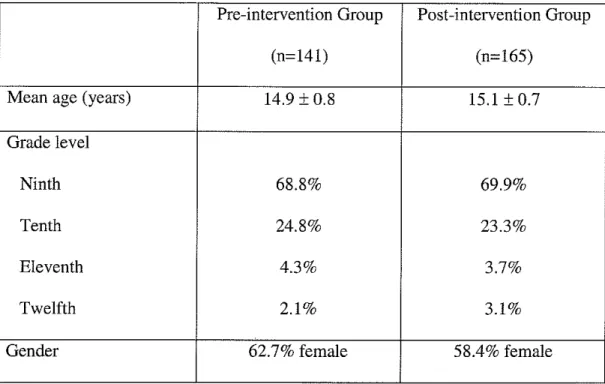
The high school student participants had a mean age of 15.0
±
0.92 years and a mean grade level of 9.4. The participants were 60.4% female and 37.7% male. The pre-intervention and post-intervention groups were similar with respect to age, grade and gender composition. (Table 1)High School Student Survey. Percentage of individual questions answered
correctly by high school students in pre-intervention and post-intervention
surveys is summarized in Table 2. We measured an increase in knowledge on six
!
significant improvement (19.8% increase, p<0.005). However, we measured a
I
health topics, with only one (emergency contraception) being a statistically
decreased in student's knowledge on 10 health education items; a decrease in knowledge in one area, appearance of HlV infection, was statistically significant (9.4% decrease, p=0.01). There was no change between pre and post-intervention in the total percentage of questions answered correctly by students (80.7% vs. 80.6%, p=0.06). The categories of sexually transmitted diseases, substance abuse, violence and body image showed a decline in level of knowledge, while the category of sexuality showed a significant increase in knowledge (6.0% increase, p=0.04) (Table 3).
school (6.9% increase, p=0.03). There were no significant changes in self-efficacy scores pre-intervention and post-intervention (Table 5). No consistent trends were noted in self-efficacy responses.
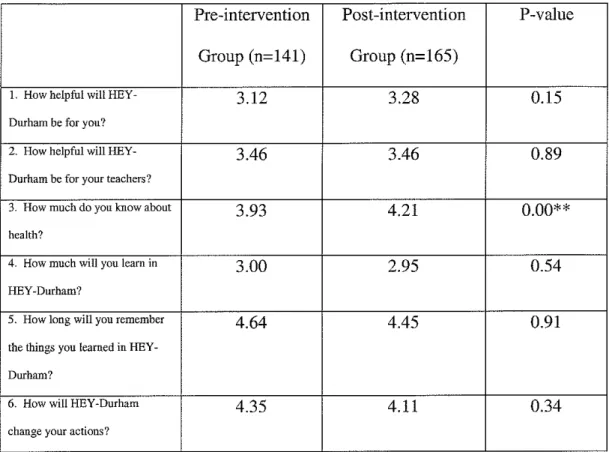
The attitude of high school students toward the HEY-Durham program was
generally positive, with attitude scores ranging from 2.95 to 4.64 on a scale of 1 to 5 (score of 5 most positive) (Table 6). There was a significant increase in the high school student self-assessment of how much he or she knew about health (difference in mean score of 0.28, p<0.005).
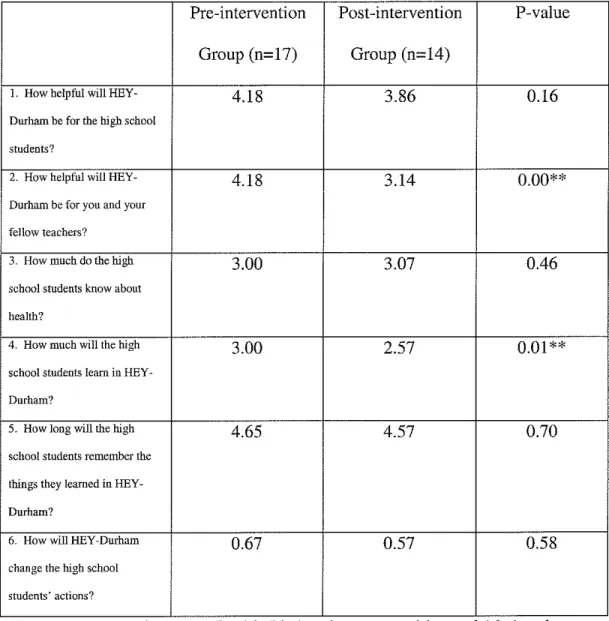
Medical Student Survey. The attitudes of medical students toward the
HEY-Dutham program were generally positive, with a range of scores from 2.57 to 4.65 on a scale of 1 to 5 (5 being most positive). One attitude score (assessment of high school student knowledge of health) became more positive. However, four attitude scores became more negative after the intervention, with two of six responses significantly more negative. (Table 8) The significant responses were helpfulness of HEY -Durham to medical student teachers (mean score decrease of
1.04, p=O.OO) and assessment of knowledge gained by high school students (mean score decrease of 0.43, p=O.Ol). There was also a decrease in the continuous variable measuring impact of HEY-Durham on student behavior.
Frequency of medical students reporting curricular topics about which the high school students knew the least and the most is reported in Table 9. Medical students felt the high school students knew most about teen pregnancy and alcohol, drugs and tobacco and least about sexually transmitted diseases and reproductive anatomy and physiology. Medical students rated the high school students as less likely to know about alcohol, drugs and tobacco (significant
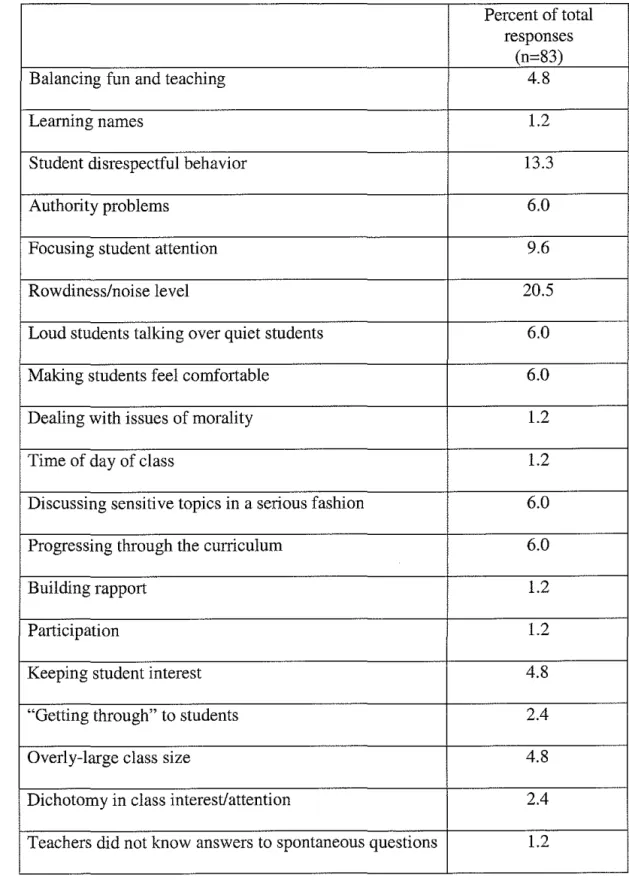
Frequency of teaching challenges reported by medical student teachers is reported in Table 10. The most common challenges reported were rowdiness/noise level of classroom, student disrespectful behavior, and focusing student attention.
High School Teacher Survey. High school teacher attitude remained the same
before and after the intervention (mean attitude score of 3.8). The high school teachers listed the most important teaching challenge as rowdiness/noise level of classroom.
I
CONCLUSIONS
The prevalence of health-risk behaviors is high in the adolescent population, and traditional high school curricula are ill equipped to deal with this challenge. Medical-student run health curricula are one potential solution to help improve high school student knowledge, attitude and behavior toward the health-risk behaviors. We performed an evaluation of the impact of the HEY-Durham program in its fourth year 1) to measure changes in high school student
knowledge, behavior and attitude and 2) to measure high school student, medical student and high school teacher attitude toward the HEY-Durham program. We hypothesized that the HEY-Durham curriculum would increase health-related knowledge and health-related behavior among high school students and that the attitude of medical students, high school students and health teachers toward the HEY-Durham program would improve.
The hypothesis was not supported by our results. Overall, high school student knowledge, behavior and attitude were not improved following the HEY-Durham
intervention. Knowledge of the high school students essentially stayed the same over the course of the intervention. There was only one area where high school knowledge significantly increased over the period of the intervention:
students had a positive attitude toward the program and showed a significant increase in self-assessment of how much they knew about health after the intervention. The medical students displayed a positive attitude toward the program; however, medical student attitude toward HEY-Durham became significantly more negative after the program. Health teachers also had positive attitude scores, which remained the same before and after the intervention.
Although the St. Louis University study did show an improvement in knowledge in high school students post-intervention, the St. Louis evaluation has limited generalizability because the program addresses only the very specific knowledge area ofHIV/AIDS. The educational program does not attempt to address the
I
myriad of health risk behaviors that the HEY-Durham program addresses. The evaluations of the HEY-Durham program are the first attempts to examine the impact of a wide-range health curriculum delivered by medical students to high school students. The Gopal study addressed only high school knowledge,
behavior and self-efficacy. This study was the first attempt to include assessment of high school and medical school student attitude toward the program, the relative importance of different curricular topics, and the teaching challenges faced by medical students.
emphasis could be placed on the areas of love, relationships, and sexuality; teen pregnancy; and alcohol, drugs and tobacco, areas which students rated as areas about which they knew the most. Students may receive enough information on these topics in their traditional health curriculum; time may be used more
effectively by focusing on lesser-known topics. More emphasis may be placed on teaching the topics of rape and incest, domestic violence, and gang violence, which students rated as areas about which they knew little.
Many medical students identified rowdiness and noise as a significant challenge to overcome while teaching. This may have contributed to the decrease in attitude scores of medical students toward the program. Medical students likely began with very high hopes for the program, and, upon experiencing the difficulties of classroom management, became disillusioned with their ability to make a difference to the students. The teacher-training program could be modified to
allow for the addition of teaching some simple strategies to medical students to
L
deal with discipline problems in the adolescent classroom. Also, studentsidentified an inability to cover as much material as they wanted to. Lengthening the duration of the HEY-Durham program would help to remedy this issue so that more of the curriculum could be covered.
fully manifested until several years after the completion of the program. Kirby suggested that it may be unrealistic to expect a school-based educational program to change adolescent behavior, particularly over the relatively brief interval of most educational programs.16 He further stated that most people would be guarded in their expectations of even adult subjects to modify high risk health behaviors after such educational interventions.
The survey instrument was limited, and the results should be interpreted with caution. The School Health Education Evaluation Study13 found that: more classroom hours are required to produce significant attitude change than either knowledge or behavior change, "large" effects (greater than 0.8 standard deviations) in specific subsets of health knowledge are achievable in 5-10 hours of instruction, and "medium" effects are achievable for health practices when more than 30 hours of classroom instruction is provided. This study suggests that more classroom time is needed to affect significant positive changes in attitude and change in health practice.
high school students were more comfortable with the HEY-Durham classroom
environment at the end of the program and thus were likely to take the survey less
seriously than they had at the start of the curriculum. In addition, HEY-Durham
classrooms are run independently by groups of medical students with varying
teaching styles who are given the jurisdiction to decide which topics to cover. As
a result, each class experiences HEY-Durham in a unique way and is potentially
taught a different range of topics. Hence, it is difficult to create one survey to test
overall knowledge gain.
Changes to the program may improve the ability of HEY-Durham administrators
to measure the impact of the program on knowledge. There is no formal testing in
the HEY-Durham program because such testing would eliminate the colloquial
atmosphere necessary for frank discussion between high school and medical
students. The absence of formal testing makes it difficult to obtain a serious
measure of knowledge change in high school students pre-intervention to
post-intervention. However, take-home messages of certain points identified as very
important should be created. These take-home points should be distributed to
students at the end of each class. Survey items testing knowledge should cover
these points. This approach would be more like! y to create a significant increase
in knowledge, as it would be assured that each classroom would have addressed
these points and that the students had an opportunity to hear the material in class
L
' It is difficult to measure the behavior change and self-efficacy changes that may
occur as a result of HEY-Durham with an immediate post-intervention survey. Studies have mentioned that behavior and self-efficacy effects are more easily measured in the form of a delayed post-test.16 As most DSA students experience the HEY-Durham program as ninth-graders, it may be possible to evaluate students later in their high school career to determine whether there has been an improvement in the areas of interest. Ultimately, a large sample size with several high schools, many groups of medical students and the presence of control groups would allow for a more definitive evaluation of the intervention.
Table 1: Demographic characteristics of HEY-Durham high school student survey participants pre-intervention and post-intervention, 2003.
Pre-intervention Group Post-intervention Group
(n=l41) (n=l65)
Mean age (years) 14.9 ± 0.8 15.1 ± 0.7
Grade level
Ninth 68.8% 69.9%
Tenth 24.8% 23.3%
Eleventh 4.3% 3.7%
Twelfth 2.1% 3.1%
Table 2: Percentages of high school students answering individual knowledge questions correctly in pre- and post-intervention HEY-Durham surveys, 2003.
Pre-intervention Post-intervention Group (n=l41) Group (n=l65)
I. AIDS is caused 89.4 88.6
by the virus HIV.
2. Someone can 68.3 70.5
have a negative HIV blood test and still have the virus.
3. If you have HIV,
but don't know it, 98.6 94.6
you can pass it on to
someone else. 4. You can always
tell if a person is 98.6 89.2
infected with HIV.
5. Chlamydia or
gonorrhea can cause 75.4 83.7
PID.
6. Cervical cancer is
caused by a virus. 49.3 57.8
7. Birth control pills
can prevent SID's. 94.4 85.5
8. Emergency
contraception must 58.5 78.3
be taken within 72
hours after sex.
9. Abstinence is the
only guaranteed way 84.5 89.8
to prevent SID's and preonancy. 10. Being gay,
45.8 48.2
lesbian, or bisexual is usually a conscious decision. I L Sperm must
swim through the 87.3 83.7
vagina, uterus, and fallopian tube to
fertilize an eaa.
12. Smoking
cigarettes causes 97.9 93.4
heart disease, stroke, and luna cancer. 13. Alcoholics
always know if they 86.6 84.3
have a problem. 14. Students who
carry guns to school 70.4 68.1
get in fewer fights because people are afraid of them. 15. If someone is
forced to have sex 94.4 90.4
without wanting to have sex, it is rape.
16. Worrying about 91.5 83.1
how their body looks is normal for hi crh school students.
. .
*S1gmficant decrease m knowledge score (p<0.05) .
Table 3: Percentages of high school students answering aggregate knowledge questions correctly in pre-intervention and post-intervention HEY-Durham surveys, 2003.
Pre-intervention Post-intervention P-value
Group Group
(n=141) (n=165)
Total knowledge 80.7 80.6 0.06
t-STD's 82.0 81.4 0.60
L
=
Sexuality 69.0 75.0 0.04* f
Substance abuse 92.3 88.9 0.51
Violence 82.4 79.2 0.69
Body image 91.5 83.1 0.06
. .
*Sigmf1cant mcrease m knowledge score (p<0.05) .
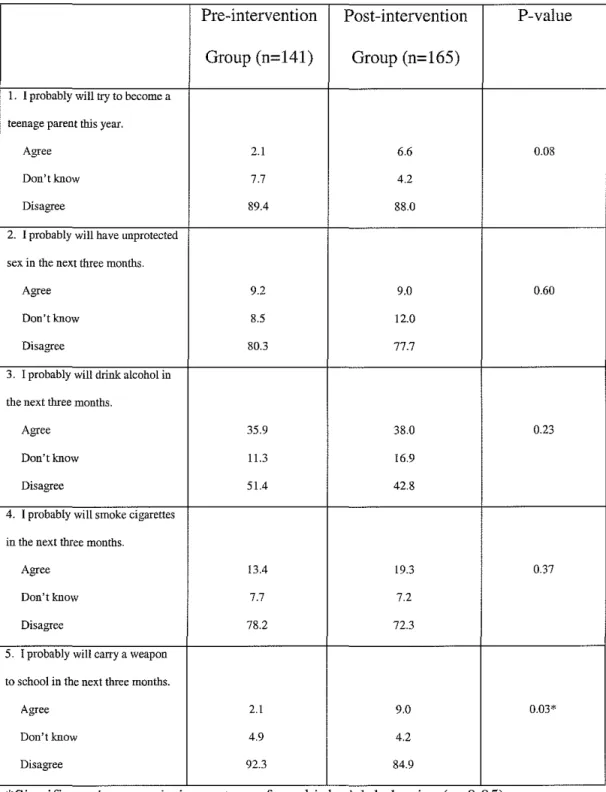
Table 4: Percentage of high school students responding to safe behavior intention items in pre-intervention and post-intervention HEY-Durham surveys, 2003.
Pre-intervention Post-intervention P-value Group (n=l41) Group (n=165)
1. I probably will try to become a
teenage parent this year.
Agree 2.1 6.6 0.08
Don't know 7.7 4.2
Disagree 89.4 88.0
2. I probably will have unprotected
sex in the next three months.
Agree 9.2 9.0 0.60
Don'tknow 8.5 12.0
Disagree 80.3 77.7
3. I probably will drink alcohol in
the next three months.
Agree 35.9 38.0 0.23
Don't know 11.3 16.9
Disagree 51.4 42.8
4. I probably will smoke cigarettes
in the next three months.
Agree 13.4 19.3 0.37
Don't know 7.7 7.2
Disagree 78.2 72.3
5. I probably will carry a weapon
to school in the next three months.
Agree 2.1 9.0 0.03*
Don't know 4.9 4.2
Disagree 92.3 84.9
Table 5: Mean high school student scores* to self-efficacy items in pre-intervention and post-pre-intervention HEY-Durham surveys.
Pre-intervention Post-intervention P-value Group (n=141) Group (n=165)
1. How hard or easy would 1.74 1.73 0.68
it be for you to convince
your partner that a condom
must be used before sex?
2. How hard or easy would 2.64 2.54 0.59
it be for you not to have sex
if you couldn't find a
condom?
3. How hard or easy would 2.37 2.39 0.78
it be for you not to drink
alcohol if your friends were
drinking alcohol?
4. How hard or easy would 2.08 2.07 0.82
it be for you not to use
marijuana or other drugs if your friends were using
drugs?
5. How hard or easy would 1.76 1.86 0.39
it be for you not to smoke
cigarettes if your friends
were smoking cigarettes?
Table 6: Mean high school student responses* to items addressing attitudes toward the HEY-Durham program in pre-intervention and post-intervention surveys.
Pre-intervention Post-intervention P-value Group (n=141) Group (n=l65)
1. How helpful will HEY- 3.12 3.28 0.15
Drnham be for you?
2. How helpful will HEY- 3.46 3.46 0.89
Durham be for your teachers?
3. How much do you know about 3.93 4.21 0.00**
l
health?
4. How much will you learn in 3.00 2.95 0.54
HEY-Durham?
5. How long will you remember 4.64 4.45 0.91
the things you learned in
HEY-Durham?
6. How will HEY-Durham 4.35 4.11 0.34
change your actions?
..
*Responses range from 1 to 5, w1th 5 bemg the most posilJve and 1 bemg the
L
most negative attitude about HEY-Durham.
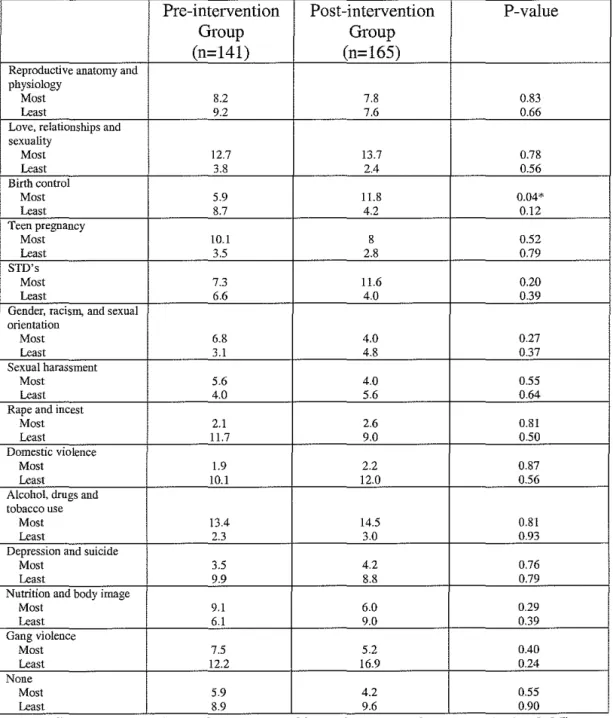
Table 7: Percentage of high school students who listed a curricular topic as one about which they knew the most or least in pre-intervention and post-intervention HEY-Durham surveys.
Pre-intervention Post-intervention P-value
Group Group
(n=141) (n=165)
Reproductive anatomy and physiology
Most 8.2 7.8 0.83
Least 9.2 7.6 0.66
Love, relationships and
sexuality
Most 12.7 13.7 0.78
Least 3.8 2.4 0.56
Birth control
Most 5.9 11.8 0.04* L
Least 8.7 4.2 0.12
Teen pregnancy
Most 10.1 8 0.52
Least 3.5 2.8 0.79
STD's
Most 7.3 11.6 0.20
Least 6.6 4.0 0.39
Gender, racism, and sexual orientation
Most 6.8 4.0 0.27
Least 3.1 4.8 0.37
Sexual harassment
Most 5.6 4.0 0.55
Least 4.0 5.6 0.64
Rape and incest
Most 2.1 2.6 0.81
Least 11.7 9.0 0.50
Domestic violence
Most 1.9 2.2 0.87
Least 10.1 12.0 0.56
Alcohol, drugs and tobacco use
Most 13.4 14.5 0.81
Least 2.3 3.0 0.93
Depression and suicide
Most 3.5 4.2 0.76
Least 9.9 8.8 0.79
Nutrition and body image
Most 9.1 6.0 0.29
Least 6.1 9.0 0.39
Gang violence
Most 7.5 5.2 0.40
Least 12.2 16.9 0.24
None
Most 5.9 4.2 0.55
Least 8.9 9.6 0.90
Table 8: Mean medical student responses* to items addressing attitudes toward the HEY-Durham program in pre-intervention and post-intervention surveys.
Pre-intervention Post-intervention P-value Group (n=17) Group (n=14)
1. How helpful will HEY- 4.18 3.86 0.16 Durham be for the high school
students?
2. How helpful will HEY- 4.18 3.14 0.00** Durham be for you and your
fellow teachers?
L
3. How much do the high 3.00 3.07 0.46 school students know about
health?
4. How much will the high 3.00 2.57 0.01 ** school students learn in
HEY-Durham?
5. How long will the high 4.65 4.57 0.70 school students remember the
things they learned in HEY-Durham?
6. How will HEY-Durham 0.67 0.57 0.58 change the high school
students' actions?
..
*Responses range from 1 to 5, w1th 5 bemg the most pos1t1ve and 1 bemg the most negative attitude about HEY-Durham.
Table 9: Percentage of medical students who listed a curricular topic as one about which they thought the high school students knew the most or least in
pre-intervention and post-pre-intervention HEY-Durham surveys.
Pre-intervention Group (n=17)
Reproductive anatomy and
physiology 5.6
Most 16.7
Least
Love, relationships and sexuality
Most
Least 3.7
3.7 Birth control
Most 13
Least 7.4
Teen pregnancy
Most 16.7
Least .
STD's
Most 3.7
Least 18.5
Gender, racism, and sexual orientation
Most 13.0
Least 3.7
Sexual harassment
Most 3.7
Least 3.7
Rape and incest
Most 3.7
Least 5.6
Domestic violence
Most 3.7
Least 3.7
AlcohoL drugs and tobacco use Most
Least 22.2
7.4 Depression and suicide
Most .
Least II. I
Nutrition and body image Most
Least 13.0
Gang violence
Most 11.1
Least 5.6
None
Most .
Least
*Significant increase in frequency (p<O.OS). **Significant decrease in frequency (p<O.OS).
Table 10: Frequency of challenges of teaching the HEY-Durham curriculum listed by medical students in HEY-Durham pre- and post-intervention surveys
Percent of total responses
(n=83)
Balancing fun and teaching 4.8
Learning names 1.2
Student disrespectful behavior 13.3
Authority problems 6.0
Focusing student attention 9.6
Rowdiness/noise level 20.5
Loud students talking over quiet students 6.0
Making students feel comfortable 6.0
Dealing with issues of morality 1.2
Time of day of class 1.2
Discussing sensitive topics in a serious fashion 6.0
Progressing through the curriculum 6.0
Building rapport 1.2
Participation 1.2
Keeping student interest 4.8
"Getting through" to students 2.4
Overly-large class size 4.8
Dichotomy in class interest/attention 2.4
REFERENCES
1 CDC. Youth Risk Behavior Surveillance- United States. 1997. Morbidity & Mortality Weekly
Report August 14, 1998; 47(SS-3): 1-89.
2
CDC. Tracking Hidden Epidemics: Trends in STD's in the United States 2000.
http://www.cdc.gov/nchsto/dstd!Stats Trends/Trends2000.pdf (Last accessed July 3, 2003).
3
Ventura S. Mathews T. Hamilton B. Teenage births in the United States: State Trends
1991-2000, an Update. National Vital Statistics Report. 2002; 50: 1-4.
4
Shrier L. Ancheta R. Goodman E. Chiou V. Lyden M. Emans S. Randomized controlled trial
of a safer sex intervention for high-risk adolescent girls. Arch Pediatr Ado lese Med 2001;
155:73-79.
5
Kingery P. Pruitt B. Hurley R. Adolescent exposure to school health education: factors and
!
consequences. Journal of Health Education 1993; supplement: S42-S46.
t
6
Duke University Medical Center News Office. Dukemed News. Duke Medical School Student
Volunteers to Teach Durham Public School Health Classes.
http://www.dukemednews.duke.edu/news/article.php?id-183 (Last accessed July 3, 2003)
7 Haven G. Stolz J. Students teaching AIDS to students: addressing AIDS in the adolescent
population. Public Health Reports. 1989; 104:75-9.
8
Morton M. Nelson L. Walsh C. Zimmerman S. Coe RM. Evaluation of a HJV/AIDS education
program for adolescents. Journal of Community Health. 1996; 21: 23-35.
9
Personal communication, Dr. Terrill Bravender. May 19, 2003.
10
Gopal S. Early effects of HEY-Durham, an interactive high-school health/sexuality curriculum
taught by medical students. Master's Paper. UNC-Chapel Hill School of Public Health. 2000.
11 Siegel DM. Aten MJ. Roghmann KJ. Enaharo M. Early effects of a school-based human
immunodeficiency virus infection and sexual risk prevention intervention. Arch Pediatr Adolesc
Med 1998; 152:961-970.
12 Misovich S. Fisher W. Fisher J. Understanding and promoting AIDS preventive behaviors:
Davis C. Yarbor W. Bauserman R. Scheer G. Davis S. eds. Sexuality related measures: a
Compendium. Newbury Park. NJ: Sage Publications; 1998.
13 Bonaguro J. Rhonehouse M. Bonaguro E. Effectiveness of four-school health education
projects upon substance abuse, self-esteem, and adolescent stress. Health Education Quarterly.
1988; 15:81-92.
14
Bloom B. Hastings J. Madaud G. Handbook on Formative and Summative Evaluation of
StudentLearning. NewYork: McGraw-Hill.1971.
15 Bridge P. Gallagher R. Berry-Bobovski. Using evaluation methods to guide the development
of a tobacco-use prevention curriculum for youth: a case study. Journal of Cancer Education
2000; 15: 95-99.
16
Jacobs C. WolfE. School sexuality education and adolescent risk-taking behavior. Journal of