Siting Consideration for Nuclear Power
Plant: A Review
M.A.Khattak
1, Abdoulhdi Amhmad Borhana Omran
2*, Ali Najah
Ahmed
3, Aishah Umairah
1, Mohamad Amirudin Mohamad Rosli
1,
Syeheer Sabri
1, Mohammad Akmal Saad
1, Mubin Solehan Abd.
Hamid
1, S.Kazi
41
Universiti Teknologi Malaysia, Skudai, Johor, Malaysia
2Sebha University, Sebha, Libya
3
Universiti Tenaga Nasional, Selangor, Malaysia
4Isra University, Hyderabad Campus, Pakistan
*Corresponding Author: Abdoulhdi Amhmad Borhana Omran: [email protected]
Abstract
Keywords:
Site selection, Nuclear power plant, Safety, Country
requirement, Public acceptance, Geographical environment
Citation:
Khattak M.A., Omran A. A. B., Ahmed A. N., Umairah A., Rosli M. A. M., Sabri S., Saad M. A., Hamid M. S. A., Kazi S. (2017) Siting Consideration for Nuclear Power Plant: A Review Open Science Journal 2(3).
Received: 25th May 2017.
Accepted: 10th July 2017.
Published: 29th July 2017.
Copyright:© 2016 This is an
open access article under the terms of the Creative Commons
Attribution License, which permits unrestricted use, distribution, and reproduction in any medium, provided the original author and source are credited.
Funding: The author(s) received no specific funding for this work.
Competing Interests: The author have declared that no competing interests exists.
Introduction
Site selection is one of the vital steps in designing nuclear power plant (NPP). Different places provide different analyses of sites and resulting in different type of nuclear station that suitable to build. The selection of suitable site is the result of a process in which the costs are minimized [1]. This step involves the investigation of a large region to select preferred sites and followed by detailed evaluation of the preferred site.
In discussing the site selection process, the following list is important. They are region of interest, candidate areas, potential sites, candidate sites, acceptable sites and preferred sites. This list should be discussed with detail. In the process of selecting site for construction of nuclear power plant, the factors need to be discussed: geologic/seismic, hydrologic, and meteorological characteristics of proposed sites, determination of exclusion area and low population zone, population considerations as they relate to protecting the general public from the potential hazards of serious accidents, potential effects on a plant from accidents associated with nearby industrial, transportation, and military facilities, emergency planning and security plans [1].
The objective of this paper is to review the siting process that countries that used nuclear power as their electricity generator had undergone. This paper includes all information that listed above.
Analysis and Discussion
Analysis of Nuclear Power Plant Worldwide
History of the Discovery of Nuclear Activity
For centuries, pottery makers used uranium oxide in their ceramics to obtain a yellow tint to the ceramic glazes, but yet they did not know the properties and the dangerous they were dealing with. Radioactive materials also can be found in clocks, watches and dials that glow in the dark without the use of battery and Vaseline glass or canary glass that contains uranium in small amounts, which is why the glass was called canary. Some of the watches contained as much as 4.5
μCi of radium [2].
World Status on Nuclear Industry by 2015
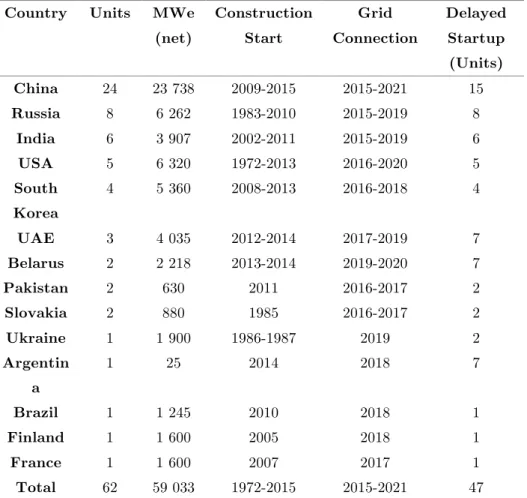
By 2015, there were 30 countries are in operation of nuclear power plants with a total of 391 reactors and combined installed capacity of 337 GW [5]. By 2014, there were five reactors have been started where three in China, one in Argentina and one in Russia, meanwhile there was one was shut down which was in Vermont Yankee in the US. By the middle of the year of 2015, there were five reactors have been started where four in China and one in South Korea, meanwhile two were shut down which one in Belgium and one in Germany. By 2014, no power plant has been generated in Japan and World Nuclear Industry Status Report (WNISR) classified 40 Japanese reactors as being in Long-Term Outage (LTO) [5]. In 2014 too, one reactor in Sweden that had been early closure and two units that were in LTO. Meanwhile, in 2015, one reactor in South Korea was restarted in June, and one reactor in India was to be decommissioning. In July 2015, two reactors were restart in Japan. By 2014, 69% of generated electricity in the world is come from nuclear power plant and the “big five” nuclear generating countries by rank were United States, France, Russia, South Korea and China. By 2015, only China has major new-build programs and the average life of nuclear reactors in the world was 28.8 years. Over half of the total, or 199 units have operated for more than 30 years, including 54 that have run for over 40 years [5]. By July 2015, 62 reactors were under construction with total capacity of 59 GW and almost 40% of the projects (24) are in China [5]. In 2014, there was one being built in Argentina, Belarus and United Arab Emirates but no new construction in China.
Following are the data collected by the year of 2015 on about the electricity generated by nuclear.
Table 1: Nuclear Reactors “Under Construction” (as of 1 July 2015) Country Units MWe
(net)
Construction Start
Grid Connection
Delayed Startup
(Units)
China 24 23 738 2009-2015 2015-2021 15
Russia 8 6 262 1983-2010 2015-2019 8
India 6 3 907 2002-2011 2015-2019 6
USA 5 6 320 1972-2013 2016-2020 5
South Korea
4 5 360 2008-2013 2016-2018 4
UAE 3 4 035 2012-2014 2017-2019 7
Belarus 2 2 218 2013-2014 2019-2020 7
Pakistan 2 630 2011 2016-2017 2
Slovakia 2 880 1985 2016-2017 2
Ukraine 1 1 900 1986-1987 2019 2
Argentin a
1 25 2014 2018 7
Brazil 1 1 245 2010 2018 1
Finland 1 1 600 2005 2018 1
France 1 1 600 2007 2017 1
Total 62 59 033 1972-2015 2015-2021 47
They were only two newcomer countries that have started the construction of their new first nuclear power plant by the year 2015. They were Belarus and United Arab Emirates, meanwhile Turkey reported has assigned commercially binding contracts. Bangladesh, Egypt, Jordan, Lithuania, Poland, Saudi Arabia and Vietnam have announced more or rather less concrete plans for new-build [5]. 2012 IAES analysis expected that Bangladesh, Belarus, Turkey, UAE and Vietnam to start building their first nuclear power plants and Saudi Arabia follows in 2013 [7].
Commercial Power Plant in 1973
Design Data and Safety Features of Commercial Nuclear Power Plants [8] report by December 1973 written by Fred A. Heddleson has listed few of the name of nuclear power plants existing at that time. They are:
- Big Rock Point Nuclear Plant - Brown Ferry Nuclear Plant
- Connecticut Yankee Atomic Power Plant - Diable Canyon Nuclear Power Plant - Dresden Nuclear Power Station - Fort Calhoun Station
- Robert Emmett Ginna Nuclear Power - Humboldt Bay Power Plant
- Indian Point Nuclear Unit 2 - Indian Point Nuclear Unit 3 - Millstone Nuclear Power Station - Monticello Nuclear Generating Plant - Nine Mile Point Nuclear Station - Oconee Nuclear Station
- Oyster Creek Nuclear Generating Station - Palisades Nuclear Power Station
- Peach Bottom Atomic Power Station - Pilgrim Nuclear Station
- Point Beach Nuclear Plant
- Prairie Island Nuclear Generating Plant - Quad-Cities Nuclear Power Station - H. B. Robinson Steam Electric Plant
Nuclear Energy in Africa
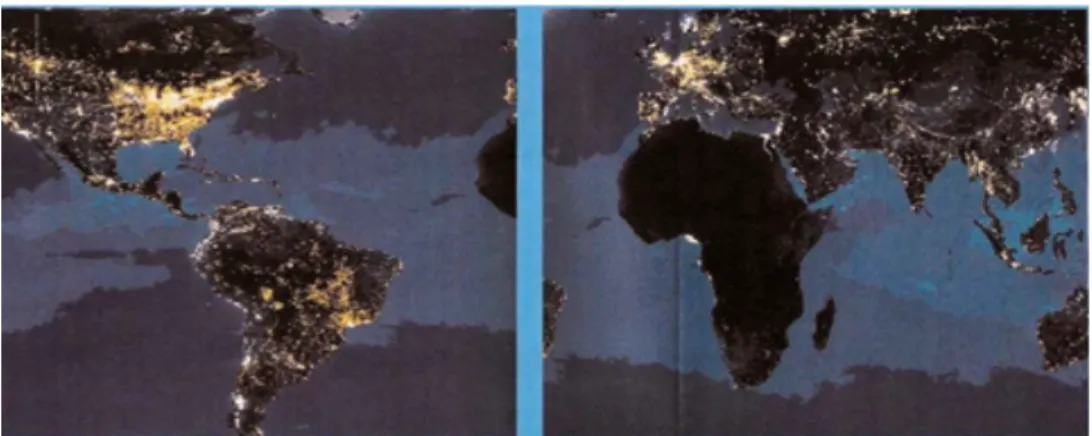
Figure 2: Electrical Illumination on Earth as seen from Space, Comparison
Africa with Other Continents
By the year 2015, Africa has reported to have one active nuclear power station at South Africa, a development of a 700MW nuclear plant in Ghana, research-oriented nuclear reactors in Kenya, Egypt, Ghana and the Democratic Republic of the Congo and growing of interest in nuclear power expertise in Namibia, Uganda, Nigeria, Senegal and Niger.
“Now we have rejuvenated the whole idea to go nuclear because it was envisaged that it would be so cheap that we would not even have to price electricity. We would write in our history books that once we used to ration power in this country. It will [also] spring new industries in steel technology, welding and various robotic roles. All these are spin offs from nuclear power.”
Ghana – a country that lies in the middle of the west coast of Africa. This country main source of electricity is hydro power. Until the year 2015, it accounts for 54% of the total installed capacity which is about 2186MW [11]. The remaining percentage of source is supplied by thermal power plant which runs on natural gas and light crude oil. Due to draught, power supply from hydropower system and the expensive cost of crude oil on the international market to run the thermal power plant and delay of gas supply from Nigeria, both of the sources supplies are declining. To meet the long term energy needs, the Government of Ghana took a decision to explore the possibility of generating electricity from nuclear power [11].
Nuclear Energy in Australia
Professor Daniela Stehlik has carried out a study on an analysis of the formation of attitudes in Australia to new technologies, with nuclear power as the essential case since Australia is an unusual country where the government permits the mining and exporting of uranium but do not give out permits to use nuclear energy to generate electricity.
The result of the analyses of attitudes of the citizen of Australia are reported in Understanding the Formation of Attitudes to Nuclear Power in Australia written by Professor Daniela Stehlik and in a web site on the title of Nuclear Power for Australian Industry published by Australian Institute of Policy and Science. Even though the government of Australia do not permit the usage of nuclear energy for electricity generating, Australia already a signatory of Non-Proliferation Treaty (NPT). By 28th April 2007, current federal government decided to adopt new uranium strategy where they increased the uranium exports and they prepared for the possible expansion of the nuclear industry in Australia, meanwhile, the Australian Labor Party (ALP) adopted the policy about allowing the mining and export of uranium on the basis of stated conditions [12]. But ALP remains to oppose the establishment of nuclear power plant and all other stages of the nuclear fuel cycle in Australia.
Nuclear Power Plant in Antarctic
Figure 3: McMurdo Station at the Hunt Point Peninsular [13]
Geographical Environment
Geology
Seismology
basis of analyses of geological, geophysical, seismological studies and the results are presented in the many publications during the years [22]. It shows that Kozloduy NPP was built in area that far from active seismic activity area but the nearest area with NPP had 5.0<= M<6.0 it still can effect NPP. The structure of Kozloduy NPP must have the ability withstand some wave of earthquake from nearby area.
In Swiss, Probabilistic Seismic Hazard Analysis for Swiss Nuclear Power Plant Sites (PEGASOS) project was performed as a research project sponsored by the Swiss NPP utilities to improve the assessment of seismic risk in support of the plant-specific seismic PRAs. In this project, there are 4 subprojects; source characterization, ground motion characterization, site effect characterization and seismic hazard computation. To elaborate the way of all subproject by using logic tree methodology for quantification of seismic hazard [31]. One of analysis needed to be done is site amplification analysis to assess seismic activity. The goal of the amplification analysis is to develop the ground motion response spectra (GMRS) [14]. In South Africa, direct import approach had been used to get quantitative target performance for seismic design of NPP [42]. There are 6 methods in this approach:
- Seismic tectonic regions, regional and site geology characteristics - Man-induced seismicity
- Range of nuclear installation technologies and SSCs represented in SPRAs
- Procedures used to develop probabilistic seismic hazard analyses - Hazard slopes and design factors
- Spectral frequencies and qualitative performance criteria
The seismic probabilistic risk assessment (SPRA) is a tool to evaluate the actual safety considering the variability and the regulatory requirement for power plants under construction as well as in operation. In Korea, method for SFA is basically similar to that of EPRI called “response factor method”. In this method, the response factor is a measure of conservatism included in seismic design and a ratio of design response to actual response. Korean method uses the multi-modes response spectrum shape factor to consider the effects of the more reasonable structural responses, while they only use the fundamental modal response in the EPRI method.
Hydrology
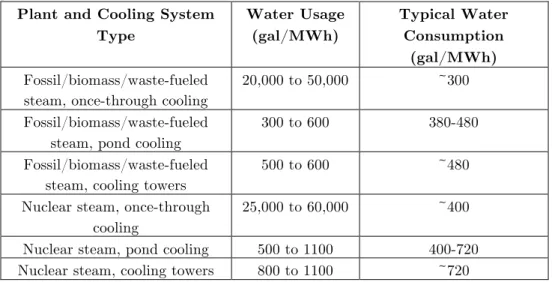
used to turn the turbines is cooled by water that is pumped through the condensers from an outside source and then discharged back into the environment. This differs from the closed cycle cooling system where the water used for cooling is pumped from the steam condenser to a cooling tower or pond and then recycled back to the condenser. While the direct cooling system has a relatively high amount of water usage from the environment, the closed cycle cooling system has higher amounts of water consumption due to losses from evaporation. [67] In both cases, the water usage and consumption for a conventional nuclear power plant is higher than for the average fossil fuel power plant (Table 1).
Table 2: Comparison of water requirements for fossil fuel and nuclear power
plants
Plant and Cooling System Type
Water Usage (gal/MWh)
Typical Water Consumption
(gal/MWh) Fossil/biomass/waste-fueled
steam, once-through cooling
20,000 to 50,000 ~300
Fossil/biomass/waste-fueled steam, pond cooling
300 to 600 380-480
Fossil/biomass/waste-fueled steam, cooling towers
500 to 600 ~480
Nuclear steam, once-through cooling
25,000 to 60,000 ~400
Nuclear steam, pond cooling 500 to 1100 400-720 Nuclear steam, cooling towers 800 to 1100 ~720
[16]. When the tsunami waves reach the coastal zone, they produce hazardous effects, such as an extreme change of water level, inundation, strong current velocities, hydro-dynamic forces to barrier structures, scour, and debris flow [7]. Probabilistic tsunami hazard analysis (PTHA) helped better understanding effect tsunami on structure of NPP and can evaluate quantitatively.
Country Requirement
Most countries with long histories wish to preserve sites and structures having particular historical or cultural significance. As for example, the Wolsong site in Korea that locate four CANDU units in operation or under construction. The site was moved to a few kilometers from the originally selected site because of an underwater tomb of an ancient king. [27]. Other factor that related to country requirement is international borders. Since a potential accident in a NPP can lead to consequences of radioactive releases for many kilometers, a site near an international border raises the problem of appropriate treaties with the neighboring country. It seems prudent not to site a NPP close to an international border since inter-country relations can change even if there is agreement. There is an international treaty on the notification of neighboring countries in the event of an accident. A few countries that has their own requirement in siting of NPP can be made as an example like Finland, United Kingdom (UK), United States of America (USA), Australia, South Africa, Brazil and Vietnam.
Finland is a small country with a central government. It has two utilities with NPP where one of which is privately owned and the other is state owned. There is a central nuclear regulatory body called the Finnish Centre for Radiation and Nuclear Safety (STUK) which will report to the Minister for Social Affairs and Health. The overall licensing authority is the Council of State which is the senior governing body. For site approval, a proposed site in Finland is part of the first formal stage of licensing of a nuclear facility which is decision in principle. The applicant must submit a description of the proposed site and the analysis of environmental effect. Then, they need to submit the plans for preventing or mitigating all effects and the general description of plans for management of spent nuclear fuel and radioactive waste. As an addition, the submission must include the competence of the applicant, description of applicant's financial resources and the economic viability of the project and a description of the proposed plant. STUK has identified three zones. The first zone is the site of the power plant and it extends to approximately 1kilometre from the facility. Within this area, permanent settlement is prohibited and the operator of the facility should have authority over all activities carried out in the area. The area can include a public road but only if the volume of traffic is small and the traffic can be diverted elsewhere in an emergency. The second zone which known as a protective zone extends to approximately 5kilometres from the facility. Development is restricted in this zone to exclude sensitive activities like hospitals and schools. The third zone which is the emergency planning zone extends to about 20kilometres from the facility. Plans are required to be prepared for this area to ensure the evacuation of people in an emergency case.
designers and several architect or engineers which will handle the rest of the plant. The major legislation is the Atomic Energy Act which was originally passed in 1954 and the Energy Reorganization Act of 1974 which abolished the Atomic Energy Commission (USAEC) which then created the USNRC. Other laws also apply, most importantly the National Environmental Policy Act. The rules for the licensing process for nuclear installations are spelled out in regulations: Title 10, Code of Federal Regulations (CFR), Chapter 1 - Nuclear Regulatory Commission (10 CFR 1). There are two major steps involved: Construction License and Operating License. An Early Site Permit or can be called as Limited Work Authorization (LWA) may be issued prior to a Construction License to allow for site preparation work. The law is according to 10 CFR 2. Whereas, the criteria for siting for nuclear reactors are set-out in regulations 10 CFR Part 100. The large staff of the USNRC, the Advisory Committee on Reactor Safeguards (ACRS) and also if appropriate, the Advisory Committee on nuclear waste will review the submitted information. Construction License can be issued after a public hearing is done. A three-member Atomic Safety and Licensing Board appointed by the five-member Commission will conduct the hearing formally. An environmental assessment is required which is reviewed by the Environmental Protection Agency (EPA) and the state concerned, as well as by the USNRC.
In Australia, half of the population opposes nuclear energy and two thirds say they would oppose a nuclear power plant in their local area. Given this, in order for there to be a thorough and full-blooded debate about nuclear energy, it is necessary to identify the sites that are best suited to nuclear power plants. There are four primary criteria for the siting of nuclear power plants in Australia: proximity to appropriate existing electricity infrastructure; proximity to major load centers where they require high demand of electricity; proximity to transport infrastructure to facilitate the movement of nuclear fuel, waste and other relevant materials; and access to large quantities of water for cooling. Data prepared by the Australian Bureau of Agricultural and Resource Economics suggest the overwhelming majority of the increase in generation capacity is likely to occur in the eastern states. Given this, it is likely that most of the 12 NPP would be located on or near the National Electricity Market (NEM) [28]. As the report of the Nuclear Taskforce indicates, the sites could be located near existing coal-fired generators on the NEM to take advantage of electricity infrastructure and grid connections. In order to minimize transmission losses, NPP would preferably be located near major centers of demand. This would ensure more efficient delivery of electricity and the most important thing is to reduce financial costs. The major load centers are the capital cities and large regional centers, particularly those that have energy-intensive industries. Due to these factors, it is likely that they would be reliant on imported fuel rods and they may also export spent fuel rods for reprocessing. To reduce financial costs and facilitate the import and export of nuclear fuel and waste, NPP would preferably be located near suitable transport infrastructure like ports, roads and railway lines. Other than that, NPP would preferably be located in coastal areas to ensure access to seawater.
Nuclear Energy Corporation of South Africa (NECSA) and the National Nuclear Regulator (NNR). NECSA undertakes and promotes research and development in the fields of nuclear energy, radiation sciences and technology, medical-isotope manufacturing, nuclear liabilities management, waste management and decommissioning. To implement a decision-making phase approach to the nuclear program, cabinet approved the establishment of the National Nuclear Energy Executive Coordination Committee (NNEECC). The Integrated Nuclear Infrastructure Readiness (INIR) review was conducted in South Africa between 30 January and 8 February 2013 where the process involved all industry key role players [29]. South Africa is the first country that will have nuclear program to assess its readiness for expansion. INIR process is not legally binding but assists the country to benchmark with other countries. The IAEA has developed an INIR report with recommendations and once the report is finalized, it will be made public. Eskom appointed an independent consultant, Arcus Gibb to undertake an Environmental Impact Assessment (EIA) for the proposed construction of a nuclear power station (Nuclear-1) and associated infrastructure. The application is for a NPP, with a maximum nominal capacity of 4000MW and five sites were selected and evaluated during the scoping phase. They are Brazil and Schulpfontein in the Northern Cape, Bantamsklip in the Western Cape, Duynefontein in the Western Cape and Thyspunt in the Eastern Cape. Three sites were taken forward into the EIA phase where 28 specialist studies have been completed. In addition to the EIA, there are a number of steps that are required prior to a new nuclear power station being constructed in South Africa. Negotiations must be undertaken with the suppliers of nuclear power stations, a safety report for the specific design must be submitted to the National Nuclear Regulator for evaluation and approval and a Nuclear Installation License obtained and a generating license must be obtained from the National Energy Regulator of SA (NERSA) [29]. There also have numerous other permits and authorizations such as water use licenses, zoning applications and domestic waste permits that are required for any not only nuclear power generating project to proceed.
The law recognizes 3 types of deposits. The first one is initial and operated by the waste generator where intermediate and final which also called repository. Law establishes the rules for site selection, construction and operation. For the licensing and control, it is deposit by CNEN. Therefore, all the requirements established in the Brazilian legislation must be fulfilled in order to obtain and maintain the corresponding licenses and the operating organization.
In order to carry out the licensing review of NPP in Korea, the Advisory Committee on Reactor Safety (ACRS) was established in 1972 with 15 experts in various nuclear related fields. They are located under the Atomic Energy Commission of the Ministry of Science and Technology (MOST). NSC launched a series of development program to establish the regulatory criteria applicable to the design, construction, testing, inspection and operation of the reactor in Korea. However, the majority of important codes and standards applicable in the vendor countries (U.S. and France) were still applied to the licensing of these plants together with some appropriate modifications. The audit calculations were actively performed at the NSC as part of independent assessment of major safety analysis results described in the preliminary safety analysis report (PSAR) and in final safety analysis report (FSAR). In the application of licenses for NPP construction and later for operation, the licensee should submit to the MOST various documents demonstrating the adequacy of the proposed NPP design, in conformity with the Atomic Energy Laws. Then, Korea Institute of Nuclear Safety (KINS) has to perform a detailed review and assessment of the technical submissions to determine whether the design complies with the specified safety requirements for siting, construction and operation of the proposed nuclear installations.
The licensing procedure consists of two steps, Construction Permit (CP) and Operating License (OL). The review objectives of CP are to confirm the safety of the proposed NPP design, which should meet the related regulatory codes and standards and to review the safety of the preliminary designs which include the principles and concepts of the plants design and the implementation of the regulatory criteria and also to evaluate the environmental impact and the strategy for minimizing its effects. Site Survey Report and Detailed Geological Survey Report are also required for the application of Early Site Approval and Limited Work Authorization before the construction permit. As the standardization and the development of next generation reactor, the establishment of industrial codes and standards applicable to Korean NPP are making progress, the licensing system in Korea is expected to be stabilized.
Public acceptance
unrelated event such as the anti-nuclear movement demonstration. Government can conduct survey or opinion poll to investigate the awareness of public about nuclear. The data then can be process to see if the public understand what authorities are going to development. In case the data shown are not satisfied, several steps can be taken to gain public acceptance in nuclear power such as advertising or using internet to spread news about nuclear power.
Countries in Asia greatly affected by the Fukushima accident, as for China, public acceptance has changes since the accident which led to Chinese citizen to purchase salt belief that iodine is effective against effects of radiation [32]. Public acceptance of nuclear in China is a sensitive issue compare to planning stage of nuclear power plant. Citizen of China protest to re-initiated the nuclear power plant in 2013 after 2 years’ hiatus. July 12, 2013, within the announcement period of the China National Nuclear Cooperation (CNNC) Longwan Industrial Park Project Social Stability Risk Assessment, public protests in resistance against the local construction of nuclear fuel factory and government eventually cancelled the project [32]. Meanwhile in other part of China, the public willingness to pay to avoid having clear power plant. Due to same accident, the public acceptance of nuclear energy decline sharply and the share of nuclear power in electricity generation decreased from 16.8% in 2011 to 13.5% in 2012 [33]. The acceptance of nuclear energy is different in Japan, the public approved in necessity of nuclear power plant according to surveyed by Prime Minister’s Office in Japan on Sep. 1990. 48.5% approve that nuclear power plant should be increased, 30.2% should not be increased more, 8.9% should be decreased from new, 9.8 % have no opinion and the rest vote for in-service plants should be stopped [34].
Australia is largest known country for uranium resources, almost one-third of world total but third ranking producer behind Kazakhstan and Canada [35]. Even with many resource of uranium, Australia does not consent about nuclear power because of extensive low cost coal and natural gas. Another reason Australia does not have nuclear power is the anti-nuclear movement at Australia that been actively become a hitch in nuclear planning. Anti-nuclear movement of Australia such as Anti-Nuclear Alliance of Western Australia or Australian Conservation Foundation had been actively held public debate about nuclear in Australia. McNair Gallup poll from Australian Data Archive (ADA) showed that during 1979 Australian oppose the construction on nuclear power station by 56% margin compare to 34% who approved and 10% answered “don’t know” [36]. This survey was conducted after the Three Mile Island accident. The survey conduct also by McNair on 2007 with same question “Do you favor or oppose the construction of nuclear power stations in Australia?” show that public who oppose was a lot compare who is approved by 53% to 41% respectively while 6% were other votes. During 2009, the survey conducted again and the result was different compare to 1979 and 2009. Although the result was not different by large margin, people who favored construction on nuclear power station was 49% compare to people who oppose 43% and 8% others. The survey data was collected and documented by Australian National University (ANU) and archived at Australian Data Archive (ADA)
portable reactor. PM-3A was meant to be transported by LC-130 aircraft because the accessible to Antarctica is easier in this way rather than using the ship. McMurdo Station was built to fulfil the aim which is to overcome the difficulties associated with supplying the large fuel demands required for operations. [38]. McMurdo Station also responsible to supply electric heating to replace the fire hazards associated with oil-fired heating units [38]. Antarctic nuclear power does not relate to any public interest because the reactor build is under decision of United States Congress. Furthermore, Antarctic population is not many to even consider its public interest in nuclear power.
After violent introduction of nuclear by first atomic bomb during 1945, the public reaction for nuclear has becoming worse. People always take nuclear as a dangerous weapon and tool of destruction. After the Three Mile Island and Chernobyl, the news about nuclear become deteriorated for public. Nuclear actually is safe as many facts stated, in fact, nuclear will become replacement of current energy supplement in near future. Public concern on nuclear power greatly increased due to fossil fuels had lessened. Africa known for gold mining for their economy and same for other countries, Africa tend to demand high energy power for the industries. Koeberg power station is the only nuclear power station in South Africa and entire Africa continent. Located 30 km away from Cape Town and owned by Eskom, national electricity supplier. Koeberg Alert is an anti-nuclear movement mainly focuses on construction of Koeberg power station. Public acceptance in South Africa is influence by the event of incidents happen during the past and mostly the bitter truth about nuclear technology. The bombs dropped at Nagasaki and Hiroshima influenced public acceptance of nuclear power greatly. Despite education, the general public finds it difficult to separate the horror images of these bombs, from the peaceful use of nuclear energy and the accidents at Three Mile Island and Chernobyl are well known and most opponents to nuclear power will cite these examples when arguing against nuclear power [39]. The government of South Africa proposes several ways to answer public fear and gain trust at the same time such as power station visits. Power station visits focus on university groups, industrial groups, or others for who is considered to be effective and other ways including visitors’ center, advertising and usage of internet [39]. The initiative of this plan will gain trust and acceptance from public and shown the good image of nuclear technology.
nuclear capacity behind United States [42]. Public support for nuclear power in France always been strong and France make a right choice during 1970s to choose nuclear to reduce energy dependency. Now, France has 58 commercial power plant and to maintain the public trust, France also conduct the visiting to nuclear power plant for school and industry to expose them the nuclear power as an energy rather than a weapon of destruction. Although nuclear reactors have been operated safely, the French still worry the risky of nuclear. About 55% think the risk of accidents is high [42]. However, French trust their authorities and regulators with controlling and ensuring the safe operation of nuclear reactors.
As for United Kingdom, oil reserves are dwindling and until a minimal upturn in 2015, output had been declining [42]. Oil prices increasing and UK see this as a threat to energy supply. With heavy industries in UK, the demands for more energy keep increasing until UK decide to find alternatives to overcome this. People see nuclear power is a means to addressing this issue. The public debate about energy helped nuclear power gain trust in the public. Furthermore, UK citizens also concerns about environmental issue and climate change which mostly cause by other energy supply such as fossil fuel. They were aware that renewables energy alone cannot tackle the energy demand and environmental issues. Despite having eight nuclear reactors operated and supply 14% of total electricity in 2015, Germany having a phase-out on nuclear power by 2022 [42]. After the accidents on Fukushima-Daiichi, on August 2011, Germany shut down its eight reactors permanently. With all commotion happen, on April 2014, Geman Atomic Forum (DAtF) conducted an opinion poll on unified European energy policy with 72% support it [42]. 56% oppose the idea that Germany should review key energy policy such as the nuclear phase-out [42].
With dropped price in gas over past year, the public concern about nuclear energy is dropping with 54% oppose nuclear energy [43]. According to Gallup website, people who favor nuclear energy is 44% and it is for the first times people oppose is many compare to favor [43]. America with 99 operating reactors, 34 boiling water reactor (BWR) and 65 pressurized water reactor (PWR) show that the demand of energy is not part of the problem but the public acceptance currently in opposing the nuclear energy. The reason behind this is the dropped in gas price. This seems to have lessened Americans' perceptions that energy sources such as nuclear power are needed [43]. The result of opposing also does not come from fear because the last accident related to nuclear way back during 2011.
Nuclear Power Plant Site Evaluation in Malaysia
The Malaysia Nuclear Power Corporation (MNPC) was established in 2011 as the Nuclear Energy Program Implementation Organization (NEPIO) based on the IAEA guidelines. The MNPC will focus on critical enablers as identified in the ETP, including public acceptance of the project and the readiness of the correct regulatory framework in Malaysia. MNPC play a big role to provide critical consideration on site configuration and as first mover on developing Nuclear Power Plant (NPP) station in Malaysia.
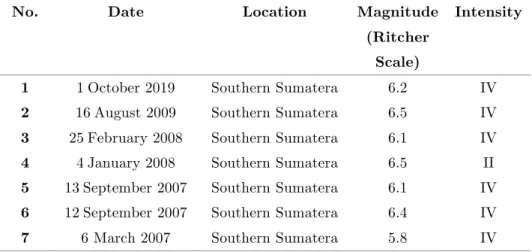
Previous researcher work on site evaluation in Peninsular Malaysia, several harmful activities, natural disaster that might be happen during operation and NPP construction were found such as, earth-quake. Ground movement and surface stability is important to evaluate external events and possible hazard related to seismological and geological condition. Hence, geological and seismological condition in the area must be considered during selection. IAEA stated two important events related to geological and seismological features – earthquakes and surface faulting. Peninsular Malaysia has low possibility of earthquake event since it did not lie on the Pacific Ring of Fire. However, Malaysia did felt the effect of high magnitude earthquake occurred in the neighboring country like Indonesia. Malaysian Meteorological Department has recorded felt earthquake events and intensity in Johor.
Table 3: Certain target area for site evaluation consideration that are being analysis
No. Date Location Magnitude
(Ritcher Scale)
Intensity
1 1October 2019 Southern Sumatera 6.2 IV 2 16August 2009 Southern Sumatera 6.5 IV 3 25February 2008 Southern Sumatera 6.1 IV 4 4January 2008 Southern Sumatera 6.5 II 5 13September 2007 Southern Sumatera 6.1 IV 6 12September 2007 Southern Sumatera 6.4 IV 7 6 March 2007 Southern Sumatera 5.8 IV
Table 2 shows the statistic reading due to earthquake near Johor Peninsular Malaysia. This earthquake occurs in nearest country mostly Indonesia that could give several amounts of scale reading.
Johor were chosen to be one of the site selection targets in Malaysia due to Geo-structure feasible. Surface faulting can occur from natural geological and seismological features or human activity that may lead to surface change or movement. In site selection, area with minimum likelihood of surface faulting and earthquake are most preferred. Sites with competent bedrock generally have suitable foundation conditions. Otherwise, area with stable rocks and solid soils such as dense sands and glacial tills are considered suitable.
by natural disaster or radiological risk that are depend on the radiological study on that particular country. Since, Malaysia had been through a lot of research on environmental impact assessment throughout Malaysia region and it shows positive feedback for nuclear Power Plant siting to be performed. A lot of positive benefit that can be provide to Malaysia citizen which is energy supply for personal home hospitality in low cost and energy generation rate will also increases. NPP operation will be supervise in controlled area that has been establish by IAEA Standard and code for ensuring the unwanted event to initiated. Safety is prior aspect for nuclear installment for environmental friendly used toward individual, society and environmental.
Conclusion
In conclusion, the siting of power plant is likely to be one of the most politically contentious issues if the government decided to promote the establishment of a NPP. There is a considerable amount of community opposition to the nuclear industry and siting issues are often a source of significant conflict even the countries that rely on nuclear power for a large proportion of their electricity needs. On the other perspective, safety assessment in licensing process is complicated and unfamiliar in most of the countries which need to be performed by high quality experts along with the international consultants for supporting safety assessment for an appropriate approach. It is important for licensing process, infrastructure, legal development and human development. There are still many things that we need to consider in the coming future even the current achievement gained recently is quite impressive. The critical aspect is to inform the public about nuclear energy and nuclear power besides gaining the support from the. Any new system should be designed according to sustainability principles where it will include the precautionary principle. To implement the requirement, a comprehensive framework of sustainability principles, indicators and criteria should be developed to the point where it could be used to assess the sustainability of any proposed engineered system. Lastly, further research would need to be carried out before it could be concluded that the areas are definitely suitable for NPP construction.
References
GUIDELINE FOR SITE SELECTION FOR NUCLEAR POWER PLANT. (22 Mac 2011). Dengkil, Selangor: Atomic Energy Licencing Board.
M. E. Foster, G. M. (December 1982). History of the PM-3A Nuclear Power Plant McMurdo Station, Antarctica. Washington: NAVAL ENERGY AND ENVIRONMENTAL SUPPORT ACTIVITY. Caubit, D. A. (2005). Brazilian Nuclear Energy Commission.
Nobel Lectures, Physics 1901-1921. (1967). Amsterdam: Elsevier Publishing Company.
Agency, I. A. (2003, November 17). Nuclear Power Plants Information: Operational & Under Construction Reactors by Country. Retrieved from http://www.iaea.org/cgi-bin/db.page.pl/pris.reaopucct.htm.
Bodansky, D. (1996). NUCLEAR ENERGY: Principles, Practices and Prospect. New York: Springer-Verlag New York
Heddleson, F. A. (December 1973). DESIGN DATA AND SAFETY FEAUTURES OF COMMERCIAL NUCLEAR POWER PLANTS. Oak Ridge, Tennessee: OAK RIDGE NATIONAL LABORATORY.
F. Erepamo Osaisai, C. E. (30-31 May 2011). Nuclear Power Introduction in Nigeria: Organization and Way Forward. Second Regional Conference on Energy and Nuclear Power in Africa. Cape Town.
Brenda Martin, D. F. (27 July 2015). Final Report - Findings of the African Nuclear Study. Southern Africa: Heinrich Böll Foundation.
Basu, P. C., Ravindra, M. K., & Mihara, Y. Component fragility for use in PSA of nuclear power plant. Nuclear Engineering and Design. doi:http://doi.org/10.1016/j.nucengdes.2016.10.018 Kidd, S. (2014, October 6). Retrieved June 7, 2015, from
http://www.neimagazine.com/opinion/opinionthe-world-nuclear-industry-is-it-in-terminal-decline-4394815/.
Long, T. (2011, April 3). MARCH 4, 1962: NUCLEAR AGE COMES TO ANTARCTICA. Retrieved from WIRED: https://www.wired.com/2011/03/0304antarctic-nuclear-plant-mcmurdo-sound/ Francois, W., David, A., Serge, A., József, B., Raffaello, D. F., N.H., D., . . . Peter, W. (1990).
Nuclear. Survey of Different Approaches Utilised to Aid Public Acceptance of Nuclear Energy, 38. Park, J.-B., Choi, Y., Lee, S.-J., Park, N.-C., Park, K.-S., Park, Y.-P., & Park, C.-I. (2014). MODAL
CHARACTERISTIC ANALYSIS OF THE APR1400 NUCLEAR REACTOR
INTERNALS FOR SEISMIC ANALYSIS. Nuclear Engineering and Technology, 46(5), 689-698. doi:http://doi.org/10.5516/NET.09.2014.017
H. J. Laue, L. L. (n.d.). Nuclear Power in Developing Countries.
Nations Online, Political map of Ghana. (n.d.). Retrieved from http://www.nationsonline.org/oneworld/map/ghana_map.htm.
Simeonova, S., Solakov, D., Leydecker, G., Busche, H., Schmitt, T., & Kaiser, D. (2006). Probabilistic seismic hazard map for Bulgaria as a basis for a new building code. Natural Hazards and Earth System Sciences, 6(6), 881-887.
Foratom. (2017). Energy Policy, Economy and Law. What People Really Think about Nuclear Energy, 2.
Klügel, J. U. (2005). Problems in the application of the SSHAC probability method for assessing earthquake hazards at Swiss nuclear power plants. Engineering Geology, 78(3–4), 285-307. doi:http://doi.org/10.1016/j.enggeo.2005.01.007
Smith, P., Dong, R., Bernreuter, D., Bohn, M., Chuang, T., Cummings, G., Wells, J. (1981). Seismic Safety Margins Research Program. Phase I, final report-overview. Retrieved from
Nhleko, S. (2013). Application of the performance-goal based approach for establishing the SSE site specific response spectrum for new nuclear power plants in South Africa. Nuclear Engineering and Design, 255, 287-295. doi:http://doi.org/10.1016/j.nucengdes.2012.10.023
Myle Scheider, A. F. (July, 2015). The World Nuclear Industry Status Report 2015. Paris, London: The Green Political Foundation.
Ministry of Energy of Lithuania, “Working Group's Conclusions for Preparation of Proposals Regarding Cost-Effective and Consumers-Favorable Self-Provision with Powet and Other Energy Resources". (2013, April 25). Retrieved June 7, 2015, from http://www.enmin.lt/lt/naujienos/Conclusions_of_the_Working_Group2.pdf.
Rehdanz, K., Welsch, H., Narita, D., & Okubo, T. (2015). Well-being effects of a major natural disaster: The case of Fukushima. Journal of Economic Behavior & Organization, 116, 500-517. doi:http://dx.doi.org/10.1016/j.jebo.2015.05.014\
Hixson, L. W. (2012, February 24). Enformable.com. Retrieved May 5, 2015, from http://enformable.com/2012/02/oaea-vietnam-and-4-other-countries-to-incorporate-nuclear-energy-after-fukushima/.
Isaac Ennison, T. A. (2012). Determination of Suitable Sites for Nuclear Power Plants in Ghana: The Issues Involved.
Macintosh, A. (2007). Siting Nuclear Power Plants in Australia. Research Paper No. 40.
Commission, U. N. R. (2007). A performance-based approach to define the site-specific earthquake ground motion. Regulatory Guide, 1, 24.
Australian Labor Party, “National Platform and Constitution”. (2007). Retrieved from www.alp.org.au/download/now/2007_national_platform.pdf [hereinafter National Platform]. Stott, A. K. (2013). The current status of nuclear energy in South Africa.
Stehlik, P. D. (April 2010). UNDERSTANDING THE FORMATION OF ATTITUDES TO NUCLEAR POWER IN AUSTRALIA. Melbourne Victoria, Australia: National Academies Forum (NAF).
World Nuclear Association. (2017, January). Australia's Uranium. Retrieved from World Nuclear Association: http://www.world-nuclear.org/information-library/country-profiles/countries-a-f/australia.aspx
Boyd, F. (1997). Siting of Nuclear Power Plants.
Blaufox, M. D. (1988). Radioactive artifacts: Historical sources of modern radium contamination. Seminars in Nuclear Medicine, 18(1), 46-64. doi:http://dx.doi.org/10.1016/S0001-2998(88)80019-9
Reid, T. (2014). Nuclear Power at McMurdo Station, Antarctica.
Eurobarometer. (2008). Special Eurobarometer 297. Attitudes Towards Radioactive Waste, 5. Koyama, S. (2013, September). Nippon Export and Investment Insurance. Retrieved July 14, 2014,
from http://www.oecdnea-nea.org/ndd/workshops/wpne/presentations/docs/3 1 KOYAMA 2013 09 19 OECD Seminer.pdf.
V. V. Kulik, D. M. (2011, August 9). Letter to the European Commission.
Milev, G., & Vassileva, K. (2007). Geodynamics of the Balkan Peninsula and Bulgaria. Paper presented at the International Symposium on Strong Vrancea Earthquakes and Risk Mitigation. Groudev, P., & Petrova, P. (2017). Overview of the available information concerning seismic hazard
for the Kozloduy NPP site. Progress in Nuclear Energy, 97, 162-169. doi:http://doi.org/10.1016/j.pnucene.2017.01.007
(28 September 2012). Belarus, aided by Russia and Broke, Europe's Last Dictatorship Proceeds with NPP. Nuclear Intelligence Weekly (NIW).
Nuclear Power in India. (2010, November 30). Retrieved from World Nuclear Association: http://www.world-nuclear.org/info/inf53.html
Nuclear Power: An Obstacle to Rapid Development. (2009, May 27). Retrieved from Greenpeace Climate Vision: http://www.greenpeace.org/raw/content/international/press/reports/greenpeace-climate-vision.pdf
(7 November 2014). Ostrovets plant meets construction safety rules.
ENEC. (2009, September 27). UAE Selects Korea Electric Power Corp as Prime Teams as Prime Contractor for Peaceful Nuclear Power. Retrieved February 2015, from http://www.enec.gov.ae/media-centre/news/content/uae-selects-korea-electric-power-corp-as-prime-team-as-rpime-contractor-fo.
Prime Minister John Howard, "Uranium Mining and Nuclear Energy: A Way Forward for Australia", Media Release. (2007, April 28). Australia.
Ennison, I., Akiti, T., Amponsah, P., Osae, S., & Gbadago, J. (2012). Determination of Suitable Sites for Nuclear Power Plants in Ghana: -The Issues Involved. Environmental Research, Engineering and Management, 62(4), 30-38.
Messel, H. (1953, December). Nuclear Power for Australian Industry, Australian Institute of Policy Science. Retrieved January 23, 2014, from http://www.jstor.org/stable/41317627.
Riffkin, R. (2016, March 2-6). For First Time, Majority in U.S. Oppose Nuclear Energy. Retrieved from Gallup: http://www.gallup.com/poll/190064/first-time-majority-oppose-nuclear-energy.aspx Anderson, M. (1979, June 1). Australian Gallup Polls. Do you favour or oppose the construction of
nuclear power stations in Australia? Australia.
Basri, N. A. (n.d.). Selection of possible candidate area for nuclear power plant in Johor, Malaysia. J. Nucl. Relat. Technol, 9,, 56-63.
Shafer, W. G. (1967). Five Years of Nuclear Power at McMurdo Station. In Antarctic Journal of the United States (p. 38). Office of Antarctic Programs.
Sharon Mascher, S. L. (n.d.). TOO HOT TO HANDLE? URANIUM AND NUCLEAR POWER IN AUSTRALIA'S ENERGY MIX.
Vandenhove, H., Sweeck, L., Vives i Batlle, J., Wannijn, J., Van Hees, M., Camps, J., . . . Lance, B. (2013). Predicting the environmental risks of radioactive discharges from Belgi an nuclear power plants. Journal of Environmental Radioactivity, 126, 61-76. doi:http://doi.org/10.1016/j.jenvrad.2013.07.004
(15 October 2012). Lithuanians send nuclear plant back to drawing board. Reuters.
France's Nuclear Industry Dream Faces Melt-Down At Expenses Of State Coffers, Tax Payers. (2015, June 4). Retrieved June 8, 2015, from http://www.forbes.com/sites/marcelmichelson/2015/06/04. Sun, C., Lyu, N., & Ouyang, X. (2014). Sustainability. Chinese Public Willingness to Pay to Avoid
Having Nuclear Power Plant in the Neighborhood.
United States Environmental Protection Agency. (2006, April). Retrieved from www.epa.gov/radtown/antiques/html.
(March 2003). International Energy Annual 2001, Energy Information Administration report. Washington, DC: U.S. Department of Energy.
Attia, S. I. (2015). The influence of condenser cooling water temperature on the thermal efficiency of a nuclear power plant. Annals of Nuclear Energy, 80, 371-378. doi:http://doi.org/10.1016/j.anucene.2015.02.023
Chater, J. (2005). A history of nuclear power. Focus on Nuclear Power Generation, 29-34.
World Nuclear Association. (2017, February). Nuclear Power in the European Union. Retrieved from World Nuclear Association: http://www.world-nuclear.org/information-library/country-profiles/others/european-union.aspx
Yamada, M., & Iguchi, T. (n.d.). Public Acceptance (PA) Activities of Nuclear Power in Japan. E. V. Giusti and E.L. Meyer, "Water Consumption by Nuclear Powerplants and Some Hydrological
Implications," U.S. Department of the Interior, Geological Survey Circular 745, 1977
![Figure 1: Nuclear Electricity Generation in the World [6]](https://thumb-us.123doks.com/thumbv2/123dok_us/8113349.2151473/3.892.296.817.718.1107/figure-nuclear-electricity-generation-world.webp)
![Figure 3: McMurdo Station at the Hunt Point Peninsular [13]](https://thumb-us.123doks.com/thumbv2/123dok_us/8113349.2151473/7.892.299.834.146.418/figure-mcmurdo-station-hunt-point-peninsular.webp)