measures that affect the quality of
part-time or reduced-hour work
*Part-time work is an important feature of labor markets in
many high-income countries. Although there is substantial
variation in terms of the overall number of workers
employed part-time, women everywhere are much more
likely to work part-time than are men, largely because of
their role as the primary caregivers for children, as well
as for elderly, ill, or disabled relatives. Men who work
part-time typically do so at the beginning or end of their
working lives.
In the past, the majority of countries (with the notable
exceptions of the Netherlands and Sweden) had
regulations in place that made it less expensive to employ
part-time as opposed to full-time workers. These measures
included reduced employer social insurance contributions,
reduced employment protection (e.g., regarding lay-offs),
and reduced access for workers to employer-provided
benefits (e.g., pensions). In the majority of countries
reviewed, this differential treatment is no longer
permitted, because it specifically disadvantages women
due to their role as primary caregivers.
All European Union member states are bound by the
1997 Part-Time Directive which provides a right to equal
treatment to part-time employees vis-à-vis comparable
full-time employees in all aspects of the employment
relationship (including, on a pro rata basis, pay and
employer-provided benefits and access to training). In
many countries, public social insurance benefits (e.g.,
unemployment benefits, retirement pensions) continue
to require a minimum number of hours worked, or a
minimum level of earnings, in a specified reference period.
This publication charts laws and social insurance
arrangements for workers who work less than full-time in 21
high-income countries, including the U.S., with respect to:
Part-time parity,
Þ which refers to the right to the same terms and conditions granted (pro rata) to full-time workers in the same enterprise. These terms and conditions include hourly earnings and access to employer-provided benefits, such as pensions, health insurance, paid leaves and vacation rights.
Measures designed to reduce involuntary part-time work,
Þ
such as obliging employers to preferentially consider current part-time employees for appropriate full-time vacancies.
Eligibility criteria for receiving social insurance benefits,
Þ such
as unemployment compensation and pensions), that are linked to hours worked.
The legal definition
Þ of ”part-time work.”
Countries which are a signatory to the ILO Convention
Þ
C175 on Part-time Work, which provides equal treatment in relation to pay, maternity leave, sick pay, vacations, and rules governing termination, and which obliges governments to remove social insurance regulations that disadvantage part-time workers.
* These tables were prepared by Ariane Hegewisch, with research assistance from Diana Polson, as part of the study “Working Time, Economic Well-being, and Public Policy: Employed Parents and Older Workers in Cross-National Perspective”, which was funded by the Alfred P. Sloan Foundation, Principle Investiga-tor: Janet C. Gornick. The tables, to the best of our knowledge, are correct as of December 2007. In case of comments, queries or corrections, please contact
Figure 3. Contextual Information
Ratification of ILO Convention C175 on Part-Time Work (1994).
Ö
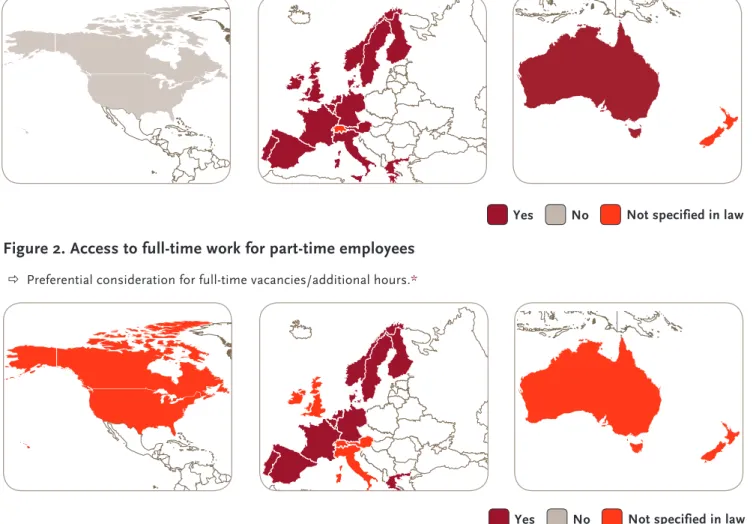
Figure 2. Access to full-time work for part-time employees
Preferential consideration for full-time vacancies/additional hours.
Ö *
Yes No Not specified in law
Figure 1. Equal Treatment for Part-Time Employees
Non-discrimination of part-time employees vis-a-vis comparable full-time employees in relation to wage rates, benefits and
Ö
all other employment conditions.
Yes No Not specified in law
* This figure covers provisions in addition to laws providing rights to temporary PT work with an automatic right to return to FT
work at the end of leave. (Such rights to temporary PT work are commonly provided as part of parental leave or leave for training & education purposes; for details see Table 5).
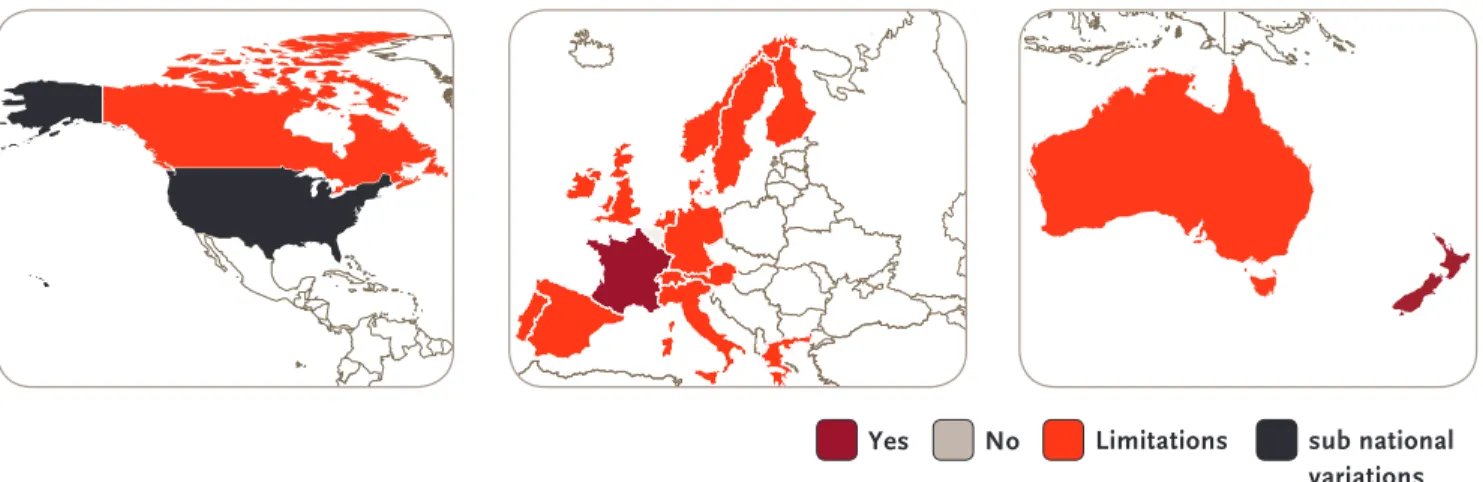
Figure 4. Social Insurance Schemes
**Impact of part-time work on unemployment benefits.
Ö
If unemployment results from loss of PT work, is unemployed worker eligible for unemployment benefits?
Yes No Limitations sub national variations
Impact of pa
Ö rt-time work on unemployment benefits.
Does a person only available for PT work quality for unemployment benefits?
Yes No Limitations sub national variations
australia
Equal Treatment for PT workers in employment conditions and compensa-tion.
1996 Workplace Relations Act provides “regular” part-time workers (irrespective of hours) with same protection as full-time worker; “casual” workers have less protection.
Preferential consideration for FT work/ mechanism for requesting increased hours.
Not specified in law.
Social Insurance : Hours or earnings thresholds
No information.
Definition of PT work 1996 Workplace Relations Act distinguishes between regular part-time worker who a) works less than full-time ordinary hours; and (b) has reasonably predictable hours of work; and (c) receives, on a pro-rata basis, equivalent pay and conditions to those specified in an award or awards for full-time employees who do the same kind of work; and casual workers (who require tenure of 12
Figure 5. Incidence of PT work (< 30 hours/week) 2006, OECD Employment Outlook 2007
0
10
20
30
40
50
60
0
10
20
30
40
50
60
Men
Women
Australia Austria Belgium Canada Denmark Finland France Germany Greece Ireland Italy Luxembourg Netherlands New Zealand Norway Portugal Spain Sweden Switzerland UK United StatesHours Per Week
austria
Equal Treatment for PT workers in employment conditions and compensa-tion.
Implementation of EU regulation: All non-casual PT workers have the legal right to equal treatment in all aspects of employment relationship compared to comparable full-time worker in the same enterprise and are entitled to pro rata benefits and equal access to employer provided benefits (including membership in employer pension schemes; paid annual leave; sick leave; maternity/ paternity/ parental leave and pay). Casual or irregular PT workers have weaker rights.
National regulation: Equal treatment guaranteed through Working Time Act and 1969 Equal Treatment Act (which prohibits any kind of discrimination against PT, in particular with regard to appointment and other conditions of employment).
Preferential consideration for FT work/ mechanism for requesting increased hours.
Not specified in law.
Social Insurance : Hours or earnings thresholds
Worker earning less than 341 Euros ($500) in 2008 per month is exempted from pension
contributions; reduced protection against dismissal. 3 [2008]
Definition of PT work Less than usual full-time weekly work hours, as defined by collective agreement or standard and practice.
ILO Convention C175 on Part-Time Work (1994)
Not ratified.
belgium
Equal Treatment for PT workers in employment conditions and compensa-tion.
Implementation of EU regulation: All PT workers have the legal right to equal treatment in all aspects of employment relationship compared to comparable full-time worker in the same enterprise and are entitled to pro rata benefits and equal access to employer provided benefits (including membership in employer pension schemes; paid annual leave; sick leave; maternity/ paternity/ parental leave and pay).
National regulation: 2000 for the private sector by nation-wide collective agreement. 2002- law regarding the non-discrimination principle adopted, extending equal treatment principle to public sector workers.4
Preferential consideration for FT work/ mechanism for requesting increased hours.
Yes. 5
Social Insurance : Hours or earnings thresholds
Statutory maternity/ paternity pay: pro rated of previous earning.6
Definition of PT work Less than normal contractual hours (until 1994: less than 3/4 of normal contractual hours). Casual part-time workers are also covered.
ILO Convention C175 on Part-Time Work (1994)
canada
Equal Treatment for PT workers in employment conditions and compensa-tion.
Preferential consideration for FT work/ mechanism for requesting increased hours.
Not specified in law.
Social Insurance : Hours or earnings thresholds
Parental leave and sickness benefits require 600 hours of insured work in previous 52 weeks; [?]
Definition of PT work National statistics define PT as less than 30 hours per week.
ILO Convention C175 on Part-Time Work (1994)
Not ratified.
denmark
Equal Treatment for PT workers in employment conditions and compensa-tion.
Implementation of EU regulation: All PT workers in private sector and all non-casual PT in public sector have the legal right to equal treatment in all aspects of employment relationship compared to comparable full-time worker in the same enterprise and are entitled to pro rata benefits and equal access to employer provided benefits (including membership in employer pension schemes; paid annual leave; sick leave; maternity/ paternity/ parental leave and pay)
National regulation: Until EU Part-time Directive many collective agreements in private sector had clauses preventing conversion from full-time to part-time work; in 2001 legislation was passed to formally allow individual conversion to part-time work between employer and employee; also
through amendment of collective agreements between 1999-2004.9
Preferential consideration for FT work/ mechanism for requesting increased hours.
Yes.
Social Insurance : Hours or earnings thresholds
Pensions: Worker working less than 9 hours per week is exempted from compulsory labor market
supplementary pension scheme. Statutory paid parental leave: must have been employed at least 120
hours in preceding 13 weeks.2, 6
Definition of PT work “Fewer than normal” hours of comparable full-time worker (in collective agreement or industry).9 ILO Convention C175
on Part-Time Work (1994)
finland
Equal Treatment for PT workers in employment conditions and compensa-tion.
Implementation of EU regulation: All PT workers have the legal right to equal treatment in all aspects of employment relationship compared to comparable full-time worker in the same enterprise and are entitled to pro rata benefits and equal access to employer provided benefits (including membership in employer pension schemes; paid annual leave; sick leave; maternity/ paternity/ parental leave and pay).
National regulation: EU PT directive implemented in 2001 through revision of Employment Contract Act.9
Preferential consideration for FT work/ mechanism for requesting increased hours.
Yes.9
Social Insurance : Hours or earnings thresholds
To be completed.
Definition of PT work No definition in law. Wage and salary statistics define PT work as less than 90% of normal full-time
work week in industry/ collective agreements.10
ILO Convention C175 on Part-Time Work (1994)
france
Equal Treatment for PT workers in employment conditions and compensa-tion.
Implementation of EU regulation: All non-casual PT workers have the legal right to equal treatment in all aspects of employment relationship compared to comparable full-time worker in the same enterprise and are entitled to pro rata benefits and equal access to employer provided benefits (including membership in employer pension schemes; paid annual leave; sick leave; maternity/ paternity/ parental leave and pay).
National regulation: Principle of equality between FT and PT workers in relation to length-of -service related rights from 1973 (law of 27 December); full equality for PT and FT workers regarding individual and collective employment rights from 1982 (Labour Code L 212-4-2). Until PT Directive,
PT work was defined as less than 80% of FT work week.11
Preferential consideration for FT work/ mechanism for requesting increased hours.
Yes.5
Social Insurance : Hours or earnings thresholds
Varies according to benefit but does not require full-time work in period prior to receiving benefit. 1992 to 2000 incentives for employers to provide PT work (norm of 16 - 32 hrs) of 30% of social insurance tax (some sector variation).2, 11
Definition of PT work Fewer hours than statutory working week or, if less, than collectively agreed working time (reference
can be weekly, monthly or annual).11
ILO Convention C175 on Part-Time Work (1994)
germany
Equal Treatment for PT workers in employment conditions and compensa-tion.
Implementation of EU regulation: All non-casual PT workers have the legal right to equal treatment in all aspects of employment relationship compared to comparable full-time worker in the same enterprise and are entitled to pro rata benefits and equal access to employer provided benefits (including membership in employer pension schemes; paid annual leave; sick leave; maternity/ paternity/ parental leave and pay).
National regulation: From 1984 case law establishes that excluding PT workers (where these are predominantly female) from occupational pension schemes constitutes disparate impact sex discrimination.
2000 Part-time and fixed-term contract law provides right to equal treatment for PT but equal
treatment principle established previously through case law.12
Preferential consideration for FT work/ mechanism for requesting increased hours.
Yes.13
Social Insurance : Hours or earnings thresholds
Earnings of less than 400 Euros ($560) per month incur reduced employee social insurance rate of 2% and are income tax free; the employer pays a flat rate of 25%. (2008)
- Statutory parental leave pay: minimum not dependent on prior employment; higher rate related to prior earnings.6
Definition of PT work Fewer hours than comparable full-time worker.9 ILO Convention C175
on Part-Time Work (1994)
greece
Equal Treatment for PT workers in employment conditions and compensa-tion.
Implementation of EU regulation: All PT workers have the legal right to equal treatment in all aspects of employment relationship compared to comparable full-time worker in the same enterprise and are entitled to pro rata benefits and equal access to employer provided benefits (including membership in employer pension schemes; paid annual leave; sick leave; maternity/ paternity/ parental leave and pay).
National regulation: 1998 Act on the Regulation of Industrial Relations provides right to equal treatment and pro rata pay and benefit for all part-time workers and regulates in detail comparison for full-time and part-time workers in relation to bonus, seniority and other employment conditions; Part-time contracts must be communicated to Labour Inspectorate within 15 days, or will be
considered full-time in disputes.9
Preferential consideration for FT work/ mechanism for requesting increased hours.
Yes.15
Social Insurance : Hours or earnings thresholds
Statutory maternity pay: requires 200 insured days of employment within prior 2 years.6
Definition of PT work Fewer hours than comparable full-time worker, with possible daily, weekly or monthly reference period.9
ILO Convention C175 on Part-Time Work (1994)
ireland
Equal Treatment for PT workers in employment conditions and compensa-tion.
Implementation of EU regulation: All non-casual PT workers have the legal right to equal treatment in all aspects of employment relationship compared to comparable full-time worker in the same enterprise and are entitled to pro rata benefits and equal access to employer provided benefits (including membership in employer pension schemes; paid annual leave; sick leave; maternity/ paternity/ parental leave and pay). Casual workers may be excluded from occupational pension schemes.
National regulation: Until 2001 Protection of Employees (Part-time) Act, PT workers with less than 13 weeks tenure and fewer and/ or fewer than 8 hours work per week were not covered by equal treatment provisions.
Preferential consideration for FT work/ mechanism for requesting increased hours.
Not specified in law.
Social Insurance : Hours or earnings thresholds
Person earning less than 38 Euros ($56) per week is exempted from compulsory pension scheme
Statutory maternity pay: 9 months with earnings above threshold for prior 12 months.16, 6
Definition of PT work PT is defined as an employee whose normal hours of work are less than the normal hours of work of a comparable worker working for the same employer; “normal hours” can be calculated as an
average for a reference period of no less than 7 days or more than 12 months.9
ILO Convention C175 on Part-Time Work (1994)
Not ratified.
italy
Equal Treatment for PT workers in employment conditions and compensa-tion.
Implementation of EU regulation: All PT workers have the legal right to equal treatment in all aspects of employment relationship compared to comparable full-time worker in the same enterprise and are entitled to pro rata benefits and equal access to employer provided benefits (including membership in employer pension schemes; paid annual leave; sick leave; maternity/ paternity/ parental leave and pay).
Preferential consideration for FT work/ mechanism for requesting increased hours.
Not specified in law (but frequently stipulated in collective agreements).9
Social Insurance : Hours or earnings thresholds
No information.
Definition of PT work Less than full-time hours.
ILO Convention C175 on Part-Time Work (1994)
luxembourg
Equal Treatment for PT workers in employment conditions and compensa-tion.
Implementation of EU regulation: All PT workers have the legal right to equal treatment in all aspects of employment relationship compared to comparable full-time worker in the same enterprise and are entitled to pro rata benefits and equal access to employer provided benefits (including membership in employer pension schemes; paid annual leave; sick leave; maternity/ paternity/ parental leave and pay).
National regulation: 1993 Act concerning voluntary part-time work introduces principle of non-discrimination based on hours of work.
Preferential consideration for FT work/ mechanism for requesting increased hours.
Yes.9
Social Insurance : Hours or earnings thresholds
Statutory maternity pay: six months employment within prior year.6
Definition of PT work Less than normal full-time working hours in enterprise.
ILO Convention C175 on Part-Time Work (1994)
Ratified (in 2001).
netherlands
Equal Treatment for PT workers in employment conditions and compensa-tion.
Implementation of EU regulation: All PT workers have the legal right to equal treatment in all aspects of employment relationship compared to comparable full-time worker in the same enterprise and are entitled to pro rata benefits and equal access to employer provided benefits (including membership in employer pension schemes; paid annual leave; sick leave; maternity/ paternity/ parental leave and pay).
National regulation: 1996 Equal Treatment (Working Hours) Act prohibits differential treatment based on hours of work for all aspects of employment relationship; provision included in central collective agreement from 1993.
Preferential consideration for FT work/ mechanism for requesting increased hours.
Yes.13
Social Insurance : Hours or earnings thresholds
None.
Definition of PT work Not defined in law.
new zealand
Equal Treatment for PT workers in employment conditions and compensa-tion.
There is no law requiring equal treatment for part-time workers.
Part-time workers are entitled to pro rata paid annual leave; have equal rights to protection against unfair dismissal; to paid sick leave.17
Preferential consideration for FT work/ mechanism for requesting increased hours.
Not specified in law.
Social Insurance : Hours or earnings thresholds
Right to some employment rights, e.g. parental leave, limited to employees who average 10 hours per week, including at least one hour per week or 40 hours per month, for preceding 12 months.
Definition of PT work No single definition in law.
ILO Convention C175 on Part-Time Work (1994)
Not ratified.
norway*
Equal Treatment for PT workers in employment conditions and compensa-tion.
Implementation of EU regulation: All PT workers have the legal right to equal treatment in all aspects of employment relationship compared to comparable full-time worker in the same enterprise and are entitled to pro rata benefits and equal access to employer provided benefits (including membership in employer pension schemes; paid annual leave; sick leave; maternity/ paternity/ parental leave and pay).19
Preferential consideration for FT work/ mechanism for requesting increased hours.
Yes.20
Social Insurance : Hours or earnings thresholds
Earnings thresholds for participation in occupational pension schemes were abolished in 2001.21
Definition of PT work There is no legal definition of part-time work. Labor market statistics define part-time work as less
than 37 hours per week.22
ILO Convention C175 on Part-Time Work (1994)
Not ratified.
portugal
Equal Treatment for PT workers in employment conditions and compensa-tion.
Implementation of EU regulation: All PT workers have the legal right to equal treatment in all aspects of employment relationship compared to comparable full-time worker in the same enterprise and are entitled to pro rata benefits and equal access to employer provided benefits (including membership in employer pension schemes; paid annual leave; sick leave; maternity/ paternity/ parental leave and pay).
National regulation: Until 1999, several collective agreements included prohibition of part-time work.9 Preferential consideration
for FT work/ mechanism for requesting increased hours.
Yes.9
Social Insurance : Hours or earnings thresholds
Statutory maternity pay: six months of insured employment.6
Definition of PT work A worker who’s weekly working hours are equal or less than 75% of normal weekly working hours of
comparable full-time worker; the definition can be increased by collective agreement.9
ILO Convention C175 on Part-Time Work (1994)
spain
Equal Treatment for PT workers in employment conditions and compensa-tion.
Implementation of EU regulation: All regular PT workers have the legal right to equal treatment in all aspects of employment relationship compared to comparable full-time worker in the same enterprise and are entitled to pro rata benefits and equal access to employer provided benefits (including membership in employer pension schemes; paid annual leave; sick leave; maternity/ paternity/ parental leave and pay) . Potential exclusion of seasonal/ casual workers.
National regulation: Until 1984 PT contracts only legal for workers under 26; 1994 law defines PT contract solely in number of hours worked and increases employer ability to vary distribution and scheduling of PT hours. 1998 law introduces requirement of set daily/ weekly or monthly distribution of PT hours; 2001 law abolishes those requirements for looser requirement of regular annual distribution of hours.23
Preferential consideration for FT work/ mechanism for requesting increased hours.
Yes.9
Social Insurance : Hours or earnings thresholds
Statutory maternity pay: 180 days insured employment within prior 5 years.6
Definition of PT work Less than daily, weekly or annual hours worked by a full-time employee; until 1994: less than 2/3 of normal working time; minimal employment status (less than 12 hours per week or 40 per month abolished in 1997).9
ILO Convention C175 on Part-Time Work (1994)
sweden
Equal Treatment for PT workers in employment conditions and compensa-tion.
Implementation of EU regulation: All PT workers have the legal right to equal treatment in all aspects of employment relationship compared to comparable full-time worker in the same enterprise and are entitled to pro rata benefits and equal access to employer provided benefits (including membership in employer pension schemes; paid annual leave; sick leave; maternity/ paternity/ parental leave and pay) .
National regulation: Law guaranteeing Equal treatment for part-time workers implemented in 2002.
Preferential consideration for FT work/ mechanism for requesting increased hours.
Yes.15
Social Insurance : Hours or earnings thresholds
Employer social insurance contributions do not vary with hours of employee.
Until 2002, as negotiated through collective agreements, membership in many pension funds
required minimum of 40% of FT hours.25
Definition of PT work A worker whose normal hours of work, calculated on a weekly basis or any other period up to one
year, are less than those of a comparable full-time worker.25
ILO Convention C175 on Part-Time Work (1994)
Ratified (in 2002).
switzerland
Equal Treatment for PT workers in employment conditions and compensa-tion.
There is no law requiring equal treatment for part-time workers.
All workers, including part-time and casual workers, are entitled to paid leave (pro rata). Protection against unfair dismissal and other employment protection same as full-time workers.
Preferential consideration for FT work/ mechanism for requesting increased hours.
Not specified in law.
Social Insurance : Hours or earnings thresholds
Workers earning less than 19350 Swiss Francs (US$ 1,757) per year are exempted from obligatory
social insurance contributions for pensions, maternity pay.27
Definition of PT work Part-time is regular employment at less than full-time hours. Labor market statistics use definition of less than 90% of “normal” working hours. (Bundesamt fuer Statistik Schweiz 2006)
united kingdom
Equal Treatment for PT workers in employment conditions and compensa-tion.
Implementation of EU regulation: All PT workers have the legal right to equal treatment in all aspects of employment relationship compared to comparable full-time worker in the same enterprise and are entitled to pro rata benefits and equal access to employer provided benefits (including membership in employer pension schemes; paid annual leave; sick leave; maternity/ paternity/ parental leave and pay).
National regulation: Part-time Workers (Prevention of Less Favourable Treatment) Regulations 2000 provides protection against detrimental terms and conditions for part-time workers compared to full-time workers in same employment.
Until 1995 workers working 16 hours or less per week required 5 years tenure (compared to 2 years for others) to qualify for maternity leave, protection from dismissal, sick pay and related rights.
Preferential consideration for FT work/ mechanism for requesting increased hours.
Not specified in law.
Social Insurance : Hours or earnings thresholds
Person earning less than Pound Sterling 100 ($195) per week is exempted from national insurance contributions (which provides pensions; unemployment and sickness pay).
Statutory maternity pay (for those earning above threshold): earnings related.28
Definition of PT work No specific definition, someone who works less than FT; legal protection includes “workers”, not limited to employees.
ILO Convention C175 on Part-Time Work (1994)
united states
Equal Treatment for PT workers in employment conditions and compensa-tion.
There is no law requiring equal treatment for part-time workers.
PT workers have right to minimum wage (FLSA). Persons working more 1250 hours/year are eligible for family and medical leave (FMLA). Persons working > 1000 hours/year cannot be excluded from employer-provided pension schemes (ERISA). Tax code allows exclusion of persons working < 35 hours/week from health insurance.
Preferential consideration for FT work/ mechanism for requesting increased hours.
Not specified in law.
Social Insurance : Hours or earnings thresholds
No information.
Definition of PT work There is no general legal definition of part-time work; different laws and regulations contain different annual working hours thresholds.
ILO Convention C175 on Part-Time Work (1994)
The Sloan Center on Aging & Work at Boston College promotes quality of employment as an imperative for the 21st century multi-generational work-force. We integrate evidence from research with insights from workplace experiences to inform innovative organizational decision-making. Collaborat-ing with business leaders and scholars in a multi-disciplinary dialogue, the Center develops the next generation of knowledge and talent management. The Sloan Center on Aging & Work is grateful for the continued support of the Alfred P. Sloan Foundation.
references:
1 Centerlink (2007): Looking for work? A guide to your options and our services; http://www.centrelink.gov.au/internet/internet.nsf/filestores/ lw001_0707/$file/lw001_0707en.pdf
2 International Social Security Association (2006) Social Security Programs Throughout the World: Europe, 2006-2007; retrieved October 2007 http://www. ssa.gov/policy/docs/progdesc/ssptw/2006-2007/europe/index.html
3 Arbeitsmarktservice (AMS) (2008): Service für Arbeitssuchende; <http://www.ams.at/>
4 Falkner, G.; O. Treib; M. Hartlapp; S. Leibner (2005): Complying with Europe: EU harmionisation and soft law in the Member States; Cambridge: Cambridge University Press.
5 International Labour Organisation (2007): Inform: Working Time legislative database; retrieved on 3/19/07 from http://www.ilo.org/travaildatabasetest/ servlet/workingtime?pageClass=org.ilo.legislation.work.web.CategorySearchPage
6 Bundesministerium für Arbeit und Soziales (BMAS) (2006): Sozial-Kompass EUROPA. Soziale Sicherheit in Europa im Vergleich [Social protection in Eu-rope compared]. Bonn: October.
7 Service Canada (2007): Income assistance: Employment insurance; <http://www.servicecanada.gc.ca/en/subjects/benefits/index.shtml >retrieved 1/31/08 8 Service Canada( 2006): Digest of benefit entitlements; Ch.9 <http://www.hrsdc.gc.ca/en/ei/digest/9_8_0.shtml#9_8_1 > retrieved 1/14/08
9 Clauwaert, S. (2002) “Survey on the implementation of the part-time work Directive/ agreement in the EU member states and selected applicant countries.” Report 73 Brussels: European Trade Union Institute
10 Statistics Finland: Concepts and definitions; http://www.stat.fi/til/tvtutk/kas_en.html
11 Laulom, S. (2004): France: part-time work- no longer an employment policy tool; pp.85 to 120 Sciarra, S.; Davies, P.; Freedland, M. (2004): Employment policy and the regulation of part-time work in the European Union: A comparative analysis; Cambridge: Cambridge University Press
12 Harvey, R.A. (1990) Equal Treatment of Men and Women in the Work Place: The Implementation of the European Community’s Equal Treatment Legislation in the Federal Republic of Germany; The American Journal of Comparative Law, Vol. 38, No. 1 (Winter), pp. 31-71
13 Burri,S; H.C. Opitz and A.G. Veldman 2003: family policies on working time put into practice: A comparison of Dutch and German case law on Work-ing Time Adjustment; International Journal of Comparative Labour Law and Industrial Relations, Vol. 19/3 pp.321- 346
14 Bundesagentur für Arbeit (BAA) (2007): 18 Dienste und Leistungen der Argentur für Arbeit: Frauen und Beruf: Fragen, Antworten, Tipps; http://www.arbeit-sagentur.de/zentraler-Content/Veroeffentlichungen/Merkblatt-Sammlung/MB18-Frauen-Beruf.pdf
15 Commission of the European Communities (2003): Report by the Commission’s services on the implementation of Council Directive 97/81/EC of 17th December 1997 concerning the framework agreement on part-time work concluded by UNICE, CEEP and the ETUC; downloaded on 3/16/07 from http:// ec.europa.eu/employment_social/labour_law/docs/06_parttime_implreport_en.pdf
16 European Commision 2007: Mutual information system on social protection (MISSOC) 2007 Tables; <http://ec.europa.eu/employment_social/social_pro-tection/missoc_tables_en.htm>
17 New Zealand: Department of Labor (2008) at <www.dol.govt.nz>
18 Ministry of Social Development (2008): Work and Income; <http://www.workandincome.govt.nz/>
19 Government.no (2008): The Norwegian Social Insurance Scheme <http://www.regjeringen.no/upload/AID/publikasjoner/veiledninger_og_brosjyrer/2008/ dnts_eng.pdf>
20 Larsen, K. A. (2006): ‘Flexicurity’ Norway; European Employment Observatory:Contribution to the EEO Autumn Review 2006; Nov; <http://www.eu-employment-observatory.net/resources/reports/Norway-FlexicurityAR06.pdf>
21 Eiro-on-line (2001): New occupational pension regulations in force; European Foundation; http://www.eurofound.europa.eu/eiro/2001/01/feature/ no0101119f.htm
22 Lismoen, H. (2003) Questionnaire for EIRO comparative study on overtime- case of Norway; eiro-on-line; http://www.eurofound.europa.eu/eiro/2003/02/ word/no0211104s.doc
and the regulation of part-time work in the European Union: A comparative analysis; Cambridge: Cambridge University Press
26 Schweizerische Eidgenossenschaft (SEG) (2007): Ein Leitfaden für Versicherte: Arbeitslosigkeit; <http://www.treffpunkt-arbeit.ch/dateien/Broschuere/b_ar-beitslos.pdf>
27 Bundesamt für Statistik (2006): Teilzeitarbeit in der Schweiz; BFS Aktuelles Jun; http://www.bfs.admin.ch/bfs/portal/de/index/infothek/lexikon/bienv-enue___login/blank/zugang_lexikon.Document.80668.pdf on 4 Dec 2007
28 DirctGov (2007): Money, tax and benefits: National insurance (for tax year 2007- 2008); Central Information Services; <http://www.direct.gov.uk/en/Mon-eyTaxAndBenefits/Taxes/BeginnersGuideToTax/DG_4015904> retrieved on 2/14/2008
29 Emsellem,M., Stettner,A. Semidey, O.(2007): The New Congress Proposes $7 Billion in Incentive Payments for States to Modernize the Unemployment Insurance Program; National Employment Law Project; <http://www.nelp.org/docuploads/UIModActRep.pdf>