RethNet: Object-by-Object Learning for Detecting Facial Skin Problems
Shohrukh Bekmirzaev
lululab Inc
Gangnam-gu, Seoul, Korea
[email protected]Seoyoung Oh
lululab Inc
Gangnam-gu, Seoul, Korea
[email protected]Sangwook Yoo
lululab Inc
Gangnam-gu, Seoul, Korea
[email protected]Abstract
Semantic segmentation is a hot topic in computer vision where the most challenging tasks of object detection and recognition have been handling by the success of semantic segmentation approaches. We propose a concept of object-by-object learning technique to detect 11 types of facial skin lesions using semantic segmentation methods. Detect-ing individual skin lesion in a dense group is a challengDetect-ing task, because of ambiguities in the appearance of the vi-sual data. We observe that there exist co-occurrent vivi-sual relations between object classes (e.g., wrinkle and age spot, or papule and whitehead, etc.). In fact, rich contextual information significantly helps to handle the issue. There-fore, we propose REthinker blocks that are composed of the locally constructed convLSTM/Conv3D layers and SE module as a one-shot attention mechanism whose respon-sibility is to increase network’s sensitivity in the local and global contextual representation that supports to capture am-biguously appeared objects and co-occurrence interactions between object classes. Experiments show that our proposed model reached MIoU of 79.46% on the test of a prepared dataset, representing a 15.34% improvement over Deeplab v3+ (MIoU of 64.12%).
1. Introduction
Semantic segmentation has been one of the fundamental and active topic in computer vision for a long time. This topic is of wide interest for real-world applications of au-tonomous driving, robotics and a range of medical imaging applications. Recent improvements and advances in seman-tic segmentation enable to emerge various new application areas in skin analysis. For example, facial skin lesion analy-sis has been attracting a lot of attention as having beautiful skin without troubles is getting popular and influenced on the society nowadays. E -cosmetics which involve the beautifi-cation, facial image simulation, digital makeup and accurate facial lesion analysis are fast-growing sector in the market-ing.
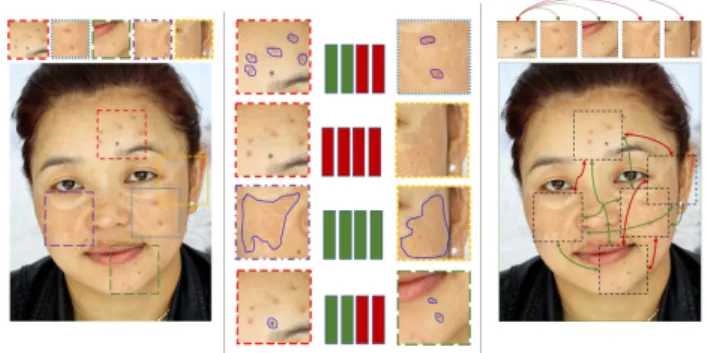
Figure 1. The concept of object-by-object learning: In fact,
skin lesion objects have visual relations between each other where it helps easily human to judge about what type of skin lesions are. In the figure, the green and red boxes represent the level of the image patch’s similarity. The green and red line describe that there exist positive and negative relations between objects or a group of objects of each patch.
Accurately and early detecting facial skin problems is an important clinical task and automated dermatology can be
used to save time and reduce costs [25]. E-cosmetics and
der-matological computer-aided systems are developing rapidly
behind computer vision progresses [49], [26], [25] , [45],
[12], [17], [29]. However, previous methods have shown
only limited improvements and visual understanding of in-dividual skin lesion in a dense group is still a challenging task.This is because, it is hard to distinguish some types of facial skin lesions between each other as the fine-grained ob-ject categorization problem. Furthermore, facial skin lesions appear ambiguously with different (typically small) sizes, which lead a network to assign wrong classes easily. The use of rich contextual relation information helps to reduce
the issue significantly [42], [27]. For example, there are the
object-object interactions [27] between some skin lesions
where the detection of an object class helps to detect another by their co-occurrence interactions. The detection decisions about individual skin lesions can be switched dynamically through contextual relations among objects. We denote this
Squeeze
Fip(., N) Multiply
Excitation
Fpi (.,N) Φ (.,W)
D H'
W'
D
H
W
D
H
W Multiply
1x1xD 1x1xD
Figure 2. Proposed REthinker block that consists of the locally constructed convLSTM/Conv3D layers and SE module [23] as a one-shot
attention mechanism whose responsibility is to improve network’s sensitivity in local and global contextual representation that helps to capture ambiguously appeared objects and co-occurrence interactions between object classes.
cognitive process asobject-by-objectdecision-making.
We present aREthinkermodule based on the SENet
mod-ule [23] [22] and locally constructed convLSTM/conv3D
unit [41] to increase network’s sensitivity in local and global
contextual representations. The proposed modules are easy to use and applicable in any standard convolutional neural
networks (CNNs). The use of theREthinkermodules forces
networks to capture the contextual relationships between object classes regardless of similar texture and ambiguous appearance they have.
We experiment our proposed modules by modifying
cur-rent state-o- the-art networks [19], [43], [8] for feature
ex-traction. We originally use the decoder of DeepLabv3+ [7].
Experimental results show that our proposed models
outper-form the state-of-the-art segmentation networks [34],[50],
[7] ,[4], [51], [39] by the high difference of 15.34% MIoU
[5], [21], [52] in detecting of facial skin problems in a
pre-pared dataset. Moreover, our models have shown promising results on ISIC 2018 segmentation tasks. The overall contri-butions of our paper can be summarized as follows:
• We introduce a new concept named ”object-by-object” learning, where an object can be identified by looking at other objects.
• We propose a novel residual block called REthinker modules that support ”object-by-object” technique by capturing contextual relationships between object classes.
• We develop a novel RethNet architecture that detects skin lesions with higher accuracy than the recent state-of-the-art segmentation approaches.
2. Related Work
Semantic Scene Understanding: Semantic understand-ing of visual scenes has become ubiquitous in computer vision. Impressive semantic segmentation approaches are mostly based on the Fully Convolutional Network (FCNs)
[33], [11], [30], [32], [53] ,[3] , [37]. One key reason for
the success of FCNs is that they use multi-scale (MS) im-age representations, which are subsequently upsampled to recover the lost resolution. Moreover, atrous convolution has proven to be an effective technique by providing a larger receptive field size without increasing the numbers of kernel
parameters [3]. Spatial pyramid pooling module [18] has
been successfully applied with atrous convolutions by state-of-the-art networks [5], [50],[21], [52], [34], [4], [51],[7] ,
[39] on segmentation and object detection benchmarks [14],
[35], [13], [31], [16], [10]. Recently, depthwise separable
convolution [8] has known as an efficient technique to reduce
the computation complexity in convolutional operations and
allow networks to go deeper [5], [39], [21], [52], [34].
Orig-inally, the depthwise separable convolution consists of the
depthwiseand pointwiseconvolutions where depthwise con-volution keeps the channels separate and uses the standard
convolution operation in each input channel [8].
Contextual relations:H.S. Hocket al. [20] introduced early the contextual relations between object scenes by experiments based on the criteria of familiarity,
physi-cal plausibility, and belongingness. The scene context
information plays a crucial role on the semantic scene understanding. However, the contextual relation information
between object classes are often ignored [15], [42], [27].
The relative spatial configurations of particular objects yield the higher-level contextual information while the lower-level contextual information demonstrates the semantic and visual
Figure 3. Samples of the SiblingsDB [46] dataset. Few samples with skin problems have been annotated in order to show only the labelling process of facial skin lesions. Note that we do not disclose our MSLD dataset samples.
relationships among objects or group of objects. S. Kumar
et al. [27] categorize types of the contextual relationships
of the scene labeling to region-region, object-region and
object-objectinteractions and provide a hierarchical frame-work using Conditional Random Fields (CRFs) for semantic segmentation. CRFs models are widely used to capture the
local contextual interactions of image regions [44] , [42],
[36], [5], [40]. RNNs are investigated broadly to aggregate
global context in the semantic segmentation [48], [2], [38],
[15] [28], [54]. SE modules [23] [22] are successfully
applied to capture global contextual information by simply exploiting CNN layers.
3. Datasets
We prepare a dataset called ”Multi-type Skin Lesion Labelled Database” (MSLD) with pixel-wise labelling of frontal face images. We report that the designing of MSLD is unique in ML community where it is not available such dataset with the labelling of multi-type skin lesions of facial images. We further test the proposed models in the Inter-national Skin Imaging Collaboration (ISIC) dataset which holds dermoscopic images with 5 types of skin problems. In this section, we introduce the process of image accumulation and annotation of MSLD dataset and announce about ISIC dataset.
3.1. Image accumulation
We collected a total of 27,790 frontal face images using kiosks in cosmetics stores during the period from April to August in 2018. The kiosks have a standard camera whose image sensor is a 1/3.2 Inch CMOS IMX179. The user’s con-sent is obtained before capturing images. The total number of pixels of the image sensor is 3,288 x 2,512 (8.26Mpixel) with 24-bit depth. The images are captured at autofocus and auto-white balance in the distance of 20 mm.
3.2. Image Annotation
The collected images are studied carefully. Then 412 im-ages have been annotated with the labelling of 11 common
types of facial skin lesions and 6 additional classes as in
Fig-ure 3using the PixelAnnotation tool [1]. The skin lesions are
whitehead, papule, pustule, freckle, melasma, age spots, PIH
1, flush, seborrheic, dermatitis, wrinkleandblack dot. The
additional classes are normal skin, hair, eyes/mouth/eyebrow, glasses, mask/scarf and background. We report that we do not disclose our (MSLD) dataset as the user’s privacy is taken under the responsibility. We use the collected and annotated images as research purposes where they are used only in the training.
3.3. ISIC Dataset
We test the proposed approaches in the TASK 22of the
ISIC, 2018 challenge called ”Lesion Attribute Detection” [9]
in order to provide further experiments. The goal of the task is to predict 5 skin lesion attributes from dermoscopic
im-ages. These lesion attributes arepigment networks, negative
network, streaks, milia-like cysts, globules, and dots. The lesion classes that have visual similarity can be seen as a fine-grained classification problem. There are 2594 images for training, 100 images for validation, and 1000 images for the test.
4. Methods
4.1. Squeeze and Excitation module
Squeeze and Excitation network (SENet) [23] has been
in-troduced as a winner of the ILSVRC 2017 classification task
in the top-5 error of 2.251%. SE blocksFigure 4[a-b] have
proven to be an effective channel-wise attention mechanism
[6] , which enables the network to perform dynamic
channel-wise feature recalibration. SE module is computationally cheaper and helps the network to learn contextual higher-level features by the aggregated transformations of the global pooling. The SE block consists of squeeze and excitation
operations where thesqueezeoperation uses the global
pool-ing to transform global spatial information to channel-wise
statistics as a channel descriptor. Theexcitationoperation
performs a self-gating mechanism based on 2 fully connected (FC) layers to capture channel-wise dependencies from the channel descriptor. Finally, the channel-wise dependencies are used to exploit the previous input transformation by the multiplication operation. The role of the SE module in our proposed module is to pass high-level contextual informa-tion outside of this region for context-dependent decision making.
1Post inflammatory hyperpigmentation (PIH) caused usually by
inflam-mation or acnes
Multiply
Global Pooling
FC (ReLU)
FC (Sigmoid) (1, 1, D/8) (1, 1, D)
(1, 1, D)
(c)
Conv2D, 1x1 Feature Map
(W, H, D)
(W, H, D)
Multiply Image2Patches Patches2Image Global Pooling FC (ReLU) FC (Sigmoid) (1, 1, D/8) (1, 1, D)
(1, 1, D)
Conv3D, 1x1 (Tanh)
Feature Map
(W, H, D)
(N2, W/N, H/N, D)
(W, H, D) (N2, W/N, H/N, D)
Multiply Image2Patches Patches2Image Global Pooling FC (ReLU) FC (Sigmoid) (1, 1, D/8) (1, 1, D)
(1, 1, D)
ConvLSTM, 1x1 (Tanh)
Feature Map
(W, H, D)
(N2, W/N, H/N, D)
(W, H, D) (N2, W/N, H/N, D)
(d) (e)
Multiply
Global Pooling
FC (ReLU)
FC (Sigmoid) (1, 1, D/8) (1, 1, D)
(1, 1, D)
(a)
Feature Map
(W, H, D)
Multiply
Global Pooling
FC (ReLU)
FC (Sigmoid) (1, 1, D/8) (1, 1, D)
(1, 1, D) Feature Map
(W, H, C)
(b)
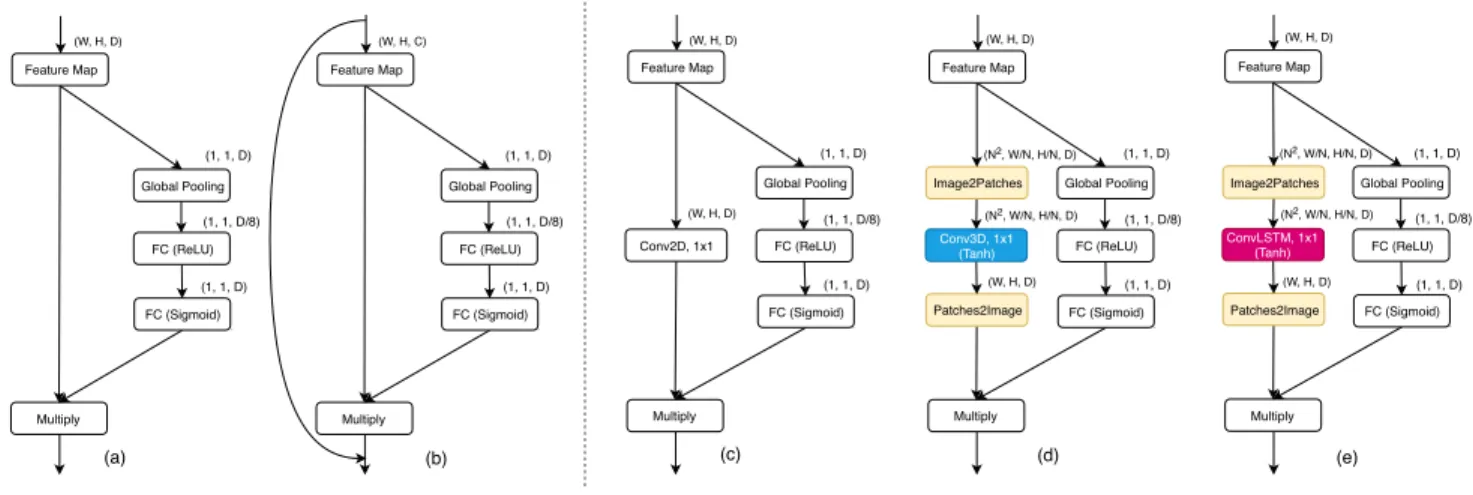
Figure 4. The figure represents comparison of SE blocks (a-b), baseline block (c) and REthinker blocks (d-e): The proposed REthinker blocks are designed under locally constructed Conv3D (d) and convLSTM (e) layers.
4.2. REthinker module
REthinker modules consist of SE module and the locally constructed convLSTM/conv3D layers as an one-shot
at-tention mechanism as in Figure 4 [d-e], which are both
responsible for extracting contextual relations from features. Precisely, as the global pooling of SE module aggregates the global spatial information, the SE module passes more embedded higher-level contextual information across large neighborhoods of each feature map. Whereas, the locally constructed convLSTM/conv3D layers encode lower-level contextual information across local neighborhoods elements of fragmented feature map (patches) while further take spa-tial correlation into consideration distributively over patches. The output of locally constructed convLSTM/conv3D
re-cieves 3D ,Ud∈RH×W×Dfeature maps from the residual
blocks and passes a transformed 3D ,U0
d∈R
H×W×D
fea-ture map. The locally constructed convLSTM/conv3D is identified as follows:
Ud0 =Fpi([Φ(Fip(Ud, N)|vt)|ht], N) (1)
Where,Fipis the image2patchesoperator function,Fip:
RH×W×C →RN2×H0×W0×Dto provide local
spatiotem-poral 4D data, vt = Fip(Ud, N). Practically, the feature
maps are transformed to patches over channel as
spatiotem-poral data. Here,H0×W0is a patch size(H0 =H/N, W0=
W/N)to be assumed as an object or a group of objects. The
given N is the dimensional slicing coefficient over the spatial
dimensions (W, H) of the feature map. Thus,Φis conv3D
or convLSTM operator function, Φ : RN2×H0×W0×D →
RN2×H0×W0×D
to be applied with keeping the depth of the feature map. The convLSTM/conv3D serves to encode spatiotemporal correlations between features by veiwing sequentially objects or a group of objects of patches and
passes the output as spatiotemporal dataht= Φ(vt)to the
patches2imageoperator whose identification function here is
Fpi:RN
2×H0×W0×D
→RH×W×DandU0
d=Fpi(ht, N).
Note thatht = Φ(vt, ht−1)performs as the hidden states
in the convLSTM. The gatesit, ht, otof the convLSTM are
identified as follows:
it=σ(wvivt+whiht−1+wci◦ct−1+bi)
ft=σ(wvf vt+whfht−1+wcf ◦ct−1+bf)
ct=ft◦ct−1 +it◦tanh(wvc∗vt+wcht−1+bc)
ot=σ(wvovt+whoht−1+wco◦ct+bo)
ht=ot◦tanh(ct)
(2)
Where, ’’ represents the convolution operator and ’◦’
denotes the Hadamard product. The output of SE module is used to exploit the output of locally constructed convL-STM/conv3D by the channel-wise multiplication operation as the output of REthinker module whose feature map repre-sents long-range local and global contextual information to enable the context-dependent decision making.
4.3. RethNeT
An Encoder Search:In practice, the REthinker blocks are applicable in any standard CNNs. We consider to
em-ploy current state of the art networks [19], [43], [8]. We
integrate the modern architectures with our proposed RE-thinker blocks to improve the network’s sensitivity in lo-cal and global contextual representations enabling
object-by-object learning technique. We experiment ResNet [19],
ResNeXt [47] and Xception [8], [7].
A Decoder Search:We believe that the rich contextual information is a key to capture ambiguously appeared
ob-0.5x 0.5x
0.5x 0.5x
4x
4x
Conv2D Xception REthinker Upsample D=64, 3x3
D=64, N=32
D=128, N=16
D=256, N=8 D=512, N=8
ASPP
D=256, 1x1
D=256, 3x3
D=17, 1x1
D=48, 1x1 concat
Figure 5. Our proposed RethNet based RE-Xception and the decoder of the DeepLabv3+ [7]. WhereDandNis the depth of future maps
and the dimensional slicing coefficient over the spatial dimensions respectively. .
Models Mean IoU(%) Pixel Acc(%)
DenseASPP [50] 58.31 89.31
PSPNet+ResNet-101 [18] 63.24 91.92
DeepLabv3Plus + ResNet-101 [7] 63.74 92.51 DeepLabv3Plus +ResNeXt-101 [33] 64.64 93.14
DeepLabv3Plus + Xception [7] 64.12 94.08
DeepLabv3Plus + Xception+SE 65.49 94.12
DeepLabv3Plus + Xception+baseline-c 65.52 94.21
RethNet + baseline-c 62.11 92.44
RethNet + Rethinker-d 76.56 96.45
RethNet + Rethinker-e 79.46 96.11
Table 1. Experimental results on test samples of our MSLD dataset.
jects and co-occurrence interactions between object classes where that is usually obtained in encoders. Therefore, we do not consider the decoder path. We select the decoder of
DeepLabv3+ [7] to recover object segmentation details of
individual skin lesions.
RethNet:We simply investigate RethNet with the com-bining of the Xception module and REthinker modules as inFigure 5. We modify Xception as follows: (1)We add REthinker module after each Xception blocks without spatial
loss of feature maps. (2)We remove the final block of the
entry flowof Xception.(3)We keep the patch size as 4x4 in each REthinker module in order to ”see” future maps wider in ConvLSTM/conv3D with simply increasing time steps.
(4)The number of parameters is minimized in the middle
flowandexit flow. As suggested in [7],(5)the max-pooling operation is replaced by depthwise separable convolutions with striding and the batch normalization and ReLU is ap-plied after each 3 x 3 depthwise convolution of the Xception module.
0 20 40 60 80 100 120
Parameters, M 0.0
0.2 0.4 0.6 0.8 1.0
Accuracy, %
RethNet + Rethinker-e RethNet + Rethinker-d RethNet + baseline-c DenseASPP PSPNet+ResNet-101
Figure 6. The number of parameters in the reference models and proposed modes with accuracy comparison on the test of MSLD dataset.
5. Experiments
5.1. Implementation
For experimental comparisons, we use the standard net-works that are DeepLabv3+, PSPNet, DenseASPP as the ref-erence networks. All models of networks were implemented using the TensorFlow framework and trained on a single NVIDIA GeForce GTX 1080 Ti GPUs, Intel(R) Core(TM) i7-8700K CPU @ 3.20GHz. In the experiments, 374 im-ages are used for training and 38 imim-ages are for testing. We use the standard data augmentation techniques whose participants are the random rotation, random zooming, and random horizontal flipping during the training. The input and ground-truth images of the dataset is resized to 730 x 960 and random cropping applied by 512 x 512 as the input of the network during the training. We follow the same training
protocols as suggested in [7], [18]. In all experiments, the
softmax cross-entropy is applied for loss and the momentum optimizer is used, whose base learning rate is set to 0.001
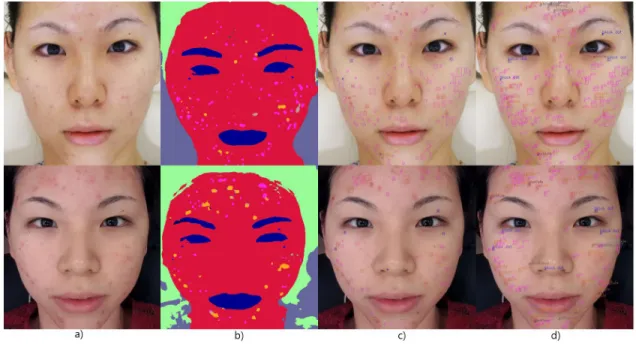
Figure 7. The visualization results ofRehtNet + Rethinker-e:The real test images (a) are obtained from thefionaseah.com
with an agreement of the author. The candidate of the test images is suffered from basically, PIH (caused by acne) and papules where the results images (b-d) show that the most of facial skin lesions are correctly predicted.
Models Rank Jaccard (%) Dice (%)
Ensemble [24] 1 0.483 0.651
Unet + ASPP +DenseNet169 [24] 2 0.464 0.629
Unet + ASPP + Resnetv2 [24] 3 0.455 0.616
Unet + ASPP +ResNet151 [24] 5 0.436 0.598
DeepLabv3Plus + Xception - 0.451 0.614
DeepLabv3Plus + Xception+SE - 0.469 0.627
DeepLabv3Plus + Xception+baseline-c - 0.456 0.616
RethNet + baseline-c - 0.441 0.592
RethNet + Rethinker-d - 0.473 0.639
RethNet + Rethinker-e - 0.475 0.644
Table 2. Experimental results on test samples of ISIC 2018 chal-lenge in the task 2. The evaluation metrics in this task are average Jaccard Index (mIoU) and Dice coefficient following by the pro-posed metrics of the challenge. The rank represents positions on
the test leaderboard of the challenge [24]. Note that the Jaccard
index metric, also referred to as the Intersection over Union (IoU).
decreased by a factor of 10 every 50 epoch of total 200 epoch with decay 0.9.
5.2. Results
Thanks to REthinker blocks, It shows significant improve-ments in the facial skin lesion detection task of MSLD
dataset. As Table 1summarized results, we made a
fur-ther improvement by DeepLabv3Plus + Xception+ SE and DeepLabv3Plus + Xception+ baseline-c, which showed a better result of 65.49 and 65.52 MIoU than all other refer-ence models except the proposed models. Our proposed network RethNet+ REthinker-e blocks achieved MIoU of
79.46% on the test, where it is the top in all experiments.
Computational cost:We compare proposed models with the reference models in terms of the number of
parame-ters and accuracy (Figure 6). Even though our RethNet +
REthinker-e block is the top on the list with 112M parame-ters, it reached high performance in the accuracy with a big difference (e.g 15 % of mIoU greater than the best reference model, 14% of mIoU higher than the baseline model). We further report inference time of the RethNet + REthinker-e block that whose running time for per image inference by the 512x512 of resolution is an average 2.7 sec on a single GPU and 11 sec on CPU of those mentioned hardware sources.
5.3. ISIC challenge
As Table 2 represents, our RethNet + REthinker-e block showed 47.5% of Mean-Jaccard on the test of ISIC dataset, where it outperforms all competitive single models except an ensemble model (”48.3% of Mean-Jaccard”). Note that the top-ranked models on the test leaderboards of the challenge use broadly preprocessing techniques such as image enhancing, polluting dermoscopic images with random hairs, and data augmentation. However, we apply only common techniques of data augmentation during training and test images are evaluated without any preprocessing techniques.
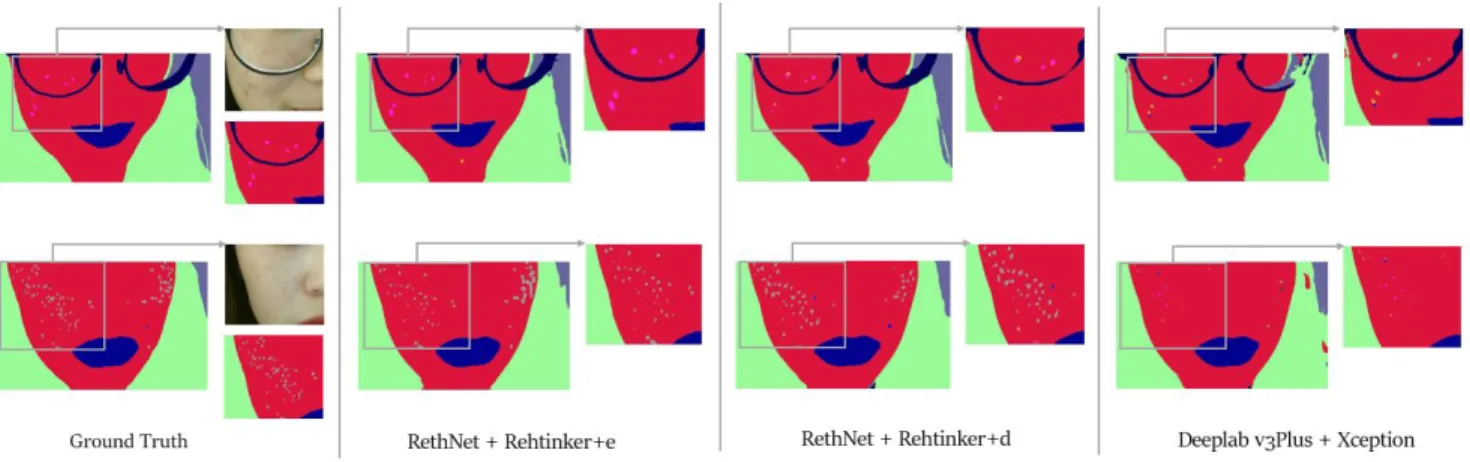
Figure 8. The ground truth and inference results of proposed models and the best reference model in MSLD dataset . We keep the face entity of the MSLD dataset.
5.4. Contribution Discussion
In fact, the fine-grained classification has been becoming an open issue in the computer vision community so far. It is a real challenge to differentiate classes that have similar visual context. Especially the problem is more common in medical imaging applications. We consider solving the problem with a novel straightforward technique by our application (”Detecting multi-type facial skin lesions”) where there is not yet accurate and solid application or method to detect correctly and differentiate multi-type facial skin lesions. The proposed blocks are easy to use and possible to apply to any standard CNNs with considering time complexity by limiting the number of the blocks.
6. Conclusion
We propose successfully an efficient network architecture to address detecting multi-type facial skin lesions by a novel
object-by-objectlearning technique. Experimental results show that our proposed model outperformed state-of-the-art segmentation networks by a high gap in the MSLD dataset. Furthermore, our model takes promising results on the ISIC 2018 segmentation task. In the future, we consider the time complexity of Rethinker blocks and try to design more light-weight models.
7. Acknowledgement
This work was supported by SBA (Seoul Business Agency) funded by the Korea government (Ministry of Trade Industry and Energy)
References
[1] A. Br. Pixel annotation tool. 2017.3
[2] W. Byeon, T. M. Breuel, F. Raue, and M. Liwicki. Scene
label-ing with lstm recurrent neural networks. In2015 IEEE
Con-ference on Computer Vision and Pattern Recognition (CVPR),
pages 3547–3555, June 2015.3
[3] L. Chen, G. Papandreou, I. Kokkinos, K. Murphy, and A. L. Yuille. Semantic image segmentation with deep convolutional
nets and fully connected crfs.CoRR, abs/1412.7062, 2014.2
[4] L. Chen, G. Papandreou, I. Kokkinos, K. Murphy, and A. L. Yuille. Deeplab: Semantic image segmentation with deep convolutional nets, atrous convolution, and fully connected
crfs.CoRR, abs/1606.00915, 2016.2
[5] L. Chen, G. Papandreou, F. Schroff, and H. Adam. Rethinking
atrous convolution for semantic image segmentation.CoRR,
abs/1706.05587, 2017.2,3
[6] L. Chen, H. Zhang, J. Xiao, L. Nie, J. Shao, and T. Chua. SCA-CNN: spatial and channel-wise attention in convolutional
networks for image captioning.CoRR, abs/1611.05594, 2016.
3
[7] L. Chen, Y. Zhu, G. Papandreou, F. Schroff, and H. Adam. Encoder-decoder with atrous separable convolution for
se-mantic image segmentation.CoRR, abs/1802.02611, 2018.2,
4,5
[8] F. Chollet. Xception: Deep learning with depthwise separable
convolutions.CoRR, abs/1610.02357, 2016.2,4
[9] N. C. F. Codella, D. Gutman, M. E. Celebi, B. Helba, M. A. Marchetti, S. W. Dusza, A. Kalloo, K. Liopyris, N. K. Mishra, H. Kittler, and A. Halpern. Skin lesion analysis toward melanoma detection: A challenge at the 2017 inter-national symposium on biomedical imaging (isbi), hosted by
the international skin imaging collaboration (ISIC). CoRR,
abs/1710.05006, 2017.3
[10] M. Cordts, M. Omran, S. Ramos, T. Rehfeld, M. Enzweiler,
R. Benenson, U. Franke, S. Roth, and B. Schiele. The
cityscapes dataset for semantic urban scene understanding.
CoRR, abs/1604.01685, 2016.2
[11] J. Dai, K. He, and J. Sun. Boxsup: Exploiting bounding boxes to supervise convolutional networks for semantic
segmenta-tion.CoRR, abs/1503.01640, 2015. 2
[12] A. Esteva, B. Kuprel, R. A. Novoa, J. Ko, S. M. Swetter, H. M. Blau, and S. Thrun. Dermatologist-level classification of skin
cancer with deep neural networks.Nature, 542:115 EP –, Jan
2017.1
[13] M. Everingham, S. M. A. Eslami, L. Van Gool, C. K. I. Williams, J. Winn, and A. Zisserman. The pascal visual object
classes challenge: A retrospective.International Journal of
Computer Vision, 111(1):98–136, Jan. 2015.2
[14] M. Everingham, L. Gool, C. K. Williams, J. Winn, and A.
Zis-serman. The pascal visual object classes (voc) challenge.Int.
J. Comput. Vision, 88(2):303–338, June 2010.2
[15] H. Fan, X. Mei, D. Prokhorov, and H. Ling. Multi-level contextual rnns with attention model for scene labeling.
IEEE Transactions on Intelligent Transportation Systems,
19(11):3475–3485, Nov 2018.2,3
[16] A. Geiger, P. Lenz, C. Stiller, and R. Urtasun. Vision meets
robotics: The kitti dataset. Int. J. Rob. Res., 32(11):1231–
1237, Sept. 2013.2
[17] S. S. Han, M. S. Kim, W. Lim, G. H. Park, I. Park, and S. E. Chang. Classification of the clinical images for benign and malignant cutaneous tumors using a deep learning algorithm.
Journal of Investigative Dermatology, 138(7):1529 – 1538,
2018.1
[18] K. He, X. Zhang, S. Ren, and J. Sun. Spatial pyramid pooling
in deep convolutional networks for visual recognition.CoRR,
abs/1406.4729, 2014.2,5
[19] K. He, X. Zhang, S. Ren, and J. Sun. Deep residual learning
for image recognition.CoRR, abs/1512.03385, 2015.2,4
[20] H. S. Hock, G. P. Gordon, and R. Whitehurst. Contextual relations: The influence of familiarity, physical plausibility,
and belongingness.Perception & Psychophysics, 16(1):4–8,
Jan 1974.2
[21] A. G. Howard, M. Zhu, B. Chen, D. Kalenichenko, W. Wang, T. Weyand, M. Andreetto, and H. Adam. Mobilenets: Effi-cient convolutional neural networks for mobile vision
appli-cations.CoRR, abs/1704.04861, 2017. 2
[22] J. Hu, L. Shen, S. Albanie, G. Sun, and A. Vedaldi. Gather-excite: Exploiting feature context in convolutional neural
networks.CoRR, abs/1810.12348, 2018.2,3
[23] J. Hu, L. Shen, and G. Sun. Squeeze-and-excitation networks.
CoRR, abs/1709.01507, 2017.2,3
[24] N. A. Koohbanani, M. Jahanifar, N. Z. Tajeddin, A. Gooya, and N. M. Rajpoot. Leveraging transfer learning for
segment-ing lesions and their attributes in dermoscopy images.CoRR,
abs/1809.10243, 2018.6
[25] K. Korotkov. automatic change detection in multiple
pig-mented skin lesions, 2014.1
[26] K. Korotkov and R. Garcia. Computerized analysis of
pig-mented skin lesions: A review. Artificial Intelligence in
Medicine, 56(2):69 – 90, 2012.1
[27] S. Kumar and M. Hebert. A hierarchical field framework for
unified context-based classification. InTenth IEEE
Interna-tional Conference on Computer Vision (ICCV’05) Volume 1,
volume 2, pages 1284–1291 Vol. 2, Oct 2005.1,2,3
[28] X. Liang, X. Shen, D. Xiang, J. Feng, L. Lin, and S. Yan. Semantic object parsing with local-global long short-term
memory.CoRR, abs/1511.04510, 2015.3
[29] H. Liao. A deep learning approach to universal skin disease
classification. 2015.1
[30] G. Lin, C. Shen, I. D. Reid, and A. van den Hengel. Efficient piecewise training of deep structured models for semantic
segmentation.CoRR, abs/1504.01013, 2015.2
[31] T. Lin, M. Maire, S. J. Belongie, L. D. Bourdev, R. B. Gir-shick, J. Hays, P. Perona, D. Ramanan, P. Doll´ar, and C. L.
Zitnick. Microsoft COCO: common objects in context.CoRR,
abs/1405.0312, 2014.2
[32] Z. Liu, X. Li, P. Luo, C. C. Loy, and X. Tang.
Seman-tic image segmentation via deep parsing network. CoRR,
abs/1509.02634, 2015.2
[33] J. Long, E. Shelhamer, and T. Darrell. Fully convolutional
networks for semantic segmentation.CoRR, abs/1411.4038,
2014.2,5
[34] N. Ma, X. Zhang, H.-T. Zheng, and J. Sun. Shufflenet
v2: Practical guidelines for efficient cnn architecture design. InThe European Conference on Computer Vision (ECCV),
September 2018.2
[35] R. Mottaghi, X. Chen, X. Liu, N.-G. Cho, S.-W. Lee, S. Fi-dler, R. Urtasun, and A. Yuille. The role of context for object
detection and semantic segmentation in the wild. InThe
IEEE Conference on Computer Vision and Pattern Recogni-tion (CVPR), June 2014.2
[36] R. Mottaghi, X. Chen, X. Liu, N.-G. Cho, S.-W. Lee, S. Fi-dler, R. Urtasun, and A. Yuille. The role of context for object
detection and semantic segmentation in the wild. In
Proceed-ings of the 2014 IEEE Conference on Computer Vision and Pattern Recognition, CVPR ’14, pages 891–898, Washington,
DC, USA, 2014. IEEE Computer Society.3
[37] H. Noh, S. Hong, and B. Han. Learning deconvolution
net-work for semantic segmentation. InProceedings of the 2015
IEEE International Conference on Computer Vision (ICCV), ICCV ’15, pages 1520–1528, Washington, DC, USA, 2015.
IEEE Computer Society. 2
[38] A. Salvador, M. Bellver, M. Baradad, F. Marqu´es, J. Torres, and X. Gir´o i Nieto. Recurrent neural networks for semantic
instance segmentation.CoRR, abs/1712.00617, 2017. 3
[39] M. Sandler, A. G. Howard, M. Zhu, A. Zhmoginov, and L. Chen. Inverted residuals and linear bottlenecks: Mobile
net-works for classification, detection and segmentation.CoRR,
abs/1801.04381, 2018.2
[40] F. Shen, R. Gan, S. Yan, and G. Zeng. Semantic segmentation via structured patch prediction, context crf and guidance crf. In2017 IEEE Conference on Computer Vision and Pattern Recognition (CVPR), pages 5178–5186, July 2017.3 [41] X. Shi, Z. Chen, H. Wang, D. Yeung, W. Wong, and W. Woo.
Convolutional LSTM network: A machine learning approach
for precipitation nowcasting.CoRR, abs/1506.04214, 2015.2
[42] J. Shotton, J. Winn, C. Rother, and A. Criminisi. Textonboost for image understanding: Multi-class object recognition and segmentation by jointly modeling texture, layout, and context.
International Journal of Computer Vision, 81(1):2–23, Jan
2009.1,2,3
[43] C. Szegedy, S. Ioffe, and V. Vanhoucke. Inception-v4,
inception-resnet and the impact of residual connections on
learning.CoRR, abs/1602.07261, 2016.2,4
[44] A. Torralba, K. Murphy, and W. T. Freeman. Contextual
mod-els for object detection using boosted random fields. NIPS,
[45] N. Tsumura, N. Ojima, K. Sato, M. Shiraishi, H. Shimizu, H. Nabeshima, S. Akazaki, K. Hori, and Y. Miyake. Image-based skin color and texture analysis/synthesis by extracting
hemoglobin and melanin information in the skin.ACM Trans.
Graph., 22(3):770–779, July 2003.1
[46] T. F. Vieira, A. Bottino, A. Laurentini, and M. De Simone.
Detecting siblings in image pairs. The Visual Computer,
30(12):1333–1345, Dec 2014.3
[47] S. Xie, R. B. Girshick, P. Doll´ar, Z. Tu, and K. He. Aggregated
residual transformations for deep neural networks. CoRR,
abs/1611.05431, 2016.4
[48] Z. Yan, H. Zhang, Y. Jia, T. Breuel, and Y. Yu. Combining the best of convolutional layers and recurrent layers: A hybrid
network for semantic segmentation.CoRR, abs/1603.04871,
2016.3
[49] L. Yang, S.-H. Lee, S.-G. Kwon, H.-J. Song, and K.-R. Kwon. Skin pigment recognition using projective
hemoglobin-melanin coordinate measurements.Journal of Electrical
En-gineering and Technology, 11:1825–1838, 11 2016.1 [50] M. Yang, K. Yu, C. Zhang, Z. Li, and K. Yang. Denseaspp
for semantic segmentation in street scenes. InThe IEEE
Con-ference on Computer Vision and Pattern Recognition (CVPR),
June 2018.2,5
[51] H. Zhang, K. J. Dana, J. Shi, Z. Zhang, X. Wang, A. Tyagi, and A. Agrawal. Context encoding for semantic segmentation.
CoRR, abs/1803.08904, 2018.2
[52] X. Zhang, X. Zhou, M. Lin, and J. Sun. Shufflenet: An extremely efficient convolutional neural network for mobile
devices.CoRR, abs/1707.01083, 2017.2
[53] S. Zheng, S. Jayasumana, B. Romera-Paredes, V. Vineet, Z. Su, D. Du, C. Huang, and P. H. S. Torr. Conditional
random fields as recurrent neural networks. InProceedings of
the 2015 IEEE International Conference on Computer Vision (ICCV), ICCV ’15, pages 1529–1537, Washington, DC, USA,
2015. IEEE Computer Society.2
[54] Y. Zhuang, F. Yang, L. Tao, C. Ma, Z. Zhang, Y. Li, H. Jia, X. Xie, and W. Gao. Dense relation network: Learning con-sistent and context-aware representation for semantic image
segmentation. In2018 25th IEEE International Conference
![Figure 2. Proposed REthinker block that consists of the locally constructed convLSTM/Conv3D layers and SE module [23] as a one-shot attention mechanism whose responsibility is to improve network’s sensitivity in local and global contextual representation t](https://thumb-us.123doks.com/thumbv2/123dok_us/8527595.2292325/2.918.115.781.109.349/proposed-rethinker-constructed-attention-responsibility-sensitivity-contextual-representation.webp)
![Figure 3. Samples of the SiblingsDB [46] dataset. Few samples with skin problems have been annotated in order to show only the labelling process of facial skin lesions](https://thumb-us.123doks.com/thumbv2/123dok_us/8527595.2292325/3.918.78.429.109.257/figure-samples-siblingsdb-dataset-samples-problems-annotated-labelling.webp)
![Figure 5. Our proposed RethNet based RE-Xception and the decoder of the DeepLabv3+ [7]](https://thumb-us.123doks.com/thumbv2/123dok_us/8527595.2292325/5.918.82.816.112.310/figure-proposed-rethnet-based-xception-decoder-deeplabv.webp)