Therapeutic Class
• Overview/Summary: Several biologic response modifiers are Food and Drug Administration
(FDA)-approved for the treatment of relapsing-remitting multiple sclerosis (RRMS) including dimethyl fumarate (Tecfidera®), fingolimod (Gilenya®), glatiramer acetate (Copaxone®), interferon β (IFNβ)-1b (Betaseron®,Extavia®), intramuscular (IM) IFNβ-1a (Avonex®), subcutaneous (SC) IFNβ-1a (Rebif®) and teriflunomide (Aubagio®).1-8 In addition, glatiramer acetate, IFNβ-1b and IM IFNβ-1a are FDA-approved for the treatment of patients experiencing a first clinical episode with magnetic resonance imaging evidence of multiple sclerosis (MS), referred to as a clinically isolated syndrome.3-7,8 The exact mechanisms of dimethyl fumarate, glatiramer acetate, the IFNβs and teriflunomide have not been fully established; however, they are likely due to their antiproliferative and immunomodulatory effects.1,3-8 Glatiramer acetate is a polymer containing four amino acids that are found in the myelin basic protein.3 The IFNβ products are produced by recombinant deoxyribonucleic acid technology in different cell systems, resulting in differences in amino acid sequence, molecular weight and degree of glycosylation.9 Three orally administered agents are currently available including fingolimod, a first-in-class sphingosine 1-phosphate receptor modulator, dimethyl fumarate and teriflunomide.
Fingolimod and teriflunomide are administered once daily, while dimethyl fumarate should be administered twice daily.1,2,8 Each IFNβ has a different FDA-approved dosing and administration schedule. Avonex® is administered IM once weekly, while Rebif® is administered SC three times weekly and Betaseron® and Extavia® are administered SC every other day.4-7 MS is a chronic and potentially disabling neurological disease characterized by repeated episodes of inflammation within the nervous tissue of the brain and spinal cord, resulting in injury to the myelin sheaths and
subsequently the nerve cell axons.10 Of the four clinical subtypes of MS (primary progressive, progressive relapsing, RRMS and secondary progressive), RRMS is the most common and is characterized by acute relapses followed by partial or full recovery.10-12 The most common adverse events associated with IFNβ therapy are influenza-type symptoms, injection site reactions, headache, nausea and musculoskeletal pain. Hepatotoxicity has rarely been reported in patients treated with IFNβ therapy.4-7 Therapy with IFNβ should be used cautiously in patients with depression or other mood disorders. Patients receiving glatiramer acetate therapy may experience a transient, self-limiting, post-injection systemic reaction immediately following drug administration consisting of flushing, chest pain, palpitations, anxiety, dyspnea, throat constriction and urticaria.3 Substantial cardiac monitoring is required when initiating treatment with fingolimod as post-marketing cases of cardiac-related death have been reported. In addition, fingolimod is contraindicated in patients with certain pre-existing cardiovascular conditions.2 The labeling of teriflunomide contains two black box warnings regarding the risk of hepatotoxicity and teratogenicity.8 Dimethyl fumarate, although it has limited post-marketing data, appears to have the most mild adverse event profile with flushing and gastrointestinal effects reported most frequently.1
Table 1. Current Medications Available in the Therapeutic Class1-8
Generic
(Trade Name) Food and Drug Administration- Approved Indications Form/Strength Dosage Availability Generic
Dimethyl fumarate
(Tecfidera®) Relapsing-remitting multiple sclerosis* Delayed-release capsule: 120 mg
240 mg
- Fingolimod (Gilenya®) Relapsing-remitting multiple sclerosis† Capsule:
0.5 mg -
Glatiramer acetate
(Copaxone®) Relapsing-remitting multiple sclerosis ‡, treatment of first clinical episode with magnetic resonance imaging features consistent with multiple sclerosis
Prefilled syringe:
20 mg -
(Betaseron®,
Extavia®) treatment of first clinical episode with magnetic resonance imaging features consistent with multiple sclerosis
0.3 mg lyophilized powder
Interferon β-1a
(Rebif®) Relapsing-remitting multiple sclerosis
║ Prefilled syringe: 8.8 µg
22 µg 44 µg
- Interferon β-1a
(Avonex®, Avonex Administration Pack®)
Relapsing-remitting multiple sclerosis¶, treatment of first clinical episode with magnetic resonance imaging features consistent with multiple sclerosis
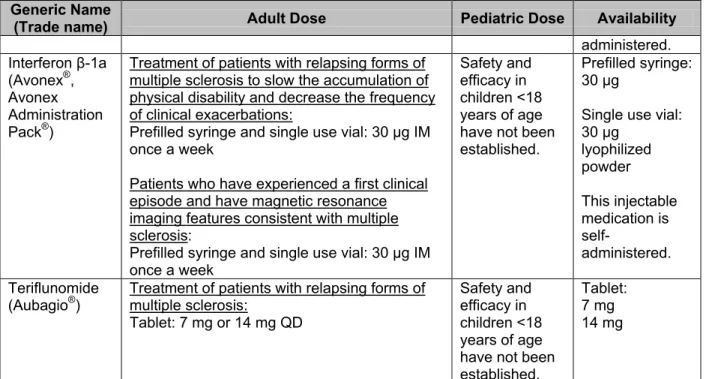
Prefilled syringe: 30 µg
Single use vial: 30 µg lyophilized powder
- Teriflunomide
(Aubagio®) Relapsing-remitting multiple sclerosis* Tablet: 7 mg
14 mg -
*Treatment of patients with relapsing forms of multiple sclerosis.
†Treatment of patients with relapsing forms of multiple sclerosis to reduce the frequency of clinical exacerbations and to delay the accumulation of physical disability.
‡Reduction of the frequency of relapses in patients with relapsing-remitting multiple sclerosis. §Treatment of relapsing forms of multiple sclerosis to reduce the frequency of clinical exacerbations.
║Treatment of patients with relapsing forms of multiple sclerosis to decrease the frequency of clinical exacerbations and delay the accumulation of physical disability.
¶ Treatment of patients with relapsing forms of multiple sclerosis to slow the accumulation of physical disability and decrease the frequency of clinical exacerbations.
Evidence-based Medicine
• The safety and efficacy of glatiramer acetate and interferon (IFNβ) products are well established. Recent clinical trials have not produced clinically different results compared to trials published previously.
• In two large, randomized trials with dimethyl fumarate 240 mg twice-daily or three times daily compared to placebo, there were statistically significant reductions in the annualized relapse rate (ARR) with both dimethyl fumarate regimens compared to placebo (P≤0.001 for both).13,14 Fox et al also included an open-label glatiramer acetate comparator group. In a post-hoc analysis, there were significant improvements favoring dimethyl fumarate over glatiramer acetate with regard to ARR (three times daily group only), new or enlarging T2 hyperintense lesions and new T1 hypointense lesions (three times daily group only).14
• In the 24-month, placebo-controlled FREEDOMS trial, treatment with fingolimod 0.5 or 1.25 mg once daily significantly reduced ARR compared to placebo (54 and 60%, respectively; P<0.001 for both).15 • The FREEDOMS II trial had similar results, with fingolimod providing a lower ARR over 24 months
compared to placebo.16
• In the 12-month TRANSFORMS trial, fingolimod 0.5 or 1.25 mg once-daily significantly reduced ARR by 52 and 40%, respectively, compared to IFNβ-1a 30 µg intramuscularly (IM) once-weekly (P<0.001 for both).17 In a 12-month extension of TRANSFORMS, patients initially randomized to IM IFNβ-1a were switched to either dose of fingolimod for 12 additional months and experienced significant reductions in ARR compared to initial treatment with IM IFNβ-1a.18
• In the TEMSO trial, treatment with teriflunomide 7 or 14 mg was associated with significantly greater relative reductions in ARR compared to placebo (31.2 and 31.5%. respectively; P<0.001).19 In an unpublished extension study, ARR remained low after five years and the adverse event rates were similar to those reported in previous trials.20,21
• The TOWER study showed that over one year teriflunomide had a lower ARR than placebo.22
• The ComiRX trial, evaluated the combination of IFNβ-1a and glatiramer acetate versus IFNβ-1a alone versus glatiramer acetate alone. After three years, the ARR of the combination was not statistically
risk of exacerbation compared to interferon by 25% (P=0.027, P=0.022 respectively).
Key Points within the Medication Class • According to Current Clinical Guidelines:
o The American Academy of Neurology and the National Multiple Sclerosis (MS) Society guidelines recommend the use of interferon β (IFNβ) products or glatiramer acetate as first-line therapy in all patients with clinically definite relapsing-remitting MS (RRMS) and in select patients with clinically isolated syndrome.25,26
o The most appropriate agent may be selected on an individual basis and monitored for clinical response and tolerability.25
o Consensus guidelines have not been updated to address the role of dimethyl fumarate or teriflunomide in the treatment of MS.25
o The National Institute for Clinical Excellence has recommended that due to its adverse event profile, fingolimod be reserved as an option for highly active RRMS in adults, only if patients have an unchanged or increased relapse rate or ongoing severe relapses compared to the previous year despite treatment with IFNβ.27
• Other Key Facts:
o No generic products are currently available.
o There are no head-to-head trials comparing IFNβ-1b products (Betaseron® and Extavia®) and the drugs are not interchangeable despite Extavia® being approved with the same active ingredient and registration trials as Betaseron®.4,5
o Extavia® comes with a 27-gauge needle, packaged with 15 vials for a 30 day supply, while the Betaseron® has 30-gauge needles, packaged with 14 vials for a 28 day supply.4,5
References
1. Tecfidera® [package insert]. Cambridge (MA): Biogen Idec Inc; 2013 Mar.
2. Gilenya® [package insert]. East Hanover (NJ): Novartis Pharmaceuticals Corporation; 2014 Apr.
3. Copaxone® [package insert]. Kansas City (MO): Teva Neuroscience, Inc.; 2014 Jan.
4. Betaseron® [package insert]. Whippany (NJ): Bayer Healthcare Pharmaceuticals. Inc.; 2014 Jan.
5. Extavia® [package insert]. East Hanover (NJ): Novartis Pharmaceuticals; 2012 Mar.
6. Rebif® [package insert on the Internet]. Rockland (MA): EMD Serono; 2014 Apr.
7. Avonex® [package insert]. Cambridge (MA): Biogen Idec, Inc.; 2013 Mar.
8. Aubagio® [package insert]. Cambridge (MA): Genzyme Corporation; 2012 Sep.
9. Kappos L. Interferons in multiple sclerosis. Neurol Clin. 2005;23:189-214.
10. Olek MJ. Treatment of relapsing-remitting multiple sclerosis in adults. In: Gonzalez-Scarane F (Ed). UpToDate [database on the internet]. Waltham (MA): UpToDate; 2014 Aug [cited 2014 Aug 25]. Available from: http://www.utdol.com/utd/index.do. 11. Olek MJ. Treatment of progressive multiple sclerosis in adults. In: Gonzalez-Scarane F (Ed). UpToDate [database on the
internet]. Waltham (MA): UpToDate; 2014 Jul [cited 2014 Aug 25]. Available from: http://www.utdol.com/utd/index.do. 12. Goodin DS, Frohman EM, Garmany GP. Disease modifying therapies in multiple sclerosis: report of the Therapeutics and
Technology Assessment Subcommittee of the American Academy of Neurology and the MS Council for Clinical Practice Guidelines. Neurology. 2002;58(2):169-78.
13. Gold R, Kappos L, Arnold DL, Bar-Or A, Giovannoni G, Selmaj K, et al. Placebo-controlled phase 3 study of oral BG-12 for relapsing multiple sclerosis. N
14. Engl J Med. 2012 Sep 20;367(12):1098-107.
15. Fox RJ, Miller DH, Phillips JT, Hutchinson M, Havrdova E, Kita M, et al. Placebo-controlled phase 3 study of oral BG-12 or glatiramer in multiple sclerosis. N Engl J Med. 2012 Sep 20;367(12):1087-97.
16. Kappos L, Radue EW, O’Connor P, Polman C, Hohlfeld R, Calabresi P, et al. A placebo-controlled trial of oral fingolimod in relapsing multiple sclerosis. N Engl J Med. 2010;362(5):387-401.
17. 77. Calabresi PA, Radue EW, Goodin D, Jeffery D, Rammohan KW, et al. Safety and efficacy of fingolimod in patients with relapsing-remitting multiple sclerosis (FREEDOMS II): a double-blind, randomised, placebo-controlled, phase 3 trial. Lancet Neurol. 2014 Jun;13(6):545-56. doi: 10.1016/S1474-4422(14)70049-3. Epub 2014 Mar 28.
18. Cohen JA, Barkhof F, Comi G, Hartung P, Khatri BO, Montalban X, et al. Oral fingolimod or intramuscular interferon for relapsing multiple sclerosis. N Engl J Med. 2010;362:402-15.
19. Khatri B, Barkhof F, Comi G, Hartung HP, Kappos L, Montalban X, et al. Comparison of fingolimod with interferon beta-1a in relapsing-remitting multiple sclerosis: a randomized extension of the TRANSFORMS study. Lancet Neurol. 2011
Jun;10(6):520-9.
20. O’Connor P, Wolinsky JS, Confavreux C, Comi G, Kappos L, Olsson TP. Randomized trial of oral teriflunomide for relapsing multiple sclerosis. N Engl J Med. 2011 Oct;365:1293-303.
Netherlands. P9242011.
22. Comi G et al. Extension of a phase III trial (TEMSO) of oral teriflunomide in multiple sclerosis with relapses: safety outcomes with up to 4 years of follow-up. ECTRIMS/ACTRIMS. Amsterdam, Netherlands. P4392011.
23. Confavreux C, O'Connor P, Comi G, Freedman MS, Miller AE, et al. Oral teriflunomide for patients with relapsing multiple sclerosis (TOWER): a randomised, double-blind, placebo-controlled, phase 3 trial. Lancet Neurol. 2014 Mar;13(3):247-56. doi: 10.1016/S1474-4422(13)70308-9. Epub 2014 Jan 23.
24. Lublin FD, Cofield SS, Cutter GR, Conwit R, Narayana PA, et al. Randomized study combining interferon and glatiramer acetate in multiple sclerosis. Ann Neurol. 2013 Mar;73(3):327-40. doi: 10.1002/ana.23863. Epub 2013 Mar 11.Goodin DS, Frohman EM, Garmany GP. Disease modifying therapies in multiple sclerosis: report of the Therapeutics and Technology Assessment Subcommittee of the American Academy of Neurology and the MS Council for Clinical Practice Guidelines. Neurology. 2002;58(2):169-78.
25. National Clinical Advisory Board of the National Multiple Sclerosis Society. Expert Opinion Paper: Disease Management Consensus Statement. National Multiple Sclerosis Society, 2008 [cited 2014 Aug 25]. Available from:
http://www.nationalmssociety.org/about-multiple-sclerosis/what-we-know-about-ms/treatments/index.aspx.
26. National Institute for Health and Clinical Excellence (NICE). Fingolimod for the treatment of highly active relapsing-remitting multiple sclerosis. London (UK): National Institute for Health and Clinical Excellence (NICE); 2012 Apr. 55 p. (Technology appraisal guidance; no. 254).
Overview/Summary
Several biologic response modifiers are Food and Drug Administration (FDA)-approved for the treatment of relapsing-remitting multiple sclerosis (RRMS) and include dimethyl fumarate (Tecfidera®), fingolimod (Gilenya®), glatiramer acetate (Copaxone®), interferon β (IFNβ)-1b (Betaseron®,Extavia®), intramuscular (IM) IFNβ-1a (Avonex®), subcutaneous (SC) IFNβ-1a (Rebif®) and teriflunomide (Aubagio®).1-9 In addition, IFNβ-1b and IM IFNβ-1a are FDA-approved for the treatment of patients experiencing a first clinical episode with magnetic resonance imaging (MRI) evidence of multiple sclerosis (MS), often referred to as a clinically isolated syndrome.4,5,7 Fingolimod, a first-in-class sphingosine 1-phosphate receptor
modulator, was approved by the FDA in September 2010, and is the first oral agent indicated for MS.9 Two more oral agents, teriflunomide and dimethyl fumarate, were approved in September 2012 and March 2013, respectively.9 The exact mechanisms of action of dimethyl fumarate, teriflunomide, the INFs, and glatiramer acetate are unknown but are likely due to their antiproliferative and immunomodulatory effects.1,3-8 Glatiramer acetate is a polymer containing four amino acids that are found in the myelin basic protein.3,10 IFNs are produced by recombinant deoxyribonucleic acid technology in different cell systems, resulting in slight differences in amino acid sequence, molecular weight, degree of glycosylation, and specific activity.11 Each IFNβ product has a different FDA-approved dosing and administration schedule. IFNβ-1a (Avonex®) 30 µg is administered IM once-weekly, while IFNβ-1a (Rebif®) 22 to 44 µg is
administered SC three times weekly and IFNβ-1b (Betaseron®, Extavia®) 250 µg is administered SC every other day.4-7
MS is a chronic and potentially disabling neurological disease characterized by repeated episodes of inflammation within the nervous tissue of the brain and spinal cord, resulting in injury to the myelin sheaths and subsequently the nerve cell axons.10-12 There are four clinical subtypes of MS: RRMS, primary progressive (PPMS), progressive relapsing (PRMS), and secondary progressive (SPMS).12-14 The most common form is RRMS, characterized by acute relapses followed by partial or full
recovery.13,14 Patients with PPMS have a continuous and gradual decline in function without evidence of acute attacks. Patients with PRMS also have a continuous decline in function while experiencing
occasional attacks. Finally, SPMS begins as RRMS, but as time progresses the attack rate declines and patients experience a gradual deterioration.14
The approach to treating MS includes the management of symptoms, treatment of acute relapses, and utilization of disease-modifying therapies to reduce the frequency and severity of relapses, and delay disease and disability progression.10,12,14 The American Academy of Neurology and the National MS Society guidelines recommend the use of IFNβ products or glatiramer acetate as first-line therapy in all patients with clinically definite RRMS and in select patients with clinically isolated syndrome.14 It is suggested that the most appropriate agent may be selected on an individual basis and monitored for clinical response and tolerability. Consensus guidelines have not been updated to address the role of dimethyl fumarate or teriflunomide in the treatment of MS. The National Institute for Clinical Excellence has recommended that due to its adverse effect profile, fingolimod be reserved as an option for highly active RRMS in adults, only if patients have an unchanged or increased relapse rate, or ongoing severe relapses compared to the previous year despite treatment with IFNβ.15 They also recommend
teriflunomide as an option for treating adults with active relapsing–remitting multiple sclerosis (normally defined as two clinically significant relapses in the previous two years), only if they do not have highly active or rapidly evolving severe relapsing–remitting multiple sclerosis.16
Results from head-to-head studies have found IFNβ products and glatiramer acetate to be comparable in terms of annualized relapse rate (ARR) reduction, and disease and disability progression.10,12,14,17
Patients treated with fingolimod in clinical trials experienced a reduction in ARR from 40 to 60%, improved MRI outcomes and slowed progression to disability when compared to patients treated with placebo and IM IFNβ-1a, respectively.12 Both dimethyl fumarate and teriflunomide treatment have shown to also significantly reduce ARR, improve MRI outcomes, and slow progression to disability compared to
efficacy. The development of neutralizing antibodies to IFNβ (more commonly seen with IFNβ-1b
compared to IFNβ-1a) may lead to decreased efficacy of these agents.18,19 However, the long-term impact of neutralizing antibodies on clinical outcomes has not been fully determined. Consensus guidelines do not recommend a change of therapy in patients positive for neutralizing antibodies who are responding to IFN therapy, noting that neutralizing antibodies disappear with continued treatment in the majority of patients.14,17-19 Generally, patients treated with either IFNβ or glatiramer acetate experience a 30% reduction in ARR.17 However, many patients do not optimally respond to the initial biologic response modifier therapy.20,21 Clinical data suggests that a change of therapy may be considered in patients experiencing a suboptimal response or intolerable adverse effects. In studies, patients switching from IFNβ to glatiramer acetate therapy and vice versa, due to poor response, achieved a significant reduction in relapse rate and a delay in disease and disability progression.20,22,23 The IFNβ products or glatiramer acetate therapy may be considered in patients with progressive forms of the disease, although safety and efficacy have not been established in this patient population.
The most frequently reported adverse events associated with IFNβ therapy are influenza-type symptoms, injection site reactions, headache, nausea, and musculoskeletalpain. Rare cases of hepatic toxicity have occurred in patients who were treated with IFN therapy.4-7 Therapy with IFNβ should be used cautiously in patients with depression or other mood disorders. Patients receiving glatiramer acetate therapy may experience a transient, self-limiting, post-injection systemic reaction immediately following drug administration consisting of flushing, chest pain, palpitations, anxiety, dyspnea, throat constriction, and urticaria.3 Glatiramer acetate does not have any known drug interactions, and is not associated with an increased risk of hepatotoxicity or depression.3 Fingolimod has been associated with post-marketing cases of cardiac-related death and thus requires substantial cardiac monitoring and is contraindicated in patients with certain pre-existing cardiovascular conditions.2 Teriflunomide has two black box warnings regarding hepatotoxicity and its risk of teratogenicity.8 Dimethyl fumarate, although it has limited post-marketing data, it appears to have the most mild side effect profile with its most common adverse events being flushing and gastrointestinal effects.1
Of note, natalizumab (Tysabri®) and mitoxantrone (Novantrone®) are also FDA-approved for the treatment of RRMS. However, these agents are not recommended for first-line use due to safety concerns with progressive multifocal leukoencephalopathy and cardiotoxicity, respectively.24,25 Natalizumab is reserved for patients with rapidly advancing disease who have failed other therapies and can only be obtained through a restricted access program.24
Medications
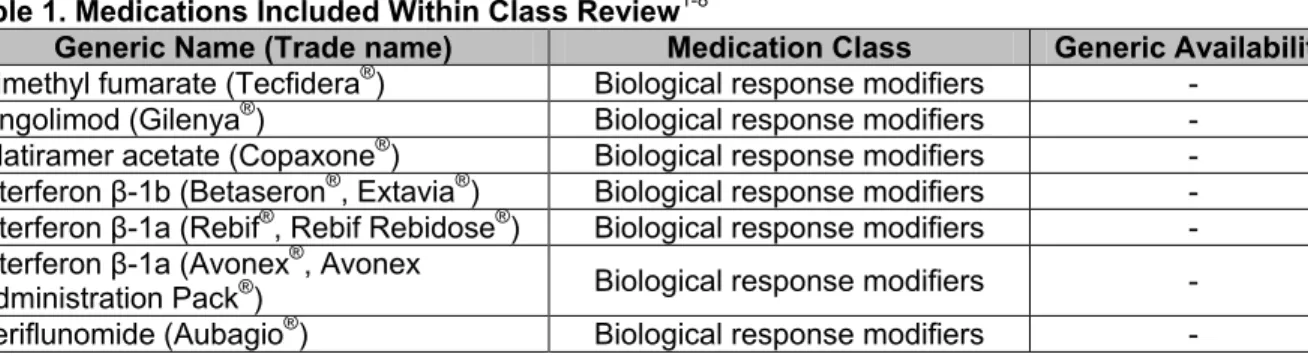
Table 1. Medications Included Within Class Review1-8
Generic Name (Trade name) Medication Class Generic Availability
Dimethyl fumarate (Tecfidera®) Biological response modifiers -
Fingolimod (Gilenya®) Biological response modifiers -
Glatiramer acetate (Copaxone®) Biological response modifiers -
Interferon β-1b (Betaseron®, Extavia®) Biological response modifiers - Interferon β-1a (Rebif®, Rebif Rebidose®) Biological response modifiers - Interferon β-1a (Avonex®, Avonex
Administration Pack®) Biological response modifiers -
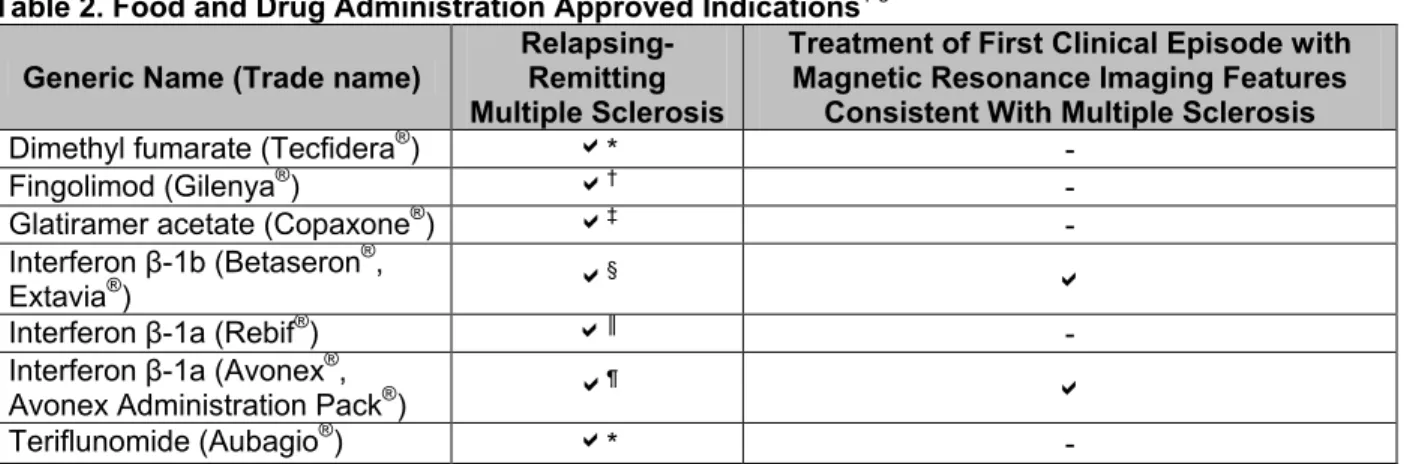
Generic Name (Trade name) Relapsing-Remitting Multiple Sclerosis
Treatment of First Clinical Episode with Magnetic Resonance Imaging Features
Consistent With Multiple Sclerosis
Dimethyl fumarate (Tecfidera®) * -
Fingolimod (Gilenya®) † -
Glatiramer acetate (Copaxone®) ‡ -
Interferon β-1b (Betaseron®,
Extavia®) §
Interferon β-1a (Rebif®) ║ -
Interferon β-1a (Avonex®,
Avonex Administration Pack®) ¶
Teriflunomide (Aubagio®) * -
*Treatment of patients with relapsing forms of multiple sclerosis.
†Treatment of patients with relapsing forms of multiple sclerosis to reduce the frequency of clinical exacerbations and to delay the accumulation of physical disability.
‡Reduction of the frequency of relapses in patients with relapsing-remitting multiple sclerosis. §Treatment of relapsing forms of multiple sclerosis to reduce the frequency of clinical exacerbations.
║Treatment of patients with relapsing forms of multiple sclerosis to decrease the frequency of clinical exacerbations and delay the accumulation of physical disability.
¶ Treatment of patients with relapsing forms of multiple sclerosis to slow the accumulation of physical disability and decrease the frequency of clinical exacerbations.
Potential off-label uses of the biologic response modifiers include secondary progressive multiple sclerosis with relapses, and in children with relapsing-remitting multiple sclerosis.11,13,14
Pharmacokinetics
Table 3. Pharmacokinetics1-8,10
Generic Name
(Trade name) Bioavailability (%) Absorption (%) Excretion (%) Renal Metabolites Active
Serum Half-Life
(hours)
Dimethyl fumarate
(Tecfidera®) Not reported Not reported 16 Monomethyl fumarate 1
Fingolimod
(Gilenya®) 93 Not reported 81 Fingolimod phosphate 144 to 216
Glatiramer acetate
(Copaxone®) Not reported Not reported Not reported Not reported Not reported Interferon β-1b
(Betaseron®, Extavia®)
50 50 Not reported Not reported 0.13 to 4.30
Interferon β-1a
(Rebif®) Not reported Not reported Not reported Not reported 69
Interferon β-1a (Avonex®, Avonex Administration Pack®)
Not reported Not reported Not reported Not reported 10
Teriflunomide
(Aubagio®) Not reported Not reported 22.6 Not reported 432 to 456
Clinical Trials
Numerous studies of the agents in the management of multiple sclerosis (MS) have been published.27-91 In the management of MS, several clinical trials have established the safety and efficacy of the biologic response modifiers in reducing the frequency of relapses and delaying disease progression and
the risk of converting to a clinically definite MS diagnosis by 45% compared to placebo in patients with clinically isolated syndrome (P=0.005). In addition, the time for 25% of patients to convert to clinically definite MS was significantly prolonged with glatiramer acetate compared to placebo (722 vs 336 days; P=0.0041). 81A meta-analysis of randomized, double-blind, placebo-controlled trials in patients with clinically isolated syndrome found a significantly lower risk of clinically definite MS with interferon (IFN) therapy compared to placebo (P<0.0001).82 The role of the MS biologic response modifiers in the treatment of primary or secondary progressive MS has not been determined, and these agents are not Food and Drug Administration (FDA)-approved for treating these forms of MS. The results of studies with these agents have failed to consistently demonstrate a benefit in progressive forms of MS and due to being off-label uses are not included in Table 4. In the PROMISE trial, glatiramer acetate was no more effective than placebo in delaying the time to accumulated disability for patients with primary progressive MS.86 Several IFN trials, including a systematic review, in this population have yielded conflicting
results.87,91
The safety and efficacy of dimethyl fumarate were demonstrated in two large, randomized, controlled trials that compared dimethyl fumarate 240 mg twice daily and three times daily to placebo. Both trials were approximately two years in duration and each found that the twice daily dose significantly reduced the annualized relapse rate (ARR) compared to placebo (P≤0.001 for both).27,51 Fox et al. also included an open label glatiramer acetate comparator group. In a post-hoc analysis, it was found there were significant differences favoring dimethyl fumarate over glatiramer for ARR (dimethyl fumarate three times daily only), new or enlarging T2 hyperintense lesions (both doses of dimethyl fumarate) and new T1 hypointense lesions (dimethyl fumarate three times daily only).51
Fingolimod has been evaluated in two large, randomized, controlled trials against placebo and against intramuscular (IM) IFNβ-1a. In FREEDOMS, a 24-month placebo-controlled trial, fingolimod (0.5% and 1.25 mg once-daily) was associated with significant reductions in ARR compared to placebo (54% and 60%, respectively; P<0.001 for both).28 Another subgroup analysis of FREEDOMS found that the significant reductions in ARR were maintained in all groups except in patients older than 40 years of age.29 Moreover, fingolimod was associated with reductions in disability progression and a prolonged time to first relapse compared to placebo.28 The FREEDOMS II trial had similar results, with fingolimod
providing a lower ARR over 24 months compared to placebo.77 In the 12-month TRANSFORMS trial, fingolimod 0.5 and 1.25 mg once-daily significantly reduced ARR by 52 and 40%, respectively, compared to IFNβ-1a 30 µg IM once-weekly (P<0.001 for both).33 In a 12-month extension of TRANSFORMS, patients initially randomized to IM IFNβ-1a were switched to either dose of fingolimod for 12 additional months and experienced significant reductions in ARR compared to initial treatment with IM IFNβ-1a. No new fingolimod-associated adverse events were reported in the extension phase, although patients initially treated with IFNβ-1a had fewer IFN-associated adverse events and an increase events associated with fingolimod.34
Teriflunomide has been evaluated as monotherapy treatment in one large phase III trial, TEMSO, and an extension study. In TEMSO, the ARR was significantly reduced in both the 7 mg and 14 mg treatment groups compared to placebo (0.37 vs. 0.54, for both treatment arms compared to placebo; P<0.001).46 In the unpublished extension study, ARR remained low after five years and the adverse event rates were similar to those reported in previous trials.47,48 Another study, TOWER, showed that over one year, teriflunomide had a lower ARR than placebo.78 An unpublished, head-to-head phase III trial compared teriflunomide 7 mg and 14 mg to Rebif®. It was reported that the primary endpoint, time to failure (relapse of MS or permanent discontinuation of study treatment for any reason), was not significantly different between groups. However, the most frequent reason for failure in the teriflunomide groups trended toward relapse, while the most frequent reason for failure in the Rebif® (IFNβ-1a) group trended toward treatment discontinuation.77
Head-to-head trials have found glatiramer acetate, subcutaneously (SC) IFNβ-1a, and IFNβ-1b to be comparable in terms of relapse rate reduction and disease and disability progression. 41,42,54,55 The results
advantage of IFNβ-1a 30 µg IM once-weekly compared to placebo in the number of relapse-free patients after one year of therapy.44 In contrast, other studies found IFNβ-1a 30 µg IM once-weekly to be
comparable to the other IFN products in terms of relapse rate reduction, disability progression and secondary progressive MS development.59,65,73-76 Moreover, IFN therapy, especially the higher dose products, are associated with the production of neutralizing antibodies which may result in decreased radiographic and clinical effectiveness of treatment.18,19 Exploratory post-hoc analyses of the PRISMS trial linked the development of neutralizing antibodies with reduced efficacy.88 Development of
neutralizing antibodies among patients (N=368) randomized to receive IFNβ-1a 44 or 22 µg SC three times weekly for four years was associated with higher relapse rates (adjusted relapse rate ratio, 1.41; 95% confidence interval [CI], 1.12 to 1.78; P=0.004) and a greater number of active lesions and percentage change in T2 lesion burden from baseline on magnetic resonance imaging scan (P<0.001). The ComiRX trial evaluated the combination of IFNβ-1a and glatiramer acetate versus IFNβ-1a alone versus glatiramer acetate alone. After three years, the ARR of the combination was not statistically significantly improved to the better of the two single-agent arms when adjusting for baseline age. Glatiramer acetate provided statistically significant greater reduction in risk of exacerbation compared to interferon by 31%, and the combination group provided statistically significant greater reduction in risk of exacerbation compared to interferon by 25% (P=0.027, P=0.022 respectively).79
It is estimated that within a few years of treatment, at least 30% and 15% of patients discontinue MS biological response modifiers due to perceived lack of efficacy or side effects, respectively.20,21 According to several observational studies, switching patients who have failed to adequately respond on initial treatment, to another first-line therapy is safe and effective.22,23,59 Patients switching to glatiramer acetate after experiencing inadequate response on IFNβ-1a therapy experienced a reduction in relapse rates and disability progression. Likewise, switching to IFNβ-1a therapy after suboptimal efficacy with glatiramer acetate increased the number of relapse-free patients in one study.59 The smallest reduction in the annualized relapse rate was seen in patients who had switched from one IFNβ-1a preparation to another. Despite evidence showing these treatments to be effective in slowing MS progression, and reducing relapses, significant side effects and high costs associated with treatment can be burdensome for patients and payers. Three cost-effectiveness studies evaluating glatiramer acetate and IFN therapy in patients with relapsing-remitting MS have been conducted in the United States. One study found glatiramer acetate to be the most cost-effective biological response modifier for MS, while the remaining two reported that IM IFNβ-1a is the most cost-effective agent, in 10 year disease progression models. Of note, none of the oral multiple sclerosis agents were included in these cost-effectiveness studies.83-85
Study and Drug
Regimen Study Design and Demographics and Study Duration End Points Results
Relapsing-Remitting Multiple Sclerosis
Gold et al27 DEFINE
Dimethyl fumarate 240 mg BID
vs
Dimethyl fumarate 240 mg TID
vs placebo
DB, MC, PC, RCT Patients aged 18 to 55 years with a diagnosis of RRMS, an EDSS score of 0 to 5, and at least one clinically documented relapse in the previous 12 months or at least one gadolinium-enhancing lesion 0 to 6 weeks before randomization
N=1,237 96 weeks
Primary: Proportion of patients who had a relapse by two years Secondary:
ARR, time to progression of disability, number of
gadolinium-enhancing lesions and of new or enlarging hyperintense T2 lesions
Primary:
Relapses after two years were observed in 27% and 26% of the patients in the twice daily and three times daily dimethyl fumarate groups, respectively, compared to 46% of patients in the placebo group (HR, 0.51; 95% CI: 0.39 to 0.65 and 0.50; 95% CI: 0.39 to 0.65, respectively). Secondary:
Time to first relapse was prolonged by 87 and 91 weeks in patients in the twice and three times daily groups, respectively, compared to placebo.
Relative to placebo, the ARR was reduced by 53% and 48% in the twice daily and three times daily groups, respectively (P=0.001). Additionally, the time to progression of disability was reduced by 38% in the twice daily group (HR, 0.62; 95% CI: 0.44 to 0.87) and by 34% in the three times daily group (HR, 0.66; 95% CI: 0.48 to 0.92.
Relative to placebo, the number of new or enlarging hyperintense T2 lesions and the number of gadolinium-enhancing lesions was decreased by 85% and 90%, respectively in patients receiving dimethyl fumarate twice daily and by 74% and 73% in patients receiving dimethyl fumarate three times daily (P<0.001 for all)
The most common adverse events in patients receiving dimethyl fumarate were flushing, gastrointestinal events, proteinuria and pruritus. Kappos et al28
FREEDOMS
Fingolimod 0.5 mg once daily
vs
fingolimod 1.25 mg once
DB, MC, PC, RCT Patients 18 to 55 years of age with RRMS and an EDSS score 0 to 5.5 and ≥1 relapse in the past year or ≥2 relapses in the past 2 years
N=1,272 24 months
Primary: ARR Secondary:
Time to first relapse, proportion of
patients relapse free after 24 months, time to confirmed
Primary:
The aggregate ARR was lower with fingolimod 0.5 (0.18; 95% CI, 0.15 to 0.22) and 1.25 mg (0.16; 95% CI, 0.13 to 0.19) compared to placebo (0.40; 95% CI, 0.34 to 0.47; P<0.001 for both comparisons). This represents a reduction of 54 and 60%, respectively, in the ARR for fingolimod.
A subgroup analysis comparing ARRs among treatment naïve patients and those previously treated found significant reductions compared to
daily vs placebo
disability (an increase ≥1 in EDSS) progression confirmed after three and six months, changes in EDSS and MSFC score from baseline to 24 months, number of gadolinium-enhancing lesions, proportion of patients free from gadolinium-enhancing lesions, number of new or enlarged lesions on T2-weighted MRI scans, proportion of patients free from new or enlarged lesions on T2-weighted scans, volumes of
hyperintense lesions on T2-weighted scans and
hypointense lesions on T1-weighted scans, change in brain volume between baseline and 24 months, safety and tolerability
placebo (P<0.01 for all comparisons). Secondary:
In the fingolimod groups compared to the placebo group, the time to a first relapse was longer (P<0.001 for both comparisons), the risk of relapse was reduced (0.5 mg vs placebo: HR, 0.48; 95% CI, 0.39 to 0.61; P<0.001 and 1.25 mg vs placebo: HR, 0.38; 95% CI, 0.30 to 0.48; P<0.001) and significantly more patients remained free of relapse during the 24 month period (0.5 mg: 70.4±2.3%; 95% CI, 66.0 to 74.8;
P<0.001, 1.25 mg: 74.7±2.2%; 95% CI, 70.4 to 2.3; P<0.001, placebo: 45.6±2.3%; 95% CI, 40.7 to 50.6).
The time to disability progression was longer in patients treated with fingolimod compared to patients treated with placebo. Treatment with fingolimod reduced the risk of disability progression, confirmed after three months, over the 24 month study period (HR, 0.70 for 0.5 mg and HR, 0.68 for 1.25 mg; P values not reported). The cumulative probability of disability progression (confirmed after three months) was 17.7% for fingolimod 0.5 mg, 16.6% for fingolimod 1.25 mg and 24.1% for placebo (P values not reported). Regarding disability progression that was confirmed after six months, the risk was also reduced with fingolimod over the 24 month study period (HR, 0.63 for 0.5 mg and HR, 0.60 for 1.25 mg; P values not reported), and the cumulative probability of progression was 12.5% for fingolimod 0.5 mg, 11.5% for fingolimod 1.25 mg and 19.0% for placebo (P values not reported).
During the study period, the EDSS and MSFC scores remained stable or improved slightly in the fingolimod groups and worsened in the placebo group (P<0.02 for all comparisons).
All MRI based secondary endpoints including number and proportion of patients demonstrating gadolinium-enhancing lesions, changes in hypointense and hyperintense lesions on T1- or T2-weighted scans and changes in brain volume favored the fingolimod groups compared to the placebo group (P≤0.03 for all comparisons).
Regimen Demographics Duration
The rates of adverse events were reported to be similar (93 to 94%) among the three treatment groups. Adverse events that led to treatment discontinuation were more common with fingolimod 1.25 mg (14.2%) compared to fingolimod 0.5 mg (7.5%) and placebo (7.7%).
The most common serious adverse events, each reported for eight patients, were bradycardia, MS relapse and basal-cell carcinoma. The overall incidence of infection was similar in the fingolimod and placebo groups (69 to 72%); serious infections occurred in 1.6 and 2.6% of patients.
Transient, dose-related decreases in heart rate occurred after the first dose of fingolimod was administered. Bradycardia was reported in nine patients receiving 0.5 mg of fingolimod, 14 patients receiving 1.25 mg of fingolimod and three patients receiving placebo.
Macular edema was diagnosed in seven patients, all of whom were receiving 1.25 mg of fingolimod. Three of these events were reported as serious adverse events.
Peripheral-blood lymphocyte counts were reduced from the baseline counts by an average of 73% with 0.5 mg of fingolimod and 76% with 1.25 mg of fingolimod, remaining stable after one month. Increases in ALT to three times the upper limit of normal or more were more frequent in the fingolimod groups (8.5% of patients in the 0.5 mg group and 12.5% of patients in the 1.25 mg group) than in the placebo group (1.7% of patients) and occurred predominantly in men.
Devonshire et al29 Subgroup analysis of FREEDOMS
Fingolimod 0.5 mg once daily
vs
DB, MC, PC, RCT Patients 18 to 55 years of age with RRMS and an EDSS score 0 to 5.5 and ≥1 relapse in the past year or ≥2 relapses in the past 2 years
N=1,272 24 months
Primary: ARR Secondary:
Confirmed disability progression
Primary:
Fingolimod 0.5 mg treatment significantly reduced ARR compared to placebo in all subgroups except for patients older than 40 years of age. ARR
Subgroup HR, (95% CI)
Sex
Men 0.33, (0.22 to 0.50)
placebo
Subgroup analysis based on demographic factors (sex, gender, treatment history), disease
characteristics (baseline disability scores, relapse rates, and lesion
parameters), and response to previous therapy.
Age
>40 years 0.76, (0.54 to 1.09)
≤40 years 0.33, (0.25 to 0.43)
Treatment history
Previously treated 0.54, (0.39 to 0.74)
Treatment naïve 0.36, (0.27 to 0.49)
Number of relapses in year before study
>1 0.37, (0.27 to 0.51)
≤1 0.52, (0.39 to 0.69)
Number of relapses in two years before study
>2 0.50, (0.34 to 0.72)
2 0.45, (0.32 to 0.63)
1 0.37, (0.24 to 0.58)
Baseline disability
EDSS >3.5 0.34, (0.20 to 0.58)
EDSS 0 to 3.5 0.48, (0.38 to 0.60)
Number of gadolinium-enhancing lesions
≥1 0.40, (0.29 to 0.55)
0 0.48, (0.36 to 0.65)
T2 lesion volume
>3,300 mm 0.47, (0.36 to 0.63)
≤3,300 mm 0.40, (0.29 to 0.57)
Disease activity in treatment-naïve or previously treated patients
Group A* 0.29, (0.16 to 0.52)
Group B† 0.38, (0.24 to 0.62)
Group C‡ 0.38, (0.21 to 0.68)
Group D§ 0.49, (0.31 to 0.78)
Group E║ 0.33, (0.18 to 0.62)
Secondary:
Disability progression confirmed after three months
Subgroup HR, (95% CI)
Sex
Regimen Demographics Duration
Women 0.77, (0.53 to 1.10)
Age
>40 years 0.74, (0.46 to 1.19)
≤40 years 0.68, (0.45 to 1.02)
Treatment history
Previously treated 0.70, (0.43 to 1.14)
Treatment naïve 0.63, (0.41 to 0.95)
Number of relapses in year before study
>1 0.62, (0.37 to 1.05)
≤1 0.70, (0.47 to 1.03)
Number of relapses in two years before study
>2 0.40, (0.21 to 0.77)
2 0.71, (0.44 to 1.13)
1 0.84, (0.46 to 1.52)
Baseline disability
EDSS >3.5 0.32, (0.14 to 0.73)
EDSS 0 to 3.5 0.77, (0.55 to 1.09)
Number of gadolinium-enhancing lesions
≥1 0.62, (0.37 to 1.04)
0 0.75, (0.50 to 1.11)
T2 lesion volume
>3,300 mm 0.59, (0.38 to 0.90)
≤3,300 mm 0.85, (0.53 to 1.36)
Disease activity in treatment-naïve or previously treated patients
Group A* 0.64, (0.27 to 1.51)
Group B† 0.59, (0.29 to 1.20)
Group C‡ 0.68, (0.29 to 1.62)
Group D§ 0.54, (0.26 to 1.10)
Group E║ 0.73, (0.25 to 2.07)
*Patients who received interferon beta during the year before study enrollment but who had as many or more relapses in the year immediately before the study than in the two years before the study.
†Patients who received any disease modifying therapy during the year before study enrollment but who had as many or more relapses in the year immediately before the study than in the two years before the study.
least one relapse in the previous year plus at least either one gadolinium-enhancing T1 lesion or nine T2 lesions at baseline.
§ Patients who received any disease modifying therapy during the year before study enrollment and had at least one relapse in the previous year plus at least either one gadolinium-enhancing T1 lesion or nine T2 lesions at baseline.
║Treatment-naïve rapidly evolving severe RRMS with at least two relapses within the year before baseline and at least one gadolinium-enhancing lesion at baseline.
Kappos et al30
Fingolimod 1.25 mg once daily
vs
fingolimod 5 mg once daily
vs placebo
Patients who were randomized to placebo for the first six months were randomized to active treatment during the six month ES (placebo/fingolimod group).
DB, ES, MC, PC, RCT Patients 18 to 60 years of age with RRMS, an EDSS score 0 to 6,
neurologically stable condition with no evidence of relapse for ≥30 days before screening and ≥2 documented relapses during the previous two years; ≥1 documented relapse in the year before enrollment or ≥1 gadolinium-enhanced lesions detected by MRI at screening
N=281 6 months (followed by
a 6 month ES)
Primary: Total number of gadolinium-enhanced lesions/ patient recorded on T1-weighted MRI intervals for six months
Secondary: Total number of gadolinium-enhanced lesions per patient, the proportion of patients with gadolinium-enhanced lesions, total number of new lesions per patient on T2-weighted images, changes in lesion volume on T2-weighted images, brain volume from baseline to month six, number of patients remaining free of relapse,
Primary:
The total cumulative numbers of lesions per patient on post-baseline, monthly gadolinium-enhanced T1-weighted MRI scans were lower in both fingolimod groups compared to the placebo group (P<0.001 for 1.25 mg and P=0.006 for 5 mg).
Secondary:
At 12 months, the number of lesions remained low in the two groups of patients who received continuous treatment with fingolimod, whereas the number decreased significantly in the placebo-to-fingolimod group (P value not reported).
At six months, the proportion of patients who were free of gadolinium-enhanced lesions was greater in both fingolimod groups than with the placebo group (P<0.001 for both comparisons), with a separation between the curves becoming evident after two months of treatment. With the exception of the change in brain volume from baseline, all secondary MRI endpoints differed significantly between the fingolimod groups and the placebo group, in each case favoring treatment with fingolimod.
At 12 months, MRI variables consistently demonstrated that fingolimod continued to have a marked effect on inflammatory activity, as reflected by MRI findings. At 12 months, more than 80% of patients who received fingolimod were free of gadolinium-enhanced lesions.
The trial was not powered to detect a treatment effect on relapse endpoints; however, in both groups of patients who received continuous fingolimod, 79% were free of relapse at month 12, whereas 65 to 67%
Regimen Demographics Duration
ARR, time to first relapse, disability scores
were free of relapse in the placebo-to-fingolimod group.
Significant improvements over placebo were observed in the fingolimod groups, including a reduction in the ARR (by 53% in the 5 mg group and by 55% in the 1.25 mg group). For the placebo-to-fingolimod group, the ARR was lower during the period of treatment with fingolimod. The relapse rates for patients who received continuous fingolimod remained low during months seven to 12, with overall 12 month relapse rates of 0.31 and 0.29 for the 1.25 and 5 mg dose, respectively.
The estimated time to a first relapse was significantly prolonged in the fingolimod groups (P value not reported).
There were no significant differences in EDSS scores at 12 months between the fingolimod groups and the placebo/fingolimod group (P=0.74 for 1.25 mg and P=0.64 for 5 mg).
Radue et al31
Fingolimod 0.5 mg QD vs
Fingolimod 1.25 mg QD vs
placebo
DB, MC, PC, RCT Patients 18 to 55 years of age with RRMS and an EDSS score 0 to 5.5 and ≥1 relapse in the past year or ≥2 relapses in the past 2 years
N=1,272 2 years
Primary: Proportion of patients free from gadolinium-enhancing lesions, proportion of patients free from gadolinium-enhancing T1 lesions or new anti-inflammatory activity, proportion of patients free from new or enlarged T2 lesions, change from baseline in the total volume of T2 lesions or T1 hypointense lesions, change in PBVC
Primary:
Both fingolimod 0.5 mg and 1.25 mg significantly decreased the number of new/newly enlarged T2 lesions, the number of gadolinium-enhancing lesions and the volume of gadolinium-enhancing lesions from baseline over 24 months compared to placebo (P<0.001 for all). Additionally, the proportion of patients free from new/newly enlarged T2 lesions,
gadolinium-enhancing lesions or both was significantly greater in patients receiving fingolimod compared to placebo (P<0.001 for all) Change in T2 lesion volume was significantly reduced in each fingolimod group compared to placebo at both 12 and 24 months (P<0.001 for all). The actual T2 lesions volume slightly decreased in each fingolimod group, but increased in the placebo group.
After 24 months, T1 hypointense lesion volume increased in the placebo group, but remained stable in each fingolimod group (absolute change vs placebo, P<0.001 for each).
Both fingolimod groups significantly reduced PBVC compared to placebo from months 0 to 6, 0 to 12 and 12 to 24 (P<0.05 for all).
Secondary:
Not reported Secondary: Not reported Saida et al32
Fingolimod 0.5 mg QD vs
Fingolimod 1.25 mg QD vs
placebo
PC, PG, RCT
Patients aged 18 to 60 years, a diagnosis of MS according to the revised McDonald criteria and a relapsing course of the disease
N=171 6 months
Primary: Percentage of patients free from
gadolinium-enhanced lesions at months three and six
Secondary: Relapses over six months, safety
Primary:
The proportion of patients who were free from gadolinium-enhanced lesions at months three and six was significantly greater in the fingolimod 0.5 mg (70%) and 1.25 mg (86%) groups compared to placebo (40%; P<0.004 and P<0.001, respectively).
Secondary:
The proportion of patients who were relapse free in the fingolimod 0.5 mg and 1.25 mg groups was 78.9% and 83.3%, respectively, compared to 64.9% in the placebo group (OR, 1.94; 95% CI: 0.82 to 4.63 and OR, 2.49; 95% CI: 0.99 to 6.29, respectively).
An adverse event was reported in 91.2% and 94.4% of patients receiving fingolimod 0.5 mg and 1.25 mg, respectively, compared to 78.9% of patients receiving placebo (No P values reported). Additionally, a serious adverse event was reported in 8.8% and 20.4% of patients receiving fingolimod 0.5 mg and 1.25 mg, respectively, compared to 5.3% of patients receiving placebo (No P values reported). Adverse events related to fingolimod included transient bradycardia and
atrioventricular block at treatment initiation and elevated liver enzymes. Cohen et al33
TRANSFORMS
Fingolimod 0.5 mg once daily
vs
fingolimod 1.25 mg once daily
vs
DB, DD, MC, PG, RCT
Patients 18 to 55 years of age with RRMS, EDSS score 0 to 5.5 and ≥1 relapse in the past year or ≥2 relapses in the past two years
N=1,292 12 months
Primary: ARR Secondary:
The number of new or enlarged
hyperintense lesions on T2-weighted MRI scans at 12 months, time to confirmed disability
progression and adverse events
Primary:
There were significantly greater reductions in ARR for both fingolimod groups compared to the IFNβ-1a group (fingolimod 1.25 mg: ARR, 0.20; 95% CI, 0.16 to 0.26; P<0.001, fingolimod 0.5 mg: ARR, 0.16; 95% CI, 0.12 to 0.21; P<0.001, IFNβ-1a: ARR, 0.33; 95% CI, 0.26 to 0.42). There was no significant difference in the magnitude of the treatment effect between patients who had previously undergone disease treatment and those who had not.
Secondary:
Patients in the two fingolimod groups had significantly fewer new or enlarged hyperintense lesions on T2-weighted images at 12 months
Regimen Demographics Duration
IFNβ-1a (Avonex®) 30 µg IM once-weekly Previous or recent therapy with any type of IFNβ or GA was not a criterion for exclusion.
compared to those in the IFN group (fingolimod 1.25 mg: 1.5±2.7; P<0.001, fingolimod 0.5 mg: 1.7±3.9; P=0.004 and IFNβ-1a: 2.6±5.8). Confirmed disability progression was infrequent in all the treatment groups. There were no significant differences in the time to the progression of disability or in the proportion of patients with confirmed progression among the treatment groups (P values not reported). Adverse events were reported in similar proportions of patients in the three treatment groups, ranging from 86 to 92%. Serious adverse events and those leading to the discontinuation of a study drug were most frequent in patients assigned to fingolimod 1.25 mg. The most common adverse events observed were bradycardia and atrioventricular block. The overall incidence of infection was similar across the treatment groups (ranging from 51 to 53%).
Increases in mean arterial pressure occurred in both fingolimod groups (3 mm Hg in the 1.25 mg group and 2 mm Hg in the 0.5 mg group) during the first six months and remained stable between six and 12 months.
Macular edema was confirmed in six patients receiving fingolimod; four patients in the 1.25 mg group (1%) and two patients in the 0.5 mg group (0.5%).
A mild reduction (2 to 3%) in the mean forced respiratory volume in one second was observed in both fingolimod groups at one month, with no further reductions for the remainder of treatment.
Khatri et al34 TRANSFORMS
Fingolimod 0.5 mg once daily
vs
DB, DD, ES, MC, PG, RCT
A 12-month extension of TRANSFORMS; patients 18 to 55 years of age with
N=1,027 12 months
Primary: ARR Secondary:
The number of new or enlarged
hyperintense lesions
Primary:
Patients initially randomized to fingolimod 0.5 or 1.25 mg in the core study continued to experience reductions in ARR throughout the extension study (months 13 to 24). The estimated ARR for patients receiving fingolimod 0.5 mg was not different between the core study and 12 month extension period (0.12 vs 0.11, respectively; P=0.80). Similarly, there was no difference in the ARR for patients continuing the
fingolimod 1.25 mg once daily
Patients initially randomized to either fingolimod dose in the core study continued treatment throughout the extension period. Patients initially
randomized IFNβ-1a 30 µg IM once-weekly were randomly reassigned (1:1) to receive
fingolimod 0.5 or 1.25 mg daily for the duration of the extension period.
RRMS, EDSS score 0 to 5.5 and ≥1 relapse in the past year or ≥2 relapses in the past two years; all patients must have completed the core study on assigned treatments
on T2-weighted MRI scans at 12 months, time to confirmed disability
progression, adverse events
1.25 mg dose through month 24 compared to the core study (0.15 vs 0.11 for, respectively; P=0.12).
Patients switched from IFNβ-1a to either fingolimod dose in the extension period experienced greater reductions in ARR compared to initial treatment with IFNβ-1a. Patients switched to fingolimod 0.5 mg experience a lower ARR in the extension period compared to treatment with IFNβ-1a during the core trial (0.22 vs 0.31; P=0.049). Patients switched from IFNβ-1a to fingolimod 1.25 mg had lower ARR in the extension period with fingolimod treatment compared to treatment with IFNβ-1a in the core trial (0.18 vs 0.29; P=0.024). Switching from IFNβ-1a to fingolimod 0.5 mg was associated with a 30% reduction in relapse rates (ARR, 0.70; 95% CI, 0.49 to 1.00), while patients switched to the 1.25 mg dose experienced a 36% reduction in relapses (ARR, 0.64; 95% CI, 0.43 to 0.94).
Secondary:
Patients in the fingolimod 1.25 mg continuous treatment group had significantly fewer (mean) new or enlarged hyperintense lesions on T2-weighted images at 24 months compared to the end of the core study (1.0±2.3 vs 1.4±2.37; P=0.0003). Significant reductions in new or enlarged lesions were also observed in patients treated with the 0.5 mg dose at 24 months compared to month 12 (0.9±1.87 vs 1.6±3.60; P=0.0001).
Patients switched from IFNβ-1a to either fingolimod dose for the
extension period experienced significant reductions in new or enhanced T2 lesions at 24 months compared to initial treatment with IFNβ-1a in the core study (1.0 vs 2.4 and 0.7 vs 2.1 for the 1.25 and 0.5 mg doses, respectively; P<0.0001 for both comparisons). There were no significant changes in EDSS scores in the extension period compared to the core study for any of the treatments.
Patients switched from IFNβ-1a to fingolimod experienced fewer adverse events compared to treatment with IFNβ-1a in the core study (86 vs 91% and 91 vs 94% for the 0.5 and 1.25 mg groups, respectively;
Regimen Demographics Duration
P values not reported). Fewer patients continuing fingolimod from the core study reported adverse events in the extension period compared to the core study. (72 vs 86% and 71 vs 90% for the 0.5 and 1.25 mg doses, respectively; P values not reported).
There was a rise in serious cardiac-related adverse events after switching to fingolimod 1.25 mg (from 0% with IFNβ-1a to 2% with fingolimod) but not with the 0.5 mg dose (1% for both time periods). Meca-Lallana et al35
GA
Patients must have switched from treatment with IFNβ and been on GA for at least 24 weeks.
MC, OS
Patients aged 18 to 60 years with a diagnosis of RRMS, a score of ≤5.5 on the Kurtzke EDSS and confirmed spasticity
N=68 6 months
Primary: Changes on the PSFS, MAS, ATRS and GPS after three and six months Secondary:
Change in disability, number of relapses, working days’ leave, adverse events
Primary:
Significant reductions from baseline in mean scores on all spasticity measurement scales were observed after three and six months.
Scale Baseline Months Three P(Three Value Months)
Six Months
P Value
(Six Months)
PSFS 1.7 1.4 <0.01 1.3 <0.01
MAS 0.7 0.6 <0.01 0.5 <0.01
ATRS 1.6 1.4 <0.01 1.3 <0.01
GPS 29.4 24.7 <0.01 19.1 <0.01
Secondary:
EDSS scores were significantly decreased after three months but not after six months (P<0.05 and P=0.385, respectively). A relapse was observed in 10.3% of patients over six months.
After three months, 19.1% of patients reported missing work and after SIX months, 13.2% more patients reported missing work. The mean number of working days’ leave used was 15.4 and 26.5 days, at three and six months, respectively.
At least one adverse event was reported in five (7.4%) of patients, however only one was considered possibly related to GA.
Ford et al36
GA 20 mg SC daily
ES, OL, PRO Patients with RRMS
N=100 180 months
Primary: Change from baseline in ARR,
Primary:
The cohort of patients continuing to receive GA for 15 year had a lower ARR compared to their baseline values (0.25±0.34 vs 1.12±0.82; P
vs placebo
who had experienced ≥2 medically
documented relapses in the previous two years and had EDSS scores 0 to 5 at study entry
change in EDSS scores, yearly EDSS scores
Secondary: Not reported
value not reported). These results appear to be lower compared to reductions in AAR for patients completing the original study but who did not remain on treatment for 15 years (0.43±0.58 vs 1.18±0.82; P value not reported), although the significance the lowered relapse rate in these patients is unknown. Of patients who withdrew from the original study, the ARR associated with GA treatment was 0.56±0.68 compared to baseline relapse rates of 1.23±0.83 (P value not reported).
The cohort of patients continuing GA treatment for 15 years had a slower progression in EDSS scores compared to the modified ITT population of patients completing the original study, and the population of patients who withdrew from the original study (0.6±2.0 vs 0.9±1.8 and 1.0±1.7 points, respectively; P value not reported).
Moreover, the average yearly change in EDSS was smaller with the cohort of patients continuing GA treatment for 15 years compared to the original modified ITT population completing the original study, and the population of patients who withdrew from the original study (0.1±0.2 vs 0.2±0.6 and 0.5±0.8, respectively; P value not reported)
Secondary: Not reported Boneschi et al37
GA 20 mg SC daily vs
placebo
MA
DB, PC, RCTs of patients 18 to 50 years of age with RRMS for at least one year with ≥1 relapse in the previous two years
N=540 (3 studies)
Up to 35 months
Primary: ARR Secondary: Total number of relapses, time to first relapse and disability progression
Primary:
Treatment with GA was associated with a statistically significant 28% reduction in the ARR compared to treatment with placebo (0.82 vs 1.14; P=0.004).
Secondary:
Treatment with GA was associated with a statistically significant 36% reduction in the total number of relapses compared to treatment with placebo (P<0.0001).
Treatment with GA was associated with a statistically significant 32% delay in the time to first relapse compared to treatment with placebo (322 vs 219 days; P=0.01).
Regimen Demographics Duration
Treatment with GA was associated with a beneficial effect on disability progression compared to treatment with placebo (RR, 0.6; 95% CI, 0.4 to 0.9; P=0.02).
Caon et al22
GA 20 mg SC daily Administered for up to 42 months to patients who had previously received IFNβ-1a 30 µg IM once-weekly therapy for up to 24 months.
OL, PRO
Patients 18 years of age or older with RRMS
N=85 Up to 24
months
Primary: ARR Secondary: Change in EDSS
Primary:
Switching to GA was associated with a statistically significant 57% reduction in the ARR from 1.23 to 0.53 (P=0.0001).
In a subgroup of patients who switched to GA due to lack of efficacy with IFNβ-1a, the ARR was reduced from 1.32 to 0.52 (61%; P=0.0001). There was no statistically significant reduction in the ARR among patients who switched from IFNβ-1a to GA due to adverse effects (P=NS).
Secondary:
After 37.5 months of GA there was a statistically significant improvement in mean EDSS scores (P=0.0001).
Zwibel et al23 GA 20 mg SC daily administered to treatment naive patients
vs
GA 20 mg SC daily administered to patients who had previously received IFNβ-1b therapy
MC, OL, PRO Patients 18 years of age or older with RRMS and an EDSS disability score <6
N=805 3.5 years
Primary:
ARR, proportion of relapse-free
patients, time to first relapse, progression of neurological disability (measured by change in EDSS score from baseline) and proportion of patients with sustained progression (>1 EDSS point increase for six months) Secondary: Not reported
Primary:
There was no significant difference between the prior IFNβ-1b and treatment-naïve groups in the reduction of ARR from two years before study entry (75% in both groups; P=0.148).
No significant difference was reported between the prior IFNβ-1b and treatment-naïve groups in the proportion of relapse-free patients throughout the study (68.4 vs 69.5%; P>0.90).
There were no differences in the estimated time to first relapse for 25% of patients in the prior IFNβ-1b and treatment-naïve groups (245 vs 328 days, respectively; P=0.28).
Patients with a prior history of IFNβ-1b therapy exhibited a higher rate of neurological disability progression at 12 and 18-months and last
observation compared to treatment-naïve patients (P=0.0070, P=0.0155 and P=0.0018, respectively).
regards to the proportion of patients with sustained progression (P=0.209).
Secondary: Not reported Miller et al38
GA 20 mg SC daily
OL, PRO
Patients with RRMS
N=46 Up to 22
years
Primary:
ARR, percentage of relapse-free
patients, change in EDSS and adverse events
Secondary: Not reported
Primary:
Throughout the course of the study patients experienced a statistically significant reduction in the ARR from 2.9 to 0.1 at last observation (P<0.0001).
Of patients who continued therapy through the end of the study 72% were free of relapses (P value not reported).
There were no significant changes in the mean EDSS scores from baseline (P=0.076) with the majority (67%) of continuing patients exhibiting improved or stable EDSS scores.
The most commonly reported adverse events were injection site reactions. Six patients who received GA for up to 22 years reported lipoatrophy. Skin necrosis was not observed. A discontinuation rate of 61% was observed. The most common reason for discontinuing the study was withdrawal of consent.
Secondary: Not reported La Mantia et al39
GA 20 mg SC daily vs
placebo
MA
RCTs comparing GA and placebo in patients of any age or gender with definite MS of any severity according to Poser criteria
N=1,458 (540 with RRMS) Up to 35
months
Primary: Patient disease progression (defined as worsening of at least one point in EDSS for six months), mean changes in EDSS score, frequency of clinical relapses, patients who
Primary:
Treatment with GA did not significantly reduce the risk of disease progression at two years (RR, 0.75; 95% CI, 0.51 to 1.12; P=0.16) or at 35 months (RR, 0.81; 95% CI, 0.50 to 1.29; P=0.37).
Patients randomized to receive GA experienced small yet significant decreases in EDSS scores at two years (WMD, 0.33; 95% CI, 0.58 to -0.08; P=0.009) and at 35 months (WMD, -0.45; 95% CI, -0.77 to -0.13; P=0.006).
Regimen Demographics Duration
remained relapse-free, frequency of adverse events and quality of life Secondary:
Number of patients requiring steroid courses, hospital admissions and length of stay
of clinical relapses reported with GA use at one year (-0.35; P=0.0002), at two years (-0.51; P=0.0006) and at 35 months (-0.64; P=0.002). Patients randomized to receive GA were more likely to remain relapse- free after one year of treatment compared to patients randomized to receive placebo (RR, 1.28; 95% CI, 1.02 to 1.62; P=0.03). The risk of being relapse-free after two years and 35 months continued to be higher in the GA treatment group, although the difference was not statistically significant (RR, 1.39; 95% CI, 0.99 to 1.94; P=0.06 and RR, 1.33; 95% CI, 0.86 to 2.06; P=0.19, at two years and 35 months, respectively). Injection-site reactions including itching, swelling, redness and pain occurred more frequently with GA compared to placebo (P<0.05 for all comparisons).
Secondary:
There was a significantly lower risk of requiring steroids in patients treated with GA compared to patients treated with placebo over nine months (RR, 0.65; 95% CI, 0.52 to 0.82; P=0.0002), although only one study evaluated this outcome.
Data from hospital admission rates showed that patients receiving GA experienced fewer hospitalization by the end of follow-up compared to patients who were treated with placebo (RR, 0.54; 95% CI, 0.31 to 0.93; P=0.02).
Khan O et al89 GALA
GA 40 mg SC three times weekly
vs placebo
DB, MC, PC, PG, Phase III, RCT Patients 18 to 55 years of age with RRMS with at least 1 documented relapse in the 12 months before screening, or at least 2 documented relapses in the 24
N=1,404 12 months
Primary: Total number of confirmed relapses during the 12-month PC phase
Secondary:
Cumulative number of new/newly enlarging T2 lesions as months 6 and 12,
Primary:
GA group had a 34% reduction in the risk of relapse compared to placebo group (mean ARR, 0.331 vs 0.505; RR, 0.656; 95% CI, 0.539 to 0.799; P<0.0001).
Secondary:
The time to first confirmed relapse was significantly longer in the GA group compared to placebo group (393 days vs 377 days; HR, 0.606; 95% CI, 0.493 to 0.744; P<0.0001).