GENDER DIFFERENCES IN PEER SUPPORT IN TYPE 2 DIABETES SELF-MANAGEMENT:
AN INTERNATIONAL QUALITATIVE STUDY
Florence Osita Okoro
A dissertation submitted to the faculty of the University of North Carolina at Chapel Hill in partial fulfillment of the requirements for the degree of Doctor of Philosophy in the School of
Nursing
Chapel Hill 2015
ii © 2015
iii ABSTRACT
Florence Okoro: Gender Differences in Peer Support in Type 2 Diabetes Self-Management: An
International Qualitative Study conducted through Interview and Written Responses to Open Ended Interview Questions
(Under the direction of Dr. Debra Barksdale)
Peer support in the context of diabetes self-management occurs when people with similar disease experiences provide assistance for daily disease management, social and emotional support, linkage to clinic care and community resources, and ongoing support to other people who are struggling with their own disease self-management. Therefore, because people with similar life experiences can better support each other, issues like gender differences play a role in peer support. No studies have explored the gender differences and gender issues in peer support with a view to consider such when designing and implementing a peer support program for Type 2 diabetes self-management.
iv
was done using deductive content analysis technique and included coding, comparison of data, construction of tables and in-depth exploration of categories.
Findings included that males dominated as peer supporters in peer support programs in Cambodia and Hong Kong and females dominated in African American and Latino peer support programs. Females seek, receive, and give emotional and social support more than males. Males and females give and seek support for assistance with daily disease management equally. When viewed separately, males give support for assistance with daily disease management first, followed by linkage to clinic care/community resources and ongoing support in that order. This study revealed that gender related issues occurred in all the peer support programs studied and highlighted the contextual cultural issues.
v
vi
ACKNOWLEDGEMENTS
I lack words with which to thank my dissertation chair, Dr. Debra Barksdale. I owe my success in the entire PhD program to you. You believed in me and made me feel that I can do it. You supported me both academically and emotionally. I truly appreciate your willingness to work me through this process. I thank Dr. Edwin Fisher most specially. After I took your class in spring 2012 and became interested in peer support, you accepted me in the Peers for Progress team. The development of the ideas and the execution of the data collection were accomplished with your expert guidance. As the Global Director of Peers for Progress, you made it possible for me to recruit participants from 3 continents and 7 countries. Thank you so much for the time you devoted to my dissertation amidst your busy schedule. I thank the entire Peers for Progress team, your constructive criticisms and contributions throughout the research process are highly valued. I would also like to thank my other committee members for sharing their expertise regarding qualitative research.
I want to thank my family for their role throughout my years in the PhD program. My husband, George Okoro, and my children: Ifeoma, Chinonso, Sonma, Ikenna, Adaeze, Adanma and Obianuju. You were all wonderful. Your encouragement and moral support were
vii
encouraged, prayed, and stood by me during all my trials. I love you. Chinwe and Jonathan, you were exceptional, your kindness was overwhelming. Thank you so much. I must mention my brother Dr. Augustine Ikokwu Okereke whom I always called for advice and support. You were never tired of me. Thank you immensely.
I also wish to thank my fellow doctoral students and friends, especially Chifundo Zimba. You were more a sister than a friend to me. I felt at home in your company. All the times we had together were deeply appreciated especially when I stayed over in your place after evening classes to either study together or just to chat. You always welcomed me like a sister, offering help and resources. Thank you so much. I thank Kobi Leiper for teaching me how to use the analysis software. I appreciate your contribution.
Last but not the least, I wish to thank my research participants. Thank you for the time spent on providing the responses to my survey questions. Your contributions to the
viii
TABLE OF CONTENTS
LIST OF FIGURES ... xi
LIST OF TABLES ... xii
CHAPTER 1 TYPE 2 DIABETES ... 1
Introduction ... 1
Diabetes Self-Management ... 2
Diabetes Self-Management Support ... 3
Peer Support ... 4
Gender and Social Support ... 5
Statement of the Problem ... 6
Purpose of the Study ... 8
Research Questions ... 9
Theoretical Framework ... 10
Overview of Socio-Ecology Framework ... 10
Socio-ecology Framework and Key Functions of Peer Support ... 13
Socio-Ecological Framework and Social Support ... 17
CHAPTER 2 LITERATURE REVIEW: OVERVIEW OF PEER SUPPORT ... 21
Models of Peer Support ... 21
Modes of Contact ... 22
Types of Peer Support Programs ... 24
Characteristics of the Peer Supporter ... 31
Social Support ... 34
Gender Differences in Social Support ... 38
ix
Design ... 45
Sampling of Peer Support Programs and the Key Informants ... 46
Data Collection Instrument ... 50
Data Collection ... 50
Data Management and Analysis Strategy ... 53
Coding and Categorization ... 54
Comparing Codes and Categories ... 55
Memo Writing ... 56
Issues of Trustworthiness ... 56
Ethical Consideration ... 57
CHAPTER 4 FINDINGS ... 58
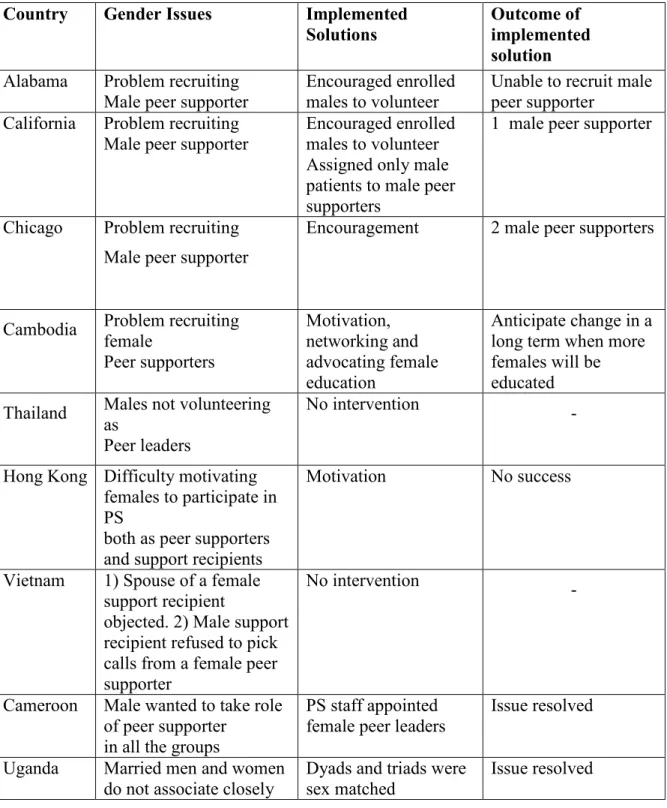
Differences in Participation of Female and Male Peer Supporters and Support Recipients/Participants ... 58
Peer Supporters ... 58
Differences in Type of Support Provided by and to Female and Male Participants ... 62
Social and Emotional Support ... 62
Assistance with daily disease management ... 63
Linkage to Clinic Care and Community Resources ... 64
Ongoing Support ... 65
Cultural Context of Female and Male Participation and Response to Peer Support ... 65
Key Points to Note ... 69
CHAPTER 5 DISCUSSION ... 71
Major Findings ... 71
Differences in Female and Male Participation in Peer Support ... 72
Differences in Male and Female Provision and Receipt of the Four Key Functions of Peer Support ... 73
Socio-ecological Factors that May Influence the Role of Gender in Peer Support ... 73
Limitations and Strengths of the Study ... 75
Implications for Practice ... 76
x
Conclusion ... 78
APPENDIX 1 ... 79
INTERVIEW GUIDE/SURVEY QUESTIONS... 79
APPENDIX 2 ... 83
LIST OF CODES USED FOR DATA ANALYSIS ... 83
APPENDIX 3 ... 84
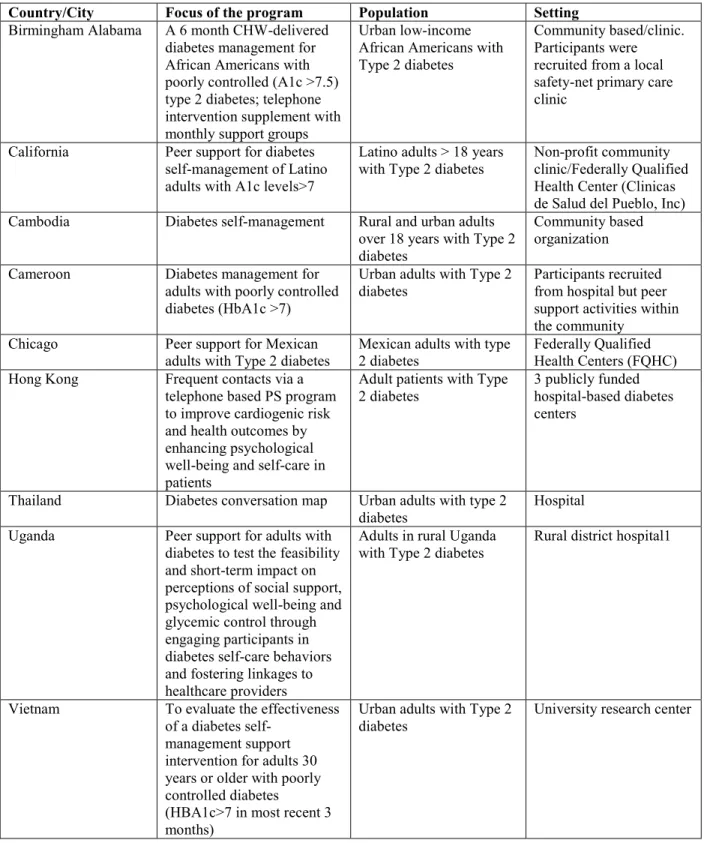
BRIEF SUMMARY OF PEER SUPPORT PROGRAMS INCLUDED IN THE STUDY ... 84
xi
LIST OF FIGURES
xii
LIST OF TABLES
1 CHAPTER 1 TYPE 2 DIABETES
Introduction
Diabetes mellitus is an incurable chronic disease characterized by abnormally high blood glucose levels. Diabetes is a global public health concern due its fast-growing nature from 366 million people suffering from the disease in 2011 to 387 million in 2014 and the projection that this figure will grow to 592 million people by 2035 (Guariguata et al., 2014; International Diabetes Federal [IDF], 2014).
The prevalence of type 2 diabetes has increased, secondary to increased incidence of overweight and obesity, increased intake of calorie dense foods, decrease in physical activity and increased sedentary behavior (Standards of Medical Care in Diabetes, 2013).Virtually all
2
Table 1: Estimates of people with diabetes (20-79 years) for 2014 and 2035 projection
Country Number of diabetes cases in millions (age 20-79)
2014 2035
Cambodia 0.299 0.445
Cameroon 0.515 1.1
China 96.29 143.0
Thailand 4.1 4.3
United States 25.8 29.7
Uganda 0.693 1.7
Vietnam 3.3 6.3
Sources: IDF, 2014; Guariguata et al., 2014
Diabetes Self-Management
Diabetes self-management is the cornerstone of good glycemic control in patients with type 2 diabetes (Nagelkerk, Reick, & Meengs, 2006; Standards of Medical Care in Diabetes, 2013). Diabetes self-management or self-care is the recommended daily activities an individual should do to keep blood glucose at an optimal level, minimize complications, and cope with the psychosocial effects of living with the disease (Chlebowy, Hood, & LaJoie, 2013; Gomersall, Madill, & Summers, 2011). Optimal glucose control is necessary to prevent or delay the complications of diabetes which include neuropathy, end-stage renal disease, non-traumatic lower limb amputation, diabetic retinopathy, cardiovascular complications and poor quality of life (Fowler, 2011). Diabetes self-management includes self-blood glucose monitoring (SBGM), medication and insulin administration, medical nutrition therapy, exercise, foot care, and follow up with health care professionals (Albine, van der Bruggen, Widdershoven, & Spreeuwenberg, 2008). Diabetes care also includes prevention, early detection, and treatment of acute
3
The available healthcare professionals will never be enough to take care of all the needs of the ever increasing number of patients with diabetes (Murray, Gasper, Irvine, Scarpello, & Sampson, 2012). With the downturn in world economies, especially in the middle and low income countries, health care systems might lack sufficient resources to provide the support patients need to effectively manage their diabetes. The challenge is access to self-management support that is sufficient, effective and ongoing. To meet this challenge, peer-delivered social support can be an efficient and cost-effective means of providing support for the sustenance of self-management in patients with chronic diseases, such as diabetes (Gallant, 2003; Gillespie, O'Shea, Paul, O'Dowd, & Smith, 2012).
Diabetes Self-Management Support
Large numbers of studies have affirmed that people with diabetes benefit from ongoing support to stay motivated to sustain life-long self-management ( Pal et al., 2014; Ricci-Cabello et al., 2014; Mayberry & Osborn, 2012; Gomersall, Lucinda & Summers, 2011; Frosch, Uy,
4
Qualitative studies have demonstrated the influence of family support on diabetes self-management; families provide instrumental and emotional support to help patients to continue on the complex behavioral changes associated with diabetes self-care (Carter-Edwards, Skelly, Cagle, & Appel, 2004; Jones et al., 2008; Mayberry & Osborn, 2012). In these studies, the same patients report that family members provide support during the acute phase of the disease and leave the patient to deal with self-care when the disease seems to be under control. Moreover, family members may feel overburdened by the need to provide a more continuous form of care that is endless, and which may also affect their personal wellbeing (Carter-Edwards et al., 2004). In addition, family members may feel obligated to provide support and may have a well-intended motive but the support recipient may not appreciate their efforts because the support is
accompanied with nagging, threats, and judgmental statements (Carter-Edwards et al., 2004; Karlsen & Bru, 2013).
Peer Support
As a consequence of inadequate self-management support from health care professionals and family, peer support has been identified as a promising way to provide support for the life-long self-management needs of patients with type 2 diabetes. Peer support as defined by Dennis, (2003) is “provision of emotional, appraisal and informational assistance by a created social network member who possesses experiential knowledge of a specific behavior or stressor and similar characteristics as the target population, to address a health related issue of a potentially or actually stressed focal person”.
Heisler (2010) identified seven models of providing peer support:
5
iii. Peer mentor or peer coach provides one-on-one face-to-face meetings and serving as role model to the receiver explaining what worked for him/her.
iv. Community Health Workers led group also known as ‘promotoras’.
v. People who live in the same community as the patients and share the same culture serving as peer supporters to patients.
vi. Mutual support groups, such as informal meeting of people with the same disease experience who come together to share their experiences managing their diseases. They offer encouragement, practical and emotional support to each other, telephone-based peer support which can be used alone or in combination with other methods. This method offers people opportunity to hide their identity if they wish to.
vii. Internet-based peer support.
viii. In the context of chronic disease peer support is social support provided by a peer. A peer in the context of a chronic disease is someone who (1) shares the same disease experience by suffering from the disease or (2) has experienced the disease by caring for/living with someone with the disease (Tang, Ayala, Cherrington, & Rana, 2011).
Gender and Social Support
6
Statement of the Problem
The World Health Organization (WHO) consultative committee on peer support programs in diabetes endorsed peer support as an effective means of health promotion and diabetes management (World Health Organization, 2008). Peers for Progress, a global initiative of the American Academy of Family Physicians Foundation was developed in response to the promise of peer support as an effective means of sustaining diabetes self-management and for the need to conduct further research to set up ‘best practices’ in peer support around the globe (Boothroyd & Fisher, 2010). In order to promote the value of peer support as well as disseminate its successes, Peers for Progress is funding series of evaluation grants and also collaborates with various peer support programs and their leaders around the globe (Boothroyd & Fisher, 2010).
Peer support programs have been established in many parts of the world including Australia, United States, Ireland, United Kingdom, Canada, Cambodia, Thailand, Netherlands, Vietnam and more. Evidence demonstrates that some of the programs recorded positive diabetes outcomes such as improvement in glycalated hemoglobin (HbA1C) (Haltiwanger & Brutus, 2012; Heisler, Vijan, Makki, & Piette, 2010; Long, 2012). In addition, Hunt et al. (2011)
reviewed 16 studies on peer support programs, 7 of the studies were randomized controlled trials (RCT), 6 before and after design and 3 qualitative studies. Eight studies listed HbA1C as
7
& Brutus, 2012; Rotheram-Borus et al., 2012; Smith et al., 2011; Wu, Chang, Courtney, & Kostner, 2012).
Some qualitative studies recorded self-reported feelings of being supported and high level of acceptability of peer support programs ( Dale, Williams, & Bowyer, 2012; Hunt, Grant, & Appel, 2011; Dale et al., 2012; Hunt et al., 2011). However, some peer support programs did not report improvements in clinical indicators as reported in a 2012 systematic review of 25 studies comprising of 14 randomized controlled trials, 6 before and after design, 1 non-randomized comparative study, 2 descriptive studies, 1 feasibility and 1 case study (Dale et al., 2012). Of the 14 randomized controlled trials that evaluated changes in HbA1C in that study, 11 found non-significant improvement while 3 reported non-significant changes. However, Peers for Progress warned that researchers should be careful in reporting non-significant values in HbA1C after purported peer support interventions because of lack of standardized criteria for evaluating peer support programs (Fisher et al., 2012). Peers for Progress identified four key functions of peer support to be used as a standard for program evaluation while each program can tailor its’ activities to the needs, setting, strengths and the culture of the people it is serving (Boothroyd & Fisher, 2010).
8
response to peer support activities between women and men may help in the utilization of the positive effects of the differences in peer support programs. To date no study was found that explored gender differences in peer support since gender is a huge issue in social support in general. One qualitative study that reviewed 16 peer programs using Community Health Worker model in the United States reported that peer support program managers were concerned about gender and culture issues particularly in the Hispanic population where for instance, the female Community Health Worker had difficulty speaking to the male participants on problem of sexual dysfunction as probable effect of diabetes (Cherrington et al., 2008).
Purpose of the Study
Peer support for diabetes self-management has also been established in some African countries, including South Africa, Cameroun and Uganda (Fisher, Boothroyd, Coufal, Baumann, Mbanya, Rotheram-Borus, Sanguanprasit, & Tanasugarn, 2012b). However, to date there is no peer support program for type 2 diabetes in Nigeria despite the promise of peer support as an effective, efficient and cost effective means of diabetes self-management support (Fisher, Boothroyd, Coufal, Baumann, Mbanya, Rotheram-Borus, Sanguanprasit, & Tanasugarn, 2012b; Gillespie et al., 2012). In the culture of Nigeria, gender plays a significant role in social support expectations in terms of who gives it and how. Therefore, knowledge of how gender issues were handled in peer support programs will be helpful when setting up similar program in my country, Nigeria.
9
The broad objective of the study was to identify the gender differences regarding participation and response to peer support. The overall goal was to determine if gender
differences in providing peer support in Type 2 diabetes self-management should be considered when planning and setting up a peer support program.
Specific objectives:
i. To identify gender differences in the response to peer support
ii. To identify differences in how males and females participate in peer support activities. iii. To identify the types of peer support provided by men and the types provided by women
in a peer support program.
iv. To identify how the peer support provided by men and women relate to the four key functions of peer support.
v. To identify the socio-cultural context of the provision of the 4 key functions of peer support by men and women.
Research Questions The research questions were:
Research question 1: What are the gender differences in the response and participation to peer support activities?
Research question 2: How does the peer support provided by male and female relate to the four key functions of peer support?
10
Theoretical Framework
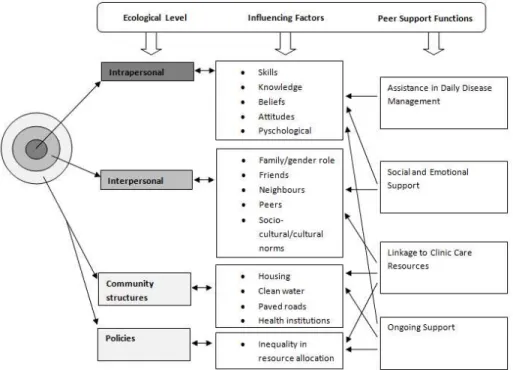
The goal of peer support programs is to help patients with chronic diseases to sustain a life-time of self-management, prevent complications, and maintain good quality of life. This qualitative descriptive study was guided by socioecological framework and the four key functions of peer support (Figure 1).
Overview of Socio-Ecology Framework
The social ecology framework developed by Stokols (1992), emphasizes that behavior has multiple levels of influence identified as: the intrapersonal (the individual) level, the interpersonal level (consisting of the relationships with family, friends, and neighbors, the socio-cultural environment, social norms, and gender roles), and last, the community and policy levels. Hence, the focus of the socioecological framework is people’s transaction with their physical environment (location, housing structure, infrastructure, recreational facilities) and social environment (culture, social roles, social norms, socio-economics, and politics) (Stokols, 1992). These levels of influence interact and impact each other in a nonlinear direction, making the framework complex, thereby requiring knowledge from sociology, anthropology,
11
Figure 1: Socio-ecological framework showing the role of the key functions of peer support
Figure 1 shows how the four key functions of peer support target problems at multiple levels of influencing of the socio-ecological framework.
The socio-ecology framework has four major principles, identified as:
1) Health behaviors have factors which influence it at multiple levels.
2) The influencing factors are not mutually exclusive but are interrelated and can influence behavior from any of the levels. For instance, a factor at the intrapersonal level can influence behavior on the interpersonal level.
12
4) Targeting interventions at the various levels is required to achieve a sustained change in health behavior (Sallis et al., 2008).
Intrapersonal: At the intrapersonal level, this framework proposes that an individual’s personal characteristics such as biological or genetic make-up, attitudes, beliefs, personality make-up, knowledge, skills, and feelings about the self-influence health behavior (Stokols, 1992). For an individual with a chronic disease like diabetes, knowledge about the disease condition, skills of diabetes self-care (blood glucose monitoring, diet, exercise, medication adherence, and keeping clinic appointments), beliefs, and attitudes toward the disease influence the health behavior change. Although these attributes are referred to as intrapersonal, interpersonal relationships also play a role at this level, supporting the complexity of the framework. Therefore, any individual-level intervention to bring about behavior change must involve the interpersonal component (Fisher et al., 2005).
Interpersonal: Relationships with the family, friends, neighbors, and peers play a vital role in health behavior change (Sallis et al., 2008). Such social supports have the potential to aid an individual with a chronic disease like diabetes to sustain a lifetime of self-management
13
Community and Policy Level: Community structures, processes, and polices can have a significant influence on health and health behavior (Fisher et al., 2005; Sallis et al., 2008). Community influences can be defined in many ways. It can be in terms of the living conditions within a geographical area. In African communities, for instance, community structures will include housing, social infrastructures like availability of good quality water, means of transportation, good roads, and availability of health institutions. Community processes and policies that will disproportionately affect the health of women will be the patrilineal nature of African society, where women have limited access to resources that will improve their socio-economic status (Nwoye, 2013; Yolah, 1998) and indirectly affect their health and well-being. Community structures in the western societies will include availability of recreational parks for physical exercise, safe walkways that are close to people’s living areas, farmers’ markets where fresh produce can be purchased at cheaper rates and restaurants that sell healthy foods.
Socio-ecology Framework and Key Functions of Peer Support
Peer support programs have four key functions that can be applied to address the
self-14
management support to individuals with chronic diseases, especially diabetes mellitus, to enhance and sustain their capabilities to maintain self-care over their life-time. Peer support programs achieve this aim through the four key functions (Boothroyd & Fisher, 2010). These can be applied at the multiple levels of influencing congruent with the socio-ecological framework.
Assistance in Daily Disease Management: Peer support most especially targets problems at the intrapersonal and community structures/policies levels (Figure 1). People with a chronic disease like diabetes may be experiencing some constraints to self-management, including not getting adequate information about diabetes and diabetes self-care, diet, blood glucose monitoring, exercise, and medication. They may lack the skills of self-care. They may also not get adequate care and support from their healthcare providers. Peer support programs incorporate patients’ empowerment in their programs by teaching them about their disease and the skills of daily management, by using motivational interviewing. Empowerment improves patients’ self-worth and confidence to discuss their disease conditions. It gives the patients a positive outlook on life and makes them feel capable of being assertive; asking their health providers questions, and presenting any requests they may have concerning their care (Embuldeniya et al., 2013; Lynch & Egede, 2011).
15
programs with patients with Type 2 diabetes, found that the roles of the peer supporter included counselor, educator, advocate, case manager, program facilitator, and promoter (Hunt et al., 2011). In the same review, the activities of the peer supporters were identified as conducting and coordinating diabetic education classes, linking patients to community resources, appropriate clinics, and healthcare professionals; and facilitating peer support meetings (Hunt et al., 2011).
In the peer support program, peer support groups may cook meals together during group meetings to learn to cook healthy diabetic meals with locally available food stuffs. The group cooking was successfully implemented in Cameroun in an all-women peer support group for Type 2 diabetes (Fisher et al., 2012a).
Social and Emotional Support: The peers are provided opportunities to discuss personal
problems either in the group settings or one-on-one with the peer supporters. The peer supporters are trained in listening and providing emotional support (Fisher et al., 2012a). The peers are encouraged to share experiences of what worked for them when they faced difficult and
challenging situations in their self-care. A qualitative synthesis of 25 studies on chronic disease peer support interventions revealed that sharing made participants feel normal, reduced feelings of being alone, and fostered acceptance (Cherrington et al., 2008). Emotional support can be provided by placing regular telephone calls and text messages (Fisher et al., 2012a). Social and emotional support target problems at both the intrapersonal and interpersonal levels of the social ecology framework (see Figure 1).
Linkage to Clinic Care and Community Resources: People living with chronic disease
16
communicate effectively with the provider (Heisler et al., 2009). They may also suffer disparities in health care due to their inability to access high-quality health care (Lewin et al., 2007; Swider, 2002). Peer support programs function in these areas to help the people living with chronic disease navigate the healthcare systems, link them to clinic care, and access community resources (Boothroyd & Fisher, 2010; Brownson & Heisler, 2009a; M. Heisler et al., 2009).
Also peer support programs provide encouragement for patients to keep their clinic appointments. This they do through diverse means like automated telephone reminders,
provision of transportation, and accompanying the patients to the clinic visits if needed (Fisher, Boothroyd, Coufal, Baumann, Mbanya, Rotheram-Borus, Sanguanprasit, & Tanasugarn, 2012a; Ingram, Torres, Redondo, Bradford, Wang, & O'Toole, 2007a; Long, 2012).
Linkage to clinic care is achieved through developing a good relationship between the peer support program and the healthcare provider. Peer support programs also link patients to community resources that will assist them in their daily management. They have helped link patients to drug programs, from where they can access drugs at cheaper rates. In a volunteer peer support program for patients with Human Immuno-Deficiency Virus/Acquired Immune
Deficiency Syndrome (HIV/AIDS) in a small South African community, patients were linked to governmental, non-governmental, and external agencies and missionaries who donated
17
Peers have initiated the setting up of farmers’ markets in certain communities. Peers have campaigned for food labelling at eating places and in schools’ food programs (Brownson & Heisler, 2009). In New Zealand, a peer support program set up a community shop where patients bought supplies for their chronic disease management at an affordable price (Simmons, Voyle, Rush, & Dear, 2010). In a rural community in Thailand, the peer support group formed an agricultural group and established a garden where they got fresh vegetables (Fisher et al., 2012b).
Peer support programs might play the role of advocates, representing the interests of the patients with government agencies, non-governmental organizations, donor agencies,
philanthropists, and community groups (Campbell, Nair, & Maimane, 2007). These activities of peer support target problems at multiple levels to bring about change (see Figure 1).
Ongoing Support: Some models of peer support programs are incorporated into the healthcare system, making it possible to provide sustained support. For instance, the volunteer peer support group in Thailand (Fisher et al., 2012b) and South Africa (Campbell et al., 2007), the community health worker model in the United States (Brownson & Heisler, 2009; Cherrington et al., 2008), and the various lay community health worker groups in New Zealand (Simmons et al., 2010). Ongoing sustained support helps the people with chronic disease to maintain self-care, avoid disease complications, and live good quality life (Fisher et al., 2012).
Socio-Ecological Framework and Social Support
18
self-management. The three constructs are: support network resources, supportive behavior and subjective appraisals of support (Vaux, 1990).
Support network resources can be described as the set of relationships through which the individual in need gets help to solve problems or to achieve desired objectives. In the context of the current study, the network resources will be the feminine and masculine genders that form the peer supporters and support recipients. Supportive behaviors are the functions of the network resources directed to actually sort out the needs or the problems of the support recipient. These functions could be in the form of emotional, informational, instrumental or appraisal modes of support. Subjective appraisals of support are feedback people give about how supportive their support network resources are (Vaux, 1990).
Peer support in diabetes self-management when examined holistically can be said to be a transactional process in an ecological context. It is a dynamic support process occurring between individuals and their social network in the context of going through the same experience of disease self-management (Vaux, 1990). The peer support system is a consciously created social system that needs to be organized and actively maintained to effectively utilize the resources of the system to meet the goals of providing relevant sustainable support (Vaux, 1990).
19
include accessibility, possession of necessary expertise and information, and closeness
(Aswathy, Unnikrishnan, Kalra, & Leelamoni, 2013; Dennis, 2003; Fisher, Boothroyd, Coufal, Baumann, Mbanya, Rotheram-Borus, Sanguanprasit, & Tanasugarn, 2012a).
Accessibility should be a given in this type of network group because one of the roles of peer supporter is to be accessible to the support recipients (Brownson & Heisler, 2009). In addition, the peer supporters are chosen based on their experiential knowledge, therefore, it is assumed that they possess the necessary expertise and information. Furthermore, closeness is remarkable because peers are supposedly people who have close relationships in some ways. Closeness makes for increased motivation to provide help and greater understanding of the kind of assistance to provide to meet the support needs of the recipients (Vaux, 1990). Yet it is understandable that these relevant properties may be different by gender due to the seeming similarities of these properties to the universal gender characteristics.
From an ecological view point, networks have ‘sustainable yield’, that is, the network can provide long term ongoing support depending on the network composition and setup (Vaux, 1990). If the support resources are not properly developed and maintained the peer support system might be damaged or simply become inactive. Depending on the social environment and culture, it may be more acceptable to have supporter-recipient combinations of male-male, female-female, male-female or female-male dyads or groups.
20
Athanassopulou, 1987; Cutrona, 1986). For example, studies have shown that women are inclined to provide more emotional and long-term sustainable support than men while men are inclined to provide more informational and instrumental support than women (Gordillo et al., 2009; Matud, Ibanez, Bethencourt, Marrero, & Carballeira, 2003; Norris & Kaniasty,1996; Thoits, 1995; Olson & Shultz, 1994; Wething & Kessler,1986; Schaefer, Coyne, & Lazarus, 1981) .
21 CHAPTER 2
LITERATURE REVIEW: OVERVIEW OF PEER SUPPORT
Peer support can be broadly defined as social support provided by a peer. A peer in the context of chronic disease self-management is someone who has similar disease or has
experience with the disease self-management by having a close relative with the disease or caring for someone who has the disease (Lewin 2007, Heisler 2009). People who are similar in various ways are assumed relate better and, as a result, can offer one another compassionate, genuine support that is helpful. It is natural for people with similar life experiences to provide each other practical advice and recommend strategies for dealing with specific problems. Experts may not offer or even know that such specific strategies can be used to solve such problems. In relation to healthcare, peer support has been defined as “provision of emotional, appraisal, and informational assistance by a created social network member who possesses experiential knowledge of a specific behavior or stressor and similar characteristics as target population, to address a health-related issue of a potentially or actually stressed focal person” (Dennis, 2003).
Models of Peer Support
22
(2010a) identified seven models of peer support which can be applied individually or in combination in a peer support program to enhance the effectiveness of the program (Heisler, 2010a). There are two categories of models: 1) those that describe modes of contact in peer support programs and 2) the types of peer support programs.
Modes of Contact
23
interventions, majority of participants in that study preferred group based face-to-face
intervention to give them opportunity to interact and share experiences of what worked for them from different individuals (Baig et al., 2012). The participants in the same study also noted group meetings promote a sense of community than the impersonal nature of telephone conversations.
Telephone contact: This mode of contact can be used alone or in combination with other methods. Some peer support programs were designed to use telephone contacts as a primary mode of contact (Chomutare, Arsand, & Hartvigsen, 2011; Dale, Caramlau, Lindenmeyer, & Williams, 2008; Dale, Caramlau, Sturt, Friede, & Walker, 2009; Long, 2012; Plotnikoff et al., 2010). Telephone based support programs were used in some cases because it was cost effective in comparison with other methods (Murray, Gasper, Irvine, Scarpello, & Sampson, 2012; Rotheram-Borus et al., 2012). Telephone contact was used to solve the problem of distance and cost of transportation to meeting venues in an underserved population in Unite States (Colon, 1996). Another study reported that the use of telephone was accepted as a replacement for face-to-face visits (Reid Rudy, Rosenfeld, Galassi, Parker, & Schanberg, 2001). An innovative form of telephone contact known as ‘Interactive voice recording’ was found to be feasible and
acceptable for a peer-to-peer support (Heisler et al., 2007; Heisler & Piette, 2005). For those who prefer to remain anonymous, telephone based peer support was said to be suitable as a mode of contact (Heisler et al., 2007).
24
based peer support may not be feasible or effective in poor resource countries where electricity supply is not regular and internet connection is either not available or not affordable and computers or technology for connecting may not be available or affordable either.
Types of Peer Support Programs
Community Health Worker Program
Community Health Workers go by different names: lay health advisers, promotoras de
salud (Fisher et al., 2012b), community health advisors (Hunt, Grant, & Appel, 2011), lay health
workers (Lewin et al., 2007), patient navigator, and natural helpers (Norris et al., 2006). Community health workers are trusted members of the community who work as link persons between the community and health care providers (Heisler, 2010b; Heisler et al., 2009; Hunt et al., 2011; Spencer et al., 2011). Community Health Worker peer supporter may not have the disease but they are peers to the people they serve in some other ways. For example they may have a family member with the disease or they may have had experience taking care of a person with the disease (Heisler et al., 2009; Lewin et al., 2007). They may also be peers by coming from a similar culture, living in the same community, and speaking the same language as the people they help (Heisler, 2010b).
25
hours to 6 months. One program in that review was said to include training on human subject protection. Another program tested the Community Health Worker after training using competency and skills check list. Three programs provided the Community Health Workers ongoing support through continuing education and regular meetings to share experiences, discuss challenges, and improve performance. In a review of Community Health Worker models in the United States, Cherrington et al., (2008) noted that in all 16 programs reviewed, the Community Health Worker received some form of training on diabetes and self-management. Seven
programs trained the Community Health Workers on health-related technical skills of blood pressure and blood glucose monitoring. The intensity of training reported in this review ranged from 8 to 240 hours with practice. The method of teaching was hands on skills acquisition, teaching practice and role play. In a Cochrane review on lay health workers, Lewin et al., (2007), reported that training intensity varied according to the level of responsibilities assigned to the Community Health Worker. One hour training was given in one study where the Community Health Workers were basically told about the aims and principles of the program, one study trained the Community Health Workers for 2.5 hours, 2 studies trained them for 100 hours, another study trained for 8 weeks at the level of national vocational certificate. Majority of the reviewed programs trained the Community Health Workers on disease specific self-management skills lasting more than one month.
26
Regardless of the name by which the Community Health Workers go, their roles are largely similar across programs, though their activities vary but they must possess some identified competencies associated with the roles. The competencies are (www.machw.org):
Outreach methods and strategies: Community Health Workers possess the ability to conduct outreach in order to locate the population they serve in their usual domains. These include
community centers, churches, community parks, street corners, shopping complexes and, grocery stores. This strategy is used to bring health care to the door steps of the people and it is used to reach the hard-to-reach group like the minority population.
Client and community assessment: Involves the ability to carry out individualized assessment to identify problems and needs. Community assessment is done to identify the needs of the
community and the resources that can be harnessed for the health benefits of the community members. Community assessment also helps to identify strategies for planning community outreach programs.
Effective communication: The major roles of the Community Health Workers are health education and counseling. Therefore they must possess the ability to communicate effectively, using appropriate terms and concepts that are culturally congruent.
27
Health education and counseling: Community Health Workers receive basic diabetes education and training in the skills of self-management like blood glucose testing, diabetes diet,
carbohydrate counting, exercise, meal preparation, foot care, prevention and early detection of diabetes complications and others. This training helps the Community Health Workers to acquire the knowledge and skills of diabetes education and counseling.
Support, advocate and co-ordinate care for patients: Community Health Workers possess the ability to provide social and emotional support. They advocate for their patients making sure that they receive good quality care. They act as a bridge between the health care provider and the patients. In order to co-ordinate care for their patients, they must be knowledgeable about the health care system and the agencies that are involved in the care of their clients. The Community Health Worker must also have knowledge of the available community resources and how their patients can benefit from such resources.
Application of public health concepts and approaches: The Community Health Worker must understand that they are an integral part of public health team whose aims include health promotion, prevention and early detection of complication. This awareness will help them to assist the individuals, families and communities in understanding the importance of basic public health principles and being involved in their care.
The roles of the Community Health Workers include:
28
of support they provide include assistance with blood glucose and blood pressure monitoring (Hunt et al., 2011; Norris et al., 2006), accompany patients to grocery, to stores to review food labels (Tang, Ayala, Cherrington, & Rana, 2011) , to clinic appointments (Goldman, Ghorob, Eyre, & Bodenheimer, 2013; Spencer et al., 2011), to take a walk, and provide transport to clinic appointments (Haltiwanger & Brutus, 2012; Hunt, Grant, & Appel, 2011; Ingram et al., 2007).
Educator. A systematic review of 18 studies identified that the Community Health Worker was primarily the patient educator in 8 studies and in the other studies the Community Health Worker assisted the health care professional in the education and counseling sessions (Norris et al., 2006). Another integrative review reported that education was a component of the program in all the studies reviewed (Hunt et al., 2011). In a randomized controlled trial of effectiveness of Community Health Worker-intervention among African American and Latinos with Type 2 diabetes, culturally tailored group education class was one of the activities of the Community Health Workers (Spencer et al., 2011). The other two activities in that trial were, one home visit per month to the support recipient and accompanying the support recipient to a clinic visit with the primary health care provider. Topics presented in the classes included exercise, how to eat healthy, diabetes self-management skills, and early detection of complications.
29
Health Workers include acting as link between the healthcare provider and the patients (Hunt, et al; 2011; Norris et al., 2006).
Program facilitator. The Community Health Workers assist in organizing group meetings, act as ushers during meetings, provide technical assistance by setting up the room for group meetings with health professionals, share out education materials to the patients, and assisting in inviting specialists as speakers during meetings at churches and community centers (Hunt et al., 2011).
Majority of the peer support programs in the United States hired the Community Health Worker peer supporters as full time or part-time employees. In two peer support interventions for self-management among Mexican Americans with diabetes, promotoras were full time staff of the community health centers (Haltiwanger & Brutus, 2012; Ingram et al., 2007). Similarly, in a review of 16 peer support programs in the United States, Cherrington et al., 2008, reported that 9 programs hired the Community Health Workers as full time employees, 4 hired the Community Health Workers as both part-time and hourly paid employees and 3 programs paid stipends only.
Volunteer-based Peer Support Programs
These are those peer supporters who are not full or part-time employees of the program and do not receive monetary compensation for their work though they may receive
reimbursement for transportation and child care (Tang, Ayala, Cherrington, & Rana, 2011). In a review of 12 volunteer based peer support programs, training of the peer supporters ranged from low intensity described as 3 hour to 2.5 day workshop (6 programs), moderate intensity was 4 day workshop of 2.5 hours (3 programs) and high intensity lasting a total of 27 hours (3 programs) (Tang, Funnell, Gillard, Nwankwo, & Heisler, 2011). In the same review, the
30
program). The populations served were Whites (6 programs), underserved ethnic minority (5 programs) and one program did not specify the population served.
Peer Coach/Mentor-Mentee or Peer-Leader Programs
The designated coach/mentor or peer-leader is someone who manages his/her disease well and uses his/her experience of what worked for him/her to encourage the mentee to work towards achieving the same goal (Boothroyd & Fisher, 2010; Funnell, 2010a). The mentor is expected to serve as a role model helping the mentee to set realistic goals and work towards achieving the goals without being judgmental (Heisler, 2010a). The mentor receives between 8 to 32 hours of training with emphasis on effective communication and problem solving skills (Heisler, 2010a).
Mutual Support Group
31
Characteristics of the Peer Supporter
Peer supporters are a crucial and important component of the peer support programs. Aside from having the disease or having a close person with the disease, the peer supporter is chosen based on some characteristics of the individual. The personal characteristics of the individual are considered before recruitment because they are assumed to influence the ability of the individual to provide the expected peer supporting role. These characteristics are described in the guide to program development of Peers for Progress, an organization of the American
Association of Family Health Physicians Foundation, at www.peersforprogress.org and listed as:
Knowledgeable: This is a special kind of knowledge which is acquired through practical experience of going through life processes and stages of the disease. The individual is equipped with practical information which when shared with peers helps problem solving and improves well-being. Maintaining its non-professional vantage point is crucial in helping people rebuild their sense of community when they’ve had a disconnecting kind of experience. Research
evidence documents that peer supporters used sharing their experiences to gain the confidence of those they are supporting, develop close bonds, link them to community resources that will improve their economy, social life, health and their sense of self-worth (Embuldeniya et al., 2013).
Empathetic: The peer supporter is able to show true understanding of the feelings of the peers being supported.
32
Similarities to the peer being supported: One of the most important characteristics of the peer supporter is similarity with the support recipient. The peer supporter will come from the same community as the peers’ being supported to facilitate building trusting relationship. Peer support is a subset of social support which has strong cultural influence. This makes it imperative that the peer supporter should understand the culture of the community, speak the same language with the people being supported and have similar cultural preferences. Peer support programs are designed to be culturally congruent to enhance its acceptability and success (Haltiwanger & Brutus, 2012). Other areas of similarities equally important are age, gender and disease
condition. Age is relevant because it will be beneficial to match people who are within the same age category for better communication and respect. Matching by gender was a problem as some peers prefer to be matched with someone of same sex because they feel more comfortable discussing some intimate issues of sexual problems with someone of the same sex (Cherrington et al., 2008).
Strong interpersonal relationship skills: The peer supporter should be someone who loves talking and engaging people in discussion like asking after their children, their families, how they spent their day and other current interesting topics. The peer supporter will be respectful and serious minded when discussing peoples’ problems or when suggesting possible solutions
without trivializing the peoples’ problems.
33
which enabled peers to open up to the peer supporters in a way that fostered better understanding of the problem, leading to better action plan and the more directed method used for patients who are disinclined to change (Funnell, 2010). The communication tone must always be
nonjudgmental, empathetic, and encouraging.
Leadership qualities: A peer supporter is the group leader who should possess the qualities of a good leader, should be honest, dependable and a respected member of the community he/she is serving.
Availability: Peer supporter has to be willing to commit time to the program. Providing support is time consuming. The peer supporter should be accessible to the peers at all times through dual telephone calls to discuss any issues or problems they may be facing outside the scheduled meeting periods.
Willingness to serve: Some peer support programs recruit volunteers who meet the desired qualities. Therefore the person must have expressed the willingness to serve.
Willingness to learn: Peer supporters receive training from professionals to further refine their skills to provide the level of support expected. Hence, they have to be willing to use the available resources to improve their skills. They are not professionals so they have boundaries of what they can and cannot do. The health care professionals are available to act as resource persons and they are encouraged to refer cases they are not supposed to handle to the health care professional. Education: The peer supporter is expected to have completed middle school. This is the
34
In a review of 16 Community Health Worker programs for persons with diabetes in the United States, it was identified that the criteria for recruiting the Community Health Workers were: community linkage, living in the target community, strong interpersonal skills, being literate, had diabetes, inclined to learn, and had means of transportation. Another review of 12 volunteer-based peer support interventions reported that the criteria for recruiting peer supporters included: ready and willing to be trained, speak same language as the target community, possess good interpersonal skills, having similar culture with the target community, able to facilitate group meetings, residing in the target community, willingness to give back to the community, possess problem solving skill, being a good motivator and having effective communication skills especially being a good listener (Tang et al., 2011).
Generally peer supporters receive some form of training as earlier described. However, the extent of training varied depending on the roles they were expected to play in the program. Peer supporters were hired by the programs for which they worked (Tang et al 2011; Hunt et al; 2011; Heisler et al; 2009; Norris et al; 2006). The promotoras de salud are hired to be dedicated to the clinics and to serve the Latina population who attend the clinics (Albarran, Heilemann, & Koniak-Griffin, 2014; Messias et al., 2013; Ryabov, 2014). The peer supporters are vital part of the research team and clinics, they worked closely with the health care professionals in the research team and the clinics. The health care professionals, often the nurses, supervise the Community Health Workers and serve as resource persons (Hunt et al; 2011).
Social Support
Peer Support is a subset of social support. Social support has a potential positive
influence in chronic disease self- management (Schaefer, Coyne, & Lazarus 1981). The literature reported that there is positive correlation between social support and chronic disease
35
& Heisler, 2009b; Cervantes-Becerra & Martinez-Martinez, 2012).
The term social support has been described in many forms in the literature. Cobb (1976) defined social support as a form of communication to a person that makes the person believe he is valued, loved, esteemed, and a member of a network group obligated to each other. Social support was described as emotional support that shows empathy, concern, affection, love, trust, acceptance, intimacy, encouragement, and caring (Langford, Bowsher, Maloney, & Lillis, 1997). Heany and Isreal (2008) defined social support as tangible or instrumental support in the form of financial, material goods, or services as a concrete direct assistance to people in need. Social support is also said to be the extent to which an individual perceives that help is available from family, friends, and social networks in times of need (Procidano & Heller, 1983).
In summary social support can be defined as a positive behavior towards another person that informs the receiver that he is valued, loved, cared for, esteemed, and belongs to a network group that looks out for each other’s well-being (Kim, Sherman, & Taylor, 2008). The various definitions of social support are suggestive of a construct that is multidimensional.
36
knowledge, and advice and can offer objective support in form of goods and materials (Jacobson, 1986). However, there are conflicting reports on the effect of large network size on health. Kahn & Antonucci (1980) cautioned that large size of social network does not translate to large
amount of social support. This is contrary to other reports which affirmed that larger networks and satisfaction with the received support have positive correlation with lower morbidity and self-reported health status in older adults (Arthur, 2006; Chaix, Isacsson, Råstam, Lindström, & Merlo, 2007).
Functional social support is the nature of the interaction within the social relationships. There are four functional categories of social support: emotional, informational, appraisal and instrumental or tangible (Cohen & Wills, 1985).
Emotional support is regarded by some as the most important form of support (Hill, 1991; Procidano & Heller, 1983). This type of support conveys to the recipient that he/she is loved and valued as he is. It bolsters self-esteem and self-worth. The individual feels that despite his/her shortcomings and deficiencies he is accepted for who he is (Cohen & Wills, 1985).
Informational support is the giving access to new knowledge which will help the
individual to solve problems without feeling overwhelmed. The new knowledge helps him/her to understand his new world and adjustment to the resultant changes (Jacobson, 1986).
Informational support also includes advice and guidance that enables the individual to persevere towards a desired goal (Cohen & Wills, 1985).
37
how far the individual is progressing towards the stated goal without being judgmental or criticizing (Cohen & Wills, 1985).
Tangible support, also known as instrumental support, is the actual provision of material help like assistance in form of monetary gifts or loans, help with transportation to clinic
appointment, assistance with meal preparation, or taking over of chores. Tangible support helps to solve practical problems (Jacobson, 1986).
These categories of functional support are not mutually exclusive. Informational and tangible support has the potential to enhance emotional support when it expresses caring and not as an obligation (Schaefer, Coyne, & Lazarus; 1981).
Another dimension of social support is in terms of perceived and received social support. “Perceived support is the extent to which an individual perceives that his or her needs for
38
support receiver suspicious and uncomfortable that the support giver may have some ulterior motives or some vested interests.
Although social support is a global concept viewed by all cultures as beneficial to well-being, there are cultural differences in how people seek and receive social support (Kim et al., 2008; Taylor et al., 2004). The most frequently examined cultures in the literature are the individualistic culture exemplified by European Americans which emphasizes self-centeredness and the collectivist culture exemplified by the Asian/Asian American which emphasizes
interdependence and communal living. There is evidence that people from an individualistic culture are more inclined to explicitly seek and receive social support to cope with stress than people from the collectivist culture (Kim et al., 2008; Taylor et al., 2004; Wellisch et al., 1999). Taylor et al (2004) reported that the reason for this observed differences may be due to the underlying cultural values and social rules governing the relationship patterns and expectations in peoples’ social network. The European-American actively seeks for support to solve his/her personal problems because he believes that he should use the resources around him to solve his personal problems and people are not obliged to assist if they do not want to, whereas the Asian will not disclose personal problems for fear of being seen as incapable of handling personal problems or being seen as taking undue advantage of the social network group (Kim et al., 2008; Taylor et al., 2004).
Gender Differences in Social Support
39
understanding of the areas of potential difference in social support between women and men will help in the utilization of its positive effects to enhance the health and well-being of both male and female (Cobb, 1976; Shumaker & Hill, 1991).
In many cultures, male socialization focuses on autonomy, assertiveness, self-reliance, competitiveness and independence while playing down on the expressions of the feelings of emotions (Matud et al., 2003). This is suggestive of socialization process that may negate the formation of effectual networks (Barbee et al., 1993), which may support the hypothesis that peer support is more a feminine activity.
Women are more likely socialized to being verbally expressive, compassionate, expression of warmth, quick to display emotions and inclined to search for intimacy in a relationship (Olson & Shultz, 1994). Also women, more than men are more likely to seek out, give and receive assistance, suggestive of a character that explicitly encourages socially supportive relationships (Olson & Shultz, 1994; Shumaker & Hill, 1991). Consequently, the formation and sustenance of a socially supportive group is easier for women than men (Olson & Shultz, 1994) as noted above, also supporting the hypothesis that peer support is largely a feminine activity.
40
men report not having a close confidant and for the few who do, the close confidant commonly mentioned is their spouse (Antonucci & Akiyama, 1987). Women more than men spend more time involved in support giving activities (Kessler, McLeod, & Wethington, 1985). Thus women are able to develop and sustain social network groups used by both men and women (Shumaker & Hill, 1991).
Because sex and gender are significantly related, it generally follows that women tend to have more feminine qualities while men tend to have more masculine qualities (Reevy &
Maslach, 2001). However, this assumption may not always be true. Some men score high in feminine characteristics of nurturance, feelings, compassion, and affiliation which are qualities relevant to social support. On the other hand, some women score high in masculine qualities of autonomy, independence, and self-reliance which are variables related to social support. Therefore it may be more beneficial to evaluate gender directly in social support regardless of sex (Reevy & Maslach, 2001).
41
and receive instrumental and informational support as opposed to soliciting and receiving emotional support.
In contrast to masculinity, feminine qualities related to social support include nurturance and alliance (Cook, 1985). Characteristically, nurturing people show warmth, are compassionate and tolerant of other people’s views (Hill, 1991). They are more sensitive to feelings, including theirs and that of other people. Hence they are more likely to seek and receive emotional support more than other forms of support (Hill, 1991; Reevy & Maslach, 2001). In addition, affiliative people can easily form and sustain relationships. They are able to belong to a wide variety of social network groups with whom they develop strong and intimate ties, on which they can readily rely for support in times of stressful life events (Antonucci & Akiyama, 1987; Reevy & Maslach, 2001).
The ability and motivation of the person giving the social support cannot be
overemphasized because of its influence in the quality of social support received. There is no difference in the quality or quantity of support given by gender, but there is difference in the form or mode of support each gender can give (Eagly & Crowley, 1986). Persons with masculine gender tend to give support when help is needed urgently like in emergency or disaster situations and to give instrumental aids while the female gender is inclined to give assistance that is long-term in nature and consistent (Barbee et al., 1993).
42
in depressive moods. The females provided more support to their male partners when they were in depressive moods than when they failed in a task, suggesting that females provide more emotional support than the males while the males provide more instrumental support than the females (Yankeelov, Barbee, Cunningham, & Druen, 1991). Corroborating this finding,
Belansky & Boggiano (1994) noted that females are more likely to help in a nurturant way than a problem-solving way while the opposite holds for males.
There are differences in the types of support peer support programs that serve mostly men and the ones that serve mostly women provide to the group. Examples are peer support programs for men with prostate cancer and programs for women with breast cancer which suggest sex differences in provision and response to peer support. Research reports affirm that men more than women are reluctant users of psychological support groups (Coreil & Behal, 1999; Gray, Fitch, Davis, & Phillips, 1997; Rickwood & Braithwaite, 1994; Steginga, Pinnock, Gardner, & Dunn, 2005; Weber et al., 2004; Weber, Roberts, Yarandi, Mills, Chumbler, & Algood, 2007; Weber, Roberts, Yarandi, Mills, Chumbler, & Wajsman, 2007a). Psychological issues received minimal attention in prostate cancer support groups (Coreil & Behal, 1999; Steginga et al., 2005). In a survey in the United States of one of the popular prostate cancer peer support groups, known as ‘Man to Man Prostate Cancer Support Groups’, it was reported that educational
43
(Coreil & Behal, 1999). In a related study, Weber et al (2004b) reported that men preferred dyadic meeting to group meetings because they were more comfortable discussing personal issues like sexual and urinary dysfunction in a dyadic meeting than in a group meeting
suggesting that dyadic meeting was more effective in meeting their emotional needs (Weber et al., 2004b).
From another perspective, clinicians’ support of prostate cancer support group was said to influence patients’ participation in the group and predictive of men reporting higher positive and less negative support of the group (Steginga et al., 2007). Clinicians were more likely to recommend a prostate cancer support group to their patients if they were directly or remotely affiliated, (e.g. participation as a guest speaker) (Steginga et al., 2007). This is a further acknowledgement that men’s priority in a support group is for education and information.
44
Though women are more inclined to give and receive emotion-focused support, the mode in which they express the need for the support or the willingness to give the support differs with culture (Burleson, 2003; Kim et al., 2008). Females in the collectivist culture will neither disclose the details of their problems nor will they want to be pressured to talk about the problem, but they expect their social network group to understand that they need help through gestures and body language and then provide support (Kim et al., 2008). This is known as implicit support (Kim et al., 2008). The same is true of men in the collectivist culture. The men are more inclined to give and receive information and problem-focused support, but they will want it in an implicit way (Kim et al., 2008; Taylor et al., 2004).
45 CHAPTER 3
METHODS
The purpose of this study was to explore gender differences in peer support in type 2 diabetes self-management from the perspective of the peer support program managers or key informants. This chapter details the research approach which includes the research design, sampling method, data collection methods, and analytic approach.
Design
Qualitative descriptive design was used in this study. Qualitative design was deemed appropriate because it allowed an opportunity to obtain the voiced experiences of those who had firsthand knowledge of encountering both men and women in peer support programs. The qualitative descriptive approach is one of the methods used in naturalistic inquiry. Typical of a naturalistic inquiry, no variables were identified in advance of data collection, no form of
experiments were conducted, and nothing was stage-managed (Sandelowski, 2000; Sandelowski, 2010).
Qualitative descriptive approach is grounded in three underlying premises:
46
2) Human beings are able to recount their past, present, and future experiences within such groups, and
3) A thick description of the experiences with the group will lead to the discovery of central ideas about the issue of interest in the encounter and so discover the pattern (Parse, 2001).
Qualitative descriptive approach was employed in an attempt to reveal gender differences in peer support in Type 2 diabetes self-management from the point of view of the peer support program managers/key informants. In-depth exploration of gender differences in peer support in Type 2 diabetes and thick description was achieved by using, for the most part, the words of the research participants with very minimal interpretation. In other words, the description stayed close to the data by using quotes from the research participants to provide evidence of their point of view. Minimal interpretations of the words or statements of the research participants
distinguish qualitative descriptive approach from the other qualitative methods like phenomenology, grounded theory or ethnography (Sandelowski, 2000).
Sampling of Peer Support Programs and the Key Informants
47
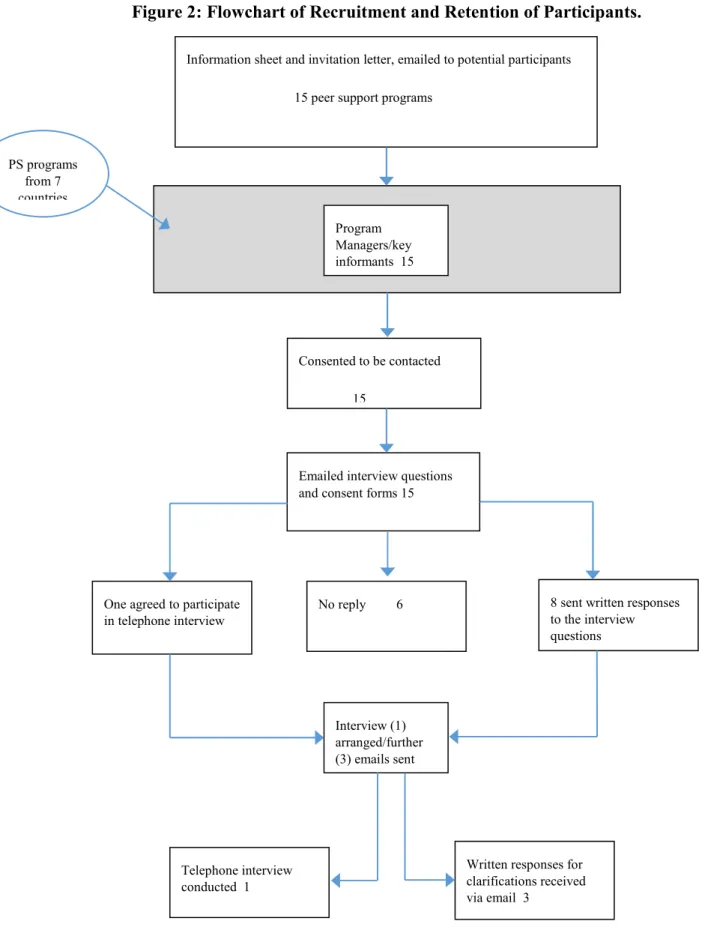
Due to the global epidemic of type 2 diabetes, Peers for Progress began its promotion of peer support with establishing a global network of peer support programs for the disease in order to address the epidemic. Peers for Progress funded 14 projects globally: 6 short term projects (demonstration grants) and 8 long-term projects (evaluation grants). The projects were spread across 9 countries which include United States, Argentina, China, Thailand, Australia, England, South Africa, Cameroon, and Uganda. One of the goals of Peers for Progress is to establish best practices for peer support through research. In addition to these funded projects, Peers for
Progress is collaborating with 60 peer support programs for diabetes self-management across the globe.
48
One participant from each identified program was contacted and invited to participate in the study. The participants have close ties with Peers for Progress and they were very
knowledgeable about the peer support programs. Sampling in qualitative research is concerned with richness of information (Sandelowski, 1995). Furthermore, the focus in qualitative research is more on sampling adequacy and not on sample size because generalizability is not sought (Bowen, 2008). The programs selected for the study were the projects funded by Peers for Progress or programs that collaborate with Peers for Progress. The sampled peer support programs implemented the 4 key functions of peer support. The participants who responded to the survey questions personally agreed that they have very good knowledge of the subject matter.