Reality status in Teiwa (Papuan)
Marian Klamer
Leiden University, Center for Linguistics, Postbus 9515, NL-2300, RA, Leiden, The Netherlands
a r t i c l e
i n f o
Article history:Available online xxxx
a b s t r a c t
This paper describes the system of reality status in Teiwa, a non-Austronesian language spoken on Pantar Island. Teiwa has an overt realis morpheme, while irrealis is left unmarked. The discourse function of the realis suffix (marking foregrounded events in texts) is also investigated and the connections between reality status (intended as an objective property of states of affairs) and the discourse prominence of states of affairs are explored.
Ó2011 Elsevier Ltd. All rights reserved.
1. Introduction1
This paper presents a description of the reality status marking system of Teiwa. Teiwa (Ethnologue code twe, referred to asTewainGordon, 2005) is one of the approximately ten non-Austronesian (‘Papuan’) languages spoken on Pantar island, just north of Timor island, in Eastern Indonesia. Teiwa has about 4000 speakers living in the north-western part of Pantar island, see the location indicated in Map1.
Teiwa belongs to the Timor-Alor-Pantar (TAP) family of Papuan languages.2The data presented here are primary data
col-lected during field research between 2003 and 2007. Published work on the language currently includes a reference grammar and some book chapters (Klamer, 2010a,b,c).
2. The category of reality status
A reality status morpheme ‘‘can be understood as the grammaticalized expression of an event or state in either the real world or in some hypothesized, but not real, world. Prototypically the realis component of the category asserts that an event or state is located in the real world, while irrealis events or states are perceived as being located in an alternative hypothet-ical or imagined world’’(Elliott 2000, p. 81).
The notion ‘‘reality status’’ as proposed inElliott, 2000is similar to the notion of ‘‘status’’ proposed inFoley & Van Valin (1984, pp. 213–215) and Foley (1986, pp. 158–164). In these cases, irrealis marking indicates whether or not an event has been realized: whether it is an actualized fact of reality, or whether it belongs to the realm of the imagined(cf. Elliott, 2000, pp. 66–67).
0388-0001/$ - see front matterÓ2011 Elsevier Ltd. All rights reserved. doi:10.1016/j.langsci.2011.08.006
Abbreviations: 1, 2, 3, person;CONT, continuative;DIST, distal;E, exclusive;EXCL, exclamation;FOC, focus marker (la);I, inclusive;IND, Indonesian/Malay loan;NEG, negative;PL, plural;PRF, perfective (‘already’);PROG, progressive;RDP, reduplication;REAL, realis;SG, singular;SEQ, sequential;SIM, simultaneous;TOP, topic marker (ta).
E-mail address:[email protected]
1The author thanks the editors of this volume, and John Roberts as the external referee for their comments and suggestions, which have helped to shape the paper in its present form. All possible errors in the facts and their interpretation are my own responsibility. This work was written as part of the NWO Innovative Research projectLanguage variation in Eastern Indonesia: The Alor and Pantar Project.
2On Alor and Pantar, there are approximately 24 non-Austronesian languages spoken; on Timor, there are a few more. All of them are endangered. The internal subgroupings of the Timor-Alor-Pantar (TAP) languages is currently under investigation (Holton et al., 2009). The external affiliation of the TAP family is unclear; some have hypothesized that it belongs to the Trans New Guinea (TNG) family of Papuan languages (Capell, 1969; Pawley, 1998,Pawley, 2001; Ross, 2005), but this remains to be established.
Contents lists available atSciVerse ScienceDirect
Language Sciences
Others would refer to realis/irrealis distinctions similar to those discussed in this paper as instances of ‘modality’ marking (Roberts, 1990; Mithun, 1995; Timberlake, 2007). Modality ‘‘characterizes the speaker’s estimate of the relationship of the actor of the event to its accomplishment, whether he has the obligation, intention or ability to perform it’’ (Foley and Van Valin, 1984, p. 214). With Modality, the speaker qualifies an event or proposition, and communicates a particular attitude towards it, such as necessity, possibility (epistemic modality), obligation or permission (deontic modality)(Elliott, 2000, p. 69). In the grammar of Teiwa, Modality is expressed by separate lexemes: adverbs and verbs. For example, the adverbs tab‘truly, indeed’ andquun‘surely’ mark the speaker’s certainty about an event,bo‘maybe, perhaps’ marks his uncertainty, maq‘let it not be’ marks apprehensiveness, andbe’‘indeed’3marks affirmation. The modality verbs include those that mark intention (positivexogo’‘want’ ormau‘want’(IND),and negativenaxa’‘not want’), ability (qau‘be good at, be able to, know how to’), disability (paat‘not be able to, not know’), obligationmusti‘must’, and prohibitiongaxai‘do not’ (see Klamer, 2010a, chapters 3 and 7 for examples and discussion). While modality is marked with separate lexemes, reality status is expressed by a single verbal suffix only. This suffix conveys the ‘realis’ value; the ‘irrealis’ value remains unmarked. The realis suffix signals that the event is part of the real world, and unlike the modality words, it does not express speaker’s qualifications or attitudes about the event.
The Teiwa category ‘reality status’ is also distinct from the grammatical category ‘mood’. In its most common interpre-tation, ‘mood’ is the grammatical category that distinguishes between different speech act types, such as ‘indicative mood’ expressed by declarative sentences, ‘interrogative mood’ expressed by questions, and ‘imperative mood’ expressed by com-mands. While reality status does interact with certain speech act types, it is a grammatical category distinct from it. An illus-tration of how the reality status of a verb interacts with the mood of the clause it belongs to is that Teiwa imperatives never use realis verbs. This is because imperatives by nature refer to events that have not been ‘actualized’ at the time of utterance: events expressed in imperative clauses are never ‘a certain fact of reality’, so that the verb cannot be marked as realis.
In this paper we will also consider cases where the interaction between the various ‘moods’ and the reality status of a verb is less straightforward. Cross-linguistically, irrealis marking is often used in contexts of negation, prohibition, obliga-tion, or condition (e.g. in Caddo, a language of Oklahoma,Chafe, 1995). Realis marking, on the other hand, is often associated with grammatical categories such as past and present tense, in contrast to future, imperative, hortative, or prohibitive, which are marked irrealis (as in Amele,Roberts, 1990). Such realis/irrealis contrasts reflect a split in real vs. imaginary, and actu-alized vs. hypothetical events.
In Teiwa, the same split applies to some extent, but there are also categories that can be marked as either realis or irrealis. These include future and past events, interrogatives, and prohibitives. This suggests that a simple categorial split of real/actu-alized versus imaginary/hypothetical event does not apply in Teiwa; there must be additional factors involved determining
Map 1.
3
the realis/irrealis marking. We will investigate these factors in Section4, after first discussing the structural properties of the Teiwa realis morpheme in the next section.
3. Structural properties of the realis morpheme
The Teiwa realis marker is a verbal suffix. Only realis status is signaled with an overt marker; its opposite, the irrealis status, has no overt expression. Note that this is different from what is found in most languages, where realis is the default, unmarked status, while irrealis is the overtly marked one. A bare verb stem has thus two functions in Teiwa: it is either an irrealis verb form, or it is unmarked for reality status.
Not all verbs can take a realis marker; realis status is typically marked on activity verbs. Verbs that never take a realis marker include aspectual verbs such asmulai‘begin’ orgula’‘finish’, the existential verbwan‘be, exist’, or modality verbs likexogo’‘want’ orgasai‘cannot’. A single clause can contain up to three realis verbs.
Realis status is marked with the suffix-(a)nor one of its allomorphs, given in (1).
(1) Allomorphs of the realis suffix, with some example verbs
a. -an
tot-an‘stream’ tup-an‘get up’ er-an‘do/make’ pin-an‘hold’ tas-an‘stand’ yias-an‘put at’
b. -n
na-n‘eat’ yaa-n‘descend’4
gi-n‘go’
c. -an -en
ba’-an‘fall’ me’-en‘be in’ su’-an‘cut off’ tare’-en‘shake out’
-in
tii’-in‘sleep’ beli’-in‘borrow’
Which allomorph is chosen is determined by the final syllable of the verb stem. Verbs ending in a consonant (i.e., a closed syllable) take the VC suffix-an, as illustrated in (1a). Verbs ending in an open syllable take the consonantal suffix -n, as illus-trated in (1b). Verbs ending in a glottal stop consonant, such as those in (1c), are a minority class. On the one hand, they behave like all the other verbs that end in a consonant because they select the -VC suffix. However, instead of being /a/, their suffix vowel shares its place features with the preceding stem vowel: a verb stem with a non-front vowel /a, u, o/ selects suffix -an, a [front, mid] stem vowel /e/ selects suffix -en[En], and a [front, high] stem vowel /i/ selects suffix -in[in].
4. Functions of the realis suffix
The realis suffix has two major functions. First, it has the canonical grammatical function to mark realized, actualized, and presupposed events. This is discussed in Section4.1. Second, it marks primary, thematic, salient narrative events. In other words, foregrounded events in discourse contain verbs with a realis marker, while realis verbs are not used in clauses that describe the background or setting of another event, or in concluding statements. This is discussed in Section4.2.
In general, the discourse function of the realis suffix and its grammatical function overlap: foregrounded, primary events in a narrative are typically real, actualized events. However, a narrative may contain actualized events that are not expressed with realis verbs; for example because they are the concluding statements in an utterance. Additionally, we find that realis verbs are used to refer to e.g. intentions rather than actualized events. In such cases, the discourse foregrounding function of the suffix appears to overrule its objective, grammatical realis marking function. In other words, verbs referring to foregrounded discourse events are marked realis, even though they may not always express realized and actualized events; and verbs that are part of backgrounded discourse events are not marked realis, even though they may refer to actualized and real events. This is further discussed in Section4.2.
4.1. The expression of reality status
4.1.1. Introduction
The canonical function of the realis suffix in Teiwa is to classify an event or State of Affairs (SoA) as being located in the real world. A realis suffix is used in ‘realized’, ‘actualized’ events that are part of simple declarative clauses, and have
4
indicative mood. In this section some examples of this canonical function are presented. (Where relevant, an ungrammatical verb form is given in brackets, preceded by the symbol *).
The exchange in (2) starts with a leave-taking formula standardly used when going home at the end of the day. The verb in the utterance (2a) is marked with a realis suffix. It cannot be a bare verb stem (*gi) because it refers to an event that is actually taking place: ‘‘Now it is getting dark, (and) we are going’’. It is followed by the response in (2b), which standardly contains an imperative verb. This verb is irrealis and cannot take a realis suffix (*tewar-an) because the event of walking is not yet actualized. (Here and elsewhere in the paper, the verbs that are relevant for the discussion will be underlined.).
(2) a. iqa’an ni gi-n (*gi) e.
dark 1PL.E go-REAL EXCL
A: ‘[It’s getting] dark, we are going [now]’
b. yo, iqa’an ba tewar (*tewar-an)
yes dark SEQ walk walk-REAL
B: ‘Yes [it’s getting] dark so go!’
In (3a) the verbtii’‘sleep’ refers to a purposive event which has not yet been actualized, and is irrealis. In (3b) the event is actualized — as indicated by the temporal adverbana‘long time’ —, and now the verbtii’‘sleep’ has a realis suffix.
(3) a. mauluku ma wat wa g-om ma yiri tii’.
monkey come coconut leaf 3SG-inside come crawl sleep
‘Monkey crawls into the [heap of] coconut leaves to sleep [there]’
b. mauluku ma wat wa g-om ma yiri
monkey come coconut leaf 3SG-inside come crawl
‘Monkey crawled into the [heap of] coconut leaves
tii’-in ana tau
sleep-REAL long.time PRF [and] slept [there] for a long time’
The question in (4a) refers to whether the event of an animal dying has actually been realized. As it is not yet established as an actual fact, the verb cannot take a realis marker, and a bare (irrealis) verb form must be used. The affirmative answer in (4b) confirms that the event is factual and realized (cf. the adverbtau‘perfective’), and now the verb is obligatorily marked with a realis suffix.
(4) a. he, min? (*min-an)
hey die die-REAL ‘Hey, (is it) dead?’
b. hale, bai min-an tau. (*min)
yes pig die-REAL PRF die
‘Yes, the pig died already/is already dead’
However, when the verbmin‘to die’ does not refer to a particular event but is used in a more general statement, e.g. that humans and pigs are mortal, as illustrated in (5a), then it cannot be realis. This contrasts with (5b), where the speaker hears some screaming, and asks whether the voice is from a dying person or a dying pig. In this case, the realis suffix is used, be-cause an event that is actually happening is being questioned. In this example the speaker asserts that someone is dying. Note the use of the demonstrativelaxu’u‘here’, which positions the event in actual time and space. In other words, (5b) indi-cates that ‘real’ or ‘actualized’ events include those the speaker assumes or presupposes to be real.
(5) a. uyaq ata baai la min. (*min-an)
person and pig FOC die die-REAL
‘People and pigs die’
b. uyaq le baai la min-an (*min) laxu’u?
person or pig FOC die-REAL die that.one.there
‘Is that a person or a pig dying over there?’
4.1.2. IRREALIS: imperative, hortative, intentional, obligational, conditional, apprehensional, hypothetical and optative
In this section, I describe how reality status and mood interact in Teiwa. In imperatives, events are not actualized, so that imperative verbs cannot be marked realis, as illustrated in (6)–(7):
(6) qau ba ha min! (* min-an)
good SEQ 2SG die die-REAL
‘Drop dead!’
(7) ha siga’! (* siga’-an)
2SG be.quiet be.quiet-REAL ‘You be quiet!’
Hortative, intentional, obligational, conditional, apprehensional, and hypothetical/optative clauses also refer to non-actu-alized events and thus cannot contain a realis verb form either. The following are some illustrations.
Hortative:
(8) ma pi-maran ma gi. (*gi-n)
come 1PL.I-hut come go go-REAL
‘Let’s go to our hut!’
Intentional:
(9) na mau an ma gi. (*gi-n)
1SG want(IND) market come go go-REAL ‘I want to go to the market’
Obligational:
(10) na musti an ma gi. (*gi-n)
1SG must (IND) market come go go-REAL ‘I must go to the market’
Conditional:
(11) ha yi igan si ta ma walas
EXCL 2PL harvest.feast SIM TOP come tell
‘Hey when you have your harvest feast, let us know
ni ta aria’. (*aria-n).
1PL.E TOP arrive arrive-REAL [so] we can attend (lit. arrive)’
Apprehensional (‘don’t let it be that. . .’):
(12) na-rat qai non, hala wa
1SG-grandchild child PL people say
‘Grandchildren, people say
ha-rata’ ga ixa’a
2SG-grandmother take.along over.here your grandmother was brought
ma daa-n ga’an u, yi ga-sar le maan,
come ascend-REAL 3S DIST 2PL 3S-notice or NEG
up here, did you notice her or not,
yi’in una’ maq na. (*na-n)
2PL also let.it.not.be eat (*eat-REAL)
Hypothetical and optative (‘if only. . .’):
(13) . . .mol-molas a wa di ga-tafeu (*tafeu-n) le di. . .
RDP-actually 3SG say just 3SG-fight.against fight.against-REAL or just
‘. . .if only he had just opposed/resisted his child. . .’
What these modalities have in common is that all of them refer to imaginary or hypothetical situations which have not yet been actualized, and hence they cannot be realis. Adverbs likemaq‘let it not be’ andmol-molas‘actually’ express the var-ious modalities. However, Teiwa also has categories that can be marked as either realis, or irrealis. These will be discussed in the next section.
4.1.3. REALIS or IRREALIS: in future and past tense
In general, future events tend to be expressed as irrealis in Teiwa, because they are not actualized yet. However, a future event may also be marked realis, to express that the speaker presupposes or is convinced that it will happen. This is another instance where the realis function of the suffix may be extended to a more subjective value of expected or presupposed real-ity (see Section4.1.1).
This ‘expected reality’ use of the realis suffix is illustrated in (14)–(15). In (14), which is a line from a religious hymn, the realis verbsaran‘find’ is used to express a conviction:
(14) . . .bas ma tiraq
tomorrow come day.after.tomorrow
‘. . .tomorrow [or] the day after,
bangan ga-gula’ ga-x wan maan,
life 3SG-finish 3SG-possession be NEG
eternal life (lit. life that has no finish)
ga’an a ga-sar-an pati.
3SG 3SG 3SG-find-REAL PROG
hewillbe finding it’
In (15), a realis verb expresses the threat of someone who is climbing into a house on stilts:
(15) . . .a wa xa’a: ‘‘O ga’an ha’an ha min-an
3SG say this EXCL 3SG you 2SG die-REAL
‘. . .he said: ‘Oh youwilldie,
na daa-n u. . .’’
1SG ascend-REAL DIST Iamcoming up. . .’
Similarly, when a speaker presupposes that something happened, a realis verb is used, even though the event may not actually have happened after all. This is illustrated in (16). In the story, the dog had an accident and is found by its master who is convinced that it is dead – which turns out not to be so. (Note that the modality adverbquun‘sure (ly)’ expresses the conviction of the speaker.)
(16) yivar ga-manak a wa:
do 3SG-master 3SG say
‘The dog’s master says:
‘‘Se! Na-yivar quun min-an tau, e.’’
EXCL 1SG-dog surely die-REAL PRF EXCL
‘Oh my! Surely my dog is dead now, hey’
These examples show that in Teiwa, realis may be used in present, past and future tense, when the event is factual and real, but also when the speaker presupposes it to be real. The realis suffix can accompany modality adverbs expressing such notions.
4.1.4. REALIS or IRREALIS: in interrogatives
‘that one there’ serves to locate the thief in space. In the response in (17c), a factual event is reported, with a realis verb form. The realis suffix presents a given event as real.
(17) a. yilag la na-muxui taxau? (*taxau-an)
who FOC 1SG-banana steal (steal-REAL)
‘Who stole my bananas?’
b. yilag la na-muxui taxau-an (*taxau) laxu’u?
who FOC 1SG-banana steal-REAL steal that.one.there
‘Who is that one stealing my bananas over there?’
c. Isak la ha-muxui taxau-an! (*taxau)
Isak FOC 2SG-banana steal-REAL ‘Isak stole your bananas!’
In (18a), the speaker does not know where the addressee is or will be going to, and an irrealis form of ‘go’ is used. In (18b), the event of going is actually witnessed by the speaker, so that the realis form of ‘go’ is used. Observe again thatlaxu’u func-tions to locate the event in actual space.
(18) a. ha mat gi? (* gi-n)
2SG take go go-REAL
‘Where are you going?’ [commonly used greeting]
b. ha mat gi-n (*gi) laxu’u?
2SG take go-REAL go that.one.there
‘Where are you going over there?’ [I see you walking in a particular direction]
In conclusion, interrogatives can have either a realis or an irrealis verb form. When they question an event of which the speaker has no factual or presupposed information, the verb is irrealis; when they question something the speaker has fac-tual knowledge or presuppositions about, then the verb is realis. Adverbs for modality, time and location, such asquun‘sure (ly),ana‘long time’,afo (’o)‘overthere’, and demonstrative pronouns such aslaxu’u‘that one overthere’ accompany the realis suffix as overt expressions that locate the event in actualized space and time.
4.1.5. REALIS or IRREALIS: in prohibitives
Teiwa prohibitives are expressed with the prohibitive verbgaxai‘do not’. When a prohibitive clause refers to an event that is not yet actualized, the verb is irrealis:
(19) wat wrer (*wrer-an) gaxai!
coconut climb climb-REAL do.not
‘Don’t climb the coconut [tree]!’ [addressee is not yet climbing]
However, prohibitives can also contain a realis verb. At first sight this seems difficult to reconcile with the real vs. imaginary split of realis-irrealis marking: how can something that is prohibited be ‘real’? However, a prohibitive can refer to an actualized, ‘real’ event when something that is already happening must stop. This is illustrated in (20) (the context is given in brackets). The irrealis is used in (20a) to express an order, while the use of the realis in (20b) implies that the repairs which are already taking place must stop, for example, because they are being done in the wrong way. (Note how the adverbxoran‘like that’ associates with the realis here.) Another example is (21), where a person who is running is told to stop.
(20) a. ha in er.
2SG it.thing5 make
‘You fix it’ [context: I ask you to repair my bike sometime in the future]
b. ha in er-an horan gaxai.
2SG it.thing make-REAL thus do.not
‘Don’t fix it like that!’ [context: I see you repairing my bike in the wrong way]
5
(21) a. bir! b. bir-an gaxai!
run run-REAL do.not
‘Run!’ ‘Don’t run!’ [addressee is running and must stop]
In other words, the use of the realis verb in prohibitives implies that the event is already taking place and should stop.
4.1.6. Conclusions
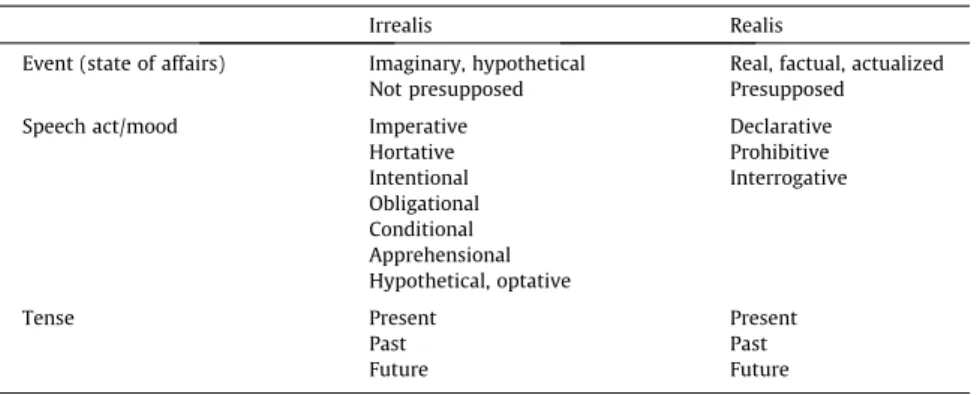
Table 1summarizes the conclusions ofSections 4.1.1–4.1.5.
4.1.7. Realis or irrealis in negations
Note thatTable 1does not mention negatives. Negation is the one domain of Teiwa grammar where the attested realis/ irrealis marking cannot be reconciled with the factual vs. imaginary split.
The majority of negated clauses in Teiwa contain a realis verb, as in (22), and declare ‘‘X did not happen’’. However, there are also negations which do not contain a realis verb, as in (23), which also declare that ‘‘X did not happen’’. The irrealis verb in (23) is unexpected since this non-event is part of the real world: it is a fact that the speaker did not meet the person re-ferred to.
(22) . . .iman ta ga-mian na-n man,. . .
they TOP 3SG-give eat-REAL NEG
‘. . .they did not give her to eat. . .’
(23) man, na g-unba’ (*g-unba’-an) man.
NEG 1SG 3SG-meet 3SG-meet-REAL NEG
‘No, I haven’t met/seen him’
Negation is the one domain of Teiwa grammar where the attested realis/irrealis marking cannot be reconciled with the factual vs. imaginary split. I leave this issue open here.
4.2. The marking of important narrative events
4.2.1. Discourse functions of the realis suffix
The second important function of the realis suffix is to mark primary, thematic and salient narrative events: foregrounded events contain realis verbs. Realis verbs are not used in clauses with static or descriptive content which describe the back-ground or setting of another event, nor in evaluations, intentions, habitual or concluding events. I shall illustrate this here. Sentence (24) contains three clauses (represented in square brackets). In clause #1 the verbaria’‘arrive’ expresses the background/setting for the following two clauses in which the narrative develops, and is not inflected, in clauses #2 and #3 the verbsmisan, saranandarianare marked realis; they express the action continuity.
(24) [yaa aria’]#1, [iman mis-an bali si]#2,
descend arrive they sit-REAL see SIM
‘[While others were] coming down, they were sitting watching
Table 1
Grammatical functions of Teiwa-an‘Realis’.
Irrealis Realis
Event (state of affairs) Imaginary, hypothetical Real, factual, actualized
Not presupposed Presupposed
Speech act/mood Imperative Declarative
Hortative Prohibitive
Intentional Interrogative
Obligational Conditional Apprehensional Hypothetical, optative
Tense Present Present
Past Past
[uy non waal
person PL6 that.mentioned
finding all those people
i sar-an yaa aria-n. . .]#3
it.place find-REAL descend arrive-REAL
over there coming down [towards them]’
In (25) it is illustrated that main narrative events are marked with realis verbs. In (25a) the focus is on two events: the boy not sitting for a long time and the ancestor arriving. Bothmisan‘sit’ andarian‘arrive’ are realis:
(25) a. qau atang [mis-an ana’ maan]
good once.again sit-REAL long.time NEG
‘Then again, ehm, [he] did not sit for a long time [and]
[g-oma’ ta aria-n. . .]
3SG-father TOP arrive-REAL his father arrived. . .’
In (25b), the first clause contains a realis verbmisan‘sit’ and hence expresses the factual, main event. The second clause contains a serial verb construction expressing an intention to go to sleep, and is background.
b. . . .[a mis-an wan iqa’an] [a ta mir tii’. . .]
3SG sit-REAL be dark 3SG TOP ascend sleep
. . .he sat [around] till dark, he went up to sleep. . .
In (25c), an explanation is given why the boy went up to sleep: he was told to do so. Explanations are not foreground information, and the verbs are not marked realis:
c. . . .a’an ga’an hala ga-soi mi daxan luxun ma tii’.
3SG 3SG people 3SG-order ascend attic high come sleep
. . .he was told by others to go up to sleep up in the attic.
The next primary, actual event is that the boy is sleeping: both the first and second verb in (25d) are realisti’in‘sleep’. The fact that someone is coming up to him in the last clause of (25d) is not expressed as a foregrounded primary event; the per-spective of the story remains with the sleeping boy.
d. [tii’-in], [iqa’an ga’an u a un
sleep-REAL dark 3SG DIST 3SG CONT
Sleeping. . .that night he was
tii’-in] si [ilan7 mir].
sleep-REAL SIM grow.up ascend
sleeping and [something] came up [to him].
In (25e), the sleeping of the boy and the intruder’s coming up are repeated as setting for what follows, and no realis forms are used:
e. a’an ga’an i luxun ma tii’ ilan. . .
3SG 3SG it.place high come sleep grow.up
[While] he slept upstairs [lit. at a high place], [someone] came up. . .
6
The wordnonindicates plurality in the preceding noun and is thus a ‘plural word’ in the sense ofDryer (2007, pp. 98–99). 7
In the first clause of (25f) the boy’s lying down is presented as the main event and marked realis; and then the narrative perspective shifts to the activities of the intruder coming up to the attic:miran‘ascend’ is marked realis and repeated three times. . .
f. a tii’-in bali si
3SG sleep-REAL see SIM
he lay down,8saw
ilan mir-an mir-an mir-an. . .
grow.up ascend-REAL ascend-REAL ascend-REAL [someone] coming up coming up coming up. . .
. . .followed by the secondary event that the intruder hits the attic floor in (25g). . .
g. sampai daxan ga-tii’ do’. . .
until (IND) attic 3SG-base strike until it struck [against] the attic’s floor. . .
. . .after which the perspective shifts back to the boy whose tears are falling down: the first verbba’anin (25 h) expresses the main event and is realis; the secondba’repeats this event as the setting for the concluding statements in (25i, j), where the intruder backs off, changes shape, and falls asleep; a situation that continues till daybreak.
h. g-et qa’ar ba’-an yaa ta ba’ si. . .
3SG-eye tear fall-REAL descend TOP fall SIM
his tears were falling down, while [they] fell. . .
i. ewar yix ta gi] [a’an ma uyaq un tii’].
return descend TOP go 3SG come person CONT sleep
[the intruder] backed off he became a human being [and] slept.
j. xoran sampai wan iliar wad.
like.that till (IND) be daybreak day.
like that till daybreak’
The illustrations discussed above show that the discourse function of the realis suffix often, and typically, overlaps with its realis marking function: actualized events are generally also the foregrounded, primary events in a narrative. On the other hand, a narrative may also contain actualized events that do not contain realis verb forms: examples include the verbs in (25g and i). The discourse function of the suffix appears to overrule the grammatical ‘actualization’ function when there is a clash between the two. As a result, actualized events that represent background information do not always get the gram-matically expected realis marker, and non-actualized events that represent foregrounded information can get a realis marker that is grammatically unexpected.
Another illustration is (26). In (26b) the verbsparat‘tie’ refers to an actualized event, but is not marked realis. This is be-cause (26b) as a whole actually sketches the background of the primary events in (26a) and (26c), where the verbsyixei ‘des-cend’ in (26a), andyixin‘descend’ andxeran‘shout’ in (26c) are marked realis (the verbs in the final part of the clause express the direction of the activity).
(26) a. iman yix-ei yaqai yir g-or an ma gi.
they descend-REAL below water 3SG-tail market come go
‘‘They went down to the market at the mouth (lit. tail) of the river.
b. jadi iman i xu’u ma hafan parat
so (IND) they it.place that come village tie
So they built (lit. tied) a village
iman yir g-or an ma gi. . .
they water 3SG-tail market come go
[and] they went to the market at the mouth of the river. . .
8
c. bes qai iman mulai an ma gi
morning just they begin (IND) market come go
Early morning they went to the market,
yix-in yaqai i xer-an wa yix ta gi.
descend-REAL below it.place shout-REAL go descend TOP go
while going down the hill they were yelling.
In (26d),yixin‘descend’,gin‘go’, andfaian‘swear at’ are marked realis, representing primary narrative events:
d. yix-in gi-n bo’oi ma yix-ei si,
descend-REAL go-REAL river come descend-REAL9 SIM
Going down to the river, descending,
uy iman gi-fai-an: ‘‘. . .’’
person they 3PL-swear_at
someone insulted them: ‘. . .’
An illustration where a non-actualized event gets a realis marker to express that it is foregrounded is (27a), where the verb followingxogo’‘want’,finan‘catch’, expresses an intention, not an actualized event, yet is marked realis to encode it as primary, new information.
(27) a. iman xogo’ ga-fin-an ga-x ba. . .
they want 3SG -catch-REAL
3SG
-possession SEQ
‘They want to catch it,
In (27b), the primary eventyix‘descend’ is also actualized, and marked realis:
b. iman guagi yix-in ga-fin,
they spy.on descend-REAL 3SG-catch
they creep down [lit. they descend spying] to catch it,
In (27c), both events are actualized, but none is marked as realis. In the analysis assumed here this implies thatfin‘catch’ andbir‘run’ do not express salient, primary foregrounded events.
c. si nuk qai iman ga-fin. . . ga-dan aga’ bir.
SIM one just they 3SG-catch 3SG-part all run
just one they catch, the others run away.’
Note that (26c) occurs at the end of an utterance, with a falling intonation and a pause that is represented as a full stop. It has the feeling of a concluding statement rather than a primary event. It is followed by the utterance (27d, e) which repeats the same event (catching a frog), but now this event is encoded as a foregrounded, primary event; just like the event of run-ning away with the frog is also encoded as primary:
d. iman mauqubar g-oqai nuk ga-fin-an gula’
they frog 3SG-child one 3SG-catch-REAL finish
‘They catch one little frog
ta bir-an pin gi. . .
TOP run-REAL hold go
and run away with it,
The event that the other frogs are sitting down to watch him is realis in (27e).Baliis not realis as a result of the restriction that utterance final verbs cannot be realis; see Section4.2.2below.
9
e. ga-dan ga’an non ta mis-an ga’an bali pati.
3SG-part 3SG PL TOP sit-REAL 3SG see PROG
the others sit watching him.’
In sum, realis verbs refer to actualized events that are foregrounded information. Actualized events can also be part of clauses that describe the background or setting of another event, or clauses that are evaluations, intentions, or concluding statements. In such cases, the events are not foregrounded, and the verb is not marked realis. The discourse function of the suffix thus overrules its grammatical realis marking function. Conversely, non-actualized events that represent primary narrative events can get a realis marker to mark them as foregrounded.
Bare verbs without a realis suffix are thus not necessarily irrealis; they may be part of a background event, and be simply unmarked for reality status. And while verbs with a realis suffix typically refer to actualized events, there are exceptional cases where non-actualized events are marked realis because they are part of a foregrounded event.Table 2presents a summary.
4.2.2. Distributional restrictions of realis verbs
Regarding the grammatical position of realis verbs in the clause the following observations can be made. Clauses are verb-final in Teiwa, and a realis verb can be the verb-final verb of a clause. As the examples have shown, Teiwa clauses often contain more than one verb, and serial verb constructions are common. Not every clause has to have a verb that is inflected for realis: clauses can only contain bare verbs. Not all verbs can take a realis marker: realis status is typically marked on activity verbs, and aspectual, modality and existential verbs cannot be marked realis.
Although many clauses contain only one realis verb, this is not a syntactic restriction. To have two or more realis verbs in a clause is also possible. An illustration is (28), where bothbiran‘run’ ando’onan‘hide’ are realis and part of the same clause; under the scope oftau‘Perfective’.
(28) qau ba mauluku ga’an ta bir-an gi o’on-an gi tau
good SEQ monkey 3SG TOP run-REAL go hide-REAL go PRF
‘So that monkey ran away [and] hid
sampai a minggu nuk
till 3SG week (IND) one
for one week’
The only distributional restriction of realis verbs that appears to be rigid, is that utterance-final clauses never have a realis verbs in utterance-final position. We have seen examples of this above in (26a), (26i), (27c), and (27e). An utterance is a se-quence of clauses of which the final one ends with a falling intonation and a pause. For example, (25a–c) are sese-quences of clauses, but only the final verb of (25c) is utterance-final.
Another illustration is (29), where the question in (29b) ‘Who is the one over there staying in the village’ is a clause that ends in the final realis verbmis-an‘sit’. This is possible because it is uttered in the middle of an utterance and is followed by other clauses within in the same utterance. In contrast, the final verb of (29b)ga-aria’‘arrive at someone’ cannot be inflected for realis because it is the final verb of the utterance.
(29) a. . . .ga-xala’ li’in a wa:
3SG-mother their 3SG say
‘Their mum just said:
b. ‘‘Ah! Yilag la afo’o un hafan
EXCL who TOP over.there CONT village
‘‘Ah! who is the one staying over there
ma mis-an ba hari hasak maxar hasak si
come sit-REAL SEQ k.o.garden empty k.o.garden empty SIM
in the village, all the gardens are empty so Table 2
Discourse functions of Teiwa-an‘Realis’.
Verb without suffix Verb with suffix
Narrative event Secondary event that expresses background, setting, evaluation, intention, conclusion
c. ha’an atang amidan wurak-an ga-aria’(*-an). you do.once.again what look.for-REAL 3SG-arrive(-REAL) what do you come here looking for again?’’’
The restriction that utterance final verbs are never realis may be a grammaticalized reflection of the discourse function of the realis inflection as the marker of main narrative events, because a verb that refers to a primary, foregrounded event typ-ically does not occur at the very end of an utterance.
In sum, a Teiwa clause may have no realis verb, or one, two or three. Realis verbs can, and do, occur at the end of clauses and sentences, but their discourse function prohibits their occurrence at the end of an utterance.
5. Summary and conclusions
Teiwa realis is marked as a verbal suffix, while irrealis has no expression on the verb. Bare verb stems are thus either irre-alis, or unmarked for reality status. Modality, Speech Acts (Mood) and Reality Status are different grammatical categories in Teiwa, and are expressed in different ways.
Teiwa realis/irrealis marking cross-cuts the different modalities and speech acts. The Teiwa realis inflection is used to mark events in the present and the past as actualized events. Realis verbs also refer to events that the speaker presupposes as located in the real world, or in the world that the speaker is convinced to be real. Adverbs for modality, time and location, such asquun‘sure (ly),ana‘long time’,afo (’o)‘overthere’, and demonstrative pronouns such aslaxu’u‘that one overthere’ accompany the realis suffix to locate the event in space and time, and to make it explicitly factual and real. Verbs expressing events located in the imagination and/or in an unreal world are not marked for realis, as such events are not part of the real world, or of the world that the speaker is convinced to be real.
While, in general, a future event is expressed as irrealis because it is not actualized yet, in Teiwa it may also be marked realis to express that the speaker is convinced that it will happen. The realis function of the suffix thus extends to a more subjective value of ‘expected’ or ‘presupposed’ reality. The discourse function of the realis inflection is to mark main, fore-grounded narrative events.
References
Bybee, J., Fleischman, S. (Eds.), 1995. Modality in grammar and discourse. John Benjamins, Amsterdam. Capell, A., 1969. A survey of New Guinea languages. Sydney University Press, Sidney.
Chafe, W., 1995. The realis–irrealis distinction in Caddo, the Northern Iroquoian languages, and English. In: Bybee, J., Fleischman, S. (Eds.), Modality in Grammar and Discourse. John Benjamins, Amsterdam, pp. 349–365.
Dryer, M., 2007. Word order. In: Shopen, T. (Ed.), Language Typology and Syntactic Description, second ed., Clause Structure second ed., vol. I Cambridge University Press, Cambridge, pp. 61–131.
Elliott, J.R., 2000. Realis and irrealis: forms and concepts of the grammaticalisation of reality. Linguistic Typology 4, 55–90. Foley, W.A., 1986. The Papuan languages of New Guinea. Cambridge University Press, Cambridge.
Foley, W.A., Van Valin, R.D., 1984. Functional syntax and universal grammar. Cambridge University Press, Cambridge. Gordon, R.G. Jr. (Ed.), 2005. Ethnologue: Languages of the World, 15th ed. SIL International, Dallas. <www.ethnologue.com>.
Holton, G., Klamer, M., Kratochvı´l, F., 2009. The languages of Alor-Pantar (Eastern Indonesia): A (re-)assessment. Paper presented at the 11th International Conference on Austronesian Linguistics (11.ICAL), Aussois, France, 22–26 June 2009.
Klamer, M., 2010a. A grammar of Teiwa. Mouton de Gruyter, Berlin.
Klamer, M., 2010b. Ditransitives in Teiwa. In: Malchukov, A., Haspelmath, M., Comrie, B. (Eds.), Studies in Ditransitive Constructions. Mouton de Gruyter, Berlin, pp. 427–455.
Klamer, M., 2010c. One item, many faces: ‘Come’ in Teiwa and Kaera. In: Ewing, M., Klamer, M. (Eds.), Typological and Areal Analysis: Contributions from East Nusantara. Pacific Linguistics, Canberra, pp. 203–225.
Mithun, M., 1995. On the relativity of irreality. In: Bybee, J., Fleischman, S. (Eds.), Modality in Grammar and Discourse. John Benjamins, Amsterdam, pp. 367– 388.
Pawley, A., 1998. The trans New Guinea phylum hypothesis: a reassessment. In: Miedema, J., Odé, C., Dam, R.A.C. (Eds.), Perspectives on the Bird’s Head of Irian Jaya, Indonesia. Rodopi, Amsterdam, pp. 655–690.
Pawley, A., 2001. The proto trans New Guinea obstruents: arguments from top-down reconstruction. In: Pawley, A., Ross, M., Tryon, D. (Eds.), The Boy From Bundaberg: Studies in Melanesian Linguistics in Honour of Tom Dutton. Pacific Linguistics, Canberra, pp. 261–300.
Roberts, J.R., 1990. Modality in Amele and other Papuan languages. Journal of Linguistics 26, 363–401.
Ross, M., 2005. Pronouns as a preliminary diagnostic for grouping Papuan languages. In: Pawley, A., Attenborough, R., Golson, J., Hide, R. (Eds.), Papuan Pasts, Studies in the Cultural, Linguistic and Biological History of the Papuan-Speaking Peoples. Pacific Linguistics, Canberra, pp. 15–66.