Thinking Geopolitically:
NATO’s Balancing Behavior Through
Montenegro’s Accession
Master’s Thesis
By
Melike Kaptan
i
Master of Science in International Relations and Diplomacy Faculty of Governance and Global Affairs
Leiden University 2016-2018
Thinking Geopolitically: NATO’s Balancing Behavior
Through Montenegro’s Accession
Student Name: Melike Kaptan
Student Number: s1891405
First Supervisor: Dr. Marinko Bobic
Second Supervisor: Dr. Peter van Ham
Cover photo: Geographic location of Montenegro in Europe. Source: OperationWorld.net, 2018.
ii
Acknowledgments
This Master’s thesis is a product of an intense and comprehensive two-year MSc program of International Relations and Diplomacy, provided by dedicated instructors from Leiden University and the Netherlands Institute of International Relations “Clingendael”. Under the tutelage of my professors, I have obtained a whole new set of tools to study and understand the phenomena of the current world order from a different viewpoint. For that, I would like to express my most sincere gratitude to all my professors, and the MIRD staff who have shown continuous unwavering support in all my academic endeavors. I would also like to especially thank my First Supervisor Dr. Marinko Bobic for his guidance and his confidence in me. Without his dedicated support throughout my thesis period, this end product could not have reached its full potential. Another special thank you goes for my Second Supervisor Dr. Peter van Ham for his most constructive feedback that allowed me to build my research design on such concrete basis.
iii
Abstract
On December 2nd, 2015, the North Atlantic Treaty Organization (NATO) officials extended an
invitation to Montenegro in order to initiate official talks with the government regarding its
membership to the Alliance as its 29th member. While numerous proponents and opponents of the
iv
Table of Contents
Acknowledgments ... ii
Abstract ... iii
List of Tables & Figures ... v
Abbreviations... vi
1. Introduction ... 1
1.1. The Structure of the Thesis ... 6
2. Literature Review ... 7
2.1. NATO’s Eastward Enlargement ... 7
2.2. Tensions between NATO and Russia ... 9
2.3. The Case of Montenegro ... 11
3. Theoretical Framework ... 13
3.1. Theories ... 13
3.1.1 The Balance of Threat Theory ... 13
3.1.2. The Classical Geopolitics ... 15
3.2. Hypotheses ... 17
4. Research Design ... 18
4.1. Variables ... 18
4.2. Case Selection ... 19
4.3. Data Collection ... 20
4.4. Method of Analysis ... 21
5. Geopolitical Importance of Montenegro ... 23
5.1. Descriptive data of the Geopolitical Factors ... 23
5.2. Analysis of Geopolitical Importance of Montenegro for NATO ... 31
6. Balancing Against the Threat Russia from a Geopolitical Perspective ... 35
7. NATO’s Open Door Policy Prerequisites and Its Analysis on Montenegro ... 43
8. Discussion ... 55
9. Conclusions ... 58
9.1. Limitations... 59
9.2. Implications for further research ... 60
v
List of Tables & Figures
Table 1. Summary of Data for the Geopolitical Factors...38
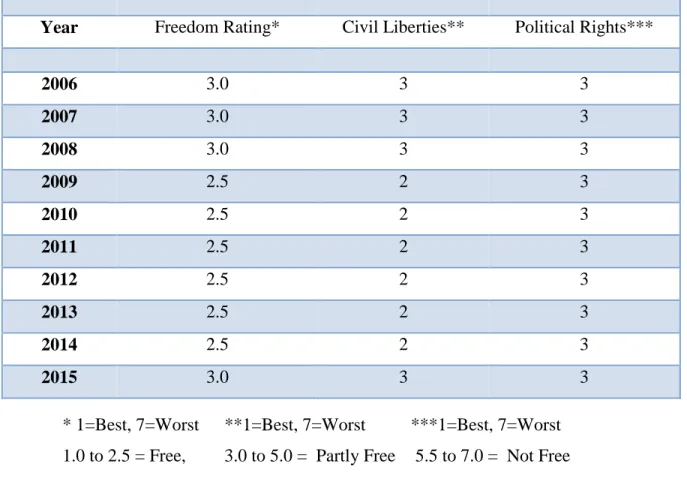
Table 2. The Democratic Chronology of Montenegro...46
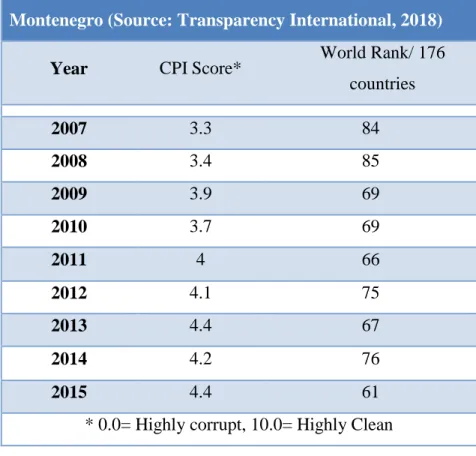
Table 3. The Corruption Perception Index – Montenegro...48
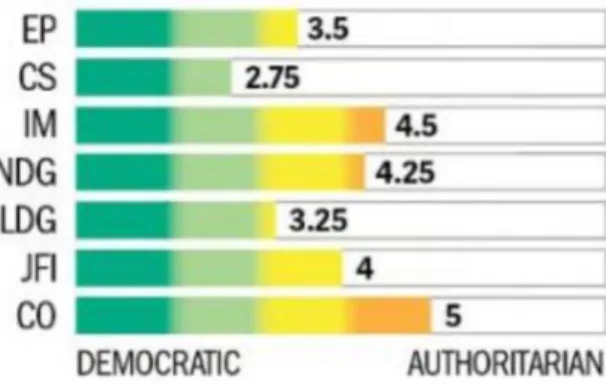
Table 4. Nations in Transit Ratings and Averaged Scores (Montenegro)...50
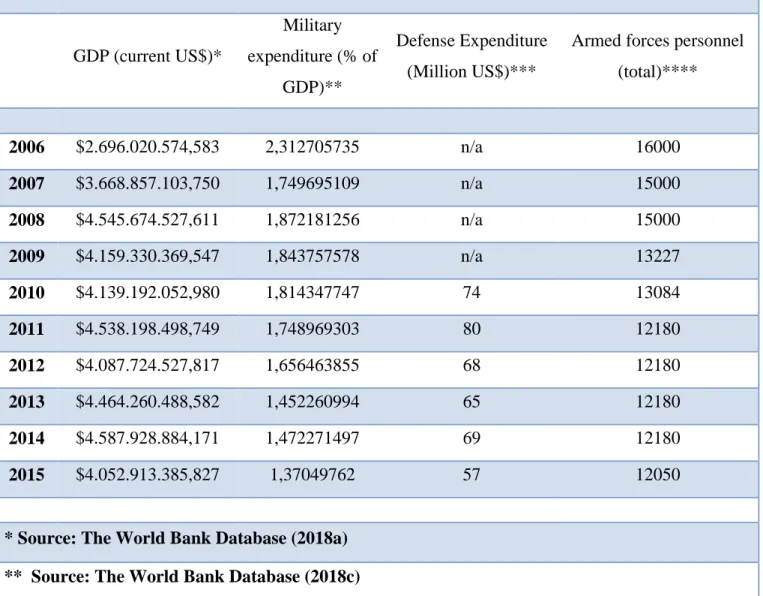
Table 5. Collective Data of Montenegro's Military Contribution...56
Figure 1. Political Map of Montenegro... 28
Figure 2. Population Density by Municipalities... 30
Figure 3. The Ethnic Structure of Montenegro... 31
Figure 4. The Religious Structure of Montenegro... 31
vi
Abbreviations
ANP Annual National Program
CIA Central Intelligence Agency
DF Democratic Front
EU European Union
FH Freedom House
GDP Gross Domestic Product
ID Intensified Dialogues
IPAP Individual Partnership Action Plan
IPCP Individual Partnership and Cooperation Program
IPP Individual Partnership Program
ISAF International Assistance Force in Afghanistan
LNG Liquefied Natural Gas
MAP Membership Action Plan
MONSTAT Statistical Office of Montenegro
MTEP Military Training and Exercise Program
NATO North Atlantic Treaty Organization
OCC Operational Capabilities Concept
PARP Planning and Review Process
PFP Partnership for Peace
PMF Political-Military Framework
RIAC Russian International Affairs Council
1
1. Introduction
On December 2nd, 2015, the Foreign Ministers of the NATO Alliance invited Montenegro to
initiate accession talks to adhere the nation as its 29th member (NATO News, 2015).
Consequently, NATO had begun its fourth wave of eastward enlargement since the end of the Cold War. In other words, while NATO had been mainly focusing on the Western European countries during the Cold War era - excluding Turkey and Greece which joined the Alliance in 1952 - in the period starting from 1999, these policies became more Central and Eastern Europe
oriented. In 1996, former US President Clinton announced that to celebrate the 50th anniversary
of the Alliance, NATO would run an enlargement campaign towards the former Soviet Bloc to eliminate the emergence of any possible "gray zone of insecurity" in Europe (Mitchell, 1996). Hence, after the dissolution of the Warsaw Pact; NATO enlargement proceeded initially with the Czech Republic, Hungary and Poland in 1999; Bulgaria, Estonia, Latvia, Lithuania, Romania, Slovakia, and Slovenia in 2004; Albania and Croatia in 2009; and lastly Montenegro in 2017.
2
consequently leaving the overall security of Europe in a potentially precarious position, NATO is still displaying its persistence by moving forward under its prominent Open Door Policy.
NATO based this particular strategy on Article 101 of the Washington Treaty (NATO Official Website, 2017) which states that “NATO’s door remains open to any European country in a position to undertake the commitments and obligations of membership, and contribute to security in the Euro-Atlantic area” (Ibid). In other words, the provisions of Article 10 of the North Atlantic Treaty (North Atlantic Treaty, 1949) enable the Member States to invite any state within the European continent to become a member without the involvement or the interference of any third party. From a critical perspective, the introduction of this policy and its legal framework that was adopted unanimously by the Member States can be considered as a clear demonstration of NATO's interest in expanding its territory within Europe, regardless of the reactions from "the third parties."
The third-party interference here refers mainly to Russia and its criticism over the NATO enlargement, particularly the accession of Montenegro. Russia most certainly tried to interfere, obstruct and stall NATO's invitation to Montenegro in 2015, through mobilizing pro-Russian protestors from the Democratic Front, a pro-Western government opposition party (Recknagel, 2015). Although Moscow denied its involvement in the uprising of the demonstrators, the Serbian Orthodox Church made a statement during a protest on how they “grieve over Montenegro's separation from Mother Russia" (Boskovic, 2015). Russia, on the other hand, continued its negative rhetoric towards the Montenegrin government’s willingness to join and threatened Montenegro to cease the joint projects with the state if the membership process were to become consolidated (Emmott & Siebold, 215). This would be a potentially hard blow to Montenegrin economy considering that Russia was operating the majority of Montenegro's foreign-owned companies and real estate businesses (Tomovic, 2016). Furthermore, according to the Russian International Affairs Council’s (RIAC) announcement, between 2001 and 2010, Russia had invested over 500 million dollars in Montenegro and that by 2012, 32% of the enterprises in
1
3
Montenegro owned by Russia (Pivovarenko, 2014). However, Russia did not limit its opposition campaign against NATO's invitation to Montenegro only to supporting protesters and recurring to economic threats. Right after the announcement of the invitation, the Russian presidential spokesman Dmitry Peskov, warned NATO that "Moscow has always said at various levels that the continuing expansion of NATO, the NATO military infrastructure eastward, of course, cannot help but lead to a response from the east, that is, from Russia, in terms of ensuring security and maintaining a parity of interests" (Russia Beyond, 2015). However, he did not specify what kind of response NATO should expect from Moscow.
It is a well-known fact that Russia had always perceived NATO’s enlargement as a threat and NATO's continuation to do so had added fuel to the existing NATO-Russian tensions. The NATO Secretary General, Jens Stoltenberg, tried to ease Russia's concerns by stating that Montenegro's accession to NATO was not a threat to Russia but an attempt to integrate the Western Balkans further into Europe (Buckley et al., 2015). The US Secretary of State, John Kerry, emphasized the importance of NATO's Open Door Policy by stating that Montenegro's accession is a step towards a Europe “that is whole, free and at peace” (Ibid). However, this campaign was still qualified as an "irresponsible policy" by Russia, and NATO's approach to Montenegro was defined as “a mistake, even a provocation” by the Russian Foreign Minister, Sergei Lavrov (Teffer, 2015). The fact that Russia saw NATO’s enlargement as a "reckless expansion of its geopolitical space, artificial division of states into ‘us’ and ‘them” (Buckley et al., 2015) speaks volumes about how isolated the country was feeling from Europe. However, as the Former NATO Secretary General, Anders Fogh Rasmussen, said "[w]e also need to be realistic in recognizing that NATO will continue its Open Door policy -- not because of any intention to ‘encircle' or marginalize Russia, but because respect for territorial integrity and the right of each sovereign state to freely decide security policy and alignments are fundamental if Europe is to be truly ‘whole and free'" (NATO Speeches, 2009). From these statements, it is evident that this small Western Balkan country's pro-western trajectory had enlarged the rift between NATO and Russia, and once again brought a clear picture as to how they perceive one another.
4
nation bringing something to the table for NATO? From the Montenegrin perspective, the country never wavered from its path towards NATO membership and demonstrated a level of commitment towards this since obtaining its sovereignty. It joined the Partnership of Peace (PfP) Program in 2006, and joined the Membership Action Plan (MAP) in 2009, all of which were the expected steps to be taken to obtain NATO membership (NATO Archive, 2017). Montenegro’s progress; however, still does not explain to what extent the smallest former Yugoslav country (Darmanovic, 2007: 152) can provide a contribution to the Alliance with an average population of 600.000 and approximately 2.000 soldiers (Farkas, 2015). Robert E. Hunter, the former US Ambassador to NATO, explains NATO membership invitation to Montenegro as a "test case" of NATO’s Open Door Policy as a response to Russian President Vladimir Putin's annexation of Crimea to its borders (Hunter, 2015). In fact, Mr. Hunter was resonating the views of several critiques at the time of this invitation, which coincided and with the war in Ukraine (Kaminski, 2015; Roberts, 2015; Lomonosov, 2016). Moreover, considering that "the Ukrainian crisis has created the deepest rift between Russia and the West since the end of the Cold War" (Wolff, 2015: 1103), NATO's enlargement endeavors and its candidates were perceived as a geopolitical scheme of NATO to influence the Eastern European countries to create a line for containing Russia (French, 2014). However, pointing to Ukraine as the only reason for adhering Montenegro into NATO does not seem to do justice to Montenegro's potential contributions and years of arduous work to join the Alliance. More importantly, it does not take into account the geopolitical factors of Montenegro, particularly its location on the Adriatic Sea, which gives the state strategic importance within the context of geopolitics.
The concept of geopolitics here is considered mainly as a tool for foreign policy-making which combines the geographical position of a state, the strategies, and the strengths that come from it (Wolff, 2015: 1104). Furthermore, although NATO has been promoting the implementation of its Open Door Policy via Article 10 to adhere Eastern European states to its Alliance, the invitation to accede Montenegro hints both to its geopolitical attributes and NATO's balancing role behavior against Russia. Thus, to further analyze the phenomenon here described, the author of this thesis conducts an in-depth analysis on Montenegro and sets out to answer the following
research question: What is Montenegro’s geopolitical importance in the NATO-Russia dispute,
5
This research question will allow the researcher to find out what is the role of Montenegro's geopolitical importance in the NATO-Russian dispute, and whether this importance has any effect on NATO's balancing behavior. In this light, the significance of the research is twofold; both on an academic level and a societal one.
On an academic level, the study will be conducted within the context of Montenegro's trajectory towards NATO; more specifically, the period when NATO extended an invitation to Montenegro in 2015 to initiate the official talks for a fully-fledged membership. While the NATO enlargement issue has been theoretically and empirically analyzed quite extensively through the years using approaches such as neoliberal institutionalism, constructivism, and neorealism, the newest member has yet to be addressed to any degree in the relevant literature. In fact, there is a striking absence in the relevant literature on Montenegro, and the limited number of studies on this case is almost exclusively framed within the emergence of the Russian threat derived from the Ukraine war. This research; however, is purposed to provide a satisfactory addition to this void in the literature and to present a unique theoretical approach to understanding the phenomenon.
6
accession, the research will utilize an extensive media coverage which, although not the primary objective of the thesis, will also present the overall views and perceptions of analysts, critiques and Montenegrin people regarding the issue of Montenegro's NATO accession.
In conclusion, considering that the analysis of this thesis will bring together relatively neglected theories, an interesting methodology, and a recent case selection to answer the research question as presented above, the approach of this study can motivate and encourage further analysis on similar cases. The importance of geopolitics, as one of the leading elements in this study, has a considerable influence in today's international world order which can be in the interest of decision-makers, policy-makers, and academics to produce new policies under broader considerations.
1.1. The Structure of the Thesis
7
2. Literature Review
The literature review in this chapter is purposed to provide a more detailed outline of the critical points as introduced in the previous section. Thus, to provide a more organized structure, this section initially states the existing, ongoing debates and arguments concerning NATO's eastward enlargement, the tensions between NATO and Russia, and the views on Montenegro's alignment with NATO. Briefly, this chapter explains that while proponents of enlargement suggest that NATO needs to expand to survive and bring stability to Europe, opponents are more critical about whether frustrating Russia is worth the costs of enlargement.
2.1. NATO’s Eastward Enlargement
As mentioned in the introduction, the enlargement process of NATO had changed drastically with the Central and Eastern European revolutions in the final years of the 1980s, when the post-Soviet countries started to declare their independence and obtain statehood and to "return to Europe" in the sense of joining NATO and the EU (Simon, 2001: 121). NATO was obviously aware that with its recently introduced Partnership for Peace Program in 1994, the overall rhetoric of cooperation with the former adversaries and the ongoing German reunification talks, further enlargement would be necessary for the future. Former US President Bill Clinton addressed the debates over the NATO enlargement policy in the NATO Summit of 1994 by stating that "the question is no longer whether NATO will take on a new member, but when and how" (Brown, 1994: 34).
8
future aggression with Russia and the promotion of democracy, and the prevention of possible conflicts among the members (p. 41). Their viewpoints have great merit within the neorealist school of thought which asserts that if the Alliance can overcome their common threat, or if the threat itself is not as grandeur as it used to be, then there will be no need for states to commit to the Alliance (Kydd, 2001: 804). Adding to this school of thought, Mearsheimer (1994) introduced similar views within a Structural Realism perspective which, in his opinion, explains the State’s behavior better than many other theories. Since peace and constant cooperation without collaboration is impossible, States are prone to seek opportunities and take advantage of them when they find one to improve their relative position and power (Mearsheimer, 1994). Hence, sustainability of Alliances is not possible in a self-help world where everyone is competing with one another to maximize their power (Ibid: 11). However, the NATO Alliance and its ongoing enlargement process indicate that the members of NATO still perceive Russia as a sufficient threat to motivate the Alliance to pursue its existence (Rauchhaus, 2000: 191), and even in a self-help world order, unity is strength against a common threat.
Petar Kurečić (2008), on the other hand, argues that for the existence and sustainability of the NATO alliance, opposing the realist predictions on NATO’s survival, the post-Cold War presented a new era where the NATO had “transform[ed] itself in accordance with new challenges, and conditions” by enlarging towards the Balkan region (p. 27). However, it is observable that through such transformation, NATO also had to revise the conditions of eligibility for its potential candidates. While “qualifications of the aspirants for NATO membership” (Larrabee, 2010: 49) for Western states were much higher before 1999, such aspirations have become much lesser for the post-Soviet applicants, after 1999 (Ibid). The reason for such transformation is NATO's Open Door policy, which ultimately enabled the militarily and materially weaker states to become eligible for membership (Art, 2016: 341). Through the adoption of the Open Door Policy, NATO had clearly displayed a change of structure; from a greater military capability with its limited number of members to broader borders with
questionable functionality (Ibid).
9
existed (Hellmann & Wolf, 1993: 3). The former US National Security Council, and a NATO
official, Damon Wilson, stated, in an interview with the New Atlanticist that NATO's
enlargement should also be considered as a demonstration of its self-confidence to the rest of the world (Kumar Sen, 2015). He explains that "it is quite important for the Alliance itself because you don’t enlarge if you don’t have a sense of confidence in your institution” (Ibid). Although Mr. Wilson’s assertions were expressed within the lines of Montenegro’s accession to NATO, he still hints to the fact that Montenegro is an “important statement to Russia that we will not be intimidated by bullying” (Ibid).
While this section explains NATO's need for enlargement in order to survive against the Russian threat, the commonly used theories do not incorporate the geopolitical considerations of NATO's enlargement behavior. Was NATO's enlargement towards Montenegro merely a response to "bullying"? Or, was Montenegro more important to NATO than merely functioning as a political pawn? This research will go beyond the existing review and analyze the geographic strength of Montenegro both for NATO and for Russia, to fully understand Montenegro's role in NATO's latest wave of enlargement.
2.2. Tensions between NATO and Russia
10
NATO's geographical enlargement (Pouliot, 2010: 171). NATO allies, Germany and France in particular, were seriously opposed to Russia’s membership of NATO for a number of reasons. The first one is that including such a dominant power as Russia would destroy the transatlantic alliance (Ibid). The second reason was that NATO would be sharing borders with Asian countries, and thirdly the Russian dispute with these Asian countries, particularly with China, would reflect heavily on the Alliance (Duong, 2002).
In addition to this sense of isolation, NATO’s persistence in enlarging towards Russian borders through Georgia and Ukraine sparked aggressive reactions from Kiev. The Russian Foreign Minister, Sergey Lavrov, defined this as "a colossal geopolitical shift" that would go against Russia's national interests (The New York Times, 2006). Andrew T. Wolff (2015) asserts that the value-driven enlargement policy of NATO has limitations since it does not account for how Russia perceives this enlargement from a geopolitical view (p. 1120). He further analyzes that geopolitical enlargement towards the Balkans would be too costly for NATO and that it should focus on more stable regions; such as the Scandinavian countries (Ibid). However, even though Wolff recognizes the importance of geopolitical enlargement which would allow NATO to "identify areas of critical strategic importance in Europe" (Ibid), he overlooks how NATO's geopolitical enlargement policy can change if a strategic area is under a potential external threat.
11
for its ongoing dispute with Greece over the country's name (Nič, 2015), NATO selected Montenegro as the most eligible and realistic nation to pursue. However, while the tensions are evident between NATO and Russia, the overall debate does not provide explicit information on how Montenegro’s trajectory towards NATO membership plays a role in these tensions.
2.3. The Case of Montenegro
Montenegro was invited to initiate the accession talks in December 2015 and received the formal invitation to join NATO in May 2016. This latest result of the Open Door policy was taken as an act of defiance in the face of Russian opposition, which was also declared by the Members of NATO Congress during the Warsaw Summit in 2016 (Belkin, 2016). As previously indicated in the introduction, the logic behind the invitation to Montenegro to join NATO has links to the annexation of Crimea to Russia which challenged "the fundamental principles of the European order" (European Council on Foreign Affairs, 2014).
12
that although the Member States of the Alliance should respect the Russian drawn “red lines” that consist of Georgia and Ukraine, this cannot be said for Montenegro, since Montenegro is the least complicated case among the candidates (Tavberidze, 2018). Thus, proponents demonstrate more enthusiasm about NATO’s enlargement agenda bringing stability to the Western Balkan region which they consider as a demonstration of NATO’s unity against the ongoing instabilities within Europe (Roberts, 2015; Lomonosov, 2016).
In addition to these schools of thought, statements about the ultimate goal of NATO's latest wave of enlargement add a different view on Montenegro's readiness for membership. A senior NATO official, who wanted to remain anonymous, stated about the diplomats within NATO that "[t]hey want to show NATO isn't afraid of enlargement and will lock the Balkans into the Euro-Atlantic strategy and won't leave them in limbo" (Kaminski, 2015). Another geographical view on NATO's enlargement came from the senior member of the Democratization Policy Council, Bodo Weber, who analyzes Montenegro's accession as a strategic move of the US administration "to close off geopolitical space for Russian meddling, contain Putin's imagination he can return Russia to global power" (Abramowitz, 2017). However, he does not explain what "the meddling" is in this context. Thus, the research in this thesis also aims to identify whether there was an already existing Russian meddling or a potential one during the period in which NATO invited Montenegro in 2015.
13
3. Theoretical Framework
3.1. Theories
The purpose of this chapter is to provide a theoretical understanding of the Balance of Threat Theory and the Classical Geopolitics. The importance of choosing the Balance of Threat Theory in this research is twofold: Firstly, this theory can explain the behavior of an Alliance in the face of a perceived threat better than the Balance of Power Theory, or the other sub-theories; such as Neoliberalism, and Neorealism. Secondly, the theory's mechanisms are more closely linked to the geographic features of a perceived threat. This is particularly important since the research purposes to utilize a complementary approach for theoretical synthesis with the Balance of Threat and the Classical Geopolitics. Geopolitics, on the other hand, provides a deeper understanding of how the geographic position of a state can affect the foreign policies of a country, or in this case, NATO's balancing behavior.
3.1.1 The Balance of Threat Theory
The Balance of Threat Theory was initially developed and introduced by Stephan M. Walt (1987)
in his book Origins of Alliances, which was primarily influenced by Waltz's (1979) Balance of
Power theory. However, instead of refuting it, Walt proposed to reformulate the theory by presenting another perspective (Keohane, 1988: 171). Waltz’s theory predicts that States tend to join the weaker side in order to balance their power against the bigger power (Waltz, 1979: 127). However, since this theory cannot fully explain the behavior of alliance formation and alliance behavior in the face of a perceived threat, Walt’s theory is more suitable for this research.
14
From the Alliance perspective, Stephan Walt (1988: 275) asks the question "[w]hen will states form alliances, and what determines their choice of allies?” He explains that States seek security in the face of a threat rather than power (Ibid). Alliances enlarge to accept other States into their protection to increase their security and deter the perceived threat (Kydd, 2001: 804). One of the components of the concept of Threat is “aggregated power” which argues that if a State has greater material capabilities; such as industry and weaponry than that State can pose a greater threat (Walt, 1996: 19). Thus, aggregated power is an essential element for the States' perception of power (Wivel, 2008: 296). Another component is the "perception of intent" which is the uncertainty of how another State will use its aggregated power (Ibid). The level of threat also relies on the "offense defense balance" which means that States feel less secure when they can easily fight with one another and when it is easy to acquire the necessary means for doing so (Walt, 1996: 19). This refers to the lack of deterrence that can stop one State from trying to harm another. Finally, “the geographic proximity” (Walt, 1987: 151) is another component which considers that the closer the proximity, the greater the threat (Wivel, 2008: 297). In other words, States are more concerned about the perceived threats that are geographically closer to themselves, than about the ones that are far away. Based on these components, the threat does not necessarily mean a direct military action or any aggressive behavior from the external power, since the threat is defined by how that State perceives it.
The components as mentioned above are crucial for the theory to be applied in any given case study. The uncertainty caused by an adversary's intentions can create the perception of a threat which can encourage an alliance/organization to add more members to balance it. The aggregate power influences the States when it analyzes its potential allies. Offense defense balance creates a sense of insecurity for States due to the lack of repercussion or international assistance if one country decides to harm another country. NATO, for example, found a way around this particular
component with Article 5 of the Washington Treaty2, which ensured the members’ security
2 1949 North Atlantic Treaty, 34 UNTS 243, Article 5: “The Parties agree that an armed attack against one or more
15
through a principle of “one for all, all for one” mutual defense provision. Lastly, when the perceived threat is geographically close to the State in question, then the response to alleviate that threat should be expected to take place in a timelier manner.
The framework of the Balance of Threat Theory indicates that for the theory to work on a selected case, a perceived threat must be evident and that the threat should fit the components as mentioned above. Although this section has only provided the groundwork of what the concept of Balance of Threat Theory stands for, in the analysis, the researcher will present evidence of the existence of an external threat and explain how this threat links to the geographical importance of Montenegro within the NATO-Russia tensions.
3.1.2. The Classical Geopolitics
16
There are two main strands of thought in Classical Geopolitics. The first is the Organic State Theory, which will not be applied in this research, and the second one is Geostrategy. Very briefly, Organic State Theory, influenced by Darwinism, asserts that States are in a constant struggle for survival; hence, they must either grow or die (Owens, 2015: 469). Geostrategy, on the other hand, is concerned with State's behavior, its development, and progress within the State's geographical context (Ibid: 470). This behavior in strategy building within the geographical context has strong correlations between the maritime or continental features of the State (Ibid: 476). The geographical strength of a country, whether it is land-locked or coastal, defines the State's foreign policymaking, its strategy, and development; therefore it is more dynamic rather than static (Owens, 2015: 477). In other words, geopolitics, and the level of its importance are sensitive to the international affairs affecting the State, and a geopolitically important State can be open to the exploitations of adversary States (Ibid). Thus, it is up to the State to build strategies to turn its vulnerabilities and its geopolitical features into opportunities.
In this research, the geostrategic strand in the Classical Geopolitics is more relevant to understand Montenegro’s geopolitical importance for two reasons. The first reason is that out of two strands of thought, only geostrategy examines the geopolitical position of the State and how it impacts the State's behavior. In the analysis, after reviewing the geopolitical importance of Montenegro, the researcher will look into how this importance created a strategic move for NATO within the framework of balancing a perceived threat. The second reason is that the analysis will apply the famous geostrategist Alfred Thayer Mahan’s (1890) six factors, which are presented in his book
17
3.2. Hypotheses
In light of the views presented in the literature review, and in the theoretical framework of the Balance of Threat Theory and Classical Geopolitics, three hypotheses have been formulated to analyze and answer the research question.
H1: Montenegro's geopolitical importance for NATO stemmed primarily from Montenegro's
geographical position.
H2: Montenegro's geopolitical importance for NATO stemmed primarily from the desire to
balance the threat from Russia.
H3: Montenegro's geopolitical importance for NATO stemmed primarily from Montenegro's
fulfillment of the NATO accession prerequisites.
The first hypothesis primarily analyzes the importance of Montenegro’s geographical position within the geopolitical framework. Thus, the falsification of the hypothesis can only be achieved if the geographical position of Montenegro is not significant enough for NATO.
The second hypothesis analyzes Montenegro's geopolitical importance and whether this importance had an impact on NATO's balancing behavior against the Russian threat. The falsification of the hypothesis, therefore, can only be achieved if Montenegro were not geopolitically important and if NATO were not acceding Montenegro in order to balance against Russia.
18
4. Research Design
4.1. Variables
Although there are three hypotheses since the independent variable of the first hypothesis is one of the six factors of Classical Geopolitics, the overall analysis will be composed of three variables: one dependent and two independent.
The dependent variable; geopolitical importance, is conceptualized based on Alfred Thayer Mahan's (1890: 28-29) six factors;
a) Geographical position; this factor involves the location of the country, whether it is landlocked or has access to the sea and the geographic position of its neighbors.
b) Physical confirmation, as influenced by the Mahan’s description (1890: 35), is whether the country has functioning harbors for military utilization.
c) The extent of territory indicates the size of the country and the length of its coastal area.
d) The number of population represents the overall demographic numbers, and how these numbers are distributed in the country.
e) The character of the people factor signifies the main ethnic and religious groups in the county and the overall cultural characteristics of the nation.
f) The character of the government, as Mahan explains (1890: 82) in a broader concept, is whether the administration is pursuing a peaceful conduct or an aggressive, war-oriented policy.
The first independent variable, the second hypothesis, is the balancing against a perceived threat.
19
a) The aggregated power of the threat looks into Russia’s aggregated power.
b) The perception of intent signifies the uncertainties of the outcome of the threat.
c) Offense defense balance looks into Montenegro's ability to defend itself in the face of a threat.
d) Geographic proximity looks into the proximity of the threat.
Lastly, in the second independent variable the prerequisites of NATO’s Open Door Policy are
based on the three conditions as introduced previously;
a) Whether the aspirant country is European
b) Whether the aspirant country is a Democracy
c) Whether the aspirant country has the willingness and the necessary contribution to commit itself to NATO.
4.2. Case Selection
The study in this research will analyze a single case which “investigates a contemporary phenomenon in depth and within its real-life context” (Yin, 2009: 18). The in-depth analysis will be conducted on Montenegro which is selected purposefully since it is the latest addition to the NATO Alliance. NATO’s enlargement activities had been inactive since its most recent wave of enlargement in 2009, and the invitation extended by NATO to initiate official talks to accede
Montenegro as its 29th member in 2015 provided an opportunity to investigate Montenegro’s role
20
The research in this thesis regarding the case of Montenegro is particularly focused on the period between 2006 and 2015. This is the period in which Montenegro became independent and became a member of the PfP in 2006, and the time when NATO extended an invitation to Montenegro to initiate the official talks for membership in December 2015. Understandably, the particular focus here is not Montenegro's domestic policy changes during the accession period to acquire full membership, but the role of its geopolitical importance in NATO-Russia tensions, and NATO's balancing behavior that eventually led the Alliance to invite Montenegro. Although single-case studies are usually too specific to be generalizable to a larger population, they also produce a more detailed, in-depth explanation to "the proximal causes of the behavior and circumstances" (Bromley, 1991: 86). This explanation is, in fact, one of the reasons why this particular research is a single-case analysis.
4.3. Data Collection
The analysis in this research requires extensive qualitative and quantitative data to study three main elements; the balancing behavior against a threat, the geopolitical importance of Montenegro, and the prerequisites of the Open Door Policy. The sources for the analysis will depend on the primary and secondary resources available
21
information on Montenegro and how the nation became independent in 2006, data collected from these reports will demonstrate whether the government was pursuing aggressive or peaceful international policies.
The analysis of the threat of Russia requires a different approach. For this variable, the evidence of the threat will be acquired initially from media sources both in English and in Russian, and then the complementary information will be retrieved from speeches given by the governmental officials (The US Senator Speech, 2014; Shuster, 2017). Furthermore, in order to present the aggregated power of Russia, data from the Global Firepower (2018; Kosenkov, 2015) will be presented for the Military Strength Ranking.
Lastly, the Democracy of Montenegro, which is the second requisite of the Open Door Policy, will use the data from the Freedom House (2009; 2018a & 2018b), and the official reports from the European Commission (2008). For additional information on Montenegro's corruption levels and its path to democracy, the Transparency International (2018) and the Nations in Transit reports (Marovic, 2016) provide extensive data on Montenegro's process. The willingness and contribution, on the other hand, will mainly depend on primary sources from the World Bank database; such as the Annual GDP, and Worldwide Governance Indicators (2018a & 2018b). In the analysis of these prerequisites the willingness will be explained within the lines of Montenegro's commitment to the NATO membership process; thus, official NATO reports will indicate the necessary conditions for the membership process (NATO, 2016).
4.4. Method of Analysis
22
The Congruence analysis allows the utilization of a case study to collect empirical evidence to explain the relevance or the strength of a theoretical approach (Blatter & Haverland, 2012: 144). This specific method consists of two sub-types: a) a competing theories approach, and b) a complementary theories approach (Ibid). While the former presupposes that one theory is more powerful to explain the empirical information and the outcome of the phenomenon than the other theory, the latter implies that theories are not necessarily rivals or a source of uncertainty but rather a basis for a more comprehensive explanation of the phenomenon (Ibid: 145).This is the reason why the method of analysis will employ the complementary theories approach.
In order to explain Montenegro’s geopolitical importance and NATO’s balancing behavior, the analysis will initially consider the dependent variable; the geopolitical importance of Montenegro. The second step is to analyze the independent variables; the Balance of Threat and Open Door Policy prerequisites, respectively. The third step is the application of the selected theories to the hypotheses, which will demonstrate whether they can provide an explanation to the research question or not. Thus, if the results indicate that Montenegro was geopolitically important in the face of the NATO-Russia tensions and NATO invited Montenegro in 2015 to become an ally as a balance against a Russian threat, then the implementation of the complementary theories approach within the Congruence analysis method would be achieved.
23
5. Geopolitical Importance of Montenegro
The first chapter of analysis consists of two sub-sections. The first section is solely based on descriptive data and information based on Mahan's (1890) six factors. The second section, on the other hand, compiles all the data and explains the geopolitical importance of Montenegro for NATO. As described in the theoretical framework, the researcher will respect Mahan's definitions of these factors; however, these definitions will be applied in a broader sense to capture specifically the geographic features of Montenegro in a geopolitical context.
5.1. Descriptive data of the Geopolitical Factors
a) Geographical position
The geographical position of a coastal country provides a strategic advantage to the nation and to its allies since the nation can utilize its position as a base for military actions against potential enemies (Mahan, 1890: 30). Thus, the specificities of the physical location of Montenegro is first to be elaborated to illustrate the geographic features of the State.
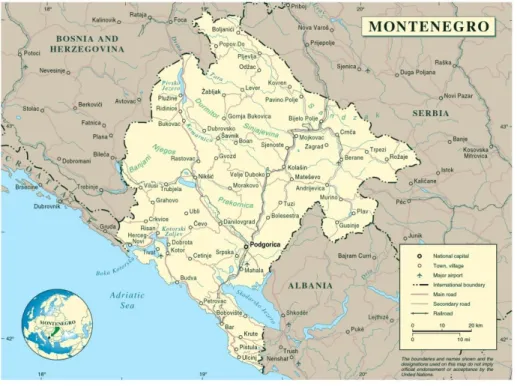
The original name of the nation in Montenegrin language is Crna Gora, which means Black Mountain, and the administrative capital of the country is Podgorica, which is in the Southeast of Montenegro. The political map of Montenegro in Figure 1 illustrates that the Republic of Montenegro is in the Southern part of the European continent within the west-central part of the Balkan Peninsula. The continental borders of the country are shared with a number of former Yugoslav nations; Bosnia and Herzegovina in the Northwest, Serbia in the Northeast, Kosovo in
Geopolitical Factors
a) Geographic position
b) Physical conformation
c) Extent of territory
d) Number of population
e) Character of people
24
the East, and Albania in the Southeast. Montenegro also shares its South and Southwest borders with Croatia with a coastline to the Adriatic Sea which has a maritime border with Italy (Allcock et al., 2018).
b) Physical conformation
Mahan explains the physical conformation factor as the access to the seaboard of a country (1980: 35). If the country has no harbors on its seaboard, the geopolitical importance decreases since the nation cannot have naval sea power or maritime trade power (Ibid.)
The coastline of Montenegro is between Croatia and Albania on the Southeast side of the country. The coastal area is surrounded by the mountains of Orjen, Lovcen, and Rumija (Msp.gov.me, 2011). Montenegro possesses two essential ports on the coast of the Adriatic Sea; Bar and Kotor. Bar, which is the closest to the end of the Adriatic Sea and the beginning of the Mediterranean Sea, is the principal port of Montenegro (Ibid.). Kotor, on the other hand, is situated in an indented section of the coastline that is closer to Croatia, in the largest bay of the Adriatic Sea (Leadbeater, 2009).
25
c) Extent of territory
The extent of territory here includes not only the square kilometers of the country but also its coastline. Mahan emphasizes that the country's length of sea coasts, in proportion to the size of the State, should be taken under consideration, as well as the characteristics of its harbors (1890: 43).
In that context, data retrieved from the US Central Intelligence Agency (CIA) “The World Factbook” (CIA.gov, 2018) indicates that Montenegro has a territory of 13.812 square kilometers, 13.452 of which is land and 360 square kilometers of coastal waters. The total of Montenegro’s Adriatic coastline is 293.5 kilometers. The report ranks Montenegro number 162 out of 254 countries in regard to the total of land and water areas and categorizes the geographic attributes of Montenegro as a “strategic location along the Adriatic coast” (Ibid.). Compared to the other European countries, Montenegro’s extent of territory ranks number 38 out of 46, followed closely by Cyprus and Luxemburg (Statistics Times, 2014).
Despite the popularity of Kotor and Bar harbors as touristic destinations, Montenegro has three naval bases located in these two harbors; The Bar Naval Base and the "Pero Ćetković" base in Bar, and Pristan base in Herceg Novi which is a coastal town at the entrance of the Kotor Bay (Montenegrin Navy, 2018).
d) The number of population
Mahan (1890) explains that the demographic structure of a nation’s population, particularly the distribution of it, is another important factor to be considered (1980: 44). The characteristics of the overall population in a country, in this context, can affect the government’s defense and foreign affairs policies.
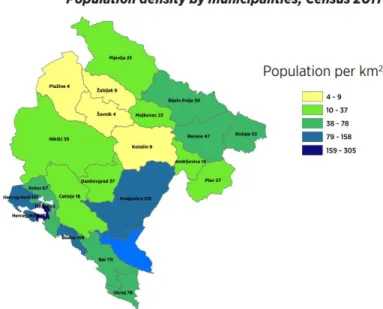
26
the municipalities of Herceg Novi, Tivat, Kotor, Budva, Bar, and Ulcinj (Mijanovic & Barovic, 2015: 381).
Figure 2: Population Density by Municipalities (Source: MONSTAT, 2015)
e) The character of the people
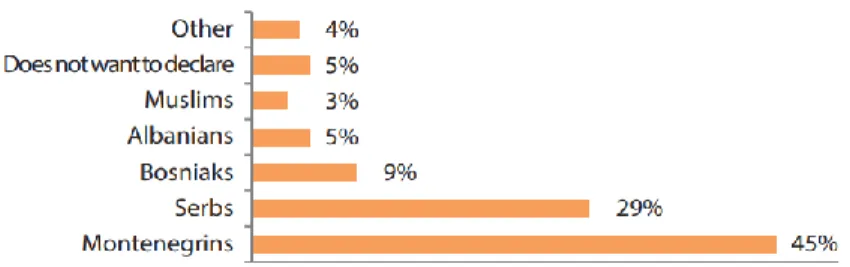
Mahan (ibid) explains the factor of Character of People as the national character that examines personality traits of the overall population (1890: 50). National character, from this standpoint, has an impact on the strategic potentials of the nation’s preferences. Thus, data on this factor will first demonstrate the ethnic and religious varieties in Montenegro and the nation’s characteristic traits.
27
such little support that it possessed almost no significant influence in the society (Vukomanović, 2008: 251). The Serbian Orthodox Church, on the other hand, had an immense support by the overall population which enabled the institution to have significant influence among people and the political establishments in Montenegro (Ibid). This significance will be further elaborated in the analysis section of this chapter.
Figure 3: The Ethnic Structure of Montenegro (Source: MONSTAT, 2015)
Figure 4: The Religious Structure of Montenegro (Source: MONSTAT, 2015)
In order to display the character of Montenegrin people, Professor Geert Hofstede’s (1984) six
factors of national character are employed. The power distance, individualism, masculinity and
28
Serbia as the proxy as presented in Bar Chart 1 since Hofstede's study (1984: 85) that provides empirical data on former Yugoslavia nations does not include numeric data on these two factors.
Bar Chart 1: Serbia’s National Culture based on Hofstede Criteria (Source: Hofstede
Insights, 2018)
The Power Distance of a country indicates the social acceptance of the power in the governmental institutions. Hofstede's research demonstrates that former Yugoslavia nations have a very high index (76 points) of power distance (Hofstede, 1984: 85). This means that people in these nations do not believe that power should be distributed evenly to the citizens. Krivokapic and Ceranic (2014), two Montenegrin academicians who based their study on Montenegrin cultural attributes, link this phenomenon to the authoritarianism in Montenegro (2014: 207). Authoritarianism here is valued as a trait of social psychology, rather than a mode of governance. This trait is associated with the dominance of higher-ranking officials, and there is an expectation of obedience from those of lower positions (Ibid). From that viewpoint, 74.5% of the Montenegrin population agrees that obedience to authority is one of the most important values and patriarchal culture is very dominant in Montenegro (Ibid).
29
study gives 27 index points for the former Yugoslavia (Ibid: 85), which also reflects Serbia's 25 index points. Both indexes point towards a very collectivist societal structure. Based on Krivokapic and Ceranic’s (2014) empirical data as presented in their article, 67.8% of the Montenegrin society expects to be taken care of by the governmental institutions and 72.6% of the society comments that their biggest goal is to make their families proud rather than to pursue their own individual desires (Ibid).
Masculinity signifies the characteristic traits of competitiveness, achievement motivation, aggressiveness, result-oriented career performance, and control of emotions (Hofstede, 1984: 96-98). The masculinity index is between 1 and 100; 1 is fully feminine, and 100 is fully masculine. Hofstede index for the former Yugoslav states is 21 points, which is on the feminine side of the scale (Ibid: 85). Serbian index, on the other hand, is 43 points, which is still on the feminine side but very close to the center. Femininity, in this context, represents more emotional displays, a higher value for the quality of life, lower career ambitions, and more modest behavior (Ibid: 96-98). Thus, based on the data of former Yugoslavia and Serbia indexes, if Montenegro's index is tentatively ranked somewhere between 21 and 43 points, it can be assessed that Montenegrin culture prefers to establish good relations and friendship in its social environment.
Uncertainty Avoidance is defined as "the degree to which the members of a society feel uncomfortable with uncertainty and ambiguity" (Ibid: 83). Hofstede's data indicates that former Yugoslav states' index is 92 points and Serbia's is 88 points which indicate a high level of avoidance of the uncertainty of the future. As in the masculinity index, if Montenegro's position is also placed somewhere between 88-92 index points, then it can be concluded that Montenegrin culture has a high resistance to change on a social and institutional level since they cannot predict the outcome of that change.
30
represents that Serbia is somewhat torn between holding on to its old traditions and adopting more contemporary traits in its societal system.
Indulgence, on the other hand, refers to the socialization of the people and the degree of control that they have for pursuing their desires (Ibid). Serbia has a low indulgence index point for this dimension (28 points), which is consistent with the collectivist social construction of Serbia and former Yugoslav countries as indicated in the Individualist factor.
f) The character of the government
Mahan explains the character of a government on the basis of whether the government is seeking war or peace on an international level (Ibid: 82).
The first indicator to look at to determine whether Montenegro is seeking aggressive foreign policies or peaceful conduct is to examine the way the nation obtained its independence from Serbia. The country declared its independence on 3 June 2006 after holding a referendum on 21 May 2006 within the framework of the Constitutional Charter of the State Union of Serbia and Montenegro (EU Commission, 2006: 5). In accordance with the provisions of the Charter, which determined the 55% threshold to validate the outcome, 55.5% of the voters supported independence, and 44.5% voted against it (Ibid.). This allowed Montenegro to secede from Serbia legally. The fact that Montenegro obtained statehood on substantial legal grounds rather than initiating armed conflicts and/or a civil war is an important fact to consider when observing the government's mode of conduct.
31
independence in 2006, the country became a party to the NATO’s Partnership for Peace Program (PfP) which is an individual commitment to initiate bilateral relations and cooperation with NATO.
Thirdly, within the scope of international relations with its neighboring countries, Montenegro had proved itself to be a constructive element in contributing towards the stabilization of the Western Balkan countries. Since its independence, Montenegro has managed to considerably reduce the border disputes with its neighbors Kosovo and Croatia (Dukanovic, 2016: 33). On the issue of promoting cooperation on a regional level with its neighbors, Montenegro proposed the Western Balkan Six initiative in 2013 which would gather the leaders of the region (Albania, Bosnia, Macedonia, Kosovo, Montenegro, and Serbia). Members of this union purposed to support one another in their endeavors of European integration with the framework of the Stabilization and Association process (European Union External Action, 2013). Montenegro has also taken part in a number of reconciliatory agreements; RECOM and Igman Initiative, and managed to maintain overall good relations with its neighboring states (Ibid, 2014). From these perspectives, it is clear that Montenegro had not been pursuing aggressive or offensive foreign policies but instead, prioritizing and committing itself to securing the EU and NATO memberships for its future.
5.2. Analysis of Geopolitical Importance of Montenegro for NATO
In its broadest terms, Classical Geopolitics defines “Geopolitics” as the geography and its effects on foreign policy, which propounds that if geographical attributes are significant enough, then they can have an impact on the foreign-policy making. From that viewpoint, and from NATO’s perspective, can it be asserted that Montenegro’s geopolitical features are important for the Alliance? The answer to this question needs the analysis of the data that was presented in this chapter.
32
The geographic position of Montenegro, on the other hand, presents very important political and strategic benefits for NATO. Firstly, a closer look at the Western Balkan map shows that Montenegro is the only nation on the Adriatic coastline which does not belong to an international organization to promote and ensure its economic, political, democratic or national security. All the other nations between the period of 2006 and 2015 were either a member of NATO or the EU. Secondly, the Northern and Eastern borders of Montenegro were surrounded by non-EU and non-NATO members; Bosnia and Herzegovina and Serbia, all of which are the lowest ranking Balkan states in regards to peacefulness according to the Global Peace Index Report (2015). The report of 2015 indicates explicitly that Macedonia and Kosovo were the lowest ranking countries in the Balkan region regarding stability; Kosovo was ranking 69 and Macedonia 71 (Ibid: 10). From a geographic perspective, Montenegro's position provides an immense opportunity for NATO to take full control of the Adriatic Sea region, with the inclusion of the Otranto Straits which is the door to the Mediterranean Sea, and further benefits to stabilize the non-NATO members that neighbor its allies.
33
pro-Russian front that could potentially damage this trajectory (Recknagel, 2015). According to a more recent poll data retrieved from the International Republican Institute (2017), 54% of the Montenegrin population thinks that Montenegro is heading in the wrong direction (towards the West). Furthermore, 41% strongly and 10% were somewhat opposed to Montenegro's NATO membership. Lastly, Gallup (2017) interview data from 1000 Montenegrins in 2016 indicates in Bar Chart 1 that, while 21% of the respondents perceive NATO as "protection," 29% perceives the Alliance as a "threat."
Bar Char 2: Eastern European Countries’ Views of NATO in 2016 (Source: Gallup.com,
2017)
In retrospect, this negative perception is linked to two aspects; the remembrance of pain from the NATO bombings of the Former Yugoslavia in 1999 during the Kosovo War, and the previously displayed Montenegro's culture character based on Hofstede criteria. Thus, while "uncertainty avoidance" and "indulgence" explain Montenegrins reluctance to become a NATO member due to its uncertain security, political and economic implications for the future of the country, the historically pejorative views of NATO certainly contributed to this opposition. Interestingly, the fact that the Montenegrin government still pursued with its path towards NATO membership in spite of the public opposition indicates both the significance and the insignificance of the
34
other hand, is most observable since regardless of its people's opinion, the government became a NATO member in 2017.
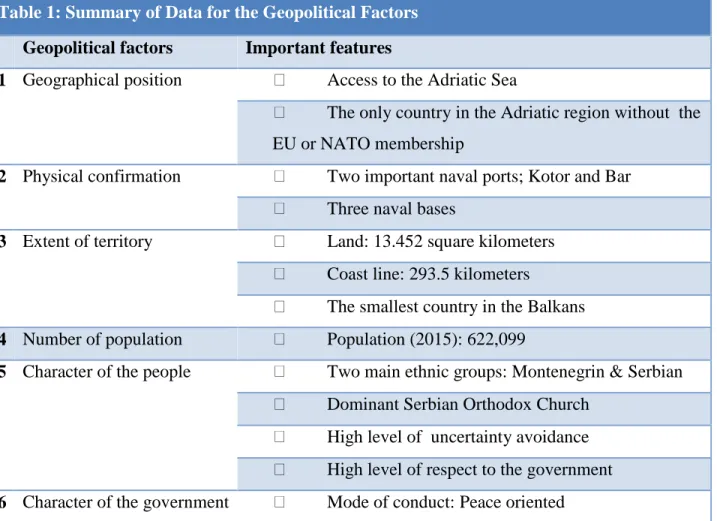
In conclusion, while all six factors are defined and analyzed, only two of them demonstrate significance in relation to Montenegro’s role in the process towards NATO membership; the geographic position of Montenegro and the anti-war characteristics of its government. However, a small country like Montenegro’s anti-war preferences does not provide significant benefits either for the EU or NATO. Hence, it can be asserted that the geographical position of Montenegro which allows access to the Adriatic Sea and fortification of stability in Balkans are much more beneficial for the Alliance, and that the peace-oriented foreign policy tendency of the government is a complementary feature for Montenegro’s geographic importance for NATO. This leaves the importance of Montenegro’s geographical position as the primary factor that renders Montenegro geopolitically significant.
Table 1: Summary of Data for the Geopolitical Factors
Geopolitical factors Important features
1 Geographical position Access to the Adriatic Sea
The only country in the Adriatic region without the EU or NATO membership
2 Physical confirmation Two important naval ports; Kotor and Bar
Three naval bases
3 Extent of territory Land: 13.452 square kilometers
Coast line: 293.5 kilometers
The smallest country in the Balkans
4 Number of population Population (2015): 622,099
5 Character of the people Two main ethnic groups: Montenegrin & Serbian
Dominant Serbian Orthodox Church High level of uncertainty avoidance High level of respect to the government
35
6. Balancing Against the Threat Russia from a Geopolitical Perspective
As elaborated in the theoretical framework, for the Balance of Threat Theory to work, there must be a perceived threat that creates a balancing action against that threat.
Throughout the research, the author scanned hundreds of media sources, journal articles, and foreign policy papers to understand Montenegro's geopolitical importance and how it influenced NATO to officially invite Montenegro to initiate accession talks in 2015. As presented in the literature review, the majority of the sources pointed towards the consequences of Russia's aggressive foreign policies on Ukraine and the annexation of Crimea in 2014. In other words, Russia's growing military presence in Europe manifested a perception of threat both for NATO and EU integrity, and NATO acted on that perception by initiating the official process of Montenegro's accession in 2015 to promote Article 10 of the Washington Treaty and to show Russia that NATO will not be intimidated by the Russian rhetoric against Montenegro-NATO relations and its military actions. However, this research asserts that there is more to this story than the use of Montenegro as a pawn between the Russia and NATO tensions and that while accepting that Russia created a military threat to Europe with the war in Ukraine, there was also a more immediate perception of threat that involved Montenegro directly. Furthermore, based on the retrieved data from a variety of media sources, this involvement of Montenegro had close links to the country’s access to the Mediterranean Sea, through the Adriatic Sea, and the Russian involvement in the Syrian war. Thus, before getting engrossed in the analysis of NATO's balancing behavior, it is essential to understand the relationship between Russia and Syria within a geopolitical context.
The Balance of Threat Factors
a) Aggregated power
b) Perception of intent
c) Offense defense balance
36
The Russian-Syrian relations became very close when the Syrian President Bashar al-Assad visited the Russian President Vladimir Putin in Moscow in 2005 (Katz, 2006: 55). Since then, Syria has been one of Russia's most consistent partners in the Eastern Arabic peninsula. There are a number of reasons for this; both leaders oppose the general concept of American hegemony and the US intervention in Iraq (Ibid), Syria was relatively more independent from the Western world (Kreutz, 2010), and more importantly, Syria was providing Russia with a direct access to the Mediterranean Sea through the Tartus naval base. Why is this access so crucial for Russia? On a climatic level, during the winter months, the northern seas freeze and make it quite challanging for Russian vessels to navigate through the ice. On a logistic level, in order for Russia to reach Southern European countries, Africa and the Middle East, Russia has two options; either use the Turkish straits via the Black Sea, which provide a short-cut through the Bosporus and the Dardanelle straits that lead directly to the Mediterranean Sea, or make a long detour from the Arctic to North Atlantic Ocean and enter the Mediterranean through the Strait of Gibraltar. However, this long detour means more expenditure for Russia in order to cover longer distances, oil and man-hours. Lastly, on a political level, maintaining its military presence in the
Mediterranean Sea, particularly in Tartus, which at this point is mare nostrum for Russia,
balances its zero-sum game with Western countries (Ghilès, 2013).
37
them if necessary and militarizing them for security. Full Turkish autonomy on the straits meant that Russia lost its unhindered access to the Mediterranean Sea and its most cost-friendly maritime trade route. Hence, the Russian naval base of Tartus, which is Russia’s only naval base outside of Russian territory, became a direct way of ensuring its military presence in the Mediterranean region. Access to the warmer waters was what Russia had been trying to achieve for the previous two hundred years. Furthermore, according to Sibjen de Jong (Johnson, 2015), from The Hague Center for Strategic Studies, Russia did not care whether President Assad stayed in power or not, so long as the geopolitical interests of Russia were preserved. These interests included the continuation of Russia’s military presence in the East of Mediterranean region.
The recent initial actions of Russian naval deployment to the Mediterranean coasts in the relatively small Tartus base started in 2012 in connection with the civil war in Syria (Nikolsky, 2014). The continuation of the crisis and lack of imminent threat from the Western or NATO intervention, the number of Russian warships in Syria started to increase (Ibid). However, the Tartus naval base was smaller in size and did not have sufficient space to accommodate the increasing number of Russian ships. These considerations, in addition to the uncertainties of whether the Syrian President al-Assad would regain the control over his country, provide a logical reason why Russia started to look for other possible locations for establishing an additional naval base. For obvious reasons, these locations could not be a NATO or an EU country, or a pro-Western state. Israel should also be discarded due to its close political relations with the US. Thus, Russia approached Egypt in 2013 to establish a new naval base; however, the project failed to materialize after the Obama administration’s ultimatum and threat to cut off financial assistance to Egypt (Staff, 2013). This left Montenegro as the most plausible option, owing to its Soviet-links and its small economy.
38
Russian government began to request the use of Montenegro’s Bar Harbor as a Russian naval base in exchange for billions of dollars’ worth of investment (Balkaneu.com, 2013; Petrovskaya, 2015). In order to maintain its military presence in the Mediterranean Sea, Montenegro was the most plausible alternative for Russia. Montenegro was not a member of the EU or NATO, and as indicated in the previous sections, Montenegro had a high-level of economic dependency on Russian investments, and a minimal amount of military capabilities with a limited budget for rapid development. Although the Montenegrin government refused to allow access to Russia’s military presence in Montenegro, favoring its positive progress towards NATO membership, the vulnerability of Montenegro and its openness to external influences, particularly the Russian impact on the nation's economy and politics, created a perception of threat for the US.
The threat, here, is analyzable through four factors that were introduced in the theoretical
framework. Within the context of aggregated power, irrefutably Russia is one of the most
significant forces in the international world order. It possesses the world's most extensive nuclear inventory (Kile & Kristensen, 2017), and holds the second rank within the scope of military power with a minimal difference to the US (Global Firepower, 2018). According to Global Power Index (2018), which comprises 55 different factors from the quantity of military personnel and arsenal to weapon diversity, the US’ index in 2018 is 0.0818, while Russia’s index is 0.0841. These rankings were also quite similar in 2013 and 2014 reports (Kosenkov, 2015). Thus, considering that the greater the power of the country, the greater the threat it poses, Russia's military capabilities and its requests to install these capabilities in Montenegro could justifiably be treated as a threat to Euro-Atlantic integrity.
The second aspect to look into is the perception of intent, as in uncertainty of Russia's motives
39
European security and the Euro-Atlantic integration. In addition, although there is no reputable media source or literature to prove this idea, the LNG (liquefied natural gas) stations, owned by American, Italian and Qatar companies (Leick, 2005), on the offshores of Montenegro and the Northern part of the Adriatic Sea could also be perceived as an attractive bait for Russia. When it comes to LNG stations and their pipelines, the Adriatic Sea can play an important potential role for the Balkan countries, since there are a number of ongoing LNG development projects that may potentially significantly reduce the Balkan’s energy dependency on Russia (Milatovic & Sanfey, 2015). These then are the reasons why uncertainty related to the ulterior motives of the opponent is a component in the perception of threat. Thus, acceding Montenegro to NATO and decreasing the Russian influence in the region were the most strategic solutions against the ambiguous policies of Russia, concerning Montenegro.
The third factor is the offence defense balance, within the context of the Balance of Threat Theory, which creates a sense of insecurity for the less powerful party. Here, the less powerful party is the Montenegrin government, which had been trying to create a political balance between NATO and Russia in order not to risk its path to the NATO membership or Russia's considerable investment in the country (Jankovic, 2014). NATO did not have any legal standing to deter Russia from its military investments in Montenegro other than starting the formal accession process as soon as possible and using the membership itself as deterrence. Russia, on the other hand, was pursuing a soft power policy in Montenegro by politically influencing the Serbians and propagating anti-NATO actions to inhibit the integration process of Montenegro, which was weakening the Montenegrin government in the face of divided aspirations (Dempsey, 2014).