ORGANIZATIONAL LEVEL FACTORS AFFECTING HEALTH CARE OUTCOMES IN VA EMERGENCY DEPARTMENTS: A CONFIGURATIONAL APPROACH
Wayne A. Psek
A dissertation submitted to the faculty of the University of North Carolina at Chapel Hill in partial fulfillment of the requirements for the degree of Doctor of Philosophy in the
Department of Health Policy and Management in the Gillings School of Global Public Health.
Chapel Hill 2013
Approved by: Bryan Weiner, PhD
S. Nicki Hastings, MD, MHS George L. Jackson, PhD, MHA Peggy Leatt, PhD
iii ABSTRACT
WAYNE A. PSEK: Organizational level factors affecting health care outcomes in VA emergency departments: A configurational approach
(Under the direction of Bryan Weiner, PhD)
Objective: To investigate the relationship between emergency department (ED) design and performance under different conditions of clinical uncertainty – respiratory disease (high uncertainty) and minor injuries (low uncertainty) – within the Department of Veterans Affairs (VA) healthcare system.
Methods: ED design features were identified using an information processing approach based on structural contingency theory. The first aim considered net effects of individual design features on performance (admission and 72-hour return rates) using multivariate linear regression. The second aim considered causal complexity and measured the effect of design combinations on high
performance using fuzzy-set qualitative comparative analysis. Organizational characteristics were obtained from 2007 Survey of Emergency Departments and Urgent Care Clinics in VHA data from 95 VA EDs, which were linked to secondary VA clinical data for a sub-set of patients with a VA ED encounter between 10/1/2007 and 6/30/2008.
iv
was consistently associated with high performance. Several design combinations were consistently associated with high performance at different levels of uncertainty.
v
vi
ACKNOWLEDGEMENTS
I would like to thank my advisor Bryan Weiner for his guidance and support throughout my
dissertation. My gratitude goes out to my dissertation committee: Dr. Nicki Hastings, Dr. George Jackson, Dr. Peggy Leatt and Dr. Morris Weinberger. Each member brought with them a level of expertise and experience which enriched my dissertation and development as a researcher.
I would like to thank Dana Tucker and Beth Armstrong at the Durham VA HSR&D for their support and kindness. Thank you to Valerie Smith, Laurie Bowman, Audrey Revere and Dr. Chad Kessler for their assistance with the data. I would also like to acknowledge faculty and staff in the Department of Health Policy and Management at UNC for their assistance throughout the dissertation processes.
I am very fortunate to have been surrounded by great classmates and dear friends, who have inspired, supported and encouraged me along the way. I would especially like to thank Claire, Jesse, Leanne, Lisa, Megan, Mona, Saleema and Sara for all their support, for feeding my coffee habit, and for just being the wonderful people they are. To my MexiRiColBraGreCan friends, gracias por todo.
I would also like to thank my colleague, Dr. Mike Park, for his support and encouragement and his attention to detail on all things written, even when they might not have been interesting.
Thank you to Wendy, who was a wellspring of support, knowledge and inspiration and who so graciously put up with me.
vii
TABLE OF CONTENTS
LIST OF TABLES ... xii
LIST OF FIGURES ... xiv
LIST OF ABBREVIATIONS ... xv
CHAPTER 1: INTRODUCTION ... 1
CHAPTER 2: BACKGROUND AND SIGNIFICANCE ... 5
2.1 Organizational theory underlying our conceptual model and design framework ... 5
2.2 Organizational design and the delivery of care in emergency departments ... 13
2.3 VA Emergency Departments and delivery of care ... 17
2.4. Application to Operations management and efficiency within the ED ... 19
CHAPTER 3: CONCEPTUAL FRAMEWORK AND HYPOTHESES ... 22
3.1 Definition and origin of task uncertainty in the ED ... 22
3.2 Problems associated with task uncertainty ... 23
3.3 Management of task uncertainty in the ED ... 24
3.4 Using Design mechanisms for managing high levels of task uncertainty ... 26
3.5 Using Design strategies for managing high levels of task uncertainty ... 29
3.6 Uncertainty Groups ... 35
3.7 Applying causal complexity to ED design ... 36
viii
3.7.2 Configurational approach to organization design and managing task uncertainty ... 39
CHAPTER 4: METHODS ... 42
4.1 Overview and Rationale ... 42
4.2 Study setting and Data Sources ... 43
4.2.1 Veteran Affairs Emergency departments ... 43
4.2.2 Veterans Affairs Patient data ... 43
4.2.3 Other Data Sources ... 45
4. 3 AIM 1 Methods ... 45
4.3.1 AIM 1 Variable description ... 45
4.3.1.1 Dependent Variables ... 45
4.3.1.2 Key Independent Variables ... 46
4.3.1.3 Control Variables ... 47
4.3.2 AIM 1 Analysis ... 50
4.4 AIM 2 Methods ... 52
4.4.1 Aim 2 Analysis ... 52
4.4.2 Measures and Calibration ... 58
CHAPTER 5: DESCRIPTIVE RESULTS ... 64
5.1 Merged Data ... 64
CHAPTER 6: AIM 1 RESULTS ... 69
6.1 Overview ... 69
ix
CHAPTER 7: AIM 1 DISCUSSION ... 82
7.1 AIM 1 Discussion ... 82
7.1.1 Low Task Uncertainty - Hypothesis A and B ... 82
7.1.2 High Task Uncertainty - Hypothesis C and D ... 83
CHAPTER 8: AIM 2 RESULTS ... 86
8.1 Overview ... 86
8.2 High performance configurations in the High Uncertainty Group ... 88
8.2.1 Low Admission Rate EDs (HUG-LAR) ... 88
8.2.2 Low Return Rate EDs (HUG-LRR) ... 89
8.2.3 High Performing EDs (HUG- LAR and LRR) ... 91
8.3 High performance configurations in the Low Uncertainty Group ... 92
8.3.1 Low Admission Rate EDs (LUG-LAR) ... 92
8.3.2 Low Return Rate EDs (LUG-LRR) ... 92
8.3.3 High Performing EDs (LUG- LAR and LRR) ... 93
CHAPTER 9: AIM 2 DISCUSSION ... 94
9.1 Introduction ... 94
9.2 High Performance in the High Uncertainty Group (HUG) ... 96
9.2.1 High Uncertainty Group - Low Admission Rate (HUG-LAR)... 96
9.2.2 High Uncertainty Group - Low 72-hour Return Rate (HUG-LRR) ... 98
9.2.3 High Uncertainty Group - High Performance (HUG - LAR and LRR) ... 100
x
9.3.1 Low Uncertainty Group - Low Admission Rate (LUG-LAR) ... 102
9.3.2 Low Uncertainty Group - Low 72-hour Return Rate (LUG-LRR) ... 102
9.3.3 Low Uncertainty Group - High Performance (LUG - LAR and LRR) ... 103
9.4. Findings across high performing configurations ... 103
CHAPTER 10: DISCUSSION ... 105
10.1 Introduction ... 105
10.2 High guideline use ... 105
10.3 Observation Units ... 106
10.4 High HIT use ... 106
10.5 Admission Screening... 107
10.6 High Co-location ... 107
10.7 Management Issues ... 108
CHAPTER 11: LIMITATIONS ... 111
11.1 Limitations ... 111
CHAPTER 12: IMPLICATIONS AND FUTURE DIRECTIONS ... 113
12.1 Implications for Theory ... 113
12.2 Implications for Practice ... 115
12.3 Directions for future research ... 116
CHAPTER 13: CONCLUSION ... 119
13.1 Conclusion ... 119
xi
APPENDIX 2: Composition of VA Complexity measure ... 141
APPENDIX 3: Diagnostic codes for uncertainty groups ... 142
APPENDIX 4: Comparison between Respiratory (high uncertainty) and Injury (low uncertainty) groups ... 143
APPENDIX 5: Specific VAMC Inclusion /Exclusion Decisions ... 146
APPENDIX 6: Correlation Matrix ... 148
APPENDIX 7: Guideline Use Variable ... 150
APPENDIX 8: High Information Technology Use Variable ... 151
APPENDIX 9: Co-location variable ... 152
APPENDIX 10: Aim 2 Sensitivity Analysis ... 154
xii
LIST OF TABLES
Table 3.1 Study proposition and main hypotheses………...……….. 38
Table 4.1 Aim 1 variable list and definitions……….. 49
Table 4.2 Aim 1 Analysis Models……….. 51
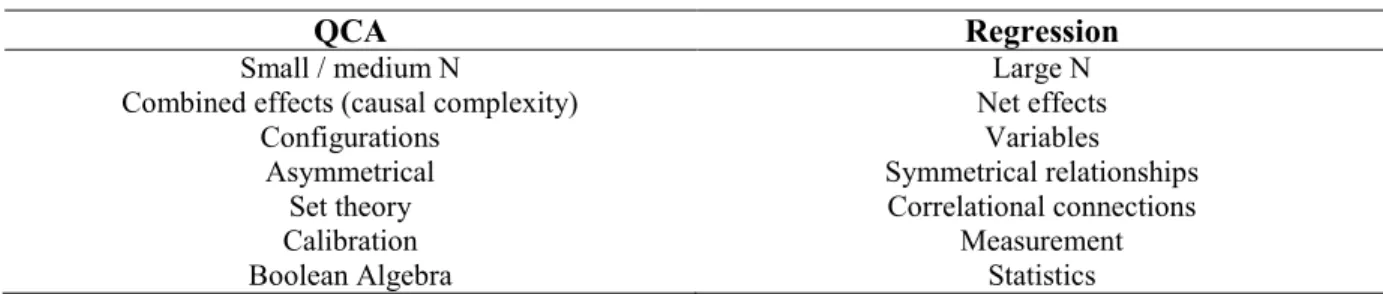
Table 4.3 Differences between QCA and Regression……….... 53
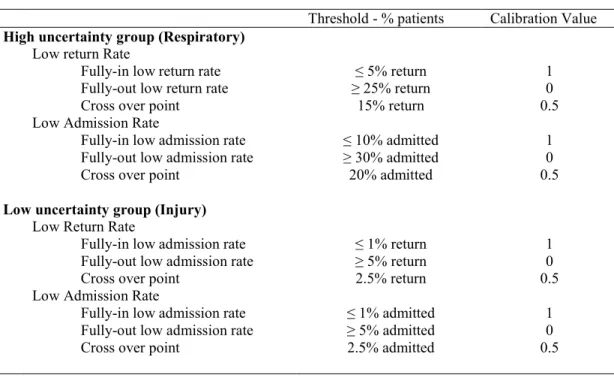
Table 4.4 Outcome measures and calibration………... 60 Table 4.5 ED design measures and calibration………... 63 Table 5.1 Admissions in high and low uncertainty groups….……… 65
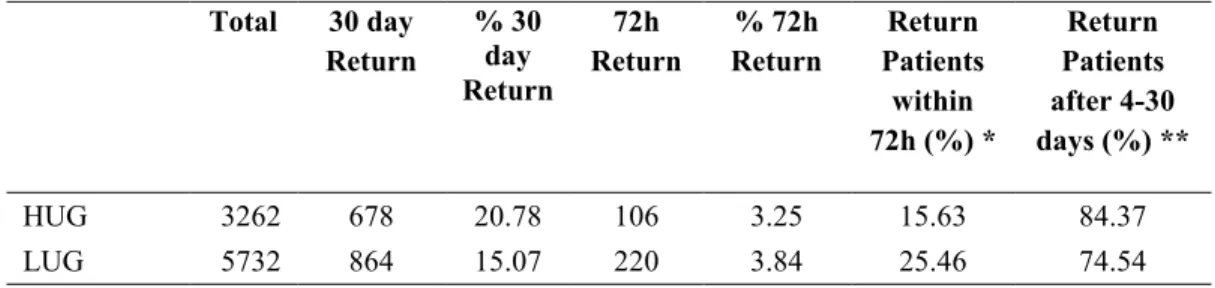
Table 5.2 Return rates in high and low uncertainty groups……… 65
Table 5.3 High and Low Uncertainty Groups at the ED-level………... 66
Table 5.4 Dependent means and standard deviations………. 66
Table 5.5 Key independent variables………..…… 67
Table 5.6 Control variables………...………..… 68
Table 6.1 Results for Hypothesis A - Low Uncertainty Group……….. 71
Table 6.2 Results for Hypothesis B - Admission Rates in Low Uncertainty Group………..…… 74
Table 6.3 Results for Hypothesis B - 72-hour return rates in Low Uncertainty Group………...…... 75
Table 6.4 Results for Hypothesis C - High Uncertainty Group……….. 77
Table 6.5 Results for Hypothesis D - Admission Rates in High Uncertainty Group………... 80
Table 6.6 Results for Hypothesis D - 72-hour Return Rates in High Uncertainty Group………... 81
Table 8.1 Recipes meeting the minimum frequency threshold……….. 87
Table 8.2 Simplified Recipes for achieving high performance (HUG Low Admission Rates)... 89
xiii
Table 8.4 Simplified Recipes for achieving overall high performance
(HUG - LAR and LRR)……….. 92
Table 8.5 Simplified Recipes for achieving high performance (LUG - Low 3-day Rates)………... 93
Table 9.1 Summary of high performance configurations and theoretical support………….. 95
Table A1.1 Study proposition, main hypotheses and sub-hypotheses………... 122
Table A1.2 Sub-hypotheses and Analysis Models……… 124
Table A1.3 Results for Sub-Hypothesis - Admission Rates in High Uncertainty Group………. 131
Table A1.4 Results for Sub-Hypothesis - 72-hour Return Rates in High Uncertainty Group………. 132
Table A1.5 Results for Sub-Hypothesis - Admission Rates in Low Uncertainty Group……….. 137
Table A1.6 Results for Sub-Hypothesis - 72-hour Return Rates in Low Uncertainty Group……….. 138
Table A2.1 FY 2008 Facility Complexity Model Variables………... 141
Table A4.1 High and low uncertainty condition characteristics………... 143
Table A5.1 VAMC ED inclusion and exclusion decisions………... 147
Table A6.1 Correlation Matrix……….. 148
Table A7.1 Characteristics of Guideline Use……… 150
Table A8.1 Characteristics of HIT use……….. 151
Table A9.1 Specific services co-located within VAMC EDs……….... 153
Table A10.1 Simplified Recipes for achieving high performance (HUG-LAR) at 0.7……….. 155
Table A10.2 Simplified Recipes for achieving high performance (HUG – LAR and LRR) at 0.7………... 156
xiv
LIST OF FIGURES
Figure 3.1 Conceptual model of task uncertainty……… 23 Figure 3.2 Design mechanisms and strategies under varying levels of uncertainty………… 26 Figure 3.3 Examples of design mechanisms in the ED………... 29 Figure 3.4 Examples of design strategies in the ED……… 35 Figure 5.1 Flowchart of data merging and sample size………... 64 Figure A1.1 The relationship of individual design mechanisms and
xv
LIST OF ABBREVIATIONS
ACO Accountable Care Organization
AITC Austin Information Technology Center COPD Chronic Obstructive Pulmonary Disease ED Emergency Department
EM Emergency Medicine
fsQCA Fuzzy-set Qualitative Comparative Analysis HIT Health Information Technology
HUG High Uncertainty Group
HUG-LAR Low admission rate for the High Uncertainty Group HUG-LRR Low return rate for the High Uncertainty Group IP Information processing
LAR Low Admission Rate LRR Low Return Rate LUG Low Uncertainty Group
LUG-LAR Low admission rate for the Low Uncertainty Group LUG-LRR Low return rate for the Low Uncertainty Group QCA Qualitative Comparative Analysis
1 CHAPTER 1
INTRODUCTION
Emergency departments (ED) face a challenging future as the number of patient visits rise and the number of EDs fall. In 2007, EDs received over 116 million visits, representing an increase of 23% in patient volume from 1997. Over the same 10 year period, the number of EDs declined by 5% (Tang, Stein, Hsia, Maselli, & Gonzales, 2010). EDs are already expected to treat some 750 common conditions, symptoms and disease presentations (Hockberger et al., 2001), and increasing patient volume will place higher demands on care delivery. Since organizational characteristics and quality of care vary widely across EDs (Institute of Medicine (U.S.). Committee on the Future of Emergency Care in the United States Health System., 2006; Kessler, Chen, Dill, Tyndall, & Olszyk, 2010; Tsai et al., 2009), EDs need to address how to best design care delivery in order to provide quality care across a wide variety of conditions.
2
Galbraith, 1977). Organizational design features have been found to directly influence processes and outcomes of care in certain conditions and populations in the ED (Green et al., 2008; McCarthy et al., 2009). However, we do not know how different organizational design features, individually or in combination, impact outcomes of care across different conditions with higher or lower task
uncertainty. This is important since there are costs associated with designs that are mismatched to the level of uncertainty in clinical conditions. Unless we understand how organizational design features impact conditions of varying uncertainty, we cannot develop organizational designs which optimize care delivery and resource use across the broadest range of conditions possible.
Our long-term goal is to determine and develop ED designs which optimize efficiency and quality of care across a broad spectrum of conditions or diagnostic groups within the context of local
variation and access to resources. The objective of this study is to determine which design features, individually and in combination, affect outcomes under varying levels of uncertainty. Our central hypothesis is that quality of care is higher when design features match the level of task uncertainty associated with the presenting clinical condition. Clinical conditions associated with high task uncertainty require designs which improve access to- and processing of information. Similarly, conditions with low task uncertainty may be best served with designs which focus on decreasing the amount of information or increasing the specific application of information such as through greater use of rules. The rationale for this research is that in understanding how different organizational designs relate to different clinical conditions with varying levels of task uncertainty, we can implement design strategies and allocate resources which optimize outcomes for a variety of conditions which match the organizational context.
3
Aim 1. To determine the relationship of various organizational design features with high quality outcomes for two groups of conditions of varying task uncertainty; one associated with high task uncertainty (respiratory) and one associated with low task uncertainty (minor injury).
Linear regression models will be used to test statistical associations between specific design features and outcomes in a high uncertainty condition group (Acute exacerbations of asthma and COPD) and a low uncertainty condition group (minor injury). We use an information processing approach to identify and test design features hypothesized to improve performance when correctly matched to a certain level of task uncertainty.
We hypothesize that under conditions of low task uncertainty, use of design features which promote preplanning and information reduction, will increase performance, while use of design features that focus on setting goals and increase information processing capacity will not lead to high performance.
Conversely, we hypothesize that under conditions of high task uncertainty, greater use of design features which focus on setting goals and increase information processing capacity will lead to high performance, while greater use of design features which promote preplanning and information reduction, will not lead to high performance.
Aim 2.To determine which combinations of organizational design features are associated with high performance under conditions of high task uncertainty (respiratory) and low task uncertainty (minor injury).
4
5 CHAPTER 2
BACKGROUND AND SIGNIFICANCE
In this section we will briefly describe the literature with respect to 1) Organizational theory underlying our conceptual model and design framework; 2) The broader research question of how organizational design influences the delivery of care in emergency departments; 3) Specific literature related to the VA EDs and care delivery; and 4) Application of this study to Operations Management and ED care.
2.1 Organizational theory underlying our conceptual model and design framework
6
organize and behave (Pfeffer, 1978). Similarly, institutional forces within their environment also influence organizational design often resulting in common characteristics and industry specific designs (DiMaggio & Powell, 1983; Hannan & Freeman, 1977). Still others have recognized that different characteristics of the environment may affect different organizational activities (Dill, 1958; Thompson, 1967).
Lawrence and Lorsch integrated several of these ideas into their work and suggested that organizational design is contingent on its environment and that organizations attempt to align the organization as a whole and the structure of their subunits to match the demands of their specific environments (Lawrence & Lorsch, 1967; Scott & Davis, 2007) . It is possible that any or all of the characteristics mentioned above influence the design of an organization. One conclusion to come from contingency theory as described by Galbraith is that “there is no one best way to organize and any way of organizing is not equally effective” (Galbraith, 1973). The contingency model has been widely researched and numerous factors that may affect organization design such as technology, uncertainty and size have been studied using a contingency approach (Scott & Davis, 2007).
To address the second theoretical question, how organizational design influences performance, we will adopt a contingency approach and consider how organizational design is influenced by the type of work that is being done. The work performed in an organization is often represented in the
organizational studies literature by the concept of technology (Scott & Davis, 2007). Technology has several definitions in the literature, from the more narrowly defined use as mechanical
7
literature. Overton, Schneck and Hazlet described three dimensions of technology (uncertainty, instability, and variability) based on Perrow’s framework of technology (Overton, Schneck, & Hazlett, 1977; Perrow, 1967). These dimensions (collectively termed technological indeterminacy) were replicated in a number of nursing sub-units where it was shown that the three dimensions (uncertainty, instability, and variability) were applied across subunits differently (Leatt & Schneck, 1981). Scott and Davis describe the three most important elements of technology as uncertainty, complexity and interdependence (Scott & Davis, 2007). We expand upon these constructs below as they form key components of our theoretical approach.
Uncertainty
Uncertainty is a major and consistent theme in organizational research (Scott & Davis, 2007). According to Thompson (1967), the closed-system theorists, which include Scientific management, administrative science and Weber’s bureaucratic model, focused on efficiency and rationalized uncertainty away through organizational structure, control mechanisms and a focus on efficiency (Thompson, 1967). On the other hand, early Open-system strategies expressly recognized an organization’s interaction with its environment and with it the organizations inability to control or predict certain variables and the major source of uncertainty for managers. From a contingency perspective, organizations are seen as having different designs due to differing levels of
environmental uncertainty; organizations in stable and predictable environments organize differently to those facing more dynamic and unpredictable circumstances (Duncan, 1972; Tushman & Nadler, 1978). Organizations also use designs to buffer their core technology from environmental uncertainty, by promoting activities which limit variation in inputs or outputs, or increase predictability of
environmental conditions (Thompson, 1967).
Many sources of organizational uncertainty have been described in the literature and they may arise from the external environment and within the organization. Uncertainty in the external
8
and the rate of change in the environment (static/dynamic) (Duncan, 1972; Hellriegel & Slocum, 1973). Within the organization, Tushman and Nadler (1978) described three sources of work-related uncertainty: 1) task characteristics, 2) internal environment; 3) inter-unit task interdependence (Tushman & Nadler, 1978). Galbraith described uncertainty in terms of information processing and the information gap between what it known and what is needed to complete a task (Galbraith, 1973). According to Galbraith, the level of information needed to complete a task was determined by the diversity of the outputs, the number of input resources and the level of difficulty involved in the task. Thus different tasks have different levels of uncertainty. Typically, the more elements that need to be considered in the decision making process whether from internal or external sources and the more unpredictable the outcome, the higher the level of uncertainty (Duncan, 1972).
Uncertainty in nursing sub-units has also been described in terms of information, specifically unpredictability due to a lack of knowledge related to raw materials and tasks performance (Leatt & Schneck, 1981). Argote (1982) made an attempt to bridge environmental and task uncertainty by focusing on what the author termed “input uncertainty”, i.e. uncertainty in task performance caused by a resource from the external environment (Argote, 1982). This resource could include patients presenting to the ED, financial resources or technological resources which the ED needs to operate. Argote operationalized input uncertainty in the ED as the volume of 10 common patient conditions presenting to an ED. The author found that a programmed means of coordination (Rules, Scheduled meetings and Authority) contributed more to organizational effectiveness when uncertainty was low, than when it was high, while a non-programmed means of coordination (autonomy, general policies and mutual adjustment of staff) contributed more to organizational effectiveness when uncertainty was high than when it was low. However, increases in input uncertainty were not shown to be associated with an increase in the use of non-programmed means of coordination and were only shown to be associated with a decrease in the use of programmed means in one of three variables.
9
scale based on perceived input and not actual numbers of patients with a specific condition and did not account for variation within the ten patient groups. Argote concluded that EDs with low input uncertainty should consider using programmed means of coordination while those with high input uncertainty use nonprogrammable means of coordination, which based on her findings is empirically correct, however practically, ED’s face a wide range of high and low uncertainty conditions and so may need more flexibility in their designs. This study hopes to address this issue.
Up to this point, we have focused on uncertainty at the level of the organization. However task uncertainty can also arise at the patient-provider level through clinical uncertainty (Begun & Kaissi, 2004a; Croskerry, 2005). Researchers have described several different types and sources of clinical uncertainty (Beresford, 1991; Gerrity, Earp, DeVellis, & Light, 1992). Generally, clinical uncertainty can be considered to arise from three distinct sources. The first is when the physician does not have the necessary level of training or experience to diagnose or treat a patient. The second is uncertainty inherent in the diagnostic or treatment procedure. The third is clinical uncertainty created by
organizational level issues such as lack of communication or coordination. Clinical uncertainty therefore has an integral relationship with task uncertainty at the organization level. In this study, while we concentrate on organizational characteristics (design features) and their relationship with uncertainty, we use conditions with different levels of clinical uncertainty as a proxy for task uncertainty. We will also consider the role of physician experience at different levels of task uncertainty.
10
The relationship of standardization to clinical practice and its implications for EM is discussed in more detail in Section B.4.
Complexity
While uncertainty is related to the variability or unpredictability of elements involved in work, complexity is related to the diversity or number of elements involved in work (Scott & Davis, 2007). The diversity of elements includes the level of dissimilarity among elements and the
11 Interdependence
March and Simon recognized that coordination is necessary for task interdependence to be enacted, although since there are different levels of interdependence between units, there are varying degrees of coordination which are more or less relevant or indeed necessary for interdependence to be efficient (March & Simon, 1958; Thompson, 1967). March and Simon (1958) considered three mechanisms of coordination to facilitate interdependence: standardization, coordination by plan and coordination by mutual adjustment, with the former being more applicable in situations of lower uncertainty (predictability) and the later in situations of higher uncertainty. According to the authors, mutual adjustment requires coordination through higher levels of information processing and
communication. Thompson (1967), integrated March and Simon’s perspective of variation of coordination mechanisms with the author’s own categorization of interdependencies (Pooled, Sequential and Reciprocal interdependencies) enhancing the theoretical notion that as
interdependencies become more complex (moving from little or no interaction to more highly dependent interaction), the need for a more adaptable mechanism of coordination with greater communication and information exchange arises (Thompson, 1967).
Information processing - linking technology and structure
Uncertainty, complexity and interdependence have been found to affect design through several mechanisms (Scott & Davis, 2007). In this study we use a contingency approach which suggests that in order to perform key work tasks, organizations adapt their designs according to the level of
information that they must process (Galbraith, 1973; Tushman & Nadler, 1978). Tushman and Nadler developed a contingency model for information processing whereby they proposed that the structural information processing capacities of the unit must fit the information requirements needed to perform the task (Tushman & Nadler, 1978). Galbraith focused on what those information processing
12
(Galbraith, 1977). Galbraith saw information processing in organizations as a function of complexity, uncertainty and interdependence, such that:
Complexity x Uncertainty x Interdependence = Task information required (Scott & Davis, 2007)
Galbraith’s information processing model forms the basis of the study’s conceptual model and is discussed in detail in the next section (Section C. - Conceptual model.). Here we briefly introduce the model and some advancement since its proposal in the 1970’s relating to our understanding of uncertainty. Galbraith proposed that organizations adopt designs which are suited to the type of work tasks being performed. The greater the amount of uncertainty in the work tasks being performed, the greater the need to processes information (Galbraith, 1973; Galbraith, 1977). Therefore in order to process information, Galbraith proposed that organizations use different design strategies and mechanisms for different levels of task uncertainty.
Daft and McIntosh (1981) updated the information processing approach by further refining the concept information processing and task uncertainty (R. L. Daft & Macintosh, 1981). Tasks were characterized as having two key elements that contribute to task uncertainty. The first task variety, referred to the frequency of unexpected or novel events. The second, task analyzability, is the ease with which workers could analyze a problem related to a task and find a solution. While information processing theory had focused only on quantity of information, these authors distinguished between information processing as the volume or quantity of data gathered by workers and information equivocality as information with multiple meanings or interpretations. The more possible interpretations in the information, the higher the task uncertainty will be.
13
uncertainty is the same as that described by Galbraith, equivocality is described as the richness of data and the ability to change understanding of a management situation and is considered through its reliance on communication between co-workers.
As technology has increased since the development of contingency theory, the concepts of
information processing have taken on an increased emphasis in the capacity of information systems to analyze and integrate information. For example, Haekel and Nolan (1993) built on the information volume and equivocality and task variety and analyzability and related them to the development of integrated enterprise information systems. The authors described a complexity index for managers to consider, consisting of the number of information sources, number of elements to be coordinated and number and types of relationships between elements (Haeckel & Nolan, 1993).
While contingency theory and the information-processing approaches have remained in use, certain constructs have received more attention and undergone development. This is especially the case in coordination and the development of coordination theory. While the coordination in information-processing theory was considered to be situational, researchers began to consider the relational and constitutional components (Gittell, 2002; Gittell, Hagigi, Weinberg, Kautz, &
Lusenhop, 2009; van Fenema, Pentland, & Kumar, 2004). Thus rather than only considering the mode of coordination, researchers have begun to consider the content and circumstances of coordination (Faraj & Xiao, 2006). Coordination within groups and teams has also grown with an emphasis on timing and sequencing of work. Specifically, coordination has been recognized as a key action process of EM teamwork (Fernandez, Kozlowski, Shapiro, & Salas, 2008) .
2.2 Organizational design and the delivery of care in emergency departments
14
patients in the emergency department. Flood’s conclusion was that there seemed to be a pre-occupation in the literature with focusing on identifying associations between structural
characteristics and performance and less in attempting to understand why this might be the case. This study is an attempt to further the literature in understanding the relationship between organizational structure and performance.
ED’s serve an important role both as a frontline provider of health services and as an access point to in- patient care. Between 1997 and 2007, the annual ED visit rate has increased by 11% with the number of visits to the ED increasing to 116.8 million ED visits in 2007 (Niska, Bhuiya, & Xu, 2010; Tang et al., 2010). Much of the development of EDs has been under the leadership and administration of other specialties especially family practice and Internal Medicine, since EM was only recognized as a board certified specialty in 1982 (Zink, 2006). This has several implications for the design and functioning of EDs. Firstly, many EDs are still administratively housed in non-EM specialties such as Medicine or Family Practice. This can create tension between providers, since they have very
different approaches to emergency care (Zink, 2006). EDs may further be considered as an outpatient service, even though it is central both physically in the hospital and as a gateway to inpatients. Secondly, since the training of board certified EM practitioners is relatively recent, there is a shortage of EM certified practitioners(Ginde, Sullivan, & Camargo Jr., 2009), especially as EM certified practitioners have organized into corporate entities to contract services to EDs further consolidating the access to board certified providers.
15
are at the hospital level including geographical location, affiliation of hospital to Academic/teaching resources and hospital size. While geographic location has been shown to be an important factor in ED access (Muelleman et al., 2010), academic affiliation of the hospital may not give the level of detail regarding EM training in the ED. Few studies focusing specifically on organizational level outcomes were found. McCusker et al. looked specifically at hospital characteristics and their influence on the return of patients to the ED in patients over 65 years old (McCusker et al., 2007). The study found that more limited ED resources (complexity of services offered), smaller ED size and no social worker in the ED were independently associated with patients returning to the ED sooner after ED discharge.
Uncertainty and complexity within the ED are considered to result from several sources. These include variability in patient access and volume, patient acuity and inpatient bed availability, thus highlighting the need to consider both internal and external environments (France & Levin, 2006). The external regulatory environment can create uncertainty for ED practice and the impact of health care reform on ED care remains uncertain. Changes to insurance coverage through the Affordable Care Act may improve primary care coverage and lead to lower ED utilization; however physician shortages, reimbursement and operational efficiency need to be developed in tandem, in order to ensure adequate access (Pitts, Carrier, Rich, & Kellermann, 2010).
16
imply that providers adjust treatment tasks required for the level of clinical uncertainty, and would support the need to understand how to support providers work across different patients especially as patient flow conditions change.
Categorization of ED’s is seen as important for comparative studies in the quality and service delivery of emergency services and this area of research has become an area of interest in the EM literature (Mehrotra et al., 2010; Steptoe, Corel, Sullivan, & Camargo Jr., 2011). Greater clarification on the design of and service delivery in an ED are beneficial to those delivering services and those regulating and paying for services. Various ED classification schemes have been proposed at the national level, however to date, none have been adopted. In the absence of a national classification, ED definition and categorization has been adopted at the state or specialization level (Mehrotra et al., 2010). One of the main difficulties in categorizing EDs is the variation in delivery of services found across EDs. Thus rather than attempting to categorize the services delivered by EDs, researchers are shifting focus to identifying key organizational features which can be easily identified and compared. Steptoe and colleagues (2011) identified four common variables which could be useful in
characterizing EDs (ED location in relation to hospital; ED layout; hours of operation; patient population served). By identifying variation in characteristics and their potential effect on care delivery, our research can add to this endeavor by highlighting those features which are important across all EDs.
17
organizational theory but in the health care setting. From a practical stand point, the study will directly inform ED practitioners and management of important design features to consider within their specific context. Finally our study directly addresses calls for incorporation of qualitative methods and configurational approaches in the quality improvement and organization studies literature (Hearld et al., 2008; Van, Ganco, & Hinings, 2013).
2.3 VA Emergency Departments and delivery of care
The Veterans Health Administration (VA) is the largest integrated health care system in the United States. The VA health care system has 8.76 million enrollees and treated 6.33million patients in 2012. Health care is delivered through 21 veterans integrated service networks (VISNs) each of which is responsible for veterans care across specified regional areas. The VA has 151 VAMCs, 135 nursing homes, 47 residential rehabilitation treatment centers and 827 Community-based Outpatient clinics (National Center for Veterans Analysis and Statistics 1a, 2013).
The integrated structure of the VA has several advantages for research. First, the centralized structure allows for the possibility of implementation of research findings and interventions across a number of VAMCs. The VA has an integrated electronic health record that allows consistent access to patient records within and across VAMCs. The VA has several similarities to Accountable Care Organizations (ACO) proposed through the Affordable Care Act. For example, VISNs bring together providers and organizations to coordinate the care of patients across different settings. While the role of the ED in ACOs has yet to be defined, EDs often act as the gateway between ambulatory and
in-patient care making their position in the continuum of care for in-patients is very important. The VA
also plays an integral role in medical education and health professions training in the US, with
approximately 90,000 health professionals in training at VAMCs each year. In 2008, VA
18
health profession schools. Each year, about 90,000 health professionals are trained in VA
medical centers (VHA 2012).
Second, the VA is the largest integrated health care system in the US; thus improving the
efficiency of care is critically important. In 2006, VA EDs had a census of approximately 1.7 million patients (not including Urgent Care Clinic (UCC) visits) (VHA-HAIG, 2007). The number of EDs in the VA has remained relatively constant over the last 30 years. In 1993, 110 Veterans Affairs Medical Centers (VAMC) reported having 24/7 EDs while in 2010, 115 VAMCs reported having an ED in 2010 (VHA-OQS, 2010; Young, 1993).
19
VA EDs also vary from non-federal EDs in certain organizational characteristics. VA EDs all have electronic health records which allow physicians in any VA ED to access a patient’s medical record anywhere in the country. In contrast, less than 50% of non-federal EDs have information systems in place (Landman, Bernstein, Hsiao, & Desai, 2010). VA ED staffing is considered to be more closely aligned with primary care services than non-VA hospital EDs (Metlay, Camargo Jr., Bos, &
Gonzales, 2005). Until recently, emergency care in the VA was not seen as a major priority (Millard, 2008). VA emergency care has traditionally fallen under internal or family medicine and is
considered an outpatient service (Lipscomb, Alexander, & Institute of Medicine, 1991). However since 2006, emergency care has received more attention in the VA (Kessler et al., 2010; Millard, 2008) and several directives relating to the organization and administration of ED care have been issued, including attempts to find consistency in the naming of emergency units (Veterans Health Administration, 2006), ED diversion policies (Veterans Health Administration, 2009), and adequate ED staffing levels (Veterans Health Administration, 2010). While not specifically directed at EDs, the VA has increased its focus on the influence of structural design on work, coordination and quality (National Institute of Building Sciences, 2009).
2.4. Application to Operations management and efficiency within the ED
Calls for a greater focus on operations and systems research to quantify complexity in the ED have increased (France & Levin, 2006; National Research Council et al., 2005; S. J. Welch et al., 2011). The health care quality movement has seen an increased shift towards standardization of delivery, based in part from a recognition that there are quality gaps in health care delivery and from
stakeholders such as government, payers and patients looking to establish comparative measures of quality for reimbursement and care choices (Institute of Medicine (U.S.). Committee on Quality of Health Care in America., 2001). One area where this study has practical implications is in our
one-20
size fits-all design of health care organizations will be difficult (Bohmer, 2005). One weakness of standardization is that it may not identify or consider variation which is inherent in a work task or situation. This may lead to less efficient processes and poorer outcomes since standardization can only effect variation which can be changed (Litaker, Tomolo, Liberatore, Stange, & Aron, 2006; Litvak et al., 2005; McLaughlin, 1996; Miller, McDaniel, Crabtree, & Stange, 2001).
The choice of standardization or customization lies in the amount of uncertainty inherent in the condition and in the patient being treated. If evidence exists for diagnosis or treatment of a particular condition, it is easier to standardize practice as the outcome of the standardized processes can be predicted (Bohmer, 2005). However, in conditions where there is more uncertainty, care needs may need higher to be customization. Even in patients with conditions that have standardized treatments, patients themselves may be complicated, thus creating uncertainty in their treatment. For example, in uncomplicated cases of asthma, treatment is likely be standardized on the national clinical guideline. On the other hand, if the asthmatic patient has other comorbidities requiring treatment and
medication, or does not respond to treatment as expected, more customized care is needed to treat the patient. Bohmer suggested health care organizations can organize care using an operations strategy which focuses on the level of standardized and customized care needed by the types of conditions and patients being treated. In the context of this study, understanding how different configurations of organizational characteristics influence performance may help managers to decide on the level of standardization in their organization.
21
development of a trauma unit or focused hospital unit, while Gittell et al. described use of cellular organization designs and modularity in a health care setting as a way to limit complexity (Gittell et al., 2009; Hyer et al., 2009).
Enhanced understanding of ED design may also contribute to our understanding of operational efficiency to reduce crowding in the ED. Research on crowding has expanded greatly over the last five years, and objective measures of crowding have been improved as methodological challenges to measure patient flow have been overcome (McCarthy et al., 2009). While there are numerous reasons for crowding, there has been relatively little focus on the role that ED characteristics may play (Bernstein, Aronsky, Duseja, Epstein, Handel, Hwang, McCarthy, McConnell et al., 2009; Hoot & Aronsky, 2008; McCarthy et al., 2009; Moskop, Sklar, Geiderman, Schears, & Bookman, 2009). For example, in a recent systematic literature review on crowding, only one major organizational level theme (staffing level) was identified in the literature as a cause, and while only a few (additional personnel, observation units, hospital bed access) where identified as potential solutions (Hoot & Aronsky, 2008). McCarthy et al. (2008), used only one design-related factor in their study of four EDs and recognized that at the local level, different conditions may result in crowding for different EDs, which could make understanding ED design more relevant, in future research on local conditions leading to crowding. Crowding research using an operations research approach such as dynamic modeling and queuing theory have increased and have expanded the importance of considering the influence of multiple factors on patient flow (S. Welch, Augustine, Camargo Jr., & Reese, 2006). Still, few of these studies consider underlying ED design features and their
interdependence on each other. EDs tend to be considered organizationally homogenous
organizations in the research literature, which masks the effect of organizational design features and their potential combined effect on patient flow through the ED. While we do not focus specifically on crowding in this research, this study will draw attention to the importance of considering
22 CHAPTER 3
CONCEPTUAL FRAMEWORK AND HYPOTHESES
3.1 Definition and origin of task uncertainty in the ED
EDs are fraught with uncertainty. Patients may arrive at any time, with any number of different symptoms or conditions with varying levels of severity requiring a wide variety of resources. EDs are also embedded in and influenced by their environment, which can act as a further source of
uncertainty. One way to consider uncertainty is as a gap between the information which the
organization already has to perform a task and that information which is unknown by the organization (Galbraith, 1973). If ED managers and providers knew exactly when and which patients were going to present to the ED, they could preplan their activities and make advanced decisions, and as such design their ED accordingly. However since there is a lack of information from many potential sources, EDs face a considerable challenge to co-ordinate and sequence tasks in order to provide quality care for patients.
23 Figure 3.1 Conceptual model of task uncertainty
In the ED, task uncertainty is influenced by several factors especially: 1) the type and nature of the presenting condition; 2) characteristics of patients, medical staff, ED and their interactions; 3) the nature of the task (physical/mental task; requirement of training/experience to perform the task; task interdependence; and time-orientation of the task); and 4) the environment in which the organization is embedded. Tasks are not performed in isolation and may have different levels of interdependence with other tasks and with the structure of the ED. Also, ED personnel perform a variety of different
tasks on any given shift.
3.2 Problems associated with task uncertainty
Task uncertainty limits the ED’s ability to plan work tasks ahead of time. If an ED knew ahead of time when and how many patients would require care, and with what conditions patients were going to present on any given shift, it could more accurately allocate resources and personnel to perform the needed work tasks efficiently. While most EDs have the ability to retrospectively audit their
24
tasks effectively, which may affect patient flow or lead to crowding. The inability to plan may result in a mismatch of resources and/or personnel with the required work task. This could lead to
scheduling problems and over- or under-stock of inventory. Task uncertainty could also lead to a mismatch of clinical training or experience to the task. A mismatch of resources or personnel to the task may result in: 1) inadequate assessment of disease or disease severity; 2) Inadequate treatment or monitoring; 3) premature release from the ED; 4) Inadequate discharge and follow-up instructions for the patient (Fitzgerald, Freund, Hughett, & McHugh, 1993).
3.3 Management of task uncertainty in the ED
In this study we will focus on organization design as a mechanism for managing task uncertainty within the ED. Organization design is an important approach since it provides management and practitioners with a way of integrating structure and process in order to achieve a desired level of performance. Managers use organizational design in order to match the work that needs to be done with the desired organizational goal and is the product of internal and external environmental influences (such as provider and resource availability), and current and historical management decisions. Organization design is thus is amenable to change however we will not consider design change in this study.
While we will focus exclusively on organization design as a way to manage task uncertainty, we do recognize that there may be other options. Briefly, these may take place at the individual
25
From an organizational design standpoint, as task uncertainty increases, the need to process information more effectively increases. Designs that facilitate information processing can affect task uncertainty by narrowing the information gap. Organizations can employ different design
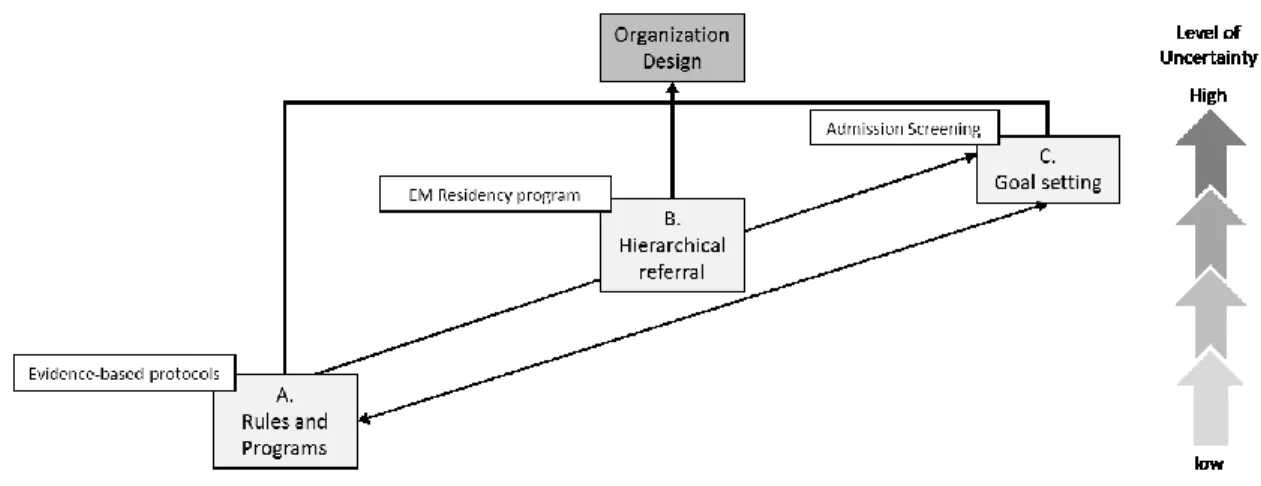
mechanisms and strategies to manage their information processing needs (Galbraith, 1973). Design mechanisms are management approaches which seek to create behavioral patterns which lead to the desired task performance or outcomes (Galbraith, 1977). Thus EDs can use rules and programs, hierarchical referral or goal setting to manage different levels of task uncertainty (Boxes A-C in Fig.3.2).
26
Figure 3.2 Design mechanisms and strategies under varying levels of uncertainty (Adapted from Galbraith (1973))
3.4 Using Design mechanisms for managing high levels of task uncertainty
Management can influence organization design through three design mechanisms. When there is a low level of uncertainty, more preplanning of work tasks is possible, so organizations can plan ahead and use mechanisms such as rules, programs and procedures to standardize the co-ordination and performance of tasks and narrow uncertainty by simplifying the decision making (see A in Fig. 3.2). The ED employs several different types of programs and rules. These may be clinically or
27
These mechanisms are most efficient and effective in low levels of clinical uncertainty with known causes, predictable outcomes and low severity and urgency, however as time, urgency and task uncertainty increase, individual decisions based on experience or training become more important (Fitzgerald et al., 1993) (see Box A in Fig 3.2).
Rules and programs are also used by the ED to standardize management processes such as diverting patients when they cannot be accepted or properly cared for in the ED. Rules may also be used to standardize actions when bed shortages or prolonged stays occur in the ED, and may involve coordination with entities outside of the VAMC. Both these scenarios are often associated with ED crowding (Asplin et al., 2003). Establishing a formal (written) policy on patient diversion allows the ED to standardize actions and allows for a predictable performance of the task. Since a majority of VA EDs experience diversion, although they cannot predict when diversion will occur, they institute rules (policies) which allow for the predictable performance of such tasks to manage this low level of task uncertainty should it occur (Kessler et al., 2010; Veterans Health Administration, 2009).
As uncertainty increases, the ability of the organization to preplan work tasks in advance decreases and there is a greater need to process more information. Organizations may then move the decision-making process to those with more knowledge, expertise or authority in order to improve information processing and decision-making, resulting in a decision hierarchy. In the ED, such a case is seen in the use of clinical staff with varying levels of experience and/or specialization. Residents, especially those early in their programs are less experienced than board certified Emergency Medicine (EM) physicians. Similarly, EM-trained or experienced nurses will likely be able to perform high
28
ED’s without residency programs where each physician in the ED would be considered (or is expected) to be equally capable of performing at least most tasks (see B in Figure 3.2).
As uncertainty increases even further and the need to process information becomes even greater, a decision hierarchy may no longer be the most efficient way to process information as the number of decisions to be made higher on the hierarchy would become overwhelming. This is especially relevant in the emergency setting where diagnosis and treatment decisions are time-sensitive. Under these circumstances, the organization may not be able to keep up with or control the level of
information that needs to be processed. Therefore, it may be more efficient for the organization to bring the decision making down to the point of origin of the information. However in empowering workers at lower levels of the hierarchy to make decisions, the organization may have less control over their decisions (Galbraith, 1973).
One response management may use is to maintain behavioral control of these employees through the use of goals or targets. In this way, as uncertainty increases, the organization tries to improve the speed of decision-making by allowing decisions to be made at the information origin, and focusing on the outcome of those decisions instead. In the ED then, it would not be practical to have senior specialists making more and more decisions as this would have a high cost and may impact the rate at which decisions are made. As such, the ED may employ physicians with adequate training to make decisions at the patient bed-side, while maintaining control and achieving its goals by setting targets for certain patient or quality outcomes.
29
When utilization management tools are used, data of admitted patients are compared to a pre-determined set off clinical criteria in the utilization management tool. Patients that do not meet these criteria are identified and further investigated to determine if admission was in fact warranted (see C in Figure 3).
Organizations likely use a combination of rules and programs, hierarchies and targets and goals, depending on the task which needs to be performed and the level of information processing required to complete a specific task. In the emergency department setting, the above mentioned information processing mechanisms are all present. Rules and programs in the form of administrative and clinical protocols are common across admission, diagnostic, treatment, disposition and discharge tasks. Decision-making may move along administrative and clinical hierarchies as working conditions within the ED, or specific patient cases become more complex and uncertain and require greater levels of information processing from more experienced personnel. Under such levels of uncertainty, goals can also be used to direct treatment and administrative decisions when multiple options exist. Figure 3. 3. Examples of design mechanisms in the ED
3.5 Using Design strategies for managing high levels of task uncertainty
30
the task uncertainty increases, the level of efficiency of these strategies changes. According to Galbraith, at lower levels of task uncertainty, information reducing strategies are efficient and simple to incorporate in the organizational design. However as task uncertainty increases, the need for increasing information processing capacity increases and so other strategies which match the information processing needs are expected to be more effective and efficient.
Design strategies include the use of slack resources, self-contained tasks, information technology and the use of lateral relations (Boxes D-G in Fig 3.2). If they do not purposefully choose a strategy, then as Galbraith describes, the default is implementation of slack resources, which when mismatched to the level of uncertainty will be costly to the organization. Our analysis of ED design strategies will therefore take a comparative approach and consider the effect of different strategies as compared to the base case of slack resources strategy only.
In order to decrease the amount of information that needs to be processed, organizations can use two different strategies. One strategy is to utilize slack resources. Slack resources are additional resources which the organization uses to reduce the level of performance, division of labor or diversity of output, in order to lower the amount of information to be processed. In the ED, since clinical uncertainty is very often linked to the acuity of the condition, and time orientation for decisions is seconds to hours, decreasing the amount of information to be processed could be
31
types (e.g. Nurse practitioners) or assistants to perform certain tasks which require similar training across clinical areas or departments. EDs might also attempt to slow down the production process, by extending the time waiting time of less ill patients. It has also been pointed out that the source of uncertainty is likely to affect the planned additional slack resources as well existing resources especially in organizations performing highly differentiated and complex tasks (Perrow, 1984; Waring, McDonald, & Harrison, 2006).
A second strategy to decrease the need for information suggested by Galbraith (1973) is the creation of self-contained tasks. A self-contained task design brings all the necessary resources together to complete a task rather than designing around the specific functions needed to complete the task. In manufacturing industries, the difference would most easily be seen by having a team of designers, engineers, machinists and sales and marketing personnel working on a single task (self-contained) versus having the engineers working on several tasks, designers on several tasks and so forth. In the latter example, work is arranged around the functions needed for task completion and not the task itself. In the ED, this strategy is often used when a team of ED personnel is formed around a specific patient, each with their own task function. The task is highly dependent on the nature of the presenting condition and the physical and psychological status of the patient before and during the care process. So this strategy will work in some cases; however for others, specialist knowledge is needed, and it may not be practical or cost effective to have a self-contained unit for each condition type. On the other hand, a task may not need a full team (i.e. it may only require a single physician or nurse to perform the task) and having a self-contained unit may not be the best design as resources could be under-utilized. While some may argue that all care in the ED should be team-based, this is not practical or best in all cases. Instead, the best design is highly dependent on the presenting condition and the organizational characteristics, especially the organizations access to resources.
32
element is to distinguish between the focus of providing care through EM specialists (board-certified or trained physicians and nurses) versus physicians and nurses who are not specifically trained in EM (generalists) for the performance of the majority of tasks. This would not include the specific referral to an outside specialist such as an orthopedic specialist, which would likely be used by both EM specialists and generalists. From an information processing point of view, employing EM specialists to perform tasks is similar in nature to creating self-contained tasks in other industries, in that it brings the necessary skills to be bear on focused tasks rather than spreading functions across several tasks.
A second way to consider the construction of self-contained units at the sub-unit ED level is by considering the reporting structure of the ED in relation to the medical center. Across hospitals, EDs may fall under the administration of several specialty departments (EM; Internal Medicine; Family Medicine; Surgery). These differences are as a result of service lines offered at VAMCs, affiliations and involvement of VAMCs and academic medicine programs and the relatively short history of EM as a recognized medical specialty. Many VAMC’s structure their ED program under internal
medicine or family practice. The administrative reporting structure may be an indication to staff of how EM is perceived by management of the wider hospital system. Establishing an EM department to run the ED is an indication that the specialty warrants a separate department which requires
specialized skills and training. The organization in effect creates a self-contained unit which oversees emergency care. Thus from an organizational point of view, organizational reporting structure is another mechanism of decreasing the amount of information which needs to be processed and decreasing the level of task uncertainty by creating a specialized EM task group.
33
hospital, where care is more expensive (J. Brillman et al., 1995; M. W. Cooke, Higgins, & Kidd, 2003; McDermott et al., 1997; Ross et al., 2012; Rydman et al., 1998). Researchers have suggested several different reasons for how observation units affect outcomes (M. W. Cooke et al., 2003; Ross et al., 2012). In terms of our study, as a self-contained set of tasks, observation units may provide a mechanism for providers to gain more time to diagnose or monitor the treatment response of a patient, in effect lowering the amount of information that is needed to be processed in any given time. This may especially be of value in more complex conditions such as asthma and COPD exacerbations, where the treatment response may vary across patients (see E in Figure 3.4).
34
In terms of using multiple strategies, we would expect that those using a variety of information processing strategies would be able to handle a range of uncertainty better than those with only information lowering strategies (slack resources or self-contained units) as their strategy.
The second strategy focusing on increasing information processing capacity is the creation of lateral relations (Box G in Figure 3.4). Lateral relations bring the level of decision making down to where the information exists allowing for the decentralization of decisions and increases in
coordination and communication. In the ED, this may be facilitated by improved access to services or specialists and having an administrative design that facilitates interaction among staff across a variety of tasks. Lateral relations also improves information processing by limiting unnecessary information flow up decision hierarchies as it decentralizes decision making to the level of the task (without the need for self-contained tasks). As the level of uncertainty increases, such as with more complex conditions such as asthma or COPD, there is greater inter-dependence between providers and a greater need to process information efficiently among a care team.
With this strategy, the ED implements designs which focus on communication and joint decision making to improve the performance of interdependent tasks. One way of doing this is by co-locating resources or staff from other disciplines in the ED so that decisions can be made at the point of treatment by those involved in patient care rather than being referred up the decision hierarchy or externally, which creates delays and has more potential for communication errors (see G in Figure 3.4). By increasing the proximity of inter-dependent task performers it is thought that communication is likely to be improved, since issues can be resolved directly rather than with a time or space delay. We might expect that those EDs using strategies which build information processing capacity such as lateral relations, would manage high uncertainty tasks better than those without them, since the high uncertainty tasks are more likely to need interdependence, coordination, and communication to complete tasks effectively and efficiently.
35
In practice, many EDs establish co-location of radiological or laboratory services within the ED. However allocating pharmacists, respiratory therapists, social worker and clerical support services specifically to or within the ED may improve outcomes in high uncertainty conditions requiring greater interdependence, coordination, and communication.
3.6 Uncertainty Groups
In this study, we represent task uncertainty through the inherent differences involved in treating medical conditions. Low and high uncertainty groups were chosen based on the typical clinical complexity of conditions seen in practice. The two groups of clinical conditions were chosen as they represent different patient profiles, general levels of acuity, response to treatment and resources required in diagnosis and treatment. Asthma and COPD are considered ambulatory care sensitive conditions (ACSC), and adult asthma and COPD admission rates are both included in NCQA-AMA prevention quality indicators (NCQA-PCPI-AMA, 2009).
36
included as they likely require detailed diagnostic assessment and in-patient admission for treatment. A detailed list of clinical and non-clinical differences highlighting the different levels of uncertainty is presented in Appendix 4.
3.7 Applying causal complexity to ED design
In the previous sections, we described our theoretical approach and constructs (design mechanisms and strategies) with examples. We also described why we considered design mechanisms and
strategies to be more or less beneficial to outcomes under increasing conditions of uncertainty. The key proposition of the study is that quality of care is higher when organizational features are designed to match the level of uncertainty associated with the presenting clinical condition. However when we consider the organizational design features, we can consider them individually or in combinations (configurations). Each represents a different level of thinking about causality.
3.7.1 Single Design Characteristics and managing task uncertainty
When considering that each design characteristic can influence an outcome on its own, we usually assume a linearity and symmetry in the relationship between the design characteristic and an outcome at a level of uncertainty. For example, we might expect that having co-location of services will lead to better performance in the high uncertainty group (but make no difference in the low uncertainty group). The assumption is that each single design characteristic (mechanism or strategy) is more or less effective under different levels of task uncertainty and that this relationship will have a linear relationship with high performance, independent of others. In Aim 1, we test hypotheses which consider the net effects of specific design mechanisms and strategies on performance. Four main hypotheses (A-D) are tested:
Hypothesis A - For the low uncertainty group (injury), the greater the use of information reducing
37
According to the conceptual model, strategies which lower the amount of information to be processed such as self-contained tasks are best suited to low uncertainty tasks. Similarly, design mechanisms such as rule or program use, are better suited to lower levels of task uncertainty as the work and outcomes are more predictable and can more easily be standardized. In the LUG, we would therefore expect better performance when these design features are present as the design is matched to the level of task uncertainty.
Hypothesis B - For the low uncertainty group (injury), a greater use of mechanisms and
strategies which increase information processing capacity, will not lead to better
performance.
Strategies which increase the information processing capacity such as vertical information systems and lateral relations are best suited to high uncertainty tasks. Similarly, goal-setting mechanisms, are better suited to higher levels of task uncertainty as the work cannot easily be standardized. In the LUG, we might expect that when these design features are present the design is mis-matched to the level of task uncertainty.
Hypothesis C - For the high uncertainty group (respiratory), a greater use of information
reducing mechanisms and strategies will not lead to better performance.
38
Hypothesis D - For the high uncertainty group (respiratory), the greater the use of mechanisms
and strategies which increase information processing capacity, the better the
performance.
Finally, strategies which increase the information processing capacity such as vertical information systems and lateral relations are best suited to high uncertainty tasks. Similarly, goal-setting
mechanisms, are better suited to higher levels of task uncertainty as the work cannot easily be standardized. In the HUG, when these design features are present we might expect higher performance since the design is matched to the level of task uncertainty.
The key study proposition and Aim 1 hypothesis are summarized in Table 3.1. Additional sub- hypothesis were also generated and tested in order to support the conceptual model. These are described in Appendix 1.
Table 3.1. Study proposition and main hypotheses
Key proposition
P1 Performance is higher when organizational features are designed to match the level of uncertainty associated with the presenting clinical condition
Main Hypotheses
A For the low uncertainty group (injury), the greater the use of information reducing mechanisms and strategies, the higher the performance.
B For the low uncertainty group (injury), a greater use of mechanisms and strategies which increase information processing capacity, will not lead to better performance
C For the high uncertainty group (respiratory), a greater use of information reducing mechanisms and strategies will not lead to better performance