A CASE STUDY ON ENERGY EFFICIENT LIGHTING SCHEME AND ANALYSIS OF INSUFFICIENT
LIGHTING OF COLLAGE BUILDINGS USING DIALUX
*Kartik, K. Patel,
Department of Electrical Engineering, VPMP Polytechnic, Gandhinagar Gujarat, India
ARTICLE INFO ABSTRACT
In 2012, the International Energy Agency are publish that electricity consumption for lighting is about 20% of the total global electricity consumption, being about 49% of the total electricity consumption for lighting of the sector
are based on technologies developed before 1970, and they have lower performance that the current technology. A complete change of the lighting system and the implementation of control and regulat
artificial lighting scheme. The daylight are reduces the cost of energy consumption with lighting load. In case of cloudy condition there is less availability of
objects, manage lighting scheme with artificial as well as daylight harvesting. This paper describes the flooding lighting in the collage building when conventional light is use. This light is placed at different
building. Thus paper aim is design building with proper and efficient lighting scheme with control action of sensor on combination of artificial and daylight with savi
Copyright © 2015 Kartik et al. This is an open access article distributed under the Creative Commons Att distribution, and reproduction in any medium, provided the original work is properly cited.
INTRODUCTION
The Over centuries artificial lighting have made a significant progress from candles, gas to Kerosene Lamps to today’s incandescent, fluorescent Lightings. As a result the overall operating cost of light has been reduced to 4.5 orders of magnitude since the 1900s. The world uses 0.82% of GDP the Light, World GDP of 65.14 T$ (USD). Which means 495 B$ in Lighting. Hence Lighting should be such that will reduce the cost for that energy efficient Lighting is the best possible solution to reduce the overall cost. For that energy auditors and engineers are focusing on the use of energy efficient lighting devices which will help in the reduction in the overall cost of Lighting. Recent trends witness companies incurring a one time cost to install LED lights in place of halogen bulbs, implement real time energy monitoring and measurem software tools, etc. Physiological changes that occur as a person ages include reduced pupil size, cloudier lenses, and reduction in the amount of photoreceptors that play a dominant role in low level lighting, all have a significant impact on visual performance as light levels decrease. The artificial and daylight harvesting methods with energy efficient luminaries is dominant in today life.
*Corresponding author: Kartik, K. Patel,
Department of Electrical Engineering, VPMP Polytechnic, Gandhinagar Gujarat, India.
ISSN: 0975-833X
Vol.
Article History:
Received 22nd September, 2015
Received in revised form 25th October, 2015
Accepted 15th November, 2015
Published online 30th December,2015
Key words: Lighting systems, Energy efficiency, Building,
Daylight harvesting,
Efficient lighting, Sensor, Dialux.
Citation: Kartik, K. Patel, Mitresh, A. Modi and Jayesh, B. Patel, 2015.
analysis of insufficient lighting of collage buildings using Dialux software
24137.
RESEARCH ARTICLE
A CASE STUDY ON ENERGY EFFICIENT LIGHTING SCHEME AND ANALYSIS OF INSUFFICIENT
LIGHTING OF COLLAGE BUILDINGS USING DIALUX SOFTWARE
Kartik, K. Patel,
Mitresh, A. Modi and Jayesh, B. Patel
Department of Electrical Engineering, VPMP Polytechnic, Gandhinagar Gujarat, India
ABSTRACT
In 2012, the International Energy Agency are publish that electricity consumption for lighting is about 20% of the total global electricity consumption, being about 49% of the total electricity consumption for lighting of the sector service. Around two thirds of the lighting systems nowadays are based on technologies developed before 1970, and they have lower performance that the current technology. A complete change of the lighting system and the implementation of control and regulation systems can provide relevant energy savings. In many of places or buildings are use only artificial lighting scheme. The daylight are reduces the cost of energy consumption with lighting load. In case of cloudy condition there is less availability of daylight. Thus for proper visualization of objects, manage lighting scheme with artificial as well as daylight harvesting. This paper describes the flooding lighting in the collage building when conventional light is use. This light is placed at different points in collage. Using DIALUX software reduces the unwanted shadow and glare effect in building. Thus paper aim is design building with proper and efficient lighting scheme with control action of sensor on combination of artificial and daylight with savi
is an open access article distributed under the Creative Commons Attribution License, which distribution, and reproduction in any medium, provided the original work is properly cited.
The Over centuries artificial lighting have made a significant from candles, gas to Kerosene Lamps to today’s incandescent, fluorescent Lightings. As a result the overall operating cost of light has been reduced to 4.5 orders of magnitude since the 1900s. The world uses 0.82% of GDP in (USD). Which means 495 B$ in Lighting. Hence Lighting should be such that will reduce the cost for that energy efficient Lighting is the best possible solution to reduce the overall cost. For that energy auditors and nergy efficient lighting devices which will help in the reduction in the overall cost of Lighting. Recent trends witness companies incurring a one-time cost to install LED lights in place of halogen bulbs, implement real time energy monitoring and measurement software tools, etc. Physiological changes that occur as a person ages include reduced pupil size, cloudier lenses, and reduction in the amount of photoreceptors that play a dominant role in low level lighting, all have a significant impact on erformance as light levels decrease. The artificial and daylight harvesting methods with energy efficient luminaries is
Department of Electrical Engineering, VPMP Polytechnic,
Not only efficient lighting but also proper lighting control gives properly authorized building. As daylight produce less heat per unit illumination than many artificial lighting systems thus day lighting may reduce the cooling requiremen
replace artificial lighting. The daylight is reduces the cost of energy consumption with lighting load. In case of cloudy condition there is less availability of daylight. Thus for proper visualization of objects, manage lighting scheme with arti and daylight harvesting. The tool like DAILUX software reduces the unwanted shadow and glare effect in building.
CASE STUDY
The college building chosen for case study is situated in VPMP POLYTECHNIC near
Sector-Gujarat. This college building has 3 floors with classrooms, Laboratories, office and library. The building is RCC framed structured. As per existing design there uses luminaries. And only uses artificial lighting during college hours from (8. -6.00 PM) So as an electrical engineer we planned to use daylight harvesting scheme for illuminating total college building. Also author felt that the unwanted glare and shadow could remove with DIALUX software. Thus the solution is made by the authors could help in convincing the college authority for changing the existing plan for illumination and go towards the reducing cost of lighting load as fulfillment made by author.
Available online at http://www.journalcra.com
International Journal of Current Research
Vol. 7, Issue, 12, pp.24132-24137, December, 2015
INTERNATIONAL
Kartik, K. Patel, Mitresh, A. Modi and Jayesh, B. Patel, 2015. “A case study on energy efficient lighting scheme and
hting of collage buildings using Dialux software”, International Journal of Current Research
z
A CASE STUDY ON ENERGY EFFICIENT LIGHTING SCHEME AND ANALYSIS OF INSUFFICIENT
SOFTWARE
Mitresh, A. Modi and Jayesh, B. Patel
Department of Electrical Engineering, VPMP Polytechnic, Gandhinagar Gujarat, India
In 2012, the International Energy Agency are publish that electricity consumption for lighting is about 20% of the total global electricity consumption, being about 49% of the total electricity service. Around two thirds of the lighting systems nowadays are based on technologies developed before 1970, and they have lower performance that the current technology. A complete change of the lighting system and the implementation of control and ion systems can provide relevant energy savings. In many of places or buildings are use only artificial lighting scheme. The daylight are reduces the cost of energy consumption with lighting load. daylight. Thus for proper visualization of objects, manage lighting scheme with artificial as well as daylight harvesting. This paper describes the flooding lighting in the collage building when conventional light is use. This light is placed at points in collage. Using DIALUX software reduces the unwanted shadow and glare effect in building. Thus paper aim is design building with proper and efficient lighting scheme with control action of sensor on combination of artificial and daylight with saving of electrical energy cost.
ribution License, which permits unrestricted use,
Not only efficient lighting but also proper lighting control gives properly authorized building. As daylight produce less heat per unit illumination than many artificial lighting systems thus day lighting may reduce the cooling requirement when it The daylight is reduces the cost of energy consumption with lighting load. In case of cloudy condition there is less availability of daylight. Thus for proper visualization of objects, manage lighting scheme with artificial and daylight harvesting. The tool like DAILUX software reduces the unwanted shadow and glare effect in building.
The college building chosen for case study is situated in VPMP -15 in Gandhinagar district at Gujarat. This college building has 3 floors with classrooms, Laboratories, office and library. The building is RCC framed structured. As per existing design there uses luminaries. And only uses artificial lighting during college hours from (8.00AM So as an electrical engineer we planned to use daylight harvesting scheme for illuminating total college building. Also author felt that the unwanted glare and shadow could remove with DIALUX software. Thus the solution is s could help in convincing the college authority for changing the existing plan for illumination and go towards the reducing cost of lighting load as fulfillment made INTERNATIONAL JOURNAL OF CURRENT RESEARCH
A case study on energy efficient lighting scheme and
24132-Conventional Mvethod
Artificial illumination
Existing illumination action
Luminance Ratio in World
Required Light Levels In India
EDUCATION
[image:2.595.64.552.122.421.2]No. Types of Interior Required Lux ( Min – Avg – Max ) 1 Assembly Hall 200-300-500 2 Teaching Space 200-300-500 3 Lecture Theatres 300-500-750 4 Seminar Rooms 300-500-750 5 Art Rooms 300-500-750 6 Needlework Rooms 300-500-750 7 Laboratories 300-500-750 8 Libraries 200-300-500 9 Music Rooms 200-300-500 10 Sports Halls 200-300-500 11 Workshops 200-300-500 12 Canteen 150-200-300 13 Computer Center 300-500-750 14 Staffrooms 200-300-500
Table: 1.1 (Light Levels in India)
DIALux Software
DIALux is continuously being developed by a team of 20. You can plan in DIALux with the luminaries of the world's leading manufacturers and therefore have the greatest possible freedom in the design process. And the list of international partner companies is getting longer and longer.
The program has been regularly updated with new features like:
Import / export of AutoCAD drawings
3D visualization with POW ray
Road Guide with Danish standards.
Latest Version (Aug. 2015) is 'DIALux 5.1 evo.'
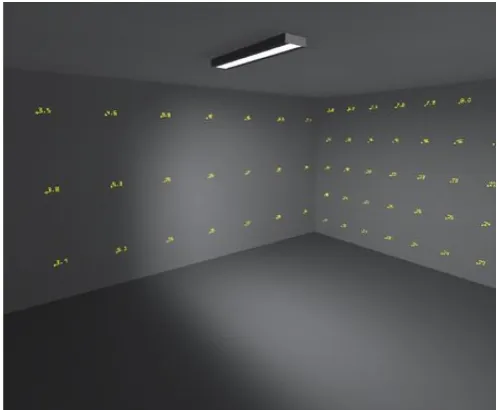
Figure 2. (Example of DIALux Evo 5.1)
Make design of Collage building and output in DIALUX.
This software interface is use to design the lighting in the Collage building. The conventional lights are laced at the different location in classrooms, labs, offices etc. in this case
[image:2.595.309.558.460.665.2] [image:2.595.73.253.476.642.2]study we are displayed to place the lights on the location in classrooms, offices etc. the case study in order to obtain the output and would help us getting the no of lights required in classrooms, offices, labs etc.
Calculation of Collage building by Dialux
For Conventional Lighting System:
Classroom
LUX Assessment: Ground Floor
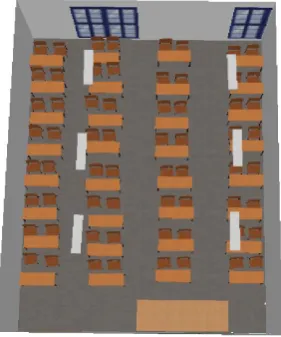
Auto Cadd Design of Classes of Collage Building
Figure 3. (Example of Classroom in Autocadd)
DiaLUX Design of Classes of Collage Building
Figure 4. (Example of Classroom in Dialux-Front)
Figure 5. (Example of Classroom in Dialux-Side)
Figure 5. (Example of Classroom in Dialux-Top) Table 4.1. (Lux Measurement of Classroom - G1with
Conventional Light)
Lux-Measurement Class: G4 Without light Season : Winter Unit : Lux Meter: Kmlux99
10 70 150 120 10 50 40 80 80 9 40 30 40 40 8 20 20 30 30 7 20 20 20 20 6 10 10 10 11 5 10 10 10 10 4 10 10 10 10 3 10 10 10 17 2 10 10 10 15 1 D C B A B.N.
Table 4.8 (Lux Measurement of Classroom – G4 with - out Conventional Light)
Lux-measurement Class: G1 With light Season: Winter Unit: lux Meter: kmlux99
[image:3.595.355.509.92.220.2] [image:3.595.84.238.234.361.2] [image:3.595.351.513.248.367.2] [image:3.595.354.512.402.546.2] [image:3.595.74.255.407.727.2] [image:3.595.363.504.579.748.2]
Figure 6. (Example of LAB in Dialux-Top) Figure 7. (Example of office in Dialux-Top)
Figure 8. (Example of Library in Dialux-Top)
DiaLux Output Plane
[image:4.595.110.268.60.220.2] [image:4.595.305.490.87.218.2] [image:4.595.211.389.252.345.2] [image:4.595.146.452.396.760.2]Figure 9. (Example of Classroom (Grayscale) in Dialux)
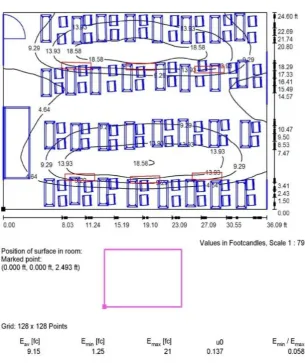
Figure 10. (Example of Classroom (Value Chart) in Dialux)
[image:5.595.168.436.69.410.2] [image:5.595.159.439.444.757.2]As seen above in Figures we are created autocadd files, Dialux files and output such as value chart File, Grayscale Files and Isoline Files for Collage building. Here the lighting is place at different points at the gantry in order to get the proper illumination in the collage classrooms and offices. Here conventional lights like as MH, Mercury lights and florescent tube lights are place and the false color is obtained.
Disadvantages of Normal Lighting System
Waste of lot of energy as heat.
Small Life.
High Billing cost.
Less energy efficient.
Pollutants released into the atmosphere.
Advantages of Energy Efficient lighting System
Longer Life
Energy Efficiency
Ecologically Friendly
Durable Quality
Zero UV Emissions
Design Flexibility
Operational in Extremely Cold or Hot Temperatures
Low-Voltage
Conclusion
Energy efficient lighting simulation proves beneficial for given building. Using DIALUX software tool removal of unwanted shadow and glare effect of walls and chairs takes place.
The direct effect of efficient lighting on reducing of total cost. This paper aim is to focus on lighting simulation tools for advanced efficient lighting methods. The day lighting will provide cost reduction if properly controlled. The conventional Lights are used in the switchyard. The Analysis was carried out in the section and a grid was placed then the whole section was analyzed and conventional lights were placed in those sections as been placed in the present system in the case study but were found that the lighting placed were insufficient and proper illumination was obtained by placing the LED lights in those section.
REFRENCES
Bureau of Energy Efficiency Luminarie selection – Philips concern photometric Database 09-09-2014
Kasap, S.O. 2002. Principles of Electrical Engineering Materials and Devices, McGraw-Hill New York. p. 425 Kurian, C. P., Aithal, R. S. Bhat, J., George, V. I. 2008. Robust
control and optimization of energy consumption in daylight-artificial light integrated schemes. Light Res Technol., 40(1):7-24.
Loutzenhiser, P. G. Maxwell, G. M., Manz, H. 2007. An empirical validation of the daylightingalorithms and associated interaction in building simulation programs using various shading devices and windows. Energy- Int J., 32(10):I855-70.
www.equitablegroth.org