Proceedings of the 9th Workshop on Computational Approaches to Subjectivity, Sentiment and Social Media Analysis, pages 248–253 Brussels, Belgium, October 31, 2018. c2018 Association for Computational Linguistics
248
Disney at IEST 2018: Predicting Emotions using an Ensemble
Wojciech Witon1∗ Pierre Colombo1∗ Ashutosh Modi1 Mubbasir Kapadia1,2
1Disney Research Los Angeles, 2Rutgers University
{wojtek.witon, pierre.colombo}@disneyresearch.com {ashutosh.modi, mubbasir.kapadia}@disneyresearch.com
Abstract
This paper describes our participating system in the WASSA 2018 shared task on emotion prediction. The task focuses on implicit emo-tion predicemo-tion in a tweet. In this task, key-words corresponding to the six emotion la-bels used (anger, fear, disgust, joy, sad, and surprise) have been removed from the tweet text, making emotion prediction implicit and
the task challenging. We propose a model
based on an ensemble of classifiers for pre-diction. Each classifier uses a sequence of Convolutional Neural Network (CNN) archi-tecture blocks and uses ELMo (Embeddings from Language Model) as an input. Our sys-tem achieves a 66.2% F1 score on the test set. The best performing system in the shared task has reported a 71.4% F1 score.
1 Introduction
Besides understanding the language humans com-municate in, AI systems that naturally interact with humans should also understand implicit emotions in language. To be consistent and meaningful, an AI system conversing with humans should reply while taking into account the emotion of the utter-ance spoken by the human. If the user appears to be unhappy, a subsequent joyful response from the system would likely detract from the engagement of the user in the conversation. In recent years, several researchers have attempted to address this problem by developing automated emotion predic-tion for text (Medhat et al.,2014).
Predicting emotions implicit in natural language is not trivial. A na¨ıve attempt to classify text based on emotion keywords may not always work due to the presence of various linguistic phenomena (e.g., negation, ambiguities, etc.) in the text. More-over, emotion may be triggered by a sequence of words and not just a single keyword, requiring an
∗
indicates equal contribution.
automated system to understand the underlying se-mantics of the text. In the WASSA shared task, keywords describing the emotion label have been removed, making the emotion implicit in the text. This makes the task more challenging.
Typically, a system developed for implicit emo-tion predicemo-tion must understand the meaning of the entire text and not just predict using a few key-words. We propose a model which uses a CNN based architecture (Gehring et al.,2017) for emo-tion predicemo-tion. The model stacks CNN blocks on ELMo (Embeddings from Language Model), as introduced byPeters et al. (2018). Addition-ally, we include word level Valence, Arousal, and Dominance (VAD) features for guiding our model towards prediction. We describe our model in detail in Section4. As described in Section6, our model achieves 66% accuracy on the WASSA task. We further investigate the generalizability of our model by experimenting on the Cornell movie dataset as shown in Section7.
2 Related Work
Chen et al. (2018) introduce an emotion cor-pus based on conversations taken from Friends TV scripts and propose a similar emotion classification model using a CNN-BiLSTM. Our model is similar to the model proposed by (Chen et al.,2018), but we use a pre-trained ELMo instead of a BiLSTM.
Mohammad(2018) have proposed a VAD lexi-con for emotion detection systems. We use VAD features together with ELMo (Peters et al.,2018). Recently, the ELMo model has been shown to boost performance on a number of Natural Language Pro-cessing (NLP) tasks. To the best of our knowledge, we are the first to make use of VAD features in a deep learning setting for emotion prediction.
3 Task Description
The WASSA 2018 shared task∗ (Klinger et al.,
2018) is about predicting implicit emotion in a given tweet. The task is challenging because the keyword indicative of the emotion has been re-moved from the tweet. The participating system is required to predict the implicit emotion based on the remaining context using world knowledge or statistical techniques.
3.1 Emotion Corpus
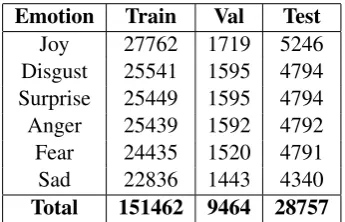
The corpus provided for the competition has around 188,000 tweets (∼150,000 for training, ∼9,000 for validation,∼28,000 for testing) annotated with 6 emotion labels (anger, surprise, joy, sad, fear, disgust). The dataset has a balanced distribution of examples for the six label classes (see Table1).
Emotion Train Val Test
Joy 27762 1719 5246
Disgust 25541 1595 4794
Surprise 25449 1595 4794
Anger 25439 1592 4792
Fear 24435 1520 4791
Sad 22836 1443 4340
[image:2.595.310.521.296.454.2]Total 151462 9464 28757
Table 1: Label distribution of the provided corpus.
4 Emotion Prediction Model
Our model has two sets of classifiers at its disposal: an ensemble of CNN-based classifiers and a fast-Text classifier (Joulin et al.,2016). A CNN-based
∗
http://implicitemotions.wassa2018. com
[image:2.595.95.268.514.625.2]classifier requires a fixed length input. Since tweets have a variable number of words, padding is typi-cally added to the shorter word sequences in order to have equal lengths across the mini-batch. In practice, having long sequences may not work well due to noise introduced by padding. Based on tweet length distribution (see Figure1) and our experi-ments, we set the maximum length of a tweet to 40 words. These tweets were classified using CNN based models. For longer tweets (>40), we used a fastText classifier. FastText works by averaging word representations into a text representation us-ing bag of words (BoW) and bag of n-grams. The text representation is then fed into a linear classifier with a hierarchical softmax on top. FastText was chosen based on its simplicity and efficiency.
Figure 1: Raw tweet length distribution used for setting a maximum length of input sequence for the classifier.
4.1 Deep CNN Classifier
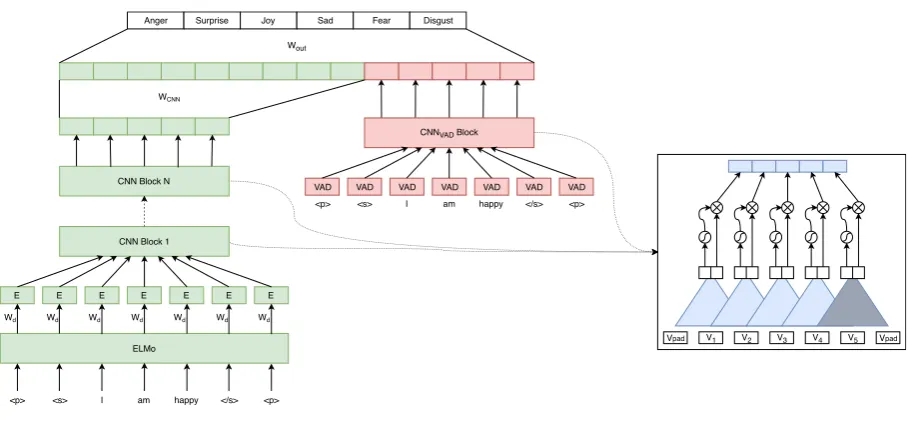
We use an ensemble of CNN-based classifiers for shorter (< 41words) tweets. Each of the CNN-based classifiers in the ensemble has a network architecture as shown in Figure2. The CNN classi-fier has two sub-modules:
V2 V3 V4 V5 Vpad
V1
Vpad
Anger Surprise Joy Sad Fear Disgust
E E E E E
</s> <s> I am happy
E
<p> E
<p>
CNN Block 1 CNN Block N WCNN
VAD VAD VAD VAD VAD </s> <s> I am happy
VAD <p> VAD
<p>
ELMo
CNNVAD Block Wout
[image:3.595.72.528.57.268.2]Wd Wd Wd Wd Wd Wd Wd
Figure 2:Left: the proposed emotion classifier architecture.Right: CNN block structure.
• Emotion sub-module: In this sub-module, the model uses VAD emotion values (see
§4.3), this is followed by a CNN block layer.
Outputs from both networks are mapped to con-stant size layers, concatenated, mapped to the out-put (classification) layer of size 6 and normalized using a softmax function. An overview of the sys-tem is presented in Figure2.
4.2 Convolutional Block Structure
We base our network on Convolutional Blocks in-troduced byGehring et al.(2017). We make use of a CNN encoder, which consists of several convo-lutional layers (blocks), followed by Gated Linear Units (GLU) layers introduced byDauphin et al.
(2016), and residual connections. The architecture of the CNN block is presented in Figure2(right). Inputs to the first convolutional block are ELMo representations w = (w1, ..., wm), mapped to
size d, for a given input sequence of length m. Each convolution kernel takes as inputX ∈ Rm×d
and outputs a single elementY ∈ R2d. This output
is then mapped toY0 ∈ Rdusing GLU. We usem
different kernels, which are concatenated to form a final output matrixZ ∈ Rm×dthat serves later as
an input to the next block. The output of the last block is mapped to a one dimensional vector using a linear layer.
4.3 VAD Lexicon
To model the emotions carried by each tweet at a word level we use VAD features extracted from an
external lexicon introduced byMohammad(2018). Each of the 14,000 words in the lexicon is repre-sented by a vector in the VAD space (v ∈[0,1]3) and each sentence is associated with a matrix result-ing from concatenation of VAD vectors for words in the sentence (V ∈ Rm×3). To label out-of-vocabulary (OOV) words, the closest word in the dictionary is found using a difflib library†in python (algorithm based on the Levenshtein distance). If no word with more than 90% of similarity is found, a default VAD value (v = [0.5,0.5,0.5]) is as-signed. At the end of the process, around 50% of words of the training set are labeled with VAD values.
4.4 Classifier Ensemble
The model ensemble consists of a 6-emotion (gen-eral) CNN classifier and six binary CNN classifiers (e.g., “happy” vs all other emotions). The final prediction is made by looking for an agreement between binary classifiers – 5 classifiers predict the “negative” class and the other one predicts the “positive” class with a confidence score for the
“pos-itive” class that is over a certain thresholdT. If the conditions are not met, the tweet is classified using the 6-emotion classifier. The thresholdT is tuned based on validation accuracy.
†
5 Experiments
In this section, we describe the procedure for train-ing classifiers as part of the Ensemble Classifier. The parameters were tuned based on both valida-tion loss and accuracy.
5.1 Preprocessing
Each tweet in the dataset is first tokenized using the Spacy tokenizer‡. Then, each of the 6 most common emojis is mapped into a sequence of ASCII characters (e.g., is mapped to “:d”). As the last step, the start and end of sentence tokens (<SOS>,<EOS>) are added, together with pad to-kens (<PAD>) to match the maximum sequence length.
5.2 Training Procedure
Our Deep emotion classifier is composed of 2 CNN blocks (N = 2) stacked on top of ELMo and 1 CNN block stacked on top of VAD features. We set the window size of the Convolutional Block to 5, ELMo size to 1024 (mapped tod = 256), initial learning rate for ADAM optimizer (Kingma and Ba,2014) to 0.001, dropout rate to 0.5, batch size to 128, and the thresholdT to 0.86.
Each batch of samples used for training the bi-nary classifiers is balanced by randomly sampling half of the batch from positive labels and half of the batch from negative labels (the number of negative labels is 5 times larger). Sampling using this pro-cess makes the training more robust to overfitting. Additionally, noise is added to the training sam-ples; a small amount of negative labels are sampled and presented as positive labels to the classifier (Section6.1).
6 Implicit Emotion Prediction Results
In this section we present the results on the Implicit Emotion Prediction task. The six binary classifiers and the 6-emotion classifier used in the Ensemble Classifier were chosen based on validation accuracy presented in Table2. Our system achieved a macro F1 Score of 66.2%, whereas the top 3 participating systems have reported a score of 71.4%, 71% and 70.3%, respectively.
6.1 Analysis
Table2shows that some emotions (e.g., joy, fear) are easier to predict. In some cases we see
improve-‡
https://spacy.io
Emotion No noise Noise 5% Noise 10%
Joy 91.4% 91.0% 92.2%
Disgust 89.4% 89.7% 89.6%
Surprise 87.7% 87.1% 87.9%
Anger 86.9% 86.4% 86.5%
Fear 90.9% 90.9% 90.8%
Sad 89.0% 89.6% 87.7%
[image:4.595.306.538.63.175.2]6 emotions 64.8% 65.5% 64.5%
Table 2: Validation accuracy for each classifier (note: high accuracy scores for binary classifiers come from unbalanced classes).
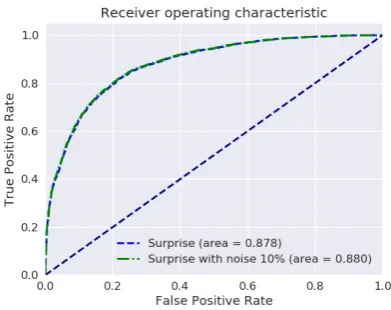
Figure 3: ROC curve for predicting surprise emotion on the test set (predictions are made on a balanced dataset).
ment in validation accuracy after adding noise. Sur-prisingly, this does not lead to statistically signifi-cant improvement (Figure3).
[image:4.595.312.508.243.398.2]Classifier F1 Score
fastText 50.0%
6-emotion classifier 65.2%
[image:5.595.362.469.61.175.2]Ensemble classifier 66.2%
Table 3: F1 Score on test set.
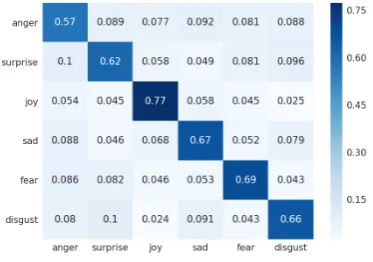
Figure 4: Confusion Matrix for the Ensemble Classi-fier.
depending on whether the trigger word was “happy” or “surprised”).
7 Model Generalization
In order to have a better understanding of the per-formance of our system for real world applications, we tested our system on an explicit emotion predic-tion task.
7.1 Dataset and Task
For our experiments, we used the Cornell Movie Corpus built byDanescu-Niculescu-Mizil and Lee
(2011), which is composed of around 300,000 ut-terances extracted from 600 movies. A group of internal annotators manually annotated a subset of 58,000 lines, with at most 2 of 7 emotion labels (fear, surprise, anger, disgust, joy, sad, neutral). We use this data for two experiments. In the first experiment, we measure how well the classifier pre-dictions correlate with human annotation for the 6 emotions. For this experiment we create the dataset
D1by randomly sampling 4800 lines consisting of 800 samples for each emotion class (except for the neutral class). In the second experiment, we measure how well the classifier is able to predict a neutral emotion. We create the dataset D2 by extracting a subset of 45,000 neutral lines.
Emotion F1 Score
Joy 52.1%
Disgust 48.2%
Surprise 52.0%
Anger 50.0%
Fear 50.1%
Sad 44.2%
[image:5.595.78.265.173.304.2]Total 49.4%
Table 4: F1 Score on Cornell dataset.
7.2 Prediction on 6 emotions
In the first experiment, we take the top 2 emotions predicted by the final system onD1and check if at least one of the predicted labels matches one of the golden labels. F1 Scores are presented in Table4.
7.3 Prediction on neutral emotion
In the second experiment, we determine that the classifier predicts a neutral emotion if each emotion is predicted with low confidence (confidence lower than 0.5). We evaluate our system on D2. The final system predicts a neutral emotion for 85% of sentences, whereas fastText only reaches 4% of accuracy. FastText misclassifies those neutral lines as joy with high confidence (>80%).
In conclusion, the results show that our model generalizes well on the Cornell Movie corpus when compared to a fastText classifier, pre-trained simi-larly on the task dataset. While we do not expect to reproduce precisely the same performance on the Cornell Movie Corpus, since the word distribu-tion and writing style are very different, the system generalizes reasonably well.
8 Conclusion
In this paper, we presented a system making use of state-of-the-art techniques for Natural Language Processing, such as ELMo and a CNN encoder for emotion classification. We have designed a robust classifier for sentences without any assump-tions about the intrinsic properties of the task which make it generalizable to other tasks (e.g., explicit emotion prediction) on other datasets.
References
Cristian Danescu-Niculescu-Mizil and Lillian Lee. 2011. Chameleons in imagined conversations: A new approach to understanding coordination of lin-guistic style in dialogs. InProceedings of the Work-shop on Cognitive Modeling and Computational Lin-guistics, ACL 2011.
Yann N. Dauphin, Angela Fan, Michael Auli,
and David Grangier. 2016. Language
model-ing with gated convolutional networks. CoRR,
abs/1612.08083.
Jonas Gehring, Michael Auli, David Grangier,
De-nis Yarats, and Yann N. Dauphin. 2017.
Con-volutional sequence to sequence learning. CoRR, abs/1705.03122.
Armand Joulin, Edouard Grave, Piotr Bojanowski, and Tomas Mikolov. 2016. Bag of tricks for efficient text classification. CoRR, abs/1607.01759.
Diederik P. Kingma and Jimmy Ba. 2014. Adam:
A method for stochastic optimization. CoRR,
abs/1412.6980.
Roman Klinger, Orph´ee de Clercq, Saif M. Moham-mad, and Alexandra Balahur. 2018. Iest: Wassa-2018 implicit emotions shared task. InProceedings of the 9th Workshop on Computational Approaches to Subjectivity, Sentiment and Social Media Analysis, Brussels, Belgium. Association for Computational Linguistics.
Walaa Medhat, Ahmed Hassan, and Hoda Korashy. 2014. Sentiment analysis algorithms and applica-tions: A survey. Ain Shams Engineering Journal, 5(4):1093–1113.
Saif M. Mohammad. 2018. Obtaining reliable
hu-man ratings of valence, arousal, and dominance for 20,000 english words. In Proceedings of The An-nual Conference of the Association for Computa-tional Linguistics (ACL), Melbourne, Australia.