Medical Device Design in Context: A Model of User-Device Interaction and Consequences
Sarah Sharples 1,2, Jennifer Martin1, Alexandra Lang1, Michael Craven1, Sonja
O’Neill3 & Julie Barnett1,4
Corresponding author: Sarah Sharples, tel: +44 (0)115 951 4196, [email protected]
1 MATCH (Multidisciplinary Assessment of Technology for Healthcare), 2 Human
Factors Research Group, Faculty of Engineering, University of Nottingham, University Park, Nottingham NG7 2RD; 3 Smart Environments Research Group,
University of Ulster, Newtownabbey BT37 0NQ, Northern Ireland; 4, Department
of Information Systems and Computing, Brunel University, Uxbridge, UB8 3PH Keywords: human factors; design; systems approach; medical devices; controls and displays
Abstract
devices are used and implemented is presented, and the need for a systems approach to medical device design is emphasised. Five case studies from
medical device control and display design are presented as an aide to developing an understanding of the relationship between device design and resultant
behaviours. On the basis of these case studies, four types of mediating factors (catalysts, enablers, facilitators and enhancers) are proposed and a model to describe the link between device design, user, context and consequences is presented.
1
Introduction
user satisfaction or brand loyalty (Norman (1988), Jordan (1998), Jordan, (2000); Preece et al (2002)).
Theories have been developed that help us to understand the relationship between design and behaviour/consequences. A good understanding of this relationship can support design and provide evidence for the importance of considering design when aiming to influence or change user behaviour in a medical context. These theories include affordances (Norman, 1988), where we consider that the design of an interface suggests or implies an appropriate interaction – in other words, an interface that is designed with clear affordances should be more intuitive to use, require less explicit training or instruction (e.g. by labelling) and yield fewer errors. Error analysis techniques, such as Generic Error Modelling System (GEMS) (Reason, 1990) provide a framework to allow an expert to consider the underlying causes of an error that has been made. When combined with predictive human reliability techniques (Kirwan, 1994), they suggest whether the user of an interface or control system may be more likely to experience failure at the skill (automatic behaviour), rule (procedural “if-then” type behaviour) or knowledge (using prior experience to develop strategies) based level (Rasmussen, 1983), with respect to the human information
processing elements of working and long-term memory, attention and workload. Knowledge of decision making biases (C. D. Wickens, Gordon-Becker, Liu, & Lee, 2003) also helps us to understand how people use knowledge from past
The discipline of human factors has demonstrated that if a devices is well designed then this will have positive implications for usability, defined as “the extent to which a product can be used by specified users to achieve specified goals
with effectiveness, efficiency and satisfaction in a specified context of use.” (ISO
9241-11).
Effectiveness in relation to medical device use refers to the accuracy and completeness with which users achieve specified goals; efficiency is the resources expended in relation to the accuracy and completeness with which users achieve goals; and satisfaction is freedom from discomfort, and positive attitudes to the use of the product.
This paper considers the way in which the human factors approach, routinely applied to the control and transport domain, may be transferred to the context of medical devices. Examples of this approach can be found in Wilson and
Morrisroe (2005), who took a systems perspective to device requirements, specification, design and evaluation. In particular, Wilson and Rutherford (1989) note the role of the ‘system image’ informing user mental models, which are then thought to have an impact on short- and long-term user behaviour. This paper examines previous work that has investigated elements of interaction design in the context of a range of medical devices, considers the context in which medical devices are used and implemented, and seeks to understand how we can demonstrate the link between device design and consequent user
resultant behavioural impact. These case studies aim to demonstrate the diversity of ways in which medical devices “communicate” to the user, allowing us to consider the role of different types of displays and user device interfaces. Finally, a model is presented that attempts to articulate the links between device design and resultant behaviour in different medical contexts.
2
Previous work evaluating medical devices
A wide body of literature has discussed the importance of considering human factors in a medical context, but relatively few articles have specifically
presented an analysis of design of devices in an attempt to understand the links between design and effectiveness, efficiency or satisfaction.
One paper that did examine relationships between design and outcomes was Clarkson et al. (2004), who, in their review of the effectiveness of design for patient safety in the UK health service, note that within the aviation, military and nuclear industries “effective design thinking can facilitate the delivery of
insufficient grasp of the value and significance of design and the techniques for managing and implementing design improvements”.
Ward and Clarkson (2004) note that poor equipment design may lead to “device-related errors”. They present a simplified model, which they acknowledge does not highlight the multiplicity of causes that contribute to most errors, but
attempts to link the contribution of device design, manufacture and use towards a medical error.
stakeholder(s). In other words, it is important to focus on all three of the dimensions referred to in the ISO 9241 definition – effectiveness, efficiency and satisfaction. Secondly, this paper highlights the value of a systems perspective, which is vital in order to understand the full impact of any changes made within a medical context. Waterson (2008) highlights the value of a systems approach within patient safety but notes that this approach tends to be associated with a lack of detail regarding the connections that exist between different system levels, actors and artefacts (Infante, 2006; Waterson, 2008).
The contention of this paper is that in order to provide specific and useful advice to device manufacturers it is necessary to understand in more detail the
relationship between the consequence of a particular artefact and the way in which it is designed. In other words, we should consider the interaction between user(s) and device(s) in a systems context, and develop approaches and
techniques that allow us to provide specific device insights findings and
guidance, and understand what the impact of this specific device design could be in the context of a medical system. If we wish to persuade a device manufacturer to consider a change or enhancement to a design for example, it is useful, but often challenging, to obtain specific evidence that demonstrates the value of modifying the design, and predicting the impact of that design change on
consequences of use. There is a clear need for the analysis and demonstration of the relationship between the goals of the device, its design and the consequences of its use.
2.1 The nature of a medical device
“any instrument, apparatus, implement, machine, appliance, implant, in vitro reagent or calibrator, software, material or other similar or related article, intended by the manufacturer to be used, alone or in combination, for human beings for one or more of the specific purpose(s) of
– diagnosis, prevention, monitoring, treatment or alleviation of disease,
– diagnosis, monitoring, treatment, alleviation of or compensation for an injury, – investigation, replacement, modification, or support of the anatomy or of a physiological process,
– supporting or sustaining life, – control of conception,
– disinfection of medical devices,
– providing information for medical purposes by means of in vitro examination of specimens derived from the human body, and which does not achieve its primary intended action in or on the human body by pharmacological,
immunological or metabolic means, but which can be assisted in its function by such means.
[ISO 13485:2003, definition 3.7]
This definition demonstrates the breadth of applications of use of medical
assume that a device user will have a certain level of training, skill or physical, social or cognitive ability.
Ultimately, the authors of this paper consider that the ultimate aim of any medical device is to improve the well-being of the person receiving diagnosis, treatment or medication. This could be via the direct treatment of a disease or condition, or the indirect effect of using a device on overall well-being (e.g. a particular therapeutic device may encourage a posture that leads to a faster recovery time from an injury). The impact may be active – where the
consequence of use is immediately perceivable and/or measurable (e.g. the immediate impact on a patient health state on using a cardiopulmonary resuscitation (CPR) device) or latent – where the consequence of use is dependent on repeated use over a period of time, or a longer term change in health state or performance (e.g. the long term impact of intensive glucose control on diabetic patient well-being (Holman, Paul, Bethel, Matthews, & Neil, 2008). These impacts may be positive, leading to improvement in health for example, or may be negative, such as unsafe acts or non-compliance with treatment regimens (Lowe, 2006).
maintain the health of a person with cystic fibrosis. It is also important to remember that the user may not necessarily be the patient. Such ‘non-patient’ users may be clinical staff (e.g. operating medical equipment), carers, friends or relatives who assist with equipment use, or people who handle or use equipment whilst it is not in active use, but who may be, for example, preparing an
intervention or cleaning a device. Therefore a device may be achieving its goal if it allows a procedure to be completed more quickly, and thus minimising
discomfort for both the patient and the non-patient user (e.g. (Norton & Haslegrave, 2001)).
Non-clinical settings may include the workplace, home or when travelling, providing different challenges, such as the necessary infrastructure to successfully use the device and hygiene requirements. By adopting the ISO definition of usability as baseline requirements for device design, we can also assume that a device that meets its goals in any of these clinical and non-clinical contexts should therefore achieve the targets of effectiveness, efficiency and satisfaction.
2.2 User centred design and medical devices
way.” (McClelland & Suri, 2004). The benefits of this approach are wide, and include identification of new ideas, paradigms and design directions, providing better experiences for users, reducing complaints and a faster and more precise definition of functionality and interaction technologies (McClelland & Suri, 2004). Hallbeck (2010) describes user-centred design as “both a philosophy and a process”.
Others have specifically noted the impact of medical device design on resultant consequences (albeit often focussing primarily on error and safety). However, Hallbeck (2010), in a review of approaches and standards, notes that “most medical devices, including surgical and laparoscopic tools, have not been
designed using User Centred Design (UCD) principles; in fact some appear not to have considered there was a user”. In an analysis of anaesthesia practice, Cooper et al. (2002) identified that “equipment design was indictable in many categories of human error”. Lauer et al. (2010) present an example of a device for use in orthopaedic surgery and pre-operative planning that used ergonomics principles during its design. Carayon et al. (2010)present an example of the design of an infusion pump that was enhanced through the use of usability testing, leading to “less chance of error occurring from improper infusion set-up”. West et al. (2008) demonstrated that a new design of resuscitation trolley, when used in a virtual arrest scenario, led to fewer errors, required no training and received a positive response from participants.
groups, the characteristics of the users or groups of users, the tasks of the users, and the environment(s) of the system. Parush et al. (2010), after analysing data obtained from 51 observations of morphine infusions in a post-surgical unit, re-cast this categorisation of the factors that may play a role in shaping the impact of a medical device (in this case, the IV bolus morphine administration process) as environmental factors, equipment and tools, operating characteristics
(primarily relating to user circumstances or characteristics) and organisational and social factors. Of these factors, equipment design was found to be the
second most prevalent influence on observed events during the process, after the most prominent influence of distraction (considered as an ‘environmental factor’ in the Parush et al classification).
2.3 Medical device design and interaction
The way in which people interact with medical devices has been extensively examined over many years in a range of contexts. In particular, important work has been performed on understanding the physical ergonomics impact of design in hospitals and other points of clinician/carer-patient interaction, such as the impact of bed rail design on patient behaviour (Hignett & Griffiths, 2005), where a database analysis revealed that different types of injuries and outcomes
resulted from specific designs of bed rails. In addition, work such as that on the design of infusion devices (S. Wilson, Davey, & Lipson, 2008) and of resuscitation trolleys (West, et al., 2008) has applied usability and design techniques to yield designs that aim to minimise the likelihood of error occurrence and reduce the training needed to use devices. In the case of the resuscitation trolleys
of new concepts of trolley design. However, in many cases of medical device implementation and use it is apparent that a number of factors, in addition to the actual design of a device, combine to produce the overall consequence of its use on the patient (in the same way as factors combine to influence immediate and long term consequences of device use in other contexts, such as transport maintenance for example). The nature of the link between device design and resultant behaviour may therefore often be unclear and thus it can be
challenging to justify investment into such user-centred design approaches as advocated by Martin et al. (2007).
In the context of medical devices, the consequent user behaviour can have a range of impacts on the effectiveness of medical procedures and consequently a patient’s health. However, due to the complex nature of the site, multi-person and multi-artefact context of many medical interactions, the link between device design and the consequent behaviours is apparently less clear cut than in the other domains such as process control or driving.
simulator trial, where the effect on attention of different designs of audio
equipment are compared). Similarly, in the context of rail signalling, a signalling interface that is difficult to use may lead to a higher number of communications on the part of the signaller, increased need to query the system to understand the way in which an automated signalling system is working, or reference to paper material. These are actions, that, within a systematic programme of work, can be inferred to be a direct consequence of the design of the automated
signalling interface and can be measured by directly observing the signaller’s interaction in situ (Sharples, in press). Although this relationship between control interface design and operator cognitive action is less clear cut than in the driving context, extensive structured observation coupled with some simulation trials have allowed the inference of a latent effect of device design. This has been demonstrated in key papers, such as the “Ironies of Automation” by Bainbridge (1983).
Medical device use, however, does not lend itself to this form of analysis, and clear inferences on the relationship between device design and operator actions are limited. For example, many devices that are used within a clinical
home dialysis systems, breathing apparatus and physiotherapy devices are also increasingly being used by patients themselves.
It can be difficult to conduct realistic simulated or naturalistic observation of the use of a medical device due to the range of actors and contexts of use. Another factor that makes it hard to identify the relationship between device and outcome is that the consequent behaviour of interest, such as long term health behaviour, can be temporally distant from the point of interaction with the device. In the case of long-term health outcomes, the interaction with a device of any type is likely to be just one of many factors that will influence these, and in many cases other factors (e.g. age of the patient, clinical condition,
pharmaceutical impact of the drug being taken) will exert considerably more influence on long term health outcomes compared with the impact of device design.
3
Case studies
theoretical propositions” (p18). The methods used within the case studies included interviews (Cases 1, 2, 3, 4 & 5), observations (Case 1), focus
groups/workshops (Cases 3 & 4), human factors analyses (Cases 1, 2 & 3) and prototype design (Cases 4 & 5). The case study approach is used here to inform propositions and theories and, to a certain extent, both generate and test the hypotheses that emerge in the formulation of the framework presented (see Flyvbjerg (2004) for a more detailed discussion). The cases were selected on the basis that the results of the original data collection activities had identified a potential link between device design and resultant user behaviour, suggesting them as appropriate candidates for presentation within this paper.
For each case, the problem being addressed is outlined, the methods described, results and recommendations summarised and implications for impact of device design reflected upon. The cases represent different types and contexts of use of medical devices, and are intended to illustrate the range of issues that arise when considering the ergonomics of medical device design. In most of the cases, the device(s) was/were considered as part of a systems approach – in other words, the context of their use, range of users, consequence of use etc. were considered in an attempt fully understand the impact of the design on the resulting user behaviour.
The cases are as follows:
Case 4: influence of device design for management of cystic fibrosis in adolescents
Case 5: user requirements for medical imaging devices
For ease of understanding, the key features of each case are presented in Table 1 to Table 5. The tables present the following elements for each case study,
followed by a narrative description of the emergent points that contribute to the development of the theoretical framework relating device design and user behaviour:
Summary of case: This describes the original context of data collection and the motivation for the investigation into the particular medical device.
Methods applied: The particular methods of data collection each case are briefly described.
Devices under consideration: The specific device investigated is described.
Users/relevant stakeholders: This lists both specific users considered in the data collection of the case study and also other potential users of the device.
Tasks being performed: The intended uses of the device in the context of the data collection are listed, as informed by expert users or participants. Human factors challenges: The human factors challenges that emerged
from the data (analysed from an exploratory perspective) are listed here. Solutions proposed: The human factors design solutions that emerged
After each table, a brief summary is presented containing the main outcomes of each case study, which inform the model of impact of design on behaviour. The focus for discussion is on the role of the device design and the relationship between device design, influencing factors and behaviour and health outcomes or consequences..
3.1 Case 1
INSERT TABLE 1 ABOUT HERE
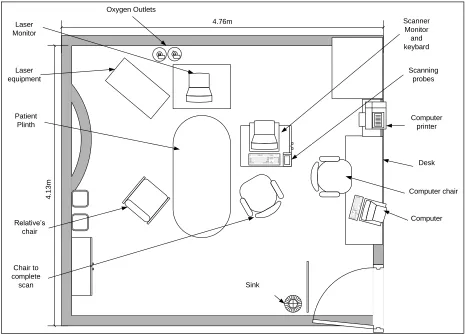
INSERT FIGURE 1 ABOUT HERE
Case 1 considered the impact of device design on the comfort of ultrasound operators and patients during scans conducted by doctors in a foetal medicine unit, a procedure that could take 20-30 minutes.
A particular feature of the device design was that the fixed ultrasound unit had restricted leg room. This meant the operator ended up sitting in a twisted position, which affected comfort when using the scanner. The nature of the particular patients being considered (often in later stage of pregnancy) meant that in many cases there was a need for the operator to exert considerable pressure when using the device often when stretching to reach around the patients’ stomach, which increased the potential for development of
viewing the screen. The operator, however, then had to twist up to 180 degrees to their right to view the screen whilst conducting the scan. The nature of the patients (in late stage of pregnancy) in some cases required the operator to reach over the patient in order to apply the scanner at the required point on the stomach.
Routine ultrasound scans are normally conducted by dedicated operators in environments that can be configured to the operator’s needs; however, in this foetal medicine unit, there was a series of different operators. It was therefore much more difficult to configure the device or workplace to particular user needs (e.g. seating for a smaller operator). Scans could last up to 20-30 minutes (much longer than routine scans) and the nature of the environment meant that the well-being of the patient was paramount.
This case study highlights a number of elements that aid understanding of the impact of design on behaviour: Firstly, the presence of multiple users affects the way in which the device is used – in this case both the patient and the scanner needed to view a single display. Secondly, device selection is frequently influenced by technical capabilities and financial capacity, demonstrating the presence of such constraints in the context of device use. Thirdly, the device cannot be considered in isolation; the ultrasound scanner was one of several devices in the room, and the display and control elements of the ultrasound were not the only factors contributing to the overall experience of those interacting with the device. Finally, the impact of the device, and therefore the
ultimately the outcome of the diagnosis by the clinician; for the clinician the consequence is the ease with which they are able to make the diagnosis and also the physical comfort associated with completing the task.
3.2 Case 2
INSERT TABLE 2 ABOUT HERE INSERT FIGURE 2 ABOUT HERE
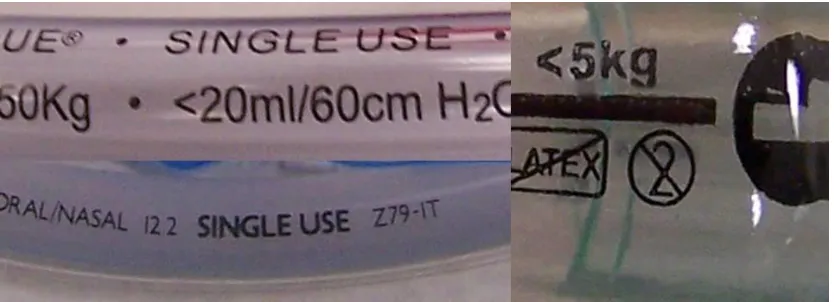
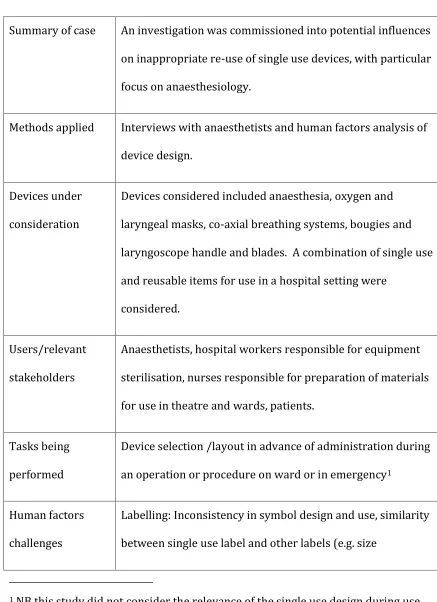
Case 2 considered the role of device design in potential re-use or mis-use of single use devices. The work was conducted primarily via expert human factors analysis of device designs and accompanied by interviews conducted with anaesthetists. The data revealed that staff did admit there had been occasions where they had re-used devices intended for single use, such as laryngoscopes. A reason identified for this behaviour was lack of knowledge associated with device labelling, suggesting a relationship between the device design and
behaviour which resulted in the task being completed in a non-optimal manner. In turn there was an increased risk of infection due to re-use of a single use device.
Aspects of design that were identified as being a source of problems included contradictory advice from device labelling. For example, cleaning and
disinfecting instructions were provided with a single use bougie, implying that the device could be re-used. The technical data sheet contained within the device packaging also described how the bougie could be reused up to five times
The role of the organisational and financial context were also highlighted by users. They were aware that any design changes could have cost implications, and that if these particular devices increased in cost then there could be cuts elsewhere.
The role of habit, and an organisational culture which valued working quickly and efficiently, also influenced the way in which single use devices were used. Such devices should only be removed from sterile packaging immediately before use; however, a practice of opening packaging in advance of use in order to save time, and thus potentially compromising sterility, and increasing the likelihood of unnecessary disposal of unused single use devices, was identified. In addition, the need for patterns of regular replacement of equipment that was single
patient use (i.e. should only ever be used by a single individual, but could be used by that individual on multiple occasions) was identified. This again highlights the importance of the organisational context, and also suggests the role of the device packaging as a facilitator in the design – for example, packaging that is easier to open would be less likely to need to be opened well in advance of use.
3.3 Case 3
INSERT TABLE 3 ABOUT HERE
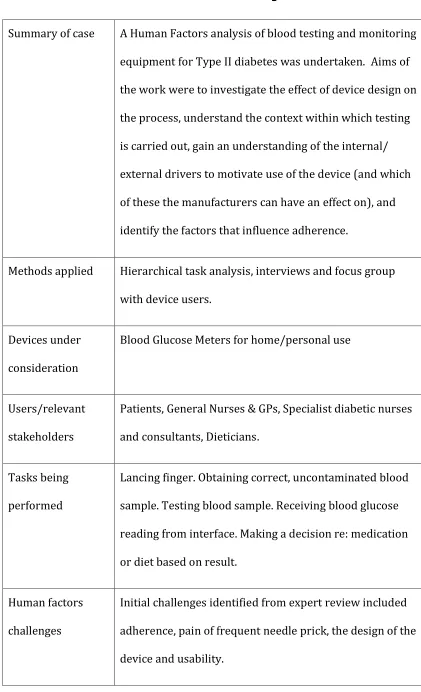
Case 3 examined the impact of blood glucose meter design on the process of self-monitoring of type II diabetes. An expert analysis of devices was conducted to develop a task analysis, followed by interviews and a focus group with patients with type II diabetes who regularly monitored their blood glucose level.
device, ease of use of the needle stick (lancet) of the device and the need for single use disposables (testing strips) to be used in conjunction with the test meter. However, the themes that emerged from the users included a strong emphasis on the contextual issues surrounding blood glucose testing, such as the extent to which the user themselves understood or controlled their condition, and the impact of the situation they were in on likelihood to test (e.g. testing when out of the home). This aptly demonstrates the role of individual user preference, motivation and knowledge, where users developed an understanding of their own physiological cues that informed their decisions regarding testing and eating behaviour. In addition, the role of context, including the social situation in which the user may be in, was found to potentially influence
likelihood of testing, both from the perspective of privacy but in particular due to hygiene requirements. The need for hygiene when using the device was
identified by users and experts; a design solution that could support this requirement could for example be an integrated hygiene wipe or spray.
3.4 Case 4
INSERT TABLE 4 ABOUT HERE
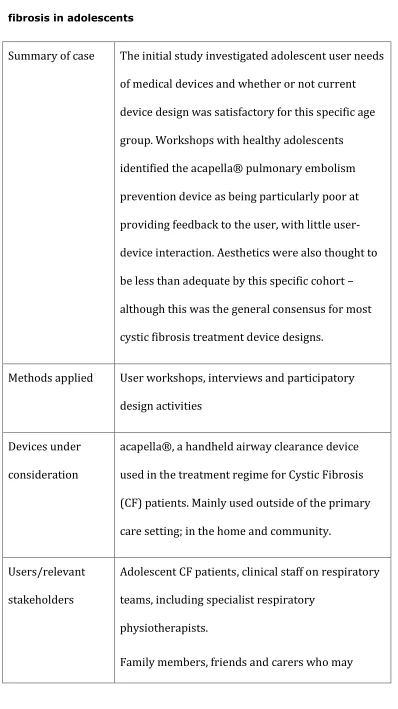
Case 4 examined the design of a physiotherapy device (acapella®), specifically when used by adolescent users with cystic fibrosis. The data were obtained from user workshops, interviews and participatory design activities, and aimed to elicit requirements for devices to be used for treatment of cystic fibrosis in adolescents.
Our analysis showed that the design of the device was felt to play a significant role in the adherence of use for adolescent users. Firstly, users felt that the device was difficult and slow to use, thus increasing the potential for user distraction from the task, which in turn can be detrimental to the technique of use and adherence to required duration of use. Therefore any design
improvements could act as a catalyst in speeding up the process of use, a facilitator, in making device use easier, or enhancer, by incorporating features that are more engaging and thus potentially reduce possibility for distraction. Secondly, participants noted that it could be difficult to maintain the required body posture and positioning of the device, therefore a design enhancement could be in the form of a constraint that only allows the device to be used once the appropriate posture is maintained. Thirdly, participants commented on the limited feedback to users from device displays, therefore an improvement to the device could be to incorporate engaging displays that provide immediate
appeal of the device, hinting at the social constraints that may be salient in device use.
For the acapella® device, design has been found to be an important issue, but the nature and severity of the condition of cystic fibrosis may have led to a culture of acceptance of a device that could be improved. For the application of device use in the management of chronic conditions there appears to be more of a
requirement for engagement with and feedback from the device; this is certainly evident for this age group.
This case study demonstrates how a medical device developer has potentially underestimated the importance of requirements capture for specific user groups within their target consumer populations. This lack of consideration of the specific needs of the adolescent user population appears to have impacted the users’ acceptance and satisfaction, sometimes resulting in low adherence or abandonment of the device.
3.5 Case 5
INSERT TABLE 5 ABOUT HERE
identified that the device had the potential to not only improve the information available during a clinical procedure but also to aid communication between them and the patient – in the same way as in the ultrasound example the display was used to reassure the patient and explain any findings from the scan.
However, again, the device design did not allow this opportunistic shared use, which meant that in some cases the device was not used at all. In particular, the presentation of the information from the device on a dedicated computer screen reduced the flexibility of device use. Aspects such as speed and complexity of programming also resulted in frustration and a reluctance to use the device as it did not efficiently fit into their working pattern.
This again demonstrates the presence of multiple devices and multiple users in many clinical contexts, and also highlights the need for compatibility between the design of the device and user expertise and preference. There were also limitations in the flexibility of use of the device due to the physical environment and limited room size in which the device was used. Finally, there were concerns that the presence of the device would lead to ‘de-skilling’ of the workforce by aiding vein access; this is an illustration of an ‘irony of automation’ as highlighted by Bainbridge (1983) and demonstrates the importance of considering user attitudes, along with the organisational constraints that may be present in device implementation.
3.6 Overview of cases
These cases present a range of contexts of implementation of medical devices, a range of device types, and a range of stages of interventions. The cases
resultant behaviour and consequences of use, including context of use, health state of user, fit of the device to user requirements, and influences on action selection (e.g. time and social pressures). The case study methodology has been used to inform a framework that proposes links between the elements of device design and user behaviour, and specifically identifies different characteristics of devices that may impact upon their resultant use. Previous models, such as the SEIPS model by Carayon et al (2006), have demonstrated the relationship
between the person, technology and tools, task, environment and organisational context in terms of patient, employee and organisational outcomes. The
framework presented here specifically focuses on the role of the device with the aim of supporting future device designers in understanding the potential
influences on the impact of medical device design.
4
Establishing the relationship between design and user
behaviour
The case studies present a range of examples where human factors methods have been applied, in an attempt to gather evidence regarding the relationship between device design and resultant user behaviour. This resulting user behaviour could be in several forms: Firstly, the consequence could be the immediate or direct way in which the user chooses to interact with the device. For example, in the case of the single use device study, the consequence of
appropriate labelling is that a user correctly realises that a device is either single use, or is reusable; in the case of the acapella® device, the device design
used long enough to effectively dislodge the mucus secretions; and in the case of the ultrasound, the device capability coupled with workplace layout and
circumstance of use could reduce the levels of force required and allow more comfortable postures, reducing risk of upper limb disorder. Secondly however, the consequence of use may be longer term, and become embedded into
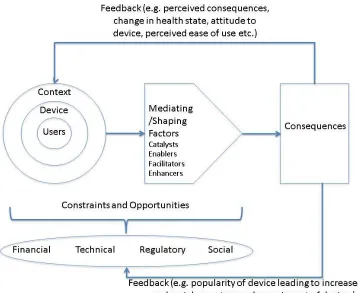
organisational culture, individual choices and learned behaviours e.g. correct or incorrect use, or possibly even choosing whether or not to use the device with the consequent effects on adoption of more or less healthy behaviours. For example, the portability and generally good design of the blood glucose meters allowed users to monitor their blood sugar levels regularly and allow good personal knowledge of and control over disease management. Figure 3 shows a model that illustrates the relationship between the user-device interaction and the resultant consequences in the immediate and long term. The model has been derived from a combination of existing human factors theories and approaches, in conjunction with the issues that have emerged from the cases presented within this paper.
that there is a complex interaction between the user, the device, and various aspects of context, which combine to enable the completion of a task. The use of the onion representation emphasises the importance of context in particular – in line with the findings of the medical device case studies described. For example, in the case of the ultrasound, the design of one of the devices (the scanner) had a direct impact on a consequence (fatigue) due to its design (the fixed position of the keyboard and display requiring torso twist by the device user). It is
important to note that the users themselves, as highlighted in the case studies, range in type and are not only patients. For example, in the ultrasound case, users included clinicians; in the single use device study, users were clinicians, operating theatre staff and those responsible for device sterilisation, and in the medical imaging case users were a range of clinicians and other auxiliary medical staff.
The case studies clearly demonstrated the combined impact of users, device and context. For example, in the case of the glucose meters, the knowledge and motivations of the users, as well as context of use, influenced likelihood to test. The second key element of the model is the set of mediating factors, described here as catalysts, enablers, facilitators and enhancers. These denote the different effects that the interacting “ingredients” of the user, device and context can have, and attempt to illustrate how the relationship between the user-device
interaction and eventual consequence for the user is mediated. The different types of mediation can be defined as follows:
Catalyst: presence of an element (within either the user, device or
on efficiency). An example of a catalyst could be the appropriate design of the glucose meter to make the process of pricking the finger for blood faster (e.g. by making the interface interaction prior to taking blood more straightforward) or by increasing the clarity of a single use device label to speed-up the process of identifying whether a device is single use..
Enabler: presence of an element (within the user, device or context) that enables device use to be possible at all. This could be a physical enabler, for example, in the case of the glucose meter, a user needs to carry both the device itself as well as testing strips to enable the device to be used at all.
Facilitator: presence of an element (within the user, device or context) that makes the use of the device easier (i.e. has an impact on satisfaction). This could be demonstrated by providing adjustability and additional screens on the ultrasound system that enables more flexibility in
workplace layout. An example of a facilitator is where some blood glucose meters have a drum of testing strips integral to the design of the device, enabling users to carry out multiple tests whilst only carrying their device, with no need to remember additional disposable parts. An
additional example of a potential facilitator would be design of packaging for single use devices that reduces the need to remove packaging well in advance of device use.
Enhancer: presence of an element (within the user, device or context) that improves the outcome of using a device (i.e. has an impact on
posture and correct technique during use to enhance efficiency during physiotherapy sessions resulting in optimum level of mucus movement /airway clearance. The improvement of the display on the blood vessel imaging device could reduce chancee of error when accessing veins, reducing patient discomfort and improving satisfaction.
Both the context, user and device, and the mediating or shaping factors, are framed by the constraints and opportunities offered by the situation in which they are used or implemented. These constraints and opportunities are
financial, technical, regulatory and social. Financial factors will influence device purchase (whether by the patient themselves or the health service on their behalf) and it should be remembered that this will be a factor not only in the initial purchase but also in acquisition of consumables or maintenance of a device (e.g. in purchase of strips or calibration fluid for glucose testing).
feedback of those consequences of the context, device, users and constraints and opportunities are represented by the feedback arrows. Examples of this
feedback are change in health state as a result of increased adherence, influenced by a better design of device for example, or change in popularity or acceptance of a device, leading to a change in social context that makes use of a device more acceptable.
INSERT FIGURE 3 ABOUT HERE
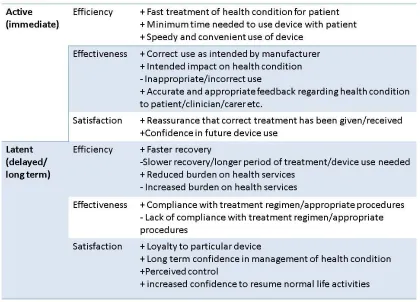
Figure 4 illustrates the diverse potential set of consequences of user-device interaction. It can be seen that the types of consequences have been classified as active or latent, and relate to the effectiveness, efficiency or satisfaction of the device. In addition, the consequences may be positive or negative.
INSERT FIGURE 4 ABOUT HERE
This demonstrates the importance of using appropriate design and evaluation methods in medical devices. Such methods in particular need to capture the breadth of types of impact, and the potentially latent effects of device use on the user. It is also important to be aware of the range of users involved – the case studies demonstrated that a ‘user’ is not automatically a patient – they may be a clinician (e.g. in the ultrasound case) or a member of hospital staff (e.g. in single use devices).
displays. It presents a model that represents the role of medical device design and its mediating factors in determining efficiency, effectiveness and satisfaction for the user. It also highlights the importance of not considering device design in isolation from the organisational or social context and the need to consider the range of stakeholders or users. By taking a systems approach and understanding the complexity of implementation and use of medical devices, effective, efficient and satisfying device design should be an achievable goal.
5
Acknowledgements
The work presented in this paper was funded by grants including Department of Health, the Multidisciplinary Assessment of Technology for Healthcare Centre MATCH EP/F063822/1 EP/G012393/1and Horizon Digital Hub EP/G065802/1. Thanks also to colleagues who supported the work reported here, including Professor Kevin Holland-Elliot, Professor John Crowe, Professor Steve Morgan, Dr. Emma Rowley, Dr. Beverley Norris and Dr. Laura Pickup.
6
References
Atkinson, R. C., & Shiffrin, R. M. (1968). Human memory: a proposed system and its control processes. . In K. W. Spence (Ed.), The Psychology of Learning and Motivation: Advances in Research and
Theory, Vol. 2 (pp. 89-195). New York: Academic Press.
Bainbridge, L. (1983). Ironies of automation. In J. Rasmussen, K. Duncan & J. Leplat (Eds.), New Technology and Human Error (pp. 271-283). Chichester: Wiley.
Burnett, G. E. (2009). On-the-move and in your car: An overview of HCI issues for in-car computing. International Journal of Mobile Human-Computer
Carayon, P., Hundt, A. S., Karsh, B.-T., Gurses, A. P., Alvarado, C. J., Smith, M., et al. (2006). Work System Design for Patient Safety: The SEIPS Model. Quality & Safety in Health Care.
Carayon, P., Hundt, A. S., & Wetterneck, T. B. (2010). Nurses' acceptance of Smart IV pump technology. International Journal of Medical Informatics, 79(6), 401-411.
Clarkson, P. J., Buckle, P., Coleman, R., Stubbs, D., Ward, J., Jarrett, J., et al. (2004). Design for patient safety: A review of the effectiveness of design in the UK health service. Journal of Engineering Design, 15(2), 123-140.
Cooper, J. B., Newbower, R. S., & Long, C. D. (2002). Preventable anesthesia mishaps: a study of human factors. Qual Saf Health Care, 11, 277-282. Grocott, P., Weir, H., & Ram, B. M. (2007). A model of user engagement in medical
device development. International Journal of Health Care Quality Assurance, 20(6), 484-493.
Hallbeck, M. S. (2010). How to Develop Usable Surgical devices – The View from a US Research University. . In V. G. Duffy (Ed.), Advances in Human Factors and Ergonomics in Healthcare. Boca Raton: CRC Press.
Hazlehurst, B., McMullen, C. K., & Gorman, P. N. (2007). Distributed cognition in the heart room: How situation awareness arises from coordinated communications during cardiac surgery. Journal of Biomedical Informatics, 40(5), 539-551.
Hignett, S., & Griffiths, P. (2005). Do split-side rails present an increased risk to patient safety? Qual Saf Health Care, 14, 113-116.
Hollnagel, E. (2005). Learning from failures: a joint cognitive systems
perspective. In J. R. Wilson & E. N. Corlett (Eds.), Evaluation of Human Work, 3rd Edition. London: Taylor & Francis.
Holman, R. R., Paul, S. K., Bethel, M. A., Matthews, D. R., & Neil, H. A. W. (2008). 10-Year Follow-up of Intensive Glucose Control in Type 2 Diabetes. N Engl J Med, 359, 1577-1589.
Infante, C. (2006). Bridging the "system's" gap between interprofessional care and patient safety: sociological insights. . Journal of Interprofessional Care, 20(5), 517-525.
Jordan, P. (1998). An Introduction to Usability. London: Taylor & Francis. Jordan, P. (2000). Designing Pleasurable Products. London: Taylor & Francis. Kirwan, B. (1994). A Guide to Practical Human Reliability Assessment. London:
Taylor and Francis.
Lauer, W., Janss, A., Ibach, B., & Radermacher, K. (2010). Man-machine
interaction in complex intraoperative orthopedic work systems. In V. G. Duffy (Ed.), Advances in Human Factors and Ergonomics in Healthcare. Lowe, C. M. (2006). Accidents waiting to happen: the contribution of latent
Martin, J. L., Norris, B. J., Murphy, E., & Crowe, J. A. (2007). Medical device development: The challenge for ergonomics. Appl. Ergon. 2007; 39: 271-283. . Applied Ergonomics, 39, 271-283.
McClelland, I., & Suri, J. F. (2004). Involving People in Design. In J. R. Wilson & E. N. Corlett (Eds.), Evaluation of Human Work: Third Edition (pp. 281-333). London: Taylor and Francis.
Nemeth, C. P., Cook, R. I., O'Connor, M., & Klock, P. A. (2004). Using cognitive artifacts to understand distributed cognition. IEEE Transactions on Systems, Man and Cybernetics, Part A: Systems and Humans., 34(6), 726-735.
Nolan, T. W. (2000). System changes to improve patient safety BMJ, 320, 771-773.
Norman, D. (1988). The Psychology of Everyday Things. New York: Basic Books. Norton, L., & Haslegrave, C. M. (2001). An ergonomic evaluation of fabric slings
used during the hoisting of patients. Paper presented at the Contemporary Ergonomics.
Parush, A., Campbell, C., Ellis, J., Vaillaincourtt, R., Lockett, J., Lebreux, D., et al. (2010). A human factors approach to evaluating morphine adminstration in a pediatric surgical unit. In V. G. Duffy (Ed.), Advances in Human Factors and Ergonomics in Healthcare (pp. 468-477).
Preece, J., Rogers, Y., & Sharp, H. (2002). Interaction Design: Beyond Human Computer Interaction: John Wiley & Sons.
Rasmussen, J. (1983). Skills, rules, knowledge; signals, signs and symbols, and other distinctions in human performance models. IEEE Transactions on Systems, Man and Cybernetics, 13, 257-266.
Reason, J. (1990). Human Error. Cambridge: Cambridge University Press. Salvendy, G. (1997). Handbook of human factors and ergonomics. New York:
Wiley.
Sawyer, D. (1996). Do It By Design: An Introduction to Human Factors
in Medical Devices: Office of Health and Industry Programs: US Food and Drugs Administration.
Shah, S. G., Robinson, I., & AlShawi, S. (2009). Developing medical device technologies from users’ perspectives: a theoretical framework for involving users in the development process. Int J Technol Assess Health Care, 25, 514-521.
Sharples, S., Millen, L., Golightly, D., Balfe, N. (in press) (in press). The impact of automation on rail signalling operations. Proceedings of the Institution of Mechanical Engineers, Part F: Journal of Rail and Rapid Transit, 244, 1-13. Ward, J. R., & Clarkson, P. J. (2004). An analysis of medical device- related errors:
Waterson, P. (2008). Taking stock of the systems approach to patient safety. Paper presented at the IPS 2008 Improving Patient Safety 2008 'From Safe Design to Safe Practice', Robinson College Cambridge.
West, J., Halls, S., Coleman, R., & Lowe, C. (2008). Resus:station breathing life back into resuscitation. Paper presented at the IPS 2008 Improving Patient Safety 2008 'From Safe Design to Safe Practice', Robinson College Cambridge.
Wickens, C., & Hollands, J. (1999). Engineering Psychology and Human Performance: Prentice Hall.
Wickens, C. D., Gordon-Becker, S. E., Liu, Y. S., & Lee, J. (2003). An Introduction to Human Factors Engineering: Prentice Hall.
Wilson, J. R. (2005). A framework for ergonomics methodology. In J. R. Wilson & E. N. Corlett (Eds.), Evaluation of Human Work, 3rd Edition. London: Taylor & Francis.
Wilson, J. R., & Morrisroe, G. (2005). Systems analysis and design. In J. R. Wilson & E. N. Corlett (Eds.), Evaluation of Human Work, 3rd Edition. London: Taylor & Francis.
Wilson, J. R., & Rutherford, A. (1989). Mental models: theory and application in human factors. Human Factors, 31, 617-634.
Wilson, S., Davey, C., & Lipson, M. (2008). Improving infusion pump safety: An analysis of aggregated evaluation results. Paper presented at the IPS 2008 Improving Patient Safety 2008 'From Safe Design to Safe Practice',
Robinson College Cambridge.
7
Figures and tables
Figure 1. Diagram of example layout in clinical setting (in example
layout, patient faces screen (i.e. has head towards bottom of diagram)
and clinician uses left hand to scan.
4.76m
4
.1
3
m
Scanner Monitor and keybard
Computer printer
Desk
Computer Scanning
probes Laser
Monitor
Laser equipment
Patient Plinth
Relative’s chair
Chair to complete
scan
Oxygen Outlets
Sink
Figure 3. Model of relationship between user-device interaction and
Figure 4. Different types of active and latent consequences of
Table 1. Case 1: Musculoskeletal discomfort in ultrasound operation
Summary of case An investigation was conducted into potential influencing factors on experiences of musculoskeletal discomfort in operators of ultrasound in a foetal medicine unit. The operators of ultrasound were likely to be doctors, rather than full time ultrasound operators, so additional factors included the need for left-handed scanning (to leave the right hand free for procedures), scans on women at a later stage of pregnancy (thus presenting challenges with reaching over the later-term pregnant stomach).
Methods applied Observations of equipment use, analysis of workspace against ergonomics guidance and interviews with clinicians working on the unit.
Devices under consideration
Ultrasound scanners (consisting of handheld scanner, visual display of scan, keyboard based control unit) used in a hospital setting.
Relevant
users/stakeholders
Clinicians operating ultrasound as part of medical diagnosis or treatment process; Pregnant women and companions; Observers of medical procedure (usually trainee clinicians)
performed procedures with patient and family (often using display of ultrasound to support explanation during a scan)
Human Factors challenges
Awkward postures for operator during task (risks mainly influenced by neck extension, torso twist, left wrist extension and ulnar deviation), restricted leg movement underneath scanner; Static posture requirements for scans lasting up to 30 minutes; High force requirements for using scanner with overweight patients (estimated at between 16-40N)
Solutions proposed Remove arms from seating, examine increased height of seating and complete seating evaluation prior to purchase of new seating, Beds or chairs that lower and are easily adjustable, provide foot rests either on machines or integrated into chairs, or free in room, Provide dual displays to allow patients to view scan, Ensure computer desks up to good standard, Consider height-adjustable machines in later purchases, Position computer desk next to scanner, Position patients so they are facing the doctor, to avoid increased twisting and reaching to speak to the patients or reach around the uterine area, Maintain rotation of scans between operators
overall problem space
Key other
Table 2. Case 2: Influential factors on re-use of single use devices
Summary of case An investigation was commissioned into potential influences on inappropriate re-use of single use devices, with particular focus on anaesthesiology.
Methods applied Interviews with anaesthetists and human factors analysis of device design.
Devices under consideration
Devices considered included anaesthesia, oxygen and laryngeal masks, co-axial breathing systems, bougies and laryngoscope handle and blades. A combination of single use and reusable items for use in a hospital setting were
considered.
Users/relevant stakeholders
Anaesthetists, hospital workers responsible for equipment sterilisation, nurses responsible for preparation of materials for use in theatre and wards, patients.
Tasks being performed
Device selection /layout in advance of administration during an operation or procedure on ward or in emergency1
Human factors challenges
Labelling: Inconsistency in symbol design and use, similarity between single use label and other labels (e.g. size
1 NB this study did not consider the relevance of the single use design during use,
indicators), positioning inconsistent and sometimes on packaging rather than device, confusion between phrases “single use” (one-time only use) and “single patient use” (able to be used multiple times on an individual patient).
Packaging: ease of opening (difficulty opening might encourage someone preparing a theatre to unseal a device prior to an operation, and thus perhaps reuse it if the operation is then delayed or cancelled for any reason), discriminability of labelling on different packaging types, separation of paper labels from packaging, and the ‘implied’ meaning of packaging, where a more sturdy or sustainable packaging (e.g. a fabric or hard case for a device) might imply reusability.
Materials and design: Similarity in appearance of single use and reusable devices, opportunity for printing labelling on different materials (e.g. black printing more noticeable than extruded text).
equal to or larger than other labels on device or packaging. Packaging: easy and quick to open to minimise need for advance opening, reusable devices to clearly indicate
Table 3. Case 3: motivational factors for blood glucose meter use
Summary of case A Human Factors analysis of blood testing and monitoring equipment for Type II diabetes was undertaken. Aims of the work were to investigate the effect of device design on the process, understand the context within which testing is carried out, gain an understanding of the internal/ external drivers to motivate use of the device (and which of these the manufacturers can have an effect on), and identify the factors that influence adherence.
Methods applied Hierarchical task analysis, interviews and focus group with device users.
Devices under consideration
Blood Glucose Meters for home/personal use
Users/relevant stakeholders
Patients, General Nurses & GPs, Specialist diabetic nurses and consultants, Dieticians.
Tasks being performed
Lancing finger. Obtaining correct, uncontaminated blood sample. Testing blood sample. Receiving blood glucose reading from interface. Making a decision re: medication or diet based on result.
Human factors challenges
Challenges identified from user discussion included adherence, personal motivations to use device depending on stage of disease, hygiene when out of home
environment
Solutions proposed?
Table 4. Case 4: influence of device design for management of cystic
fibrosis in adolescents
Summary of case The initial study investigated adolescent user needs of medical devices and whether or not current device design was satisfactory for this specific age group. Workshops with healthy adolescents identified the acapella® pulmonary embolism prevention device as being particularly poor at providing feedback to the user, with little user-device interaction. Aesthetics were also thought to be less than adequate by this specific cohort – although this was the general consensus for most cystic fibrosis treatment device designs.
Methods applied User workshops, interviews and participatory design activities
Devices under consideration
acapella®, a handheld airway clearance device used in the treatment regime for Cystic Fibrosis (CF) patients. Mainly used outside of the primary care setting; in the home and community.
Users/relevant stakeholders
Adolescent CF patients, clinical staff on respiratory teams, including specialist respiratory
physiotherapists.
oversee and be present during physiotherapy sessions.
Tasks being performed
Stimulation of vibrations to loosen and dislodge mucus secretions in the lungs
Human factors challenges
Adherence to recommended use - maintaining recommended frequency and duration of use are important elements of this.
Maintaining correct technique of use throughout physiotherapy sessions and over time, this includes posture and force of breath during exercises.
Providing feedback to user from device before, during and after use.
Making devices more socially acceptable for younger users.
Solutions proposed Redevelopment of the device through participatory design with real users of the device and through utilising concepts which have been successful with other devices.
Potential modifications include addition of
Table 5. Case 5: user requirements for medical imaging devices
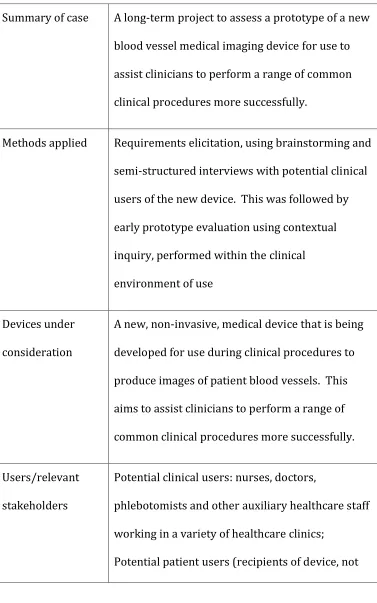
Summary of case A long-term project to assess a prototype of a new blood vessel medical imaging device for use to assist clinicians to perform a range of common clinical procedures more successfully.
Methods applied Requirements elicitation, using brainstorming and semi-structured interviews with potential clinical users of the new device. This was followed by early prototype evaluation using contextual inquiry, performed within the clinical environment of use
Devices under consideration
A new, non-invasive, medical device that is being developed for use during clinical procedures to produce images of patient blood vessels. This aims to assist clinicians to perform a range of common clinical procedures more successfully.
Users/relevant stakeholders
Potential clinical users: nurses, doctors,
phlebotomists and other auxiliary healthcare staff working in a variety of healthcare clinics;
operators): a range of in and out patients from a variety of hospital clinics.
Target patient groups: elderly, oncology, renal.
Tasks being performed?
Vein location and access
Human factors challenges?
Compatibility of the device with: physical environment (portability manoeuvrability, conflict with existing device, access to electrical sockets); Organisational/operational
requirements (access to device, time to set up and operate, training needs); Needs of varied and vulnerable patient populations (including elderly, anxious, obese, critically ill, drug users); Usability issues associated with the device’s computer-based UI and how to display data in a way that is accurate and meaningful (i.e. supplements (rather than substitutes) the existing expertise of the clinicians
What solutions are proposed?