249
Hierarchical Deep Learning for Arabic Dialect Identification
Ga¨el de Francony
LSE, EPITA, France [email protected]
Victor Guichard
LSE, EPITA, France [email protected]
Praveen Joshi
CIT, Ireland [email protected]
Haithem Afli
ADAPT Centre, CIT, Ireland [email protected]
Abdessalam Bouchekif
LSE, EPITA, France [email protected]
Abstract
In this paper, we present two approaches for Arabic Fine-Grained Dialect Identification. The first approach is based on Recurrent Neu-ral Networks (BLSTM, BGRU) using hierar-chical classification. The main idea is to sep-arate the classification process for a sentence from a given text in two stages. We start with a higher level of classification (8 classes) and then the finer-grained classification (26 classes). The second approach is given by a voting system based on Naive Bayes and Ran-dom Forest. Our system achieves anF1score of63.02%on the subtask evaluation dataset.
1 Introduction
Online platforms such as Social Media have be-come the default channel for people to actively participate in the generation of online content in different languages and dialects. Arabic is one of the fastest growing languages used on these plat-forms. There are many differences between Di-alectal Arabic and Modern Standard Arabic which cause many challenges for Arabic language pro-cessing. Therefore, identifying the dialect in which posts are written is very important for un-derstanding what has been written over these on-line platforms.
Shoufan and Alameri (2015) presents a wide literature review of natural language processing for dialectical Arabic. The authors highlighted the huge lack of freely available dialectal corpora which was mentioned in (Zaghouani,2014).
Although Arabic dialects are related but there are some lexical, phonological and morphologi-cal differences between them (Habash et al.,2013;
Azab et al., 2013; Attia et al., 2012). Most re-cently, (Bouamor et al., 2018; Salameh et al.,
2018;AL-Walaie and Khan, 2017) started to in-vestigate the problem of the Arabic Dialect Iden-tification with different classification methods.
In this paper, we are describing our work in the same research direction using the MADAR shared task corpus described in (Bouamor et al., 2019). The goal of this task is to classify a given text into one of 26 classes, corresponding to various dialects of Arabic language.
The remainder of this paper is organized as fol-lows. In section2, we describe the different tech-niques used in this work. In Section3, we present our experimental setup and discuss the models and features used as well as our results. Finally, in Sec-tion4we conclude and give our future directions.
2 System Description
In the next few paragraphs, we will describe the two main methods we used in the MADAR shared task. The first one is based on deep learning with a hierarchical classification of dialects. The second one is based on the combination of Naive Bayes and Random Forest.
2.1 Hierarchical Deep Learning
We address the fine-grained identification of 25 di-alects and the Modern Standard Arabic (MSA). Given the number of different dialects and the small size of the data set provided, deep learn-ing algorithms didn’t perform well. Our proposed method will aim to handle this problem by de-creasing the number of classes the models need to predict. This is achieved using a hierarchical clas-sification similar to the work described inKowsari et al.(2017).
Group 1 Group 2 Group 3 Group 4 Group 5 Group 6 Group 7 Group 8
Tunis Sfax
Rabat Fes Algiers
Tripoli Benghazi
Cairo Alexandria
Aswan Khartoum
Doha Muscat Riyadh Jeddah Sana’a
Mosul Baghdad
Basra
Jerusalem Amman
Salt Beirut Damascus
Aleppo
[image:2.595.88.510.63.159.2]MSA
Table 1: Dialect distribution in groups.
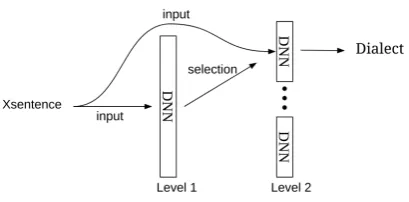
Figure 1: Hierarchical deep learning architecture.
A deep neural network (DNN) is trained to pre-dict a group given a sentence. This model serves as the base for our system. Then for each dialect, a different model is trained. These models make predictions on their respective subset of dialects. Following this technique, two levels of DNNs are defined. First a base whose predictions are used to choose from a set of DNNs. The chosen one is then used to identify the dialect. The system ar-chitecture is presented in figure1.
2.2 Vote Based Probabilistic Classifier
The low size of our data set made statistical mod-els perform much better than the deep learning methods. Our proposed method will take into ac-count the large number of classes by creating two different pipelines. The first one uses a Multino-mial Naive Bayes. The second model uses a Ran-dom Forest Classifier. These models were imple-mented using the package scikit-learn (Pedregosa et al., 2011). The pipelines are pre-trained be-fore they are given to the voting classifier. Then, the whole system is trained again to maximize the model performance for the dialects classification task. The data is first given into a count vectorizer then into a TF-IDF tranformer to extract meaning-ful information on word level. The voting classi-fier uses a hard voting method to select the model with the correct prediction.
3 Experiments and Results
3.1 Data
We used the data set provided by the MADAR Shared Task. The corpus covers the dialects of 25 Arab cities and the MSA. It is the same data set described in Bouamor et al.(2019) andSalameh et al. (2018). This corpus is composed of 2000 sentences translated to each dialect, with a total of 52000 sentences. We refer to this set as the MADAR corpus. We split this data set evenly be-tween dialects in three parts: 80% constitutes the Train set, 10% the Dev and the last 10% the Test set. In our experiment, we limit the length of the sequences to 40 words and pad the sequences with zeros. For preprocessing we remove all non Ara-bic characters with the exception of AraAra-bic num-bers. To maximize the precision of the hierarchi-cal deep learning system the input of the models is produced by a word2vec. The word2vec we used was trained separately using a database of over 32 million tweets. This data was downloaded using keywords extracted from the MADAR corpus. We used the score of a TF-IDF to find the most rele-vant words from each dialect. Tweets containing one of these words were downloaded and added to this data set. This way we could ensure a dialectal weight on the word embeddings.
3.2 Hierarchical Deep Learning
In our models, we used Bidirectional Long Short-Term Memory networks (B-LSTM) (Schuster and Paliwal,1997). It consists of two LSTM networks running in parallel in different directions. Each LSTM generates a hidden representation: the first is generated by reading the input sequence from left to right and the second form right to left. This representations are then combined to compute the output sequence.
[image:2.595.81.286.208.309.2]Dialect Precision Recall F1-sore
ALE 0.58 0.68 0.63 ALG 0.82 0.75 0.78 ALX 0.78 0.73 0.75 AMM 0.53 0.49 0.51 ASW 0.59 0.55 0.57 BAG 0.58 0.75 0.66 BAS 0.68 0.68 0.68 BEI 0.60 0.69 0.64 BEN 0.70 0.67 0.68 CAI 0.47 0.66 0.55 DAM 0.54 0.56 0.55 DOH 0.64 0.60 0.62 FES 0.70 0.63 0.66 JED 0.61 0.57 0.59 JER 0.61 0.45 0.52 KHA 0.69 0.53 0.60 MOS 0.78 0.83 0.80
[image:3.595.87.273.59.470.2]MSA 0.84 0.61 0.71 MUS 0.42 0.60 0.49 RAB 0.55 0.75 0.63 RIY 0.61 0.53 0.57 SAL 0.49 0.59 0.53 SAN 0.70 0.81 0.75 SFX 0.77 0.68 0.72 TRI 0.76 0.76 0.76 TUN 0.64 0.77 0.70 ALL 0.64 0.65 0.64
Table 2: Macro average of precision, recall and F1-score for vote based approach (Higher is better).
Model F1
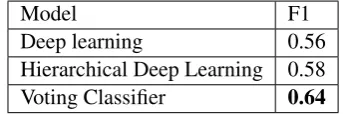
Deep learning 0.56 Hierarchical Deep Learning 0.58 Voting Classifier 0.64
Table 3: F1-score summary (higher is better).
Model Precision Recall F1-score G1 0.78 0.88 0.83 G2 0.82 0.89 0.85 G3 0.69 0.80 0.74 G4 0.82 0.79 0.81 G5 0.66 0.74 0.70 G6 0.84 0.80 0.82 G7 0.89 0.77 0.83 MSA 0.76 0.71 0.73 Avg. 0.79 0.80 0.78
Table 4: Hierarchical system level 1 precision.
of 128 neurons followed by a fully-connected layer of size 64 and a fully-connected layer of size 8 with softmax activation for the output. The level two is a set of 7 DNNs. For each of this models the size of the layers and the type of Recurrent Neu-ral Network (RNN) units used is different. This is done in order to adapt each model to the number of classes it has to handle as well as to have a propor-tional number of parameters with the size of the groups data set. The models utilize the following pattern: They are composed of three layers. The first is a RNN layer, either B-LSTM or a B-GRU with a size ranging between 32 and 64 units. Then a fully-connected layer of size ranging between 32 and 64. Finally a fully-connected layer with soft-max activation for the output.
All models were trained using the following pa-rameters: batch size = 100, learning rate = 0.001,
β1= 0.9,β2= 0.999, decay = 0. The cost function used was the cross entropy. Two gradient descent optimizers where used for training: the RMSProp and the Adamax. To metric the possible improve-ment of this system we compare the results with a baseline. This baseline is a deep neural network with a similar architecture as the ones found in the hierarchical system.
3.3 Vote Based Probabilistic Classifier
The statistical method performed much better than the Deep learning method. In this section we de-scribe the pipeline using different parameters. To define the accuracy we used the F-1 macro average score. By changing parameters of each pipeline, our results change drastically. We found that for the Naive Bayes thealpha at0.3 was giving the best performance. For the Random Forest Classi-fier (RFC), random states set to2was also giving the best results. Using 250 estimators and a 200 depth, the RFC was performing the best, leading up to a 4% increase in F1-score.
3.4 Results
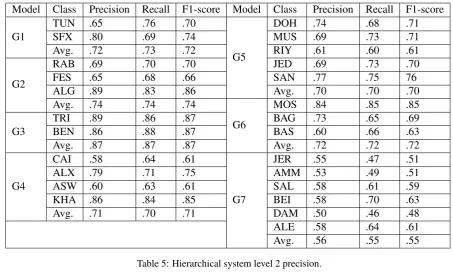
[image:3.595.93.265.505.562.2]trou-Model Class Precision Recall F1-score Model Class Precision Recall F1-score
G1
TUN .65 .76 .70
G5
DOH .74 .68 .71
SFX .80 .69 .74 MUS .69 .73 .71
Avg. .72 .73 .72 RIY .61 .60 .61
G2
RAB .69 .70 .70 JED .69 .73 .70
FES .65 .68 .66 SAN .77 .75 76
ALG .89 .83 .86 Avg. .70 .70 .70
Avg. .74 .74 .74
G6
MOS .84 .85 .85
G3
TRI .89 .86 .87 BAG .73 .65 .69
BEN .86 .88 .87 BAS .60 .66 .63
Avg. .87 .87 .87 Avg. .72 .72 .72
G4
CAI .58 .64 .61
G7
JER .55 .47 .51
ALX .79 .71 .75 AMM .53 .49 .51
ASW .60 .63 .61 SAL .58 .61 .59
KHA .86 .84 .85 BEI .58 .70 .63
Avg. .71 .70 .71 DAM .50 .46 .48
[image:4.595.69.523.60.334.2]ALE .58 .64 .61 Avg. .56 .55 .55
Table 5: Hierarchical system level 2 precision.
Sentence Prediction Label
I want a glass of water to take my medicine, please. SFX TUN
I want a glass of water to drink my medicine, please. SFX SFX
Table 6: Voting classifier predictions on close sentence of similar dialects.
ble on similar dialects. For example, the first two sentences of table6, are very similar. The first one is fromTuniswhereas the second one is fromSfax
which both belong to the same group. Because of this similarity, the models cannot make a correct distinction and often miss predict the correct label. Nonetheless, the statistical method provides good result when dialects are very close. Tunis andSfax
have both a good F1-score, even with some confu-sion due to similar sentences. However it struggles to identify dialects such as Mosul (MOS), Cairo
(CAI) andSalt(SAL) which have a very low pre-cision (table2). The results can be explained by the fact that the amount of data available was very low which can lead to an overfitting of the deep learning model. The voting classifier perform 9% better (table3).
4 Conclusion and Future Work
In this paper, we propose to use two different methods for Arabic dialect identification: the Hi-erarchical Deep Neural Network and the Hard
Vot-ing Classifier. The hierarchical model uses two levels of DNNs where the first one predicts the group of a dialect, and the second one predicts the dialect according to the previous prediction. The method based on a statistical model is composed of a Multinomial Naive Bayes and a Random For-est Classifier connected by a Hard Voting Classi-fier. This model outperformed the F1-score results of the Hierarchical Deep Neural Network.
In the future, we plan to work on the combina-tion of two neural networks. The output of the first model will be a vector composed of probabilities for each group. The second one, will take as input the sentence as well as the output of the previous model as a new feature.
Acknowledgments
[image:4.595.138.460.340.417.2]References
Mona Abdullah AL-Walaie and Muhammad Badrud-din Khan. 2017. Arabic dialects classification using text mining techniques . InProceedings of the Inter-national Conference on Computer and Applications (ICCA), pages 325–329, Dubai, United Arab Emi-rates.
Mohammed Attia, Pavel Pecina, Younes Samih, Khaled Shaalan, and Josef van Genabith. 2012. Im-proved spelling error detection and correction for arabic. In Proceedings of COLING 2012, pages 103–112.
Mahmoud Azab, Houda Bouamor, Behrang Mohit, and Kemal Oflazer. 2013. Dudley north visits north lon-don: Learning when to transliterate to arabic. In Proceedings of NAACL-HLT 2013, pages 439–444.
Houda Bouamor, Nizar Habash, Mohammad Salameh, Wajdi Zaghouani, Owen Rambow, Dana Abdul-rahim, Ossama Obeid, Salam Khalifa, Fadhl Eryani, Alexander Erdmann, and Kemal Oflazer. 2018. The MADAR Arabic Dialect Corpus and Lexicon. In Proceedings of the Eleventh International Confer-ence on Language Resources and Evaluation (LREC 2018), Miyazaki, Japan.
Houda Bouamor, Sabit Hassan, and Nizar Habash. 2019. The MADAR Shared Task on Arabic Fine-Grained Dialect Identification. InProceedings of the Fourth Arabic Natural Language Processing Work-shop (WANLP19), Florence, Italy.
Nizar Habash, Ryan Roth, Owen Rambow, Ramy Es-kander, and Nadi Tomeh. 2013. Morphological analysis and disambiguation for dialectal arabic. In Proceedings of NAACL-HLT 2013, pages 426–432.
Kamran Kowsari, Donald E. Brown, Mojtaba Hei-darysafa, Kiana Jafari Meimandi, Matthew S. Ger-ber, and Laura E. Barnes. 2017. Hdltex: Hierar-chical deep learning for text classification. In16th IEEE International Conference on Machine Learn-ing and Applications, ICMLA 2017, Cancun, Mex-ico, December 18-21, 2017, pages 364–371.
Fabian Pedregosa, Gael Varoquaux, Alexandre Gram-fort, Vincent Michel, Bertrand Thirion, Olivier Grisel, Mathieu Blondel, Peter Prettenhofer, Ron Weiss, Vincent Dubourg, Jake Vanderplas, Alexan-dre Passos, David Cournapeau, Matthieu Brucher, Matthieu Perrot, and Edouard Duchesnay. 2011. Scikit-learn: Machine learning in Python. Journal of Machine Learning Research.
Mohammad Salameh, Houda Bouamor, and Nizar Habash. 2018. Fine-Grained Arabic Dialect Iden-tification. In Proceedings of the 27th Interna-tional Conference on ComputaInterna-tional Linguistic, page 13321344, Santa Fe, New Mexico, USA.
Mike Schuster and Kuldip K. Paliwal. 1997. Bidirec-tional recurrent neural networks. IEEE Transactions on Signal Processing.
Abdulhadi Shoufan and Sumaya Alameri. 2015. Natu-ral language processing for dialectical arabic: A sur-vey. InANLP@ACL.